A Broken Record

-
Select format
-
- Publisher:
- Cambridge University Press
- Publication date:
- 27 September 2022
- 10 November 2022
- ISBN:
- 9781108961868
- 9781108832632
- Dimensions:
- (228 x 152 mm)
- Weight & Pages:
- 0.42kg, 230 Pages
- Dimensions:
- Weight & Pages:
You may already have access via personal or institutional login
Show more authors 
You may already have access via personal or institutional login
Book description
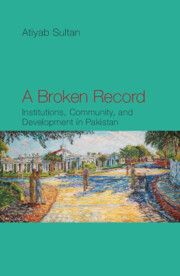
This book examines economic reform in the Punjab in the period 1900-47 in an attempt to historicise theories of institutional change and community development. It advances the economic history of the region by analysing microeconomic reform in the province. A close examination of programmes of rural reconstruction in colonial Punjab reveals stark parallels with more contemporary prescriptions of development economics. Simultaneously, a study of the trajectory of legislative change sheds light on the institutional legacies of colonial rule. It engages deeply with the theoretical scholarship on development and rural uplift that emerges in this period and develops an intellectual genealogy that links colonialism to development studies. It questions the continued valorisation of the 'community' despite a lack of supportive evidence and argues that one reason for the continued popularity of ideas of community development and institutional malaise is that both absolve the status quo from blame.
Contents
Contents
Metrics
Altmetric attention score
Full text views
Full text views helpTotal number of HTML views: 0
Total number of PDF views: 0 *
 Loading metrics...
* Views captured on Cambridge Core between #date#. This data will be updated every 24 hours.
Usage data cannot currently be displayed.
Accessibility standard: Unknown
Why this information is here
This section outlines the accessibility features of this content - including support for screen readers, full keyboard navigation and high-contrast display options. This may not be relevant for you.
Accessibility Information
Accessibility compliance for the PDF of this book is currently unknown and may be updated in the future.