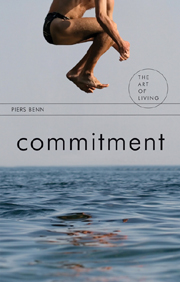

What does it mean when you say you are 'committed' to something, whether its to a partner, a vocation, a political belief, or a religion? On what basis do we make commitments? Do they matter? Or are we better off avoiding them? Philosopher Piers Benn explores the notion of commitment and tries to unpick what it is and why it might be valuable to a life lived well. He focuses on the commitments we have to one another, the commitments we have with respect to work and vocation, and those we have to political and religious creeds or ways of life. He explores the many obstacles to commitment, in particular boredom and the failure to take an interest in the world. Although Benn shows commitment to be a central ingredient in the meaning of life, he suggests it is better to risk a sense of lack of meaning and some unhappiness than to make false or frivolous commitments. The tension between the urge to commit and grounds for resisting is a theme running throughout the book. Piers Benn brings a much-needed clarity to the subject and offers some welcome advice to all those who have wrestled with the failure, falsehood or futility of their commitments.
Loading metrics...
* Views captured on Cambridge Core between #date#. This data will be updated every 24 hours.
Usage data cannot currently be displayed.
This section outlines the accessibility features of this content - including support for screen readers, full keyboard navigation and high-contrast display options. This may not be relevant for you.
Accessibility compliance for the PDF of this book is currently unknown and may be updated in the future.
