
Skip to main content Accessibility help
×
  • Cited by 4
    • Show more authors
    • You may already have access via personal or institutional login
    • Select format
    • Publisher:
      Cambridge University Press
      Publication date:
      18 December 2013
      23 December 2013
      ISBN:
      9781107045361
      9781107044913
      9781107622913
      Dimensions:
      (228 x 152 mm)
      Weight & Pages:
      0.48kg, 240 Pages
      Dimensions:
      (229 x 152 mm)
      Weight & Pages:
      0.36kg, 244 Pages
    You may already have access via personal or institutional login
  • Selected: Digital
    Add to cart View cart Buy from Cambridge.org

    Book description

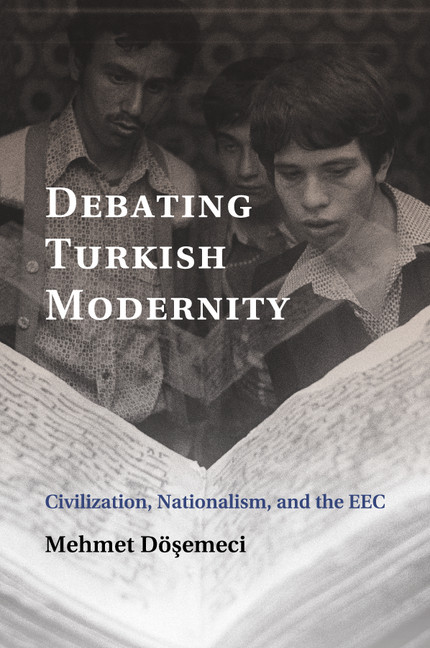
    Debating Turkish Modernity describes the opening act of Turkey's half century bid to join the European Community. Between 1959 and 1980, Turks from all walks of life weighed in on their prospective integration into Europe. This book details how these Turks made sense of the project of European Unification and how they spoke about it. It argues that Turkey's EEC debates, by resurrecting past questions over Turkey's relationship to Europe, became the principle forum where Turks of the Second Republic defined who they were, where they came from, and where they were going.

    Reviews

    ‘Döşemeci’s meticulously written and lucid book is an excellent historical study that calls for the active imagination of the reader. With a skilful hermeneutical analysis of historical events it invites us to rethink the meanings of modernity through different logics and historical-conceptual sites within which civilization, nation, and Europeanness have been dialogically imagined and debated by Turkish elites. The book powerfully brings to life the impasses and tensions of these debates, shedding a very different light on the much-technicalized discussions of Turkey’s membership to Europe today.’

    Meltem Ahiska - Boğaziçi University, Istanbul

    ‘Mehmet Döşemeci's theoretically rich account of the EEC membership debate in Cold War Turkey shows why and how the intellectual discourses on Europe as a civilizational project is essential to understand domestic and foreign policy debates then and now. We need more studies like this to better understand the complexity of the question of Eurocentrism in both the global intellectual history and contemporary political theory.’

    Cemil Aydin - University of North Carolina, Chapel Hill

    ‘Why should any country be interested in joining the European Union? Debating Turkish Modernity offers a perceptive analysis of the Turkish discussion around this issue. Döşemeci convincingly argues that this subject was central for the way Turkish elites understood their state and society for many decades. An innovative contribution to Turkish and European integration history, and an indispensable book for anyone who tries to understand the relationship between Turkey and the EU today.’

    Kiran Klaus Patel - Maastricht University

    Refine List

    Actions for selected content:

    Select all | Deselect all
    • View selected items
    • Export citations
    • Download PDF (zip)
    • Save to Kindle
    • Save to Dropbox
    • Save to Google Drive

    Save Search

    You can save your searches here and later view and run them again in "My saved searches".

    Please provide a title, maximum of 40 characters.
    ×

    Contents

    Metrics

    Altmetric attention score

    Full text views

    Total number of HTML views: 0
    Total number of PDF views: 0 *
    Loading metrics...

    Book summary page views

    Total views: 0 *
    Loading metrics...

    * Views captured on Cambridge Core between #date#. This data will be updated every 24 hours.

    Usage data cannot currently be displayed.

    Accessibility standard: Unknown

    Why this information is here

    This section outlines the accessibility features of this content - including support for screen readers, full keyboard navigation and high-contrast display options. This may not be relevant for you.

    Accessibility Information

    Accessibility compliance for the PDF of this book is currently unknown and may be updated in the future.
