
Skip to main content Accessibility help
×
  • Cited by 42
    • Show more authors
    • You may already have access via personal or institutional login
    • Select format
    • Publisher:
      Cambridge University Press
      Publication date:
      16 June 2020
      25 June 2020
      ISBN:
      9781108616522
      9781108727464
      Dimensions:
      Weight & Pages:
      Dimensions:
      (229 x 152 mm)
      Weight & Pages:
      0.15kg, 86 Pages
    You may already have access via personal or institutional login
  • Selected: Digital
    Add to cart View cart Buy from Cambridge.org

    Book description

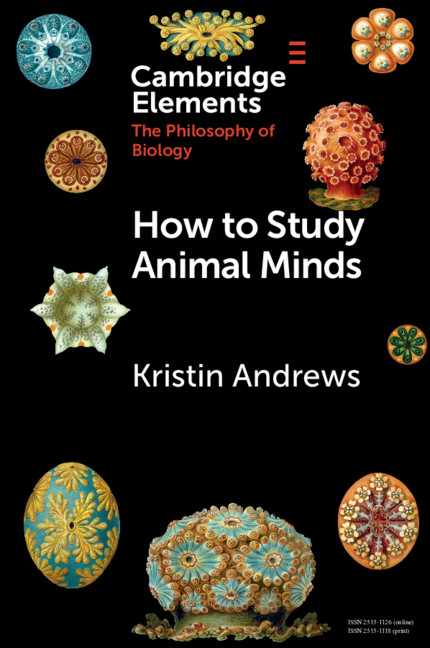
    Comparative psychology, the multidisciplinary study of animal behavior and psychology, confronts the challenge of how to study animals we find cute and easy to anthropomorphize, and animals we find odd and easy to objectify, without letting these biases negatively impact the science. In this Element, Kristin Andrews identifies and critically examines the principles of comparative psychology and shows how they can introduce other biases by objectifying animal subjects and encouraging scientists to remain detached. Andrews outlines the scientific benefits of treating animals as sentient research participants who come from their own social contexts and with whom we will be in relationship. With discussions of science's quest for objectivity, worries about romantic and killjoy theories, and debates about chimpanzee cognition between primatologists who work in the field and those in the lab, Andrews shows how scientists can address the different biases through greater integration of the subdisciplines of comparative psychology.

    Reviews

    ‘Andrews weaves an impressive thread through topics in the philosophy of mind, science, and psychology … The argumentative scope is impressive given the size of the book. Andrews also masterfully combines depth with accessibility in ways that make this an excellent text for either advanced undergraduates or graduate students.’

    Source: Metascience

    Bibliography

    Allen, C. (2004). Is anyone a cognitive ethologist? Biology and Philosophy, 19(4), 589607.
    Allen, C., & Bekoff, M. (1997). Species of Mind: The Philosophy and Biology of Cognitive Ethology. Cambridge, MA: Massachusetts Institute of Technology Press.
    Allen, C., Fuchs, P. N., Shriver, A., & Wilson, H. D. (2005). Deciphering animal pain. In Aydede, M. (Ed.), Pain: New Essays on Its Nature and the Methodology of Its Study, 351–366. Cambridge, MA: Massachusetts Institute of Technology Press.
    Allen, C., & Trestman, M. (2017). Animal consciousness. In Zalta, E. N. (Ed.), The Stanford Encyclopedia of Philosophy (Winter 2017 Edition). https://plato.stanford.edu/archives/win2017/entries/consciousness-animal
    Allen, J. A. (2019). Community through culture: From insects to whales. BioEssays, 41(11), 1900060.
    Andrews, K. (2007). Critter psychology: On the possibility of nonhuman animal folk psychology. In Hutto, D., & Ratcliffe, M. (Eds.), Folk Psychology Re-assessed, 191210. New York, NY: Springer.
    Andrews, K. (2009). Politics or metaphysics? On attributing psychological properties to animals. Biology & Philosophy, 24(1), 5163.
    Andrews, K. (2011) Beyond anthropomorphism: Attributing psychological properties to animals. In Beauchamp, T., & Frey, R. G. (Eds.), The Oxford Handbook of Animal Ethics, 469494. Oxford, NY: Oxford University Press.
    Andrews, K. (2012). Do Apes Read Minds? Toward a New Folk Psychology. Cambridge, MA: Massachusetts Institute of Technology Press.
    Andrews, K. (2015). The folk psychological spiral: Explanation, regulation, and language. The Southern Journal of Philosophy, 53(S1), 5067.
    Andrews, K. (2016a). Snipping or editing? Parsimony in the chimpanzee mind-reading debate. Metascience, 25(3), 377386.
    Andrews, K. (2016b). A role for folk psychology in animal cognition research. In Blank, A. (Ed.), Animals: Basic Philosophical Concepts, 205226. Munich, Germany: Philosophia.
    Andrews, K. (2016c). Pluralistic folk psychology in humans and other apes. In Kiverstein, J. (Ed.), The Routledge Handbook of Philosophy of the Social Mind, 133154. London, UK: Routledge.
    Andrews, K. (2018). Do apes attribute beliefs to predict behavior? A Mengzian social intelligence hypothesis. The Harvard Review of Philosophy. doi:10.5840/harvardreview201892117.
    Andrews, K. (2020). Naïve normativity: The social foundation of moral cognition. Journal of the American Philosophical Association, 6(1), 3656. doi:10.1017/apa.2019.30
    Andrews, K. (forthcoming). The Animal Mind: An Introduction to the Philosophy of Animal Cognition, second edition. Abingdon: Routledge.
    Andrews, K., & Huss, B. (2014). Anthropomorphism, anthropectomy, and the null hypothesis. Biology & Philosophy, 29(5), 711729.
    Asquith, P. J. (1996) Japanese science and western hegemonies. Primatology and the limits set to questions. In Nader, L. (Ed.), Naked Science. Anthropological Inquiry into Boundaries, Power, and Knowledge, 239256. New York: Routledge.
    Avital, E., & Jablonka, E. (Eds.) (2000). Animal Traditions: Behavioural Inheritance in Evolution. Cambridge, MA: Cambridge University Press.
    Balter, M. (2012). ‘Killjoys’ challenge claims of clever animals. Science, 335(6072), 10361037.
    Barrett, L. (2011). Beyond the Brain: How Body and Environment Shape Animal and Human Minds. Princeton, NJ: Princeton University Press.
    Barron, A. B., & Klein, C. (2016). What insects can tell us about the origins of consciousness. Proceedings of the National Academy of Sciences, 113(18), 49004908.
    Bekoff, M. (2007). The Emotional Lives of Animals: A Leading Scientist Explores Animal Joy, Sorrow, and Empathy – and Why They Matter. Novato, CA: New World Library.
    Berridge, K. C., & Kringelbach, M. L. (2015). Pleasure systems in the brain. Neuron, 86(3), 646664.
    Bickle, J. (1998). Psychoneural Reduction: The New Wave. Cambridge, MA: Massachusetts Institute of Technology Press.
    Birch, J. (2017). Animal sentience and the precautionary principle. Animal Sentience, 2(16), 1.
    Birkett, L. P., & Newton-Fisher, N. E. (2011). How abnormal is the behaviour of captive, zoo-living chimpanzees? PloS One, 6(6), e20101.
    Boesch, C. (1994). Cooperative hunting in wild chimpanzees. Animal Behavior, 48, 653667.
    Boesch, C. (2002). Cooperative hunting roles among Taï chimpanzees. Human Nature, 13, 2746.
    Boesch, C. (2005). Joint cooperative hunting among wild chimpanzees: Taking natural observations seriously. Behavioral and Brain Sciences, 28, 692.
    Boesch, C. (2007). What makes us human (Homo sapiens)? The challenge of cognitive cross-species comparison. Journal of Comparative Psychology, 121, 227240.
    Boffey, P. M. (1987, November 24). Infants’ sense of pain is recognized, finally. The New York Times. www.nytimes.com/1987/11/24/science/infants-sense-of-pain-is-recognized-finally.html
    Boisseau, R. P., Vogel, D., & Dussutour, A. (2016). Habituation in non-neural organisms: evidence from slime moulds. Proceedings of the Royal Society B, 283(1829), 20160446. doi:10.1098/rspb.2016.0446.
    Bonnie, K. E., Horner, V., Whiten, A., & de Waal, F. B. M. (2007). Spread of arbitrary conventions among chimpanzees: A controlled experiment. Proceedings of the Royal Society B, 274, 367372.
    Brosnan, S. F., Schiff, H. C., & de Waal, F. B. M. (2005). Tolerance for inequity may increase with social closeness in chimpanzees. Proceedings of the Royal Society B: Biological Sciences, 272(1560), 253258.
    Brotcorne, F., Giraud, G., Gunst, N., Fuentes, A., Wandia, I. N., Beudels-Jamar, R. C., … Leca, J. B. (2017). Intergroup variation in robbing and bartering by long-tailed macaques at Uluwatu Temple (Bali, Indonesia). Primates, 58(4), 505516.
    Brown, C. (2015). Fish intelligence, sentience and ethics. Animal Cognition, 18(1), 117. doi:10.1007/s10071-014-0761-0.
    Buckner, C. (2013). Morgan’s Canon, meet Hume’s Dictum: Avoiding anthropofabulation in cross-species comparisons. Biology & Philosophy, 28(5), 853871.
    Burghardt, G. M. (1991). Cognitive ethology and critical anthropomorphism: A snake with two heads and hognose snakes that play dead. In Ristau, C. A. (Ed.), Cognitive Ethology: The Minds of Other Animals: Essays in Honor of Donald R. Griffin (pp. 5390). Hillsdale, NJ: Lawrence Erlbaum Associates.
    Burghardt, G. M. (2005). The Genesis of Animal Play. Cambridge, MA: Massachusetts Institute of Technology Press.
    Burghardt, G. M. (2007). Critical anthropomorphism, uncritical anthropocentrism, and naive nominalism. Comparative Cognition & Behavior Reviews, 2, 136138.
    Burkhardt, R. W. (2005). Patterns of Behavior: Konrad Lorenz, Niko Tinbergen, and the Founding of Ethology. Chicago, IL: University of Chicago Press.
    Buttelmann, D., Buttelmann, F., Carpenter, M., Call, J., & Tomasello, M. (2017). Great apes distinguish true from false beliefs in an interactive helping task. PLOS ONE, 12(4), e0173793.
    Buttelmann, D., Zmyj, N., Daum, M., & Carpenter, M. (2013). Selective imitation of in-group over out-group members in 14-month-old infants. Child Development, 84(2), 422428.
    Byrne, R. (1997). What’s the use of anecdotes? Distinguishing psychological mechanisms in primate tactical deception. In Mitchell, R., Thompson, N., & Miles, H. L. (Eds.), Anthropomorphism, Anecdotes, and Animals, 134–150. Albany, NY: State University of New York Press.
    Call, J., & Tomasello, M. (1999). A nonverbal false belief task: The performance of children and great apes. Child Development, 70, 381395.
    Calvo, P. (2016). The Philosophy of plant neurobiology: a manifesto. Synthese, 193(5), 13231343. https://doi.org/10.1007/s11229-016-1040-1
    Carruthers, P. (2004). Suffering without subjectivity. Philosophical Studies, 121, 99125.
    Cheney, D. L., & Seyfarth, R. M. (1990). How Monkeys See the World: Inside the Mind of Another Species. Chicago, IL: University of Chicago Press.
    Chollet, Francois. (2019). On the measure of intelligence. arXiv:1911.01547
    Chudek, M., Heller, S., Biro, S., & Henrich, J. (2012). Prestige-biased cultural learning: Bystander’s differential attention to potential models influencing children’s learning. Evolution and Human Behavior, 33, 4654.
    Churchland, P. M. (1981). Eliminative materialism and the propositional attitudes. The Journal of Philosophy, 78, 6790.
    Clay, Z., & Tennie, C. (2018). Is overimitation a uniquely human phenomenon? Insights from human children as compared to bonobos. Child Development, 89(5), 15351544.
    Clayton, N., & Dickinson, A., (1998). Episodic-like memory during cache recovery by scrub jays. Nature 395, 272274. https://doi.org/10.1038/26216
    Coulacoglou, C., & Saklofske, D. H. 2017. Perspectives and advances in personality, in Psychometrics and Psychological Assessment, 223265. Cambridge, MA: Academic Press.
    Crick, F., & Koch, C. (1990). Towards a neurobiological theory of consciousness. Seminars in the Neurosciences, 2, 263275.
    Dacey, M. 2017. A new view of association and associative models. In Andrews, K., & Beck, J. (Eds.), The Routledge Handbook of Philosophy of Animal Minds, 419426. New York: Routledge.
    Darwin, C. (1871). The Descent of Man. Mineola, NY: Dover.
    Dawkins, M. S. (2008). The science of animal suffering. Ethology, 114(10), 937945. doi:10.1111/j.1439-0310.2008.01557.x.
    Dawkins, M. S. (2017). Animal welfare with and without consciousness. Journal of Zoology, 301(1), 110. doi:10.1111/jzo.12434.
    Dennett, D. C. (1983). Intentional systems in cognitive ethology: The “Panglossian Paradigm” defended. Behavioral and Brian Sciences, 6, 343390.
    Dennett, D. C. (1991). Real patterns. The Journal of Philosophy, 88(1), 2751.
    Ferdowsian, H. R., Durham, D. L., Kimwele, C., Kranendonk, G., Otali, E., Akugizibwe, T., Mulcahy, J. B., Ajarova, L., and Johnson, C. M. (2011). Signs of mood and anxiety disorders in chimpanzees. PLoS ONE, 6(6), Article e19855.
    Ferdowsian, H., Durham, D., & Brüne, M. (2013). Mood and anxiety disorders in chimpanzees (pan troglodytes): A response to Rosati et al. (2012). Journal of Comparative Psychology, 127(3), 337340. https://doi.org/10.1037/a0032823
    Fitzpatrick, S. (2008). Doing away with Morgan’s Canon. Mind & Language, 23(2), 224246.
    Fitzpatrick, S. (2009). The primate mindreading controversy: A case study in simplicity and methodology in animal psychology. In Lurz, R. W. (Ed.), The Philosophy of Animal Minds (pp. 224246). Cambridge University Press.
    Fitzpatrick, S. (2017). Against Morgan’s Canon. In Andrews, K., & Beck, J. (Eds.), Routledge Handbook of Philosophy of Animal Minds, 437447. New York, NY: Routledge.
    Franks, B., Sebo, J., & Horowitz, A. (2018). Fish are smart and feel pain: What about joy? Animal Sentience, 3(21), 16.
    Fuentes, A. (2010) Naturecultural encounters in Bali: Monkeys, temples, tourists, and ethnoprimatology. Cultural Anthropology 25(4), 600624.
    Gagliano, M., Renton, M., Depczynski, M., & Mancuso, S. (2014). Experience teaches plants to learn faster and forget slower in environments where it matters. Oecologia, 175(1), 6372. https://doi.org/10.1007/s00442-013-2873-7
    Gagliano, M., Vyazovskiy, V. V., Borbély, A. A., Grimonprez, M., & Depczynski, M. (2016). Learning by association in plants. Scientific Reports, 6, 38427. doi:10.1038/srep38427.
    Gergely, G., Bekkering, H., & Király, I. (2002). Developmental psychology: Rational imitation in preverbal infants. Nature, 415(6873), 755.
    Giere, R. N. (1988). Explaining Science: A Cognitive Approach. Chicago, IL: University of Chicago Press.
    Giere, R. N. (2006). Scientific Perspectivism. Chicago, IL: University of Chicago Press.
    Gluck, J. P. (2016). Voracious Science and Vulnerable Animals: A Primate Scientist’s Ethical Journey. Chicago, IL: University of Chicago Press.
    Goodenough, W. H. (1956) Residence rules. Southwest Journal of Anthropology 12(1), 2237.
    Griffin, D. R. (1976). The Question of Animal Awareness: Evolutionary Continuity of Mental Experience. New York, NY: Rockefeller University Press.
    Griffith, C. R. (1943). Principles of Systematic Psychology. Champaign, IL: University of Illinois Press.
    Harriman, P. L. (1947). The New Dictionary of Psychology. New York, NY: Philosophical Library.
    Healy, S. (Ed.). (1998). Spatial Representation in Animals. New York, NY: Oxford University Press.
    Herrmann, E., Call, J., Hernàndez-Lloreda, M. V., Hare, B., & Tomasello, M. (2007). Humans have evolved specialized skills of social cognition: The cultural intelligence hypothesis. Science, 317(5843), 13601366.
    Heyes, C. (2008). Beast machines? Questions of animal consciousness. In Weiskrantz, L., & Davies, M. (Eds.), Frontiers of Consciousness, 259274. Oxford, NY: Oxford University Press.
    Hobaiter, C., & Byrne, R. W. (2011). The gestural repertoire of the wild chimpanzee. Animal Cognition, 14(5), 745767.
    Hodos, W., & Campbell, C. B. G. (1969). Scala naturae: Why there is no theory in comparative psychology. Psychological Review, 76(4), 337350.
    Hoppitt, W., & Laland, K. N. (2013). Social Learning: An Introduction to Mechanisms, Methods,and Models. Princeton: Princeton University Press.
    Horner, V., & Whiten, A. (2005). Causal knowledge and imitation/emulation switching in chimpanzees (Pan troglodytes) and children (Homo sapiens). Animal Cognition, 8(3), 164181.
    Huber, L., Popovová, N., Riener, S., Salobir, K., & Cimarelli, G. (2018). Would dogs copy irrelevant actions from their human caregiver? Learning & Behavior, 46(4), 387397.
    Huber, et al. forthcoming. Selective social learning in canids. Learning and Behavior.
    Hutto, D. D., & Myin, E. (2012). Radicalizing Enactivism: Basic Minds without Content. Cambridge, MA: Massachusetts Institute of Technology Press.
    Imanishi, K. (1957). Social behavior in Japanese monkeys, Macaca Fuscata. Psychologia, 1, 47.
    Jensen, K., Silk, J., Andrews, K., Bshary, R., Cheney, D., Emery, N., … Teufel, C. (2011). Social knowledge. In Menzel, R. and Fischer, J. (Eds.), Animal Thinking: Contemporary Issues in Comparative Cognition, 267291. Cambridge, MA: Massachusetts Institute of Technology Press.
    Johnson, L. S. M., & Lazaridis, C. (2018). The sources of uncertainty in disorders of consciousness. AJOB Neuroscience, 9(2), 7682.
    Kabadayi, C., Taylor, L. A., von Bayern, A. M. P., & Osvath, M. (2016). Ravens, New Caledonian crows and jackdaws parallel great apes in motor self-regulation despite smaller brains. Royal Society Open Science, 3(4).
    Kahlenberg, S. M., & Wrangham, R. W. (2010). Sex differences in chimpanzees’ use of sticks as play objects resemble those of children. Current Biology: CB, 20(24), R10671068.
    Kahsai, L., & Zars, T. (2011). Learning and memory in Drosophila: Behavior, genetics, and neural systems. International Review of Neurobiology, 99, 139167.
    Kano, F., Krupenye, C., Hirata, S., Tomonaga, M., & Call, J. (2019). Great apes use self-experience to anticipate an agent’s action in a false-belief test. Proceedings of the National Academy of Sciences, 116 (42), 2090420909.
    Keeley, B. L. (2004). Anthropomorphism, primatomorphism, mammalomorphism: Understanding cross-species comparisons. Philosophy and Biology, 19, 521540.
    Krupenye, C., Kano, F., Hirata, S., Call, J., & Tomasello, M. (2016). Great apes anticipate that other individuals will act according to false beliefs. Science, 354(6308), 110114.
    Kuhn, T. (1962). The Structure of Scientific Revolutions. Chicago, IL: University of Chicago Press.
    Kummer, H. (1995). In Quest of the Sacred Baboon. Princeton, NJ: Princeton University Press.
    Laland, K. N., & Janik, V. M. (2006). The animal cultures debate. Trends in Ecology and Evolution, 21(10), 542547.
    Lapuschkin, S., Wäldchen, S., Binder, A., Montavon, G., Samek, W., & Müller, K.-R. (2019). Unmasking Clever Hans predictors and assessing what machines really learn. Nature Communications, 10(1), 18.
    Leavens, D. A., Bard, K. A., & Hopkins, W. D. (2019). The mismeasure of ape social cognition. Animal Cognition, 22(4), 487–504. https://doi.org/10.1007/s10071-017-1119-1
    Lehner, P. N. (1996). Handbook of Ethological Methods. Cambridge: Cambridge University Press.
    Lewis, D. (1972). Psychophysical and theoretical identifications. Australasian Journal of Philosophy, 50(3), 249258.
    Longino, H., 1990. Science as Social Knowledge: Values and Objectivity in Scientific Inquiry. Princeton: Princeton University Press.
    Luncz, L. V., & Boesch, C. (2014). Tradition over trend: Neighboring chimpanzee communities maintain differences in cultural behavior despite frequent immigration of adult females. American Journal of Primatology, 76(7), 649657.
    Lyons, D. E., Young, A. G., & Keil, F. C. (2007). The hidden structure of overimitation. Proceedings of the National Academy of Sciences, 104(50), 1975119756.
    MacLean, E. L., Hare, B., Nunn, C. L., Addessi, E., Amici, F., Anderson, R. C., … Zhao, Y. (2014). The evolution of self-control. Proceedings of the National Academy of Sciences, 111(20), E2140–E2148. https://doi.org/10.1073/pnas.1323533111
    Malik, B. R., & Hodge, J. J. L. (2014). Drosophila adult olfactory shock learning. Journal of Visualized Experiments : JoVE, (90).
    Mather, J. A., & Dickel, L. (2017). Cephalopod complex cognition. Current Opinion in Behavioral Sciences, 16, 131137.
    Matsuzawa, T. 2006. Sociocognitive development in chimpanzees: A synthesis of laboratory work and fieldwork. In Matsuzawa, T., Tomonaga, M., & Tanaka, M. (Eds.). Cognitive Development in Chimpanzees. Springer Japan. https://doi.org/10.1007/4-431-30248-4
    Matsuzawa, T. (2007). Comparative cognitive development. Developmental Science 10(1), 97103.
    McLaren, I. P. L., & Mackintosh, N. J. (2000). An elemental model of associative learning: I. latent inhibition and perceptual learning. Animal Learning & Behavior, 28(3), 211246.
    Meltzoff, A. N. (1988). Infant imitation after a 1-week delay: Long-term memory for novel acts and multiple stimuli. Developmental Psychology, 24(4), 470476.
    Midgley, M. (2001). Being objective. Nature, 410(6830), 753.
    Mikhalevich, I. (2017). Simplicity and cognitive models: Avoiding old mistakes in new experimental contexts. In Andrews, K., & Beck, J. (Eds.), The Routledge Handbook of Philosophy of Animal Minds. New York: Routledge.
    Milius, S. (2010, Aug. 10). Orangutans can mime their desires. Science News Web Edition. www.sciencenews.org/view/generic/id/61991/title/Orangutans_can_mime_their_desires.
    Morgan, C. L. (1891). Animal life and intelligence. London, UK: E. Arnold. http://archive.org/details/animallifeintell00morguoft
    Morgan, C. L. (1903). Introduction to Comparative Psychology. London, UK: Walter Scott.
    Morgan, C. L. (1930). Autobiography of C. Lloyd Morgan. In Murchison, C. (Ed.), History of Psychology in Autobiography, 237264. Worcester, MA: Clark University Press.
    Myowa-Yamakoshi, M., & Matsuzawa, T. (2000). Imitation of intentional manipulatory actions in chimpanzees (Pan troglodytes). Journal of Comparative Psychology, 114(4), 381.
    Nagel, T. (1979). What is it like to be a bat? In Mortal Questions. Cambridge: Cambridge University Press.
    Nisbett, R. E., & Wilson, T. D. (1977). Telling more than we can know: Verbal reports on mental processes. Psychological Review, 84, 231–259.
    Öhman, A., & Mineka, S. (2001). Fears, phobias, and preparedness: Toward an evolved module of fear and fear learning. Psychological Review, 108(3), 483.
    Olds, J. (1956, October). Pleasure centers in the brain. Scientific American, 195(4), 105117.
    Olds, J., & Milner, P. (1954). Positive reinforcement produced by electrical stimulation of septal area and other regions of rat brain. Journal of Comparative and Physiological Psychology, 47(6), 419427.
    Panksepp, J. (2016). Brain processes for “good” and “bad” feelings: How far back in evolution? Animal Sentience, 3(24). https://animalstudiesrepository.org/animsent/vol1/iss3/24/
    Panksepp, J., & Burgdorf, J. (2003). “Laughing” rats and the evolutionary antecedents of human joy? Physiology & Behavior, 79(3), 533547.
    Panoz-Brown, D., Iyer, V., Carey, L. M., Sluka, C. M., Rajic, G., Kestenman, J., … Crystal, J. D. (2018). Replay of episodic memories in the rat. Current Biology, 28(10), 16281634.e7. https://doi.org/10.1016/j.cub.2018.04.006
    Pearce, J. M. (2008). Animal Learning and Cognition, 3rd Edition. Hove, NY: Psychology Press.
    Penn, D. C. (2011). How folk psychology ruined comparative psychology: And how scrub jays can save it. In Menzel, R., & Fischer, J. (Eds.), Animal Thinking: Contemporary Issues in Comparative Cognition, 253266. Cambridge, MA: Massachusetts Institute of Technology Press.
    Penn, D. C., & Povinelli, D. J. (2007). On the lack of evidence that non-human animals possess anything remotely resembling a “theory of mind.Philosophical Transactions of the Royal Society B, 362, 731744.
    Povinelli, D. J., & Bering, J. M. (2002). The mentality of apes revisited. Current Directions in Psychological Science, 11, 115119.
    Povinelli, D. J. (2004). Behind the ape’s appearance: Escaping anthropocentrism in the study of other minds. Daedalus, 133(1), 2941.
    Premack, D., & Woodruff, G. (1978). Does the chimpanzee have a theory of mind? Behavioral and Brain Sciences, 1, 515526.
    Proctor, H. S., Carder, G., & Cornish, A. R. (2013). Searching for animal sentience: A systematic review of the scientific literature. Animals, 3(3), 882906. doi:10.3390/ani3030882
    Ramsey, G. (2017). What is animal culture? In Andrews, K., & Beck, J. (Eds.), The Routledge Handbook of Philosophy of Animal Minds, 345353. New York, NY: Routledge.
    Rekers, Y., Haun, D. B. M., & Tomasello, M. (2011). Children, but not chimpanzees, prefer to collaborate. Current Biology, 21(20), 17561758.
    Rendell, L., & Whitehead, H. (2001). Culture in whales and dolphins. Behavioural and Brain Sciences, 24, 309382.
    Robbins, J., & Rumsey, A. (2008). Introduction: Cultural and linguistic anthropology and the opacity of other minds. Anthropological Quarterly, 81(2), 407420.
    Rosati, A. G., Herrmann, E., Kaminski, J., Krupenye, C., Melis, A. P., Schroepfer, K., Tan, J., Warneken, F., Wobber, V., and Hare, B. (2013). Assessing the psychological health of captive and wild apes: A response to Ferdowsian et al. (2011). Journal of Comparative Psychology, 127(3), 329336.
    Russon, A. E. (2018). Pantomime and imitation in great apes: Implications for reconstructing the evolution of language. Interaction Studies, 19(1–2), 200–215. https://doi.org/10.1075/is.17028.rus
    Russon, A., & Andrews, K.(2010). Orangutan pantomine: Elaborating the message. Biology Letters, 7(4), 627–630. https://doi.org/10.1098/rsbl.2010.0564
    Russon, A., & Galdikas, B. (1993). Imitation in free-ranging rehabilitant orangutans. Journal of Comparative Psychology, 107, 147–161.
    Salas, C., Broglio, C., Dúran, E., Gómez, A., Ocana, F. M., Jimenez-Moya, F., & Rodriguez, F. (2006). Neuropsychology of learning and memory in teleost fish. Zebrafish, 3, 157171.
    Schwitzgebel, Eric. 2016. Phenomenal consciousness, defined and defended as innocently as I can manage. Journal of Consciousness Studies, 23, 1112, 224235.
    Setchell, J. M., & Curtis, D. J. (2011). Field and Laboratory Methods in Primatology: A Practical Guide (second edition). Cambridge, UK: Cambridge University Press.
    Seyfarth, R. M., Cheney, D. L., & Marler, P. (1980). Vervet monkey alarm calls: Semantic communication in a free-ranging primate. Animal Behavior, 28, 10701094.
    Shettleworth, S. J. (1993). Where is the comparison in comparative cognition?: Alternative research programs. Psychological Science, 4(3), 179184.
    Shettleworth, S. J. (2010a). Clever animals and killjoy explanations in comparative psychology. Trends in Cognitive Science, 14, 477481.
    Shettleworth, S. J. (2010b). Cognition, Evolution, and Behavior (2nd Edition). New York, NY: Oxford University Press.
    Shettleworth, S. J. (2012). Fundamentals of Comparative Cognition. Oxford: Oxford University Press.
    Shriver, A. (2018). The unpleasantness of pain for humans and other animals. In Bain, D., Brady, M., & Corns, J. (Eds.), Philosophy of Pain: Unpleasantness, Emotion, and Deviance, 147–162. New York, NY: Routledge.
    Silk, J. B. (2002). Using the ‘F’-word in primatology. Behaviour, 139(2–3), 421446.
    Sneddon, L. U. (2015). Pain in aquatic animals. Journal of Experimental Biology, 218(7), 967976. https://doi.org/10.1242/jeb.088823
    Sober, E. (1998). Morgan’s Canon. In Cummins, D., & Allen, C. (Eds.), The Evolution of Mind, 224242. New York, NY: Oxford University Press.
    Sober, E. (2005) Comparative psychology meets evolutionary biology: Morgan’s Canon and cladistic parsimony. In Daston, L., & Mitman, G. (Eds.), Thinking with Animals: New Perspectives on Anthropomorphism, 85–99. New York, NY: Columbia University Press.
    Sober, E. (2015). Ockham’s Razors: A User’s Manual. Cambridge, MA: Cambridge University Press.
    Song, H., Fang, F., Tomasson, G., Arnberg, F.K., Mataix-Cols, D., Cruz, L. F. de la, … Valdimarsdóttir, U. A. (2018). Association of stress-related disorders with subsequent autoimmune disease. JAMA, 319(23), 2388–2400. https://doi.org/10.1001/jama.2018.7028
    Strum, Shirley. 2019. Why natural history is important to (primate) science: A baboon case study. International Journal of Primatology, 40, 596612.
    Suchak, M., Eppley, T. M., Campbell, M. W., Feldman, R. A., Quarles, L. F., & Waal, F. B. M. de. (2016). How chimpanzees cooperate in a competitive world. Proceedings of the National Academy of Sciences, 113(36), 1021510220.
    Tomasello, M. (2016). A Natural History of Human Morality. Cambridge, MA: Harvard University Press.
    Tomasello, M., & Call, J. (2008). Assessing the validity of ape-human comparisons: A reply to Boesch (2007). Journal of Comparative Psychology, 122(4), 449452.
    Tomasello, M., George, B. L., Kruger, A. C., Jeffrey, M., Farrar, , & Evans, A. (1985). The development of gestural communication in young chimpanzees. Journal of Human Evolution, 14(2), 175186.
    Tye, M. (2016). Tense Bees and Shell-Shocked Crabs: Are Animals Conscious? Oxford, UK: Oxford University Press.
    Varner, G. E. (2012). Personhood, Ethics, and Animal Cognition: Situating Animals in Hare’s Two Level Utilitarianism. Oxford, UK: Oxford University Press.
    von Uexküll, J. (1957). A stroll through the worlds of animals and men: A picture book of invisible worlds. In Instinctive Behavior: The Development of a Modern Concept, edited and translated by Claire H. Schiller, New York: International Universities Press, pp. 5–80.
    de Waal, F. B. M. (1999). Anthropomorphism and anthropodenial. Philosophical Topics, 27(1), 255280.
    de Waal, F. B. M. (2003). Silent invasion: Imanishi’s primatology and cultural bias in science. Animal Cognition, 6, 293299.
    de Waal, F. B. M., Boesch, C., Horner, V., & Whiten, A. (2008). Comparing social skills of children and apes. Science, 319(5863), 569570.
    van de Waal, E., Renevey, N., Favre, C. M., & Bshary, R. (2010). Selective attention to philopatric models causes directed social learning in wild vervet monkeys. Proceedings of the Royal Society of London B, 277(1691), 21052111.
    Walker, B. M. (2017). Jaak Panksepp: Pioneer of affective neuroscience. Neuropsychopharmacology, 42, 2470.
    Watson, D. (2019). The Rhetoric and Reality of Anthropomorphism in Artifical Intelligence. Minds and Machines, 29(3), 417–440. https://doi.org/10.1007/s11023-019-09506-6
    Weintraub, P. (2012). Discover Interview: Jaak Panksepp Pinned Down Humanity’s 7 Primal Emotions. Retreived April 3, 2020, from https://www.discovermagazine.com/mind/discover-interview-jaak-panksepp-pinned-down-humanitys-7-primal-emotions
    Whiten, A. (1994). Grades of mindreading. In Lewis, C., & Mitchell, P. (Eds.), Children’s Early Understanding of Mind, 277292. Cambridge, MA: Cambridge University Press.
    Whiten, A. (1996). When does smart behavior-reading become mind-reading? In Carruthers, P., & Smith, P. (Eds.), Theories of Theories of Mind, 277292. Cambridge, MA: Cambridge University Press.
    Whiten, A. (2013). Humans are not alone in computing how others see the world. Animal Behaviour, 86(2), 213221.
    Whiten, A., & Byrne, R. (1988). Tactical deception in primates. Behavioral and Brain Sciences, 11, 233273.
    Whiten, A., Goodall, J., McGrew, W. C., Nishida, T., Reynolds, V., Sugiyama, Y., … Boesch, C. (1999). Cultures in chimpanzees. Nature, 399, 682685.
    Wynne, C. D. L. (2004). Do Animals Think? Princeton, NJ: Princeton University Press.
    Wynne, C. D. L., & Udell, M. A. R. (2013). Animal Cognition: Evolution, Behavior and Cognition (2nd Edition). New York, NY: Palgrave Macmillan.
    Yoon, C. K. (2003, November 14). Donald R. Griffin, 88, dies; argued animals can think. New York Times. www.nytimes.com/2003/11/14/nyregion/donald-r-griffin-88-dies-argued-animals-can-think.html

    Metrics

    Altmetric attention score

    Full text views

    Total number of HTML views: 0
    Total number of PDF views: 0 *
    Loading metrics...

    Book summary page views

    Total views: 0 *
    Loading metrics...

    * Views captured on Cambridge Core between #date#. This data will be updated every 24 hours.

    Usage data cannot currently be displayed.

    Accessibility standard: Unknown

    Why this information is here

    This section outlines the accessibility features of this content - including support for screen readers, full keyboard navigation and high-contrast display options. This may not be relevant for you.

    Accessibility Information

    Accessibility compliance for the HTML of this book is currently unknown and may be updated in the future.
