Skip to main content Accessibility help
×

Temporary Disruption

We have implemented additional assurance measures to protect our systems.

As a result, we have suspended some of our systems and services. We apologise for any temporary disruption some customers may experience.

  • Cited by 6
    • Show more authors
    • You may already have access via personal or institutional login
    • Select format
    • Publisher:
      Cambridge University Press
      Publication date:
      09 January 2025
      23 January 2025
      ISBN:
      9781009376280
      9781009376297
      9781009376259
      Dimensions:
      (229 x 152 mm)
      Weight & Pages:
      0.64kg, 338 Pages
      Dimensions:
      (229 x 152 mm)
      Weight & Pages:
      338 Pages
    You may already have access via personal or institutional login
  • Selected: Digital
    Add to cart View cart Buy from Cambridge.org

    Book description

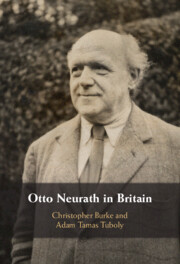
    Otto Neurath (1882–1945) was an Austrian-born philosopher of science, sociologist and political economist, and one of the most multi-faceted and creative thinkers in the Vienna Circle. Forced into exile by fascism, he was part of the intellectual exodus from Central Europe. After an adventurous escape to England and internment as an 'enemy alien', he enthusiastically adapted to British culture, working on documentary films and publications for the war effort using the Isotype method of visualization. He treasured the British habit of 'muddling through', and debated planning and economics with fellow Central European émigrés, Friedrich Hayek, Karl Mannheim and Karl Popper. Based on new archival research, this book explores a little-known period of Neurath's rich and fascinating life, weaving together biographical, historical, and philosophical strands that reflect the cross-cultural currents of twentieth-century intellectual history through the lens of Neurath's contribution.

    Reviews

    ‘Christopher Burke's and Adam Tamas Tuboly's rich and detailed study of Otto Neurath's final years fills a great gap in our understanding of this remarkable philosopher, economist and educationalist.  They let us see Neurath working for Enlightenment ideals like informed self-determination and intersubjective accountability – and hoping to rebuild Europe after the Nazi catastrophe.'

    Thomas Uebel - Emeritus Professor of Philosophy, University of Manchester

    ‘This impressive new book portrays the minutiae of the misadventures of Neurath, and, by doing so, unpacks the apparent contradictions in his many-sided and quite controversial legacy.… I highly recommend this book not just for those who are interested in the life and work of Otto Neurath but also for those who would like to know what it took to stay on-foot in a highly unpredictable and polarized political environment in the twentieth century. The book is a remarkable gem against the background of today’s politically aligned and hopelessly one-sided scholarship. It truly gives a glimpse into the complexities of Neurath’s character as well as his work, and not just during his years in Britain. This high-quality volume has the potential to become the definitive book on the life and work of Otto Neurath for several years to come.’

    Gábor István Bíró Source: Journal of the History of Economic Thought

    Refine List

    Actions for selected content:

    Select all | Deselect all
    • View selected items
    • Export citations
    • Download PDF (zip)
    • Save to Kindle
    • Save to Dropbox
    • Save to Google Drive

    Save Search

    You can save your searches here and later view and run them again in "My saved searches".

    Please provide a title, maximum of 40 characters.
    ×

    Contents

    • Introduction
      pp 1-11

    Metrics

    Altmetric attention score

    Full text views

    Total number of HTML views: 0
    Total number of PDF views: 0 *
    Loading metrics...

    Book summary page views

    Total views: 0 *
    Loading metrics...

    * Views captured on Cambridge Core between #date#. This data will be updated every 24 hours.

    Usage data cannot currently be displayed.

    Accessibility standard: Unknown

    Why this information is here

    This section outlines the accessibility features of this content - including support for screen readers, full keyboard navigation and high-contrast display options. This may not be relevant for you.

    Accessibility Information

    Accessibility compliance for the HTML of this book is currently unknown and may be updated in the future.

