Post-Truth
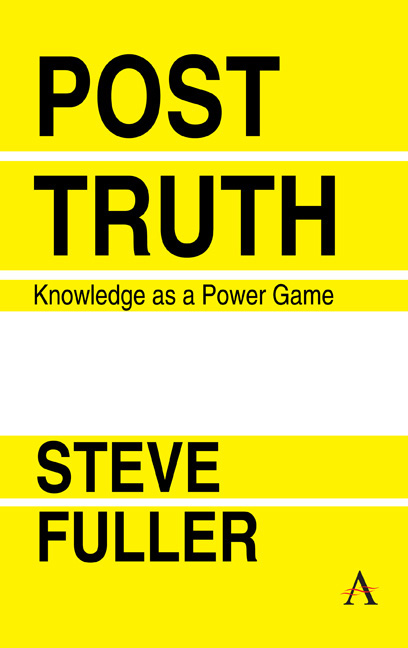

-
Select format
-
- Publisher:
- Anthem Press
- Publication date:
- 14 July 2018
- 25 May 2018
- ISBN:
- 9781783086955
- 9781783086931
- 9781783086948
- Dimensions:
- Weight & Pages:
- Dimensions:
- Weight & Pages:
You may already have access via personal or institutional login
Show more authors 
You may already have access via personal or institutional login
Book description
'Post-truth' was Oxford Dictionaries 2016 word of the year. While the term was coined by its disparagers in the light of the Brexit and US presidential campaigns, the roots of post-truth lie deep in the history of Western social and political theory. Post-Truth reaches back to Plato, ranging across theology and philosophy, to focus on the Machiavellian tradition in classical sociology, as exemplified by Vilfredo Pareto, who offered the original modern account of post-truth in terms of the 'circulation of elites'. The defining feature of 'post-truth' is a strong distinction between appearance and reality which is never quite resolved and so the strongest appearance ends up passing for reality. The only question is whether more is gained by rapid changes in appearance or by stabilizing one such appearance. Post-Truth plays out what this means for both politics and science.
Contents
Contents
Metrics
Altmetric attention score
Full text views
Full text views helpTotal number of HTML views: 0
Total number of PDF views: 0 *
 Loading metrics...
* Views captured on Cambridge Core between #date#. This data will be updated every 24 hours.
Usage data cannot currently be displayed.
Accessibility standard: Unknown
Why this information is here
This section outlines the accessibility features of this content - including support for screen readers, full keyboard navigation and high-contrast display options. This may not be relevant for you.
Accessibility Information
Accessibility compliance for the PDF of this book is currently unknown and may be updated in the future.