
- Publisher:
- Cambridge University Press
- Online publication date:
- March 2025
- Print publication year:
- 2025
- Online ISBN:
- 9781009514613
- Subjects:
- Classical Archaeology, Archaeology
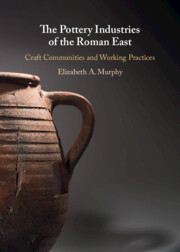
What was the social experience of work in the ancient world? In this study, Elizabeth Murphy approaches the topic through the lens offered by a particular set of workers, the potters and ceramicists in the eastern provinces of the Roman Empire. Her research exploits the rich and growing dataset of workshops and production evidence from the Roman East and raises awareness of the unique features of this particular craft in this region over several centuries. Highlighting the multi-faceted working experience of professionals through a theoretically-informed framework, Murphy reconstructs the complex lives of people in the past, and demonstrates the importance of studying work and labor as central topics in social and cultural histories. Her research draws from the fields of archaeology, social history and anthropology, and applies current social theories --- communities of practice, technological choices, chaîne opératoire, cultural hybridity, taskscapes – to interpret and offer new insights into the archaeological remains of workshops and ceramics.
 Loading metrics...
* Views captured on Cambridge Core between #date#. This data will be updated every 24 hours.
Usage data cannot currently be displayed.
Accessibility compliance for the PDF of this book is currently unknown and may be updated in the future.