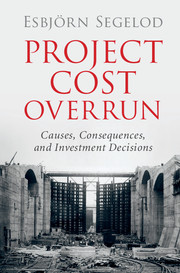

Cost overrun is common in public and private sector projects. Costs tend to grow, plans fail and financial problems follow, but how can we approve the right projects if we cannot estimate their true cost? This book, for academics in project management, management accounting and corporate finance, as well as for managers in the public and private sectors, offers a new way of thinking about the causes and consequences of cost overrun for firms and society. It demonstrates that there is a logic behind cost growth and overrun, identifies projects and situations that are more vulnerable, and examines the effects of increased costs. It further identifies the negative and positive consequences of cost overrun, analyses how and why preconditions for cost overrun differ when the logic governing private firms dominates versus the logic of the political sector, and explains why cost can sometimes be of lesser importance to decision makers.
'Projects running over budget and behind schedule are commonplace. Yet our knowledge about the causes remained piecemeal and scattered across various scholarly fields. The impressive review of the insights on the causes and consequences of such overruns offered in this book thus is highly topical - and the proposed model promises to enhance project management in practice just as much as scholarly research on the topic.'
Stefan Linder - ESSEC Business School, France
Loading metrics...
* Views captured on Cambridge Core between #date#. This data will be updated every 24 hours.
Usage data cannot currently be displayed.
This section outlines the accessibility features of this content - including support for screen readers, full keyboard navigation and high-contrast display options. This may not be relevant for you.
Accessibility compliance for the PDF of this book is currently unknown and may be updated in the future.
