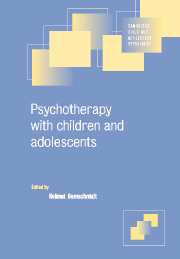

In this important volume, covering the principles and methods of psychotherapy in a wide range of settings, Helmut Remschmidt and an eminent team examine the various problems which face practitioners who deal with disturbed young people. How, for example, to accommodate existing treatments to age and developmental status? How to adapt psychotherapeutic techniques to a broad range of specific disorders, from schizophrenia, depression, autism, anxiety and abuse to bed-wetting and stuttering? How much training and involvement should be given to parents? How best to set the treatment - group, individual, in-patient, out-patient? How to choose and assess the most effective treatment - verbal, non-verbal, behavioural? What should the criteria be for assessing treatment? All these questions are examined, often with instructive case vignettes, alongside the most recent research findings and assessment tools available. This will be essential reading for all mental health professionals involved in psychotherapy with young people.
‘… an excellent survey of treatment approaches. The comments are rich in clinical experience of the contributors.’
Source: Journal of Child Psychology and Psychiatry
‘… this book will be of considerable utility and be seen as new and different. As such I recommend it as well worth reading for both trainees and specialists in the field, as well as others wishing for a perspective on CAMHS.’
Source: Journal of Psychological Medicine
Loading metrics...
* Views captured on Cambridge Core between #date#. This data will be updated every 24 hours.
Usage data cannot currently be displayed.
This section outlines the accessibility features of this content - including support for screen readers, full keyboard navigation and high-contrast display options. This may not be relevant for you.
Accessibility compliance for the PDF of this book is currently unknown and may be updated in the future.
