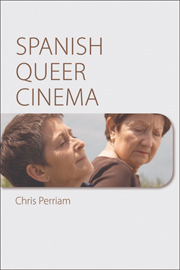
Spanish Queer Cinema

-
Select format
-
- Publisher:
- Edinburgh University Press
- Publication date:
- 05 August 2013
- 03 January 2012
- ISBN:
- 9780748665877
- 9780748665860
- Dimensions:
- Weight & Pages:
- 00kg,
- Dimensions:
- Weight & Pages:
You may already have access via personal or institutional login
Show more authors 
You may already have access via personal or institutional login
Book description
There is a lot more to Spanish Queer Cinema than Pedro Almodóvar or the gay comedies of the 1990s. A wealth of short films, documentaries and features -- many by, for, or about lesbians -- is at the core of a creative culture responding to exceptionally intense social changes. The country has moved from institutionalising same-sex unions at the regional civic level (from 1998) to legal recognition of same-sex marriage (in 2005). Moving images and the debates and conversations around them have made a stand against homophobia and exclusion, responded to health and welfare crises, questioned or affirmed the value of same-sex marriage, and constructed new forms of love and community. They, and their audiences, build a new Spanish queer imagination. The book opens all this up, and shows some of the wider social contexts and forms of communication which underpin it.
Contents
Contents
Metrics
Altmetric attention score
Full text views
Full text views helpTotal number of HTML views: 0
Total number of PDF views: 0 *
 Loading metrics...
* Views captured on Cambridge Core between #date#. This data will be updated every 24 hours.
Usage data cannot currently be displayed.
Accessibility standard: Unknown
Why this information is here
This section outlines the accessibility features of this content - including support for screen readers, full keyboard navigation and high-contrast display options. This may not be relevant for you.
Accessibility Information
Accessibility compliance for the PDF of this book is currently unknown and may be updated in the future.