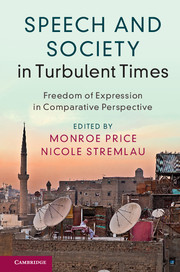
This volume explores how societies are addressing challenging questions about the relationship between expression, traditional and societal values, and the transformations introduced by new information communications technologies. It seeks to identify alternative approaches to the role of speech and expression in the organization of societies as well as efforts to shape the broader global information society. How have different societies or communities drawn on the ideas of philosophers, religious leaders or politicians, both historical and contemporary, that addressed questions of speech, government, order or freedoms and applied them, with particular attention to applications in the digital age? The essays include a wide variety of cultural and geographic contexts to identify different modes of thinking. The goal is to both unpack the 'normative' internet and free expression debate and to deepen understanding about why certain internet policies and models are being pursued in very different local or national contexts as well as on a global level.
Loading metrics...
* Views captured on Cambridge Core between #date#. This data will be updated every 24 hours.
Usage data cannot currently be displayed.
This section outlines the accessibility features of this content - including support for screen readers, full keyboard navigation and high-contrast display options. This may not be relevant for you.
Accessibility compliance for the HTML of this book is currently unknown and may be updated in the future.

