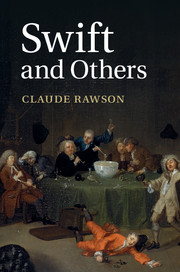

Jonathan Swift's influence on the writings and politics of England and Ireland was reinforced by a combination of contradictory forces: an authoritarian attachment to tradition and rule, and a vivid responsiveness to the disorders of a modernity he resisted and yet helped to create. He was, perhaps even more than Pope, a dominant voice of his times. The rich variety of the literary culture to which he belonged shows the penetration of his ideas, personality and style. This is true of writers who were his friends and admirers (Pope), of adversaries (Mandeville, Johnson), of several who became great ironists in his shadow (Gibbon, Austen), and of some surprising examples of Swiftian afterlife (Chatterton). Claude Rawson, leading scholar of the works of Swift, brings together recent essays, as well as classic earlier work extensively revised, to offer fresh insights into an era when Swift's voice was a pervasive presence.
'Rawson is a leading critic of eighteenth-century literature. He combines profound learning with tremendous range and stylistic grace, and he approaches everything he writes about with great originality.'
J. T. Lynch Source: Choice
Loading metrics...
* Views captured on Cambridge Core between #date#. This data will be updated every 24 hours.
Usage data cannot currently be displayed.
This section outlines the accessibility features of this content - including support for screen readers, full keyboard navigation and high-contrast display options. This may not be relevant for you.
Accessibility compliance for the PDF of this book is currently unknown and may be updated in the future.
