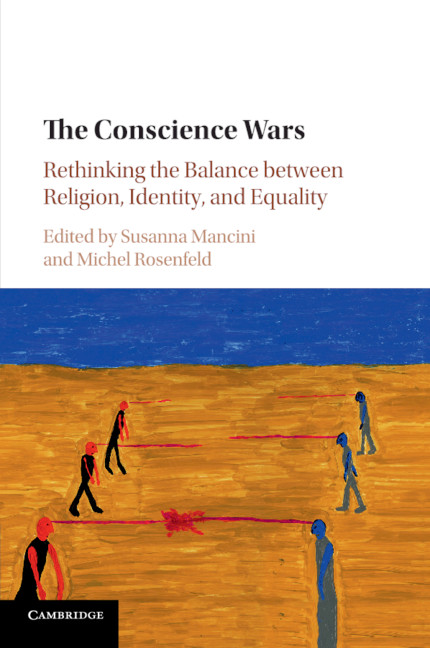

In this work, Professors Mancini and Rosenfeld have brought together an impressive group of authors to provide a comprehensive analysis on the greater demand for religions exemptions to government mandates. Traditional religious conscientious objection cases, such as refusal to salute the flag or to serve in the military during war, had a diffused effect throughout society. In sharp contrast, these authors argue that today's most notorious objections impinge on the rights of others, targeting practices like abortion, LGTBQ adoption, and same-sex marriage. The dramatic expansion of conscientious objection claims have revolutionized the battle between religious traditionalists and secular civil libertarians, raising novel political, legal, constitutional and philosophical challenges. Highlighting the intersection between conscientious objections, religious liberty, and the equality of women and sexual minorities, this volume showcases this political debate and the principal jurisprudence from different parts of the world and emphasizes the little known international social movements that compete globally to alter the debate's terms.
'The religious revival in political life is a defining feature of our age - and one whose significance for constitutional law in America and Europe is greatly illuminated in these original and insightful essays.'
Bruce Ackerman - Yale Law School, Connecticut
'An illuminating and compelling collection of essays addressing some of the quandaries of contemporary constitutional democracies: whereas historically claims of freedom of conscience have meant exemption or freedom from state-imposed obligations, such as military service, in many contemporary societies the ‘conscience wars’ require the state to intervene to protect the rights of objectors to engage or not to in the performance of certain acts, services, etc. How is the liberal state in pluralist societies to achieve justice for all? By discriminating positively to protect freedom of religious conscience? Or ignoring such claims? Or by sharply separating the public from the private? A great guide to questions and puzzles which affect us all as citizens and residents of a multi-plural religious universe.'
Seyla Benhabib - Eugene Meyer Professor of Political Science and Philosophy, Yale University, Connecticut, and Columbia Law School, New York
Loading metrics...
* Views captured on Cambridge Core between #date#. This data will be updated every 24 hours.
Usage data cannot currently be displayed.
This section outlines the accessibility features of this content - including support for screen readers, full keyboard navigation and high-contrast display options. This may not be relevant for you.
Accessibility compliance for the PDF of this book is currently unknown and may be updated in the future.
