
Skip to main content Accessibility help
×
  • Cited by 5
    • You may already have access via personal or institutional login
    • Select format
    • Publisher:
      Intersentia
      Publication date:
      December 2020
      July 2020
      ISBN:
      9781839700057
      9781839700040
      Dimensions:
      Weight & Pages:
      Dimensions:
      Weight & Pages:
    You may already have access via personal or institutional login
  • Selected: Digital
    Add to cart View cart Buy from Cambridge.org

    Book description

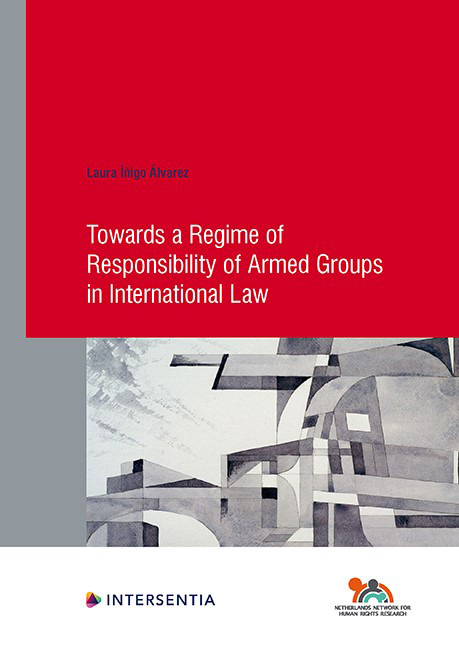
    Armed groups have played a predominant role in the violations of international humanitarian law and international human rights law committed in conflict settings. The increase in the number of non-international armed conflicts during the past decades has emphasised the need to address the multiple legal challenges posed by the actions of armed groups. In particular, there is considerable uncertainty regarding the framework of responsibility for armed groups in international law. While much has been written regarding their international (primary) obligations, the possibility of developing a responsibility framework for armed groups under international law has been underexplored. Consequently, the aim of this book is to examine how the principles of international responsibility could be developed and adjusted to account for armed groups as collective entities. This general aim has been divided into three specific objectives. First, the book analyses the concept of responsibility in international law and assesses the legal and practical reasons in favour of developing such a regime for armed groups. Second, it examines the viability of establishing a responsibility regime for armed groups based on rules of attribution. Third, it explores the possible legal consequences of responsibility applicable to armed groups, with a particular focus on the obligation to provide reparations to victims. In doing so, this book will argue that certain non-traditional sources of international law could be used to interpret and adapt international law to the current conditions of contemporary armed conflict.

    Refine List

    Actions for selected content:

    Select all | Deselect all
    • View selected items
    • Export citations
    • Download PDF (zip)
    • Save to Kindle
    • Save to Dropbox
    • Save to Google Drive

    Save Search

    You can save your searches here and later view and run them again in "My saved searches".

    Please provide a title, maximum of 40 characters.
    ×

    Contents

    Metrics

    Full text views

    Total number of HTML views: 0
    Total number of PDF views: 0 *
    Loading metrics...

    Book summary page views

    Total views: 0 *
    Loading metrics...

    * Views captured on Cambridge Core between #date#. This data will be updated every 24 hours.

    Usage data cannot currently be displayed.

    Accessibility standard: Unknown

    Why this information is here

    This section outlines the accessibility features of this content - including support for screen readers, full keyboard navigation and high-contrast display options. This may not be relevant for you.

    Accessibility Information

    Accessibility compliance for the PDF of this book is currently unknown and may be updated in the future.
