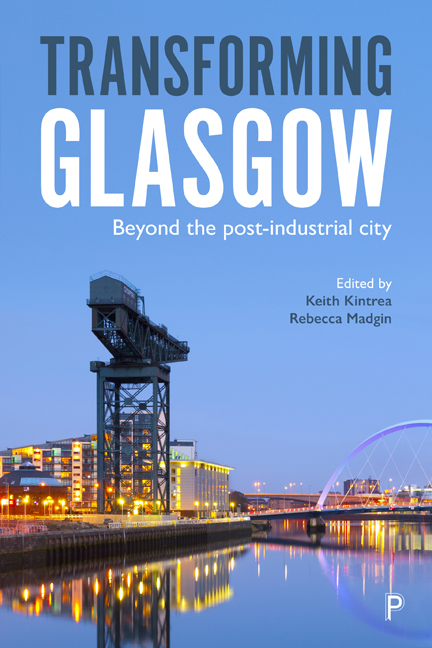

Some 30 years after Glasgow turned towards regeneration, indicators of its built environment, its health, its economic performance and its quality of life remain below UK averages. This interdisciplinary study examines the ongoing transformation of Glasgow as it transitioned from a de-industrial to a post-industrial city during the 20th and 21st centuries. Looking at the diverse issues of urban policy, regeneration and economic and social change, it considers the evolving lived experiences of Glaswegians. Contributors explore the actions required to secure the gains of regeneration and create an economically competitive, socially just and sustainable city, establishing a theory that moves beyond post-industrialism and serves as a model for similar cities globally.
Loading metrics...
* Views captured on Cambridge Core between #date#. This data will be updated every 24 hours.
Usage data cannot currently be displayed.
This section outlines the accessibility features of this content - including support for screen readers, full keyboard navigation and high-contrast display options. This may not be relevant for you.
Accessibility compliance for the PDF of this book is currently unknown and may be updated in the future.
