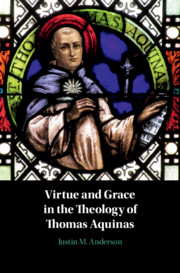
Throughout his writings, Thomas Aquinas exhibited a remarkable stability of thought. However, in some areas such as his theology of grace, his thought underwent titanic developments. In this book, Justin M. Anderson traces both those developments in grace and their causes. After introducing the various meanings of virtue Aquinas utilized, including 'virtue in its fullest sense' and various forms of 'qualified virtue', he explores the historical context that conditioned that account. Through a close analysis of his writings, Anderson unearths Aquinas's own discoveries and analyses that would propel his understanding of human experience, divine action, and supernatural grace in new directions. In the end, we discover an account of virtue that is inextricably linked to his developed understanding of sin, grace and divine action in human life. As such, Anderson challenges the received understanding of Aquinas's account of virtue, as well as his relationship to contemporary virtue ethics.
'… this book is remarkable for its historical depth, and provocative in some of its conclusions.'
David Elliot Source: The Thomist
‘It is rare to have the pleasure of reviewing a book as well argued and well researched as [this] … This monograph significantly impacts how we understand Aquinas’ theory of virtue.’
K. Lauriston Smith Source: Reading Religion
Loading metrics...
* Views captured on Cambridge Core between #date#. This data will be updated every 24 hours.
Usage data cannot currently be displayed.
This section outlines the accessibility features of this content - including support for screen readers, full keyboard navigation and high-contrast display options. This may not be relevant for you.
Accessibility compliance for the PDF of this book is currently unknown and may be updated in the future.

