

Series Preface
Urban Climate Change Research Network
Third Assessment Report on Climate Change and Cities (ARC3.3)
William Solecki (New York), Minal Pathak (Ahmedabad), Martha Barata (Rio de Janeiro), Aliyu Salisu Barau (Kano), Maria Dombrov (New York), and Cynthia Rosenzweig (New York)
Cities and the urbanization process itself are at a crossroads. While the world’s urban population continues to grow, cities are increasingly pressed by chronic and acute stresses like increasing inequity, polluted air and waters, limited governance, and financial capacities, along with entrenched spasmodic crime and conflict – and the COVID-19 pandemic. Climate change has now exacerbated these problems and in many cases created new ones, at a time when cities are asked to be the bulwark of the climate-solution space. The advent and application of new technologies and strategies associated with the internet, environmental sensing, multi-modal transport, and innovative planning and design strategies portend a new golden age for cities. Some cities provide glimmers of this possible future, but persistent stresses and intermittent crises, along with climate change, push against progress. In the Urban Climate Change Research Network’s (UCCRN’s) Third Assessment Report on Climate Change and Cities (ARC3.3), we address these issues head-on and present state-of-the-art knowledge on how to bring all cities and their residents forward to a more sustainable future.
An absolute necessity now exists for cities everywhere, both in the Global North and Global South, to aggressively work to fulfill their potential as leaders in climate change action. In the Global North, the task is for cities to address the emerging challenges from the changing climate and the exigencies of compliance with the UNFCCC Paris Agreement. For cities in the Global South, there is the double burden of achieving climate-resilient development, that is, meeting increasing demand for housing, energy, and infrastructure for burgeoning populations, while confronting simultaneous requirements to reduce greenhouse gas (GHG) emissions and adapt to a changing climate (UNEP & UN-Habitat, 2021). In all geographies, the implementation of transformative mitigation and adaptation in cities can be an instrument to generate livelihoods for those with lower purchasing power and can enhance capacity to better respond to shocks like future pandemics, energy supply chain spasms, and food security emergencies (UNDP, 2022).
Benchmarked Learning
ARC3.3 builds upon the preceding UCCRN Assessment Reports on Climate Change and Cities (ARC3), ARC3.1 (2011) and ARC3.2 (2018). The purpose of the ARC3 series is to provide the benchmarked knowledge base for cities as they affirm their essential responsibility as climate change leaders. The ARC3 Series, with newly added ARC3.3 Elements, presents knowledge that builds on accumulated and shared experiences and thus advances and deepens with time.
In ARC3.1, cities were identified as key actors – “first responders” – in rising to the challenges posed by climate change (Rosenzweig et al., Reference Rosenzweig, Solecki, Hammer and Mehrotra2011). According to ARC3.1, “Cities around the world are highly vulnerable to climate change but have great potential to lead on both adaptation and mitigation efforts.”
In ARC3.2, this focus advanced into understanding how cities can achieve their potential by establishing a multifaceted pathway to transformation (Rosenzweig et al., Reference Rosenzweig, Solecki, Romero-Lankao, Mehrotra, Dhakal and Ali Ibrahim2018). It provided a roadmap for cities to fulfill their leadership potential in responding to climate change. According to ARC3.2, “As cities mitigate the causes of climate change and adapt to new climate conditions, profound changes will be required in urban energy, transportation, water use, land use, ecosystems, growth patterns, consumption, and lifestyles.”
Now, as the urgency of climate change is brought home daily, ARC3.3 offers the knowledge needed to speed up and scale up urban action on climate change. To accomplish this, it presents practical methods and case study examples for accelerating change into rapid transformation in cities across the globe.
UCCRN Assessment Process
The ARC3.3 authors were either self-nominated or nominated by a third-party and were selected by the ARC3.3 Editorial Board through comprehensive vetting that prioritizes expertise, diversity, gender, and geographic balance. Each author team develops a robust assessment of an Element topic using the latest literature, while also conducting new research. All Author Teams are responsible for conducting a stakeholder engagement session during the writing period with the goal of ensuring relevance to a diverse group of urban decision-makers. During self-coined “stakeholder soundings,” authors present emerging major findings and key messages to stakeholders, including city leaders from the authors’ home cities, for their feedback. UCCRN also coordinates a rigorous iterative peer-review process for each ARC3.3 Element that engages with both academic and practitioner experts, both in and out of the network.
The UCCRN’s Case Study Docking Station (CSDS) is a searchable database designed to facilitate peer learning between and among cities, benchmark actions over time, and enable cross-comparisons of city case studies.Footnote 1 The CSDS includes more than 200 peer-reviewed case studies covering a range of topics such as climate change vulnerability, hazards and impacts, and mitigation and adaptation actions for specific sectors. The CSDS has a total of sixteen searchable variables.Footnote 2 For example, users can filter searches by climate zone, city population size, human development index, gross national income, or mitigation versus adaptation, or directly type in keywords and city names. Case study examples include flood adaptation in Bridgetown, cloudburst planning in Copenhagen, and climate action financing in Durban.
Cities are vanguard sites for opportunities to enhance equity and inclusion. Besides the ARC3.3 Justice for Resilient Development in Climate-Stressed Cities Element, equity and inclusion permeate every ARC3.3 Element. City experts delve into the multiple dimensions of climate change justice: distributive (relating to the differential vulnerability of groups and neighborhoods), contextual (relating to the root causes of vulnerability), and procedural (relating to participation in decision-making for climate change interventions) (Foster et al., Reference Foster, Leichenko, Nguyen, Blake, Kunreuther, Madajewicz, Petkova, Zimmerman, Corbin-Mark, Yeampierre, Tovar, Herrera and Ravenborg2019). The concepts of recognitional (valuing of diverse identities) and restorative justice (restoring dignity and repairing the societal harm caused by earlier actions) are now emerging, as well. Elucidation of ways to achieve all types of climate justice for the most vulnerable urban groups and equal access to financial and technological resources for all cities underpins ARC3.3.
ARC3.3 Elements
City-centered assessments have been conducted by UCCRN since its founding in 2007. With more than 2,000 scholars and experts from cities around the world, UCCRN is addressing the research agenda that was formulated at the IPCC Conference on Cities and Climate (Prieur-Richard et al., Reference Prieur-Richard, Walsh, Craig, Melamed, Pathak, Connors, Bai, Barau, Bulkeley, Cleugh, Cohen, Colenbrander, Dodman, Dhakal, Dawson, Greenwalt, Kurian, Lee, Leonardsen, Masson-Delmotte, Munshi, Okem, Delgado Ramos, Sanchez Rodriguez, Roberts, Rosenzweig, Schultz, Seto, Solecki, van Staden and Ürge-Vorsatz2018).Footnote 3 Key components of this research agenda include urban planning and design, green and blue infrastructure, equity, health, sustainable production and consumption, and finance. More than 300 UCCRN authors have now advanced this research agenda and other critical topics through ARC3.3 (Solecki et al., 2025), which consists of twelve peer-reviewed monographs to be published as Cambridge University Press Elements, both separately and together, throughout 2025 and 2026.
Within twelve critical topics on climate change and cities, ARC3.3 synthesizes the latest scientific knowledge in the field while presenting new research findings and offering clear policy recommendations.Footnote 4
1. Learning from COVID-19 for Climate-Ready Urban Transformation
The COVID-19 pandemic has revealed gaps in city readiness for simultaneous responses to pandemics and climate change, particularly in the Global South. However, these concurrent challenges present opportunities to reformulate current urbanization patterns, economies, and the dynamics they enable. This Element focuses on understanding COVID-19’s impact on city systems related to mitigation and adaptation, and vice versa, in terms of warnings, lessons learned, and calls to action.
2. Justice for Climate-Resilient Development in Climate-Stressed Cities
To ensure climate-resilient urban development, both adaptation and mitigation must include the broader city context related to equity, informality, and justice. Responses to climatic events are conditioned by the informality of the existing social fabric, institutions, and activities, and by the inequitable distribution of impacts, decision-making, and outcomes. This Element discusses differential exposure to climate events as well as distributive, recognitional, procedural, and restorative justice.
3. Planning, Urban Design, and Architecture for Climate Action
Planners, urban designers, and architects are called on to bridge the domains of research and practice and evolve their capacity and agency by developing new methods and tools that are consistent across multiple spatial scales. These are required to ensure the convergence of effective outcomes across metropolitan regions, cities, neighborhoods, and buildings. This Element evaluates how the fields of planning, urban design, and architecture integrate climate mitigation and adaptation and presents a manifesto for urban transformation using science-informed methods and tools.
4. Financing Urban Transitions to Climate Neutrality and Increased Resilience
This Element documents the availability of, and access to, finance for mitigation and adaptation in urban areas in both the Global South and Global North. It evaluates current international flows, national policies, and municipal utilization capacities across private and public sectors, nongovernmental (NGOs), and community-based organizations (CBOs). Global financial capital is abundant but often flows to corporate investments and real estate development rather than into critical efforts to mitigate and adapt to climate change in cities. It presents innovative financial mechanisms including insurance and mobilization strategies for cities. Political will and public pressure are crucial to effectively redirect these funds.
5. Urban Climate Science: Knowledge Base for City Risk Assessments and Resilience
Cities alter the climate system both within their boundaries and nearby through interactions with impervious land surfaces, energy generation facilities, and transportation systems. These processes that occur on urban scales are interacting with larger-scale climate change processes to exacerbate extreme events that impact urban dwellers. This Element provides observations and projections of temperature, precipitation, and sea level change for the cities engaged in ARC3.3 and assesses the latest research on urban heat and precipitation islands, compound extreme events, and indicators and monitoring, including the use of remote sensing in urban settings.
6. Governance, Enabling Policy Environments, and Just Transitions
The nature of governance, as a concatenation of social institutions and practices embedded at different scales, suggests the need for an integrated approach to address the complex challenges of climate change in cities. This Element sets forth multi-level governance structures for climate action across urban, regional, national, and international levels, analyzes the inclusion of urban actions in nationally determined contributions (NDCs), and assesses the potential for urban transitions and transformations.
7. Infrastructure for a Net Zero and Resilient Future in Cities
Without infrastructure, cities could not exist. Infrastructure determines urban forms, functions, economic development, and people’s livelihoods and well-being. By developing transformative infrastructure, cities can achieve ambitious GHG emission reductions, build resilience to climate impacts, and ensure inclusive and diverse access to services. This Element explores infrastructure planning concepts like life cycle analysis, decentralization, and integration, and emphasizes the need for equitable, resilient systems designed according to future climate projections.
8. Nature-Based Solutions: Enhancing Capacity to Respond to Shocks and Stresses
There is a growing acknowledgment that a disproportionate amount of attention and finance is invested in hard infrastructure to mitigate and adapt to climate change in cities. In contrast, soft infrastructure, which is the use of natural features and processes, has been comparatively overlooked until recently. This Element assesses the ways that nature-based solutions (NbS) – such as reforestation, urban parks, street trees, sustainable urban drainage systems, and community gardens – can enhance the capacity of cities to reduce GHG emissions and enhance resilience to climate stresses.
9. Circular Economies for Cities
Circularity – an economic system where waste and pollution is minimized and resources are continuously reused – has the potential to transform cities and city systems in both the Global North and the Global South. Sustainable consumption and production and supply and demand factors are increasingly coming into focus in cities. This Element discusses the linkages of circular economies to climate action planning, the water–energy–food–system nexus, and just, local development.
10. Data and the Role of Technology
Over the past decade, changes in internet penetration and the development of new information and communication technologies have catalyzed an ecosystem of approaches that employ “big data” and “smart tools” to support adaptation and mitigation. Artificial intelligence and machine learning play a large role in this new technological ecosystem. This Element assesses the opportunities and challenges for cities as they employ these new technologies and evaluate emerging tools for their utility in climate change responses.
11. Perception, Communication, and Behavior
This Element explores the latest research on how urban residents perceive climate change so the effectiveness of actions can be improved. An important corollary to this is the role that communication plays in how mitigation and adaptation actions are adopted by cities. In the event of a climate disaster, the way that cities communicate has a direct effect on residents’ perceptions of risks and their subsequent behaviors, such as evacuation or strategic relocation. The Element addresses how behaviors by urban inhabitants can be encouraged to change mobility patterns and energy use in order to reduce GHG emissions, while simultaneously helping citizens to prepare for increasing climate extremes.
12. Health and Well-Being
Climate change, especially increasing extreme events, are exacerbating the risks of mortality, disease, and injury and the impacts on physical and mental health and well-being in many cities. Climate change also has indirect impacts on health through disruptions in food supply and water availability. This Element assesses the latest findings on all aspects of the intersection of health and climate change for urban residents – including built form, such as the presence of natural spaces.
ARC3.3 Major Findings and Key Messages
Besides the basic assessment content, each Element includes a statement of major findings and key messages. Major findings bring forward significant new knowledge that emerged through the assessment process, while key messages are recommendations for new direction efforts and activities with a specific focus on opportunities to speed up and scale up urban climate action.
Cross-Cutting Themes
Cities are complex social–ecological–technological systems. While ARC3.3 is composed of twelve separate Elements, together they comprise multiple synergies, interdependencies, and points of intersection. To address these connections, each Element addresses its own selection of relevant cross-cutting themes. Figure 1 illustrates how significant recurring themes appear within the Element and the interlinkages to related Elements. Cross-cutting themes (CCTs) encompass drivers of urban function, change, and management; governance of cities across municipal, state/provincial, national, and international levels; and the role of city-level models and data.
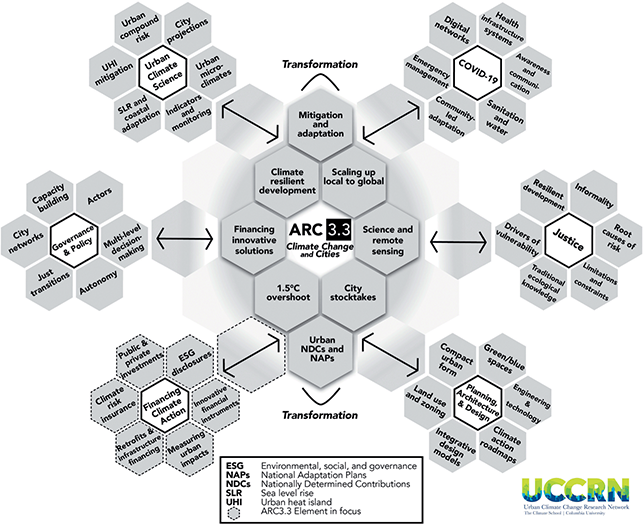
Figure 1 Cross-cutting themes associated with the overall ARC3.3 assessment and the first six Elements, with the Finance Element in focus. This figure is also available to view online at www.cambridge.org/meyer-et-al
Figure 1Long description
The diagram has a central hexagon labeled ARC 3.3 Climate Change and Cities. Surrounding this central hexagon are eight hexagons labeled: Climate resilient development, Mitigation adaptation (with the word Transformation above it), Scaling up local to global, Science and remote sensing, City stocktakes, Urban N D C s and N A P s (with the word Transformation below it), 1.5-degree Celsius overshoot, and Financing innovative solutions. This group is further connected to 6 other clusters of hexagons with different labels all around it. Cluster 1: Urban Climate Science. It is surrounded by 6 hexagons labeled City projections, Urban micro-climates, indicators and monitoring, S L R and coastal adaptation, U H I mitigation, and Urban compound risk. Cluster 2: COVID-19. It is surrounded by 6 hexagons labeled Health infrastructure systems, Awareness and communication, Sanitation and water, Community-led adaptation, Emergency management, and Digital networks. Cluster 3: Justice and Equity. It is surrounded by 6 hexagons labeled Informality, Root causes of risk, Limitations and constraints, Traditional ecological knowledge, Drivers of vulnerability, and Resilient development. Cluster 4: Planning, Architecture and Design. It is surrounded by 6 hexagons labeled Green/blue spaces, Engineering and technology, Climate action roadmaps, Integrative design models, Land use and zoning, and Compact urban form. Cluster 5: Financial Action. It is surrounded by 6 hexagons labeled E S G disclosures, Innovative financial instruments, Measuring urban impacts, Retrofits and infrastructure financing, Climate risk insurance, and Public and private investments. Climate 6: Governance and Policy. It is surrounded by 6 hexagons labeled Capacity building, Actors, Multi-level decision-making, Autonomy, Just transitions, and City networks. At the bottom, there is a note explaining abbreviations: E S G - environmental, social, and governance, N A Ps - National adaptation plans, N D Cs - Nationally determined contributions, U H I - urban heat island, and S L R - sea level rise. The diagram is branded with U C C R N Urban Climate Change Research Network at the bottom right.
Because the fundamental contribution of the ARC3 series is to enable a learning process for urban climate action, CCTs across the ARC3.3 Elements aim to shed light on cause-and-effect relationships and elucidate effective entry-points for interventions. This focused knowledge of urban social–ecological–technological systems can inform planners, implementers, and other city actors as they undertake ways to translate the latest science into climate action in their own urban communities.
Conclusion
We are pleased to present the Financing Urban Transitions to Climate Neutrality and Increased Resilience Element of the UCCRN Third Assessment Report on Climate Change and Cities (ARC3.3). This important Element sets forth the knowledge foundation as well as the practical tools needed to unlock much-needed resources for city climate action, both mitigation and adaptation. The authors make a powerful argument for broadening the conceptualization of finance in order to convince both public- and private-sector actors – including global funds, multinational development banks, national governments, and private-sector organizations – that cities are indispensable climate partners worthy of investment. The Element thus simultaneously provides the key information needed to both jumpstart and upscale finance for city climate action.
Foreword I – Eugenie Birch, Lawrence C. Nussdorf Professor of Urban Research and Education, University of Pennsylvania; Co-Director, Penn Institute for Urban Research
With the world’s population growth exploding – 2050 will see the addition of some two billion inhabitants, primarily in cities in low- and middle-income countries of Africa and Asia – public and private decision-makers are pressed to meet basic infrastructural needs (transportation, water and sanitation, public space, electricity, social service facilities) while responding to such global issues as climate change, poverty eradication, and sustainable economic growth. Further, the COVID-19 pandemic revealed additional weaknesses in national and subnational infrastructure. Finally, countries are experiencing inflation and high interest rates – phenomena that affect how the cities of the world are managing.
Since cities produce more than 70 percent of the planet’s total CO₂ emissions, they present the critical arena for the implementation of climate-resilient development strategies – ones that address mitigation, adaptation, and poverty alleviation simultaneously (Luqman et al., Reference Luqman, Rayner and Gurney2023). With some 60 percent of global infrastructure needed in 2050 yet to be built, huge investments are required. UN-Habitat estimates that in emerging-economy cities alone, annual costs range from US$20 million to US$50 million in small cities (under 100,000 inhabitants) to US$140–500 million in medium cities (100,000 to million inhabitants), and US$600 million in large cities (+1 million inhabitants). This adds up to $4.3 TK, a sum greatly exceeding today’s current spending of US$831 billion reported by the City Climate Finance Leadership Alliance’s 2024 State of City Climate Finance report. Despite some progress in city-focused financing, the existing mechanisms fall short of the magnitude of resources needed.
The question is how to raise the funds required. The answer calls for designing a fit-for-purpose financing architecture to replace today’s circa-1940s system developed when the world was not nearly so urbanized. This monumental challenge is not impossible. Financing Urban Transitions to Climate Neutrality and Increased Resilience shows the way. It calls for blended finance (public and private investments) supported by improved risk assessment models and the development, refinement, and implementation of new investment tools.
Foreword II – Kevin Chika Urama, Chief Economist/VP for Economic Governance and Knowledge Management Complex, African Development Bank Group
Cities across the world consume 78 percent of global energy and produce over 60 percent of total GHG emissions while covering only 2 percent of the world’s surface. As UN Secretary-General António Guterres rightly put it, “cities are where the climate battle will largely be won or lost and the choices that will be made on urban infrastructure in the coming decades … will have a decisive influence on the emissions curve.”Footnote 5
Nonetheless, the reality is that there is what I call “the paradox of climate action financing in cities.” Despite their huge climate finance needs resulting from their undisputable role in driving global warming – and hence in meeting Paris Agreement goals – and their being home to 55 percent of the world’s population – a figure expected to rise to 68 percent by 2050 – cities remain largely underfinanced, in particular in Africa, jeopardizing their transition to climate neutrality and resilience.
Addressing the enormous climate investment gap for cities in Africa and elsewhere is critical for putting the world on a sustainable development path and, subsequently, for meeting the United Nations Sustainable Development Goals (SDGs). The world is not short of capital to finance all climate adaptation and mitigation in cities. However, to attract those resources, we need to better understand the dynamics of climate finance for cities. This requires sustained efforts to build a strong knowledge base on issues such as: the potential costs of climate-related events in cities; private-sector climate investment decisions; appropriate institutional arrangements; and the specific needs of cities in the Global South, particularly in Africa.
The Third Assessment Report on Climate Change and Cities has kept the promise of previous reports produced by UCCRN by advancing our knowledge in the important area of climate change mitigation and adaptation in cities. In particular, the ARC3.3 Finance Element comes at a decidedly opportune time, as the global community needs sound knowledge to ramp up efforts to address the acute climate challenges facing cities around the world. The Element highlights the critical role of public-sector measures, innovative financial instruments for urban areas, the insurance industry, and the development of financial markets in cities of the Global South in addressing market failures and moving more funds toward urban climate change actions. It further provides pragmatic directives to key stakeholders to fast-track financial flows to cities and address the climate crisis they currently face.
Dealing with urban climate change does not have to be a zero-sum game, with winners and losers, but can be turned into a win-win solution for all stakeholders. Cities are projected to present a climate investment potential of nearly US$30 trillion by 2030, of which US$1.3 trillion will be in Africa. Investors, cities, and public actors will need to work together to actualize this potential.
Series Editors’ Introduction to Financing Urban Transitions to Climate Neutrality and Increased Resilience
Despite adequate supplies of global capital, climate action in cities – both in often-overlooked small and medium-sized cities and in the growing urban megacities in the Global South and Global North – has long been stymied by a lack of effective financing. Once funded, cities often face difficulty in measuring the results of climate action in their localities, further hindering investments. To address this multifaceted impasse, the ARC3.3 Element Financing Urban Transitions to Climate Neutrality and Increased ResilienceFootnote ‡ presents ways to expand conceptual frameworks, integrate risk from worsening climate hazards, and develop innovative financial instruments, including insurance. It also engages with the need for cities to enhance their financial acumen through capacity expansion and training.
The Element has a special focus on African cities, where needs for financing are particularly dire. While the flow of finance is the driving force for building climate-resilient cities in Africa, urban climate finance flows to cities averages there just US$3 billion a year in 2018 (CCFLA, 2021). Despite a 10.9 percent increase in 2018, the whole of Africa secured only 3.5 percent (US$46 billion) of global foreign direct investment – leaving large parts of its growing cities described by financiers as “high risk” and citizens deemed “unbankable.” As of 2015, Africa faced an estimated 40 percent infrastructure financing gap, which is almost certainly higher in the continent’s rapidly growing cities.
Overall, the ARC3.3 Finance Element contributes to the acceleration of equitable and actionable multi-level flows of innovative financing required for cities to achieve their long-called-for and essential climate leadership. It assesses recent analyses of the role of cities as financial agents of climate change solutions and how to advance and secure financing. It provides much more explicit directives to key public and private-sector actors needed to facilitate accelerated flows and improved accessibility of critical resources required to fast-track collective responses to the climate crisis.
This Element not only explains why city governments and institutions that manage and sustain everyday city life often lack financial resources for climate action, but also presents concrete financial mechanisms to address these challenges. The meaningful integration of financing into many settings, especially in developing country contexts or under conditions of informality, faces a variety of challenges, including the role of powerful vested interests, entrenched inequities, corruption, and broader market forces that drive development. Finance, insurance, and real estate developers, as well as other private-sector and multi-level government actors, have key responsibilities in enabling city transformations.
The ARC3.3 Finance Element authors argue that cities need to adhere to the evolving standards related to environmental, social, and governance (ESG) considerations in order to unlock greater climate finance. This global movement will guarantee that investments support the broader goals of a just transition rather than exclusively benefiting a privileged few by remaining focused on private profits. This Element also lays out how NbS connect to the SDGs and how together they fit into the ESG framework. The approach should help make investing in natural capital more attractive to institutional investors with relatively long horizons, especially for Global South projects.
The Element then focuses on the Task Force on Climate-Related Financial Disclosures (TCFD) and its role in setting standards for climate-related financial reporting. It emphasizes that disclosing climate-related information is becoming an important factor determining borrowing costs since investors impose higher costs on municipalities that they perceive have greater exposure to climate risks.
The ARC3.3 Finance Element presents innovative mechanisms for tackling climate change effectively and enhancing resilience by prioritizing adaptation and associated risk reduction to attract investment. It introduces the social, economic, and environmental value of mitigation actions (SVMA) framework, which complements ESG and TCFD measures. Financial tools and mechanisms that aim to mobilize funds for climate-related initiatives include green bonds, natural capital pricing, land value capture (LVC),Footnote 6 carbon pricing, energy service companies (ESCOs), and de-risking strategies. A key mechanism described in the Element is how insurance can play a crucial role in managing climate risk for cities, its functions, limits, accessibility, and affordability, and scenarios for sustainable insurance in the face of climate risk (Meyer et al., Reference Meyer, Sushchenko and Schwarze2025).
This Element calls for profound and urgent scaling up and speeding up of urban climate action. New ways forward are transformative flows through finance systems both within and between cities. The goal is to achieve fully resourced financing for equitable, resilient net-zero cities. Following the recommendations set forth in the ARC3.3 Finance Element will empower all city actors to unblock climate finance for action in their own urban communities.
Major Findings and Key Messages
Major Findings
1. Sufficient investment capital exists in world markets to finance needed climate change mitigation and adaptation in cities. However, that capital is largely locked in corporate investments and real estate, and it is not yet directed to supporting urban climate action. Greater political will and public pressure is required to move more funds toward urban climate change mitigation and adaptation measures (Sections 1 and 6.3).
2. Studies of economic impacts of climate change in cities understate potential costs by failing to include the cumulative effects of direct losses from heat, fires, floods, and storms. Investors, governments, and multinational financial institutions thus underestimate the returns from avoided losses available through reduced urban climate change impacts due to mitigation and adaptation (Section 7.6).
3. An urgent need exists to both build financial capacity and increase financing for cities in the Global South, especially for climate adaptation, which receives much less funding than mitigation. Despite the importance of climate finance in building resilient cities in the Global South, urban climate finance in Africa, for example, remains significantly low, with their cities receiving only an average of US$3 billion annually (Sections 2, 5.1, and 7.3).
4. Market rate debt is among the top instruments for urban climate finance. For example, among international banks the European Investment Bank (EIB) has allocated some of the largest volumes of direct urban climate mitigation loans. Urban loans for climate mitigation and adaptation allocated from the EIB between 2017 and 2021 totaled approximately US$124 billion to mostly EU countries. Other common financial instruments include green bonds, pricing natural capital, land value capture, carbon pricing, and de-risking (Section 2).
5. Cities that incorporate sustainability issues and co-benefits of climate projects into their master plans are more likely to receive additional funding. Data show that cities incorporating climate resiliency and environmental and social co-benefits into urban master plans were between two and two and half times more likely to identify opportunities for advancing action, including new businesses and financing resources, than projects that did not (Section 4.2).
6. Recent formalization of the International Sustainability Standards Board nonfinancial disclosure standard is important to ensure expanded climate expenditures in cities. This standard is maintained by the Taskforce on Climate-Related Disclosures (TCFD). Voluntary regulations regarding climate finance mobilization or disclosure of nonfinancial (i.e., ESG) information in financial markets are evolving into legally binding provisions, already promulgated in China and the EU (Section 4.1).
7. Climate investments in cities are a growing priority for both public and private parties as well as for multilateral development banks (MDBs). Climate finance negotiations at COP29 in Baku resulted in a pledge to mobilize US$300 billion annually for developing countries by 2035, with the long-term target to increase climate finance flows to US$1.3 trillion per year by 2035. This US$1.3 trillion target includes private-sector finance; however, the pledge still falls short of the financial needs of vulnerable nations and remains yet to be fully specified following COP30. The MDBs also pledged to increase climate financing to US$120 billion by 2030: a 60 percent increase from the amount in 2023. Enabling conditions for private sector participation include carbon markets, the introduction of carbon taxes, and fostering of energy service companies (ESCOs) (Section 9).
Key Messages
1. Climate change financing in cities should align with both the ESG framework and the SDGs to promote a just transition to a low emissions and resilient world. The ESG framework and the SDGs are synergistic, especially in relation to SDG 11, which aims to “make cities and human settlements inclusive, safe, resilient, and sustainable.” By integrating both frameworks, cities can foster more equitable and resilient communities that harness both environmental and economic progress. This alignment also ensures that investments drive broader social outcomes, such as poverty reduction and inclusion. A dual focus on ESG and SDGs will create long-term value that benefits all urban residents, particularly vulnerable populations.
2. The “climate investment trap” must be addressed, where by the underdeveloped financial markets pose risks for investors that translate into higher costs for accessing climate finance. Limited experience with formal debt instruments and financial markets leaves cities in the Global South with poor credit ratings, further raising the cost of capital and limiting access to credit markets. Measures to support local climate impact data collection and analysis and training to improve credit standings must be priorities for addressing the Global North–South divide in access to urban climate finance.
3. Public-sector measures, such as guarantees, and forms of blended finance, such as combining public funds with private capital, are necessary to attract private investment for climate change action in cities. Carbon prices, carbon credits, biodiversity funding, and other prospective local income sources (e.g., land value capture) can be additional sources of revenue for cities, in addition to traditional public funding, such as loans, direct investments, grants, and development aid funds.
4. Development and implementation of innovative financial instruments for urban areas are urgently needed. These include green bonds, nonfinancial returns on investment, public-private climate partnerships, and debt-for-climate swaps. By diversifying funding sources and utilizing blended finance models, cities can decrease risks and ensure more stable and reliable finance flows. Additionally, these mechanisms can foster greater private-sector involvement, aligning financial returns with broader environmental and social outcomes.
5. The insurance industry is encouraged to play a dramatically more significant role in urban climate finance as investor and resilience actor. As investors, insurance companies control massive assets, and as interested parties, they are concerned with limiting future climate-induced costs through the promotion of adaptation efforts. Insurance companies could set up new alliances with cities to provide data, assess risks, and finance local adaptation, provided that the firms recognize the benefits of urban climate change risk reduction.
6. The creation of independent information centers at regional, national, and global levels can provide reliable data to reduce financial risks. Rating agencies, microfinance institutions (MFIs), multilateral development banks (MDBs), and other bodies (e.g., OECD and TCFD) could gather and provide information and promulgate risk-assessment standards. Having a unified data approach to validation and verification of climate action will help to de-risk investments.
1 Introduction and Framing
Increasing impacts of climate hazards pose severe risks, especially in urban areas, where 55 percent of the world population lives today, accounting for over 70 percent of global fossil-fuel greenhouse gas GHG emissions (IPCC, Reference Pörtner, Roberts, Tignor, Poloczanska, Mintenbeck, Alegría, Craig, Langsdorf, Löschke, Möller, Okem and Rama2022a, Reference Shukla, Skea, Slade, Khourdajie, van Diemen, McCollum, Pathak, Some, Vyas, Fradera, Belkacemi, Hasija, Lisboa, Luz and Malley2022b; UNSD, 2023). This ARC3.3 Element tackles the urgent need to attract nonlocal public and private capital to enable climate action mitigation and adaptation projects in cities (Figure 2). Poor credit ratings and lack of municipal capacity place the cities of the Global South on the investment periphery, with chronically insufficient access to climate finance. The Element addresses the needs of investors to identify climate-related factors that have implications for a city’s financial conditions, such as the rising cost of capital due to growing concerns about the need for climate resilience actions.
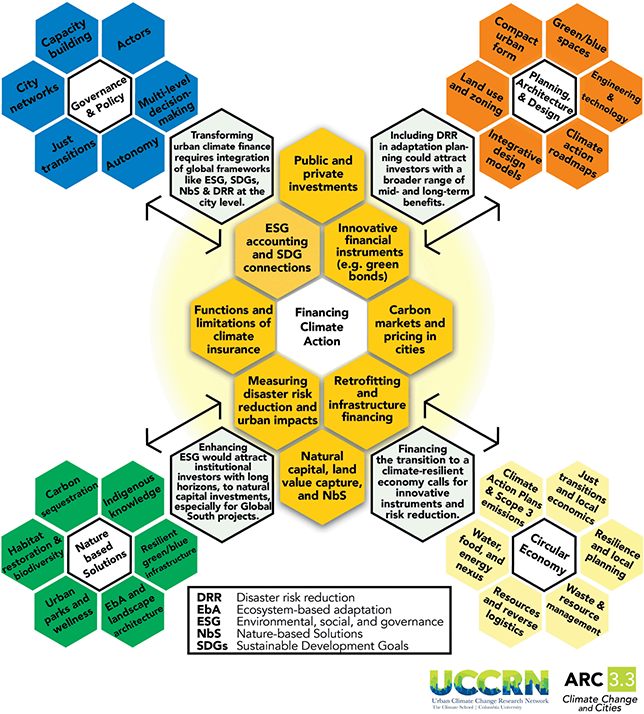
Figure 2 Cross-cutting themes linking ARC3.3 Finance to other Elements.
Figure 2Long description
At the center of the diagram is Financial Climate Action. Surrounding it are 8 hexagons with the texts Public and private investments, E S G accounting and S D G connections, Innovative financial instruments (for example, green bonds), Functions and limitations of climate insurance, Carbon pricing markets in cities, Measuring disaster risk reduction and urban impacts, Retrofitting and infrastructure financing, and Natural capital, land value capture, and N b S. This central cluster is connected to 4 other clusters, through individual actions. Cluster 1: Governance and Policy; connected through Transforming urban climate finance requires integration of global frameworks like E S G, S D Gs, N b 5 and D R R at the city level. Surrounding it are 6 hexagons with the texts: Capacity building, City networks, Just transitions, Autonomy, Multi-level decision-making, and Actors. Cluster 2: Planning, Architecture, and Design; connected through Including D R R in adaptation planning could attract investors with a broader range of mid- and long-term benefits. Surrounding it are 6 hexagons with the texts: Green/blue spaces, Engineering and technology, Climate action roadmaps, Integrative design models, Land use and zoning, and Compact urban form. Cluster 3: Circular Economy; connected through Financing the transition to a climate-resilient economy calls for innovative instruments and risk reduction. Surrounding it are 6 hexagons with the texts: Just transitions and local economics, Resilience and local planning, Waste and management resource, Resources and reverse logistics, Water, food, and energy nexus, and Climate Action Plans and Scope 3 emissions. Cluster 4: Nature based Solutions; connected through Enhancing E S G would attract institutional investors with long horizons, to natural capital investments, especially for Global South projects. Surrounding it are 6 hexagons with the texts: Carbon sequestration, Indigenous knowledge, Resilient green/blue infrastructure, E b A and landscape architecture, Urban parks and wellness, and Habitat restoration and biodiversity. The following abbreviations are noted below: D R R - Disaster risk reduction, E b A – Ecosystem–based adaptation, E S G – Environmental, social, and governance, N b S – Nature–based Solutions, S D Gs – Sustainable Development Goals.
At the city level, the most critical climate risks are extreme heat, severe storms and flooding, rising sea levels, and drought (EEA, 2022)Footnote 7. Improving sustainability and upgrading the nonfinancial disclosure and environmental, social, and governance (ESG) targets across the diverse levels of economic systems will improve the likelihood that cities will fulfill their potential in contributing to meeting the Sustainable Development Goals (SDGs) and the Paris Agreement warming target (UN, 2015; UNFCCC, 2015b; Ahmad et al., Reference Ahmad, Yaqub and Lee2023).
Urban infrastructure investment includes both mitigation (such as new sustainable power systems and measures to improve energy efficiency) and adaptation projects, including responding to climate-driven disasters and enhancing resilience to future threats (such as building sea walls). Adaptation is likely to be the dominant immediate need, since over 70 percent of the world’s cities had already experienced climate change costs over a decade ago (C40, 2023). This need is most extreme in the Global South, where self-financing adaptation capacities such as those offered by insurance for losses are less widely utilized due to low incomes and inability to pay insurance premiums. The poorer the people, city, or country, the less they will be able to afford the prior funding that insurance and related processes require.
Furthermore, the economic models on which the funding targets are based often fail to incorporate all adverse climate consequences. That flaw leaves the overall commitment to funding climate response and disaster avoidance far lower than it needs to be (Trust et al., Reference Trust, Joshi, Lenton and Oliver2023). While urban climate finance more than doubled to US$831 billion between 2017 and 2022, only US$10 billion was allocated to adaptation projects during 2021–2022 (CCFLA, 2024). Limited municipal capacity to manage programs is a partial explanation for the failure to focus on cities, but so are the systems and institutions through which funds flow from the Global North to the Global South, largely funding nations rather than any subnational units.
Moreover, the inadequacy of those flows has long been evidently problematic for cities because of high-level policy discussions, such as those occurring at the United Nations Framework Convention on Climate Change (UNFCCC) Conferences of the Parties (COPs). These discussions have rarely addressed the main domestic issue facing cities in the Global South – i.e., gaining access to the capital that flows to their countries – since financial flows are controlled at the national level.
Climate finance flows from high- and middle-income to low-income countries continue to represent a critical gap, especially when it comes to adaptation funding (UNEP, 2024). The picture of inadequate funding for climate action gets even worse when we focus on cities, where at least 68 percent of all people are predicted to live by 2050 (UN-Habitat, 2022). This growth will mean adding 2.5 billion people to urban areas by 2050, with 90 percent of this increase taking place in Africa and Asia alone and 95 percent of all growth in the Global South as a whole (IPCC, Reference Pörtner, Roberts, Tignor, Poloczanska, Mintenbeck, Alegría, Craig, Langsdorf, Löschke, Möller, Okem and Rama2022a, Reference Shukla, Skea, Slade, Khourdajie, van Diemen, McCollum, Pathak, Some, Vyas, Fradera, Belkacemi, Hasija, Lisboa, Luz and Malley2022b; WEF, 2022a). Yet cities are engines of productivity, generating more than 80 percent of global economic output, so support for their efforts to respond to climate change is essential (WEF, 2022a).
Figure 2 highlights the intersections of the Finance Element with other Elements of ARC3.3 and serves as a framing visualization for the entire analysis. One of the major cross-cutting themes relates to governance levels. International public-sector flows include bilateral arrangements and loans from multilateral development banks (MDBs), all of which are negotiated and implemented at the national level. The limited extent to which national funds flow to cities and the lack of power granted to cities to use these funds may be the primary causes of the constrained capacity of the local public sector to take climate action.
These processes have become self-reinforcing, leaving cities in recipient countries with no capacity to learn to manage programs on their own behalf. This lack of municipal capacity is primarily a problem for cities interested in attracting nonlocal public and private capital to their climate response projects. But given the proportion of the global population living in and migrating to cities, this failure of multilevel governance poses a major barrier to the pursuit of global climate change adaptation and mitigation.
In the ARC3.3 Finance Element, Section 2 addresses climate finance gaps in the Global South, especially highlighting the lack of flows into Africa. The section concludes with an analysis of credit ratings in the Global South, highlighting the climate investment trap many low-income countries are faced with when trying to access necessary climate finance.
Section 3 highlights the importance of addressing ESG targets in climate finance. As private investors increasingly prioritize environmental and social impacts alongside financial returns, their calculations may drive greater interest in climate change responses; thus, it becomes imperative that climate change financing adheres to the ESG framework to guarantee that investments support the broader goals of a just transition, rather than exclusively benefiting a privileged few by remaining focused on private profits.
Section 4 provides insights into the Task Force on Climate-Related Financial Disclosures (TCFD) and its role in setting standards for climate-related financial reporting using a Canadian example. It emphasizes that disclosing climate-related information is becoming an important factor determining borrowing levies since investors impose higher costs on municipalities that they perceive have greater exposure to climate risks.
Section 5 explores innovative mechanisms for tackling climate change effectively and enhancing resilience by prioritizing adaptation and associated risk reduction to attract investment. It then introduces the Social Economic and Environmental Value of Mitigation Actions (SVMA) framework that complements ESG and TCFD measures, delving further into financial mechanisms that aim at mobilizing funds for climate-related initiatives.
Section 6 discusses urban climate finance mobilization of public and private sectors. Methods of how cities can access public and private finance are presented, as well as the multitude of barriers cities may face when attempting to access these funding streams.
Section 7 assesses instruments that cities can utilize to activate climate finance. Green bonds, valuing natural capital, land value capture, carbon pricing, energy service companies (ESCOs, and de-risking, are all discussed to provide a wide range of potential financial instruments cities can use in a multitude of contexts).
Section 8 examines how insurance can play a crucial role in managing climate risk for cities. It covers the functions of climate insurance, its limits, accessibility and affordability issues, and scenarios for the provision of sustainable insurance in the face of climate risk.
Lastly, Section 9 presents the conclusions and recommendations to enhance the flow of finance into urban climate action.
2 Climate Finance Gaps in the Global South
Global measures of climate finance and cities access to funds often fail to consider even the minimal levels of climate investment required in cities of the Global South where urban growth will be the fastest (Mafira et al., Reference Mafira, Larasati, Mecca, Haesra and Meatlle2021). In these cities, the challenge of an acute mismatch between investment needs and available finance continues, with insufficient financial maturity, lack of investment-grade credit ratings in local debt markets, scarce diversified funding sources and stakeholders, and weak enabling environments (IPCC, Reference Shukla, Skea, Slade, Khourdajie, van Diemen, McCollum, Pathak, Some, Vyas, Fradera, Belkacemi, Hasija, Lisboa, Luz and Malley2022b). Moreover, total financing of climate-related urban investments (including, for example, the financing of zero-emission vehicles) showed roughly US$132 billion committed to North America and Europe, while cities in sub-Saharan Africa received only US$3 billion in 2018 (Climate Policy Initiative, 2021).
2.1 A Global Market Misallocation: Climate Finance in Africa
Despite a 10.9 percent increase in 2018, all of Africa secured only 3.5 percent (US$46 billion) of global foreign direct investment – leaving large parts of its growing cities described by financiers as “high risk” and citizens deemed “unbankable” (Dodman et al., Reference Dodman, Hayward, Pelling, Castan Broto, Chow, Chu, Dawson, Khirfan, McPhearson, Prakash, Zheng, Ziervogel, Pörtner, Roberts, Tignor, Poloczanska, Mintenbeck, Alegría, Craig, Langsdorf, Löschke, Möller, Okem and Rama2022). Although most African cities are acutely exposed to climate-change hazards, as of 2015, Africa faced an estimated 40 percent infrastructure financing gap, and it is almost certainly higher in the continent’s rapidly growing cities (IPCC, Reference Pörtner, Roberts, Tignor, Poloczanska, Mintenbeck, Alegría, Craig, Langsdorf, Löschke, Möller, Okem and Rama2022a).
The funds needed to finance the nationally determined contributions (NDCs) for 51 out of 53 African countries declared at COP25 is estimated to amount to a total of around US$2.8 trillion for the period between 2020 and 2030 (Guzmán et al., Reference Guzmán, Dobrovich, Balm and Meattle2022). That figure represents more than 93 percent of the GDP of all African countries combined. African governments have committed US$ 264 billion (about 10 percent of the total cost) to climate actions. The remaining US$2.5 trillion is dependent on international public and private sources since national budgets and enterprises in Africa do not have the funds for this deployment.
Based on the NDCs, costs for mitigation measures amount to 66 percent of the total (US$1.6 trillion), with results heavily weighted to a few countries, particularly South Africa, mostly for its transport needs (Guzmán et al., Reference Guzmán, Dobrovich, Balm and Meattle2022). Despite Africa being highly vulnerable to climate change and calls for a better balance of finance between mitigation and adaptation, reported adaptation needs in Africa appear to have been severely underestimated (Guzmán et al., Reference Guzmán, Dobrovich, Balm and Meattle2022).
Infrastructure needs for development are so great that it may appear that there is little room for the “luxury” of funding adaptation, let alone mitigation. Of the US$32.5 billion invested in the continent’s transport sector in 2018, only US$100 million could be identified as adaptation finance, suggesting that most finance to the sector is not climate resilient (Guzmán et al., Reference Guzmán, Dobrovich, Balm and Meattle2022). Furthermore, public- and private-sector financial institutions invested at least US$130 billion into fossil fuel companies and projects in Africa between 2016 and 2021.
While it is one of the major green finance organizations, the Global Environmental Facility (GEF) has disbursed only US$22 billion in grants and has leveraged only US$120 billion in co-financing since 1992. For Africa specifically, the GEF has invested $6.2 billion to support the implementation of over 1,800 projects (GEF, 2024). In 2020, the Development Bank of Southern Africa (DBSA) mobilized a total commitment of R3.2 billion from various UNFCCC climate financing mechanisms. The DBSA is one of very few development finance institutions that has established programs to provide finance for African cities and towns, which other funding institutions consider to be too risky. Other development finance institutions around the world added more than US$11.2 billion in financing for projects with blended concessional finance, which combines below-market-rate grants or loans to developing countries with finance from public and private sources (i.e., those excluding grants finance or project development assistance), leaving many African nations to turn to internal financing through a combination of green bonds and federal sources (Case Study 1). This figure is a minute fraction of the US$280 billion of investment by 2050 that just the 35 major cities in Ethiopia, Kenya, and South Africa will need to provide compact, connected, and clean cities. (Manthata & Spires, Reference Manthata and Spires2022).
The challenge Africa faces is not just that the Global North has failed to live up to its 2015 Paris Agreement pledge to provide a minimum of US$100 billion a year to support developing countries’ climate responses by 2025 (UNFCCC, 2024). It is that, despite its population and size, the continent has gotten only 3 percent of the funds available from all sources in the wealthy countries.
In 2019, through the collaboration of the city of Kano and the government of Nigeria, Bayero University Kano (BUK) successfully implemented its solar project, part of the Energizing Education Program (EEP). The EEP aims to provide sustainable, clean power to 37 federal universities and seven teaching hospitals across cities in Nigeria, addressing the significant energy challenges faced by these institutions. Nigeria’s dependence on clean energy, particularly in education and healthcare, is vital for sustainable development and climate action, aligning with SDG 7 (ensure access to affordable, reliable, sustainable, and modern energy for all).
The EEP delivered power to BUK through solar hybrid and gas-fired captive power plants: electricity generation facilities that supply energy users with a localized source of power. The 7.1 MW solar power plant at BUK, at the time the largest off-grid solar installation in Africa, provides electricity to the campus that houses over 55,000 students and 3,000 staff.
The project is part of Nigeria’s broader goal to enhance energy security and reduce reliance on costly and polluting generators (Nigeria Department of Climate Change, 2020). Funded by the Nigerian government, the full project benefited 127,000 students and 28,000 staff, with additional benefits including street lighting and the decommissioning of generators in Kano (Adeojo, Reference Adeojo2022).
The second phase of the EEP, which will expand the program to more universities and hospitals in cities across the country, will be supported by a US$105 million green bond issued by the Nigerian government with backing from the World Bank (REA, 2022). This phase will further strengthen Nigeria’s commitment to climate action and the SDGs by improving energy access, boosting productivity, and ensuring energy security. With the UN acknowledging the world’s first fully certified sovereign green bond, issued on December 18, 2017, Nigeria became the first country on the African continent and the fourth globally to issue a security that raises funds for environmental projects. This was part of the Sovereign Green Bond Programme (UNECA, 2018).
The success of this collaboration with a city university, particularly the use of green bonds, demonstrates a sustainable model for financing climate projects and sets a precedent for other African countries. By increasing participation in green finance, the program offers a replicable model for addressing energy challenges and driving climate action across the developing world.
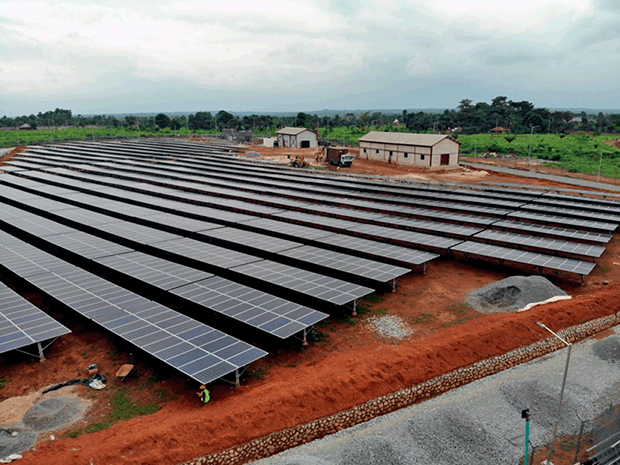
Figure 3 The BUK Hybrid Solar Power Plant in Kano.
2.2 Climate Creditors in the Global South
Low-income nations suffer chronically insufficient climate-related investments (Figure 4). This is due to their underdeveloped financial markets being deemed high-risk to investors, who then impose higher costs of access to climate finance (Ameli et al., Reference Ameli, Dessens, Winning, Cronin, Chenet, Drummond, Calzadilla, Anandarajah and Grubb2021). Low credit ratings accompanying these underdeveloped markets translate to higher perceived risk and restricted finance access – a phenomenon that is visible particularly at the city level, where large shifts in climate finance to cities has occurred in the Global North (Bracking & Leffel, Reference Bracking and Leffel2021).
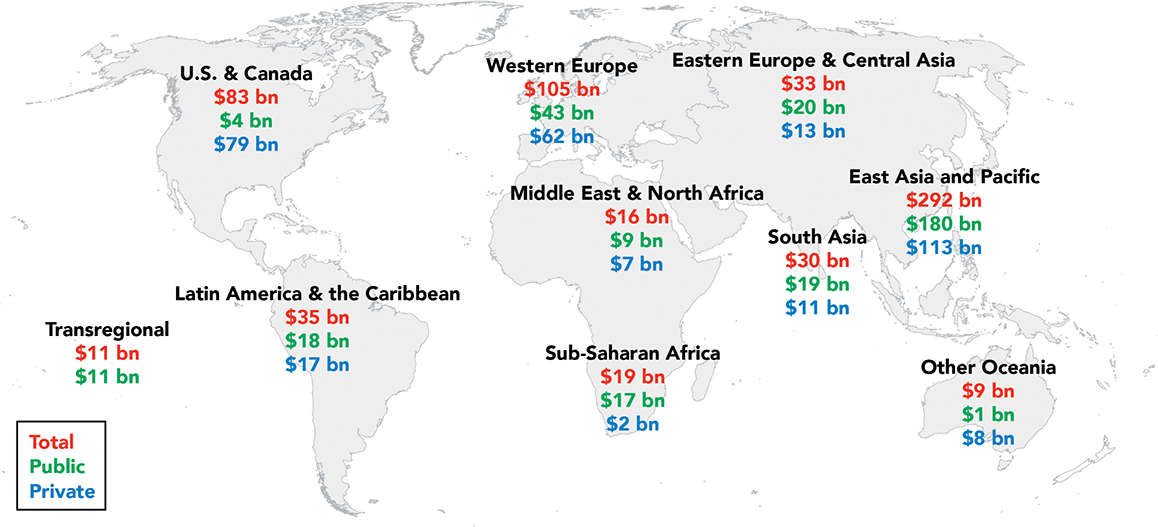
Figure 4 Destination regions of climate finance by source (public and private), showing the annual average flows for 2019/2020 in US$ billions. For each region, three values are listed in the same order: total climate finance, public finance, and private finance.
Figure 4Long description
The Total, Public, and Private finances respectively for each region are as follows. U S and Canada: 83 billion U S D, 4 billion U S D, 79 billion U S D. Latin America and the Caribbean: 35 billion U S D, 18 billion U S D, 17 billion U S D. Western Europe: 105 billion U S D, 43 billion U S D, 62 billion U S D. Easter Europe and Central Asia: 33 billion U S D, 20 billion U S D, 13 billion U S D. Middle East and North Africa: 16 billion U S D, 9 billion U S D, 7 billion U S D. Sub-Saharan Africa: 19 billion U S D, 17 billion U S D, 2 billion U S D. South Asia: 30 billion U S D, 19 billion U S D, 11 billion U S D. East Asia and Pacific: 292 billion U S D, 180 billion U S D, 113 billion U S D. Other Oceania: 9 billion U S D, 1 billion U S D, 8 billion U S D. Transregional: 11 billion U S D, all of it public.
Market rate debt – i.e., the market price investors are willing to buy an organization’s debt – is among the top instruments for urban climate finance (Negreiros et al., Reference Negreiros, Furio, Falconer, Richmond, Yang, Tonkonogy, Novikova, Pearson, Skinner, Boukerche, Mason, Boex and 94Whittington2021). Among international banks, the European Investment Bank (EIB) has allocated some of the largest volumes of direct urban climate mitigation loans (CCFLA, 2015). According to EIB data, urban loans for climate mitigation and adaptation allocated from the EIB between 2011 and 2017 totaled US$165.4 billion and were directed to 108 countries and 228 cities globally, of which 185 cities are in the 23 EU countries and 43 cities are in 25 non-EU countries.
Figure 5 illustrates the positive relationship between national (sovereign) credit ratings (based on the lowest Standard & Poor’s credit rating as 1 and the highest as 22) and the collective EIB direct urban climate lending per country. While city-level credit ratings could be obtained for only a minority (37 of 228) of EIB direct urban climate loan recipient cities, city and corresponding national credit ratings are strongly correlated (p = 0.73). The figure illustrates that countries (and, by extension, their cities) with the lowest credit ratings are those with the least access to EIB direct urban climate lending, and vice versa.
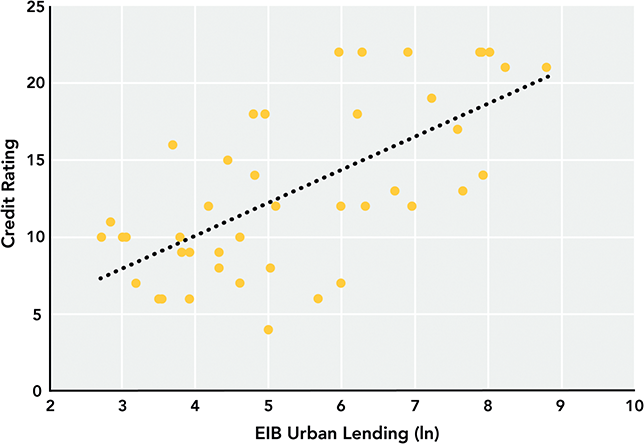
Figure 5 Credit rating and European Investment Bank (EIB) urban climate lending. The larger dots signify countries’ credit ratings, which correlate with higher urban lending.
Figure 5Long description
The x-axis, labeled E I B Urban Lending, ranges from 2 to 10. The y-axis, labeled Credit Rating, ranges from 0 to 25. Most of the plots occur between credit ratings of 5 and 20, and between a lending of 3 and 8. A best fit straight line is drawn from approximately (2.5, 7) to (8.8, 20).
This suggests that lower credit ratings translate to higher costs of access to climate finance for the Global South, restricting access and perpetuating the climate investment trap. A climate investment trap refers to the scenario where the high cost of capital in low-income countries combines with severe climate change impacts, making it difficult for these countries to access credit (Vetter, Reference Vetter2021). These climate finance access restrictions hint at a large population of unacknowledged municipal and national actors with climate finance needs that may have attempted to obtain climate loans but ultimately abandoned the pursuit due to high access costs, thus preventing would-be borrowers in poorer nations from accessing climate finance entirely.
3 Transformation of Urban Climate Finance: Incorporating ESG and SDG Frameworks
Transforming urban climate finance requires the incorporation of global frameworks and standards at the city level. These standards and frameworks include the ESG framework, the SDGs, NbS, and the Sendai Framework for Disaster Risk Reduction (Sendai Framework).
3.1 ESG Accounting
Through the ESG framework, nonfinancial risks, or risks that corporations face that are not directly tied to finances such as damage from extreme climate events, are getting increased attention from nations, financial institutions, investors, and other actors at all levels of the global economic system. The importance of such risks was first reflected in the Global Risk Report published by the World Economic Forum in 2006 (WEF, 2006). On the local level, cities and regions are less likely than nations or multinational institutions to have capacity to evaluate nonfinancial risks in the form of ESG reporting. Nonetheless, they are actively promoting ESG-oriented responses in the following areas: preparing climate- and sustainability-related strategic plans; disclosing key nonfinancial risks and promoting opportunities; and implementing innovative solutions (e.g., issuing green bonds, implementing planting mangroves to reduce risk of coastal flooding, and pursuing debt-for-climate swaps).Footnote 8 They are also exchanging best available practices (e.g., learning how to prepare bankable projects).
Since climate change is already causing disruption and damage in urban areas, cities need the capacity to respond, recover, and rebuild. To develop and maintain a capacity for resilience in the face of ongoing climate change, public and private economic actors on the city level will have to adopt a comprehensive approach to address these threats and transform them into opportunities (Schwarze et al., 2018).
ESG provides one such approach, offering a wide range of opportunities for cities. Some relate to the concrete justification for long-term development planning. In other cases, the nonfinancial impacts (i.e., benefits and costs) associated with project proposals pursuing climate and sustainable finance need to be identified and quantified. Overall, the major benefit of the ESG approach for cities is the development of systematic approaches to dealing with nonfinancial risks and opportunities and in identifying the value generated as a result (Table 1).
Table 1 ESG opportunities for urban resilience
| Environmental | Social | Governance |
|---|---|---|
|
|
|
Over the last few years, there has been considerable pushback, most notably from the political right, on ESG investing. As climate change and diversity, equity, and inclusion policies have become increasingly politicized in the US, corporations annual shareholder meetings have become platforms for right-leaning activists, claiming that ESG policies undermine profit-driven business interests (Crews, Reference Crews2023; Crumley, Reference Crumley2024). In the US, the number of anti-ESG proposals quadrupled from 23 in 2021 to 112 in 2024 (The Conference Board, 2025). This growing wave of opposition highlights the intensifying debate over the role of ESG in business strategy. Despite significant backlash, 2024 has shown increased support for ESG proposals, reversing the consecutive decline from 2021 to 2023 in the US (ISS-Corporate, 2024).
3.2 Connecting ESG with the SDGs
The use of ESG principles helps cities to achieve the SDGs by incorporating resilience into non-financial risk calculations (see Table 2). The ESG framework generates a basis for evaluating city actions to reduce related risks and to advance guidance for how the benefits can be incorporated into reports and financial results for cities.
Further, the ESG approach can facilitate the measurement of financial and nonfinancial risk reduction by different economic agents at the municipal level. One strategy for following the ESG framework in cities is by restoring and preserving natural capital through nature-based solutions (Frantzeskaki & McPhearson, Reference Frantzeskaki and McPhearson2022; Kauark-Fontes et al., Reference Kauark-Fontes, Marchetti and Salbitano2023). Thus, it can provide a bridge between the SDGs and projects pursuing NbS in cities, demonstrating how a project’s environmental, social, and governance components can contribute to improved resilience and more sustainable conditions for urban economic development.
Table 2 Connections between ESG principles and SDG 11
| Connections between ESG and SDG 11 | |||
|---|---|---|---|
| Environmental | Social | Governance | |
| - Building energy use reduced | - Shared responsibilities within households | - Participation of local communities supported |
| - Efficiency of mechanical equipment improved | - Noise pollution reduced | - Development of sustainable and resilient infrastructure supported |
| - Integrated natural and urban areas for all |
| - Resilience to food price volatility increased |
| - Natural capital augmented | - Culture of peace and nonviolence promoted | - Private funds to preserve ecosystems attracted |
|
| - Exposure to extremes reduced | - Economic losses from disasters reduced |
| Target 11.6 Reduce the environmental impact of cities |
| - Social resilience and adaptive capacities improved | - Citizens protected and loss of life prevented |
| - New urban habitats (plants and animals) created |
| - Crimes reduced |
| - Integrated development of natural and urban systems | - Awareness of sustainable development improved | - Better resource efficiency in consumption and production improved |
|
|
| - Value of land and buildings increased |
|
| - Livelihoods improved and communities uplifted | - Public, public-private, and civil society partnerships established and maintained |
4 Standards and Reporting: The Task Force on Climate-Related Financial Disclosures and the Carbon Disclosure Project
Disclosure of climate-related information by cities is increasingly becoming a requirement, since investors impose higher costs on municipalities that they perceive have greater exposure to climate risks (Edwards et al., Reference Edwards, Yapp and Mackay2020). Investors need to consider and estimate the costs of different types of project risks, ranging from external threats through internal management capacities to action-specific impacts on the ability of the project operator to fulfill financial commitments. Material risks emerging from climate change may impact city operations and assets, as well as municipal financial health (Georgious, Reference Georgious2019). Evidence has emerged of the heightened willingness and capability of cities to incorporate and disclose climate risks. Since such disclosures demonstrate cities’ responsiveness to capital markets’ expectations and signal sustainability leadership to potential investors, public-sector leaders have noted the significance of transparency on climate-related issues (Georgious, Reference Georgious2019).
4.1 Task Force on Climate-Related Financial Disclosures (TCFD)
Established in 2015 by the G20 and the Financial Stability Board, the TCFD framework has become an important tool for city governments to formulate their climate reporting (Figure 6). The TCFD recommendations were initially developed by the private sector as a standard for the climate risk disclosures individual firms should be expected to make to potential investors. Cities, recognizing that potential funders would demand the same sort of data, are increasingly adopting the disclosure standards for their own internal decision-making and external reporting. The TCFD recommendations for firms have been reformulated into specific disclosure standards and, as of 2024, are managed and administered by the International Sustainability Standards Board. The Board is the global entity responsible for developing standards for a baseline of sustainability disclosue (IFRS, 2023).
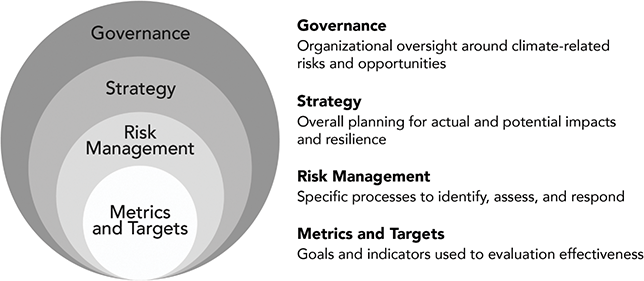
Figure 6 Core elements of recommended climate-related financial disclosures.
Figure 6Long description
On the left side is a diagram of four circles, each inside the last one. From outermost to innermost, they are labeled: Governance, Strategy, Risk Management, and Metrics and Targets. The Accompanying text reads as follows. Governance: Organizational oversight around climate-related risks and opportunities. Strategy: Overall planning for actual and potential impacts and resilience. Risk Management: Specific processes to identify, assess, and respond. Metrics and Targets: Goals and indicators used to evaluation effectiveness.
4.2 Carbon Disclosure Project
Established in 2000, the Carbon Disclosure Project (CDP) is the most developed initiative to support the disclosure of nonfinancial risks. Jointly with Local Governments for Sustainability (ICLEI), it serves as a broad environmental disclosure organization, providing an overview of ESG metrics for companies, nations, provinces, states, and regions, as well as for over 1,000 cities globally (CDP, 2024; CDP, 2025). A different initiative, established in 2008 specifically by and for cities, is the Covenant of Mayors (transformed into the Global Covenant of Mayors for Climate and Energy [GCoM] in 2016), which unites over 12,000 cities and local governments to support the elaboration of city plans for climate change mitigation and adaptation regarding ESG considerations (GCoM, 2023).
However, due to limited capacities, local authorities are not always able to provide the data on projects needed to pursue funding from investors (UNFCCC, 2019). To bridge this gap, the C40 Cities Climate Leadership Group offers technical assistance for incorporating cities’ sustainability priorities into bankable investment proposals that fit into the ESG framework and expectations of financial institutions (C40, 2023). The Global Covenant of Mayors has also aligned with the City Climate Finance Gap Fund to provide technical assistance for project development and funding applications specifically for municipalities in the Global South (World Bank Group, 2024).
A CDP review of cities that participate in its reporting programs provides evidence of the importance of data collection for pursuit of financing. In 2024, CDP found that 611 cities reported climate and environmental data using the CDP-ICLEI Unified Reporting System, representing a 23 percent increase since 2023 (CDP, 2024). Participation is not limited to cities in more affluent countries, with 34 cities in Africa and 293 in Latin America reporting their efforts, as well as close to 50 from Asia outside China and Japan. Over 40 percent of the reporting cities are in the Global South (CDP, 2021).
Climate mitigation action planning starts with the establishment of a baseline, which is typically a greenhouse gas emissions inventory for the city. However, only 544 of the cities reporting to CDP had such inventories in 2020. Of them, only 399 had climate action plans, that is, a formal document that can enable greater access to external funding. Even fewer cities incorporated their climate plans into their overall strategic planning framework. Yet such integration of climate is key to identifying both prospects of intervention and sources of project funding.Footnote 9 CDP data show that cities incorporating sustainability issues into their master plans were between two and two and half times more likely to identify opportunities for climate action, including creation of new businesses and garnering of additional funding (CDP, 2021).
Beyond focusing on the economics of sustainability, CDP also found that cities citing the social and governmental co-benefits of their proposed climate projects – the other legs of the triple bottom lineFootnote 10 – were two and a half times more likely to attract project finance than those that did not (CDP, 2022). As a complementary framework to other planning, the TCFD – and similar reporting protocols that include measurement of co-benefits – pave the way in quantifying climate-related information in financial terms to identify infrastructure investment needs for green projects and enhance cities’ access to national government and other sources of external funding (Georgious, Reference Georgious2019).
4.3 Examples of Multi-City Reporting
Figure 7 presents the distribution of self-reporting cities globally, as well as the number of adaptation actions reported, as collated by UNEP. The European Union offers an example of international collaboration in promoting and monitoring city responses to climate change. The European Commission, working with GCoM, does not just collect data through its international MyCovenant reporting platform but offers cities capacity building, technical assistance, sharing of best practices, and peer-learning opportunities. The objective of the collaboration initiative is to provide participating cities with information on alternative practices and tools to enable decision-makers in cities of any size to identify priority sectors, set emission reduction targets and adaptation goals, and plan relevant actions (European Commission Joint Research Centre, 2022).
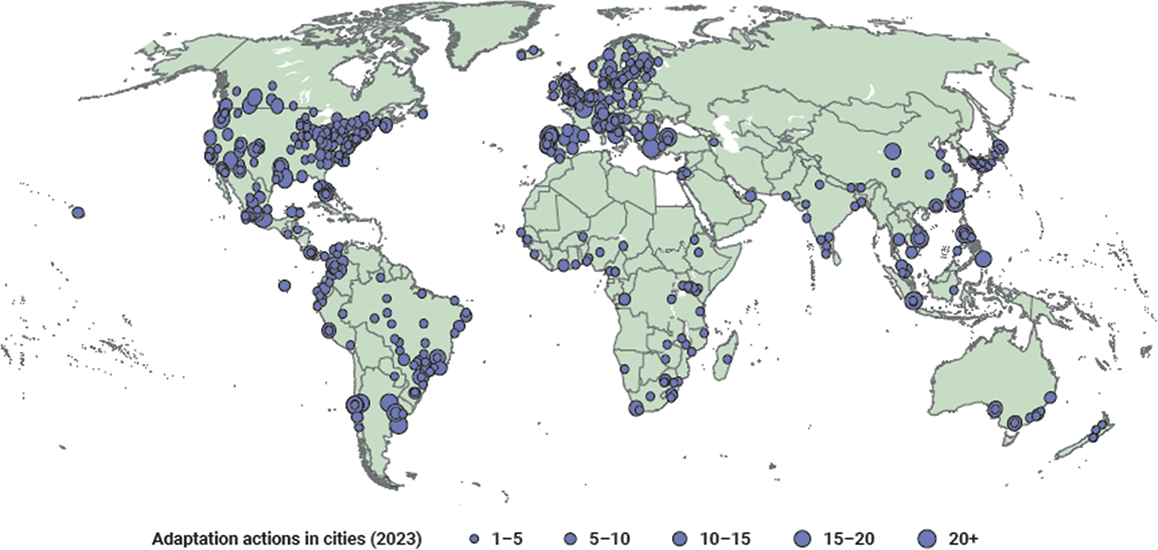
Figure 7 Distribution of self-reporting cities and number of adaptation actions reported per city.
Canada, a wealthy country with low population density, has responded to the need for better tracking of climate responses. The country had annual insured climate-related losses of over Can$1 billion between 2014 and 2019, with payouts in 2018 reaching nearly Can$2 billion. The unexpected massive fires in the spring and summer of 2023 resulted in even higher costs. Many Canadian cities now include municipal climate risk disclosure in short- and long-term financial planning, operational budgets, and capital investment (Case Study 2). Canada has long been promoting municipal carbon accounting and sustainability measurement along with policy development in pursuit of urban climate response. It has the financial resources and advanced management systems that many nations lack. However, it is far from unique. Municipal accounting efforts have been growing across the globe, with positive impacts on cities’ capacity to attract funding for projects (WRI, 2023; Yin et al., Reference Yin, Sharifi, Liqiao and Jinyu2022), although much more needs to be done.
In response to the growing costs and risks of climate change, over 650 Canadian municipalities declared a climate emergency in 2024 due to unprecedented wildfires and storms, and heightened their adaptation efforts (MacDonald et al., Reference MacDonald, Zhou, Telfer, Clarke, Meaney, Giordano, Linton, Tanguay, Tozer, ElAlfy, Ordonez-Ponce and Talbot2024). Through a variety of voluntary platforms, cities across Canada currently report climate change-related information, including GHG emissions. The voluntary platforms align with the Task Force on Climate-related Financial Disclosures (TCFD) framework.
Many medium- and larger-sized Canadian cities report using a Carbon Disclosure Project (CDP) standard that is based on the internationally recognized GHG Protocol for Cities (GHG Protocol, 2022). Cities use CDP scores to drive investment and procurement decisions towards a zero-carbon sustainable and resilient economy.
Guided by TCFD standards, Toronto included climate-related disclosure in its 2024 Annual Financial Report, along with an unaudited note about GHG emissions targets and reporting in its consolidated financial statements (City of Toronto, 2024). With the application of TCFD, the city mapped public climate-risk policies and centralized them into a single document. This demonstrated the maturity of the city’s governance related to climate change and established a basis for the assessment of financial risks, as well as the cost savings associated with climate risk management (Georgious, Reference Georgious2019). Those data, in turn, provide an empirical financial basis for funding requests and reporting to support both GHG reduction and resilience strategies and action plans.
Over 500 cities of all sizes participate in the Partners for Climate Protection (PCP) program, which is co-developed and managed by the Federation of Canadian Municipalities and Local Governments for Sustainability (ICLEI Canada, 2022). The PCP data show that these cities are undertaking over 400 urban projects aimed at reducing GHG emissions (PCP, 2023). Besides a strong emphasis on TCFD metrics and targets, PCP also focuses on governance and strategy.
Developed and managed by ICLEI Canada, the Building Adaptive and Resilient Communities approach provides both a data collection network and an expert training program that addresses elements of TCFD’s governance framework and highlights the importance of risk identification and understanding. This approach has more than 100 paying member cities reporting their efforts to address more than 1850 climate impacts through almost 3000 discrete adaptation actions (ICLEI Canada, 2022).
5 Innovative Approaches for Funding Mitigation and Adaptation
Beyond traditional climate finance instruments, cities need to develop innovative mechanisms to generate investments that enable them to meet their emissions mitigation targets as well as prepare to adapt to a changing world. High capital costs and economic, financial, legal, and climate risks have hindered progress to date (Dodman et al., Reference Dodman, Hayward, Pelling, Castan Broto, Chow, Chu, Dawson, Khirfan, McPhearson, Prakash, Zheng, Ziervogel, Pörtner, Roberts, Tignor, Poloczanska, Mintenbeck, Alegría, Craig, Langsdorf, Löschke, Möller, Okem and Rama2022), especially given the infrastructure deficit in urban centers and the limited financial resources of nations in the Global South.
Financing the transition to low-carbon and climate-resilient economies in cities needed to mitigate climate change and adapt to its consequences requires a combination of innovative instruments and policies capable of reducing financial risks and making investments more attractive. Countries and local authorities are increasingly using a combination of financial instruments, blended finance, fiscal policies, and command and control policies. Cities are developing innovative financial approaches as they seek new ways to reduce risks and the cost of capital, as well as increasing the profitability of low-carbon investments.
5.1 Three-Ds Approach to Mitigation in Cities: Decarbonization, Decentralization, and Digitalization
A widespread approach in dealing with innovative solutions for mitigation centers on the three Ds: decarbonization, decentralization, and digitalization (Webb et al., Reference Webb, Scott, Gençsü and Broekhoff2020). This approach has been used in national and international policy arenas, but is now being adapted to cities (Nyangon, Reference Nyangon and Augusto2020; SDSN, 2020). The triple-D strategy can increase a city’s control of its climate actions and reduce local transaction costs while providing the types of project data on returns to investment that could attract private capital from international investors. As a result, the approach can enable cities to bypass multilateral development banks and national governments and attract direct investments into their local economy from other funders.
Decarbonization, the process of reducing carbon emissions associated with transport, electricity, and industry, encompasses support for development of renewable energy production and energy efficiency measures (Di Silvestre et al., Reference Di Silvestre, Favuzza, Riva Sanseverino and Zizzo2018). This component is supported mostly by international and national policy initiatives and requires decentralization and digitization efforts to support innovation and unlock benefits for cities. The generation, storage, and distribution of electricity and other energy products is frequently the province of private companies.
Decentralization, reducing reliance on centralized power generation through distributed energy systems that generate and supply electricity locally, may offer financial benefits beyond those associated with the production of energy from renewables. These include lower needs for redundant generation capacity and reduced power distribution costs. Such efforts also provide an opportunity to shift property rights to emission reduction credits from the national level to urban communities, enabling local funding and decision-making. However, a distributed system relying on small- or medium-scale electricity producers still needs coordinated management and requires the collection and processing of information from large numbers of contributing generators.
The district of Nordhavn in Copenhagen, Denmark, addresses this challenge by using new energy storage methods to increase flexibility in a city powered by intermittent renewable sources (C40 Knowledge Hub, 2019). With much of Copenhagen’s electricity powered by wind, Nordhavn uses large batteries and a heat pump and storage system to avoid outages or grid overload (C40 Knowledge Hub, 2019). This holistic approach decentralizes Nordhavn’s power sources to coordinate efficient and reliable renewable energy use for the entire district.
Digitization, the implementation of advanced technologies throughout the energy system, must be available to permit the collection and processing of operations data for even the smallest microgrids to assure reliable electricity provision. For those cities with adequate computer capacities, protocols known as distributed ledger technologies (DLTs) have been developed that can manage networks of distributed power generators and deliver data to the standards demanded by private investors. For example, Singapore’s Ubin Project is a notable DLT initiative that employs blockchain technology for interbank payments and settlements for supply chain transparency and energy trading (Monetary Authority of Singapore, 2016). For those without the needed information infrastructure, the basic DLT approach can still be used to integrate a large number of independent operations.
Financial management capacity development in the Three-Ds Approach remains one of the main needs at the local level in both the Global South and Global North.
5.2 Utilizing the Social, Economic, and Environmental Value Approach for Mitigation Actions in Cities
According to the IPCC AR6 report (IPCC, Reference Pörtner, Roberts, Tignor, Poloczanska, Mintenbeck, Alegría, Craig, Langsdorf, Löschke, Möller, Okem and Rama2022a), three criteria for transformative innovations are scale, space, and timeliness. In this context, scale refers to the ability of innovations to be implemented across a wide range of regions and sectors; space refers to the flexibility and applicability of innovations across different social and economic contexts; and timeliness emphasizes the need for innovations to be deployed rapidly to make lasting change and avoid damaging climate impacts. The key element in the innovations that meet these criteria is their capacity to contribute to reducing the risks and financial costs of investment in low-carbon projects. Anchoring calculations in the social, economic, and environmental value of mitigation actions (SVMA) is one approach. This analytical framework complements that of the ESG and TCFD measures, specifically fulfilling the imperative to encompass the climate and non-climate benefits of mitigation actions and their co-benefits for adaptation, health, and sustainable development, recognized in the Paris Agreement (UNFCCC, 2015a; Hourcade et al., 2018).
The SVMA approach can encompass positive carbon pricing for cities that includes the value of climate damages as a consequence of a specific emissions trajectory (the social cost of carbon), as well as the positive co-benefits of mitigation activities, such as employment generation, energy security, and local environmental amenities (Dasgupta & Dasgupta, Reference Dasgupta and Dasgupta2017). According to the report of the High-Level Commission on Carbon Prices, since the social, economic, and environmental value of mitigation actions aggregate the benefits and co-benefits of climate actions, investments to reduce emissions can become more profitable, especially in cities, when they also consider their co-benefits, such as reducing air pollution and improving human health (Stiglitz et al., Reference Stiglitz, Stern, Duan and Edenhofer2017).
The underlying argument is that SVMA could complement carbon pricing mechanisms (Sirkis et al., Reference Sirkis, Hourcade, Aglietta, Dasgupta, Studart, Gallagher, Perrissin-Fabert, Eli da Veiga, Espagne, Stua and Aglietta2015) through climate policies that emphasize mutual benefits between countries by aligning climate and sustainable development goals, paving the way for new climate policy tools beyond carbon pricing (Hourcade et al., Reference Hourcade, Pottier and Espagne2018). The approach could help fund smaller, local projects to address the gap in climate funding between wealthy and poor countries by highlighting the broader value of their actions beyond GHG reduction, making it easier to secure funding, especially when carbon pricing is not always effective (Hourcade et al., Reference Hourcade, Pottier and Espagne2018).
In this way, SVMA can form the basis for a new set of tools in climate policy, complementary to more traditional carbon pricing strategies, with the potential to channel the investments for the low-carbon transition to urban centers in the Global South where they are most needed. For cities in low-income countries, mechanisms such as measurement of the social value of mitigation actions can help to generate and channel the investments that are essential to putting these countries on a low-carbon-economy trajectory, in adherence with the Paris Agreement and pursuit of net zero emissions in the medium term.
Green City Kigali is a sustainable urban planning initiative that utilizes the SVMA value approach for net zero transformation. The initiative aims to provide affordable and sustainable housing (social), promote green job creation and green business incubation programs (economic), and expand public transport and promote electric vehicles (environmental) (Rwanda Green Fund, 2024). Through this project, the city plans to introduce a carbon tax to discourage polluting vehicles and lower tariffs for electric vehicle charging, emphasizing the profitability of reduced pollution and improved human health (UNEP, 2022b).
One approach might be to establish a risk reduction instrument for low-carbon projects in cities incorporating the SVMA measures. In the short term, wealthier countries could increase their financial commitments to low-carbon investments in cities and offer some form of assurance for these projects. Such guarantees could reduce the risks associated with low-carbon investments in low-income country cities and help them attract private capital. They could be provided without significant budgetary cost for cities in high-income countries to the extent that they impose a cost only in the event of investment failure (which would be unlikely for well-established mitigation strategies) (Dasgupta et al., Reference Dasgupta, Etienne, Hourcade, Minzer, Nafo, Perissin-Fabert, Robins and Sirkis2016).
Alternatively, an innovative financial approach to clean development such as the Sustainable Development Mechanism (SDM), which is quantitatively based on estimates and projections of emissions avoided, could ensure part of the project debt service needed. The SDM could provide capital remuneration in the initial period of the project, reducing risks and increasing the financial viability of large infrastructure projects with long payback periods that face many uncertainties (La Rovere, Reference La Rovere2017).
5.3 New Financial Mechanisms and Sources
No single mechanism or source addresses all the needs of cities for climate financing. Packages of finance mechanisms are determined by a wide range of factors, including political (in)stability, market forces, social acceptance, financial sector capacity, and macroeconomic context. The scale and type of project and the city’s fiscal status, creditworthiness, and financial autonomy are also key determinants. Local conditions and each project’s characteristics need to be considered in developing the financial structure of urban projects and assessing potential sources of climate financing.
Table 3 displays financial mechanisms and sources for climate action at the municipal level. Climate actions are categorized as public, private, or a combination of the two (blended), with corresponding examples.
Table 3 Financial mechanisms and sources for climate action at the municipal level
| Public | Private | Examples | Sources |
|---|---|---|---|
| Local revenue-raising policies: taxes, fees, and charges or use of local bond markets | Bologna Local Urban Environment Adaptation Plan for a Resilient City | Artemis, 2008; IPCC AR5, 2014; Kill, 2015; Urbact, 2017; EEA, 2020; Artemis, 2022; Temple, J., 2022; NSW Government, 2024; Biodiversity Net Gain Plan, 2023; Adaptation Fund, 2023. | |
| Public-private partnership (PPP) contracts and concessions | Quezon City drainage systems and waste-to-energy projects | ||
| National or local financial markets | Hamburg, Lisbon, and Bilbao markets | ||
| National (or state/provincial) revenue transfers or incentive mechanisms | Payments for ecosystem services in Vancouver | ||
These mechanisms greatly depend on private-sector participation, including large companies, small and medium-sized enterprises, and consumers. By creating incentives for private-sector entities to reduce carbon dioxide emissions and energy consumption, cities can enhance the local tax base and fill financing, technological, and regulation gaps related to the implementation of climate actions.
Moreover, climate-related investments in critical infrastructure (e.g., transport and energy sectors) should encompass economic and social co-benefits. This requires improvements in existing methodologies of cost-benefit analysis to monetize intangible assets generated because of improved resilience. Also, the integration of disaster risk reduction (e.g., structural improvements) and climate change adaptation (e.g., social, economic, and environmental quality enhancements) could contribute to higher returns on investments while improving the overall efficiency of the funding processes.
Adaptation finance relies on the available capacities of municipal authorities, which limits opportunities to levie local taxes (e.g., on property and land value capture), fees, and charges (e.g., water, sewers, and parking licenses) (IPCC, Reference Pachauri and Meyer2014). Public funds cannot cover the full complement of climate change adaptation (CCA) and disaster risk reduction (DRR) finance and need to be leveraged with private and alternative sources, such as multilateral development banks and climate donor organizations such as the Global Environment Facility (GEF).
Another example of mobilizing climate change adaptation funds on the municipal level is the experience of the city of Vancouver. Since some of the sources of water for the city are located outside the city boundaries, the city council decided to provide payments to nonurban landowners for maintaining such reservoirs to ensure that the people living within the city boundaries would have long-term access to those valuable natural resources.
Another direction of financial flows can be found in the states of Parana and Minas Gerais, in Brazil. Communities in these states are receiving 5 percent of the state sales tax to support their own municipal watershed conservation programs and keep the quality of potable water high (CBD, 2004).
When available public funds are not sufficient and cities require alternative sources of funds, innovative green and sustainable instruments can provide access to climate finance. For instance, one of the first green bonds on the local level was issued by the city of Gothenburg, where proceeds from this issuance have been used to support climate change mitigation projects (e.g., public transport) and to improve water treatment and waste management (adaptation) (Climate-ADAPT, 2016).
5.4 Prioritizing Adaptation and Associated Risk Reduction in Order to Attract Investment
Cities and metropolitan regions can enhance their resilience capacity as well as the perception of their investment worthiness by incorporating the principles of DRR, as promulgated by the Sendai Framework (UNDRR, 2015). This, along with explicit alignment of city activities with the “triple bottom line” approach and ESG performance indicators, can help strengthen the linkage between their financial needs for climate resilience and the expectations of the financial market.
The UN Development Program’s Crisis Offer framework helps countries anticipate, prevent, respond to, and recover from crises (UNDP, 2022). Building on the UNDP’s approach, the core idea is that cities can approach climate crises as a set of risks and hazards as well as new opportunities, starting with a risk and vulnerability assessment and development of a DRR plan, resulting in improved future resilience when extreme climate events occur.
Launched in 2020 by the UN Office for Disaster Risk Reduction (UNDRR), another international mechanism to increase resilience in cities is Making Cities Resilient 2030 (MCR2030). A multi-stakeholder initiative, MCR2030 guides cities through a three-phase resilience roadmap: enhancing knowledge on risk and resilience, developing disaster risk reduction and resilience strategies, and moving toward implementation by taking actions to strengthen resilience (UNDRR, 2020). The initiative aims to ensure that cities are inclusive, safe, resilient, and sustainable by 2030, directly contributing to the achievement of Sustainable Development Goal 11, the Sendai Framework, the Paris Agreement, and the New Urban Agenda (UNDRR, 2020).
From the DRR perspective, the motivation for undertaking climate change adaptation and mitigation efforts becomes highly relevant at the local level. Measurement of the costs of risk reduction and reconstruction provides indicators of local returns to successful global mitigation as well as adaptation. Cost avoidance is not possible without cost measurement, and the identification of urban resilience needs and opportunities provides the basis for the estimation of current and future adaptation costs.
While mitigation efforts by cities are relatively well-developed, adaptation and resilience-building activities remain overlooked and underfunded, despite their expected returns on investment due to avoided damage incurred by climate change. At the global level, recent calculations by the World Resources Institute suggest that every $1 invested in adaptation generates a return of between $2 and $10 (WRI, 2023). Yet, global adaptation funding has lagged behind funding for mitigation.
While international adaptation finance flows reached US$28 billion in 2022, progress towards the Glasgow Climate Pact, which urged developed countries to double adaptation finance to developing countries from 2019 levels by 2025, would still only reduce the adaptation finance gap by 5 percent (UNEP, 2024). Without a crucial infusion of resources, the adaptation financing gap will only widen over time as climate change continues.
A combination of municipal CCA and DRR efforts could ensure a high level of efficiency and attract investors with a broader range of benefits over the middle and longer term. At the same time, gaps remain, and they should be addressed to facilitate the mobilization of CCA and DRR finance (see Table 4). The inadequacy of financial capacity to address climate change is a common theme not just in the Paris Agreement, but also in the Sendai Framework on Disaster Risk Reduction. Sufficient funding could improve risk management – a cost factor recognized by both the CCA and DRR communities. Disaster risk reduction priorities also include the promotion of environmental, social, and cultural investments to improve resilience to climate change (UNISDR, 2015).
The Making Cities Resilient program supports cities to move from planning to implementation by providing access to finance for supporting DRR, adaptation, and resilience initiatives (UNDRR, 2020). The program does this by enhancing the capacity of local governments to develop bankable projects that can secure funding for essential DRR and resilience projects (UNDRR, 2020).
Investments in critical infrastructure to reduce GHG emissions (e.g., in the transport and energy sectors) generate co-benefits in economic and social dimensions and contribute to adaptation goals by creating green jobs, reducing energy costs, improving public health, and enhancing quality of life (IPCC, 2021; Jaramillo et al., Reference Jaramillo, Kahn Ribeiro, Newman, Dhar, Diemuodeke, Kajino, Lee, Nugroho, Ou, Hammer Strømman, Whitehead, Shukla, Skea, Slade, Al Khourdajie, van Diemen, McCollum, Pathak, Some, Vyas, Fradera, Belkacemi, Hasija, Lisboa, Luz and Malley2022).Footnote 11 Getting investors to recognize these benefits in cities requires improvements in existing methodologies of cost-benefit analysis to monetize or otherwise account for ESG benefits. Incorporation of the costs avoided into the financial returns on DRR (e.g., structural improvements, reduced need for reconstruction from disaster) into the return-on-investment calculation would enhance the attractiveness of providing funds for both adaptation and mitigation.
| Topics | Gaps | Recommended actions |
|---|---|---|
| Policy coherence | Fragmented urban climate policies with overlapping goals but different and incompatible indicators to measure progress | Establish integrated urban climate policies that align with common CCA and DRR indicators akin to the EU Green Deal goalsFootnote a |
| Methods and tools | Uncoordinated methods and tools for urban climate adaptation in CCA and DRR management | Adopt climate risk management (CRM) tools to guide urban decision-making, ensuring that both DRR and CCA are integrated into urban planning and finance processes |
| Impact/damage data | Lack of reliable and frequently updated data on climate-related risks, damages, and losses for urban economies | Apply distributed ledger technologies and Internet of Things (IoT) tools to collect, process, and safely store accurate and current climate impact data |
| Finance | Lack of access to public and private financial resources for urban climate projects | Lower transaction costs by developing common urban taxonomy for climate projects, creating principles for green bonds, and implementing innovative IT solutions |
6 Mobilization of Public and Private Sectors
As reported by the Cities Climate Finance Leadership Alliance (CCFLA) in The State of Cities Climate Finance, the greatest proportion of city climate finance (49 percent) is provided by private finance, while public finance accounts for 22 percent. However, most investments remained directed towards developed economies and China, with insufficient finance flows to South Asia, the Middle East, and Africa (CCFLA, 2024; CPI, 2021). Funding for cities in the Global South, moreover, continues to rely heavily on intergovernmental transfers from richer nations and official international development assistance, as fewer than 4 percent of the 500 largest cities in the Global South have been regarded as creditworthy, limiting their access to international and private capital markets (CCFLA, 2024). These monies are more limited than direct for-profit investments from private sources.
A variety of instruments could help cities to make use of financial resources from both the public and the private sectors. Enabling environments and favorable policies are key to cities tapping into the private financial resources available in the investment market, including from pension and insurance pools, sovereign wealth funds, and other institutional investors (Christophers et al., Reference Christophers, Bigger and Johnson2020). Figure 8 presents sources of public and private climate finance in cities, based on the Ng, Wong, and Wong (Reference Ng, Wong and Wong2013) 4P model. The 4P model (Public-Private-People-Partnerships) introduces “people” as a key stakeholder alongside the traditional public and private sectors (Ng et al., Reference Ng, Wong and Wong2013). This framework involves people in decision-making, especially in infrastructure and policy planning, which are typically dominated by policymakers and private entities, emphasizing a bottom-up participatory approach (Ng et al., Reference Ng, Wong and Wong2013).
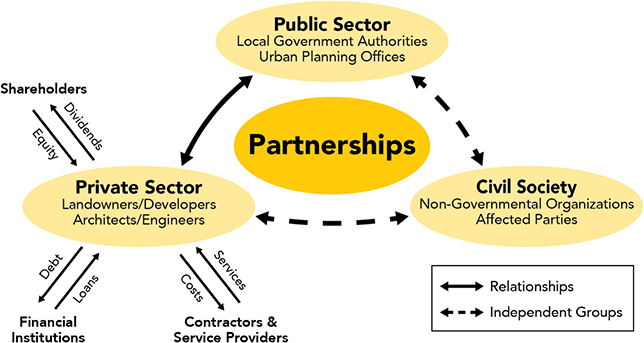
Figure 8 Sources of public and private climate finance in cities, based on Ng, Wong, and Wong 4P model (Reference Ng, Wong and Wong2013).
Figure 8Long description
At the center of the diagram is the term Partnerships, surrounded by three groups. First is Public Sector which involves Local Government Authorities and Urban Planning Offices. This has a direct relationship with the second group, Private sector, which involves Landowners/Developers and Architects/Engineers. This sector is connected to shareholders through equity and dividends, financial institutions through debt and loans, and contractors and service providers through services and costs. Independent from the public and private sector is the third group Civil Society, which involves Non-Governmental Organizations and Affected Parties.
6.1 Public Sector Finance
Ways to assist cities with limited expertise in identifying the potential of different innovative financial instruments and adapting successful approaches from other cities of comparable size and context include:
- Pooling resources within a geographical scope (e.g., a subregion) to attain needed expertise and capacity for project preparation and management.
- Promoting communication and collaboration among key climate finance actors, including subnational development banks, subregional MDBs, and climate funds.
- Utilizing programmatic initiatives (e.g., those of the GCoM) and international financing vehicles that support cities in using innovative financial instruments.
Possible alternative sources of climate finance that developing country cities can utilize include subnational climate funds, participatory budgets, and local or municipal taxation:
- Under a city’s participatory budgeting process, assuming it controls its budget, a portion of the funds for public urban investment might be reserved for supporting the priorities of local stakeholders. Additional resources then might be mobilized through crowdfunding among the citizens and local businesses involved. Such a scheme can also encourage the voluntary participation of stakeholders and strengthen their ownership of and commitment to urban sustainability projects.
- Although a local tax could mobilize financial resources in countries in which taxation policy is managed at the national level (even local taxes require state authorization), mayors have limited capacity to organize meaningful amounts of resources through taxation. Additionally, the social repercussions of adding additional taxation would likely result in a new political burden on the city.
- Fees for services and the selling of concession rights to businesses may provide cities with funds even if they are not legally capable of raising local tax revenues.
6.2 Barriers to Public Sector Finance
Cities’ financial capacities clearly limit their ability to respond to climate change. However, financial constraints are not the only factor shaping or limiting urban climate action. Other factors that lie beyond the powers of cities constrain not merely their access to finance but their capacity to use funds efficiently.
All countries regulate the powers of subnational governments, but they do so in a variety of ways.Footnote 12 These controls, in turn, affect cities’ ability to act. The predominant patterns of allocation of powers to local governments include the following:
1. Countries in which all taxation and funding decisions are made at the national level.
2. Countries in which local governments have limited self-funding capacity but rely on funding from higher-level domestic sources, including from regional or state governmental units.
3. Countries in which municipal powers to act on public-sector issues may not be limited by fiscal capacity but which are constrained by higher-level governments.
4. Countries in which local governments have full public powers limited only by their financial capacities.
These patterns combine in different ways to create four archetypes of local government ability to take climate change mitigation or adaptation actions (see Table 5). The different conditions shown in Table 5 result in different levels of urban capacity to act.
Notes:
- Type A: Cities funded exclusively from the national level and with limited powers to act may be unable to take on new tasks or be innovative in the use of the resources at their command since they are rarely expected to act without guidance. They may not be staffed to address new threats to their well-being, whether they come from economic or climate changes. These localities need capacity building as much as they need financing for responses to climate change.
- Type B: Even if they cannot provide any of their own funding, cities with unconstrained powers to act may at least have the capacity to identify and assess possible actions they want to take in response to climate change. They could then pursue new national or other nonlocal funding – effort that would require them to demonstrate the benefits those actions could produce in order to justify their requests for funds.
- Type C: Cities that have some capacity to generate their own funds but have constrained powers to act may have to be creative in characterizing or justifying their climate responses as falling within their legal limits to taking action. Thus, their local financing capacity may be undermined by their inexperience with independent action, and they may find it difficult to justify additional taxation or other revenue generation, in addition to being uncertain about how to pursue mitigation or adaptation measures.
- Type D: Cities with both the power to decide what actions to take and the capacity to at least partially finance their efforts obviously have the greatest opportunity to respond to climate change. They may even have or be able to create special units to address climate risks and decide how to respond to them.
Table 5 Four archetypes of local government ability to take climate change mitigation or adaptation actions
| Funding sources | Power to act | |
|---|---|---|
| Limited | Unconstrained | |
| National | Type A | Type B |
| Mixed | Type C | Type D |
6.3 Private Sector Finance
Private sector capital for climate finance is routinely priced on a market basis, with financial returns measured against risks. Scaling up private-sector climate finance can be enhanced if the social and environmental benefits of carbon emission reduction are internalized in the calculation of returns and/or project risks are reduced.
The private sector requires a blueprint for potential avenues for collaboration and investment in fighting climate change. It thus can be involved in climate change project implementation with the guidance of international, national, and local authorities. The long-term transition of a city towards climate action requires a policy framework that matches impact to the capacities of the public and private sector to modify the national economy, harnessing opportunities for investment. National authorities as well as national financing entities may be well-positioned in providing guidance and technical advice to kickstart actions that mitigate and increase climate resilience.
Some of these actions include the introduction of market and regulatory mechanisms that trigger private-sector participation in climate action, including the establishment of a carbon market, the introduction of carbon taxes, fostering of Energy Service Companies (ESCOs), and the implementation of energy performance labeling schemes. Formalization of the TCFD recommendations into standards can help cities know what data to provide to prospective investors.
Private sector interest in urban climate action is growing and is based on multiple factors and types of returns:
- Profit from loaning to or engaging in responses (which is most readily obtained through mitigation investments), to demonstrate the investment in ESG that now is mandatory in many jurisdictions.
- Reputational and marketing returns from appearing to be “green,” given political climates, including pressure from consumers, stakeholders and shareholders to promote triple-bottom-line investing.
- Disinvestment in fossil fuel extraction and power generation in response to government regulations, public pressures, and/or rising risks, resulting in a need for new investment opportunities that could increase the volume of investment capital flowing to clean energy or energy efficiency.
- Pursuit of regulatory relief (reduced government regulations and more flexibility) and avoidance of mandates by appearing to take “voluntary” action and thus gaining political approvals.
- Investment by multilateral and national financial institutions is needed to improve the capacities of cities to become more reliable and sustainable partners.
Private initiatives take a variety of innovative forms. Many efforts involve companies greening themselves and their supply chains and/or distribution systems. These internal efforts can contribute to both mitigation and adaptation activities in the urban areas in which companies operate. The mandatory ESG reporting in the EU Taxonomy Regulation is driving this activity, with companies complying with mitigation and adaptation measures in order to earmark their investments as sustainable. Even voluntary ESG rating or TCFD standard compliance, which is increasingly requested by financial markets and investors, can promote more private investment in climate responses. Whether these initiatives in the Global North can generate similar private-sector investment in the Global South remains an open question.
Different sustainable private finance (or other relevant) frameworks should, in principle, be able to also support urban climate action to achieve global and local climate goals. The nature of the private-sector interconnection with local authorities and the quality of coordination of autonomous climate action by private actors with municipal efforts can vary with the policy context in which investment occurs. Investors can benefit from:
- Availability of a taxonomy of sustainable economic activities in a location (drawn from profitable precedents and the EU Taxonomy Regulation).
- Nonfinancial sustainability disclosure/ESG framework requirements established by public authorities or industry standards. Examples are the EU Sustainable Finance Disclosures Regulation, the TCFD, Taskforce on Nature-related Financial Disclosures (TNFD).
- Climate risk disclosures and the quality/reliability of other public-sector risk disclosures.
- Regulatory standards for transparency of information provision established for financial market players (e.g., the EU Benchmark Regulation).
- Public- and private-sector labeling, standards, tracking, and monitoring of financial flows.
- Availability and adequacy of bottom-up and participatory funding schemes (e.g., crowdfunding, community grants).
- Existence of public-private partnerships (PPPs) and local investment cost concessions to increase private-sector financing of sustainable infrastructures (Atienza, Reference Atienza2022).
- Greater power of local governments to raise money through tax and leases, to spend, and to control their own local budgets, including green budgeting.
The IPCC AR6 states that there is indeed sufficient global capital to close the global climate finance investment gap (IPCC, Reference Shukla, Skea, Slade, Khourdajie, van Diemen, McCollum, Pathak, Some, Vyas, Fradera, Belkacemi, Hasija, Lisboa, Luz and Malley2022b). While there tends to be ample liquidity in global financial markets, investments in mitigation projects for cities must overcome multiple barriers to be attractive to both public- and private-sector international financing. These include high upfront costs and large risks, especially in low-income countries, where part of the risk that projects face is associated with the generally unstable political and economic contexts (La Rovere et al., Reference La Rovere, Grottera and Wills2018).
Hourcade et al. (Reference Hourcade, Dasgupta and Ghersi2021) argue that one of the main obstacles to catalyzing excess global resources available at a scale and speed consistent with climate urgency lies in the initial risks of low-carbon investment. As Sartzetakis (Reference Sartzetakis2021) points out, low-carbon investments involve, at least in the early stages of market development, low returns and high risks, and thus rely heavily on public policy and government regulation. Similarly, La Rovere et al. (Reference La Rovere, Grottera and Wills2018) noted that low-carbon investments with high initial capital expenditures and long payback periods may not be viable due to uncertainty about the duration and costs of the construction phase and expected revenues. In the event of any project setback, the initial operating deficit of large projects can reach dangerous proportions, thus undermining their longer-term financial viability.
6.4 Barriers to Private Sector Urban Climate Finance
According to the World Economic Forum, cities in general have difficulties accessing climate funds from international organizations (WEF, 2022b). Existing impediments to mobilizing sufficient climate-related finance for cities can be divided into three major types: technical, commercial, and governance barriers (Naidoo et al., Reference Naidoo, Amin, Jaramillo and Dimsdale2014; see Table 6).
Table 6 Barriers to urban access to private-sector climate finance
| Type | Urban capacity required |
|---|---|
| Technical barriers |
|
| Commercial and market barriers |
|
| Governance barriers |
|
Technical barriers such as information asymmetries and knowledge gaps, where cities lack information on private-sector investment processes and institutions and on relevant climate data (e.g., their location-specific climate risk and vulnerability) limit responses, especially in the Global South.
Commercial barriers for cities are global, related to insufficient private-sector capacity in financial structuring and metrics development for public investments, accompanied by the potentially large upfront costs and long payback times.
Governance barriers result from limited progress in investment-ready national adaptation plans and the inability to recognize and measure environmental and social benefits, even at the aggregated national level.
Financial management capacity development remains one of the main needs on the local level and could help to reduce the barriers to mobilizing climate finance, whether for mitigation or for adaptation. Large cities in the Global North have the capacity to hire strategic and financial advisers and proceed with the necessary preparatory steps to pursue private-sector climate finance. Those in the Global South, however, may lack access to specialist advisors and are more likely to have their powers limited by their national governments. These challenges are often replicated for small- and medium-sized cities in higher-income nations.
Among the most common barriers in cities seeking private financing are the lack of capacity and the knowledge gap, as well as difficulties in preparing bankable projects (Steg et al., Reference Steg, Veldstra, De Kleijne, Kılkış, Lucena, Nilsson, Sugiyama, Smith, Tavoni, De Coninck, Van Diemen, Renforth, Mirasgedis, Nemet, Görsch, Muri, Bertoldi, Cabeza, Mata and Vérez2022). In addition, cities may face legal obstacles in relation to budget autonomy and their capacity to incur debts such as issuance of green bonds or to introduce local taxes (Peck, et at., Reference Peck and Whiteside2016). Other barriers to financing local climate projects facing both cities in the Global South and smaller municipalities in the Global North include:
- Reduced financial autonomy (e.g., taxation policy mainly managed by the national government – cities not allowed to increase debt);
- Limited financial and human resources and technical capacity to formulate investment-ready climate projects, issue municipal bonds, or establish PPPs;
- Poor creditworthiness or lack of any experience using credit, resulting in limited access to global financial markets or even domestic markets, if they exist;
- Lack of awareness of and capacity to utilize private investment to complement municipal action;
- Limited access to international sources of climate finance through bilateral and multilateral channels established at the national level;
- Municipally narrow and temporal short-termism in capital allocation decision-making;
- Political risks, illiquidity, and uncertain returns, depending on changing domestic mitigation policy, adaptation and disaster recovery needs, and unpredictable technological progress; and
- Loss of any GHG emission reduction price signals (whether from carbon taxes or global commodity markets) due to large price swings beyond the control of domestic policymakers.
Innovative financial instruments that can help cities to collaborate more closely with financial institutions and corporations and harness the potential of private markets exist but need to be further developed. Existing tools need to be better understood and utilized. Several recent studies have shown that financial resources exist that could be harnessed to fill the financing gap for city climate action (Belianska et al., Reference Belianska, Bohme, Cai, Diallo, Jain, Melina and Mitra2022). Private-sector institutional investors, insurance companies, and pension funds now seek longer-term investment opportunities in climate-resilient infrastructure and associated guarantees that can de-risk projects (OECD, 2018; Ferdinand et al., Reference Ferdinand, Tye, Gebregziabher, Suberi and Carter2020;).
7 Finance Instruments in Cities
A financial instrument – a monetary contract that can be traded, such as a bond or stock – becomes valuable as a tool in the urban climate response context if it can unlock solutions to problems that the private capital market alone cannot resolve. The types and extents of finance market failures vary widely. Thus, the development and use of available financial instruments is likely to differ from city to city.
Experts at the local level are best positioned to understand the issues that cities face on the ground, such as financial or regulatory constraints that may be invisible to those focusing only on the locality’s population dynamics or productivity. Ideally, such experts should be engaged in designing and applying financial instruments for urban climate responses. But, as noted, the expertise needed for that activity simply may not exist at the local level – and the problem is not limited to the cities of the Global South. The availability of the required expertise is more likely to be dependent on the fiscal capacity of municipalities than on their local productivity or income level and thus as difficult to access in small municipalities in the Global North as in the cities of the Global South. But that economic base can be weakened by small population size, lack of wealth, and low income, and, perhaps most acutely, by limits on the legal powers granted to local government entities.
7.1 Green Bonds and Natural Capital
Green bonds are a form of financing wherein the proceeds of the debt issuance are used to exclusively fund projects that have positive climate and environmental impacts via a use-of-proceeds approach. The Green Bond Principles, introduced by the International Capital Market Association (ICMA) in 2014, provided a set of voluntary principles that promote transparent and standardized climate objectives (Gianfrate & Peri, Reference Gianfrate and Peri2019; ICMA, 2022). Increasingly originated by financial institutions, sovereign funds, and nonfinancial corporations, green bond issuances have grown rapidly over the last decade, reaching more than US$600 billion in 2021, mainly in the Global North.
Similar to green bonds, green loans are typically conducted via private transactions and are often smaller in size. The International Financial Corporation and some other MDBs also use green loans to provide support to the low-carbon transition of developing countries (Prasad et al., Reference Prasad, Loukoianova, Feng and Oman2022). Other forms of financing like green bonds are sustainability-linked bonds, sustainability-linked loans, social bonds, sustainability bonds, and green asset-backed securities. A potential benefit for green bond issuers is to enjoy a green premium in pricing and/or lower interest rates on the debt, although empirical evidence on the actual size of the pricing benefit remains mixed.
Challenges remain for the use of green bonds to meet the financing needs of cities, especially in developing countries. These include:
- Many cities are under financial stress due to budgetary constraints and are not sufficiently creditworthy to access the green bond market.
- Issuing green bonds requires a substantial amount of technical expertise and knowledge of private capital market processes.
- Carbon accounting mechanisms and standards satisfying both private investors and green bond certifying institutions need to be in place to determine the eligibility of any project for classification as “green.” The EU Taxonomy and ESG guidelines could help in this, but they are not yet widely adopted.
- For-profit firms may use participation in green bond issuance (or just purchase of the bonds) to give themselves a more environmental aura, effectively engaging in “greenwashing.” This practice may undermine the credibility of the bonds if lax oversight or intent permit the funds to be used for purposes other than environmental protection.
The UN Convention on Biological Diversity (CBD) Conference of the Parties (COP15) committed the global community to conserve and manage at least 30 percent of the world’s lands, inland waters, coastal areas, and oceans, and called for at least 30 percent of degraded terrestrial, inland waters, and coastal and marine ecosystems to be restored. Additionally, significant improvements are to be pursued in the management of food waste, which should be reduced by 50 percent as part of a broader thrust to reduce overconsumption and waste generation. Some concrete steps also are to be taken towards reducing usage of pesticides and hazardous chemicals (CBD, 2022).
This commitment has significant implications for cities. Urbanization represents both a challenge and an opportunity for ecosystem management, and cities have a unique opportunity to become outposts for rich biodiversity (CBD, 2021). The adoption of NbS for cities can address urban challenges such as pollution, flooding, urban heat islands, and sea level rise.Footnote 13
New pledges on effective management of valuable natural resources, as well as improvements in preserving ecosystem services, are providing a clear signal for the financial markets. As a result, financial institutions can measure the co-benefits they generate while investing in biodiversity-related projects that are of particular importance for ecosystem functioning.
Cities incur and appropriate “ecological debt,” but restoration and re-introduction of these ecosystem services can enhance resilience, health, and quality of life, which all play important roles in the economic vitality of cities (Folke et al., Reference Folke, Jansson, Larsson and Costanza1997; Gómez-Baggethun & Barton, Reference Gómez-Baggethun and Barton2013). Increasingly, cities are integrating systems of parks, open spaces, and greenways and providing a strong evidence base that NbS can enhance urban communities in biological and socioeconomic ways (Steiner et al., Reference Steiner, Thompson and Carbonell2016).
Valuation of NbS often occurs at site- or intervention-scale. The costs of NbS are relatively straightforward to estimate. For example, a living shoreline requires investment of research, time, materials, transport, site preparation, permitting, equipment, and maintenance. The valuation of the benefits of NbS, however, are more complex. There can often be underestimation in the value of urban NbS, especially in capturing the non-use value component of ecosystem services (Croci et al., Reference Croci, Lucchitta and Penati2021).
The valuation of urban biodiversity can be approached using the Biodiversity Assessment Method (BAM). This method defines two types of credits (NSW Government, 2024):
- Ecosystem credits, which measure the value of threatened ecological communities and threatened habitats for species that can be reliably predicted to occur with a plant community type
- Species credits, which apply to all other species that are found to occur at that location and cannot be reliably predicted to occur with the identified ecological communities at the development site (NSW Government, 2024).
These approaches encourage cities to integrate more biodiversity and conservation actions into their planning and resilience actions. Depending on the type of project and its impacts, either one or both credits might be measurable. The availability of funding for diversity protection and promotion in cities will depend on whether the value of those credits can be effectively monetized.
7.2 Land Value Capture
As cities develop, new residents arrive, new businesses emerge, and new infrastructure is built, the value of land tends to rise. That increase in value produces wealth and income for whichever party controls the gain. Land value capture (LVC) is a financing tool whereby the public sector captures some of the value gained even by privately owned assets if that increased value is due to a public-sector investment or policy (Hart, Reference Hart2020). These captured land assets can then be reinvested into community and city services (Hart, Reference Hart2020).
Land value capture is typically achieved through taxation or fees levied on the private owners of the land benefiting from public interventions. Landowners and private developers gain from new infrastructure construction, but they also gain from measures to reduce climate change vulnerability, whether they take the form of adaptation or mitigation. As land becomes more accessible, more usable, or less likely to face climate-induced disasters, its value goes up. As a result, effective climate change responses by cities are likely to increase land values. To the extent that such responses are funded by non-local sources and the gains are captured by local authorities, cities can multiply their initial external funding by reclaiming and reinvesting even the very short-term gains from their actions.
Land value capture is used in cities across Germany, most notably in Freiberg, where the municipality pooled the value associated with privately-owned land to build public transportation infrastructure, parks, and community facilities (Falk, Reference Falk2020). Similarly, in Addis Ababa, as all land is owned by the government, the city leases land to private entities and businesses to generate revenue for infrastructure and low-income housing (Mahendra et al., Reference Mahendra, King, Gray, Hart, Azeredo, Betti, Prakash, Deb, Ashebir and Ibrahim2020). LVC is essential to assuring inclusive and equitable urban development, since in its absence only the private landowners are rewarded for investments made by a much larger population – all the residents and taxpayers of the city.
The level of public financial resources per capita is far lower for cities in low-income countries than for those in rich countries, so poorer cities tend to gain exceptional benefits through capture of increased land values for purposes such as climate change response, which benefits the entire city. One problem for LVC does arise in the rapidly growing cities in low-income nations: adequate records on urban property ownership.
If owners are not known, it is difficult to pursue LVC from all parties whose properties increase in value. But it is still possible to target for taxes and fees all the parties involved in new construction and development, whether they are identified through records of applications for construction permits or, where those do not exist, from observation of new physical developments.
Even if constrained from raising revenues on their own behalf, cities can do much to generate public gains from new developments. They can:
- Offer relief from height or other regulatory constraints on buildings in return for provision of public open spaces;
- Provide similar regulatory relief for buildings meeting exceptional energy efficiency standards to generate climate change mitigation through reduced energy use;
- Solicit developers’ contributions towards public-sector infrastructure projects that might otherwise not get funded, but which provide benefits to them as well as other tenants;
- Permit renewable energy developments on building sites and offer guarantees of access across adjacent properties as well as a market for excess energy generated in return for their investment in solar energy.
The key to pursuit of LVC is to take a broad view of what new values are generated as well as of the possibility of partnering with the private sector to reap those rewards. Case Study 3 illustrates the extent to which the pursuit of LVC can influence development decisions – and the extent to which developers may go to avoid paying for that land value increment.
Belo Horizonte, a city in Brazil, is committed to climate change mitigation and adaptation through comprehensive plans and policies.
The 2019 Belo Horizonte Urban Master Plan introduced LVC, a policy that allows the community to recover and reinvest land value increases resulting from construction that exceeds the city’s basic floor area ratio subject to a building rights fee. Revenues from the building rights fees are used to urbanize deprived settlements and to build affordable housing, including in areas near center business districts, and to improve public space.
In 2023, after intense pressure from real estate interests, the city council approved a change in the building rights fee formula, granting a 50 percent discount in building rights fees in the consolidated central area. This response to industry lobbying undermined the master plan strategy to avoid new developments in the already congested area.
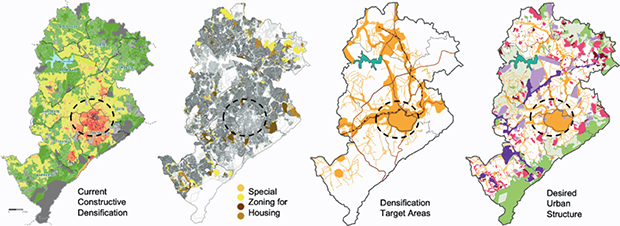
Figure 9 Belo Horizonte City encompassing the Urban Master Plan conceptual approach, with inner area of Contorno Avenue highlighted in a dashed circle.
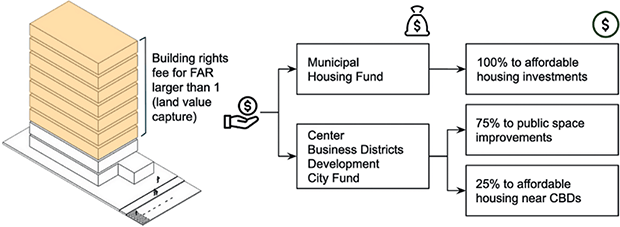
Figure 10 Allocation of building rights revenue in Belo Horizonte
This fee change reduced the planned reduction of GHG emissions and the revenue available to improve affordable housing access and resilience in high-risk areas. The change in the Urban Master Plan primarily affected low-income people who live in areas vulnerable to floods, landslides, heat waves, dengue fever, and drought.
The one-time passage of progressive measures may send a positive message to would-be investors in a city. The variability of local policies and the possibility that private profit seekers could reverse policies, however, pose a real risk to investors that the returns premised on a promising climate action could be easily eliminated.
The city’s municipal housing fund is fundamental to implementing adaptation strategies, protecting lives, and reducing the burden of climate injustices on residents of informal settlements. Fund resources were supposed to underwrite accelerated construction of affordable housing, monitor informal and high-risk settlements, and coordinate urban regularization and land tenure projects. Reversing the change in the building rights fee formula remains on the agenda as Belo Horizonte attempts to use LVC to implement its climate action plan.
7.3 Carbon Pricing and Carbon Markets in Cities
A well-designed carbon price mechanism could be an important part of a municipal strategy for reducing GHG emissions. Carbon price schemes are intended to incentivize the changes needed in investments and consumption patterns and to foster technological progress to reduce future costs. Urban policymakers can enhance their carbon pricing schemes using other policies, such as regulations, standards, financial sector policies, and climate financing.
Progress on the Paris Agreement Article 6 mechanisms that set out the functioning of international carbon markets was made at COP26 in Glasgow. When finalized, the mechanisms will support further global cooperation on emission reductions. Under these new market mechanisms, it should become possible for cities to engage with the private sector in creating credits for emission-reducing activities, enabling a company in one country to reduce emissions in that country and have those reductions credited so that it can sell them to another company in another country. Carbon pricing would help generate incentives for private investment in low-carbon projects. It would promote a more transparent market and the ability to make clear and informed investment decisions in different markets and economies.
In 2013, Beijing adopted a pilot carbon market scheme with the goal of becoming a low-carbon city (ICAP, 2022). The city applies a bottom-up approach to pricing and covers approximately 30 percent of Beijing’s total emissions. It uses a price floor (CNY 20, US$2.82) and ceiling (CNY 150, US$21.17) as a mechanism to stabilize prices (ICAP, 2022). As of 2020, the Beijing emission trading system covered around 45 percent of the city’s total emissions, including those from petrochemicals, cement, public transport, and the service sector (Quian, Reference Quian2024).
The Paris Agreement’s NDCs, defining maximum total emissions for a group of installations, could be used to create the permit cap. Each country could then use the cap to impose obligations on greenhouse gas generators to comply with an emissions reduction pathway with annual targets (defined by the number of emission permits). In 2010, Tokyo became the world’s first city to introduce a cap-and-trade program, focusing on large buildings and factories (TMG, 2024). As Tokyo’s buildings are responsible for 70 percent of the city’s emissions, the program mandates annual emissions reductions, with buildings required to meet energy efficiency measures or purchase and trade credits from high-performing buildings. By 2017, total building emissions had reduced by 27 percent from the baseline, with emissions continuing to fall (TMG, 2024).
Cities can also introduce local carbon taxes in the absence of a national carbon tax. In addition to carbon taxes, cities with revenue-generating powers also generate funds from congestion fees, parking charges, and the like that indirectly tax emissions and that can be recycled to support public transportation, bicycle lanes, and other mitigation investments.
7.4 Role of Energy Service Companies
Energy service companies (ESCOs) are private or public organizations that provide technical assistance, technology, and financing to reduce energy consumption (Bertoldi et al., Reference Bertoldi, Rezessy and Vine2006; Ellis, Reference Ellis2010; Stuart et al., Reference Stuart, Larson, Goldman and Gilligan2014). Within cities, ESCOs play a key role in advancing urban sustainability through developing energy-efficient solutions for buildings and infrastructure from all sectors. Their approach is intended to offer a self-financing mechanism in which energy cost savings from new investments generate the funds for debt service to create a revenue source managed by the ESCO for financing available energy efficiency investments for its clients. This model enables cities to implement large-scale energy efficiency projects without upfront capital costs, helping cities to attain both financial savings and environmental sustainability while improving urban climate change resilience. Case Study 4 illustrates the model in action in Piecki, Poland.
ESCOs introduce energy management practices, integrate new technology to control energy consumption, and adjust contracts with power providers on behalf of consumers. Consumers pay for this service and the capital costs (which are borrowed) for the investments over time with the savings associated with reduced energy consumption. Over a pre-defined period agreed to by the ESCO and the consumer, the ESCO gets repaid for its service and technology provided; the consumer keeps the technology with the benefit of a lower electricity bill, associated with a reduced carbon footprint. In this context, a consumer can be a local authority, a company, or a household, with ESCOs specialized in each market niche.
In Poland, the municipality of Piecki adopted an ESCO approach to upgrade the heating infrastructure of its municipal buildings, improving energy efficiency and generating savings (Interreg Europe, 2020). This approach was adopted due to the city’s inability to directly finance the initial costs of this upgrade.
The ESCO financed the costs associated with the modernization and repairs for heat production and transmission. The municipality pays for this new and more efficient infrastructure with savings linked to lower energy consumption. In this operation, the ESCO requested a loan for EUR 750,000 from Interreg Europe, an interregional cooperation program funded by the European Union, amortized over 30 years. This approach has been replicated in upgrading buildings in the city, including heating, air conditioning, and thermal insulation.
A key element for success in ESCO investments in cities is a reputable and reliable initial energy audit (which requires technical capacity) to determine the prospective energy savings that could be used to service the debt required for the initial investments. Energy audits help in reducing financial and physical performance risks, improving the attractiveness of investments from the view of the financial sector. In the case of Piecki, the EU project Financial Instruments for Renewable Energy Investment supported the initial audits and feasibility studies.
Figure 11 Cityscape of Piecki municipality.
7.5 De-risking
Prospective private investors in urban climate responses need to know the risks, returns, and duration of any project they consider. Investors used to private-sector projects might otherwise tend to exaggerate risk because of the complex nature of urban climate projects and the misconception that they entail additional risks. In principle, therefore, a key de-risking strategy would be to create reliable independent information centers at regional, national, or global levels with reliable data on typical returns to climate investments and on successful projects already implemented in cities. Rating agencies, MFIs, MDBs, and other bodies (e.g., OECD) could gather and provide information and promulgate risk-assessment standards. (The new Task Force on Climate-Related Financial Disclosures standards might come to play this role in time.)
The availability of climate finance is further constrained by risk–reward calculations being severely distorted by the consistent underestimation of the reward to climate change mitigation or adaptation. In other words, project risks tend to be overstated, and rewards, understated (see Additional Resources). Nonetheless, de-risking, especially if it reduces perceived uncertainty, can help to attract investments.
De-risking of urban projects can be implemented through public finance and by utilizing financial instruments such as blended finance to unlock private-sector investment. However, economic returns or the commercial viability of projects should not be the only determining factors for multilateral and private finance-making interventions. That is why the expanded acceptance of ESG standards and the work of the TCFD and the TNFD on consistent disclosure of co-benefits are central to expanding capital access. Otherwise, many cities in the Global South will not be able to finance projects, especially those addressing adaptation. This would violate the principle of “leaving no one behind” set out in the 2030 Agenda for Sustainable Development.
The experience with limited private investment shows that high upfront costs and risks related to mitigation and adaptation projects limit access to capital, especially in low-income countries. Risks such as (1) currency value fluctuations; (2) regulatory and political change (contract renegotiation, change in taxation or regulatory environment); (3) macroeconomic and business-related uncertainties (volatility of demand, graft and corruption); and (4) technical problems (construction delays and cost overruns, technology and obsolescence, force majeure) need to be assessed and de-risking opportunities, identified. Without reduction efforts directed at these risks, climate investments could fail long before high carbon prices and associated competitiveness benefits arise – even when a government’s commitment to a path of rising carbon prices is credible.
The scale of finance flowing from the international and national levels down to the city level is currently insufficient to enable cities to contribute significantly toward meeting the Paris Agreement climate targets and the SDGs by 2030. Thus, engaging private investors and finding a suitable place for them in cities’ sustainability efforts is important. One risk-reduction approach to stimulating private investment is the provision of public guarantees. Direct subsidies are an inefficient tool since they might provide extra returns on an investment that would have been successful even without public funds.
The preferred approach generally involves the public sector agreeing to assure that it will bear the costs of certain investment risks. Then, there would be no public expenditure if the project did not incur those risks or suffer losses in the short term above some specified level. Designing such contingent subsidies, however, may be beyond the capacity of municipal officials, so there is an acute need for training and technical assistance to cities.
Microfinance institutions could offer technical and financial options for de-risking projects. National and subnational development banks could train officials in municipalities and local financing institutions and raise their awareness and understanding of finance options. In recent years, some MDBs have introduced specific programs to improve private-sector financing for cities. However, such programs still need to be mainstreamed in the operations of MDBs and multilateral and bilateral channels of climate finance. They also need to provide funds for training urban public officials who have the capacity to reduce investment risks, not just for the project’s direct costs (see Case Study 5).
Blended finance combines public, donor, or philanthropic funding and private capital to reduce risks and increase prospects for private investors while producing positive development outcomes. With blended finance, the limited public finance of municipal governments can be used to improve the risk profile of urban projects and prepare them for investment, which catalyzes additional financial resources from additional sources, including the private sector. An estimated US$31 billion for climate-focused investments has been channeled through blended finance models to date. Blended finance models have been used to develop and increase financing of new technologies in renewable energy, energy efficiency, and mobility. Most blended finance transactions have been directed towards mitigation activities within the energy sector.
However, as a result of engagement from development assistance organizations, urban experience in blended finance for adaptation is growing. In 2022, Cape Town published a plan to utilize a blended finance approach to fund a ten-year US$6.7 billion infrastructure pipeline covering energy, urban waste management, water and sanitation, human settlements, and urban mobility infrastructure projects, all of which are linked to the city’s climate action plan (C40, 2024). By 2024, Cape Town was able to secure the necessary capital to finance the first three years of the project by drawing from its own budget, as well as using external funding sources from local financial institutions and international markets (C40, 2024).
Public instruments are useful for de-risking urban sustainable energy and mitigation projects. Such projects entail a high upfront cost, with the cost of capital higher in developing countries than in developed countries due to perceived and actual risks. Both cost elements could be addressed by the strategic utilization of public investment to leverage private participation in projects, such as the solar panel subsidy program implemented in Barcelona, which is supported by the Catalan government’s energy transition and climate action funds (Pons, Reference Pons2022). The subsidies cover up to 30 percent of installation costs for businesses and residents, reducing the high upfront cost, and the program has already helped to install 100,000 m2 of solar panels in 2021 (Pons, Reference Pons2022; Energia Barcelona, Reference Barcelona2023). One tool that is regularly overlooked but potentially powerful is public provision of insurance against losses.
Like many African cities, eThekwini (Durban) faces challenges in implementing climate actions due to limited financial resources and capacity (Trisos et al., Reference Trisos, Adelekan, Totin, Ayanlade, Efitre, Gemeda, Kalaba, Lennard, Masao, Mgaya, Ngaruiya, Olago, Simpson and Zakieldeen2022; Fourie-Basson, Reference Fourie-Basson2022; CDKN Global, 2022). The approaches used by the eThekwini municipality in South Africa, which encompasses Durban, in securing finance for climate change responses may offer valuable insights for other African cities.
Adopted in 2015, the Durban Climate Change Strategy (DCCS) outlines climate actions across multiple sectors, requiring finance for both infrastructure investments and smaller, resource-reallocating interventions. The DCCS outlines four themes, each of which covers several sectors within the municipality.
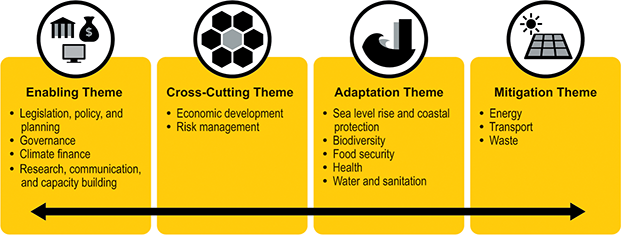
Figure 12 The four themes of the Durban Climate Change Strategy.
In 2019, eThekwini hired a consulting team, Urban Earth, to assist in securing climate finance and building internal capacity. The team helped identify local and international funding opportunities, compiling a database of 58 potential sources. Key successes included securing US$450,000 from the CICLIA facility and US$178,000 from the US Mission to South Africa. However, challenges included limited access to national grants, which are often sector-specific and infrastructure-focused, and the need for co-financing in many international opportunities.
To build municipal capacity, eThekwini developed a climate finance training course for officials, aimed at supporting them in de-risking and developing project concepts for DCCS implementation. The training helped participants create nine project concepts, four of which secured funding. Despite this success, lessons emerged, such as the need for continued support in project development and the time required to match projects with available funding opportunities.

Figure 13 The five modules of the climate finance training course developed for eThekwini Municipality.
The municipality’s investment in external expertise – costing approximately US$28,000 – yielded a 16-fold return through secured climate funding, demonstrating the value of dedicating resources to climate finance. This case study illustrates that an investment in the capacity to secure climate change finance has been highly beneficial in the case of eThekwini Municipality. A similar investment by other African cities could be as beneficial.
8 Climate Insurance
In 2022 the annual economic losses caused by natural hazards for the first time exceeded the threshold of US$360 billion, while over 60 percent of climate-related risks remained uninsured. Moreover, insurers’ data exhibited the highest confidence that climate change contributed to the following individual perils: extreme temperatures, heavy rain/floods, and droughts. (Gallagher Re, Reference Re2023). Private insurance companies are actively exploring the issue of climate change by collaborating with scientists, publicly engaging in policy debates, and assessing the climate impacts on and opportunities for their own products (e.g., InsuResilience Solutions Fund, 2023).Footnote 14
The production of knowledge about climate change risks and about the potential benefits and costs of resilience interventions underlies insurers’ decisions about what risks to insure and the premiums they need to demand for covering those risks. The information gathered is not intended to serve the public sector but may do so. Insurance companies’ responses to requests for coverage can inform public agencies about risks by bringing uncertain and cognitively distant future catastrophes into current decisions of city governments and other governmental authorities (Collier & Cox, Reference Collier and Cox2021).
The insurance industry, which is one of the world’s wealthiest economic sectors, with revenues of US$5.5 trillion in 2020/21 and assets of approximately US$40.6 trillion globally (Statista, 2023), has a major contribution to make to the management of ESG risks. It offers communities, companies, cities, governments, and society at large the potential for collaboration on PPPs and business innovations. The ESG considerations are penetrating and binding. The five principles for sustainable insurance provide a common aspiration and global framework to manage major nonfinancial risks and strengthen its contribution to building up resilient, inclusive, and sustainable communities and economies (UNEP-FI, 2022). A significant number of brokers from the US have already signed the UN Principles for Sustainable Insurance (UNEP-FI, 2012), which provides a global framework to address ESG risks (Banham, Reference Banham2021).
The industry as a whole has played a major role in the formation of both the TCFD (2017) and the TNFD (2023). Recommendations emerging from these initiatives provide the foundation for needed changes to national regulatory legislation, contributing to improved transparency and resilience of economic activities responding to nonfinancial risks.
8.1 The Five Functions of Climate Insurance
Responsible climate insurance plays a critical role in helping cities to manage, cope, and adapt to increasing risks related to climate hazards such as storms, fires, heatwaves, and flooding. In the climate change context, five functions of responsible climate insurance are of particular interest:
1. Compensate losses and fund recovery efforts: Risk transfer prior to loss experience is more cost-effective for increasing resilience than post-disaster relief for losses (Ranger et al., Reference Ranger, Surminski and Silver2011). Some examples where insurance benefits for climate risks have been considered in an urban context include Mumbai (Ranger et al., Reference Ranger, Surminski and Silver2011) and New York City (Aerts & Botzen, Reference Aerts and Botzen2011).
In the case of Mumbai, Ranger and her colleagues (2011) estimate that indirect losses could be halved if insurance penetration rates reached 100 percent. Another recent example, where climate insurance is facilitating recovery efforts is the Mexican Reef Protection Program, implemented in Quintana Roo, where parametric insurance (which pays when certain weather conditions are exceeded) was combined with NbS (Reguero et al., Reference Reguero, Secaira, Toimil, Escudero, Díaz-Simal, Beck, Silva, Storlazzi and Losada2019).
2. Reduce the financial risk of investments: In the context of climate change investments, evidence suggests that the transfer of investment risks could provide a boost for private climate funding (Surminski, Reference Surminski2013). Particularly regarding NbS, insurance could help de-risk the ecosystem-based infrastructure investment of cities. Positive urban examples are New York and Rotterdam, where flood insurance schemes help control financial vulnerability to flood risks and thus reduce the barriers to potential private investments in waterfront and port areas (Aerts & Botzen, Reference Aerts and Botzen2011).
The United Nations Capital Development Fund’s (UNCDF) promotion of climate insurance-linked resilience infrastructure supports the implementation of prior insurance solutions to avoid losses and damages and to incentivize municipalities to invest in resilience infrastructure (The Lab, 2022a). It is specifically targeted to improve the access of developing economies to financial services and to de-risk their resilience investments. Projects have addressed riverine floods (Durban) and extreme heat (Freetown) (The Lab, 2022b).
3. Incentivize and support risk management activities: Purchasing an insurance risk transfer product can directly affect the behavior of those at risk – either in a moral hazard context, where insurance can lead to riskier behavior, or as an incentive, where insurance can trigger risk reduction investments or the implementation of prevention measures (Cummins et al., Reference Cummins and Mahul2009). If not correctly structured, it can provide disincentives (Surminski & Oramas-Dorta, Reference Surminski and Oramas-Dorta2014), but otherwise, it generates a risk price tag, signaling the need to address underlying risks (Kunreuther, Reference Kunreuther and Michel‐Kerjan2009; Botzen et al., Reference Botzen, Van Den Bergh and Bouwer2010; Treby et al., Reference 98Treby, Clark and Priest2006). The example of Hurricane Ian in the US (September–October 2022) demonstrated that new higher standards for the quality of construction led to minimal damage in Fort Myers Beach compared to what comparable storms had done in the past (Gallagher Re, Reference Re2023). New building codes helped to reduce property insurance losses in the same area (Burgess, Reference Burgess2022).
4. Produce broader understanding of climate change risks: Insurers do not only calculate risks but also advise their clients on reducing their specific risks. If they commit some time and resources to considering the purchase of insurance coverage, cities can learn about other private and public bodies’ experiences and get advice that they can use. The process of investigating insurance thus can add to their knowledge about climate change risks and about the potential benefits and costs of both insurance investments and regulatory measures promoting resilience. This knowledge then helps shape public agendas by bringing uncertain and cognitively distant future disasters into the current decisions of city governments and other state agencies and by increasingly becoming the basis for new business models of risk knowledge brokerage and insurance (Collier & Cox, Reference Collier and Cox2021).
The Restoration Insurance Service Company, which focuses on mangrove protection as an impact minimization approach, facilitates knowledge sharing about the co-benefits arising from the activities aimed at improving resilience to climate change. As part of its business plan, it sells “blue” credits from reduced damage to organizations seeking to demonstrate commitments to climate impact minimization targets. The company has developed insurance-linked products for Manila, and its team anticipates replicating the pilot in the Philippine capital elsewhere in that country as well as in cities in Mexico, Malaysia, Indonesia, and Brazil (The Lab, 2019).
5. Develop new business models of sustainable insurance: Insurance companies have a responsibility with respect to financing climate response globally since they manage a substantial share of worldwide economic assets and liabilities. When it comes to accelerating the transition to climate neutrality or strengthening climate resilience, the insurance sector can take the lead in enhancing a risk-aware world and climate-resilient communities (UNEP-FI, 2021). This includes the application of principles of sustainable insurance and mainstreaming climate concerns into project planning and management, insurance product innovations, and green asset management strategies in support of NbS, and green urban development strategies. A specific, often overlooked part of the “greening” of insurance is the application of modern IT (e.g., satellite observation, blockchain, AI, and IoT) to reduce transaction costs (Schwarze & Sushchenko, 2022).
For instances in which the insurance market is not ready to step in and provide protection against climate-related risks, governments are taking the lead. KfW, a bank that was originally set up by the government in Germany to manage the capital investments needed to rebuild the country after World War II, now focuses on sustainable development worldwide. The bank created the InsuResilience Investment Fund, in collaboration with private-sector investors (a PPP), which now delivers financial and technical assistance to the providers of climate insurance products for countries in which such types of services are underdeveloped. For example, the InsuResilience Investment Fund supported the expansion of the weather data measurement infrastructure in rural areas of India as well as the microfinance institution Caja Sullana in Peru. It also provides premium support in the difficult start-up phases for new insurance schemes (BMZ, 2018, 2022).
8.2 The Limits of Climate Insurance
Numerous factors present challenges to climate insurance. One obstacle is the limited availability of data and knowledge regarding regional vulnerability, the complexity of climate disasters, and the unpredictability of losses. Consequently, accurately and fairly pricing insurance becomes extremely difficult when predicting losses from catastrophic events (Golnaraghi, Reference Golnaraghi2018). The insurance market also faces high costs for settling claims due to the extensive assessment required to determine individual damages in events with massive, impacted parties (Skees, Reference Skees2008). Regulatory and legislative issues, such as changing government policies and coverage requirements for licensing insurance products, also impede climate insurance’s feasibility. These issues pose a risk of high costs since both government departments and the general public exhibit a “lack of awareness about insurance,” as highlighted in interviews with industry leaders.
Another challenge arises from the limited adoption of disaster insurance, leading to a small number of policyholders. This lack of uptake stems from insufficient risk awareness, limited understanding of insurance mechanisms, and short-term thinking. Domestic insurance markets, particularly in low- and middle-income countries, exhibit additional weaknesses. Insurance is often perceived as a luxury good in emerging markets, hampering its utilization, even by those who could afford it (Miller & Swann, Reference Miller and Swann2016). Improved standards in climate risk reporting to enhance clarity, data consistency, and transparency are needed not just for the insurance underwriters but to inform the public at large.
The cumulative economic losses caused by individual nature-related catastrophes can be substantial, posing unprecedented pressure on the financial stability of insurance companies. The worsening effects of climate change further complicate risk assessment and impact the profits of the insurance and reinsurance industries.
In May 2023, global insurance giant AON’s president, Eric Anderson, informed the US Senate Budget Committee that reinsurers were responding to unprecedented catastrophe losses by increasing prices, reducing coverage, and even withdrawing from certain markets to improve returns (Andersen, Reference Andersen2023). Likewise, State Farm Insurance, the largest provider of homeowners’ insurance in the US, announced during the same month that it would cease issuing new policies in California due to the escalating threat of catastrophes (State Farm General Insurance Company, 2023).
Allstate, the fourth-largest property insurer in California, has also recently suspended the issuance of new policies, stating that insuring property in California has become increasingly challenging and economically unsustainable in recent years (Umair, Reference Umair2023). The state has experienced unanticipated and costly natural disasters, including historically significant wildfires, often attributed to climate change and insufficient human preparedness and adaptation.
The retreat of insurance coverage is not limited to high-risk areas in the United States. Similar patterns can be observed worldwide. Munich Re’s report on catastrophe costs in 2022 highlights the “protection gap”: the difference between insured and uninsured losses from an event such as a climate-induced disaster (Munich Re, Reference Re2023). Although total losses in 2022 were close to the average, insured losses significantly exceeded the average, since those at higher risk seem to have learned to acquire insurance, burdening the industry with higher-than-expected claims.
Asia accounted for a quarter of the total losses, with a significantly larger protection gap, estimated at, for example, a staggering 95 percent by Swiss Re for China (Swiss Re, Reference Re2023). The high level of underinsurance in Asia has profound implications for the region’s development and the well-being of its population. Munich Re and Swiss Re, among other international reinsurers (firms that ensure the primary insurance underwriters), closely monitor global systemic risks resulting from rising average temperatures. They have raised concerns about climate change and catastrophe risks due to the substantial payouts they must make for related disasters.
Insurance companies have started raising rates, limiting risks, and imposing restrictions on payouts through measures such as deductibles, limitations, and exclusions – as exemplified recently by Hurricane Ian, which generated payouts that were far below damage assessments (Sacks, Reference Sacks2023).
A better, more innovative, approach for insurance companies would involve hedging risks on the capital markets using financial instruments like catastrophe bonds, options, or futures. Although such financial instruments could help raise funds when insurance companies face significant losses, they remain globally underutilized (Botzen et al., Reference Botzen, Van Den Bergh and Bouwer2010). In addition to these risk management measures resembling insurance, the industry could collaborate with governments to promote long-term policies aimed at mitigating global warming and its consequences. Reinsurance companies have been at the forefront of advocating for emissions reductions for many years since they bear the brunt of claims due to unanticipated losses. If approached, they may be prepared to partner with municipalities in projects that provide climate disaster risk reduction.
In the absence of insurance, people and businesses rely on the government as the “insurer of last resort.” However, public funds are only sufficient to cover natural disaster costs to a certain extent, which is why the sector needs third-party support for rebuilding. Some insurance companies have already indicated the industry’s need for government assistance (Irish Examiner, 2023). The global insurance industry will undergo fundamental changes in the coming years. The industry’s traditional precedent-based risk-determination models are becoming ever less adequate for insuring the future as climate change renders experience increasingly inadequate as a basis for prediction. Ensuring the availability, sustainability, and equity of insurance is becoming crucial for financial stability.
8.3 Accessibility and Affordability Issues
Even if climate insurance were available and companies were not retreating from providing coverage in high-risk markets, climate justice considerations raise two issues for insurers and public policy:
1. How to grant access for low-income households to insurance services.
2. How to assure affordability with increasing climate risk under even relatively short-term risk scenarios.
Lower-income households are among the groups most vulnerable in the event of a natural disaster, often because they can only afford to live in the most disaster-prone locations. They suffer disproportionately from disasters and are less likely to recover even in high-income countries such as the US since they lack the financial resources needed for rebuilding and recovery (Fothergill & Peek, Reference Fothergill and Peek2004; Hallegatte et al., Reference Hallegatte, Vogt-Schilb, Rozenberg, Bangalore and Beaudet2020). These households are frequently also locked out of insurance coverage and lack access to credit (Collier & Ellis, Reference Collier and Ellis2021).
Insurance can be made more affordable for lower-income households through three primary channels:
1. Coverage levels could be reduced, or policies could be designed to cover only less frequent events;
2. Administrative costs could be reduced and the savings could be passed on to consumers; or
3. A direct public subsidy could be provided.
Microinsurance has the potential to increase the financial resilience of lower-income households by potentially harnessing all three channels (Kousky et al., Reference Kousky, Kunreuther, LaCour-Little and Wachter2020). It has been used in many developing countries to improve the financial resilience of low-income households. But a thorough understanding of both natural hazard risks and the economics of low-income households is needed to design policies that can efficiently protect against risk. To be effective, insurance regulations, such as subsidized insurance tariffs, can be aligned with existing financing systems (e.g., building taxes for affordable housing as the case of Bandung/Indonesia demonstrates) (Kusumawardhani et al., Reference Kusumawardhani, Rahayu and Maksum2020).
Public guarantees could be a key element to keeping insurance affordable in the future. One of the difficulties in directing the excess of global savings at levels of scale and speed compatible with climate urgency for mitigation and adaptation is related to the initial risks of low-carbon projects. Such risks are especially high in developing countries, where uncertainties regarding political, economic, and social scenarios are observed. Public guarantees have been configured as an instrument capable of reducing early-stage risks, mobilizing private capital, and increasing leverage of public finances. Public guarantees have the advantage of broad risk coverage because they can be neutral with respect to types of risk. Moreover, they can be designed to limit fiscal impacts, only paying out in the event of default due to unforeseen events (Hourcade et al., Reference Hourcade, Dasgupta and Ghersi2021).
Dasgupta & Dasgupta (Reference Dasgupta and Dasgupta2017) proposed a risk reduction instrument for low-carbon projects, incorporating SVMA. In the short term, developed countries recognizing those values would increase their financial commitments to low-carbon investments. Guarantees based on the social benefits gained then could reduce the risk coefficient of low-carbon investments without significant budgetary cost for developed countries, since these resources would only be used in case of investment failure. Another option they suggested was the creation of a Global Guarantee Fund, which would mobilize funds available in multilateral organizations for the issuance of well-valued green bonds. The resources from the issuance of these green bonds could then be used to finance low-carbon investments (Studart & Gallagher, Reference Studart and Gallagher2018).
To support implementation of climate insurance products on the local level and facilitate access for the cities to such services, the province of Hanan (China) introduced a parametric insurance program. This initiative is backed by the biggest insurance companies in China and focused on extreme rainfall and flood coverage. Faced with huge losses and damage associated with flooding, the province is pushing cities and communities to expand existing coverage through implementation of catastrophe insurance. The trigger for payments is a concrete physical parameter: coverage becomes available when a national-level automatic weather station registers daily rainfall of at least 150 mm (inclusive) for each of three consecutive days.
8.4 Near-Term Scenarios of Climate Risk and Sustainable Insurance
Climate change already creates a significant financial insurance risk today, which will become even greater in mid-term scenarios (2030/2050) of climate change (McKinsey, Reference McKinsey2020). The increasing frequency and intensity of extreme weather-related events – wildfires, heat waves floods, and droughts – have already increased insurance risk and further climate change. The potential financial damage from climate change could end up being as severe as the mortgage crisis triggering the 2008 financial crisis.
Insurance regulators predict insurance companies’ climate change risks will increase over the medium to long term – including physical risks, liability risks, and transition risks (McKinsey, Reference McKinsey2020). Those risks are likely to have a high and significant impact on coverage availability and underwriting assumptions. The impacts will be systemic and potentially highly regressive. With losses mounting, insurers might no longer be able to avoid or postpone addressing the impact of changing climate on their underwriting, pricing, and investment decisions, as well as their bottom lines.
In the underwriting process, new hazards will emerge or be identified over time, requiring adaptive products and novel underwriting solutions. Traditional models and, more broadly, past loss experience will not be predictive of the future, so new estimation processes are needed. Obligations will change, requiring new techniques for portfolio management, because more nonlinear effects will be at play. The insurance industry will be forced to move from a “Can I just price this in over time?” position to a “Do I need to take a more proactive stance?” posture if it wants to continue to sell coverages (McKinsey, Reference McKinsey2020).
That is reason enough for insurers to start working with their customers on adapting to climate change and minimizing its adverse impacts. It means increasing the resilience of their infrastructures, facilities, supply chains, and other elements of their operations, and working in PPPs with municipalities, regulators, and policymakers to create a sustainable model.
Insurers can also shift their investment portfolios on the asset side of the balance sheet to help mitigate climate change, partly reputationally and partly as an ESG measure. The TCFD angle could also be explored:
At a macro scale, this is about massive capital allocation and reallocation. Thinking through the price signals that the insurers can send to divert capital that currently is going into risky assets that further promote risky behavior, to burn down that risk, versus just transfer it, is critical because the rising tide of risk means the transferring it doesn’t solve the problem (Strovink et al., Reference Strovink, Javanmardian, Pinner and Grimaldi2021).
More price signals are needed, either from insurers or regulators, to redirect that investment capital in a direction that reduces, not merely transfers, the ever-growing total climate risk.
The work of the TNFD to improve investors’ understanding of how nature influences any organization’s financial performance can also contribute here. The TNFD’s recommendations aimed at improving the quality of information to be incorporated into strategic planning, risk management, and asset allocation decisions complement the recommendations proposed by the TCFD and could help build a strong urban platform for more transparent and resilient economic activities.
But there remains one risk-transfer instrument that could be suitable for addressing climate risks even in the face of growing risks and uncertainty about them. Cities in many instances have the capacity to issue catastrophe bonds (cat bonds). This is a financial instrument developed by insurers and governments to pass extreme risks on to private investors who are willing to assume them in exchange for high interest rates. For example, Allianz recently issued a flood bond for London. New York City also issued cat bonds in the wake of Hurricane Sandy to insure the city’s transit infrastructure against storm-driven flooding through 2016. In the event when a similar storm strikes the city during this timeframe, the bonds will provide the city with resources to recover.
However, these instruments are extremely expensive and involve very high interest rates since the funds generated do not reduce risks if the proceeds are not used for risk-reduction purposes. To address this problem, it is suggested that cat bonds be linked to rebate programs that aim to motivate cities to invest in resilience-building measures (Mehryar et al., Reference Mehryar, Sasson and Surminski2021).
A good example is the Re:focus tool from Swiss Re and Re:partners. The tool can be labeled a resilience bond, since it incorporates risk reduction that may be achieved by a given resilience measure taken with capital raised as part of its interest rate determination for the underlying cat bond (see Case Study 6). When these measures are implemented, interest rates owed by municipalities to their bondholders are reduced to the extent that the likelihood of triggering payouts from these bonds decreases (Re:focus, 2017). In addition, cat bonds might not be an appropriate instrument to protect against climatic risks in that they are narrowly designed for specific events in specific locations, tending to protect only private investor interests (Keogh et al., Reference Keogh, Suess and Westbrook2011; Brugmann, Reference Brugmann2012).
Following Hurricane Sandy, on October 29, 2012, large public infrastructure owners, including the New York Metropolitan Transit Authority (MTA) and Amtrak (the US national passenger rail system), experienced significant losses, including damages to electrical control systems, miles of corroded railway tracks, and compromised integrity of tunnels. During disaster recovery, the MTA sponsored its own US$200 million catastrophe bond and pursued extensive resilience retrofits as part of its recovery strategy. In the long-term response, Hurricane Sandy motivated the New York State legislature to approve a US$4.8 billion repair budget and directed MTA to allocate an additional US$5.8 billion for projects designed to harden the system against damage from future storms (Re:focus, 2017).
Figure 14 Completed construction of the MTA F-line East River tunnel, which suffered significant damage during Hurricane Sandy.
Resilience bonds differ from conventional catastrophe bonds by linking insurance and resilience projects through a rebate structure reflecting monetary losses avoided, such as a reduction of hurricane insurance costs and claims. The expected “resilience rebate” on their bonds can serve as a source of predictable funding, which insurance policyholders can proactively invest in projects that strategically reduce risk. In the New York case, both MTA and Amtrak had insurance portfolios that included catastrophe bonds, which could be reissued as resilience bonds. Other transit authorities without existing catastrophe coverage could rebalance their insurance by consolidating their catastrophe risk into a pool that can be covered by resilience bonds (Re:focus, 2017).
Considering the systemic nature of climate change as one of the most influential nonfinancial risks (WEF, 2023b), there is a need to establish a link to the financial market to cover massive losses and provide immediate access to the funds in case of an extreme event. For this purpose, catastrophe swaps have been introduced in the more sophisticated financial markets. They are usually used as hedges in combination with cat bonds to provide protection to the issuers of the cat bonds in case the event occurs and immediate coverage/payments should be provided (OECD, 2015).
9 Conclusions
Globally, there is enough capital available to finance all needed climate change mitigation and adaptation, including that implemented by and in the world’s cities. However, there remains insufficient political will and public pressure to force financial institutions and financiers to use their assets to address climate change.
Institutional capacity is lacking in many cities, especially in smaller municipalities and in the Global South. However, urban capacity building alone can only improve the efficiency of investments and/or the projects they fund. It cannot, by itself, reallocate investments from fossil fuel development to climate change response.
Reducing transaction costs could significantly increase access to the private-sector investment funds that have limited experience in dealing directly with public entities at the urban level. Adopting global rules on some standardized green taxonomy and standards on nonfinancial disclosures for cities would mobilize additional climate finance. Notwithstanding their efforts, the MDBs, EU, ICLEI, and public and private standard-setting bodies examined here need to continue to work towards agreement on common metrics. These need to include co-benefits, promote ESG accounting, and focus on the triple bottom line.
Having a single data-based common approach to validation and verification of project results achieved will de-risk investments. The newly formalized TCFD standards have the potential to resolve this problem, but they currently address private-sector activity only. They will be of value to cities only insofar as the standards and measurement protocols are adapted to municipal decision processes in the public sector as well.
There is an urgent need to increase financing for the cities in the Global South that are already incurring exceptional costs from climate change and need to improve their adaptive capacities to reduce both current and future impacts. Currently, private climate finance investment flows overwhelmingly to cities in middle- and high-income countries in which better data on impacts and more stable financial institutions exist and reduce risk.
Carbon pricing, carbon credits, and other local income sources (e.g., LVC, congestion charges, and real estate taxation) could be added to traditional fees and taxes to generate new revenues for cities if they have power to implement them. Other financing instruments to be further explored and implemented include PPPs, private investment concessions and guarantees, and green bonds. These tools, however, require expertise that is often not readily available to the large majority of cities across the globe.
Additional training and capacity building in municipal institutions are needed for the investment market to operate efficiently and climate response projects to produce the needed benefits. At the urban level, training needs to begin with budgeting, including distinguishing between current and capital budgeting. It needs to address project management and appraisal, public procurement and corruption, and mainstreaming of mitigation of and adaptation to climate change in all investment decisions.
An increasing number of public and private donors and investors now appear willing to consider financing urban climate mitigation and adaptation measures. At COP29, in Baku, climate finance discussions led to a commitment to mobilize US$300 billion annually for developing countries by 2035, with a longer-term goal of raising climate finance flows to US$1.3 trillion per year by the same year. This US$1.3 trillion target encompasses both public- and private-sector financing, though it still does not fully meet the financial needs of vulnerable nations. Additionally, MDBs pledged to boost their climate financing to US$120 billion by 2030, marking a 60 percent increase from the 2023 levels.
The insurance industry plays an important role in climate change financing, on one side holding large funds and on the other having a strong interest in limiting the future cumulative costs of climate-induced natural disasters. Insurance underwriters could set up special alliances with cities to provide data and risk assessment and to finance local adaptation, much as private insurers long have been doing with major private-sector clients whose operations they insure.
Finally, and very importantly, investments should not generate new or worsening inequality. Climate change financing processes thus need to be aligned with the ESG framework and should promote the UN’s SDGs to achieve a globally just transition.
Abbreviations
- Abbreviation
- Organization, Process, or Term
- BAM
Biodiversity Assessment Method
- BARC
Building Adaptive and Resilient Communities
- BMZ
Bundesministerium für wirtschaftliche Zusammenarbeit und Entwicklung (the German Federal Ministry for Economic Cooperation and Development)
- BUK
Bayero University Kano
- CBD
Convention on Biological Diversity
- CCA
Climate change adaptation
- CCFLA
Cities Climate Finance Leadership Alliance
- CDP
Carbon Disclosure Project
- CILRIF
Climate Insurance-Linked Resilient Infrastructure Financing
- CLAs
Coordinating Lead Authors
- COP
Conference of the Parties
- CPI
Climate Policy Initiative
- DLT
Distributed ledger technology
- DRR
Disaster Risk Reduction
- DRR
Disaster risk reduction
- DCCS
Durban Climate Change Strategy
- EEA
European Environment Agency
- EIB
European Investment Bank
- ESCO
Energy service company
- FbF
Forecast-based financing
- GCoM
Global Covenant of Mayors
- GDP
Gross domestic product
- GEF
Global Environmental Facility
- GHG
Greenhouse gas
- ICLEI
Local Governments for Sustainability
- ICMA
International Capital Market Association
- IPCC
The Intergovernmental Panel on Climate Change
- IFRC
The International Federation of Red Cross and Red Crescent Societies
- IFRS
The International Financial Reporting Standards
- IMF
International Monetary Fund
- IoT
Internet of Things
- LGU
Local government units
- LVC
Land value capture
- MCR2030
Making Cities Resilient 2030
- MDB
Multilateral development bank
- MFI
Microfinance institution
- MTA
Metropolitan Transit Authority
- NbS
Nature-based solutions
- NDC
Nationally determined contributions
- NSW
New South Wales (Department of Planning and Environment)
- OECD
The Organisation for Economic Co-operation and Development
- PCP
Partners for Climate Protection
- PPP
Public-private partnership
- SDG
Sustainable Development Goal
- SIF
Sovereign insurance funds
- SVMA
Social, economic, and environmental value of mitigation actions
- TCFD
Task Force on Climate-related Financial Disclosures
- TFND
Taskforce on Nature-related Financial Disclosures
- UNDP
United Nations Development Programme
- UNEP
United Nations Environment Program
- UNEP-FI
United Nations Environment Program Finance Initiative
- UNFCCC
United Nations Framework Convention on Climate Change
- UNISDR
United Nations International Strategy for Disaster Risk Reduction
- WEF
World Economic Forum
- WRI
World Resources Institute
Acknowledgments
We greatly appreciate the constructive reviews of the Element by Fritz-Julius Grafe, Sarah Knuth, Enora Robin, Laura Aileen Sauls, and Zac Taylor. We thank Jaad Benhallam and Natalie Kozlowski of the UCCRN Secretariat for providing outstanding editorial and graphic support.
We are grateful to the European Investment Bank and Climate Bonds Initiative for providing data used in this Element, and we are grateful to William Hernandez of the UC Irvine Paul Merage School of Business. Members of Reimund Schwarze’s Climate Finance Lab also contributed to the Element: Maria Gonzales, Hrag Harboyan, Sabrina Kiernan, Hong Li, Gianna Lum, Aminh Nehmeh, Marco Ortiz Sanchez, Michelle Tran, Jasen Williams, Kendall Wilson, and Sam Yosafi.
This publication was co-funded by the EU Project SOTERIA under the Grant agreement ID: 101112867. UCCRN acknowledges support from NASA (WBS 509496.02.80.01.16).
Coordinating Lead Authors
Peter B. Meyer, University of Louisville and Borough of New Hope, PA
Oleksandr Sushchenko, Helmholtz-Centre for Environmental Research – UFZ,
Zehra Yakut, Collège des Ingénieurs (CDI) Italia
Paolo Bertoldi, European Commission Joint Research Centre
Reimund Schwarze, Helmholtz-Centre for Environmental Research – UFZ
Lead Authors
Benjamin Leffel, University of Nevada, Las Vegas
Pedro Ninô de Carvalho, Federal University of Rio de Janeiro
Ahmad Garba Khaleel, Federal University Dutse, Jigawa
Joyce Coffee, Climate Resilience Consulting, Inc
Jesse M. Keenan, Tulane University
Contributing/Case Study Authors
Sean O’Donoghue, eThekwini Municipality
Margaret McKenzie, Urban Earth
Derek Morgan, Urban Earth
Ian Preston, Urban Earth
Hannah Arcuschin Machado, Fundação Getulio Vargas
Element Scientist
Caera Beightol, Hunter College, The City University of New York
William Solecki
New York
William Solecki is a Professor in the Department of Geography at Hunter College, City University of New York (CUNY). From 2006–2014 he served as the Director of the CUNY Institute for Sustainable Cities at Hunter College. He also served as interim Director of the Science and Resilience Institute at Jamaica Bay. He has co-led several climate impacts studies in the greater New York and New Jersey region, including the New York City Panel on Climate Change (NPCC). He was a Lead Author of the Urban Areas chapter in the Fifth Assessment Report of the Intergovernmental Panel on Climate Change (IPCC), and a Coordinating Lead Author of the Urbanization, Infrastructure, and Vulnerability chapter in the Third National Climate Assessment (US). He is a co-founder of the Urban Climate Change Research Network (UCCRN), co-editor of Current Opinion on Environmental Sustainability, and founding editor of the Journal of Extreme Events. His research focuses on urban environmental change, resilience, and adaptation transitions.
Minal Pathak
Ahmedabad
Minal Pathak is an Associate Professor at the Global Centre for Environment and Energy at Ahmedabad University, India. She is a Senior Scientist with the Technical Support Unit of Working Group III of the IPCC for its Sixth Assessment cycle. She has contributed to two IPCC Special Reports, co-edited the IPCC Sixth Assessment Report, and contributed to the recently published IPCC Sixth Assessment Synthesis Report. She heads the South Asia Hub of the UCCRN, headquartered at the Columbia Climate School. She was a Visiting Researcher at Imperial College London (2017–2023) and a Visiting Scholar at MIT (2016–2017). Her research focuses on climate change mitigation strategies for urban settlements, transport, and buildings, and their co-benefits/interlinkages with development.
Martha Barata
Rio de Janeiro
Martha Barata is Coordinator of the Latin America Hub of the UCCRN, headquartered at Columbia Climate School. Barata is a collaborating researcher at the Oswaldo Cruz Institute (Fiocruz) and CentroClima (COPPE/UFRJ), following retirement from the Oswaldo Cruz Foundation in 2017. She was a Visiting Scholar in the Center for Climate Systems Research at Columbia University in 2014, conducting research on climate risk management in cities.
Aliyu Salisu Barau
Kano
Aliyu Salisu Barau is a Professor in Urban Development and Management at the Department of Urban and Regional Planning and Fifth Dean of the Faculty of Earth and Environmental Sciences at Bayero University in Kano, Nigeria. He is a transdisciplinary researcher with interests in climate change, landscape ecology, clean energy, socio-ecological systems, sustainability agenda setting, informally and formally protected ecosystems, special economic zones, and inclusive and innovative planning. He contributes to the research, policy, and action agenda in Nigeria and globally through engagements with UN Environment, IPCC, Future Earth, IUCN, IPBES, IIED, UNICEF, and UN Habitat. He is also the director of the West Africa Center for the UCCRN at Columbia University in New York.
Maria Dombrov
New York
Maria Dombrov is a Senior Research Associate at the Climate Impacts Group, co-located at NASA Goddard Institute for Space Studies and Columbia University’s Center for Climate Systems Research, in New York City. Ms. Dombrov is UCCRN’s Global Coordinator and the Project Manager of UCCRN’s Third Assessment Report on Climate Change and Cities (ARC3.3). Her work focuses on understanding the risks and vulnerabilities that climate change and extreme events present to cities and their metropolitan regions around the world.
Cynthia Rosenzweig
New York
Cynthia Rosenzweig is a Senior Research Scientist at the NASA Goddard Institute for Space Studies (GISS), Adjunct Senior Research Scientist at the Columbia University Earth Institute, and Professor in the Department of Environmental Science at Barnard College. At NASA GISS, she heads the Climate Impacts Group, whose mission is to investigate the interactions of climate on systems and sectors important to human well-being. Dr. Rosenzweig is co-director of the Urban Climate Change Research Network (UCCRN). She is a co-founder and co-leader of the Agricultural Model Intercomparison and Improvement Project (AgMIP). Dr. Rosenzweig was Coordinating Lead Author of the Food Security chapter for the IPCC Special Report on Climate Change and Land and Coordinating Lead Author on observed climate change impacts for the IPCC Working Group II Fourth Assessment Report.
About the Series
This Elements series, published in collaboration with the Urban Climate Change Research Network (UCCRN), provides essential knowledge on climate change and cities for researchers, practitioners, policymakers, and students. Bridging the gap between theory and practice, the series invites readers to engage with the latest advances in the field. Focusing on urban transformation, cross-cutting themes, and urgent research areas, it empowers stakeholders to drive impactful climate action in rapidly-evolving urban contexts.
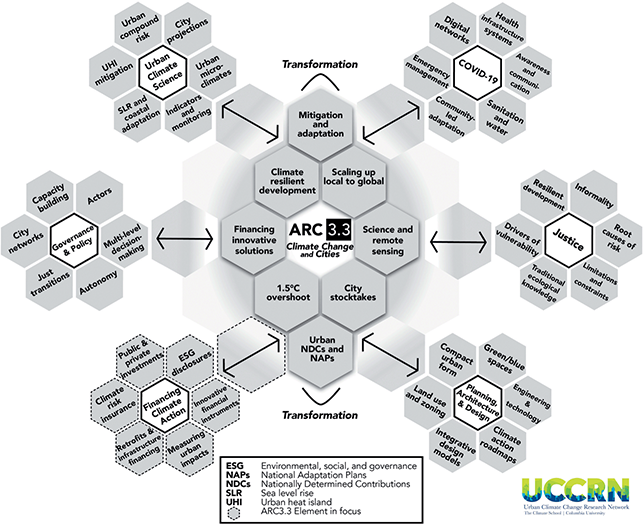
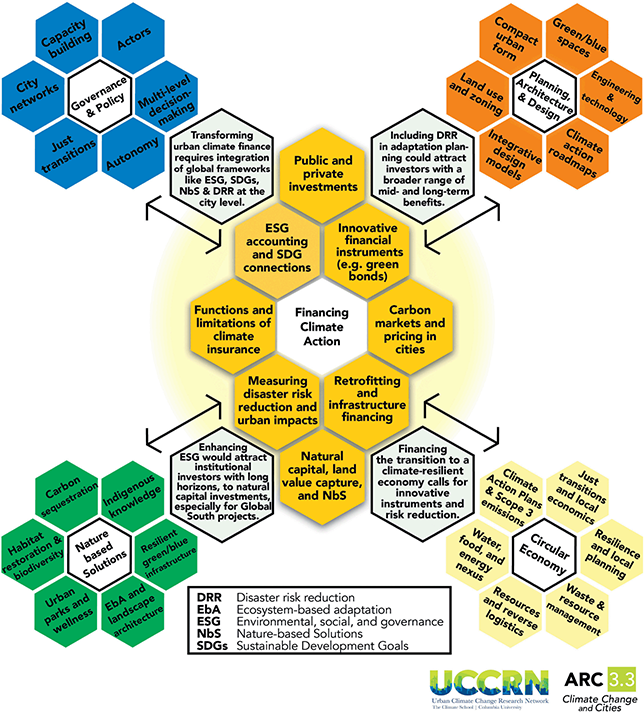
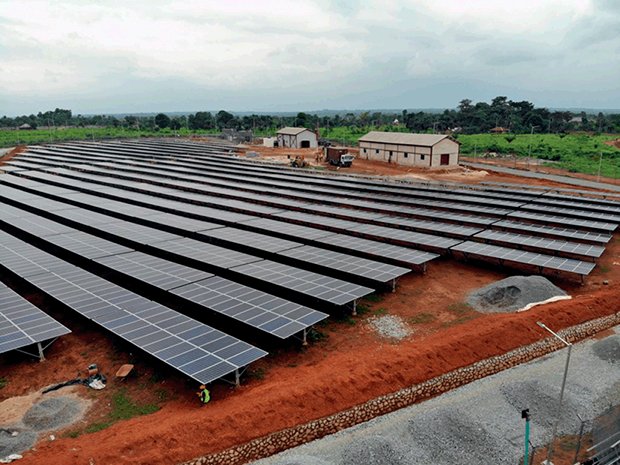
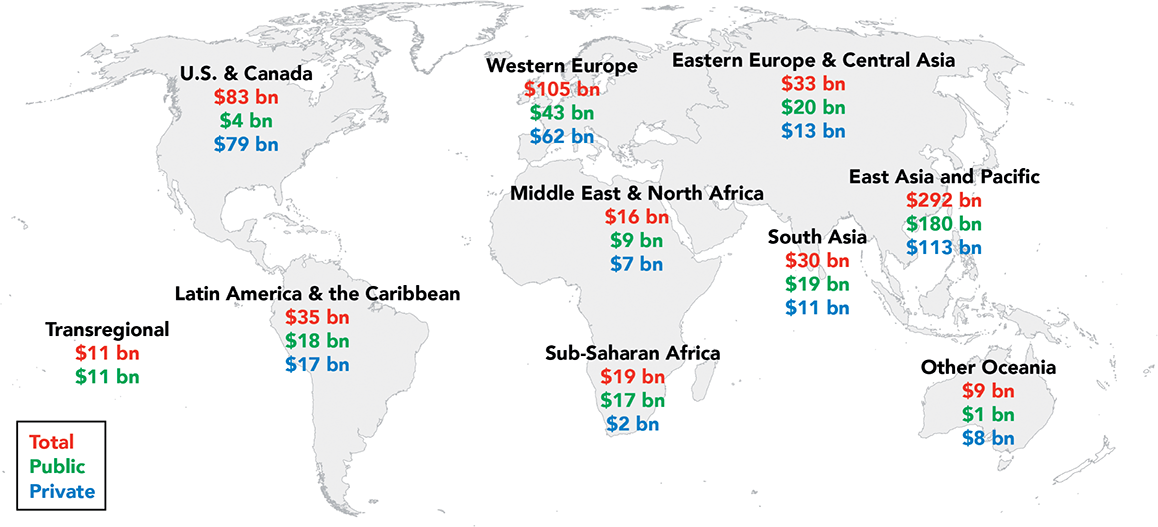
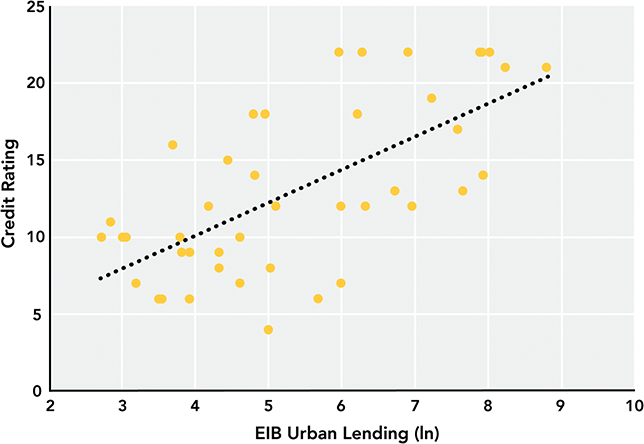
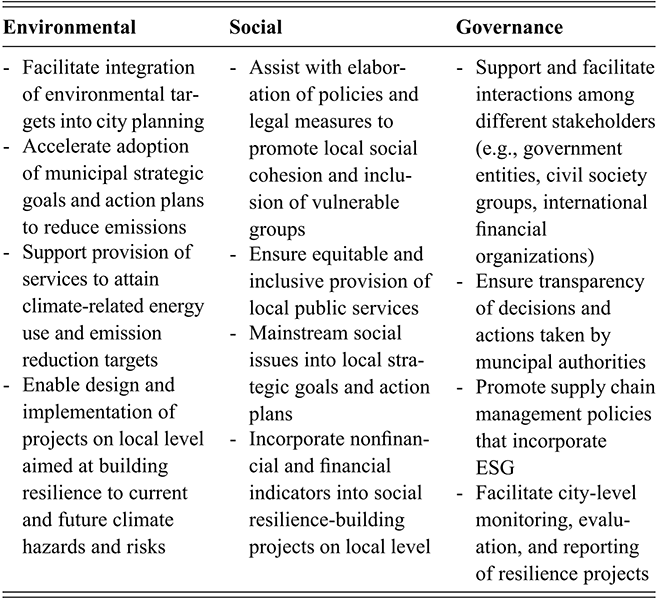
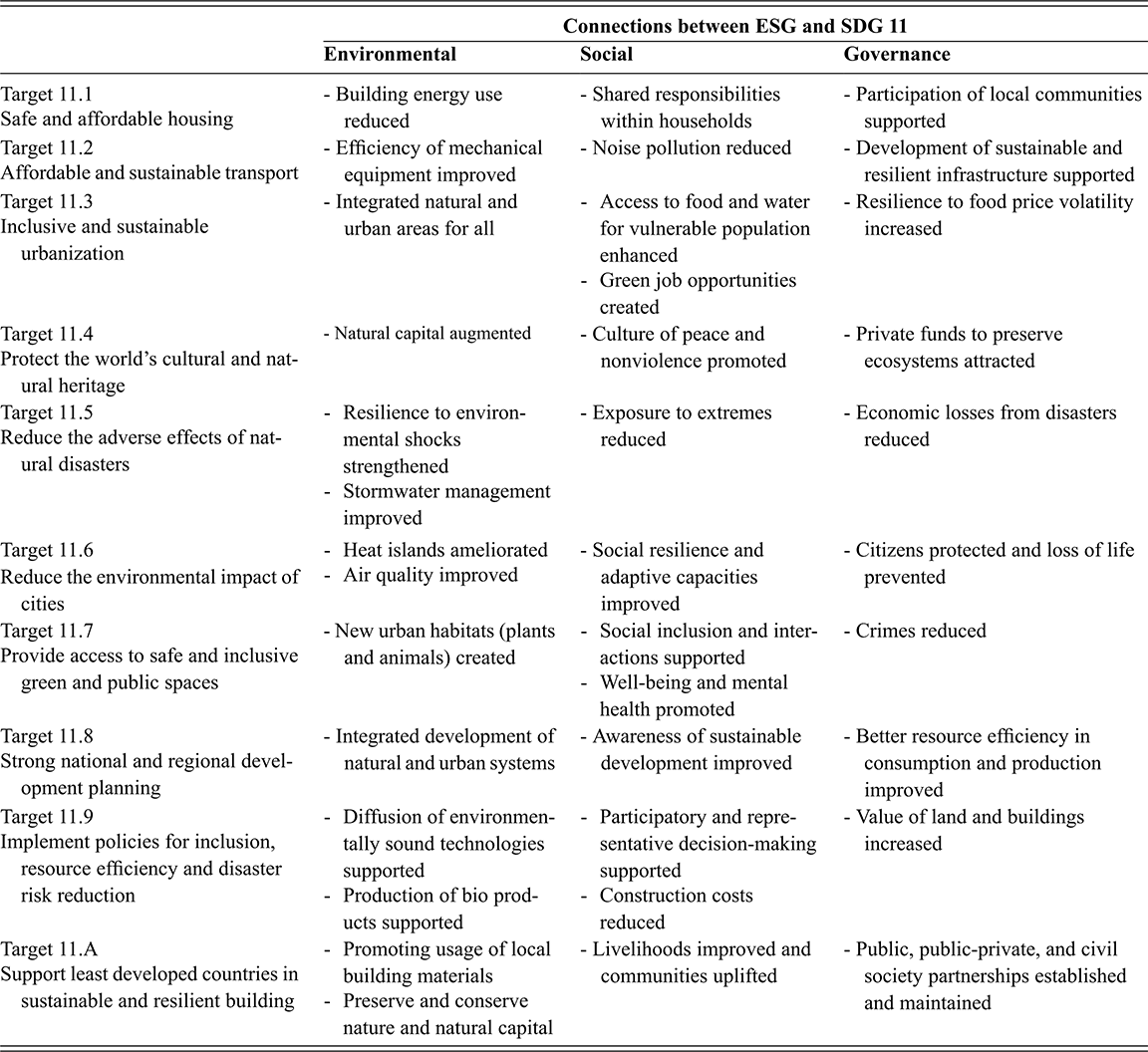
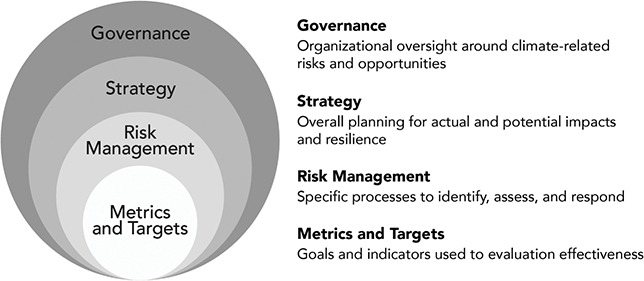
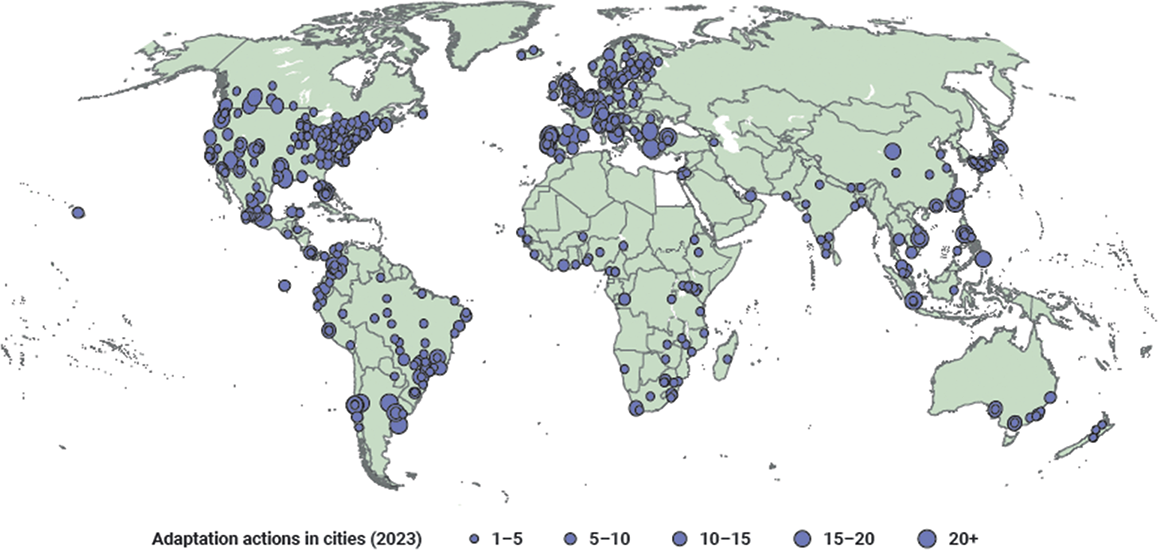
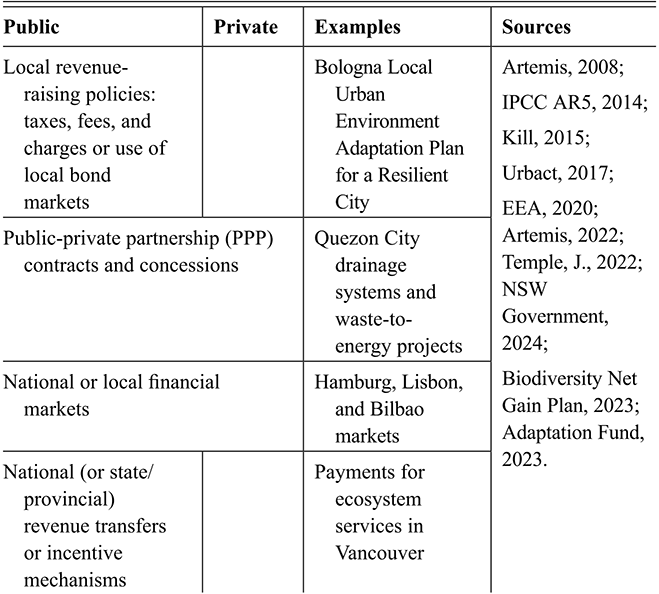
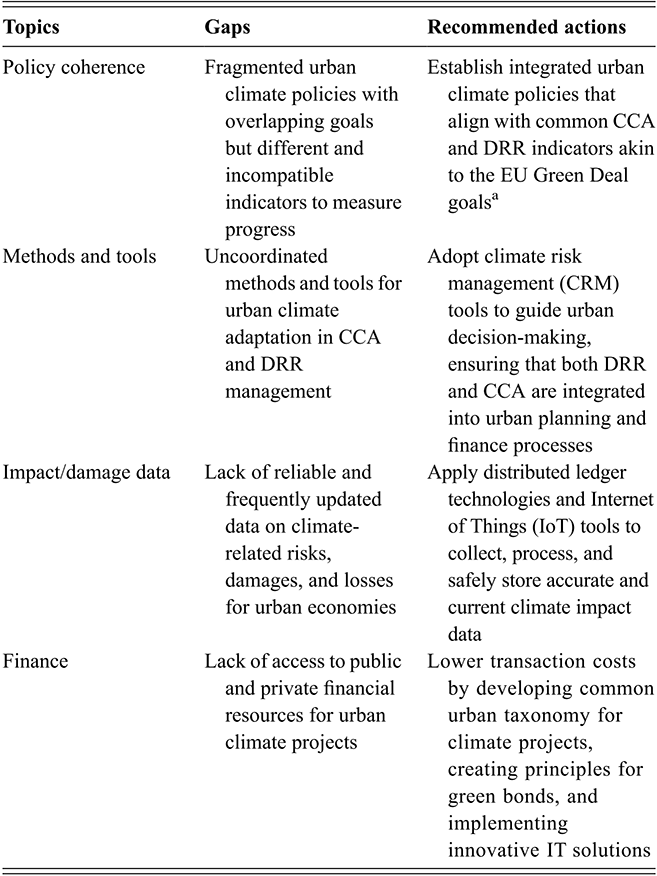
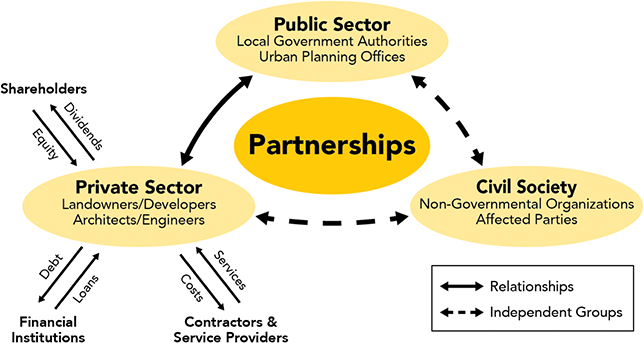
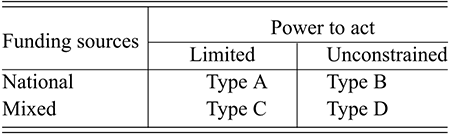
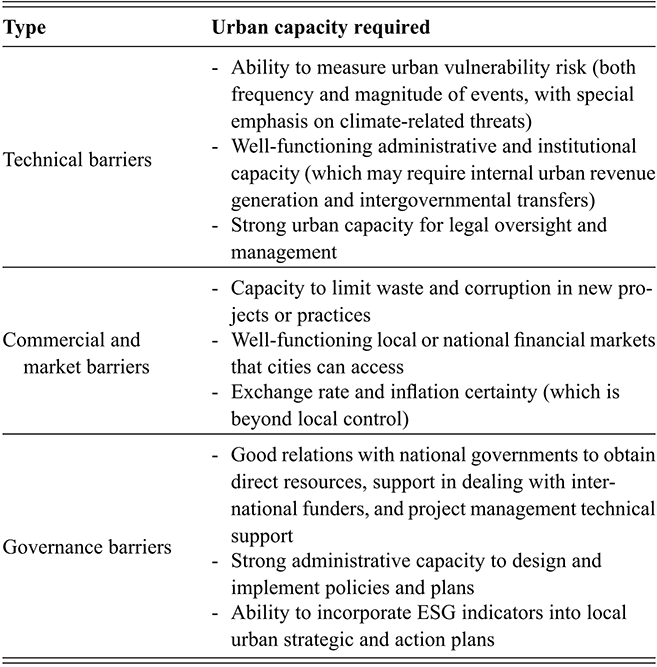
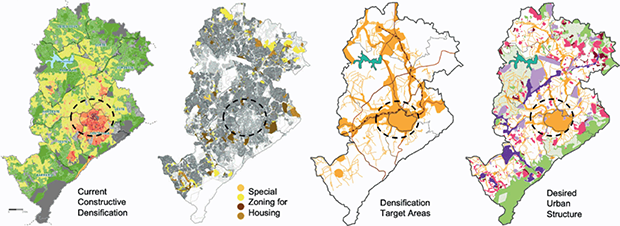
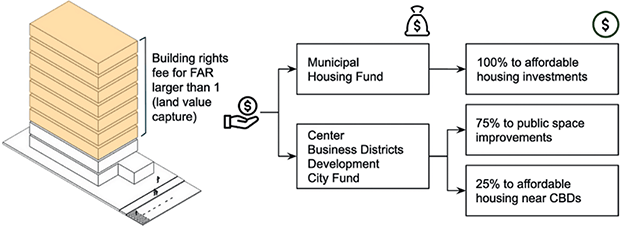
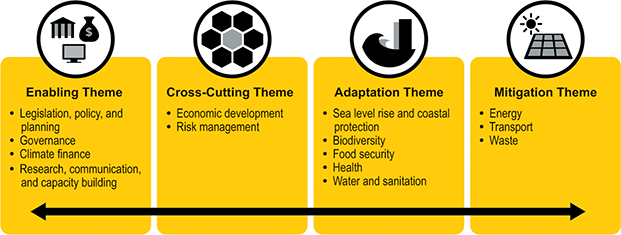


 Open access
