



The family and therapy
The term family therapy can be misleading. ‘Family’ is open to many interpretations, if not attacks, because it is frequently read as implying a two-parent, heterosexual couple with two children, with the woman primarily the ‘homemaker’ and the man the ‘breadwinner’, with occasional backup from the grandparents. Such a picture would seem to marginalise or exclude other family forms, such as childless couples, single parents with children, gay or lesbian couples and unattached elderly persons. However, the reality is that family therapists treat many different forms of committed relationships and friendships. As to the term therapy, it tends to imply the presence of illness or dysfunction, located in the family rather than one of its individual members, and may thus be quite unacceptable to families who often believe that it is the patient and not them whom requires help. Being at the receiving end of family therapy can have strong connotations of blame. Practitioners therefore increasingly use the term systemic therapy, which is also more informative because some of the work often involves the wider system. The systemic approach is essentially a contextual approach – seeing and treating people in context.
The first systematic work carried out with families dates back to the 1950s when Bateson and his team studied the patterns of schizophrenic transaction and communication. It was then postulated that the family of the patient with schizophrenia was shaping his/her thought processes through the often bizarre communication requirements imposed (Reference Bateson, Jackson and HaleyBateson et al, 1956). The team also observed that if the ‘identified patient’ improved, the family could become destabilised, seemingly resisting or blocking the clinical improvement of the patient – as if they needed the patient to remain unwell. The family was seen as a system with homeostatic tendencies and a variety of properties, such as hierarchies, boundaries, overt and covert conflicts between specific members, and coalitions. The various parts of the system, the family members, were seen as behaving according to a set of explicit and implicit rules that govern interpersonal behaviours and communications (Reference Watzlawick, Jackson and BeavinWatzlawick et al, 1967). Family systems therapy was invented to challenge and disrupt unhelpful interaction patterns and dysfunctional communications, allowing new ways of relating to emerge. Over the past five decades a whole range of systemic approaches have been developed.
Brief review of major systemic therapy approaches
Different systemic therapy approaches (see Box 1) have been developed in a variety of contexts, both private and public.
Box 1 Major systemic approaches
Structural
Strategic
Milan systemic
Narrative
Psychoeducational
Behavioural
Structural approach
The structural approach (Reference MinuchinMinuchin, 1974) postulates a normative family model, claiming that families function particularly well when certain family structures prevail. These include hierarchies between the generations within a family, with semi-permeable boundaries permitting a sufficient flow of information up and down, for example between parents and their children. Structural family therapists intervene with the aim of making the family structure approximate this normative model. Techniques include challenging directly absent or rigid boundaries, unbalancing the family equilibrium by temporarily joining with one member of the family against others or setting homework tasks designed to restore hierarchies. Family members are at times asked to enact problems in the consulting room so that the stuck or pathological communications and interactions can be observed. This allows the formulation of concrete interventions.
Strategic systemic therapy
Strategic systemic therapy (Reference HaleyHaley, 1963; Reference Watzlawick, Weakland and FischWatzlawick et al, 1974) is based on the hypothesis that the symptom is being maintained by behaviours that seek to suppress it. For example, the woman with depression with low self-esteem may elicit her partner's over-protectiveness, a solution that perpetuates the presenting problem. A strategic systemic therapist may re-frame the woman's depression as being an unselfish act designed to protect her partner from his own depression and prescribe a ritual where for a week, on uneven days, the partner needs to experiment with talking about his own worries. Strategic therapists argue that once some changes are achieved in relation to the presenting symptom, a domino effect sets in, affecting other interactions and behaviours in the whole family and the larger system. The patient's perceived problem(s) are put into a different meaning-frame that provides new perspectives and therefore potentially makes new behaviours possible.
The Milan systemic approach
The Milan systemic approach (Selvini Palazzoli et al, 1978) has been modified over the years, from its original paradoxical prescriptions to a great emphasis on a particular style of interviewing – circular and reflexive questioning (Selvini Palazzoli et al, 1980). This technique focuses on questioning the various family members' beliefs and perceptions regarding relationships. Asking each to comment and reflect on the answers given by the various family members creates feedback that changes the fabric of family interactions. The Milan team's commitment to positive connotation produced a non-blaming approach: the actions of all family members are in no way seen as negative but always as the best everyone can do under the circumstances – with the intentions being positive even if the outcome is not (Reference Boscolo, Cecchin and HoffmanBoscolo et al, 1987).
Social constructionist approach
The social constructionist approach is based on the awareness that the reality that the therapist observes is invented, with perceptions being shaped by the therapist's own cultures and his/her implicit assumptions and beliefs. This approach is influencing many systemic therapists and has led to an examination of how language shapes problem perceptions and definitions. If the narratives in which clients story their experience – or have their experience storied by psychiatrists – do not fit these experiences, then significant aspects of their lived experience will contradict the dominant narrative (Reference White and EpstonWhite & Epston 1990) and be experienced as problematic.
Narrative therapists
Systemic narrative therapists attempt to help families to generate and evolve new stories and ways of interpreting events to make sense of their experiences. Family and therapist together co-evolve or co-construct new ways of describing the individual and related family issues so that they no longer need to be viewed or experienced as problematic.
Brief solution-focused therapy
In brief solution-focused therapy (Reference De ShazerDe Shazer, 1985) the problem saturated ways of talking are deliberately ignored, with the focus instead on the patterns of previous attempted solutions. The approach is based on the observation that symptoms and problems have a tendency to fluctuate. Concentrating on those times when a symptom, such as an anxiety state, is less or not present, allows the therapist to design therapeutic strategies around the exceptions, as they form the basis of the solution. The theory has it that by encouraging families to amplify the solution patterns of their lives, the problem patterns can be driven into the background.
Psychoeducational approaches
Psychoeducational approaches (Reference Leff, Kuipers and BerkowitzLeff et al; 1982, Reference Anderson and McFarlaneAnderson 1983) combine behavioural interventions with structural techniques. Relatives are educated about the causes and course of their family member's psychiatric illness, as well as being taught about helpful and less helpful ways in which relatives can respond. The general aim of therapy is to reduce the emotional intensity in the family as well as the degree of physical proximity. The other important ingredients of this approach are regular relatives' groups – to share experiences and solutions – and family sessions (Reference Kuipers, Leff and LamKuipers et al, 2002).
Behavioural family and couple therapy
Behavioural family and couple therapy views the family as a major health-enhancing resource, with each member doing his/her very best to maximise pleasant and minimise unpleasant events in the family unit and the immediate social environment. Specific behavioural change strategies, such as contingency contracting or operant conditioning, may be used. Concrete goals for change are targeted by both family and therapist, following an analysis of the observed or recounted family and couple interactions. The link between assessment and intervention tends to create a focus on readily observable and easily operationalised behaviours. Communication training, for example, is a behavioural intervention strategy with an initial emphasis on clear and direct expression of positive feelings, ideas and plans. Once some progress has been made, the focus shifts to the expression of negative feelings in a constructive manner so that problem resolution can be facilitated. The therapist may then adopt a structured problem-solving stance to encouraging family members to agree on the problems and goals; to brainstorm and list various possible solutions; to highlight advantages and disadvantages of each proposed solution and then to agree on choosing the optimal solution; to formulate a detailed implementation plan; and to review the efforts and results (Reference Falloon, Street and DrydenFalloon, 1988).
Summary
In summary, while there is considerable diversity of systemic therapy models, in practice most systemic therapists working in public services adapt their approach to the work contexts and presenting problems. Different phases of therapy require different techniques, styles and positions of the therapist and different working contexts clearly require different responses to the patients and the problems they and their families present. Evidence-based medicine (Reference Sackett, Rosenberg and GraySackett et al, 1996) emphasises that appropriate treatments need to be matched with specific conditions, with outcomes being scientifically evaluated. This is a challenge to all therapists who remain married to just one specific brand of therapy, no matter what the patient's condition, the work context and the outcome of therapy.
The evidence base for systemic therapy
It is not so long ago that a substantial number of systemic therapists argued that the systemic paradigm, with its emphasis on circularity, does not lend itself easily to the ‘linear’ tools and practices of modern research. While one needs to acknowledge the potential for clashes between two very different epistemologies (Reference Asen, Berkowitz and CooklinAsen et al, 1991), most systemic therapists have now come to realise that their methods need to be shown to work if the field is to survive in the new evidence-base climate. In fact, systemic therapy has been researched for a long time, with a whole range of studies of vastly differing quality conducted to evaluate its efficacy. A wealth of data is now available and much of these are well summarised by Carr (2000a,b). Using the criteria for levels of evidence, as outlined in the National Service Framework, there is Type I evidence (at least one good systematic review, including at least one randomised controlled trial (RCT)) for a number of conditions and presentations (e.g. schizophrenia, depression or alcohol dependency). There is considerable Type II evidence (at least one good RCT) and even more Type III evidence (at least one well designed intervention study without randomisation), as well as Type IV evidence (at least one well designed observational study). Type V evidence (expert opinion, including the opinion of service users and carers) is mounting, in line with increased user involvement in the running of mental health services. In a series of meta-analyses, systemic therapy has been found to be effective alone or in conjunction with other treatments in a wide range of different conditions and presentations (Reference Shadish, Montgomery and WilsonShadish et al, 1993). These include conduct problems in children (Reference Serketich and DumasSerketich & Dumas, 1996; Reference Kazdin, Nathan and GormanKazdin, 1998), drug and alcohol misuse in adolescents and adults (Reference Edwards and SteinglassEdwards & Steinglass, 1995; Reference WaldronWaldron, 1996; Reference Stanton and ShadishStanton & Shadish, 1997) and marital distress (Reference Jacobson and AddisJacobson & Addis, 1993; Reference Dunn and SchwebelDunn & Schwebel, 1995; Reference Baucom, Shoham and MueserBaucom et al, 1998). Controlled trials have shown the effectiveness of systemic therapy interventions in childhood asthma (Reference Lask and MatthewLask & Matthew, 1979; Reference Gustafsson, Kjellman and CederbaldGustafsson et al, 1986), enuresis and soiling (Reference Houts, Berman and AbramsonHouts et al, 1994; Reference Silver, Williams and WorthingtonSilver et al, 1998), oppositional behaviour problems (Reference Serketich and DumasSerketich & Dumas, 1996) and a whole range of other presentations and conditions in children and their families (Reference CarrCarr, 2000a ). Systemic family and couple therapy has also been shown to be effective in the treatment of eating disorders, psychotic illnesses and mood disorders. The evidence for this is described in considerable detail in the next sections.
Evidence for the effectiveness of systemic therapy for eating disorder
Adolescent anorexia nervosa
There are a number of uncontrolled follow-up studies of systemic therapy for adolescent anorexia nervosa. In a follow-up of 53 patients with anorexia, for whom family therapy had been the main intervention, Minuchin et al (1978) reported very high rates of successful outcome (86%). These results, combined with its well-described theoretical model, have made the work of the Philadelphia team highly influential, despite the study's methodological problems (no comparison treatment, no independent research team, very varied length of follow-up). Other studies (Reference MartinMartin, 1985; Reference Herscovici and BayHerscovici & Bay, 1996) have replicated these results, with systemic family therapy being the main treatment, although used in combination with a mixture of individual and in-patient treatments. One further small study used family therapy only (Reference DareDare, 1997) and approximately two-thirds of the patients made significant improvements or were recovered at follow-up. Stierlin & Weber (1989) conducted a trial over a period of 10 years and included 42 families in the follow-up. Approximately two-thirds of the patients with eating disorders were still at school, with the others being either at university or working. The results are fairly impressive, but no distinction is made between adolescents and adults. This raises questions about the comparability of the data with the studies described above.
The randomised trials in anorexia nervosa provide a good evidence base for systemic therapy. Russell and his Maudsley team (Reference Russell, Szmukler and DareRussell et al, 1987) compared systemic family therapy with individual supportive therapy following in-patient treatment. All patients had been initially admitted to hospital for an average of 10 weeks for weight restoration before being randomised to out-patient follow-up. The results demonstrated that adolescent patients with a short duration of their illness did significantly better with family therapy than the control treatment. However, the findings were inconclusive for those with a duration of illness of more than 3 years: they had mostly poor outcomes. A 5-year follow-up (Reference Eisler, Dare and RussellEisler et al, 1997) of this cohort confirmed that people with anorexia with a short history of illness continued to do well, with 90% having a good long-term outcome. By contrast, nearly half of the patients who had received individual therapy still had significant eating disorder symptoms 5 years later. This is evidence that even many years after the end of treatment it is still possible to detect the benefits derived from the family interventions.
A number of studies have compared different forms of family intervention. Le Grange et al (1992) and Eisler et al (2000) compared conjoint family therapy and separated family therapy. In the latter, adolescents were seen on their own and the parents were seen in a separate session by the same therapist. Both treatments were provided on an out-patient basis, although 4 out of 40 adolescents in the second study (Reference Eisler, Dare and HodesEisler et al, 2000) required admission during the course of treatment. The overall results were similar in the two studies, showing significant improvements in both forms of treatment. On individual psychological measures and measures of family functioning there was significantly more change in the conjoint family therapy group (Reference Eisler, Dare and HodesEisler et al, 2000). Patients continued to improve after the treatment had ended and preliminary data from the 5-year follow-up show that 75% have a good outcome, 15% an intermediate outcome and 10% have a poor outcome. Robin et al (1999) also highlight the importance of parents learning to manage the eating disorder symptoms of their offspring in the early stages of treatment, with a broadening of focus to individual and family issues later on. The end of treatment findings in the study by Robin et al (1999) showed significant improvements in both treatments, with 67% of the adolescents reaching their target weight by the end of treatment and 80% of girls regaining menstruation. At 1-year follow-up, approximately 75% had reached their target weight and 85% were menstruating. There are some important differences between the Maudsley (Reference Le Grange, Eisler and DareLe Grange et al, 1992; Reference Eisler, Dare and HodesEisler et al, 2000) and Detroit studies (Reference Robin, Siegel and MoyeRobin et al, 1999), which could have had a bearing on outcome. One difference was that Robin and his team hospitalised patients whose weight was below 75% of ideal weight (43% of their sample) at the start of the treatment programme until their weight rose above 80% (of ideal weight). By contrast, the Maudsley studies allowed for admission only if out-patient therapy had failed to arrest weight loss (none of the 18 patients in Le Grange et al's study and 4 out of 40 in Eisler et al's trial were admitted during the study). A further difference concerns the length of treatment, which was 6 months in the Le Grange et al (1992), 12 months in the Eisler et al (2000) and 12–18 months (with an average of 16 months) in the Robin et al (1999) studies. There were also some apparent differences between the patient groups in that the patients in the Maudsley studies tended to have a longer duration of illness, the majority had had previous treatments and a higher percentage were suffering from depression. The findings of some other controlled treatment studies (Reference Hall and CrispHall & Crisp, 1987; Reference Crisp, Norton and GowersCrisp et al, 1991) regarding the efficacy of systemic therapy are more difficult to evaluate as family interventions were part of a larger treatment package, with insufficient descriptions as to how central the family was in the treatment.
In summary, the overall findings from these studies are remarkably consistent in that they show that adolescents with anorexia nervosa respond well to systemic therapy, often without the need for in-patient treatment. By the end of treatment more than 50% had reached a healthy weight, although most of the girls had not yet started menstruating again. On follow-up, between 60% and 90% had fully recovered and no more than 10–15% were still seriously ill. Treatments that encourage the parents to take an active role in tackling their offspring's anorexia seem the most effective. Not involving the parents in the treatment at all leads to the worst outcome and may delay recovery considerably. The evidence for the effectiveness of systemic therapy for adolescent anorexia nervosa is reasonably compelling as several reviewers have recently concluded (e.g. Reference Wilson, Fairburn, Nathan and GormanWilson & Fairburn, 1998; Reference CarrCarr, 2000a ) and on current evidence it is probably the treatment of choice. It is important to recognise, however, that this may be, at least in part, owing to the lack of research on other treatments for this condition.
Adult anorexia nervosa
There are at present only few reliable data regarding the efficacy of systemic therapy for adults with anorexia nervosa. The controlled trial referred to earlier (Reference Russell, Szmukler and DareRussell et al, 1987) included 31 adult patients with anorexia nervosa (age 19 or older) who were randomly assigned to either family therapy or the individual psychotherapy control treatment, following discharge from hospital. While there were no significant differences in outcome between treatments for the group as a whole, in the subgroup of patients with a first episode of anorexia nervosa in adulthood (n = 14), the results favoured individual therapy, with a significantly greater weight gain. However, at 5-year follow-up there were no differences in eating disorder symptoms in this subgroup, although there was some evidence that the patients in individual therapy had made a somewhat better psychological adjustment (Reference Eisler, Dare and RussellEisler et al, 1997).
Another study was conducted by Dare et al (2001) to assess the effectiveness of specific psychotherapies, including family therapy. Eighty-four out-patients were randomised to four different treatments: (1) focal psychoanalytic psychotherapy, (2) cognitive-analytic therapy, (3) family therapy and (4) routine treatment that served as a control. At the end of 1-year follow-up, the group of patients as a whole showed modest symptomatic improvements. Systemic family therapy, as well as focal psychotherapy, was significantly superior to the control treatment.
In summary, these findings show that systemic therapy can make a useful contribution in the treatment of adult with anorexia, but more research needs to be undertaken to further strengthen the emerging evidence base for systemic therapy with this age group. It also has to be emphasised that the existing data relate to studies of mainly chronically ill patients with whom positive treatment results are difficult to achieve at the best of times, making it more difficult to demonstrate the specific effects of any particular treatments. The finding by Dare et al (2001) that specialised psychotherapies were more effective than routine treatment, but did not differ from one another, is worthy of further investigation. It is very likely that different subgroups respond differently to particular treatments.
Bulimia nervosa
Despite some claims made in a number of good clinical papers on the use of systemic therapy in the treatment of bulimia nervosa (e.g. Reference Garner, Last and HersenGarner, 1994; Reference Fishman and WerneFishman, 1996; Reference DareDare, 1997; Reference Johnson, Maddeaux and BlouinJohnson et al, 1998), there is at present little convincing evidence for its efficacy. In a study (n = 30) conducted by Schwartz et al (1985), two-thirds of the patients were rated at the end of treatment and on follow-up (18 months) as being ‘nearly always in control’, with no more than one bulimic episode per month. Significant improvements were also reported by Dodge et al (1995) in a small study (n = 8) of adolescent patients with bulimia receiving systemic therapy on an out-patient basis. To date, there is only one randomised trial of systemic therapy in bulimia nervosa, the Russell et al (1987) study described earlier, which included a subgroup of 23 adult patients with bulimia nervosa. In terms of general outcome at the end of the 1-year out-patient treatment and on 5-year follow-up (Reference Eisler, Dare and RussellEisler et al, 1997), the results were disappointing.
Family intervention for psychosis
People with schizophrenia living in families where key relatives express high levels of criticism, hostility and over-involvement, have more relapses than those from families with lesser levels of ‘expressed emotion’ (Reference Brown, Birley and WingBrown et al, 1972). This important finding has led to a number of interventions aimed at reducing expressed emotion levels. The various ingredients of family interventions include forming an alliance with the carers; lowering the emotional intra-family climate by reducing stress and burden on relatives; increasing the capacity of relatives to anticipate and solve problems; reducing the expressions of anger and guilt by family members; maintaining reasonable expectations for how the ill family member should perform; encouraging relatives to set appropriate limits while maintaining some degree of separatedness; and promoting desirable changes in the relatives' behaviours and belief systems (Reference Pharoah, Mari and StreinerPharoah et al, 2000).
To date, some 19 RCTs have been identified. The most recent Cochrane review (Pharaoh et al, 2000) found that 13 studies met its inclusion criteria (out of 69 citations). The reasons for exclusion ranged from studies with inappropriate control groups to studies with interventions of less than five sessions, or patients who had illnesses other than schizophrenia/schizoaffective disorder. The RCTs included in the Cochrane review (Pharaoh et al, 2000) were carried out in a number of different settings and countries, such as Australia, Canada, Europe, China and the USA. The studies used a large number of outcome scales with the following being regarded as most relevant: Brief Psychiatric Rating Scale (Reference Overall and GorhamOverall & Gorham, 1962); Camberwell Family Interview (Reference Vaughn and LeffVaughn & Leff, 1976); Experience of Caregiving Inventory (Reference Szmukler, Burgess and HerrmanSzmukler et al, 1996); Global Assessment Scale (Reference Endicott, Spitzer and FleissEndicott et al, 1976); Present State Examination (Reference Wing, Cooper and SartoriusWing et al, 1974); and Ways of Coping (Reference MacCarthy, Kuipers and HurryMacCarthy et al, 1989).
The Cochrane review focused primarily on the following outcomes: suicide, relapse and hospital admission. Information was also sought about employment status; compliance of the family and the person with schizophrenia both with the family interventions and medication; mental state; moderation of family burden; and expressed emotion in the home. When looking at outcome, it emerged that the majority of deaths in the family intervention and the control groups were owing to suicide (4%). Family intervention had no effect on the number of individuals who killed themselves during the follow-up periods of the studies. Looking at the various studies, it transpires that there was no universally accepted definition of relapse. Relapse was defined in quite different ways, for example as the symptomatic deterioration of those patients who presented residual symptoms at baseline assessment, or as a recurrence of symptoms for patients with full remission at discharge. In other cases managerial events such as hospitalisation of the patient or a substantial change of medication were seen as signs of relapse. The Cochrane review concluded that family intervention significantly reduces the rate of relapse events at 12 and 24 months. Furthermore, there is evidence that there is a tendency to improved compliance with medication for individuals whose relatives receive family intervention, suggesting that family intervention does encourage drug compliance. However, there appears to be no evidence that family intervention has significant effects on the ill person's social functioning. Nevertheless, two studies report a trend towards increased ability to live independently, but these results are not statistically significant. As far as family outcomes are concerned, only one trial reported a reduction in the burden as felt by family carers (Reference Xiong, Phillips and HuXiong et al, 1994). Statistically significant decreases in the levels of expressed emotion have, somewhat surprisingly, only been found in one single trial (Reference Tarrier, Barrowclough and VaughnTarrier et al, 1988). Economic analyses carried out in a number of studies suggest that with family intervention there are significant net savings in the overall costs of managing patients in the community.
In summary, the available evidence demonstrates the benefit of family intervention for people with schizophrenia, above all by decreasing the risk of relapse and by helping patients to consistently take their medication.
Systemic family and couple therapy for mood disorders
Behaviourally-inspired couple therapy approaches have been used for some time and have proved to be effective with patients suffering from depression. A number of RCTs of marital therapy as a treatment for depression have been conducted (e.g. Reference O'Leary and BeachO'Leary & Beach, 1990; Reference Jacobson, Dobson and FruzzettiJacobson et al, 1991; Reference Emanuels-Zuurveen and EmmelkampEmanuels-Zuurveen & Emmelkamp, 1996; Reference Baucom, Shoham and MueserBaucom et al, 1998). Interpersonal systems therapy (Reference Gottlieb and ColbyGottlieb & Colby, 1987) and conjoint interpersonal therapy (Reference Klerman, Weissman and RounsavilleKlerman et al, 1984) have also been shown to be effective with couples when one of the partners has depression. At the more severe end of the spectrum, family interventions, in addition to ongoing traditional treatments, have been found to significantly reduce relapse rates of patients suffering from bipolar disorder (Reference Miklowitz and GoldsteinMiklowitz & Goldstein, 1990), confirming similar findings by Clarkin et al (1990). A recent RCT (Reference Leff, Vearnals and WolffLeff et al, 2000) has confirmed the efficacy of systemic couple therapy with people with depression living with a partner. This study, with an unusually long 2-year follow-up, is described in more detail below.
The London Depression Intervention Trial (Reference Leff, Vearnals and WolffLeff et al, 2000) was set up to compare the effectiveness of antidepressants, individual CBT and systemic couple therapy. Patients diagnosed by psychiatrists as having depression and who were in a stable relationship with a partner were randomly assigned to one of these three treatment modalities. The trial involved an initial baseline assessment of patients with depression and their partners, followed by an intervention (treatment) phase. Patients were assessed at the end of treatment and again after a period of no treatment lasting 12–15 months. The treatment phase consisted of a maximum of 9 months or 20 sessions for couple therapy and CBT and 1 year for antidepressant medication. Patients allocated to one of the treatments were not permitted to receive any other treatment simultaneously. Patients had to meet criteria for depression as measured by the Present State Examination (Reference Wing, Cooper and SartoriusWing et al, 1974), Hamilton Depression Rating Scale (Reference HamiltonHamilton, 1960) and the Beck Depression Inventory (BDI) (Reference Beck, Ward and MendelsonBeck et al, 1961). Partners were assessed on the BDI and the Camberwell Family Interview (Reference Vaughn and LeffVaughn & Leff, 1976), and patients and partners were assessed on the Dyadic Adjustment Scale (Reference SpanierSpanier, 1976).
The subjects who were included met the psychiatric criteria for significant depressive illness. Patients allocated to the different treatments were matched on all relevant characteristics, such as age of patient and partner, gender of patient, chronicity and severity of depression.
The first result of the London Depression Intervention Trial (Reference Leff, Vearnals and WolffLeff et al, 2000) was that the CBT arm of the trial had to be stopped at an early stage, above all because of a high drop-out rate (8 out of the first 11 cases). It is likely that the specific characteristics of the patients recruited to the study, above all their high levels of comorbidity and chronicity, were atypical of those patients with depression that tend to respond well to CBT. The final comparison, therefore, was between drug therapy and systemic couple therapy and involved 88 subjects. Here the major finding was that people with depression seen in systemic couple therapy did significantly better than those treated with antidepressant medication. Moreover, patients receiving antidepressant medication dropped out at a much more significant rate (56.8%) than those in couple therapy (15%). This finding in itself shows that drug treatment was far less acceptable to the patients in the study than was couple therapy. A health economic analysis demonstrated that antidepressant treatment is no cheaper than systemic couple therapy.
Outlook
The emerging evidence base of systemic therapy strengthens its claim to be considered as one of the major psychological treatment modalities in the field of psychological medicine. It has been demonstrated that systemic therapy can be effective for a wide range of child- and adult-focused conditions and problems (see Box 2). Systemic therapy can be used both on its own as well as in combination with other treatments. Detailed treatment manuals have been developed for an increasing number of family interventions (e.g. Reference Klerman, Weissman and RounsavilleKlerman et al, 1984; Reference Jones and AsenJones & Asen, 2000; Reference Kuipers, Leff and LamKuipers et al, 2002). This allows not only a more detailed study of which interventions work and why, but also serves to encourage clinicians to undertake further research and to replicate existing findings.
Box 2 Conditions with evidence of response to systemic therapy
Psychotic disorders
Mood disorders
Eating disorders in adolescents
Drug and alcohol misuse
Conduct problems in children
Marital distress
Multiple choice questions
-
1. In the treatment of anorexia nervosa systemic family therapy is:
-
a the only effective treatment for adults
-
b the treatment of choice for adolescents
-
c particularly effective with early-onset anorexia
-
d a quick symptomatic relief but with no long-lasting effects
-
e less likely to be effective if the parents are directly involved in the management of the adolescent's eating.
-
-
2. Family intervention with people with schizophrenia is particularly effective if:
-
a the patient fully understands all the concerns his/her relatives have about him/her
-
b the family gets much more involved with the ill member
-
c carers exchange their experiences and ideas
-
d the patient is asked to be less critical of his/ her carers
-
e the patient complies with his/her medication.
-
-
3. Common techniques used in structural systemic therapy include:
-
a teaching families how to tell their own narratives
-
b asking circular and reflexive questions
-
c unbalancing the family equilibrium
-
d positively connoting dysfunctional interactions
-
e creating boundaries.
-
-
4. Systemic therapy has been shown to be effective in the treatment of:
-
a adult personality disorders and associated family problems
-
b anxiety disorders
-
c schizophrenia
-
d encopresis
-
e conduct problems in children.
-
-
5. Systemic couple therapy with patients with depression is only indicated if:
-
a both partners are depressed
-
b cognitive therapy has been tried
-
c it is given together with antidepressant treatment
-
d the depressive illness is a first episode and of recent onset
-
e the therapist has specialist training in systemic therapy.
-
MCQ answers
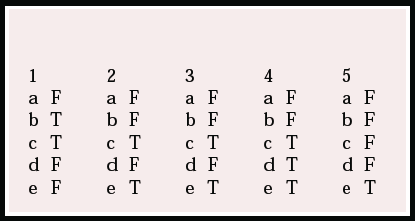
| 1 | 2 | 3 | 4 | 5 | |||||
|---|---|---|---|---|---|---|---|---|---|
| a | F | a | F | a | F | a | F | a | F |
| b | T | b | F | b | F | b | F | b | F |
| c | T | c | T | c | T | c | T | c | F |
| d | F | d | F | d | F | d | T | d | F |
| e | F | e | T | e | T | e | T | e | T |



eLetters
No eLetters have been published for this article.