
 may here mean rain rather than water. As Zuntz points out (p. 224), the speaker is not cataloguing the elements. (It is perhaps necessary to remind ourselves that rain is generally a blessing in Attica—Clouds 299, 1115.)
 rather than
 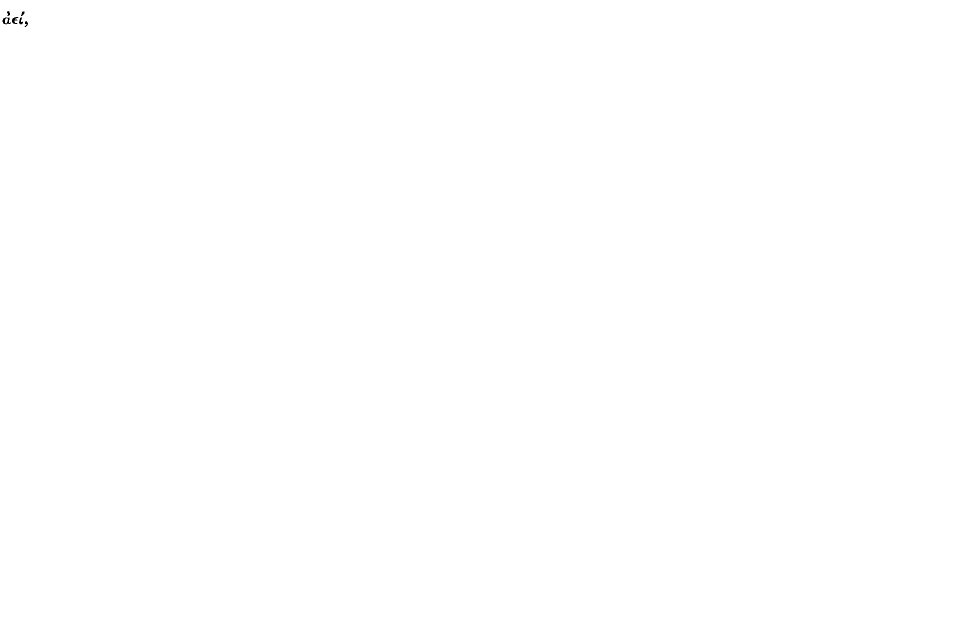 , adopted by Körte, at the end of v. 5, but with the comma before it.
 , as I should have said in my article in
  is Herzog's emendation, anc
  Bucheler's supplement. Both seem right but the result is not entirely happy: three words on the one side, for the good, only one on the other; and the article with
  is not altogether easy.
 is as likely as anything to be the schoolboy's comment on his master. ‘Ariston's a philosopher: his lesson’.
Crossref Citations

This article has been cited by the following publications. This list is generated based on data provided by Crossref.
Arnott, W. G.
1968.
Meander, Qui Vitae Ostendit Vitam….
Greece and Rome,
Vol. 15,
Issue. 1,
p.
1.