

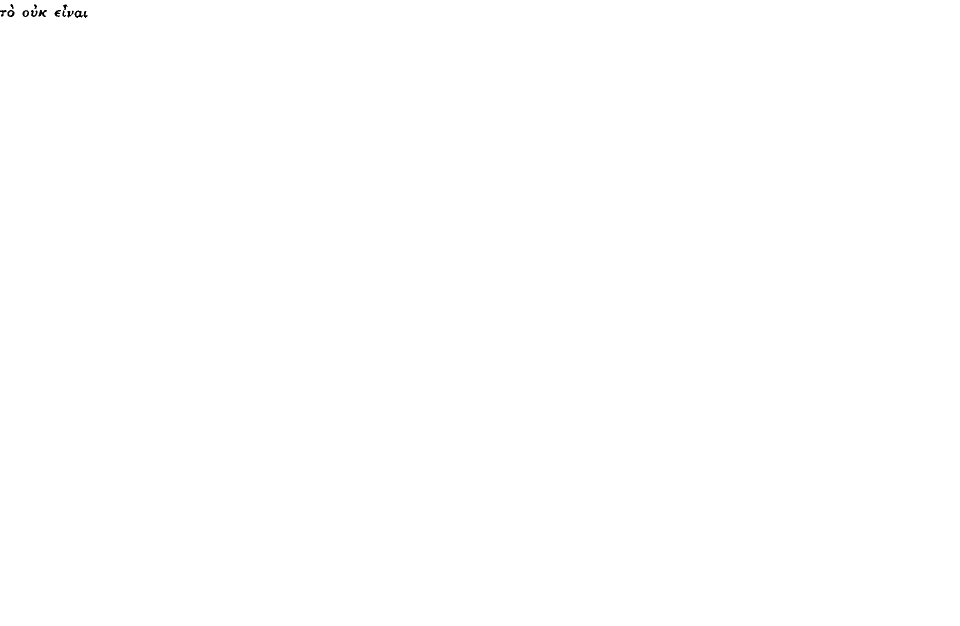
 cf. B 8. 40, where it cannot be explained as oratio obliqua). Gregory Vlastos, to whom I am indebted for making me reinforce and reconsider my argument at some salient points, argues: ‘Those who deny any allusion to Heraclitus in Parmenides … have yet to explain why in these lines Parmenides should (a) impute to anyone the belief in the identity of being and not-being (rather than merely the belief in not-being, which is bad enough …) and (b) after saying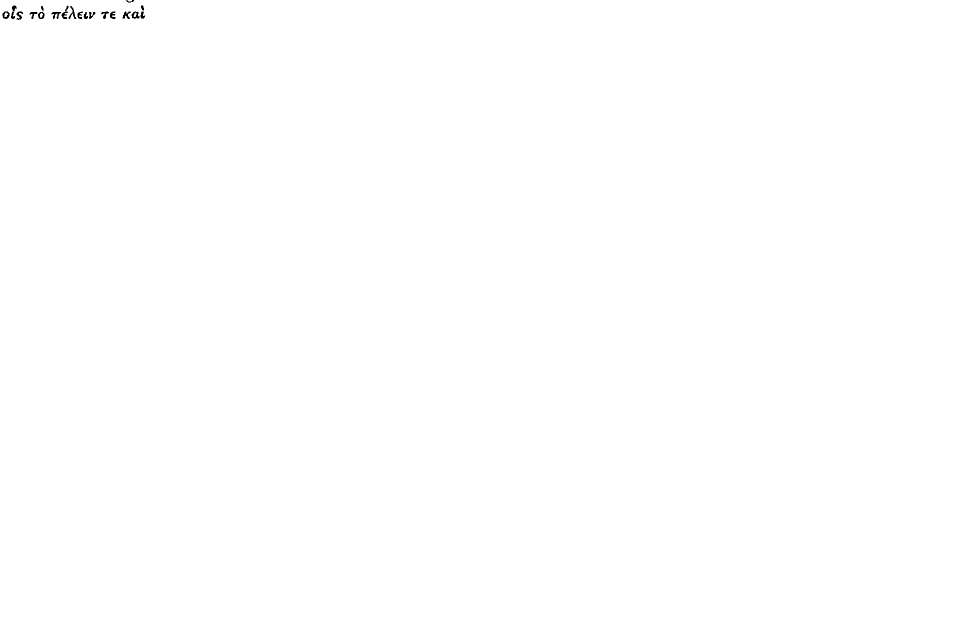
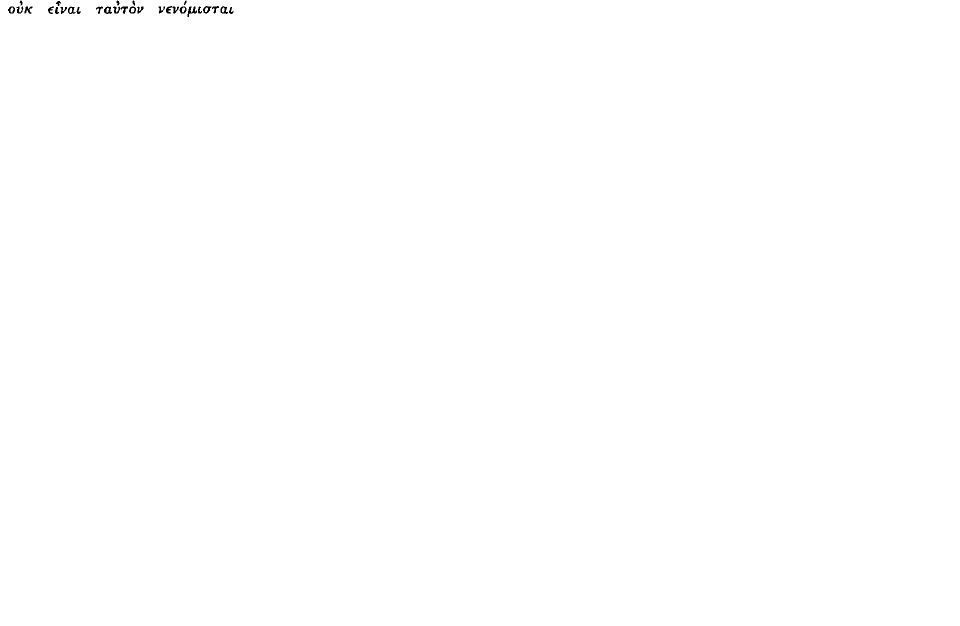 , which would be quite sufficient to make his point, should add maliciously
 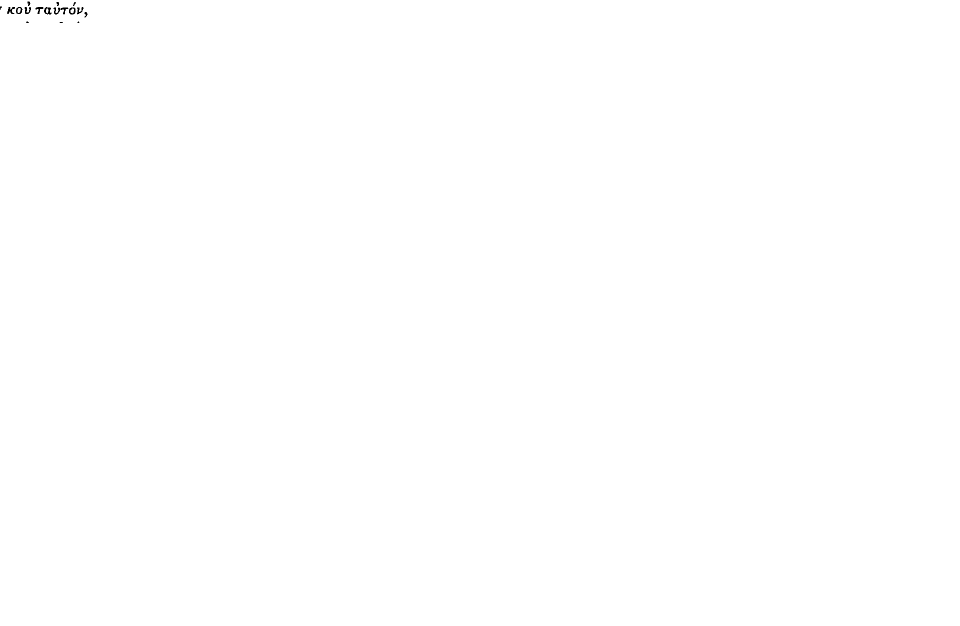 , producing the expression
 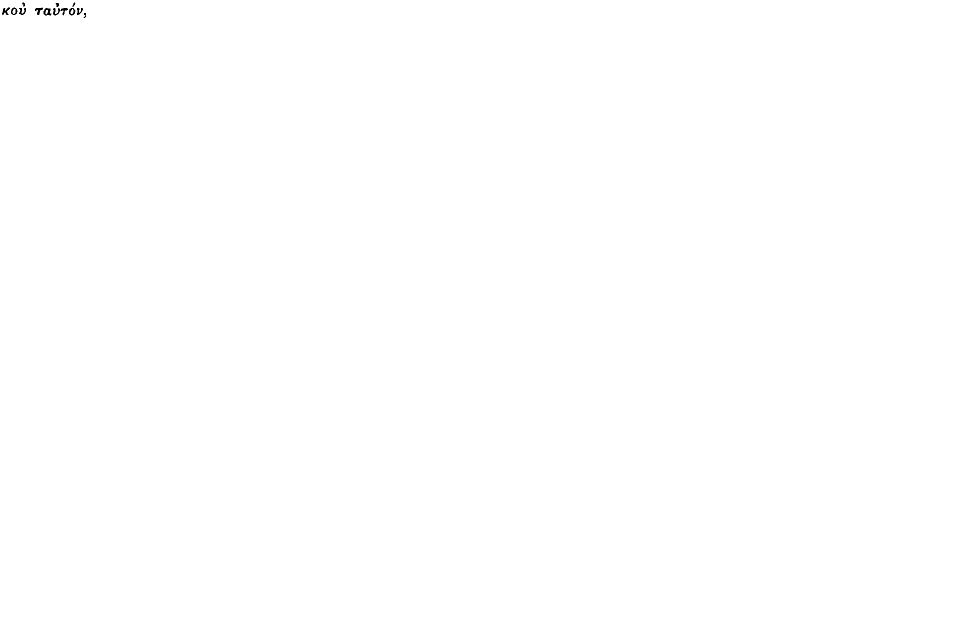 , which so strikingly parallels
 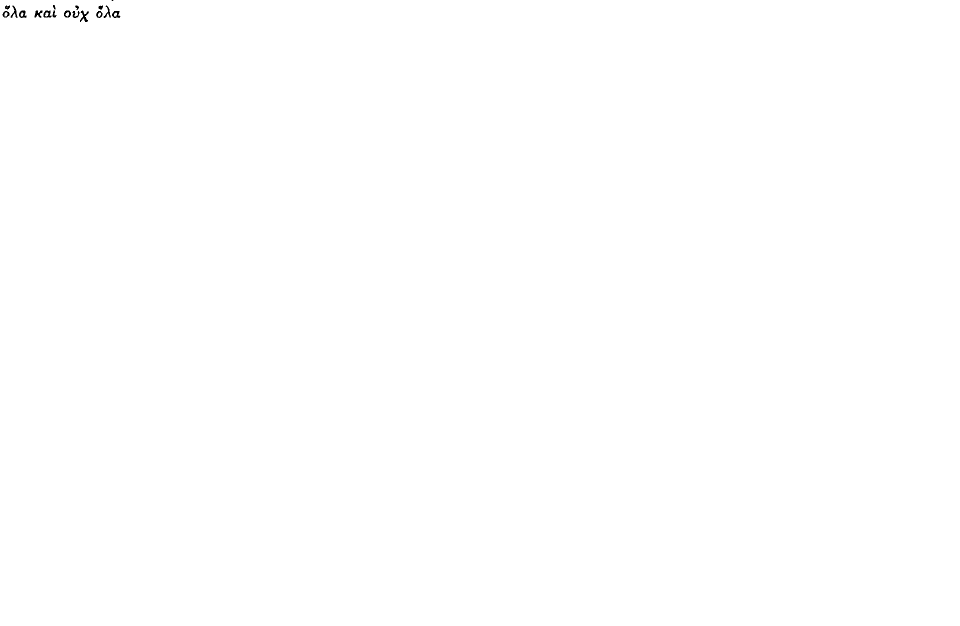 in Heraclitus’ (
 and
and 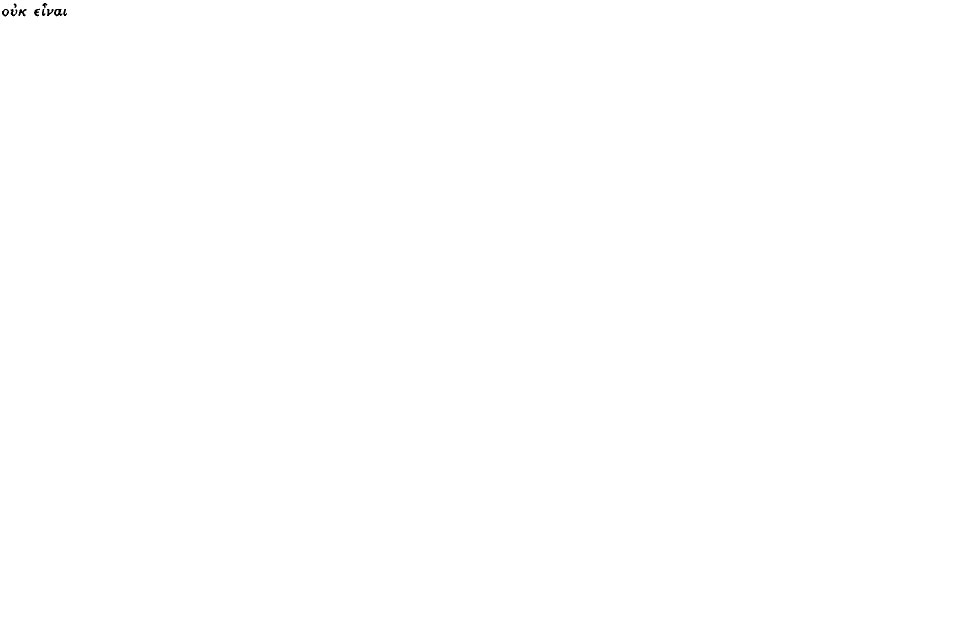 ; in trying to distinguish them they confuse them. That is why both expressions in their ordinary use are empty names (B 8. 38–41).
 , B 7. 3, for which Calogero suggests ‘l'esperienza delta molteplicita delle cose’ (
 it is better taken with the accompanying
  Perhaps from
  , ‘widespread’.
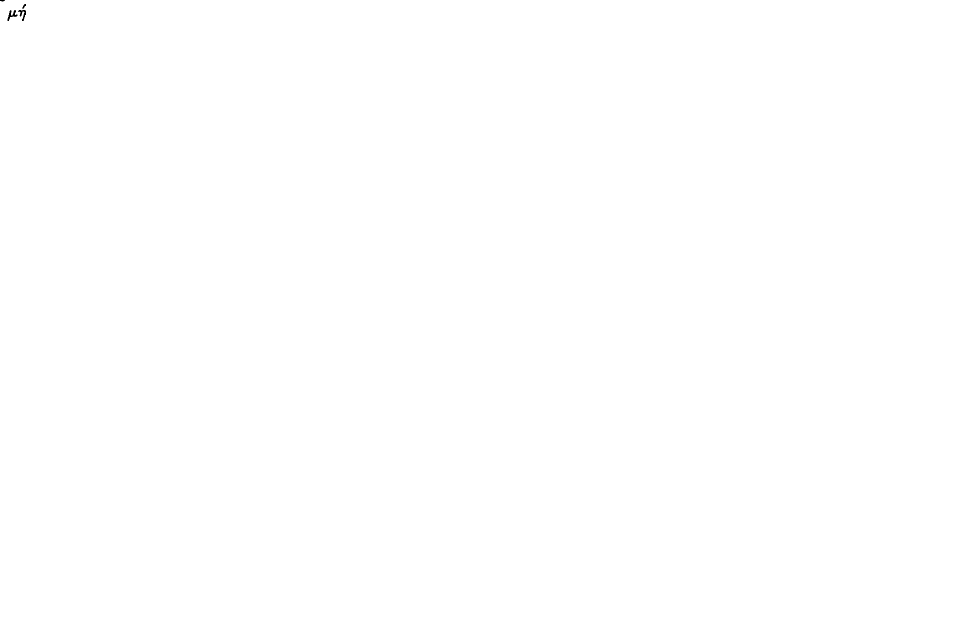 with Bergk and, with qualms, understand
  as copulative =
 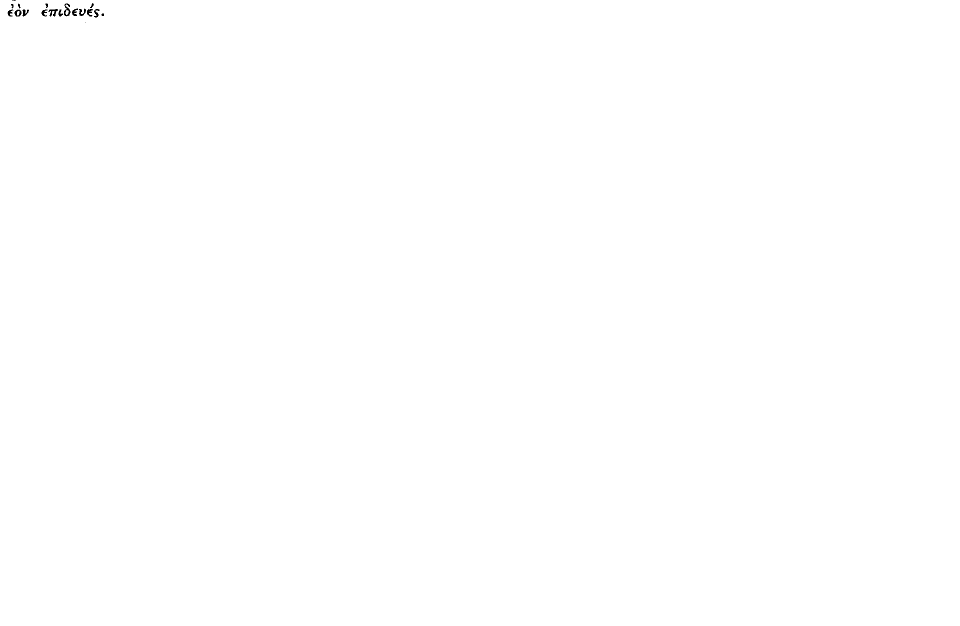 But
But 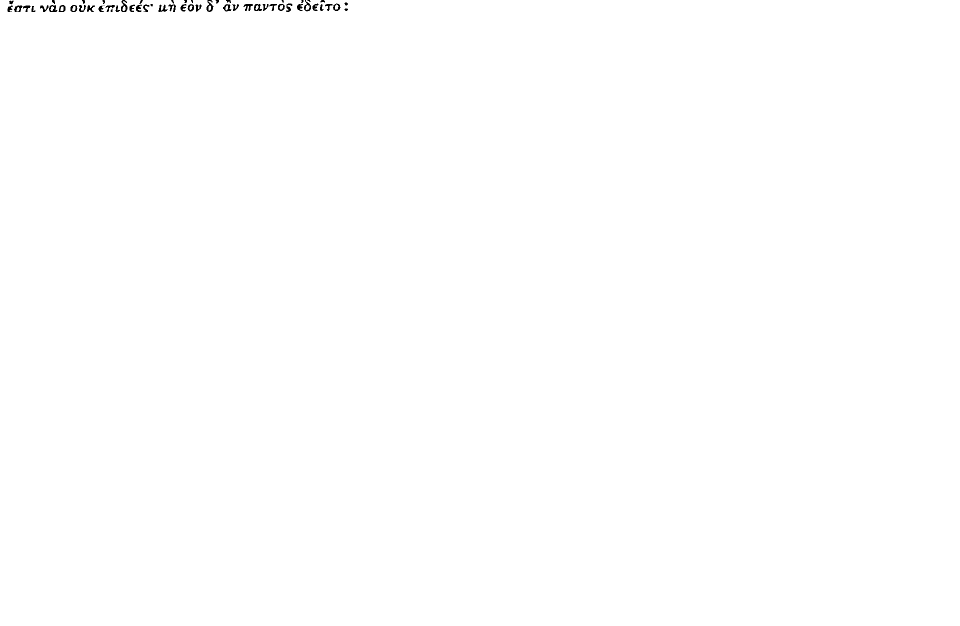 any admixture of
  (any statement of the form
  ) is as ruinous as taking the first wrong path at once. See below, pp. 90–92, 97–98.
 for Peyron's

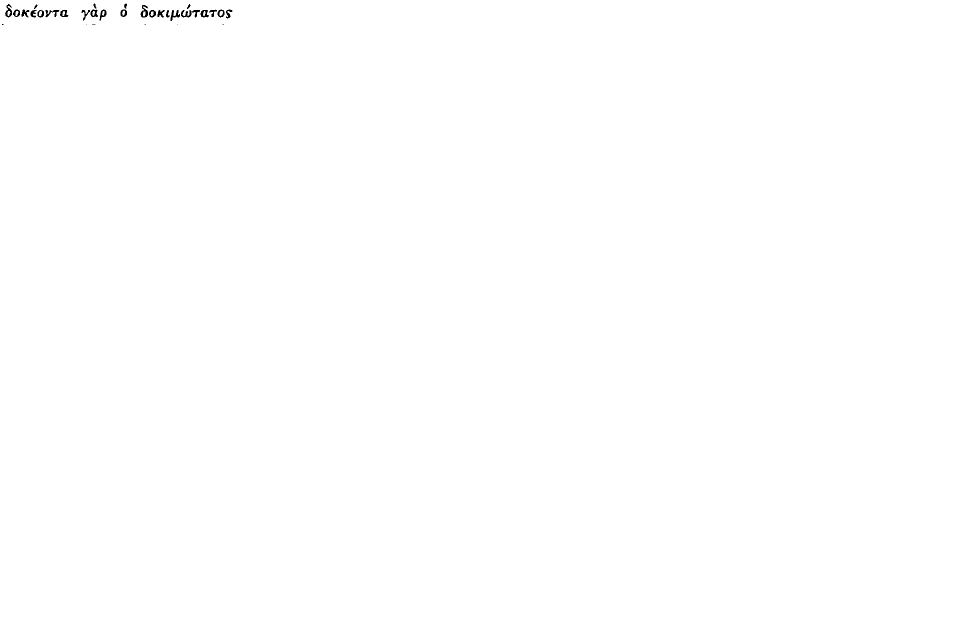 with inf. = ‘able’), Democritus B 67, B 68. In Herodotus the sense ‘renowned* becomes common, but never with the implication that the renown is not wholly deserved. The exception that may seem to tell for Wilamowitz is Heraclitus B 28,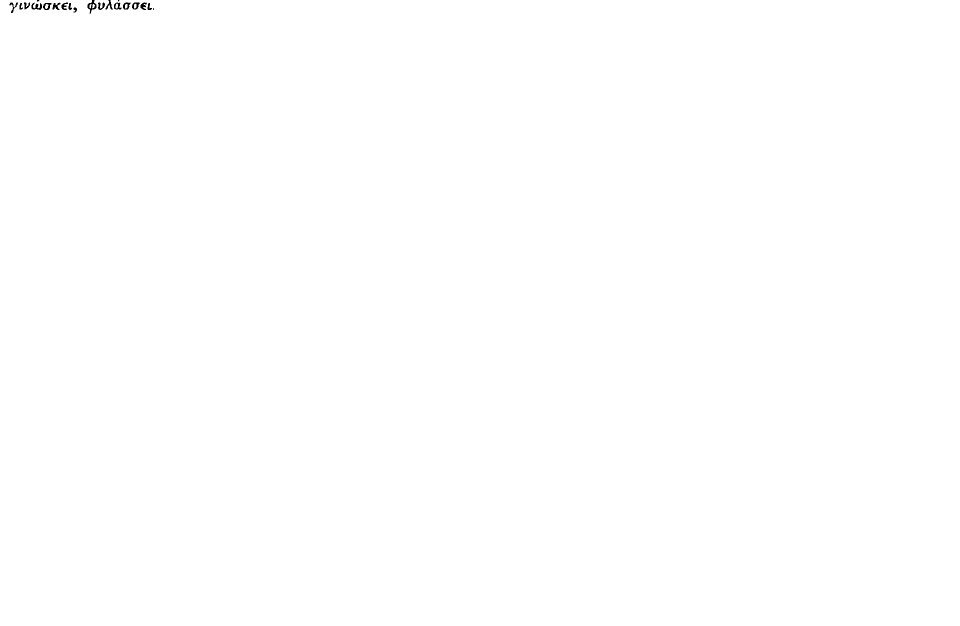
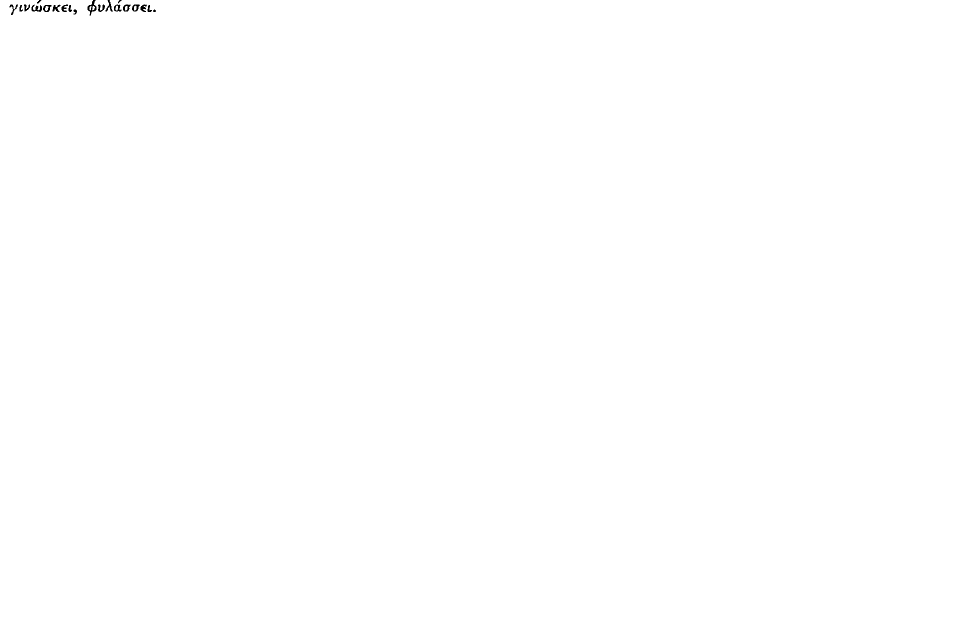 But if we give
 here the weak sense of ‘having the greatest (but finally undeserved) reputation’ we spoil the aphorism, which is a paradox comparable with B 5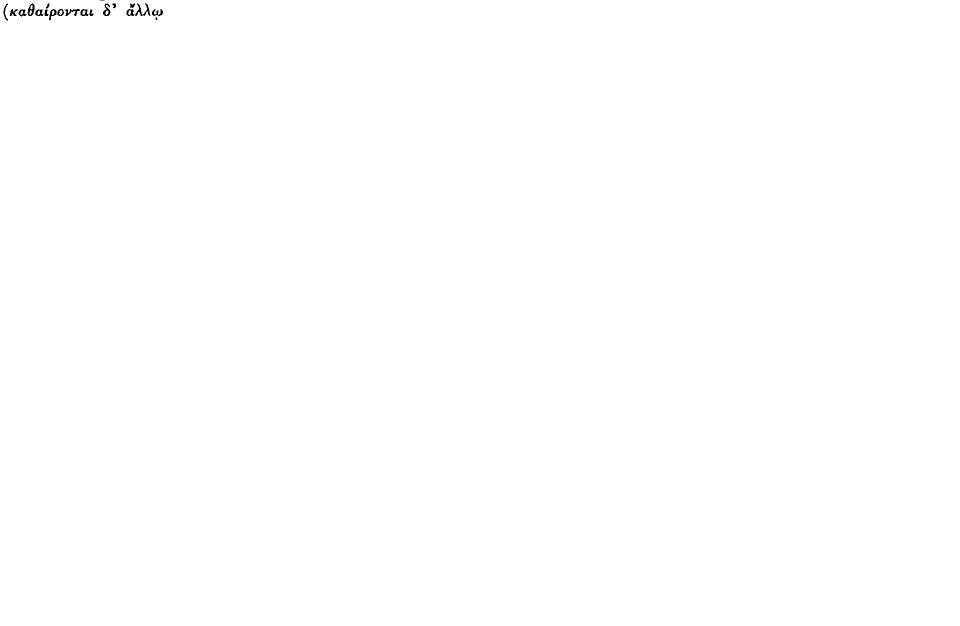
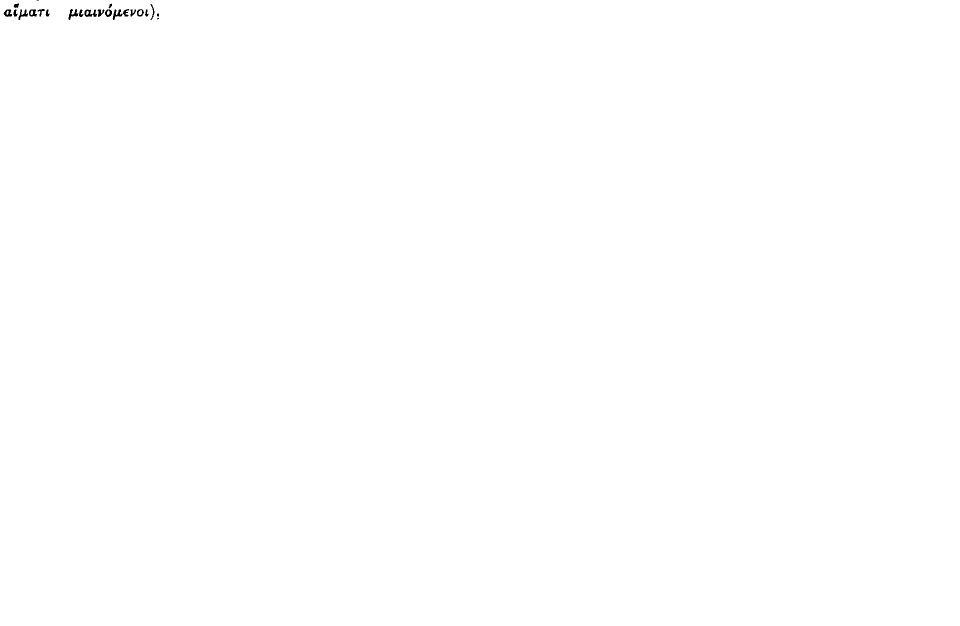 , B 56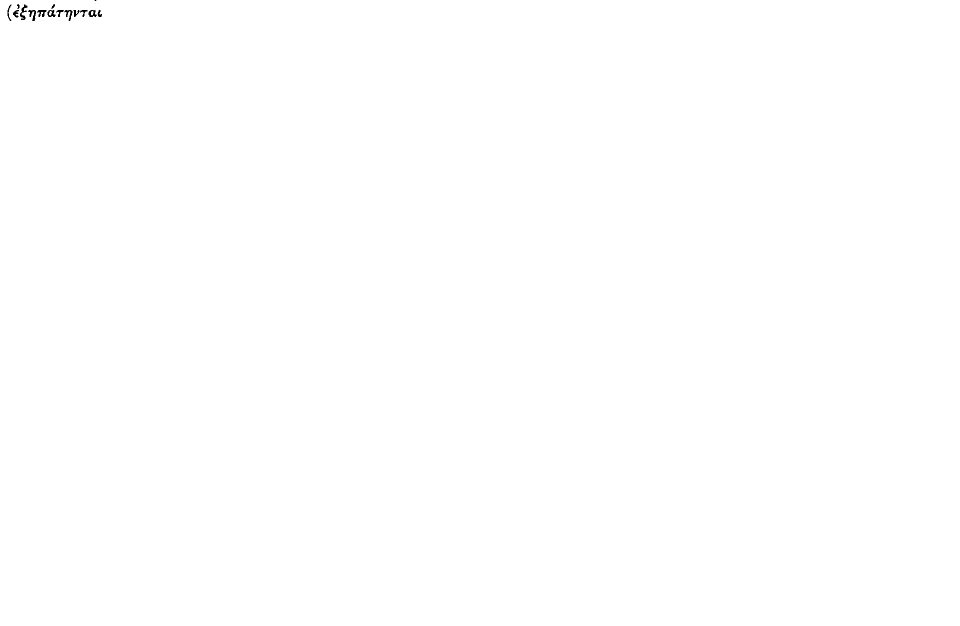
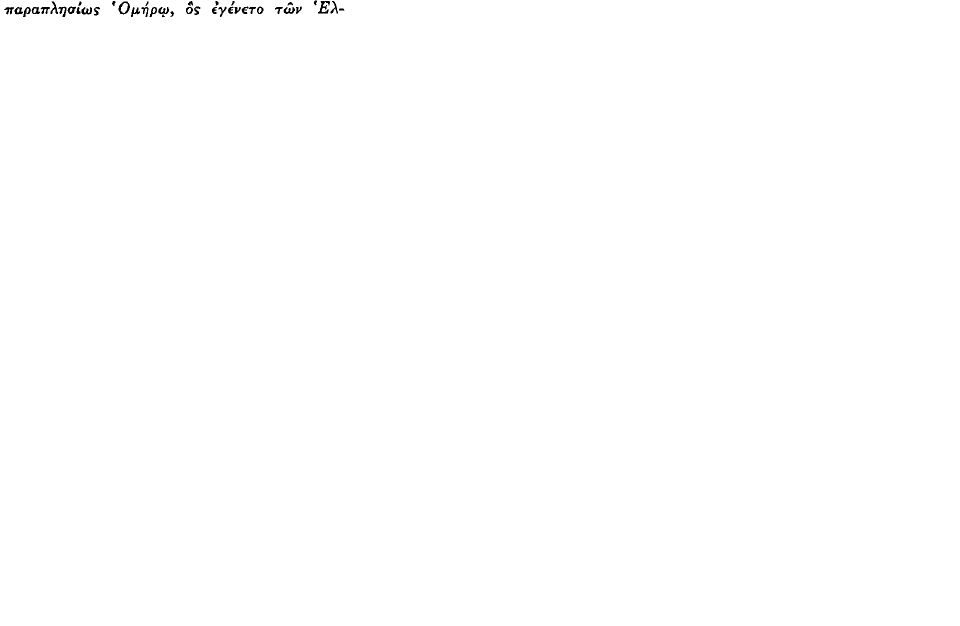
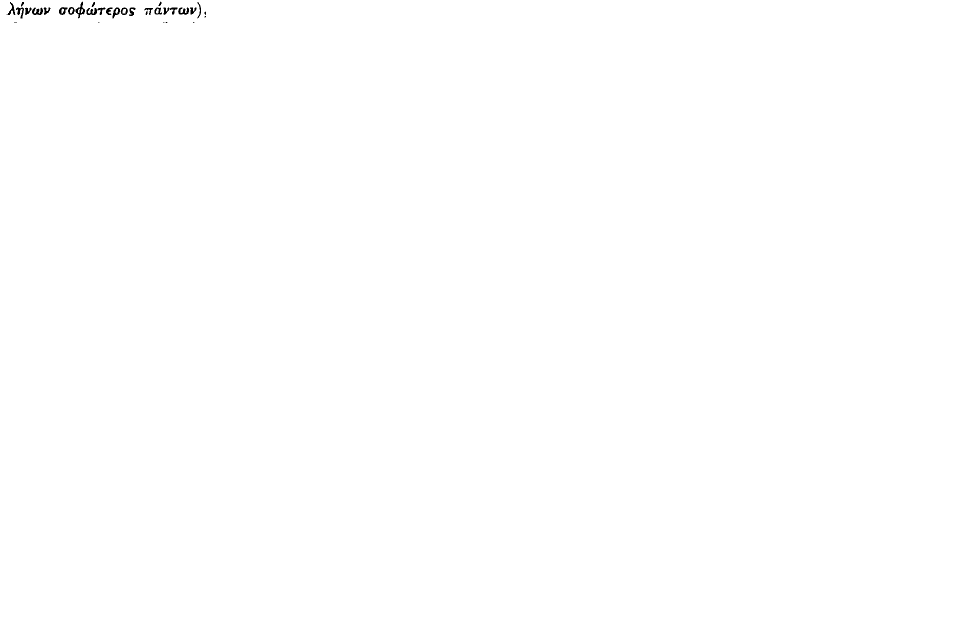 , B 68 (describing the mysteries as
  ). Such paradoxes trade on giving their full sense to certain expressions while putting them, as it were, in inverted commas: your ‘sage’ Homer was a fool, your ‘purifications’ are defilings, your
 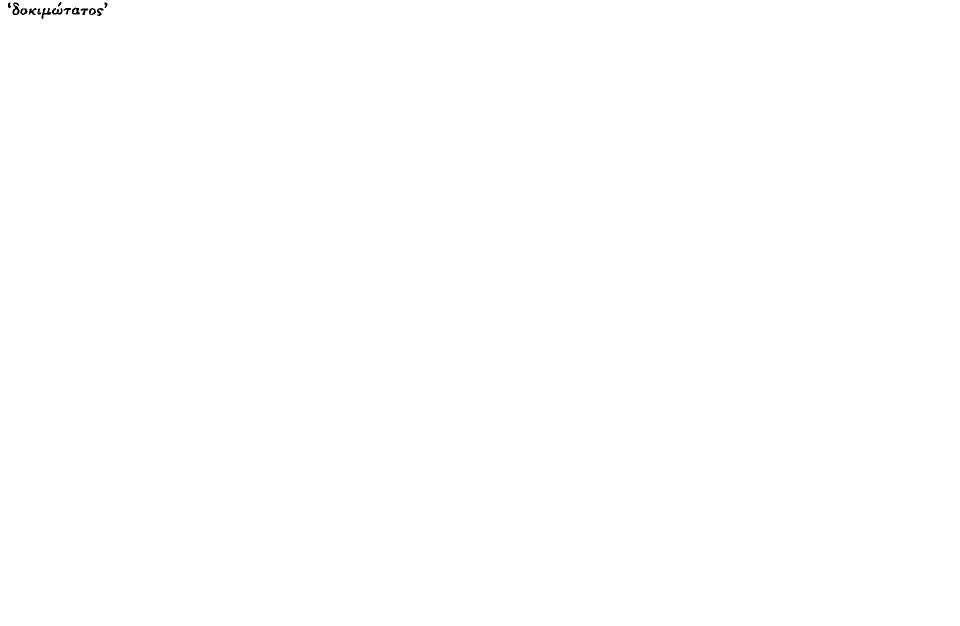 is only an expert on
  .
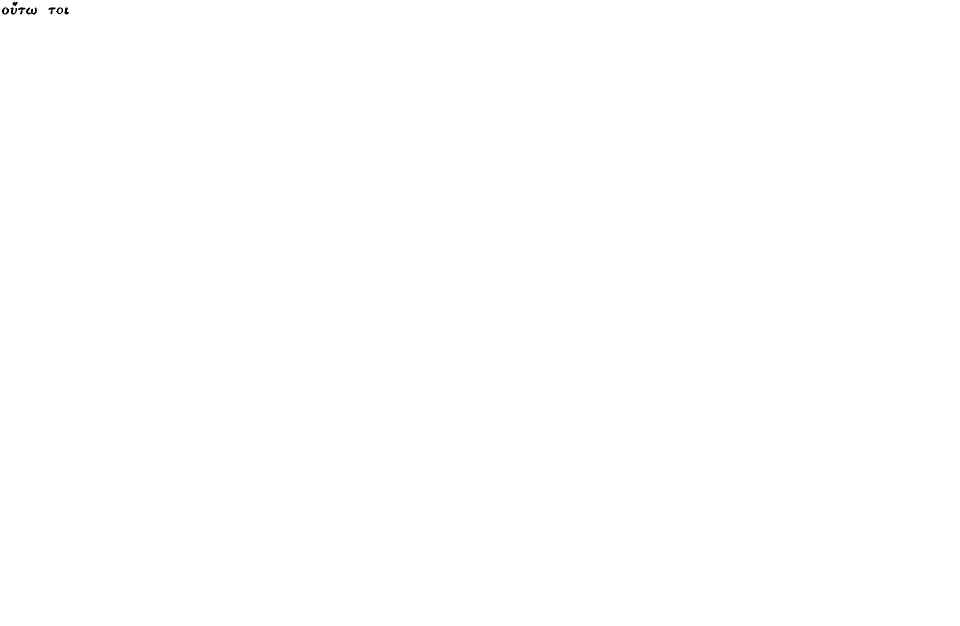
.
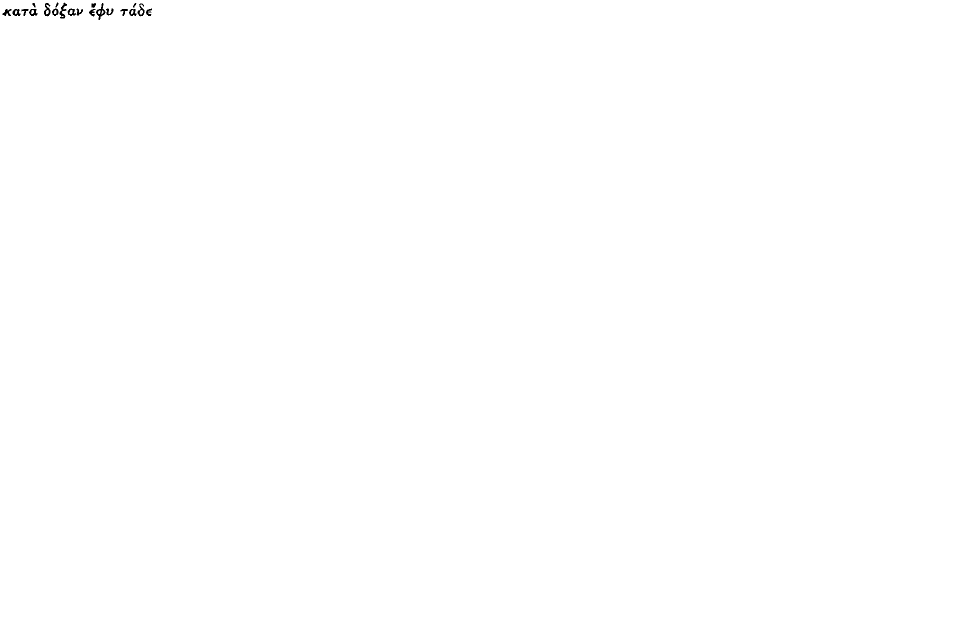 This sense again might seem warranted by Heraclitus B 28 (see last note); but of course Heraclitus' characteristic word-play depends on there not being any such overt connexion in sense between the words.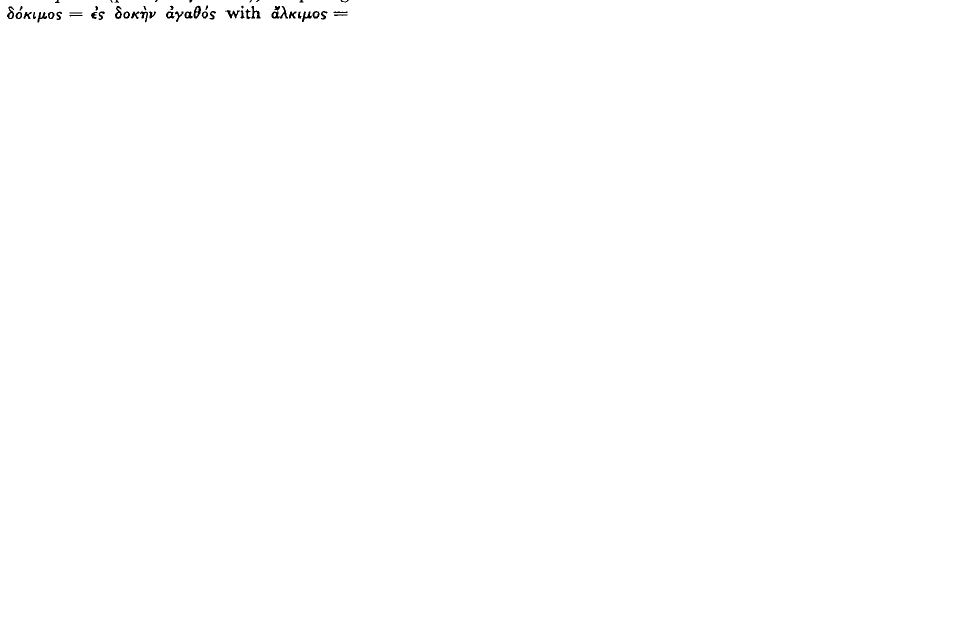
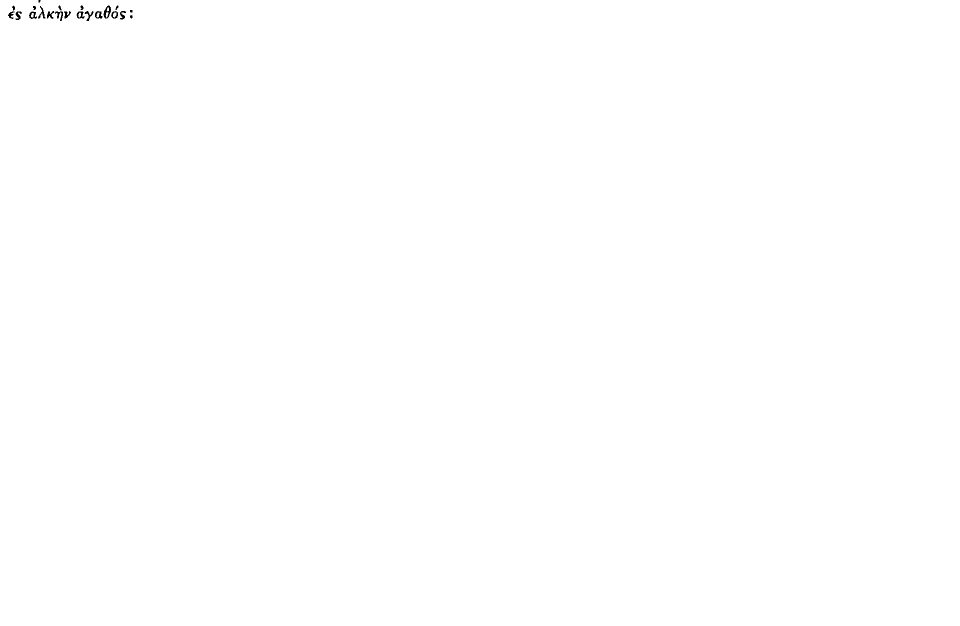 cf.
cf. 
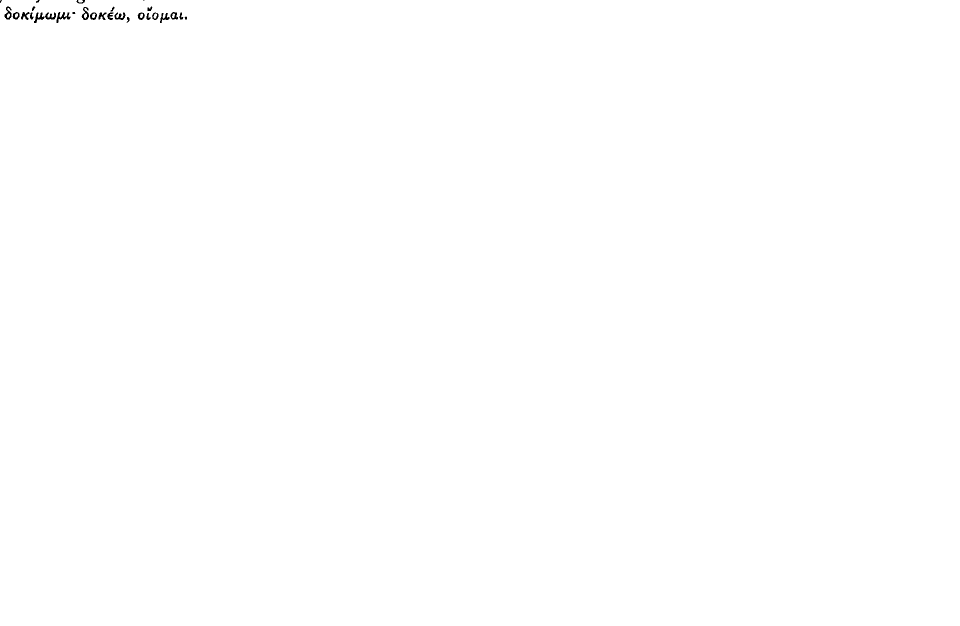 Cf. Gow on Theocritus 30. 25 (apparently misread by LSJ. s.v.).
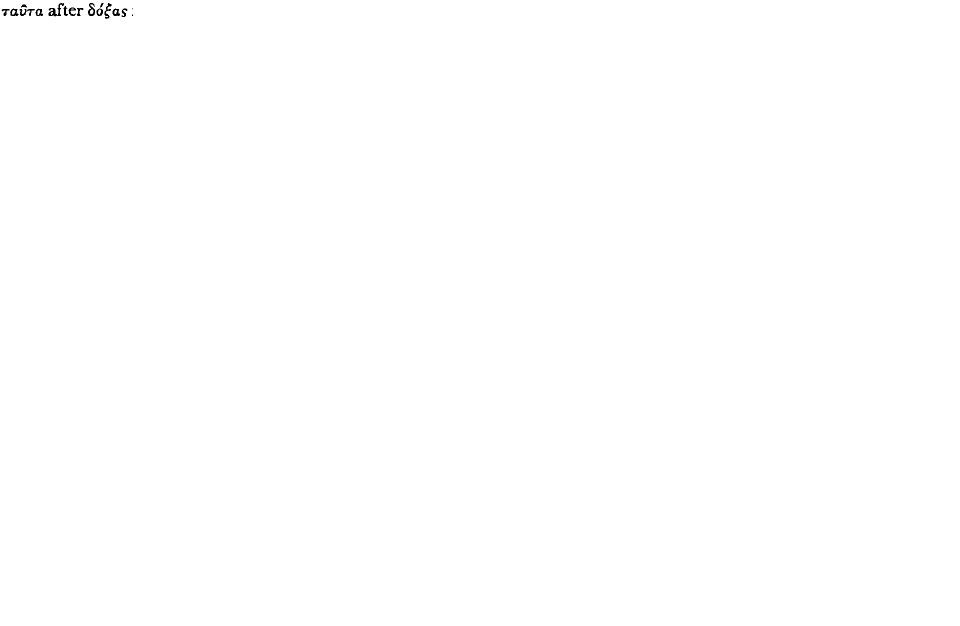 is of course no obstacle: cf. e.g. Od. 3. 124–5.
 cf.
cf.  and
and 
 which runs through fifth-century thought: ‘unchallenged custom’ (B 7. 3), ‘arbitrary decision’ (B 8. 53); the second an historical mirage thrown by the first, as the Social Contract was by current forms of society.
 yet within a few lines he destroys this parallel by taking the
  with the immediately preceding infinitives (so Simplicius and Burnet, rightly;
  is part of the predicate (cf.
 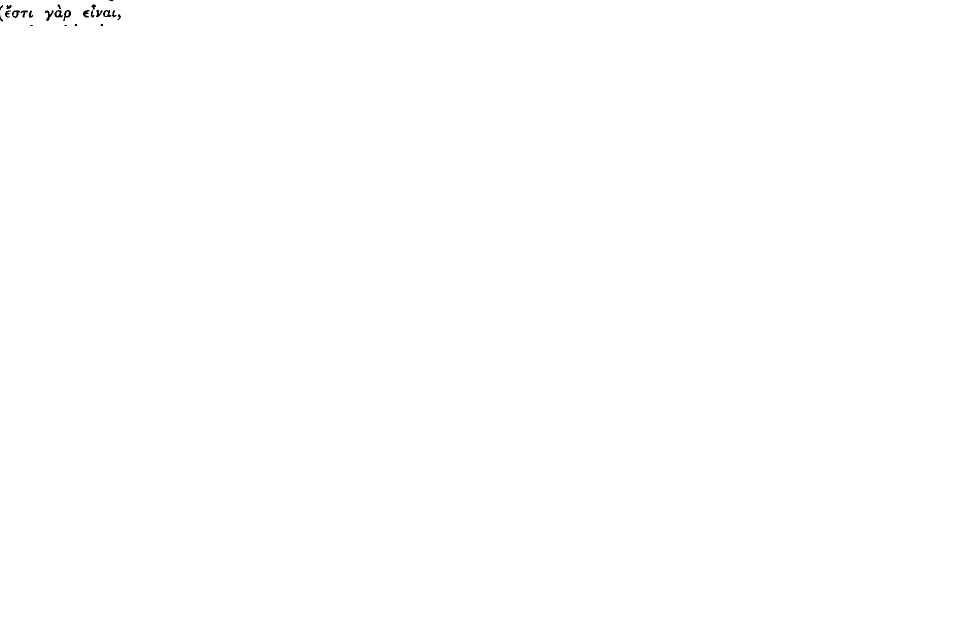 , cf. p. 94 below), and means by this that the ques tion ‘Does it exist ?’ has to be answered some times yes and sometimes no (see the text). In ruling out ‘can’ in favour of either ‘must’ or ‘cannot’ the other paths are ruling out this qualified answer. This warns us against saying that the third path is a conflation of the other two.
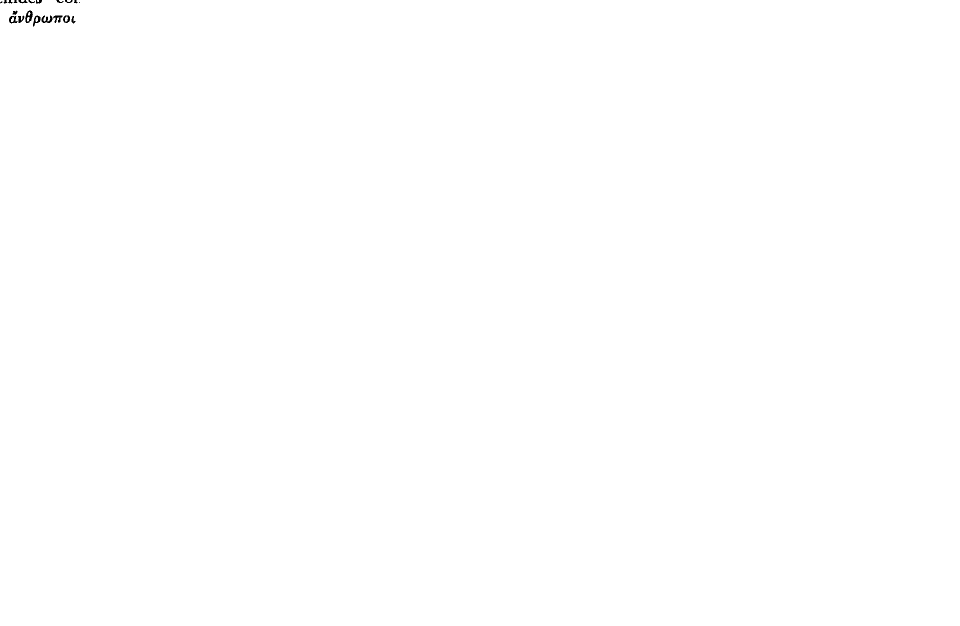 = mankind as a whole and
  = philosophers (
 and
and 
 on their own terms without identifying them. Cornford, who does not claim a reference to Heraclitus here, commits the same fault of fragmentation (
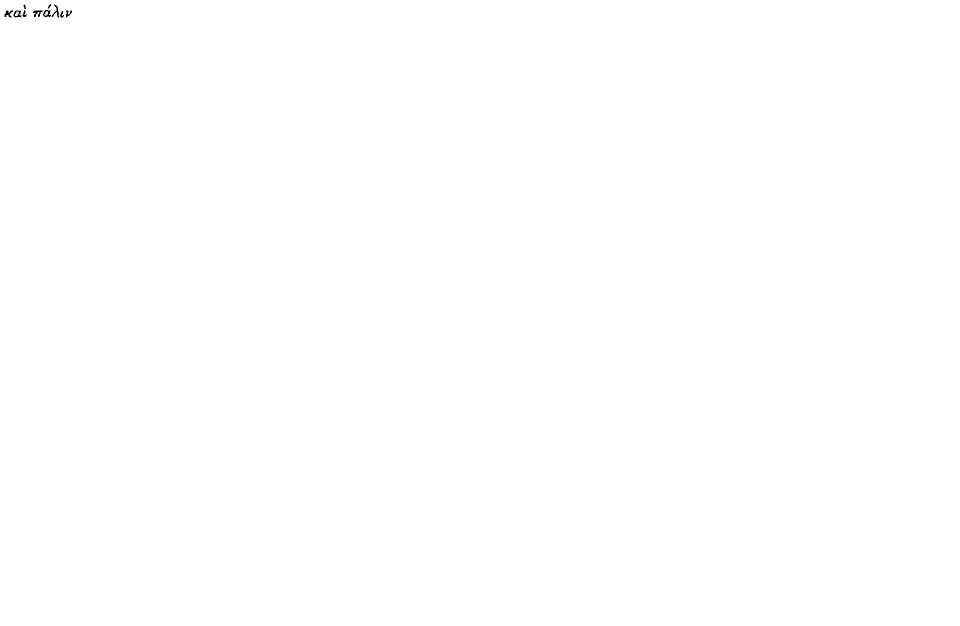 (in Parm. 708 Cousin).
 and
and are used as standard adverbs with the dative: for the absolute use as here cf.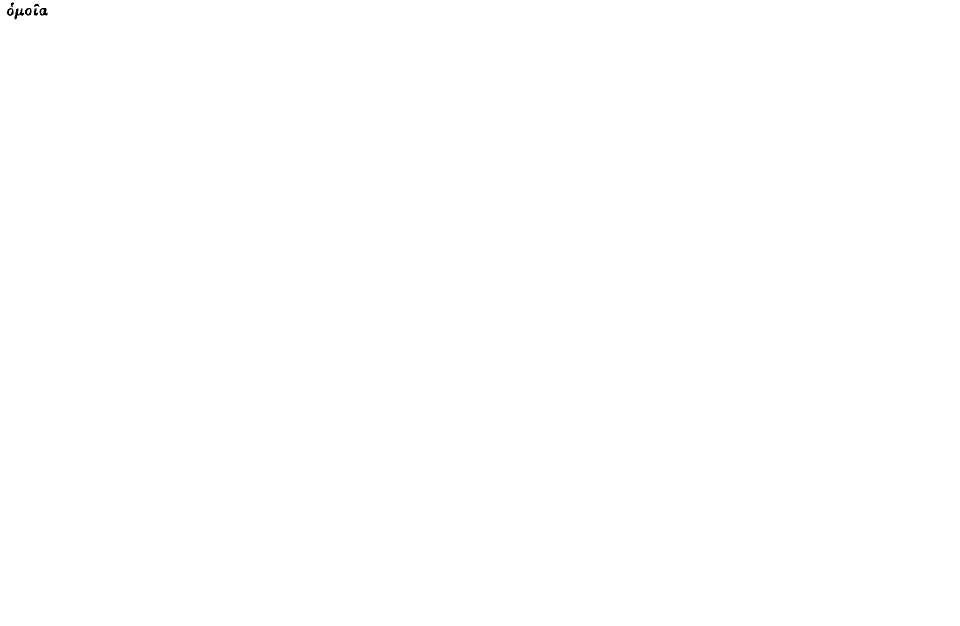
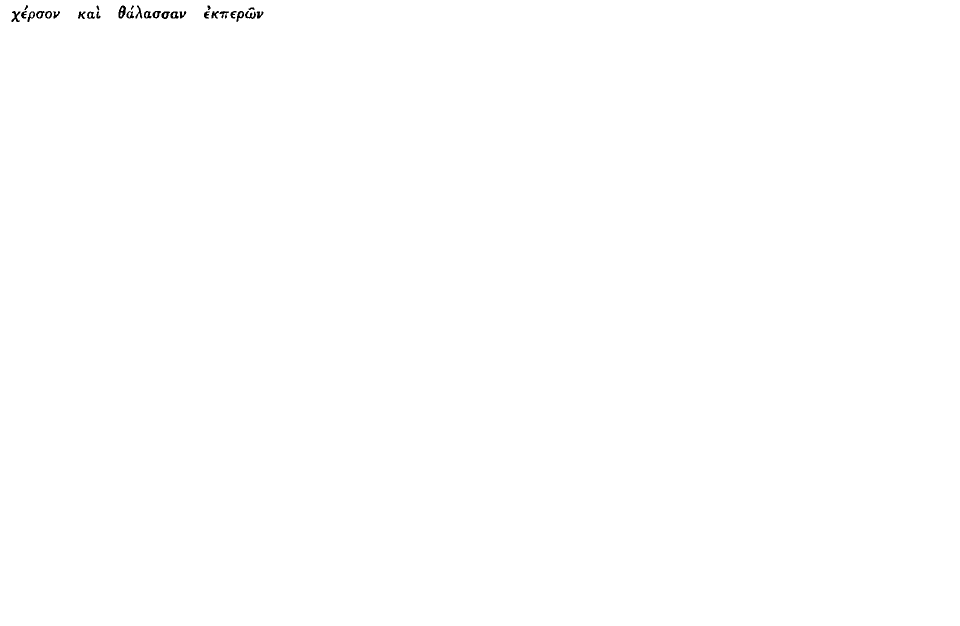 (Homer's
 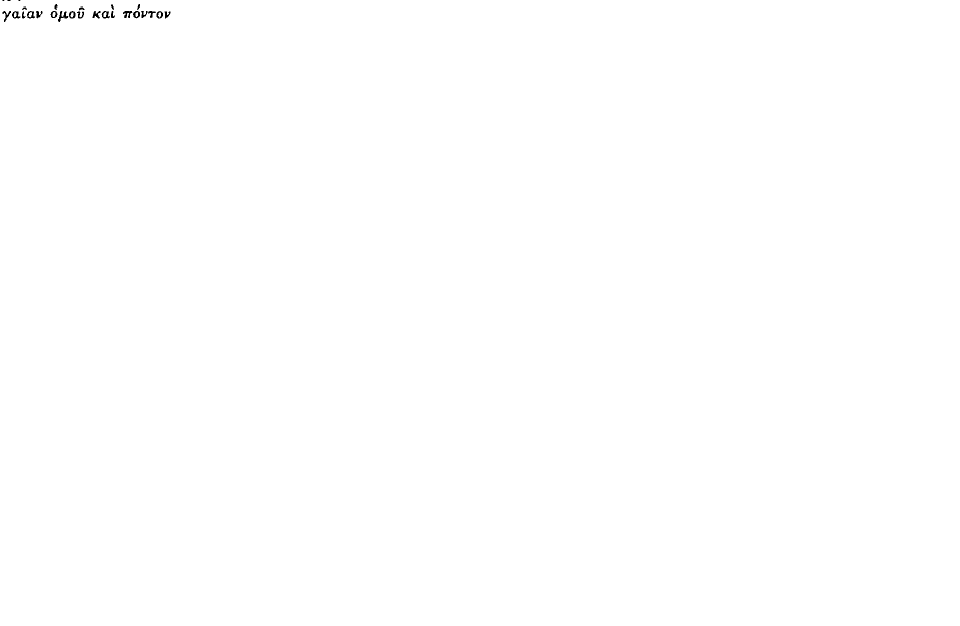 ), where as all editors have seen
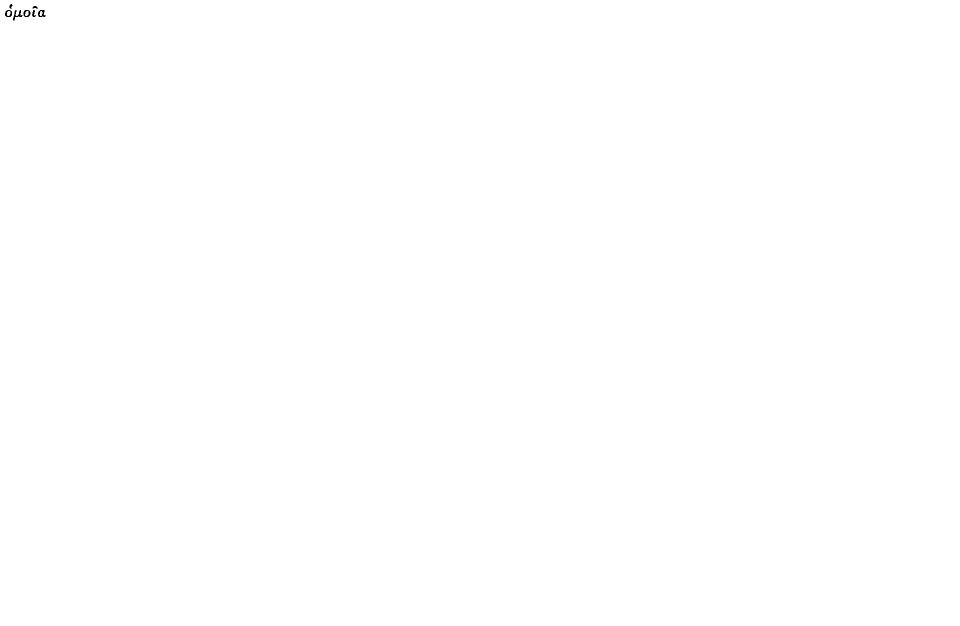 has adverbial force whether or not it is read as technically qualifying the nouns: so Parmenides in B 8. 22 (and perhaps the formula
 Il. 4. 315, which scholl. rightly use
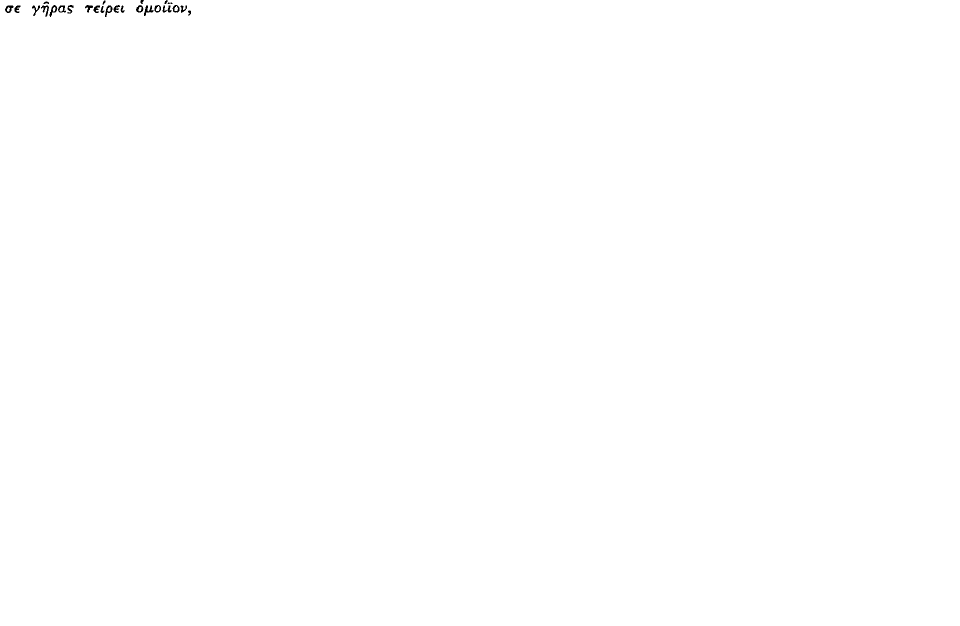 to explain). The form
 which appears in the fifth century is not found in Homer, Hesiod, or Parmenides, though
 occurs in them all: notice that
  kept its adverb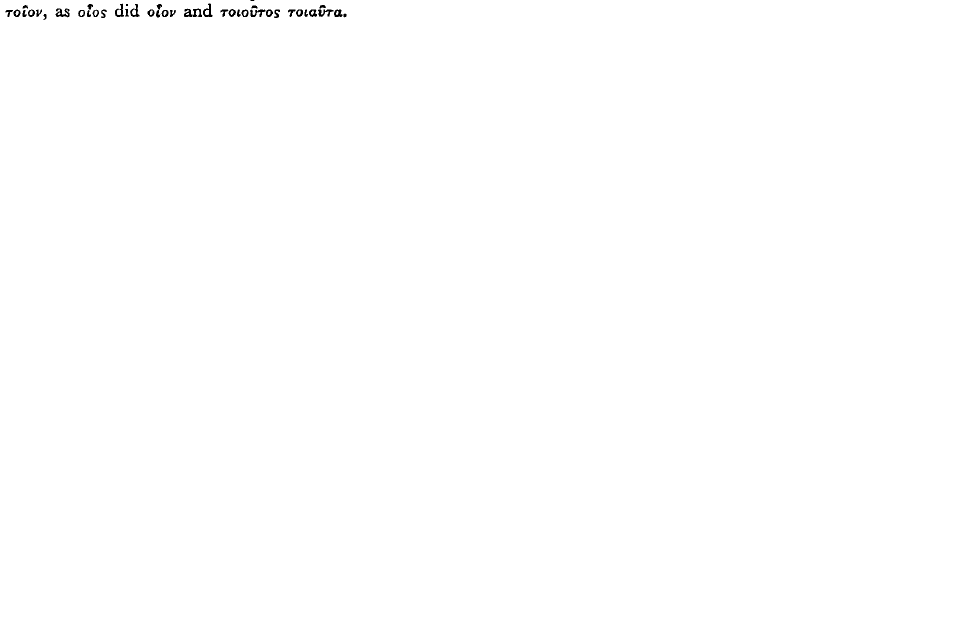
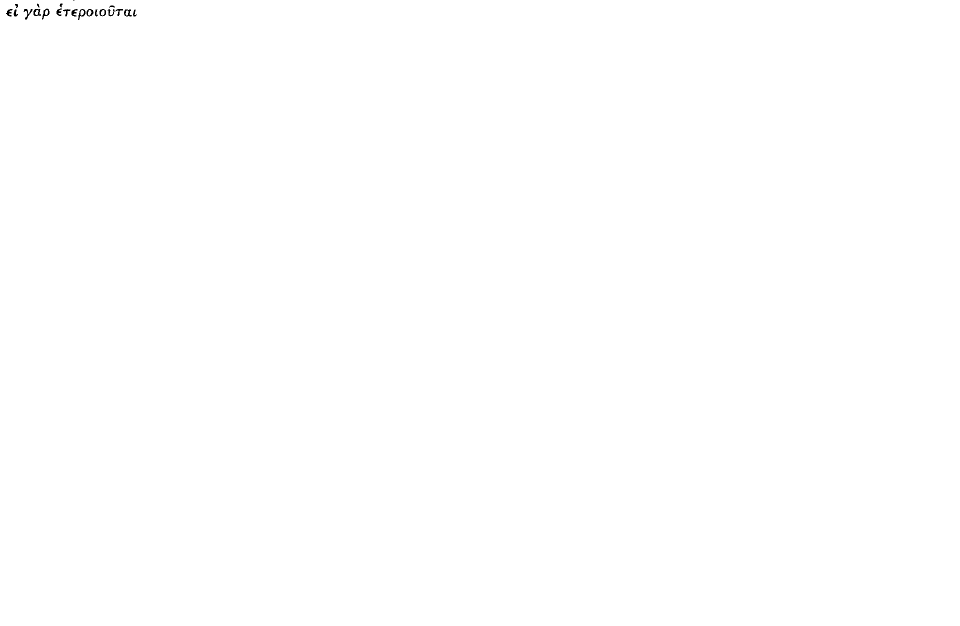
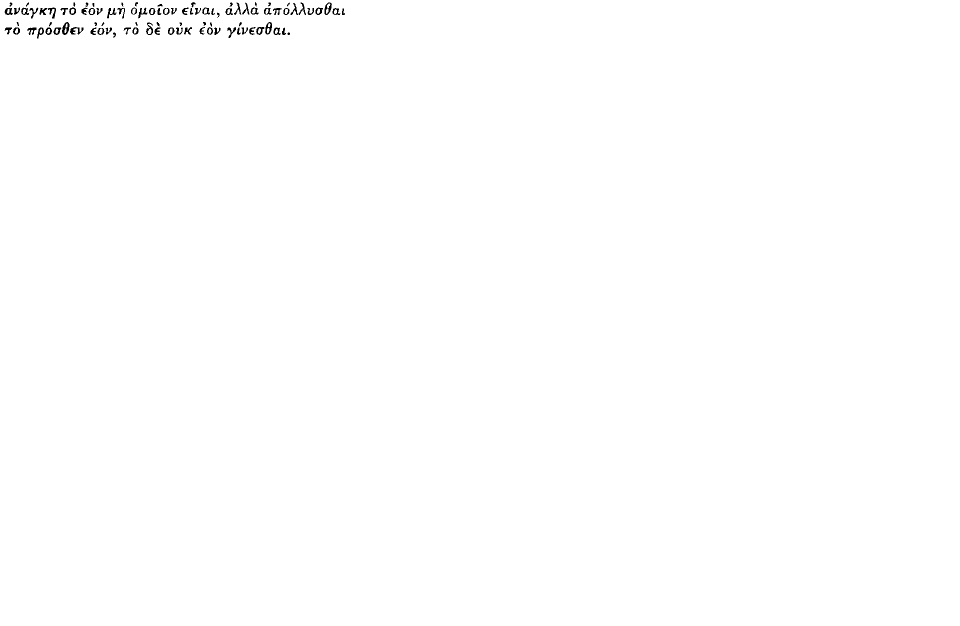
 : as though he was (a) right to say that we cannot talk about a non-existent X but (b) wrong to suppose on this score that we cannot say ‘X is not white’. Both (a) and (b) are groundless. Parmenides, though he certainly could not have drawn the necessary logical distinctions, might nevertheless fairly assume that, if one part of the world is white but not another, this can be formulated exis-tentially as ‘there is white, or a white thing, here but not there’: the point may be confused but is not annulled by the use of
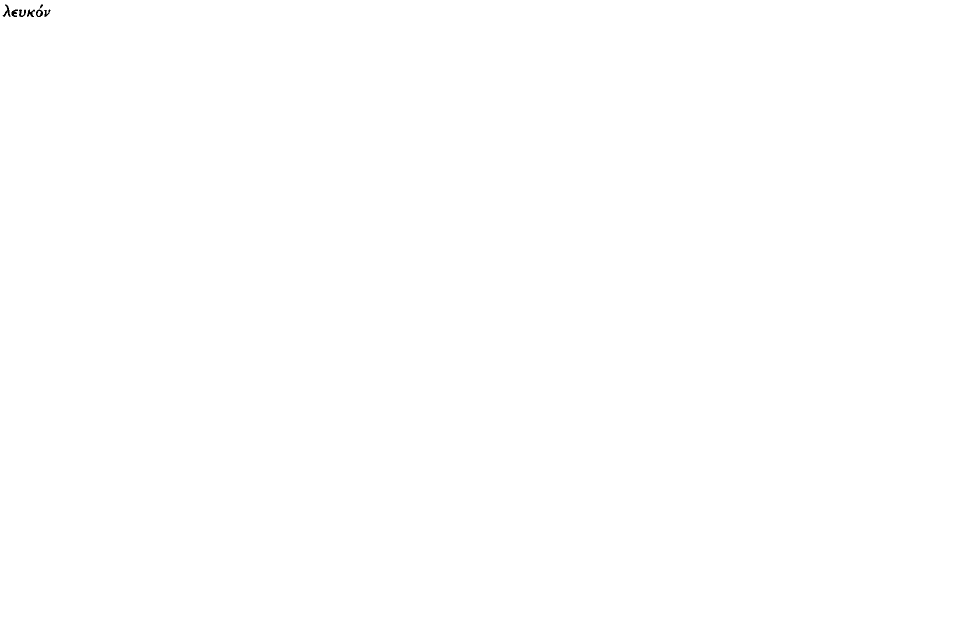 to mean both the colour and what has it. The move from
 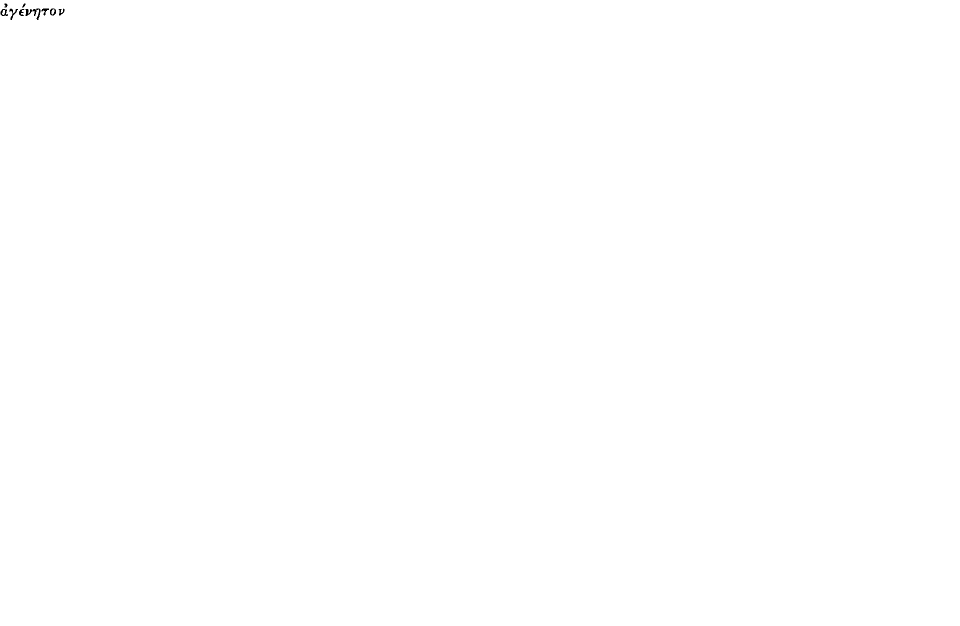 to
to 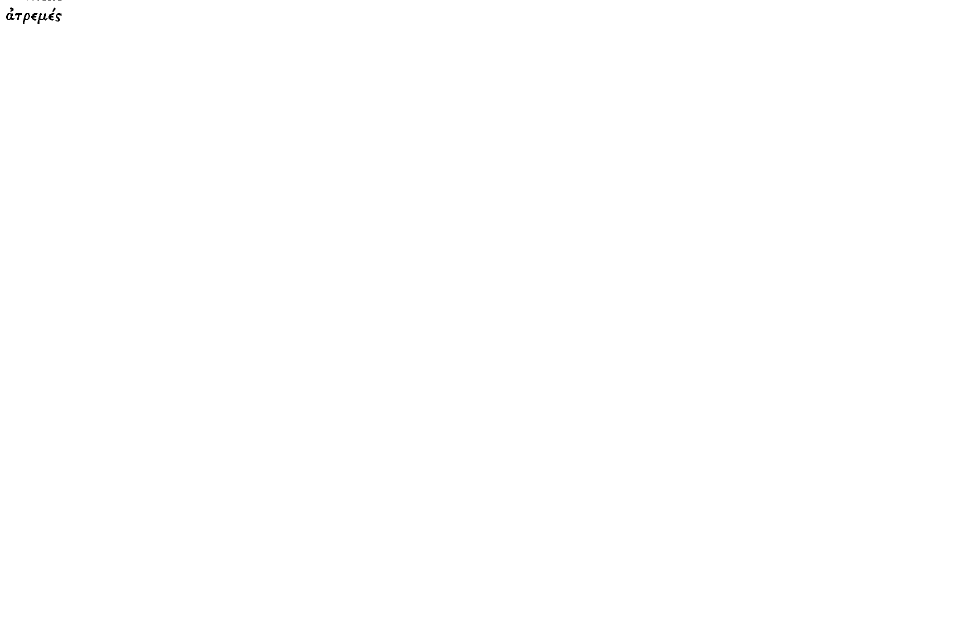 is valid enough: what is mistaken is his claim that we cannot talk of the non-existent. We can, of course: mermaids, for instance. How we can is another matter, and Aristotle was not the first or last philosopher to fail to see his way through it; but it is his failure that underlies his treatment of the Eleatics and their predecessors in A 3.
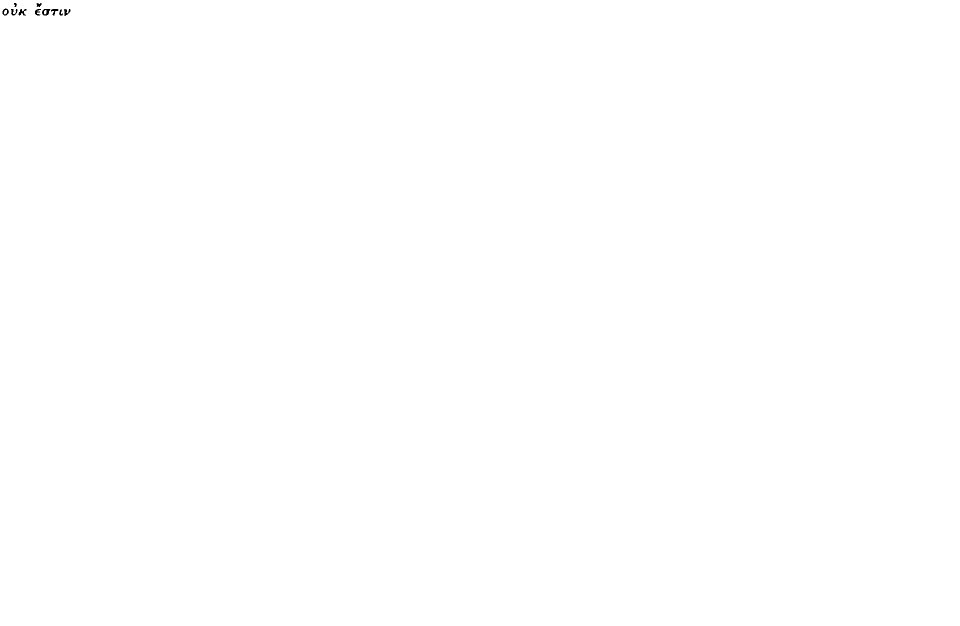 but
but 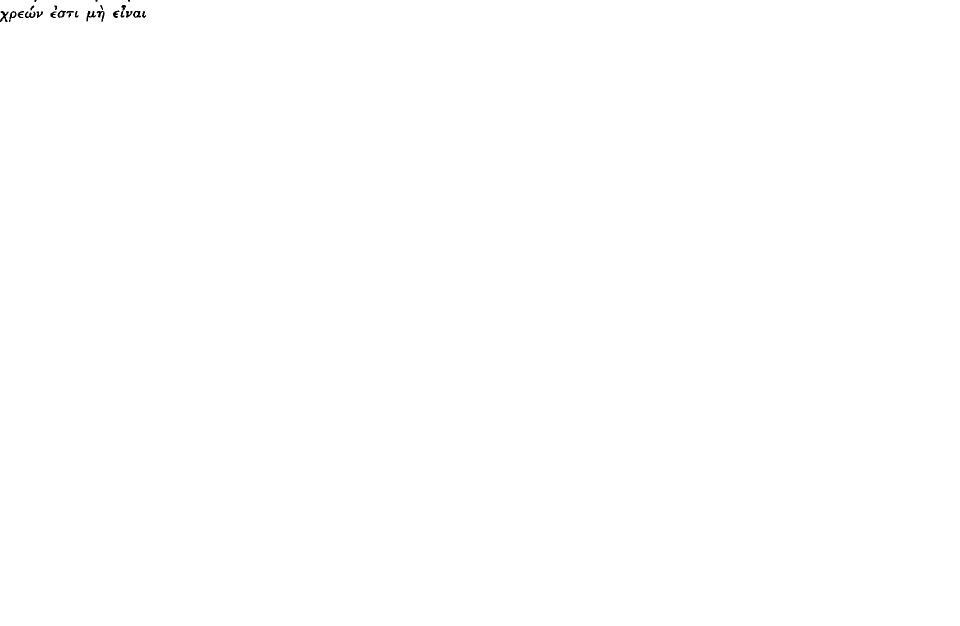 (B 2. 5), and with this Parmenides admits he could do nothing: it is
 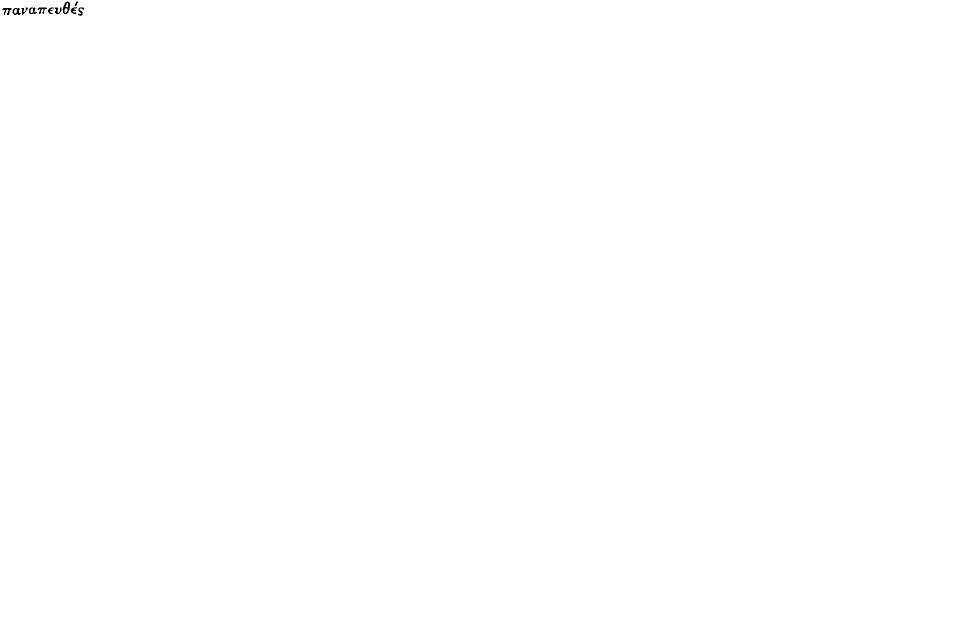 (B 2. 6). But since no one takes this line it is enough to rule out
 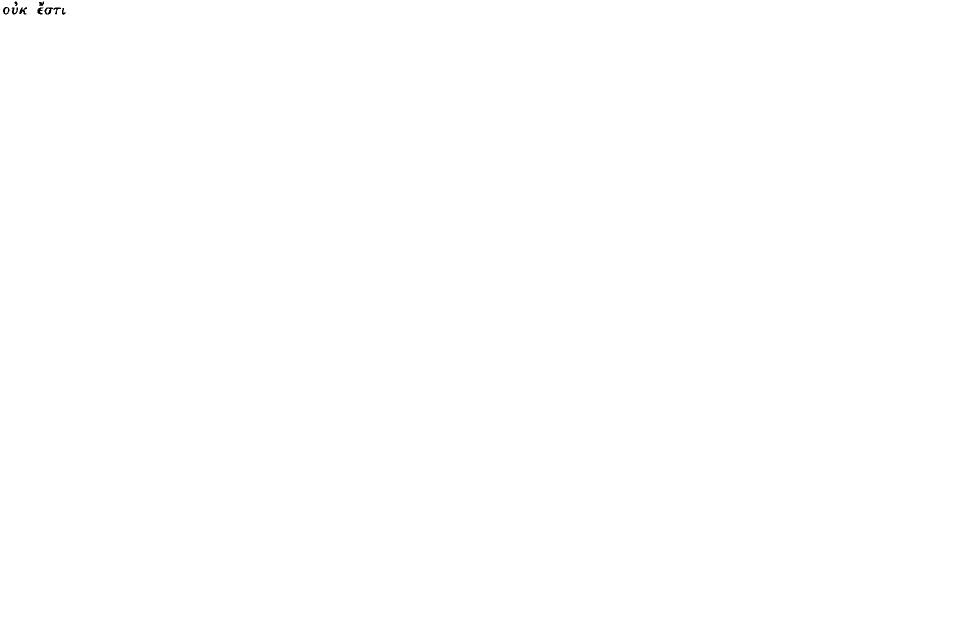 from the plain man's assumptions.
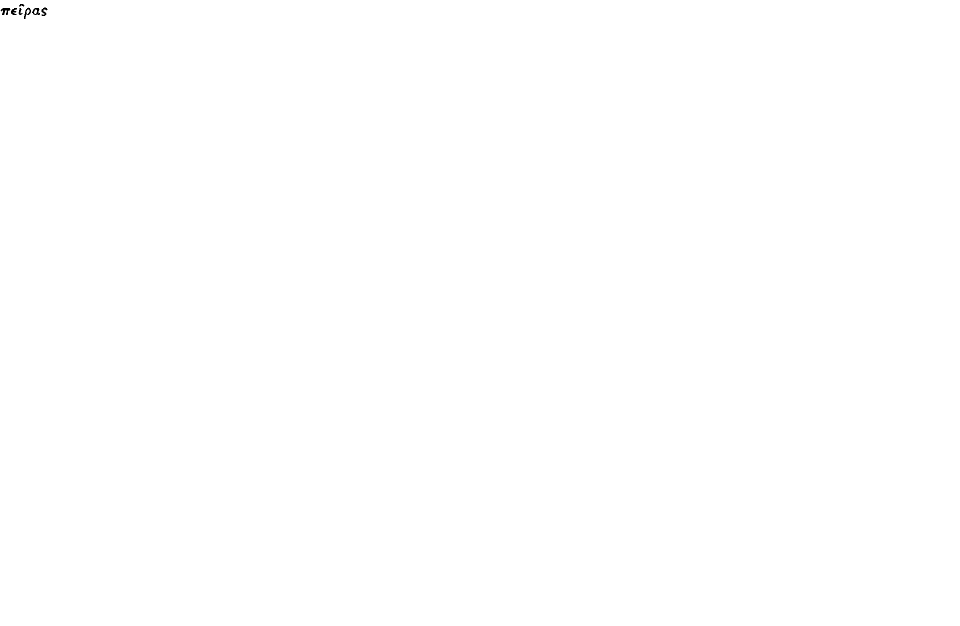 in the
 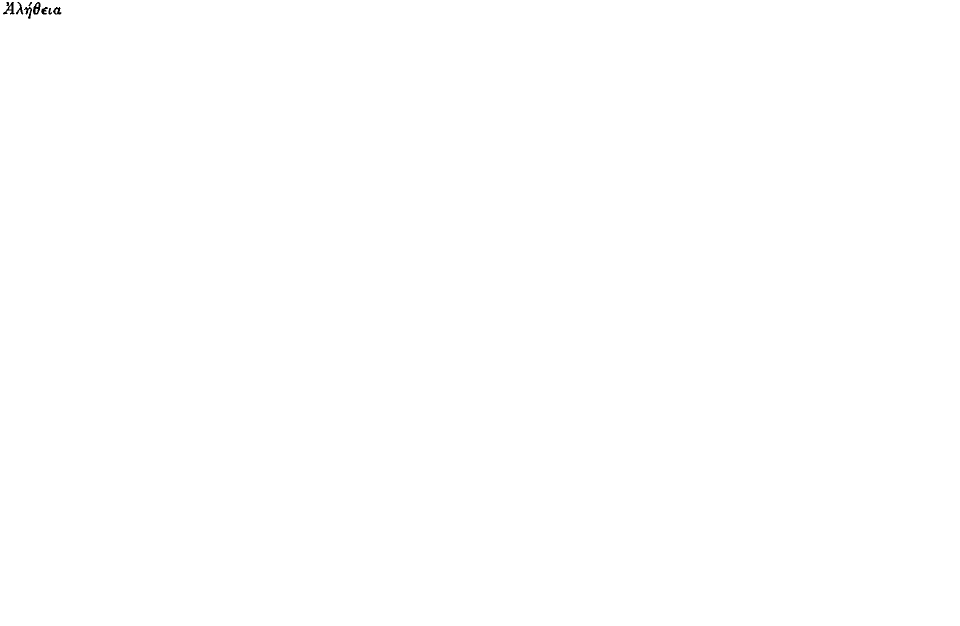 (see the third section of the paper).
 to its name: are there after all two things in existence or is the name a name of nothing? This is in effect the same problem as whether the v6t)iia is distinct from or identical with
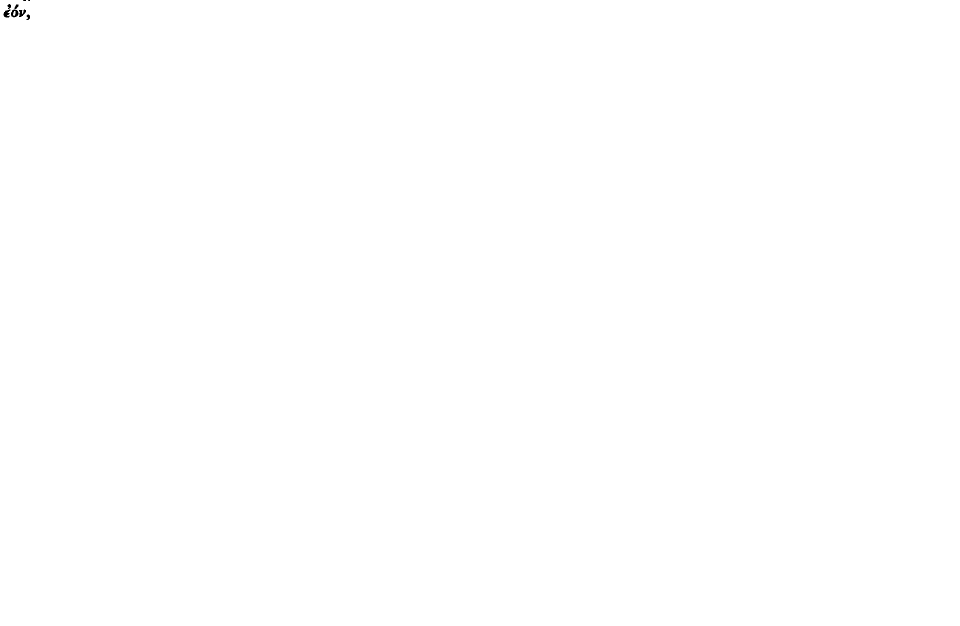 , and (for what this is worth) Plato implies that it had not been faced. He implies the same at Soph. 248 d-249 a in making the Eleatic Stranger say that if reality contains life and soul and understanding it cannot be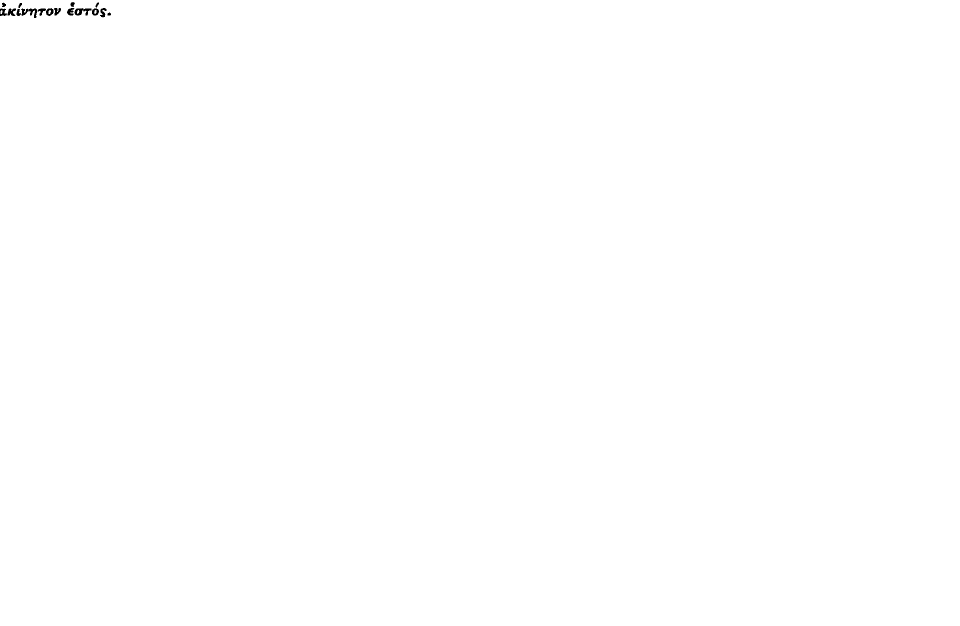
 is full of metaphors of movement and arrested movement: motion on a path comes often (including the puzzling B 5), and arrested motion in B 6. 3; B 7. 3; B 8. 13–15 and 37. Cf.
  then also in this context its opposite,
 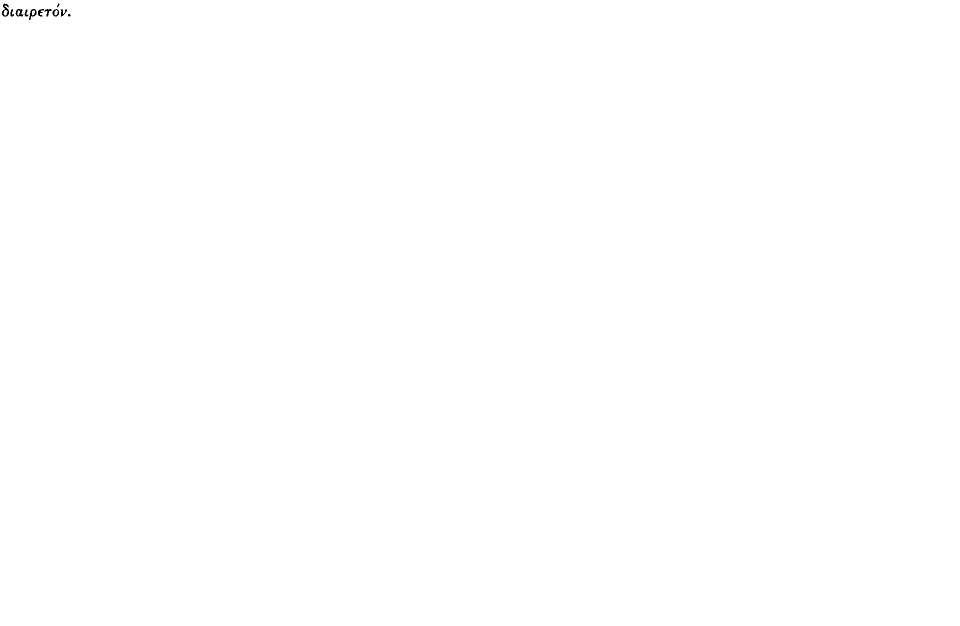 (Thus Aristotle, maintaining against Parmenides that continuity does not preclude but always entails divisibility, can say that time and any process in time is
  and therefore
 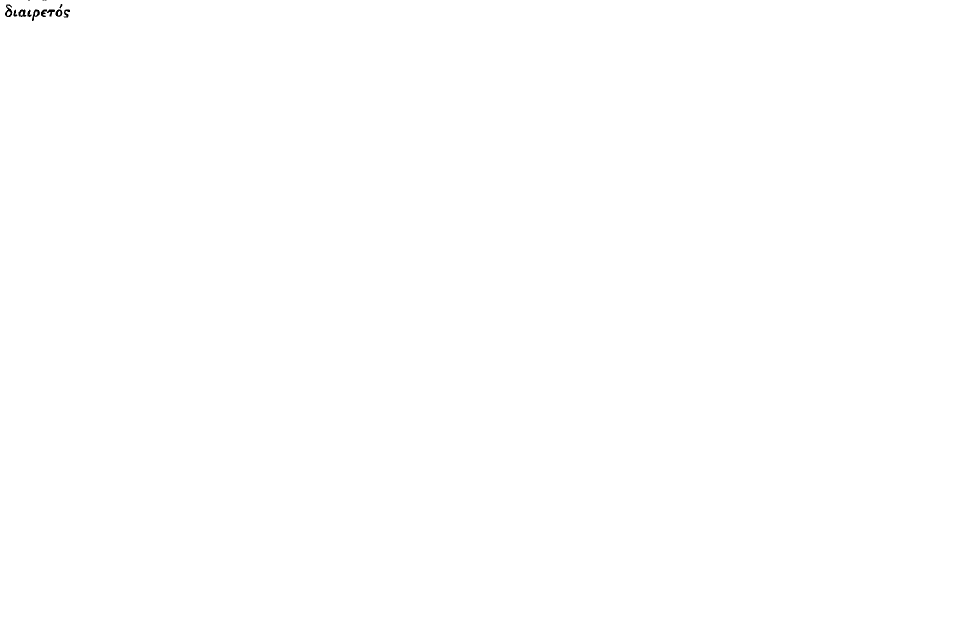 , Phys. Z 2. 232b23–26 et al.) In this setting of temporal continuity it is natural to explain that
  in line 23, which is commonly read as implying an answering
  in 24, must have not its spatial sense but its wider meaning, ‘in this respect’ (Empedocles B 26. 10); but I doubt if Parmenides wants wholly to lose the spatial metaphor in
  for not only this passage but the whole treatment of temporal variation is couched in spatial metaphor (the impossibility of any different state of affairs is pictured as being chained to one place, B 8. 14–15, 26–27, 30–31, 37–38); and Parmenides wants to keep open the possibility of a spatial application of the same arguments. (Karsten, pointing to the singularity of
  here without an answering adverb and observing that the necessary contrast is carried by
  , emended so as to excise it; Stein proposed
  , plausibly in view of the source of contamination in B 8. 45 and 48.)
 in B 8. 32 means ‘because’ (as generally in Homer: so
 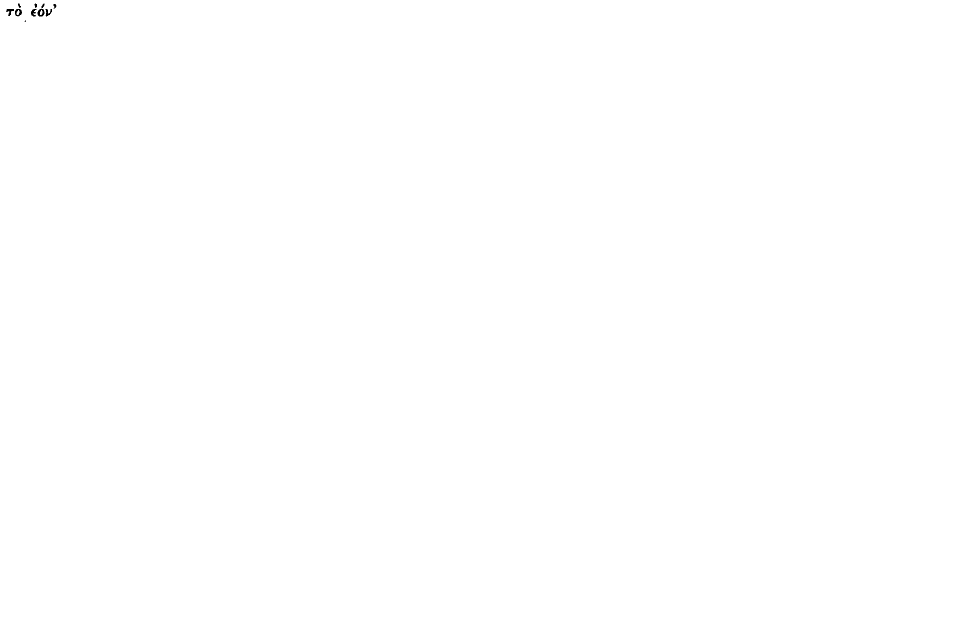 before the less, but he has not seen that the
 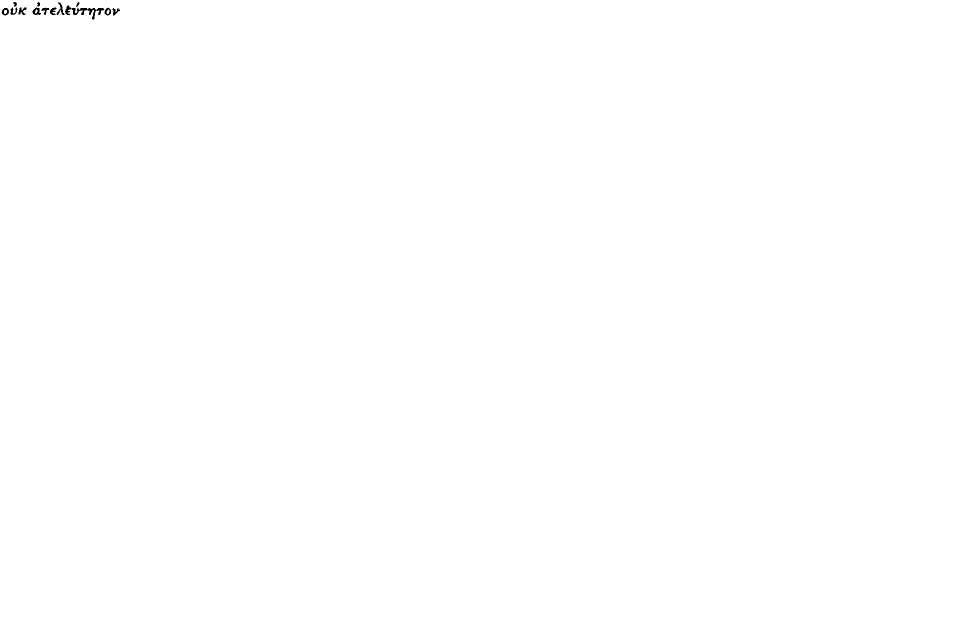 is in fact the conclusion of the opening argument and the premiss of the next.
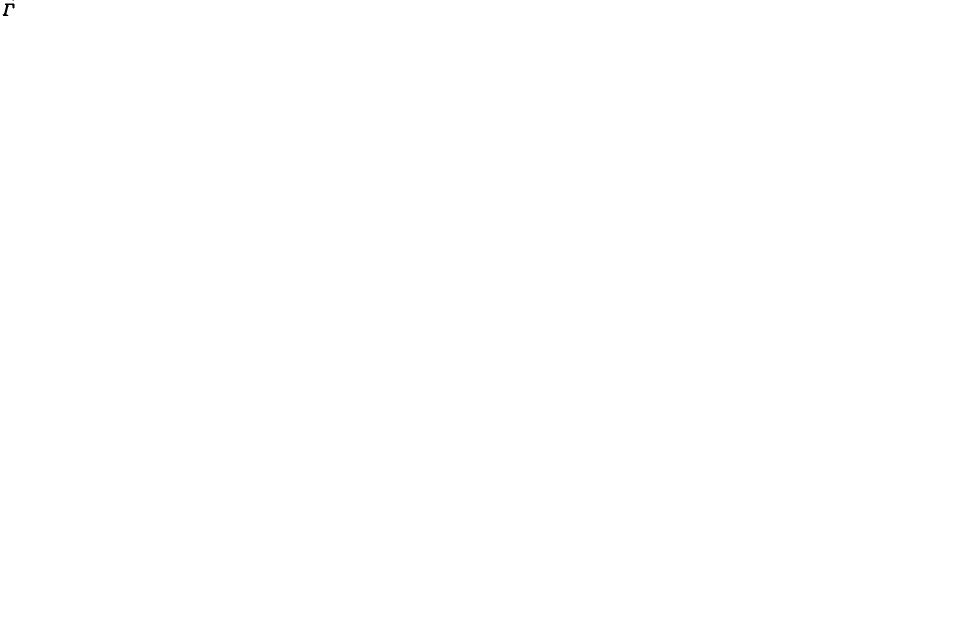 4. 203b4–15.
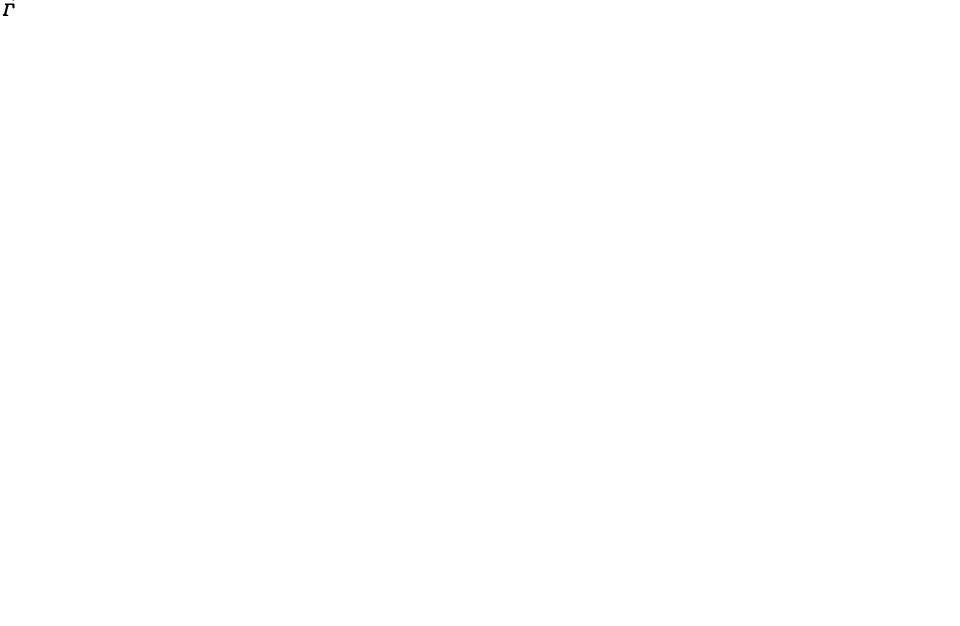 4. 2032 10–15;
 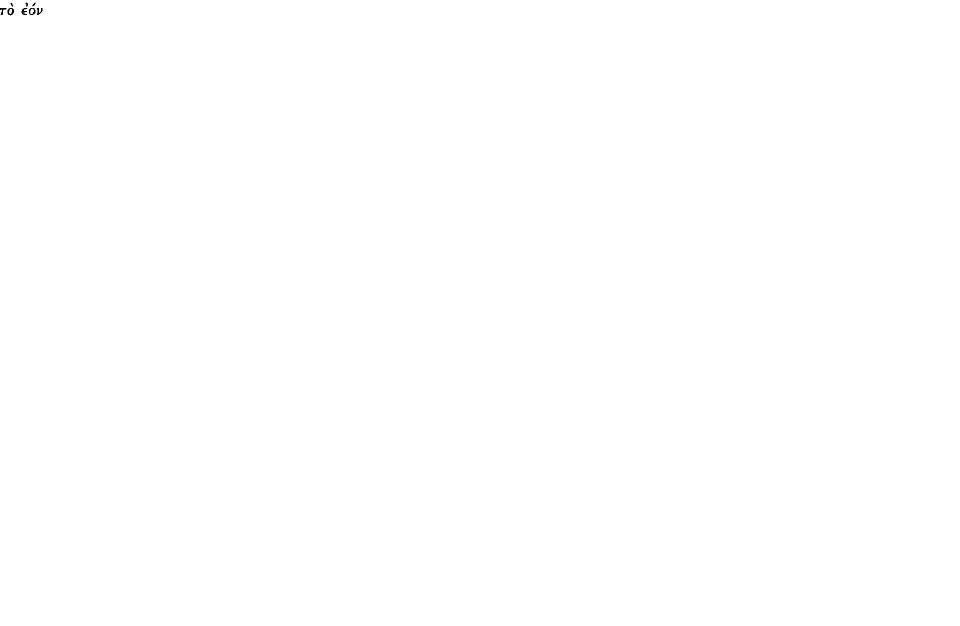 can have
  or
or  But Melissus was just denying that
  can be a solid (see this section of the paper).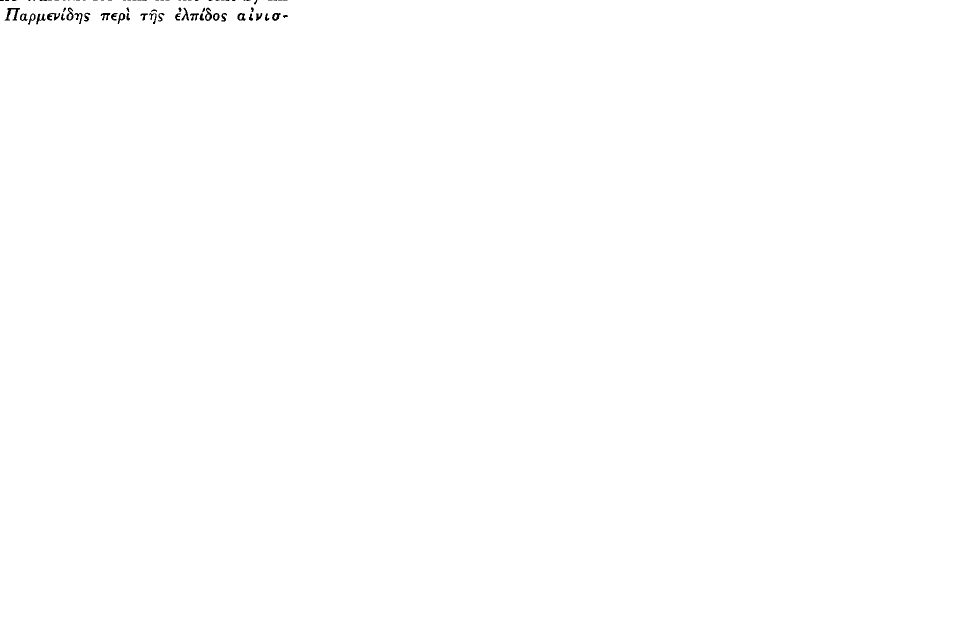
 The verbs
  and
and 
 call for a spatial interpretation.
Crossref Citations

This article has been cited by the following publications. This list is generated based on data provided by Crossref.
Bicknell, P. J.
1968.
A new arrangement of some parmenidean verses.
Symbolae Osloenses,
Vol. 42,
Issue. 1,
p.
44.
Vlastos, Gregory
1975.
Plato's testimony concerning Zeno of Elea.
The Journal of Hellenic Studies,
Vol. 95,
Issue. ,
p.
136.
Mourelatos, Alexander P. D.
1976.
Determinacy and Indeterminacy, Being and Non-Being in the Fragments of Parmenides.
Canadian Journal of Philosophy Supplementary Volume,
Vol. 2,
Issue. ,
p.
45.
Easterling, P. E.
and
Knox, Bernard M. W.
1985.
The Cambridge History of Classical Literature.
Long, A. A.
1985.
The Cambridge History of Classical Literature.
p.
245.
Thom, Paul
1986.
A Leśniewskian reading of ancient ontology: parmenides to democritus.
History and Philosophy of Logic,
Vol. 7,
Issue. 2,
p.
155.
Graham, Daniel W.
1988.
Symmetry in the Empedoclean Cycle.
The Classical Quarterly,
Vol. 38,
Issue. 2,
p.
297.
Ferreira, Fernando
1997.
Exercícios Eleáticos.
Disputatio,
Vol. 1,
Issue. 2,
p.
2.
Seaford, Richard
2004.
Money and the Early Greek Mind.
Schaffer, Jonathan
2010.
Monism: The Priority of the Whole.
The Philosophical Review,
Vol. 119,
Issue. 1,
p.
31.
2010.
A Companion to Epistemology.
p.
572.
Stevens, Annick
2010.
Le Néant.
p.
29.
Andrés Bredlow, Luis
2011.
Parmenides and the Grammar of Being.
Classical Philology,
Vol. 106,
Issue. 4,
p.
283.
Curd, Patricia
2012.
A Companion to Ancient Philosophy.
p.
34.
Fronterotta, Francesco
2013.
La sagesse présocratique.
p.
131.
Skordoulis, Constantine D.
and
Koutalis, Vangelis
2013.
Concepts of Matter in Science Education.
Vol. 19,
Issue. ,
p.
463.
Monnoyer, Jean-Maurice
2014.
Mind, Values, and Metaphysics.
p.
459.
Sisko, John E.
and
Weiss, Yale
2015.
A Fourth Alternative in Interpreting Parmenides.
Phronesis,
Vol. 60,
Issue. 1,
p.
40.
Haas, Andrew
2015.
Heidegger in the Twenty-First Century.
Vol. 80,
Issue. ,
p.
9.
Fronterotta, Francesco
2016.
Il verbo Noein nel fr. 3 DK di Parmenide.
Méthodos,
Vol. 16,
Issue. ,