


INTRODUCTION
Petting zoos and other animal exhibits facilitate contact of the public with live animals as part of agricultural fairs and other seasonal or permanent attractions. They are entertaining, but also serve an important educational function for individuals of all ages regarding animals and animal husbandry, and they help to increase compassion for animals of different kinds [Reference McMillian1, 2]. However, any type of human–animal contact is associated with a risk of infectious disease transmission, which varies according to the animals involved, the individuals in contact with them and the degree of contact that occurs. Risks are higher for young children, with whom petting zoos and similar events are often particularly popular [2–6, Reference Pickering7]. Risks are also higher in individuals who are immunocompromised and the elderly [2, 4, 6, Reference Pickering7], all of whom may potentially visit such exhibits.
Numerous disease outbreaks have been associated with animal contact at public venues. The most commonly reported pathogen in these outbreaks is Escherichia coli O157:H7, but other pathogens include Salmonella, Cryptosporidium, Giardia, Coxiella burnetii (Q fever) and dermatophytes (ringworm) [2, Reference Goode5, Reference Pickering7–Reference Steinmuller13]. There is also potential risk for the transmission of other zoonotic pathogens including Campylobacter and rabies [2, Reference Friedman14, Reference Heuvelink15]. While outbreaks receive the greatest attention, there may also be a significant level of morbidity from sporadic infections that are not reported to public health officials or linked to petting zoo exposure. Studies have shown contact with cattle and/or farm visits to be significant risk factors for sporadic infection by Cryptosporidium [Reference Roy16], E. coli O157:H7 [Reference Kassenborg17], and Campylobacter [Reference Friedman14]. Overall, there is limited information regarding the disease burden associated with petting zoos.
Several organizations have published recommendations for management of live animal exhibits such as petting zoos, intended to help decrease the risk of infectious disease transmission from animals to the public, and all of them include some mention of the promotion of hand hygiene among visitors [2, 6, Reference Bender8, 18]. According to the National Association of State Public Health Veterinarians, ‘the recommendation to wash hands is the most important prevention step for reducing the risk for disease transmission associated with animals in public settings’ [2]. Failure to perform hand hygiene has been identified as a significant risk factor for disease in numerous outbreaks associated with animal exhibits [3, Reference Bender8, Reference Friedman9, Reference Steinmuller13, Reference Crump19]. Yet hand hygiene compliance at petting zoos and similar public exhibits has been reported to be poor [Reference McMillian1, Reference Weese20], and there has been no objective assessment of means to increase visitor adherence to hand hygiene recommendations at these venues.
The objectives of this study were to determine overall hand hygiene compliance of visitors to a popular petting zoo, by indirect observation using video webcams, and to evaluate the impact of selected interventions on hand hygiene compliance.
METHODS
The study was performed in March 2009 at a petting zoo held as part of the University of Guelph's open house weekend. Current guidelines [2] were followed for the design and operation of the event. The petting zoo was set up with unidirectional traffic flow in a large indoor breezeway as shown in Figure 1. Each animal pen was supervised by 1–2 exhibit personnel at all times. Signage (primarily 22 cm×29 cm posters) was posted at the entrance to the exhibit and on each animal pen reminding visitors that food and beverages were prohibited in the area and to perform hand hygiene before leaving. Liquid antimicrobial soap containing 0·3% triclosan (Bacti-Stat, Ecolab Inc., USA) and paper towels were provided at the sink station, and a step stool was present to help children reach the water tap. A minimum of two bottles of an alcohol-based hand sanitizer containing 62% ethyl alcohol (One Step, Belvedere International Inc., Canada) with pump dispensers were available on the adjacent tables at all times, in addition to the bottles used by personnel to dispense sanitizer during the designated intervention periods.
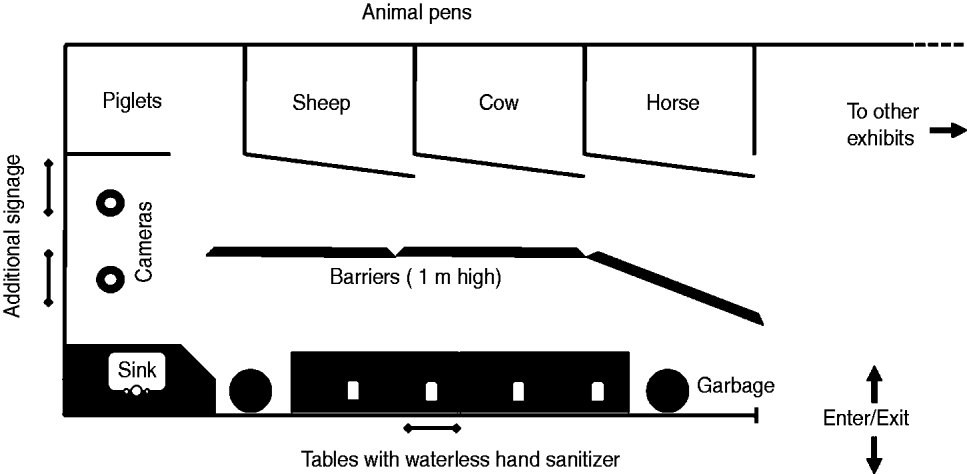
Fig. 1. Diagram of the layout of the petting zoo exhibit, including location of overhead surveillance cameras, hand hygiene stations (sink and hand sanitizer bottles) and additional signage used during specific hand hygiene intervention periods.
Two webcams (QuickCam Pro 5000, Logitech, USA) were placed in overhead locations: one focused on the side of the exhibit with the animal pens, and one focused on the opposite side of the room where the hand hygiene stations were located. The cameras were connected by USB cables to a computer in a secure adjacent room. The cameras and wiring were visible to the public but were relatively inconspicuous and above line-of-sight. Visitors to the petting zoo were not informed that a study was being conducted or that they would be on camera. Consent was not obtained from visitors on the basis that doing so would significantly bias their behaviours, no other identifying information was being gathered, all images were kept secure at all times and none would be publicly displayed or published. This study was approved by the University of Guelph Research Ethics Board.
Video monitoring was performed for a total of 6 h over the course of 1 day. Each 1-h time block was randomly assigned to one of the following hand hygiene interventions: (1) two personnel stationed near the exit offering to dispense hand sanitizer from a bottle to petting zoo visitors as they exited, (2) a combination of increased signage and personnel stationed near the exit offering hand sanitizer, (3) two circulating personnel reminding visitors to perform hand hygiene before leaving the exhibit, (4) increased signage alone, (5) baseline (no additional intervention, recorded during two non-consecutive blocks). Exhibit personnel involved in hand hygiene interventions were in addition to those supervising the animal pens, and were identifiable by their name tags and/or uniform. Increased signage consisted of three 60 cm×90 cm poster boards with brightly coloured reminders to perform hand hygiene and arrows directing people to the hand hygiene stations. The primary written messages were ‘wash your hands’ and ‘bring home the memories, not the germs’, along with various pictorial figures. The boards were posted at the positions indicated in Figure 1 during the appropriate time blocks. Verbal reminders from personnel were primarily variations of ‘Please wash your hands or use the hand sanitizer before you leave’. The interventions did not address technique for either hand washing or hand sanitizer use.
Video data were coded by two research assistants, both trained by the same author (M.A.) to ensure consistency. Data were coded for all visitors to the exhibit for 20 min out of each hour, beginning 20 min after the introduction of or change in the hand hygiene intervention. Codes were used for each of the following: age category (adult, child, young child, baby), gender, carrying an object/food/drink, touched a pen, touched an animal, entered a pen; use of each of the following: water, soap, paper towel, hand sanitizer; contact with an animal or pen following hand hygiene (i.e. by going back around the barrier opposite to the flow of traffic). A child was defined as an individual who subjectively appeared to be between the ages of 6 and 16 years. A young child was defined as an individual who appeared to be between the ages of 2 and 5 years. A baby was defined as a child who appeared to be aged <2 years. Any independently ambulatory child was assumed to be at least 2 years old (i.e. not classified as a baby). Contact with pens/animals and entering a pen were recorded as separate events (e.g. an individual who entered a pen was not recorded as having touched a pen or animal unless a separate instance of this was observed).
Statistical analysis
All statistical analyses were performed using a statistical software package (Stata Intercooled 10·1, StataCorp, USA). Pairwise correlation of predictor variables was tested using Spearman correlation analysis. For pairs of predictor variables with absolute correlation values >0·75, the less informative variable was dropped.
A manual backward stepwise selection approach was used to create a final multivariable logistic regression model. All predictor variables unconditionally associated with the outcome (performed hand hygiene) at P⩽0·20 were initially included in the multivariable model. Variables with a P⩽0·05 were retained in the final model. The presence of confounding was evaluated by removing each insignificant variable one at a time, and noting the effect on the coefficients of the remaining variables. If any of the coefficients for the remaining variables changed by more than 25%, then the eliminated variable was deemed to be a confounder and restored to the model. Furthermore, a likelihood ratio test (LRT) was used to assess the effect of removing any group of variables prior to dropping them; if the LRT was significant (P⩽0·05) then the group of variables was left in the model. A Pearson χ2 goodness-of-fit test was used to assess the fit of the model (P⩽0·05).
RESULTS
In total, data were collected for 583 visitors, ranging from 31 to 144 during the individual observation periods. Based on the number of individuals for which data were collected over the selected time periods, it was estimated that the petting zoo was visited by a total of approximately 1700 individuals over the 6 h during which the study was performed. For the first hour, data were coded for all visitors to the exhibit as there was no risk of overlap with the previous intervention, and because there were considerably fewer visitors overall during this period.
Of the 583 observed visitors, 377 (65%) were noted to have entered an animal pen or touched an animal or animal pen while in the exhibit. Some form of hand hygiene (either using water, soap and water or hand sanitizer) was performed by 340 (58%) visitors. The proportion of individuals performing hand hygiene during the different intervention periods ranged from 50–77%. Hand washing was performed by 53/159 (33%) adults, 56/138 (41%) children and 22/42 (52%) young children who performed hand hygiene, whereas hand sanitizer was used by 112/159 (70%) adults, 97/138 (70%) children and 23/42 (55%) young children who performed hand hygiene. Both soap and water washing and hand sanitizer were used by 35 (6%) visitors (12 adults, 18 children, 5 young children), 11 (2%) visitors (6 adults, 3 children, 2 young children) used water without soap, and one adult used water without soap followed by hand sanitizer. Although use of water alone is typically considered inadequate for effectively decreasing microbial contamination of the skin (except to help remove gross contamination), the use of the sink station by these individuals was still considered an attempt to perform hand hygiene (albeit potentially ineffective). Of the 377 individuals who were noted to have contact with an animal or pen, 267 (71%) performed hand hygiene. Food or drink was carried into the exhibit area by 56 (10%) visitors, of which 29 (52%) had contact with an animal or pen, and of these 19 (66%) performed hand hygiene. Of the 340 visitors who performed hand hygiene, 30 (9%) had additional contact with an animal or pen before leaving the exhibit. Other descriptive statistics are presented in Table 1.
Table 1. Characteristics of visitors to the petting zoo for which video data were coded for each of the five hand hygiene intervention periods
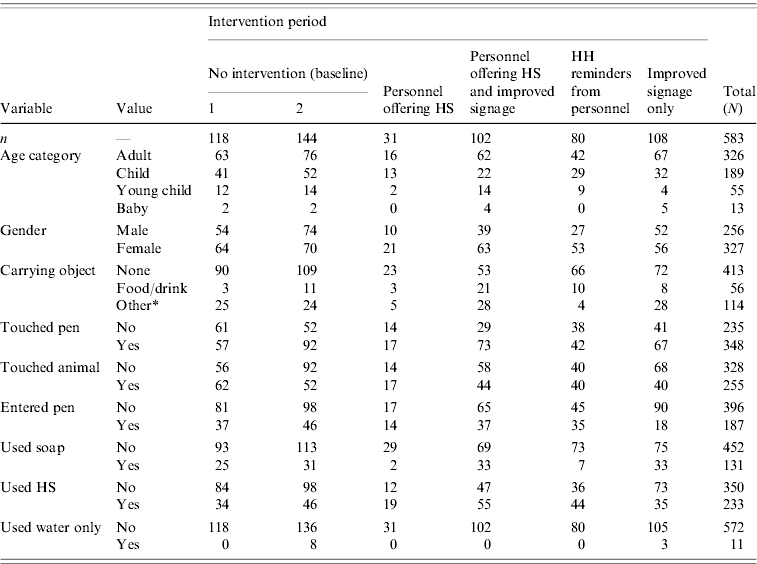
HS, Hand sanitizer; HH, hand hygiene.
* Other objects being carried by visitors included: cameras, coats, papers, strollers, balloons, toys, books, bags, backpacks, pacifiers, canes.
Variables that were found to be unconditionally associated with the performance of any type of hand hygiene are shown in Table 2. The results of the multivariable analysis are shown in Table 3. Two of the interventions were significantly associated with performing hand hygiene [improved signage and personnel offering hand sanitizer, odds ratio (OR) 3·38, P<0·001; hand hygiene reminders from personnel, OR 1·73, P=0·037]. Older children were the most likely individuals to perform hand hygiene (OR 1·67, P=0·034). A Pearson χ2 goodness-of-fit test showed the model fit adequately (P=0·1976).
Table 2. Univariable logistic regression analysis of factors associated with performing hand hygieneFootnote * during a visit to a petting zoo (N=583)
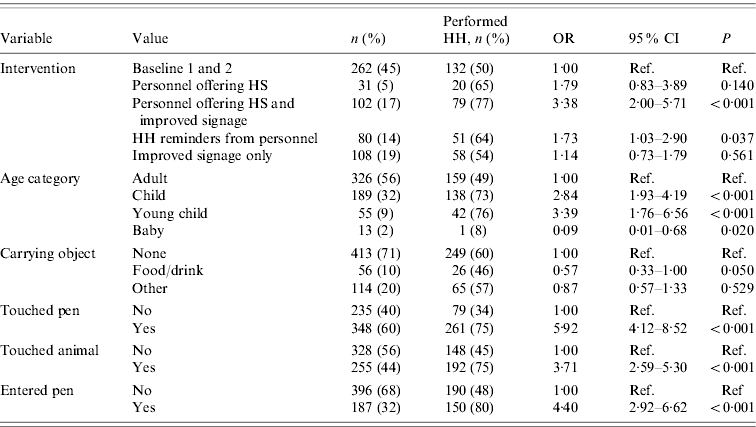
HH, Hand hygiene; OR, odds ratio; CI, confidence interval; Ref., referent; HS, hand sanitizer.
* Including the use of water alone, soap and water, or hand sanitizer for cleaning the hands.
Table 3. Multivariable logistic regression analysis of factors associated with performing hand hygieneFootnote * during a visit to a petting zoo (N=583)
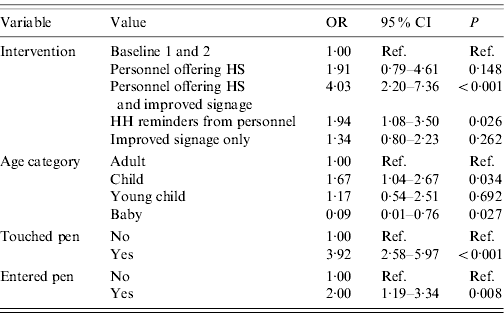
OR, Odds ratio; CI, confidence interval; Ref., referent; HS, hand sanitizer; HH, hand hygiene.
* Including the use of water alone, soap and water, or hand sanitizer for cleaning the hands.
Subjectively, older children appeared to perform hand hygiene voluntarily, although it was not possible to determine if they were being verbally prompted. Many children seemed to follow the example of other children and adults around them. Although data regarding duration of hand washing or rubbing were not recorded, subjectively it appeared that pre-teens spent more time washing their hands than teenagers. The step stool at the sink was used consistently by children to help reach the tap.
DISCUSSION
The observed hand hygiene compliance rate (58%) is consistent with the upper end of the range of hand hygiene compliance at petting zoos and similar venues reported in other studies [Reference McMillian1, Reference Weese20]. One of these studies, which used unannounced direct observation of visitors to 36 petting zoos, found that the presence of a hand hygiene station on an exit route, the presence of hand hygiene reminder signs and availability of running water were all positively associated with hand hygiene compliance [Reference Weese20]. These combined results suggest that having a well-designed petting zoo that follows recommended guidelines can result in relatively high hand hygiene compliance. The one-way layout of the exhibit may have also contributed to the relatively high baseline compliance (50%). However, the findings of this study still indicate that a large percentage of visitors did not perform what is widely accepted to be one of the most important infection control measures at petting zoos. Of visitors who had direct contact with an animal or pen, 110/377 (29%) still failed to perform hand hygiene, and the same was true for 133/206 (65%) of individuals who did not have such contact. Previous disease outbreaks associated with live animal exhibits have involved individuals who did not report direct contact with animals, and outbreak strains of E. coli and Salmonella have been found on numerous surfaces at petting zoos and in similar environments [3, Reference Friedman9, Reference Steinmuller13, Reference Crump19, 21]. It is therefore recommended that all individuals who enter an animal exhibit perform hand hygiene before leaving the area, regardless of whether they had direct contact with an animal, due to the risk of indirect transmission [2, Reference Pickering7, Reference Steinmuller13]. Based on the findings of this study, there is clearly room for improvement in hand hygiene compliance even at events designed and operated according to current recommendations, and additional educational efforts are still necessary to help increase overall compliance.
Hand sanitizer was used by 198 (34%) visitors instead of washing their hands at the sink (i.e. using running water). Line-ups for the sink may have affected this proportion, as a small number of visitors were noted to leave the line-up after standing in it for some time. It is unlikely that the personnel offering to dispense hand sanitizer had a negative effect on hand washing, as these personnel were stationed close to the exit, several metres past the sink station. Ensuring that an adequate number of hand hygiene stations (accessible to children and adults) and sufficient product are available for the number of visitors expected at a given venue may be critical to optimizing hand hygiene compliance. Alcohol-based hand sanitizers have been shown to be equally effective to soap-and-water hand washing for reducing hand contamination with coliform bacteria (such as E. coli O157:H7) in a livestock show setting [Reference Davis22], and for reducing overall bacterial load on the hands following contact with horses [Reference Traub-Dargatz23]. Waterless hand sanitizers are often more convenient to use in barns and temporary animal exhibits where access to sinks may be limited. Although some studies have reported that hand sanitizer availability reduced the risk of disease associated with animal contact, other studies have shown no protective effect [2, Reference Goode5, Reference Friedman9, Reference Steinmuller13]. It is also important to recognize that alcohol-based hand sanitizers are ineffective against some pathogens that may be encountered in a petting zoo environment (e.g. Cryptosporidium, clostridial spores), and their effectiveness may be significantly impaired when hands are visibly soiled. In these instances, hand washing with soap and water to physically remove gross contamination and alcohol-resistant pathogens is recommended [2, 6]. The use of water alone by 11 individuals demonstrates a need for public education regarding the relative ineffectiveness of this practice as a means of hand hygiene compared to washing with soap and water or using hand sanitizer.
The finding that children had better compliance with hand hygiene than adults is consistent with the findings in at least one other study [Reference McMillian1]. This may be due to increased awareness of the need for hand hygiene among school-aged children if there is growing use and emphasis on hand hygiene in schools, or due to parents instructing their children to perform hand hygiene after visiting the exhibit but failing to do so themselves. While healthy adults are generally at lower risk of infection than children, it is still important for parents and guardians to perform hand hygiene, as indirect transmission may result from contamination of their own hands followed by close contact with their children. Adults have also commonly been involved in outbreaks of disease associated with animal exhibits [Reference Crump19, 21, Reference David24]. Young children were not significantly more likely to perform hand hygiene than adults. The reason for this may in part be due to the inability of children of this age to access or use the hand hygiene stations without assistance from an adult, as some were not tall enough to reach the hand sanitizer bottles on the tables, or the tap controls at the sink (despite the presence of the step stool), on their own. A negative association was found between hand hygiene and being a baby. Thirteen babies were included in the study, only one of which was noted to have her hands washed or sanitized by the accompanying adult, while one other baby was observed touching a pen railing, and another entered a pen. Infants aged <2 years are less likely to benefit from briefly seeing and contacting animals in a petting zoo compared to older children who are much more cognisant of and responsive to the experience. The cost-benefit for a baby in terms of the risk of infectious disease transmission from either direct contact with the petting zoo environment or animals, or indirect contact via the person accompanying the baby, is less easily justified.
This preliminary study is the first to demonstrate the positive impact of a hand hygiene intervention at a petting zoo. Based on the final multivariable model (Table 3), the most effective hand hygiene intervention was a combination of improved signage and having personnel stationed along the exit route from the exhibit actively dispensing hand sanitizer. Neither the increased signage alone nor personnel offering hand sanitizer alone had a significant effect on hand hygiene compliance, although it is important to note that a relatively small number of individuals (n=31) visited the petting zoo during the time period where personnel offering hand sanitizer was the sole intervention. Therefore, there may have been insufficient power to identify a statistically significant effect. The other intervention that had a significant effect was having personnel reminding visitors to perform hand hygiene before leaving. These findings suggest that active interventions, rather than passive interventions such as increased or more prominent signage, are more effective for increasing hand hygiene compliance. Active interventions may be more likely to be noticed, more difficult to ignore or may be taken more seriously. Based on this, having designated personnel to supervise the hand hygiene area at an animal exhibit and provide verbal reminders to visitors to perform hand hygiene could be considered an important safety measure, just as having personnel to supervise animal areas is considered important for the safety of visitors (and animals).
Use of indirect video surveillance for observation of hand hygiene practices at the petting zoo had several advantages. It allowed observation and analysis of almost all visitors during the selected periods, thereby reducing observer bias, which can occur when only a few individuals from a crowd can be observed at a time. It also significantly reduced (or possibly eliminated) any Hawthorne effect, whereby persons who are aware that they are being observed may be more likely to alter their behaviour [Reference Dohoo, Martin and Stryhn25], which in this case would have likely resulted in an inflated compliance rate. Although video surveillance has been used previously to assess hand hygiene compliance in other settings such as the food industry [Reference Chapman26] and healthcare facilities [Reference Davis27], this is the first report of its use at a live animal exhibit. This was also the first study in which both interaction with the petting zoo environment and hand hygiene behaviour were recorded for each individual, thus permitting differentiation of actions by individuals who were shown to have contact with animals and animal pens from the actions of individuals who entered the exhibit but did not have such contact. Limitations of this observation technique included difficulty with identifying subtle actions which may have resulted in direct contact with animals or their pens, particularly during very busy periods when the view of some individuals was obscured by crowding. However, this same problem can occur when direct observation is used.
The study was limited to observations made at a single petting zoo on a single day. This resulted in one of the intervention periods including a much smaller number of visitors compared to the other intervention periods due to the time of day. The original intention was to repeat the video observation at the petting zoo the following day, implementing the interventions at different times, in order to minimize this effect. Unfortunately, due to technical problems data from the second day of the event were not available for analysis.
Despite the availability of guidelines to help reduce zoonotic disease risks associated with live animal exhibits, implementation of these recommendations is still poor in many facilities [Reference Heuvelink15, Reference Weese20]. Despite the relatively small sample size, this preliminary study provides evidence that different hand hygiene interventions can have a positive impact on hand hygiene compliance among visitors. Additional studies, on a larger scale and at multiple venues, are needed to confirm these findings and to help pinpoint the key interventions that are of the most benefit. In this study, interventions involving active reminders from personnel to perform hand hygiene were the most effective at increasing hand hygiene compliance.
The risk of infectious disease transmission between animals and people in any setting can never be completely eliminated. However, by increasing adherence to management and safety recommendations and increasing hand hygiene compliance among visitors at public animal exhibits the risk can be reduced. This will allow these exhibits to continue to play their role in educating the public about animals and animal husbandry and promoting compassion towards different animal species.
ACKNOWLEDGEMENTS
The authors thank Brittany Foster and Kyle Runeckles for assistance with the coding of the video footage, and Dr David Pearl for discussions concerning possible statistical analyses.
DECLARATION OF INTEREST
None.



