





1. Introduction
Browning, Sofos, and Teräväinen [Reference Browning, Sofos and Teräväinen1] recently studied the average behavior of arithmetic functions at random polynomials. They proved averaged versions of the Bateman–Horn conjecture, the polynomial Chowla conjecture, and the integral Hasse principle for norm-form equations. The fundamental tool in their work links equidistribution of an arithmetic function in arithmetic progressions to its values over almost all polynomials. In this paper, we extend this framework to random binary forms and obtain analogous results. Notably, we prove the rational Hasse principle for $100\%$
of norm-form equations. To rigorously describe the proportion of a certain class of binary forms, we will first define combinatorial cubes.
$100\%$
of norm-form equations. To rigorously describe the proportion of a certain class of binary forms, we will first define combinatorial cubes.
Definition 1.1 (Combinatorial cube). Let $d \in {\mathbb{Z}}_{\geqslant 1}$
and
$d \in {\mathbb{Z}}_{\geqslant 1}$
and $H \in {\mathbb{R}}_{\geqslant 1}$
. For any index set
$H \in {\mathbb{R}}_{\geqslant 1}$
. For any index set $\mathscr{E} \subset \{0,\ldots ,d\}$
and any integers
$\mathscr{E} \subset \{0,\ldots ,d\}$
and any integers $\alpha _e \in [{-}H, H]$
for
$\alpha _e \in [{-}H, H]$
for $e \in \mathscr{E}$
, we call the set
$e \in \mathscr{E}$
, we call the set
 \begin{align*}\mathscr{C} = \mathscr{C}\kern1.5pt(H) = \left \{ (c_0, \ldots , c_d) \in ({\mathbb{Z}} \cap [{-}H, H])^{d+1}\,:\, c_e = \alpha _e, \forall \, e \in \mathscr{E}\, \right \}\end{align*}
a combinatorial cube of side length $H$
and dimension
$H$
and dimension $d + 1 - \# \mathscr{E}$
. We call
$d + 1 - \# \mathscr{E}$
. We call $c_d$
the constant coefficient of an element
$c_d$
the constant coefficient of an element $(c_0, \ldots , c_d) \in \mathscr{C}$
. Given a combinatorial cube
$(c_0, \ldots , c_d) \in \mathscr{C}$
. Given a combinatorial cube $\mathscr{C}$
, we say a binary form
$\mathscr{C}$
, we say a binary form
 \begin{align*}\sum _{i=0}^d c_i x^i y^{d-i}\end{align*}
has its coefficients in $\mathscr{C}$
if
$\mathscr{C}$
if $(c_0, \ldots , c_d) \in \mathscr{C}$
.
$(c_0, \ldots , c_d) \in \mathscr{C}$
.
For example, fixing $c_0=1$
and allowing
$c_0=1$
and allowing $c_1,\ldots ,c_d$
to vary over
$c_1,\ldots ,c_d$
to vary over ${\mathbb{Z}} \cap [{-}H,H]$
gives a combinatorial cube of dimension
${\mathbb{Z}} \cap [{-}H,H]$
gives a combinatorial cube of dimension $d$
.
$d$
.
1.1. Liouville function and von Mangoldt function on random binary forms
Let $\lambda$
denote the Liouville function, which we extend to all integers by setting
$\lambda$
denote the Liouville function, which we extend to all integers by setting $\lambda (0) = 0$
and
$\lambda (0) = 0$
and $\lambda ({-}n) = \lambda (n)$
for
$\lambda ({-}n) = \lambda (n)$
for $n \gt 0$
. The polynomial Chowla conjecture [Reference Chowla2] states that, for any
$n \gt 0$
. The polynomial Chowla conjecture [Reference Chowla2] states that, for any $f \in \mathbb{Z}[t]$
not of the form
$f \in \mathbb{Z}[t]$
not of the form $cg(t)^2$
with
$cg(t)^2$
with $c \in \mathbb{R}$
and
$c \in \mathbb{R}$
and $g \in \mathbb{R}[t]$
, we have
$g \in \mathbb{R}[t]$
, we have
 \begin{align*}\sum _{n \leqslant x} \lambda (\kern1.3pt f(n)) = o(x).\end{align*}
Recent progress has been made for certain special classes of polynomials [Reference Tao3–Reference Tao and Teräväinen5]. In [Reference Browning, Sofos and Teräväinen1, Theorem 1.5], Browning, Sofos, and Teräväinen proved the polynomial Chowla conjecture for almost all polynomials, improving on a qualitative result obtained by Teräväinen [Reference Teräväinen6, Theorem 2.11].
Here, instead of polynomials, we investigate the behavior of the Liouville function at random binary forms with integer coefficients.
Theorem 1.2.
Let $d \geqslant 1, A \geqslant 1$
and
$d \geqslant 1, A \geqslant 1$
and $0 \lt c \lt 5/(31d)$
be fixed. There exists a constant
$0 \lt c \lt 5/(31d)$
be fixed. There exists a constant $H_0(d,A,c)$
such that the following holds for any
$H_0(d,A,c)$
such that the following holds for any $H \geqslant H_0(d,A,c)$
. Let
$H \geqslant H_0(d,A,c)$
. Let $\mathscr{C} \subset {\mathbb{Z}}^{d+1}$
be a combinatorial cube of side length
$\mathscr{C} \subset {\mathbb{Z}}^{d+1}$
be a combinatorial cube of side length $H$
and dimension at least
$H$
and dimension at least $2$
. Then, for all but at most
$2$
. Then, for all but at most $\#\mathscr{C} / ({\log} \,H)^A$
degree
$\#\mathscr{C} / ({\log} \,H)^A$
degree $d$
binary forms
$d$
binary forms $g \in {\mathbb{Z}}[s,t]$
with coefficients in
$g \in {\mathbb{Z}}[s,t]$
with coefficients in $\mathscr{C}$
, we have
$\mathscr{C}$
, we have
 \begin{align*}\sup _{x \in [H^c, 2H^c]} \, \frac {1}{x^2} \ \Bigg | \sum _{u, v \leqslant x} \lambda (g(u,v)) \Bigg | \leqslant ({\log} \,H)^{-A}.\end{align*}
Let $\Lambda$
denote the von Mangoldt function, which we extend to all integers by setting
$\Lambda$
denote the von Mangoldt function, which we extend to all integers by setting $\Lambda (0) = 0$
and
$\Lambda (0) = 0$
and $\Lambda ({-}n) = \Lambda (n)$
for
$\Lambda ({-}n) = \Lambda (n)$
for $n \gt 0$
. The Bateman–Horn conjecture predicts an asymptotic for simultaneous prime values of a tuple of irreducible polynomials, with the leading constant given by the corresponding product of local densities. In a single variable, it remains largely unresolved, with the sole exception being the case of linear polynomials, which reduces to Dirichlet’s theorem on primes in arithmetic progressions. Consequently, much of the progress has been directed toward addressing analogous problems for polynomials in multiple variables. For
$n \gt 0$
. The Bateman–Horn conjecture predicts an asymptotic for simultaneous prime values of a tuple of irreducible polynomials, with the leading constant given by the corresponding product of local densities. In a single variable, it remains largely unresolved, with the sole exception being the case of linear polynomials, which reduces to Dirichlet’s theorem on primes in arithmetic progressions. Consequently, much of the progress has been directed toward addressing analogous problems for polynomials in multiple variables. For $n = 2$
, significant breakthroughs include Iwaniec’s work [Reference Iwaniec7] on quadratic polynomials, Friedlander and Iwaniec’s results [Reference Friedlander and Iwaniec8] for
$n = 2$
, significant breakthroughs include Iwaniec’s work [Reference Iwaniec7] on quadratic polynomials, Friedlander and Iwaniec’s results [Reference Friedlander and Iwaniec8] for $x_1^2 + x_2^4$
, Heath-Brown’s work [Reference Heath-Brown9] on the cubic form
$x_1^2 + x_2^4$
, Heath-Brown’s work [Reference Heath-Brown9] on the cubic form $x_1^3 + 2x_2^3$
, Heath-Brown and Moroz’s results [Reference Heath-Brown and Moroz10] on binary cubic forms, and the recent contribution by Heath-Brown and Li [Reference Heath-Brown and Li11] concerning
$x_1^3 + 2x_2^3$
, Heath-Brown and Moroz’s results [Reference Heath-Brown and Moroz10] on binary cubic forms, and the recent contribution by Heath-Brown and Li [Reference Heath-Brown and Li11] concerning $x_1^2 + x_2^4$
with
$x_1^2 + x_2^4$
with $x_2$
prime. Maynard [Reference Maynard12] generalized the results of [Reference Friedlander and Iwaniec8] and [Reference Heath-Brown9] to incomplete norm forms.
$x_2$
prime. Maynard [Reference Maynard12] generalized the results of [Reference Friedlander and Iwaniec8] and [Reference Heath-Brown9] to incomplete norm forms.
We prove the following averaged form of the Bateman–Horn conjecture on the behavior of the von Mangoldt function on binary forms.
Theorem 1.3.
Fix $d, A, r \geqslant 1$
and
$d, A, r \geqslant 1$
and $0 \lt c \lt 5/(31d)$
. There exists
$0 \lt c \lt 5/(31d)$
. There exists $H_0=H_0(d, A, c, r)$
such that the following holds for any
$H_0=H_0(d, A, c, r)$
such that the following holds for any $H \geqslant H_0$
. Let
$H \geqslant H_0$
. Let $\mathscr{C} \subset \mathbb{Z}^{d+1}$
be a combinatorial cube of side length
$\mathscr{C} \subset \mathbb{Z}^{d+1}$
be a combinatorial cube of side length $H$
and dimension at least
$H$
and dimension at least $2$
, such that the constant coefficient is not fixed to be
$2$
, such that the constant coefficient is not fixed to be $0$
. Then, for all but at most
$0$
. Then, for all but at most $(\#\mathscr{C})^r / ({\log} \,H)^A$ $r$
-tuples of binary forms
$r$
-tuples of binary forms $g_1, \ldots , g_r \in \mathbb{Z}[s, t]$
having degrees
$g_1, \ldots , g_r \in \mathbb{Z}[s, t]$
having degrees $\leqslant d$
and coefficients in
$\leqslant d$
and coefficients in $\mathscr{C}$
, we have
$\mathscr{C}$
, we have
 \begin{align*} \sup _{x \in [H^c, 2H^c]} \frac {1}{x^2} \left | \sum _{m, n \leqslant x} \Lambda (g_1(m, n)) \cdots \Lambda (g_r(m, n)) - x^2\mathfrak{S}_{g_1, \ldots , g_r}(x) \right | \leqslant ({\log} \,H)^{-A}, \end{align*}
where
 \begin{align*} \mathfrak{S}_{g_1, \ldots , g_r}(x) = \prod _{p \leqslant \exp (\sqrt {\log x})} \left ( 1 - \frac {1}{p} \right )^{-r} \left ( 1 - \frac {\#\{(u, v) \in \mathbb{F}_p^2 \,:\, g_1(u, v) \cdots g_r(u, v) = 0 \}}{p^2} \right ). \end{align*}
Remark 1.4.
When the number of variables $n$
is sufficiently large with respect to the degree
$n$
is sufficiently large with respect to the degree $d$
of the polynomial, the Hardy–Littlewood circle method becomes particularly useful. Destagnol and Sofos showed in [
Reference Destagnol and Sofos13
] when
$d$
of the polynomial, the Hardy–Littlewood circle method becomes particularly useful. Destagnol and Sofos showed in [
Reference Destagnol and Sofos13
] when $n \gt 2^{d-1}(d-1)$
, the Bateman–Horn conjecture is true for non-singular forms in
$n \gt 2^{d-1}(d-1)$
, the Bateman–Horn conjecture is true for non-singular forms in $n$
variables. In [
Reference Destagnol and Sofos14
], they showed that when
$n$
variables. In [
Reference Destagnol and Sofos14
], they showed that when $n \gt 2^d(d-1)$
the
$n \gt 2^d(d-1)$
the $n$
-form Chowla conjecture is true.
$n$
-form Chowla conjecture is true.
1.2. Rational Hasse principle for random Châtelet varieties
Let $K/{\mathbb{Q}}$
be a finite extension of degree
$K/{\mathbb{Q}}$
be a finite extension of degree $e \geqslant 2$
and fix a
$e \geqslant 2$
and fix a $\mathbb{Z}$
-basis
$\mathbb{Z}$
-basis $\boldsymbol{\omega }=\{\omega _1, \ldots , \omega _e\}$
for
$\boldsymbol{\omega }=\{\omega _1, \ldots , \omega _e\}$
for $\mathscr{O}_K$
, the ring of integers of
$\mathscr{O}_K$
, the ring of integers of $K$
. We define the norm form associated with this basis by
$K$
. We define the norm form associated with this basis by
 \begin{eqnarray*} \mathbf{N}_K(\mathbf{y}) = \mathbf{N}_K(y_1, \ldots , y_e) = \mathrm{Norm}_{K/{\mathbb{Q}}}(y_1 \omega _1 + \ldots + y_e\omega _e). \end{eqnarray*}
Let $f(t)$
be a polynomial with integer coefficients. The Châtelet variety
$f(t)$
be a polynomial with integer coefficients. The Châtelet variety $X_{K, f}$
is the affine variety
$X_{K, f}$
is the affine variety $X \subset \mathbb{A}_{\mathbb{Q}}^{e + 1}$
defined by the equation
$X \subset \mathbb{A}_{\mathbb{Q}}^{e + 1}$
defined by the equation
 \begin{eqnarray} \mathbf{N}_K(\mathbf{y}) = f(t) \neq 0. \end{eqnarray}
It is equipped with a dominant morphism $\pi \,:\, X \rightarrow \mathbb{A}_{\mathbb{Q}}^1$
. The basis
$\pi \,:\, X \rightarrow \mathbb{A}_{\mathbb{Q}}^1$
. The basis $\boldsymbol{\omega }$
is fixed throughout, and we suppress it from the notation; a different
$\boldsymbol{\omega }$
is fixed throughout, and we suppress it from the notation; a different $\mathbb{Z}$
-basis gives a
$\mathbb{Z}$
-basis gives a $\mathbb{Q}$
-isomorphic affine variety. Since we will order coefficient vectors by height, we emphasize that the height function on
$\mathbb{Q}$
-isomorphic affine variety. Since we will order coefficient vectors by height, we emphasize that the height function on $\mathbb{A}_{\mathbb{Q}}^{e+1}$
implicitly depends on
$\mathbb{A}_{\mathbb{Q}}^{e+1}$
implicitly depends on $\boldsymbol{\omega }$
, but our results are insensitive to this choice as the basis remains fixed.
$\boldsymbol{\omega }$
, but our results are insensitive to this choice as the basis remains fixed.
Let $ X^c$
be a smooth, projective model associated to
$ X^c$
be a smooth, projective model associated to $ X$
. It is well known that such models may fail to satisfy the Hasse principle or weak approximation. For instance, as observed by Coray (see [Reference Colliot-Thélène and Salberger15, Eq. (8.2)]), one may take
$ X$
. It is well known that such models may fail to satisfy the Hasse principle or weak approximation. For instance, as observed by Coray (see [Reference Colliot-Thélène and Salberger15, Eq. (8.2)]), one may take $ f(t) = t(t - 1)$
and consider the cubic field extension
$ f(t) = t(t - 1)$
and consider the cubic field extension $ K = \mathbb{Q}(\theta )$
, where
$ K = \mathbb{Q}(\theta )$
, where $ \theta$
is a root of the irreducible polynomial
$ \theta$
is a root of the irreducible polynomial $ y^3 - 7y^2 + 14y - 7$
. In this setting, the rational points
$ y^3 - 7y^2 + 14y - 7$
. In this setting, the rational points $ X^c(\mathbb{Q})$
are not dense in the set of 7-adic points
$ X^c(\mathbb{Q})$
are not dense in the set of 7-adic points $ X^c(\mathbb{Q}_7)$
. Nevertheless, a conjecture of Colliot-Thélène [Reference Colliot-Thélène16] proposes that all such failures of the Hasse principle for
$ X^c(\mathbb{Q}_7)$
. Nevertheless, a conjecture of Colliot-Thélène [Reference Colliot-Thélène16] proposes that all such failures of the Hasse principle for $ X^c$
can be explained via the Brauer–Manin obstruction. Colliot-Thélène’s conjecture implies that given a natural ordering of the coefficients of
$ X^c$
can be explained via the Brauer–Manin obstruction. Colliot-Thélène’s conjecture implies that given a natural ordering of the coefficients of $f$
, the Hasse principle holds with probability
$f$
, the Hasse principle holds with probability $1$
. Browning and Matthiesen [Reference Browning and Matthiesen17] proved Colliot-Thélène’s conjecture when
$1$
. Browning and Matthiesen [Reference Browning and Matthiesen17] proved Colliot-Thélène’s conjecture when $f(t)$
is a product of linear polynomials all defined over
$f(t)$
is a product of linear polynomials all defined over $\mathbb{Q}$
, that the Brauer–Manin obstruction is the only obstruction to the Hasse principle and weak approximation.
$\mathbb{Q}$
, that the Brauer–Manin obstruction is the only obstruction to the Hasse principle and weak approximation.
Colliot-Thélène’s conjecture extends to more general arithmetic situations, where the base field is a number field $ k$
. Progress has been made in verifying this conjecture in various settings, often under specific hypotheses on the extension
$ k$
. Progress has been made in verifying this conjecture in various settings, often under specific hypotheses on the extension $ K/k$
and the structure of
$ K/k$
and the structure of $ f(t)$
. For example, the case of Châtelet surfaces, where
$ f(t)$
. For example, the case of Châtelet surfaces, where $ [K \,:\, k] = 2$
and
$ [K \,:\, k] = 2$
and $ \deg (f(t)) \leqslant 4$
, has been proved through the work of Colliot-Thélène, Sansuc, and Swinnerton-Dyer [Reference Colliot-Thélène, Sansuc and Swinnerton-Dyer18, Reference Colliot-Thélène, Sansuc and Swinnerton-Dyer19]. Singular cubic hypersurfaces with
$ \deg (f(t)) \leqslant 4$
, has been proved through the work of Colliot-Thélène, Sansuc, and Swinnerton-Dyer [Reference Colliot-Thélène, Sansuc and Swinnerton-Dyer18, Reference Colliot-Thélène, Sansuc and Swinnerton-Dyer19]. Singular cubic hypersurfaces with $ [K \,:\, k] = 3$
and
$ [K \,:\, k] = 3$
and $ \deg (f(t)) \leqslant 3$
have also been treated in work by Colliot-Thélène and Salberger [Reference Colliot-Thélène and Salberger15]. Further results include situations where the extension
$ \deg (f(t)) \leqslant 3$
have also been treated in work by Colliot-Thélène and Salberger [Reference Colliot-Thélène and Salberger15]. Further results include situations where the extension $ K/k$
is arbitrary and
$ K/k$
is arbitrary and $ f(t)$
has at most two roots in
$ f(t)$
has at most two roots in $ k$
(see [Reference Colliot-Thélène, Harari and Skorobogatov20–Reference Jones23]), as well as the case of an irreducible quadratic
$ k$
(see [Reference Colliot-Thélène, Harari and Skorobogatov20–Reference Jones23]), as well as the case of an irreducible quadratic $ f(t)$
defined over
$ f(t)$
defined over $ \mathbb{Q}$
with
$ \mathbb{Q}$
with $ K/\mathbb{Q}$
arbitrary (see [Reference Browning and Heath-Brown24, Reference Derenthal, Smeets and Wei25]). Várilly-Alvarado and Viray [Reference Várilly-Alvarado and Viray26] studied when
$ K/\mathbb{Q}$
arbitrary (see [Reference Browning and Heath-Brown24, Reference Derenthal, Smeets and Wei25]). Várilly-Alvarado and Viray [Reference Várilly-Alvarado and Viray26] studied when $K/k$
is a cyclic extension of prime degree
$K/k$
is a cyclic extension of prime degree $p$
and
$p$
and $P(x)$
is a separable polynomial of degree
$P(x)$
is a separable polynomial of degree $2p$
. Moreover, assuming Schinzel’s hypothesis, Colliot-Thélène, Skorobogatov, and Swinnerton-Dyer [Reference Colliot-Thélène, Skorobogatov and Swinnerton-Dyer27] have verified Colliot-Thélène’s conjecture for cyclic extensions
$2p$
. Moreover, assuming Schinzel’s hypothesis, Colliot-Thélène, Skorobogatov, and Swinnerton-Dyer [Reference Colliot-Thélène, Skorobogatov and Swinnerton-Dyer27] have verified Colliot-Thélène’s conjecture for cyclic extensions $ K/k$
and general
$ K/k$
and general $ f(t)$
.
$ f(t)$
.
In [Reference Browning, Sofos and Teräväinen1, Theorem 1.6], Browning, Sofos, and Teräväinen proved that the Châtelet varieties $X_{K, f}$
satisfy the integral Hasse principle for 100% of polynomials
$X_{K, f}$
satisfy the integral Hasse principle for 100% of polynomials $f \in {\mathbb{Z}}[t]$
of degree
$f \in {\mathbb{Z}}[t]$
of degree $d$
, with positive leading coefficients. Since the Châtelet varieties are not homogeneous, the above result does not guarantee the rational Hasse principle with probability
$d$
, with positive leading coefficients. Since the Châtelet varieties are not homogeneous, the above result does not guarantee the rational Hasse principle with probability $1$
. For the rational Hasse principle, Skorobogatov and Sofos [Reference Skorobogatov and Sofos28, Theorem 1.3] have proved the Châtelet varieties
$1$
. For the rational Hasse principle, Skorobogatov and Sofos [Reference Skorobogatov and Sofos28, Theorem 1.3] have proved the Châtelet varieties $X_{K, f}$
satisfy the rational Hasse principle for a positive proportion of polynomials
$X_{K, f}$
satisfy the rational Hasse principle for a positive proportion of polynomials $f \in {\mathbb{Z}}[t]$
of degree
$f \in {\mathbb{Z}}[t]$
of degree $d$
.
$d$
.
We study the rational points on the Châtelet variety
 \begin{eqnarray*} \mathbf{N}_K(y_1, \ldots , y_e) = \sum _{0 \leqslant i \leqslant d} c_i t^i. \end{eqnarray*}
We write $t = u/v$
with
$t = u/v$
with $u, v \in {\mathbb{Z}}$
and
$u, v \in {\mathbb{Z}}$
and $v \neq 0$
, then the equation becomes
$v \neq 0$
, then the equation becomes
 \begin{eqnarray*} \mathbf{N}_K(y_1, \ldots , y_e) v^d = \sum _{0 \leqslant i \leqslant d} c_i u^i v^{d-i}. \end{eqnarray*}
Inspired by [Reference Várilly-Alvarado and Viray26], if we assume that $d$
is a multiple of
$d$
is a multiple of $e = \deg (K / {\mathbb{Q}})$
, say
$e = \deg (K / {\mathbb{Q}})$
, say $d = be$
, then we get
$d = be$
, then we get
 \begin{eqnarray} \mathbf{N}_K(x_1, \ldots , x_e) = \sum _{0 \leqslant i \leqslant d} c_i u^i v^{d-i}, \end{eqnarray}
where $x_i = y_i v^b$
. By homogeneity, (1.1) has a rational solution if and only if (1.2) has an integer solution with
$x_i = y_i v^b$
. By homogeneity, (1.1) has a rational solution if and only if (1.2) has an integer solution with $v \neq 0$
, assuming
$v \neq 0$
, assuming $e|d$
.
$e|d$
.
Let $d \geqslant 2$
with
$d \geqslant 2$
with $e | d$
and
$e | d$
and ${\mathbf{c}} = (c_0, \ldots , c_d) \in {\mathbb{Z}}^{d+1}$
. Let
${\mathbf{c}} = (c_0, \ldots , c_d) \in {\mathbb{Z}}^{d+1}$
. Let $\mathbf{u} = (u_1, u_2)$
and write
$\mathbf{u} = (u_1, u_2)$
and write
 \begin{align*}g_{\mathbf{c}}(\mathbf{u}) = c_0u_1^d + c_1 u_1^{d-1}u_2 + \ldots + c_d u_2^d.\end{align*}
For fixed $K / {\mathbb{Q}}$
, we consider the variety
$K / {\mathbb{Q}}$
, we consider the variety $X_{K, g_{\mathbf{c}}}$
defined by the equation
$X_{K, g_{\mathbf{c}}}$
defined by the equation
 \begin{eqnarray} \mathbf{N}_K(\mathbf{x}) = g_{{\mathbf{c}}}(\mathbf{u}) \neq 0. \end{eqnarray}
For a vector $\mathbf{a} = (a_1, \ldots , a_n) \in {\mathbb{R}}^n$
, put
$\mathbf{a} = (a_1, \ldots , a_n) \in {\mathbb{R}}^n$
, put
 \begin{align*}|\mathbf{a}| = \max (|a_1|, \ldots , |a_n|).\end{align*}
Equation (1.3) is said to be locally solvable if it is solvable over ${\mathbb{Q}}_p$
and
${\mathbb{Q}}_p$
and $\mathbb{R}$
. We now introduce a few definitions for the sets of vectors
$\mathbb{R}$
. We now introduce a few definitions for the sets of vectors ${\mathbf{c}} \in {\mathbb{Z}}^{d+1}$
such that the solutions of (1.3) have the corresponding properties. We define
${\mathbf{c}} \in {\mathbb{Z}}^{d+1}$
such that the solutions of (1.3) have the corresponding properties. We define
 \begin{align} S(H) & = \{{\mathbf{c}} \in {\mathbb{Z}}^{d+1}\,:\, |{\mathbf{c}}| \leqslant H, \, c_0 \cdot c_d \neq 0 \}, \nonumber\\ S^{\mathrm{loc}}(H) & = \{{\mathbf{c}} \in S(H)\,:\, \text{(1.3) is locally solvable} \}, \nonumber\\ S^{\mathrm{glob}}(H) & = \{{\mathbf{c}} \in S^{\mathrm{loc}}(H)\,:\, \text{(1.3) has a rational solution}\}. \end{align}
Theorem 1.5.
Let $d$
be a positive integer and
$d$
be a positive integer and $K$
be any finite extension of
$K$
be any finite extension of $\mathbb{Q}$
of degree
$\mathbb{Q}$
of degree $e$
with
$e$
with $e|d$
. Then we have
$e|d$
. Then we have
 \begin{align*}\frac {\# S^{\mathrm{glob}}(H)}{\# S^{\mathrm{loc}}(H)} = 1 + O_{d,K,A} \big ( ({\log} \,H)^{-A} \big ),\end{align*}
as $H \rightarrow \infty$
.
$H \rightarrow \infty$
.
In Proposition 4.1, we shall prove a stronger version of Theorem1.5, in which we can show that for all but $O(H^{d+1} / \big ({\log} \,H)^A\big )$
choices of coefficient vectors
$O(H^{d+1} / \big ({\log} \,H)^A\big )$
choices of coefficient vectors ${\mathbf{c}} \in S^{\mathrm{loc}}(H)$
, the Equation (1.3) has at least
${\mathbf{c}} \in S^{\mathrm{loc}}(H)$
, the Equation (1.3) has at least $H^{\Delta }$
rational solutions, where
$H^{\Delta }$
rational solutions, where $\Delta$
can be any positive real number less than
$\Delta$
can be any positive real number less than $\frac {1}{de(e+3)}$
.
$\frac {1}{de(e+3)}$
.
2. Equidistribution controls sums for almost all binary forms
This section extends the main technical tool from [Reference Browning, Sofos and Teräväinen1, Theorem 2.2], demonstrating that controlling averages of a general arithmetic function over values of random polynomials can be effectively achieved when the function is well-distributed in arithmetic progressions. We generalize this result from polynomials to binary forms.
For $x \gt 1$
, we define
$x \gt 1$
, we define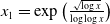 $x_1 = \exp \big (\frac {\sqrt {\log x}}{\log \log x}\big )$
. For
$x_1 = \exp \big (\frac {\sqrt {\log x}}{\log \log x}\big )$
. For $B \in {\mathbb{N}}$
, let
$B \in {\mathbb{N}}$
, let $\tau _B(n)$
denote the
$\tau _B(n)$
denote the $B$
-fold divisor function.
$B$
-fold divisor function.
Theorem 2.1.
Let $A \geqslant 1, \varepsilon \gt 0$
and
$A \geqslant 1, \varepsilon \gt 0$
and $0 \leqslant k \lt l \leqslant d$
be integers. Let
$0 \leqslant k \lt l \leqslant d$
be integers. Let $H \geqslant H_0(A, d)$
,
$H \geqslant H_0(A, d)$
,
 \begin{align*}\exp \big ( ({\log} \,H)^{1/100} \big ) \leqslant x \leqslant H^{1/(2d)}.\end{align*}
Let $F\,:\, {\mathbb{Z}} \rightarrow \mathbb{C}$
be a function such that
$F\,:\, {\mathbb{Z}} \rightarrow \mathbb{C}$
be a function such that
-
(1) $|F(n)| \leqslant \tau _B(|n|)$
for all
$n \in {\mathbb{Z}}$
and for some
$B \geqslant 1$
satisfying
$200B^{2d+4} \leqslant A$
;
$|F(n)| \leqslant \tau _B(|n|)$
for all
$n \in {\mathbb{Z}}$
and for some
$B \geqslant 1$
satisfying
$200B^{2d+4} \leqslant A$
; -
(2) There exists a set of prime powers
$\mathscr{Q} \subset [1, x^d] \cap {\mathbb{Z}}$
such that
and such that for any
\begin{align*}\sum _{q \in \mathscr{Q}} q^{-1/(4d)} \ll _A ({\log} \,x)^{-3(A+1)},\end{align*}
$q \leqslant x^d$
that is not a multiple of any element of
$\mathscr{Q}$
, we have
\begin{eqnarray*} \max _{\substack {1 \leqslant v \leqslant q \\ \gcd (v, q) \leqslant x_1}} \sup _{\substack {I \text{ interval} \\ |I| \gt H^{1 - \varepsilon }x^{l-k} \\ I \subset [{-}2Hx^d, 2Hx^d]}} \frac {q}{|I|} \Big | \sum _{\substack {n \in I \\ n \equiv v \, (\mathrm{mod}\, q)}} F(n) \Big | \ll ({\log} \,H)^{-40Ad^2}. \end{eqnarray*}






Then for any binary form
 \begin{align} g = \sum _{i = 0}^d c_i s^i t^{d-i} \in {\mathbb{Z}}[s,t] \end{align}
of degree $d$
with
$d$
with $c_i \in [{-}H, H] \cap {\mathbb{Z}}$
such that
$c_i \in [{-}H, H] \cap {\mathbb{Z}}$
such that $c_0 \cdot c_d \neq 0$
(that is,
$c_0 \cdot c_d \neq 0$
(that is, $(c_0,\ldots ,c_d) \in S(H)$
), and for any coefficients
$(c_0,\ldots ,c_d) \in S(H)$
), and for any coefficients $\alpha _{m,n} \in \mathbb{C}$
such that
$\alpha _{m,n} \in \mathbb{C}$
such that $|\alpha _{m,n}| \leqslant 1$
, we have
$|\alpha _{m,n}| \leqslant 1$
, we have
 \begin{align*} \sup _{\substack {x' \in [x/2, x]}} \, \sum _{|a|,|b| \leqslant H} \Big | \sum _{\substack {1 \leqslant m, n \leqslant x'}} \alpha _{m,n} F(am^kn^{d-k} + bm^ln^{d-l} + g(m, n)) \Big |^2 \ll H^2 x^4 ({\log} \,x)^{-A}. \end{align*}
2.1. Preparatory results
Lemma 2.2.
Let $q = p^e$
be a prime power and fix
$q = p^e$
be a prime power and fix $a,b,c \in {\mathbb{N}}$
. We have
$a,b,c \in {\mathbb{N}}$
. We have
 \begin{align} \# \big\{ (v_1, v_2) \in ({\mathbb{N}} \cap [1,x])^2\,:\, q | v_1^{a} v_2^{b} \big(v_1^c - v_2^c\big) \big\} \ll \frac {x^2}{q^{1 / (2\, {\max}(a,b,c))}}. \end{align}
Proof.
Let $d = \gcd (v_1, v_2)$
and
$d = \gcd (v_1, v_2)$
and $v_1 = d u_1, v_2 = d u_2$
. We have
$v_1 = d u_1, v_2 = d u_2$
. We have
 \begin{align*}v_1^a v_2^b \big(v_1^c - v_2^c\big) = d^{a+b+c} u_1^a u_2^b \big(u_1^c - u_2^c\big).\end{align*}
The left hand side of (2.2) is $\leqslant \sum _{k \geqslant 0} S_k$
, where
$\leqslant \sum _{k \geqslant 0} S_k$
, where
 \begin{align*} S_k = \sum _{\substack {d \leqslant x \\ v_p(d) = k}} \#\big\{ (u_1, u_2) \in ({\mathbb{N}} \cap [1,x/d])^2\,:\, \gcd (u_1, u_2) = 1, p^{e} | p^{k(a+b+c)} u_1^{a} u_2^{b} \big(u_1^c - u_2^c\big) \big\}. \end{align*}
When $k(a+b+c) \leqslant e$
, we denote
$k(a+b+c) \leqslant e$
, we denote $e' = e - k(a+b+c)$
. Then we know that
$e' = e - k(a+b+c)$
. Then we know that
 \begin{align*} S_k & = \sum _{\substack {d \leqslant x \\ v_p(d) = k}} \#\big\{ (u_1, u_2) \in ({\mathbb{N}} \cap [1,x/d])^2\,:\, \gcd (u_1, u_2) = 1, p^{e'} | u_1^{a} u_2^{b} \big(u_1^c - u_2^c\big) \big\}. \end{align*}
Since $\gcd (u_1,u_2) = 1$
, the three integers
$\gcd (u_1,u_2) = 1$
, the three integers $u_1^a, u_2^b$
, and
$u_1^a, u_2^b$
, and $u_1^c - u_2^c$
are pairwise coprime, and so
$u_1^c - u_2^c$
are pairwise coprime, and so $p^{e'}$
divides exactly one of them. For fixed
$p^{e'}$
divides exactly one of them. For fixed $d$
, there are at most
$d$
, there are at most $(x/d)^2 \cdot (p^{-e'/a} + p^{-e'/b})$
pairs of
$(x/d)^2 \cdot (p^{-e'/a} + p^{-e'/b})$
pairs of $(u_1, u_2)$
such that
$(u_1, u_2)$
such that $p^{e'}$
divides
$p^{e'}$
divides $u_1^a$
or
$u_1^a$
or $u_2^b$
. According to [Reference Browning, Sofos and Teräväinen1, Lemma 2.3], we have
$u_2^b$
. According to [Reference Browning, Sofos and Teräväinen1, Lemma 2.3], we have
 \begin{align*} \#\big\{ (u_1, u_2) \in ({\mathbb{N}} \cap [1,x/d])^2\,:\, \gcd (u_1, u_2) = 1, p^{e} | \big(u_1^c - u_2^c\big) \big\} \ll \frac {(x/d)^2}{p^{e' / 2c}}. \end{align*}
This yields
 \begin{align*} S_k \ll \sum _{\substack {d \leqslant x \\ v_p(d) = k}} \frac {(x/d)^2}{p^{e' / (2\, {\max}(a,b,c))}} \ll \frac {(x / p^k)^2}{p^{ (e - k(a+b+c) ) / (2\, {\max}(a,b,c))}}. \end{align*}
When $k(a+b+c) \gt e$
, we consider the trivial bound
$k(a+b+c) \gt e$
, we consider the trivial bound $S_k \leqslant (x / p^k)^2$
. By combining these two ranges of
$S_k \leqslant (x / p^k)^2$
. By combining these two ranges of $k$
, the left-hand side of (2.2) is
$k$
, the left-hand side of (2.2) is
 \begin{align*} & \ll \sum _{\substack {k \geqslant 0 \\ k(a+b+c) \leqslant e}} \frac {(x/p^k)^2}{p^{(e-k(a+b+c))/(2\, {\max} (a,b,c))}} + \sum _{\substack {k \geqslant 0 \\ k(a+b+c) \gt e}} (x/p^k)^2 \\ & \leqslant \sum _{\substack {k \geqslant 0 \\ k(a+b+c) \leqslant e}} \frac {x^2}{p^{e/(2\, {\max}(a,b,c))}} + \sum _{\substack {k \geqslant 0}} \frac {1}{p^{2k}} \cdot \frac {x^2}{p^{2e/(a+b+c)}} \\ & \ll \frac {x^2}{q^{1/(2\, {\max}(a,b,c))}} + \frac {x^2}{q^{2/(a+b+c)}} \\ & \ll \frac {x^2}{q^{1/ (2\max (a,b,c))}}. \end{align*}
Lemma 2.3.
Let $0 \leqslant k \lt l \leqslant d$
. Let
$0 \leqslant k \lt l \leqslant d$
. Let $g$
be a binary form in the form (
2.1
) of degree
$g$
be a binary form in the form (
2.1
) of degree $d$
with
$d$
with $(c_0,\ldots ,c_d)\in S(H)$
. Then for any
$(c_0,\ldots ,c_d)\in S(H)$
. Then for any $m, n \in {\mathbb{Z}}$
, we have
$m, n \in {\mathbb{Z}}$
, we have
 \begin{eqnarray*} \gcd (g(m, n), m^k n^{d-l}) \leqslant \gcd (m,n)^d \gcd (c_0,m)^k \gcd (c_d,n)^{d-l}. \end{eqnarray*}
Proof.
Let $t = \gcd (m, n)$
and
$t = \gcd (m, n)$
and $m = m_0t, n = n_0t$
. Then
$m = m_0t, n = n_0t$
. Then
 \begin{align*} \gcd \big(g(m,n), m^k n^{d-l}\big) & = t^{k+d-l} \gcd \big(t^{l-k}g(m_0,n_0), m_0^kn_0^{d-l}\big) \\ & \leqslant t^{d} \gcd \big(g(m_0,n_0), m_0^k n_0^{d-l}\big) \\ & = t^{d} \gcd (g(m_0,n_0), m_0^k) \gcd \big(g(m_0,n_0), n_0^{d-l}\big) \\ & \leqslant t^{d} \gcd (g(m_0,n_0), m_0)^k \gcd (g(m_0,n_0), n_0)^{d-l} \\ & \leqslant t^{d} \gcd (c_0, m_0)^k \gcd (c_d, n_0)^{d-l} \\ & \leqslant t^d \gcd (c_0, m)^k \gcd (c_d, n)^{d-l}. \end{align*}
Lemma 2.4.
For all $q \in {\mathbb{N}}$
,
$q \in {\mathbb{N}}$
, $z \geqslant 1$
, and
$z \geqslant 1$
, and $\alpha \geqslant 1/2$
, we have
$\alpha \geqslant 1/2$
, we have
 \begin{align*}\sum _{\substack {d | q \\ d \geqslant z}} d^{-\alpha } \ll z^{-\alpha +1/2} \exp \left( \frac {4 ({\log}(3q))^{1/2}}{({\log} \,{\log} (3q))^{3/2}} \right).\end{align*}
Proof.
Writing $d^{-\alpha } = d^{-\alpha + 1/2} \cdot d^{-1/2} \leqslant z^{-\alpha + 1/2} d^{-1/2}$
for
$d^{-\alpha } = d^{-\alpha + 1/2} \cdot d^{-1/2} \leqslant z^{-\alpha + 1/2} d^{-1/2}$
for $d \geqslant z$
, and bounding the divisor sum by the Euler product
$d \geqslant z$
, and bounding the divisor sum by the Euler product $\sum _{d \mid q} d^{-1/2} \leqslant \prod _{p \mid q}(1 - p^{-1/2})^{-1}$
via multiplicativity and the geometric series, we obtain the upper bound
$\sum _{d \mid q} d^{-1/2} \leqslant \prod _{p \mid q}(1 - p^{-1/2})^{-1}$
via multiplicativity and the geometric series, we obtain the upper bound
 \begin{align*}\sum _{\substack {d|q \\ d \geqslant z}} d^{-\alpha } \leqslant z^{-\alpha +1/2} \prod _{p | q} ( 1 - p^{-1/2} )^{-1}.\end{align*}
The remaining proof is the same as in the proof of [Reference Browning, Sofos and Teräväinen1, Lemma2.5], where this Euler-product estimate is used.
We will prove a generalization of [Reference Browning, Sofos and Teräväinen1, Lemma 2.7].
Lemma 2.5.
Let $A \gt 1, d \in {\mathbb{N}}$
and
$A \gt 1, d \in {\mathbb{N}}$
and $0 \leqslant k \lt l \leqslant d$
be fixed, and let
$0 \leqslant k \lt l \leqslant d$
be fixed, and let $x \gg _A 1$
. Let
$x \gg _A 1$
. Let $g$
be a binary form in the form (
2.1
) of degree
$g$
be a binary form in the form (
2.1
) of degree $d$
with
$d$
with $(c_0,\ldots ,c_d)\in S(x^A)$
. Define
$(c_0,\ldots ,c_d)\in S(x^A)$
. Define
 \begin{align} \mathscr{M}_A=\left \{\mathbf (\mathbf{m}, \mathbf{n}) \in ({\mathbb{N}} \cap [1,x])^4\,:\, \begin{array}{l} m_i, n_i \gt x / ({\log} \,x)^{A}, i = 1,2 \\[2pt] \gcd (m_i, n_j) \lt ({\log} \,x)^{A}, 1 \leqslant i,j \leqslant 2 \\[2pt] |n_1m_2 - n_2m_1| \gt x^2/ ({\log} \,x)^{A+1} \\[2pt] \gcd (g(m_1,n_1), m_1^k n_1^{d-l}) \lt x_2 \end{array} \right \}, \end{align}
where $x_2 = \sqrt {x_1} = \exp (\sqrt {\log x}/ (2\log \log x ))$
. Then
$x_2 = \sqrt {x_1} = \exp (\sqrt {\log x}/ (2\log \log x ))$
. Then
 \begin{eqnarray*} \#(({\mathbb{N}} \cap [1,x])^4 \setminus \mathscr{M}_A) \ll x^4 / ({\log} \,x)^A. \end{eqnarray*}
Proof.
It is sufficient to show that the set of $(n_1, n_2)$
that fail any individual property in (2.3) has size less than the claimed bound. The proof for the first two properties is identical to that presented in [Reference Browning, Sofos and Teräväinen1, Lemma 2.7].
$(n_1, n_2)$
that fail any individual property in (2.3) has size less than the claimed bound. The proof for the first two properties is identical to that presented in [Reference Browning, Sofos and Teräväinen1, Lemma 2.7].
For the third property, if we arbitrarily choose $n_1$
and
$n_1$
and $m_2$
, the number of choices of
$m_2$
, the number of choices of $n_2$
and
$n_2$
and $m_1$
is at most
$m_1$
is at most
 \begin{align*} \sum _{|t - n_1m_2| \leqslant x^2/({\log} \,x)^{A+1}} \tau (t) & \ll x^2 / ({\log} \,x)^A. \end{align*}
Hence, the total possible choices are $\ll x^4 / ({\log} \,x)^A.$
Finally, it suffices to estimate the size of pairs satisfying the second property that fail the last property. If $\gcd (g(m_1,n_1), m_1^k n_1^{d-l}) \gt x_2$
, then it follows from Lemma 2.3 that
$\gcd (g(m_1,n_1), m_1^k n_1^{d-l}) \gt x_2$
, then it follows from Lemma 2.3 that
 \begin{align*}\gcd (m_1,n_1)^d \gcd (c_0, m_1)^k \gcd (c_d, n_1)^{d-l} \gt x_2.\end{align*}
Since we assume that $\gcd (m_1, n_1) \lt ({\log} \,x)^A$
, we have
$\gcd (m_1, n_1) \lt ({\log} \,x)^A$
, we have
 \begin{align*}\gcd (c_0, m_1)^k \gcd (c_d, n_1)^{d-l} \gt x_2 / ({\log} \,x)^{Ad}.\end{align*}
This implies that
 \begin{align*}\gcd (c_0, m_1) \cdot \gcd (c_d, n_1) \gt x_2^{1/d} / ({\log} \,x)^{A}.\end{align*}
Therefore, by Lemma 2.4 and the assumption $0 \lt |c_0|, |c_d| \leqslant x^A$
, the number of tuples satisfying the second property but failing the last property is
$0 \lt |c_0|, |c_d| \leqslant x^A$
, the number of tuples satisfying the second property but failing the last property is
 \begin{align*} & \leqslant x^2 \sum _{\substack {a | c_0, b | c_d\\ {x_2}^{1/d} / ({\log} \,x)^{A} \lt a b \leqslant x}} \ \sum _{\substack {m_1, n_1 \leqslant x \\ a | m_1, b | n_1}} 1 \\ & \leqslant x^4 \, \sum _{a | c_0} \frac {1}{a} \sum _{\substack {b | c_d \\ a b \gt {x_2}^{1/d}({\log} \,x)^{-A}}} \frac {1}{b} \\ & \ll x^4 \, \sum _{a | c_0} \frac {1}{a} \left( \frac {{x_2}^{1/d}}{a ({\log} \,x)^A} \right)^{-1/2} \exp \left( \frac {4({\log} \,(3 x^A))^{1/2}}{({\log} \,{\log}(3 x^A))^{3/2}} \right) \\ & \ll x^4 \left( \frac {{x_2}^{1/d}}{({\log} \,x)^A} \right)^{-1/2} \exp \left( \frac {8({\log} \,(3 x^A))^{1/2}}{({\log} \,{\log}(3 x^A))^{3/2}} \right) \\ & \ll x^4 ({\log} \,x)^{A/2} \exp \left( \frac {8 \sqrt {A}({\log} \,x)^{1/2}}{({\log} \,\log x)^{3/2}} - \frac {1}{4d} \frac {({\log} \,x)^{1/2}}{\log \log x}\right).\\ & \ll x^4 ({\log} \,x)^{-A}. \end{align*}
We would like to recall the fact
 \begin{align} \tau _B(mn) \leqslant \tau _B(m) \tau _B(n), \end{align}
and the standard upper bound
 \begin{align} \sum _{r \leqslant R} \tau _B(r)^k \ll R({\log} \,R)^{B^k - 1}, \end{align}
for any $B \geqslant 1$
and
$B \geqslant 1$
and $k \geqslant 1$
. We will also apply [Reference Browning, Sofos and Teräväinen1, Lemma 2.8] quite often, which has shown that
$k \geqslant 1$
. We will also apply [Reference Browning, Sofos and Teräväinen1, Lemma 2.8] quite often, which has shown that
 \begin{align} \sum _{y \leqslant n \leqslant x + y} \tau _B(rn + a)^k \ll \tau _B({\gcd} (a, r))^k x ({\log} \,x)^{B^k - 1} \log \log x, \end{align}
for fixed $k \geqslant 1$
,
$k \geqslant 1$
, $A, B \geqslant 1, x \geqslant 3, y \leqslant x^A$
and
$A, B \geqslant 1, x \geqslant 3, y \leqslant x^A$
and $1 \leqslant a, r \leqslant x^A$
.
$1 \leqslant a, r \leqslant x^A$
.
2.2. Proof of Theorem 2.1
Let $x' \in [x/2, x]$
and
$x' \in [x/2, x]$
and $g \in {\mathbb{Z}}[x,y]$
be chosen so that
$g \in {\mathbb{Z}}[x,y]$
be chosen so that
 \begin{eqnarray*} \sum _{|a|,|b| \leqslant H} \Big | \sum _{\substack {1 \leqslant m, n \leqslant x'}} \alpha _{m,n} F(am^kn^{d-k} + bm^ln^{d-l} + g(m, n)) \Big |^2 \end{eqnarray*}
is maximized. Opening up the square and recalling that $|\alpha _{m, n}| \leqslant 1$
, it is sufficient to show that
$|\alpha _{m, n}| \leqslant 1$
, it is sufficient to show that
 \begin{align} \sum _{\substack {1 \leqslant m_i, n_i \leqslant x' \\ i = 1, 2}} \alpha _{m_1, n_1} \overline {\alpha }_{m_2, n_2} \sum _{\substack {|a|, |b| \leqslant H}} F(h_{a,b}(m_1, n_1)) \overline {F}(h_{a,b}(m_2,n_2)) \ll H^2 x^4 ({\log} \,x)^{-A}. \end{align}
Here
 \begin{eqnarray*} h_{a,b}(m, n) = am^kn^{d-k} + bm^ln^{d-l} + g(m, n). \end{eqnarray*}
Let $\mathscr{M} = \mathscr{M}_{3A}$
, where
$\mathscr{M} = \mathscr{M}_{3A}$
, where $\mathscr{M}_{3A}$
is defined in (2.3). We denote
$\mathscr{M}_{3A}$
is defined in (2.3). We denote
 \begin{align} \Delta = (n_1m_2)^{l-k} - (n_2m_1)^{l-k}. \end{align}
We consider separately the following two sets:
 \begin{align*} \mathscr{N} & = \{ (\mathbf{m},\mathbf{n}) \in ([1, x'] \cap {\mathbb{Z}})^4\,:\, \exists \, q \in \mathscr{Q} \text{ s.t. } q | \Delta m_1^k n_1^{d-l} \} \cap \mathscr{M}, \\ \mathscr{N}^{\kern3pt c} & = \{(\mathbf{m}, \mathbf{n}) \in ([1, x'] \cap {\mathbb{Z}})^4\} \setminus \mathscr{N}. \end{align*}
Let $v_1 = n_1m_2$
and
$v_1 = n_1m_2$
and $v_2 = n_2m_1$
. By Lemma 2.2, (2.5), Cauchy–Schwarz and the assumption
$v_2 = n_2m_1$
. By Lemma 2.2, (2.5), Cauchy–Schwarz and the assumption $\sum _{q \in \mathscr{Q}} q^{-1/(4d)} \ll ({\log} \,x)^{-3(A+1)}$
, it follows that
$\sum _{q \in \mathscr{Q}} q^{-1/(4d)} \ll ({\log} \,x)^{-3(A+1)}$
, it follows that
 \begin{align*} & \ \# \big\{ (\mathbf{m},\mathbf{n}) \in ({\mathbb{N}} \cap [1, x'])^4\,:\, \exists \, q \in \mathscr{Q} \text{ s.t. } q | \Delta m_1^k n_1^{d-l} \big\} \\ \leqslant & \ \# \big\{ (\mathbf{m},\mathbf{n}) \in ({\mathbb{N}} \cap [1, x'])^4\,:\, \exists \, q \in \mathscr{Q} \text{ s.t. } q | \Delta v_2^k v_1^{d-l} \big\} \\ \leqslant & \ \sum _{q \in \mathscr{Q}} \sum _{\substack {v_1, v_2 \leqslant x^2 \\ q | (v_1^{l-k} - v_2^{l-k}) v_2^k v_1^{d-l} }} \tau (v_1) \tau (v_2) \\ \leqslant & \ \sum _{q \in \mathscr{Q}} \Bigg( \sum _{\substack {v_1, v_2 \leqslant x^2}} \tau (v_1)^2 \tau (v_2)^2 \Bigg)^{1/2} \Bigg(\sum _{\substack {v_1, v_2 \leqslant x^2 \\ q | (v_1^{l-k} - v_2^{l-k})v_2^k v_1^{d-l}}} 1 \Bigg)^{1/2} \\ \ll & \ \sum _{q \in \mathscr{Q}} \frac {x^4 \log ^3 x}{q^{1/{(4d)}}} \ll x^4({\log} \,x)^{-3A}. \end{align*}
Combining with Lemma 2.5, we may conclude that
 \begin{align} \# \mathscr{N}^{\kern3pt c} \ll x^4 ({\log} \,x)^{-3A}. \end{align}
Contribution of $(\mathbf{m}, \mathbf{n}) \in \mathscr{N}^{\kern3pt c}$
. It follows from assumption (1) that the contribution to the left-hand side of (2.7) from
$(\mathbf{m}, \mathbf{n}) \in \mathscr{N}^{\kern3pt c}$
. It follows from assumption (1) that the contribution to the left-hand side of (2.7) from $(\mathbf{m},\mathbf{n})\in \mathscr{N}^{\kern3pt c}$
is
$(\mathbf{m},\mathbf{n})\in \mathscr{N}^{\kern3pt c}$
is
 \begin{align*} \ll \sum _{(\mathbf{m}, \mathbf{n}) \in \mathscr{N}^{\kern3pt c}} \sum _{|a|, |b| \leqslant H} \tau _B(h_{a, b}(m_1, n_1)) \tau _B(h_{a, b}(m_2, n_2)). \end{align*}
By Cauchy–Schwarz, this is
 \begin{align} \ll (\# \mathscr{N}^{\kern3pt c})^{1/2} \, \Bigg ( \sum _{\substack { |a|, |b| \leqslant H \\ 1 \leqslant m_1, m_2, n_1, n_2 \leqslant x}} \tau _B(h_{a, b}(m_1, n_1))^2 \tau _B(h_{a, b}(m_2, n_2))^2 \Bigg)^{1/2}. \end{align}
From (2.4), (2.5), (2.6), and Cauchy–Schwarz, we know
 \begin{align*} & \sum _{\substack { |a|, |b| \leqslant H \\ 1 \leqslant m_1, m_2, n_1, n_2 \leqslant x}} \tau _B(h_{a, b}(m_1, n_1))^2 \tau _B(h_{a, b}(m_2, n_2))^2 \\ & = \sum _{\substack { |a| \leqslant H \\ 1 \leqslant m_1, m_2, n_1, n_2 \leqslant x}} \sum _{|b| \leqslant H} \tau _B(h_{a, b}(m_1, n_1))^2 \tau _B(h_{a, b}(m_2, n_2))^2 \\ & \leqslant \sum _{\substack { |a| \leqslant H \\ 1 \leqslant m_1, m_2, n_1, n_2 \leqslant x}} \bigg( \sum _{|b| \leqslant H} \tau _B(h_{a, b}(m_1, n_1))^4 \bigg)^{1/2} \bigg ( \sum _{|b| \leqslant H} \tau _B(h_{a, b}(m_2, n_2))^4 \bigg )^{1/2} \\ & \ll \sum _{\substack { |a| \leqslant H \\ 1 \leqslant m_1, m_2, n_1, n_2 \leqslant x}} \big ( H ({\log} \,H)^{B^4} \tau _B\big(m_1^l n_1^{d-l}\big)^4 \big )^{1/2} \big( H ({\log} \,H)^{B^4} \tau _B\big(m_2^l n_2^{d-l}\big)^4 \big)^{1/2} \end{align*}
 \begin{align*} \ll & \ H^2 ({\log} \,H)^{B^4} \sum _{\substack { 1 \leqslant m_1, m_2, n_1, n_2 \leqslant x}} \tau _B\big(m_1^l n_1^{d-l}\big)^2 \tau _B\big(m_2^l n_2^{d-l}\big)^2\qquad \qquad\qquad\quad\\ \ll & \ H^2 ({\log} \,H)^{B^4} \bigg (\sum _{1 \leqslant m \leqslant x} \tau _B(m)^{2d} \bigg )^4 \\ \ll & \ H^2 ({\log} \,H)^{B^4} x^4 ({\log} \,x)^{4 B^{2d}} \\ \ll & \ H^2 x^4 ({\log} \,x)^{100B^4 + 4B^{2d}}. \end{align*}
Therefore, by (2.9) we know that (2.10) is $\ll H x^4 ({\log} \,x)^{-A}$
, since
$\ll H x^4 ({\log} \,x)^{-A}$
, since $50 B^4 + 2B^{2d} \leqslant 100B^{2d+4} \leqslant A/2$
by assumption.
$50 B^4 + 2B^{2d} \leqslant 100B^{2d+4} \leqslant A/2$
by assumption.
Contribution of $(\mathbf{m},\mathbf{n}) \in \mathscr{N}$
. By the triangle inequality and assumption (1), the left-hand side of (2.7) is
$(\mathbf{m},\mathbf{n}) \in \mathscr{N}$
. By the triangle inequality and assumption (1), the left-hand side of (2.7) is
 \begin{align} \ll \sum _{(\mathbf{m}, \mathbf{n}) \in \mathscr{N}} \sum _{u_2 \in {\mathbb{Z}}} \tau _B(u_2) \bigg | \sum _{u_1 \in {\mathbb{Z}}} F(u_1) \gamma (\mathbf{u}) \bigg |, \end{align}
where
 \begin{align*} \gamma (\mathbf{u}) = \#\{ (a,b) \in ({\mathbb{Z}} \cap [{-}H,H])^2\,:\, u_i = h_{a,b}(m_i, n_i), i = 1,2 \}. \end{align*}
We make the change of variables $u_i' = (u_i - g(m_i, n_i))/(m_i^{k}n_i^{d-l})$
to write this as
$u_i' = (u_i - g(m_i, n_i))/(m_i^{k}n_i^{d-l})$
to write this as
 \begin{align*} \sum _{(\mathbf{m}, \mathbf{n}) \in \mathscr{N}} \sum _{u_2' \in {\mathbb{Z}}} \tau _B\big(u_2' m_2^k n_2^{d-l} + g(m_2,n_2)\big) \bigg | \sum _{u_1' \in {\mathbb{Z}}} F\big(u_1'm_1^kn_1^{d-l} + g(m_1,n_1)\big) \gamma '(\mathbf{u}') \bigg |, \end{align*}
where
 \begin{align} \gamma '(\mathbf{u}') = \#\big\{ (a,b) \in ({\mathbb{Z}} \cap [{-}H,H])^2\,:\, u_i' = a n_i^{l-k} + b m_i^{l-k}, i = 1,2 \big\}. \end{align}
From (2.8), we have
 \begin{align*}|\Delta | \geqslant |n_1m_2 - n_2m_1| \cdot \min (n_1m_2, n_2m_1)^{l-k-1}.\end{align*}
When $(\mathbf{m},\mathbf{n}) \in \mathscr{N}$
, it follows (2.3) that
$(\mathbf{m},\mathbf{n}) \in \mathscr{N}$
, it follows (2.3) that
 \begin{align} \frac {x^{2(l-k)}}{({\log} \,x)^{6A(l-k)}} \ll |\Delta | \ll x^{2(l-k)} . \end{align}
The solution of (2.12) is $a = \Delta ^{-1}(m_2^{l-k}u_1' - m_1^{l-k}u_2')$
and
$a = \Delta ^{-1}(m_2^{l-k}u_1' - m_1^{l-k}u_2')$
and $b = \Delta ^{-1}({-}n_2^{l-k}u_1' + n_1^{l-k}u_2').$
Hence, we require
$b = \Delta ^{-1}({-}n_2^{l-k}u_1' + n_1^{l-k}u_2').$
Hence, we require
 \begin{align} m_2^{l-k}u_1' \equiv m_1^{l-k}u_2' \ (\mathrm{mod}\, \Delta ), \quad n_2^{l-k}u_1' \equiv n_1^{l-k}u_2' \ (\mathrm{mod}\, \Delta ). \end{align}
This system has an integer solution if and only if
 \begin{align} \gcd \big(m_2^{l-k}, \Delta \big) \, \big | \, m_1^{l-k}u_2', \quad \gcd \big(n_2^{l-k}, \Delta \big) \, \big | \, n_1^{l-k}u_2'. \end{align}
In this case, the equation (2.14) has a unique integer solution $u_1' \equiv u_1''$
modulo
$u_1' \equiv u_1''$
modulo $\Delta _0$
, where
$\Delta _0$
, where
 \begin{align*} \Delta _0 = {\mathrm{lcm}} \left( \frac {\Delta }{\gcd (m_2^{l-k}, \Delta )}, \frac {\Delta }{\gcd (n_2^{l-k}, \Delta )} \right). \end{align*}
Note that
 \begin{align*} \gcd \big(n_2^{l-k}, \Delta \big) = \gcd \big(n_2^{l-k}, (m_2n_1)^{l-k}\big) \leqslant ( \gcd (n_2, m_2) \gcd (n_2,n_1) )^{l-k} \leqslant ({\log} \,x)^{6A(l-k)}, \end{align*}
by (2.3). Hence, by (2.13), we have
 \begin{align} \frac {x^{2(l-k)}}{({\log} \,x)^{12A(l-k)}} \ll \Delta _0 \ll x^{2(l-k)} . \end{align}
The condition $|a|, |b| \leqslant H$
is equivalent to
$|a|, |b| \leqslant H$
is equivalent to
 \begin{align*} \big|m_2^{l-k}u_1' - m_1^{l-k}u_2'\big| \leqslant |\Delta | H, \quad \big|-n_2^{l-k}u_1' + n_1^{l-k}u_2'\big| \leqslant |\Delta | H. \end{align*}
For fixed $(\mathbf{m}, \mathbf{n}, u_2')$
, we require that
$(\mathbf{m}, \mathbf{n}, u_2')$
, we require that $u_1'$
lies in some interval
$u_1'$
lies in some interval $J(\mathbf{m},\mathbf{n}, u_2')$
with
$J(\mathbf{m},\mathbf{n}, u_2')$
with
 \begin{align} |J(\mathbf{m},\mathbf{n}, u_2')| \leqslant \frac {2 |\Delta | H}{\max (m_2, n_2)^{l-k}} \ll H x^{l-k}({\log} \,x)^{3A(l-k)} . \end{align}
By (2.12), we also need $|u_2'| \leqslant (m_2^{l-k} + n_2^{l-k})H$
.
$|u_2'| \leqslant (m_2^{l-k} + n_2^{l-k})H$
.
We may now conclude that (2.11) is
 \begin{align} \leqslant \sum _{(\mathbf{m},\mathbf{n}) \in \mathscr{N}} \sum _{|u_2'| \leqslant (m_2^{l-k} + n_2^{l-k}) H} \tau _B\big( u_2' m_2^k n_2^{d-l} + g(m_2,n_2)\big) | S_1 |, \end{align}
where
 \begin{align*} S_1 & = \sum _{\substack {u_1' \in J(\mathbf{m},\mathbf{n},u_2') \\ u_1' \equiv u_1'' \, \mathrm{mod}\, \Delta _0}} F\big (u_1' m_1^k n_1^{d-l} + g(m_1, n_1)\big ), \end{align*}
if (2.15) holds, and $S_1 = 0$
if it does not. Here,
$S_1 = 0$
if it does not. Here, $u_1' \equiv u_1''$
is the unique (if possible) solution for (2.14) modulo
$u_1' \equiv u_1''$
is the unique (if possible) solution for (2.14) modulo $\Delta _0$
. We may rewrite
$\Delta _0$
. We may rewrite
 \begin{align*} S_1 = \sum _{\substack {u \in I \\ u \equiv v \, \mathrm{mod}\, q}} F(u), \end{align*}
with modulus $q = {\mathrm{lcm}}(\Delta _0, m_1^k n_1^{d-l})$
and interval length
$q = {\mathrm{lcm}}(\Delta _0, m_1^k n_1^{d-l})$
and interval length $|I| = m_1^k n_1^{d-l} J(\mathbf{m},\mathbf{n}, u_2')$
. It follows that
$|I| = m_1^k n_1^{d-l} J(\mathbf{m},\mathbf{n}, u_2')$
. It follows that
 \begin{align} \gcd (v, q) & \leqslant \gcd \big(g(m_1,n_1), m_1^k n_1^{d-l}\big) \gcd \big(u_1'' m_1^k n_1^{d-l} + g(m_1,n_1), \Delta _0\big). \end{align}
By definition (2.3), we see that
 \begin{align} \gcd (g(m_1,n_1), m_1^k n_1^{d-l}) \lt x_2 = \exp \big(\sqrt {\log x}/2\log \log x\big) \end{align}
We will now estimate (2.18) in three different subcases.
Subcase I. $\gcd (u_1'' m_1^k n_1^{d-l} + g(m_1,n_1), \Delta _0) \leqslant x_2$
and
$\gcd (u_1'' m_1^k n_1^{d-l} + g(m_1,n_1), \Delta _0) \leqslant x_2$
and $|I| \gt H^{1 - \varepsilon }x^{l-k}$
.
$|I| \gt H^{1 - \varepsilon }x^{l-k}$
.
In this subcase, the assumption (2) of Theorem2.1 is now satisfied, according to (2.19) and (2.20). We have
 \begin{align*}|S_1| \ll \frac {|I|}{q ({\log} \,H)^{40 Ad^2}} = \frac {\gcd \big(\Delta _0, m_1^k n_1^{d-l}\big) J(\mathbf{m}, \mathbf{n}, u_2')}{\Delta _0 \, ({\log} \,H)^{40Ad^2}}.\end{align*}
It follows from (2.3) that
 \begin{align*} \gcd \big(\Delta _0, m_1^k n_1^{d-l}\big) & \leqslant \gcd \big(\Delta , (m_1n_1)^d\big) \\ & \leqslant \gcd \big((m_2n_2)^{d(l-k)}, (m_1n_1)^d\big) \\ & \leqslant \gcd (m_2n_2, m_1n_1)^{d^2} \\ & \ll ({\log} \,x)^{12Ad^2}. \end{align*}
Hence, (2.16) and (2.17) yield that
 \begin{align*} |S_1| \ll \frac {H x^{l-k} ({\log} \,x)^{12Ad^2 + 15A(l-k)}}{x^{2(l-k)} ({\log} \,H)^{40Ad^2}} \leqslant \frac {H}{x^{l-k} ({\log} \,H)^{12Ad^2}}. \end{align*}
By (2.4), (2.5), and (2.6), we know (2.18) is
 \begin{align*} & \ll \sum _{m_1,m_2,n_1,n_2 \leqslant x} \ \sum _{|u_2'| \leqslant (m_2^{l-k} + n_2^{l-k}) H} \tau _B\big( u_2' m_2^k n_2^{d-l} + g(m_2,n_2)\big) \frac {H}{x^{l-k} ({\log} \,H)^{12Ad^2}} \\ & \ll \sum _{m_1,m_2,n_1,n_2 \leqslant x} \tau _B\big(m_2^k n_2^{d-l}\big) H^2 ({\log} \,H)^{B - 12Ad^2} \\ & \ll x^2 H^2 ({\log} \,H)^{B - 12 Ad^2} \sum _{m_2 \leqslant x} \tau _B(m_2)^k \sum _{n_2 \leqslant x} \tau _B(n_2)^{d-l} \\ & \ll x^4 H^2 ({\log} \,H)^{B + B^k + B^{d-l} - 12 Ad^2}. \end{align*}
As $B+B^k+B^{d-l} \leqslant 3B^d \leqslant 2A$
and
$B+B^k+B^{d-l} \leqslant 3B^d \leqslant 2A$
and $({\log} \,H)^{-1} \leqslant (2d \log x)^{-1}$
by assumption, this shows that (2.18) is
$({\log} \,H)^{-1} \leqslant (2d \log x)^{-1}$
by assumption, this shows that (2.18) is $\ll x^4H^2 ({\log} \,x)^{-A}$
.
$\ll x^4H^2 ({\log} \,x)^{-A}$
.
Subcase II. $\gcd (u_1'' m_1^k n_1^{d-l} + g(m_1,n_1), \Delta _0) \leqslant x_2$
and
$\gcd (u_1'' m_1^k n_1^{d-l} + g(m_1,n_1), \Delta _0) \leqslant x_2$
and $|I| \leqslant H^{1 - \varepsilon } x^{l-k}$
.
$|I| \leqslant H^{1 - \varepsilon } x^{l-k}$
.
We apply the crude bound $|F(n)| \leqslant \tau _B(|n|) \ll (Hx^d)^{\varepsilon /10}$
. This leads to the estimate
$|F(n)| \leqslant \tau _B(|n|) \ll (Hx^d)^{\varepsilon /10}$
. This leads to the estimate
 \begin{align*} |S_1| \ll (H x^d)^{\varepsilon /10} \left( \frac {|I|}{q} + 1 \right). \end{align*}
We use the assumption $|I| \leqslant H^{1 - \varepsilon } x^{l-k}$
, the fact
$|I| \leqslant H^{1 - \varepsilon } x^{l-k}$
, the fact $q \geqslant \Delta _0$
and (2.16) to deduce that
$q \geqslant \Delta _0$
and (2.16) to deduce that
 \begin{align*} \frac {(H x^d)^{\varepsilon /10} \, |I|}{q} \ll \frac {H^{1 - 0.7 \varepsilon }x^{l-k}}{\Delta _0} \ll \frac {H}{x^{l-k}({\log} \,H)^{12Ad^2}}. \end{align*}
According to the assumption $x \leqslant H^{1/(2d)}$
in Theorem2.1, we get
$x \leqslant H^{1/(2d)}$
in Theorem2.1, we get
 \begin{align*} |S_1| \ll \frac {H}{x^{l-k}({\log} \,H)^{12Ad^2}} + (H x^d)^{\varepsilon /10} \ll \frac {H}{x^{l-k}({\log} \,H)^{12Ad^2}}. \end{align*}
The remaining part is similar to subcase I.
Subcase III. $\gcd (u_1'' m_1^k n_1^{d-l} + g(m_1,n_1), \Delta _0) \gt x_2$
.
$\gcd (u_1'' m_1^k n_1^{d-l} + g(m_1,n_1), \Delta _0) \gt x_2$
.
Let $u_1' = u' \Delta _0 + u_1''$
. We rewrite
$u_1' = u' \Delta _0 + u_1''$
. We rewrite
 \begin{align*}S_1 = \sum _{u' \in J'} F\big(u' \Delta _0 m_1^k n_1^{d-l} + u_1'' m_1^k n_1^{d-l} + g(m_1,n_1)\big),\end{align*}
where
 \begin{align*}|J'| \ll |J| / \Delta _0 \ll H x^{k-l} ({\log} \,x)^{15A(l-k)},\end{align*}
by (2.16) and (2.17). Note that (2.6) along with the assumptions $|F(n)| \leqslant \tau _B(|n|)$
and
$|F(n)| \leqslant \tau _B(|n|)$
and $\log H \leqslant ({\log} \,x)^{100}$
allow us to bound
$\log H \leqslant ({\log} \,x)^{100}$
allow us to bound
 \begin{align*} S_1 & \ll \tau _B\big(\Delta _0 m_1^k n_1^{d-l}\big) |J'| ({\log} \,|J'|)^B \\[4pt]& \ll H x^{k-l} ({\log} \,x)^{15A(l-k) + 101B} \tau _B\big(\Delta _0 m_1^k n_1^{d-l}\big). \end{align*}
For brevity, we denote
 \begin{align*}\sum\nolimits^{*}{}_{\kern-16pt\raise-10pt\hbox{${}_{u_2'}$}}\,\ \ \ = \sum _{\substack {|u_2'| \leqslant (m_2^{l-k} + n_2^{l-k}) H \\ \gcd (u_1'' m_1^k n_1^{d-l} + g(m_1,n_1), \Delta _0) \gt x_2}}.\end{align*}
We may bound (2.18) by
 \begin{align*} \ll H x^{k-l} ({\log} \,x)^{15A(l-k)+101B} \sum _{(\mathbf{m},\mathbf{n}) \in \mathscr{N}} \sum\nolimits^{*}{}_{\kern-16pt\raise-10pt\hbox{${}_{u_2'}$}}\,\ \ \ \tau _B \big(u_2' m_2^k n_2^{d-l} + g(m_2,n_2)\big) \tau _B\big(\Delta _0 m_1^kn_1^{d-l}\big). \end{align*}
By applying Cauchy–Schwarz, this is
 \begin{align} \leqslant H x^{k-l} ({\log} \,x)^{15A(l-k)+101B} S_2^{1/2} S_3^{1/2}, \end{align}
where
 \begin{align*} S_2 = \sum _{(\mathbf{m},\mathbf{n})\in \mathscr{N}} \sum _{\substack {|u_2'| \leqslant (m_2^{l-k} + n_2^{l-k}) H}} \tau _B \big(u_2' m_2^k n_2^{d-l} + g(m_2,n_2)\big)^2 \tau _B\big(\Delta _0 m_1^kn_1^{d-l}\big)^2, \end{align*}
and
 \begin{align*} S_3 = \sum _{(\mathbf{m},\mathbf{n}) \in \mathscr{N}} \sum\nolimits^{*}{}_{\kern-16pt\raise-10pt\hbox{${}_{u_2'}$}}\,\ \ \ 1. \end{align*}
It follows from (2.14) that
 \begin{align*} \gcd \big(u_1'' m_1^k n_1^{d-l} + g(m_1,n_1), \Delta _0\big) & \leqslant \, \gcd \big(n_2^{l-k} u_1'' m_1^k n_1^{d-l} + n_2^{l-k} g(m_1,n_1), \Delta \big) \\[2pt] & = \, \gcd \big(u_2' m_1^kn_1^{d-k} + n_2^{l-k} g(m_1,n_1), \Delta \big). \end{align*}
Hence,
 \begin{align*}S_3 \leqslant \sum _{(\mathbf{m},\mathbf{n}) \in \mathscr{N}} \sum _{\substack {|u_2'| \leqslant (m_2^{l-k} + n_2^{l-k}) H \\ \gcd (u_2' m_1^kn_1^{d-k} + n_2^{l-k} g(m_1,n_1), \Delta ) \gt x_2}} 1.\end{align*}
By (2.3), we know
 \begin{align*} \gcd \big(m_1^kn_1^{d-k}, \Delta \big) & \leqslant \ \gcd \big(m_1^k, (m_2n_1)^{l-k}\big) \gcd \big(n_1^{d-k}, (m_1n_2)^{l-k}\big) \\ & \ll ({\gcd} (m_1, m_2) \gcd (m_1, n_1) \gcd (n_1, m_1) \gcd (n_1, n_2) ) ^{d^2} \\ & \ll \, ({\log} \,x)^{12Ad^2}. \end{align*}
As a consequence of [Reference Browning, Sofos and Teräväinen1, Lemma 2.6] and the fact $\tau (\Delta ) \ll |\Delta |^{0.1/(l-k)} \ll x^{0.2}$
, it follows that
$\tau (\Delta ) \ll |\Delta |^{0.1/(l-k)} \ll x^{0.2}$
, it follows that
 \begin{align} S_3 \ll & \ x^4 \left ( \frac {x^{l-k} H ({\log} \,x)^{12Ad^2}}{x_2^{1/2}} \exp \left( \frac {4({\log} \,(3|\Delta |))^{1/2}}{({\log} \,{\log}(3|\Delta |))^{3/2}} \right ) + \tau (\Delta ) \right ) \nonumber \\ \ll & \ \frac {x^{4 +l-k} H ({\log} \,x)^{12Ad^2}}{x_2^{1/2}} \exp \left( \frac {8 d^{1/2} ({\log} \,(3x))^{1/2}}{({\log} \,\log x)^{3/2}} \right) + x^{4.2} \nonumber \\ \ll & \ \frac {x^{4+l-k} H}{\exp (({\log} \,x)^{0.49})}. \end{align}
Now (2.4), (2.6), and Cauchy–Schwarz imply that
 \begin{align*} S_2 & \ll x^{l-k} H ({\log} \,H)^B \sum _{(\mathbf{m},\mathbf{n}) \in \mathscr{N}} \tau _B(\Delta )^2 \tau _B\big(m_1^k\big)^2 \tau _B\big(m_2^k\big)^2 \tau _B\big(n_1^{d-l}\big)^2 \tau _B\big(n_2^{d-l}\big)^2 \\ & \ll x^{l-k} H ({\log} \,x)^{100B} \Bigg( \sum _{\substack {m_1,m_2,n_1,n_2 \leqslant x \\ m_1n_2 \neq m_2n_1}} \tau _B(\Delta )^4 \Bigg)^{1/2} \bigg ( \sum _{m \leqslant x} \tau _B(m)^{4d} \bigg )^{2}. \end{align*}
Following from (2.5), [Reference Browning, Sofos and Teräväinen1, Lemma 2.9], and Cauchy–Schwarz, we obtain that
 \begin{align*} \sum _{\substack {m_1,m_2,n_1,n_2 \leqslant x \\ m_1n_2 \neq m_2n_1}} \tau _B(\Delta )^4 & \ll \sum _{1 \leqslant t_1 \lt t_2 \leqslant x^2} \tau _B\big(t_1^{l-k} - t_2^{l-k}\big)^4 \tau (t_1) \tau (t_2) \\ & \ll \bigg ( \sum _{1 \leqslant t_1 \lt t_2 \leqslant x^2} \tau _B(t_1^{l-k} - t_2^{l-k})^8 \bigg )^{1/2} \sum _{t \leqslant x^2} \tau (t)^2 \\ & \ll x^4 ({\log} \,x)^{dB^8/2 + 3} \end{align*}
Combine with (2.5), we know
 \begin{align*} S_2 \ll x^{4+l-k} H ({\log} \,x)^{100B + dB^8/4 + 3/2 + 2 B^{4d}}. \end{align*}
Therefore, along with (2.21) and (2.22), the last subcase is crudely bounded by $\ll x^4 H^2 ({\log} \,x)^{-A}$
.
$\ll x^4 H^2 ({\log} \,x)^{-A}$
.
3. Chowla and Bateman–Horn for random binary forms
Here, we recall the key results by Browning, Sofos, and Teräväinen [Reference Browning, Sofos and Teräväinen1, Proposition 3.1, Proposition 3.2] on the Liouville function and the von Mangoldt function in short intervals and progressions.
Proposition 3.1.
Let $\varepsilon \gt 0$
be small and fixed, and let
$\varepsilon \gt 0$
be small and fixed, and let $A \geqslant 1$
be fixed. There exists
$A \geqslant 1$
be fixed. There exists $x_0=x_0(A,\varepsilon )$
such that the following holds for every
$x_0=x_0(A,\varepsilon )$
such that the following holds for every $x \geqslant x_0$
. Let
$x \geqslant x_0$
. Let $c_0 = 5/36$
. Then there exists a set
$c_0 = 5/36$
. Then there exists a set $\mathscr{Q} \subset [({\log} \,x)^A, x^{c_0}]$
of integers satisfying
$\mathscr{Q} \subset [({\log} \,x)^A, x^{c_0}]$
of integers satisfying
 \begin{align} \sum _{q \in \mathscr{Q}} \frac {1}{q^{\varepsilon }} \ll ({\log} \,x)^{-30A / \varepsilon }, \end{align}
such that for any integer $1 \leqslant q \leqslant x^{c_0}$
that is not a multiple of an element of
$1 \leqslant q \leqslant x^{c_0}$
that is not a multiple of an element of $\mathscr{Q}$
, we have
$\mathscr{Q}$
, we have
 \begin{align} \max _{\substack {1 \leqslant a \leqslant q \\ \gcd (a, q) \leqslant x^{\varepsilon }}} \sup _{\substack {I \subset [1, x] \\ |I| \geqslant x^{1-c_0+2\varepsilon } }} \bigg | \sum _{\substack {n \in I \\ n \equiv a \, \mathrm{mod}\, q}} \lambda (n) \bigg | \ll \frac {|I|}{q ({\log} \,x)^A}. \end{align}
Proposition 3.2.
Let $\varepsilon \gt 0$
be small and fixed, and let
$\varepsilon \gt 0$
be small and fixed, and let $A \geqslant 1$
be fixed. There exists
$A \geqslant 1$
be fixed. There exists $x_0=x_0(A,\varepsilon )$
such that the following holds for every
$x_0=x_0(A,\varepsilon )$
such that the following holds for every $x \geqslant x_0$
. Let
$x \geqslant x_0$
. Let $c_0 = 5/36$
. Then there exists a set
$c_0 = 5/36$
. Then there exists a set $\mathscr{Q} \subset [({\log} \,x)^A, x]$
of integers satisfying (
3.1
), such that for any integer
$\mathscr{Q} \subset [({\log} \,x)^A, x]$
of integers satisfying (
3.1
), such that for any integer $1 \leqslant q \leqslant x^{c_0}$
that is not a multiple of an element of
$1 \leqslant q \leqslant x^{c_0}$
that is not a multiple of an element of $\mathscr{Q}$
, we have
$\mathscr{Q}$
, we have
 \begin{align} \max _{\substack {1 \leqslant a \leqslant q \\ \gcd (a, q) \leqslant x^{\varepsilon }}} \sup _{\substack {I \subset [1, x] \\ |I| \geqslant x^{1-c_0+2\varepsilon } }} \Bigg | \sum _{\substack {n \in I \\ n \equiv a \, \mathrm{mod}\, q}} \Lambda (n) - \mathbf{1}_{\gcd (a,q) = 1} \frac {x}{\varphi (q)} \Bigg | \ll \frac {|I|}{q ({\log} \,x)^A}. \end{align}
3.1. Proof of Theorem 1.2
We will apply Theorem2.1 and Proposition 3.1 to establish Theorem1.2. We use Chebyshev’s inequality in the form that a second moment bound controls the number of coefficient vectors for which the corresponding summand exceeds a prescribed threshold. Our goal is to prove that
 \begin{eqnarray} \sum _{g \in \mathscr{C}} \bigg | \sum _{u,v \leqslant x} \lambda (g(u,v)) \bigg |^2 \ll x^4 H^2 ({\log} \,x)^{-A}, \end{eqnarray}
uniformly for $x \in [H^c, 2H^c]$
, where
$x \in [H^c, 2H^c]$
, where $0\lt c\lt 5/(31d)$
is as in Theorem1.2. From this, Theorem1.2 will then follow directly from Chebyshev’s inequality.
$0\lt c\lt 5/(31d)$
is as in Theorem1.2. From this, Theorem1.2 will then follow directly from Chebyshev’s inequality.
Suppose that $\mathscr{C}$
has the
$\mathscr{C}$
has the $k$
th and
$k$
th and $l$
th coordinates as two of its free coordinates, with
$l$
th coordinates as two of its free coordinates, with $k\lt l$
. In order to prove (3.4), it suffices to show that
$k\lt l$
. In order to prove (3.4), it suffices to show that
 \begin{eqnarray} \sum _{|a|,|b| \leqslant H} \Bigg | \sum _{m,n \leqslant x} \lambda (am^kn^{d-k} + bm^ln^{d-l} + g(m,n)) \Bigg |^2 \ll H^2 x^4 ({\log} \,x)^{-A}, \end{eqnarray}
uniformly for binary forms $g \in {\mathbb{Z}}[s,t]$
of degree
$g \in {\mathbb{Z}}[s,t]$
of degree $\leqslant d$
, which have coefficients in
$\leqslant d$
, which have coefficients in $[{-}H,H]$
and satisfying zero
$[{-}H,H]$
and satisfying zero $s$
-coefficients at degree
$s$
-coefficients at degree $k$
and
$k$
and $l$
. We claim it suffices to prove that, for any coefficients
$l$
. We claim it suffices to prove that, for any coefficients $\alpha _{m,n} \in \mathbb{C}$
such that
$\alpha _{m,n} \in \mathbb{C}$
such that $|\alpha _{m,n}| \leqslant 1$
, we have
$|\alpha _{m,n}| \leqslant 1$
, we have
 \begin{eqnarray} \sum _{|a|,|b| \leqslant H} \Bigg | \sum _{m,n \leqslant x} \alpha _{m, n}\lambda (am^kn^{d-k} + bm^ln^{d-l} + g(m,n)) \Bigg |^2 \ll H^2 x^4 ({\log} \,x)^{-A}, \end{eqnarray}
uniformly for binary forms $g \in {\mathbb{Z}}[s,t]$
of degree
$g \in {\mathbb{Z}}[s,t]$
of degree $\leqslant d$
which have coefficients in
$\leqslant d$
which have coefficients in $[{-}H,H]$
and satisfying the conditions
$[{-}H,H]$
and satisfying the conditions $c_{d-k} = c_{d-l} = 0$
and
$c_{d-k} = c_{d-l} = 0$
and $c_0 \cdot c_d \neq 0$
, where
$c_0 \cdot c_d \neq 0$
, where
 \begin{align*}g(m, n) = c_0 m^d + c_1 m^{d-1}n + \cdots + c_{d-1}m n^{d-1} + c_d n^d.\end{align*}
Let $i \geqslant 0$
be the minimal integer such that
$i \geqslant 0$
be the minimal integer such that $c_{d-i} \neq 0$
, taking
$c_{d-i} \neq 0$
, taking $i = d + 1$
if
$i = d + 1$
if $g$
vanishes identically. Similarly let
$g$
vanishes identically. Similarly let $j \leqslant d$
be the maximal integer such that
$j \leqslant d$
be the maximal integer such that $c_j \neq 0$
, taking
$c_j \neq 0$
, taking $j = -1$
if
$j = -1$
if $g$
vanishes identically. Note that we have
$g$
vanishes identically. Note that we have $d-i \geqslant j$
.
$d-i \geqslant j$
.
If $i \leqslant k$
and
$i \leqslant k$
and $d-j \geqslant l$
, we see that
$d-j \geqslant l$
, we see that
 \begin{align*} \Sigma = \sum _{|a|,|b| \leqslant H} \Bigg | \sum _{m,n \leqslant x} \alpha _{m,n} \lambda (am^{k-i}n^{d-k-j} + bm^{l-i}n^{d-l-j} + g^{*}(m,n)) \Bigg |^2, \end{align*}
where $\alpha _{m,n} = \lambda (m)^i \lambda (n)^j$
and
$\alpha _{m,n} = \lambda (m)^i \lambda (n)^j$
and $g^{*}(m,n) = c_{j}m^{d-i-j} + \cdots + c_{d-i}n^{d-i-j}$
with
$g^{*}(m,n) = c_{j}m^{d-i-j} + \cdots + c_{d-i}n^{d-i-j}$
with $c_j \cdot c_{d-i} \neq 0$
. This is exactly of the form (3.6).
$c_j \cdot c_{d-i} \neq 0$
. This is exactly of the form (3.6).
If $i \gt k$
and
$i \gt k$
and $d-j \geqslant l$
, we have
$d-j \geqslant l$
, we have
 \begin{align*} \Sigma & = \sum _{|a|,|b| \leqslant H} \Bigg | \sum _{m,n \leqslant x} \alpha _{m,n} \lambda (an^{d-i-j} + bm^{l-i}n^{d-l-j} + g^{\dagger }(m,n)) \Bigg |^2 \\ & = \sum _{|a|,|b| \leqslant H} \Bigg | \sum _{m,n \leqslant x} \alpha _{m,n} \lambda \big ((a+1)n^{d-i-j} + bm^{l-i}n^{d-l-j} + g^{\dagger }(m,n)\big ) \Bigg |^2 + O(Hx^4), \end{align*}
on shifting $a$
by
$a$
by $1$
, where
$1$
, where $\alpha _{m, n} = \lambda (m)^k \lambda (n)^j$
and
$\alpha _{m, n} = \lambda (m)^k \lambda (n)^j$
and
 \begin{align*}g^{\dagger }(m, n) = c_j m^{d-i-k} + \ldots + c_{d-i}m^{i-k}n^{d-i-j}.\end{align*}
The first term is exactly of the form (3.6), with $g(m, n) = g^{\dagger }(m, n) + n^{d-i-j}$
, and the error term of
$g(m, n) = g^{\dagger }(m, n) + n^{d-i-j}$
, and the error term of $O(Hx^4)$
is acceptable. If
$O(Hx^4)$
is acceptable. If $i \leqslant k$
and
$i \leqslant k$
and $d-j \lt l$
, the argument follows similarly.
$d-j \lt l$
, the argument follows similarly.
Finally, if $i \gt k$
and
$i \gt k$
and $d-j \lt l$
, we have
$d-j \lt l$
, we have
 \begin{align*} \Sigma & = \sum _{|a|,|b| \leqslant H} \Bigg | \sum _{m,n \leqslant x} \alpha _{m,n} \lambda (an^{d-i-j} + bm^{d-i-j} + g^{\ddagger }(m,n)) \Bigg |^2 \\ & = \sum _{|a|,|b| \leqslant H} \Bigg | \sum _{m,n \leqslant x} \alpha _{m,n} \lambda ( (a+1)n^{d-i-j} + (b+1)m^{d-i-j} + g^{\ddagger }(m,n)) \Bigg |^2+ O(Hx^4), \end{align*}
on shifting both $a$
and
$a$
and $b$
by
$b$
by $1$
, where
$1$
, where $\alpha _{m, n} = \lambda (m)^k \lambda (n)^{d-l}$
, and
$\alpha _{m, n} = \lambda (m)^k \lambda (n)^{d-l}$
, and
 \begin{align*}g^{\ddagger }(m, n) = c_j m^{d-j-k} n^{j-d+l} + \ldots + c_{d-i}m^{i-k}n^{l-i}.\end{align*}
The first term is exactly of the form (3.6), with $g(m, n) = g^{\ddagger }(m,n) + n^{d-i-j} + m^{d-i-j}$
, and the error term of
$g(m, n) = g^{\ddagger }(m,n) + n^{d-i-j} + m^{d-i-j}$
, and the error term of $O(Hx^4)$
is acceptable.
$O(Hx^4)$
is acceptable.
Proof of Theorem
1.2. By the discussion above, it suffices to prove (3.5). We now proceed to verify the two assumptions of Theorem2.1. Assumption (1) is clear. Assumption (2) follows from Proposition 3.1 with $\varepsilon = 1/(8d)$
, provided that
$\varepsilon = 1/(8d)$
, provided that $x^d \leqslant (2Hx^d)^{c_0}$
and
$x^d \leqslant (2Hx^d)^{c_0}$
and $(2Hx^d)^{1-c_0} \leqslant H^{1-\varepsilon }$
, where
$(2Hx^d)^{1-c_0} \leqslant H^{1-\varepsilon }$
, where $c_0 = 5/36$
as in Proposition 3.1. Given that
$c_0 = 5/36$
as in Proposition 3.1. Given that $x \leqslant 2H^c$
with
$x \leqslant 2H^c$
with $c \lt 5/(31d)$
, these conditions indeed hold for some small enough
$c \lt 5/(31d)$
, these conditions indeed hold for some small enough $\varepsilon \gt 0$
. Therefore, (3.5) follows by applying Theorem2.1 with
$\varepsilon \gt 0$
. Therefore, (3.5) follows by applying Theorem2.1 with $B = 1$
to the function
$B = 1$
to the function $F(n) = \lambda (n)$
.
$F(n) = \lambda (n)$
.
3.2. Proof of Theorem 1.3
Let
 \begin{align} w = \exp \big(\sqrt {\log x}\big), \quad W = \prod _{p \leqslant w} p. \end{align}
Define a modified Cramér model (or a $W$
-tricked model) for the von Mangoldt function by
$W$
-tricked model) for the von Mangoldt function by
 \begin{align*}\Lambda _w(n) = \frac {W}{\varphi (W)} \mathbf{1}_{\gcd (n, W) = 1}.\end{align*}
Note that $\Lambda _w(n) \leqslant W / \varphi (W) \leqslant \log x$
, for any
$\Lambda _w(n) \leqslant W / \varphi (W) \leqslant \log x$
, for any $n \in {\mathbb{N}}$
. Recall the definition of
$n \in {\mathbb{N}}$
. Recall the definition of $\mathfrak{S}_{g_1, \ldots , g_r}(x)$
in Theorem1.3, for an
$\mathfrak{S}_{g_1, \ldots , g_r}(x)$
in Theorem1.3, for an $r$
-tuple
$r$
-tuple $g_1, \ldots , g_r \in {\mathbb{Z}}[s, t]$
.
$g_1, \ldots , g_r \in {\mathbb{Z}}[s, t]$
.
Lemma 3.3.
Let $A \geqslant 1$
and
$A \geqslant 1$
and $d, r \in {\mathbb{N}}$
be fixed, let
$d, r \in {\mathbb{N}}$
be fixed, let $x \geqslant 2$
, and let
$x \geqslant 2$
, and let $w$
be as in (
3.7
). Let
$w$
be as in (
3.7
). Let $g_1, \ldots , g_r \in {\mathbb{Z}}[s,t]$
be binary forms of degree
$g_1, \ldots , g_r \in {\mathbb{Z}}[s,t]$
be binary forms of degree $\leqslant d$
. Then
$\leqslant d$
. Then
 \begin{align} \frac {1}{x^2}\sum _{m, n \leqslant x} \Lambda _w(g_1(m,n)) \cdots \Lambda _w(g_r(m,n)) = \mathfrak{S}_{g_1, \ldots , g_r}(x) + O({\log} \,(x)^{-A}). \end{align}
Proof. Let
 \begin{align*}h(p) = \mathbf{1}_{p \leqslant w} \frac {\#\big\{(u, v) \in {\mathbb{F}}_p^2\,:\, g_1(u, v) \cdots g_r(u, v) = 0 \big\}}{p^2}.\end{align*}
When $h(p) = 1$
for some prime
$h(p) = 1$
for some prime $p$
, Lemma 3.3 holds trivially. This is because in that case both
$p$
, Lemma 3.3 holds trivially. This is because in that case both $\Lambda _w(g_1(m,n)) \cdots \Lambda _w(g_r(m,n))$
and
$\Lambda _w(g_1(m,n)) \cdots \Lambda _w(g_r(m,n))$
and $\mathfrak{S}_{g_1, \ldots , g_r}(x)$
would be zero. When
$\mathfrak{S}_{g_1, \ldots , g_r}(x)$
would be zero. When $h(p) = 0$
for every prime
$h(p) = 0$
for every prime $p \leqslant w$
,
$p \leqslant w$
, $g_1 \cdots g_r$
does not have a fixed prime divisor
$g_1 \cdots g_r$
does not have a fixed prime divisor $p \leqslant w$
. In particular, for each
$p \leqslant w$
. In particular, for each $g_i$
,
$g_i$
, $1 \leqslant i \leqslant r$
, the content of
$1 \leqslant i \leqslant r$
, the content of $g_i$
(the greatest common divisor of its coefficients) is not divisible by
$g_i$
(the greatest common divisor of its coefficients) is not divisible by $p$
. By Lagrange’s theorem on roots of a polynomial over a field, for any
$p$
. By Lagrange’s theorem on roots of a polynomial over a field, for any $1 \leqslant i \leqslant r$
, we have
$1 \leqslant i \leqslant r$
, we have
 \begin{align*} \#\big\{(u, v) \in {\mathbb{F}}_p^2\,:\, g_i(u, v) = 0 \big\} & \leqslant p + \#\big\{(u, v) \in {\mathbb{F}}_p^2\,:\, u \neq 0, g_i(u, v) = 0 \big\} \\ & \leqslant p + (p-1)d \lt p (d+1). \end{align*}
We have
 \begin{align*}h(p) \leqslant (d+1)rp/p^2 = (d+1)r/p,\end{align*}
whenever $p \leqslant w$
. It follows from Mertens’ theorem that
$p \leqslant w$
. It follows from Mertens’ theorem that
 \begin{align*}\prod _{a \leqslant p \lt b}(1 - h(p))^{-1} \leqslant \prod _{\substack {a \leqslant p \lt b \\ p \leqslant w}} \left ( 1 - \frac {(d+1)r}{p} \right )^{-1} \leqslant \left ( \frac {\log b}{\log a} \right )^{(d+1)r} \left ( 1 + \frac {K_{d, r}}{\log a} \right ), \end{align*}
where $K_{d, r}$
is a constant depending on
$K_{d, r}$
is a constant depending on $d$
and
$d$
and $r$
. Following the proof of [Reference Browning, Sofos and Teräväinen1, Lemma5.1], we use the fundamental lemma of sieve theory [Reference Iwaniec and Kowalski29, Fundamental Lemma 6.3] with
$r$
. Following the proof of [Reference Browning, Sofos and Teräväinen1, Lemma5.1], we use the fundamental lemma of sieve theory [Reference Iwaniec and Kowalski29, Fundamental Lemma 6.3] with $\kappa = (d+1)r$
to obtain the desired estimate.
$\kappa = (d+1)r$
to obtain the desired estimate.
By Lemma 3.3, the triangle inequality, Chebyshev’s inequality, and the induction argument in [Reference Browning, Sofos and Teräväinen1, Proof of Theorem 1.4], it suffices to prove for any coefficients $|\alpha _n| \leqslant 1$
, we have
$|\alpha _n| \leqslant 1$
, we have
 \begin{align} \sum _{g \in \mathscr{C}} \left | \sum _{m, n \leqslant x} \alpha _n(\Lambda - \Lambda _w)(g(m,n)) \right |^2 \ll \frac {x^2H^2}{({\log} \,x)^A}, \end{align}
uniformly for $x \in [H^c, 2H^c]$
. Suppose
$x \in [H^c, 2H^c]$
. Suppose $\mathscr{C}$
has the
$\mathscr{C}$
has the $k$
th and
$k$
th and $l$
th coordinates as two of its free coordinates, with
$l$
th coordinates as two of its free coordinates, with $k \lt l$
. It then suffices to prove that
$k \lt l$
. It then suffices to prove that
 \begin{align} \sum _{|a|, |b| \leqslant H} \left | \alpha _n(\Lambda - \Lambda _w) (a m^{k}n^{d-k} + bm^ln^{d-l} + g(m,n)) \right |^2 \ll \frac {x^2H^2}{({\log} \,x)^A}, \end{align}
uniformly for sequences $|\alpha _n| \leqslant 1$
, and for binary forms
$|\alpha _n| \leqslant 1$
, and for binary forms $g \in {\mathbb{Z}}[s, t]$
of degree
$g \in {\mathbb{Z}}[s, t]$
of degree $\leqslant d$
having coefficients in
$\leqslant d$
having coefficients in $[{-}H, H]$
, and with
$[{-}H, H]$
, and with $g(0,1) \cdot g(1, 0) \neq 0$
. The condition
$g(0,1) \cdot g(1, 0) \neq 0$
. The condition $g(0,1) \cdot g(1, 0) \neq 0$
can indeed be imposed, since if
$g(0,1) \cdot g(1, 0) \neq 0$
can indeed be imposed, since if $k = 0$
and
$k = 0$
and $g(0,1) = 0$
, or
$g(0,1) = 0$
, or $l = d$
and
$l = d$
and $g(1, 0) = 0$
, we can change the value of
$g(1, 0) = 0$
, we can change the value of $g(0, 1)$
or
$g(0, 1)$
or $g(1, 0)$
by
$g(1, 0)$
by $O(1)$
without changing the validity of (3.10). Alternatively, if
$O(1)$
without changing the validity of (3.10). Alternatively, if $k \gt 0$
or
$k \gt 0$
or $l \lt d$
, the
$l \lt d$
, the $\mathscr{C}$
consists of binary forms that are not irreducible, a case that was excluded.
$\mathscr{C}$
consists of binary forms that are not irreducible, a case that was excluded.
Proof of Theorem 1.3. As in the last paragraph of [Reference Browning, Sofos and Teräväinen1, Proof of Theorem 1.4], we can use [Reference Iwaniec and Kowalski29, Fundamental Lemma6.3] to conclude from Proposition 3.2 that
 \begin{align*}\Bigg| \sum _{\substack {x \leqslant n \leqslant x + h \\ n \equiv a \, (\mathrm{mod}\, q)}} (\Lambda (n) - \Lambda _w(n)) \Bigg| \ll \frac {h}{q({\log} \,x)^A},\end{align*}
provided that $x \geqslant h \geqslant x^{1-5/36+\varepsilon }, 1 \leqslant a \leqslant q \leqslant x^{5/36}, \gcd (a, q) \leqslant \exp (\sqrt {\log x})$
, and
$x \geqslant h \geqslant x^{1-5/36+\varepsilon }, 1 \leqslant a \leqslant q \leqslant x^{5/36}, \gcd (a, q) \leqslant \exp (\sqrt {\log x})$
, and $q$
is not a multiple of any element of the set
$q$
is not a multiple of any element of the set $\mathscr{Q}$
present in Proposition 3.2. Note that the function
$\mathscr{Q}$
present in Proposition 3.2. Note that the function $F(n) = (\Lambda (n) - \Lambda _w(n))/({\log} \,x)$
is
$F(n) = (\Lambda (n) - \Lambda _w(n))/({\log} \,x)$
is $1$
-bounded. Hence, Assumptions (1) and (2) of Theorem2.1 both hold, provided that
$1$
-bounded. Hence, Assumptions (1) and (2) of Theorem2.1 both hold, provided that $(2Hx^d)^{1-5/36} \leqslant H^{1-\varepsilon }$
for some small
$(2Hx^d)^{1-5/36} \leqslant H^{1-\varepsilon }$
for some small $\varepsilon \gt 0$
, which indeed holds by the assumption that
$\varepsilon \gt 0$
, which indeed holds by the assumption that $x \leqslant 2H^c$
for some fixed
$x \leqslant 2H^c$
for some fixed $c \lt 5/(31d)$
. Now (3.9) follows by applying Theorem2.1 to
$c \lt 5/(31d)$
. Now (3.9) follows by applying Theorem2.1 to $F(n)$
.
$F(n)$
.
4. Norm forms: A localized counting function
Let $K/{\mathbb{Q}}$
be a finite extension of degree
$K/{\mathbb{Q}}$
be a finite extension of degree $e \geqslant 2$
and fix a
$e \geqslant 2$
and fix a $\mathbb{Z}$
-basis
$\mathbb{Z}$
-basis $\{\omega _1, \ldots , \omega _e\}$
for the ring of integers of
$\{\omega _1, \ldots , \omega _e\}$
for the ring of integers of $K$
. We denote the norm form by
$K$
. We denote the norm form by
 \begin{align*} \mathbf{N}_K(\mathbf{x}) = N_{K/{\mathbb{Q}}}(x_1 \omega _1 + \cdots + x_e \omega _e), \end{align*}
where $\mathbf{x} = (x_1, \ldots , x_e)$
and
$\mathbf{x} = (x_1, \ldots , x_e)$
and $N_{K/{\mathbb{Q}}}$
is the field norm. Without loss of generality, we assume
$N_{K/{\mathbb{Q}}}$
is the field norm. Without loss of generality, we assume $\omega _1 = 1$
, so we have
$\omega _1 = 1$
, so we have
 \begin{align} \mathbf{N}_K(\mathbf{e}_1) = 1 \text{ for } \mathbf{e}_1 = (1, 0, \ldots , 0). \end{align}
Recalling the definitions in (1.4), we further define $S^{\mathrm{loc}}_+(H)$
to be the subset of
$S^{\mathrm{loc}}_+(H)$
to be the subset of $S^{\mathrm{loc}}(H)$
such that there exists a real point
$S^{\mathrm{loc}}(H)$
such that there exists a real point $(\mathbf{x}^{({\mathbb{R}})}, \mathbf{u}^{({\mathbb{R}})} )$
such that
$(\mathbf{x}^{({\mathbb{R}})}, \mathbf{u}^{({\mathbb{R}})} )$
such that
 \begin{align*}\mathbf{N}_K(\mathbf{x}^{({\mathbb{R}})}) = g_{\mathbf{c}}(\mathbf{u}^{({\mathbb{R}})}) \gt 0.\end{align*}
We also denote $S^{\mathrm{glob}}_+(H)$
to be the subset of
$S^{\mathrm{glob}}_+(H)$
to be the subset of $S^{\mathrm{glob}}(H)$
such that there exists a rational point
$S^{\mathrm{glob}}(H)$
such that there exists a rational point $(\mathbf{x}^{({\mathbb{Q}})}, \mathbf{u}^{({\mathbb{Q}})} )$
such that
$(\mathbf{x}^{({\mathbb{Q}})}, \mathbf{u}^{({\mathbb{Q}})} )$
such that
 \begin{align*}\mathbf{N}_K(\mathbf{x}^{({\mathbb{Q}})}) = g_{\mathbf{c}}(\mathbf{u}^{({\mathbb{Q}})}) \gt 0.\end{align*}
Similarly, we can define the corresponding subsets $S^{\mathrm{loc}}_-(H)$
and
$S^{\mathrm{loc}}_-(H)$
and $S^{\mathrm{glob}}_-(H)$
.
$S^{\mathrm{glob}}_-(H)$
.
Let $\epsilon \in \{\pm \}$
. If
$\epsilon \in \{\pm \}$
. If $\epsilon = +$
, then we choose
$\epsilon = +$
, then we choose $\mathbf{x}_1 = 2^{-1/e} \mathbf{e}_1$
, so that
$\mathbf{x}_1 = 2^{-1/e} \mathbf{e}_1$
, so that $\mathbf{N}_K(\mathbf{x}_1) = 1/2$
. If
$\mathbf{N}_K(\mathbf{x}_1) = 1/2$
. If $\epsilon = -$
and
$\epsilon = -$
and $S^{\mathrm{loc}}_-(H)$
is non-empty, then there exists a real point
$S^{\mathrm{loc}}_-(H)$
is non-empty, then there exists a real point $(\mathbf{x}^{({\mathbb{R}})}, \mathbf{u}^{({\mathbb{R}})} )$
such that
$(\mathbf{x}^{({\mathbb{R}})}, \mathbf{u}^{({\mathbb{R}})} )$
such that $\mathbf{N}_K(\mathbf{x}^{({\mathbb{R}})}) = g_{\mathbf{c}}(\mathbf{u}^{({\mathbb{R}})}) \lt 0$
. By homogeneity, there exists
$\mathbf{N}_K(\mathbf{x}^{({\mathbb{R}})}) = g_{\mathbf{c}}(\mathbf{u}^{({\mathbb{R}})}) \lt 0$
. By homogeneity, there exists $\mathbf{x}_1 \in {\mathbb{R}}^{e}$
such that
$\mathbf{x}_1 \in {\mathbb{R}}^{e}$
such that $\mathbf{N}_K(\mathbf{x}_1) = -1/2$
. By Euler’s homogeneous function theorem
$\mathbf{N}_K(\mathbf{x}_1) = -1/2$
. By Euler’s homogeneous function theorem
 \begin{align} e \, \mathbf{N}_K(\mathbf{x}) = \nabla \mathbf{N}_K(\mathbf{x}) \cdot \mathbf{x}, \end{align}
we know $\nabla \mathbf{N}_K(\mathbf{x}_1) \neq 0$
. It follows that for
$\nabla \mathbf{N}_K(\mathbf{x}_1) \neq 0$
. It follows that for $\epsilon \in \{\pm \}$
, there exists
$\epsilon \in \{\pm \}$
, there exists $\kappa = \kappa (K, \epsilon ) \gt 0$
such that, in the region
$\kappa = \kappa (K, \epsilon ) \gt 0$
such that, in the region
 \begin{align} \mathscr{B} = \{ \mathbf{x} \in {\mathbb{R}}^e\,:\, |\mathbf{x} - \mathbf{x}_1| \lt \kappa \}, \end{align}
we have
 \begin{align*}\frac {\partial \mathbf{N}_K}{\partial x_j}(\mathbf{x}) \gg 1, \text{ for some } 1 \leqslant j \leqslant e.\end{align*}
For $B \geqslant 1$
, we write
$B \geqslant 1$
, we write $B {\mathscr{B}} = \{B\mathbf{x} \,:\, \mathbf{x} \in {\mathscr{B}}\}$
. Note that
$B {\mathscr{B}} = \{B\mathbf{x} \,:\, \mathbf{x} \in {\mathscr{B}}\}$
. Note that
 \begin{align} \frac {\partial \mathbf{N}_K}{\partial x_j}(\mathbf{x}) \gg B^{e-1} \end{align}
throughout $B{\mathscr{B}}$
. We shall be interested in the counting function
$B{\mathscr{B}}$
. We shall be interested in the counting function $R_K(n;\, B)$
defined by
$R_K(n;\, B)$
defined by
 \begin{align} R_K(n;\, B) = \# \{ \mathbf{x} \in {\mathbb{Z}}^e \cap B \mathscr{B}\,:\, \mathbf{N}_K(\mathbf{x}) = n \}, \end{align}
for $n \in {\mathbb{Z}}$
.
$n \in {\mathbb{Z}}$
.
Let $x \gt 0$
. Our principal concern is with the function
$x \gt 0$
. Our principal concern is with the function
 \begin{align*}N_{{\mathbf{c}}}(x) = \sum _{\substack {-x \leqslant m, n \leqslant x \\ n \neq 0}} R_K(g_{{\mathbf{c}}}(m,n);\, B),\end{align*}
as $x \rightarrow \infty$
. We shall always assume that
$x \rightarrow \infty$
. We shall always assume that
 \begin{align} \frac {1}{2}H^{\Delta _{d,e}} \leqslant x \leqslant H^{\Delta _{d,e}}, \text{ with } \Delta _{d,e} = \frac {1}{2de(e+3)}. \end{align}
We will take $B$
to be approximately
$B$
to be approximately $(Hx^d)^{1/e}$
, and we will introduce the exact value of
$(Hx^d)^{1/e}$
, and we will introduce the exact value of $B$
in (5.7) later.
$B$
in (5.7) later.
If $c_0 \gt 0$
then (1.3) is soluble over
$c_0 \gt 0$
then (1.3) is soluble over $\mathbb{R}$
. From [Reference Bright, Browning and Loughran30, Theorem 1.4], we know
$\mathbb{R}$
. From [Reference Bright, Browning and Loughran30, Theorem 1.4], we know
 \begin{align} \#S^{\mathrm{loc}}(H) \geqslant \left ( \frac {1}{2} + o(1) \right ) \prod _p \sigma _p \cdot \left ( 2^{d+1} H^{d+1} + O(H^d) \right ) \gg H^{d+1}, \end{align}
as $H \rightarrow \infty$
, where
$H \rightarrow \infty$
, where $\sigma _p$
is the probability that the Equation (1.3) is solvable over
$\sigma _p$
is the probability that the Equation (1.3) is solvable over ${\mathbb{Q}}_p$
, for a coefficient vector
${\mathbb{Q}}_p$
, for a coefficient vector ${\mathbf{c}} \in {\mathbb{Z}}_p^{d+1}$
. Hence, it is sufficient to prove Theorem1.5 by showing the following stronger result.
${\mathbf{c}} \in {\mathbb{Z}}_p^{d+1}$
. Hence, it is sufficient to prove Theorem1.5 by showing the following stronger result.
Proposition 4.1.
Let $d \geqslant 1$
. Let
$d \geqslant 1$
. Let $K/{\mathbb{Q}}$
be a finite extension of degree
$K/{\mathbb{Q}}$
be a finite extension of degree $e$
dividing
$e$
dividing $d$
. Suppose that conditions (
4.1
) and (
4.6
) hold. Then, for any
$d$
. Suppose that conditions (
4.1
) and (
4.6
) hold. Then, for any $A \gt 0$
and any choice of
$A \gt 0$
and any choice of $\epsilon \in \{\pm \}$
, there exists a constant
$\epsilon \in \{\pm \}$
, there exists a constant $C_A \gt 0$
such that
$C_A \gt 0$
such that
 \begin{align*}\#\left \{{\mathbf{c}} \in S_\epsilon ^{\mathrm{loc}}(H)\,:\, N_{\mathbf{c}}(x) \leqslant \frac {x^2}{({\log} \,H)^{C_A}} \right \} = O_{d,K,A} \left ( \frac { H^{d+1}}{({\log} \,H)^{A}} \right ).\end{align*}
4.1. A localized counting function
Let
 \begin{align} k(x) = \lfloor 1000dA \log \log x \rfloor \end{align}
and, for the remainder of the norm-form argument, redefine
 \begin{align} W = \prod _{p \leqslant w} p^{k(x)}\ \text{ for }\ w =\exp (\sqrt {\log x}). \end{align}
This differs from the quantity denoted by $W$
in (3.7): the present
$W$
in (3.7): the present $W$
is the previous one raised to the power
$W$
is the previous one raised to the power $k(x)$
, and the notation follows [Reference Browning, Sofos and Teräväinen1, §7]. In particular, by the prime number theorem, we have
$k(x)$
, and the notation follows [Reference Browning, Sofos and Teräväinen1, §7]. In particular, by the prime number theorem, we have $\log W = (1 + o(1)) w k(x)$
, and thus,
$\log W = (1 + o(1)) w k(x)$
, and thus, $W$
exceeds any power of
$W$
exceeds any power of $x$
.
$x$
.
For any $a \in {\mathbb{Z}}$
and
$a \in {\mathbb{Z}}$
and $q \in {\mathbb{N}}$
, we define
$q \in {\mathbb{N}}$
, we define
 \begin{align*} \rho _K(q, a) = \frac {1}{q^{e-1}} \# \{ \mathbf{s} \in ({\mathbb{Z}} / q{\mathbb{Z}})^e\,:\, \mathbf{N}_K(\mathbf{s}) \equiv a \, (\mathrm{mod}\, \, q) \}. \end{align*}
This function is multiplicative in $q$
. With this notation, we put
$q$
. With this notation, we put
 \begin{align} \hat {R}_K(n;\, B) = \rho _K(W, n) \cdot \omega (n;\, B), \end{align}
where $\omega (n;\, B)$
is an archimedean factor that we proceed to define.
$\omega (n;\, B)$
is an archimedean factor that we proceed to define.
By (4.4), suppose now that $y = \mathbf{N}_K(\mathbf{x})$
with
$y = \mathbf{N}_K(\mathbf{x})$
with $\mathbf{x} \in B{\mathscr{B}}$
. Then, by the implicit function theorem, we can express
$\mathbf{x} \in B{\mathscr{B}}$
. Then, by the implicit function theorem, we can express $x_j$
in terms of
$x_j$
in terms of $\mathbf{x}' = (x_1, \ldots , \widehat {x_j}, \ldots , x_e)$
and
$\mathbf{x}' = (x_1, \ldots , \widehat {x_j}, \ldots , x_e)$
and $y$
as
$y$
as $x_j = x_j(\mathbf{x}', y)$
. We now define
$x_j = x_j(\mathbf{x}', y)$
. We now define
 \begin{align} \omega (y) = \omega (y;\, B) = \int _{{\mathscr{B}}(y)} \Big | \frac {\partial \mathbf{N}_K}{\partial x_j}(x_j(\mathbf{x}', y), \mathbf{x}') \Big |^{-1} d \mathbf{x}', \end{align}
where ${\mathscr{B}}(y) = \{ \mathbf{x}' \in {\mathbb{R}}^{e-1}\,:\, (x_j(\mathbf{x}', y), \mathbf{x}') \in B {\mathscr{B}} \}$
. This expression represents the real density of solutions to the equation
${\mathscr{B}}(y) = \{ \mathbf{x}' \in {\mathbb{R}}^{e-1}\,:\, (x_j(\mathbf{x}', y), \mathbf{x}') \in B {\mathscr{B}} \}$
. This expression represents the real density of solutions to the equation $y = \mathbf{N}_K(\mathbf{x})$
. A similar real density was originally introduced in [Reference Browning and Heath-Brown24, Lemma 9].
$y = \mathbf{N}_K(\mathbf{x})$
. A similar real density was originally introduced in [Reference Browning and Heath-Brown24, Lemma 9].
We recall [Reference Browning, Sofos and Teräväinen1, Lemma 7.1], which collects some basic facts about $\omega (y)$
.
$\omega (y)$
.
Lemma 4.2.
Let $\epsilon \in \{\pm \}$
and let
$\epsilon \in \{\pm \}$
and let $\mathscr{B}$
be the region defined by (
4.3
) which depends on
$\mathscr{B}$
be the region defined by (
4.3
) which depends on $\epsilon$
. The function
$\epsilon$
. The function $\omega (y) = \omega (y;\, B)$
in (
4.11
) is non-negative, continuously differentiable and satisfies the following properties:
$\omega (y) = \omega (y;\, B)$
in (
4.11
) is non-negative, continuously differentiable and satisfies the following properties:
-
(i) we have
for all
\begin{align*}\omega (y+h) - \omega (y) \ll B^{-e} |h|,\end{align*}
$y, h \in {\mathbb{R}}$
;
-
(ii) we have
for any interval
\begin{align*}\int _I \omega (y) dy = \mathrm{vol} \{ \mathbf{x} \in {\mathscr{B}}\,:\, \mathbf{N}_K(\mathbf{x}) \in I \}, \end{align*}
$I \subset {\mathbb{R}}$
;
-
(iii)
$\omega$
is supported on an interval of length
$O(B^e)$
centered on the origin and satisfies
$\omega (y) \ll 1$
throughout its support;
-
(iv) there exists an interval of length
$\gg B^e$
around the point
$\frac {\epsilon }{2} B^e$
on which we have
$\omega (y) \gg 1$
.


We now define the localized counting function to be
 \begin{align} \hat {N}_{\mathbf{c}}(x) = \sum _{\substack {-x \leqslant m, n \leqslant x \\ n \neq 0}} \hat {R}_K(g_{\mathbf{c}}(m, n);\, B), \end{align}
for ${\mathbf{c}} \in {\mathbb{Z}}^{d+1}$
. The proof of Proposition 4.1 proceeds in two steps. First, we shall show that
${\mathbf{c}} \in {\mathbb{Z}}^{d+1}$
. The proof of Proposition 4.1 proceeds in two steps. First, we shall show that $\hat {N}_{\mathbf{c}}(x)$
is usually a good approximation to
$\hat {N}_{\mathbf{c}}(x)$
is usually a good approximation to $N_{\mathbf{c}}(x)$
, for suitable ranges of
$N_{\mathbf{c}}(x)$
, for suitable ranges of $x$
and
$x$
and $H$
. The remaining task will then be to show that
$H$
. The remaining task will then be to show that $\hat {N}_{\mathbf{c}}(x)$
is rarely smaller than it should be.
$\hat {N}_{\mathbf{c}}(x)$
is rarely smaller than it should be.
5. Norm forms: Approximation by the localized counting function
For ${\mathbf{c}} \in {\mathbb{Z}}^{d+1}$
, the range of the form
${\mathbf{c}} \in {\mathbb{Z}}^{d+1}$
, the range of the form $g_{\mathbf{c}}$
on the region
$g_{\mathbf{c}}$
on the region $|u| = 1$
is a closed interval. We denote this interval by
$|u| = 1$
is a closed interval. We denote this interval by
 \begin{align} I_{\mathbf{c}} = \{ g_{\mathbf{c}}(\mathbf{u})\,:\, |\mathbf{u}| = 1 \} = [b^-_{\mathbf{c}}, b^+_{\mathbf{c}}]. \end{align}
Note that if ${\mathbf{c}} \in S_+^{\mathrm{loc}}(H)$
, we require
${\mathbf{c}} \in S_+^{\mathrm{loc}}(H)$
, we require $b^+_{\mathbf{c}} \gt 0$
; if
$b^+_{\mathbf{c}} \gt 0$
; if ${\mathbf{c}} \in S_-^{\mathrm{loc}}(H)$
, we require
${\mathbf{c}} \in S_-^{\mathrm{loc}}(H)$
, we require $b^-_{\mathbf{c}} \lt 0$
.
$b^-_{\mathbf{c}} \lt 0$
.
We begin with a simple lemma that controls the difference in the maximum (or minimum) of two continuous functions when they differ by a bounded range at each point.
Lemma 5.1.
Let $n \geqslant 1$
and let
$n \geqslant 1$
and let $X$
be a compact subset in
$X$
be a compact subset in ${\mathbb{R}}^n$
. Suppose that
${\mathbb{R}}^n$
. Suppose that $f, g\,:\, X \rightarrow {\mathbb{R}}$
are continuous functions satisfying
$f, g\,:\, X \rightarrow {\mathbb{R}}$
are continuous functions satisfying
 \begin{align*}b^- \leqslant f(\mathbf{x}) - g(\mathbf{x}) \leqslant b^+,\ \ { for\ all }\ \mathbf{x} \in X.\end{align*}
Then
 \begin{align*}b^- \leqslant \max _{\mathbf{x} \in X} f(\mathbf{x}) - \max _{\mathbf{x} \in X}g(\mathbf{x}) \leqslant b^+ \quad { and } \quad b^- \leqslant \min _{\mathbf{x} \in X} f(\mathbf{x}) - \min _{\mathbf{x} \in X}g(\mathbf{x}) \leqslant b^+.\end{align*}
Proof.
For $\mathbf{y} \in X$
, we have
$\mathbf{y} \in X$
, we have
 \begin{align*} \max _{\mathbf{x} \in X} f(\mathbf{x}) \geqslant f(\mathbf{y}) \geqslant g(\mathbf{y}) + b^- \quad \text{ and } \quad \max _{\mathbf{x} \in X} g(\mathbf{x}) \geqslant g(\mathbf{y}) \geqslant f(\mathbf{y}) - b^+. \end{align*}
Taking the maximum over $\mathbf{y} \in X$
gives
$\mathbf{y} \in X$
gives
 \begin{align*}b^- \leqslant \max _{\mathbf{x} \in X} f(\mathbf{x}) - \max _{\mathbf{x} \in X}g(\mathbf{x}) \leqslant b^+.\end{align*}
An analogous argument establishes the bounds for the minima.
The next lemma shows that only a very small number of coefficient vectors ${\mathbf{c}} \in S(H)$
result in the form
${\mathbf{c}} \in S(H)$
result in the form $g_{\mathbf{c}}$
attaining a small maximum (or minimum), in the absolute sense, on the region
$g_{\mathbf{c}}$
attaining a small maximum (or minimum), in the absolute sense, on the region $|u| = 1$
.
$|u| = 1$
.
Lemma 5.2. Let
 \begin{align} \hat {H} = H({\log} \,H)^{-A}. \end{align}
We have
-
(1)
\begin{align*}\#\big\{{\mathbf{c}} \in S(H)\,:\, 0 \lt b^+_{\mathbf{c}} \leqslant \hat {H} \big\} \ll \hat {H}H^{d}.\end{align*}
-
(2)
\begin{align*}\#\big\{{\mathbf{c}} \in S(H)\,:\, -\hat {H} \leqslant b^-_{\mathbf{c}} \lt 0 \big\} \ll \hat {H}H^{d}.\end{align*}


Proof. We only prove (1); the proof of (2) is similar.
When $d$
is odd, we have
$d$
is odd, we have $g_{\mathbf{c}}(\mathbf{u}) = -g_{{\mathbf{c}}}({-}\mathbf{u})$
. By considering the four points
$g_{\mathbf{c}}(\mathbf{u}) = -g_{{\mathbf{c}}}({-}\mathbf{u})$
. By considering the four points $(\pm 1, 0)$
and
$(\pm 1, 0)$
and $(0, \pm 1)$
, we know
$(0, \pm 1)$
, we know
 \begin{align*}b^+_{\mathbf{c}} \geqslant \max ({\pm}\, c_0, \pm c_d) = \max (|c_0|, |c_d|).\end{align*}
It follows that ${\max}(|c_0|, |c_d|) \leqslant \hat {H}$
, if
${\max}(|c_0|, |c_d|) \leqslant \hat {H}$
, if $b^+_{\mathbf{c}} \leqslant \hat {H}$
. Therefore, we get
$b^+_{\mathbf{c}} \leqslant \hat {H}$
. Therefore, we get
 \begin{align*}\#\big\{{\mathbf{c}} \in S(H)\,:\, 0 \lt b^+_{\mathbf{c}} \leqslant \hat {H} \big\} \leqslant \#\big\{{\mathbf{c}} \in S(H)\,:\, b^+_{\mathbf{c}} \leqslant \hat {H} \big\} \ll \hat {H}^2 H^{d-1} \leqslant \hat {H}H^{d}.\end{align*}
Now we assume that $d$
is even. Let
$d$
is even. Let
 \begin{align*}b^{(+,1)}_{{\mathbf{c}}} = \max \{g_{\mathbf{c}}(\mathbf{u})\,:\, |u| = 1, |v| \leqslant 1\},\quad b^{(+,2)}_{{\mathbf{c}}} = \max \{g_{\mathbf{c}}(\mathbf{u})\,:\, |u| \leqslant 1, |v| = 1\},\end{align*}
so that
 \begin{align} b^+_{{\mathbf{c}}} = \max \big(b^{(+,1)}_{{\mathbf{c}}}, b^{(+,2)}_{{\mathbf{c}}}\big). \end{align}
Since $d$
is even, writing
$d$
is even, writing $g_{\mathbf{c}}(\mathbf{u}) = u^d + g_{(c_0-1, c_1, \ldots , c_d)}(\mathbf{u})$
shows that
$g_{\mathbf{c}}(\mathbf{u}) = u^d + g_{(c_0-1, c_1, \ldots , c_d)}(\mathbf{u})$
shows that
 \begin{align*} g_{\mathbf{c}}(\mathbf{u}) - g_{(c_0-1, c_1, \ldots , c_d)}(\mathbf{u}) = 1, & \ \text{ for any } \mathbf{u} \text{ with } |u| = 1, \\ 0 \leqslant g_{\mathbf{c}}(\mathbf{u}) - g_{(c_0-1, c_1, \ldots , c_d)}(\mathbf{u}) \leqslant 1, & \ \text{ for any } \mathbf{u} \text{ with } |u| \leqslant 1. \end{align*}
Similarly, we have
 \begin{align*} g_{\mathbf{c}}(\mathbf{u}) - g_{(c_0, c_1, \ldots , c_d-1)}(\mathbf{u}) = 1, & \ \text{ for any } \mathbf{u} \text{ with } |v| = 1, \\ 0 \leqslant g_{\mathbf{c}}(\mathbf{u}) - g_{(c_0, c_1, \ldots , c_d-1)}(\mathbf{u}) \leqslant 1, & \ \text{ for any } \mathbf{u} \text{ with } |v| \leqslant 1. \end{align*}
Thus, by Lemma 5.1 we know
 \begin{align*} b^{(+,1)}_{{\mathbf{c}}} - b^{(+,1)}_{(c_0-1, c_1, \ldots , c_d)} = 1,\quad 0 \leqslant b^{(+,1)}_{{\mathbf{c}}} - b^{(+,1)}_{(c_0, c_1, \ldots , c_d-1)} \leqslant 1,\\ b^{(+,2)}_{{\mathbf{c}}} - b^{(+,2)}_{(c_0, c_1, \ldots , c_d-1)} = 1,\quad 0 \leqslant b^{(+,2)}_{{\mathbf{c}}} - b^{(+,2)}_{(c_0-1, c_1, \ldots , c_d)} \leqslant 1, \end{align*}
which imply that
 \begin{align*} 1 \leqslant b^{(+,1)}_{{\mathbf{c}}} - b^{(+,1)}_{(c_0-1, c_1, \ldots , c_d-1)} \leqslant 2,\quad 1 \leqslant b^{(+,2)}_{{\mathbf{c}}} - b^{(+,2)}_{(c_0-1, c_1, \ldots , c_d-1)} \leqslant 2. \end{align*}
Therefore, by Lemma 5.1 and (5.3) we have
 \begin{align*} 1 \leqslant b^+_{\mathbf{c}} - b^+_{(c_0-1, c_1 \ldots , c_{d-1}, c_d-1)} \leqslant 2. \end{align*}
If $0 \lt b^+_{\mathbf{c}} \leqslant \hat {H}$
, then the number of possibilities for the choices of the pair
$0 \lt b^+_{\mathbf{c}} \leqslant \hat {H}$
, then the number of possibilities for the choices of the pair $(c_0, c_d)$
with fixed
$(c_0, c_d)$
with fixed $(c_1, \ldots , c_{d-1})$
and the difference
$(c_1, \ldots , c_{d-1})$
and the difference $c_d - c_0$
is
$c_d - c_0$
is $\ll \hat {H}$
. Since there are
$\ll \hat {H}$
. Since there are $\ll H^{d}$
choices for
$\ll H^{d}$
choices for $(c_1, \ldots , c_{d-1})$
and
$(c_1, \ldots , c_{d-1})$
and $c_d - c_0$
, we deduce that
$c_d - c_0$
, we deduce that
 \begin{align*} \#\big\{{\mathbf{c}} \in S(H)\,:\, 0 \lt b_{\mathbf{c}}^{+} \leqslant \hat {H} \big\} \ll \hat {H}H^d. \end{align*}
It will be convenient to study a refinement in which the extreme value $b^-_{\mathbf{c}}$
or
$b^-_{\mathbf{c}}$
or $b^+_{\mathbf{c}}$
is restricted to lie in a dyadic interval. When
$b^+_{\mathbf{c}}$
is restricted to lie in a dyadic interval. When $H \gt 0$
is sufficiently large, let
$H \gt 0$
is sufficiently large, let $\tilde {H}$
be a parameter satisfying
$\tilde {H}$
be a parameter satisfying
 \begin{align} 2H({\log} \,H)^{-A} \leqslant \tilde {H} \leqslant H. \end{align}
We define
 \begin{align} S_+(H, \tilde {H}) = \left \{ {\mathbf{c}} \in S(H)\,:\, \frac {1}{2}\tilde {H} \lt b^+_{\mathbf{c}} \leqslant \tilde {H} \right \},\\[-10pt]\nonumber \end{align}
 \begin{align} S_-(H, \tilde {H}) = \left \{ {\mathbf{c}} \in S(H)\,:\, -\tilde {H} \leqslant b^-_{\mathbf{c}} \lt -\frac {1}{2}\tilde {H} \right \}. \end{align}
For $\epsilon \in \{\pm \}$
, we further define
$\epsilon \in \{\pm \}$
, we further define
 \begin{align*} S_\epsilon ^{\mathrm{loc}}(H, \tilde {H}) = S_\epsilon (H, \tilde {H}) \cap S^{\mathrm{loc}}(H). \end{align*}
We also set
 \begin{align} B = \tilde {H}^{1/e} x^{d/e}. \end{align}
We state [Reference Browning, Sofos and Teräväinen1, Lemma 8.2], which characterizes important properties of the function
 \begin{align*}F(n) = R_K(n;\, B) - \hat {R}_K(n;\, B).\end{align*}
Lemma 5.3.
Let $\varepsilon \gt 0$
be fixed. Let
$\varepsilon \gt 0$
be fixed. Let $B \geqslant 1$
. Define
$B \geqslant 1$
. Define
 \begin{align} \mathscr{Q} = \left \{ p^{k(x)} \,:\, p \leqslant w \right \}. \end{align}
Let $I \subset \mathbb{R}$
be an interval such that
$I \subset \mathbb{R}$
be an interval such that $I \subset [{-}2Hx^d, 2Hx^d]$
,
$I \subset [{-}2Hx^d, 2Hx^d]$
, $|I| \gt H^{1 - \varepsilon }$
and
$|I| \gt H^{1 - \varepsilon }$
and $x \leqslant H^{\Delta _{d, e}}$
with
$x \leqslant H^{\Delta _{d, e}}$
with $\Delta _{d, e}$
. Let
$\Delta _{d, e}$
. Let $q \in \mathbb{N}$
and let
$q \in \mathbb{N}$
and let $1 \leqslant u \leqslant q$
. Assume that
$1 \leqslant u \leqslant q$
. Assume that $q$
is not divisible by any element of
$q$
is not divisible by any element of $\mathscr{Q}$
, that
$\mathscr{Q}$
, that $q \leqslant x^d$
and that
$q \leqslant x^d$
and that
 \begin{align*} \gcd (u, q) \leqslant \exp \left ( \frac {2 \sqrt {\log x}}{\log \log x} \right ). \end{align*}
Then
 \begin{align} \Bigg| \sum _{\substack {n \in I \\ n \equiv u \bmod q}} F(n) \Bigg| \ll \frac {|I|}{q} \left ( \exp \left ( -\frac {1}{23} \sqrt {\log x} \right ) + \frac {x^{d(e+2)} B^{e - 1/2}}{|I|} \right ). \end{align}
Moreover, from [Reference Browning, Sofos and Teräväinen1, Section 8.1], we know $|F(n)| \ll \tau (n)^{e+1}$
and the size of the exceptional set
$|F(n)| \ll \tau (n)^{e+1}$
and the size of the exceptional set $\mathscr{Q}$
is
$\mathscr{Q}$
is $O(({\log} \,x)^{-100A})$
. In particular, these properties of
$O(({\log} \,x)^{-100A})$
. In particular, these properties of $ F(n)$
together with (5.9) satisfy the assumptions of Theorem2.1.
$ F(n)$
together with (5.9) satisfy the assumptions of Theorem2.1.
We now state our main result in this section, which shows that the localized counting function provides a good approximation to the global counting function for almost all coefficient vectors $\mathbf{c}$
.
$\mathbf{c}$
.
Proposition 5.4.
Let $C \geqslant 1$
be fixed. Assume conditions (
4.6
) and (
5.4
) hold. For
$C \geqslant 1$
be fixed. Assume conditions (
4.6
) and (
5.4
) hold. For $\epsilon \in \{ \pm \}$
and
$\epsilon \in \{ \pm \}$
and $\delta \gt 0$
, define
$\delta \gt 0$
, define
 \begin{align*} E_{\epsilon , \delta }(x, H) = \# \{ {\mathbf{c}} \in S_\epsilon (H, \tilde {H})\,:\, |N_{\mathbf{c}}(x) - \hat {N}_{\mathbf{c}}(x)| \gt \delta x^2 \},\end{align*}
where $S_\epsilon (H, \tilde {H})$
is given by (
5.5
) and (
5.6
). Then
$S_\epsilon (H, \tilde {H})$
is given by (
5.5
) and (
5.6
). Then
 \begin{align*}E_{\epsilon , \delta }(x, H) \ll \frac {H^{d+1}}{\delta ^2({\log} \,x)^{2C}}. \end{align*}
Proof.
We set the coefficients $\alpha _{m, n} = 1$
for all
$\alpha _{m, n} = 1$
for all $n \neq 0$
and
$n \neq 0$
and $\alpha _{m, n} = 0$
for
$\alpha _{m, n} = 0$
for $n = 0$
. Then by applying Chebyshev’s inequality together with Theorem2.1, we obtain
$n = 0$
. Then by applying Chebyshev’s inequality together with Theorem2.1, we obtain
 \begin{align*} E_{\epsilon , \delta }(x, H) & \lt \frac {1}{\delta ^2 x^4} \sum _{{\mathbf{c}} \in S_\epsilon (H, \tilde {H})} |N_{\mathbf{c}}(x) - \hat {N}_{\mathbf{c}}(x)|^2 \\ & = \frac {1}{\delta ^2 x^4} \sum _{{\mathbf{c}} \in S_\epsilon (H, \tilde {H})} \left | \sum _{\substack {-x \leqslant m,n \leqslant x \\ n \neq 0}} F(g_{\mathbf{c}}(m,n)) \right |^2 \\ & \ll \frac {1}{\delta ^2 x^4} \cdot H^{d+1} x^4 ({\log} \,x)^{-2C} = \frac {H^{d+1}}{\delta ^2({\log} \,x)^{2C}}. \end{align*}
6. Norm forms: The localized counting function is rarely small
Our goal is to show that for almost all coefficient vectors $\mathbf{c}$
, the localized counting function
$\mathbf{c}$
, the localized counting function $\hat {N}_{\mathbf{c}}(x)$
is large. More precisely, we prove the following result.
$\hat {N}_{\mathbf{c}}(x)$
is large. More precisely, we prove the following result.
Proposition 6.1.
Let $A \geqslant 1$
be fixed as in (
5.4
). Take
$A \geqslant 1$
be fixed as in (
5.4
). Take $B = \tilde {H}^{1/e}x^{d/e}$
and assume that conditions (
4.6
) and (
5.4
) hold. Let
$B = \tilde {H}^{1/e}x^{d/e}$
and assume that conditions (
4.6
) and (
5.4
) hold. Let $\epsilon \in \{\pm \}$
. Then there exists
$\epsilon \in \{\pm \}$
. Then there exists $C = C_{A, d ,e} \geqslant 1$
, such that
$C = C_{A, d ,e} \geqslant 1$
, such that
 \begin{align*} \# \big\{ \mathbf{c} \in S_\epsilon ^{\text{loc}}(H, \tilde {H}) \,:\, \hat {N}_{\mathbf{c}}(x) \lt \delta x^2 \big\} \ll \frac {H^{d+1}}{({\log} \,x)^{dC}} + \left (\delta ({\log} \,x)^{c_{d,e}} ({\log} \,H)^{2A} \right )^{\frac {1}{d^2 (e+1)}} \tilde {H} H^d, \end{align*}
where $\delta = ({\log} \,x)^{-C}$
and
$\delta = ({\log} \,x)^{-C}$
and $c_{d,e} = e + d^2(d+1)^{e+2}$
.
$c_{d,e} = e + d^2(d+1)^{e+2}$
.
Proof of Proposition
4.1. Assuming Proposition 6.1. Let $C \geqslant 1$
and
$C \geqslant 1$
and $\delta = ({\log} \,x)^{-C}$
. We observe that
$\delta = ({\log} \,x)^{-C}$
. We observe that
 \begin{align*} \#\left \{{\mathbf{c}} \in S_\epsilon ^{\mathrm{loc}}(H)\,:\, N_{\mathbf{c}}(x) \leqslant \frac {x^2}{({\log} \,H)^{C}} \right \} \leqslant \sum _{\substack {1 \leqslant \tilde {H} \leqslant H \\ \tilde {H} = 2^\alpha }} E(H, \tilde {H}), \end{align*}
where
 \begin{align*} E(H, \tilde {H}) & = \#\left \{{\mathbf{c}} \in S_\epsilon ^{\mathrm{loc}}(H, \tilde {H})\,:\, N_{\mathbf{c}}(x) \leqslant \frac {x^2}{({\log} \,H)^{C}} \right \} \\[3pt] & \leqslant \#\big\{{\mathbf{c}} \in S_\epsilon ^{\mathrm{loc}}(H, \tilde {H})\,:\, |N_{\mathbf{c}}(x) - \hat {N}_{\mathbf{c}}(x)| \gt \delta x^2 \big\} \\[3pt] & \quad + \#\big\{{\mathbf{c}} \in S_\epsilon ^{\mathrm{loc}}(H, \tilde {H})\,:\, \hat {N}_{\mathbf{c}}(x) \lt 2 \delta x^2 \big\}. \end{align*}
Using Propositions 5.4 and 6.1 together with (4.6), thus we deduce that
 \begin{align*}E(H, \tilde {H}) \ll \frac {H^{d+1}}{({\log} \,H)^{A+1}},\end{align*}
provided condition (5.4) holds and $C$
is chosen to be sufficiently large in terms of
$C$
is chosen to be sufficiently large in terms of $A, d$
and
$A, d$
and $e$
. Recall the definition (5.2) of
$e$
. Recall the definition (5.2) of $\hat {H}$
. By applying Lemma 5.2, we have
$\hat {H}$
. By applying Lemma 5.2, we have
 \begin{align*} \sum _{\substack {1 \leqslant \tilde {H} \leqslant 2H \\ \tilde {H} = 2^j}} E(H, \tilde {H}) & \leqslant \sum _{\substack {\tilde {H} \leqslant \hat {H} \\ \tilde {H} = 2^j}} \tilde {H} H^d + \sum _{\substack {\hat {H} \leqslant \tilde {H} \leqslant H \\ \tilde {H} = 2^j}} E(H, \tilde {H}) \\ & \ll \hat {H} H^d + ({\log} \,H) \frac {H^{d+1}}{({\log} \,H)^{A+1}} \\ & \ll \frac {H^{d+1}}{({\log} \,H)^A}. \end{align*}
6.1. The archimedean densities are rarely small
First, we turn our attention to the archimedean aspect.
For $\mathbf{u} = (u, v) \in {\mathbb{R}}^2 \setminus \{0\}$
, let
$\mathbf{u} = (u, v) \in {\mathbb{R}}^2 \setminus \{0\}$
, let $(r, \theta ) = (r(\mathbf{u}), \theta (\mathbf{u}))$
be its polar coordinates so that
$(r, \theta ) = (r(\mathbf{u}), \theta (\mathbf{u}))$
be its polar coordinates so that
 \begin{align*}u = r \cos \theta , \quad v = r \sin \theta , \quad \text{ with } r \gt 0 \text{ and } 0 \leqslant \theta \lt 2\pi .\end{align*}
For $0 \leqslant \theta \lt 2\pi$
, we also define
$0 \leqslant \theta \lt 2\pi$
, we also define
 \begin{align*}g_{\mathbf{c}}(\theta ) = g_{\mathbf{c}}(\cos \theta , \sin \theta ).\end{align*}
Since $g_{\mathbf{c}}(\mathbf{u})$
is a binary form of degree
$g_{\mathbf{c}}(\mathbf{u})$
is a binary form of degree $d$
, we have
$d$
, we have
 \begin{align*}g_{\mathbf{c}}(\mathbf{u}) = r^d g_{\mathbf{c}}(\theta ).\end{align*}
For $\epsilon \in \{\pm \}$
and
$\epsilon \in \{\pm \}$
and ${\mathbf{c}} \in S_\epsilon (H, \tilde {H})$
, we choose
${\mathbf{c}} \in S_\epsilon (H, \tilde {H})$
, we choose $\mathbf{u}_{\mathbf{c}} = (u_{\mathbf{c}}, v_{\mathbf{c}})$
with
$\mathbf{u}_{\mathbf{c}} = (u_{\mathbf{c}}, v_{\mathbf{c}})$
with $|\mathbf{u}_{\mathbf{c}}| = 1$
satisfying
$|\mathbf{u}_{\mathbf{c}}| = 1$
satisfying $g_{\mathbf{c}}(\mathbf{u}_{\mathbf{c}}) = b^\epsilon _{\mathbf{c}}$
. Thus, by the definitions (5.5) and (5.6), we have
$g_{\mathbf{c}}(\mathbf{u}_{\mathbf{c}}) = b^\epsilon _{\mathbf{c}}$
. Thus, by the definitions (5.5) and (5.6), we have
 \begin{align*}\frac {1}{2}\tilde {H} \lt |g_{\mathbf{c}}(\mathbf{u}_{\mathbf{c}})| \leqslant \tilde {H}.\end{align*}
Let $\theta _{\mathbf{c}} = \theta (\mathbf{u}_{\mathbf{c}})$
, then
$\theta _{\mathbf{c}} = \theta (\mathbf{u}_{\mathbf{c}})$
, then $g_{\mathbf{c}}(\theta _{\mathbf{c}}) = r(\mathbf{u}_{\mathbf{c}})^{-d} g_{\mathbf{c}}(\mathbf{u}_{\mathbf{c}})$
. Since
$g_{\mathbf{c}}(\theta _{\mathbf{c}}) = r(\mathbf{u}_{\mathbf{c}})^{-d} g_{\mathbf{c}}(\mathbf{u}_{\mathbf{c}})$
. Since $1 \leqslant r(\mathbf{u}_{\mathbf{c}}) \leqslant \sqrt {2}$
, we know
$1 \leqslant r(\mathbf{u}_{\mathbf{c}}) \leqslant \sqrt {2}$
, we know
 \begin{align*}(\sqrt {2})^{-d} |g_{\mathbf{c}}(\mathbf{u}_{\mathbf{c}})| \leqslant |g_{\mathbf{c}}(\theta _{\mathbf{c}})| \leqslant |g_{\mathbf{c}}(\mathbf{u}_{\mathbf{c}})|.\end{align*}
This implies that
 \begin{align} (\sqrt {2})^{-d-2} \tilde {H} \leqslant |g_{\mathbf{c}}(\theta _{\mathbf{c}})| \leqslant \tilde {H}. \end{align}
Lemma 6.2.
Let $\epsilon \in \{\pm \}$
and
$\epsilon \in \{\pm \}$
and ${\mathbf{c}} \in S_\epsilon (H, \tilde {H})$
. Then there exists a small constant
${\mathbf{c}} \in S_\epsilon (H, \tilde {H})$
. Then there exists a small constant $0 \lt \eta \ll 1$
such that if
$0 \lt \eta \ll 1$
such that if
 \begin{align*}\Big |r/x - \left(\frac {1}{2}\tilde {H}/|g_{\mathbf{c}}(\theta _{\mathbf{c}})|\right)^{1/d} \Big | \lt \eta ^2 \quad and\quad \left \lVert \theta - \theta _{\mathbf{c}}\right \rVert \leqslant ({\log} \,H)^{-2A},\end{align*}
then
 \begin{align*}\omega (r^d g_{\mathbf{c}}(\theta );\, B) \gg 1.\end{align*}
Here $\left \lVert \theta - \theta _{\mathbf{c}}\right \rVert = \min \{|\theta - \theta _{\mathbf{c}} + 2\pi n|\,:\, n \in {\mathbb{Z}} \}.$
Proof.
It follows from Lemma 4.2 (iv) that there exists $0 \lt \eta \ll 1$
such that
$0 \lt \eta \ll 1$
such that $\omega (y;\, B) \gg 1$
whenever
$\omega (y;\, B) \gg 1$
whenever
 \begin{align*}|\epsilon y/B^e - 1/2| \lt \eta .\end{align*}
If $\big |r/x - \big (\frac {1}{2}\tilde {H}/|g_{\mathbf{c}}(\theta _{\mathbf{c}})|\big )^{1/d} \big | \lt \eta ^2$
, then
$\big |r/x - \big (\frac {1}{2}\tilde {H}/|g_{\mathbf{c}}(\theta _{\mathbf{c}})|\big )^{1/d} \big | \lt \eta ^2$
, then
 \begin{align} (r/x)^d = \frac {\tilde {H}}{2|g_{\mathbf{c}}(\theta _{\mathbf{c}})|} + O(\eta ^2), \end{align}
noting from (6.1) that we have $g_{\mathbf{c}}(\theta _{\mathbf{c}}) \gg _d \tilde {H}$
. Moreover, Taylor’s theorem yields
$g_{\mathbf{c}}(\theta _{\mathbf{c}}) \gg _d \tilde {H}$
. Moreover, Taylor’s theorem yields
 \begin{align*}\Big ||g_{\mathbf{c}}(\theta )| - |g_{\mathbf{c}}(\theta _{\mathbf{c}})|\Big | \leqslant |g_{\mathbf{c}}(\theta ) - g_{\mathbf{c}}(\theta _{\mathbf{c}})| \ll \sum _{k \geqslant 1} \left \lVert \theta - \theta _{\mathbf{c}}\right \rVert ^k \cdot \Big | \frac {\partial ^k g_{\mathbf{c}}}{\partial \theta ^k} (\theta _{\mathbf{c}}) \Big | \ll H({\log} \,H)^{-2A}. \end{align*}
Since $r \leqslant \sqrt {2}x$
, it follows that
$r \leqslant \sqrt {2}x$
, it follows that
 \begin{align} r^d g_{\mathbf{c}}(\theta ) = r^d g_{\mathbf{c}}(\theta _{\mathbf{c}}) + O(x^dH({\log} \,H)^{-2A}). \end{align}
Recall from (5.7) that $B^e = \tilde {H}x^d$
. It follows from (6.1) that
$B^e = \tilde {H}x^d$
. It follows from (6.1) that
 \begin{align*}\frac {|g_{\mathbf{c}}(\theta _{\mathbf{c}})|}{\tilde {H}} \leqslant 1.\end{align*}
 \begin{align*} \epsilon r^d g_{\mathbf{c}}(\theta ) / B^e - 1/2 & = r^d |g_{\mathbf{c}}(\theta )| / B^e - 1/2 \\ & = \frac {2r^d |g_{\mathbf{c}}(\theta _{\mathbf{c}})| - \tilde {H}x^d + O(x^dH({\log} \,H)^{-2A})}{2\tilde {H}x^d} \\ & = O \left ( \frac {\eta ^2|g_{\mathbf{c}}(\theta _{\mathbf{c}})|}{\tilde {H}} + \frac {H}{\tilde {H}({\log} \,H)^{2A}} \right ) \\ & = O\left (\eta ^2 + \frac {H}{\tilde {H}({\log} \,H)^{2A}} \right ), \end{align*}
The right-hand side is $\ll \eta$
, since
$\ll \eta$
, since $\tilde {H} \geqslant 2H({\log} \,H)^{-A}$
. The statement of the lemma follows by choosing
$\tilde {H} \geqslant 2H({\log} \,H)^{-A}$
. The statement of the lemma follows by choosing $\eta \gt 0$
small enough.
$\eta \gt 0$
small enough.
For $\epsilon \in \{\pm \}$
and
$\epsilon \in \{\pm \}$
and ${\mathbf{c}} \in S_\epsilon (H, \tilde {H})$
, define
${\mathbf{c}} \in S_\epsilon (H, \tilde {H})$
, define
 \begin{align*}r_0 = \left (\frac {1}{2}\tilde {H}/|g_{\mathbf{c}}(\theta _{\mathbf{c}})|\right )^{1/d} x.\end{align*}
From (6.1), we know $2^{-1/d} x \leqslant r_0 \leqslant \sqrt {2} x$
. We now introduce the region
$2^{-1/d} x \leqslant r_0 \leqslant \sqrt {2} x$
. We now introduce the region
 \begin{align} D_{\mathbf{c}} = \left \{(u, v) \in [0, x]^2 \,:\, \begin{array}{l} |r - r_0| \leqslant \eta ^2 x, \\[2pt] \|\theta - \theta _{\mathbf{c}}\| \leqslant 3({\log} \,H)^{-2A}, \\[2pt] \|\theta \pm \frac {\pi }{2}\| \geqslant ({\log} \,H)^{-2A} \end{array} \right \}. \end{align}
The area of $D_{\mathbf{c}}$
satisfies
$D_{\mathbf{c}}$
satisfies $|D_{\mathbf{c}}| \leqslant x^2$
. Moreover, by (6.1), we know
$|D_{\mathbf{c}}| \leqslant x^2$
. Moreover, by (6.1), we know
 \begin{align} |D_{\mathbf{c}}| & \gg \pi \big(\big(r_0 + \eta ^2x\big)^2 - \big(r_0 - \eta ^2x\big)^2 \big) \cdot ({\log} \,H)^{-2A} \nonumber \\ & = 4\pi \eta ^2 \left (\frac {1}{2}\tilde {H}/|g_{\mathbf{c}}(\theta _{\mathbf{c}})|\right )^{1/d} x^2({\log} \,H)^{-2A} \nonumber \\ & \gg _\eta x^2({\log} \,H)^{-2A}. \end{align}
Recall from (4.12) the definition of the localized counting function. By Lemma 6.2, we have
 \begin{align} \#\big\{ {\mathbf{c}} \in S^{\mathrm{loc}}(H, \tilde {H})\,:\, \hat {N}_{\mathbf{c}}(x) \lt \delta x^2 \big\} \leqslant \#\big\{ {\mathbf{c}} \in S^{\mathrm{loc}}(H, \tilde {H})\,:\, \tilde {N}_{\mathbf{c}}(D_{\mathbf{c}}) \ll \delta x^2 \big\}, \end{align}
where we define
 \begin{align*}\tilde {N}_{\mathbf{c}}(D_{\mathbf{c}}) = \sum _{(m, n) \in {D_{\mathbf{c}} \cap {\mathbb{Z}}^2}} \rho _K(W, g_{\mathbf{c}}(m,n)).\end{align*}
6.2. Results on binary forms
In this section, we collect several results concerning binary forms that will be needed in the subsequent analysis. For a vector ${\mathbf{c}} \in (c_0, \ldots , c_d) \in {\mathbb{Z}}^{d+1}$
, we define its content by
${\mathbf{c}} \in (c_0, \ldots , c_d) \in {\mathbb{Z}}^{d+1}$
, we define its content by
 \begin{align*}h_{\mathbf{c}} = \gcd (c_0, \ldots , c_d).\end{align*}
We define the content of a binary form $g_{\mathbf{c}}$
in terms of the content of its coefficient vector.
$g_{\mathbf{c}}$
in terms of the content of its coefficient vector.
We recall the definition (4.9) of the modulus $W$
. As in [Reference Browning, Sofos and Teräväinen1, Section 9], the very small prime factors of
$W$
. As in [Reference Browning, Sofos and Teräväinen1, Section 9], the very small prime factors of $W$
or the factors of
$W$
or the factors of $W$
that share a common factor with
$W$
that share a common factor with $h_{\mathbf{c}}$
need to be treated separately. Let
$h_{\mathbf{c}}$
need to be treated separately. Let $M_{d, K}$
be a sufficiently large positive constant that only depends on
$M_{d, K}$
be a sufficiently large positive constant that only depends on $d$
and the number field
$d$
and the number field $K$
. For any
$K$
. For any ${\mathbf{c}} \in S^{\mathrm{loc}}(H, \tilde {H})$
, we define
${\mathbf{c}} \in S^{\mathrm{loc}}(H, \tilde {H})$
, we define
 \begin{align} W_0 = \prod _{\substack {p \leqslant M_{d,K} \text{ or } p \mid h_{\mathbf{c}}}} p^{k(x)} \quad \text{and} \quad W_1 = \prod _{\substack {M_{d,K} \lt p \leqslant w \\ p \nmid h_{\mathbf{c}}}} p^{k(x)}. \end{align}
We also introduce
 \begin{align} \sigma _{\mathbf{c}}(W_0) = \frac {1}{W_0^{e+1}} \#\{(\mathbf{x}, s, t) \in ({\mathbb{Z}} / W_0 {\mathbb{Z}})^{e+2}\,:\, \mathbf{N}_K(\mathbf{x}) \equiv g_{\mathbf{c}}(s,t) \, (\mathrm{mod}\, W_0)\}. \end{align}
Moreover, we set
 \begin{align} P_{\mathbf{c}}(w) = \prod _{\substack {M_{d, K} \lt p \leqslant w \\ p \nmid h_{\mathbf{c}}}} p. \end{align}
Let $g\in {\mathbb{Z}}[s,t]$
be a binary form of degree
$g\in {\mathbb{Z}}[s,t]$
be a binary form of degree $d$
. We say that
$d$
. We say that $g$
is separable, if the discriminant of
$g$
is separable, if the discriminant of $g$
is non-zero. Let
$g$
is non-zero. Let
 \begin{align} \lambda _g(q) = \# \{(u, v) \in ({\mathbb{Z}} / q{\mathbb{Z}})^2\,:\, g(u, v) \equiv 0 \, (\mathrm{mod}\, q) \}, \end{align}
for any integer $q \geqslant 1$
. We now prove an upper bound for
$q \geqslant 1$
. We now prove an upper bound for $\lambda _g(p^k)$
when
$\lambda _g(p^k)$
when $g$
is separable.
$g$
is separable.
Lemma 6.3.
Let $p$
be a prime and let
$p$
be a prime and let $k \in {\mathbb{N}}$
. Let
$k \in {\mathbb{N}}$
. Let $g \in {\mathbb{Z}}[s, t]$
be a binary form of degree
$g \in {\mathbb{Z}}[s, t]$
be a binary form of degree $d \geqslant 1$
. Assume that
$d \geqslant 1$
. Assume that $g$
is separable. Let
$g$
is separable. Let $h_g$
be the content of
$h_g$
be the content of $g$
and let
$g$
and let $\sigma = v_p(h_g).$
-
(1) If
$\sigma \geqslant k$
then
$\lambda _g(p^k) = p^{2k}$
. -
(2) If
$\sigma \lt k$
then
\begin{align*}\lambda _g(p^k) \leqslant (d+1) \min \big\{(k+1) p^{k(2 - \frac {1}{d}) + \frac {\sigma }{d}}, p^{2k-1} \big\}. \end{align*}


Proof.
The first statement is trivial. Now we assume that $\sigma \lt k$
. For a fixed integer
$\sigma \lt k$
. For a fixed integer $n$
, we denote
$n$
, we denote
 \begin{align} g_n(m) = g(m, n) = c_0m^d + (c_1n)m^{d-1} + \ldots + (c_{d-1}n^{d-1})m + c_d n^d, \end{align}
as a polynomial in $m$
with coefficients depending on
$m$
with coefficients depending on $n$
. Note that when
$n$
. Note that when $n$
is non-zero, the polynomial
$n$
is non-zero, the polynomial $g_n$
is separable if and only if the binary form
$g_n$
is separable if and only if the binary form $g$
is separable. We know
$g$
is separable. We know
 \begin{align} h_{g_n} = \gcd (c_0, c_1n, \ldots , c_dn^d) \leqslant h_g \cdot n^d. \end{align}
Let $\sigma _n = v_p(h_{g_n})$
. According to [Reference Browning, Sofos and Teräväinen1, Lemma 6.1], we know
$\sigma _n = v_p(h_{g_n})$
. According to [Reference Browning, Sofos and Teräväinen1, Lemma 6.1], we know $\lambda _{g_n}(p^k) = p^k$
when
$\lambda _{g_n}(p^k) = p^k$
when $\sigma _n \geqslant k$
. If
$\sigma _n \geqslant k$
. If $\sigma _n \lt k$
, then
$\sigma _n \lt k$
, then
 \begin{align} \lambda _{g_n}(p^k) \leqslant d \min \big\{ p^{k(1 - \frac {1}{d} + \frac {\sigma _n}{d})}, p^{k-1} \big\}. \end{align}
By using (6.12) and the first bound of (6.13), we obtain
 \begin{align*} \lambda _g(p^k) & = \sum _{1 \leqslant n \leqslant p^k} \lambda _{g_n}(p^k) \\ & \leqslant d\sum _{1 \leqslant n \leqslant p^k} p^{k(1-1/d) + \sigma _n/d} \\ & \leqslant d\sum _{1 \leqslant n \leqslant p^k} p^{k(1-1/d) + \sigma _n/d + v_p(n)} \\ & \leqslant d \sum _{0 \leqslant v_p(n) \leqslant k} p^{k-v_p(n)} \cdot p^{k(1 - 1/d) + \sigma _n/d + v_p(n)} \\ & = d \sum _{0 \leqslant v \leqslant k} p^{k + k(1 - 1/d) + \sigma _n/d} \\ & \leqslant d(k+1) p^{k(2 - \frac {1}{d}) + \frac {\sigma _n}{d}}. \end{align*}
By using the second bound of (6.13), we know
 \begin{align*} \lambda _g(p^k) & = \sum _{1 \leqslant n \leqslant p^k} \lambda _{g_n}(p^k) \\ & = \sum _{\substack {1 \leqslant n \leqslant p^k \\ p | n}} \lambda _{g_n}(p^k) + \sum _{\substack {1 \leqslant n \leqslant p^k \\ p \nmid n}} \lambda _{g_n}(p^k) \\ & \leqslant p^{k-1} \cdot p^{k} + p^k \cdot d p^{k-1} = (d+1)p^{2k-1}. \end{align*}
Combining these two estimates completes the proof
Next, let $\tau$
be the divisor function. We shall make frequent use of the following bound on the average size of
$\tau$
be the divisor function. We shall make frequent use of the following bound on the average size of $\tau$
evaluated at binary form arguments.
$\tau$
evaluated at binary form arguments.
Lemma 6.4.
Let $\delta \gt 0$
and
$\delta \gt 0$
and $C\gt 0$
. Let
$C\gt 0$
. Let $g \in {\mathbb{Z}}[s, t]$
be a separable binary form of degree
$g \in {\mathbb{Z}}[s, t]$
be a separable binary form of degree $d\geqslant 1$
. Let
$d\geqslant 1$
. Let $\|g\|$
be the maximum modulus of the coefficients of
$\|g\|$
be the maximum modulus of the coefficients of $g$
and assume that the content
$g$
and assume that the content $h_g$
of
$h_g$
of $g$
is at most
$g$
is at most $({\log} \,x)^C$
. Then there exist a positive constant
$({\log} \,x)^C$
. Then there exist a positive constant $K$
, depending only on
$K$
, depending only on $\delta$
,
$\delta$
, $d$
and
$d$
and $C$
, such that for
$C$
, such that for $x \geqslant \|g\|^{\delta }$
we have
$x \geqslant \|g\|^{\delta }$
we have
 \begin{align*} \sum _{\substack {m, n\leqslant x}} \tau (|g(m, n)|)^C \ll x^2 ({\log} \,x)^{K}. \end{align*}
Proof.
We use the notation (6.11). Let $h_{g_n}$
be the content of
$h_{g_n}$
be the content of $g_n$
so that
$g_n$
so that $g_n(m) = h_{g_n} \hat {g}_n(m)$
, where
$g_n(m) = h_{g_n} \hat {g}_n(m)$
, where $\hat {g}_n$
has content
$\hat {g}_n$
has content $1$
. By [Reference Browning, Sofos and Teräväinen1, Lemma6.2], we know
$1$
. By [Reference Browning, Sofos and Teräväinen1, Lemma6.2], we know
 \begin{align*}\sum _{m \leqslant x} \tau (|g_n(m)|)^C \ll x({\log} \,x)^{K'},\end{align*}
for some $K' \gt 0$
, depending only on
$K' \gt 0$
, depending only on $\delta , d$
and
$\delta , d$
and $C$
. By using the assumption
$C$
. By using the assumption $h_g \leqslant ({\log} \,x)^C$
, we know
$h_g \leqslant ({\log} \,x)^C$
, we know $\tau (h_g) \ll h_g^{1/C} \ll \log x$
. We then apply (2.4) and (6.12) to obtain
$\tau (h_g) \ll h_g^{1/C} \ll \log x$
. We then apply (2.4) and (6.12) to obtain
 \begin{align*} \sum _{m, n \leqslant x} \tau (|g(m, n)|)^C & = \sum _{n \leqslant x} \sum _{m \leqslant x} \tau (|g_n(m)|)^C \\ & \leqslant \sum _{n \leqslant x} \tau (h_{g_n})^C \sum _{m \leqslant x} \tau (|\hat {g}_n(m)|)^C\end{align*}
 \begin{align*} \qquad\qquad\qquad\quad & \ll x({\log} \,x)^{K'} \sum _{n \leqslant x} \tau (h_g)^C \tau (n^d)^C \\ & \ll x({\log} \,x)^{K' + 1} \sum _{n \leqslant x} \tau (n)^{dC} \\ & \ll x({\log} \,x)^K, \end{align*}
for some $K \gt 0$
, depending only on
$K \gt 0$
, depending only on $\delta , d$
and
$\delta , d$
and $C$
.
$C$
.
6.3. A transition to non-archimedean densities
Let $K$
be a number field with ring of integers
$K$
be a number field with ring of integers $\mathfrak{o}_K$
. For an integral ideal
$\mathfrak{o}_K$
. For an integral ideal $\mathfrak{a} \subset \mathfrak{o}_K$
we define its norm by
$\mathfrak{a} \subset \mathfrak{o}_K$
we define its norm by
 \begin{align*}\mathrm{N}\mathfrak{a}=\# (\mathfrak{o}_K/\mathfrak{a}).\end{align*}
The Dedekind zeta function associated to $K$
is defined for
$K$
is defined for $\mathrm{Re}(s)\gt 1$
by
$\mathrm{Re}(s)\gt 1$
by
 \begin{align*} \zeta _K(s)=\sum _{\substack {\mathfrak{a} \subset \mathfrak{o}_K\\\mathfrak{a}\neq (0)}} \frac {1}{(\mathrm{N} \mathfrak{a})^s} = \sum _{m=1}^\infty \frac {r_K(m)}{m^{s}}, \end{align*}
where
 \begin{align*} r_K(m)=\#\{\mathfrak{a} \subset \mathfrak{o}_K\,:\, \mathrm{N} \mathfrak{a}=m\}. \end{align*}
It is well known that $r_K(m)$
is multiplicative and that
$r_K(m)$
is multiplicative and that $\zeta _K(s)$
admits a meromorphic continuation to the entire complex plane with a simple pole at
$\zeta _K(s)$
admits a meromorphic continuation to the entire complex plane with a simple pole at $s=1$
.
$s=1$
.
For any prime $p$
and any integer
$p$
and any integer $k \geqslant 1$
, we define
$k \geqslant 1$
, we define
 \begin{align*} \alpha _p = \left( 1 - \frac {1}{p} \right)^{-1} \prod _{\mathfrak{p} | p} \left( 1 - \frac {1}{\mathrm{N} \mathfrak{p}} \right) \end{align*}
and
 \begin{align*} \beta _{p^k} = p^k \sum _{j \geqslant k} \frac {r_K(p^j)}{p^j} \prod _{\mathfrak{p} | p} \left ( 1 - \frac {1}{\mathrm{N} \mathfrak{p}} \right ). \end{align*}
Next, define the multiplicative function $\tilde {r}_K(n)$
on prime powers, with
$\tilde {r}_K(n)$
on prime powers, with $k(x)$
as in (4.8), by
$k(x)$
as in (4.8), by
 \begin{align*} \tilde {r}_K(p^j) = \begin{cases} r_K(p^j), & \text{if } j \lt k(x), \\ \alpha _p^{-1} \beta _{p^{k(x)}}, & \text{if } j \geqslant k(x). \end{cases} \end{align*}
Define also $b = \tilde {r}_K * \mu$
. Then [Reference Browning, Sofos and Teräväinen1, Formula (7.27)] shows that
$b = \tilde {r}_K * \mu$
. Then [Reference Browning, Sofos and Teräväinen1, Formula (7.27)] shows that
 \begin{align} |b(k)| \leqslant \tau (k)^{e+1}. \end{align}
We now state the main result of this section.
Proposition 6.5.
Let $A, C \geqslant 1$
be fixed. Take
$A, C \geqslant 1$
be fixed. Take $B = \tilde {H}^{1/e} x^{d/e}$
and assume (
5.4
) holds. For
$B = \tilde {H}^{1/e} x^{d/e}$
and assume (
5.4
) holds. For $\epsilon \in \{\pm \}$
and
$\epsilon \in \{\pm \}$
and $\delta = ({\log} \,x)^{-C}$
, there exists a constant
$\delta = ({\log} \,x)^{-C}$
, there exists a constant $M = M_{C, d, K} \geqslant 1$
such that
$M = M_{C, d, K} \geqslant 1$
such that
 \begin{align*} \#\big\{ {\mathbf{c}}\in S_\epsilon ^{\text{loc}}(\tilde H, H)\,:\, \hat N_{\mathbf{c}}(x) \lt \delta x^2\big\} & \ll \frac {H^{d+1}}{({\log} \,x)^{dC}}\\ & \quad + \# \left \{ {\mathbf{c}}\in S_\epsilon ^{\text{loc}}(\tilde H, H)\,:\, \sigma _{{\mathbf{c}}}(W_0) \leqslant \delta M ({\log} \,x)^{c_{d,e}} ({\log} \,H)^{2A}\right \}, \end{align*}
where $c_{d,e} = e + d^2(d+1)^{e+2}$
.
$c_{d,e} = e + d^2(d+1)^{e+2}$
.
The following class of binary forms plays an important role in the subsequent analysis.
Definition 6.6 ( $C$
-admissible binary forms). Let
$C$
-admissible binary forms). Let $g\in {\mathbb{Z}}[s,t]$
be a binary form of degree
$g\in {\mathbb{Z}}[s,t]$
be a binary form of degree $d$
. Given a constant
$d$
. Given a constant $C\geqslant 1$
, we say that
$C\geqslant 1$
, we say that $g$
is
$g$
is $C$
-admissible if the following conditions hold:
$C$
-admissible if the following conditions hold:
-
•
$g$
is separable.
-
•
$g$
has no integer zero, that is, for any
$(m, n) \in {\mathbb{Z}}^2 \setminus \{(0,0)\}$
, we have
$g(m, n) \neq 0$
. -
•
$g$
has content
$\leqslant ({\log} \,x)^C$
.





The following result is the key step in the proof of Proposition 6.5.
Lemma 6.7.
Let $C \geqslant 1$
and let
$C \geqslant 1$
and let ${\mathbf{c}} \in S(H, \tilde {H})$
. Suppose that
${\mathbf{c}} \in S(H, \tilde {H})$
. Suppose that $g_{\mathbf{c}}$
is
$g_{\mathbf{c}}$
is $C$
-admissible. Then
$C$
-admissible. Then
 \begin{align*} \tilde {N}_{\mathbf{c}}(D_{\mathbf{c}}) = \sigma _{\mathbf{c}}(W_0)|D_{\mathbf{c}}| \sum _{\substack {k \in \mathbb{N} \\ p \mid k \Rightarrow p \mid P_{\mathbf{c}}(w)}} \frac {c_{\mathbf{c}}(w) b(k) \lambda _{g_{\mathbf{c}}}(k)}{k^2} + O_C \left ( x^2 \exp \left ( - ({\log} \,x)^{1/8} \right ) \right ), \end{align*}
where $D_{\mathbf{c}}$
is given by (
6.4
),
$D_{\mathbf{c}}$
is given by (
6.4
), $P_{\mathbf{c}}(w)$
is given by (
6.9
) and
$P_{\mathbf{c}}(w)$
is given by (
6.9
) and
 \begin{align*}c_{\mathbf{c}}(w) = \prod _{p | P_{\mathbf{c}}(w)} \alpha _p.\end{align*}
Proof.
By Definition 6.6, the content of $g_{\mathbf{c}}$
is
$g_{\mathbf{c}}$
is $\leqslant ({\log} \,x)^C$
. Recall from (6.7) the definition of
$\leqslant ({\log} \,x)^C$
. Recall from (6.7) the definition of $W_0$
. It follows from [Reference Browning, Sofos and Teräväinen1, Formula (9.4)] that
$W_0$
. It follows from [Reference Browning, Sofos and Teräväinen1, Formula (9.4)] that
 \begin{align} W_0 \leqslant \exp \big (C'({\log} \,\log x)^3\big ), \end{align}
where $C'$
is a constant only depends on
$C'$
is a constant only depends on $d, K$
and
$d, K$
and $C$
. According to [Reference Browning, Sofos and Teräväinen1, Formula (9.5)], we may write
$C$
. According to [Reference Browning, Sofos and Teräväinen1, Formula (9.5)], we may write
 \begin{align} \tilde {N}_{\mathbf{c}}(D_{\mathbf{c}}) = \sum _{\nu _1, \nu _2 \, (\mathrm{mod}\, W_0)} \rho _K(W_0, g_{\mathbf{c}}(\nu _1, \nu _2))T(D_{\mathbf{c}};\, \nu _1, \nu _2), \end{align}
where
 \begin{align} T(D_{\mathbf{c}};\, \nu _1, \nu _2) = \sum _{\substack {(m,n) \in D_{\mathbf{c}} \\ (m, n) \equiv (\nu _1, \nu _2) \, (\mathrm{mod}\, W_0)}} \rho _K(W_1, g_{\mathbf{c}}(m, n)). \end{align}
A further application of [Reference Browning, Sofos and Teräväinen1, Formula (9.6)] gives
 \begin{align} T(D_{\mathbf{c}};\, \nu _1, \nu _2) = U(D_{\mathbf{c}};\, \nu _1, \nu _2) \prod _{p | P_{\mathbf{c}}(w)} \alpha _p, \end{align}
where
 \begin{align*}U(D_{\mathbf{c}};\, \nu _1, \nu _2) = \sum _{\substack {(m,n) \in D_{\mathbf{c}} \\ (m,n) \equiv (\nu _1, \nu _2) \, (\mathrm{mod}\, W_0)}} \tilde {r}_K(g_{\mathbf{c}}(m,n)_W),\end{align*}
with the notation
 \begin{align*}n_W = \prod _{\substack {p^\nu \mid \mid n \\ p \mid P(w)}} p^\nu .\end{align*}
We know $g_{\mathbf{c}}(m, n) \neq 0$
for all
$g_{\mathbf{c}}(m, n) \neq 0$
for all $(m, n) \in D_{\mathbf{c}} \cap {\mathbb{Z}}^2$
. Write
$(m, n) \in D_{\mathbf{c}} \cap {\mathbb{Z}}^2$
. Write
 \begin{align*}\mathscr{C}_w = \{n \in {\mathbb{N}}\,:\, p | n \, \Rightarrow \, p | P_{\mathbf{c}}(w)\}.\end{align*}
Let $d' = g_{\mathbf{c}}(m, n)_W$
. Then there exists an integer
$d' = g_{\mathbf{c}}(m, n)_W$
. Then there exists an integer $d''$
such that
$d''$
such that $g_{\mathbf{c}}(m, n) = d'd''$
, with
$g_{\mathbf{c}}(m, n) = d'd''$
, with $d' \in \mathscr{C}_w$
and
$d' \in \mathscr{C}_w$
and $\gcd (d'', P_{\mathbf{c}}(w)) = 1$
. An application of Möbius inversion then yields
$\gcd (d'', P_{\mathbf{c}}(w)) = 1$
. An application of Möbius inversion then yields
 \begin{align*}U(D_{\mathbf{c}};\, \nu _1, \nu _2) = \sum _{k \in \mathscr{C}_w} b(k) \sum _{\substack {(m, n) \in D_{\mathbf{c}} \\ (m, n) \equiv (\nu _1, \nu _2) \, (\mathrm{mod}\, W_0) \\ k | g_{{\mathbf{c}}}(m, n)}} 1,\end{align*}
where $b = \tilde {r}_K * \mu$
. Then we break the outer sum into two ranges, leading to
$b = \tilde {r}_K * \mu$
. Then we break the outer sum into two ranges, leading to
 \begin{align} U(D_{\mathbf{c}};\, \nu _1, \nu _2) = \Sigma _1 + \Sigma _2, \end{align}
where
 \begin{align*}\Sigma _1 = \sum _{\substack {k \in \mathscr{C}_w \\ k \leqslant x^{1/(2d)}}} b(k) \sum _{\substack {(m, n) \in D_{\mathbf{c}} \\ (m, n) \equiv (\nu _1, \nu _2) \, (\mathrm{mod}\, W_0) \\ k | g_{{\mathbf{c}}}(m, n)}} 1\end{align*}
and
 \begin{align*}\Sigma _2 = \sum _{\substack {k \in \mathscr{C}_w \\ k \gt x^{1/(2d)}}} b(k) \sum _{\substack {(m, n) \in D_{\mathbf{c}} \\ (m, n) \equiv (\nu _1, \nu _2) \, (\mathrm{mod}\, W_0) \\ k | g_{{\mathbf{c}}}(m, n)}} 1 .\end{align*}
For the contribution $\Sigma _2$
, by (6.14), we have
$\Sigma _2$
, by (6.14), we have
 \begin{align*}\Sigma _2 \ll \sum _{\substack {k \in \mathscr{C}_w \\ k \gt x^{1/(2d)}}} \tau (k)^{e+1} \sum _{\substack {m, n \leqslant x \\ k|g_{\mathbf{c}}(m,n)}}1.\end{align*}
Suppose that $\omega (k) = r$
. Then any
$\omega (k) = r$
. Then any $k$
in the sum satisfies
$k$
in the sum satisfies
 \begin{align*}x^{1/(2d)} \lt k = p_1^{j_1} \cdots p_r^{j_r} \leqslant w^{k(x)r},\end{align*}
hence $\omega (g_{\mathbf{c}}(m, n)) \geqslant \omega (k) = r \gt K_0$
, with
$\omega (g_{\mathbf{c}}(m, n)) \geqslant \omega (k) = r \gt K_0$
, with
 \begin{align*}K_0 = \frac {\log x}{2k(x) d \log w} = \frac {\sqrt {\log x}}{2k(x)d}.\end{align*}
It then follows that $1 \leqslant 2^{-K_0}2^{\omega (g_{\mathbf{c}}(m, n))} \leqslant 2^{-K_0} \tau (|g_{\mathbf{c}}(m, n)|)$
, so
$1 \leqslant 2^{-K_0}2^{\omega (g_{\mathbf{c}}(m, n))} \leqslant 2^{-K_0} \tau (|g_{\mathbf{c}}(m, n)|)$
, so
 \begin{align*}\Sigma _2 \ll \frac {1}{2^{K_0}} \sum _{m,n\leqslant x} \tau (|g_{\mathbf{c}}(m, n)|)^{e+2}.\end{align*}
Since $g_{\mathbf{c}}$
has content
$g_{\mathbf{c}}$
has content $\leqslant ({\log} \,x)^C$
, it now follows from Lemma 6.4 that
$\leqslant ({\log} \,x)^C$
, it now follows from Lemma 6.4 that
 \begin{align} \Sigma _2 \ll _A \frac {x({\log} \,x)^{K_1}}{2^{K_0}} \ll x \exp \left ({-}({\log} \,x)^{1/4} \right ), \end{align}
for a suitable constant $K_1$
only depending on
$K_1$
only depending on $d, e$
and
$d, e$
and $A$
.
$A$
.
For the contribution $\Sigma _1$
, recall that the region
$\Sigma _1$
, recall that the region $D_{\mathbf{c}}$
compact and is the union of at most two compact regions, each formed by the difference of two convex regions.
$D_{\mathbf{c}}$
compact and is the union of at most two compact regions, each formed by the difference of two convex regions.
By [Reference Schmidt31, Lemma 1], we obtain
 \begin{align*}\Sigma _1 = \sum _{\substack {k \in \mathscr{C}_w \\ k \leqslant x^{1/(2d)}}} b(k) \lambda _{g_{\mathbf{c}}}(k) \bigg ( \frac {|D_{\mathbf{c}}|}{W_0^2 k^2} + O(x) \bigg ).\end{align*}
From (6.14), we know $|b(k)| = O_\varepsilon (k^\varepsilon )$
. We use the trivial bound
$|b(k)| = O_\varepsilon (k^\varepsilon )$
. We use the trivial bound $\lambda _{g_{\mathbf{c}}}(k) \leqslant k^2$
to obtain
$\lambda _{g_{\mathbf{c}}}(k) \leqslant k^2$
to obtain
 \begin{align} \Sigma _1 = \frac {|D_{\mathbf{c}}|}{W_0^2} \sum _{\substack {k \in \mathscr{C}_w \\ k \leqslant x^{1/(2d)}}} \frac {b(k) \lambda _{g_{\mathbf{c}}}(k)}{k^2} + O_{A, \varepsilon }(x^{1 + \frac {3}{2d} + \varepsilon }). \end{align}
Since $|D_{\mathbf{c}}| \leqslant x^2$
, we see that
$|D_{\mathbf{c}}| \leqslant x^2$
, we see that
 \begin{align*} \frac {|D_{\mathbf{c}}|}{W_0^2} \sum _{\substack {k \in \mathscr{C}_w \\ k \leqslant x^{1/(2d)}}} \frac {b(k) \lambda _{g_{\mathbf{c}}}(k)}{k^2} = \frac {|D_{\mathbf{c}}|}{W_0^2} \sum _{\substack {k \in \mathscr{C}_w}} \frac {b(k) \lambda _{g_{\mathbf{c}}}(k)}{k^2} + O(x^2 \Upsilon (x)), \end{align*}
where
 \begin{align} \Upsilon (x) = \sum _{\substack {k \in \mathscr{C}_w \\ k \gt x^{1/(2d)}}} \frac {|b(k)| \lambda _{g_{\mathbf{c}}}(k)}{k^2}. \end{align}
We now claim that
 \begin{align} \Upsilon (x) \ll x^{-1/(4d)}. \end{align}
To prove this, we write $k = k_1k_2$
for coprime
$k = k_1k_2$
for coprime $k_1, k_2$
, where
$k_1, k_2$
, where $k_1$
is square-free and
$k_1$
is square-free and $k_2$
is square-full. Moreover, we may assume that
$k_2$
is square-full. Moreover, we may assume that $v_p(k_2) \leqslant k(x)$
for any prime
$v_p(k_2) \leqslant k(x)$
for any prime $p | k_2$
, since otherwise
$p | k_2$
, since otherwise $b(k) = 0$
. Furthermore any
$b(k) = 0$
. Furthermore any $p | k_1k_2$
is coprime to the content of
$p | k_1k_2$
is coprime to the content of $g_{\mathbf{c}}$
, since
$g_{\mathbf{c}}$
, since $k \in \mathscr{C}_w$
. Note that
$k \in \mathscr{C}_w$
. Note that $\lambda _{g_{\mathbf{c}}}(k) = \lambda _{g_{\mathbf{c}}}(k_1) \lambda _{g_{\mathbf{c}}}(k_2)$
and
$\lambda _{g_{\mathbf{c}}}(k) = \lambda _{g_{\mathbf{c}}}(k_1) \lambda _{g_{\mathbf{c}}}(k_2)$
and
 \begin{align*}\lambda _{g_{\mathbf{c}}}(k_1) \leqslant \prod _{p \| k_1 }(d+1) \leqslant (d+1)^{\omega (k_1)} \leqslant \tau (k_1)^{d+1},\end{align*}
by Lemma 6.3. Then, combining this with (6.14), we deduce that
 \begin{align*}\Upsilon (x)\ll \sum _{\substack {k_2\in \mathscr{C}_w\\p^\nu \| k_2\Rightarrow 2\leqslant \nu \leqslant k(x)}} \frac {\tau (k_2)^{e+1}\lambda _{g_{\mathbf{c}}}(k_2)}{k_2^2} \Sigma _{d+e+2}\left (\frac {x^{1/(2d)}}{k_2}\right ),\end{align*}
where
 \begin{align*} \Sigma _B(z)=\sum _{\substack {p\mid k \Rightarrow p\leqslant w\\ k\gt z}} \frac {\tau (k)^{B}}{k^2} \ll _B \sum _{k \gt z} \frac {k^\varepsilon }{k^2} \ll z^{-1+\varepsilon }, \end{align*}
for any $\varepsilon \gt 0$
. In particular,
$\varepsilon \gt 0$
. In particular,
 \begin{align*}\Sigma _{d+e+2}\left (\frac {x^{1/(2d)}}{k_2}\right ) \ll \frac {k_2}{x^{1/(2d)-\varepsilon }} ,\end{align*}
since $\log w = \sqrt {\log x}$
. Hence we obtain
$\log w = \sqrt {\log x}$
. Hence we obtain
 \begin{align*} \Upsilon (x) & \ll \ \frac {k_2}{x^{1/(2d) - 2\varepsilon }} \sum _{\substack {k_2\in \mathscr{C}_w\\ p^\nu \| k_2\Rightarrow 2\leqslant \nu \leqslant k(x)}} \frac {\tau (k_2)^{e+1} \lambda _{g_{\mathbf{c}}}(k_2)}{k_2^2} \\ & = \ \frac {1}{x^{1/(2d) - 2\varepsilon }} \sum _{\substack {k_2\in \mathscr{C}_w\\ p^\nu \| k_2\Rightarrow 2\leqslant \nu \leqslant k(x)}} \frac {\tau (k_2)^{e+1} \lambda _{g_{\mathbf{c}}}(k_2)}{k_2}. \end{align*}
It follows from multiplicativity and Lemma 6.3 that
 \begin{align*} \sum _{\substack {k_2\in \mathscr{C}_w\\ p^\nu \| k_2\Rightarrow 2\leqslant \nu \leqslant k(x)}} \frac {\tau (k_2)^{e+1} \lambda _{g_{\mathbf{c}}}(k_2)}{k_2} & \leqslant \prod _{p \leqslant w} \left ( 1 + \sum _{2 \leqslant j \leqslant d} \frac {d(j+1)^{e+2}}{p} + \sum _{j \geqslant d+1} \frac {d(j+1)^{e+2}}{p^{j/d}} \right ) \\ & = \prod _{p \leqslant w} \left ( 1 + O \left ( \frac {1}{p} \right ) \right ) \\ & \ll ({\log} \,x)^B. \end{align*}
This proves (6.23).
By (6.23), it follows that
 \begin{align*} \Sigma _1 = \frac {|D_{\mathbf{c}}|}{W_0^2} \sum _{\substack {k \in \mathscr{C}_w}} \frac {b(k) \lambda _{g_{\mathbf{c}}}(k)}{k^2} + O_A\big(x^{2 - 1/(4d)}\big), \end{align*}
in (6.21). Combining this with (6.20) in (6.19), we obtain
 \begin{align*} U(D_{\mathbf{c}};\, \nu _1, \nu _2) = \frac {|D_{\mathbf{c}}|}{W_0^2} \sum _{\substack {k \in {\mathbb{N}} \\ p | k \Rightarrow p | P_{\mathbf{c}}(w)}} \frac {b(k) \lambda _{g_{\mathbf{c}}}(k)}{k^2} + O_A\left (x^2 \exp ({-}({\log} \,x)^{1/4})\right ). \end{align*}
We now insert this into (6.18) to obtain
 \begin{align} T(D_{\mathbf{c}};\, \nu _1, \nu _2) = \frac {|D_{\mathbf{c}}|}{W_0^2} \sum _{\substack {k \in {\mathbb{N}} \\ p | k \Rightarrow p | P_{\mathbf{c}}(w)}} \frac {c_{\mathbf{c}}(w)b(k) \lambda _{g_{\mathbf{c}}}(k)}{k^2} + O_A\left (x^2 \exp ({-}({\log} \,x)^{1/4})\right ). \end{align}
We further substitute this into (6.16), noting that $c_{\mathbf{c}}(w) \leqslant W/\varphi (W) \ll \sqrt {\log x}$
and
$c_{\mathbf{c}}(w) \leqslant W/\varphi (W) \ll \sqrt {\log x}$
and
 \begin{align*} \sum _{\nu _1, \nu _2 \, (\mathrm{mod}\, W_0)} \frac {\rho _K(W_0, g_{\mathbf{c}}(\nu _1, \nu _2))}{W_0^2} = \sigma _{\mathbf{c}}(W_0), \end{align*}
in the notation of (6.8). The main term therefore agrees with the statement of the lemma. By (6.15), we see
 \begin{align*}c_{\mathbf{c}}(w) x^2 \exp \left ({-}({\log} \,x)^{1/4}\right ) \sum _{\nu _1, \nu _2 \, (\mathrm{mod}\, W_0)} \frac {\rho _K(W_0, g_{\mathbf{c}}(\nu _1, \nu _2))}{W_0^2} \ll x^2 \exp \left ({-}({\log} \,x)^{1/8}\right ).\end{align*}
This completes the proof of the lemma.
Lemma 6.8.
Let $g \in {\mathbb{Z}}[s, t]$
be a separable binary form of degree
$g \in {\mathbb{Z}}[s, t]$
be a separable binary form of degree $d$
and content
$d$
and content $h$
. Define
$h$
. Define
 \begin{align*}P = \prod _{\substack {M_{d,K} \lt p \leqslant w \\ p \nmid h}} p.\end{align*}
Then we have
 \begin{align*}\sum _{\substack {k \in \mathbb{N} \\ p \mid k \Rightarrow p \mid P}} \frac {c_{\mathbf{c}}(w) b(k) \lambda _{g}(k)}{k^2} \gg ({\log} \,x)^{-c_{d, e}}, \end{align*}
where $c_{d, e} = e + d^2(d+1)^{e+2}$
.
$c_{d, e} = e + d^2(d+1)^{e+2}$
.
Proof. By multiplicativity, we may write
 \begin{align*}\sum _{\substack {k \in \mathbb{N} \\ p \mid k \Rightarrow p \mid P}} \frac {c_{\mathbf{c}}(w) b(k) \lambda _{g}(k)}{k^2} = \prod _{p | P} \alpha _p \xi _p,\end{align*}
where
 \begin{align*} \xi _p & = 1 + \sum _{j \geqslant 1} \frac {b(p^j)\lambda _{g}(p^j)}{p^{2j}}. \end{align*}
Using the bound (6.14) and Lemma 6.3, we obtain
 \begin{align*} \xi _p & \geqslant 1 - \sum _{j \geqslant 1} \frac {d (j+1) \tau (p^j)^{e+1} \min (p^{2j-1}, p^{j(2 - 1/d)})}{p^{2j}} \\ & = 1 - \sum _{j = 1}^d \frac {d(j+1)^{e+2}}{p} - \sum _{j \geqslant d+1} \frac {d(j+1)^{e+2}}{p^{j/d}} \\ & \geqslant 1 - \sum _{j = 1}^d \frac {d(j+1)^{e+2}}{p} - \sum _{j \geqslant d+1} \frac {d(j+1)^{e+2}}{p^{j/d}}, \end{align*}
On the other hand, we also have
 \begin{align*}\alpha _p \geqslant 1 - \frac {e-1}{p} + O \left ( \frac {1}{p^2} \right ),\end{align*}
by [Reference Browning, Sofos and Teräväinen1, Formula (6.8)]. Thus,
 \begin{align*}\alpha _p \xi _p \geqslant 1 - \frac {e + d^2(d+1)^{e+2}}{p} + O \left ( \frac {1}{p^2} \right ).\end{align*}
On assuming that $M_{d, K}$
is sufficiently large, the asserted lower bound follows from Mertens’ theorem.
$M_{d, K}$
is sufficiently large, the asserted lower bound follows from Mertens’ theorem.
Proof of Proposition
6.5. By the argument in the proof of [Reference Browning, Sofos and Teräväinen1, Proposition 9.1], the number of coefficient vectors $\mathbf{c}$
for which
$\mathbf{c}$
for which $g_{\mathbf{c}}$
either fails to be separable or has content greater than
$g_{\mathbf{c}}$
either fails to be separable or has content greater than $({\log} \,x)^C$
is
$({\log} \,x)^C$
is $\ll H^{d+1}({\log} \,x)^{-dC}.$
Suppose
$\ll H^{d+1}({\log} \,x)^{-dC}.$
Suppose $g_{\mathbf{c}}(m, n) = 0$
for non-zero
$g_{\mathbf{c}}(m, n) = 0$
for non-zero $(m, n) \in {\mathbb{Z}}^2$
. Without loss of generality, we assume
$(m, n) \in {\mathbb{Z}}^2$
. Without loss of generality, we assume $n \neq 0$
. Then the polynomial
$n \neq 0$
. Then the polynomial
 \begin{align*}f_{\mathbf{c}}(x) = c_0 x^d + c_1 x^{d-1} + \ldots + c_d\end{align*}
has a rational solution $x = m/n$
. According to [Reference Kuba32], there are
$x = m/n$
. According to [Reference Kuba32], there are $O(H^d \log H)$
choices of
$O(H^d \log H)$
choices of ${\mathbf{c}} \in S^{\mathrm{loc}}(H, \tilde {H})$
for which
${\mathbf{c}} \in S^{\mathrm{loc}}(H, \tilde {H})$
for which $f_{\mathbf{c}}$
is reducible over
$f_{\mathbf{c}}$
is reducible over $\mathbb{Q}$
. It follows that there are
$\mathbb{Q}$
. It follows that there are $O(H^{d}\log H)$
choices of
$O(H^{d}\log H)$
choices of ${\mathbf{c}} \in S^{\mathrm{loc}}(H, \tilde {H})$
for which
${\mathbf{c}} \in S^{\mathrm{loc}}(H, \tilde {H})$
for which $f_{\mathbf{c}}$
has a rational root, since these are the polynomials which admit a linear factor over
$f_{\mathbf{c}}$
has a rational root, since these are the polynomials which admit a linear factor over $\mathbb{Q}$
. Therefore, we know
$\mathbb{Q}$
. Therefore, we know
 \begin{align*}\# \left \{ {\mathbf{c}} \in S^{\mathrm{loc}}(H, \tilde {H})\,:\, g_{\mathbf{c}}\ \text{ is not}\ C\hbox{-}\text{admissible} \right \} \ll \frac {H^{d+1}}{({\log} \,x)^{dC}}.\end{align*}
On the other hand, when $g_{\mathbf{c}}$
is
$g_{\mathbf{c}}$
is $C$
-admissible, we have
$C$
-admissible, we have
 \begin{align*}\tilde {N}_{\mathbf{c}}(D_{\mathbf{c}}) \gg \sigma _{\mathbf{c}}(W_0) \frac {x^2}{({\log} \,x)^{c_{d,e}} ({\log} \,H)^{2A}} + O \left ( x^2 \exp \left ( - ({\log} \,x)^{1/8} \right ) \right ),\end{align*}
by (6.5), Lemmas 6.7 and 6.8. The statement of Proposition 6.5 now follows.
6.4. The non-archimedean densities are rarely small
Recall the definition (6.7) of $W_0$
. In this section, we establish an upper bound for
$W_0$
. In this section, we establish an upper bound for
 \begin{align*} M(H, \tilde {H};\, \Delta ) = \#\{{\mathbf{c}} \in S^{\mathrm{loc}}(H, \tilde {H})\,:\, \sigma _{\mathbf{c}}(W_0) \lt \Delta \}. \end{align*}
Let $U(W_0) \subset ({\mathbb{Z}} / W_0 {\mathbb{Z}})^{d+1}$
be the image of the set
$U(W_0) \subset ({\mathbb{Z}} / W_0 {\mathbb{Z}})^{d+1}$
be the image of the set $S^{\mathrm{loc}}(H, \tilde {H})$
under reduction modulo
$S^{\mathrm{loc}}(H, \tilde {H})$
under reduction modulo $W_0$
. By (6.15), we know
$W_0$
. By (6.15), we know $W_0 \leqslant \tilde {H} \leqslant H$
. By partitioning according to the congruence class modulo
$W_0 \leqslant \tilde {H} \leqslant H$
. By partitioning according to the congruence class modulo $W_0$
, we have
$W_0$
, we have
 \begin{align*} M(H, \tilde {H};\, \Delta ) & \leqslant \sum _{\substack {\mathbf{u} \in U(W_0) \\ \sigma _{\mathbf{u}}(W_0) \lt \Delta }} \# \{ {\mathbf{c}} \in S^{\mathrm{loc}}(H, \tilde {H})\,:\, |{\mathbf{c}}| \leqslant H, {\mathbf{c}} \equiv \mathbf{u} \, (\mathrm{mod}\, W_0) \} \\ & \ll \sum _{\substack {\mathbf{u} \in U(W_0) \\ \sigma _{\mathbf{u}}(W_0) \lt \Delta }} \frac {\tilde {H}}{W_0} \left( \frac {H}{W_0} \right)^d. \end{align*}
It follows from Rankin’s trick that
 \begin{align*} M(H, \tilde {H};\, \Delta ) \ll \frac {\Delta ^\kappa \tilde {H} H^d}{W_0^{d+1}} \sum _{\mathbf{u} \in U(W_0)} \frac {1}{\sigma _{\mathbf{u}}(W_0)^\kappa }, \end{align*}
for any $\kappa \gt 0$
. By multiplicativity, we may write
$\kappa \gt 0$
. By multiplicativity, we may write
 \begin{align} M(H, \tilde {H};\, \Delta ) \ll \frac {\Delta ^\kappa \tilde {H} H^d}{W_0^{d+1}} \prod _{p | W_0} \sum _{\mathbf{u} \in U(p^{k(x)})} \frac {1}{\sigma _{\mathbf{u}}(p^{k(x)})^\kappa }, \end{align}
The next result provides a good lower bound for $\sigma _{\mathbf{u}}(p^k)$
whenever the equation
$\sigma _{\mathbf{u}}(p^k)$
whenever the equation $\mathbf{N}_K(\mathbf{x}) = g_{\mathbf{u}}(s,t)$
has a
$\mathbf{N}_K(\mathbf{x}) = g_{\mathbf{u}}(s,t)$
has a $p$
-adic solution which is not too singular. It is the binary form analogue of [Reference Browning, Sofos and Teräväinen1, Lemma 9.5], and the proof is similar.
$p$
-adic solution which is not too singular. It is the binary form analogue of [Reference Browning, Sofos and Teräväinen1, Lemma 9.5], and the proof is similar.
Lemma 6.9.
Let $p^k$
be a prime power and let
$p^k$
be a prime power and let $\mathbf{u} \in ({\mathbb{Z}} / p^k {\mathbb{Z}})^{d+1}$
. Assume that there exists an integer
$\mathbf{u} \in ({\mathbb{Z}} / p^k {\mathbb{Z}})^{d+1}$
. Assume that there exists an integer $\alpha \geqslant 0$
and a solution
$\alpha \geqslant 0$
and a solution $(\mathbf{x}_0, s_0, t_0) \in {\mathbb{Z}}_p^{e+2}$
satisfying
$(\mathbf{x}_0, s_0, t_0) \in {\mathbb{Z}}_p^{e+2}$
satisfying
 \begin{align} \mathbf{N}_K(\mathbf{x}_0) \equiv g_{\mathbf{u}}(s_0, t_0) \, \mathrm{mod}\, p^k \quad and \quad p^\alpha \| (\nabla \mathbf{N}_K(\mathbf{x}_0), \nabla g_{\mathbf{u}}(s_0, t_0)). \end{align}
Then $\sigma _{\mathbf{u}}(p^k) \geqslant p^{-(\alpha +1)(e+1)}$
.
$\sigma _{\mathbf{u}}(p^k) \geqslant p^{-(\alpha +1)(e+1)}$
.
We now state our final bound for $M(H, \tilde {H};\, \Delta )$
.
$M(H, \tilde {H};\, \Delta )$
.
Proposition 6.10. We have
 \begin{align*}M(H, \tilde {H};\, \Delta ) \ll \Delta ^{\frac {1}{d^2(e+1)}} \tilde {H} H^d.\end{align*}
Proof.
We stratify the set $U(p^{k(x)})$
according to the
$U(p^{k(x)})$
according to the $p$
-adic valuation
$p$
-adic valuation $\alpha$
of the vector
$\alpha$
of the vector
 \begin{align*} (\nabla \mathbf{N}_K(\mathbf{x}_0), \nabla g_{\mathbf{u}}(s_0, t_0)).\end{align*}
For $0\leqslant \alpha \leqslant k(x)$
, let
$0\leqslant \alpha \leqslant k(x)$
, let $U_\alpha (p^{k(x)})$
be the set of
$U_\alpha (p^{k(x)})$
be the set of $\mathbf{u} \in ({\mathbb{Z}}/p^{k(x)}{\mathbb{Z}})^{d+1}$
such that
$\mathbf{u} \in ({\mathbb{Z}}/p^{k(x)}{\mathbb{Z}})^{d+1}$
such that $p\nmid \mathbf{u}$
, and for which there exists
$p\nmid \mathbf{u}$
, and for which there exists $ (\mathbf{x}_0,s_0, t_0)\in {\mathbb{Z}}_p^{e+1}$
such that (6.26) holds with
$ (\mathbf{x}_0,s_0, t_0)\in {\mathbb{Z}}_p^{e+1}$
such that (6.26) holds with $k=k(x)$
. Note that
$k=k(x)$
. Note that $U_{k(x)}(p^{k(x)})$
should actually be defined with the condition that
$U_{k(x)}(p^{k(x)})$
should actually be defined with the condition that
 \begin{align*}p^{k(x)} | (\nabla \mathbf{N}_K(\mathbf{x}_0), \nabla g_{\mathbf{u}}(s_0, t_0))\end{align*}
in (6.26). Then we have
 \begin{align*} U(p^{k(x)})=U_0(p^{k(x)})\sqcup U_1(p^{k(x)})\sqcup \cdots \sqcup U_{{k(x)}}(p^{k(x)}). \end{align*}
From Lemma 6.9, we know
 \begin{align*} \sum _{\mathbf{u}\in U(p^{k(x)})} \frac {1}{\sigma _{\mathbf{u}}(p^{k(x)})^\kappa } \leqslant \sum _{0\leqslant \alpha \leqslant {k(x)}} p^{(\alpha +1)(e+1) \kappa } \cdot \#U_\alpha (p^{k(x)}). \end{align*}
According to the proof of [Reference Browning, Sofos and Teräväinen1, Proposition 9.6], we know
 \begin{align*}\#U_\alpha (p^{k(x)}) \ll p^{k(x) (d+1) - \frac {\alpha }{d(d-1)}}.\end{align*}
Thus, summing over $\alpha$
we deduce
$\alpha$
we deduce
 \begin{align*}\sum _{\mathbf{u} \in U(p^{k(x)})} \frac {1}{\sigma _{\mathbf{u}}(p^{k(x)})^\kappa } \ll \sum _{0 \leqslant \alpha \leqslant k(x)} p^{(\alpha +1)(e+1)\kappa } \cdot p^{k(x)(d+1) - \frac {\alpha }{d(d-1)}}.\end{align*}
If we choose
 \begin{align*}\kappa = \frac {1}{d^2(e+1)},\end{align*}
then $e \kappa \lt \frac {1}{d(d-1)}$
. Note that
$e \kappa \lt \frac {1}{d(d-1)}$
. Note that $p|W_0 = O(1)$
, we obtain
$p|W_0 = O(1)$
, we obtain
 \begin{align*}\sum _{\mathbf{u} \in U(p^{k(x)})} \frac {1}{\sigma _{\mathbf{u}}(p^{k(x)})^\kappa } \ll p^{k(x)(d+1)}.\end{align*}
Making this choice of $\kappa$
, we return to (6.25) and therefore arrive at the statement of the proposition.
$\kappa$
, we return to (6.25) and therefore arrive at the statement of the proposition.
Acknowledgements
I am deeply grateful to my advisor Tim Browning for suggesting this problem and for the many valuable discussions that shaped this work. I would also like to thank Efthymios Sofos, Matteo Verzobio, and Shuntaro Yamagishi for discussions and insights that contributed to this paper. I am also very grateful to the anonymous referee for their careful reading and for the considerable effort they put into improving the manuscript.


 Open access

