

Many analysts have noted the singularity of the Partido dos Trabalhadores (Workers' Party, PT) compared with other current Brazilian political parties and against the backdrop of the history of Brazil's party system. Among other differences, Luiz Inácio ‘Lula’ da Silva's party departed from the traditional patterns of party organisation in Brazil.Footnote 1 The PT featured a complex and articulated structure, with local groups (the núcleos de base) to which its rank-and-file members belonged; a nationally centralised decision-making structure, rather than the federalist decentralisation typical of Brazilian parties; fundraising primarily through individual contributions; ascending channels of rank-and-file participation, with representative meetings at the local, state and national levels; close linkages with organised society; party activity that was not confined to election periods; strict requirements for party membership; and strong, voluntary activism. Such organisational efforts proved successful when the party was founded three decades ago. As early as the 1980s, the PT had already built a solid and distinct brand compared with its competitors, which boosted its share of votes primarily for legislative office and disrupted the personalistic pattern of Brazilian politics. The level of PT party identification has risen steadily since the 1980s: today, nearly 25 per cent of the Brazilian electorate expresses affinity with the PT.Footnote 2
Replacing radical, working-class rhetoric with a more moderate and inclusive discourse, the PT progressively increased its representation at the local, state and national levels in both legislative and executive elections (the latter for mayors and state governors). Beginning in the 1990s, the PT went from being a party active in medium-sized and large cities, with its votes concentrated in the south and south-east regions, to reaching out to rural areas and less socio-economically developed states, such as the states in north-east Brazil. Lula's inauguration as head of the Brazilian federal government in January 2003, having won the presidency with more than 52 million votes (61 per cent of the valid votes), represented the culmination of this process. If the strengthening of the PT was crucial for the success of this charismatic former factory worker, the Lula era, in turn, contributed to making the party vote more widespread nationally and to taking the petista organisation to the furthest-flung corners of the country.
However, this upward trajectory was not without its crises, contradictions and other growing pains. For many analysts, the party's increasing presence at the sub-national levels of government and in the federal legislature was already leaving its mark through the 1990s. The professionalisation of activists and party leaders and the increasing experience gained with the exercise of power in states and cities are both cited as factors that led the PT to moderate its discourse, platform and political practices, in terms of public administration and of its attitude to other actors, such as in the political alliances it formed.Footnote 3 The transformation of the PT has been analysed since the 1990s from a number of different perspectives, but the organisational approach has been somewhat neglected.Footnote 4 Although the difficult task of building the initial structure of the party has been thoroughly examined in the works of Keck and Meneguello, few authors have used reliable empirical data to systematically study the process by which the PT developed and transformed itself organisationally in the 1990s and the 2000s from a national perspective.Footnote 5
This article draws on both endogenous and exogenous factors to explain the organisational changes in the PT between 1980 and 2012. The central argument is that the PT's accession to the federal government with Lula's election was the result of slow, gradual and durable institutional change processes, as typically occurs in large and institutionalised parties. Based on Panebianco's distinction,Footnote 6 some changes are regarded as contingent and associated with inevitable developments in a party that had grown and entered the spheres of government. However, the article also emphasises the strategic decisions made by the dominant coalition that controlled the PT since 1995. These decisions paved the party's path to the federal government and were central not only to Lula's victory but also to the governability of his administration. If entering legislative and sub-national executive office was a major factor in transforming the PT, then winning the highest office of the country also had consequences. Some, such as Lula's personal popularity, worked in the party's favour, but others, such as the corruption scandal of 2005–6 (known as the mensalão), had serious implications. The analysis thus also explores some of the challenges and pressures faced by the PT during the eight years of the Lula government (2003–10).
The article begins with a brief discussion of the method and data collection used and the theoretical model underpinning the analysis. The next section assesses the relationship between the PT, society and the state, using indicators related to funding, communication, professionalisation and linkages with organised actors. The fourth section focuses on the party's internal power relations, highlighting the increasing weight of the ‘party in public office’ within the PT, the centralisation of the internal decision-making structure and the growing autonomy of the national leadership.Footnote 7 I then discuss some of the implications of the PT's initial experience in the federal government during the Lula era, focussing on the crises the party underwent during this period. The conclusion shows that the PT changed significantly over three decades. The movement towards the state and the related weakening of societal linkages, the party's occupancy of public office, the greater autonomy of the leadership in relation to the rank and file and the relaxation of membership criteria all left the PT looking more like its competitors. Nevertheless, its historical legacies and the difficulty that highly institutionalised parties have in adapting are useful for understanding the resilience of certain features. Although progressively adapted to the terrain of the state, as a kind of ‘amphibian party’ the PT can still swim in the waters of civil society through its strong linkages with trade unions and social movements. The solidity of its image with the electorate remains its competitive advantage. In addition, the party's adoption of direct voting to select its leaders has made its structure even more singular. Thus, as a hybrid, the PT remains an anomaly in the Brazilian party system.
Theoretical Model and Research Strategies
In order to build a general framework for the PT's organisational evolution at the national level, I used empirical indicators based on three research hypotheses (see Figure 1).Footnote 8
Analytical Dimensions, Hypotheses and Empirical Indicators

Rather than relying on a few interviews with party leaders or on the distribution of questionnaires to delegates at party meetings, my primary strategy was the systematic collection of data on the PT's national organisation in five categories: the party base (rank-and-file members, local branches); its bureaucracy (professionals working in and for the party as well as the outsourcing and professionalisation of party activities); its finances; its institutional configuration (the relative power and rules governing the composition of its decision-making bodies); and its politics (the voting system, the balance of power between the factions, internal fragmentation and cohesion, the importance of the party in public office). Data were collected from the PT's own governance bodies and from the Tribunal Superior Eleitoral (Upper Electoral Court, TSE).Footnote 9
Compiling such a wide range of data enabled me to build up the formal history of the PT. A good dose of politics was then applied to interpret these transformations, the roles of the actors, the conflicts among factions and other information. In order to allow the internal actors to speak and to understand their motivations and ideas in the heat of battle – that is, in context and at the time they actually occurred rather than in hindsight – I analysed articles, interviews and declarations of party officials published in commercial and party media, as well as documents produced by the factions. Although this was much more laborious than interviewing selected party leaders, it gives a more consistent picture and provides rich connections between the PT's formal history and the discourse of its actors.Footnote 10
This work also uses an institutional theoretical approach: institutions shape the range of options available to actors, limiting their autonomy of action and providing incentives and opportunities only in certain directions. Actors' preferences are not given; they are constantly (re)configured on the basis of previous developments and the institutional frameworks. The party's organisation at any given moment and the changes it undergoes are understood as variables dependent on three sets of factors:Footnote 11 (1) the party's genetic model, development and historical legacies, such as previous decision-making structures and organisation, which limit the freedom of action of internal actors; (2) environmental factors such as legal frameworks, electoral circumstances and socio-economic contexts that generate pressures, incentives and opportunities for the party; and (3) the strategies of party leaders, especially the dominant coalition, which are constrained by the historical legacy, internal and external institutional frameworks, and external pressures. As authors such as Panebianco and Levitsky note, party elites do not have complete autonomy to adapt the party and its agenda to environmental changes: those parties that are more institutionalised and have more bureaucratised organisational models tend to have less adaptive flexibility.Footnote 12 However, the capacity of the dominant coalition to decide and act in a unified and intentional manner to pursue certain internal and external ends (which are not necessarily directly to its benefit) is primarily a function of its degree of cohesion.
The PT, the State and Society
Party funding
There is a consensus in the literature regarding contemporary political parties' dependence on state funding: in modern democracies, the campaigns of major candidates are funded primarily by the state, large companies and pressure groups.Footnote 13 In Latin America, mixed funding systems, which combine state contributions and private donations, predominate. Fundraising in the region, especially in countries such as Brazil that operate an open-list electoral system where voters are invited to vote for an individual rather than a party, also depends on the individual performance of the candidates themselves, who act as political entrepreneurs during election campaigns.Footnote 14
In Brazil, a law inherited from the military regime strictly regulated the internal organisation of political parties. As it prohibited parties from raising funds from businesses and trade unions, the resources transferred directly by the state from the fundo partidário (party fund) were virtually the only stable and legal source of finance ensuring the survival of political organisations. The enactment of new legislation in 1995 brought two major novelties:Footnote 15 it granted parties the autonomy to define their internal structure and procedures, and it guaranteed a significant increase in state party funding, in addition to allowing donations by private companies.Footnote 16 However, the increase in state resources, distributed directly and exclusively to the parties' national bodies, was so significant that this remained the primary and most stable source of funding for Brazilian parties, used in campaigns at all levels (as there is no direct public funding for specific campaigns). In 2012, the 30 registered political parties in Brazil received US$ 178 million in state funding.Footnote 17 However, whilst all parties have become reliant on public resources, in election years the central offices of the major parties – especially the PT, Partido da Social Democracia Brasileira (Brazilian Social Democracy Party, PSDB), Partido do Movimento Democrático Brasileiro (Party of the Brazilian Democratic Movement, PMDB) and Democratas (Democrats, DEM) – receive massive donations from large companies.Footnote 18
Unlike most Brazilian parties, the PT always required financial contributions from its members, but this never quite worked as intended. Members' dues were paid to the local branches, which were supposed to transfer part of the funding to the state-level committees, which would in turn transfer a part to the party's central office, the Diretório Nacional (National Directorate, DN).Footnote 19 The DN had no direct control over this income, and did not always receive it from the local branches. The party's public office holders and political appointees (party members appointed directly to positions known as cargos de confiança in all levels of public bureaucracy) were also long required to make a compulsory contribution to the party in the form of a percentage deducted from their salaries. This was an important source of funds for the PT's central office, particularly before 1995, when state party funding was scarce.Footnote 20
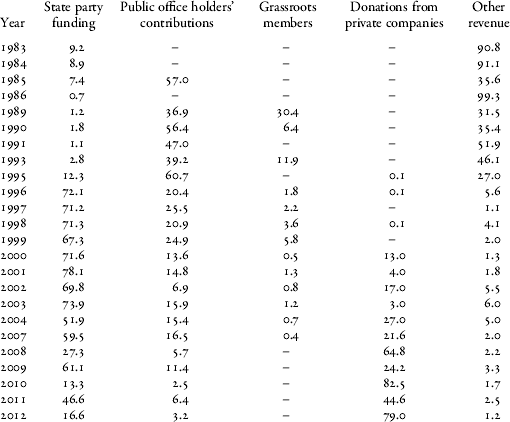
Table 1 presents data on the funding of the DN between 1983 and 2012, dividing the revenues into five sources: state party funding, contributions from public office holders (from the executive and legislative branches at all levels, whether elected or appointed), fees paid by the grassroots members (that reach the DN), donations from companies, and other revenue such as events, merchandise and individuals' donations.Footnote 21
Sources of Funding of the DN, 1983–2012 (%)
Source: based on the Statement of Revenues and Expenses handed by the DN to the Tribunal de Contas da União (Federal Audit Court, TCU) until 1993 and to the TSE from 1995 onward.
Public funds were a marginal source of funding for the PT until 1995. It is possible to infer from data from the following years and declarations by leaders of that time that at least half the funding classified as ‘own resources’ in 1983, 1984 and 1986 was obtained from public office holders. Between 1985 and 1995, this made up approximately 50 per cent of total party revenue. In 1989, the great mass mobilisation surrounding Lula's first presidential candidacy increased the party's income from individual member contributions and the sale of merchandise. The major shift occurred in 1996, when legislation increased state party funding. Since then, this has provided about 57 per cent of the party's funds. Contributions from public office holders have dropped to around 14 per cent but the appointments of thousands of party members to the federal government with Lula's election, combined with the centralisation of income, which will be explained later, increased this source of revenue from 2003 onwards.
Apart from institutional factors, the party adopted strategic changes in its funding policy. Table 1 shows that in the past ten years, donations from companies began to represent an ever more important source of funding, especially during election years (the even-numbered years). The new funding policy was supported by the dominant faction in the party, the Campo Majoritário (Majority Group), and was implemented under the command of José Dirceu, the party president who controlled the PT with an ‘iron fist’ from 1995 to 2003.Footnote 22 Breaking a party taboo, the national leadership began systematically soliciting donations in a direct and centralised manner starting with the local elections of 2000; the DN transferred the funds raised to campaigns and candidates at all levels. These resources accounted for up to two-thirds of the party's revenue in 2008 and about 80 per cent in 2010 and 2012. A breakdown of donations shows that the PT began to raise funds from the traditional financiers of Brazilian politics: construction companies, banks and businesses that could potentially tender for contracts to provide public services such as garbage collection and public transportation.
The growth in revenue was not sufficient to cover the explosion of expenses: from 2002 onwards, the DN spent more than it collected, resulting in increasing indebtedness.Footnote 23 The professionalisation of campaigns after 2002 and the provision of computers and internet connections to thousands of local branches were the main contributors to the party's financial crisis.Footnote 24 This gap was partially filled with illegal funds: in 2005, after the allegations that led to the breaking of the mensalão scandal and even during the initial investigation into the case, the PT's treasurer admitted using funds from a caixa dois (slush fund), which was not declared to the Electoral Court.Footnote 25
Therefore, until 1996, the contributions of office holders represented the bulk of the PT's funding; thereafter, state party funding became more and more important, and from 2000, the PT started raising funds from large firms, making its funding sources and strategies quite similar to those of its competitors.Footnote 26 This speaks volumes about both the strength of the rules of the game and the transformation of the party.
Communication, patronage and professionalisation
In terms of internal communication, as was the tradition in left-wing parties, the PT initially attempted to produce a high-circulation publication. However, the financial difficulties of the party and the fact that its various factions produced their own publications (some older than the party itself) were obstacles that the petista leadership was never able to overcome. Since 1995, the publications of radical factions contrary to the Campo Majoritário official line began to be internally suppressed, some of them closing down. Since the financial crisis of 2005, communication between the national leadership and the rank and file and sub-national organs has occurred electronically via virtual bulletins and an intranet system.Footnote 27
In terms of communicating with the vast majority of voters, however, state funding is decisive for the PT and its competitors. In Brazil, the state pays for electoral advertising for candidates for executive and legislative positions at all levels, transferring broadcast time on television and radio to parties and coalitions in proportion to the number of seats that they hold in the Chamber of Deputies.Footnote 28 Outside election periods, parties also receive periodic quotas for institutional advertising. The compensation to radio and television companies through tax exemptions totalled approximately US$ 300 million in 2012 and US$ 500 million in 2010 (a general election year).Footnote 29
Contemporary parties around the world also have access to vital organisational resources through mechanisms of party patronage, occupying and distributing positions and other types of selective incentives to grassroots members and supporters.Footnote 30 In Brazil access to positions in the state apparatus, the main reward involved in the agreements that allowed legislative majorities to be put together at all levels of government, has become an important means of strengthening party organisations, which mark out their ‘political territory’ once they are regularly ensconced in specific administrative areas.Footnote 31
As the PT began to insert itself into the upper echelons of government, its leadership began a systematic and institutionalised system of training an ‘army of appointees’ to occupy a range of political appointments in the legislative and executive spheres. The reach of these ‘camouflaged professionals’Footnote 32 underwent a major expansion after the PT's 2003 arrival in the federal government, in which approximately 21,000 positions are open for political appointment. In 2005, the PT's general secretary stated that the Lula government had distributed more than 5,000 positions around the parties of the governing coalition, including 1,430 positions for PT members.Footnote 33 Partial figures from Praça et al. show that in 2010 at least 3,000 federally appointed positions were occupied by party members, around one-third of those being PT members. In a 2006 sample of senior posts in the federal civil service (approximately 1,200 positions), 25 per cent were held by party members, 80 per cent of whom were from the PT.Footnote 34 The colonisation of the civil service has always gone on in Brazil; what differentiates the PT governments is the institutionalised character of this practice, with posts allotted not only to governing coalition parties but also to internal, institutional groups within the party, such as factions and thematic groups (women, youth, black and ethnic groups). This practice, seen in the earliest PT administrations and through the Lula government, is then combined with the personalistic patronage, through the political caciques, that is the hallmark of Brazilian political history.Footnote 35
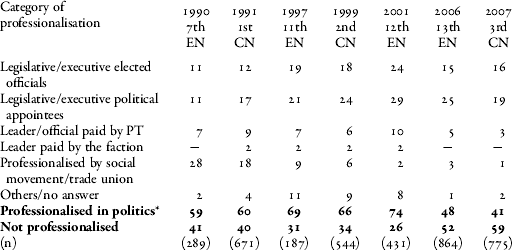
With the electoral growth of the PT, these appointed positions became the main conduit for professionalising activists. In addition to the elected representatives, these appointees constitute the majority of delegates at the national meetings and congresses who identify themselves as political professionals (Table 2). The rate of professionalisation of these middle-ranking cadres has grown over the years only because of the increase of these two groups; professionalisation in social movements and trade unions has been minor in comparison. State professionalisation reached its peak in 2001.Footnote 36 This situation, which has parallels not only in contemporary political parties in other countries but also among the other Brazilian parties created in the state apparatus, is another factor indicating the PT's closer linkages with the state.Footnote 37
Political Professionalisation of Delegates in National Meetings and National Congresses of the PT (%)
* Figures may not accurately represent the sum of the categories of professionalisation because of rounding off and the impossibility of distinguishing, in some cases, between delegates that answered ‘other political activities’ and those that did not answer.
Source: data for the 1990–1 period were obtained from Novaes, ‘PT: Dilemas da Burocratização’. All other data were obtained from surveys with delegates that were conducted by the Núcleo de Opinião Pública da Fundação Perseu Abramo (Centre for Public Opinion of the Perseu Abramo Foundation).
Societal ties
Two strategies are often used to evaluate the relationship between political parties and society: (1) analysing the permeability of the party structure and examining the mechanisms and formal rules that affect social linkages, for example with thematic bodies such as those for youth and women, and (2) assessing relationships with specific civil society actors, such as trade unions.Footnote 38
The first set of indicators points to a weakening of the PT's societal links, primarily as a result of the collapse of the party's base unit (núcleos de base), one of the main linkages between party and society and an essential mechanism in the processes of legalisation and establishment of the PT as an organisation in the early years. In 1980, the PT had 632 base units, with more than 26,000 members; in 1982, there were 272 base units in the state of São Paulo, and 5 per cent of the PT members in the country were participants in a base unit. These are very healthy figures when compared to other Brazilian parties.Footnote 39
However, these local party committees flourished only in the early years. Because they were entitled to formal representation within the party's higher decision-making organs, they became battlegrounds for the PT's internal factions, which fought for control in order to increase their clout in the deliberative bodies. The 2001 party statute, approved after years of conflict between the Campo Majoritário and the radical factions (with the dominant group imposing its ideas on all relevant issues), sounded the death-knell to these local groups as it opened them up to non-members and created competing forms of rank-and-file organisation (with no internal representation), set up to provide temporary support around specific issues. Today, the PT's base units are a shadow of their former selves: in 2007, only 2 per cent of the delegates to the Third National Congress belonged to a base unit.Footnote 40 The grassroots work of the PT's leaders had become centred instead on the local branches (diretórios), focused on electoral activities.
The PT's thematic groups have also gone downhill after playing a prominent role in the party's first 15 years. In 1991, they sent delegates directly to the First National Congress, and the coordinators of groups devoted to youth, anti-racism, environmental issues, agriculture, women and trade unions won the right to sit on the party's executive committees (without voting rights). After 1995, these six sectors began to consolidate themselves as autonomous departments disconnected from the party's secretariats for popular movements.Footnote 41 Meanwhile, parts of the Campo Majoritário began to reduce the financial and infrastructure resources available to certain groups, especially those linked to the radical factions. In the late 1990s, single-issue activists and some factions agitated for greater representation of issue groups in the party's structure, but fearing that this could benefit the radical factions, the Campo Majoritário vetoed these proposals in the 2001 party statute.Footnote 42 Nonetheless, the PT remains the only Brazilian party into whose structure is built a significant space for these groups, a symbolic concession to social movements that remains an indelible part of the PT's DNA.
The ties between the PT and the Brazilian labour movement remain solid. Among civil society actors, trade unionists, as key founders of the PT, have always been privileged in the party structure. This is evident in the formal dispensation allowing them to disregard party discipline when the party's decisions went against the trade union position; this concession was exceptional compared with other parties historically connected to trade unions, such as the Partido Socialista Obrero Español (Spanish Socialist Workers' Party, PSOE) and the Sozialdemokratische Partei Deutschlands (German Social Democratic Party, SPD). This was abolished only by the 2001 statute. PT trade unionists led by Lula founded the dominant Articulação faction, the precursor of the Campo Majoritário, in 1983. In the same year, they created the Central Única dos Trabalhadores (Unified Workers' Central, CUT), the largest trade union federation in Brazil, which remains an ancillary organisation of the PT despite some differences of opinion. There is an overlap of leadership between the PT and the CUT as well as a constant flow of leaders from the federation to the party, including to the Comissão Executiva Nacional (National Executive Committee, CEN). Former trade union leaders have also occupied key positions in the PT's federal government, primarily in the Ministry of Labour.Footnote 43 In general, the PT remains the dominant actor in the Brazilian trade union movement despite an increasing number of challengers.
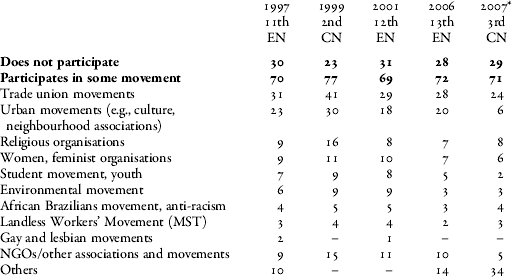
The vitality of these linkages is demonstrated in Table 3. Disaggregated data show a significant decrease in the participation of blue-collar workers, such as metalworkers, whereas white-collar sectors (bank clerks, teachers and civil servants of all types) have become progressively more important. More significantly, Table 3 shows that most party delegates (approximately 70 per cent) remain linked to some civil society group, especially urban movements and the trade unions. By maintaining strong ties with actors that are part of its genetic model, the PT has an advantage over its competitors: the few studies on this topic indicate that none of the other large Brazilian parties come close on this matter.Footnote 44
Participation of Delegates in Civil Society Movements (%)
* Some urban movements were not mentioned by name that year and were included as ‘others’.
Source: Núcleo de Opinião Pública da Fundação Perseu Abramo. Spontaneous multiple responses, with the respondent indicating their involvement in one or more groups.
The Internal Balance of Power
The party in public office
The ratio between the personnel directly subordinate to the party and the staff recruited by elected officials is an important factor in shifting the balance of power within political parties.Footnote 45 In the PT, between 1985 and 2005, for each party cadre directly employed by the DN there were between nine and 16 congressional aides engaged by PT representatives in the Chamber of Deputies.Footnote 46 Thus, the professionalisation of the PT's middle-ranking leaders bolsters the party in public office: the elected officials control the positions that support thousands of activists.
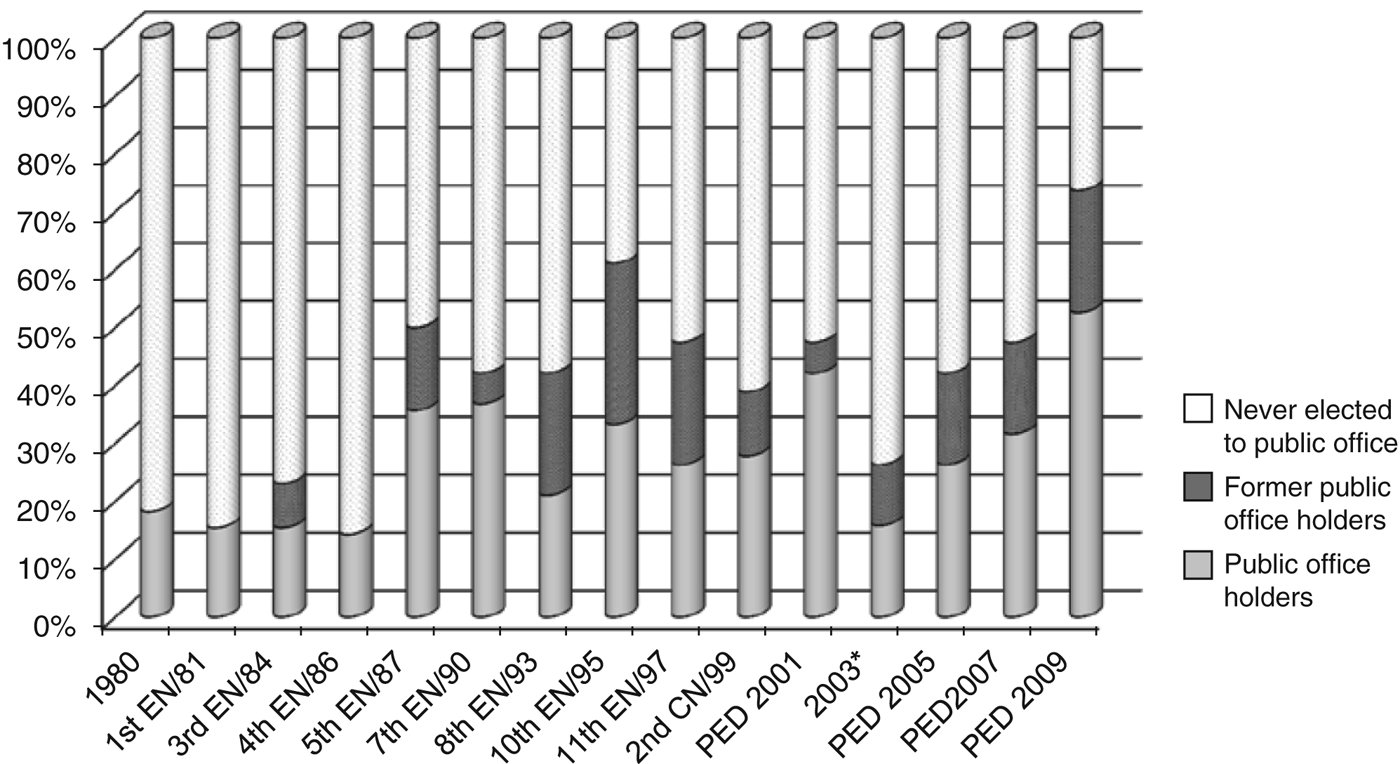
This relative power is evident in the composition of the main party decision-making bodies, which are increasingly occupied by current and former public office holders throughout the world.Footnote 47 In the PT, the CEN has always had leaders who simultaneously occupied elected public office, primarily in the legislature (Graph 1). From 1984 a pattern emerged: former public office holders, after electoral defeats, began to take up executive functions in the party. In 1995, the Campo Majoritário used the clout of elected representatives to back a new internal majority, which explains the peak in that office period. At the outset of the Lula government (2003–5), the leaders with the greatest electoral weight were in elected office or in government positions; during this period, the PT was administered by leaders with careers devoted exclusively to the party and trade union machineries. In the party administration elected in 2009, only five of the 19 members had never held elected office.Footnote 48
‘Parliamentarisation’ of the CEN, 1980–2010 (%)
Decision-making structure: autonomy and centralisation
In addition to reliance on the state, the increased autonomy and tighter control of the national leadership is another long-term trend in the PT's evolution that has resulted from the combination of circumstance and the strategies employed by the party's dominant coalition. First, when the structure of a political party is professionalised with vertical and impermeable recruitment processes (as in the PT), the national leadership gains significant decision-making freedom, as most activists depend on the backing of the leadership to progress in their political careers.Footnote 49 Second, the executive committees at all levels of the PT rapidly subverted the role assigned to them by the internal rules, which on paper place the deliberative bodies (diretórios) higher up the hierarchy. These committees became, in practice, the key bodies in the daily life of the party, acquiring decision-making powers to oversee the PT administratively and politically. This is a common phenomenon in contemporary political parties as a result of the greater problems of coordination and collective action encountered by their larger deliberative bodies compared with their leaner executive bodies.Footnote 50 As such problems are more critical at the national level, the CEN became, in practice, the central power in the PT, reducing the DN to a rubber-stamping body, a ‘mini-congress’ in which the factions tussled over who would define party policy.
According to Panebianco, oligarchisation in a party – that is, rising dominance of a small elite – is a predictable result of a period in which the dominant coalition enjoys high levels of cohesion.Footnote 51 This occurred in the PT's National Executive Committee during the ten years of absolute internal dominance by the Campo Majoritário (1995–2005). The five posts (president, general secretary, organisation secretary, finance secretary and communications secretary) strategically key to controlling the ‘zones of uncertainty’ acted with unprecedented levels of cohesion. Even with membership of the CEN based on criteria of proportional representation, there were periods when all five posts were held by the majority faction, giving it immense power. During the same period, the fragmentation of the PT's governance system accelerated at an unprecedented rate.Footnote 52 But how could a splintering governance system be governed by a faction that was ever more cohesive?
This apparent paradox was created by the dominant coalition's strategy of co-optation during those ten years, a mechanism that helped ensure organisational stability.Footnote 53 Co-opting leaders in exchange for positions on the national executive replaced the traditional practice of building a consensus among the factions with the greatest rank-and-file support. The Campo Majoritário thus undermined the foci of the internal opposition, guaranteed the stability and cohesion of the coalition and simultaneously made the party's governance system more fragmented and less polarised: small, originally left-wing factions migrated to the centre at each party congress, only to be co-opted by the majority faction. The radical members of the PT, in the majority between 1993 and 1995, controlled approximately one-third of the party in the 1997, 1999, 2001 and 2005 internal elections (the latter two in a direct voting system), less than 20 per cent after the 2007 and 2009 elections, and only about 12 per cent of the votes in November 2013. However, whereas fragmentation had previously fostered cohesion (allowing the key post holders in the CEN to control the zones of uncertainty), the extreme degree of cohesion began eventually to prompt further fragmentation. When one group in the party monopolises the distribution of favour, being co-opted by the leadership becomes the only path to career progression in a centripetal pattern of elite recruitment. In addition to the splits that occurred among the radicals, small marginal groups in the Campo Majoritário began to leave the faction. This was not a sign of policy-related disagreement but a strategy to relocate themselves in the internal game of conflict and co-optation.Footnote 54 In addition, several authors highlight a process of progressive ideological moderation not only among middle-ranking leaders (increasingly working within the state apparatus) but also among the PT rank and file.Footnote 55 All of these factors together reduced internal polarisation and allowed a stable elite to consolidate.
The oligarchisation of the PT occurred in this context. The concentration of power has already been explored through previous indicators (others will be addressed below). The stability of leaders was measured by calculating the rates of change and permanence on the DN, the CEN and the key posts of the CEN using indices developed by Schonfeld.Footnote 56
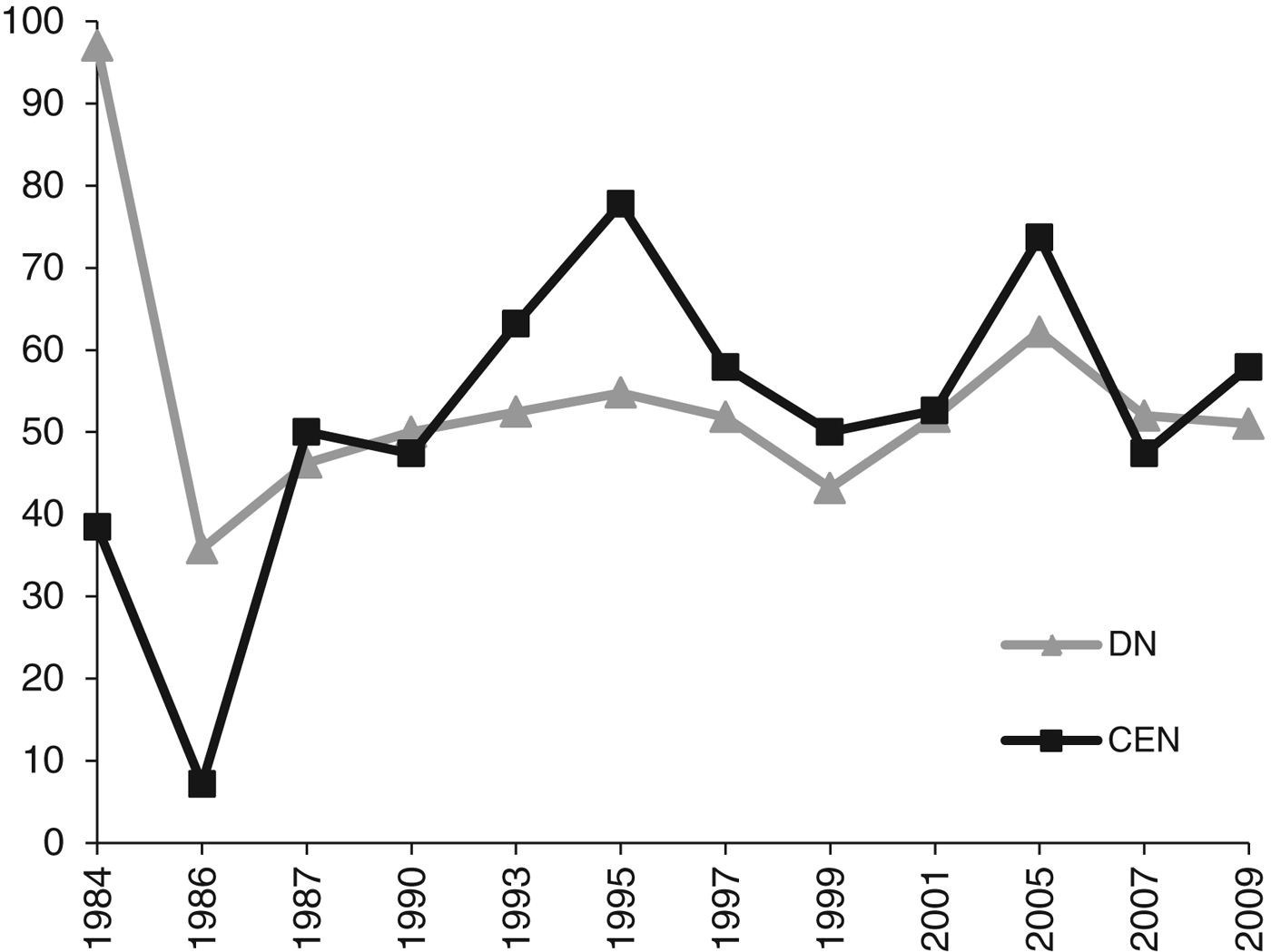
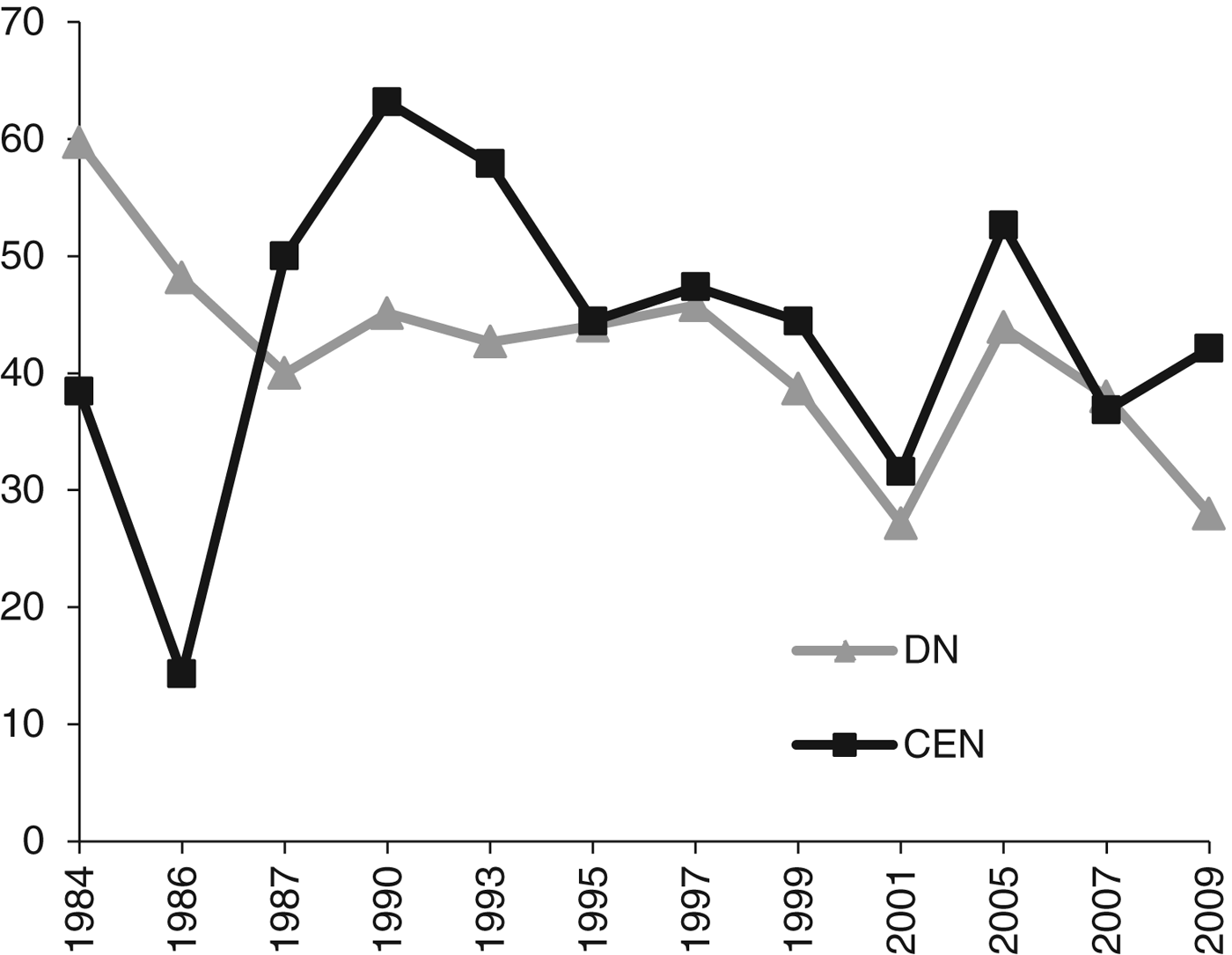
According to the simple substitution index (the turnover, including newcomers and those members that return to the party organ), on average 54 per cent of the members of the DN and 52 per cent of the CEN were replaced at every election; only a minority were re-elected (Graph 2). The simple renewal index, which measures only the ingress of newcomers, is also significant: at every election, an average of 34 of the 80 members of the DN and eight of the 19 members of the CEN are newcomers (Graph 3). Compared with other left-wing parties, these figures demonstrate that the PT still has a reasonable capacity to generate and incorporate new leaders into its national leadership.Footnote 57 The CEN rates reflect more accurately the competition for the main posts, which explains the turnover peaks in 1993, 1995 and 2005 (Graph 2), all of which were moments of crisis in the dominant coalition and led to changes in leadership.
Simple Substitution in the DN and the CEN (%)
Simple Renewal in the DN and the CEN (%)
Newcomers to the CEN are also now more likely to already be members of the party elite – that is, representatives and former representatives – indicating the ‘parliamentarisation’ of the party. There is a growing gap between the rates of simple renewal and elite renewal (the shaded area in Graph 4), indicating the increasing weight of the ‘elite newcomers’ in the renewal process.Footnote 58
Simple Renewal and Elite Renewal in the CEN (%)
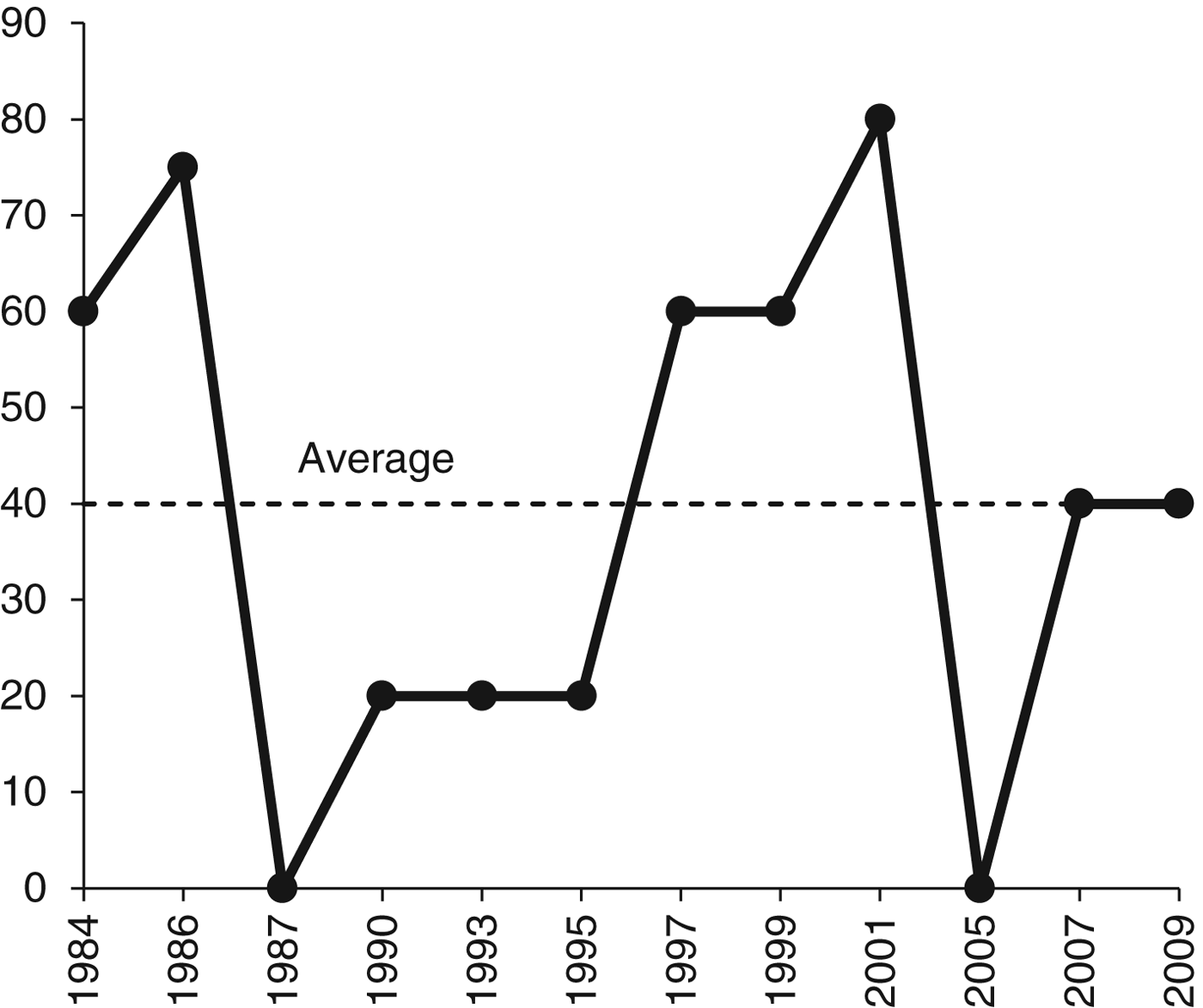
Graph 2 shows declining turnover rates starting in 1995, while Graph 3 shows the same starting in 1997, suggesting a greater stability in terms of leaders. The oligarchisation of the PT in this period was done in a carefully targeted and controlled way, evident in the low turnover in key posts on the CEN in the 1997, 1999 and 2001 elections (Graph 5). During this period, a bureaucratic mini-oligarchy of leaders with careers devoted to the party and directly tied to José Dirceu ran the PT.
Re-election Rate to Key CEN Posts (%)
With such strong cohesion among the dominant group and high levels of decision-making autonomy, significant institutional changes further bolstered the powers of the petista leadership. Financially, in addition to filling the party coffers with new fundraising approaches, the PT's national leadership sought greater latitude in the management of party funds. Aware of the importance of the contributions of public office holders, the CEN used the 2001 statute to begin to centralise the collection of these dues from contributors at all government levels nationwide, transferring part of them to the sub-national bodies in the proportions stipulated by the statute. A policy of holding onto party funding received from the state also helped this financial centralisation. According to party statutes, and as required by Brazilian party law, 20 per cent of monies received should go to the Fundação Perseu Abramo, whilst 48 per cent remains with the DN and 32 per cent is distributed to the party's state-level executive bodies.Footnote 59 However, the share retained by the central bodies is even greater when the DN has discounted the debts incurred by the state-level bodies (Table 4). Between 1996 and 2012, the DN retained an average of 55 per cent of the party funding provided by the state.
Internal Distribution of State Party Funding, 1996–2012 (%)

Source: Statement of Revenues and Expenses handed by the DN to the TSE.
With the traditional funding sources (state party funding and the contributions of public officials) controlled by the national leadership and with the success of centralised fundraising from large companies, the PT's leadership was able to invest in developing the party's electoral competitiveness. Lula's 2002 campaign for the presidency was the turning point in the modernisation of the PT's election campaigning, shifting from a ‘labour-intensive’ to a ‘capital-intensive’ model,Footnote 60 with a highly professionalised structure and the hiring of the country's leading PR expert, Duda Mendonça (a condition imposed by Lula for running a fourth time). After the 2002 win and with the building of a centralised communication structure in the CEN capable of supporting candidates across the country, campaign modernisation was rolled out to the entire party.Footnote 61 Internally, the centralisation and outsourcing of campaigns constituted yet another sign of the increased independence of the party leadership and the decline of the rank and file: external experts direct the leadership and are not subject to the control of the bureaucracy or to internal accountability mechanisms.Footnote 62
The reform of the intra-party electoral system was the most substantial change introduced by the Campo Majoritário over the opposition of the radical factions. The annual meetings (encontros) have always been the ultimate decision-making body at each level of the party's structure: drawing up the party manifesto, directives and campaign strategies, selecting candidates and so on. In addition to selecting the delegates to be sent to the higher-level meetings, delegates also elected the party president and deliberative organ (diretório), which would then choose its executive committee. This process differed from Brazilian party law and the practice of other parties in the greater representativeness and inclusiveness of the meetings: the criteria for participation gave greater weight to the ordinary members in relation to the MPs and leaders. The PT's structure was more permeable to pressure from the bottom up, from the rank and file on the leadership. The 2001 statute introduced the Processo de Eleições Diretas (Direct Election Process, PED) for selection party officials, requiring the local branches, state-level bodies and national leadership (DN) as well as their respective presidents (the latter in a separate vote) to be elected by the direct vote of members. The meetings are still the ultimate forum at each level of the party; however, they occur after the PED, with the elected leaders taking office on the first day of the corresponding meeting. A simple majority in a direct vote for the leadership is sufficient to impose the line of the dominant group (with a minimum of subsequent amendments) on the entire party. This system differs substantially from the previous system, in which the meetings were venues of intense, complex conflicts and wheeling and dealing between factions in search of a majority. The PED hollowed out the meetings, which ceased being the representative backbone of the electoral system and of the PT internal opportunity structure.Footnote 63
The implementation of direct mechanisms for selecting leaders and candidates has become increasingly common among contemporary parties.Footnote 64 For some authors, these mechanisms can deepen internal democracy, as they include more actors in the decision-making process.Footnote 65 For others, however, the empowerment of individual members comes at the expense of the more organised grassroots activists, mid-level leaders and representative bodies, and leads to a ‘plebiscitarian democracy’, with the quantity negatively affecting the quality of participation and other dimensions of intra-party democracy, such as accountability.Footnote 66 According to Katz and Mair, the combination of direct voting, the blurring of boundaries between members and non-members and the bypassing of party congresses increases the decision-making autonomy of party leadership, especially at the national level.Footnote 67
This has happened in the PT: the direct vote weakened not only the factions but also the mid-level entities and leadership in relation to the national bodies and leaders who were directly endorsed by the grassroots, thus undermining the strong structural interconnections, one of the peculiarities of petista organisation. The advent of the PED both enhanced the independence of the leadership, especially at the national level, and weakened the internal mechanisms of accountability, located chiefly in the meetings that occurred at the end of the terms of office.Footnote 68 The PED also muddied the boundaries among activists, members and supporters and made internal elections more permeable to external influences. Meanwhile, the members remained excluded from choosing those who would actually run the PT; the formation of executive committees (except for the office of president) is still done through deals among the internal elites. The number of delegates that each annual meeting can send to the upper-level meeting (apart from other proportional spaces of the party) began to be considered in terms of the effective participation of members in their respective PEDs rather than the absolute number of members. This new system created a new pattern of competition within the PT, contributing to the widespread adoption of practices, reported by the media and criticised within the party, such as mass membership sign-ups, the bussing of members to events, the bulk payment of individual dues and the registration of individuals who were unaware of their membership. Such practices, used by leaders or factions to create local ‘political machines’ (currais eleitorais), have occurred in other parties that have adopted direct mechanisms, such as some in Canada and Israel.Footnote 69
Therefore, the notion that the PED signified a form of resistance against Michels' iron law of oligarchy seems rather romantic.Footnote 70 The introduction of the direct vote did not break the hegemony of the Campo Majoritário. Moreover, the first election in 2001 consolidated the dominion of a bureaucratic mini-oligarchy over the PT's apparatus: for the first time since the 1980s, all strategic positions in the CEN were occupied by members of the same faction – and these members stayed until 2005, when they were overthrown by the corruption scandals.
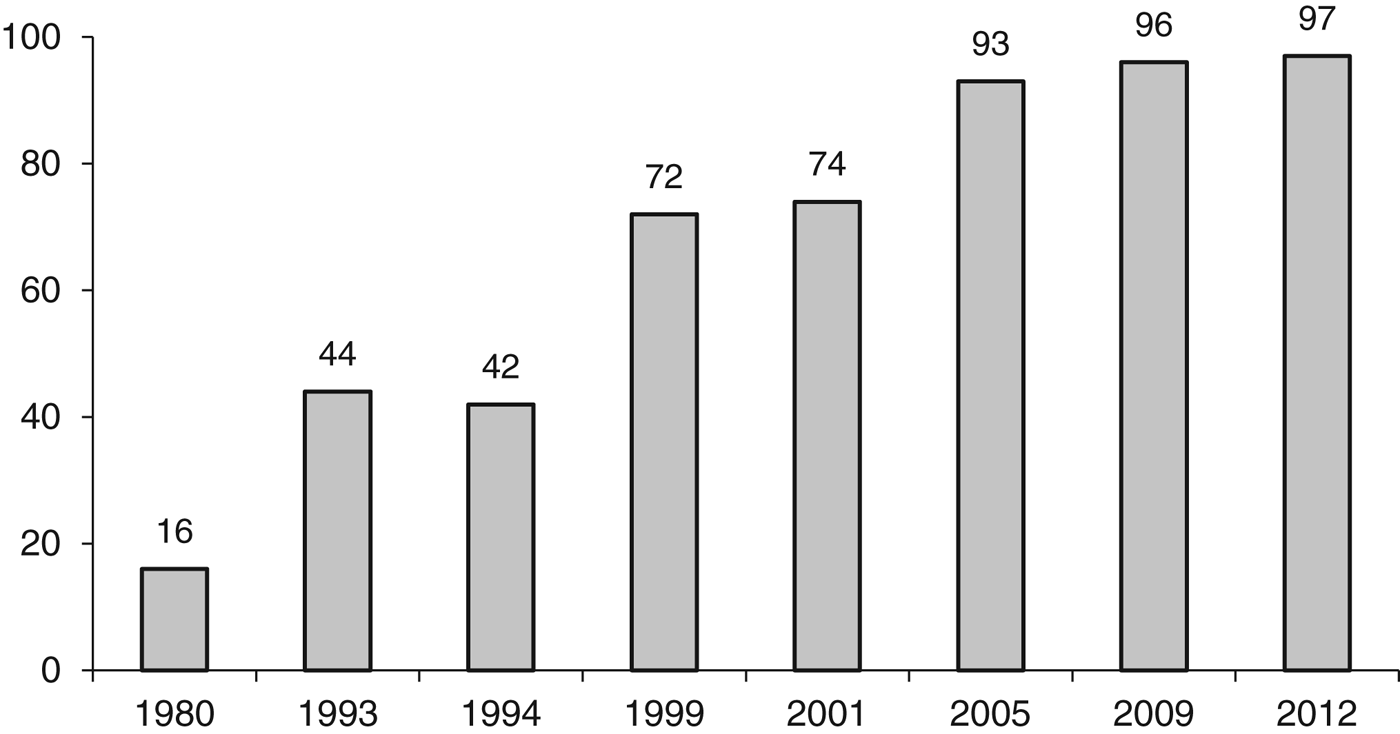
With no relevant function in campaigning or fundraising, deprived of the base units and other membership mechanisms, the PT rank and file shrank in terms of activism but gained in size, as inclusiveness replaced intensity as the pattern of internal participation.Footnote 71 Strategies for organisational expansion and mass membership (with the relaxation of membership criteria), as well as Lula's growing popularity after 2003 (primarily in regions such as the north-east, where the party had found it difficult to consolidate its presence), turned the PT into an effective national party in both organisational and electoral terms. In terms of organisational presence, the PT outgrew the PMDB to become the most widespread party in the country; it is currently present in 97 per cent of Brazil's 5,565 municipalities and reports a membership of 1.3 million.Footnote 72
Brazilian Municipalities with some PT Organisational Presence, 1980–2012 (%)
The PT and the Lula government (2003–10)
The decision-making autonomy and centralisation that the PT's national directives brought in were directed to one end: the election of Lula under conditions of governability. Campaign professionalisation was not the only condition imposed by Lula in 2002; he also demanded an important business person belonging to a right-wing party – the Partido Liberal (Liberal Party, PL) – as the candidate for vice-president.Footnote 73 Greater licence in decision-making also had an influence on the 2002 election manifesto, which was more moderate than the directives approved at the 2001 PT national meeting; broadly, it prefigured the PT's conversion to the liberal prescriptions of macro-economic management.Footnote 74
The beginning of the Lula era was marked by confrontation between the PT's historical political stances and certain government policies. The party's ideological moderation had not been so well internalised that all of the PT could completely embrace some of the government's positions. The majority, under the aegis of the Campo Majoritário, agreed to back the most controversial policies of the administration's early years, but the radicals caused several problems for the PT and the government. Economic policy, social security reform (which affected a traditional PT constituency, the civil service, and resulted in the expulsion of some MPs),Footnote 75 the slow pace of agrarian reform, the opening of the archives from the military regime and the dispatch of troops to Haiti were some of the issues that produced an ‘ideological purgatory’ in the PT, and this generated an identity crisis among party supporters and activists. To contain the discontented, the leaders of the government and the PT used selective incentives of pressure and bargaining to manipulate the access of representatives and faction members to positions in the federal bureaucracy. In the field of collective incentives, the PT leadership justified its support of controversial policies by promoting an issue-by-issue review of historical party positions, which resulted in a reluctant and incomplete modernization, or aggiornamento, of the party programme.Footnote 76
The breakdown of accountability mechanisms and the formation of a mini-oligarchy are variables that explain the internal dimension of the 2005 corruption scandals. However, the enormous cost of campaigns, particularly the presidential campaign, and the widespread use of the electoral slush funds by the Brazilian political elite and by private financiers were the primary external incentives: to reach the presidency, the PT had to play by the ‘rules of the game’, as Lula himself admitted.Footnote 77 As Panebianco has noted, patronage and corruption in mass social democratic parties tend to raise funds for organisations rather than for individual leaders. Moreover, as Pappas has observed, patronage also tends to prosper more vigorously when a strong leader and his entourage simultaneously control the party apparatus and appointments to state positions. The scandals inside the PT confirm these analyses.Footnote 78
The outbreak of the crisis in 2005 represented such a major environmental challenge for the PT that it changed the make-up of the party's dominant coalition. After the 2005 PED, held during the middle of the crisis, the CEN nucleus was no longer controlled by only one faction, and the deals struck among the elites became more fragile and unstable. Nevertheless, the former Campo Majoritário continued as a hegemonic force, although it needed alliances with other groups, in the direct votes of 2005, 2007, 2009 and 2013, always managing to elect the president of the PT. Perhaps this resilience is associated with the capacity of the group to keep up the supply of the most valuable selective incentives in a party of professionals: public positions.Footnote 79
The crisis made the PT even more reliant on the leaders with government positions – and of course Lula, who emerged from the scandals unscathed and strengthened after his 2006 re-election and untouchable in the party. Until 2005, José Dirceu had been the historical leader who simultaneously complemented and contrasted with Lula's power: the former dominated the party machine, whereas the latter possessed the political skill of conciliation, the charisma and the electoral capital needed to appeal beyond the PT's electoral base. The situation of the PT's national leadership, which was at once at a remove from the party body and dependent in relation to Lula, became quite clear in the 2010 presidential nomination process. In the midst of a leadership crisis following the mensalão scandal, which deposed several of his possible successors, Lula opted for a newcomer in the electoral market who had no role in the party machine but who was still acceptable to all internal factions and palatable to the media and public opinion. In a party that had institutionalised means of dealing with conflict and making decisions, the unilateral nomination of Dilma Rousseff as Lula's personal choice of successor was nonetheless surprising: this choice led to the spasms in the process of decision-making centralisation that are discussed herein.
Final Considerations: The PT Today
The PT has changed considerably over the last three decades, having moved closer towards the state and having seen a relative weakening of its linkages with society. The latter, which were the roots of the party, have not been severed, but are now outweighed by linkages to the state, turning upside down the relationship that marked the party's foundation.
The party in public office also now enjoys a privileged status. Initially, the party bodies attempted to control their MPs and sub-national administrations; today, public office holders generally dominate these bodies by controlling the funding resources that are vital to the survival of the organisation, the activists and the factions. The PT's internal governing bodies may be autonomous from the rank and file, but they remain dependent on the party in public office; the national leadership enjoys great internal latitude while the party faithful have been reduced to a mass of voters. On the other hand, the current PT is less centralised nationwide. Although the state-level strategies are still connected to the national dynamics, greater licence has been granted to the local branches (except in larger cities), explaining the now commonplace alliances with the right-wing parties of the Lula/Rousseff coalition but also with opposition parties such as the PSDB and DEM.Footnote 80
Several transformations, such as closer relations with the state, the rise of the party in public office, greater autonomy of sub-national organs and the relaxing of membership criteria, have left the PT looking more like its competitors, partly because the PT, as an organisation, cannot resist the constraints, incentives and pressures originating from arenas in which it acts together with other parties. Political parties change slowly, and certain traces of their genetic models persist, as Panebianco has argued. Furthermore, as Levitsky observes, highly institutionalised labour-based parties with strong bureaucratic structures tend to be less able to change and adapt to environmental transformations compared with poorly institutionalised parties.Footnote 81 According to Hunter, the historical legacies of the PT organisational and political project explain not only the choices made and the manner and reach of the adaptation processes introduced by the party elites but also the persistence of certain peculiarities.Footnote 82 Thus, although increasingly adapted to moving around the terrain of the state, the PT remains amphibious enough to swim in its traditional waters of civil society.Footnote 83 The adoption of direct elections for the selection of its officials made its structure even more exceptional in Brazilian terms: the other major parties continue to base their decision-making structures on party conferences (convenções) controlled by their elected representatives. The PT's structure thus remains the most democratic among the major Brazilian political parties. ‘Normalisation’ of the PT has not occurred: the PT has become a hybrid and remains an anomaly in the Brazilian party system.Footnote 84
This transformation is explained by both endogenous and exogenous factors. Some of the most important external factors are the institutions that made the entire Brazilian party system dependent on the state; new channels of expression and participation that challenged parties throughout the world; the Brazilian electoral scene; the world crisis of socialism; and a decline in the activism of organised actors of society beginning in the 1990s. The weakening of societal linkages may also be a result of the PT's transformation in relation to certain historical stances, especially from 2003 onward, which may have pushed certain actors, such as the most militant trade unionists, away from the petista sphere. Among the endogenous factors, the strategic decisions of the Campo Majoritário beginning in 1995 should be highlighted, as they centralised the internal power and increased the autonomy of the PT leadership, paving its path into government.
Thus, theoretically, both exogenous and endogenous factors should be considered in the analysis of the organisational transformations of a political party. The transformation of a party, as in any complex organisation, partially derives from the sum of small, incremental changes that can have wide-reaching and not wholly anticipated results which escape the control of the actors.Footnote 85 In the case of the PT, the ongoing process of ideological moderation, for example, can be understood only within the context of the party's growing role in the upper spheres of government. Through the professionalisation of members or through the learning that occurred via the exercise of power in states and municipalities, the consequences of these processes are the outcome of the party's own electoral success rather than of the deliberate decisions of its leadership. However, even if a party is not a rational and unified ‘super-actor’ that is capable of strategically pursuing a specific and clearly distinguishable goal, stable and cohesive groups (such as certain dominant coalitions) may adopt instrumental behaviour to adapt the party to environmental changes and alter its organisational physiognomy for certain purposes. Therefore, an appropriate heuristic model for the understanding of parties as organisations combines these perspectives.
After ten years at the helm of the federal government, the PT has not yet carried out its official aggiornamento or held its own Bad Godesberg Congress, as the West German Social Democratic Party did in 1959, to officially announce its ideological modernisation and moderation, reflecting its experiences in government. In its official documents, the PT continues to define itself as a socialist party; in practice, however, the organisational and institutional changes it has undergone in the last three decades have, in effect, enabled it to consolidate itself as Brazil's true social democratic party.