

Those who visited paleontological museums could not walk past the skeletons or mummies of the woolly mammoth (Mammuthus primigenius), a Pleistocene species which usually makes up for large parts of any expositions. Its size and historical closeness to us have often left an impression on the visitors. In biological discourse, the woolly mammoth belongs to proboscideans and started its ascent on the evolutionary ladder with the South African mammoth (Mammuthus subplanifrons) which appeared about 5 million years ago. After having colonised a significant part of the planet, this creature found its last shelter in the Northern Hemisphere on Wrangel Island where the local population of dwarf mammoths (Mammuthus exilis) went extinct only 3700 years ago (Vartanyan, Garutt & Sher, Reference Vartanyan, Garutt and Sher1993). This long historical length and wide transcontinental spread made the mammoth a special “object” in the history of palaeontology, being considered as one of the “creators” of the discipline that connects the history of Pleistocene fauna with human prehistory (Cohen, Reference Cohen2002, p. xxxiii). The mammoth’s frozen meat, muscles and sometimes blood along with bones cannot do so much as amaze scholars and those who live in the Arctic landscape. Indigenous people regularly encounter this uncanny, but perfectly preserved, animal and include it in their own ways of knowing, within which the mammoth occupies the place of one of the creators of the surrounding landscape. Far from the academic laboratories and nomadic camps, the image of the mammoth as a human co-habitant in the Palaeolithic environment appeals to popular writers, painters and cartoonists, who commodify it as a symbol of the timeless frozen Arctic.
However, the inseparable history of mammoth search and research and the production of indigenous and academic concepts are still underappreciated. I believe that the integral approach of this paper is very topical and of great importance, given the current rapid decline—and at times even extinction—of species. Environmental historians draw our attention to the impact of imperial expansions (Jones, Reference Jones2017) and the influence that both capitalistic and communistic economic systems had on the fragile environment of the Arctic and sentient economies of local and indigenous people (Demuth, Reference Demuth2019). In spite of the rapid extinction of many species, the knowledge about them has never vanished completely, as it is being embodied and creatively passed on among different people along with the material remains which keep catching the imagination of both locals and scholars, and as a result challenge the very idea of extinction. Since the time of “ethnoscience” (Sturtevant, Reference Sturtevant1964) as the first attempt to include indigenous epistemologies into the orchestra of western academic concepts, the scholars of different disciplines have made a great effort to find a new, post-colonial way to continue doing so (see Harding, Reference Harding2011). Attempts in this direction are at the core of the present historical study. The argument of this article is that the mammoth as a material paleontological find, or unexpected carcasses or bones found in the tundra, manifests itself in various dynamic environments and, thus, the encounters between the mammoth, local people, scholars and politicians allow them to co-create moments where different epistemologies come together and are consequently stabilised (see Jasanoff, Reference Jasanoff, Weiss and Jacobson1998). In other words, I seek to find the moments where the knowledge about the mammoth is co-produced and then mutually used by indigenous people and scholars, while the object of their attention is not passive but has a capacity to participate in the production and usage. I refer to these moments as environmental encounters.
The term “encounter” has been conceptualised by scholars of different disciplines. In an anthropological sense, encounter refers to human-level “engagements across difference” through short-term meetings or long-term negotiations. Thanks to these “cross-cultural and relational dynamics”, participants affect the opinions of one another (Faier & Rofel, Reference Faier and Rofel2014, p.364).
Employing the ecological metaphors of Ingold (Reference Ingold2011), scholars in the recently emerged interdisciplinary field of environmental humanities write about the concept of encounter by pointing out that space is not a container, “but an interweaving of trails, tracks and paths” (Barua, Reference Barua2016, p.268). When applying these notions to mammoth research, we might notice that the remains of mammoths shape a flexible and relativistic spatiality (see Wilson, Reference Wilson2017), which might both help maintain the borders due to the massive concentration of the finds within the territory of the Soviet/Russian Arctic and also disrupt them, connecting the mammoth to global Pleistocene history in a way that merges indigenous and academic epistemologies. It also illustrates the ideas proposed by Arctic environmental historians. As Stephen Bocking states, “the northern regions have always been places where geography matters” (Reference Bocking2007, p.869). The engagements of scientists with this environment shape their practices and ideas. In his recent article, Andy Bruno took a step further applying Arun Agrawal’s concept of “environmental subjectivity” (Reference Agrawal2005) to the Soviet Arctic to show the deep associations between the physical environment and the production of socialistic self of scholars (Bruno, Reference Bruno2019). Concerning the mammoth, one could add that to some extent, the materiality of Arctic landscapes keeps shaping not only the social environments of both indigenous hunters and herders and visiting scholars but also their notions and understanding of the past, as neo-materialistic historians write (see LeCain, Reference LeCain2017).
Following the mammoth, we may see its resilient in-betweenness in laboratorial and political spatial and epistemic contexts, which highlights the features of a “boundary object” that are “plastic enough to adapt to local needs and constraints of the several parties employing them, yet robust enough to maintain a common identity across sites” (Star & Griesemer, Reference Star and Griesemer1989, p.393). The concept of “boundary object” is formulated through the ecology of institutional bodies (such as museums), wherein social and political entanglements are often presented as “objectified” forms. The present article adopts the concept of “boundary object” only to a certain extent, presenting the mammoth (or its separate parts) in its post-extinct life not only as a product of negotiations between diverse groups of actors but also as an active subject of different intellectual, social and political encounters that occur in or between laboratories, exhibitions, field sites and indigenous nomadic camps (see Kochan, Reference Kochan2015).
In this article, the adjective metropolitan refers to the community of intellectuals, scholars and naturalists who came to the Arctic from the Russian and Soviet capitals Saint Petersburg/Leningrad and Moscow for research purposes. This term does not concern a strict colonial asymmetry due to the diversity of biographies and political positions of mammoth researchers; rather, it refers to the geographical location where that community is from.
In discussing the post-extinct life of the mammoth, this article makes use of archival documents from Russia, interviews with palaeontologists, students of local lore (kraevedy), indigenous hunters and herders as well as the analysis of a vast multi-lingual and multi-vocal body of the literature on the history of palaeontology, environmental history and indigenous folklore. Although this article is arranged chronologically and covers the 20th century, it includes certain ethnographic descriptions to help readers understand the entanglements of human-mammoth relations in modern history.
Encounters with Indigenous Lands
Siberia, long considered a colony of Russia (Etkind, Reference Etkind2011; I͡Adrint͡sev, Reference I͡Adrint͡sev1892), has nevertheless been involved in the production of academic knowledge at least since the 18th century. Indigenous people, “wild” nature, rich natural resources and boundless space have been at the centre of the debates by Imperial, Soviet and Russian intellectuals. Categorised as “objects” of study in the imperial centres, the permafrost, reindeer husbandry, nomadic way of life and other identifiers not only occupied a special place within local and academic epistemologies but also kept bearing a certain plasticity which helped them cross those borders. The mammoth was one of those identifiers. Due to its oddity and unfamiliarity to other living creatures in the region, it constantly evoked reflections of local people, who, in turn, creatively designed and redesigned their own cosmologies and ontologies in ways that always paid tribute to and foregrounded the importance of the mammoth. Such a perception has its own historical background.
Before the 17th century, the mammoth trade connected the Asiatic Arctic, China and the Arabic lands (Cohen, Reference Cohen2002, p.65). Since the late 17th and the early 18th centuries, due to the Russian colonisation, Siberia has been involved in a new huge transnational network trade of mammoth bones and tusks which was oriented towards the West (Fig. 1). The mammoth field workers (promyshlenniki or promysloviki): some I͡Akuts, Evenki and Russian old residents (starozhyly) coordinated the “mammoth market” in Siberia, connecting it with the European West. Many travellers documented that the volume of trade was significant already at the beginning of the 19th century (ca. 16 300 kg per year in the 1820s: Shchukin, Reference Shchukin1844, p.208), being fuelled by finds in the New Siberian Islands (see Digby, Reference Digby1926; Zenzinov, Reference Zenzinov1915). Those “mammoth hunting” practices in turn could not but affect the verbal art of the hunters. Some I͡Akut and Evenki groups have a mammoth hunting motif in their folklore (Gurvich, Reference Gurvich1977, pp.199–200 [I͡Akuts]; Vasilevich, Reference Vasilevich1959, p.174 [Evenki]), albeit many I͡Akuts consider mammoth remains as rather dangerous and having the capacity to bring bad luck to whoever finds them. Nonetheless, the trade network linked the frozen mammoth with indigenous hunters and metropolitan naturalists. Since the time of Great Nothern Expeditions, this uncanny animal made its own biography among intellectual circles of Saint Petersburg (Tatishchev, Reference Tatishchev and Tatishchev1979). And the first “academic” mammoth was discovered in 1799 by Evenki “chief” Ossip Shoumachoff, and successfully resold several times through a network of I͡Akutsk traders, and the Adams mammoth was delivered to the Saint Petersburg Kunstkamera Museum by the person who it is named after, Johann Friedrich Adam (also known as Mikhail [Michael] Adams, 1780–1838) (Adams, Reference Adams1807). The early modern Russian “Chamber of Curiosities” (the literal meaning of Kunstkamera) preferred to present this find accompanied by Siberian ethnographic objects (Stani͡ukovich, Reference Stani͡ukovich1953, p.190, 206) that implicitly illustrated the encounter with the mammoth and its connectedness to the indigenous world. Several years later, the very same mammoth encouraged Georges Cuvier (1769–1832) to include that species in the European colonial elephant genealogies, associating it with the biblical narrative of Noah’s flood, which was popular in paleontological discourse at that time and consequently shaped the first academic conceptualisations of extinction (Rudwick, Reference Rudwick2014, pp.103–107). Folklorists also remind us that the same motif of the mammoth having survived the flood was known among Russian residents in northeast Siberia (Azbelev & Meshcherskiĭ, Reference Azbelev and Meshcherskiĭ1986, p.212), which invisibly linked remote villagers with metropolitan intellectuals.
The trade in mammoth bones and tusks in I͡Akutsk, North-East Siberia at the end of the 19th century (author: Ivan D. Cherskiĭ (?) (MAĖ No. 1418-55); courtesy of the Peter the Great Museum of Anthropology and Ethnography (Kunstkamera), Saint Petersburg, Russia).

The etymology of the word mammoth also illustrates the entanglements of indigenous narratives and metropolitan concepts. Many generations of explorers and naturalists tried to construct an indigenous genealogy of the word mammoth, taking their associations from stories about the mammoth that they heard in the field. Some believed that the word “mammoth” had come from the I͡Akut language, apparently due to the frequency of the mammoth finds in that part of the Russian Arctic, whereas others were sure that it had a Siberian Finno-Ugric origin (Khanty and Mansi) (see Vasmer, Reference Vasmer1984, p.566). Modern historical linguists are inclined to think that the term mammoth has been known since at least the beginning of the 17th century, appearing as Maimanto for the first time in a dictionary on northern Russian dialects compiled by Richard James (1592–1638), which indeed would suggest a Finno-Ugric origin (Stachowski, Reference Stachowski2000). In his unpublished written reply to an article by the Soviet palaeontologist Alekseĭ P. Bystrov (1899–1959) about the origin of the term mammoth (Bystrov, Reference Bystrov1953), Dmitriĭ K. Zelenin (1878–1954), a prominent Russian and Soviet ethnographer and folklorist on the Slavic peoples, offered his own take on the spread of the term [SPF ARAN 849/1/628]. Tracing the word mammoth through multiple historical published and unpublished documents, he assumed that the term had been conceptualised by Baltic German scholars (such as Karl von Baer and Alexander von Middendorff) as a direct transliteration from the Estonian language, maa mutt (literally “earthly mole”), and thanks to their transnational academic network and activities, the term gained currency outside Russian academia (Tammiksaar & Stone, Reference Tammiksaar and Stone2007).
This created a linguistic ideological predicament when an object taken from a far eastern Russian colony received its “official” name from a language spoken by a small group on the western borderland of the Russian Empire and eventually received a theoretical make-over by a transnational community of metropolitan elite scholars speaking European languages. Turning Zelenin’s observation to the purpose of our analysis, we might see that the “fossil object” already at the beginning of its academic life represented a material and epistemological encounter between Siberian indigenous and metropolitan non-indigenous languages, thanks to which, it became “translatable” within and outside the Russian Empire, creating moments of “knowledge stabilisation”.
The culturally and socially diverse indigenous world of the Russian North and Siberia demonstrates, however, a relatively homogeneous perception of the mammoth. In most of the local oral traditions, the mammoth is presented not as a fully extinct creature. Its appearance, according to indigenous narratives, might well be reminiscent of either a fish (usually “horned pike”) or a gigantic mammal (Kulemzin & Lukina, Reference Kulemzin and Lukina1977, p.130 [Mansi: ves]; Nikolaev, Reference Nikolaev1985, p.104 [Kets: tel’]; Prokof’eva, Reference Prokof’eva1949, p.159 [Selkups: koshar-pichchi]). Before going down under the earth, the mammoth, as these stories tell us, left its footprints on the earth’s surface, footprints that appear today as rivers, lakes, hills and so forth (from west to east: Rochev, Reference Rochev1984, pp.114–115 [Komi]; ORKP NB TGU 5/1/34; Tret’i͡akov, Reference Tret’i͡akov1871, pp.201–202; Lukin, Reference Lukin2018 [Nenets]; Prokof’eva, Reference Prokof’eva1949, p.159 [Selkups]; Popov, Reference Popov1937, p.85 [Dolgans] and others).
Eroded riverbanks or permafrost pingos bring mammoth bones and horns up to the earth’s surface, which visually and materially illustrates indigenous notions of the mammoth as extant but not extinct. The early Soviet ethnographer Georgiĭ N Prokofiev (1897–1942), working with the Selkups, noted that this and similar ideas underlined the “logical basis of animism” (Prokof’ev, Reference Prokof’ev1927, p.38). In his field notebook, he retold an episode about the perception of the mammoth by a Selkup male hunter:
The mammoth, according to Osti͡aki’s [old name for Selkups. – D.A.] opinion, is alive now. It lives under the land. It digs the soil. It digs towards the river. “Once I was boating in a dugout canoe [vetka – D.A.], shooting the ducks. And all of a sudden [I] heard, the soil, a big chunk [of the soil] fell in the water. That was the mammoth digging. The mammoth feeds on the soil.” [AMAĖ RAN 6/1/5: 29, 15 December 1925]
From this perspective, the mammoth’s past is still visible on the earth’s surface, where contemporary people live and interact with the land. However, its activities lay under the ground, being hidden from the observations of local dwellers. For Nenets, the Selkups’ neighbours, the mammoth joins together people and the multi-layered landscape and also connects living people with the people who had lived on this land before Nenets. Nenets even included the mammoth in their etiologic tales, which are considered by linguists and folklorists as some of the most ancient in northern Eurasia (Napol’skikh, Reference Napol’skikh1991). Their epic songs (sjudbabʦ̑) formulate this human/environmental history through narratives about the sʲiχirtʲa, dwarfs living under the land whose territory ranged from the Bol’shezemel’skai͡a Tundra in the west to Taĭmyr Peninsula in the east. Those dwarfs live a nomadic life in the sub-terranean realm, successfully harnessing the mammoth (Tundra Nenets jaˀ χora [“earthly castrated reindeer male individual”]) instead of the reindeer, which would have been more habitual for them today (see Khomich, Reference Khomich and Putilov1970). However, the Shemanovskiĭ Museum in Salekhard has some artefacts which link narratives and practices. I am referring to the reindeer gear exposed on the museum display which was made out of mammoth skin and was used by Nenets reindeer herders [I͡ANOVK 4900/1-3]. I should point out that this artefact remains rather unique. All this illustrates the epistemological in-betweenness of the mammoth, which challenges both western timeline models and the wild/tame dichotomy (Anderson, Reference Anderson2017, pp.140–143).
Apparently, under the influence of numerous local narratives, the field geologist and Arctic explorer Vladimir A. Obruchev (1863–1956) reproduced the vitality of a mammoth in his famous artistic book Sannikov Land about a ghostly island north of I͡Akutia (somewhere near from the New Siberian Islands), with a southern climate and populated by a mammoth and a surviving local group, which was considered to have disappeared on the mainland (Obruchev, Reference Obruchev1926). This only confirmed scholarly preconceptions about island colonies living in another temporary landscape, and echoed the debate surrounding the first attempts to find a mammoth in the midst of early Soviet development of the far north, in which Obruchev was involved.
Encounters with the Soviets
Through the legacy of late imperial Arctic expeditions, the Soviet state made a huge effort at colonising the North, which seemed an inexhaustibly rich space (McCannon, Reference McCannon1998). As Andy Bruno writes, nature was not a passive object of such dominance, but on the contrary, was actively involved in the process of establishing the new Soviet power (Bruno, Reference Bruno2016, pp.6–10). Rapid industrialisation of the country demanded Arctic resources, which, in turn, played a geopolitical role in representing the Soviet state and Soviet environmental knowledge at a transcontinental level (Doel, Friedman, Lajus, Sörlin, & Wråkberg, Reference Doel, Friedman, Lajus, Sörlin and Wråkberg2014). The development of the North (osvoenie Severa) progressed not only along industrial lines but also in tandem with multiple geographical, biological and even historical projects. Gaining access to the palaeontological treasures hidden under the “eternal ice”, the mammoth in particular, would be a means of ensuring Soviet sovereignty. The mammoth as well as its dwelling place, the permafrost, had to be “conquered” (Chu, Reference Chu and Breyfogle2018). Mammoth search and research as well as its role in knowledge stabilisation within the Soviet Union before and right after the Second World War would be the focus of this section.
Geologically rich and geopolitically important, the Arctic islands played a special role in the development of the country and in enforcing Soviet power. One of those islands was Wrangel, which for a while was contested by Canada, the US and USSR, the competitive colonisation of which resulted in the forced relocations of Siberian/Asiatic/Yupik Eskimos (see Krupnik & Chlenov, Reference Krupnik and Chlenov2013, pp.80–82). In the end, the island was colonised by the Soviets in 1926, albeit remaining an unresolved diplomatic issue between Russia and the US known as “wrangling over the Wrangel island” (Webb, Reference Webb1981). As in many other Arctic places, the Soviets expressed their power over the island through a hastily built polar station (Ushakov, Reference Ushakov1936).
In October 1937, the Soviet Academy of Sciences received a radiogram from the head of the Wrangel Island polar station, Gavriil G. Petrov, saying that on the sea coast near the station the local game warden (okhotoved) Valeĭnes, the driver Perov and the Yupik hunter Inoko [the full names were not found in the archives] had found the entire carcass of a woolly mammoth (Gekker, Reference Gekker1938, p.60). The radiogram contained only a brief textual description of the find and did not include any visual proofs [ARAN 564/1/2: 143–144]. This short radiogram evoked a huge debate in the Academy and was a reason to organise an immediate expedition to the island. Worried about the rapid melting of the mammoth, the expedition was organised with lightning speed. Delivering the unstable ontological object became an urgent political matter. The Soviet academicians wrote numerous letters to different institutions and successfully attracted a huge amount of money and the official support of high-level Stalinist authorities [ARAN 564/1/1; 277/3/28]. The expeditionary budget was 135 000 (in other documents, 190 000) roubles for provisions and 600 000 roubles for “other expenses”, which did not include the combat ship or military equipment [GARF 5446/22/1181: 19]. Presumably, this bureaucratic success was based on the role of the mammoth in the Soviet academic colonisation of the north. In his letter on the importance of the expedition, project leader Roman F. Gekker (1900–1991) wrote:
[the] finds in the frozen soils of Siberia of frozen corpses of large extinct mammals of the Quaternary – mammoths and woolly rhinos or their parts – were the monopoly of former Russia; in Polar America no such finds have been made so far. These finds are the Adams mammoth from the mouth of the Lena River, the Berezovka mammoth from the Kolyma River, parts of corpses of woolly rhinos from the Vilyuy River, and other finds of soft tissues of mammoths. Their world-famous images and descriptions [svedenii͡a] are found in many foreign textbooks as well as in specialised writings. [ARAN 564/1/1: 6, emphasis added]
This excerpt links several narratives. On the one hand, Gekker did not make a sharp distinction between Imperial Russian science and the newly created Soviet academy, which had a “monopoly” on all mammoth remains and their study; on the other hand, he promoted the image of the mammoth as a transnational emblem. The archival documents reveal that this nationalistic agenda, put in a transnational context, allowed researchers to gain a huge amount of money and support from high-level Soviet authorities. Moreover, the mammoth might well re-enforce the position of the Paleozoological (since 1936 Paleontological) Institute in Leningrad (after its evacuation in the Second World War, the institute was relocated to Moscow in 1943), which was established in 1930 (Kordė, Reference Kordė1980, pp.15–22). This shows how such a desirable “object” might have helped stabilise power within academia and support disciplinary diversity.
A distinct feature of this expedition was its publicity. The top Soviet newspapers published reports on how preparations for the expedition were progressing. Headlines like “A rare scientific find” (Anon., 1937), set against the backdrop of the romantic wave of Arctic exploration of the late 1930s, were quite inspiring for many Soviet citizens, who then wrote letters to Gekker offering any help “necessary for the state” expedition. The Archive of the Russian Academy of Sciences contains many such letters written by ordinary people from European Russia, Central Asia, Siberia and other parts of the country [ARAN 564/1/6]. The newspaper headlines about the mammoth supported the national mobilisation of science and added a sense of belonging to the land, which to some extent was reminiscent of indigenous ways of perceiving of mammoths.
On the eve of the expedition, dozens of academics passionately discussed everything from making a special wooden box for mammoth relocation [ARAN 564/1/5: 73; ARAN 564/1/3] to the future possibility of mammoth de-extinction if the leader of the expedition would be able to bring living (!) mammoth sperm to Moscow [ARAN 564/1/5: 31]. However, the idea of delivering such sperm betrayed the ideology of authoritarian and surprisingly creative re-designing of nature, which was relatively consistent throughout the Soviet era and lives on in modern Russia (see Bernstein, Reference Bernstein2015; Krementsov, Reference Krementsov2013). Vladimir A. Obruchev, who was aware of all the peripeteia of the Wrangel mammoth story, used his artistic licence in “reanimating” the just-found mammoth in one of his short stories, written in 1940: upon delivery to Moscow, the mammoth awoke from its frozen sleep and began roaming the Neskuchny Garden (Obruchev, Reference Obruchev1961). The literary vitality of the mammoth might remind us of episodes from the indigenous tales mentioned above. The mammoth’s in-betweenness continued to attract the attention of everyone: indigenous people, field scholars and even metropolitan administrators. In an article written for the leading Soviet academic journal, Vestnik AN SSSR [The Herald of the Academy of Sciences of the USSR], the leader of the expedition, Gekker, aside from other scholarly notes on the upcoming mammoth research, suddenly shared his overwhelming desire to try mammoth meat:
As for the meat of these “fossils”, it is often so fresh that it is eaten not only by wild animals and dogs, but also tempts humans. (Gekker, Reference Gekker1938, p.60)
Some palaeontologists told me that they had tried to fry mammoth meat, but it had turned into a smelly liquid since mammoth meat decomposed into a particular type of matter over time (adipocere) that is inedible for humans but can be eaten by animals, for example, dogs. Trying/experimenting with the meat in the field might remind us the activities of the early 20th century American taxidermists during African safari whose masculine practices expressed the white male bravado and the colonial control over “wild” nature (Haraway, Reference Haraway1984).
Let me return to Moscow, where the crew had been already formed and left for the Soviet East. In a few months, the fully equipped icebreaker reached the shore of Wrangel Island. It was a truly dramatic moment. The expeditioners, accompanied by the polar station workers, headed to the shore expecting to see the promised “unique fossil object”, but they saw a rotten tail of a whale instead [ARAN 564/1/2: 27] (Fig. 2). As official documents tell us, it was the fault of the head of the station. According to his letters, he insisted on sending telegrams stating that it was a mammoth, while other people around him were inclined to think it might be a different mammal. He had eagerly wanted it to be a mammoth, which, according to his expectations, would bring him fame. However, I still do not know all the details of the story. The failure of the Wrangel Island mammoth expedition caught up with several scholars during Stalin’s persecutions (Orlov, Reference Orlov2003, p.16), but none of them, so far as the sources say, suffered from his purges. The story of the expedition, though, never appeared in the pages of official histories of Soviet palaeontology, whereas the results of biological research on the island were published as a seven-volume edition entitled Kraĭniĭ Severo-Vostok Soi͡uza SSR [the far north-east of the Union of SSR].
A disappointed expeditioner sitting on the rotten tale of a whale filled with pebbles (Wrangel Island, 1938 [ARAN 564/1/2: 24]; courtesy of the Archive of the Russian Academy of Sciences, Moscow).

This mistake says much about how both scholars and polar workers desired to find a mammoth, perceiving it as a genuine treasure. The irony of a lack of any visual proof merely lent support to this perspective, especially if we bear in mind the extent to which palaeontology has been visually grounded from its very beginning (Rudwick, Reference Rudwick1976). Paradoxically, in his 1938 article Gekker noted that Western European and American scholars had asked him to “inform them about the mammoth of Wrangel island and to send them its image” (Gekker, Reference Gekker1938, p.63). The desire to find the first “Soviet” mammoth prevailed in academic methodologies. This fact reveals the extent to which the mammoth was an object of desire among both scholars and politicians as a means of stabilising their power and knowledge. Symbolically, the discovery of a mammoth would support the institutionalisation of palaeontology and Soviet claim to priority in (Arctic) natural science.
The mammoth returned to the centre of the Arctic imagination soon after the Second World War. Its discovery became a truly national project, which at that time deeply impacted the development of Soviet palaeontology. The mammoth theme had already gained currency even among social scientists, especially among ethnographers, who were not only neighbours of zoologists in Leningrad – The Zoological Museum is right next to the Museum of Anthropology and Ethnography – but also to some extent the informants of field palaeontologists. Soviet ethnography before and right after the war turned to the study of the origins of people across the globe, which David Anderson and I called the “ethnogenetic turn” (Anderson & Arzyutov, Reference Anderson and Arzyutov2016, pp.190–193). The mammoth remains and other archaeological artefacts were incorporated into the reconstructions of indigenous origin. Designed as an entanglement of cultural diffusionism and evolutionism, the ethnogenesis project relied on the history of material culture, folklore and partly social relationships of indigenous people. In some of its parts, it also included natural history. The mammoth, which from an archaeological perspective coexisted with humans, indigenous narratives about it and its role in indigenous art altogether were connected to this new form of academic epistemology (Ivanov, Reference Ivanov1949) [SPF ARAN 282/1/169: 8]. Thus, the Soviet project of ethnic/environmental history consolidated the symbolic power of the mammoth across various disciplines.
The failure of the 1938 expedition did not stop the desire to find the first Soviet mammoth. To some extent, the Wrangel story was repeated in 1948 when the Zoological Museum of the Soviet Academy of Sciences received a letter from the polar station stating that two workers, Zhikharev and Korzhikov [their first names were not found in archival documents], had found the carcass of the mammoth while working on the Taĭmyr Peninsula along the Mammoth River (Mamontovai͡a) (Popov, Reference Popov, Markov and Popov1959). However, the lesson from the failed Wrangel Island expedition had been learnt and Moscow-based academicians asked the station for proof of the find before they signed the official documents for a new expedition. In his letter to the Soviet political bosses, Vi͡acheslav M. Molotov and Lavrentiĭ P. Berii͡a, the President of the Academy of Sciences, Sergeĭ I. Vavilov (1891—1951), wrote on 3 February 1949 that,
The reliability of the mammoth find is confirmed by the materials presented by the geological expedition (tusk, samples of wool, meat and photographs). There is good reason to believe that the corpse was preserved in its entirety. [ARAN 534/1/42: 16].
Many documents related to the Taĭmyr mammoth expedition were classified [for example ARAN 534/1/42: 13–15]. It would seem that a certain level of secrecy might protect scholars and the Soviet Academy from any unforeseen consequences, such as a new rotten whale tail.
The expedition was led by Leonid A. Portenko (1896–1972), and the head of the newly established committee for organising the Taĭmyr mammoth expedition was the academician Evgeniĭ N. Pavlovskiĭ (1884–1965). Stalin himself was also involved in the preparations for this expedition: some of the letters were addressed to him [ARAN 534/1/42: 13–15; see also SPF ARAN 55/1(1948)/7]. Stalin’s personal involvement in various science projects is well documented. His “interest” in mammoth research was likely an example of his assurance that “science was intertwined with the foundations of socialism and with the Party’s reason d’être” (Pollock, Reference Pollock2006, p.3).
Fortunately for its organisers, the expedition was a success and an entire mammoth skeleton including soft tissues was delivered to Leningrad, where it was studied and then exhibited at the Zoological Museum (ZIN No 27101). Based on its different characteristics, and with the intellectual support of mammoth researcher Vadim E. Garutt (1917–2002), the Taĭmyr mammoth was recognised as the etalon of a woolly mammoth (Mammuthus primigenius) in the 1990s. As a result of the discovery, a Mammoth Committee was established in 1949, which aimed to coordinate all directions of mammoth research throughout the Soviet Union (Tikhonov, Reference Tikhonov2005, pp.45-51; Vereshchagin & Kuz’mina, Reference Vereshchagin, Kuz’mina and Rozanov2001, p.34). The mammoth connected scholars from different disciplines. In an article on the history of the committee, Nikolaĭ K. Vereshchagin and Irina E. Kuz’mina list the topics discussed in all the official meetings, which focused on establishing trans- and interdisciplinary research on the permafrost region of the Soviet Arctic, that is, “mammoth” ground and “mammoth fauna”, the concept which became popular after the Taĭmyr find (Popov, Reference Popov, Markov and Popov1959). The increasing dominance of the mammoth in academic debates on endangered species might remind us some episodes from the book of Ursula Heise (Reference Heise2016) who writes about the unequal prevalence of megafauna in modern environmental discourse. The mammoth material and epistemic in-betweenness, though, could not but affect Soviet power relations. Here is an example: an artistically carved vase was made out of the mammoth, and a carved mammoth chess set was made by I͡Akutian crafters as a present to Stalin for his 70th birthday in 1949 [images: RGASPI 558/11/1428: 4, 34]. Such gift-giving relations between the indigenous “periphery” and the “central” chief, employed via mammoth materiality, served as a link in knowledge stabilisation between the people and the state. This supported the idea of indigenous peoples’ attachment to historical timelessness and the eternal stability of the Soviet power (see Ssorin–Chaikov, Reference Ssorin-Chaikov2006; cf. Yurchak Reference Yurchak2005). Stemming from this political environment, the joke “Russia is the motherland of elephants” (Adams, Reference Adams2005, p.35) gained currency at the time and still remains popular among Russian people of different social strata.
Encounters with the Cold War
Soon after the Taĭmyr success, the mammoth assumed its own diplomatic role, travelling across national borders, which is the subject of this section. The Yale palaeontologists took the first steps in the internationalisation of mammoth studies. They launched their path to diplomacy working with Soviet scholars on radiocarbon dating the mammoth remains. Building on the military atomic projects of the Second World War, radiocarbon dating research in the USA became a pioneering field and was led by Nobel Prize Laureate Willard F. Libby (1908–1980). Samples of organic remains from different corners of the world were sent to the American laboratories in order to prove their ages both mathematically and physically. One of those laboratories was the Geochronometric Laboratory at Yale University, established in 1951 (Blau, Deevey & Gross, Reference Blau, Deevey and Gross1953, p.1), which first began working with the soft tissues of the Adams mammoth in September 1958 (Stuiver et al., Reference Stuiver, Deevey and Gralenski1960, pp.53–54). It was an immediate reaction to the normalisation of relations between the Soviet Academy of Sciences and the National Academy of Sciences in the US prior to the 1959 agreement on the exchange of scientists (Schweitzer, Reference Schweitzer2004, pp.104–112). However, the agreement meant not only academic collaboration between the US and USSR and more generally between the USSR and the West.
The Science journal in 1961 wrote with regret that “most of the first-hand information on discovery and geology of the mammoths is still available only in Russian” (Farrand, Reference Farrand1961, p.735). Several excavation reports were, however, published in English due to the post-revolutionary emigration of certain scholars in the field (Pfizenmayer, Reference Pfizenmayer and Simpson1939; Tolmachoff, Reference Tolmachoff1929) as well as some rare translations of the works of Soviet scholars into European languages (Garutt, Reference Garutt1964), excluding the pre-revolutionary publications of such scholars as Adams, though. Based on this body of the literature, European and American palaeontologists were able to compare their research to the modern Siberian finds. Through these collaborations, the mammoth not only attracted new research methods, helping to stabilise the knowledge between scholars from two different political systems but also helped the Soviet Academy realise its dream of assuming a beyond-the-state-of-the-art position in academic geopolitics at that time.
In 1959, Anatol E. Heintz (1898–1975), a Russian émigré and professor of palaeontology at the University of Oslo as well as the director of the Paleontological Museum, visited the Soviet Union. Being fluent in Russian, he was aware of the mammoth finds in Siberia. After his visit to the Zoological Institute in Leningrad and the Paleontological Museum in Moscow, and after meetings with their directors, he was granted the right to send some samples of the mammoth’s and woolly rhinoceros’s soft tissues to the Laboratory of Radiological Dating at the Institute for Physics in Trondheim (Laboratoriet for Radiologisk Datering, Fysikk Institutt), known today as The National Laboratory for Age Determination at the Museum of the Norwegian University of Science and Technology. The collaboration among the Soviet palaeontologist of French origin, Garutt, the Norwegian palaeontologist of Russian origin Heintz and the Norwegian physicist Reidar Nydal (1926–2004) resulted in an article published in highly prestigious Soviet and Norwegian journals (Geĭnt͡s & Garutt, Reference Geĭnt͡s and Garutt1964; Heintz & Garutt, Reference Heintz and Garutt1965). As Heintz wrote in his later articles, he and Garutt collaborated further in the 1960s on dating the mammoth remains.
These two stories illustrate how the door to the West was slightly opening as a result of the changes in the political climate in the Soviet Union and because of the mammoth. Frozen mammoths, thanks to their in-betweenness, became a safe “object” in relationships between the East and West in the geopolitical context of the Cold War. The mammoth probably was not unique in this position, but it was a natural artefact which was able to bring Siberia and the Soviet Arctic environment to the table of American and European theoretical debates establishing transcontinental dialogues of scholars. Moreover, new encounters with the mammoth put new questions to answer for which the Soviet scholars did not have enough data and equipment. In that sense, the mammoth due to its concentration on the territory of one country and the importance for the palaeontology, in general, helped scholars to cross the strictly protected national borders.
As the historian of I͡Akutsk mammoth studies Sergei E. Fёdorov writes, the findings of two mammoths in I͡Akutia, Suol’skii (found in 1955) and Chekurovskii (found in 1960), led to the establishing of the I͡Akutsk Republic Commission for the Mammoth Fauna Studies (1971), which, in turn, belonged to the I͡Akutsk Filial of the Siberian Branch of the Soviet Academy of Sciences (Fёdorov, Reference Fёdorov2017, p.132). For this reason, as well as the famous research done on the Berelekh “mammoth cemetery” in 1970 (Vereshchagin, Reference Vereshchagin1981, pp.104–144), I͡Akutia received the status of being the Siberian centre of mammoth research, thereby including a certain indigenous component into the project.
The founders of the commission were aware of ongoing mammoth tusk trading in I͡Akutia. Together with the Soviet Academy, the I͡Akutsk Commission issued a huge number of leaflets calling on the people to let the commission know about all finds having to do with mammoth, rhinoceros and other extinct animal corpses. This local initiative was supported by the Leningrad-based Mammoth Committee in 1978 (Fёdorov, Reference Fёdorov2017, p.133; Vereshchagin & Kuz’mina, Reference Vereshchagin, Kuz’mina and Rozanov2001, p.37). Thanks to the work of this commission, many new mammoth sites were discovered in North East Siberia. The success of the effort was also related to the appeals of the leaflets to inform the academic institutions about all mammoth bone finds and especially any finds that included the whole carcasses or tissues from a mammoth. At the very same time, I͡Akutsk officials kept actively promoting the region’s mammoth heritage through gifts to Soviet leaders, just as they had done some years ago on Stalin’s birthday. In 1976, the traditional I͡Akut bowl for kumis (a drink of mare milk) – choron – was gifted to Leonid I. Brezhnev in honour of his 70th birthday. It was made out of mammoth tusk and decorated with diamonds and silver (holding in the I͡Akutsk Museum: I͡AGOM-41405/SF1-426).
The real change in mammoth studies occurred in the late 1970s, when two baby mammoths were found in the Magadan region and on the Gydan Peninsula.
The process was repeated: a phone call, information about the mammoth find in the Siberian permafrost while conducting geological work, emergency meetings and an expedition. This time, though, there was two major mammoth finds – Magadan (Dima) and Gydan baby mammoths – which opened up a new era of international academic collaboration in the far north (Sokolov, Reference Sokolov1982; Vereshchagin & Mikhel’son, Reference Vereshchagin and Mikhel’son1981).
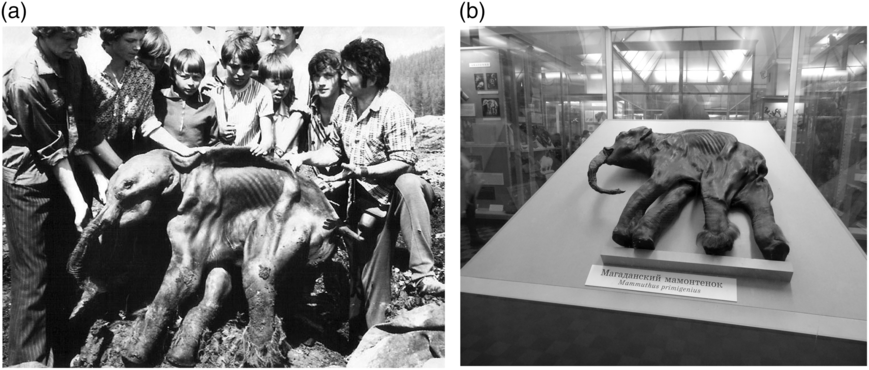
The Dima mammoth (ZIN No. 70188; Fig. 3), discovered in 1977 on a former GULAG “island” near the town of Susuman, nicknamed Dimá in honour of a local stream, was a unique find in many senses. The researchers received, first, a fully preserved baby mammoth, which gave them a picture of the mammoth’s diet and so forth (Vereshchagin & Mikhel’son, Reference Vereshchagin and Mikhel’son1981). In the correspondence between the Soviet scholars and their boss at the Soviet Academy of Sciences, Andreĭ S. Antonov (1936–2008), one Soviet geneticist wrote about the initial find:
based on my business trip to the USA in 1976, I am of the view that it is feasible to recommend for this purpose and consultations Professor Allan Wilson (California University, Berkley) and Professor Morris Goodman (Wayne [State] University, Detroit). [ARAN 1677/1/212: 34]
a-b The Magadan baby mammoth, also known as Dima, after its finding in 1977 (a) and on display in the Saint Petersburg Zoological Museum, Russia (b). A picture (a) taken from a public domain: https://magadanmedia.ru/news/445295, a picture (b) taken by the author in April 2018.

Thus, the biochemist Allan C. Wilson (1934–1991) and the molecular biologist Morris Goodman (1925–2010) found themselves at the centre of Soviet palaeontology. Regardless of the fact that Wilson was busy at his university and could not travel to the Soviet Union, the desire to collaborate with the US was so strong that the Soviet Academy kept trying to persuade him to become involved and even wrote a letter to the president of National Academy of Sciences, Philip Handler. Handler, in turn, replied on 7 October 1977:
Since I believe that cooperation between scientists of our two countries in ways such as this is entirely consonant with the spirit of our interacademy agreement, I should like to endorse Dr. Wilson’s initiative in making contact with you and your colleagues. Further, I would urge you to do everything possible to enable Dr. Wilson to participate in the research plan for the Soviet mammoth tissues and to do whatever else is possible to promote this valuable cooperative activity. [ARAN 1677/1/212: 44]
This effort from both sides of the iron curtain significantly changed the academic landscape within the fields of biology and palaeontology. Already in March 1978, a sample (19.5 g) of mammoth muscle tissue was delivered to a UC Berkeley laboratory, and in August of the same year a sample of psoas tissue was sent to Detroit (Vereshchagin & Mikhel’son, Reference Vereshchagin and Mikhel’son1981, pp.179, 192). In the 1980s, the first articles resulting from the research appeared as well as the first interviews in influential American newspapers, such as Washington Post (O’Toole, Reference O’Toole1980). Thus, American scholars received access to first-hand data from Arctic Siberia, although they did not have an opportunity to conduct the field research there themselves. Research on the mammoth, as well as its promotion by Soviet and world mass media, kept intensifying the value of the find. Soviet scholars worried that the Americans planned to buy Dima for 2 million US dollars (Kapit͡sa, Reference Kapit͡sa1979, p.101).
Shortly after their arrival at the Leningrad Zoological Institute/Museum, preparations were made for the Magadan and Gydan baby mammoths to begin their travels around the globe. The Soviet Union’s “empire of knowledge”, the Soviet Academy of Sciences, had its own propagandistic agenda of displaying the success of socialist science and technology abroad. It was Vystavkom (the scientific committee tasked with arranging the Academy of Science’s exhibitions) organised the first Soviet National Exhibition (later known as the “USSR Industrial Exhibition”), displayed for the first time in 1959 in New York City. It was a mobile model of the VDNKh (Exhibition of the Achievements of the National Economy, founded in 1959), created in collaboration with the American National Exhibition for audiences in Moscow (Reid, Reference Reid2008). The Soviet exhibitions became a point of encounter between Soviets and the West, where scientists, politicians and the public might see not only the showcasing of Western or Soviet science and technology but also moments of potential knowledge stabilisation. The uniqueness and in-betweenness of the mammoths made them real cultural/natural “diplomats” during such Cold War exhibitions. Even within the Soviet Union, the frozen baby mammoths, accentuated by stories of their tragic deaths in the late-autumn Pleistocene mud, became famous characters in popular Soviet cartoons, such as “Mama of a Baby Mammoth” (Mama dli͡a mamontënka), released in 1981 (Churkin, Reference Churkin1981), or “On Baby Mammoth” (Pro mamontënka), released in 1983 (Ablynin, Reference Ablynin1983). It was a rather Soviet modernist way of acknowledging the mammoth’s in-betweenness, its position between being extinct and extant, which was later formulated for the first time at an exhibition in London.
Andreĭ P. Kapit͡sa (1931–2011), the head of Vystavkom (1978–1990), an Antarctic explorer and son of the Soviet physicist and the Nobel Prize laureate winner Pёtr L. Kapit͡sa, initiated the world tour of Dima. London was chosen as the first stop for the exhibition. The tour was meant to ensure that the mammoth was at the centre of correspondence and negotiations within the Soviet Academy and between the Soviet state and international agencies. As a result, the mammoth was insured for 8 million British pounds or 10 million Soviet rubbles (Clarkson, Reference Clarkson2010, p.363; Kapit͡sa, Reference Kapit͡sa1979, p.101; Fig. 4).
a-c Packing and arranging for Dima’s departure to the UK, Leningrad, May 1979 (pictures taken from Kapit͡sa (Reference Kapit͡sa1979), pp. 101, 102).

The exhibition opened on 23 May 1979 at the Earls Court Exhibition Centre (demolished in 2015) in London (Clarkson, Reference Clarkson and Cross2012). The mammoth was accompanied by highly modernistic Soviet inventions, such as the Salyut space station (Clarkson, Reference Clarkson and Cross2012, p.300). Thus, as an object taken from the Siberian permafrost, the mammoth was put on an equal footing with technological objects within the context of international exhibitions. British Prime Minister Margaret Thatcher, President of the Royal Society Alexander R. Todd and about 150 000 sightseers visited the exhibition. The Soviets considered it a triumph. Andreĭ Kapit͡sa, in a report published in the Soviet popular scientific magazine Nauka i zhizn’ [Science and Life], formulated Dima’s political mission in the following way:
What about Dima? It accomplished its task as one of the “highlights” of a very interesting and beautiful exhibition, after which many Englishmen will take a fresh look at our country. Most of the visitors, of course, wanted to see Dima. It lay in the hall under the bright light of a spotlight. The soft voice of the auto-guide came from the loudspeaker telling its [the mammoth’s] story. Well, the mammoth did its job. Returning safely to Leningrad, it again took its place in the Mammoth Hall of the Zoological Museum. (Kapit͡sa, Reference Kapit͡sa1979, p.104; emphasis added)
This passage is also remarkable due to the language Kapit͡sa used. He presented the mammoth as an active actor in diplomatic negotiations, which to some extent might remind us of the ideas of indigenous people, wherein the mammoth acts and is in contact with them, or the ideas promoted in the Soviet cartoons mentioned above, where the mammoth was looking for his mum in modern tropical jungles. The mammoth’s resilience at crossing the borders between an extinct and extant existence to a certain extent triumphed over the dualistic modelling of science, leaving open a small window for alternative epistemologies.
After the London exhibition, Dima became a welcome guest in many countries. For its traveling and “diplomatic mission”, the Soviets used their ties with communist parties in other countries. Thus, the exhibition in Japan in 1981 was organised by the Japan Socialist Party (JSP) (Anon., 1981). The mammoth display was repeated two times in the 1980s (Kuz’mina, Reference Kuz’mina1982). As witnesses attest, the Japanese exposition in 1981 was extremely popular and attracted more than 2 million visitors (Vereshchagin & Kuz’mina, Reference Vereshchagin, Kuz’mina and Rozanov2001, p.38) [ARAN 1509/1/534]. Japanese scholars even translated Verechagin’s book Pochemu Vymerli Mamonty (Why the Mammoths Died Out) (Russian: Vereshchagin Reference Vereshchagin1979; Japanese: Xereshicha-gin Cho. Reference Xereshicha-gin and Kanemitsu1981). There was also the Japanese translation of the book on mammoth, and the dinosaurs by Anatoliĭ Lozhkin, the scholar who was responsible for conservation of Dima. Between 1979 and 1994, Dima visited the UK, France, Japan (three times), Finland, Italy, Denmark, Sweden (two times) and the USA. A colleague of mine, who used to work at the Zoological Museum, told me that being a curator of mammoth fauna at the museum was rather a prestigious job, one which gave them an opportunity to travel to the West accompanying the mammoth (Anon. pers. comm, October 2017).
There was also a Moscow-based exposition entitled “All about the Mammoths” (Vsё o mamontakh) organised by the Soviet Academy of Sciences for 2 years (1981–1982), which was visited by more than 1.5 million people (Fёdorov, Reference Fёdorov2017, p.182).
Dima was not the only mammoth find in the Soviet Union during the Cold War. Several baby mammoths were also found along the Gydan Peninsula in 1979 and Masha, from Yamal, in 1988. However, Dima’s role remained exceptional. Among other ideas, the finding of Dima evoked a new wave of debates on nature protection and de-extinctions. Some scholars began writing about the threat of “mammoth hunting” on the New Siberian Islands, which had to be prevented by establishing a nature reserve there (Ivanov, Reference Ivanov1979, p.103, 129). This repeated the appeals of the founder of the Moscow Palaeontological Institute, Aleksei A. Borisi͡ak (1872–1942) (Kordė, Reference Kordė1980, p.19), who had also proposed similar projects in Siberia in the 1930s. The most grandiose idea was realised by a charismatic scientist named Sergei A. Zimov. He created the “Pleistocene Park” in the north of I͡Akutia in 1996. By his design, the park was going to be a nature reserve for reintroducing the mammoth (Andersen, Reference Andersen2017; Zimov, Reference Zimov2005), once it had been cloned (Nicholls, Reference Nicholls2008). The other Pleistocene animals would also become the neighbours of the mammoths. The reintroduction of Pleistocene species in the Arctic Siberia preceded the mammoth project. Environmental historians give us similar examples from the Norwegian Arctic and the Antarctic interpreting them as a form of imperial acclimatisation expressed through the human authority over nature (Roberts & Jørgensen Reference Roberts and Jørgensen2016). The idea of mammoth de-extinction has been met by local people with a certain amount of fear, which David Anderson explains as stemming from indigenous cosmological reasons: “they argue that ‘submerged’ landscapes of genetic codes and mythic stories collide with the tangible central landscape of the here-and-now” (2017, p.139). Even presenting the mammoth in these projects as one of the “timeless” symbols of the Arctic challenges our assumptions and concepts and extends the frontiers of our knowledge.
* * *
When you land at Salekhard and enter the airport lounge, what you see first is a photograph of the mammoth monument near the city, which was erected in 2005. It is accompanied by the slogan, “Welcome to the City on the Arctic Circle”. The mammoth is what the regional authorities and local artists represent as being a part of “Arcticness”, along with the familiar images of reindeer or polar bears (for more on I͡Akutia (Sakha), see Stammler-Gossmann, Reference Stammler-Gossmann, Stammler and Takakura2010). Being in the city, I saw not only various wooden, bone and stone mammoth figurines in local shops but also large graffiti designs on the walls of the buildings in the city centre (Fig. 5).
A graffiti of the mammoth in Salekhard (Yamal, Russia). Picture taken by Dmitriĭ Doronin in May 2018.

The history of mammoth monuments shows the dynamics of the mammoth’s popularity: from the first monument in Ukraine in 1841, which presented a mammoth fossil as a matter of curiosity, to the first Arctic monument, containing a message on the success of the Soviet science, permafrost and mammoth studies in particular (the mammoth monument/fountain in I͡Akutsk was erected in 1972–1973), to modern monuments, where the mammoth is deeply intertwined with stereotypical images of the global Arctic (monuments erected in Salekhard (2005), Khanty-Mansiĭsk (2007) and Magadan (2013)). All these monuments and images artistically put into shade the long-term collaborations of indigenous hunters and herders, scholars and administrators, which stay behind these visual representations. This mammoth visual presence on the city-centre streets says not only about its apparent popularity but also about those moments of knowledge stabilisations which made the mammoth equally important for different local and central social, cultural and political groups across the Eurasian Arctic. The Pleistocene species taken out from the Arctic “eternal ice” became on a par with modern vitally important for the Arctic creatures as, for example, reindeer and dogs or technological invaders represented by gas and oil drill towers and pipelines.
Thus, in this article, I have tracked the mammoth through different social, cultural and political environments where it used to have and still has the opportunity to affect the activities of living people: from “mammoth hunting” on the New Siberian Islands to the “mammoth politics” of the Cold War period. By stringing these sites together, we might see the “post-extinct” life of one of the most enigmatic animals in the north, which still triggers the imagination of indigenous people, scholars, artists and politicians alike.
Author ORCIDs
Dmitry Arzyutov, https://orcid.org/0000-0003-3782-9296
Acknowledgments
This paper has been presented at the (Un)Common Worlds: Human-Animal Studies conference in Turku, Finland on 7–9 August 2018 and at Helsinki University Environmental Humanities Forum on 12 March 2019. Many of the ideas in this article have been formulated thanks to my long-term collaborations with Nenets reindeer herders in the Yamal peninsula in the Russian Arctic, namely, Khadri’ nyísya, Gena’ nyebya, Artur nyinyeka, di͡adi͡a Fedi͡a, Roman Andreevich and many others. I thank them for their incredible hospitality, support and genuine interest in what I was doing in the field. This research could not be possible without the help and advice of my colleagues Marii͡a Amelina (Moscow), David Anderson (Aberdeen), Dmitriĭ Doronin (Moscow), Naili͡a Galeeva (Salekhard/Kazan’), Erik Hieta (Helsinki), I͡Ulii͡a Laĭus (Saint Petersburg), Kati Lindström (Stockholm), Li͡udmila Lipatova (Salekhard), Karina Lukin (Helsinki), Serguei Oushakine (Princeton), Viktor Pál (Helsinki), Noora Pyyry (Helsinki), Peder Roberts (Stavanger/Stockholm), Mikko Saikku (Helsinki), Laura Siragusa (Helsinki), Anna Svensson (Stockholm) and Alekseĭ Tikhonov (Saint Petersburg). The analysis of indigenous folklore would be impossible without the online database of folklore motives compiled by I͡Uriĭ E. Berezkin (http://www.ruthenia.ru/folklore/berezkin/index.htm). I am also grateful to two anonymous reviewers for their helpful comments and recommendations.
All Russian words and titles are transliterated with ALA-LC (Library of Congress) Romanization with Diacritics, while Nenets words are transliterated according to the system of Tapani Salminen.
Financial Support
This article has been written with the support of the ERC project Greening the Poles: Science, the Environment, and the Creation of the Modern Arctic and Antarctic (GRETPOL) (PI Prof Peder Roberts). The field research for this article has been supported by the Russian Scientific Foundation project No 18-18-00309 The Energy of the Arctic and Siberia: The Use of Resources in the Context of Socio-Economic and Ecological Change (PI Dr Vladimir N. Davydov).
Conflict of Interest
The author declared no potential conflicts of interest with respect to the research, authorship, and/or publication of this article.
Supplementary material
To view supplementary material for this article, please visit https://doi.org/10.1017/S0032247419000299.
Abbreviations
- AMAĖ RAN –
Archive of Peter the Great Museum of Anthropology and Ethnography of Russian Academy of Sciences, Saint Petersburg, Russia.
- ARAN –
Archive of the Russian Academy of Sciences, Moscow, Russia.
- GARF –
The State Archive of Russian Federation, Moscow, Russia.
- I͡AGOM –
Emelian I͡Aroslavskiĭ I͡Akutsk State United Museum of History and Culture of the Peoples of the North, I͡Akutsk, Russia.
- I͡ANOVK –
I͡Amal-Nenets Regional Exhibition Complex Named after Irinarkh Shemanovskiĭ, Salekhard, Russia.
- MAĖ –
Peter the Great Museum of Anthropology and Ethnography of Russian Academy of Sciences, Saint Petersburg, Russia.
- ORKP NB TGU –
Department of Rare and Unique Books of the Scientific Library at Tomsk State University, Tomsk, Russia.
- RGASPI –
Russian State Archive of Social and Political History, Moscow, Russia.
- SPF ARAN –
Saint Petersburg Branch of the Archive of Russian Academy of Sciences, Saint Petersburg, Russia.
- ZIN –
Zoological Museum of Russian Academy of Sciences, Saint Petersburg, Russia.




 Open access

