




INTRODUCTION
Cowpea [Vigna unguiculata (L.) Walp.] is a legume crop of vital importance to the livelihoods of millions of people in West and Central Africa. It provides a nutritious grain and a less expensive source of protein for both rural poor and urban consumers (Inaizumi et al., Reference Inaizumi, Singh, Sanginga, Manyong, Adesina and Tarawali1999). Some 8 million ha of cowpea are grown in West and Central Africa, especially in Burkina Faso, Mali, Niger, Nigeria and Senegal. Out of an area of about 12 million ha under cowpea production in SSA, Nigeria accounts for 4.3 million ha (36%) producing over 2.4 million tons (60% of the world total) annually (www.fao.org). Cowpea cultivation is mainly under traditional systems and cowpea grain yields in farmers’ fields are low especially in the West African sub-region (0.025–0.3 Mg ha−1), which is caused by severe attacks of pest complexes, diseases, low soil fertility, drought, inadequate planting systems, inappropriate cultivars and lack of inputs (Ajeigbe et al., Reference Ajeigbe, Singh, Adeosun and Ezeaku2010a). In addition to biotic and abiotic stresses, existing planting practices limit crop yields. Despite the availability of Striga and disease resistant cowpea cultivars, grain yields on farmers’ fields are still low. However, on-station and researcher managed plot yields are high and encouraging. Grain yields ranging from 0.5 to 2.76 Mg ha−1 have been reported in sole crop (Ajeigbe et al., Reference Ajeigbe, Singh and Oseni2005, Reference Ajeigbe, Singh and Emebehe2008), whereas grain yields ranging from 0.37 to 1.27 Mg ha−1 have been reported in intercrop in the savannas of Africa (Ajeigbe et al., Reference Ajeigbe, Singh and Oseni2005, Reference Ajeigbe, Singh, Ezeaku and Adeosun2010). Considering the large differences between farmers’ yields (0.3 Mg ha−1) and experimental station yields (1.5–2.5 Mg ha−1), potential for on-farm yield increase in the region is high. This has stimulated interest in agronomic practices that could enhance crop yields.
Cowpea production in the northern Nigeria generally uses wide rows 75 cm apart. This may be because equipments used in Nigeria for ridging are the same as for the other grain crops such as maize, soybean, sorghum and millet. This general row spacing does not consider individual crop and varietal requirements, with low density resulted from wide row spacing usually leading to low yields in grain legume crops, such as cowpea in West Africa (Kamara et al., Reference Kamara, Sylvester, Tofa and Steve2014). Grain yields of the widely available stress-tolerant cowpea cultivars hardly go above 1.7 Mg ha−1 on farmers’ fields, despite the enormous gain in genetic improvement over the past three decades (Kamara et al., Reference Kamara, Ellis-Jones, Amaza, Ekeleme, Chikoye, Omoigui and Dugje2010). In Nigeria, cowpea planting density recommendation ranged from 33000 plants ha−1 in the more spreading and traditional variety to 66000 plants ha−1 in the improved erect varieties (Dugje et al., Reference Dugje, Omoigui, Ekeleme, Kamara and Ajeigbe2009; Utoh et al., Reference Utoh, Oyebanji and Ajeigbe2008). Plant density is an important component of yield in grain crops such as cowpea and soybean and it is important to determine the optimum plant densities for different areas and varieties as they have different potential for crop growth (Kamara et al., Reference Kamara, Sylvester, Tofa and Steve2014).
Adjusting planting density is an important tool to optimize crop growth and the time required for canopy closure, and to achieve maximum biomass and grain yield (Liu et al., Reference Liu, Jin, Wang and Herbert2008). Crop cultivars respond differently to high plant density because of differences in growth habit. Some cultivars record high grain yield when grown at high densities (Liu et al., Reference Liu, Jin, Wang and Herbert2008). High plant density increases light interception, dry matter and yield components (pods and seeds) by both decreasing row spacing and increasing plant density (Bruns, Reference Bruns2011). Ezedinma (Reference Ezedinma1974) reported that close spacing between and within rows increased biological and grain yields of cowpea, with Jallow and Fergusson (Reference Jallow and Fergusson1985) reporting a linear response of seed yield to plant density between 40000 and 250000 plants ha−1. However, plant response to changes in density depends on the morphology of the cultivars. Kwapata and Hall (Reference Kwapata and Hall1990) found that cowpea seed yield for some cultivars was significantly greater at 400000 plants ha−1 than at 100000 plants ha−1 under irrigated conditions in California, USA. Jallow and Fergusson (Reference Jallow and Fergusson1985) and Kwapata and Hall (Reference Kwapata and Hall1990) reported a significant cultivar × density interaction for cowpea grain yield, showing that cowpea cultivars rank differently at different plant densities. For instance, semi-dwarf lines produced relatively greater yield than standard lines at narrower row spacing (Ishmail and Hall, Reference Ismail and Hall2000).
The implements used for ridging are made for ridges spaced 75 cm apart. This reduces the flexibility of adjusting the distance between ridges. Since cowpea like any other grain crop in northern Nigeria is grown on ridges spaced 75 cm apart, the only option to increase plant density is to increase the number of rows per ridge from 1 to 2 or 3 rows. Although there have been some reports elsewhere on cowpea response to plant density (Jallow and Fergusson, Reference Jallow and Fergusson1985; Kwapata and Hall, Reference Kwapata and Hall1990), there is little information on the performance of current cowpea cultivars when grown at densities higher than the existing density of 133333 plants ha−1 in the Nigeria Savannas. Information on response of modern cowpea cultivars to increasing plant density beyond 133333 plants ha−1 are lacking for the Nigerian savannas where cowpea production is widespread. Thus, an understanding of how the modern cowpea cultivars will respond to increased plant density through increase in number of rows per ridges is very important. This will help growers’ select appropriate number of rows per ridge corresponding to specific plant density that will increase grain yield in their locations. The aim of this paper was to determine plant density effects on cowpea performance in Northern Guinea and the Sudan savannas of Nigeria and also to determine if cowpea response to increasing density is genotype dependent.
MATERIALS AND METHODS
Experimental site
Field studies were conducted during the 2013 and 2014 growing seasons at International Institute of Tropical agriculture (IITA) Experimental Stations at Zaria (11°11′N, 7°38′E, 686 m ASL) in the northern Guinea savanna and at Minjibir (12° 42′N, 8° 39′E, 509 m ASL) in the Sudan savanna. Prior to the trial establishment, soil samples were taken from each location and characterized according to the analytical procedures of IITA (1989). Weather information was collected from Accu Weather Stations installed at the trial sites.
Cowpea varieties, plant density and experimental design
Four cowpea varieties and three plant densities were compared. The experimental design was a randomized complete block in a split-plot arrangement with three replications. The main plot consisted of plant density of 133333, 266666 and 400000 plants ha−1. The cowpea varieties were assigned to the subplot. Two early maturing and determinate varieties (IT93K-452-1 and IT98K-205-8, which mature in 60 days) and two medium maturing and semi-determinate varieties (IT99K-573-1-1 and IT99K-573-2-1, which mature within 75–80 days) were used. These varieties were developed by the IITA. The subplots were 3 × 5 m and consisted of four ridges with 75 cm spacing between the ridges and 20 cm between plant stands on each ridge. On each ridge, cowpea seeds were planted in single, double or triple rows to obtain the corresponding density of 133333, 266666 and 400000 plants ha−1, respectively.
The field was disc-harrowed and ridged before planting. In Minjibir, the trial was planted on July 21, 2013 and July 26, 2014. In Zaria, planting was done on August 10, 2013 and August 1st, 2014. Cowpea was planted in the middle of each ridge for the single row planting. For the double row planting, two rows of cowpea were planted at a spacing of 20 cm between rows on the same ridge, whilst the triple row planting consisted of three rows planted 10 cm apart on the same ridge. Seeds of the cowpea cultivars were planted at a depth of 3 cm. Four seeds were planted and later thinned to two plants per stand. Thinning was performed 2 weeks after planting. At planting, the recommended fertilizer rate for legumes in the Nigerian savannas of 50 kg of P2O5 in the form of SSP was applied. A mixture of pendilin (500 g L−1 pendimethalin manufactured by Meghmani Industries Limited, India) and gramaxone (1:1-dimethyl-4,4-bipyridinum dichloride, manufactured by Syngenta Crop protection AG, Switzerland) at a rate of 1 L ha−1 each was applied immediately after planting using a knapsack sprayer. This was followed by hoe weeding 4 weeks after planting.
Evaluations
The two middle ridges were used for data collection. Leaf area index (LAI) and intercepted photosynthetic active radiation (IPAR) were measured simultaneously at full bloom stage using AccuPAR model LP-80 PAR/LAI Ceptometer (Decagon Devices, Pullman WA, USA). Five measurements of incident PAR above the cowpea canopy were taken from each plot and the average was recorded. IPAR was measured under the cowpea canopy for each plot. The sensor was placed diagonally across the two inner rows on the soil surface below the cowpea canopy so that the two ends of the sensor were in line with the cowpea rows. Five measurements were also taken and the average was recorded. Measurements were made under cloud free conditions between 12h00 and 14h00. The percentage of PAR intercepted by the cowpea canopy was calculated as: IPAR = [1.0 – (PARb/PARa)], where IPAR = intercepted PAR; PARa = PAR (μmol m−2 s−1) measured above cowpea canopy, and PARb = PAR measured below cowpea canopy.
At pod maturity, sampling (1 × 1.5 m) was done across two middle ridges for measuring yield components and dry matter. Pods from all the other plants from the two middle ridges excluding the sampled area were harvested, threshed and weighed for grain yield. The moisture content of grain samples from each plot was determined using Farmex grain moisture tester Model MT-16 (agraTronix™). Grain yield (Mg ha−1) was calculated based on 12% moisture content. Leaves, twigs and stems from the harvested area of the two middle rows were rolled up together and left on the plot to sun-dry for a week before they were weighed to determine fodder yield. The pods in each sampled area were harvested and counted before threshing. Samples were then separated into leaves, stem, empty pods and grain. The number of grains in each sampled area was also counted. The samples were dried at 60 °C for 76 h in a force-draft oven to constant weight (Kamara et al., Reference Kamara, Menkir, Badu-Apraku and Ibikunle2003). The weights of leaf, stem, empty pods and grain were expressed in g m−2 and summed to obtain total dry matter m−2. The number of pods and seeds in the sampled area were also counted.
Statistical analysis
Combined analysis of variance (ANOVA) across years was performed for each location using the PROC Mixed procedure of SAS (SAS, 2014). Block was treated as a random effect whereas year, plant density and cowpea varieties and their interactions were considered as fixed effects in determining the expected mean square and appropriate F-test. Differences between two treatment means were compared using LSMEANS statement (with option pdiff) of PROC MIXED code of SAS at 5% level of probability. The statement calculates the difference between two means and the standard error of the difference (SED). Pearson's correlation coefficient was used to test for a correlation between cowpea grain yield and other measured parameters using PROC CORR of SAS (SAS, 2014).
RESULTS
Soils in Zaria are loamy with pH 6.1, soil organic carbon of 8.9 g kg−1, total N of 0.8 g kg−1, available P of 3.1 mg kg−1 and exchangeable K of 0.5 cmol kg−1. Soil in Minjibir had sandy loam texture with pH 7.1, soil organic carbon of 6.9 g kg−1, total N of 0.3 g kg−1, available P of 8.5 mg kg−1 and exchangeable K of 0.3 cmol kg−1. Total rainfall in Zaria was 1049.4 mm in 2013 and 1145.3 mm in 2014, whereas Minjibir had 568.6 mm of total rainfall in 2013 and 705.0 mm in 2014. Most of the rain in Zaria fell between June and October. In Minjibir, rains started in July and ended in September in both years. In Zaria, mean daily average maximum temperature was 32.6 and 31.6 °C with average minimum temperature of 22.9 and 20.3 °C in 2013 and 2014, respectively. In Minjibir, mean daily average maximum temperature was 34.7 °C in 2013 and 34.7 °C in 2014 with average minimum temperature of 23.9 °C in 2013 and 24.1 °C in 2014.
In both locations, year had significant effects on all the parameters measured except for number of grains m−2 (Supplementary Table S1 available online at http://dx.doi.org/10.1017/S0014479716000715). Cowpea plant density and variety significantly influenced the fraction of IPAR, LAI, biomass, yield and yield components, and fodder yield in both locations (Table S1). Year × plant density was significant for total dry matter and 100 seed weight in Minjibir and for IPAR, LAI and grain yield in Zaria. Year × variety interaction was significant for number of pods m−2 and 100 seed weight in Minjibir and for IPAR, LAI, number of pods m−2, total dry matter, 100 seed weight, grain and fodder yield in Zaria. There was no interaction between plant density and variety for all parameters measured in both locations except for IPAR and grain yield in Zaria.
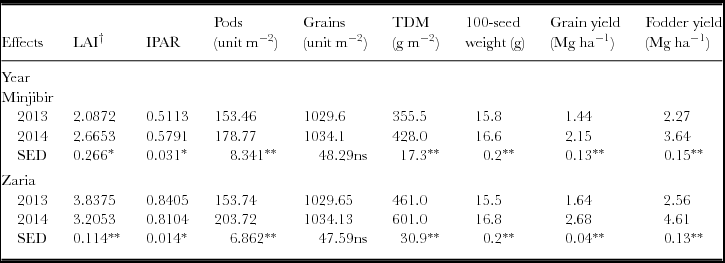
Except for pods m−2 and seed m−2 in Minjibir, the medium maturing varieties IT99K-573-1-1 and IT99K-573-2-1 produced values for all other traits measured that were higher than those produced by the early maturing cultivars IT93K-452-1 and IT98K-205-8. Cowpea performance was better in 2014 than in 2013 except for LAI and IPAR in Zaria (Table 1).
Year effects on agronomic performance of cowpea varieties at Minjibir and Zaria.
*P < 0.05; **P < 0.01.
†LAI, leaf area index; IPAR, intercepted photosynthetically active radiation (μmol m−2 s−1); TDM, total dry matter; SED, standard error of difference.
In Minjibir, IPAR was 37% higher when cowpea was planted at 266666 plants ha−1 and 40% higher when planted at 400000 plants ha−1 compared with that at 133333 plants ha−1. In Minjibir, there was no significant difference between densities of 266666 and 400000 plants ha−1 (Figure 1a). IPAR was higher for the medium maturing sister varieties IT99K-573-1-1 and IT99K-573-2-1 than the earlier maturing varieties IT93K-452-1 and IT98K-205-8 (Figure 1b). In Zaria, IPAR was significantly higher at 266666 plants ha−1 than at 133333 plants ha−1 (Figure 1a). IPAR increased by 22% when planted at 266666 plants ha−1 and 27% when planted at 400000 plants ha−1.
Effect of cowpea varieties and plant density on intercepted photosynthetically active radiation and grain yield averaged across three repleciations and 2 years in the two locations. (a) Effect of plant density on intercepted photosynthetically active radiation. (b) Effect of cowpea varieties on intercepted photosynthetically active radiation. (c) Effect of plant density on grain yield. (d) Effect of cowpea varieties on grain yield.

In Minjibir, LAI increased by 61% when cowpea was planted at 266666 plants ha−1 and 56% when planted 400000 plants ha−1 (Table 2). LAI of cowpea planted at 266666 plants ha−1 did not significantly differ from that of 400000 plants ha−1 (Table 2). In Zaria, LAI was 42% higher when cowpea was planted at 266666 plants ha−1 and 78% higher when planted at 400000 plants ha−1 as compared to 133333 plants ha−1. LAI was significantly higher at plant density of 400000 plants ha−1 than at 266666 plants ha−1 (Table 2). In both locations, the medium-maturing cultivars IT99K-573-1-1 and IT99K-573-2-1 had higher LAI than the early maturing varieties IT93K-452-1 and IT98K-205-8 (Table 2). In Minjibir, number of pods m−2 was 54% higher when cowpea was planted at 266666 plants ha−1 and 86% higher when planted at 400000 plants ha−1. Such increase was more pronounced when planted at density of 400000 plants ha−1 (Table 2). In Zaria, the increases in number of pods ha−1 were 50% for planting at 266666 plants ha−1 and 86% for planting at 400000 plants ha−1 (Table 2). For example, in Minjibir, the early-maturing variety IT93K-452-1 produced number of pods m−2 that was similar to that of the medium maturing variety IT99K-573-2-1. The early maturing variety IT98K-205-8 produced the least number of pods m−2. In Zaria, IT99K-573-1-1 and IT99K-573-2-1 produced more pods m−2 than the other varieties (Table 2).
Effect of cowpea variety and plant density on leaf area index (LAI) and number of pods of cowpea varieties at Minjibir and Zaria.

*LAI, leaf area index.
**P < 0.01.
†SED, standard error of difference.
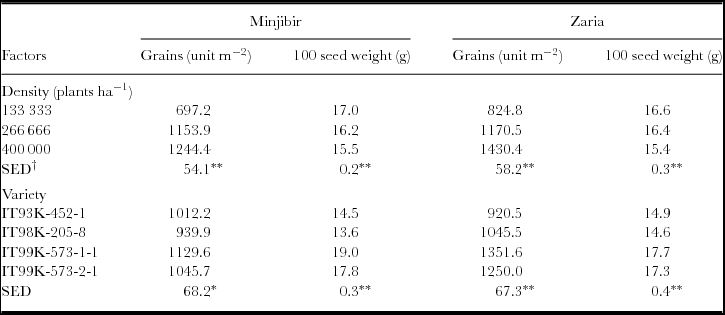
There were dramatic increases in the number of seeds m−2 when cowpea was planted at higher densities than 133333 plants ha−1 in Minjibir (Table 3). The number of seeds produced at plant density of 266666 plants ha−1 was 1.5 times of that produced at plant density of 133333 plants ha−1. When planted at density of 400000 plants ha−1, the number of seeds was two times higher than that of planting at density of 133333 plants ha−1. Differences between densities of 266666 and 400000 plants ha−1 were not significant. Number of seeds m−2 was 42% higher when planted at 266666 plants ha−1 and 73% higher when planted at 400000 plants ha−1 than when planted at a density of 133333 plants ha−1 in Zaria (Table 3).
Effect of cowpea variety and plant density on number of grains and 100 seed weight of cowpea variety at Minjibir and Zaria.
*P < 0.05.
**P < 0.01.
†SED, standard error of difference.
In Minjibir, seed weight was 5% lower at planting density of 266666 plants ha−1 and 9% lower at 400000 plants ha−1as compared to 133333 plants ha−1 (Table 3) In Zaria, seed weight was 1.3% lower when planted at density of 266666 plants ha−1 and 7% lower when planted at density of 400000 plants ha−1. There was significant variation amongst the varieties for 100 seed weight (Table 3). One hundred seed weight varied from 13.63 to 19.03 g in Minjibir (Table 3) and 14.60 to 17.79 g in Zaria (Table 3). In both locations, the 100 seed weight for IT99K-573-1-1 and IT99K-573-2-1 were higher than that for IT98K-205-8 and IT93K-452-1.
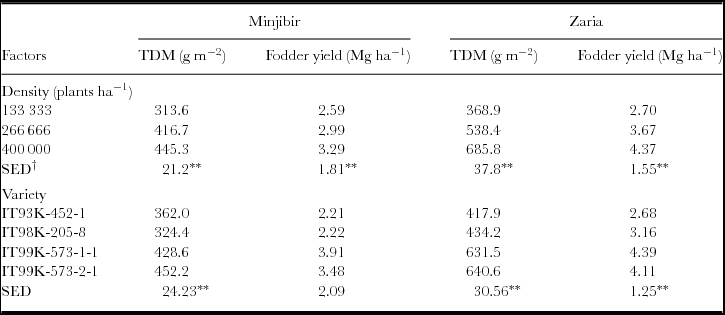
Total dry matter ranged from 313.6 g m−2 for density of 133333 plants ha−1 to 445.3 g m−2 for density of 400000 plants ha−1 in Minjibir (Table 4). There was an increase of 32% for density of 266666 plants ha−1 and 42% for density of 400000 plants ha−1. In Zaria, total dry matter reached 685.8 g m−2 at planting density of 400000 plants ha−1 (Table 4). This showed an increase in total dry matter of 86% when cowpea was planted at density 400000 plants ha−1. There was strong varietal effect for total dry matter in both locations. The two medium maturing varieties (IT99K-573-1-1 and IT99K-573-2-1) presented higher dry matter yields than that of the early maturing varieties (Table 4).
Effect of cowpea variety and plant density on total dry matter and fodder yields of cowpea variety at Minjibir and Zaria.
TDM, total dry matter.
**P < 0.01.
†SED, standard error of difference.
Increasing plant density significantly increased grain yield in both locations (Figure 1c). Grain yield ranged from 1.20 Mg ha−1 for density of 133333 plants ha−1 to 2.16 Mg ha−1 for density of 400000 plants ha−1 in Minjibir. Yield increases were 68% when planted at density of 266666 plants ha−1 and 79% when planted at density of 400000 plants ha−1. However, there was no significant difference between densities of 266666 and 400000 plants ha−1. In Zaria, grain yield of cowpea ranged from 1.62 Mg ha−1 for density of 133333 to 2.53 Mg ha−1 for density of 400000 plants ha−1. The increases were 48% when planted at 266666 plants ha−1 and 56% at density of 400000 plants ha−1. Again, such differences between densities of 266666 and 400000 plants ha−1 were not significant (Figure 1c). Grain yield also differed amongst varieties in both locations (Figure 1d). Grain yield of IT99K-573-1-1 and IT99K-573-2-1 were significantly higher than those of IT98K-205-8 and IT93K-452-1.
In Minjibir, fodder yield ranged from 2.59 Mg ha−1at 133,333 plants ha−1 to2.99 Mg ha−1 at density of 266666 plants ha−1. This shows an increase of 16% in fodder yield when planting at density of 266666 plants ha−1. Fodder yield for density of 266666 plants ha−1 did not significantly differ from that of density of 400000 plants ha−1. In Zaria, fodder yield ranged from 2.71 to 4.37 Mg ha−1. There was an increase of 36% for density of 266666 plants ha−1 and 61% for density of 400000 plants ha−1. Fodder yield also varied amongst the cowpea varieties in Zaria but not in Minjibr (Table 4). IT99K-573-1-1 and IT99K-573-2-1 exhibited higher fodder yields than IT98K-205-8 and IT93K-452-1. The variety IT93K-452-1 produced the least fodder in both locations.
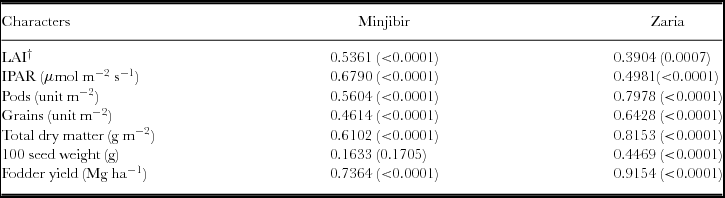
Overall, seed yield was positively and strongly correlated with IPAR, pods m−2, dry matter and fodder yield in both locations (Table 5), suggesting that these traits strongly influenced grain yield formation.
Pearson's correlation coefficient (P value) of agronomic traits with grain yield at each location.
† LAI, leaf area index; IPAR, intercepted photosynthetic active radiation.
DISCUSSION
Cowpea performance was influenced by location and year. The differences between locations are not surprising because the two locations have distinct weather and soil conditions. Minjibir is in the Sudano-sahelian agro-ecology region, with lower rainfall and poorer sandy soils than the northern Guinea savannas. Total rainfall in Minjibir was 568.6 mm in 2013 and 705.0 mm in 2014, far lower than the rainfall in Zaria, that lies in the northern Guinea savanna (1049.4 mm in 2013 and 1045.3 mm in 2014) agro-ecology region. Soil organic carbon and total N were higher in Zaria than in Minjibir. These differences in rainfall and soil fertility contributed to the differences in yield when comparing locations. There were also differences in cowpea performance between the 2 years. This was likely due to lesser available soil moisture as a result of low rainfall in 2013, which reduced crop growth and yield.
There was no significant interaction between plant density and cowpea varieties in both locations for most traits, suggesting that the varieties responded similarly to plant density. IPAR and LAI increased with increasing plant density in both locations but differences between plant density of 266666 and 400000 plants ha−1 were not significant. The intensity and the quality of solar radiation intercepted by the canopy are important determinants of yield components in grain crops (Liu et al., Reference Liu, Liu, Wang, Harbert and Hashemi2010; Purcell, Reference Purcell, King and Ball2000). When crops are planted at high densities, the efficiency of light interception is improved as consequence of increases in LAI (Alessi et al., Reference Alessi, Power and Zimmerman1977; MacGowan et al., Reference MacGowan, Taylor and Willingham1991; Xinyou et al., Reference Xinyou, Egbert, Schapendonk and Xuhua2003). A reasonable LAI is critical to maintain high photosynthetic rates and yield (Xiaolei and Zhifeng, Reference Xiaolei and Zhifeng2002). Our result is consistent with Purcell et al. (Reference Purcell, Ball, Reaper and Vories2002), who reported that increasing population increased the total interception of PAR for soybean during the growing season. Such increase may be due to early canopy closure, improving light interception. Herein, our data suggest that increases in LAI of cowpea at higher populations than the current recommended practice cause increases in IPAR and therefore in grain yield. Accordingly, Kamara et al. (Reference Kamara, Sylvester, Tofa and Steve2014) also reported increases in IPAR with increasing population of soybean in the Nigerian savannas.
The results for seed weight are consistent with other reports (Egli, Reference Egli1988; Elmore, Reference Elmore1998; Ethredge et al., Reference Ethredge, Ashley and Woodruff1989), revealing that seed mass decreased as seeding rates increased in soybean. This may be due to competition for light that reduced assimilate partitioning to the seeds at high plant population. The reduction in seed weight in our study was however negligible when compared to the increase in number of pods and seeds at higher planting densities. There were significant variations amongst the cowpea varieties for 100 seed weight. As IT99K-573-1-1 and IT99K-573-2-1 matured later than IT98K-205-8 and IT93K-452-1, the former cultivars accumulated higher biomass and partitioned more of this biomass to the grain leading to high seed mass.
Our results showed an increase of 46% in dry matter accumulation when cowpea was planted at density of 266666 plants ha−1 and 86% when planted at density 400000 plants ha−1. This is consistent with results for soybean in northern Nigeria, where Kamara et al. (Reference Kamara, Sylvester, Tofa and Steve2014) reported increases in dry matter at high plant population. They attributed this to high light interception because of high LAI in high plant population. Varietal differences in total dry matter were dependent on growth duration. IT99K-573-1-1 and IT99K-573-2-1 had a much longer growth period than IT98K-205-8 and IT93K-452-1 and therefore intercepted more light and consequently produced more dry matter.
The effect of plant density on seed yield was also consistent with published data on similar grain crops (Jallow and Fergusson, Reference Jallow and Fergusson1985; Kamara et al., Reference Kamara, Sylvester, Tofa and Steve2014; Kwapata and Hall, Reference Kwapata and Hall1990). Early season increases in LAI and light interception led to greater dry matter and grain yield of cowpea planted at high plant densities. Ismail and Hall (Reference Ismail and Hall2000) reported that grain yield responses of cowpea to narrow row spacing compared with wide row spacing may be attributed to greater light interception, greater production of vegetative biomass and peduncles per area, and a proportionate increase in pod production and grain yield under narrow row spacing. The responses of the cowpea cultivars in our study are consistent with this model with the highest increases in biomass and grain yield occurring at high density of 400000 plants ha−1.
Yield increases were related largely to increased pod and seed production with effects on seed size being relatively minor. Egli (Reference Egli1988) showed that at low planting densities, where there was no interplant competition, soybean yield increased in direct proportion to increases in plant density. However, the rate of yield increase was reduced at plant densities providing interplant competition. In our study, yield increases from a base density of 133333 plants ha−1 were very significant at density of 266666 plants ha−1. Although yield increase at 400000 plants ha−1 was also significant compared with the base density further yield increase from 266666 to 400000 plants ha−1 was not significant.
In both locations, grain yield of IT99K-573-1-1 and IT99K-573-2-1 were significantly higher than those of IT98K-205-8 and IT93K-452-1. This is because the medium maturing (IT99K-573-1-1 and IT99K-573-2-1) varieties produced more pods and seeds m−2 and accumulated higher dry matter than the early maturing varieties (IT98K-205-8 and IT93K-452-1). The two early maturing cultivars are erect and grain type, which generally produce less fodder. There was an increase in fodder yield with increasing plant density in both locations. The increases were significant for all plant densities. Fodder is an important feedstuff in the dry savannas of northern Nigeria. Farmers prefer dual-purpose cowpea varieties that produce acceptable grain yield in addition to good fodder to feed their livestock. Crop management practices such as increase in plant density could increase fodder yield and are therefore desirable in this region.
CONCLUSION
Cowpea population of 266666 plants ha−1 allow optimal seed and fodder yield of determinate and semi-determinate cultivars. Such density may be achieved by planting cowpea in double rows on ridges spaced 75 cm apart. The small yield increases observed at the high plant populations of 400000 plants ha−1 may not offset the increased seed costs for the smallholder farmers. Cowpea varieties responded similarly to plant density with the medium maturing cultivars performing better than the early maturing cultivars in all plant densities.
SUPPLEMENTARY MATERIAL
To view supplementary material for this article, please visit http://dx.doi.org/10.1017/S0014479716000715.


 Open access

