

A trio of Stockholm Conference-inspired events in 1982, although differing substantially in scope and focus, foreshadowed a remarkable period of activity of global environmental governance. The five-year time span that followed, from 1983 to 1988, would encompass the establishment of an international regime to combat ozone depletion, the rise of the revolutionary field of Earth System science, the creation of a UN commission that would popularize the concept of sustainable development, and the institutionalization of climate change science, a key step in the ascent of the issue on the international political agenda. Meetings would again serve as crucial cogs in the forward motion of scientific and political processes.
Acid rain, the original transboundary environmental issue that to some extent precipitated the Stockholm Conference, had by 1982 become the object of a regional governance regime. As one of the countries most affected by sulfur dioxide emissions from Europe, Sweden considered itself a primary stakeholder and, due to the pathbreaking work of Swedish scientists, a foremost authority on the issue. Acid rain was thus an obvious theme around which to convene another international conference ten years after Stockholm in June 1982. Further, in November of that year, the Royal Swedish Academy of Sciences organized a small yet influential meeting that brought together a select group of scientists to set forth an agenda for addressing environmental issues in the 1980s. Both of these meetings in Sweden were preceded by a May 1982 Conference in Nairobi, organized by the United Nations Environment Programme (UNEP), to commemorate the tenth anniversary of the 1972 event in Stockholm that led to its creation.
The latter half of the 1980s was in fact a moveable feast of scientific conferences, workshops, and meetings that paved the way for the establishment of what became the main pillars of international climate governance.Footnote 1 In the middle of the decade, climate change was an issue of increasing scientific concern, but still of only marginal political interest. Yet within just a few years, a newly formed Intergovernmental Panel on Climate Change, the IPCC, had released its first assessment report, and an Intergovernmental Negotiating Committee (INC) had been set up to prepare a framework convention on climate change under UN auspices.Footnote 2 At the center of this rapid rise of climate change on the international political agenda was a core group of activist climate experts who served as knowledge brokers in raising concern among decision-makers and laying the scientific foundation for governmental action.Footnote 3 A great deal of the coordinated activities of these scientific policy entrepreneurs was orchestrated in Stockholm.
The perhaps most groundbreaking change emerged more modestly at first, but would eventually reconfigure the entire playing field of global environmental governance: the Earth System idea. During the same period, a new institution – the International Geosphere-Biosphere Programme (IGBP) – that incorporated climate within a wider Earth System paradigm of global environmental change was established. Its international secretariat would, not coincidentally, be placed in the Swedish capital. In addition, a rebranding of the Beijer Institute initiated by the Swedish government would spawn two new Stockholm-based organizations dedicated to the study and implementation of the 1987 Brundtland Report’s concept of sustainable development.
Ten Years after Stockholm
Several international events, mostly forgotten today, that were positioned at the intersection of environment, science, and politics had taken place earlier in the decade. The tenth anniversary of the 1972 UN Conference was celebrated with a “Stockholm plus 10” meeting in May 1982 that was more stock-taking than ground-breaking in ambition.Footnote 4 Officially a “session of a special character” of the Governing Council of the UN Environment Program, the nine-day conference was held at UNEP headquarters in Nairobi. It was presided over by the Program’s Executive Director, Mostafa Tolba, an Egyptian plant pathologist who had led his country’s delegation to Stockholm in 1972 and would serve as head of UNEP for almost two decades.Footnote 5 The meeting’s main task was to review the implementation of the Stockholm Action Plan and make recommendations for UNEP activities for the rest of the decade.Footnote 6 It resulted in a Nairobi Declaration that revisited the Stockholm themes of poverty and underdevelopment as drivers of environmental degradation, while reaffirming the imperatives of the Stockholm Declaration and Action Plan from a decade earlier. The 1982 Declaration also called attention to the emerging atmospheric issues of acid rain, ozone depletion, and increasing carbon dioxide concentrations that would become – in part through the efforts of UNEP and Tolba – prominent issues of international environmental politics over the course of the 1980s.
The ceremonial dimension of the Nairobi Conference featured the awarding of the newly instituted UNEP Gold Medal to Kenyan president Daniel Arap Moi, founding UNEP director Maurice Strong, and King Carl XVI Gustaf of Sweden. The Swedish King’s interest in the environment dates back to the Stockholm Conference’s preparatory period when, as crown prince, he served as an intern at the Swedish UN delegation in New York under the tutelage of Lars-Göran Engfeldt and attended meetings of the Conference’s preparatory committee in Geneva.Footnote 7 Since the early 1970s, Carl Gustaf has consistently demonstrated his interest in the environment by supporting scientific research and advocacy organizations – the royal family are patrons of WWF Sweden and the King is chairman of its advisory council – as well as through a series of speeches at major international meetings, including the Rio Earth Summit in 1992.Footnote 8 That year, he also launched the Royal Colloquium, an annual gathering of leading international experts convened by the King to discuss climate, environment, and sustainability issues.Footnote 9 Further, for his fiftieth birthday in 1996, King Carl Gustaf received a gift from Mistra, the Foundation for Strategic Environmental Research, and several academies toward establishing a Royal Professorship, which typically entailed funding invited researchers to spend time in Swedish universities and institutes. In the context of Swedish society, the King’s patronage and personal interest in the environment, as well as that of his daughter Crown Princess Victoria, have served to help raise the issue to a level that to some extent transcends everyday domestic politics.
WWF Sweden has since 1983 been based at the royal palace of Ulriksdal, located at the northern end of the Royal National City Park – a natural and cultural heritage preservation area established in the early 1990s that covers a significant swath of greater Stockholm.Footnote 10 The prior occupant of Ulriksdal Palace was the International Federation of the Institutes of Advanced Studies (IFIAS), an NGO and a network of some twenty leading scientific institutes that was founded in 1972 with backing from the Swedish Riksbanken, the Nobel and Rockefeller foundations, and the King of Sweden, who provided the premises for the IFIAS secretariat. The idea for an organization dedicated to promoting research on the increasingly complex and interconnected problems of the modern world – the problematique, in the parlance of the Club of Rome – came from the Swedish Nobel-laureate chemist Arne Tiselius during the 1969 Nobel Symposium “The Place of Value in a World of Facts.”Footnote 11 This intellectual affinity between IFIAS and the Club of Rome was not incidental. The executive director and co-founder of the Nobel Symposia series, nuclear physicist Sam Nilsson, was in fact the Club’s first Swedish member, and would become the founding director of IFIAS, a position he held until 1986. What is more, the two co-founders of the Club of Rome, Aurelio Peccei and Alexander King, would serve as IFIAS trustees,Footnote 12 with King – the influential Director General for Scientific Affairs at the Organization for Economic Co-operation and Development – becoming chairman in 1974 after Swedish diplomat and former Nobel Foundation executive director Nils Ståhle.Footnote 13 The Nilsson-King era included, among other IFIAS activities, an Ulriksdal seminar series (with associated publications) and a comprehensive State of the Planet report, written by King and published in two editions in 1976 and 1980.Footnote 14
The Swedish government marked the tenth anniversary of the UN Conference on the Human Environment by organizing a conference on acid rain, an issue that Sweden had brought to international attention in the years leading up to Stockholm 1972. Several hundred scientists and political representatives from twenty-one countries, as well as observers from a range of international NGOs, attended the Stockholm Conference on the Acidification of the Environment in June 1982.Footnote 15 The weeklong gathering resulted in consensus reports by experts and government ministers. It took place during the interim period between the signing, in 1979, and the coming into force, in 1983, of the Convention on Long-range Transboundary Air Pollution, an international agreement involving thirty-four countries that Sweden had played an important scientific and diplomatic role in bringing into existence.Footnote 16 The 1982 Acidification Conference in Stockholm served to accelerate the ratification of the LRTAP convention.Footnote 17
Another 1982 event that explicitly invoked the spirit of the 1972 Stockholm Conference was the Rättvik Conference on Environmental Research and Management Priorities for the 1980s (Figure 6.1). The conference, organized by the Royal Swedish Academy of Sciences and held on the eastern shore of the magnificent Lake Siljan in central Sweden, further demonstrated Sweden’s ambition to shape the scientific and political agenda on environmental issues. After a year spent selecting the scientists to invite and the specific topics to discuss – a curation process that the thirty-five hand-picked experts were involved with in advance of the conference – a total of ten research and ten management priorities were agreed upon.Footnote 18 Climate change, indicating the lukewarm level of concern that prevailed in the early 1980s, was selected by the participating scientific elites as a research priority but not as one of the ten most pressing environmental management priorities. It was eclipsed in importance by issues like river basin management and the control of pathogens from human waste and their aquatic vectors.
The 1982 Rättvik Conference convened by the Royal Swedish Academy of Sciences, and the special issue of the Academy’s journal Ambio (Vol. 12, No. 2, 1983) demonstrated Sweden’s continued interest in science organization and environmental agenda setting ten years after the Stockholm Conference.

The legacy of Stockholm 1972 was embodied in Rättvik by Maurice Strong, who delivered an expansive keynote address entitled “Towards a New Kind of Economic Growth.” Engaging with the complex issue of growth, Strong suggested that industrialized countries should embrace a “new growth” economic paradigm, based on personal fulfillment rather than material production, while at the same time making a massive commitment to Third World development.Footnote 19 The environment-development dilemma was also addressed by the conference director Robert Munro. In a special issue of the journal Ambio dedicated to the Rättvik Conference, published the same year, 1983, as the launch of the Brundtland Commission, Munro sounded an optimistic tone on the possibility of, as it were, sustainable development:
The decade (of the 1970s) began with a widely held view that one must choose environment or development, but ended with increasing acceptance of the view that environmental considerations were an essential and integral part of sustainable national and even global economic development.Footnote 20
Munro was at the time an environmental consultant living in Stockholm with his wife Ingrid (née Mårtensson), an architect who had produced a report on urban environments for the Swedish government during the preparatory stage of the Stockholm Conference.Footnote 21 Robert Munro, a Canadian expert in environmental law, was an advisor to Maurice Strong for the Stockholm Conference and had been involved in a range of environmental and development projects and processes during the 1970s. Well-connected internationally, Munro was close to fellow Canadian Jim MacNeill, who was also a key participant in Stockholm Conference preparations on behalf of the Canadian government, and would from 1983 serve as secretary general of the Brundtland Commission. MacNeill, whose mother was Swedish, also had strong ties to Stockholm, having studied at Stockholm University in the early 1950s. Another one of Munro’s contacts was the Yale-trained environmental lawyer James Gustave Speth, who had recently chaired the Council on Environmental Quality under US President Jimmy Carter. Speth, who would also champion sustainability in the United Nations as Administrator of the UN Development Program during the 1990s, drew upon the Rättvik results while establishing and formulating the mission of the World Resources Institute, an influential environmental NGO he founded in 1982.Footnote 22 With its ties to Stockholm, Speth’s institute would during the 1980s also become a partner in the publication of the Academy’s journal Ambio.Footnote 23 Through Munro – a prime example of an expatriate contributor to Stockholm’s outsized influence on environment and sustainability issues – the relatively small-scale Rättvik Conference had an impact on environmental governance well beyond the limited number of experts that participated in the meeting.
The Quickening of Climate as a Political Issue: The Pivotal 1985 Villach Conference
The Rättvik Conference was another example of Sweden’s long tradition of organizing international meetings, scientific as well as policy-oriented, on issues of the environment. Such conferences, and the individuals that organized and participated in them, have served as catalysts for advancing scientific knowledge and fostering policies, institutions, and networks. They have also constituted an important source of influence and leverage in promoting Stockholm’s status as a leading hub of global environmental governance. Going back to at least the mid-1950s, Bert Bolin and many others had been arranging conferences in and around Stockholm, in settings ranging from stately nineteenth-century manor houses to the more austere functionalist facilities of 1960s modernism. In the middle of the 1980s, actors associated with Stockholm became instrumental in convening a series of events in locations outside Sweden that have since become synonymous with the emergence of climate change as a top-tier issue of international politics.
Well into the 1980s, climate change was largely outside the mainstream of environmentalism, and specialists in the field for the most part followed their own scientific track, separate from disciplines such as ecology that were often at the center of environmental politics. This would begin to shift sharply in the middle of the decade. A conference in Villach, Austria, in October 1985 was an integrative moment in the scientific understanding of climate, assembling a wide range of experts to form a consensus on the dynamics and drivers of global warming. It was also a turning point in the politicization of climate change. Organized by the International Meteorological Institute (IMI) at Stockholm University and the Stockholm-based Beijer Institute, the conference was the culmination of a series of scientific meetings in the Alpine resort mandated by the 1979 World Climate Conference in Geneva and convened under the auspices of the World Climate Programme. The previous Villach workshops, one in 1980 chaired by Bolin and another in 1983, had been limited to the scientific aspects of climate and CO2 Climate change had thus remained mostly apolitical through the first half of the 1980s, a status that would change dramatically after 1985.Footnote 24
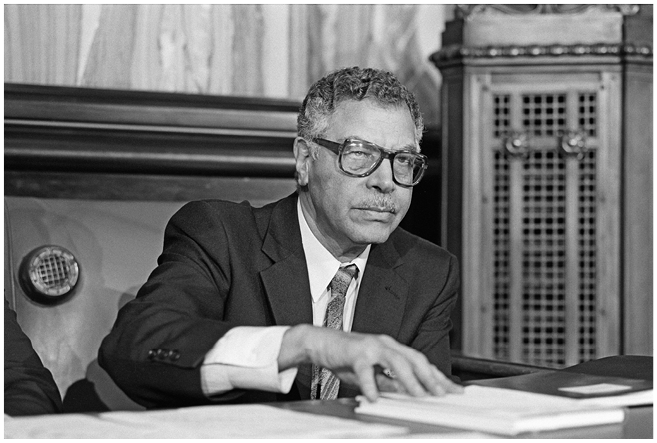
The 1985 Villach Conference brought together the heads of the sponsoring organizations UNEP, the World Meteorological Organization (WMO) and the International Council of Scientific Unions (ICSU) – the same trio that supported the Villach meetings in 1980 and 1983 – and scientists from twenty nine developed and developing countries. For the first time, a scientific assembly of such significance managed to reach a general consensus – a politically powerful concept in climate discourse – on the near-term threat posed by anthropogenic climate change. Mostafa Tolba (Figure 6.2), the Executive Director of UNEP, evoked climate-induced disasters in an opening statement that signaled the emerging politicization of climate change. In contrast to the previous Villach meetings, the 1985 conference foreshadowed calls for climate mitigation and adaptation policies by emphasizing the importance of government action to limit greenhouse gas emissions. It also brought up the need for societies to take a changing climate into account when making longer-term decisions; the climatic past was no longer a reliable baseline for future conditions. The conference statement put forward a range of recommended actions for policy and, importantly, tied climate change to the other politically salient atmospheric issues of the day: acid rain and ozone depletion.Footnote 25
As Executive Director of the United Nations Environment Programme from 1975 to 1992, the Egyptian scientist Mostafa Tolba played a key role in the promotion of the science and politics of ozone and climate, including the 1985 Vienna Convention for the Protection of the Ozone Layer and the establishment of the Intergovernmental Panel on Climate Change in 1988.
The signing of the Vienna Convention for the Protection of the Ozone Layer just six months before (and, incidentally, only a few hundred kilometers from) the 1985 Villach Conference had a profound influence on the trajectory of climate governance. The participants at Villach 1985, some of whom had also been involved with the ozone issue, were convinced that the decisive role of science in catalyzing government action on ozone-depleting chlorofluorocarbons (CFCs) could and should serve as a model for political engagement on greenhouse gases. Further, the success of the Vienna Convention – a watershed agreement in global environmental politics – encouraged UNEP and Tolba, who had since the late 1970s effectively leveraged scientific expertise in advancing the ozone agenda, to take a similar, scientized approach in fostering political engagement on climate change.Footnote 26 The 1985 Villach Conference was, in effect, orchestrated to become the manifestation and coming-out party for the convergence of climate science and international politics.
The importance of Villach 1985 has not only been realized in retrospect; conference participants were aware that they were taking part in something momentous.Footnote 27 For some, including many of the scientists that animate this chapter, the conference marked their emergence as de facto political actors on the global stage. Although a scientific conference with all the trappings of such – keynote addresses, research papers, thematic working groups, and an extensive conference report – the enduring historical significance of Villach 1985 would prove to be this pivot toward the policy implications of climate change, in which scientists and their institutions would come to play a decisive role. The enhanced political dimension of the 1985 meeting was facilitated by the fact that the scientists were, by design of the conference organizers, attending in their capacity as individuals, rather than representing a particular country. They were thus at liberty to make statements based solely on their professional conclusions (and, perhaps, personal convictions) without inhibition over the potential political implications of their scientific claims.Footnote 28
Beyond the synthesis of diverse climate knowledge that took place during the seven days in Villach, including the forcing effect of trace gases other than CO2 and the potential regional impacts of climate change, the 1985 Conference and its scientific outputs would prove to be a rallying point. It also served as a venue of political leverage for a cadre of activist scientists who had become convinced that climate change posed a clear and present danger to humanity. As explored later in this chapter, several important outcomes followed in the wake of the conference – not only scientific but also political, institutional, and social, in terms of the emergence and strengthening of networks dedicated to bringing about government action on climate change. The ability to speak on behalf of science, however, was the primary source of influence that the networks constituted. More than just closed-door meetings of scientific elites, this required documentation grounded in research – and research, as has always been the case, required funding.
The scientific results of Villach 1985 were summarized in a seventy-eight-page official conference report written by Bolin and colleagues at Stockholm University, and a landmark, 500-page edited volume in the SCOPE series. SCOPE – Scientific Committee on Problems of the Environment – is an international scientific body under ICSU that has since 1971 published influential reviews of contemporary environmental issues with human dimensions. The climate report, number 29 in the SCOPE series, was based on research specifically commissioned by UNEP, with additional support from WMO and ICSU, that was explicitly intended to serve as the scientific basis for the deliberations at the 1985 Villach conference.
The research project originated in a pivotal June 1982 meeting in Stockholm, arranged by the Swedish diplomat Göte Svensson, between Bert Bolin and Mostafa Tolba.Footnote 29 The two were primary protagonists in the formation of climate governance institutions later in the decade. Bolin would in 1988 become founding chairman of the IPCC, the organization that Tolba would as Executive Director of UNEP be instrumental in establishing.Footnote 30 The 1982 meeting in Stockholm was thus an early signal of the emerging alliance of scientists and international organizations, particularly UNEP under Tolba, that would, as with ozone, underpin the politicization of climate change. Not surprisingly, the project was placed at the Department of Meteorology at Stockholm University. Starting in 1983, the research there was carried out by Bolin, Bo Döös, and Jill Jaeger who, together with climate scientist Richard Warrick, co-authored and edited the SCOPE 29 report The Greenhouse Effect, Climatic Change, and Ecosystems.Footnote 31
The scientific report also included an ominous message that was clearly legible even to the layman: “In the first half of the next century a rise of global mean temperature could occur which is greater than any in man’s history.”Footnote 32 Published in 1986, the report became a milestone in climate science and in understanding the carbon cycle. Some even considered it the “IPCC bible” in the early days of the Panel.Footnote 33 Yet as influential as the SCOPE 29 report was, the Villach findings would receive their widest dissemination, and greatest political impact, not in a specialized publication for a narrow scientific audience but in the landmark report of the World Commission on Environment and Development (WCED), also known as the Brundtland Commission, chaired by former Norwegian prime minister Gro Harlem Brundtland.
Gordon Goodman, the Beijer Institute, and the Brundtland Report
Upon its release in October 1987, the WCED report Our Common Future attracted tremendous international attention and greatly increased public and political interest in issues of the environment and “sustainable development” – the term the Brundtland Commission is usually credited with coining, but which was of course rooted in ideas with a much longer lineage.Footnote 34 It also generated a serious discussion in the UN General Assembly specifically on climate change, which up to that point had not been an issue of significant international concern. The sections on climate change in Our Common Future drew heavily, indeed exclusively, on Villach, citing and extracting passages directly from the conference’s report.Footnote 35 This was not a coincidence, nor done simply out of convenience. The use of the Brundtland Report as a high-profile platform to leverage, communicate, and advance the Villach science-policy agenda was part of a longer-term plan involving scientists and other actors both inside and outside of the Brundtland Commission. Stockholm figured prominently in the formation and execution of this strategy that would strongly influence the events that led to the establishment of an intergovernmental organization for climate science and help lay the foundation for a framework convention on climate change.
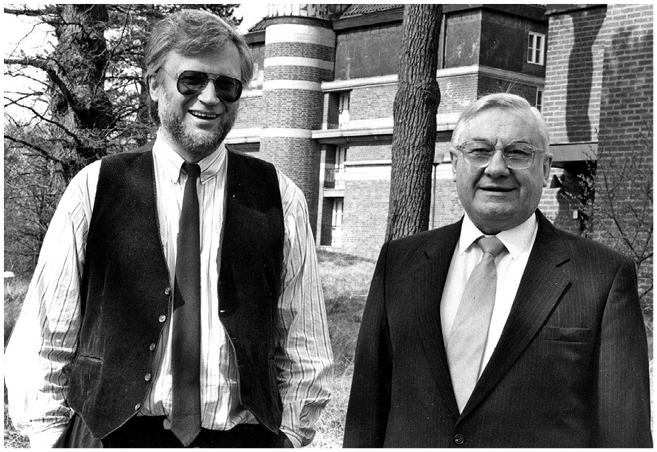
The energy and climate chapter of the Brundtland Report was written by Gordon Goodman (Figure 6.3), the director of the Stockholm-based Beijer Institute.Footnote 36 A biologist by training, Goodman was also an energy specialist with exceptional communication, organizational, and social networking skills. He was moreover a committed environmentalist, known in his native Wales for applying his scientific research to help ameliorate real-world problems, particularly related to energy and air pollution, caused by human activity. His scientific activism encompassed a variety of remediation projects and environmental conservation initiatives that engaged local stakeholders in the degraded postindustrial landscape of the Lower Swansea Valley coal district.Footnote 37 Throughout his scientific career, which included a position at the University College of Swansea and a professorship at the University of London, Goodman cultivated close relationships with a wide range of international organizations. Among these were UNEP, WMO, and ICSU, including the latter’s SCOPE initiative,Footnote 38 through which he had established the Monitoring and Assessment Research Centre at Chelsea College in 1974.
Gordon Goodman (right) and Lars Kristoferson (left) were director and deputy director, respectively, for the entire duration of the Beijer Institute’s original incarnation from 1977 to 1989, and remained in those positions for several years after Beijer’s transformation into the Stockholm Environment Institute. While director of Beijer, Goodman – a Welsh biologist and energy expert who was well connected in international scientific networks – contributed to an array of seminal processes, including the Brundtland Commission and the climate meetings in Villach and Bellagio that facilitated the establishment of the AGGG and IPCC.
Goodman’s strong ties to Sweden stretched back to the early 1970s. Through ICSU and a Winston Churchill Memorial Fellowship, Goodman spent a great deal of time in Stockholm, receiving training on the detection and measurement of organic mercury in marine environments.Footnote 39 He spent the summer of 1971 in Stockholm working together with Swedish scientists Bengt Lundholm and Sören Svensson to prepare the ICSU-SCOPE 1 report, Global Environmental Monitoring. As discussed in Chapter 4, the report was written specifically, even strategically, as a contribution to the 1972 Stockholm Conference, laying the scientific foundation for the establishment of the UNEP Earthwatch program and its Global Environmental Monitoring System.Footnote 40
As part of the British delegation to the Stockholm Conference, Goodman met Carl Gustaf Bernhard, secretary general of the Royal Swedish Academy of Sciences and at the time chairman of the Swedish SCOPE Committee.Footnote 41 Several years later, Bernhard would oversee the establishment of the Beijer Institute – the International Institute for Energy Resources and the Human Environment. It was on the basis of these scientific and organizational capabilities and his long background in environmental research, as well as his strong associations with Sweden and long-standing relationships within the international scientific community, that the Academy appointed Goodman to become the founding executive director of the Beijer Institute. He would hold that position for fourteen years, encompassing the entire duration of the Beijer Institute’s original organizational form, as well as the first two years of its rebranded incarnation as the Stockholm Environment Institute (SEI). The Beijer Institute would enjoy great success under Goodman’s leadership, attracting hundreds of millions of Swedish crowns in project funding and initiating close to a hundred projects, mostly in the developing world.Footnote 42
In his speech at the opening ceremony of the Beijer Institute in 1977, Goodman stated that the Institute would welcome researchers from all over the world, “from east and west, from north and south.” The King of Sweden, H. M. Carl XVI Gustaf, ever the patron of the environment, expressed a similar sentiment in his official opening of the Beijer Institute, proclaiming, “I am proud that Sweden and its people, by making this Institute possible, have shown that they are also citizens of the world.”Footnote 43 While such statements might seem like ceremonial boilerplate, this dovetailing of Sweden’s perception of its place in the world, and the Beijer Institute’s outlook and status as a bridge spanning North-South and East-West divides, gave Goodman and the Institute certain operational advantages in achieving their energy and environmental goals in an often-fraught geopolitical context.
The Institute would be based at the Royal Swedish Academy of Sciences, located in the Frescati district adjacent to the campus of Stockholm University. A nexus of expertise as well as institutional power and prestige, both the Academy and the University are situated within an extensive green wedge on the northern edge of downtown Stockholm that is today a protected area on environmental and cultural heritage grounds as part of the Royal National City Park.Footnote 44 The Institute’s offices were on the top floor of a newly built Beijer wing that greatly expanded the Academy’s capacity for holding larger events. The small staff steadily grew as Goodman managed to secure substantial project grants from various Swedish and international sources to supplement the base funding from the Beijer Foundation. The Beijer Institute even expanded internationally, opening offices in York, England, and Boston in the United States, under the leadership of Michael Chadwick and Paul Raskin, respectively. Those Beijer satellites still exist today as two of the seven international centers of the SEI.
The composition of Beijer’s advisory board signaled the strong international orientation of the Institute. The chairman for the entirety of the original Beijer Institute’s twelve-year existence was the nuclear chemist and energy expert Jack Hollander of the Lawrence Berkeley Laboratory. Hollander had previously spent extended periods on sabbatical at Uppsala University and at the Nobel Institute for Physics in Stockholm. He therefore had strong ties at the Academy and within the Swedish research community, as well as a deep personal affinity for Sweden.Footnote 45 Sweden’s special geopolitical position as a nonaligned state was reflected in the institute’s international advisory board, which along with Americans such as Hollander and the economist Robert Solow also included biochemist Yuri Ovchinnikov of the Soviet Academy of Sciences. The board further encompassed Swedish science and technology elites and, particularly from the mid-1980s, an array of international dignitaries such as Aga Khan, Maurice Strong, Prince Claus of the Netherlands, and Y. Hayashi of the Toyota Foundation.Footnote 46 Interestingly, Bert Bolin and Gilbert White – a renowned American geographer closely involved with the climate question – briefly served on the advisory board at precisely the time, in 1984–1985, when the Beijer Institute was becoming fully engaged in the science and nascent politics of climate change.Footnote 47
The Beijer Institute was also strongly engaged with the Global South, reflecting another hallmark of Swedish foreign policy since the 1960s. Under Goodman’s leadership, the Institute launched a range of energy-related projects in the developing world, primarily in East Africa. The projects were largely focused on fuelwood – one of the ten most important environmental management priorities for the 1980s according to the experts at the Rättvik Conference, which included Goodman (who likely lobbied for the inclusion of the so-called fuelwood crisis on the list). A major, multi-year initiative on fuelwood in Kenya was inaugurated with a series of symposiums and meetings in Stockholm and Nairobi in the late 1970s and early 1980s. Beijer’s collaboration with local partners and government agencies, including the Kenya Academy of Science and the Nairobi-based UNEP, led to the establishment of the Kenya Ministry of Energy. A local office in Nairobi, the Beijer Institute Centre for Energy and Development in Africa, was also active during this period in order to directly involve stakeholders in the Institute’s projects.
Goodman’s political skills were exemplified at an international energy seminar in 1981 in Ethiopia. Presiding over a room full of energy experts, World Bank officials, and representatives of the Ethiopian government that he was advising at the time, Goodman, according to an observer from the Swedish International Development Agency, was able to adeptly navigate the political complexities and sensitivities of the situation and win over skeptics in the audience with actionable knowledge.Footnote 48 His scientific expertise and extensive experience with real-world matters of environment and development, including their political aspects, made Goodman singularly qualified to contribute to the commission that popularized the concept of sustainable development. His work with the Brundtland Commission would also provide him with another high-profile platform for advancing the cause of climate change in the arena of international politics.
The Role of Rockefeller Funding in Furthering the Climate Movement
The final five years of Goodman’s career came to be dominated by climate change. Those years proved to be some of the most eventful in modern environmental history. With Stockholm and the Beijer Institute as his base, Goodman’s prowess at operating at the intersection of science, policy, and transnational networks – a skillset similar to Bert Bolin’s – enabled him to play a leading role in the establishment of climate change as a significant international issue by the end of the 1980s. The Beijer Institute was located only a few hundred meters from Bolin’s world-leading center of atmospheric research at Stockholm University. In tandem with Beijer’s own in-house research on greenhouse gases that grew out of its work on air pollution issues, this institutional proximity facilitated collaboration on climate as well as Goodman’s previous areas of engagement, including energy, ecology, and development.
This was certainly reflected in Goodman’s involvement with the Brundtland Commission, which became a key aspect of his influence at a critical juncture in the political history of climate change. Goodman served as part of a Group of Special Advisers on Energy for the WCED, where he developed a highly productive collaboration with the Commission’s secretary general, Jim MacNeill, the Canadian former environment director of the OECD.Footnote 49 In this context, Goodman also came into contact with Tom Wahman, an executive working with environment and climate issues at the Rockefeller Brothers Fund (RBF) in New York.Footnote 50 Wahman had previously been a prominent figure in the civil rights movement, as well as an All-American ice hockey goaltender at Dartmouth College. Starting in 1985, this North Atlantic trio – which largely reflected the leading roles played by a cohort of Sweden, Canada, and United States-based climate experts and advocates during this period – closely coordinated their activities while also involving a small circle of other actors that would make key contributions to advancing the scientific and political agenda on climate.
The Rockefeller Brothers Fund saw the ongoing work of the WCED as an opportunity to enhance the urgency and political status of climate change, which they perceived as an emerging issue that fit well within the Fund’s One World program that aimed to foster greater global interdependence.Footnote 51 The RBF considered it important to involve, and thus fund, organizations based in Europe, which they saw as the locus of climate leadership in comparison to the United States.Footnote 52 Global warming had been brought to the attention of the RBF by James Gustave Speth of the World Resources Institute, which had been collaborating with the Beijer Institute on a UNEP/WMO/ICSU-sanctioned project called Energy, CO2 and Climate Change. Like Goodman and his scientific circle, Speth’s institute was exploring ways to raise political interest in climate change. Receptive to Rockefeller’s involvement in their climate agenda setting, and sharing Wahman and the Fund’s conclusion that science could be effectively leveraged to precipitate government intervention against greenhouse gas emissions – perhaps even leading to a global convention – MacNeill and Goodman were “favorably disposed if not enthusiastic about the idea of using the Commission to issue a climatic change action agenda.”Footnote 53
Goodman thus became the critical link between WCED and the part of the climate community that advocated for political action. Like the Beijer Institute itself, funded by a wealthy Swedish businessman, the efforts of the network of climate advocates were facilitated by financial support from philanthropic foundations built upon the fruits of industrial capitalism; in this case, the Rockefeller family fortune. The correspondence between Goodman, Wahman, and MacNeill resulted in a $100,000 grant from the foundation in support of an emerging strategy to enhance the political salience of climate change. This objective was to be pursued primarily through a series of conferences meant to catalyze political action by consolidating the growing scientific consensus. Approved in December 1985, much of the grant went to Beijer, with the Institute receiving additional RBF funding in 1987. In internal RBF communications, the initiative came to be called “the Beijer project,” with the two-part workshop that was in the works for late 1987 referred to as “the Beijer meeting.”Footnote 54 Although it was largely orchestrated in Stockholm, the first part of the invitation-based workshop was to be held in the familiar confines of Villach, followed by an even more exclusive gathering at the Rockefeller Foundation’s resort in Bellagio, Italy.
Villach-Bellagio 1987: Advancing Climate Science and Politics through Scientific Activism
A core group of like-minded scientists who attended Villach 1985 were intent on building upon the breakthrough of that conference to shape a longer-term strategy for subsequent interventions.Footnote 55 The Villach Conference statement had called for the establishment of a small task force to provide scientific advice and assessments on greenhouse gases and even to “initiate, if deemed necessary, consideration of a global convention.” This led to the formation of the Advisory Group on Greenhouse Gases (AGGG), a short-lived yet influential body often described as the immediate forerunner of the IPCC. Two members were appointed by each of the organizations that together convened the AGGG, the by-then usual suspects of UNEP, WMO, and ICSU. Although it is difficult to trace a direct political or institutional outcome to the work of the AGGG, it served an important transitional role in anchoring the network of scientific activists and in advancing the climate agenda during this formative moment of climate governance.
While the AGGG held a formal status as an advisory body answerable to its organizational sponsors, a less formal constellation of Villach veterans became the steering committee for the meetings that would be held in Villach and Bellagio in the autumn of 1987. Bert Bolin, Gordon Goodman, and Ken Hare of the University of Toronto sat on the steering committee while also serving on the AGGG. The other committee members included Michael Oppenheimer of the Environmental Defense Fund; ecologist George Woodwell, founder of the Woods Hole Research Center (later renamed Woodwell Climate Research Center) and, like Oppenheimer, a committed environmental activist with an extensive NGO background; Worknesh Degefa of Ethiopia’s National Meteorological Service; William Clark of IIASA and Harvard University; Harold Ferguson of the Atmospheric Environment Service at Environment Canada; C. C. Wallén, a Stockholm climate scientist associated with UNEP and WMO; and Jill Jaeger, a scientific consultant affiliated with IMI and the Beijer Institute.
The Villach-Bellagio steering committee was somewhat top-heavy, composed mostly of senior scientists such as Bolin, Goodman, Woodwell, and Ferguson who had decades of experience operating within international scientific networks. The committee, however, also encompassed the energy and expertise of younger collaborators such as Clark and Oppenheimer, who held something of an activist outlook on climate change. The extended network of “the Villach Group” also included influential science administrators with convening power and the capacity to communicate climate knowledge in political and intergovernmental venues.Footnote 56 Network participants and patrons included UNEP executive director Mostafa Tolba and Jim Bruce, a Canadian government and WMO official who chaired the 1985 Villach meeting as well as the AGGG. While perhaps not demographically representative of the global stakeholders at risk from climate change, the competencies, connections, and functional diversity of the extended network were major sources of strength in advancing the political objectives of the Villach Group and its supporters.
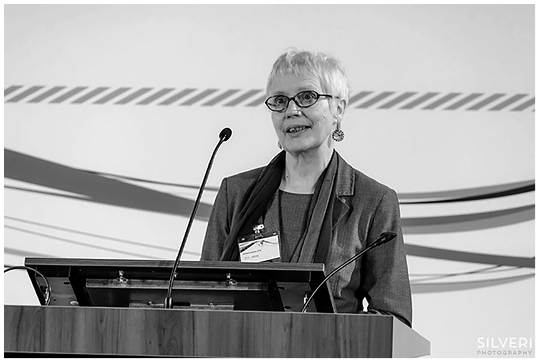
Jill Jaeger (Figure 6.4) was the only woman on the steering committee. A British-born climate researcher based in West Germany, Jaeger was also one of the youngest members of the climate network. She had initially come into contact with Bert Bolin in 1979 at the World Climate Conference in Geneva. Working as a research scholar for the International Institute of Applied Systems Analysis in Vienna, where she was leading the Institute’s research on energy and climate, hers was the only scientific presentation made by a woman at the WCCC.Footnote 57 In a professional sphere dominated at the time by men, Jaeger – who would later hold senior positions in organizations operating at the intersection of global change and sustainable development, including as Deputy Director of IIASA – established herself as a key contributor and central node in the network taking shape around IMI and the Beijer Institute in Stockholm.
Jill Jaeger at the IIASA Systems Analysis Conference in 2015. Jaeger played a critical role in the advancement and organization of climate science from the late 1970s onward, and became a leading member of the global change community. In association with Stockholm-based scientists Bert Bolin and Gordon Goodman, she co-authored the seminal SCOPE 29 report, contributed to the work of the AGGG, and was a central figure in the steering committee that arranged the 1987 climate meetings in Villach and Bellagio, for which she wrote the final report on behalf of the Beijer Institute.
Several years after the WCCC, she was recruited by Bolin, who had also attended the “Carbon Dioxide, Climate and Society” workshop that Jaeger had organized at IIASA in 1978,Footnote 58 to take part in the IMI research project commissioned by UNEP for the 1985 Villach conference. As a parent of young children at the time, Jaeger traveled to Sweden on weekends to carry out research at the Department of Meteorology at Stockholm University and assist with the Villach preparations.Footnote 59 Her contributions surrounding Villach 1985 were some of the most significant, including writing parts of the conference report, as well as co-authoring and editing the SCOPE 29 report that was based on the research project at Stockholm University. As it turned out, her association with Stockholm further deepened via Villach. There she met Gordon Goodman, who would later invite her to assist with the work of the AGGG and the steering committee for the 1987 Villach-Bellagio workshop (Figure 6.5),Footnote 60 for which she would write the final report on behalf of the Beijer Institute.
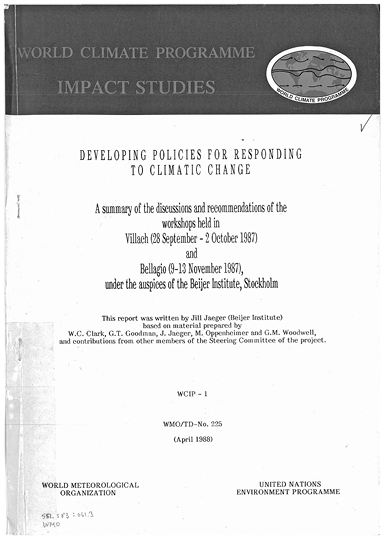
Some of the scientists and institutions that played central roles in the landmark climate meeting in Villach, Austria, in 1985 were also involved in the smaller and more policy-oriented two-stage workshop in Villach and Bellagio, Italy, in autumn 1987. One of the science-policy contributions of the workshop’s report, prepared under the auspices of the Beijer Institute, was the introduction of the idea of the 2°C temperature target.
With Goodman acting as chairman and Jaeger playing a key coordinating role, the Villach-Bellagio steering committee operated in concert with the AGGG to organize activities and formulate a scientific and policy-oriented agenda. Committee members kept in close contact over the two years between the 1985 and 1987 Villach meetings, holding planning sessions in Toronto, Canada, and Mainz, West Germany.Footnote 61 The latter meeting was hosted by atmospheric chemist Paul Crutzen, the director of the Max Planck Institute, who had received his PhD training under Bert Bolin at Stockholm University and would later be awarded a Nobel Prize in Chemistry for his groundbreaking research on ozone conducted in Stockholm in the late 1960s and early 1970s (see Chapter 3).
Members of the steering committee were adept at finding financial support for their activities. Gordon Goodman, for one, had over the years secured millions of dollars in project financing for the Beijer Institute from an array of international sources, including, in the case of climate, the Rockefeller Brothers Foundation. The RBF, as well as the Rockefeller Foundation, was not, however, the committee’s sole sponsor. Additional support for the Villach-Bellagio workshop came from the governments of Austria and Sweden, UNEP, and the Beijer Institute. Two other American philanthropies also contributed to the efforts of the steering committee. One was the W. Alton Jones Foundation, a Charlottesville, Virginia-based environmental charity that, like the Rockefeller organizations, was built upon the oil fortune of its founder. The other was the German Marshall Fund of the United States, which not only provided funding for the workshop but also played an active role in supporting the network through one of its executives, Marianne Ginsburg, who collaborated with Goodman and Tom Wahman at the RBF in the planning phase of the workshop.Footnote 62
Indicative of the steering committee’s longer-term strategic vision, their trajectory of action extended beyond the 1987 Villach-Bellagio workshop to include the 1988 World Conference on the Changing Atmosphere in Toronto,Footnote 63 and the Second World Climate Conference in Geneva in 1990.Footnote 64 Most of the members of the Villach-Bellagio steering committee and extended network would in fact serve in similar capacities for those events, from conference planning and agenda setting to drafting the final statements and reports. Leading up to Toronto and Geneva, the much smaller Villach-Bellagio workshop served to maintain momentum after Villach 1985, building upon and further consolidating the scientific consensus and advances in climate knowledge and continuing the development of – particularly at Bellagio – the political dimension of the network’s activities and ambitions. Senior Canadian scientific officials Jim Bruce and Howard Ferguson, who were leading the organizing efforts for the upcoming Toronto Conference – intentionally timed to follow the release of the Brundtland Report, and where Gro Harlem Brundtland herself would deliver the keynote address – were among those in attendance at Bellagio, demonstrating the direct connection between the scientific and political processes surrounding climate.Footnote 65
Much had transpired on the environmental front in the two years between Villach 1985 and the 1987 Villach-Bellagio workshop in September–October and November that year. The autumn of 1987 in particular marked a turning point in global environmental and sustainability governance. Ozone negotiations culminated in the signing of the Vienna Convention’s Montreal Protocol in September, and in October, the United Nations released the Brundtland Report after four years of work by the WCED. Meanwhile, behind the scenes, Mostafa Tolba – emboldened by the unexpected success of the ozone treaties – had been promoting the idea of an international convention on climate change, including a lobbying effort directed toward the US State Department.Footnote 66 In the realm of international scientific organizations, ICSU was also at this time preparing to launch a major initiative that would institutionalize the emerging field of Earth system science (below Chapters 6 and 7).
Taking place during precisely the same period as the pair of landmark events in global environmental history, the Villach-Bellagio workshop is, rightly, far less celebrated. The workshop is also eclipsed in terms of its historical significance by Villach 1985, which was indeed a turning point in the politicization of climate change. Villach-Bellagio 1987 and the almost two years of planning leading up to the workshop were, however, important exercises in organizing, expanding, and mobilizing the network of activists that carried climate change from scientific circles into the realm of international politics. Moreover, the workshop also generated the idea of global temperature targets, including the 2°C benchmark, which two decades later became a pillar of climate governance.Footnote 67
The Villach-Bellagio process thus represented a key aspect of the 1985–1988 agenda-setting phase for climate change,Footnote 68 a period when greenhouse gases and global warming went from being a topic of scientific interest to an issue of high-level political concern. Furthermore, together with the watershed 1985 Villach conference, which served as the point of departure for the meetings that followed, the 1987 Villach-Bellagio workshop has become part of the narrative and lore of climate governance, with many of the main protagonists represented at the meetings in the Alpine retreats. Villach and Bellagio have since become almost synonymous with the scientific activism that sparked the politicization of climate change. Yet much of the impetus and organization surrounding the meetings took place well to the north.
Villach and Bellagio via Stockholm: Convening Power and Scientific Networks
The convening power of Stockholm extended to Villach and Bellagio despite the fact that the two workshops were held some 2,000 kilometers from the Swedish capital. While Bert Bolin and IMI had been main actors in the run-up to Villach 1985, it was Gordon Goodman, together with the rest of the AGGG and steering committee that took the lead in initiating and organizing the 1987 Villach-Bellagio workshop. Held under the auspices of the Beijer Institute, its workshop report, like the previous one, carried the imprimatur of the World Climate Programme and its sponsors, UNEP and WMO. However, this time ICSU was not directly involved, other than through its association with the AGGG, as the 1987 Villach-Bellagio process took on a more explicit policy orientation.Footnote 69
The two-stage Villach-Bellagio workshop resulted in a single combined report.Footnote 70 Building on the scientific consensus of Villach 1985 and framed as a direct response to the recommendations of that conference, the 1987 workshop report projected accelerated sea level rise, described potential impacts of climate change on a regional basis, and outlined three warming scenarios based upon climate sensitivity estimates and different levels of future greenhouse gas emissions. It called for general reductions in deforestation and fossil fuel use and recommended the development of both societal adaptation and greenhouse gas limitation strategies. The report stated that “a coordinated international response will become inevitable,” and that international organizations should examine the possibility of instituting a “law of the atmosphere as a global commons or the need to move towards a convention along the lines of that developed for ozone.” The AGGG approved a draft of the report at a meeting in Paris in December 1987, changes were discussed by the steering committee in January 1988, and after further review and input from a small group of experts, Jill Jaeger of the Beijer Institute wrote the final version of the report, entitled Developing Policies for Responding to Climate Change.Footnote 71
The workshop and its report have come to be seen in retrospect as a seminal moment in climate governance. They marked the beginning of the political history of the 2°C temperature target,Footnote 72 which has since become the primary benchmark of international climate policy under the UNFCCC.Footnote 73 Two of the scientists that attended the Villach part of the workshop, Pier Vellinga and Peter Gleick, would be appointed by the AGGG to chair a working group that produced the report Targets and Indicators of Climate Change.Footnote 74 The report was published under the auspices of the AGGG in 1990 by the SEI, where Gordon Goodman had become the founding executive director, as part of a collection of four reports on climate change edited by Jill Jaeger. The Targets report explored both a 0.1°C increase per decade and a 1°C or 2°C total increase in global mean temperature as possible benchmarks that climate policy could be based upon. Vellinga would also co-author a key 1991 article that further developed the concept of the 2°C temperature target,Footnote 75 which was adopted five years later by the European Union as the basis of EU climate policy. In 2009, 2°C was endorsed by the UNFCCC in the Copenhagen Accord.
Only nine members of the extended climate network attended both parts of the 1987 workshop.Footnote 76 The guest list of invited experts participating in one or the other stage of the workshop indicated the functional differentiation between the Villach and Bellagio meetings. The forty-eight people in attendance at Villach 1987, including four from the Beijer Institute,Footnote 77 were for the most part technical experts and scientists from a range of disciplines. The discussions at Villach 1987 thus centered on scientific aspects of climate change, as well as potential societal responses for limiting and adapting to the changes in climatic conditions that the workshop participants anticipated.
Bellagio, by contrast, with a handful of government officials and policy experts participating alongside the scientists, took the findings of the first part of the workshop as a baseline in considering possible policy options for dealing with climate change. The meeting in Bellagio was half the size of Villach 1987 and far more posh, taking place at the Rockefeller Foundation’s opulent resort on the shores of Lake Como. Among the twenty-four participants receiving white glove service at the Bellagio Center – signaling, perhaps, the rising interest in climate change beyond scientific circles – a quarter had close ties to Stockholm. In addition to Goodman, Bolin, and Jaeger, in attendance were Paul Crutzen, director of the Max Planck Institute; Måns Lönnroth, a senior Swedish government official who had been involved in legislation on climate already in the 1970s; and the Swedish climate scientist C. C. Wallén. Other notable participants included Jim MacNeill, Secretary General of the Brundtland Commission, and Jessica Mathews, the founding vice president of the World Resources Institute, who would later become president of the Carnegie Endowment for International Peace.Footnote 78
The 1987 Villach-Bellagio workshop marked the peak of AGGG influence. Several months after the Villach-Bellagio workshop, Bert Bolin would resign from the advisory group after accepting Mostafa Tolba’s invitation to chair the new scientific body being set up by UNEP and WMO: the Intergovernmental Panel on Climate Change.Footnote 79 As founding chairman of the IPCC, a position he would hold from 1988 to 1997, Bolin was much better positioned, as it turned out, to shape climate governance during the establishment phase of the Framework Convention on Climate Change under the United Nations. The involvement of governments in the climate assessment process, a fundamental characteristic of the IPCC, provided the Panel with a level of legitimacy and political potency that the AGGG could not have hoped to achieve. Bolin had in fact, from the beginning, been somewhat skeptical of the AGGG, seeing the six-member circle of scientific elites as not sufficiently representative of the climate science community and as lacking the resources and influence to move the needle on climate change in the realm of politics.Footnote 80
Others were however initially concerned that government involvement could compromise the scientific integrity of climate assessments,Footnote 81 and continued to prefer the AGGG format for providing policy-relevant expertise on climate change. Two parallel scientific assessment processes emerged. One under Bolin and the IPCC, which was hurrying to produce a report that could inform international negotiations leading up to an eventual climate convention. The other, under AGGG auspices, centered on the SEI, with Goodman and Jaeger leading a team of experts in producing a comprehensive climate assessment based on the discussions in Villach and Bellagio. Funding for the latter was provided by Villach-Bellagio backers, the RBF, and the W. Alton Jones Foundation, as well as SEI.Footnote 82 Both the IPCC and the AGGG assessment processes were structured around three working groups, and each constellation delivered its final sets of reports within weeks of each other in 1990. Although the concurrent assessment processes were not considered to be in competition with one another, and the almost simultaneous arrival of their respective reports was apparently coincidental, only one of the two seminal climate science institutions would continue to exist after 1990.Footnote 83
The collection of AGGG reports, including the ad hoc Working Group II report that introduced the idea of the 2°C target, was published by the SEI in October 1990. They received extensive distribution and discussion that same month at the Second World Climate Conference in Geneva – a hybrid science and policy event that included a ministerial meeting as well as the main scientific/technical component.Footnote 84 The SWCC in fact rested upon an exceptionally strong scientific foundation, as it had been scheduled to take place after the publication of the first IPCC assessment report, which had been finalized in August at a major meeting in Sundsvall, Sweden. The rapid rise of the Panel, producing its assessment in some eighteen months, had in effect rendered the AGGG redundant. Although the AGGG never formally disbanded, the Second World Climate Conference turned out to be the final occasion when the advisory group would meet in person. The Panel’s intergovernmental mechanism, while a complicating factor in terms of reaching consensus, proved to be an effective means for producing high-profile scientific reports that governments had a direct stake in, thus enhancing the political salience of climate change.
Science Diplomacy in Sundsvall: Securing the First IPCC Assessment Report
The contentious IPCC meeting in Sundsvall, Sweden, in the end of August 1990 has been described as trench warfare by one of the over 400 participants.Footnote 85 The meeting’s purpose was to adopt the first IPCC assessment report. The synthesis of that report – as finalized in Sundsvall – summarized for policymakers and other stakeholders the conclusions of the Panel’s three working groups on the science, societal impacts, and possible policy responses to climate change. The first IPCC report would in turn serve as the scientific point of departure for the upcoming negotiations toward an international climate convention. Politics were thus not far under the surface in the discussions surrounding the results of the scientific assessments that had been prepared by an array of experts in advance of Sundsvall. Every line of text in the summary report was subjected to extreme scrutiny from delegates representing a wide range of scientific, political, and economic interests. An multitude of environmental NGOs, such as Friends of the Earth, were also on hand to observe the meeting and expose attempts to water down the report’s wording by, for example, overemphasizing scientific uncertainties.Footnote 86
Somewhat ironically, Sundsvall is one of the highest carbon-emitting cities in Sweden due to the presence of the country’s only aluminum smelter, the massive Kubal facility with its five towering smokestacks, prominently located close to the downtown area. The port city of some 100,000 inhabitants, situated along the Baltic coast approximately 400 km north of Stockholm, is also a major center of Northern Sweden’s large and influential forest industry. Scientists and government representatives from seventy-four countries gathered in Sundsvall rather than Stockholm because Sweden’s environmental minister, Birgitta Dahl, was a strong advocate of a regional policy that promoted activity away from the capital. Even outside Stockholm, the high costs of Sweden turned out to be prohibitive for many of the delegates from developing countries, whose per diem was not sufficient to cover the cost of meals at local restaurants. Funds from the ministry of finance were therefore secured by the Swedish government official responsible for organizing the conference, Svante Bodin, to ensure that all delegates were adequately fed while in Sundsvall.Footnote 87
With the consummate diplomat-scientist Bert Bolin chairing the proceedings in Sundsvall, the four days of deliberations came down to a final all-night session – the start of a pattern repeated through the six IPCC assessment reports so far – that was reminiscent of a high-stakes political negotiation rather than a collegial scientific debate among experts. Despite the stark differences between countries and regional groupings on how to frame the level of scientific certainty on climate change, and what mitigation actions should be considered by governments, the meeting succeeded in adopting what is today referred to as the IPCC First Assessment Report.Footnote 88 The report, together with guidance provided by the scientists and government ministers at the Second World Climate Conference, would be a decisive factor in the December 1990 adoption by the UN General Assembly of resolution 45/212, Protection of global climate for present and future generations of mankind. The report also undergirded the work of the Intergovernmental Negotiating Committee that was established to prepare a Framework Convention on Climate Change.Footnote 89 By educating government officials on climate change, INC chairman Jean Ripert credits the IPCC with making the 1992 signing of the framework convention possible.Footnote 90
Bolin’s ten-year tenure as IPCC chairman was the pinnacle of his many years of work at the interface of science and politics. During his chairmanship, Bolin also oversaw the 1992 supplement to the first IPCC assessment report, which updated the state of climate knowledge ahead of the signing of the Framework Convention on Climate Change at the Rio Earth Summit, and the 1995 Second Assessment Report that informed international climate negotiations leading up to the landmark Kyoto Protocol in 1997. His contributions as a scientific statesman, particularly from the mid-1980s onward,Footnote 91 took place in parallel to two other major initiatives that drew upon Bolin’s decades of experience as a prolific science organizer and institution builder. Like many of Bolin’s previous projects, these required navigating networks of science, politics, and international organizations to lay the foundation for institutions that have played prominent roles in the evolution of global environmental governance. One of the initiatives led to the establishment of a major international research program headquartered in Stockholm, and the other to a Swedish government-funded institute with broad global engagement on environmental and sustainable development issues.
Global Change and the Institutionalization of Earth System Science
As climate science during the 1980s became increasingly institutionalized through the World Climate Research Program and the IPCC, as well as new research institutes and informal networks like the Villach group, there was also a growing awareness among many scientists, Bert Bolin included, that the planetary-scale changes taking place were not limited to the climate system. The coalescing of many research strands and disciplinary fields engaged in systems approaches to the planet and its colossal components, such as oceans, atmosphere, and life itself, was during this period brought into the emerging integrative field of Earth system science. Named by NASA with its establishment of an Earth System Science Committee in 1983, this “new scientific endeavor” provided a powerful paradigm and conceptual framework for integrating the study of the entire spectrum of planetary processes and systems, and for understanding these as part of an interactive and cohesive whole – a single Earth system.Footnote 92 NASAs contribution to the new scientific paradigm also included the first graphic depiction of the biogeochemical functioning of the Earth system in the form of the 1986 Bretherton Diagram, which, in retrospect, can be seen as the first of a number of iconic images to emerge from the Earth system science community.
Until the 1980s, the component parts of the Earth system, including the biosphere, hydrosphere, atmosphere, and lithosphere, were associated with particular scientific disciplines and separate research programs that studied the various spheres independently of the others. The establishment, several years after NASA’s 1983 innovation, of an entirely new international institution based on the integrative concept of Earth system science would mark a turning point in the scientific understanding of global change. The latter was not, however, solely an environmental phenomenon to be studied by a new category of experts that came to consider themselves Earth system scientists. In the Earth system paradigm, particularly as it evolved after the turn of the millennium, humans were fully immersed and implicated in global change, both cause and casualty of profound changes in the planetary environment. The Earth’s habitability for humans over the coming decades and centuries was, for instance, a critical concern for adherents of Earth system science, who saw global change as a governance problem of enormous magnitude as well as an object of research for cutting-edge science that was increasingly empowered by technologies like satellites and supercomputers. Global change research was thus, from the outset, explicitly seen by its practitioners as a policy-relevant undertaking. The emergence of Earth system science in the 1980s became intertwined with expanding scientific and political interest in environmental issues like acid rain, ozone depletion, and climate change, as well as the promotion of sustainable development in the wake of the Brundtland Report.Footnote 93
Neither the ambitions of global change research nor the auto-histories of the movement’s leaders were modest. In the foundational works of the movement, Earth system scientists situated their revolutionary endeavor within a centuries-long history of science narrative that dated back to Newton.Footnote 94 As visionary agents of change, they saw themselves as engaged in bringing forth a paradigm shift in how the functioning of the planet should be understood. They also saw their institution-building project, following in the path of earlier large-scale initiatives like the International Geophysical Year and the International Biological Program, as part of a trajectory of “international science collaboration, devoid of political interest, with science bridging the geopolitical divisions of the Cold War.”Footnote 95 The historically minded adherents of the Earth system science paradigm would in the ensuing decades put forward ideas that drew upon both Earth and science history. These included the Anthropocene and “a second Copernican revolution,” as well as evocative concepts like “Hothouse Earth” and “A Safe Operating Space for Humanity” that implicated humans as drivers of global change in time and space.Footnote 96
IGBP: Establishing an International Hub for Earth System Science in Stockholm
The institutionalization of Earth system science and global change research can be traced back to a meeting of the ISCU executive board in Stockholm in early 1983,Footnote 97 the same year NASA created its Earth System Science Committee. The American geophysicist Thomas Malone, who together with others had been advocating a large-scale study on global change, proposed to the executive board that ICSU establish an interdisciplinary research program on the emerging area of scientific interest. Malone’s proposal led to a symposium on global change the following year in Ottawa, a milestone event where the ICSU General Assembly decided to assemble an ad hoc planning group to scope out an international research initiative centered on the “global dimension of chemical and biological processes.”Footnote 98 With its emphasis on interactions between components of the Earth system, biogeochemistry – a field of science that studies interactions between planetary spheres – represented a foundational discipline for the new research program.
Bert Bolin was appointed chairman of the planning group in 1985. He had been an expert on biogeochemical cycles since the 1950s, after Carl-Gustaf Rossby recommended that he pursue research on the carbon cycle.Footnote 99 Throughout the course of his career, Bolin would play an instrumental role in bringing biogeochemistry into climate science.Footnote 100 Following his mentor’s advice on scientific specialization, Bolin and his Stockholm University colleague Erik Eriksson co-authored a seminal analysis, published in a 1959 memorial volume to Rossby, on the exchange of carbon dioxide between the atmosphere and ocean.Footnote 101 Bolin fortified his status as a leading authority on biogeochemistry by editing four SCOPE reports in the 1970s and 1980s that further developed the discipline.Footnote 102 He had moreover collaborated with Malone, also a member of the ICSU planning group, for decades on climate-related research as well as in organizing major scientific events such as the 1967 ICSU-sponsored meeting in Stockholm that gave rise to the GARP initiative (see Chapter 4).Footnote 103 Bolin had even been involved with the 1957–1958 International Geophysical Year as well as the World Climate Research Program, which were considered forerunners of the new initiative. The selection of Bolin to lead the ICSU planning group for a major global change research program largely based on biogeochemistry was thus anything but coincidental.
The ad hoc planning group delivered its final report to the ICSU General Assembly in September 1986.Footnote 104 The report provided a detailed plan and scientific rationale for establishing a new institution, the International Geosphere Biosphere Program: a Study of Global Change. Over the next thirty years, the IGBP would coordinate research within an international network consisting of hundreds of natural scientists working in disciplines related to global change. Anchored in the science of biogeochemical cycles, the IGBP was also from the outset conceived as an institution that would inform environmental and societal policymaking, “providing the information we need to assess the future of the Earth in the next 100 years, with an emphasis on processes that change on time scales of decades to centuries. It will be a program of basic research with almost immediate practical applications in the management of resources at national and international levels and as a means of improving the reliability of warnings of global change of significance to our environment and to humankind.”Footnote 105 Despite its intention to incorporate anthropogenic forces and impacts on human societies in providing policy-relevant knowledge to decision-makers, the IGBP initially excluded the social sciences from its study of global change.Footnote 106
With financial support from the Swedish government, Bolin facilitated the placement of the IGBP secretariat in Stockholm. He had for many years participated in various advisory councils and scientific investigations in Sweden and had close ties to the highest levels of Swedish politics, including as a personal science advisor to Prime Minister Ingvar Carlsson.Footnote 107 This, together with Bolin’s prominent position in the Swedish scientific community, led to an invitation to establish the IGBP secretariat at the Royal Swedish Academy of Sciences. Thomas Rosswall, a Swedish soil ecologist and expert on carbon and nitrogen cycling, was appointed as the first executive director of the IGBP. He personified the kind of Swedish scientist that, as their career evolved, would find their calling in scientific leadership and international engagement. Rosswall, who had earlier in his career served as secretary of Sweden’s International Biological Program committee and would later become executive director of ICSU, had published extensively on biogeochemistry, including in SCOPE volumes edited by Bolin. A decisive moment in Rosswall’s engagement with biogeochemistry, and in the evolution of the field itself, was a project he was in 1975 asked by SCOPE chairman J. W. M. la Rivière to establish at the Royal Swedish Academy of Sciences. Bringing in Bert Bolin and Erik Eriksson, the three Swedes and the Swedish National SCOPE Committee organized an international workshop at Friibergh Manor outside Stockholm that included many of the leading scientists in the disciplines, such as ecology, hydrology, and meteorology, that underpin the study of biogeochemical cycles.Footnote 108 The workshop resulted in the SCOPE 7 report, Nitrogen, Phosphorus and Sulphur: Global Cycles, which was published under the auspices of the Swedish Natural Science Research Council’s series Ecological Bulletins,Footnote 109 the same outlet where a seminal 1968 article on acid rain by Svante Odén had appeared.Footnote 110 SCOPE would further support the development of the scientific basis of the IGBP with a 1988 report, Scales and Global Change: Spatial and Temporal Variability in Biospheric and Geospheric Processes (SCOPE 35), that included papers on aspects of biogeochemical and Earth system processes by Bolin, Rosswall, and Paul Crutzen.Footnote 111
When the IGBP secretariat opened at the Academy in 1987, it joined the Beijer Institute and the journal Ambio, which thereafter became an important outlet for global change research.Footnote 112 Further, Global Change magazine,Footnote 113 with eighty-four issues published by the IGBP secretariat between 1989 and 2015, provided a focal point and platform for the development of scientific concepts – including the first article on the Anthropocene – for the emerging epistemic community of Earth system scientists and others engaged in the study of global change. The secretariat’s location at the Academy and in the heart of Stockholm’s main research district afforded the IGBP strong operational support and an array of scientific synergies.Footnote 114 Similar to the leading role played by its neighboring institutions, IMI and the Beijer Institute, in organizing pivotal events in locations other than Stockholm, the 2001 open science conference in Amsterdam “Challenges of a Changing Earth: Global Change,” was largely orchestrated in Stockholm by the IGBP secretariat.Footnote 115 The landmark Amsterdam Declaration on Earth System Science definitively situated humankind in the center of global change, equating human activities with “some of the great forces of nature in their extent and impact” and called for “an ethical framework for global stewardship and strategies for Earth system management.”Footnote 116
Attended by some 1,400 experts of different scientific backgrounds, the conference also demonstrated the expansion of the global change research agenda since the 1980s to also include the human sciences. The Amsterdam Declaration brought the IGBP together with the International Human Dimensions Programme on Global Environmental Change, as well as the World Climate Research Program and the international biodiversity program DIVERSITAS, to create the Earth System Science Partnership (ESSP). The declaration and partnership were a recognition of the need for a new knowledge base that integrated a wide range of expertise that could collectively inform governance efforts in the face of global change.Footnote 117 Continuing in the vein of producing policy-relevant integrated knowledge, the IGBP secretariat a decade later co-arranged with its ESSP partners the 2012 Planet Under Pressure Conference in London. The conference provided a scientific foundation for the Rio+20 summit, which in turn gave rise to the Sustainable Development Goals, and initiated preparations for the Future Earth research program that would three years later succeed the ESSP and its component institutions.
Taking over the offices of the IGBP, which was dissolved at the end of 2015, one of Future Earth’s five global hubs was established at the Royal Swedish Academy of Sciences. There at the Academy, the Future Earth Secretariat Stockholm joined the Beijer Institute of Ecological Economics. Although the latter bore the name Beijer, its organizational history was distinct from that of its predecessor, the first incarnation of the Beijer Institute. Beijer II, as it were, had been founded, with core funding from the Kjell and Marta Beijer Foundation, by the Swedish economist Karl-Göran Mäler together with the Cambridge-based Indian-British economist Sir Partha Dasgupta in 1991.Footnote 118 By that time, the operations and senior staff of the original Beijer Institute had been transplanted into a new organization that had been created on the initiative of the Swedish government to signal its commitment to the environment and the new concept of sustainable development.
Beijer Rebranded: The Stockholm Environment Institute
On the eve of the election year of 1988, during which the environment became the dominant electoral issue of the day,Footnote 119 Sweden’s environment minister Birgitta Dahl assembled an expert commission to investigate the potential orientation, scope, and organization for a new institute dedicated to the development of environmentally appropriate technology. The idea had emerged at a Social Democratic Party conference in 1987, and by the time of the commission’s creation in December that year, the Swedish Parliament had already earmarked 25 million crowns per annum in government core funding for the proposed institute.Footnote 120 The ubiquitous Bert Bolin was appointed as one of the five members of the blue-ribbon commission chaired by Ambassador Göte Svensson – the facilitator of the consequential 1982 meeting in Stockholm between Bolin and UNEPs Mostafa Tolba.Footnote 121
A generation after the original 1967–1968 environmental awakening in Sweden, which witnessed the activism inspired by Hans Palmstierna’s Plunder, the establishment of the world’s first EPA, and the diplomatic initiative that launched preparations for the Stockholm Conference, the idea of a state-funded environmental institute dovetailed with the domestic politics of 1987–1988. The Swedish Ministry of Environment and Energy had been established on January 1, 1987, and the environment became an important part of the Social Democratic Party’s platform for the 1988 national elections. The latter took place in the wake of the Chernobyl disaster, the strong reception in Sweden of the Brundtland Report, and a mysterious mass-death event of seals on Sweden’s west coast that was generally assumed to have been caused by some undetermined human activity.Footnote 122 An environmental reawakening was thus in progress. Launching an institute that complemented the Social Democrats’ efforts on environment and sustainable development issues as well as the party’s campaign pledges during the “environmental election” of 1988, in which the upstart Green Party complicated attempts to form a government, could thus be seen as good politics.Footnote 123
The commission delivered its report in May 1988, proposing the creation of SIIESTA: The Stockholm International Institute of Environmentally Sound Technologies Assessment. The extensive analysis encompassed input from a range of external experts and included the report from the 1987 Villach-Bellagio workshop, reproduced in its entirety as an appendix attributed to its author, Jill Jaeger. Lars Kristoferson (Figure 6.1), deputy director of the Beijer Institute since its inception, also contributed a section to the SIIESTA report that strongly argued for the inclusion of climate change – a core research area at Beijer – in the remit of the proposed institute. The report in fact singled out Beijer as an existing Stockholm-based institute that was already engaged in many of the international missions SIIESTA would aspire to. Some 50 percent of the research programs proposed in the SIIESTA report duplicated roughly 90 percent of the ongoing activities at the Beijer Institute.Footnote 124 The commission, clearly in close contact with Beijer’s leadership during the course of the investigation, went so far as to propose initiating negotiations, as soon as possible, with the Beijer board and other interested parties for a potential organizational merger between the Beijer Institute and the SIIESTA initiative. Integrating Beijer’s in-house expertise and experience in the new institute would, as the report noted, facilitate a rapid launch of SIIESTA. A merger would also avoid the inefficient and somewhat awkward redundancy of two very similar environmental institutes being situated in Stockholm.
Negotiations between Birgitta Dahl, Gordon Goodman, and Beijer Foundation representatives Anders Wall and Jan-Erik Wikström paved the way for the establishment of the SEI in 1989 (Figure 6.6).Footnote 125 Besides jettisoning SIIESTA’s sleepy acronym and technology-centric title, much of the SEI’s activities were based on the broader range of research and sustainable development programs that the Beijer Institute had built up over the previous twelve years. Except now with five to six times Beijer’s core funding. A great deal of the early effort at SEI went into supporting the upcoming 1992 Earth Summit in Rio,Footnote 126 as well as the climate research associated with the AGGG. Most of the Beijer staff shifted to SEI, including Goodman, who stayed on as the new institute’s founding director until his retirement at the end of 1990, and Lars Kristoferson, who remained deputy director. In addition to its main office, which left the Academy for new premises in Stockholm’s Old Town, SEI also absorbed the Beijer Institute’s international network, including its centers in York and Boston. Since the establishment of SEI, new centers and satellite offices have been opened in Tallinn, Bangkok, Bogotá, Nairobi, Oxford, Seattle, and Davis, California.
First board meeting in September 1989 of the Stockholm Environment Institute, which has since its establishment consistently ranked as one of the world’s top environmental think tanks. Most of the original staff and leadership of the Institute, as well as the network of SEI satellite centers outside Sweden, were inherited from the original Beijer Institute.
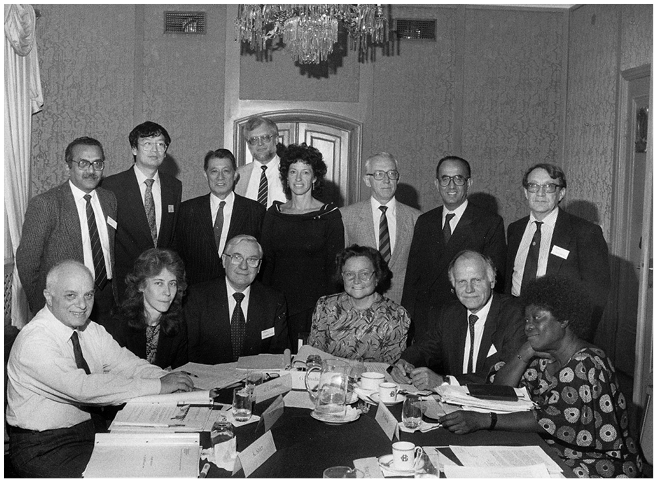
Beijer II: The Beijer Institute of Ecological Economics
The advent of the Stockholm Environment Institute did not, however, represent the end of the Beijer Institute as an international brand and institution centered on the environment and sustainable development under the Royal Swedish Academy of Sciences. Even before the departure of Beijer’s staff for SEI, the Academy created a study group to assess possible focus areas for a reconstituted Beijer Institute that, like its forerunner, would receive core funding from the Beijer Foundation. Gordon Goodman was included in the study group, chaired by zoophysiologist Kerstin Lindahl-Kiessling, to ensure that the orientation of the new Beijer Institute would not be redundant with that of SEI. Lars Kristoferson, Bert Bolin, and Thomas Rosswall were among a handful of experts who provided additional advice.Footnote 127
Fielding ideas from members of the Academy, the study group ultimately threw its support behind a proposal from ecologist Bengt-Owe Jansson, and the economist Karl-Göran Mäler – a longtime member of the committee that awarded the Nobel Prize in economic sciences. The transdisciplinary field of ecological economics, they argued, offered a powerful, integrated approach for modeling and understanding the coupled environmental and socio-economic systems at the heart of global change and sustainable development. The Academy’s executive board’s endorsement of their proposal led to the founding of the Beijer Institute of Ecological Economics in 1991. Mäler would serve as the Institute’s executive director for the next fifteen years, with his close friend and colleague Sir Partha Dasgupta – lead author of the 2019 British government-commissioned report The Economics of Biodiversity: The Dasgupta Review – the first chairman of its scientific advisory board.Footnote 128 The board also included prominent experts from other disciplines, for example, biologist Paul Ehrlich, who the Academy had the previous year awarded the prestigious Crawfoord Prize for his work in the biosciences.Footnote 129
The new incarnation of the Beijer Institute played an instrumental role in reconciling economics and ecology. Like the prevailing outlook on economic growth and environmental protection, the two academic disciplines had previously been considered incompatible by many professionals in those fields.Footnote 130 The gap had begun to be bridged at a seminal 1982 symposium in Saltsjöbaden outside Stockholm. Organized by the Stockholm University systems ecologist AnnMari Jansson with funding from the Wallenberg Foundation, the meeting brought together forty-eight international experts, many of whom would several years later be involved in establishing the journal Ecological Economics and the International Society for Ecological Economics.Footnote 131 Another milestone in the convergence of ecology and economics was an international workshop in 1993 convened by the Beijer Institute on the island of Askö where Stockholm University manages a marine laboratory.Footnote 132 The first Askö meeting marked the beginning of a long-term effort in bridging disciplines and developing concepts and synthetic knowledge on interlinked social and ecological systems. Askö has since become the host of a much-appreciated – socially as well as scientifically – annual event that has enabled the evolution of an epistemic community of ecological economists. It has also produced a series of high-impact publications by constellations of ecologists and economists together with experts from other disciplines.Footnote 133 The roll call of Askö participants and co-authors of influential articles is long. Besides Mäler, Jansson, Dasgupta, and other ecological economists, the list includes the likes of the biologist Paul Ehrlich and climate scientists such as Stephen Schneider and Bert Bolin.Footnote 134 Another frequent participant in the Askö workshops was the charismatic Canadian ecologist C. S. Holling, whose 1973 paper “Resilience and the Stability of Ecological Systems” introduced the concept of ecological resilience.Footnote 135 Holling was also an early member of the global change movement, contributing two chapters, including one with William Clark, to Thomas Malone and Juan Gualterio Roederer’s seminal 1985 volume Global Change.Footnote 136
Years later, Holling’s resilience concept gave rise to another major scientific movement that formed the basis of a new Stockholm-based institute. Some of the leading Askö actors would also be deeply involved in the new initiative. As it had earlier done with the emerging discipline of ecological economics, the Beijer Institute, together with its organizational cousin, the Stockholm Environment Institute, and Stockholm University, seized upon the resilience concept to help launch the Stockholm Resilience Centre in 2007. The new institution, like its predecessors, was dedicated to the study of socio-ecological systems and the advancement of sustainability. Soon after its establishment, the SRC would initiate and serve as the central node for a major international research project that would result in a comprehensive new framework for conceptualizing the Earth system, and for assessing the catastrophic risks humankind collectively faced if so-called planetary boundaries were transgressed. While the quantified limits for most of the nine planetary systems included in the framework had not yet been breached, one indicator – the concentration of carbon dioxide in the atmosphere – signaled clearly that the climate system was already in a state of overshoot.


 Open access