




Ma Jun versus Liu Gong and Wang Feng is as prosaic a contractual dispute as any that Court T handled daily.Footnote 1 Liu and Wang, a couple, contracted Ma to carry out a construction project. The two sides disagreed over whether Ma had completed the work to the standard and scope specified in the contract. The couple claimed that they had to hire another contractor to redo Ma’s work, but they failed to provide invoices for these repairs. Ma countered that the couple had completed the walk-through and had signed off on the inspection report for the work.
Judge Zhang ruled in favour of Ma and instructed Liu and Wang to pay the outstanding amount owed to Ma, which was approximately one million yuan. The couple appealed. In the appeal, Judge Sun of Court G, the intermediate court that handled the case, concluded that the appellants had already spent about 500,000 yuan on repairs, although he did not explain how he arrived at that figure. Judge Sun reduced the amount that the couple were required to pay by half. They remained dissatisfied and petitioned the provincial high court for a retrial. Their petition was swiftly denied.
This is the information that is available in the public records regarding Ma Jun versus Liu Gong and Wang Feng, a contractual dispute involving no extraordinary facts or novel legal arguments. However, there was another internal “hearing,” which was conducted behind the scenes: a trial of the trial. Although Judge Zhang was not “named” as the defendant, he was given an opportunity to “explain” and present his side of the story. Internally, Court G opined that Zhang had made a mistake, which would mean that his year-end bonus would probably be reduced, and he would face further sanctions if egregious errors were identified. It would be up to the leaders of Court T to decide the outcome.
When given the opportunity to “defend” himself, Judge Zhang recalled that Judge Sun had told him that the defendant couple had “disagreed strongly” with his decision. The Chinese phrase he used to describe their reaction was yijian jiaoda 意见较大, which translates as “opinions are strong,” a euphemism for vehement objections. A committee at Court T concluded that Judge Zhang’s ruling was in accordance with the law: Liu and Wang had inspected the work before signing off and had provided no evidence of the “repairs” they claimed to have carried out. In contrast, the committee opined that Judge Sun’s decision to reduce the outstanding balance by half, while it echoed the zhongyong 中庸 principle of finding the middle ground in Chinese culture, lacked a firm legal basis.
In the end, Judge Zhang’s name was cleared by his superiors. Court T determined that there had been “no errors in this case” (benan bu dingcuo 本案不定错), an outcome that every judge longs to see, and no points were deducted from Judge Zhang’s record.
Today, problem judgments in China have a secret afterlife, which is often more eventful than the public records of the cases in question would ever suggest. In this afterlife, the tables are turned: the judge becomes the judged. None of this is publicly disclosed or even known to the parties. The deliberations and the findings remain entirely internal. This meta-trial is a key instrument for implementing the so-called “lifelong accountability system” (zhongshen wenzezhi 终身问责制), arguably the most high-profile policy ushered in by the judicial reforms in the last decade.
For many years, grassroots judges in China have been subject to the close supervision of their superiors. Under the case-approval system (shenpi zhi 审批制), their judgments had to be signed off by their division heads before they were handed down.Footnote 2 Although this arrangement was putatively set up to support less experienced judges, in reality, it left them vulnerable to pressure from high-ranking judges and local governmental officials. The wide discretion given to judges in leadership positions also renders the practice susceptible to patronage and corruption.Footnote 3 In recent years, the Supreme People’s Court (SPC) has embarked on a series of reforms to curtail the case pre-approval system.Footnote 4 For ordinary cases, adjudicating judges can now issue judgments without first obtaining the approval of their superior.Footnote 5
From Shenpi to Pingcha
The new judicial accountability system is designed to achieve two seemingly opposing goals: to endow frontline judges with the authority to rule independently and to strengthen centralized supervision over grassroots decision making.Footnote 6 In pursuit of the latter goal, the SPC has identified “four types of cases” (silei anjian 四类案件) that require the supervision of court leaders. These include cases involving group disputes that may affect social stability (for example, mass protests and labour strikes); difficult, complex cases with significant social impact (for example, high-profile environmental or tort disputes); cases that may potentially conflict with prior rulings by the same or higher courts (to ensure judicial consistency); and cases involving allegations of judicial misconduct (for example, reported corruption or bias).Footnote 7 To further formalize supervision over these four types of cases, the SPC has introduced automation and digitization tools to record and track the supervisory activities of court leaders.Footnote 8
At the same time, courts have set up a system of “conferences of professional judges” (zhuanye faguan huiyi 专业法官会议) to offer non-binding guidance on complex legal issues. Judges handling difficult cases can consult senior colleagues on the conference, although they remain responsible for their own judgments under the accountability system.Footnote 9
More recently, the SPC president Zhang Jun 张军 referred to a read-and-check system (yuehe 阅核) that extends supervision beyond the “four types.”Footnote 10 His comments raised concerns that the SPC was reverting to the old pre-approval system. Official reports later clarified that the read-and-check policy was intended to alleviate fears of illegitimate supervision, since not all problematic cases fall neatly within the scope of the “four types.” According to Zhang, senior judges were sometimes “afraid to supervise” (bu gan guan 不敢管).Footnote 11 The principle is that the procedures for dealing with cases that senior judges have decided to review further are no different from those for dealing with the “four types” of cases.Footnote 12 Questionable decisions are either sent back to the ruling collegial panel or referred to a professional judges’ conference or the adjudication committee for further discussion.
None of the recent developments suggests a reversion to the pre-approval system of old. By official estimates, over 98 per cent of the cases in the country were independently signed off by trial judges or collegial panels without triggering further superior supervision.Footnote 13 But while ex ante supervision might help to identify the most controversial cases, there remains, from the SPC’s viewpoint, too many questionable judicial decisions that lead to appeals and retrials, and in some cases, petitions and protests. Some seemingly routine cases may morph into difficult cases in the hands of some inexperienced frontline judges in a phenomenon referred to as “cases begetting cases.”Footnote 14 Jiang Huiling 蒋惠岭, formerly head of the SPC’s Judicial Reform Office, described the focus on judicial responsibility as “a politician’s wisdom.”Footnote 15 It is against this backdrop that judges are now held accountable for their decisions for life (zhongshen fuze 终身负责). The full slogan of the policy reads, “let the adjudicator judge, but hold those who adjudicate accountable” (rang shenlizhe caipan, you caipanzhe fuze 让审理者裁判,由裁判者负责).Footnote 16
Ascertaining Judicial Responsibility: Case Review System
But how are judges held accountable? When the NPC Standing Committee amended the Organic Law of the People’s Courts, incorporating new provisions on “judicial responsibility” (see Article 8), it offered scant detail about how lifelong responsibility would work in practice.Footnote 17 Traditional channels of accountability, including media scrutiny and the long-standing petition system (xinfang 信访), remain in place. However, these mechanisms are largely external to the courts and operate inconsistently. Although the Organic Law states that courts are to implement operating mechanisms “that integrate power and responsibility,” our observations and interviews suggest that the expanded ex post case review system plays a decisive role in giving substantive teeth to lifelong accountability. It facilitates systematic monitoring of judicial decisions, allowing court leadership to identify and sanction judges whose rulings are found to be deficient after cases have concluded. As such, it is connected with the trial supervision procedure (shenpan jiandu chengxu 审判监督程序) and the mechanism for disciplining judges (faguan chengjie jizhi 法官惩戒机制). Taken together, these mechanisms reflect a broader Party effort to embed the day-to-day monitoring of political responsibility within formal governance and accountability structures.Footnote 18
While the SPC did not impose a uniform framework for conducting case reviews, it did state that judicial responsibility could be ascertained by using “a combination of routine random reviews, targeted reviews, and special topic reviews, with particular attention to cases remanded for retrial, cases with modified judgments, petition-related cases, and cases that have previously fallen within the scope of long-pending cases or cases that suffered prolonged delay and were instructed to be concluded.”Footnote 19 The SPC was cognizant that variations across regions and localities meant that it was not feasible to implement a uniform mechanism. In the latest edition of its official reader on the subject, the SPC states that lower courts should decide the scope of the review exercise based on actual caseload. For some courts, the focus might be on appealed and retried cases, as well as long-pending cases and petition-related cases; others with lighter caseloads may decide to review all cases.Footnote 20
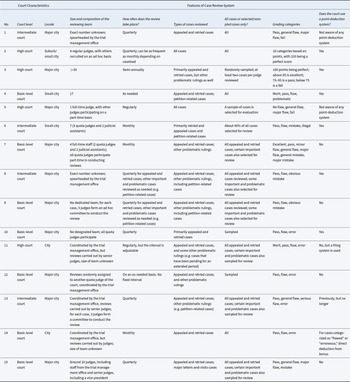
From our interviews with judges across the country, we learned that grassroots courts have dedicated considerable resources to conducting case reviews (see Table 4 below), and that while the review systems vary in detail across different courts, there are some common features:
1) In most courts, the case review system is managed and supported by the trial management office (shenpan guanli bangongshi 审判管理办公室). Reviews are conducted either on a quarterly or yearly basis.
2) Courts often use a grading system to determine whether a judge’s handling of a case has fallen short of the expected standards. The primary focus is to identify any errors or flaws. If a judge is found to have committed an error or a flaw, the record is retained in the judge’s personnel file. If a judge is found to have intentionally violated the law when committing a serious error, the case will be subject to further disciplinary review.
3) The reviews have an impact on the rewards and sanctions for judges.Footnote 21 Courts often use a point-based system to tally judges’ overall performance. Errors or flaws result in points being deducted; the most common sanction is a deduction from the judge’s year-end bonus. More serious consequences may include being passed over for promotion. A judge’s decision can also be assessed as “no error identified.” In that case, the review concludes without any adverse consequences for the judge.
It is worth noting that accountability systems of some form existed prior to the latest judicial reforms.Footnote 22 As Jeremy Daum observes, the rhetoric of judicial accountability has long been linked to preventing “wrongfully decided cases,”Footnote 23 while Carl Minzner documents that local courts included “incorrectly decided cases” in their annual performance targets at least as early as the 2000s.Footnote 24 These earlier attempts to identify problematic rulings, however, do not compare in either breadth or detail to the current system. The post-2015 reforms are distinguished by their multi-step review protocols, their expansive scope and regularity and the threat of career-long liability.
In this article, we draw on reports gathered from a grassroots court in China to examine the inner workings of this ex post system. We address the incentives the review system creates for individual Chinese judges and examine its broader implications for judicial accountability. Donald Clarke describes the topic of local court responsibility systems as “terra incognita” in empirical studies of law.Footnote 25 Recently, scholars have begun to question the extent to which the SPC’s efforts to centralize the court system have achieved their intended outcomes. For example, Ye Meng argues that the party-state’s reliance on horizontal lines of power and entrenched hierarchies undermines its own efforts to centralize authority and enhance judicial autonomy.Footnote 26 Similarly, Yueduan Wang suggests that local governments continue to exert significant informal influence over the courts.Footnote 27 These studies suggest that centralization operates unevenly. Our findings both confirm and complicate the picture. We suggest this accountability regime reconfigures the power dynamics between frontline and senior judges by creating new forms of bureaucratic surveillance and dependence.
Data and Methods
Court T is a basic-level court located in a suburban area of a major city. We had access to its case review reports (anjian pingcha baogao 案件评查报告), which are issued internally every quarter. These reports document the results of case evaluations and communicate them to judicial personnel, including frontline judges, judge assistants and clerks. Our data include the reports for the first three years of the review system in its current format (2020–2022). Both authors read the reports. In total, we reviewed 169 reports that were produced during the studied period.
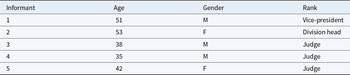
In addition, the second author interviewed court personnel, including a vice-president, a division head and three frontline judges. The vice-president and division head oversaw the case review committee (pingcha weiyuanhui 评查委员会). They provided the court leadership’s perspective on the review process, while the frontline judges reflected on the experience of having their work extensively reviewed. We also spoke informally with two judge assistants (Table 1). Inevitably, focusing on one grassroots court raises questions about the generalizability of our findings. To address this, we approached other senior judges and frontline judges from 15 courts located in various regions. As shown below, the broader survey corroborated the findings from Court T (see Table 4 below).
Profile of Informants in Court T

Table 1 Long description
The table compares court characteristics and case review systems across various court levels and locales. High courts in major cities typically have larger review teams, sometimes exceeding 50 members, and often employ point-deduction systems for grading. Intermediate courts generally conduct reviews quarterly, with some using a point-deduction system. Basic-level courts show variability in team size and grading categories, with some opting for direct bonus deductions for flawed cases. Reviews are conducted at different intervals, ranging from monthly to as-needed, depending on the court level and caseload. The types of cases reviewed include appealed, retried, and problematic rulings, with some courts reviewing all cases while others sample cases. The grading categories vary widely, from simple pass/fail to detailed point systems.
How Case Review Works
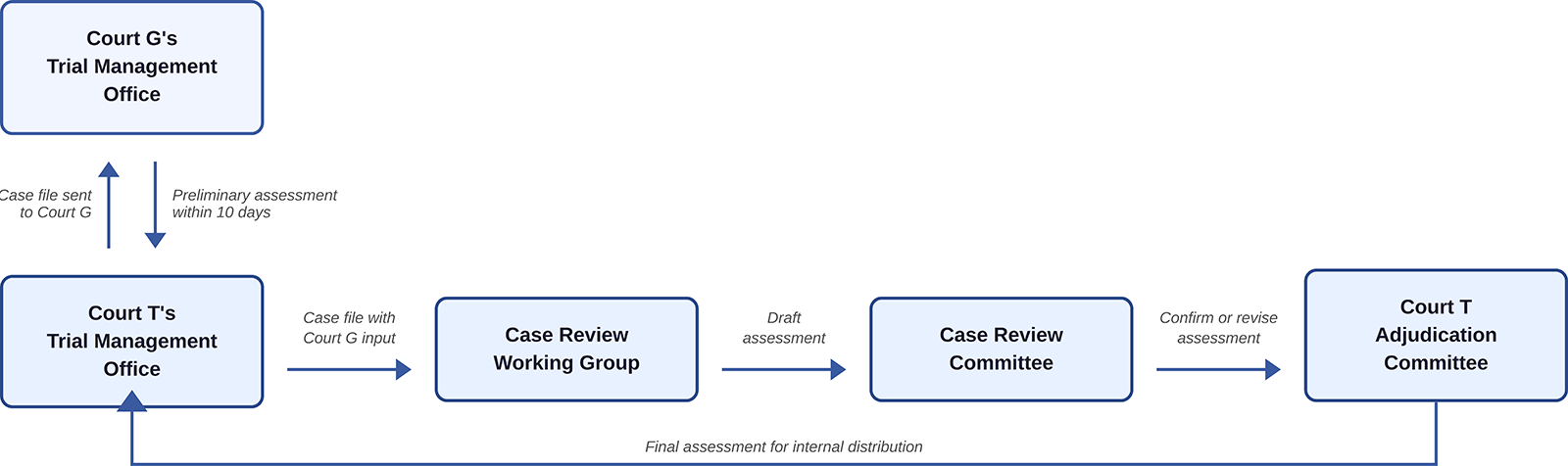
The vice-president explained that not all judgments modified or reversed by the higher court lead to censure.Footnote 28 In principle, this allows judges to focus on the law without the constant fear of being “judged by the outcome.” In practice, however, cases in which decisions are reversed, modified or sent back for retrial make up the overwhelming majority of cases that appear in the quarterly reports.Footnote 29 Since these decisions have been changed in one way or another by the appellate court, the first step is for Court G to offer a preliminary assessment.Footnote 30 Court G’s initial determination is forwarded to Court T for discussion and serves as the starting point of Court T’s own review. Court T will then decide if it agrees with the assessment. Agreement between the two courts is asymmetric: Court T invariably concurs when Court G finds no error, but it sometimes diverges when Court G identifies one.
Upon receiving the initial assessment, Court T designates a working group (pingcha gongzuozu 评查工作组) of three to four judges to review the case and draw up an evaluation report. Its own trial management office coordinates and provides clerical support to those involved in the review process. The group typically includes a division head and experienced judges who are selected from a pool of qualified judges. The report is then submitted to the case review committee. To facilitate the review, the trial judge is asked to provide an explanatory response (shenbian yijian 申辩意见). We observed that most judges do not submit a response. When a judge does respond, they invariably disagree with the assessment. As it deliberates, the working group may interview the trial judge to gather additional information or to seek a response to questions raised by the appellate court.
The case review committee is headed by the vice-president responsible for trial administration, with the head of the trial management office serving as deputy. Other committee members can include senior judges of the court and, occasionally, senior judges from neighbouring courts. The committee recommends whether to endorse or modify the working group’s conclusion in the report. The third and final step is for the powerful adjudication committee (shenpan weiyuanhui 审判委员会) to review the committee’s recommendations and finalize the decision. Any negative findings, such as identified flaws or errors, must be confirmed by the adjudication committee. The findings are then conveyed to the judge responsible for the case and circulated internally in the quarterly reports (see Figure 1 for the key steps of the review process).
Court T’s Case Assessment Process Flowchart

Figure 1 Long description
The flowchart depicts Court T's case assessment process. It begins with Court G's Trial Management Office, which sends the case to Court T's Trial Management Office for preliminary assessment within 15 days. The case is then sent to the Case Review Working Group, followed by the Case Review Committee for draft assessment. The final step involves the Court T Adjudication Committee, which confirms or revises the assessment. The process concludes with the final assessment for internal distribution.
Sliding scale of responsibility
The five possible outcomes of a review are, in ascending order of severity, not wrong, flaw, major flaw, error and major error. The exact terminology may vary from one court to another, yet the labels constitute a continuum along a multi-point Likert scale. Judges in Court T and elsewhere alike noted that the most basic distinction is between an error and a flaw. Flaws are violations of internal court management rules or breaches of legal provisions that do not result in an incorrect substantive judgment or cause any adverse effect. They are considered minor procedural mistakes or oversights. Errors, on the other hand, involve serious violations of legal procedures, substantive mistakes in judicial decision making, and clear errors in the application of law that result in significant harm to the rights and interests of the parties involved, or that create a notably negative impact. A senior judge noted: “A quick and easy way to talk about it is to say there are basically three possible outcomes. First, it is a pass (hege 合格). The review committee finds there was a difference of opinion between the first-instance judge and the appellate judge. There will be no disciplinary action for the former. Second, there are flaws. The judgment has some shortcomings (budaowei 不到位), but there are no obvious mistakes. Third, there are errors. Obvious mistakes are found (youguocuo 有过错), leading to significant point deductions.”
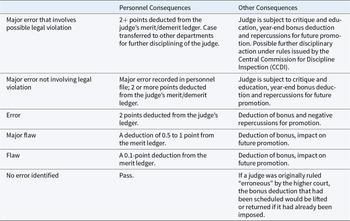
Like other courts, Court T uses a merit point system to link the case review system to an annual performance evaluation of judges. The system awards points for positive outcomes and deducts points for flaws and errors. The relative gravity of the infraction is reflected in the number of points deducted from a judge’s merit ledger: a minor flaw results in a deduction of 0.1 point; a major flaw leads to a deduction of 0.5 to 1 point, depending on the severity; a minor error causes a deduction of 2 points; and a major error incurs even greater point deductions, with the exact amount varying according to the circumstances.
In many urban courts, judges typically earn one point for closing 100 cases without reversal or remand. Thus, one major flaw can wipe out the cumulative merit of 100 properly handled cases. This deduction system creates the most concrete sanction for holding judges accountable. Point deductions adversely impact judges’ eligibility for, and the size of, their annual financial bonuses, as well as their prospects of promotion (see Table 2).
Consequences of Errors and Flaws
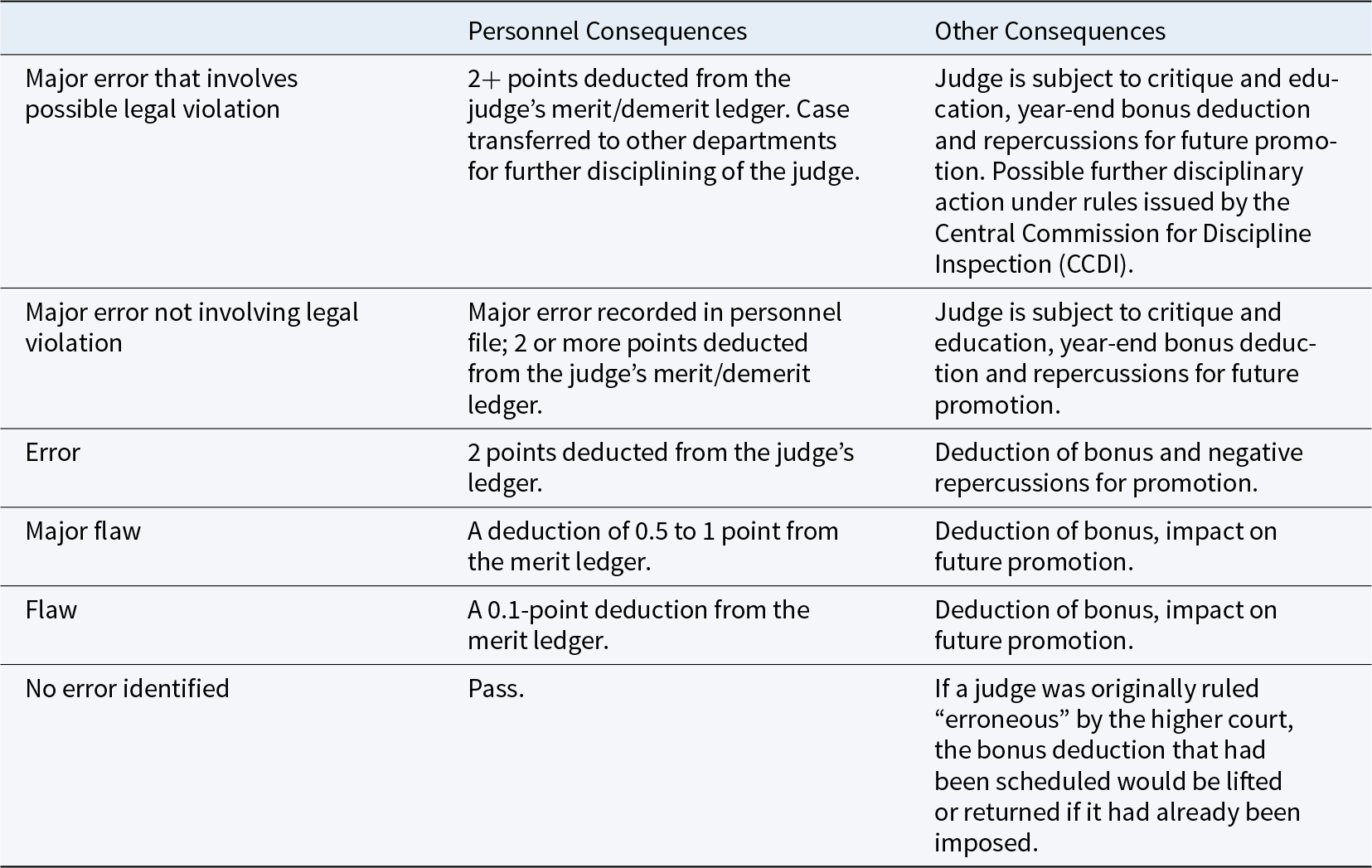
Table 2 Long description
The table provides a profile of five informants in Court T, detailing their age, gender, and rank. The ages range from 35 to 53 years, with three males and two females. The ranks include one vice-president, one division head, and three judges. Notably, the judges are predominantly male, with only one female judge. The vice-president is the oldest at 51 years, while the youngest informant is a 35-year-old male judge. This distribution highlights a gender imbalance in the judge role and a diverse age range among the informants.
More “Judicious” Assessments?
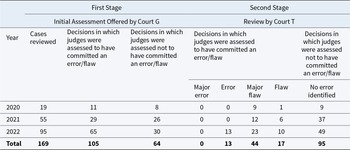
Table 3 summarizes the outcomes of the first three years of the new review system. The overwhelming majority of the cases reviewed were civil cases, with only a few criminal cases appearing in the reports. As criminal decisions are rarely reversed or remanded on appeal, their rarity should not come as a surprise. At Court T, the review process in its present form began in the fourth quarter of 2020, which explains the lower number of cases reviewed that year. There was a noticeable rise in the number of cases assessed in 2021 and 2022. Court T reviewed more cases as the mechanism became more established.
Case Review Outcomes of Court T, 2020–2022
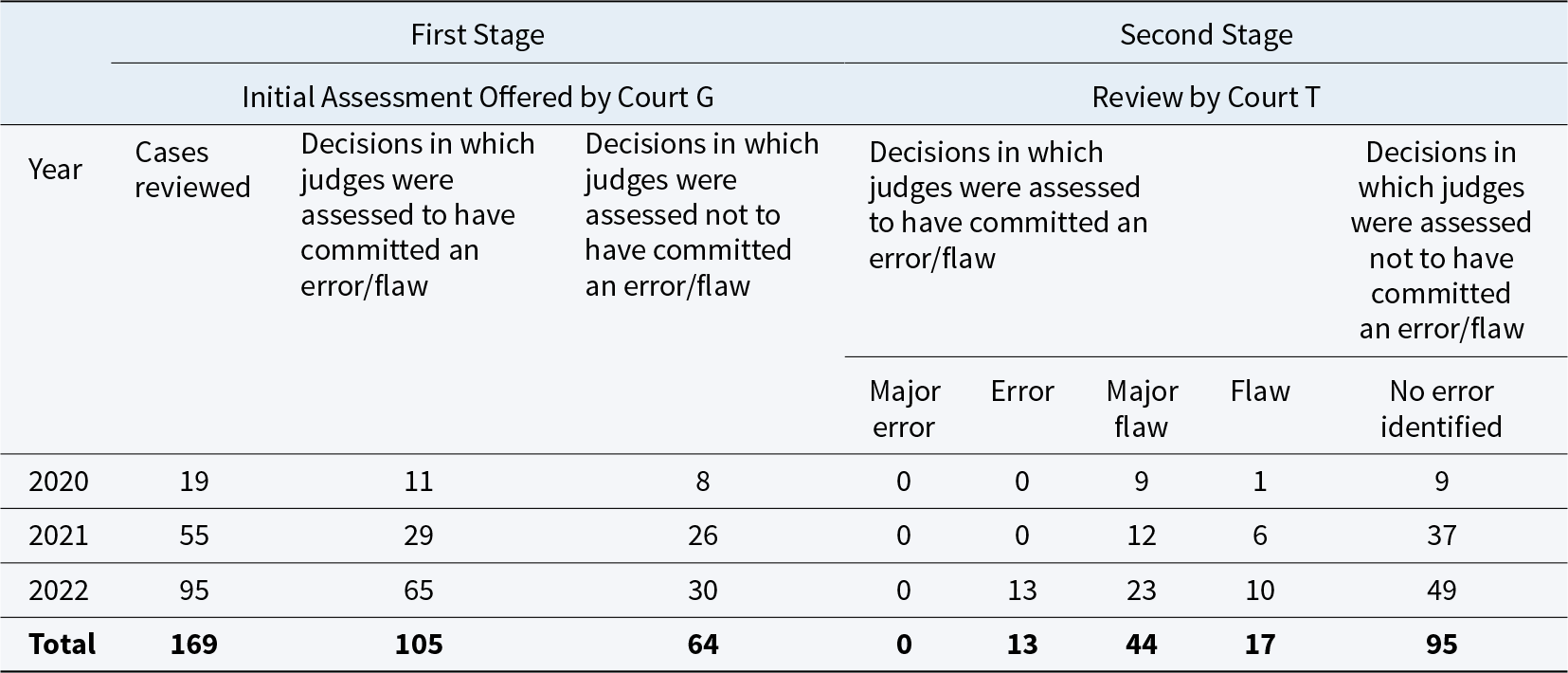
Table 3 Long description
The table outlines the consequences for judges based on the severity of errors or flaws in their work. Major errors involving legal violations result in significant merit deductions, case transfers, and potential disciplinary actions by the Central Commission for Discipline Inspection. Major errors without legal violations still lead to merit deductions and impact bonuses and promotions. Lesser errors and flaws result in smaller merit deductions and similar impacts on bonuses and promotions. If no error is identified, any previously scheduled bonus deductions are lifted. The table highlights a structured approach to accountability, with increasing severity of consequences corresponding to the gravity of the error.
In over 60 per cent of the reviewed judgments, the intermediate court found that the judges of Court T had made mistakes (either errors or flaws) (dingcuo 定错). The numbers suggest that while reversals and retrials are not automatically followed by the finding of a mistake, it remains more likely than not that the first-instance judge erred when a reversal or retrial took place. It is important to note that the intermediate court did not specify whether the first-instance judge committed a flaw or an error in its assessments; it is for the leadership of Court T to assess the severity of the mistake. In fact, Court T’s adjudication committee has the authority to either concur with or disagree with the appellate court’s initial assessments. In 2020, Court T concurred in all but one of the 11 cases in which Court G identified a flaw or error. By 2021, Court T agreed with only about 60 per cent of the 29 cases flagged by Court G, upgrading the rest to “not wrong.” The trend suggests that Court T increasingly diverged from Court G’s assessments over time.
Overall, flaws continue to outnumber errors. Yet while no errors were identified in 2021, 13 cases in 2022 resulted in the judges being found to have committed errors. This trend suggests that by the third year of the system, some judges were being assessed more harshly. That said, given the short period covered by our data, it is difficult to draw firm conclusions.
How Frontline Judges View Case Assessments
Subjectivity and inconsistency
A recurring concern among the frontline judges we interviewed in Court T and other courts was that the review process is too subjective and inconsistent. When a judge is found not to have erred, the report typically concludes with the formulaic statement: “this case involves differing understandings between the first and second instances (yiershen renshi butong 一二审认识不同) and is not considered an error.” When a judge is found to have committed flaws or errors, the reports commonly state that there was an “unclear ascertainment of facts” (rending shishi buqing 认定事实不清) or “misapplication of legal rules” (falü shiyong cuowu 法律适用错误). However, beneath the surface regularity of these phrasings, there remains ambiguity over what qualifies as a difference in understanding and what constitutes a misapplication of the law. While egregious cases leave little room for dispute, such as when a judge has clearly overlooked crucial facts or misapplied the law, many cases fall into a grey zone where the quality of a judgment is open to interpretation.
Some judges even pointed out that the difference between the two ends of the spectrum – namely, a serious error and no mistake – was not as clear as the directives suggested. A judge in her 40s remarked: “I think judges are being asked to shoulder too much risk. Remember, some years ago, there was the case of Judge Ma Ruizhi 马瑞芝 in Hebei. Although she was ultimately exonerated, her experiences highlight the risks we judges face in our line of work.” The judge was referring to the 2013 prosecution of Ma by the procuratorate for abuse of power. Judge Ma was the responsible judge in a routine private lending case. She successfully mediated the dispute. As it turned out, the litigants were withholding evidence to undermine the interests of a third party, who later petitioned the higher courts. Ma was suspended and subsequently prosecuted.Footnote 31
Others took issue with the fact that the evaluation was a desk review based entirely on available case files. In most cases, there is no new investigation, as courts cannot afford to expend judicial resources on new fact-finding, especially given the current scale of the review. Judges who are recruited as evaluators are asked to take on these cases in addition to their assigned caseloads, and many cannot spare the time needed to review the cases thoroughly.
Ambiguities appear throughout the grading spectrum. If it is already difficult to distinguish an error from a flaw, distinguishing a major flaw from a flaw can only be more challenging. As Minzner has remarked of earlier efforts to standardize the evaluation of Chinese judges, creating standardized “grades” for all the various conceivable shades of judicial error involved in appellate reversal can never be clear-cut.Footnote 32 In the context of the recent broader supervisory reform, some have also questioned the effectiveness of a sanction-based accountability system, as an official’s responsibility can easily be “reframed.”Footnote 33
In some reports, ad hoc justifications were offered to support a favourable evaluation of the responsible judge. Some judges were excused on the grounds of the complexity of the law applied, while others were criticized for failing to keep up with the latest developments in the law. This has led to confusion about how clearly the terms “errors” and “flaws” are defined. One judge said: “There is no well-established system or clear set of standards for this work.”
In one probate case, a woman, Ms Yang, filed a claim to inherit the village property of her deceased brother. Judge Dai approved the claim and awarded the property to Ms Yang, who had cared for her brother during the last years of his life. The appellate court, however, reversed the decision and awarded the property to the deceased’s brothers. In its review, Court T concluded that Judge Dai was “not wrong.” It went on to criticize the appellate court for “focusing too much on the law,” writing that the second instance “placed too much emphasis on pursuing legal effects when handling the case” (ershen guoyu zhuiqiu anjian chuli de falü xiaoguo 二审过于追求案件处理的法律效果). While Court T was sympathetic to the plaintiff, its dismissive stance towards “pursuing legal effects” is confusing, given that the reports have emphasized in many other instances the importance of adhering to the law.
In some reviews, the case review committee staunchly defended the first-instance judges, despite the appellate court’s blunt criticisms. In a case involving a debt assignment contract (zhaiquan zhuanrang hetong 债权转让合同) and a loan exceeding 23 million yuan, Judge Jiang ruled that Court T lacked jurisdiction and transferred the case to another court. The appellate court disagreed and sent it back to Court T for retrial. When reviewing Judge Jiang’s decision, the case review committee acknowledged that the second-instance judgment had correctly applied the law. However, it added: “Considering that adjudication standards across the city are inconsistent, it is recommended not to determine this as an error.” This reasoning would be more convincing if it were applied consistently. In other cases, judges were criticized for deviating from the standards set out by higher courts.
Dual role of appellate court
Frontline judges were sceptical of Court G’s dual role in both adjudicating appeals and providing input to the reviews of first-instance decisions. The higher court may use the case review mechanism to divert attention from the non-legal reasons that led it to reverse some decisions. This seems to be what Judge Zhang, whom we introduced in the opening vignette, implied when he disclosed what Judge Sun had told him.
It is noteworthy that the reports included a category of cases labelled “inconsistent factual findings between the first and second instances, with the first instance’s findings deemed more reasonable” (emphasis added). While there were no more than a handful of such cases per quarter, their inclusion shows that there were occasions when Court T disagreed with the higher court. Had Court T possessed the authority, it might have identified flaws in the appellate court’s decisions. But as senior judges explained to us, while some courts have advocated for two-way or upstream reviews – a mechanism where the first-instance court requests a review of errors committed by the second-instance court – they rarely occur.Footnote 34
The goal of the reviews is to hold judges responsible, not to re-open a case. When asked about this group of cases, the vice-president we interviewed replied: “Case reviews are an internal administrative function of the court. Final judgments, on the other hand, are authoritative determinations made by the people’s courts through statutory procedures and carry the force of res judicata.”
Informal consultations still matter
Requests for instructions, or qingshi 请示, have long posed a challenge to the SPC as it has attempted to formalize its appeal mechanism. Although the practice has existed for decades, the informal and undocumented nature of many qingshi requests has raised concerns regarding judicial fairness.Footnote 35 First-instance judges often informally ask their counterparts in higher courts for instructions to avoid making mistakes.Footnote 36 As part of the judicial reforms, the SPC recently formalized the procedures applied to qingshi; earlier proposals to “judicialize” the practice by making it a litigation procedure were even circulated within the SPC.Footnote 37
The reports indicated that informal requests persist. In a case involving a multi-party contractual dispute, Judge Fu ruled that the defendant was not required to repay a 2 million-yuan penalty fee that the plaintiff had paid to a third party. On appeal, the intermediate court reversed that decision, ordering the defendant to pay the fee and holding him responsible for causing the plaintiff to incur the penalty. The appellate court criticized the trial judge for misunderstanding the legal nature of the penalty fee. Despite the harsh language used by the higher court, the working group reviewing the case determined that “the two courts had differing interpretations.” Since the conflicting judgments were the result of “different interpretations,” the working group concluded that no error or flaw should be ascribed to Judge Fu. In his response to the working group, Judge Fu admitted that he had already “communicated” with the higher courts:
Prior to handing down my judgment, I had already sought approval from the High Court, and I had also communicated with the Third Intermediate Court. I then inquired with the High Court again, and after review by their head judge, the High Court confirmed that there were no unclear facts in this case. Both parties explicitly stated that the 2 million yuan was paid to a third party. If the plaintiff claims a refund, it pertains to a separate legal relationship.Footnote 38
In the reports, judges who made clerical mistakes were found to have committed a “flaw” (see below), yet Judge Fu, who had mistakenly determined the nature of a 2 million-yuan penalty, emerged unscathed. By reaching this conclusion, the case review committee seemed to acknowledge that informal requests continue to have a place in the new system.
Beyond legal analysis
The reviews evaluated work style and habits that reflected normative expectations beyond legal matters. This is not a novel development. For a long time, the Chinese system of judicial discipline has considered judicial mistakes, illegal activities and moral infractions under the same expansive disciplinary regime.Footnote 39 The new system, however, is set apart by its scope. Judges can be criticized for their indolence, for failing to learn new laws and for carelessness. Many frontline judges believe that it is unfair to be sanctioned for small mistakes, which they attribute to their overwhelming workload. Below are a few examples from the review reports.
Clerical mistakes
Simple clerical errors, such as misspelt names, were the most clear-cut grounds for a “flaw” finding.Footnote 40 In one case, Judge Deng incorrectly wrote the plaintiff’s name, Zheng Congjian 郑从坚 as 郑丛坚. The simplified Chinese characters 从 and 丛 are homophones and look similar but carry different meanings. The report concluded that Judge Deng had committed a flaw:
The responsible judge mistakenly wrote the name “郑从坚” as “郑丛坚” from the very beginning. Throughout the case, Zheng was represented by an attorney. It would have been straightforward to verify his name. Upon reviewing the electronic file from the first-instance trial, it is clear that the photocopy of Zheng Congjian’s ID card and the power of attorney both bear his signature as “郑从坚.” The reviewer thus concludes that the responsible judge showed a lack of attention to detail in his work. Considering that this is the first occurrence of such an issue, the mistake is evaluated as a major flaw.Footnote 41
Moralizing lessons
The reviews go beyond strictly judicial matters and also comment on the work ethic and moral sensibilities of judges. In a dispute between a customer (the plaintiff) and a spa facility that offered “medical beauty” (yiliao meirong 医疗美容) services – that is, cosmetic interventions that count as medical procedures and therefore require the practitioner to hold a special licence – Judge Zhou, the first-instance judge, asked the defendant to issue a refund without investigating whether the procedures were performed by qualified personnel. Judge Zhou was admonished for failing to keep up with the latest laws: “If the judge in charge had been actively learning and broadening his knowledge, the oversight and lack of understanding in this case could have been avoided.”
In a divorce case, Judge Liu granted the wife’s petition for divorce but stated in the judgment that the husband would be solely responsible for gambling debts incurred during the marriage. The committee criticized Liu for lacking moral discernment. Gambling is illegal in China, and by referring to “gambling debts” in an official judgment, the court effectively legitimized the illegal profits of bookies – profits that, by law, should be confiscated by the authorities.Footnote 42
Discussion: A New Form of Discipline
To complement our case study, we contacted judges in 15 other courts across the country. Our broader inquiry shows that the case review system has become a regular institutional practice across all three levels of the judiciary. While our survey is skewed towards urban courts owing to our personal networks, the system is also in place in rural courts.
Courts in different regions devote significant human resources to this ex post review system. Some courts assign large teams of judges to conduct reviews; some courts use fine-grained, point-based systems, while others rely on broader, qualitative assessments (see Table 4). Among the grassroots courts we surveyed, reviews focused primarily on appealed and retried cases, but they also extended to problematic cases, including those subject to repeated petitions. It is, however, common for provincial high courts to review all of their judgments, as their caseloads tend to be smaller, and each case carries higher stakes.
Survey of Other Courts Across the Country
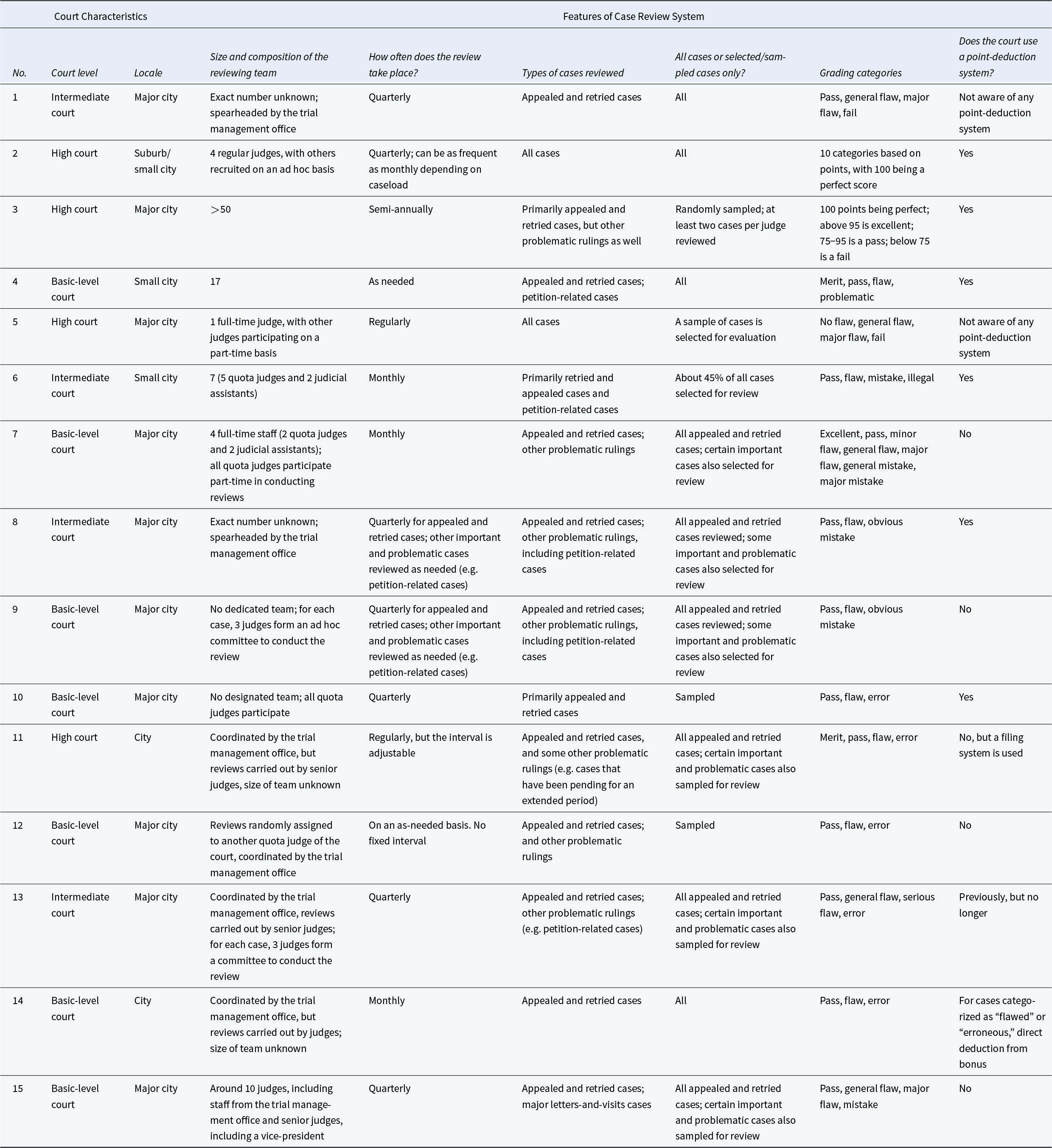
Table 4 Long description
The table measures case review outcomes by Court T from 2020 to 2022, focusing on errors and flaws identified in judicial decisions. In the initial assessment stage, no major errors were found across all years, while the second stage revealed 13 major flaws in 2022. The number of cases reviewed increased each year, from 19 in 2020 to 95 in 2022. In 2022, 49 cases were assessed to have no errors in the second stage, the highest across the three years. Overall, 169 cases were reviewed, with 95 having no errors identified in the second stage. The data suggests an increase in case reviews and a consistent identification of flaws over time, with a notable rise in major flaws in 2022.
The survey provides a clear picture of how widely the case review system has been implemented under the new regime of judicial responsibility. With the retrenchment of vertical supervision, frontline judges are now permitted to render decisions without prior approval in an arrangement that, absent further oversight, effectively amounts to the devolution of judicial power to frontline judges. The identification of the four types of cases serves as a proactive mechanism of intervention for a smaller subset of difficult cases. But it is the ex post system, the more far-reaching of the two mechanisms, that shoulders the routine task of maintaining political oversight and judicial discipline.
Yet when the new pingcha 评查 system replaced the old shenpi 审批 system, it led to unexpected changes in the power dynamics between frontline judges and their superiors. Under the pre-approval system, junior judges sometimes came under overt pressure from superiors to render specific decisions in order to obtain a sign-off on certain cases. This arrangement was rightly criticized for fostering local protectionism and corruption. At the same time, the old approach spread accountability collectively, offering a sense of collegial liability when a decision led to adverse consequences. In the new system, frontline judges alone are held accountable. Responsibility has become individualized at a time when ex post evaluation has intensified. Judges are confronted with the unforgiving prospect of routinely deciding cases on a knife’s edge, when missteps could ruin a judicial career.
Judges who evaluated the judgments of their colleagues tended to adopt a “live and let live” attitude: “today it’s you, tomorrow it’s me.” Many of the reviewers and the judges under review knew each other and had previously worked together on cases. Consequently, there was a reluctance to cost a colleague a bonus or to trigger further disciplinary action. Yet peer solidarity can only go so far. A judge’s fate in a case review ultimately depends on more than the goodwill of colleagues.
In an ironic twist, senior judges now hold the lifeline that could save the frontline judges of their courts from being condemned for errors and flaws. Much has been said about the diminishing role of the adjudication committee, which for a long time was the vehicle through which senior judges could exercise power over their subordinates.Footnote 43 The committee now surely supervises fewer cases. However, our study shows that the adjudication committee still holds the power to determine the outcome of case reviews. It would be wrong to say that the adjudication committee has been sidelined. What has happened is that its role has shifted, concentrating ex ante supervision on a minority of difficult and complex cases while holding judges accountable by disciplining mistakes detected in flawed judgments. In this new role, the adjudication committee can, should it choose to do so, declare that a judge is “not wrong,” even when that judge’s decision has been modified or reversed by a higher court.
The broad scope of the ex post review lends a disciplinary character to the entire process – disciplinary in the Foucauldian sense in that the review goes beyond the decision-making process and directs the inquisitorial gaze onto the decision-makers themselves.Footnote 44 Many frontline judges perceive their assessments as being shaped by how they are viewed by peers and superiors. For example, factors such as whether a judge collaborates collegially with peers and responds enthusiastically to the directives and policies of superiors seem to play a role. In other words, frontline judges see their evaluators as drawing on information that goes beyond the specific case under review to formulate assessments. Given the same mistake, eager “team workers” are likely to be treated more leniently than judges who are perceived as unmotivated or lackadaisical. The system is also Foucauldian in the sense that such control is diffuse and indefinite.Footnote 45 Xin He aptly characterizes this influence as a “judicial panopticon,” where the power of senior judges is ever present but not explicitly exercised, even within this ostensibly freer framework.Footnote 46
Conclusion
Under the new judicial responsibility framework, ex post review has replaced pre-approval as the main mechanism of vertical supervision. Judges enjoy greater freedom in adjudicating cases but face tighter scrutiny when their work is evaluated. In routine cases, grassroots judges now sign off on their own judgments. At the same time, they are subject to an expansive case review system that defines judicial responsibility broadly and individualistically. The longstanding fusion of administrative and judicial duties in the Chinese legal system persists, if not intensifies, and surveys confirm that judicial responsibility and discipline are major factors in judges’ attrition.Footnote 47
Perhaps the most consequential, yet overlooked, aspect of the ex post system is how it reconfigures the power that subjects frontline judges to discipline. Leaders who make up the adjudication committee can protect their subordinates by exercising their authority to finalize review outcomes, especially when an adverse review might threaten a young judge’s career. Career-oriented judges are thus incentivized to be team players and to remain on the right side of superiors, rather than risk gaining a reputation as “renegades.” This perception rests on the belief that, in a review system that is still evolving, collegial relationships increase one’s chances of survival.
Viewed as a whole, the judicial reforms strengthen control from the top in some respects and local leader control in others. Yet, for frontline judges, the reforms bring at once more freedom and more precarity. Their performance is subject to constant evaluation, and they see themselves as dependent on the goodwill of their seniors. Local dynamics, defined by interpersonal relationships and the preferences of local judges and officials, continue to permeate the hierarchy of supervision, albeit in a refigured guise. Even though the specifics of the disciplinary mechanism have changed, its implementation remains in the hands of senior judges of the same courts. The resulting form of disciplinary power is diffuse and amorphous.
Acknowledgements
The authors would like to thank the judges who participated in this study. We also thank the anonymous reviewers for their comments.
Competing interests
None.
Kwai Hang NG is professor of sociology at the University of California, San Diego. His work focuses on legal discourse, judicial institutions and the development of professionalism among Chinese judges.
Peter C.H. CHAN is an associate professor at the City University of Hong Kong, School of Law; the associate director of the Centre for Chinese and Comparative Law (CCCL) at City University of Hong Kong; a fellow of the European Law Institute; and an associate member of the International Academy of Comparative Law. His research focuses on Chinese law and the Chinese legal system. He has conducted extensive research on Chinese labour rights and women’s land rights in rural China. He also researches on comparative civil procedure and dispute resolution.

 Open access

