


Psychological trauma is associated with a wide variety of undesirable outcomes, but the link with psychosis remains controversial (Reference Bryer, Nelson and MillerBryer et al, 1987; Reference Swett, Surrey and CohenSwett et al, 1990; Reference Garno, Goldberg and RamirezGarno et al, 2005). In a longitudinal study of a population sample of 2524 adolescents and young adults, we examined whether there was an association between self-reported trauma on the one hand and cumulative incidence of psychotic symptoms on the other, and if so, whether there was a dose–response relationship; whether any association would be evident for narrow rather than broad definitions of psychosis, as reported previously (Reference Janssen, Krabbendam and BakJanssen et al, 2004); whether any association would be stronger for trauma associated with intense fear, helplessness or horror; whether associations with psychological trauma and psychosis would be modified depending on prior level of psychosis proneness; whether the exposure to trauma had occurred early or later in childhood; and whether the findings were specific for psychosis.
METHOD
The Early Developmental Stages of Psychopathology (EDSP) study (Reference Wittchen, Perkonigg and LachnerWittchen et al, 1998; Reference Lieb, Isensee and von SydowLieb et al, 2000) collected data on the prevalence, incidence, risk factors, comorbidity and course of mental disorders in a random representative population sample of adolescents and young adults (age range 14–24 years at baseline) in the Munich area of Germany. The overall design of the study was prospective, consisting of a baseline (time 0) survey (n=3021), two follow-up surveys (time 1 and time 2) and a family supplement. Children aged 14–15 years were sampled at twice the rate of persons aged 16–21 years and those aged 22–24 years were sampled at half this rate. A complete and detailed description of the design, sample, instruments, procedures and statistical methods of the EDSP is given by Lieb et al (Reference Lieb, Isensee and von Sydow2000).
The sample was drawn in 1994 from the government registries in Munich of registrants expected to be 14–24 years old at the time 0 interview in 1995. Details about the representativeness of the whole EDSP sample and its socio-demographic characteristics have been presented by Lieb et al (Reference Lieb, Isensee and von Sydow2000) and Wittchen et al (Reference Wittchen, Perkonigg and Lachner1998). A total of 3021 interviews were completed at time 0 (response rate 71%). The first follow-up study was conducted only in the subsample of respondents aged 14–17 years at time 0, whereas the second follow-up study was again conducted for all respondents. The results reported here are based on the data collected at time 0 and time 2. Of the 3021 respondents interviewed in the time 0 study, 2548 completed an interview at the second follow-up, which occurred an average of 42 months after time 0 (response rate 84%).
Participants were assessed with the computer-assisted version of the Munich Composite International Diagnostic Interview (DIA–X/M–CIDI; Reference Wittchen and PfisterWittchen & Pfister, 1997), an updated version of the Composite International Diagnostic Interview version 1.2 (World Health Organization, 1990). Diagnostic findings, according to the explicit diagnostic criteria of DSM–IV (American Psychiatric Association, 1994), were obtained using the DIA–X/M–CIDI diagnostic algorithms. The CIDI is designed for use by trained interviewers who are not clinicians and has high interrater reliability (Reference Cottler, Helzer and MagerCottler et al, 1991; Reference Wittchen, Robins and CottlerWittchen et al, 1991) and high test–retest reliability (Reference WittchenWittchen, 1994; Reference Reed, Gander and PfisterReed et al, 1998). The assessment of psychosis with CIDI interviews by lay interviewers is not considered reliable (Reference Anthony, Folstein and RomanoskiAnthony et al, 1985). Therefore, in the EDSP, trained psychologists who were allowed to probe with follow-up clinical questions conducted the interviews. Most interviews took place in the homes of the respondents. At time 0 the lifetime version of the M–CIDI was used. At each of the follow-up assessments the M–CIDI interval version was applied, which refers to the period of assessment from the previous interview until the present. Data on the M–CIDI psychosis (G) section about psychotic symptoms were collected only at the time 2 assessment, at which point life-time ratings of psychotic symptoms were made, yielding lifetime cumulative incidence data up to the respective age of respondents at time 2 (range 17–28 years). At time 0, participants additionally completed the self-report Symptom Check List–90–Revised (SCL–90–R; Reference DerogatisDerogatis, 1983) to screen for a broad range of psychological problems and symptoms of psychopathology. Reliability and validity of the SCL–90–R have been established previously (Reference Derogatis and ClearyDerogatis & Cleary, 1977; Reference Bonicatto, Dew and SoriaBonicatto et al, 1997).
Psychotic symptoms and psychosis proneness
In the adolescents and young adults, the ratings from the 15 M–CIDI core psychosis items on delusions (11 items) and hallucinations (4 items) were used to assess the presence of psychotic symptoms (items G3–5, G7–14, G17, G18, G20, G21). These concern classic psychotic experiences involving, for example, persecution, thought interference and auditory hallucinations. Participants were first asked to read a list of all the psychotic experiences and were then interviewed about it by the psychologist (list and phrasing available from the author upon request). All psychosis items could be rated in two ways: 0 (no) and 1 (yes). The survey was not powered for the study of rare psychotic disorders, but instead focused on the presence of positive psychotic symptoms. The psychosis outcome was defined as ‘broad’, ‘medium’ or ‘narrow’ (at least one, at least two or at least three positive ratings on any of the 15 M–CIDI core psychosis items respectively), in order to be able to assess associations between trauma and the psychosis outcome defined at different levels of severity, an approach similar to that used in previous analyses in this sample (Spauwen et al, Reference Spauwen, Krabbendam and Lieb2004a ,Reference Spauwen, Krabbendam and Lieb b ). The method is described in more detail by Lieb et al (Reference Lieb, Isensee and von Sydow2000).
The time 0 SCL–90–R sub-scales ‘psychoticism’ and ‘paranoia’ were used to measure psychosis proneness at baseline. These scales include self-reports on thought interference, hallucinations and suspiciousness (items 7, 8, 16, 18, 35, 43, 62, 68, 76, 77, 83–85, 87, 88, 90), and can be regarded, if not as clear-cut psychotic symptoms, as an expression of psychosis proneness with familial transmission, as demonstrated by a recent general population family study (Reference Hanssen, Krabbendam and VollemaHanssen et al, 2005b ). The ‘psychoticism’ and ‘paranoia’ scales were combined into one psychosis proneness scale by adding their scores and dividing the sum by two. For the purposes of the analyses, ‘SCL psychosis proneness’ was a priori defined dichotomously as the group of individuals with the highest 25% of scores as described previously (Reference Henquet, Krabbendam and SpauwenHenquet et al, 2005).
Self-reported trauma
Type of event
Self-reported lifetime exposure to trauma was measured in the entire sample at time 0 using a module from the CIDI that started with trauma screening questions, in which respondents could indicate a positive response on a visually presented list of nine groups of specified traumatic events such as ‘experienced physical threat’, ‘experienced serious accident’ or ‘being sexually abused as a child’ (see Table 1). The category ‘any traumatic event’ indicated exposure to any one of the nine traumas. The visual presentation of the list allowed respondents and interviewers to avoid speaking about sometimes embarrassing and stigmatising trauma by simply indicating the number of the event. Affirmative responses to any of the events were labelled ‘self-reported trauma’.
Associations between time 0 self-reported trauma and time 2 psychosis outcomes
| Exposure (n=2524) | Psychosis outcome1 | ||
|---|---|---|---|
| Broad | Medium | Narrow | |
| Any trauma (n=491) | |||
| Exposed v. non-exposed, n (%) | 106 (21.6) v. 335 (16.5) | 55 (11.2) v. 128 (6.3) | 32 (6.5) v. 53 (2.6) |
| OR (95%) CI | 1.40 (1.09-1.78) | 1.88 (1.35-2.62) | 2.60 (1.66-4.09) |
| Adjusted OR (95% CI)2 | 1.07 (0.82-1.40) | 1.29 (0.90-1.86) | 1.89 (1.16-3.08) |
| War experience (n=5) | |||
| Exposed v. non-exposed, n (%) | 0 (0) v. 441 (17.5) | 0 (0) v. 183 (7.3) | 0 (0) v. 85 (3.4) |
| OR (95% CI)2 | — | — | — |
| Adjusted OR (95% CI)2 | — | — | — |
| Physical threat (n=211) | |||
| Exposed v. non-exposed, n (%) | 53 (25.1) v. 388 (16.8) | 27 (12.8) v. 156 (6.7) | 18 (8.5) v. 67 (2.9) |
| OR (95% CI) | 1.66 (1.20-2.31) | 2.03 (1.31-3.14) | 3.13 (1.82-5.37) |
| Adjusted OR (95% CI)2 | 1.20 (0.84-1.72) | 1.25 (0.77-2.02) | 2.14 (1.18-3.89) |
| Rape (n=23) | |||
| Exposed v. non-exposed, n (%) | 6 (26.1) v. 435 (17.4) | 4 (17.4) v. 179 (7.2) | 3 (13.0) v. 82 (3.3) |
| OR (95% CI) | 1.67 (0.66-4.28) | 2.73 (0.92-8.11) | 4.43 (1.29-15.19) |
| Adjusted OR (95% CI)2 | 1.09 (0.39-3.05) | 1.54 (0.45-5.24) | 2.26 (0.55-9.21) |
| Sexual abuse (n=39) | |||
| Exposed v. non-exposed, n (%) | 8 (20.5) v. 4.33 (17.4) | 5 (12.8) v. 178 (7.2) | 4 (10.3) v. 81 (3.3) |
| OR (95% CI) | 1.22 (0.56-2.68) | 1.91 (0.74-4.93) | 3.39 (1.18-9.77) |
| Adjusted OR (95% CI)2 | 0.70 (0.29-1.64) | 0.95 (0.33-2.68) | 1.55 (0.47-5.08) |
| Natural catastrophe (n=13) | |||
| Exposed v. non-exposed, n (%) | 5 (38.5) v. 436 (17.4) | 5 (38.5) v. 178 (7.1) | 4 (30.8) v. 81 (3.2) |
| OR (95% CI) | 2.97 (0.97-9.14) | 8.19 (2.65-25.30) | 13.33 (4.02-44.20) |
| Adjusted OR (95% CI)2 | 2.92 (0.89-9.57) | 9.85 (2.96-32.78) | 15.06 (4.06-55.87) |
| Serious accident (n=172) | |||
| Exposed v. non-exposed, n (%) | 32 (18.6) v. 409 (17.4) | 15 (8.7) v. 168 (7.1) | 7 (4.1) v. 78 (3.3) |
| OR (95% CI) | 1.09 (0.73-1.62) | 1.24 (0.71-2.16) | 1.24 (0.56-2.72) |
| Adjusted OR (95% CI)2 | 0.97 (0.64-1.47) | 1.09 (0.62-1.94) | 1.05 (0.47-2.39) |
| Imprisoned, kidnapped (n=3) | |||
| Exposed v. non-exposed, n (%) | 1 (33.3) v. 440 (17.5) | 1 (33.3) v. 182 (7.2) | 0 (0) v. 85 (3.4) |
| OR (95% CI) | 2.36 (0.21-26.14) | 6.43 (0.58-71.20) | |
| Adjusted OR (95% CI)2 | 1.78 (0.15-21.52) | 4.78 (0.39-57.60) | |
| Terrible event to other (n=101) | |||
| Exposed v. non-exposed, n (%) | 22 (21.8) v. 419 (17.3) | 15 (14.9) v. 168 (6.9) | 10 (9.9) v. 75 (3.1) |
| OR (95% CI) | 1.33 (0.82-2.16) | 2.34 (1.32-4.14) | 3.44 (1.72-6.87) |
| Adjusted OR (95% CI)2 | 0.93 (0.55-1.59) | 1.52 (0.80-2.89) | 2.40 (1.13-5.11) |
| Other (n=46) | |||
| Exposed v. non-exposed, n (%) | 9 (19.6) v. 432 (17.4) | 3 (6.5) v. 180 (7.3) | 2 (4.3) v. 83 (3.3) |
| OR (95% CI) | 1.15 (0.55-2.40) | 0.89 (0.27-2.90) | 1.31 (0.31-5.50) |
| Adjusted OR (95% CI)2 | 0.83 (0.37-1.82) | 0.48 (0.13-1.73) | 0.66 (0.14-3.15) |
DSM–IV A2 criterion
In the case of a positive rating for an event, questions were asked about the experience to determine whether the DSM–IV A2 criterion for a traumatic event had been met. This criterion assesses presence of intense fear, helplessness or horror (Reference Stein, Hofler and PerkoniggStein et al, 2002).
Age at exposure
In order to examine whether associations were age-dependent, in particular with regard to exposure in early and middle childhood, exposure to trauma was divided into two groups: one with exposure before age 13 years and one after age 12 years.
Analyses
Self-reported trauma and psychosis outcome
All standard errors and test statistics were estimated using the software package Stata version 8. Logistic regression analysis was used to examine the association between lifetime cumulative incidence of positive psychotic symptoms (defined as at least one, two or three psychotic experiences) in the adolescents and young adults and self-reported trauma. Associations were expressed as odds ratios with their 95% confidence intervals. Similarly to the approach used in previous work (van Os et al, Reference Van Os, Bak and Hanssen2002, Reference Van Os, Hanssen and Bak2003; Reference Van Osvan Os, 2004), interaction was calculated under an additive rather than a multiplicative model because only additive interaction can be interpreted biologically in a meaningful way, yielding information on the extent to which two causes depend on each other or co-participate in disease causation (Reference DarrochDarroch, 1997).
Guided by previous research, we adjusted for the following confounders chosen a priori: gender, socio-economic status (a combination of social status and financial status), urbanicity, cannabis use (defined previously by Reference Henquet, Krabbendam and SpauwenHenquet et al, 2005) and time 0 DSM–IV diagnosis of any substance misuse or dependence, major depression, anxiety disorder, bipolar disorder and hypomanic episode. In order to examine whether any association between trauma and psychotic symptoms at time 2 was independent of expression of psychosis at time 0, analyses were also adjusted for time 0 SCL psychosis proneness. In order to test whether associations between trauma and psychosis differed in magnitude as a function of definition of psychosis outcome (broad and narrow as defined above), effect sizes of a four-level psychosis variable – no psychotic symptom, one psychotic symptom (n=258), two psychotic symptoms (n=98), three or more psychotic symptoms (n=85) – entered as three dummy variables were compared in an equation with trauma as the dependent variable.
Trauma and psychosis proneness
In order to assess whether trauma (T) and pre-existing SCL psychosis proneness (P) interacted synergistically, the risk for psychosis was calculated for each of the four exposure cells that make up the combination of the two exposures: R(T 0/P 0), R(T 1/P 0), R(T 0/P 1) and R(T 1/P 1). The null hypothesis of no additive interaction: R(T 1/P 1)–R(T 1/P 0)–R(T 0/P 1)+R(T 0/P 0)=0 (Reference DarrochDarroch, 1997) was assessed by the Wald test. Risk difference regression in Stata was used to calculate adjusted associations between trauma and psychosis under an additive risk model.
As some adolescents might have reported CIDI psychotic symptoms at time 2 that already existed at time 0, a sensitivity analysis was conducted excluding adolescents who had reported that onset of time 2 CIDI psychotic symptoms had occurred more than a year before, thus ensuring prediction of only incident psychotic symptoms.
Specificity
To investigate whether any association with trauma was specific for psychosis, the analyses were repeated using the DSM–IV diagnoses of major depression and bipolar disorder as the dependent variables. For the purpose of these analyses, time 2 diagnoses of major depression and bipolar disorder were used, including only the new cases that had arisen between time 0 and time 2 and excluding those with a relapse of an illness already diagnosed at time 0. These analyses were adjusted as described above, with the exception that baseline major depression, bipolar disorder and hypomanic episode were not adjusted for and instead the broad measure of time 0 psychotic symptoms was.
Risk set
The analyses for self-reported trauma in relation to the psychosis outcome were conducted in the group of individuals who had both complete data on the psychosis outcome at time 2 and self-reported trauma at time 0, yielding a risk set of 2524.
RESULTS
Self-reported trauma
Of the 2524 adolescents and young adults 51% were male, and the mean age at time 2 was 21.7 years (s.d.=3.4). At time 2 among this sample, 441 (17.5%) reported at least one psychotic symptom, 183 (7.3%) reported two or more and 85 (3.4%) reported three or more. Trauma had been self-reported at time 0 by 491 participants (19.5%); of these, 296 were male (60.3%).
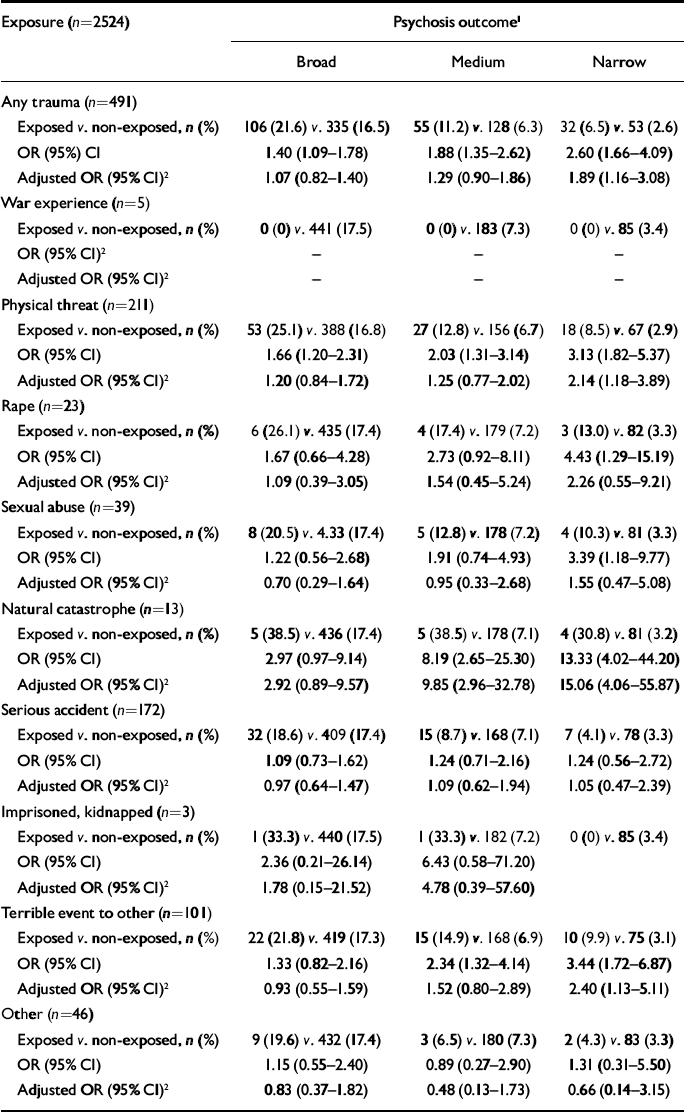
Unadjusted logistic regression indicated that time 0 self-reported trauma was associated with time 2 psychotic symptoms (OR=1.40, 95% CI 1.09–1.78). The strength of the association increased in the model of the time 2 narrow psychosis outcome of having at least two (OR=1.88, 95% CI 1.35–2.62) or at least three (OR=2.60, 95% CI 1.66–4.09) psychotic symptoms (Table 1). For the broader measures of psychotic symptoms, the magnitude of the associations decreased and became statistically non-significant after adjustment for gender, socio-economic status, urbanicity, cannabis use, time 0 SCL psychosis proneness and time 0 DSM–IV mental disorders (Table 1). However, the adjusted OR for the association between exposure to any trauma and the outcome of at least three psychotic symptoms was 1.89 (95% CI 1.16–3.08). Excluding the 25% of adolescents with time 2 CIDI psychotic symptoms with onset more than a year previously did not change this latter result (OR=1.84, 95% CI 1.06–3.22).
Associations with specific traumatic events and diagnostic specificity
Dissecting the broad trauma variable into its nine separate categories revealed that generally all time 0 trauma categories showed positive associations with the time 2 psychosis outcome, in particular the narrowest psychosis outcome of three or more psychotic symptoms. Exceptions were the categories ‘serious accident’ and ‘other trauma’, which did not show clear associations (Table 1). The cumulative incidences of major depression and bipolar disorder in the risk set between time 0 and time 2 were 6.9% (n=174) and 0.8% (n=19) respectively. There was no significant association between self-reported trauma and the occurrence of bipolar disorder (unadjusted OR=0.77, 95% CI 0.22–2.68; adjusted OR=0.40, 95% CI 0.10–1.57), and the results were similar for major depression (unadjusted OR=1.39, 95% CI 0.97–2.00; adjusted OR=1.16, 95% CI 0.79–1.71).
Age at exposure and A2 criterion
There was no large or significant difference in associations between trauma and the narrowest psychosis outcome of three or more psychotic symptoms according to age at exposure. In the group with exposure before age 13 years the adjusted OR was 2.19 (95% CI 1.00–4.81, P=0.050), whereas in those with exposure after age 12 years it was 1.79 (95% CI 1.04–3.07, P=0.035; test for difference between these two effect sizes χ2=0.22, P=0.64). Association between the narrowest psychosis outcome of three or more psychotic symptoms and trauma that met the A2 criterion (n=389 out of 491) were generally higher than those with trauma that did not meet the A2 criterion (n=102 out of 491), although this difference was not statistically significant. Thus, the adjusted OR for trauma without the A2 criterion was 1.24 (95% CI 0.43–3.62, P=0.69) and the adjusted OR for trauma meeting the A2 criterion was 2.05 (95% CI 1.23–3.42, P=0.006; test for difference between these two effect sizes χ2=0.79, P=0.38).
Comparison by psychosis severity
In the analyses with trauma meeting the A2 criterion as the dependent variable and the three dummy variables representing psychosis defined at different levels of severity, the adjusted odds ratios, compared with the reference category of no psychotic symptom, were: one psychotic symptom OR=0.86 (95% CI 0.59–2.26); two psychotic symptoms OR=0.77 (95% CI 0.43–1.39); three psychotic symptoms OR=2.01 (95% CI 1.22–3.31). This latter effect size was significantly greater than both the first (χ2=7.77, P=0.0053) and the second (χ2=6.34, P=0.012).
Dose–response
The association between trauma and psychosis increased in a dose–response fashion with the number of traumatic events. Thus, the adjusted odds ratio for one event (n=398) was 1.78 (95% CI 1.05–3.03, P=0.033) and for two events (n=93) it was 2.30 (95% CI 1.02–5.18, P=0.045). Similarly, somewhat more pronounced results were apparent for trauma meeting the A2 criterion: the adjusted OR for one event (n=319) was 1.76 (95% CI 1.00–3.09, P=0.033) and for two events (n=70) it was 3.12 (95% CI 1.37–7.10, P=0.007).
Synergism between trauma and psychosis proneness
The rate of time 2 CIDI psychotic symptoms according to the most narrow definition (three or more symptoms) in those with SCL psychosis proneness (the 25% with the highest time 0 SCL psychosis proneness scores) was 6.2% v. 2.5% in those without. Similarly, the rate of time 2 CIDI psychotic symptoms in adolescents who reported trauma was 6.5% v. 2.6% in those who did not. The rates of time 2 CIDI three or more psychotic symptoms in the four exposure states are depicted in Table 2. The rate for the combined exposure category was 11.2%, whereas for SCL psychosis proneness alone it was 4.0% and for those exposed to neither it was 2.2%. This suggests a strong departure from independence, as the expected rate in the case of independence would have been 4.2+4.0–2.2=6.0% (Reference DarrochDarroch, 1997). In other words, the effect size of trauma for psychosis in those without psychosis proneness was, on the additive scale, 4.0–2.2=1.8%, whereas for those with psychosis proneness it was 11.2–4.2=7%. The difference between these two effect sizes, adjusted for gender, socio-economic status, urbanicity, cannabis use and time 0 DSM–IV mental disorders, was statistically significant (χ2=4.6, P=0.032; Table 2). Excluding the 25% of adolescents with time 2 CIDI psychotic symptoms with onset more than a year previously did not change this latter result (χ2=4.1, P=0.043). Similarly, excluding individuals with trauma not meeting the A2 criterion revealed similar results (χ2=4.2, P=0.040).
Rates of narrowly defined psychotic symptoms (three or more symptoms) according to the four exposure states formed by trauma (exposed v. non-exposed) and psychosis proneness (high v. low)

| Psychosis proneness | Trauma | |
|---|---|---|
| Non-exposed % (n/N) | Exposed % (n/N) | |
| Low | 2.2 (34/1582) | 4.0 (13/322) |
| High | 4.2 (19/449) | 11.2 (19/169) |
| Test of null hypothesis: X 2=4.6, P=0.0321 | ||
DISCUSSION
Our results indicated that self-reported trauma at baseline was associated prospectively and in a dose–response fashion with onset of psychotic symptoms at follow-up. The results remained significant after controlling for possible confounders and associations were significantly stronger for the more severe psychosis outcome. Associations were also apparent for trauma experienced before age 13 years. In addition, in adolescents with a pre-existing vulnerability to psychosis, associations between trauma and psychotic symptoms were much stronger than in those without such vulnerability. Self-reported trauma was not associated with bipolar disorder and major depression, suggesting that the results might be specific for psychosis. Our findings therefore suggest an unconfounded and specific relationship between psychological trauma and psychosis.
Linking trauma and psychosis
The great majority of studies linking trauma to mental health investigated people who were already mentally ill and selected into treatment settings at the time of retrospective assessment of trauma, with the inherent risk of bias. Whereas true prospective studies are all but impossible, given the necessity to intervene when exposure to trauma is apparent, a semi-prospective approach in non-selected, non-ill populations constitutes a less biased approach. In a recent population-based study, exposure to psychological trauma assessed at baseline predicted development of incident positive psychotic symptoms 3 years later, in particular for the more narrow clinical definitions of psychosis (Reference Janssen, Krabbendam and BakJanssen et al, 2004). The latter study, however, included individuals aged 18–65 years, giving rise to the risk of uncontrolled age and cohort effects which can only be avoided by studying the association between trauma and psychosis in a homogeneously aged sample as proximal as possible to the exposure. In practice, this would mean inclusion of individuals after puberty, when there is a dramatic rise in the incidence of psychotic experiences and the impact of childhood trauma can first be assessed.
Interpretation of psychosis proneness
The time 0 measure of psychosis proneness was an SCL–90–R self-report of psychotic symptoms, whereas the time 2 outcome was based on the M–CIDI clinical interview administered by trained psychologists using probing questions. In the group with psychosis proneness at time 0, any association with trauma can thus be interpreted as either an effect of persistence of psychosis from time 0 to time 2 (if one considers the SCL–90–R to be identical to the M–CIDI psychosis section) or as an effect of transition from expression of psychosis proneness at time 0 to expression of overt symptoms at time 2. The fact that associations were strongest for the more severe psychosis outcome suggests the latter. However, the conservative interpretation that fits both the above scenarios is that exposure to psychological trauma worsens the prognosis of expression of psychosis, whether it be in terms of greater likelihood of persistence or greater likelihood of transition to a more severe psychotic state.
The dose–response relationship demonstrated in this paper suggests causality. Exposure to trauma in childhood and adolescence thus may modify the trajectory and outcome of psychosis proneness. As psychosis proneness has a continuous distribution in the population (Reference Hanssen, Krabbendam and VollemaHanssen et al, 2005b ), many of those exposed could have their risk of later psychosis altered. Bak and colleagues provided a possible explanation, invoking a metacognitive mechanism for the synergistic relationship between trauma and psychosis proneness. These authors reported that in individuals with a tendency to experience anomalous experiences, prior exposure to trauma in childhood and adolescence was associated with less subjective control over these experiences and greater level of psychological distress (Reference Bak, Krabbendam and JanssenBak et al, 2005).
Person–environment interaction v. person–environment correlation
The above interpretation that previous expression of psychosis proneness may make an individual more sensitive to any risk-increasing effect of psychological trauma (person–environment interaction) assumes that psychosis proneness does not increase the risk of psychological trauma (person–environment correlation) (Reference Van Os, Sham, Murray, Jones and Susservan Os & Sham, 2003). Having a psychosis proneness may make individuals more likely to report experience of trauma regardless of their actual experience. In order to test this assumption, we examined whether time 0 psychosis proneness predicted incident reports of trauma at time 2 (defined in the same way as at time 0). This was done by excluding all those who had reported trauma at time 0 and identifying new reports of trauma at time 2. Thus, at time 2 there were 204 individuals who at time 0 had not admitted to any trauma and who reported having experienced a trauma between time 0 and time 2. Analysis revealed that there was no large or significant association between baseline psychosis proneness and incident trauma at time 2 (OR=1.16, 95% CI 0.90–1.48).
Another form of person–environment correlation would be that the level of psychosis proneness in the general population is also, at least in part, the result of trauma itself. As both non-genetic and genetic sources contribute to individual differences in psychosis proneness (Reference Kendler and HewittKendler & Hewitt, 1992; Reference Linney, Murray and PetersLinney et al, 2003), trauma may well be a contributing factor. In fact, the analyses may capture part of the continuous pathway of influences from risk to formal diagnosis, in which the apparent interaction between psychosis proneness and trauma represents in part the early expression of the aetiological influence of trauma itself in those who are most vulnerable to its effects. The fact that there was a weak association between trauma at time 0 and SCL psychosis proneness in an adjusted risk difference regression model with the latter as the dependent variable (risk difference 6%, P=0.007) does suggest that part of the interaction between trauma at time 0 and SCL psychosis proneness may represent a continuous direct influence of trauma itself.
Possible mechanism of risk
One mechanism by which trauma may increase the risk of psychosis is by creating a biological vulnerability. Read et al (Reference Read, Perry and Moskowitz2001) have suggested that adverse life events might mould neurodevelopmental abnormalities that underlie the sensitivity to stressors, if they occur early enough or are sufficiently severe. Thus, abnormal neurodevelopmental processes might originate from traumatic events in childhood. Specifically, when exposure to stressors persists and heightened stress-induced glucocorticoid release is chronic, permanent changes in the hypothalamic–pituitary–adrenal (HPA) axis may ensue. Childhood traumatic events could thus cause permanent dysregulation of the HPA axis, which in turn might underlie the dopaminergic abnormalities that are generally thought to be involved in psychosis (Reference Read, Perry and MoskowitzRead et al, 2001).
Another biological mechanism underlying the association between trauma and psychosis may lie in direct effects on dopamine function. It has been shown that maternal deprivation in neonatal rats produces enduring changes in dopamine function associated with increases in presynaptic dopaminergic function in the nucleus accumbens (Reference Hall, Wilkinson and HumbyHall et al, 1999). A similar model of dopamine ‘sensitisation’ might result from traumatic exposures in humans. Furthermore, it has been suggested that the experience of trauma might create a psychological vulnerability to the development of psychotic symptoms (Reference Bentall, Corcoran and HowardBentall et al, 2001; Reference Garety, Kuipers and FowlerGarety et al, 2001). Exposure to early trauma may increase the risk of dysfunctional responses to early anomalous experiences, resulting in psychotic symptom formation. It is of interest that associations with trauma meeting the A2 criterion were numerically greater than for traumatic events not meeting the A2 criterion. This suggests that the strong emotions associated with trauma have a role in increasing the risk of later psychotic symptoms. Recent psychological models have provided evidence for such a direct role of emotions in the development of psychotic experiences (Reference Freeman and GaretyFreeman & Garety, 2003).
Childhood sexual trauma
In a cross-sectional population survey, a history of sexual trauma displayed the largest relative risk for psychosis among a range of experiences of victimisation (Reference Bebbington, Bhugra and BrughaBebbington et al, 2004). Also, a history of psychological trauma has been associated with an increased incidence of positive psychotic symptoms in people with a high pre-existing risk of psychosis. For example, in people with bipolar disorder, who have a high risk of experiencing such symptoms, exposure to childhood sexual trauma increased the likelihood of experiencing psychotic symptoms (Reference Hammersley, Dias and ToddHammersley et al, 2003). In a truly prospective record linkage study, no significant association between registered severe childhood sexual trauma, mostly with penetrative abuse, and registered schizophrenia was found (Reference Spataro, Mullen and BurgessSpataro et al, 2004), although the excess risk was 30% for males and 50% for females. One explanation for the discrepancy is that the use of registered sexual abuse also necessarily indicates that interventions would have been initiated, mitigating the risk of psychotic disorder. Thus, Read & Hammersley (Reference Read and Hammersley2005) suggested that because the cases were drawn from police and court records many of the children would have been removed from the abusive situation and received early support.
Our sample included a much wider and much more prevalent range of sexually threatening experiences, which – particularly if no confiding is possible – might have an adverse effect on emotional development. We used a much broader outcome of psychotic symptoms, which could be more sensitive than narrowly defined schizophrenia in a psychiatric treatment setting.
Symptoms and disorder
Psychotic symptoms cannot be equated with psychotic disorder. Symptoms are more prevalent than DSM–IV defined psychotic disorders, but nevertheless show a degree of continuity with more severe states such as schizophrenia (Reference Poulton, Caspi and MoffittPoulton et al, 2000; Reference Johns and van OsJohns & van Os, 2001). The milder forms of expression of psychosis show patterns of associations with demographic, environmental and genetic risk factors similar to those seen in clinical psychotic disorders, including the apparent association with early trauma, providing further support for the notion of continuity (Reference Johns and van OsJohns & van Os, 2001). Although the majority of individuals experiencing these lesser psychotic symptoms are not in need of care, longitudinal studies suggest that they might nevertheless be at increased risk of developing a clinical disorder (Reference Poulton, Caspi and MoffittPoulton et al, 2000; Hanssen et al, Reference Hanssen, Bak and Bijl2005a ,Reference Hanssen, Krabbendam and Vollema b ). Our results indicate that exposure to trauma is particularly relevant in relation to more severe psychotic states, suggesting that the findings have clinical implications as well.
Methodological issues
First, it must be acknowledged that the time 0 lifetime self-reported trauma prevalence rates produced by this study could be underestimates, for example because respondents, for a variety of reasons, might have chosen not to admit to traumatic experience early in life. Consequently, the positive relationships between trauma and psychosis found in our study could be underestimates of the strength of those relationships, since a significant number of traumatised respondents could actually be in the non-traumatised group in the analyses. Second, the measurement of reported psychological trauma was not very refined, as the respondents could not report qualitative aspects of the trauma. On the other hand, the use of a direct semi-structured interview is one of the strengths of our study, because the relationship between trauma and mental disorders is frequently underestimated by researchers’ reliance on records rather than direct questioning. In addition, the evaluation of the distinction between occurrence and emotional impact added to the validity of the analyses. A related issue is the fact that trauma was assessed retrospectively, even though the analyses relating trauma to the psychosis outcome were prospective. The possibility cannot be completely excluded that the presence of psychosis might lead to an alteration in the recall of trauma. However, because we controlled for the presence of time 0 psychosis vulnerability, the results are unlikely to be attributable to an inverse relationship. In addition, any such influence of time 0 psychosis proneness could not explain the pattern of synergism between trauma and time 0 psychosis proneness.
Use of the SCL–90–R as a measure of baseline proneness is a third possible limitation, as assessment of the SCL covers only the preceding 2 weeks. This might have led to false negatives in the baseline assessment of psychosis proneness. However, any possible bias in the direction of false negatives would have only decreased risk differences between groups, suggesting even larger associations with baseline proneness than we observed. A fourth limitation of this work concerns the use of the CIDI to assess psychotic symptoms at time 2 (Reference Anthony, Folstein and RomanoskiAnthony et al, 1985). However, the use of face-to-face interviewing by psychologists can be expected to yield much better results than a self-report questionnaire; furthermore, the psychologists were allowed to probe with follow-up clinical questions, so that the respondents’ answers cannot be taken to represent self-report, as would be the case with lay interviewer assessments.
Clinical Implications and Limitations
CLINICAL IMPLICATIONS
-
▪ Exposure to psychological trauma increases the risk of later psychotic symptoms, particularly at greater levels of severity.
-
▪ There may be synergism between early trauma and psychosis proneness in their association with onset of psychotic symptoms.
-
▪ Exposure to trauma may be a hidden factor explaining a substantial part of the psychosis morbidity force.
LIMITATIONS
-
▪ Associations between trauma and psychotic symptoms may not necessarily generalise to psychotic disorders.
-
▪ The baseline measure of psychosis proneness in the study was crude.
-
▪ Qualitative aspects of traumatic experiences were not assessed, with the exception of emotional impact.
Acknowledgements
This work is part of the Early Developmental Stages of Psychopathology (EDSP) study and is funded by the German Ministry of Research and Technology (project 01 EB 9405/6 and 01 EB 9901/6). Principal investigators are Dr Hans-Ulrich Wittchen and Dr Roselind Lieb. Current or former staff members of the EDSP group are Dr Kirsten von Sydow, Dr Gabriele Lachner, Dr Axel Perkonigg, Dr Peter Schuster, Dr Franz Gander, Dipl.-Stat. Michael Höfler and Dipl.-Psych. Holger Sonntag as well as Mag. phil. Esther Beloch, Dr Martina Fuetsch, Dipl.-Psych. Elzbieta Garczynski, Dipl.-Psych. Alexandra Holly, Dr Barbara Isensee, Dr Marianne Mastaler, Dr Chris Nelson, Dipl.-Inf. Hildegard Pfister, Dr Victoria Reed, Dipl.-Psych. Andrea Schreier, Dipl.-Psych. Dilek Türk, Dipl.-Psych. Antonia Vossen, Dr Ursula Wunderlich and Dr Petra Zimmermann. Scientific advisers are Dr Jules Angst (Zurich, Switzerland), Dr Jürgen Margraf (Basel, Switzerland), Dr Günther Esser (Potsdam, Germany), Dr Kathleen Merikangas (National Institute of Mental Health, Bethesda, Maryland, USA), Dr Jim van Os (Maastricht, The Netherlands) and Dr Ron Kessler (Harvard University, Boston, Massachusetts, USA).
The authors thank Axel Perkonigg, PhD, for his valuable comments and suggestions.




eLetters
No eLetters have been published for this article.