




INTRODUCTION
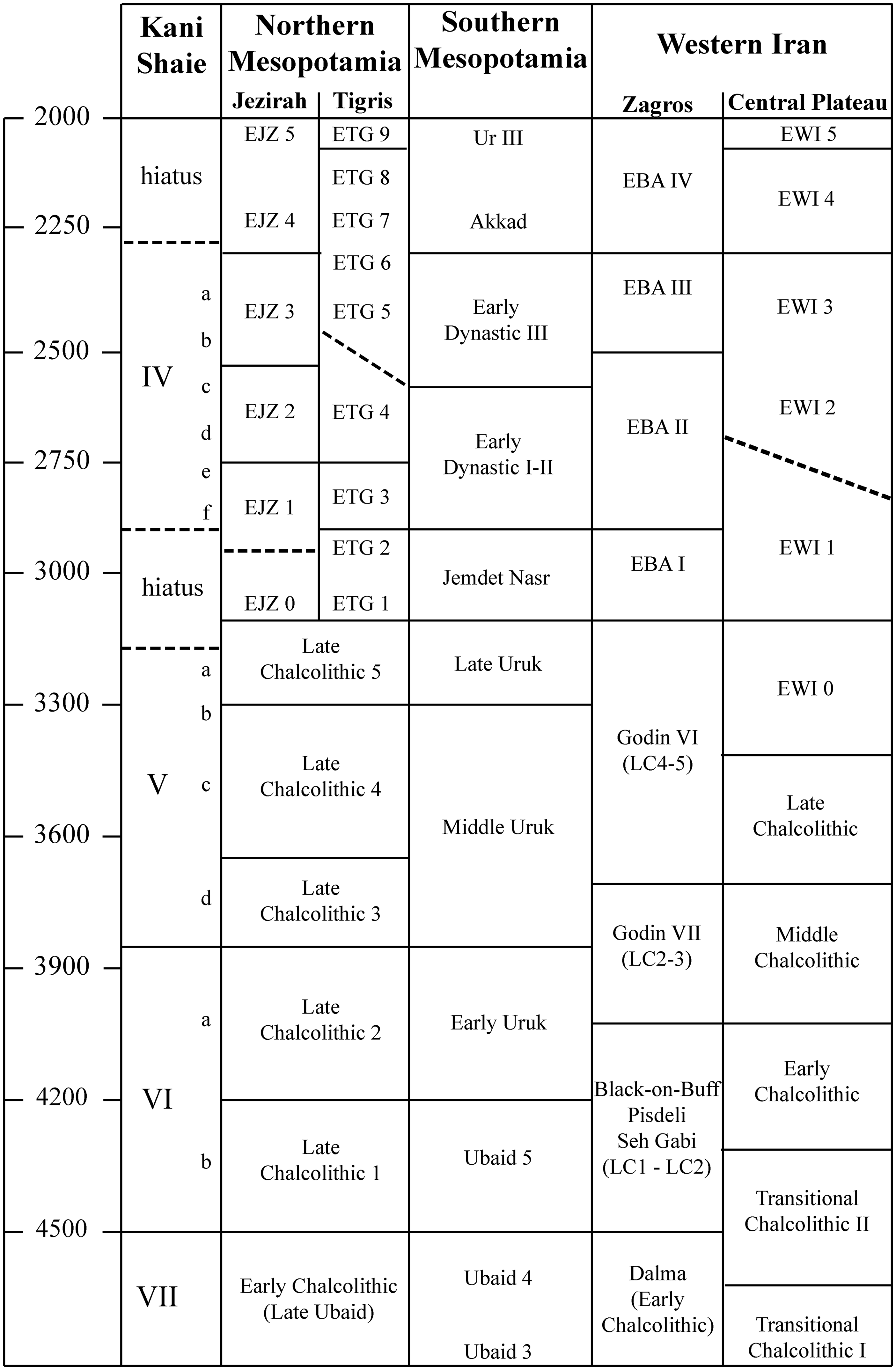
The Late Chalcolithic (LC; conventionally dated to ca. 4600–3100 BCE) and the Early Bronze Age (EBA; conventionally dated to ca. 3100–2000 BCE) in Greater Mesopotamia have attracted a considerable amount of attention from archaeologists as the period during which small, autonomous village communities grew into rivaling polities with urban centers. This transition was accompanied by major changes in pyrotechnology with the emergence of metallurgy, the introduction of increasingly complex administrative technologies, and an ideological revolution that reshaped power structures. In the past two decades, a general consensus has emerged in favor of a five-fold subdivision of the LC (1-5) in Mesopotamia based primarily on ceramic typologies (Rothman Reference Rothman and Rothman2001), which has been synchronized with independent, parallel chronological frameworks for the Iranian Plateau (Fazeli et al. Reference Fazeli Nashli, Valipour, Azizi Kharanaghi and Petrie2013; Pollard et al. Reference Pollard, Fazeli, Davoudi, Sarlak, Helwing and Anaraki2013; Petrie Reference Petrie2014) and the Caucasus and eastern Anatolia (Lyonnet Reference Lyonnet2007; Marro Reference Marro2010; Kavtaradze Reference Kavtaradze2014; Passerini et al. Reference Passerini, Rova and Boaretto2018). Still, the time span of the LC subphases and the timing of transitions between them remain vaguely defined due to an uneven temporal and geographical distribution of the available radiocarbon dates. The major sequences used to build the LC framework are derived from major sites in northern Mesopotamia (Syria and Turkey), which might not be representative for other regions where fewer data are presently available. Even within this northern Mesopotamian sequence, the beginning of LC1 and the transition from LC5 to the EBA are particularly problematic due to a shortage of radiocarbon dates, whereas a much larger number of dates are available for LC4 and LC5 than for earlier subphases or for the first half of the EBA (Wright and Rupley Reference Wright, Rupley and Rothman2001; Rova Reference Rova, Rova and Weiss2003; Weiss Reference Weiss, Rova and Weiss2003; Ristvet Reference Ristvet and Lebeau2012; Boaretto and Rova Reference Boaretto, Rova and Rova2019; McMahon Reference McMahon2020:293–294;). Figure 1 provides an overview of the current periodization schemes for northern Mesopotamia, southern Mesopotamia, and western Iran with their conventional absolute dates.Footnote 1
Chronology chart of the main archaeological periodization schemes of northern and southern Mesopotamia and western Iran with conventional absolute dates (dates BCE).
A major problem is the difficulty with obtaining a continuous stratigraphic sequence from a single site. Most sites were only inhabited during certain LC subphases with long hiatuses in occupation, necessitating a complex synchronization of multiple individual site sequences based predominantly on ceramic parallels (Butterlin Reference Butterlin2019: Figs. 265 and 442; McMahon Reference McMahon2020:293–294; Renette et al. Reference Renette, Abu Jayyab, Gibbon, Lewis, Abdullkarim Qader, Cabral and Tomé2021: Figure 18; Rothman Reference Rothman and Rothman2001: Table 1.1). Further complicating the matter is the increasing recognition of highly localized differences in the adoption of technological developments and cultural practices during several stages of both the LC and EBA (Rova Reference Rova and Lebeau2014; Baldi Reference Baldi2016), which makes cross-site comparisons of ceramic assemblages problematic, especially over long distances. The usual approach of comparing stylistic or typological similarities in comparative pottery studies to determine synchronicity requires testing considering the distinct possibility of different rates of adoption of new vessel types, conservative use of vessel types in certain regions, and the presence of highly localized types with few parallels elsewhere. The growing need for high-resolution chronology to identify the different pace of developments across various regions cannot be resolved through a general comparative study of ceramic styles and vessel types. This issue can only be resolved with representative samples of radiocarbon dates from every subphase and the transitions, excavated sequences from sites with long occupational histories, and local ceramic chronologies derived from reliable stratigraphic sequences that are anchored by site-based radiocarbon chronologies.
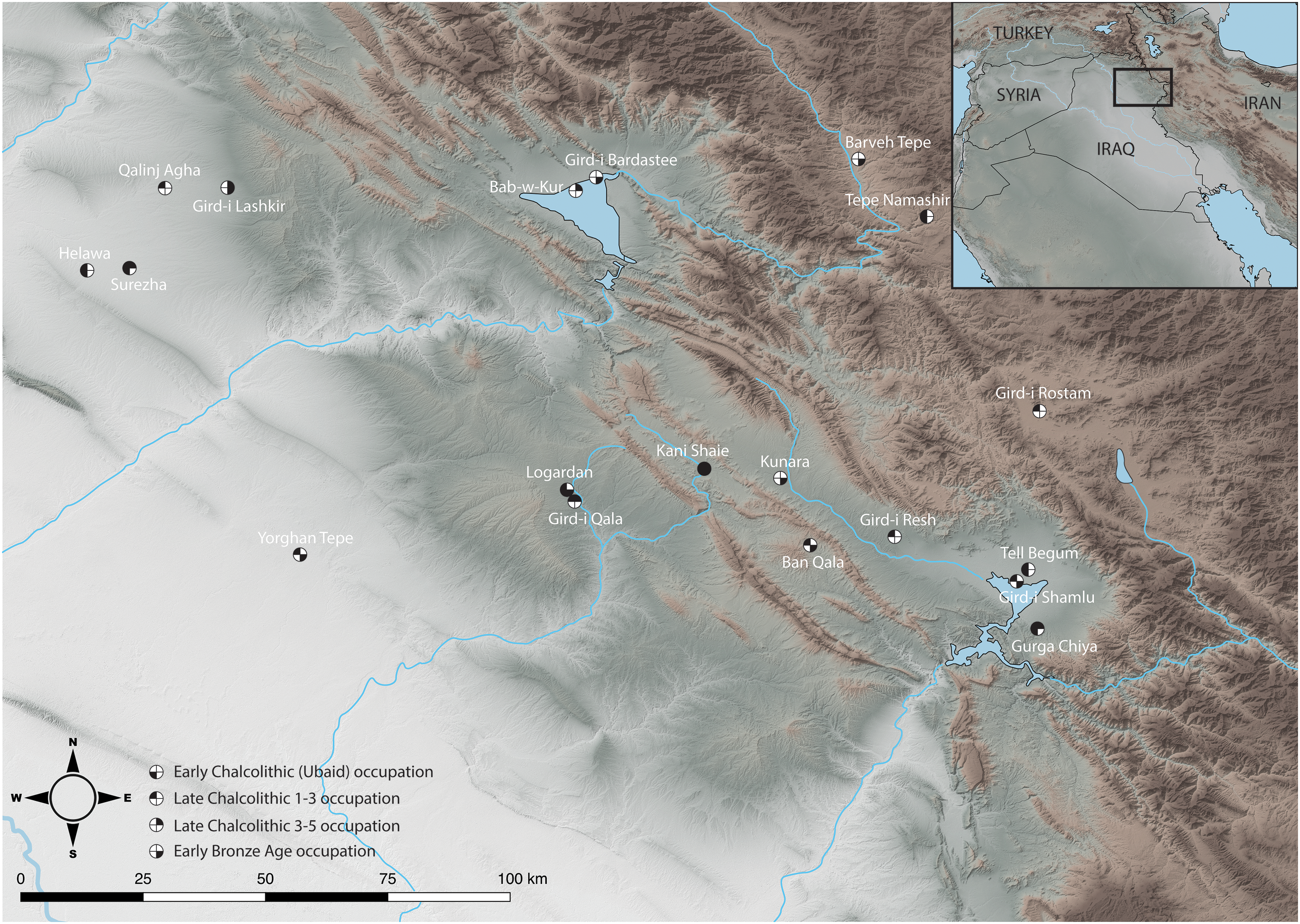
Archaeological fieldwork since 2011 by several international teams in the previously largely unexplored region of Iraqi Kurdistan in the western foothills of the Zagros Mountains has documented LC occupation at several sites (Figure 2). These new data reveal significant local idiosyncrasies. For yet unknown reasons, many sites in this region were occupied in the first half of the LC (1-3), but not beyond. At sites where excavations have identified LC4 remains, these are often nothing more than trash pits and poorly preserved ephemeral architecture (Wengrow et al. Reference Wengrow, Carter, Brereton, Shepperson, Hamarashi, Saber, Bevan, Fuller, Himmelman, Sosnowska and Gonzalez Carretero2016:261–263; Skuldbøl and Colantoni Reference Skuldbøl and Colantoni2018; Carter et al. Reference Carter, Wengrow, Saber, Hamarashi, Shepperson, Roberts, Lewis, Marsh, Gonzalez Carretero, Sosnowska, D’Amico, Sagan and Lockyear2020:42–44), with only few exceptions, such as the site of Gird-i Qala (Vallet et al. Reference Vallet, Baldi, Naccaro, Rasheed, Saber and Hamarasheed2017, Reference Vallet, Baldi, Zingarello, Sauvage, Naccaro, Paladre, Bridey, Padovani, Rasheed, Raeuf and Halkawt2019). Evidence for the final LC5 phase, which is generally considered the peak of interaction between southern and northern Mesopotamia, and between the Mesopotamian lowlands and surrounding highlands, has been largely elusive in Iraqi Kurdistan. Considering local distinctions of ceramic production, identifying the LC subphases has proven challenging. Three major issues have recently emerged, which are addressed in this paper. First, in light of the considerable amount of regional variation in material culture, is the general chronological LC framework that was developed for northern Mesopotamia applicable to the Zagros foothills of Iraqi Kurdistan? Second, can a separate LC5 period be distinguished in the ceramic record in this region? And third, how do we identify the transition from the Early Chalcolithic ’Ubaid period to the LC1 and during which timespan did this take place? This last issue has become increasingly contested with conflicting evidence reported from sites within the region of Iraqi Kurdistan: Surezha in the Erbil Plain, arguing for a much earlier start date of LC1 ca. 4900 BCE (Stein and Alizadeh Reference Stein and Alizadeh2014:144–145; Stein Reference Stein2018:42) and Gurga Chiya in the Shahrizor Plain where radiocarbon dates support a more conventional date of the Ubaid-LC1 transition ca. 4500 BCE (Carter et al. Reference Carter, Wengrow, Saber, Hamarashi, Shepperson, Roberts, Lewis, Marsh, Gonzalez Carretero, Sosnowska, D’Amico, Sagan and Lockyear2020:57).
Map showing region of study with principal excavated LC and EBA sites (map by S. Renette).
Excavations at the site of Kani Shaie in southern Iraqi Kurdistan during 2013–2016 have documented a continuous sequence spanning the entire LC and renewed occupation during the early EBA, providing the rare opportunity to construct a stratigraphically anchored local chronology of the Chalcolithic to Early Bronze Age within a single archaeological site. Having established a relative ceramic chronology from a reliable stratigraphic sequence (Renette et al. Reference Renette, Abu Jayyab, Gibbon, Lewis, Abdullkarim Qader, Cabral and Tomé2021), here we present results of radiocarbon analysis of a series of samples retrieved from this stratigraphic sounding spanning the late ’Ubaid in the early fifth millennium BCE to the first centuries of the EBA in the third millennium BCE. The radiocarbon dates presented here produce the skeleton for an endemic absolute chronological framework for Iraqi Kurdistan and represent the first such sequence from a site with a continuous occupation during the entire LC. In the following pages, we summarize Kani Shaie’s phasing, the project’s methodology of sampling strategy and constructing a relative chronological framework, the full series of currently available radiocarbon dates with statistical modeling performed on them, and eventually ending with a discussion of the implications for tying fieldwork results from Iraqi Kurdistan into the broader context.
KANI SHAIE—STRATIGRAPHIC SEQUENCE
The Kani Shaie Archaeological Project undertook a first phase of excavations at the multi-period site of Kani Shaie during three seasons between 2013 and 2016. The primary goal of this phase of fieldwork at the site was to establish a stratigraphic sequence of the local material culture in a region that had not yet been subjected to detailed archaeological exploration (Tomé et al. Reference Tomé, Cabral, Renette, Kopanias and MacGinnis2016). Kani Shaie is a relatively small site with a main mound of ca. 60 m diameter at its base, reaching 14 m above the surrounding plain, and a low mounded northern extension. Additional survey of the site and its surroundings in 2018 produced evidence for a total site size of no more than 3 ha (Figure 3).
Digital Elevation Model (DEM) of Kani Shaie with location of trenches on the main mound (DEM by R.F. Cabral).
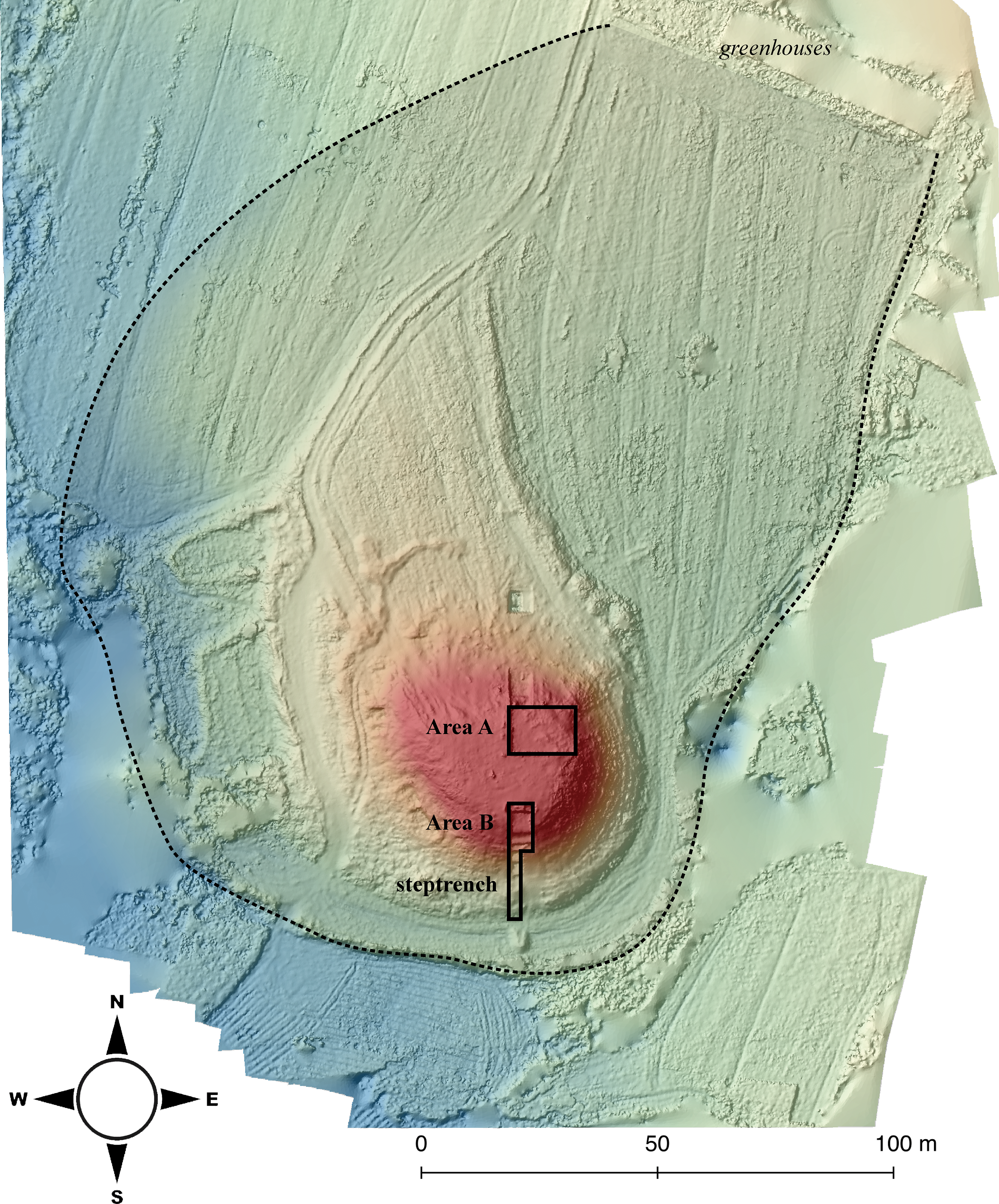
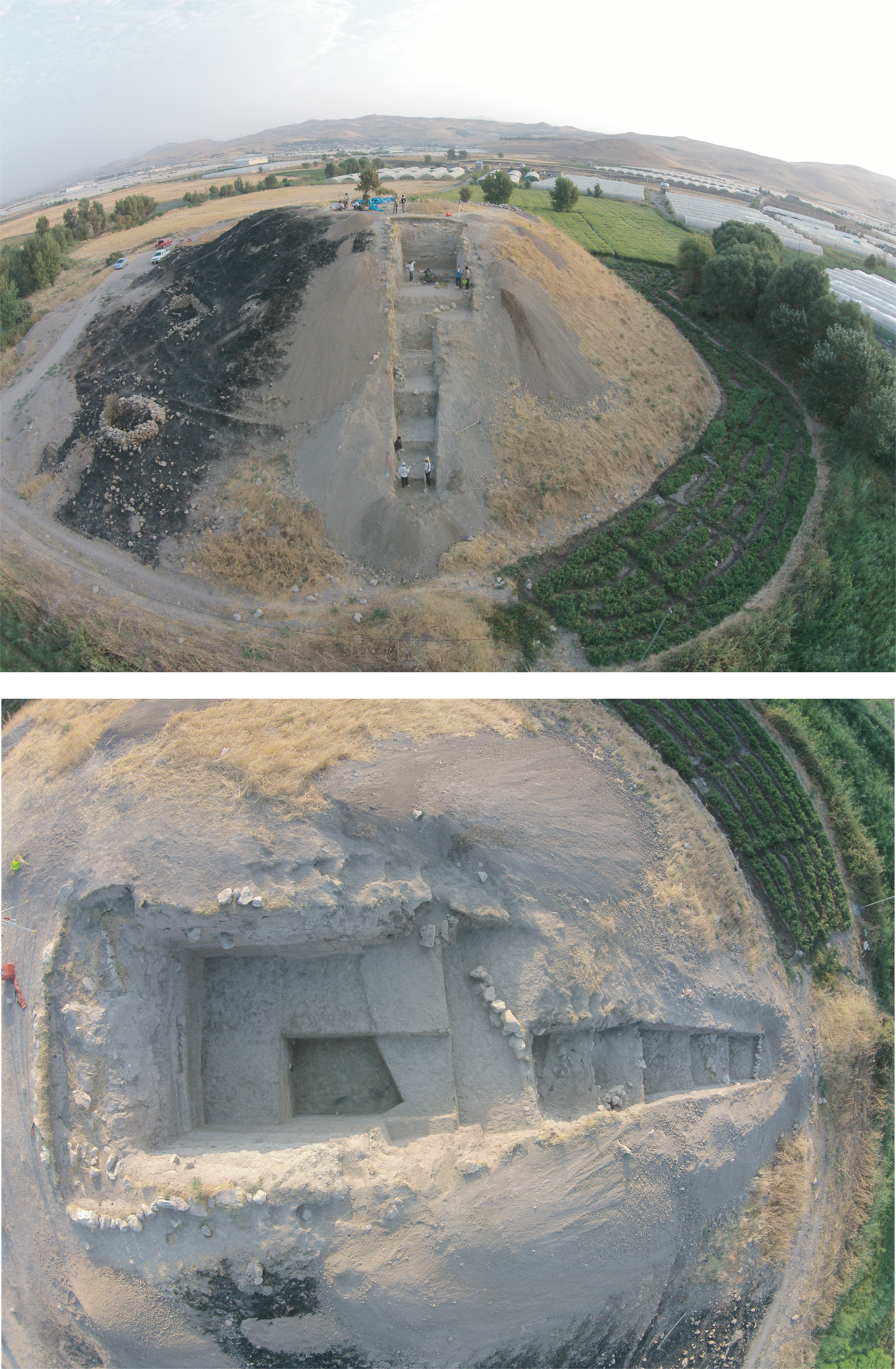
A step trench on the southern slope of the main mound (MM – Area B and Stratigraphic Sounding) documented a largely continuous sequence of occupation from the ’Ubaid in the early fifth millennium to the Early Bronze Age of the mid-third millennium BCE, spanning roughly 2500 years (Figure 4; Table 1). Horizontal excavations (15 × 15 m) were carried out in the northeastern quadrant of the mound (MM – Area A), which has so far only reached into the EBA period. Repeated occupation around the mound continued until modern history, but never reoccupied the mound itself. Except in the 11th–12th century CE when the top of the mound was used for temporary encampment, probably by a nomadic group who dug a series of deep pits into the mound (Ahmad and Renette in press), while during a yet undetermined moment in the Ottoman period (17th–19th century CE) the mound served as a cemetery.
Aerial photographs of the step trench on the southern slope of the main mound at Kani Shaie.
Kani Shaie Main Mound phasing (B levels are from Area B, which is a 5 × 5 m trench at the top of the southern slope of the mound; SS levels are from the Stratigraphic Sounding, which is a downward continuation of Area B as can be seen in Figure 5).
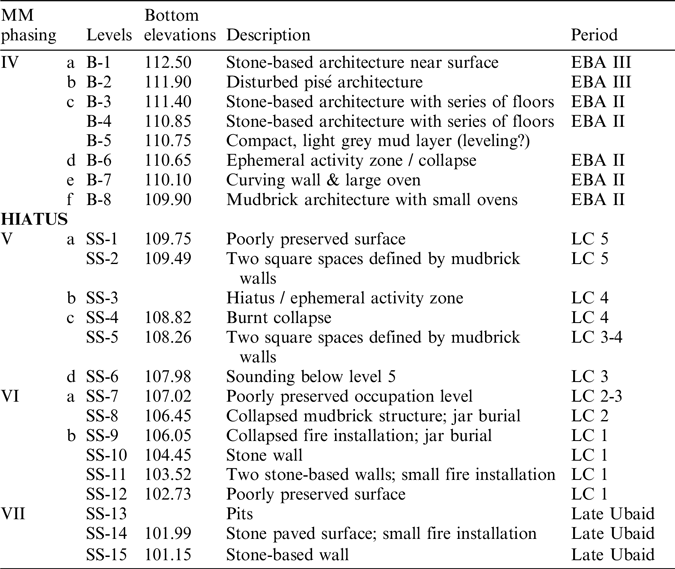
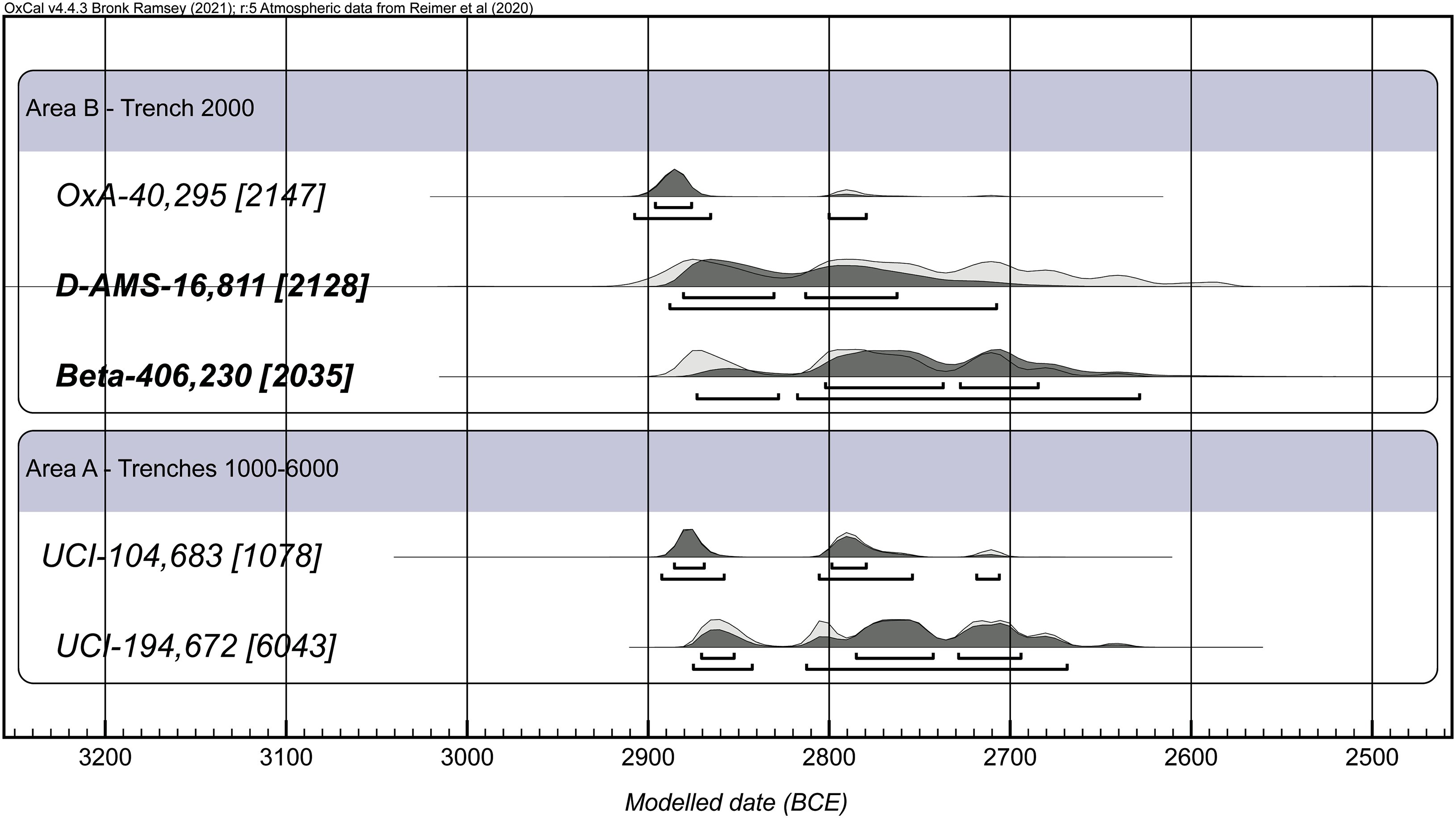
The EBA period at Kani Shaie (MM phase IV) is represented by ca. 3 m of superimposed deposits, which largely consist of a rapid succession of small-scale architecture. Within Area B, we identified six subphases of EBA occupation, consisting of eight architectural levels, which possibly represent repeated occupation separated by brief hiatuses based on preservation patterns, eroded deposits, and changes in architecture orientation and building techniques. The upper deposits of MM IVa-b were very poorly preserved due to cuts from the Middle Islamic pits and Ottoman-era graves. Still, ceramic evidence as well as the stratigraphy and architecture from these phases shows clear connections to mid-EBA assemblages from central Mesopotamia and the Trans-Tigridian region, but we currently do not have any radiocarbon dates for this phase (EBA III or ETG 5-6; ca. 2500–2300 BCE [Arrivabeni Reference Arrivabeni and Rova2019; Renette Reference Renette and Rova2019; Rova Reference Rova and Rova2019a, Reference Rova and Rova2019b]). MM IVc-f on the other hand produced a ceramic corpus that includes a range of small, painted bowls, few of which have parallels within the early third millennium BCE Nineveh V and Scarlet Ware ceramic traditions of the Tigris region (EBA II or ETG 2-4; ca. 2900–2500 BCE). Additional vessels, both painted and plain, find better parallels to the east at sites such as Godin Tepe (Henrickson Reference Henrickson1986; Reference Henrickson2011) and Chogha Maran (Levine and Young Reference Levine and Young1987:48–50) in the central Zagros Mountains and at Hasanlu (Danti et al. Reference Danti, Voigt, Dyson and Sagona2004), Hasan Ali (Kroll Reference Kroll2004, Reference Kroll2005), and Barveh Tepe (Sharifi Reference Sharifi2020) in the northern Zagros Mountains. Usually, these painted traditions occur in isolation, but at Kani Shaie they were found together within the same contexts, providing an opportunity to define the chronological relationship between them. While a detailed analysis of the EBA sequence is forthcoming, in this study, we include three available radiocarbon dates (one from a carbonized cereal grain; two from charcoal) from superimposed deposits of MM IVc-f in the upper levels of Area B (see Table 2 for details). In addition, two radiocarbon dates (one from a carbonized cereal grain; one from charcoal) from the open area excavation in Area A, for which a detailed discussion is in preparation, duplicate the EBA dates from Area B, confirming their validity and the contemporaneity of the occupation (Figure 8).
List of samples from Area B step trench (each sample represents a single specimen of either charred seed or wood charcoal) (samples analyzed by A. Farahani).
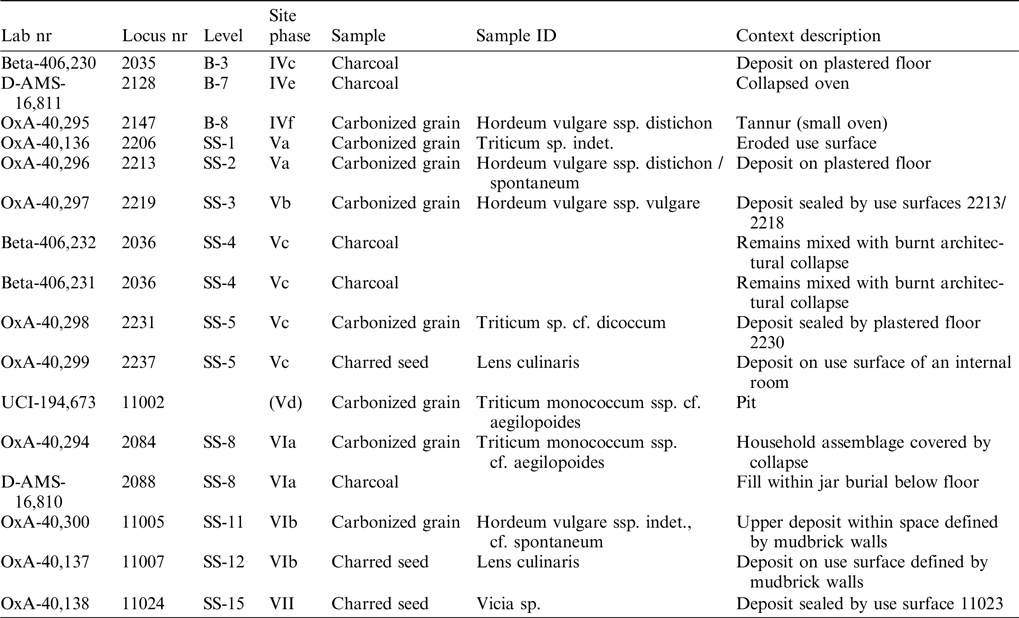
Evidence for the earliest EBA occupation (level B-8; MM IVf) in the stratigraphic sounding of Area B suggests a leveling and small-scale occupation following the latest LC level (level SS-1). Architecture of this LC level was very poorly preserved and difficult to disentangle from intrusive EBA activity. The complete change in material culture and the evidence for erosion in the final LC deposits indicate a hiatus of unknown duration. The LC sequence (MM phases V-VI), consisting of ca. 7.5 m of deposits, has so far only been explored in the Stratigraphic Sounding. The sequence consists of 12 levels (SS-1-12; mainly defined by the construction of new architecture) that are combined into subphases (MM Va-d and MM VIa-b) based on changes in the ceramic assemblages (Renette et al. Reference Renette, Abu Jayyab, Gibbon, Lewis, Abdullkarim Qader, Cabral and Tomé2021: Figure 17). Even though our approach to defining these ceramic assemblages prioritized the internal, site-specific development by identifying vessel shapes and fabrics within the site’s ceramic corpus before determining external comparanda, the phasing largely matches the general LC1-5 chronological framework established for northern Mesopotamia, albeit with distinct local characteristics (Renette et al. Reference Renette, Abu Jayyab, Gibbon, Lewis, Abdullkarim Qader, Cabral and Tomé2021). Subperiods LC3 and LC5 proved to be more difficult to reliably identify based on ceramic parallels due to the absence of specific vessel shapes that have been used to define those periods in northern Mesopotamia (Renette et al. Reference Renette, Abu Jayyab, Gibbon, Lewis, Abdullkarim Qader, Cabral and Tomé2021). In total, ten successful radiocarbon samples (seven from seeds or grains of annual plants; three from charcoal) were analyzed from the LC sequence, with every subphase represented with at least one, but mostly two or three samples (Table 2). The western section drawing of the stratigraphic sounding shows the location within the sequence, which demonstrates their secure stratigraphic relationship from superimposed levels and reveals the gaps in the radiocarbon dataset (Figure 5).Footnote 2 Specifically, the LC3 occupation (level SS-6) was only peripherally exposed in the step trench, producing only very little material. Instead, this phase could only be dated with a single sample from context 11002, which is a feature dug lower into the mound that we assigned to the LC3 period based on ceramic parallels with level SS-6 (MM Vd) and the general LC3 ceramic typology established at other sites in northern Mesopotamia (Renette et al. Reference Renette, Abu Jayyab, Gibbon, Lewis, Abdullkarim Qader, Cabral and Tomé2021:138–143, Figure 11). Since we prioritized the dating of short-lived archaeological plant remains in the main radiocarbon analysis batch, choices of contexts were more restricted due to their limited availability. As a consequence, the results presented here include a cluster of samples from MM V, which spans LC3-5, but more dispersed samples from MM VI, spanning LC1-2. Especially levels SS-9-11, which cover the majority of phase MM VIb (LC1) and the transition to MM VIa (LC2), are underrepresented.
Schematic drawing of the western section of the Area B step trench with the location of sampled contexts (italic = intrusive feature) and the sequence of SS levels (Stratigraphic Sounding).
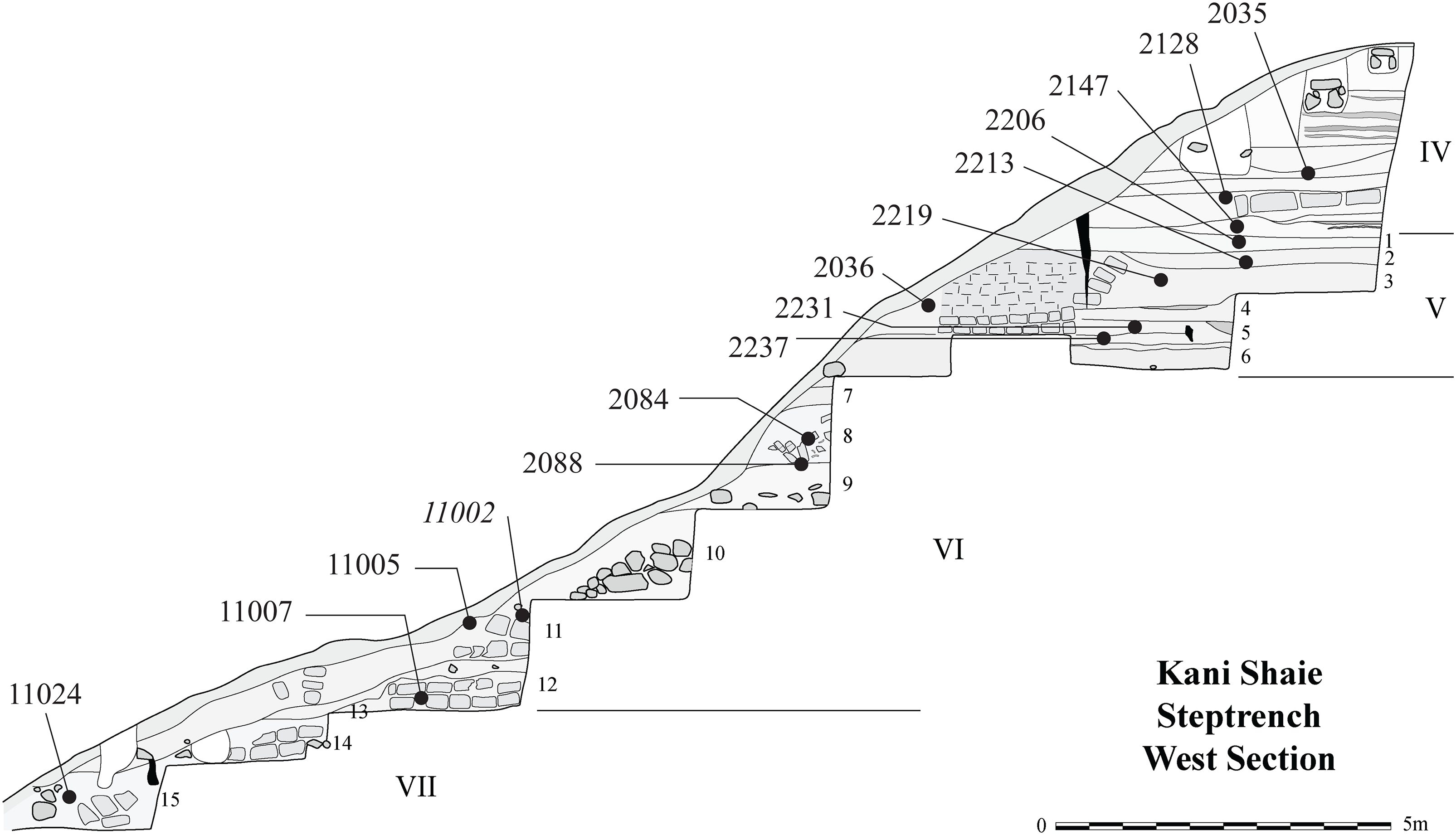
Finally, the lowest phase so far reached at Kani Shaie, MM VII (levels SS-13-15), is dated to the Early Chalcolithic ’Ubaid period based on ceramic parallels (Renette et al. Reference Renette, Abu Jayyab, Gibbon, Lewis, Abdullkarim Qader, Cabral and Tomé2021: Figure 6). This phase produced only a single seed and radiocarbon date. Future fieldwork will target these lower levels to obtain additional material to test the reliability of this single age datum and to refine the chronology of the transition from the ’Ubaid to LC1.
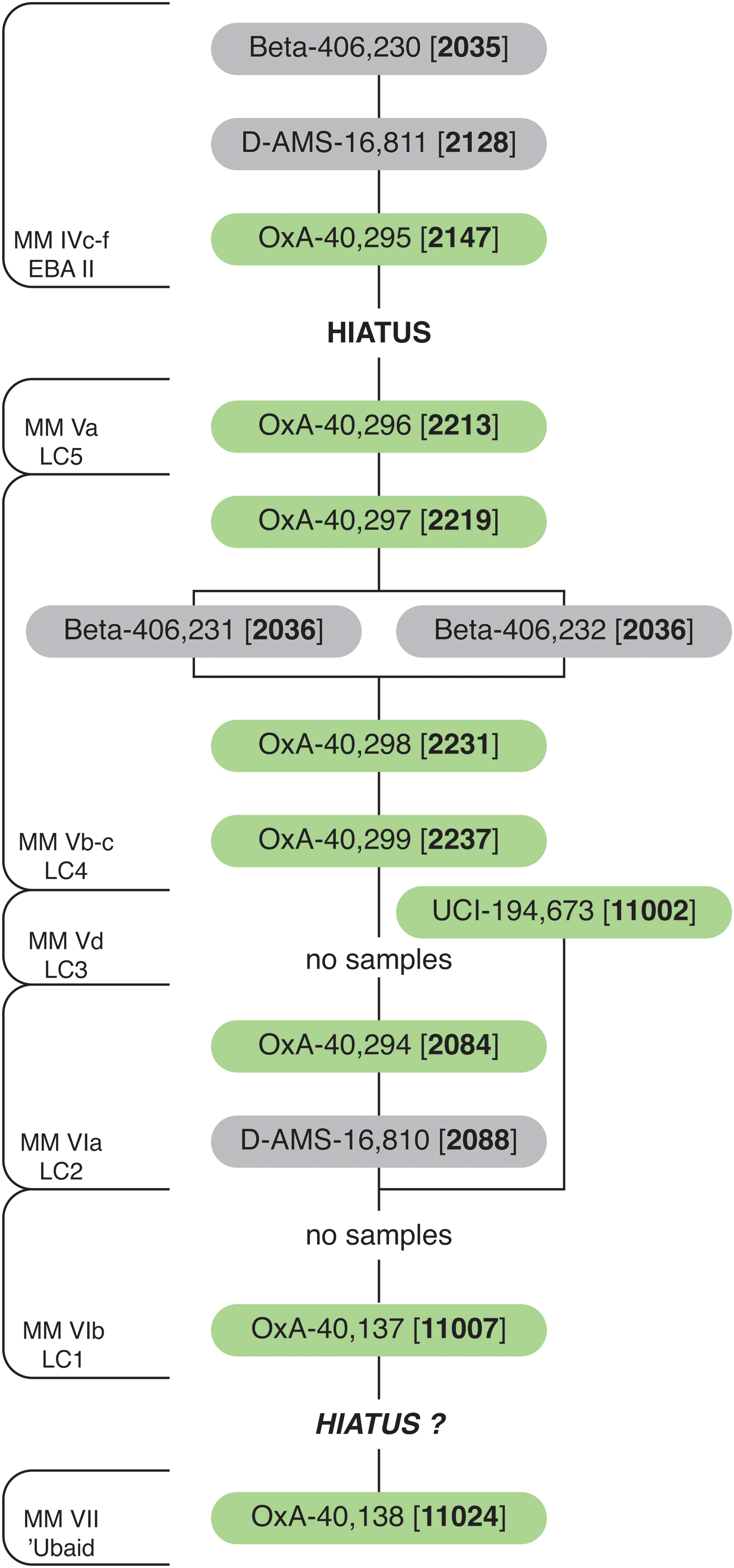
Schematic stratigraphic matrix of sampled contexts from the Area B step trench (green = charred seeds; gray = charcoal). (Please see electronic version for color figures.)
METHODS AND SAMPLING STRATEGY
Sample Collection
Wood charcoal was systematically collected as it appeared during excavation. Usually, charcoal only appeared in small quantities, often in close association with floor contexts, fire installations (small ovens; small firing pits), and in pits. We collected as much of the charcoal as possible, avoiding contamination. Additional small pieces of charcoal were also retrieved through flotation, but these have yet to be radiocarbon dated.
All of the archaeobotanical specimens used in this study that are not archaeological wood charcoal were collected from sediment samples processed via flotation in 2016. The sampling strategy for acquiring archaeological plant remains was a judgmental blanket sampling technique in which every archaeological deposit encountered was sampled. The strategy was judgmental in that it was at the excavators’ discretion to discern the optimal number of samples to collect from each deposit that maximized their spatial separation. In many instances it was possible to collect samples from deposits systematically with the use of a 1 × 1 m grid system aligned relative to the deposit analyzed. The provenience of each sediment sample was recorded and is associated with a total station point, providing both elevations and precise x, y measurements relative to the site grid. These samples were then processed through a Siraf-style flotation device. This process generated 185 individual samples from 89 separate loci totaling 1045 L of sediment, with the average volume of each sample being ca. 6 L.
All the charred seed samples included in this study are single seeds retrieved from sediment. We recognize that such small material can easily have moved between deposits through post-depositional processes. Their correlation with the deposits from which they were retrieved and their validity within an overarching chronological model require additional confirmation, even when samples are retrieved from stratigraphically secure contexts. The samples from the upper levels (SS-1-5; phases MM IV-V) are sufficiently abundant and tightly stratigraphically clustered to identify outliers. The fact that their chronological sequence matches stratigraphic superimposition confirms their validity. For the lower levels (SS-8-15; phases MM VI-VII), the samples, which are spread out through the stratigraphic sequence, provide only singular dates that require future confirmation. Especially the relatively early date for OxA-40,138 [11024] and the relatively late date for OxA-40,137 [11007] could reflect poor correlation between the dated single seed sample and the archaeological deposit (Table 3).
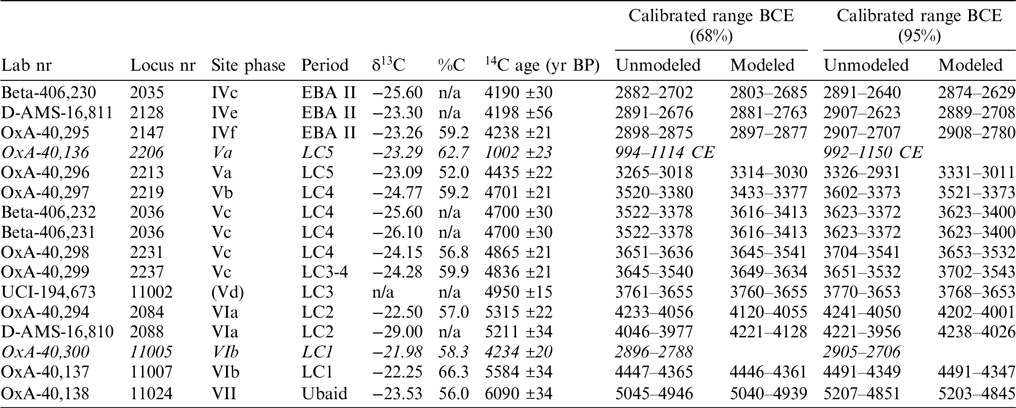
14C analysis results of samples from Area B step trench (lines in italics were omitted from the model because the results were a clear mismatch for the context) (14C results analyzed by M. M. Wencel).
Sample Selection and Preparation
The core of this study is formed by a set of ten specimens of archaeological plant remains selected from ten distinct flotation samples collected from secure contexts that were analyzed at the Oxford Radiocarbon Accelerator Unit (OxA) with a grant from the UK’s Natural Environment Research Council (NF/2019/2/5). These were prepared according to the standard charcoal and botanical pre-treatment protocols for botanical samples (Brock et al. Reference Brock, Higham, Ditchfield and Bronk Ramsey2010). Of these ten specimens, seven were a wheat (Triticum spp.) or barley (Hordeum vulgare subsp.) grain, two were seeds from a domesticated lentil (Lens culinaris L.), and one was from a domesticated vetch (Vicia sp.) (Table 2). In addition, a single carbonized wheat caryopsis (i.e., grain, UCI-194,673 [11002]) was subjected to 14C analysis at the University of California, Irvine facilities as part of a larger batch that included samples from a range of dates, the majority of them much later than the time span covered by this study. This sample has been added to this analysis as it provides at present the only radiocarbon date for the LC3 occupation at Kani Shaie.
Two specimens (OxA 40,136 [2206] and OxA 40,300 [11005]) had a higher risk of post-depositional taphonomic disturbance due to the nearby presence of a Middle Islamic (ca. 11th–12th century CE) pit ([2206]) or proximity to the mound’s surface ([11005]). They were selected for 14C analysis regardless because the pottery collected from these contexts is coherent and because these two contexts offered the greatest potential to inform about the very latest and earliest LC occupation, respectively. Unfortunately, the 14C results for these two samples confirm that these contexts were prone to intrusions, especially given the small size (<3 mm) of archaeological plant remains that can move through the sediment column by burrowing rodents, insects, and water transport (Borojevic Reference Borojevic2011; Gallagher Reference Gallagher, Marston, d’Alpoim Guedes and Warinner2014). Consequently, they were disregarded in the statistical model.
The choice to prioritize short-lived specimens (in this case, of plants that fruit annually) was made primarily because they were retrieved through flotation of well-controlled deposit samples, unlike many charcoal samples that were collected as they appeared in excavation, and because of their higher likelihood to be fully contemporary with the deposit from which they were retrieved. Animal bones were not used in this study, mainly because the faunal remains could not yet be exported and still need to be fully analyzed. While some research has emphasized the importance of using samples of short-lived origin in radiocarbon dating (Schiffer Reference Schiffer1986; Bruins and van der Plight Reference Bruins and van der Plight1995; Allen and Huebert Reference Allen and Huebert2014), Taylor (Reference Taylor2014:47–48) nonetheless notes that the probability is much higher that a date from these specimens will reflect seasonal and annual variations in 14C rather than being “averaged out”. Although we believe this approach has increased the resolution of our date estimates, the dependency of analysis on the existence of archaeological plant remains has resulted in gaps and an uneven distribution of samples in the sequence in cases where such plant remains were not available. This shortcoming will need to be addressed in future studies with additional samples and new fieldwork.
Finally, five additional samples from charcoal that were directly collected from reliable contexts in 2013 and 2015 were added to extend the sequence further into the EBA and to provide additional radiocarbon date ranges within the LC sequence. The 2013 samples were analyzed by BetaAnalytic and the 2015 samples were analyzed by DirectAMS according to standard pre-treatment procedures (Hundman et al. Reference Hundman, Lacey, Tate, Adler, Heile, Zoppi and Chatters2021; BetaAnalytic 2022a, 2022b). In our analysis, the use of different laboratories over the past years did not produce any signs of inconsistencies or incompatibilities between the 14C results.
Relative Dating Methods
The chronology of the site has been assessed initially through analysis of the ceramic assemblages based primarily on technological aspects of manufacture (through macroscopic inspection of fabrics) and vessel shapes, as well as stylistic characteristics of surface treatment (especially painted decoration) in relation to existing typologies from contemporary sites (Renette et al. Reference Renette, Abu Jayyab, Gibbon, Lewis, Abdullkarim Qader, Cabral and Tomé2021). Limited evidence from other object categories, especially administrative clay sealings that are impressed with distinctive seals, supports this relative chronological framework. Even though this relative chronology can be broadly matched to the general ceramic chronology of the LC and EBA of northern Mesopotamia, local idiosyncrasies and differences in the rate of adoption of widely spread production practices can only be identified through an absolute chronological framework that is non-existent for the region.
Statistical Modeling of Radiocarbon Results
The radiocarbon dates were calibrated with the IntCal20 calibration curve (Reimer et al. Reference Reimer, Austin, Bard, Bayliss, Blackwell, Bronk Ramsey and Butzin2020). OxCal 4.4 software was used to construct a Bayesian model expressing the stratigraphic relationships between the samples’ contexts (Bronk Ramsey Reference Bronk Ramsey2009a; Bronk Ramsey et al. Reference Bronk Ramsey, Dee, Lee, Nakagawa and Staff2010). The radiocarbon dates were arranged into a sequence of contiguous phases. Wherever the archaeological record indicated a hiatus or noticeable break in the occupation, an empty phase was inserted. The two radiocarbon dates from the context 2036 (Beta-406,231 and Beta-406,232) were combined because they represent the same depositional event. Figure 6 provides a schematic representation of the model, following the principles of a stratigraphic matrix (Harris Reference Harris1989). Each date was assigned an Outlier Model parameter depending on whether the date was derived from a short-lived specimen or charcoal (Bronk Ramsey Reference Bronk Ramsey2009b; Dee and Bronk Ramsey Reference Dee and Bronk Ramsey2014). As discussed above, two dates (OxA 40,136 and OxA 40,300) produced anomalous results and had to be removed from the model. The remainder of the dates were internally consistent and no inter-laboratory differences were noticed. Therefore, despite the relatively modest number of available radiocarbon dates, the dataset provides a robust basis for an absolute chronology of the site of Kani Shaie that serves to address the questions put forward at the outset of this project and to offer a comparative framework for the construction of a regional absolute chronology.
RESULTS
In total, 14 samples from secure stratigraphic contexts produced reliable results spanning the entire LC1-5 and the early EBA. Table 3 shows the unmodeled and modeled calibrated ranges at both 68.3% and 95.4% certainty, which are plotted as summed probability density functions in Figure 7. Considering the still limited amount of radiocarbon dates, here we discuss these results using approximate date ranges.
14C analysis results of samples (charcoal marked in bold) from Area B step trench plotted as summed probability density functions. Dashed line boxes show broad categorization into Kani Shaie site phasing (Main Mound VII-IV) and archaeological periods defined by ceramic typologies (Renette et al. Reference Renette, Abu Jayyab, Gibbon, Lewis, Abdullkarim Qader, Cabral and Tomé2021) (compiled by M.M. Wencel).

14C analysis results of samples (charcoal marked in bold) from EBA contexts in areas A and B (compiled by M. M. Wencel).
A single sample (OxA-40,138 [11024]) provides a date for the Early Chalcolithic ’Ubaid deposits of MM VII, but its reliability requires further verification. Based on ceramic evidence, we assigned this context to the late ’Ubaid period with an expected date between 4900–4500 BCE. The sample provided a modelled date between 5100–4900 BCE resulting in a hiatus of ca. 500 years before the following MM VIb (LC1) levels. Considering the continuity in the pottery assemblages (Renette et al. Reference Renette, Abu Jayyab, Gibbon, Lewis, Abdullkarim Qader, Cabral and Tomé2021: Figure 17) and lack of clear evidence for a break in the stratigraphic sounding, such a long hiatus seems unlikely and cannot at present be substantiated by this single radiocarbon sample. However, this result can also not be fully rejected considering the unusually high date ranges provided for the Ubaid-LC1 transition by the Surezha project (Stein Reference Stein2018). We include this date here for reference, but we await the opportunity to analyze additional charcoal samples from the MM VII levels.
Phase MM VIb, dated to the LC1 period, is also represented by a single datum, which falls within the traditional range of 4500–4200 BCE. The sample was taken from one of the lowest deposits within this phase, providing a date for the earliest LC1 occupation at Kani Shaie with a date of ca. 4450–4350 BCE. Phase MM VIb consists of an additional two meters of deposits, which are not represented in the current model, but allow for a continuous occupation into the following phase.
Two samples from Phase MM VIa (LC2) provide a date within the range of ca. 4230–4050 BCE for the use and subsequent collapse of the excavated structure. The earlier date (D-AMS-16,810 [2088]) was retrieved from a jar burial that was dug below the floor, while the later date (OxA-40,294 [2084]) is from a sample associated with cooking vessels that were mixed with and covered by architectural collapse. The subsequent deposits of Phase MM Vd (LC3; traditionally dated to 3800–3600 BCE) did not contain short-lived archaeological plant remains. However, a feature dug into lower levels within the stratigraphic sounding was dated to this phase based on pot sherds. A carbonized wheat grain from this pit (UCI-194,673 [11002]) confirms this chronological assessment. Its date of ca. 3750–3650 BCE would put it in the second half of LC3, which creates a theoretical hiatus in the modeled date sequence of ca. 300 years. However, additional samples from intermediate deposits in levels SS-6-7 could fill this gap.
The following dates afford a more comprehensive chronological assessment for the second half of the LC. Phase MM Vb-c (LC4; traditionally dated to 3600–3400 BCE) is represented by five samples, which provide a range of ca. 3650–3375 BCE. The uppermost deposits of this phase are not well represented in this study, which could lower the chronological boundary for the end of this phase. Associated pottery from the lowest deposit of phase MM Vc, level 5 (sample OxA-40,299 [2237]), were considered LC3-4 transitional in our ceramic analysis, which fits well with the radiocarbon date. A collapse deposit leaning against a large mudbrick wall contained pottery that we assigned to the LC4, which is confirmed by two identical dates (Beta-406,231/406,232 [2036]) that place this material in the first half of the traditional chronological range of LC4. Within the Stratigraphic Sounding, this collapse was followed by deposits that indicate a period of ephemeral activity, perhaps by squatters during a brief hiatus of substantial occupation at the site, which is placed in the second half of LC4 based on a single radiocarbon date (OxA-40,297 [2219]).
Phase MM Va was tentatively dated to LC5 based on minor changes in the pottery, such as the first appearance of incised triangles, beveled rim bowls with a taller profile and a different, pink-colored fabric, and increased amounts of conical cups with and without a pouring lip. A single sample (OxA-40,296 [2213]) confirms this assessment with a date that ranges between ca. 3325–3025 BCE. A plateau in the calibration curve during this date range results in an unusually long range and two peaks of probability between 3314–3242 BCE and 3100–3030 BCE respectively. Since the currently conventional LC chronology posits a final date no later than 3100 BCE for LC5, we propose that the earlier peak is more likely, which would situate phase MM Va in the first half of LC5. This also fits best with the contextual and ceramic evidence, which both show signs of continuity with the previous level rather than a break.
A series of five samples for the following phase IVc-f (EBA II) provide a range of ca. 2900–2650 BCE. This includes a sample from the earliest deposit of the period, which allows us to propose a start date no earlier than 2900 BCE for the EBA occupation at Kani Shaie following a hiatus that lasted between 150–350 years. These dates are confirmed by two dates from EBA II levels in the stratigraphically disconnected Area A (Figure 8).
DISCUSSION
Reprising the three main issues identified at the beginning of this article, the radiocarbon results from Kani Shaie largely match the current conventional absolute chronology and periodization of northern Mesopotamia during the Late Chalcolithic and the Early Bronze Age (Table 4). As such, this study provides reliable evidence for the first time that ceramic developments with associated cultural traditions and technological practices in the western Zagros foothills of Iraqi Kurdistan were on par with general trends across Greater Mesopotamia. Despite local variations in ceramic assemblages, vessel shapes, and production methods, the broad trends and their pace of adoption match those documented in eastern Syria and northern Iraq, while separate developments on the Iranian Plateau and in the nearby Zagros Mountains were of only minimal influence throughout the Chalcolithic.
Summary of research questions with the outcomes discussed in this paper and necessary future work.
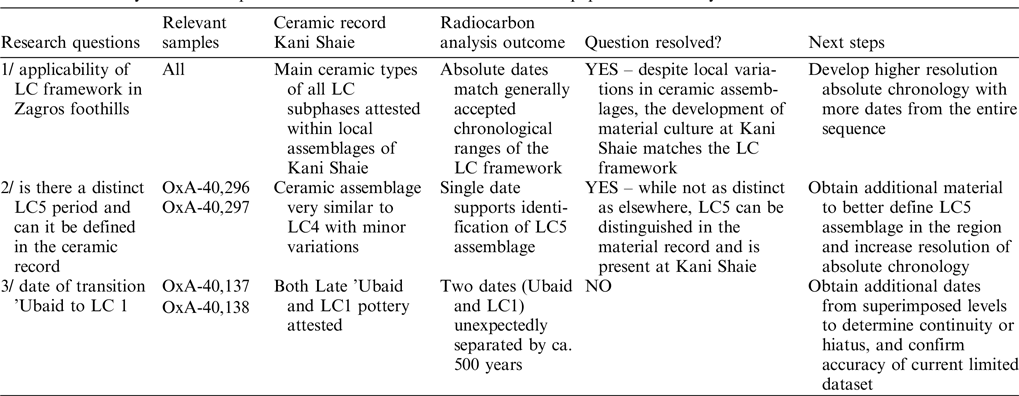
Still, the data presented here only form a first step toward constructing a site-based and regional absolute chronological framework. The samples contain two main clusters that cover EBA II and LC 3-5, respectively. While additional samples from these periods will aid in determining the boundaries between subphases and the internal site chronology in greater detail, the basic outline of the traditional chronology is proven to be valid within the western Zagros foothills. With regards to the LC5 subphase, which has remained largely undetected in Iraqi Kurdistan using the traditional ceramic typology established in northern Mesopotamia, the radiocarbon date of phase MM Va securely within the traditional chronological boundaries of this subphase confirms our identification of its pottery. While the single radiocarbon date and the small number of sherds from this phase need to be expanded in future fieldwork, this result does confirm that a separate LC5 ceramic assemblage can be identified in our region, albeit based on only minor changes from the LC4 pottery. Major ceramic markers of LC5 elsewhere, especially drooping spouts, strap-handles and twisted handles, sharply carinated bowls, and trays, appear to be largely absent in the Trans-Tigris and Zagros foothills. This means that surveys in Iraqi Kurdistan cannot rely on ceramic typologies from other regions to identify LC5 occupation, or for that matter, any other subphase. Instead, local ceramic typologies need to be identified in stratigraphic excavations and securely positioned within an absolute chronological framework using radiocarbon dates.
The earlier occupation from the late ’Ubaid period to LC2 is documented with just a few samples that can only provide anchor points rather than identify period date ranges and boundaries. Still, even these radiocarbon date ranges fall securely within the traditional dates for LC1 and LC2, which align with recent radiocarbon dates from Gurga Chiya (Carter et al. Reference Carter, Wengrow, Saber, Hamarashi, Shepperson, Roberts, Lewis, Marsh, Gonzalez Carretero, Sosnowska, D’Amico, Sagan and Lockyear2020:57). The single radiocarbon date range for the ’Ubaid context of phase MM VII is considerably earlier than expected (at least 200 years earlier than our hypothesized date of 4700 BCE), especially since the stratigraphy and ceramic sequence suggested a continuous development and not a hiatus of several centuries. While we consider the possibility that this datapoint is not fully reliable and needs to be tested with additional 14C analyses, we admit that this single date does align well with recent claims by the Surezha project in the Erbil Plain for a much earlier date of the ’Ubaid period (Stein Reference Stein2018:42–43). Additional dates from Kani Shaie phases MM VII-VI will be of importance to resolve this ongoing dispute regarding the transition from the early to the late Chalcolithic.
The radiocarbon dates from Kani Shaie presented here produce a skeletal framework of absolute chronology. These dates are especially relevant considering the long duration of occupation at Kani Shaie and only minimal interruptions in the sequence that allow the reconstruction of longue durée developments and statistical modeling using information of stratigraphically established relationships between contexts. Since most archaeological sites in the region with occupation in the LC and EBA were only inhabited during one or a few subphases, the complete LC-EBA sequence from Kani Shaie can provide an important framework of reference to anchor the absolute chronology of northeastern Iraq. However, in order to avoid cyclical reasoning, we argue that the chronology of occupation at contemporary sites should be correlated with the Kani Shaie absolute chronology based on their own radiocarbon dates and not just on ceramic parallels. The ceramic typology for several LC subphases and arguably for the entire EBA in Iraqi Kurdistan remains too poorly understood and of a too low resolution to be a reliable tool for cross-site comparisons. Instead, ceramic assemblages and technological practices should first be dated within sites and then compared based on absolute dates so that we can construct a regional typology with secure timeframes for specific ceramic shapes and methods of production. While here we have laid out a first assessment of the absolute chronology of the sequence of occupation at Kani Shaie, this chronological framework should be used in tandem with our publications of the ceramic assemblages (Renette et al. Reference Renette, Abu Jayyab, Gibbon, Lewis, Abdullkarim Qader, Cabral and Tomé2021).
CONCLUSIONS
Establishing a cross-regional periodization anchored in absolute, radiocarbon-based chronology for the fifth to third millennia BCE, or the Chalcolithic to Early Bronze Age, has proven difficult over the past two decades, due in large part to a lack of continuous sequences within single sites. Instead, the LC and EBA chronology necessarily relied on patching together results from many different sites, which poses considerable methodological challenges. A stratigraphic sounding excavated at Kani Shaie between 2013 and 2016 revealed an almost continuous sequence with occupation in every single subphase of the LC and lasting at least to the middle of the EBA, with only a few minor hiatuses. Therefore, the sequence of material culture documented at Kani Shaie can produce a framework for comparison for survey data and excavation results at sites that were only occupied for parts of the LC and EBA.
The 14C results presented here produce a skeletal framework for the absolute chronology of the Kani Shaie sequence, and by extension for the wider region. These results confirm hypotheses of chronology based on an assessment of the pottery retrieved from the stratigraphic sounding. This study demonstrates for the first time that despite significant local variations in ceramic production, the broad trends that underpin the archaeological LC and EBA periodization and which were identified through surveys and excavations in distant northern Mesopotamia are applicable to the western Zagros foothills of Iraqi Kurdistan as well. While on the one hand this is good news for archaeologists active in the region who can confidently use an existing heuristic framework, this does raise the question how broad historical trends were synchronized in geographically distant regions where local communities made different choices in the adoption or rejection of new practices. In northern Mesopotamia, these historical trends are characterized by experiments with urbanization at some of the largest settlements to have existed at this point in human history and a pattern of increasing long-distance interaction, especially with southern Mesopotamia and the surrounding highlands, through mobility, trade, and even colonization. In contrast, even the largest LC settlements documented in Iraqi Kurdistan are much smaller than the major contemporary centers to the west of the Tigris River and, so far, the interaction with southern Mesopotamia is attested mainly through a long, gradual integration of southern material culture, rather than the dichotomous nature of this material culture elsewhere. Whether local communities in this region rejected intrusions by southern Mesopotamian settlers or if southern Mesopotamian polities showed less interest in establishing a foothold to the east of the Tigris River remains an open question. Regardless, such questions can only be answered with a secure absolute chronology of site occupations, material typologies, and periodization, for which the Kani Shaie sequence, anchored by radiocarbon dates, provides a new framework.
ACKNOWLEDGMENTS
We extend our greatest gratitude to Kak Kamal Rasheed, director of the Sulaymaniyah Directorate of Antiquities, and Kak Kaify Ali Mustafa, director of the General Directorate of Antiquities, for facilitating fieldwork at Kani Shaie and providing the permission to export samples for analysis. We also thank the UK’s Natural Environment Research Council (NERC) and the Oxford Radiocarbon Accelerator Unit grant no. NF/2019/2/5 for funding the analysis of these samples, as well as Tamsin O’Connell and Augusta McMahon for comments and support on the grant application. Farahani wishes to thank in particular the Jarmo team, and especially Dorian Fuller, for their permission in the use of their flotation device in the 2016 fieldwork season at Kani Shaie. Finally, we thank two anonymous reviewers and the journal editors for taking the time to provide detailed remarks and constructive criticism.


 Open access

