

According to demographic data, the rate of twin pregnancies has risen more than twice since 1970s (Martin et al., Reference Martin, Hamilton, Sutton, Ventura, Mathews, Kirmeyer and Osterman2010). Studies conducted in the United States confirm that as many as 3.3% of all children born are twins, while in 1980 they accounted only for 2%. Undoubtedly, this is due to the increasing popularity and effectiveness of in vitro fertilization, as well as delayed childbearing. Assisted reproduction techniques contributed to the birth of 57,669 children in 2007 in the United States, of which 29.4% were twins (Centers for Disease Control and Prevention, 2009). According to Polish national statistics, the rate of twin deliveries had increased by 46% between 2002 and 2010. They contributed to 1.95% of all deliveries in 1997, 2.1% in 2002, 2.63% in 2010 (10,927/415,030), and 2.57% in 2011 (10,045/390,069; Central Statistical Office, 2011, 2012). Unfortunately, there is no national twin registry in Poland and the Central Statistical Office collects only data regarding the number of multiple deliveries annually. There are 72 twin registries worldwide, of which 20 are in Europe (Hur & Craig, Reference Hur and Craig2013).
Preterm birth (<37 weeks of gestation) affects approximately 7–10% of all deliveries in Poland and around 12.5% in the United States each year (Kosinska-Kaczynska et al., Reference Kosinska-Kaczynska, Szymusik, Kaczynski, Bomba-Opon, Wegrzyn, Dzwigala and Wielgos2013; Shapiro-Mendoza & Lackritz, Reference Shapiro-Mendoza and Lackritz2012). Prematurity has always been a serious problem for healthcare systems worldwide, as it is the leading cause of neonatal mortality and morbidity. It is common knowledge that twin pregnancies have a much greater risk of preterm delivery than singletons. In the United States, 64.3% of twins are born prior to 37 completed weeks of gestation — among them 14.5% before 33 weeks and as many as 49.8% between 34 + 0 and 36 + 6 weeks. It is also worth noticing that the rate of late preterm twins is constantly rising: it accounted for 32.2% of twin deliveries in 2005, while in 2010 it reached 49.8% (Iams & Donovan, Reference Iams and Donovan2011; Refuerzo et al., Reference Refuerzo, Momirova, Peaceman, Sciscione, Rouse, Caritis and Harper2010). In 2005, a workshop sponsored by The National Institute of Child Health and Human Development replaced a common obstetrical phrase ‘near term’ with the new one: ‘late preterm birth’ (Raju et al., Reference Raju, Higgins, Stark and Leveno2006). It was done to emphasize that neonates born from 34 + 0 to 36 + 6 weeks of gestation and at term cannot be treated equally. The phrase ‘near term’ was misleading, as it suggested functional maturity and caused underestimation of the perinatal risk. It is known that late preterm newborns are at increased risk of both neonatal mortality and morbidity, not only of respiratory origin (Refuerzo et al., Reference Refuerzo, Momirova, Peaceman, Sciscione, Rouse, Caritis and Harper2010). Recently, late preterm newborns have become the topic of much debate and research, as they account for the majority of all preterm deliveries (Iams & Donovan, Reference Iams and Donovan2011; McParland Reference McParland2012; Reddy et al., Reference Reddy, Ko, Raju and Willinger2009).
The aim of this study was to investigate the impact of late prematurity on neonatal outcome in twins in Poland and neonatal morbidity and mortality within late preterm twins with regard to the completed weeks of gestation.
Material and Methods
The study was conducted in six Polish tertiary university obstetric departments located in different provinces of Poland. They included: 1st Department of Obstetrics and Gynecology, Medical University of Warsaw (Warsaw), 2nd Department of Gynecology and Obstetrics, Wroclaw Medical University (Wroclaw), Department of Obstetrics and Perinatology, Medical University of Lublin (Lublin), Department of Gynecology, Obstetrics and Oncological Gynecology, Medical University of Silesia (Bytom), Department of Perinatology and Women's Diseases, Poznan University of Medical Sciences (Poznan), and Department of Perinatology and Gynecology, Poznan University of Medical Sciences (Poznan). A retrospective analysis based on medical records of all twin deliveries that took place in 2012 in the above departments was carried out.
A comparative analysis of maternal factors, the course of pregnancy, and delivery and neonatal outcomes between late preterm and term groups was performed. The neonatal outcome included short-term morbidity (respiratory complications, neonatal intensive care unit (NICU) admissions, infections requiring antibiotic therapy, intraventricular hemorrhage, necrotizing enterocolitis (NEC), and hiperbilirubinemia requiring phototherapy). In addition, the analysis of neonatal complication rates according to completed gestational weeks was carried out.
Statistical analysis was performed with Mann–Whitney U-test for continuous variables and chi-squared test for categorical variables. Logistic regression analysis was conducted to investigate the impact of individual factors on neonatal outcome. Statistica 10.0 software was used for statistical analyses. p values < .05 were considered significant and all tests were two-tailed.
Results
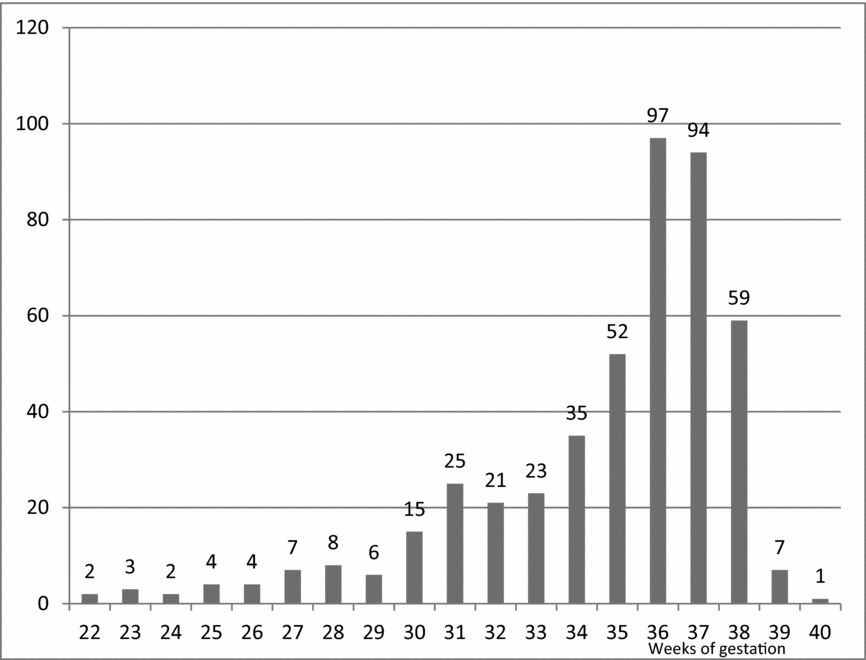
The study group consisted of 465 twin deliveries, which accounted for about 5% of all twin births in Poland in 2012. The distribution of all twin deliveries with regard to gestational age is presented in Figure 1. Of all pregnant women, 66.2% delivered preterm, among them 20.4% before completed 34 weeks, 11% before 32 weeks, and 3.9% before 28 weeks of gestation. The mean gestational age at twin delivery for the whole study group was 34.9 weeks. The mean neonatal birth weight in all twin pregnancies, analyzed in presented multicenter study, was 2,302 gram (SD = 609, 95% CI = 582–638). Out of 465 twin deliveries 213 were late preterm (34 + 0–36 + 6 weeks of gestation). They accounted for 44.8% of all analyzed births. One hundred and fifty-six patients delivered after 37 + 0 weeks of gestation (33.55% of the study group).
Distribution of all twin deliveries with regard to gestational age.

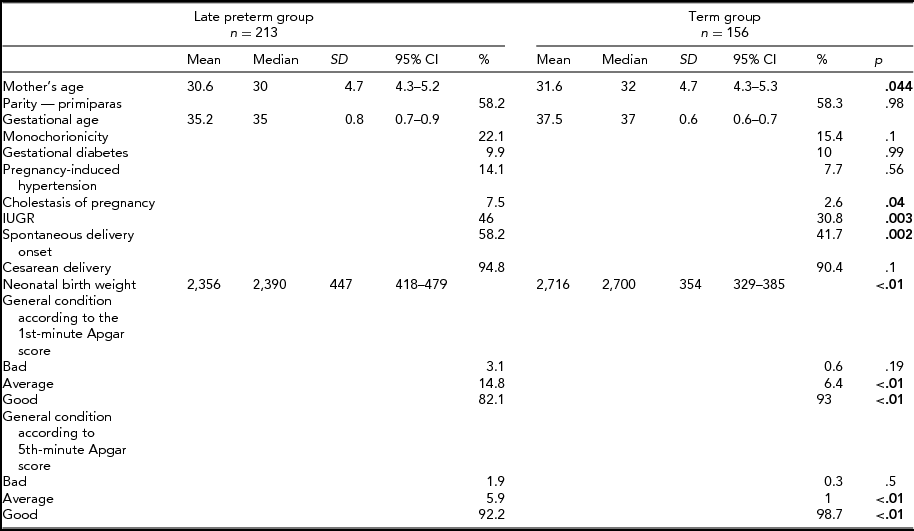
Table 1 shows the results of a comparative analysis between late preterm and term groups. Parturients from the term group were slightly older, but the rate of primiparity was comparable. The majority of twin pregnancies were dichorionic (77.9% in the late preterm group and 84.6% in the term group). There were only three cases of monochorionic monoamniotic pregnancies in the late preterm group. Late preterm group pregnancies were significantly more often complicated by cholestasis of pregnancy and intrauterine growth restriction, which accounted for iatrogenic late preterm delivery within that group. Pregnancy-induced hypertension occurred almost twice as often in the late preterm group, but the difference was not significant. The majority of the deliveries from the late preterm group began spontaneously (premature rupture of membranes occurred in 28.6%) while in the term group most labors were elective. More than 90% of twins in both groups were delivered by cesarean section. The most frequent indications for cesarean section were: presentation other than cephalic of either of the twins (late preterm group 34.2% vs. term group 47.5%, p = .01), assisted reproduction (6.9% vs. 13.5%, p = .03), imminent fetal asphyxia (12.9% vs. 4.3%, p = .005) and intrauterine growth restriction of at least one twin (5% vs. 4.9%, p = .9). According to the recommendations of the Polish Gynecological Society, monochorionicity is a relative indication for cesarean delivery, therefore a written consent for vaginal birth trial is required. Due to the above, the lack of such consent was the only indication for cesarean section in 13.8% of late preterm group and 15.6% of term group.
Characteristics of Late Preterm and Term Twins Groups
IUGR = intrauterine growth retardation; SD = standard deviation; 95% CI = 95% confidence interval.
General condition according to Apgar score: bad: 0–3 points, average: 4–7 points, good: 8–10 points.
Bold type indicates that p value is statistically significant.
The mean neonatal birth weight was significantly higher in the term group (2,716 gram vs. 2,356 gram, p < .01). In the late preterm group, 15 (3.5%) newborns were born with very low birth weight (<1,500 g) and 248 (58.6%) with low birth weight (<2,500 g). In the term group 82 (26.4%) newborns were born with low birth weight. Significantly more newborns were delivered in good and average general condition according to the 1st- and 5th-minute Apgar score in the term group (Table 1).
In the whole study group there were eight cases of intrauterine fetal demise and four cases of neonatal death within the first seven days of life (twins born at 23, 27, 29, and 31 weeks of gestation). There were three cases of intrauterine fetal demise of one twin in the second trimester of pregnancy in the late preterm group and one case in the term group — the remaining twin survived in each case. There were no neonatal deaths among twins born late preterm and at term. Further analysis of neonatal short-term morbidity was carried out. Analyzed complications included: NEC, respiratory complications (transient tachypnea of the newborn, need for oxygen or need for mechanical ventilation, or continuous positive airway pressure), admission to NICU, infections requiring antibiotic therapy, III/IV-grade intraventricular hemorrhage, and hiperbilirubinemia requiring phototherapy. Statistical analysis concerned the occurrence of each complication in at least one twin, therefore the rate of complications referred to the number of analyzed deliveries. One-third of all newborns in the late preterm group suffered from respiratory complications or required antibiotic therapy. Almost 40% of twins had jaundice requiring phototherapy and almost 30% were admitted to NICU. All complications except for NEC and intraventricular hemorrhage were significantly more often diagnosed in the late preterm group (Table 2).
Short-Term Neonatal Morbidity in Late Preterm and Term Twins Groups

NEC = necrotizing enterocolitis; NICU = neonatal intensive care unit admissions; IVH III/IV = intraventricular hemorrhage III or IV grade; OR = odds ratio.
Bold type indicates that p value is statistically significant.
The analysis of neonatal morbidity with regard to each gestational week at the time of delivery was conducted in the late preterm group and at 37 weeks of gestation in the term group. Most analyzed complications occurred less frequently with advancing gestational age, especially respiratory disorders and NICU admissions (Table 3). There were slight, however insignificant, differences in complication rates observed between 34 and 35 weeks, as well as 35 and 36 weeks of gestation (except for the lower rate of antibiotic therapy at 35 vs. 34 weeks of gestation). This may be due to small sample sizes. Significant differences were mostly observed between completed 36 and 37 gestational weeks. The greatest differences concerned NICU admission and hiperbilirubinemia requiring phototherapy (OR = 2.2 and 2, respectively). Logistic regression analysis was conducted to estimate the impact of several factors, such as gestational age, birth weight, chorionicity, cesarean delivery or 5th-minute Apgar score on the overall risk of neonatal morbidity. The only two factors with significant influence on neonatal morbidity rate were neonatal birth weight (OR = 0.43, 95% CI = 0.2–0.9, p = .02) and gestational age at delivery (OR = 0.62, 95% CI = 0.5–0.8, p < .01). Separate logistic regression analysis was conducted for respiratory disorders and NICU admission. The only factor influencing both complications rate was the neonatal birth weight (respiratory disorders: OR = 0.35, 95% CI = 0.2–0.8, p < .01; NICU admission: OR = 0.25, 95% CI = 0.1–0.6, p < .01).
Short-Term Neonatal Morbidity According to Gestational Age
wks = completed weeks of gestation; NEC = necrotizing enterocolitis; NICU = neonatal intensive care unit admissions; IVH III/IV = intraventricular hemorrhage III or IV grade.
Bold type indicates that p value is statistically significant.
Discussion
The majority of multiple pregnancies are delivered preterm; therefore, the rising trend in twin pregnancies rate is also responsible for the significant part of prematurity complications in the neonates (Stock & Norman, Reference Stock and Norman2010). Every eighth twin and every third triplet are born before completed 32 weeks of gestation, while only 2 in 100 singletons are born before completed 32 weeks of gestation (Gouyon et al., Reference Gouyon, Iacobelli, Ferdynus and Bonsante2012; Newman & Unal, Reference Newman and Unal2011). In comparison to singletons, twin pregnancy is five times more likely to result in a preterm delivery, with the majority of twins being born late preterm (Mally et al., Reference Mally, Bailey and Hendricks-Muñoz2010). The Preterm Prediction Study included 147 twin pregnancies, of which 54.5% delivered preterm spontaneously before 37 weeks, 32% before 35 weeks, and 8.8% before 32 weeks of gestation (Goldenberg et al., Reference Goldenberg, Iams, Miodovnik, Dorsten, Thurnau, Bottoms and McNellis1996). The Polish multicenter study presented above revealed similar data — the mean gestational age of all twins was 34.9 weeks, with almost half of them being delivered late preterm. According to Polish data, the rates of preterm deliveries were similar to those published in the literature (66.2% before 37 weeks, 20.4% before 34 weeks, 11% before 32 weeks, and 3.9% before 28 weeks of gestation). The rising rate of multiple pregnancies is accompanied by an increasing percentage of preterm deliveries among them. According to Martin et al. (Reference Martin, Hamilton, Ventura, Osterman and Methews2013), the rising trend for preterm births among twin pregnancies has been observed over the past decades, reaching 60% now-a-days, with the largest group comprising of late preterm deliveries between 34 and 36 weeks of gestation (Martin et al., Reference Martin, Hamilton, Ventura, Osterman and Methews2013). The above is consistent with the presented Polish data.
Twin pregnancy is per se related to higher mortality and morbidity among newborns. According to Danon et al. (Reference Danon, Sekar, Hack and Fisk2013), the prospective risk of any fetal death per pregnancy in uncomplicated monochorionic twins is 0.9–2.6%, depending on gestational age. The lowest risk of 0.09% was found at 36 + 0 to 37 + 6 weeks of gestation (Danon et al., Reference Danon, Sekar, Hack and Fisk2013). Polish data confirmed the higher risk of short-term neonatal complications among late preterm twins. All analyzed complications were significantly more often diagnosed in the late preterm group (NEC and intraventricular hemorrhage without significant difference). The presented results are similar to the literature. Refuerzo (Reference Refuerzo2012) conducted a multicenter trial of multiple pregnancies. Late preterm twins had significantly higher rates of respiratory complications, neonatal sepsis, and NICU admission than term twins. Moreover, the time of hospitalization at NICU, and mechanical ventilation or oxygen supplementation was significantly longer in the late preterm group. According to Refuerzo, 11.7% of late preterm twins suffered from respiratory distress syndrome (RDS) and 20.8% of transient tachypnea of the newborn, 6.2% required mechanical ventilation and as many as 30.3% required oxygen supplementation. The relative risk of composite respiratory problems among late preterm neonates was 24.9 (Refuerzo et al., Reference Refuerzo, Momirova, Peaceman, Sciscione, Rouse, Caritis and Harper2010). In the presented data, all respiratory disorders were analyzed collectively: 31.9% of all late preterm twins in Polish multicenter study suffered from respiratory problems, which is consistent with previous reports. In the analyzed material, respiratory disorders and the need for antibiotic therapy were the most common complications in neonates. They were diagnosed more than twice as often among late preterm twins as among term twins, with OR 2.08 and 2.53, respectively. Respiratory complications seem to be the greatest concern among late preterm twins. Shapiro-Mendoza and Lackritz (Reference Shapiro-Mendoza and Lackritz2012) analyzed the OR of specific respiratory disorders in neonates: RDS, transient tachypnea of the newborn, continuous positive airway pressure ventilation (CPAP), mechanical ventilation, and surfactant supplementation. Late prematurity increased the risk of all of the above (Shapiro-Mendoza & Lackritz, Reference Shapiro-Mendoza and Lackritz2012). Interestingly, the mode of the delivery (vaginal or cesarean) did not influence the rate of respiratory complications, according to the Polish multicenter study. Similar results were published by Barrett et al. (Reference Barrett, Hannah, Hutton, Willan, Allen, Armson and Asztalos2013).
Since the majority of twins are born late preterm, gestational age at birth, multiple pregnancy, chorionicity, and birth weight might be separate risk factors for higher morbidity, influencing the neonatal outcome individually or collectively. Wolfe et al. (Reference Wolfe, Snyder, Loftin, Tabbah, Lewis and Defranco2009) conducted a statistical analysis of respiratory disorders rates between late preterm twins and singletons to reveal the impact of multiple gestation on late preterm newborns’ complications. Mechanical ventilation lasting more than 6 hours was required more often in late preterm twins, with adjusted OR of 1.3, emphasizing the influence of multiple pregnancy over prematurity on respiratory complications (Wolfe et al., Reference Wolfe, Snyder, Loftin, Tabbah, Lewis and Defranco2009). Except for prematurity, low or very low birth weight is another risk factor for neonatal mortality and morbidity. Newborns from twin pregnancies have lower birth weights than their singleton counterparts, as usually after 32 weeks of gestation they slow down their intrauterine growth (Garite et al., Reference Garite, Clark, Elliott and Thorp2004). In the present study, the mean birth weight for all twins was 2,302 gram, while in the late preterm group it was -2,356 gram. This is similar to the US data (mean twin birth weight 2,347 gram), while mean birth weight in singleton pregnancies is 3,332 gram (Lee et al., Reference Lee, Cleary-Goldman and D’Alton2006; Martin et al., Reference Martin, Hamilton, Ventura, Osterman and Methews2013). Logistic regression analysis conducted in the Polish multicenter study revealed that birth weight and gestational age were the only significant factors influencing the risk of composite neonatal morbidity in late preterm twins.
A detailed analysis of neonatal morbidity according to completed gestational weeks in the late preterm group was carried out in the present study. Significant differences in the rate of neonatal complications were observed only between 36 and 37 completed gestational weeks. Respiratory disorders, NICU admission, antibiotic therapy, and hiperbilirubinemia requiring phototherapy were about twice as frequent in the group of twins born at 36 than at 37 weeks of gestation, and even more often diagnosed among neonates born before completed 36 weeks. The rates of neonatal complications observed in twins born at 34, 35, and 36 weeks of gestation did not differ significantly (except for antibiotic therapy between 34 and 35 weeks). Melamed et al. (Reference Melamed, Klinger, Tenenbaum-Gavish, Herscovici, Linder, Hod and Yoqev2009) studied neonatal complications in singletons and revealed a continuous relationship between gestational age and newborns’ morbidity between 32 and 36 weeks of gestation, without any threshold of gestational age. The neonatal morbidity rate decreased only after completed 37 weeks of gestation. Their results are concordant with our Polish multicenter study. The obtained results emphasize the impact of term delivery on neonatal outcomes. Late preterm twins, although often misleadingly considered mature enough, have a greater risk of short-term neonatal complications.
More than half of all twins are delivered preterm. According to the literature, 54% of the deliveries result from a spontaneous onset of uterine contractions, while 22% from the rupture of membranes (Stock & Norman, Reference Stock and Norman2010). In the present study, 58.2% of late preterm births started spontaneously and premature rupture of membranes occurred in 28.6% of cases. Usually, the spontaneous onset of labor in multiple pregnancies is a result of an excessive myometrial stretch. Despite the fact that twins have an increased rate of spontaneous preterm birth, they also have almost 50% rate of iatrogenic preterm deliveries due to medical indications (Refuerzo, Reference Refuerzo2012). Pregnancy-induced hypertension, intrauterine growth restriction, and cholestasis of pregnancy occurred more often in the late preterm group, as they were also frequent indications for labor induction or elective cesarean section. The question arises, what is the optimal gestational age for twin delivery in the case of uncomplicated pregnancies with neither spontaneous uterine contractions, nor rupture of membranes? The literature suggests that the nadir of perinatal mortality occurs earlier in twin than in singleton pregnancy. Kahn suggested 39 weeks of gestation to be the point of minimal fetal and neonatal death rates (Kahn et al., Reference Kahn, Lumey, Zybert, Lorenz, Cleary-Goldman, D’Alton and Robinson2003). Sairam et al. (Reference Sairam, Costeloe and Thilaganathan2002) found that the risk of twin stillbirth exceeds the risk of stillbirth in singletons at 39 gestational weeks. Luke found an increased risk of stillbirth after 37 weeks of gestation in twin pregnancies (Luke, Reference Luke1996). Similar results were published by Danon et al. (Reference Danon, Sekar, Hack and Fisk2013). According to Refuerzo, fetal mortality is lowest at 36–37 weeks of gestation (Refuerzo, Reference Refuerzo2012). Dodd et al. (Reference Dodd, Crowther, Haslam and Robinson2012) published the results of the Twins Timing of Birth Randomized Trial. Elective birth at 37 weeks of gestation was associated with significant reduction in risk of serious adverse neonatal outcome in comparison to birth planned from 38 weeks of gestation onwards (Dodd et al., Reference Dodd, Crowther, Haslam and Robinson2012). Since the relative risk of neonatal mortality is higher among late preterm twins, it seems optimal to deliver them at 37 weeks of gestation (Lee et al., Reference Lee, Cleary-Goldman and D’Alton2006; Newman & Unal, Reference Newman and Unal2011). According to the recommendations of the Royal College of Obstetricians and Gynecologists (RCOG), the delivery of an uncomplicated dichorionic twin pregnancy should be planned at completed 37 weeks of gestation, while an uncomplicated monochorionic diamniotic pregnancy at 36–37 weeks of gestation (Anderson et al., Reference Anderson, Bhattacharyya, Bosman, Bricker, Denton, Hawdon and Thilaganathan2011; Neilson & Kilby, Reference Neilson and Kilby2008).
In the present study, the cesarean delivery rate was 90% in the term group and almost 95% in the late preterm group. It was similar to our previous findings in the study of twin deliveries in years 2007–2011 (Madej et al., Reference Madej, Szymusik, Oledzka, Kosinska-Kaczynska, Bomba-Opon and Wielgos2012). Such a high rate is probably due to an increased rate of pregnancy complications in twin gestation, fetal malposition, assisted reproduction, and often the lack of consent for vaginal birth trial in the group of monochorionic twin pregnancies. According to recently published data of the Twin Birth Study, urgent cesarean sections are performed during almost 44% of vaginal twin birth trials, and there were no significant differences in planned cesarean and vaginal delivery groups concerning neonatal, as well as maternal outcome (Barret et al., Reference Barrett, Hannah, Hutton, Willan, Allen, Armson and Asztalos2013). This may lead to the conclusion that the rate of cesarean twin deliveries may still be rising in the future.
Conclusions
Late preterm twins have a higher risk of neonatal morbidity than term twins. Gestational age at delivery and neonatal birth weight seem to play a crucial role in neonatal outcome in twins.