

Introduction
Heart disease is a leading cause of death worldwide (Lozano et al., Reference Lozano, Naghavi, Foreman, Lim, Shibuya, Aboyans, Abraham, Adair, Aggarwal and Ahn2012; Wang et al., Reference Wang, Naghavi, Allen, Barber, Bhutta, Carter, Casey, Charlson, Chen and Coates2016). Although several biological and behavioural risk factors for the development of heart disease have been identified, including low HDL cholesterol (Sniderman et al., Reference Sniderman, Williams, Contois, Monroe, McQueen, de Graaf and Furberg2011), hypertension (Ettehad et al., Reference Ettehad, Emdin, Kiran, Anderson, Callender, Emberson, Chalmers, Rodgers and Rahimi2016), diabetes (Huxley et al., Reference Huxley, Barzi and Woodward2006; Sarwar et al., Reference Sarwar, Gao, Seshasai, Gobin, Kaptoge, Di Angelantonio, Ingelsson, Lawlor, Selvin, Stampfer, Stehouwer, Lewington, Pennells, Thompson, Sattar, White, Ray and Danesh2010), obesity (McGee, Reference McGee2005; Bogers et al., Reference Bogers, Bemelmans, Hoogenveen, Boshuizen, Woodward, Knekt, van Dam, Hu, Visscher, Menotti, Thorpe, Jamrozik, Calling, Strand and Shipley2007) and physical inactivity (Sattelmair et al., Reference Sattelmair, Pertman, Ding, Kohl, Haskell and Lee2011), a better understanding of modifiable risk factors, and their interactions, could be beneficial for the prevention of heart disease. Sleep may be an additional modifiable risk factor for heart disease. Sleep disorders, including sleep-disordered breathing, insomnia and hypersomnia, have been linked with the incidence of heart disease (Katz and McHorney, Reference Katz and McHorney1998; Bradley and Floras, Reference Bradley and Floras2009; Dikeos and Georgantopoulos, Reference Dikeos and Georgantopoulos2011; Sofi et al., Reference Sofi, Cesari, Casini, Macchi, Abbate and Gensini2014; Javaheri and Redline, Reference Javaheri and Redline2017), as have short and long sleep durations (Cappuccio et al., Reference Cappuccio, Cooper, D'Elia, Strazzullo and Miller2011; Itani et al., Reference Itani, Jike, Watanabe and Kaneita2017; Jike et al., Reference Jike, Itani, Watanabe, Buysse and Kaneita2018). For instance, insomnia symptoms were associated with a 45% increased risk of incident or death from cardiovascular disease in a meta-analysis (Sofi et al., Reference Sofi, Cesari, Casini, Macchi, Abbate and Gensini2014).
Increasing evidence suggests that depression is another potentially modifiable risk factor for heart disease (Scott, Reference Scott2014). For example, one study found that approximately 30% of the risk of developing myocardial infarction was reduced when psychological factors such as depression were considered (Yusuf et al., Reference Yusuf, Hawken, Ounpuu, Dans, Avezum, Lanas, McQueen, Budaj, Pais, Varigos and Lisheng2004). The association between depression and the development of cardiovascular disease was also demonstrated in the meta-analyses of studies from general populations (Nicholson et al., Reference Nicholson, Kuper and Hemingway2006; Van der Kooy et al., Reference Van der Kooy, van Hout, Marwijk, Marten, Stehouwer and Beekman2007; Gan et al., Reference Gan, Gong, Tong, Sun, Cong, Dong, Wang, Xu, Yin, Deng, Li, Cao and Lu2014; Wu and Kling, Reference Wu and Kling2016; Wium-Andersen et al., Reference Wium-Andersen, Wium-Andersen, Prescott, Overvad, Jorgensen and Osler2019). Depressed mood moderately increased the risk for cardiovascular diseases; notably, the magnitude of the risk was equivalent to that for smoking and diabetes (Van der Kooy et al., Reference Van der Kooy, van Hout, Marwijk, Marten, Stehouwer and Beekman2007). Studies have also demonstrated that subsyndromal depression is associated with an increased likelihood of developing heart disease (Jiang et al., Reference Jiang, Krishnan and O'Connor2002).
Taken together, sleep problems and depression have been identified as risk factors for heart disease. However, there is an overlap between depressive symptoms and sleep problems. Depression is often accompanied by impairments in sleep quality or short or long sleep duration (Alvaro et al., Reference Alvaro, Roberts and Harris2013), and short or long sleep is a diagnostic criterion for major depressive disorder (American Psychiatric Association, 2013). It is possible that depression and sleep problems exacerbate a common pathway, which might result in a substantially elevated risk of heart diseases in people with both conditions. Prior research has linked depression subtypes with the risk of health conditions such as diabetes (Schmitz et al., Reference Schmitz, Deschenes, Burns, Smith, Lesage, Strychar, Rabasa-Lhoret, Freitas, Graham, Awadalla and Wang2016) and it is possible that depression with sleep problems is another subtype of depression strongly linked with heart disease. Despite the close associations between sleep and depression, it is unclear if these factors interact with each other to increase the risk of heart disease (Laugsand et al., Reference Laugsand, Vatten, Platou and Janszky2011; Redline and Foody, Reference Redline and Foody2011). Prior studies have focused on depression and sleep problems as independent predictors of heart disease. No prospective study, to our knowledge, has evaluated the interactions between depression and sleep problems as potential risk factors for the development of heart disease.
The goals of the present study were to examine the associations between depressive symptoms, diagnosed sleep disorders or short and long sleep durations, and the risk of developing heart disease during a 7-year follow-up period in a Canadian community sample. We hypothesised that the strongest associations with heart disease would be found among those with both elevated depressive symptoms and a diagnosed sleep disorder compared to those with no/low depressive symptoms and no diagnosed sleep disorder. We also hypothesised that the strongest association with heart disease would be seen in those with both elevated depressive symptoms and either short or long sleep durations.
Method
Sample and procedures
Baseline data were derived from the CARTaGENE cohort study (https://cartagene.qc.ca/), a population-based health survey of residents in Quebec, Canada, that was conducted in 2009–2010 (phase A, n = 20 004) or in 2012–2015 (phase B, n = 23 000). Participants were between 40 and 69 years of age at baseline and were recruited from the public health insurance database in Quebec, the Régie de l'Assurance Maladie du Québec (RAMQ) (Awadalla et al., Reference Awadalla, Boileau, Payette, Idaghdour, Goulet, Knoppers, Hamet and Laberge2013). Follow-up data about heart disease were collected by linking CARTaGENE participants with diagnostic codes from the RAMQ billing database. This study was approved by the Douglas Mental Health University Institute Research Ethics Board and the St Justine Hospital Research Ethics. All participants provided informed consent to participate in the CARTaGENE survey and to have their data linked with the RAMQ database.
For the present study, CARTaGENE participants with self-reported cardiovascular disease at baseline were excluded based on a positive response to any of the following three questions: ‘Has a doctor ever told you that you have had a myocardial infarction or a heart attack? Has a doctor ever told you that you had angina? Has a doctor ever told you that you have had a stroke?’ Participants also needed to have complete data on the depression assessment. In total, there were 33 925 CARTaGENE participants without self-reported heart disease at baseline and with complete depression data. In addition, only those that were able to be linked with the RAMQ database (n = 459 excluded) were included in the present study sample. The final sample for the present study was n = 33 455 participants.
Measures
Depressive symptoms were assessed with the Patient Health Questionnaire (PHQ-9) (Kroenke et al., Reference Kroenke, Spitzer and Williams2001), a nine-item questionnaire about the frequency of depressive symptoms experienced in the past 2 weeks. The PHQ-9 showed good internal consistency in our sample (α = 0.82). Responses were summed and a score of 6 or higher was classified as elevated depressive symptoms (Lamers et al., Reference Lamers, Jonkers, Bosma, Penninx, Knottnerus and van Eijk2008). Previous studies have shown good performance using this cut-off score (Zuithoff et al., Reference Zuithoff, Vergouwe, King, Nazareth, van Wezep, Moons and Geerlings2010; Schmitz et al., Reference Schmitz, Deschenes, Burns, Smith, Lesage, Strychar, Rabasa-Lhoret, Freitas, Graham, Awadalla and Wang2016). A sensitivity analysis was conducted using a cut-off score of 10 or more for moderate-to-severe depressive symptoms (Kroenke et al., Reference Kroenke, Spitzer and Williams2001).
Sleep disorders in the 2 years prior to the CARTaGENE survey were identified using diagnostic codes from the RAMQ billing database. Diagnostic codes were based on the World Health Organization's International Classification of Diseases, 9th or 10th edition (ICD-9 and ICD-10, respectively) and included those for sleep apnoea and sleep-related disorders (insomnia, hypersomnia, parasomnia; ICD-9 codes 307.4, 327.0, 327.2, 327.1, 327.3, 327.4, 333.94, 292.8, 291.8, 780.5 and 347.0; ICD-10 codes G25.81, G47.0, G47.1, G47.30, G47.31, G47.8, F51.0, F51.1, F51.8 and F51.9). At the time of data analysis, the RAMQ database applied ICD-9 codes for outpatient medical service visits, including visits with general practitioners, and ICD-10 codes for hospital visits.
Self-reported sleep duration was assessed with the question ‘On average how many hours per day do you usually sleep including naps?’ Short sleep duration was defined as 6 h or less, normal sleep duration was defined as more than 6 h and less than 9 h, and long sleep duration was defined as 9 h or more. These categories were based on the consensus recommendations of the American Academy of Sleep Medicine (Watson et al., Reference Watson, Badr, Belenky, Bliwise, Buxton, Buysse, Dinges, Gangwisch, Grandner, Kushida, Malhotra, Martin, Patel, Quan and Tasali2015). Although differences between subjective and objective measures of sleep duration have been reported (Van Den Berg et al., Reference Van Den Berg, Van Rooij, Vos, Tulen, Hofman, Miedema, Neven and Tiemeier2008), self-reported sleep duration has demonstrated good concordance with objective measures of sleep duration using actigraphy or polysomnography (Signal et al., Reference Signal, Gale and Gander2005).
Incidence of heart disease was assessed using diagnostic codes for coronary heart disease or heart failure in the RAMQ billing database (ICD-9 codes 410 [acute myocardial infarction], 411 [other acute and subacute forms of ischemic heart disease], 413 [angina pectoris], 414 [other acute and subacute forms of ischemic heart disease], and 428 [heart failure] or ICD-10 codes I21 [acute myocardial infarction] and I23 [haemopericardium as current complication following acute myocardial infarction]). The date of the first diagnosis or hospital admission for heart disease was recorded.
Covariates were assessed during the CARTaGENE baseline interview. Sociodemographic characteristics included age, sex, ethnicity and highest level of education achieved. Behavioural factors included smoking, frequency of alcohol consumption and physical activity (number of days per week spent participating in moderate and vigorous physical activity). Diabetes status and high blood pressure were assessed by self-report of receiving a diagnosis from a health professional. Low cholesterol levels were defined as having low high-density lipoprotein cholesterol (<1.03 mmol/l in men and <1.30 mmol/l in women) or self-reported cholesterol problems (‘Has a doctor ever told you that your blood cholesterol was high?’) for those with missing blood samples. Covariate selection was based on the variables included in the Framingham risk score (D’Agostino et al., Reference D'Agostino, Vasan, Pencina, Wolf, Cobain, Massaro and Kannel2008) as well as other risk factors for heart disease (Corrao et al., Reference Corrao, Rubbiati, Bagnardi, Zambon and Poikolainen2000; Varghese et al., Reference Varghese, Schultz, McCue, Lambert, Sandesara, Eapen, Gordon, Franklin and Sperling2016).
The number of missing values for the covariates was generally low (<6%), with one exception: information on physical activity was only available for 82% of the sample. We therefore imputed missing values for physical activity using the PROC MI procedure in SAS.
Statistical analysis
Analyses were performed using SAS version 9.4. The incidence of heart disease during the follow-up period was estimated for four groups based on the presence/absence of diagnosed sleep disorders and depressive symptoms category. The groups were: (1) no sleep disorder and no/low depressive symptoms (NSND), (2) no sleep disorder and elevated depressive symptoms (NSD), (3) sleep disorder and no/low depressive symptoms (SND) and (4) sleep disorder and elevated depressive symptoms (SD). Cox proportional hazards regression models were used to examine the associations between the groups in unadjusted analyses and analyses adjusted for the covariates age, sex, education, ethnicity, smoking, alcohol consumption, physical activity, diabetes, high blood pressure and cholesterol. Hazard ratios with 95% confidence intervals are reported. Person-years were calculated from the date of the CARTaGENE baseline interview to the first date of a diagnosis of heart disease, death (any cause) or the end of the follow-up period (31 December 2016). The assumption of proportional hazards was examined graphically by comparing the observed Kaplan–Meier survival curves with the predicted Cox survival curves and by a goodness-of-fit statistical test (Kleinbaum and Klein, Reference Kleinbaum and Klein2010).
The synergy index (S) was used to estimate the departure from additive risk for the interaction between depressive symptoms and sleep disorders on the risk of heart disease (VanderWeele and Knol, Reference VanderWeele and Knol2014). S was calculated as [HR for depressive symptoms and a sleep disorder−1]/([HR for depressive symptoms only−1] + [HR for sleep disorder only−1]), with an S > 1.00 indicating a greater than additive interaction effect (i.e., synergism) (Andersson et al., Reference Andersson, Alfredsson, Kallberg, Zdravkovic and Ahlbom2005).
In a second step, we estimated the risk of heart disease based on sleep duration and depressive symptoms with six groups: (1) normal sleep duration/no depressive symptoms, (2) short sleep duration/no depressive symptoms, (3) long sleep duration/no depressive symptoms, (4) normal sleep duration/depressive symptoms, (5) short sleep duration/depressive symptoms and (6) long sleep duration/depressive symptoms. A linear contrast was constructed to test whether the association between sleep duration and incidence of heart disease differed by depression status (comparing group 2 v. group 5; and group 3 v. group 6).
Several sensitivity analyses were conducted to estimate the robustness of the study findings. First, we examined the associations between diagnosed sleep disorders in the past 5 years prior to the baseline assessment. Second, we conducted an analysis that excluded the sleep item from the PHQ-9 questionnaire (‘trouble falling asleep, staying asleep or sleeping too much’), using a cut-off score of 6 or more for elevated depressive symptoms. Third, a more stringent PHQ-9 cut-off score of 10 or more was used. Fourth, survival bias was examined with a competing-risk regression by including all-cause mortality in the model as a competing event. For this analysis, we modelled the cumulative incidence of heart disease in the presence of the competing event (i.e., death) with the sleep and depressive symptom categories as predictors.
Results
A total of 33 455 individuals were followed for a total of 155 732 person-years. There were 2448 (7.32%) incident cases of heart disease identified over a mean follow-up period of 4.6 (SD = 1.70) years.
Table 1 describes the participant characteristics. The incidence rates were 14.9, 21.1, 18.6 and 30.2 per 1000 persons per years for the NSND, NSD, SND and SD groups, respectively. Most of those with a sleep disorder (90%) had a diagnostic code for unspecified sleep disturbance, whereas 12% of those with a sleep disorder had a diagnostic code for sleep apnoea. Demographic and clinical characteristics of those who did and did not develop heart disease are presented in Table 2. There were substantial differences in behavioural factors, clinical characteristics, depressive symptoms and sleep characteristics between those who developed heart disease and those who did not. Individuals who developed heart disease had a higher level of depressive symptoms, were more often diagnosed with sleep disorders and were more often long or short sleepers than those who did not develop heart disease.
Sample characteristics stratified by depressive symptoms and sleep disorder groups
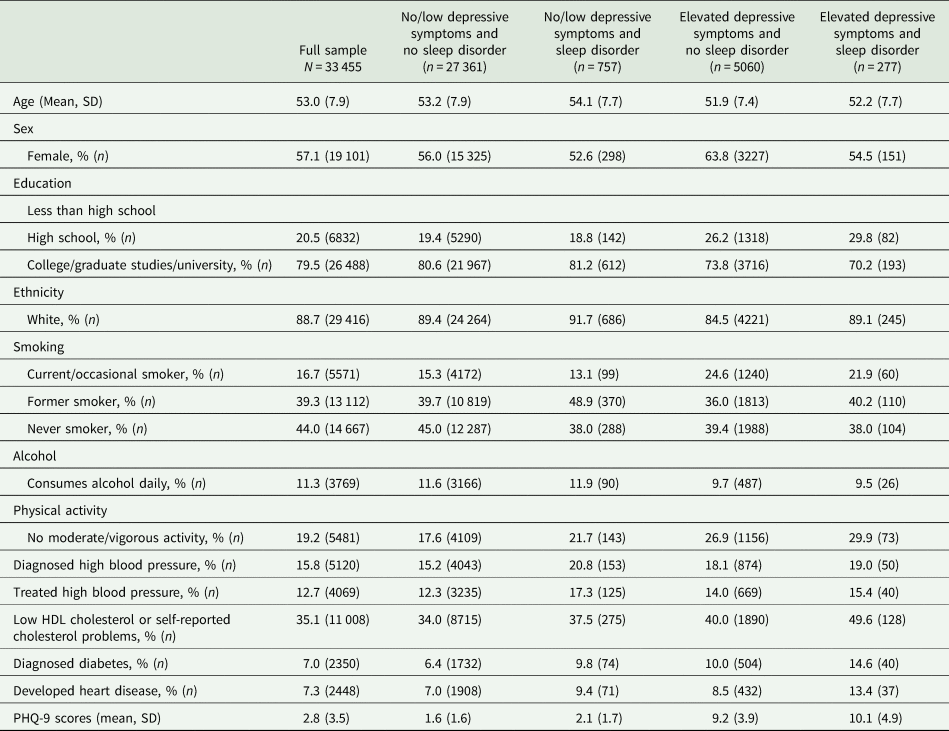
HDL, high density lipoprotein; PHQ-9, Patient Health Questionnaire – nine items.
Sample characteristics stratified by heart disease status

Table 3 describes the HRs for heart disease across the depression–sleep disorders categories. Elevated depression symptoms and sleep disorders were independent predictors for heart disease when they were examined in separate analyses. When examined together with the NSND group as the reference group, the adjusted HR for heart disease was 2.60 (95% CI 1.83–3.69) for the SD group, 1.40 (95% CI 1.25–1.57) for the NSD group and 1.33 (95% CI 1.03–1.73) for the SND group. Test of additive interaction revealed an S of 2.17 (95% CI 1.01–4.64) in the adjusted model, suggesting a synergistic interaction between elevated depressive symptoms and sleep disorders under the additive model.
Results of Cox regression analysis for associations between depressive symptom categories, diagnosed sleep disorders and heart disease

Adjusted model is adjusted for the following variables: age, sex, education, ethnicity, smoking status, alcohol consumption, physical activity, cholesterol, diagnoses diabetes and diagnosed high blood pressure.
The assumption of proportional hazards was examined. Comparison of observed v. expected survival curves within each group suggested that the assumption of proportional hazards was met.
The incidence rates were 17.0, 14.8 and 19.7 per 1000 persons per years for the short sleep, normal sleep and long sleep groups, respectively. HRs for heart disease across the depression and sleep duration categories are presented in Table 4. The group sizes for those without depression and with short, normal and long sleep durations were 5035, 20 481 and 2550, respectively. The group sizes for those with depression and with short, normal and long sleep durations were 1665, 2933 and 716, respectively. Both short sleep duration and long sleep duration were independent predictors for heart disease. Long sleep duration was associated with a higher risk for heart disease when elevated depressive symptoms were present: the adjusted HR increased from 1.16 (long sleep and no/low depressive symptoms) to 1.77 (long sleep and elevated depressive symptoms), with results of the contrast analysis suggesting that this difference was statistically significant (χ 2 = 6.68, df = 1, p = 0.009). The presence of elevated depressive symptoms also increased the risk of heart disease for those with short sleep duration, although the difference was much smaller. The adjusted HR increased from 1.11 (short sleep duration without elevated depressive symptoms) to 1.35 (short sleep duration with the presence of elevated depressive symptoms), although the result of the contrast analysis was not statistically significant (χ 2 = 2.91, df = 1, p = 0.088).
Results of Cox regression analysis for associations between depressive symptom categories, sleep duration categories and heart disease

Adjusted model is adjusted for the following variables: age, sex, education, ethnicity, smoking status, alcohol consumption, physical activity, cholesterol, diagnoses diabetes and diagnosed high blood pressure.
The assumption of proportional hazards was examined. Comparison of observed v. expected survival curves within each group suggested that the assumption of proportional hazards was met.
Results of the sensitivity analyses are presented in Table 5. Overall, the sensitivity analyses demonstrated that (a) compared to the group with no depressive symptoms and no sleep disorders, all other sleep disorder and depressive symptom groups in the different sensitivity analyses had a higher risk of heart disease, with the highest risk found for the SD group; and (b) those with long sleep duration and elevated depressive symptoms had a higher risk for heart disease than those with normal sleep duration and no depressive symptoms. Information on central obesity, assessed by waist circumference, was only available in a subset of participants (mainly Phase A) and was therefore not included as a covariate in the main analyses, although a sensitivity analysis was conducted that included central obesity as an additional covariate in a subsample (n = 22 441; approximately 40% of the sample had central obesity). Adjusting for central obesity did not change the results substantively.
Results of sensitivity analyses for the association between depressive symptom categories, diagnosed sleep disorders and heart disease

All models are adjusted for the following variables: age, sex, education, ethnicity, smoking status, alcohol consumption, physical activity, cholesterol, diagnoses diabetes and diagnosed high blood pressure.
Discussion
In this prospective community cohort study from Quebec, Canada, we evaluated the associations between depressive symptoms, sleep problems (i.e., diagnosed sleep disorders and short/long sleep durations) and the risk of incident heart disease in 33 455 participants without heart disease at baseline, by linking survey data with administrative data. We found that elevated depressive symptoms, diagnosed sleep disorders and short and long sleep duration were independent risk factors for heart disease. Diagnosed sleep disorders and elevated depressive symptoms also interacted to increase the risk of heart disease. Similarly, there was an interaction between long sleep duration and elevated depressive symptoms in relation to an increased risk of heart disease.
We found that individuals with both depressive symptoms and a diagnosed sleep disorder in the 2 years before baseline assessment had approximately 2.6 times increased risk of heart disease compared to those without either condition after accounting for sociodemographic, clinical and behavioural factors. The combined effect of the two conditions appeared to be greater than the sum of the individual effects, as suggested by the synergy index. A sensitivity analysis indicated that excluding the sleep item from the depressive symptom assessment yielded similar results as the main analysis, suggesting that the findings are not solely attributable to overlap in diagnostic criteria. The present results were generally consistent with prior research findings that have examined the independent associations between depressive symptoms (Van der Kooy et al., Reference Van der Kooy, van Hout, Marwijk, Marten, Stehouwer and Beekman2007) and sleep problems (Katz and McHorney, Reference Katz and McHorney1998; Bradley and Floras, Reference Bradley and Floras2009; Dikeos and Georgantopoulos, Reference Dikeos and Georgantopoulos2011) with the risk of heart disease. However, there is an overlap between depression and sleep problems, and the independent and combined effects of each condition have not previously been reported. Although a recent study demonstrated that, in a cohort of older adults from England, depression was associated with incident self-reported coronary heart disease independently from sleep problems, whereas sleep problems were not independently associated with coronary heart disease when accounting for depression (Poole and Jackowska, Reference Poole and Jackowska2019), the potential synergistic association of sleep problems and depression was not examined.
This study also examined the associations between short, normal and long sleep durations with the risk of heart disease. The combination of depressive symptoms and long sleep duration was associated with the greatest risk of heart disease, with an approximate 79% increased risk of heart disease compared to those with no depressive symptoms and normal sleep duration. These findings were consistent with prior research findings. Long sleep duration has previously been shown to be associated with heart disease (Cappuccio et al., Reference Cappuccio, Cooper, D'Elia, Strazzullo and Miller2011; Gianfagna et al., Reference Gianfagna, Veronesi, Bertu, Cesana, Grassi, Stranges, Callegari and Ferrario2016; Jike et al., Reference Jike, Itani, Watanabe, Buysse and Kaneita2018); our study extends this research by demonstrating that long sleep duration and elevated depressive symptoms are most strongly associated with heart disease when they co-occur. It is also possible that depressive symptoms mediate the association between long/short sleep duration and incidence of heart disease. For instance, sleep problems may increase the risk of depression which in turn increases the risk of heart disease. It is also possible that long/short sleep duration mediates the association between depressive symptoms and incidence of heart disease, such that depressive symptoms increase the risk of short/long sleep duration which in turn increases the risk of heart disease. Though it was not possible to examine the temporal nature of sleep duration and depressive symptoms in the association with heart disease in the present study, this question warrants future investigation.
Biological and behavioural pathways may explain the associations between depressive symptoms, sleep problems and the incidence of heart disease. Chronic inflammation may represent one pathway linking sleep and depressive symptoms to heart disease (McDade et al., Reference McDade, Hawkley and Cacioppo2006). For example, short sleep duration could result in increased inflammatory markers (Meier-Ewert et al., Reference Meier-Ewert, Ridker, Rifai, Regan, Price, Dinges and Mullington2004), which are also associated with depression (Howren et al., Reference Howren, Lamkin and Suls2009) and heart disease (Kaptoge et al., Reference Kaptoge, Di Angelantonio, Lowe, Pepys, Thompson, Collins, Danesh, Tipping, Ford, Pressel, Walldius, Jungner, Folsom, Chambless, Ballantyne, Panagiotakos, Pitsavos, Chrysohoou, Stefanadis, Knuiman, Goldbourt, Benderly, Tanne, Whincup, Wannamethee, Morris, Kiechl, Willeit, Mayr, Schett, Wald, Ebrahim, Lawlor, Yarnell, Gallacher, Casiglia, Tikhonoff, Nietert, Sutherland, Bachman, Keil, Cushman, Psaty, Tracy, Tybjaerg-Hansen, Nordestgaard, Zacho, Frikke-Schmidt, Giampaoli, Palmieri, Panico, Vanuzzo, Pilotto, de la Camara, Gerique, Simons, McCallum, Friedlander, Fowkes, Lee, Taylor, Guralnik, Phillips, Wallace, Blazer, Khaw, Brenner, Raum, Muller, Rothenbacher, Jansson, Wennberg, Nissinen, Donfrancesco, Salomaa, Harald, Jousilahti, Vartiainen, Woodward, D'Agostino, Wolf, Vasan, Benjamin, Bladbjerg, Jorgensen, Moller, Jespersen, Dankner, Chetrit, Lubin, Rosengren, Wilhelmsen, Lappas, Eriksson, Bjorkelund, Lissner, Bengtsson, Cremer, Nagel, Tilvis, Strandberg, Kiyohara, Arima, Doi, Ninomiya, Rodriguez, Dekker, Nijpels, Stehouwer, Rimm, Pai, Sato, Iso, Kitamura, Noda, Salonen, Nyyssonen, Tuomainen, Laukkanen, Deeg, Bremmer, Meade, Cooper, Hedblad, Berglund, Engstrom, Verschuren, Blokstra, Shea, Doring, Koenig, Meisinger, Bueno-De-Mesquita, Kuller, Grandits, Selmer, Tverdal, Nystad, Gillum, Mussolino, Hankinson, Manson, Knottenbelt, Bauer, Davidson, Kirkland, Shaffer, Korin, Naito, Holme, Nakagawa, Miura, Ducimetiere, Jouven, Luc, Crespo, Garcia-Palmieri, Amouyel, Arveiler, Evans, Ferrieres, Schulte, Assmann, Packard, Sattar, Westendorp, Buckley, Cantin, Lamarche, Despres, Dagenais, Barrett-Connor, Wingard, Bettencourt, Gudnason, Aspelund, Sigurdsson, Thorsson, Trevisan, Witteman, Kardys, Breteler, Hofman, Tunstall-Pedoe, Tavendale, Lowe, Howard, Zhang, Bes, Umans, Ben-Shlomo, Davey-Smith, Onat, Njostad, Mathiesen, Lohen, Wilsgaard, Ingelsson, Basu, Cederholm, Byberg, Gaziano, Stampfer, Ridker, Ulmer, Diem, Concin, Tosetto, Rodeghiero, Wassertheil-Smoller, Marmot, Clarke, Collins, Fletcher, Brunner, Shipley, Buring, Shepherd, Cobbe, Ford, Robertson, He, Ibanez, Feskens, Walker, Watson, Erqou, Kaptoge, Lewington, Pennells, Perry, Ray, Sarwar, Alexander, Thompson, Thompson, White, Wood and Danesh2010). Alterations in hypothalamic–pituitary–adrenal activity might also be associated with psychological problems, sleep and heart disease (Antonijevic, Reference Antonijevic2008). Both disrupted sleep and depression are related to increased activity of the autonomic nervous system, which may represent another mechanism by which these factors confer risk for heart disease (Joynt et al., Reference Joynt, Whellan and O'Connor2003). Long sleep paired with depression may represent an early manifestation of physical illness or a consequence of unrecognised chronic comorbidity. Long sleep duration has also been shown to be associated with fatigue and feelings of lethargy, which are common in depression and may be associated with the risk of heart disease (Grandner and Drummond, Reference Grandner and Drummond2007). Sleep problems may also indicate a greater severity of depressive symptoms, with a greater risk of relapse and recurrence among those with sleep disturbances (Nutt et al., Reference Nutt, Wilson and Paterson2008), which may result in a more pronounced risk of heart diseases (e.g., Windle and Windle, Reference Windle and Windle2013). Sleep apnoea treatments such as continuous positive airway pressure therapy have been shown to be associated with a lower risk of heart failure among those with sleep apnoea (Holt et al., Reference Holt, Bjerre, Zareini, Koch, Tønnesen, Gislason, Nielsen, Schou and Lamberts2018), and depression might interfere with adherence to sleep apnoea treatments (Law et al., Reference Law, Naughton, Ho, Roebuck and Dabscheck2014). Therefore, although we did not have information on treatments for sleep disorders, it is possible that poor adherence to such treatments might be a contributing mechanism for the synergistic association between sleep disorders and depression with the risk of heart disease.
Health behaviours such as smoking and physical inactivity are also potential mechanisms as they are linked with both sleep problems and depression (Mezick et al., Reference Mezick, Hall and Matthews2011). The presence of both sleep problems and depressive symptoms might affect those health behaviours, which in turn increases the risk of heart disease. Finally, previous research has found that low socioeconomic status moderates the association between insomnia and heart diseases (Canivet et al., Reference Canivet, Nilsson, Lindeberg, Karasek and Östergren2014) and depression and heart diseases (Lemogne et al., Reference Lemogne, Meneton, Wiernik, Quesnot, Consoli, Ducimetiere, Nabi, Empana, Hoertel, Limosin, Goldberg and Zins2017) and might therefore also play a role in the synergistic interaction between depression and sleep problems with the risk of heart disease.
To our knowledge, this is the first study combining survey and administrative data to evaluate the joint effect of depressive symptoms and sleep problems on incident heart disease in individuals aged 40–69 years at baseline. The strengths of the present study include a large sample of middle-aged adults with up to 7 years of follow-up and two different measures of sleep problems. Several sensitivity analyses were further conducted to assess the robustness of the study findings.
There are also study limitations to acknowledge. Individuals with high depressive symptoms or diagnosed sleep problems in the past 2 years may have been treated at the time of the survey, and those with treated v. untreated (or not successfully treated) depressive symptoms or sleep disorders may have a different risk of heart disease. However, no information on treatment for depression or sleep disorders was available. In addition, no information on the duration of depressive symptoms or sleep problems was available, although the duration of depressive symptoms and sleep problems may impact heart disease risk.
The present study is also limited by the use of self-report to identify CARTaGENE participants with a lifetime history of heart disease at baseline, which was the main exclusion criterion for the present study. This selection criterion was based on self-report because the RAMQ data was limited to the past 10 years only and information was only available for those who lived in the province of Quebec during that period. Therefore, we did not have enough information to exclude participants based on RAMQ diagnoses and we could not compare the accuracy of self-reported diagnoses with objectively documented heart disease diagnoses. The assessment of comorbid conditions was also limited to self-report for the abovementioned reasons. On the other hand, the use of billing codes from the RAMQ for the assessment of heart disease could also be limited by the possibility of errors in coding.
The assessments of depressive symptoms and sleep duration were based on self-report as well. Detailed assessments of depressive symptomology and objective measures of sleep duration were not available. Recommendations have been made for the assessment of sleep duration to include objective and subjective measures (Van Den Berg et al., Reference Van Den Berg, Van Rooij, Vos, Tulen, Hofman, Miedema, Neven and Tiemeier2008). The lack of detail on each specific symptom of depression (i.e., weight loss v. weight gain and sleeping more v. less than usual) is another important limitation, given that depression is a heterogeneous construct with many possible symptom profiles (Fried and Nesse, Reference Fried and Nesse2015). Atypical depression is a subtype of depression, characterised by increased appetite or weight gain and longer sleep duration (American Psychiatric Association, 2013), which has previously been linked to cardiometabolic risk factors (Lasserre et al., Reference Lasserre, Strippoli, Glaus, Gholam-Rezaee, Vandeleur, Castelao, Marques-Vidal, Waeber, Vollenweider and Preisig2017). It is possible that the combination of high depressive symptoms and long sleep duration in our study reflects the atypical subtype of depression, which could explain why long sleep duration paired with elevated depressive symptoms was associated with a higher HR for heart disease than short sleep duration with elevated depressive symptoms. However, there was insufficient information on depressive symptomology for the assessment of atypical depression in the present study. We also had insufficient power to examine specific subtypes of sleep diagnoses and heart disease diagnoses. In addition, the framing of the questions for the assessment of depressive symptoms limited to symptoms experienced in the past 2 weeks, and sleep duration was only assessed at one point in time. Therefore, the possible associations between changes in depressive symptoms and/or sleep problems with the risk of heart disease could not be examined in the present study. Our sample was also limited to mostly white participants, and therefore generalisability to more diverse ethnic groups cannot be established. Finally, as in all observational studies, there could be unmeasured confounding by unknown or unmeasured predictors.
Sleep problems are common comorbidities of depression, and an integrated approach that addresses both sleep problems and depression might be an important heart disease prevention strategy (Redline and Foody, Reference Redline and Foody2011). Overall, the results of the present study highlight the interaction between depressive symptoms and sleep problems as a potentially important risk factor for heart disease and suggest that depression with sleep problems may be an important subtype of depression that is strongly associated with the risk of heart disease.
Availability of Data and Materials
The data for this study are not publicly available, thus the authors do not have permission to share the data with outside parties that have not applied for access with the CARTaGENE research group. Requests for data access can be sent to the CARTaGENE research group (https://cartagene.qc.ca/).
Acknowledgements
The authors thank all participants of the CARTaGENE Cohort Study.
Financial support
This work was supported by an operating grant from the Heart and Stroke Foundation of Canada and the Henry and Berenice Kaufmann Foundation (G-16-00014245). The funder/sponsor had no role in the design and conduct of the study; they had no role in collection, management, analysis and interpretation of the data; they had no role in preparation, review or approval of the manuscript; and they did not have any role in the decision to submit the manuscript for publication.
Conflict of interest
None.
Ethical standards
The authors assert that all procedures contributing to this work comply with the ethical standards of the relevant national and institutional committees on human experimentation and with the Helsinki Declaration of 1975, as revised in 2008.


 Open access

