


Just as there are international differences in the prevalence of self-harm (Reference Schmidtke, Bille-Brahe and DeLeoSchmidtke et al, 1996) and in completed suicide (Reference Cantor, Leenaars and LesterCantor et al, 1996), so international differences in the prevalence of suicidal ideation are recognised. However, most of these differences have been identified as a result of single-country studies, making replicative interpretation difficult. It is possible that the reported differences may be due to variations in method, differences between the sampling frames, or cross-national differences in the willingness to admit suicidal ideation or in the individual risk and protective factors for each country. Only two studies have made cross-national comparisons of suicidal ideation using a single method, and both measured lifetime rates. Weissman et al (Reference Weissman, Bland and Canino1999) found a wide variation, ranging from a lifetime prevalence of 2.09% in Beiruit to over 18% in Christchurch, New Zealand, whereas Bertolote et al (Reference Bertolote, Fleishmann and De Leo2005) found that Chennai, India, had the lowest (2.6%) and Durban, South Africa, the highest (25.4%) rate for suicidal ideation.
Among the social or psychological variables that have been found to be independently associated with suicidal ideation are depressive symptoms (Reference Goldney, Wilson and Dal GrandeGoldney et al, 2000; Reference Turvey, Stromquist and KellyTurvey et al, 2002), decrease in income (Reference Turvey, Stromquist and KellyTurvey et al, 2002), unemployment (Reference Hintikka, Pesonen and SaarinenHintikka et al, 2001; Reference Gunnell, Harbord and SingletonGunnell et al, 2004) and traumatic life events (Reference Goldney, Wilson and Dal GrandeGoldney et al, 2000). Whether all of these are risk factors for, or the consequence of, suicidal ideation or are related in some other way is uncertain, although the longitudinal study by Fanous et al (Reference Fanous, Prescott and Kendler2004) confirmed the independent predictive value of recent life events and psychopathology.
Of note, none of these community studies have specifically examined the severity of suicidal ideation. However, it is likely that this will vary as it does in clinical practice, from being a passive death wish to a fully formed plan for death, the latter being of most clinical significance.
The aim of this study was to examine the prevalence of suicidal ideation in six urban and rural European sites and to evaluate which variables might independently explain geographical differences. A further aim was to explore the severity of suicidal ideation in these sites, and to identify variables that might be associated with severe suicidal ideation; understanding the risk or protective variables separating milder suicidal ideation from clinically serious ideation is important in targeting appropriate interventions.
METHOD
This study was designed to test two hypotheses:
-
(a) that variation in the prevalence of suicidal ideation between countries could be explained by a common set of social, demographic and clinical variables; and
-
(b) that variation in the prevalence of serious suicidal ideation between countries could be explained by a common set of associated social, clinical and demographic variables.
Sites
The present cross-sectional study forms part of a large investigation, the Outcome of Depression International Network (ODIN), involving five countries in Europe. Details of the methods are provided elsewhere (Reference Dowrick, Casey and DalgardDowrick et al, 1998). The broad aim of the ODIN study was to examine the prevalence of depressive disorders, to identify risk factors and to compare the impact of psychological interventions by re-interviewing participants at 6 and 12 months after the index evaluation.
The countries participating in this study and for which data were available for the present analysis were Britain (rural North Wales, referred to hereafter as Wales), Ireland (urban Dublin and rural County Laois), Spain (urban Santander), Norway (urban Oslo and rural Rakkestad) and Finland (urban Turku and rural Marttila). The definition of rural was of a centre of population of no more that 15 000 with at least 20% of economically active citizens engaged in occupations directly related to fishing, forestry or agriculture.
Screening and risk factors
Adults aged between 18 and 64 were selected from the general population and screened for possible depressive disorder (adjustment disorder, single or recurrent depressive episode, bipolar or persistent affective disorder) using the Beck Depression Inventory (BDI; Reference Beck, Ward and MendelsonBeck et al, 1961).
In addition, participants completed the Oslo Social Support Scale (Reference Nosikov and GudexNosikov & Gudex, 2003). This measured perceived concern shown by others (1–5), ease in obtaining practical help from neighbours (1–5) and people to count on when serious personal problems arose (none to 5). Life events over the previous 6 months were measured by the List of Threatening Experiences (Reference Brugha, Bebbington and TennantBrugha et al, 1985), in which the person responds yes or no to a list of 12 events. Socio-demographic details including age, gender and marital status were also obtained. Those instruments not already available in the language of the participants were translated by the study group and then back-translated by a professional translator.
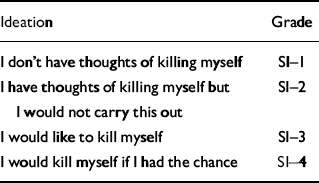
The present study consists of an analysis of item 9 of the BDI in the screened sample, covering the previous 2 weeks. Variables that were associated with suicidal ideation included those items measured during the screening phase, i.e. demographic data, life events and social supports. Severity of depressed mood was also included in the analysis, using the BDI total score minus the score for item 9 since its inclusion might have led to a spurious association between suicidal ideation and severity of depression. Details of question 9 of the BDI are provided in Table 1.
Item 9 of the Beck Depression Inventory
| Ideation | Grade |
|---|---|
| I don't have thoughts of killing myself | SI-1 |
| I have thoughts of killing myself but I would not carry this out | SI-2 |
| I would like to kill myself | SI-3 |
| I would kill myself if I had the chance | SI-4 |
Suicidal ideation was measured using the response to questions SI (suicidal ideation) 1, SI2, SI3 and SI4. Two broad analyses were carried out. The first compared the non-ideators (SI–1) with all the ideators (SI–2,3,4), and the second was a subgroup analysis of those with any suicidal ideation, comparing the milder (SI–2) with the serious ideators (SI–3,4).
Statistical analysis
Routine data management, including the description of results, was carried out using the Statistical Package for the Social Sciences (SPSS) for Windows, version 8. Logistic regression analyses were reinforced using the logistic command in Stata (version 8). Stratification (i.e. the sampling design) was allowed for in the logistic regression models by the inclusion of country and urban/rural differences in all models.
RESULTS
Questionnaires were sent to 12 396 people, of whom 7950 responded, yielding a response rate of 64.1% with variations between sites from 55.3% for Ireland to 74.2% for Spain. The response rates for Finland, Norway and Wales were 64.9%, 62% and 61.5% respectively. Among non-responders, gender-significant differences were apparent in Wales (men 35% v. women 26%), Ireland (52% v. 39%) and Norway (39% v. 30%) but not in Finland (39% v. 40%) or Spain (8% v. 9%). Response rate increased with age in Wales (53% among 18- to 24-year-olds to 68% among 55- to 64-year-olds), Ireland (42% and 59% respectively) and Finland (67% and 77% respectively) but not in Spain (84% and 86% respectively) or Norway (59% and 66% respectively).
Among responders, suicidal ideation was reported by 7.4% in Norway, 2.3% in Spain, 7.4% in Wales, 9.8% in Finland and 14.6% in Ireland. Details of the weighted prevalence of suicidal ideation and of serious suicidal ideation will be presented in a subsequent paper.
Variables associated with suicidal ideation
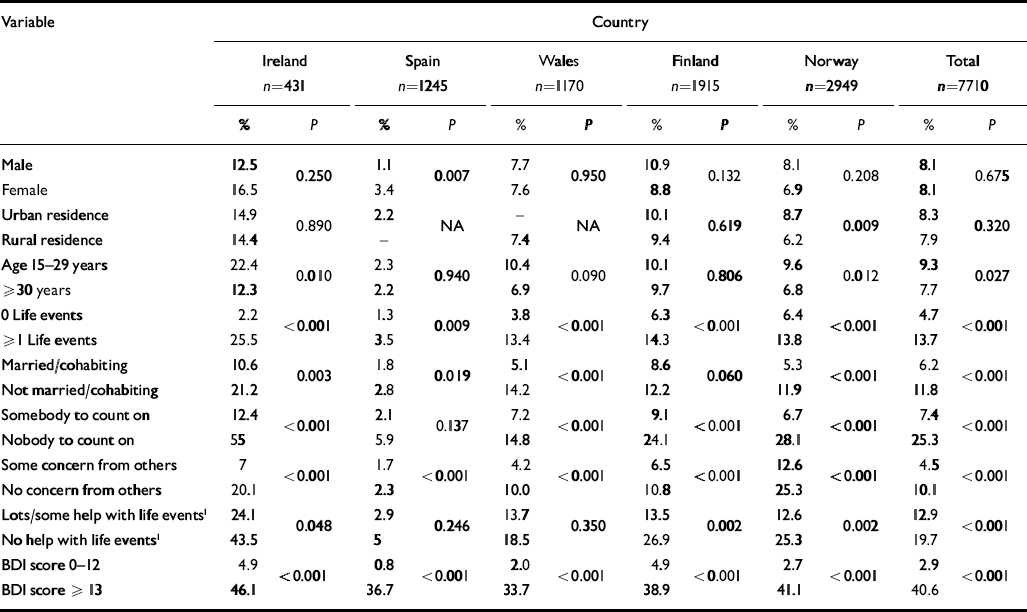
Certain variables were identified as significantly discriminating those with and without suicidal ideation in each site. These are shown in Table 2.
Variables associated with suicidal ideation by country
| Variable | Country | |||||||||||
|---|---|---|---|---|---|---|---|---|---|---|---|---|
| Ireland n=431 | Spain n=1245 | Wales n=1170 | Finland n=1915 | Norway n=2949 | Total n=7710 | |||||||
| % | P | % | P | % | P | % | P | % | P | % | P | |
| Male | 12.5 | 0.250 | 1.1 | 0.007 | 7.7 | 0.950 | 10.9 | 0.132 | 8.1 | 0.208 | 8.1 | 0.675 |
| Female | 16.5 | 3.4 | 7.6 | 8.8 | 6.9 | 8.1 | ||||||
| Urban residence | 14.9 | 0.890 | 2.2 | NA | - | NA | 10.1 | 0.619 | 8.7 | 0.009 | 8.3 | 0.320 |
| Rural residence | 14.4 | - | 7.4 | 9.4 | 6.2 | 7.9 | ||||||
| Age 15-29 years | 22.4 | 0.010 | 2.3 | 0.940 | 10.4 | 0.090 | 10.1 | 0.806 | 9.6 | 0.012 | 9.3 | 0.027 |
| ≥30 years | 12.3 | 2.2 | 6.9 | 9.7 | 6.8 | 7.7 | ||||||
| 0 Life events | 2.2 | <0.001 | 1.3 | 0.009 | 3.8 | <0.001 | 6.3 | <0.001 | 6.4 | <0.001 | 4.7 | <0.001 |
| ≥ 1 Life events | 25.5 | 3.5 | 13.4 | 14.3 | 13.8 | 13.7 | ||||||
| Married/cohabiting | 10.6 | 0.003 | 1.8 | 0.019 | 5.1 | <0.001 | 8.6 | 0.060 | 5.3 | <0.001 | 6.2 | <0.001 |
| Not married/cohabiting | 21.2 | 2.8 | 14.2 | 12.2 | 11.9 | 11.8 | ||||||
| Somebody to count on | 12.4 | <0.001 | 2.1 | 0.137 | 7.2 | <0.001 | 9.1 | <0.001 | 6.7 | <0.001 | 7.4 | <0.001 |
| Nobody to count on | 55 | 5.9 | 14.8 | 24.1 | 28.1 | 25.3 | ||||||
| Some concern from others | 7 | <0.001 | 1.7 | <0.001 | 4.2 | <0.001 | 6.5 | <0.001 | 12.6 | <0.001 | 4.5 | <0.001 |
| No concern from others | 20.1 | 2.3 | 10.0 | 10.8 | 25.3 | 10.1 | ||||||
| Lots/some help with life events1 | 24.1 | 0.048 | 2.9 | 0.246 | 13.7 | 0.350 | 13.5 | 0.002 | 12.6 | 0.002 | 12.9 | <0.001 |
| No help with life events1 | 43.5 | 5 | 18.5 | 26.9 | 25.3 | 19.7 | ||||||
| BDI score 0-12 | 4.9 | <0.001 | 0.8 | <0.001 | 2.0 | <0.001 | 4.9 | <0.001 | 2.7 | <0.001 | 2.9 | <0.001 |
| BDI score ≥ 13 | 46.1 | 36.7 | 33.7 | 38.9 | 41.1 | 40.6 | ||||||
The discriminators appear to differ between the various sites although some, such as the presence of life events, concern shown by others, having people to count on and severity of depressive symptoms, are common to all countries. Gender was significant only in Spain, whereas urban–rural differences were significant only in Norway.
A series of logistic regressions were carried out to investigate the independent influence of these variables, together with country, on suicidal ideation. The starting point was to fit a model containing only the main effects of all variables listed in Table 2 (results not shown). At the second stage we tested for all the potential two-way interactions between the variables involving gender and involving country, by adding them one at a time to the main-effects model. None was statistically significant except for the life events-by-gender interaction. In particular, there was no statistically significant country-by-gender interaction nor country-by-urban interaction (results not shown), demonstrating that the variables associated with suicidal ideation did not differ significantly between countries and that the sample could be considered as a whole.
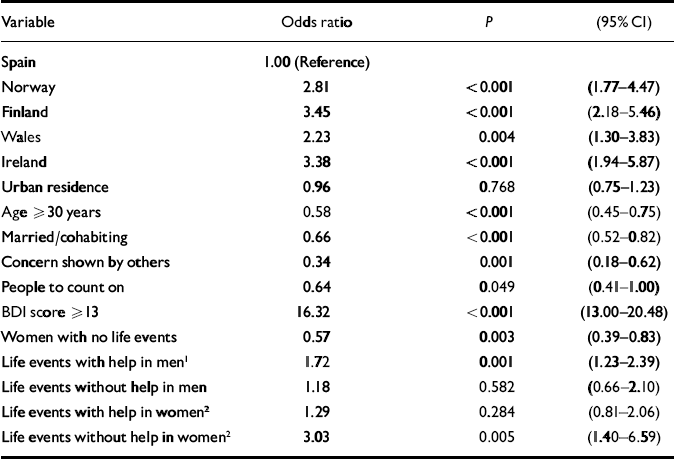
The results of fitting the final model (including the non-significant main effects and the significant interactions, but excluding the non-significant interactions) are shown in Table 3.
Logistic regression analysis of variables associated with any suicidal ideation
| Variable | Odds ratio | P | (95% CI) |
|---|---|---|---|
| Spain | 1.00 (Reference) | ||
| Norway | 2.81 | < 0.001 | (1.77-4.47) |
| Finland | 3.45 | < 0.001 | (2.18-5.46) |
| Wales | 2.23 | 0.004 | (1.30-3.83) |
| Ireland | 3.38 | < 0.001 | (1.94-5.87) |
| Urban residence | 0.96 | 0.768 | (0.75-1.23) |
| Age ≥ 30 years | 0.58 | < 0.001 | (0.45-0.75) |
| Married/cohabiting | 0.66 | < 0.001 | (0.52-0.82) |
| Concern shown by others | 0.34 | 0.001 | (0.18-0.62) |
| People to count on | 0.64 | 0.049 | (0.41-1.00) |
| BDI score ≥ 13 | 16.32 | < 0.001 | (13.00-20.48) |
| Women with no life events | 0.57 | 0.003 | (0.39-0.83) |
| Life events with help in men1 | 1.72 | 0.001 | (1.23-2.39) |
| Life events without help in men | 1.18 | 0.582 | (0.66-2.10) |
| Life events with help in women2 | 1.29 | 0.284 | (0.81-2.06) |
| Life events without help in women2 | 3.03 | 0.005 | (1.40-6.59) |
Using Spain (Santander) as the reference country (i.e. OR fixed at 1.0), there are still statistically significant between-country differences. All of the Northern European countries had significantly more suicidal ideation than Spain, with OR ranging from 2.23 for Wales (P=0.004) to 3.45 for Finland (P=0.001). Urban–rural differences have disappeared, but all of the other discriminators are highly statistically significant. The risk for suicidal ideation is increased by depression (a BDI score ≥13; OR=16.32, P=0.001) but decreased by being older (age ≥30 years; OR=0.58, P=0.001), being married (OR=0.66, P=0.001), having someone who is concerned for you (OR=0.34, P=0.001) and having people to count on (OR=0.64, P=0.049).
The part of the table that needs more care in its interpretation is that reporting the joint effects of life events, having access to help for these life events, and gender (i.e. the events-by-gender interactions). In the absence of life events, women appear less likely to have suicidal thoughts than men (OR=0.57, P=0.003).
For those experiencing life events, the effects of having help differ between men and women. In men, having a life event, but with help, significantly increases the association with suicidal thoughts when compared with men not experiencing life events (OR=1.72, P=0.001), whereas having a life event, but without help, seems to have very little effect on the risks for suicidal thoughts when compared with men not experiencing life events (OR=1.18, P=0.582). However in women, having a life event, but with help, does not increase the association with suicidal ideation (OR=1.29, P=0.284), whereas experiencing an event without help is highly statistically significant (OR=3.03, P=0.005). In other words, lack of help shows an increased association with suicidal thoughts in women who experience life events but, among men who experience an event, a lack of help makes no difference to suicidal ideation whereas help with events increases the association.
Variables associated with serious suicidal ideation
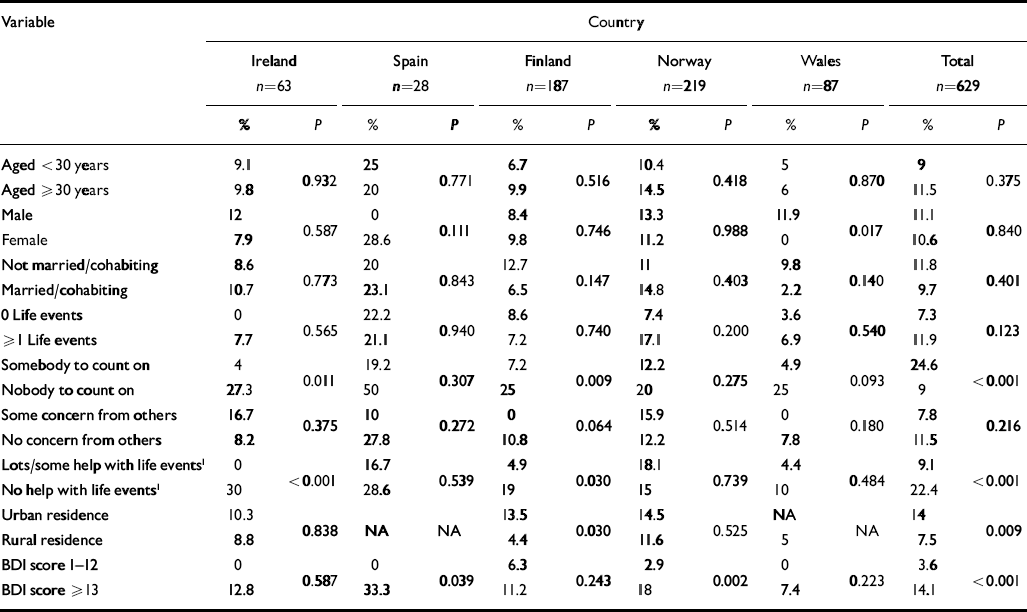
Since the BDI assesses suicidal ideation of varying severity, ranging from none to passive death wishes to an active wish to end life, a subgroup analysis was carried out to ascertain which variables were associated with clinically serious ideation, by comparing the combined statements ‘I would like to kill myself’ (SI–3) and ‘I would kill myself if I had the chance’ (SI–4) with ‘I have thoughts of killing myself but I would not carry this out’ (SI–2) for each country individually and for the sites combined, using univariate analysis. Those who had no suicidal ideation (SI–1) were excluded. Thus, the sample used for these analyses was much smaller than that used for Table 3.
In Table 4 it can be seen that a pattern emerges of differing associations, with clinically serious suicidal ideation in the five sites studied and in the total combined. Severity of depression was significant only in Spain and Norway and urbanicity significant in Finland. People to count on and help with life events were significant in Ireland and Finland.
Variables associated with serious suicidal ideation by country
| Variable | Country | |||||||||||
|---|---|---|---|---|---|---|---|---|---|---|---|---|
| Ireland n=63 | Spain n=28 | Finland n=187 | Norway n=219 | Wales n=87 | Total n=629 | |||||||
| % | P | % | P | % | P | % | P | % | P | % | P | |
| Aged < 30 years | 9.1 | 0.932 | 25 | 0.771 | 6.7 | 0.516 | 10.4 | 0.418 | 5 | 0.870 | 9 | 0.375 |
| Aged ≥ 30 years | 9.8 | 20 | 9.9 | 14.5 | 6 | 11.5 | ||||||
| Male | 12 | 0.587 | 0 | 0.111 | 8.4 | 0.746 | 13.3 | 0.988 | 11.9 | 0.017 | 11.1 | 0.840 |
| Female | 7.9 | 28.6 | 9.8 | 11.2 | 0 | 10.6 | ||||||
| Not married/cohabiting | 8.6 | 0.773 | 20 | 0.843 | 12.7 | 0.147 | 11 | 0.403 | 9.8 | 0.140 | 11.8 | 0.401 |
| Married/cohabiting | 10.7 | 23.1 | 6.5 | 14.8 | 2.2 | 9.7 | ||||||
| 0 Life events | 0 | 0.565 | 22.2 | 0.940 | 8.6 | 0.740 | 7.4 | 0.200 | 3.6 | 0.540 | 7.3 | 0.123 |
| ≥ 1 Life events | 7.7 | 21.1 | 7.2 | 17.1 | 6.9 | 11.9 | ||||||
| Somebody to count on | 4 | 0.011 | 19.2 | 0.307 | 7.2 | 0.009 | 12.2 | 0.275 | 4.9 | 0.093 | 24.6 | < 0.001 |
| Nobody to count on | 27.3 | 50 | 25 | 20 | 25 | 9 | ||||||
| Some concern from others | 16.7 | 0.375 | 10 | 0.272 | 0 | 0.064 | 15.9 | 0.514 | 0 | 0.180 | 7.8 | 0.216 |
| No concern from others | 8.2 | 27.8 | 10.8 | 12.2 | 7.8 | 11.5 | ||||||
| Lots/some help with life events1 | 0 | < 0.001 | 16.7 | 0.539 | 4.9 | 0.030 | 18.1 | 0.739 | 4.4 | 0.484 | 9.1 | < 0.001 |
| No help with life events1 | 30 | 28.6 | 19 | 15 | 10 | 22.4 | ||||||
| Urban residence | 10.3 | 0.838 | NA | NA | 13.5 | 0.030 | 14.5 | 0.525 | NA | NA | 14 | 0.009 |
| Rural residence | 8.8 | 4.4 | 11.6 | 5 | 7.5 | |||||||
| BDI score 1-12 | 0 | 0.587 | 0 | 0.039 | 6.3 | 0.243 | 2.9 | 0.002 | 0 | 0.223 | 3.6 | < 0.001 |
| BDI score ≥ 13 | 12.8 | 33.3 | 11.2 | 18 | 7.4 | 14.1 | ||||||
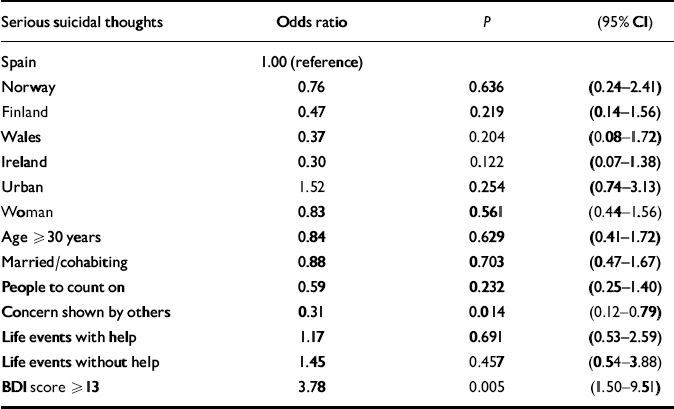
Because of different associations with serious suicidal ideation across countries, the independent effects of these variables were investigated using multiple logistic regression. As in the analysis for any suicidal ideation reported above, the starting point was to enter all the variables, and then each country-by-risk factor interaction was added in turn to this model (results not shown). This failed to find any statistically significant country-risk factor interaction, demonstrating that the variables associated with serious suicidal ideation did not differ statistically between the countries. It was thus appropriate to consider the sample as a whole and the results of the final model are shown in Table 5.
Logistic regression analysis of variables associated with serious suicidal ideation
| Serious suicidal thoughts | Odds ratio | P | (95% CI) |
|---|---|---|---|
| Spain | 1.00 (reference) | ||
| Norway | 0.76 | 0.636 | (0.24-2.41) |
| Finland | 0.47 | 0.219 | (0.14-1.56) |
| Wales | 0.37 | 0.204 | (0.08-1.72) |
| Ireland | 0.30 | 0.122 | (0.07-1.38) |
| Urban | 1.52 | 0.254 | (0.74-3.13) |
| Woman | 0.83 | 0.561 | (0.44-1.56) |
| Age ≥ 30 years | 0.84 | 0.629 | (0.41-1.72) |
| Married/cohabiting | 0.88 | 0.703 | (0.47-1.67) |
| People to count on | 0.59 | 0.232 | (0.25-1.40) |
| Concern shown by others | 0.31 | 0.014 | (0.12-0.79) |
| Life events with help | 1.17 | 0.691 | (0.53-2.59) |
| Life events without help | 1.45 | 0.457 | (0.54-3.88) |
| BDI score ≥ 13 | 3.78 | 0.005 | (1.50-9.51) |
The only variables that were independently associated with serious suicidal ideation were concern shown by others, which lowered the odds (OR=0.31, P=0.014), and high BDI score, which increased the odds (OR=3.78, P=0.005). Thus, after allowing for the independent effects of the other discriminators, there were no statistically significant between-country differences in the risks for having serious suicidal ideation when compared with milder suicidal ideation.
DISCUSSION
To our knowledge this study is unique, in that it is the only evaluation of the risk factors for suicidal ideation in the general population at several international sites using similar methods, thereby enhancing the validity of the cross-national comparisons. It is also the first study to specifically examine the variables associated with serious suicidal ideation in a multinational setting.
However, it is also important to acknowledge the weaknesses of this investigation. The first is that only a limited number of variables were examined in testing their relationship with suicidal ideation and, in particular, the failure to include substance misuse may be a deficiency in view of the increased risk of suicidal thoughts among substance misusers (Reference Gunnell, Harbord and SingletonGunnell et al, 2004). Socio-economic and employment status were not examined either, although these variables have been shown to be significantly associated with suicidal ideation (Reference Hintikka, Pesonen and SaarinenHintikka et al, 2001; Reference Gunnell, Harbord and SingletonGunnell et al, 2004). However, those variables that were included in this study have been found, in the existing literature, to be associated with suicidal ideation and/or behaviour (Reference Goldney, Fisher and WilsonGoldney et al, 2001; Reference Turvey, Stromquist and KellyTurvey et al, 2002; Reference Fanous, Prescott and KendlerFanous et al, 2004). The cross-sectional design of this study is also a limitation, since it does not allow us to demonstrate whether the variables shown to be associated with suicidal ideation are risk factors, or whether they represent some other relationship. Third, this design, involving a sample from the general population, does not allow measurement of the duration of suicidal ideation or of its full clinical significance. Suicidal ideation may be fleeting or protracted, associated with established psychiatric disorder or with transient reactions to stressful events as occurs in clinical practice. On the other hand, the separate examination of serious suicidal ideation does add additional information not available from other similar studies. Fourth, the small sample size, particularly for the subgroup with serious suicidal ideation, suggests a cautious interpretation of the results as the presence of a type 2 error cannot be excluded. Finally, the variable response rate between sites and the poorer response among men as compared with women, particularly in Wales and Ireland, may have introduced hidden biases in the results. However, it is not possible to speculate on how the final models might have differed from those presented, since neither site nor gender emerged as significant on multivariate analysis. Nevertheless, the possibility cannot be totally discounted.
Variables associated with suicidal ideation
The failure to find any country-by-variable interaction suggests that a common set of variables independently determined suicidal ideation irrespective of the site, thus supporting our first hypothesis. However, a caveat also exists, in that this may represent a type 2 error due to underpowering. On multivariate analysis, our study identified the role of being married and of negative life events in lowering and increasing, respectively, the risks for having suicidal ideation. These findings are similar to those of others (Reference Weissman, Bland and CaninoWeissman et al, 1999; Reference Fanous, Prescott and KendlerFanous et al, 2004). Multivariate analysis further showed that having people to count on and others who show concern reduced the risks for suicidal thoughts. This confirmed as others have done (Reference Alexopoulos, Bruce and HullAlexopoulos et al, 1999; Reference Turvey, Stromquist and KellyTurvey et al, 2002), the importance of social supports. Increasing age (>30 years) was found on multivariate analysis also to reduce the risks for suicidal thoughts, a finding at variance with that of other studies (Reference Fanous, Prescott and KendlerFanous et al, 2004).
The differential between men and women in relation to life events and help with these, as identified in the interaction, was an unexpected finding in this study and has not been reported before. Interpreting this finding is complex. It is not possible to confirm the direction of the association in either gender, since this was a cross-sectional rather than a longitudinal study.
In relation to the role of help with life events and suicidal ideation in women, two possibilities exist. Having help with events may act as a buffer against the negative impact of life events in women, and lower their risk of suicidal ideation; alternatively, it may be that those who develop suicidal ideation or low mood in the presence of a life events are less able to access help, as either of these may have a negative impact on social networks. It is also possible that lack of social support may stem from a depressive perception (itself associated with suicidal ideation) rather than being a true cause.
For men it is possible that having social supports is an indicator of pre-existing vulnerability and thereby associated with a higher risk of suicidal ideation. Another possibility is that, for men, having social supports increases the likelihood of being exposed to relationship-related life events that ultimately lead to suicidal ideation. It is not the intention or purpose of this study to attempt to unravel these questions, but clearly this finding requires replication, and then further analysis to explain these gender differences.
Variables associated with serious suicidal ideation
This subgroup analysis examined the differences between those with milder suicidal ideation, and those with serious ideation, as this distinction is clinically important; yet is incompletely understood, and has received little attention in general population studies with some few exceptions (Reference RenbergRenberg, 2001; Reference Turvey, Stromquist and KellyTurvey et al, 2002). For those with serious suicidal ideation, the odds ratios indicate some variability across countries, although these differences were not statistically significant. Thus, the apparent differences between the sites found on univariate analysis might be the result of random fluctuations between the samples from the five countries, and of lack of statistical power for the within-country significance tests. Multiple logistic regressions failed to find any country by risk factor interactions demonstrating that (as in the case of any suicidal thoughts) there is little or no evidence that the effects of the variables associated with serious suicidal thoughts vary from one country to another, supporting our second hypothesis. Another explanation may lie in the underpowering of this part of the study to identify other variables independently associated with serious suicidal ideation, when compared with milder ideation.
For all countries combined, multivariate testing identified two variables of interest; concern shown by others, which lowered the risk; and severity of depression, which increased the risk. However, the importance of depressed mood was less for serious suicidal ideation (OR=3.78) when compared with suicidal ideation in general (OR=16.32), a finding that was somewhat surprising. As with suicidal ideation overall, the same caveats exist in relation to demonstrating the direction of the association between concern shown by others and serious suicidal ideation. Clearly, longitudinal studies are required to address these questions.
Acknowledgements
Funding was provided by the European Commission Biomed 2 programme; the NHS Executive North-West Research and Development Office; Spanish F.I.S.; Wales Office of Research and Development; Norwegian Research Council, Council for Mental Health and Department of Health and Social Welfare; Finnish Pensions Institute of Agricultural Entrepreneurs; and University Central Hospital of Turku.
The ODIN Group is composed of the academic colleagues and research and administrative staff who have worked on this part of the Outcome of Depression International Network (ODIN) Project. They include: Javier Ballesteros, Gail Birkbeck, Trygve Børve, Maura Costello, Pim Cuijpers, Ioana Davies, Juan Francisco Diez-Manrique, Nicholas Fenlon, Mette Finne, Fiona Ford, Luis Gaite, Andres Gomez del Barrio, Claire Hayes, Andrés Herrán, Ann Horgan, Tarja Koffert, Nicola Jones, L. Lasa, Marja Lehtilä, Catherine McDonough, Erin Michalak, Christine Murphy, Anna Nevra, Teija Nummelin, Helen Page and Britta Sohlman.




eLetters
No eLetters have been published for this article.