





Introduction
Mycobacterium chelonae is a rapid-growing nontuberculous mycobacteria (NTM) species, most frequently associated with eye and skin/soft tissue infections. Reference Akram, Rathish and Saleh1,Reference Hay2 Infrequently, hospitalized patients develop M. chelonae catheter-related and postsurgical infections after implants, transplants, and injections. Invasive infections, such as bacteremia, occur rarely in immunosuppressed patients. Reference Akram, Rathish and Saleh1 Pulmonary infections are also uncommon, even among patients with cystic fibrosis (CF); however, preexisting structural lung disease increases the risk of colonization and disease. Reference Kendall and Winthrop3 Although NTM are increasingly a recognized cause of outbreaks and pseudo-outbreaks from hospital water systems, there are few published reports and limited national guidance on conducting these investigations and validated mitigation strategies are lacking. Reference Fraser, Jones, Murray, Medoff, Zhang and Wallace4–Reference Inkster, Peters, Seagar, Holden and Laurenson7 In recognition of this gap, the Healthcare-Associated Links in Transmission of Nontuberculous Mycobacteria (HALT NTM) study combines genomic and traditional epidemiologic investigation of healthcare-associated NTM outbreaks among people with CF receiving care in U.S. CF Care Centers but currently does not incorporate mitigation strategies. Reference Gross, Caceres and Poch8,Reference Gross, Caceres and Poch9 Here we describe an investigation utilizing the HALT NTM toolkit of an increase in M. chelonae in respiratory cultures in a pediatric healthcare system after the opening of a Leadership in Energy and Environmental Design (LEED)-certified critical care tower.
Setting
The quaternary, pediatric hospital facility consists of three attached buildings - locations “A,” “B,” and the new 8-story critical care tower, “G.” “A” houses acute care inpatients along with hematology/oncology and respiratory chronic care units. “B” contains the operating rooms, same day surgery, procedure center and the postanesthesia care unit. “G” accommodates the inpatient pharmacy, clinical laboratory, sterile processing and decontamination (SPD), intensive care units (cardiac, neonatal, pediatric), and the bone marrow transplant unit, with each located on a separate floor. Construction of “G” was completed in September 2021 and was fully occupied by December 2021. Silver-level LEED 2009 Healthcare certification, which required a 20% reduction in indoor water use compared to baseline, was awarded in 2021. Strategies to reduce water use included installation of a low-flow system and water-efficient fixtures, such as low-flow toilets, faucets, and showerheads. 10
Methods
Outbreak detection and case definition
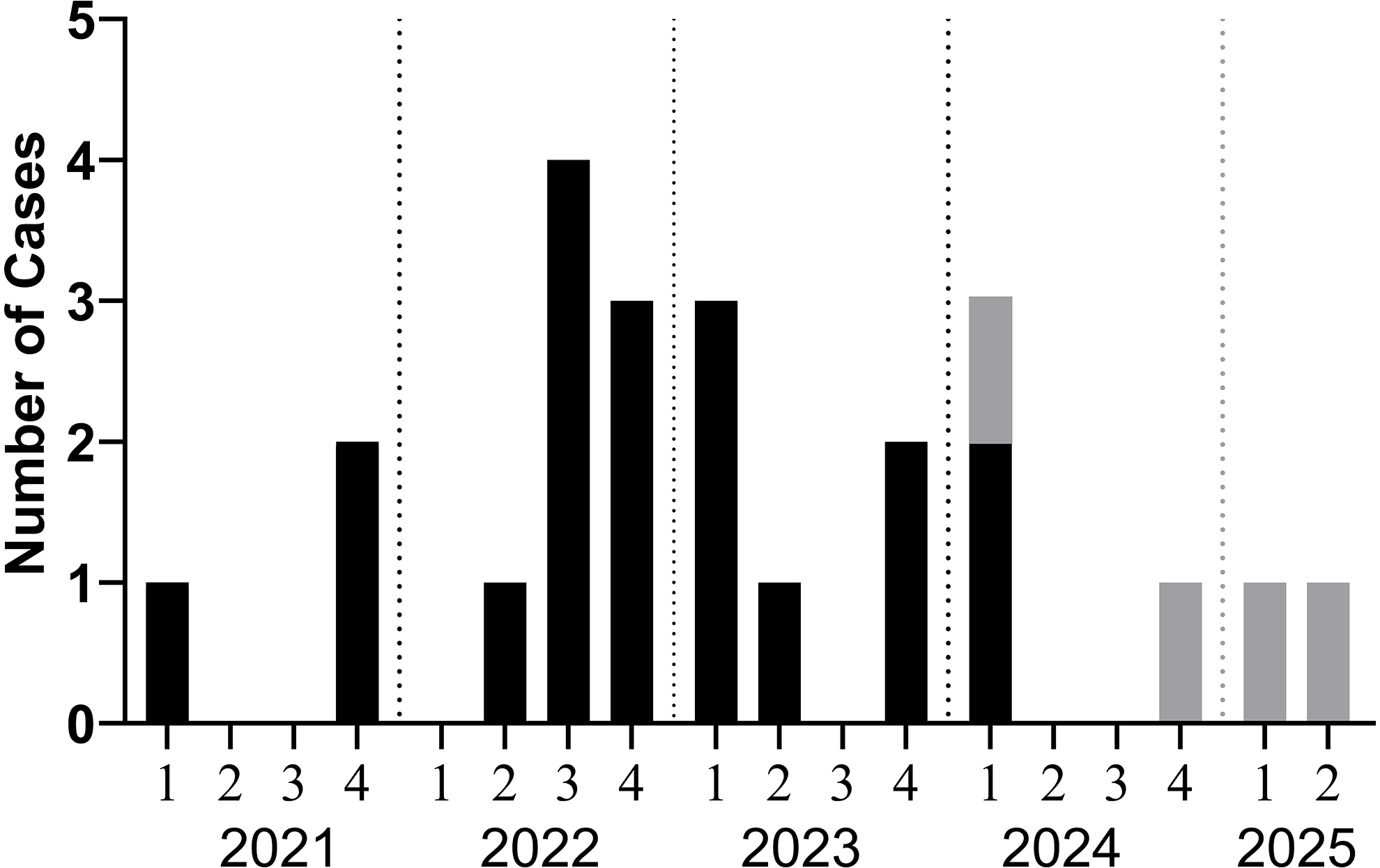
In September 2022, the infection prevention and control (IPC) program detected an increase in incidence of M. chelonae recovered from clinical respiratory cultures via routine surveillance with five positive samples in four months. A retrospective review of clinical microbiology records uncovered only three M. chelonae isolates in the previous two years (2020–2021). An outbreak investigation using the HALT toolkit was initiated and reported to the local health department. The official outbreak investigation occurred from June 2022 to January 2024 and involved 16 patients, but continued surveillance revealed M. chelonae from respiratory cultures of 4 additional patients (Figure 1).
Incidence of M. chelonae from respiratory cultures by quarter from 2021 through the second quarter of 2025. The black bars represent cases that were part of the official investigation, and the gray bars represent cases that occurred outside the official investigation period.

A case was defined as any inpatient or outpatient with M. chelonae isolated from a respiratory sample collected between June 2022 and January 2024. Clinical samples included bronchoalveolar lavage (BAL) or sputum.
Respiratory microbiological and molecular testing
A majority of M. chelonae isolates were recovered incidentally from fungal media as acid-fast bacilli (AFB) cultures were not initially ordered. Identification of M. chelonae occurred in the clinical microbiology laboratory using matrix-assisted laser desorption ionization time-of-flight mass spectrometry (MALDI-TOF MS, bioMerieux Vitek MS, Marcy-I Etoile, France). Isolates were sent to National Jewish Health (NJH) Advanced Diagnostic Laboratories for antibiotic susceptibility testing and whole genome sequencing (WGS). Bacterial DNA was extracted using a modified method. Reference Epperson and Strong11 The sequenced DNA was analyzed at the core genome level to determine genetic relatedness. Reference Gross, Caceres and Poch12 Isolates were considered highly related and falling into a cluster using single nucleotide polymorphism (SNP) comparisons. Reference Gross, Caceres and Poch12
Healthcare environmental testing
Utilizing the Transmission and Acquisition of Nontuberculous Mycobacteria Outbreak Investigation (TrANsMit, NCT06155747) protocol, a virtual walk-through of the hospital was conducted on March 23, 2023, to develop an environmental sampling plan. From March 24th–April 10th, 2023, environmental water biofilm samples were collected from multiple sources (sinks, showerheads, ice/water units, drinking fountains) in the critical care tower (“G”), the perioperative suite (“B3”), and the Transitional Chronic Care unit (“A3”). Potable water and filters, air vents, endoscope reprocessing units and working channels in bronchoscopes were sampled in SPD. Samples were sent to the Environmental Nontuberculous Mycobacteria Reference Laboratory at the University of Texas Health Science Center at Tyler and processed as previously published. Reference Honda, Hasan and Davidson13,Reference Virdi, Lowe and Norton14 DNA from isolates identified as potential NTM was extracted and species identified by Sanger sequencing a 711 base pair region of the rpoB gene. Reference Epperson and Strong11,Reference Adekambi, Drancourt and Raoult15,Reference Walters, Hyde and Berg-Lyons16
Epidemiological investigation
Electronic health records were used to create a line list of cases and capture demographics, diagnoses, dates of cultures, specimen type, surgical procedures, and specimen collection details. Case locations in the healthcare facility 18 months prior to M. chelonae positive culture including inpatient units, outpatient clinics, and operating rooms (OR) were collected. Based on common trends found among cases, interviews were conducted with multiple subspecialty care areas including pulmonology, otolaryngology, respiratory therapy (RT), anesthesia, perioperative services, and SPD to review clinical practices. The clinical microbiology laboratory was investigated to rule out contamination, media or reagent changes, and staff practices. Information from building maintenance was gathered on the design of the new critical care tower (“G”) as well as plumbing issues and water intrusions. Current and past construction projects were reviewed along with any related water and air handler outages.
Genomic relatedness analysis
Respiratory and environmental M. chelonae isolates underwent DNA extraction and Illumina short-read WGS. Reference Gross, Caceres and Poch12 Trimmed paired-end reads were mapped to the M. chelonae ATCC 19237 reference genome for variant calling. Reference Davidson, Nick and Kammlade17 Genetic relatedness was assessed using core genome SNP differences with identification of clustered isolates based on a ≤ 30 threshold. Reference Gross, Caceres and Poch12,Reference Gross, Teneback and Sweet18 Phylogenetic trees were created with the neighbor-joining method and 500 bootstrap replicates with MEGA11 and visualized using ggtree. Reference Tamura, Stecher and Kumar19,Reference Xu, Li, Luo, Chen, Tang, Zhan, Dai, Lam, Guan and Yu20 WGS data are available at the National Center for Biotechnology Information (BioProject PRJNA319839).
Results
Case characteristics
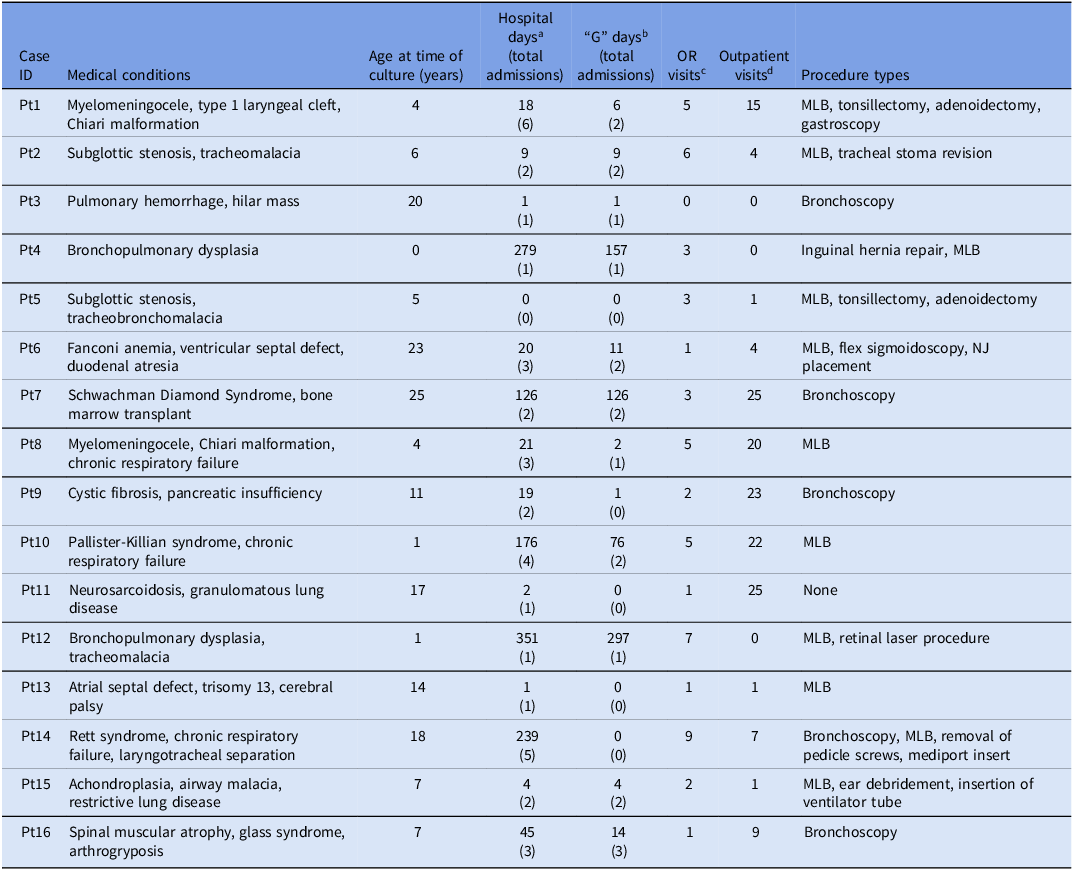
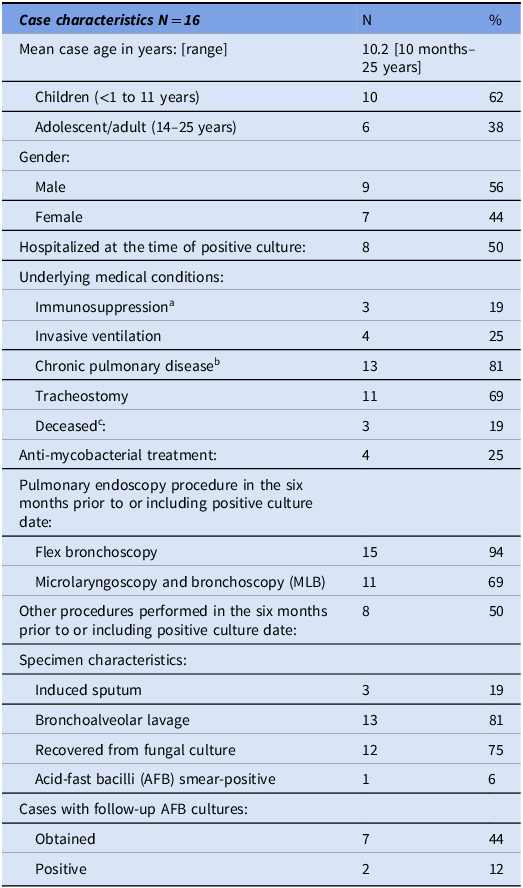
Cases included ten children and six adolescents/young adults, with a variety of complex chronic conditions (Table 1). Most cases were asymptomatic with respiratory cultures collected only for routine clinical surveillance, however four cases were treated with NTM-directed therapy, although it is unclear if M. chelonae was the primary source of pulmonary disease exacerbation (Table 2).
Case characteristics including underlying medical conditions, age at time of culture and counts of facility visits and types of procedures in the 18 months prior to positive M. chelonae culture.

Note. OR, operating room, MLB, microlaryngeal bronchoscopy.
a Total number of hospital days 18 months prior to positive M. chelonae culture including the culture collection date if applicable. The total may represent multiple admissions.
b Number of hospital days in the “G” building 18 months prior to positive M. chelonae culture including the culture collection date if applicable.
c Number of OR visits 18 months prior to positive culture. Includes the day of culture collection if applicable.
d Total number of encounters 18 months prior to positive M. chelonae culture. Includes emergency department and clinic visits.
Case and specimen characteristics.
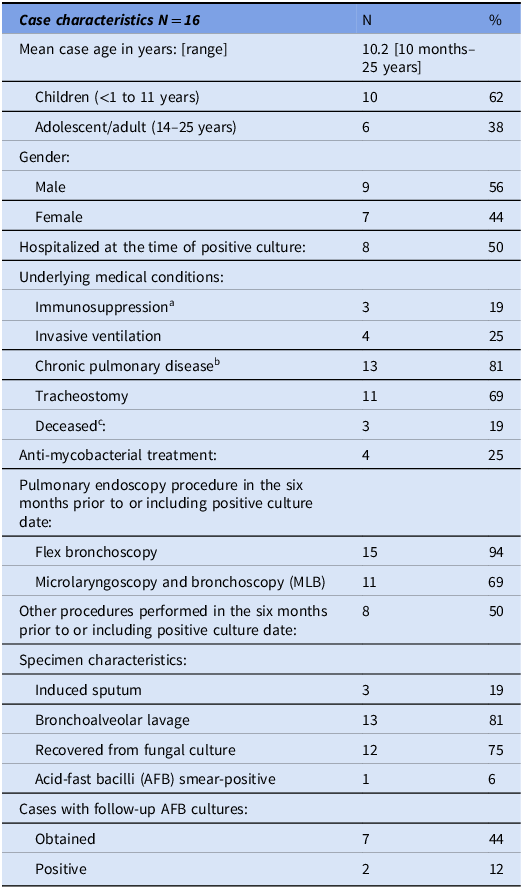
a Defined as having a medical condition or treatment which suppresses normal immune system function such as cancer or a hematological disease.
b Defined as a history of disease which affects the pulmonary system and requires ongoing management.
c Determined by clinical team to be related to underlying medical condition and not M. chelonae positivity.
Epidemiological investigation
The investigation revealed minimal temporal and spatial overlap between cases in inpatient units, outpatient clinics and ORs. Two cases had prolonged hospitalizations (>200 days) prior to positive M. chelonae culture (Pt4, Pt12). Another case (Pt3) was intubated prior to transfer from an area hospital and tested M. chelonae positive on the day of admission. Among the common procedures performed, 15 cases received at least one bronchoscopy, with a concurrent microlaryngoscopy in 10 cases. No common bronchoscope was used across all cases. Rigid scopes were not internally tracked; however, since the cases varied in age, we assumed that the same scope was not shared between all cases. Additionally, there was no significant overlap in surgical providers or procedure locations.
Clinical investigation
Review of the clinical microbiology laboratory revealed no new practices or products during the investigation period. There was no significant difference in the number of fungal BAL cultures performed in 2021 vs. 2022 (p = 0.15). When comparing all NTM positive AFB BAL cultures between 2021 and 2022, there was a fourfold increase in unique M. chelonae positive cultures with no relative increase in all other NTMs, including species known to grow on fungal media (M. abscessus, M. fortuitum). Tap water was not used during routine clinical care (eg, RT) nor during surgical procedures, however for intubated patients with dry mouths, staff could provide ice chips or swabs moistened with tap water. In 2019, a bedside reprocessing procedure of Bivona™ tracheostomy tubes was implemented which included an initial rinse in tap water to remove secretions with the remaining steps using sterile water. Eleven of the 16 cases (68.7%) had a tracheostomy, with 10 of those cases having at least one hospitalization prior to their first positive culture where the tracheostomy tube may have been reprocessed. There were no sinks or other access to tap water inside the bronchoscopy rooms or ORs. Inpatient rooms contained hand hygiene and bathroom sinks and showers. Clinical supplies are not permitted within three feet of inpatient room sinks but in some patient rooms (“A”), the nursing supply cart is adjacent to the hand hygiene sink due to space constraints. In “G”, patient supplies are kept in a wall cabinet; however, staff may place patient care items in or around the sink basin. Ice/water dispensers for patients are located in inpatient nutrition rooms and family lounges.
Environmental investigation and mitigation
Due to the association of cases with respiratory endoscopy procedures, scope reprocessing was reviewed including manual decontamination, automated high-level disinfection (hydrogen peroxide, peracetic acid, trisodium phosphate) and the drying process. Quality control documentation was found to be appropriate, and SPD staff could verbalize and demonstrate the processes for decontamination. No water shutdowns or plumbing issues occurred during the investigation period. Rarely, post-reprocessing, water would be found in a bronchoscope at the point of use. In January 2024, SPD implemented a secondary drying step involving forced air and visual inspection. In May 2025, new scope storage cabinets were installed with a constant air feature providing a continuous drying environment. These interventions have markedly reduced the incidence of wet scopes.
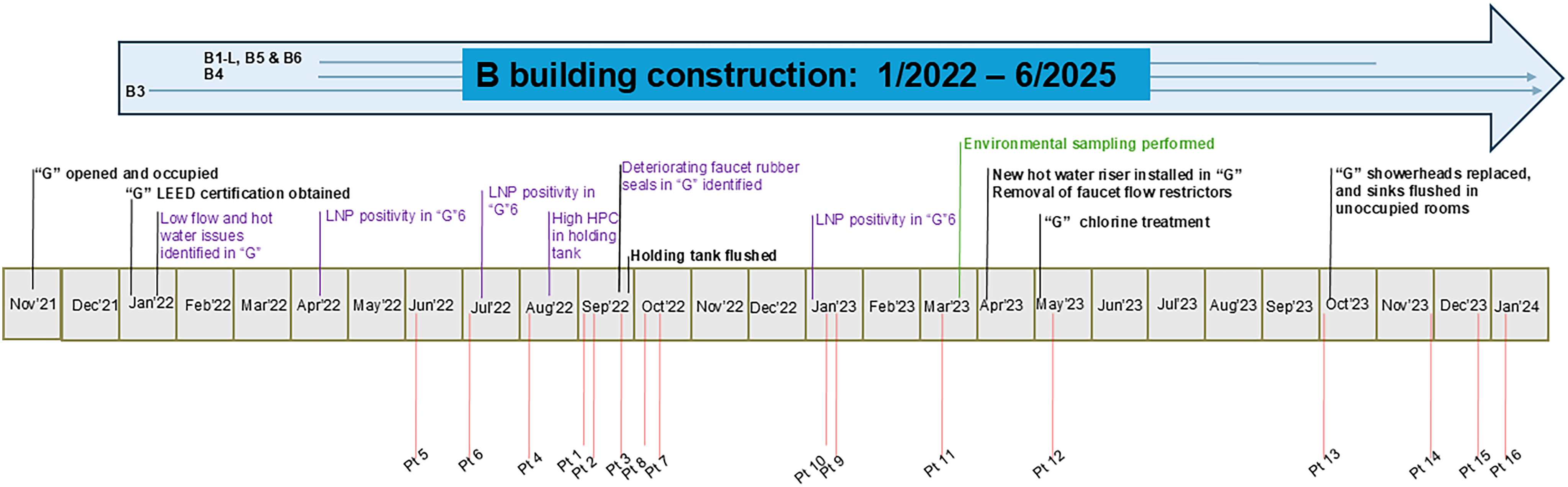
All construction projects requiring a water infection control risk assessment were reviewed along with data from IPC’s construction monitoring program (physical surveillance, Legionella spp. sampling and record-keeping audits). During the investigation period, no water outages or plumbing issues were reported in buildings undergoing renovation. However, the entire perioperative suite (“B3”) began extensive renovations in 2022 while continuing to occupy the same space (Figure 2).
Timeline of outbreak investigation period (November 2021–January 2024). Building B construction is represented by the large blue arrow with the smaller arrows representing start and completion dates of projects on individual floors. Identified problems are purple. Environmental sampling is green. Respiratory M. chelonae cases are red lines with associated case numbers. LNP is Legionella non-pneumophila spp. “G6” is the sixth floor of the “G” building.
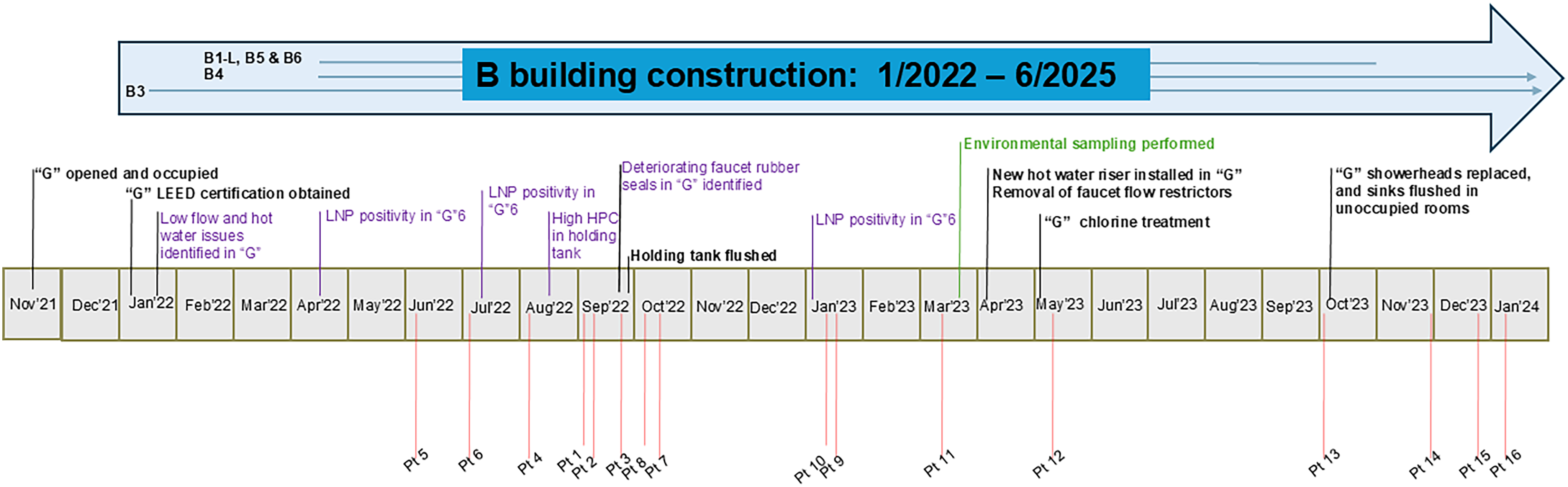
Upon occupancy of “G”, low water pressures from inpatient unit sinks and patient showers were noted by staff and families. Bathroom showerheads allowed shower faucets to remain open, creating opportunities for stagnant water backflow. Hot water temperatures in several patient care areas did not meet the recommended target range (105°–120° F). Reference Sehulster, Chinn and Arduino21,22 In April 2023, an additional hot water return riser in “G” was installed and flow restrictors on faucets in medication rooms were removed. All showerheads and hoses were replaced and weekly five-minute hot water flushes for sinks in unoccupied rooms implemented in October 2023 to prevent water stagnation and improve water flow in pipes.
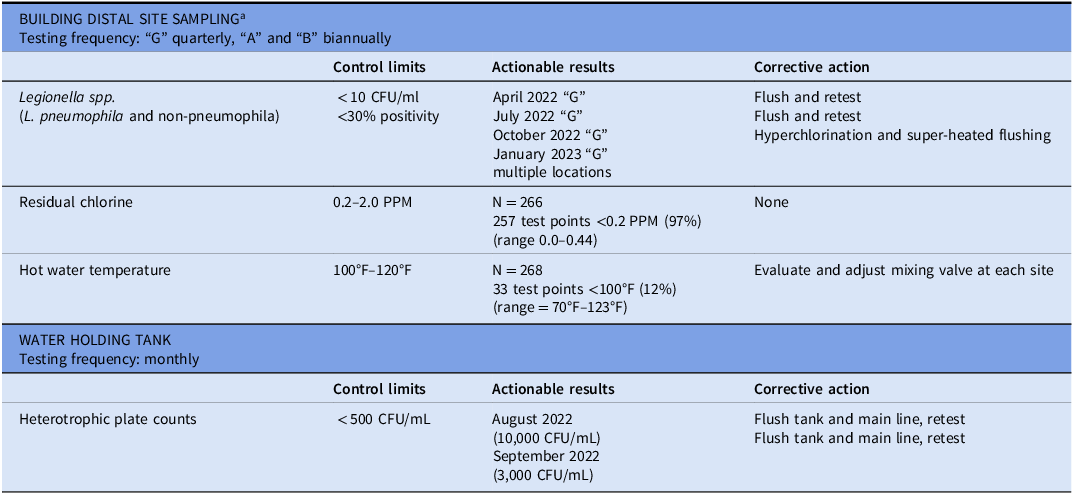
In examining the potable water system, “A” and “B” locations were supplied with city water via a shared line while “G” had a separate water line, with both lines connecting to the same city main line. The hospital hot water system was treated with copper/silver ionization as part of the water management plan. Routine testing included Legionella pneumophila, Legionella non-pneumophila (LNP), heterotrophic plate counts (HPC), chlorine levels and hot water temperatures (Table 3). In early 2023, LNP positivity was elevated in “G” and warranted a remediation of 12.5% chlorine disinfection of the potable water system. 23 In August and September 2022, high HPC counts were detected in a water holding tank that supplied “A” and “B” locations. The city main line and the holding tank were flushed twice before HPCs were reduced back to acceptable levels. Water system issues and interventions are summarized in Figure 2.
Routine water system testing control limits and corrective actions per the water management plan along with actionable results during the outbreak investigation period.
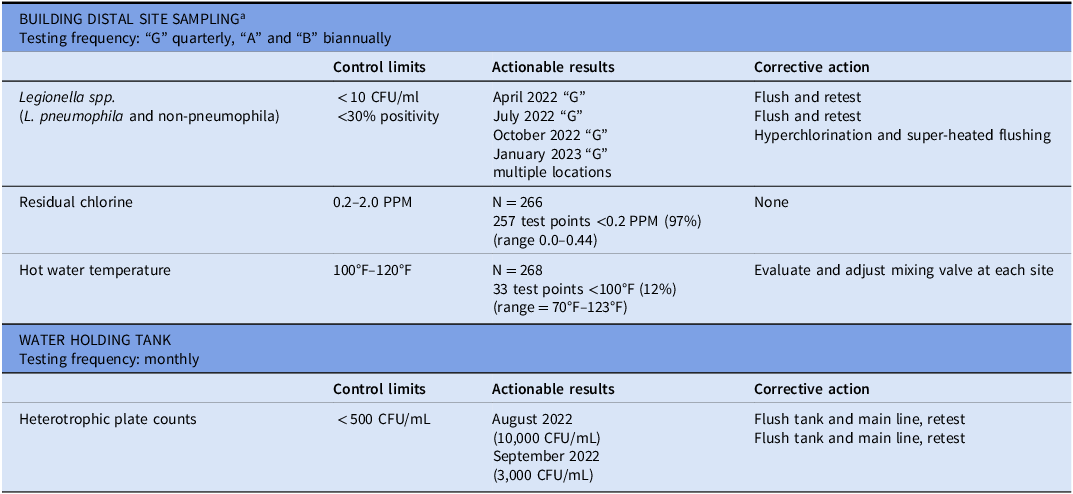
Note. CFU/mL, colony forming units/milliliter. PPM, parts per million.
a Testing occurs on each floor at distal points of use locations such as unit sink faucets.
Environmental Microbiological investigation
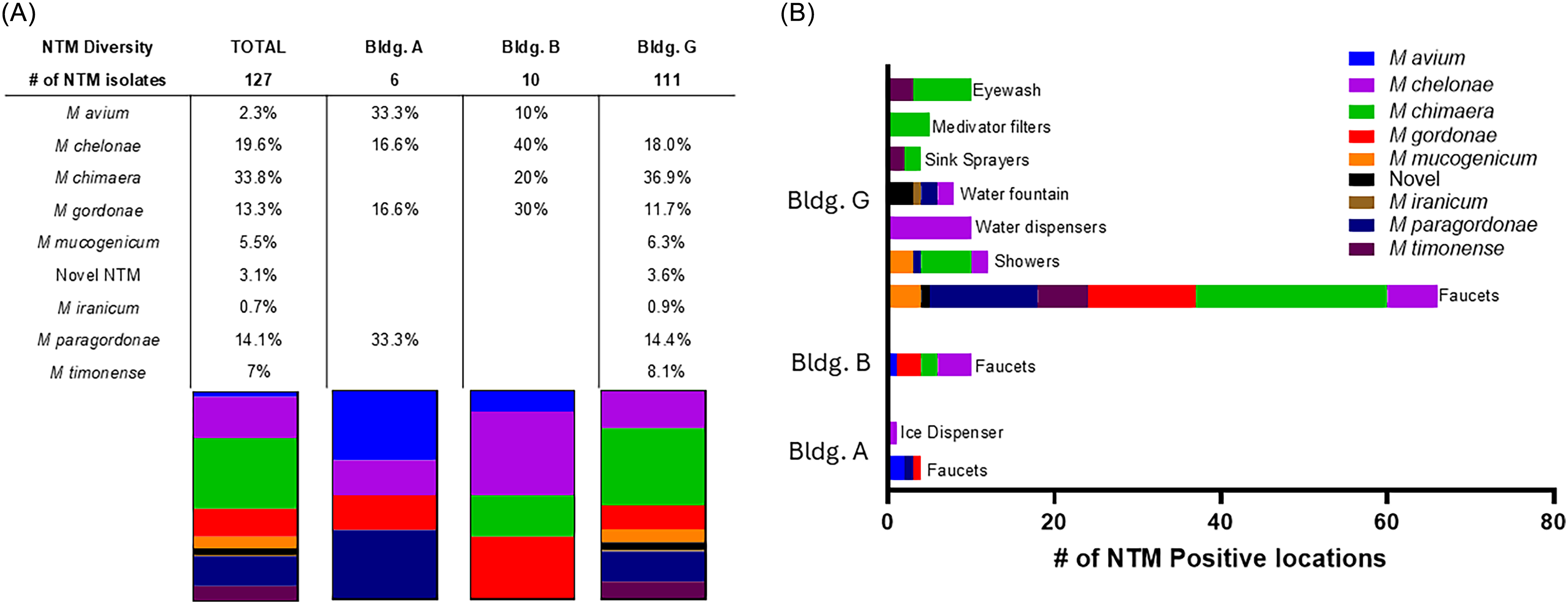
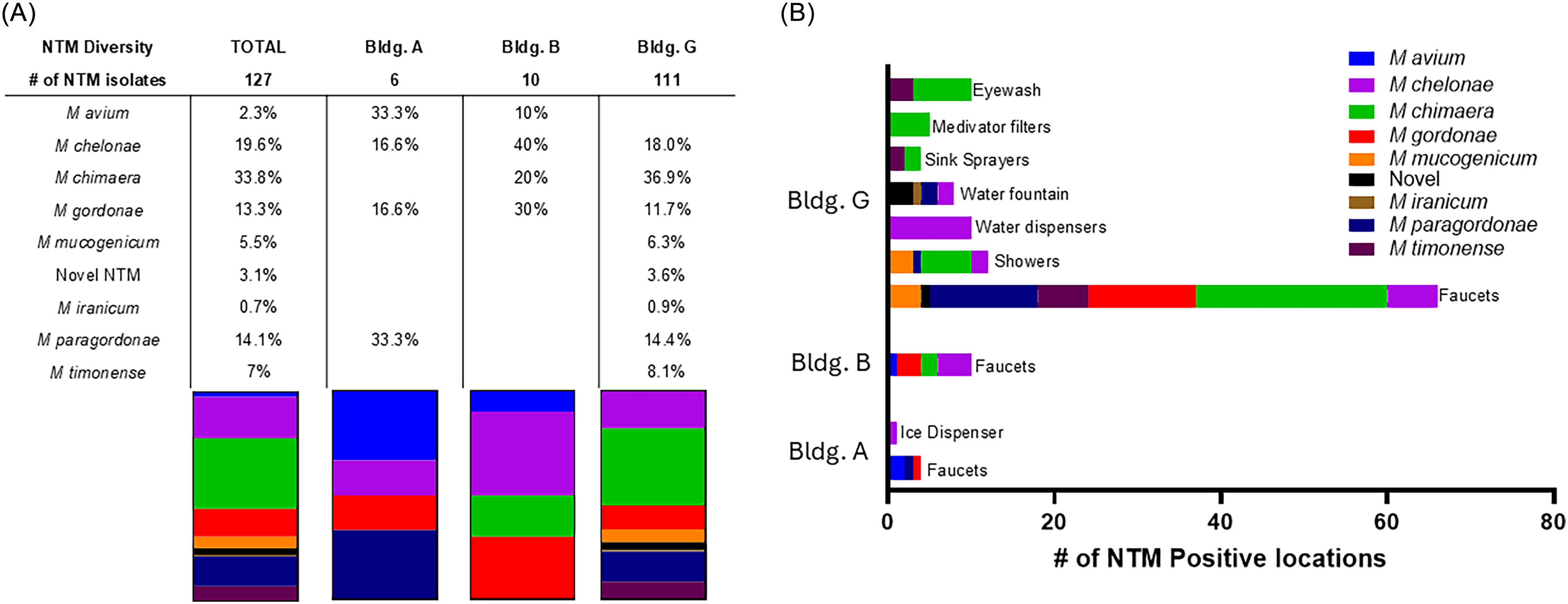
A total of 380 healthcare environmental samples were collected. Of these, 21.6% (82/380) of samples from 17 source types were NTM culture positive (Figure 3). Eight different NTM species, as well as putative novel NTM, were isolated, of which M. chimaera (43/380 samples, 11.3%) and M. chelonae (25/380 samples, 6.5%) were the most frequently isolated. The 25 M. chelonae positive samples spanned 10 source types, most commonly in ice/water dispensers (10/25, 40%), unit entry sinks (3/25, 12%), and room sinks (3/25, 12%).
Environmental non-tuberculous mycobacteria (NTM) diversity. A. NTM diversity for each building. B. NTM environmental isolates by specific location. Certain locations may have recovered multiple NTM species.
Cluster identification
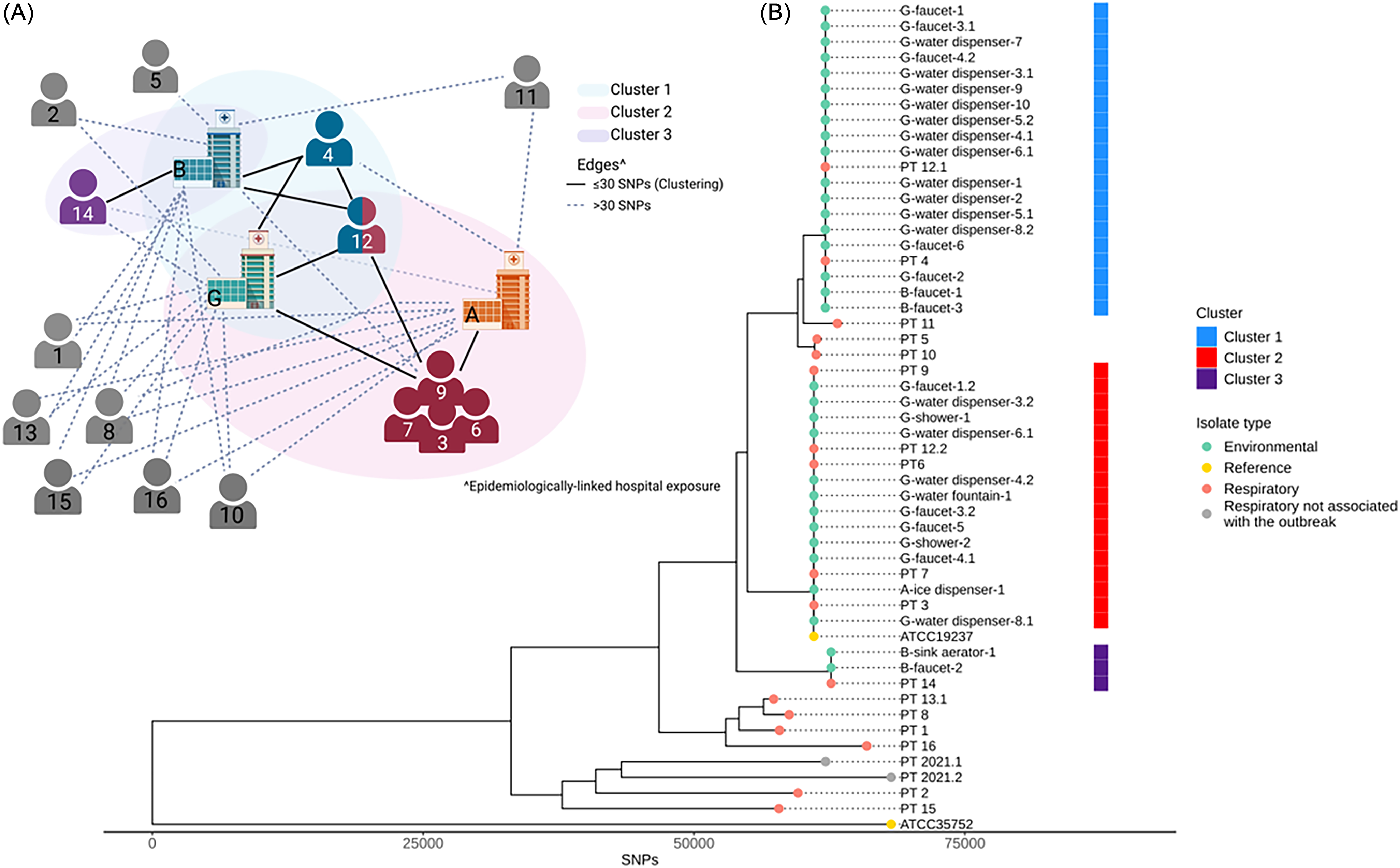
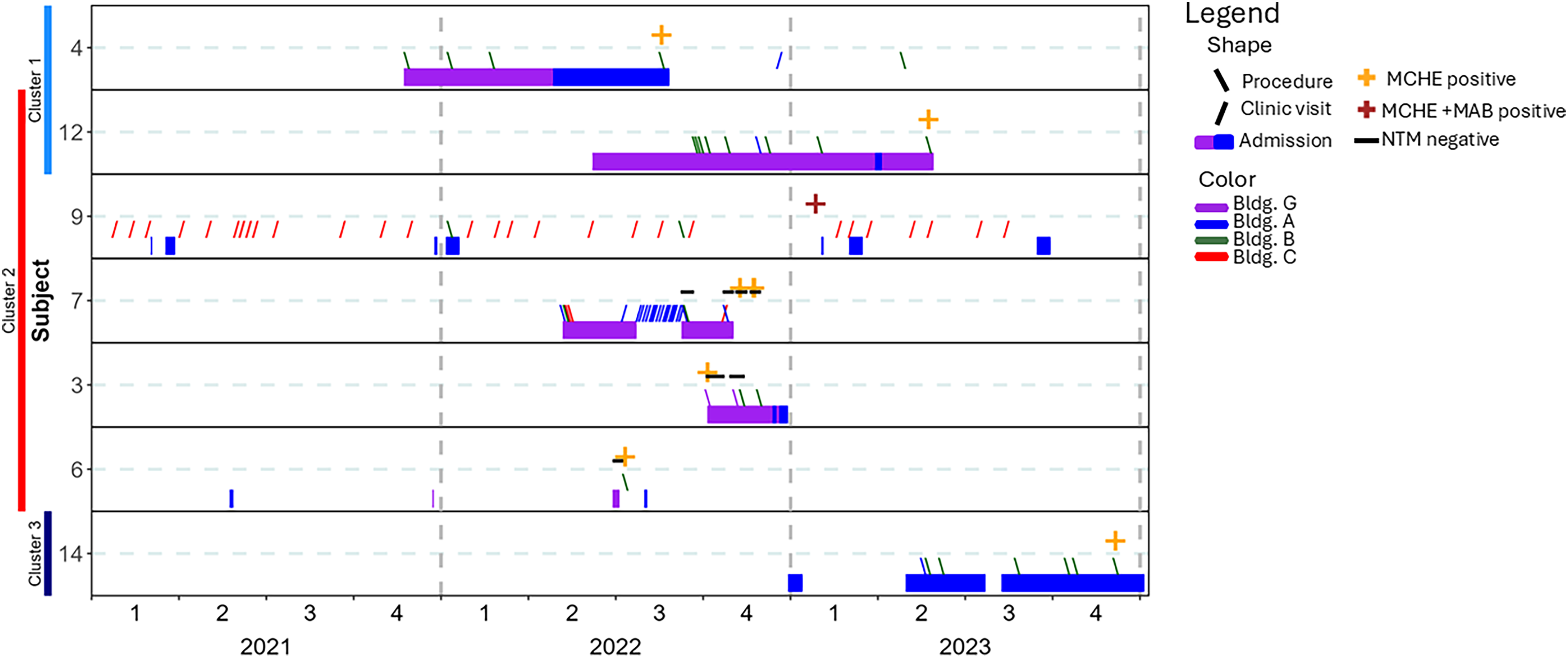
Genomic analysis of clinical and environmental samples revealed three M. chelonae clusters with 22 of 25 environmental isolates matching patients at the ≤30 SNP threshold (Figure 4). Cluster 1 contained isolates from two cases and 18 environmental locations, Cluster 2 contained isolates from five cases and 12 environmental locations and Cluster 3 contained isolates from one case and two environmental locations. One case (Pt12) had two strains of M. chelonae with one in Cluster 1 and the other in Cluster 2. Nine cases were not clustered with other cases or environmental samples. Of the isolates from 2021, one initially identified as M. chelonae was confirmed to be M. franklinii while the other two isolates were included in the analysis as references. Timeline overlap analyses for clustered cases (Figure 5) and unclustered cases (Supplemental Figure 1) highlight the common exposures to “G” and/or a procedure in “B”.
A. Epidemiologic cluster network analysis. Patients with clustered M. chelonae isolates are grouped by color (Cluster 1 is blue, Cluster 2 is red, Cluster 3 is purple, and patients with distinct unrelated infections are gray) and represented as a human torso. Patients with infections that had epidemiologic exposure to buildings are shown with a line connecting the patients and building [solid line represents matching patient-environment infections (≤30 SNP differences), dashed line represents unrelated patient-environment isolates (>30 SNP differences)]. Created in BioRender. Caceres, S. (2025) https://BioRender.com/ahiincb. B. Phylogenetic analysis of M. chelonae isolates. Environmental isolates are represented in green circles (labeled by building and specific location). Reference isolates, including type strains and previously published isolate genomes, are shown in yellow. Isolates from cases, not identified in a cluster or “unclustered,” are represented in gray circles (labeled by patient number). Clustered respiratory isolates are represented by salmon circles. Clustered patient and environmental isolates are color coded by thick bars to the right of the phylogenetic tree (Cluster 1 is blue, Cluster 2 is red, and Cluster 3 is purple). SNP: single nucleotide polymorphism.

Timeline and location overlap analysis of cases with M. chelonae clustered isolates. Subject location is presented by building (G is purple, A is blue, B is green, and C is red) and location type within a building (clinic visits with forward slash, procedures with back slash, and hospitalization days with closed rectangles). Subject culture status is represented as M. chelonae culture positive (orange +), M. chelonae and M. abscessus culture positive (brown +), and NTM culture negative (negative dash). The clustered M. chelonae isolates are demonstrated by colored bars to the left of the timeline overlap graphic (Cluster 1 is blue, Cluster 2 is red, and Cluster 3 is purple). The number on the y-axis identifies the subject. The numbers on the x-axis represents time based on the year and quarter from 2021 through 2023. NTM = non-tuberculous mycobacteria; MCHE = Mycobacterium chelonae; MAB = Mycobacterium abscessus.

Discussion
We describe the investigation into an increased incidence of respiratory M. chelonae cultures among pediatric and adult patients at a large quaternary-care hospital in the context of recent and ongoing construction and renovation. After an extensive epidemiological and environmental investigation utilizing HALT NTM methods, we hypothesized that construction of a LEED-certified critical care tower (“G”) along with renovations of an adjacent building (“B”), led to disruption of endemic water biofilms. Reference Prabaker, Muthiah and Hayden24 Dispersion of these biofilms and the installation of a low flow water system may have facilitated M. chelonae colonization in the most distal, low flow, point of use locations such as ice/water dispensers, sink faucets and drinking fountains. Reference Kessler, Osman, Marx, Pop-Vicas and Safdar25 Patient acquisition could have occurred through several routes including drinking water/ice, showering/bathing, tracheostomy tube reprocessing, contamination of patient care supplies around sinks and/or incompletely dried bronchoscopes.
Our experience demonstrates the complex and poorly defined relationship between maintaining a safe water supply for high-risk populations and environmental sustainability in healthcare settings. While the 2022 WHO Guidance for Climate-Resilient and Environmentally Sustainable Health Care Facilities calls for a less energy-intensive, waste-producing approach to healthcare, such as those promoted by LEED, there is limited guidance for IPC programs on how to manage the environmental infection risks these practices may introduce to vulnerable hospitalized patients. 26 In our case, within three years of opening our critical care tower (“G”), four plumbing system remediations related to our water conservation efforts were required to improve water flow. Additionally, LEED-promoted low flow systems are known to reduce water use which indirectly increases water retention time allowing for chlorine dissipation and sediment buildup which can promote microbial growth, particularly NTM. Reference Dowdell, Potgieter and Olsen27–30 After instillation of a LEED-promoted low flow system in our institution, the resulting low chorine levels along with our substandard hot water temperatures may have permitted growth of LNP. Detection of LNP ultimately led to mitigation via hyperchlorination of the “G” building after patient occupancy in addition to two treatments performed during construction. A similar scenario was reported by a hospital in Italy which hypothesized an increase in respiratory cultures with NTM was due to water supply colonization facilitated by previous hyperchlorination treatments. Reference D’Antonio, Rogliani and Paone31 Since NTM have demonstrated resistance to chlorine disinfection, treating our water system potentially enhanced NTM growth at fluid-surface interfaces by eliminating competing chlorine-susceptible organisms. Reference Donohue, Vesper, Mistry and Donohue32–Reference Falkinham, Norton and LeChevallier34
While NTM in potable water may not pose a serious infectious risk to healthy individuals, exposure of critically and chronically ill individuals to NTM increases the risk for acquisition and disease. Reference Guspiel, Menk and Streifel35–Reference Baker, Stout and Anderson37 Similar to our findings of genomically matched NTM isolates from cases and environmental water biofilms from ice/water dispensers, there are previously described NTM outbreak reports linking human NTM infections to environmental NTM from ice and drinking water. Reference Engers, Swarup and Morrin38–Reference Millar and Moore40 Prior studies have demonstrated that elimination of tap water, including ice and water from dispensers, for high-risk inpatients resulted in healthcare-associated NTM infection reduction. Reference Guspiel, Menk and Streifel35,Reference Baker, Stout and Anderson37 Compilation of outbreak findings into robust standardized studies such as HALT NTM may provide healthcare facilities with more uniform, consistent approaches to investigating, mitigating, and preventing healthcare-associated NTM outbreaks in high-risk populations. We are actively working on mitigation of our ice/water dispensers but have not yet identified the optimal remediation solution beyond discontinuing their use in our high-risk areas and susceptible populations.
Our outbreak investigation had several limitations. Negative test results are not indicative of the absence of NTM from environmental sources. Additionally, environmental sampling did not occur until 10 months after the first case of the outbreak limiting timely identification of potential healthcare sources for acquisition. However, there is strong evidence that NTM clones are stable in water biofilms for extended periods of time with a previous study demonstrating repeated recovery of NTM over a 41-month period from a hospital recirculating hot water system. Reference Von Reyn, Maslow, Barber, Falkinham and Arbeit41 Not all products or devices could be tracked at the patient-level, limiting our ability to further investigate the role of rigid scopes. Conducting a colonization point-prevalence survey of our entire patient population was not done due to feasibility and identifying additional cases would likely not have further aided our investigation as the data collected provided sufficient information to identify environmental sources.
In summary, national guidance on NTM environmental screening and water management in healthcare settings for human disease-causing NTM pathogens is urgently needed. Environmental NTM infection screening and mitigation guidelines should be developed in synchrony with current mandates for environmental screening and water management of Legionella infections as some Legionella mitigation strategies are known to be NTM enhancing. Reference Dowdell, Haig, Caverly, Shen, LiPuma and Raskin33 Additionally, environmentally sustainable programs to promote water reduction are essential to long-term water use plans but effects on growth of opportunistic pathogens, including NTM, should be studied before implementation in healthcare facilities. Understanding downstream consequences of LEED strategies will ensure healthcare centers are prepared to identify and mitigate potential infection risks among vulnerable populations. Environmental sustainability is a critically important goal in healthcare and IPC programs need to be prepared with knowledge of best practices when confronted with conservation efforts.
Supplementary material
The supplementary material for this article can be found at https://doi.org/10.1017/ice.2025.10344
Acknowledgments
We would like to thank all CCHMC staff who helped with environmental sampling (IPC, Facilities, SPD). We thank the staff of the Department of Infectious Diseases Testing Laboratory for their collaboration.
Financial support
Dr. Gross receives salary support from the Cystic Fibrosis Foundation GROSS22Y50. The project was financially supported by Cincinnati Children’s infection prevention and control department along with the Department of Medicine and Pediatrics at National Jewish Health.
Competing interests
All authors report no conflicts of interest relevant to this article.
Ethical statement
This work was performed as part of a public health outbreak investigation and was not subject to institutional review board (IRB) approval. NHJ IRB determined TrANsMit (NCT06155747) research exempt. All principles of the Belmont Report and NJH policies on the protection of patient(s) privacy and confidentiality applied.


 Open access

