

INTRODUCTION
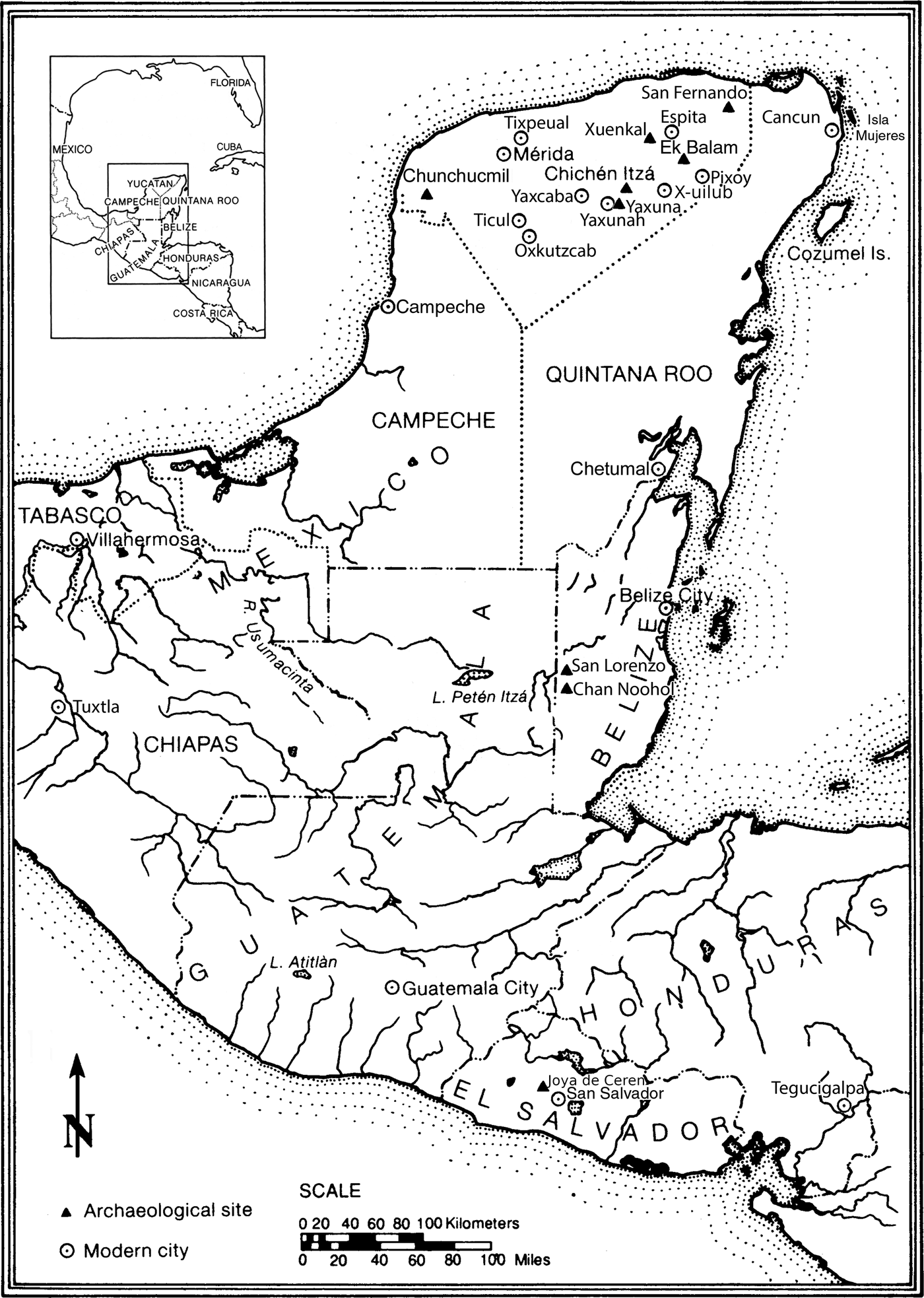
Responses to food scarcity often change over time (Dirks Reference Dirks1980; Morell-Hart Reference Morell-Hart2012). This is true both of acute famine episodes that incite panic, and of long-term diet strain that necessitates innovation (Halstead Reference Halstead, Metheny and Beaudry2015). Because famine first affects the “economically marginal” (Dirks Reference Dirks1980:25; see also Morell-Hart Reference Morell-Hart2012:163), however, it follows that there will be differential status-based reactions to scarcity, which have the potential to create a stigmatization complex around certain foods. The nexus of practical, ecological, and cultural considerations surrounding crop rankings leads to the concept of the famine food, which we aim to illuminate in Maya history through surveys of two agricultural features that have a demonstrated record of enhancing food security in the northern Maya lowlands: rejolladas, or shallow sinkholes, in Xuenkal and solares, or house gardens, in modern Yaxunah (Figure 1). We also review the archaeological literature on Maya agriculture in times of hardship and make suggestions of which species may have fit the definition of a famine food. By examining historical data and incorporating relevant modern evidence, we are able to focus on the ingenuity of ancient Maya farmers and modern Yucatec Mayan-speaking people when responding to hardship, and we argue for Maya cultural plasticity surrounding diet. We also highlight consistent themes in Maya history such as diet inequality and political control of access to food resources, and begin to understand practical, cultural, and historical reasons surrounding food avoidance or stigma.
Map of the Yucatán Peninsula, showing cities and archaeological sites mentioned in the text. Map by Michael C. Owens.
FAMINE FOODS
Famine is at once a biological and social phenomenon. Its causes are rooted as deeply in the sociopolitical environment as in the physical. Its consequences are simultaneously physiological and interpersonal, and its frequency alone suggests significant impact on physical and cultural evolution (Dirks Reference Dirks1980:22).
There is something of a paradox surrounding the definition of famine foods. Muller and Almedom (Reference Muller and Almedom2008:599) note that defining famine foods in terms of costs and benefits promotes their potentially misleading conceptualization as “lower quality foods or foods that require more energy to harvest or prepare [and are turned to] when other options are exhausted.” These foods have been also defined as those foods that are “available even when more frequently consumed rations cannot be acquired” (Minnis Reference Minnis1991:232). Are they low-nutrition foods that require intense work to access, only sought out of necessity, or are they abundant, nutritious options, resistant to common causes of food shortage, but scorned for cultural reasons? Given the labor intensity involved in growing corn and other subsistence starches not considered “famine foods,” it appears that the second definition would be more applicable here, especially considering the strong religious nature of maize in the Maya area. The answer to these contradictory definitions, however, could also lie in the length of the famine period and other factors (Dirks Reference Dirks1980). Modern Yucatec Mayan speakers often use the term “famine food” to refer to those substances probably branded as “indigenous” or “Indian” foods during the historic-period social transformations on the peninsula. These unfortunate but lasting stigmatizations have led to a loss of cultural knowledge about their usage. Thus, we argue the best definition of a famine food should incorporate both practical and cultural aspects (Minnis Reference Minnis1991; Morell-Hart Reference Morell-Hart2012). Our working definition of “famine foods” for the ancient Maya northern lowlands centers on ease of growing or tendency to volunteer (hardiness), nutritional value, productivity, ease of preparation, and cultural factors such as possible stigmatization.
The importance of focusing on famine foods results from the meaningful contrast between disallowance of the consumption of a certain revered material and the relegation to consumption of a culturally stigmatized material; the implications are very different. Food cannot be viewed as simply a biological necessity when it is both a subject of and medium for ritual (Mintz and Du Bois Reference Mintz and Du Bois2002:107–109), and when “flavors and aromas…are…considered as an indicator of social identity and as vehicles of memory” (Moore Reference Moore and Albala2013:78). The symbolic nature of consumption is identity-forming and necessarily tied to cultural ideas of “good” and “bad” foods, health, and the body. Additionally, famine foods tell us more about the ingenuity and innovation of people in the past and present than do prestige foods, as by definition they are consumed in times of social stress or by those for whom scarcity is an ever-present reality.
The World Food Summit in 1996 established that “food security exists when all people, at all times have physical and economic access to sufficient safe and nutritious food to meet their dietary needs and food preferences for an active and healthy life” (FAO 1996; Pinstrup-Andersen Reference Pinstrup-Andersen2009:5). Food security can be defined simply as access to enough food; problems arise when determining whether one defines such access through demand, caloric intake, or micronutrient intake (Pinstrup-Andersen Reference Pinstrup-Andersen2009:5). There are various layers of complications stemming from the difference between availability and real access, as well as between caloric intake and nutritional health, and it is difficult to tell which (if any) of these options has truly been achieved (Pinstrup-Andersen Reference Pinstrup-Andersen2009). Food sovereignty, in contrast, is a concept developed by La Via Campesina to address more systemic questions of not only whether or not food is available or accessible, but rather who produces it (Patel Reference Patel2009). Thus food security, unlike food sovereignty, does not address where the food comes from, or the “social control of the food system” (Patel Reference Patel2009:665; see also Edelmen et al. Reference Edelmen, Weis, Baviskar, Borras, Holt-Giménez, Kandiyoti and Wolford2014:914). From an archaeological perspective, a definition of food sovereignty could be limited to a discussion of where foods were grown or produced, thus taking into account whether people would have had to be dependent on a market to acquire the resources they needed. While food security and food sovereignty are different concepts, the latter more politically charged than the former, they are inherently related in that without food sovereignty, maintenance of food security is out of one's own hands (Patel Reference Patel2009:669).
For the ancient Maya, staples included maize, beans, and squash (Lentz Reference Lentz and White1999:4), with complex patterns of water availability, soil usage (Fedick Reference Fedick2014), and climate changes (Hodell et al. Reference Hodell, Brenner and Curtis2007; Hoggarth et al. Reference Hoggarth, Restall, Wood and Kennett2017; Medina-Elizalde et al. Reference Medina-Elizalde, Burns, Lea, Asmerom, von Gunten, Polyak, Vuille and Karmalker2010; Pohl et al. Reference Pohl, Pope, Jones, Jacob, Piperno, deFrance, Lentz, Gifford, Danforth and Kathryn Josserand1996) that contributed to a variation of subsistence practices across space and time (Barrera-Bassols and Toledo Reference Barrera-Bassols and Toledo2005:10). Iannone (Reference Iannone2002:76) uses an “Annales history” approach to critique the “dynamic model” of ancient Maya sociopolitical organization, emphasizing “that cycles of decentralization and centralization are promoted by ever-present tensions between long-term and medium-term organizational structures,” in this case kinship and kingship, respectively. Furthermore, even within the institution of kingship, there were rivalries and splits (Houston and Inomata Reference Houston and Inomata2009:110). These shifting forces utilized food and cuisine as media for the expression of ideology and relations of power.
For modern Yucatec Mayan speakers, lingering reverberations of colonialism and current effects of globalization and neocolonialism can lead to a dependence on packaged food, which is heavily processed and often nutritionally inadequate (Egeland and Harrison Reference Egeland, Harrison, Kuhnlein, Erasmus, Spigelski and Burlingame2013:18; Leatherman and Goodman Reference Leatherman and Goodman2005). As will be discussed in the section Modern Attitudes, Local Efforts to Integrate New Foods, and Diet Change, food-related inequalities are exacerbated by tourism (Juárez Reference Juárez2002), wage labor (Gaskins Reference Gaskins2003), and the agendas of multi-national corporations (Leatherman and Goodman Reference Leatherman and Goodman2005); however, modern responses to changing diet strains involve just as much agency and innovation as those in the past and show continuity in cultural values in the face of change (Gaskins Reference Gaskins2003).
MANIPULATION OF FOOD ACCESS IN ANCIENT MAYA SOCIETY
There is an abundance of existing literature surrounding prestige foodstuffs, differential access to resources, and the active manipulation of resource circulation in Classic Maya society, across various regions (Emery Reference Emery2003; Hageman and Goldstein Reference Hageman and Goldstein2009; Hall et al. Reference Hall, Tarka, Hurst, Stuart and Adams1990; LeCount Reference LeCount2001; Lentz Reference Lentz1991; Lentz et al. Reference Lentz, Yaeger, Robin and Ashmore2005; Morehart and Butler Reference Morehart and Butler2010:601; Somerville et al Reference Somerville, Fauvelle and Froehle2013). Typical ways to look for manifestations of such resource manipulation in the archaeological record include examining “regularity and homogeneity” based on necessity rather than social status in household access to resources (Alonso Olvera Reference Alonso Olvera2013:46; Hirth Reference Hirth1998). Need-based distribution indicates a resource flow that responds effectively to the requirements of food security, whereas status-based distribution signals manipulation of resource access and, thus, inequality (see also Hirth Reference Hirth1998, for a discussion of markets). For example, in some contexts, botanical resources were not only subject to “simple economics,” but also to political control, as evidenced by uneven pine charcoal distribution between two groups of equal socioeconomic status at the Late Classic sites of Chan Nòohol and San Lorenzo in Belize (Lentz et al. Reference Lentz, Yaeger, Robin and Ashmore2005:581). The differences in the diet of simple household group members at the northern cities of Chunchucmil and Yaxunah, as revealed by isotopic analysis, were due to differences in resource availability (Mansell et al. Reference Mansell, Mansell, Freidel, Dahlin, Ardren, Staller, Tykot and Benz2006). Though this was mainly due to location and environment rather than manipulation, one can imagine that elites would have had access to goods coming from farther away. Furthermore, the inability to trade for goods one may need reflects an absence of food sovereignty (Pinstrup-Andersen Reference Pinstrup-Andersen2009:5). In an isotopic analysis of individuals from the northern Peten in Mexico, lower-status groups and elite females had more dental caries, indicating that they subsisted more heavily on starchy, cariogenic foods rather than the proteinaceous foods available to others (Cucina and Tiesler Reference Cucina and Tiesler2003:5–6). White (Reference White2005:372) also found sex-based patterns at several sites in Belize. After examining stable isotope ratios of 178 individuals from various sites across the Maya area, Gerry (Reference Gerry1997) cautioned that diet inequality was not extremely clear—however, he notes that this does not negate the existence of “qualitative” (Gerry Reference Gerry1997:62) dietary differences between elites and commoners, citing food symbolism. All of these studies indicate that, in certain contexts, certain individuals did not have the same access to food resources as others around them, signaling an overall manipulation of access resulting in dietary inequality. Galtung (Reference Galtung1969:170) refers to violence without a specific actor as “structural.” He notes “[t]he violence is built into the structure and shows up as unequal power and consequently as unequl life chances,” specifically emphasizing that “the power to decide over the distribution of resources is unevenly distributed” (Galtung Reference Galtung1969:171).
In their chapter on how war affected food access and nutrition among Mississippian peoples during the 1300s, VanDerwarker and Wilson (Reference VanDerwarker, Wilson, VanDerwarker and Wilson2016) examine macrobotanical data through the lens of structural violence—a useful example of how this concept can be applied in archaeological contexts. Because Classic Maya resource manipulation was deliberately instigated and maintained through processes such as tribute in times of plenty and in times of stress (Dahlin Reference Dahlin2002; McAnany Reference McAnany2010:302; Thompson Reference Thompson1972:9), it may be argued that structural violence does not apply here—however, there were surely structural repercussions. People would have been faced everyday with intense inequalities that were maintained by, and thus fed back into, the rules and protocols that created them. Furthermore, conditions such as those faced in the Terminal Classic under the influence of Chichen Itza could have had some of the characteristics described for the Mississippian Central Illinois Valley, where people were forced to make those “indirect, structural changes in daily life that occur in the context of chronic violence” (VanDerwarker and Wilson Reference VanDerwarker, Wilson, VanDerwarker and Wilson2016:97).
Sometimes differential access is not directly visible through dietary proxies but shows up in other manners. At Xuenkal, there was a clear difference between structures in the core versus periphery of the site with respect to distribution of imported pottery identified through ceramic typology (Stockton Reference Stockton2013:310–316), which is “a good indicator of wealth due to the assumed increased desirability, higher cost of transport, and higher rates of breakage for imported vessels” (Stockton Reference Stockton2013:331). Certain of these imported ceramic wares had forms that were not part of the local repertoire and thus also had implications for an expanded (or restricted) dietary repertoire (Stockton Reference Stockton2013:59). This pattern could be an example of outside forces affecting, whether directly or indirectly, explicitly or implicitly, the foods that people were consuming, how they were prepared, and potentially even access to those alimentary resources.
Early in the history of agriculture in the Americas, economic equilibrium following climate-related food scarcity may have led to the “associat[ion of maize] with competition for land and use of food to manipulate social relations in the context of emerging social hierarchies” (Pohl et al. Reference Pohl, Pope, Jones, Jacob, Piperno, deFrance, Lentz, Gifford, Danforth and Kathryn Josserand1996:367), while historic evidence of Colonial period drought provides an analogy, with some limitations, about how drought at the end of the Classic period may have influenced food availability for the Maya (Hoggarth et al. Reference Hoggarth, Restall, Wood and Kennett2017:96–97). Thus, while the data are still emerging on this topic, climate-related social and dietary stress may have been a relatively constant part of ancient Maya history. Two major droughts are described in the sixteenth-century memoirs attributed to Bishop Diego de Landa (Tozzer Reference Tozzer1941:54), who describes Maya people as eating wild foods from the forest during these episodes of extreme social stress. Drought is also mentioned in the Dresden Codex, as read by Thompson (Reference Thompson1972:86–88; Houston et al. Reference Houston, Stuart and Taube2006:130). Detailed isotopic climate data from the northwest Yucatán Peninsula show that the Terminal Classic saw many short droughts rather than one long one—these data align with the fact that there was not one, quick “collapse” (Medina-Elizalde et al. Reference Medina-Elizalde, Burns, Lea, Asmerom, von Gunten, Polyak, Vuille and Karmalker2010). Hodell et al. (Reference Hodell, Brenner and Curtis2007) also note fluctuations in dryness during the Terminal Classic. Some historic-period droughts in the Yucatán Peninsula lasted as long as 10 years (Mendoza et al. Reference Mendoza, García-Acosta, Velasco, Jáuregui and Díaz-Sandoval2007:155, Table 1). Obviously, the Maya in the northern lowlands would have had to develop ways of dealing with such climate patterns (Dahlin Reference Dahlin2002), as they would have had extremely detrimental effects on agricultural subsistence (Florescano and Swan Reference Florescano and Swan1995).
Characteristics of famine foods.

Additionally, there are a variety of indicators involved in the potential identification of famine or dietary stress in the archaeological record, including the previously mentioned environmental indicators (e.g., lake cores), dietary analyses (e.g., zooarchaeology and paleoethnobotany), and osteological studies (e.g., stable isotope analysis and evaluations of metabolic disease) (Morgan Reference Morgan2013). Changes in funerary rites can also indicate famine (Morgan Reference Morgan2013:122). Archaeological features or large-scale construction projects relating to a famine episode as well as abandoned sites can provide information about such events in the past (Dahlin Reference Dahlin2002; Fewer Reference Fewer2012:8–10). Morell-Hart (Reference Morell-Hart2012:167) notes that a shift toward more non-cultivated (versus cultivated) plant remains in paleoethnobotanical samples may be evidence of strategizing in the face of famine. Various studies have examined the question of resource stress during the Terminal Classic period (Emery Reference Emery2008; Wright Reference Wright1997; Wright and White Reference Wright and White1996). While these studies have had mixed results, some potential indicators of famine or resource stress have been defined, if not encountered or identified, in the Maya area. An increase in the diversity of prey animals as people are forced to hunt smaller game can be an indicator of “resource depression” (Emery Reference Emery2008:620; see also Broughton and Grayson Reference Broughton and Grayson1993:334). This same concept could potentially be applied to plants, where an analysis of caloric density would be substituted for prey size. Dental caries can be potential indicators of a diet low in protein and thus depressed health (Cucina and Teisler Reference Cucina and Tiesler2003), whereas certain patterns of osteological tuberculosis patterns are indicators of protein, iron, and parasite interaction (Wilbur et al. Reference Wilbur, Farnbach, Knudson and Buikstra2008). Finally, a “broad reliance on a variety of species could be interpreted as a response to uncertainty” (Hodgetts Reference Hodgetts2006:134; see also Emery Reference Emery2008:620). Problems arise, however, because, while all of these indicators could be evidence of an event that would have caused or been caused by famine, none of them can confirm it (Morgan Reference Morgan2013). After a summary and analysis of the indicators described above, Morgan (Reference Morgan2013:125) concludes that “[f]amine, chronic or acute, is not currently identifiable solely from the archaeological record: only where historical sources clearly identify widespread emaciation is such an assertion possible” (see also Morell-Hart Reference Morell-Hart2012:164). Independently identifiable food changes accompanying any of these indicators, however, especially in situations of inequality, could point toward reliance on famine foods. For example, during the Terminal Classic, overall diets at Yaxunah became more diversified, perhaps “due to people resorting to other food resources in times of contingency and food crises” (Tiesler et al. Reference Tiesler, Cucina, Stanton and Freidel2017:99), though Tiesler and colleagues note that this could also be due to status differences between the groups of people representing the time periods. Such diversification, however, could reflect the expansion of diets to include what were previously considered “famine foods.”
In addition to climate stress, relations of power also were changing almost constantly throughout Maya history and had direct ramifications on dietary patterns. Cacao is a particular subject of interest in the literature, thought to have been associated with social or political gatherings (LeCount Reference LeCount2001:943) and shown to have been present in high-status grave good vessels with “foods and beverages intended to sustain the deceased in the afterworld” (Hall et al. Reference Hall, Tarka, Hurst, Stuart and Adams1990:140). Food is intimately tied to ritual, and Maya rulers used ritual to pull in communities, often hijacking their self-sufficiency by offering services in exchange for tribute (Lucero Reference Lucero2003:528). Changes in patterns of institutionalized diet inequality seem to be associated with times of political struggle (Emery Reference Emery2003), which does not contradict cross-cultural observations that political turmoil is often a result of the first stages of famine (Dirks Reference Dirks1980:27). Additionally, there is a tendency for diets of commoners to remain more stable than those of elites, even during periods of regional turmoil, as evidenced by isotope studies in the southern lowlands (Somerville et al. Reference Somerville, Fauvelle and Froehle2013:1546). This could simply be due to the access of high-status individuals to a wider variety of animal and plant resources (Emery Reference Emery2003; Lentz Reference Lentz1991), but it could also be a sign of reliance by lower-status individuals on resources that may have been stigmatized but nevertheless were nutritious and easy to obtain even during times of hardship, whether due to environmental stress or political relations.
Xuenkal presents a useful chance to discuss political control, as it was strongly influenced by the economic and political strategies of Chichen Itza during the Terminal Classic period (Alonso Olvera Reference Alonso Olvera2013:377; Ardren et al. Reference Ardren, Kam Manahan, Wesp and Olvera2010; Manahan et al. Reference Manahan, Ardren and Olvera2012; Stockton Reference Stockton2013:49). The appearance of comales and molcajetes in domestic contexts of the Terminal Classic period is an explicit example of changing food preferences at Xuenkal (Alonso Olvera Reference Alonso Olvera2013:405). Alonso Olvera (Reference Alonso Olvera2013) discusses ingenuity in craft production strategies as a way to survive under the manipulative and exploitative strategies of the Itza, and evidence for the production of more items than would be required for subsistence at Xuenkal can be interpreted as an agentive answer to political changes affecting the market (Manahan et al. Reference Manahan, Ardren and Olvera2012). The consumption of “famine foods” and the use of intensive agricultural features such as rejolladas and solares also represent a type of ingenuity that may, in fact, have served a similar purpose in many ancient Maya communities.
FAMINE FOOD CHARACTERISTICS/RISK REDUCING STRATEGIES
In an isotopic study of Early, Late, and Terminal Classic individuals from Yaxunah, carbon signatures indicated that people relied heavily on C4 plants (Tiesler et al. Reference Tiesler, Cucina, Stanton and Freidel2017:92), with nitrogen signatures indicating protein largely from low trophic sources rather than secondary consumers or marine foods (Mansell et al. Reference Mansell, Mansell, Freidel, Dahlin, Ardren, Staller, Tykot and Benz2006:177; Tiesler et al. Reference Tiesler, Cucina, Stanton and Freidel2017:95). These data indicate that ancient people would have had to rely on a great variety of resources as a mechanism of risk reduction in the face of drought or difficulty in obtaining protein. Thus, we predicted that prior research should indicate a wide variety of foodstuffs that might be considered famine food. After determining that our working definition of “famine foods” would center on ease of growing or tendency to volunteer (hardiness), nutritional value, productivity, ease of preparation, and perhaps stigmatization, we examined the ethnobotanical, archaeological, and historic literature for qualities or characteristics that would allow a species to fall into one or more of these categories: hardiness (Fedick Reference Fedick2014:75, 78; Flannery Reference Flannery1986:23–24; Gillespie et al. Reference Gillespie, Bocanegra-Ferguson and Jimenez-Osornio2004:30; Lentz Reference Lentz1991:282; Rogers Reference Rogers1965:371; implied by Landa [Tozzer Reference Tozzer1941:54]), productivity (Colunga-García Marín and May-Pat Reference Colunga-García Marín and May-Pat1993; Lentz Reference Lentz1991:282; Puleston Reference Puleston and Flannery1982:361; Ross-Ibarra and Molina-Cruz Reference Ross-Ibarra and Molina-Cruz2002:357; Smith and Cameron Reference Smith and Cameron1977:97), nutrition (McKillop Reference McKillop and Fedick1996:280; Puleston Reference Puleston and Flannery1982:362; Ranhotra et al. Reference Ranhotra, Gelroth, Leinen, Viñas and Lorenz1998; Ross-Ibarra and Molina-Cruz Reference Ross-Ibarra and Molina-Cruz2002:357), and preparation (Hather and Hammond Reference Hather and Hammond1994:330; Puleston Reference Puleston and Flannery1982:358,362; Tozzer Reference Tozzer1941:196). The results of this search are detailed by category in Table 1 and illustrate the variation and relative lack of consensus in the literature about what characteristics of a famine food are most salient for the Maya area. This list is meant to aid future studies in identifying potential famine foods, as many of the characteristics listed here come from descriptions of specific plants identified as such in the literature.
The list of species referenced as potential famine foods in the literature is extensive, mainly for possession of one or several of the characteristics detailed in Table 1, but some through historical connotation or arguments about the importance of the species in ancient Maya subsistence (e.g., root crops). Examples of these are Agave sp. (agave; Anderies et al. Reference Anderies, Nelson and Kinzig2008; Colunga-García Marín and May-Pat Reference Colunga-García Marín and May-Pat1993:321; Flannery Reference Flannery1986:23), Cnidoscolus aconitifolius (chaya; Fedick Reference Fedick2014:78; Marcus Reference Marcus and Flannery1982:251, Table 13; Ross-Ibarra and Molina-Cruz Reference Ross-Ibarra and Molina-Cruz2002:357; Roys Reference Roys1967 [1933]:103–104), Brosimum alicastrum (ramón; Coe Reference Coe1994:163; Fedick Reference Fedick2014:75; Lentz Reference Lentz and White1999:13; Lundell Reference Lundell1937:10; Marcus Reference Marcus and Flannery1982: Table 13; Miksicek et al. Reference Miksicek, Elsesser, Wuebber, Bruhns and Hammond1981:918; Peters and Pardo-Tejeda Reference Peters and Pardo-Tejeda1982:169; Puleston Reference Puleston and Flannery1982; Roys Reference Roys1967 [1933]:103–104; Wilken Reference Wilken1971:441), Achras zapota (zapote; that these trees may have been left to grow [Lundell Reference Lundell1937:11; Wilken Reference Wilken1971:441]), Pachyrhizus erosus (jicama; Bronson Reference Bronson1966:265; Hather and Hammond Reference Hather and Hammond1994; Marcus Reference Marcus and Flannery1982:251; Roys Reference Roys1967 [1933]:103–104; Tozzer Reference Tozzer1941:196, n1053), Manihot sp. (manioc; Bronson Reference Bronson1966; Hather and Hammond Reference Hather and Hammond1994:334; Marcus Reference Marcus and Flannery1982:252; Rogers Reference Rogers1965), Xanthosoma spp. (malanga; Bronson Reference Bronson1966; Hather and Hammond Reference Hather and Hammond1994), Acrocomia mexicana (coyol; Lentz Reference Lentz1990, Reference Lentz1991:273; McKillop Reference McKillop and Fedick1996:288, 292; Tozzer Reference Tozzer1941:200, n1098), Opuntia sp. (nopal; Flannery Reference Flannery1986:24; Smith and Cameron Reference Smith and Cameron1977:97), and Hylocereus undatus (pitaya; Fedick Reference Fedick2014:78). The most substantial claims center around Cnidoscolus aconitifolius (chaya) and Brosimum alicastrum (ramón). Importantly, these two species are currently referenced as famine foods by modern Yucatec Mayan speakers in Yaxunah and are plentiful in the region today. Other plants that are considered to be famine foods in Yaxunah include orejón (most likely Enterolobium cyclocarpum, which was encountered during the rejollada survey, though not within the rejolladas themselves [see Table 2]), small herbs and plants, various tubers, and wild papaya. As previously mentioned, these designations are most likely largely due to stigma that developed during the Caste War of Yucatán.
Rejollada survey. Frequency of species, showing the number of rejolladas in which each species was found.

It is helpful to explore the various characteristics of some of these plants in more depth, in order to recognize their diversity and potential. For example, most parts of the agave plant are edible, and nopal fruits possess essential vitamins, as well as carbohydrates, antioxidants, and anti-inflammatory properties (Dahlin et al. Reference Dahlin, Beach, Luzzadder-Beach, Hixson, Hudson, Magnoni, Mansell and Mazeau2005:240–241). Both can survive in environments where many other plants could not, such as dry areas and thin soils (Dahlin et al. Reference Dahlin, Beach, Luzzadder-Beach, Hixson, Hudson, Magnoni, Mansell and Mazeau2005:240–241). Coyol produces many fruits that are caloric (McKillop Reference McKillop and Fedick1996:292; Lentz Reference Lentz1990). Chaya can be consumed in various forms, is high in protein, and is not often a victim of pests or plant contagions, but requires preparation to remove irritating chemicals (Ross-Ibarra and Molina-Cruz Reference Ross-Ibarra and Molina-Cruz2002:355, 359, 358). It is also higher in various vitamins, minerals, and macronutrients than spinach (Jiménez-Aguilar and Grusak Reference Jiménez-Aguilar and Grusak2015; Kuti and Kuti Reference Kuti and Kuti1999). Ramón is currently used mainly as animal forage (Cuanalo de la Cerda and Guerra Mukul Reference Cuanalo de la Cerda and Mukul2008:426), despite its production rate, protein levels, and storability (Puleston Reference Puleston and Flannery1982:361, 362, 358), and its high levels of antioxidants (Ozer Reference Ozer2017). It is still a dominant tree at the site of Xuenkal (Stockton Reference Stockton2013:39, citing a 2013 list from the World Wildlife Fund), and high present densities of the species near archaeological sites may be an indication of its past importance (Lundell Reference Lundell1937:10; Puleston Reference Puleston and Flannery1982; Wilken Reference Wilken1971:441). According to Lambert and Arnason (Reference Lambert and Arnason1982), however, this distribution may be the natural result of forest growth in the conditions provided by archaeological sites.
In a nutritional analysis of eight modern famine foods in the western Sahel of the Republic of Niger, Sena et al. (Reference Sena, Vanderjagt, Rivera, Tsin, Muhamadu, Mahamadou, Millson, Pastuszyn and Glew1998) found that there is no single nutritional quality that defines those species identified as “famine foods” in the region. Instead, some plants contained high amounts of protein, others had calcium, and some provided little nutritional value besides important micronutrients (Sena et al. Reference Sena, Vanderjagt, Rivera, Tsin, Muhamadu, Mahamadou, Millson, Pastuszyn and Glew1998). Muller and Almedom (Reference Muller and Almedom2008), working in Boumba, Niger, also found that “famine food” was not a clear category of resources, but emphasized these foods as an important aspect of resilience. Perhaps this is why the definition of a famine food has been so elusive—it may be that such a resource is not an individually characterizable item but rather a member of an arsenal of plant resources specific to a time and place where they are understood culturally as useful (Morell-Hart Reference Morell-Hart2012) and might be consumed together for additional nutritional benefit. In fact, consumption of these foods “may serve as an indicator of nutritional and cultural resilience, rather than an indication of food insecurity” (Muller and Almedom Reference Muller and Almedom2008:605). Add the influence of social stigma or traumatic memories, and the famine food becomes a complex and culturally specific item that carries with it both the heritage of environmental knowledge and the legacy of inequality.
FOOD SOVEREIGNTY: REJOLLADAS AND SOLARES
Ancient Maya settlements in the northern lowlands tended to be built near sinkholes, classified today by the proximity of their bases to the water table (Houck Reference Houck, Mathews and Morrison2006:62; Munro-Stasiuk et al. Reference Munro-Stasiuk, Kam Manahan, Stockton and Ardren2014:156,168). Rejolladas are dry sinkholes that are shallower than the water table, as opposed to cenotes, which extend past the water table (Munro-Stasiuk et al. Reference Munro-Stasiuk, Kam Manahan, Stockton and Ardren2014:156). Rejolladas maintain significantly higher normalized difference vegetation index values—a metric which estimates vegetation biomass and the health of the plants through reflectance (Gao Reference Gao1996:257; Munro-Stasiuk et al. Reference Munro-Stasiuk, Kam Manahan, Stockton and Ardren2014:162)—than the surrounding areas (Munro-Stasiuk et al. Reference Munro-Stasiuk, Kam Manahan, Stockton and Ardren2014:163). They are also conducive to water access through the base (Dahlin et al. Reference Dahlin, Beach, Luzzadder-Beach, Hixson, Hudson, Magnoni, Mansell and Mazeau2005:242; Munro-Stasiuk et al. Reference Munro-Stasiuk, Kam Manahan, Stockton and Ardren2014:159). The site of Xuenkal, in the region just north of Yaxunah, contains a high density of sinkholes (8/km2) and reflects a pattern of increasing density of structures with proximity to sinkholes, with some explicit arrangements of structures around the rejolladas (Lowry Reference Lowry2013). Rejolladas were modified for agriculture-related uses, but they were most likely used for dietary supplementation rather than pure subsistence (Gómez-Pompa et al. Reference Gómez-Pompa, Flores and Fernández1990; Kepecs and Boucher Reference Kepecs, Boucher and Fedick1996; Munro-Stasiuk et al. Reference Munro-Stasiuk, Kam Manahan, Stockton and Ardren2014:159). In fact, Yucatec Mayan-speaking farmers from Espita currently use the rejolladas “for multi-crops of selective produce” (Alonso Olvera Reference Alonso Olvera2013:9). In 2005, an inventory of 22 rejolladas surrounding Xuenkal was conducted under the direction of the second author and by members of the Proyecto Arqueológico Xuenkal with the specific objective of documenting plant taxa as well the presence/absence of cacao (Ardren and Manahan Reference Ardren and Manahan2005; Tripplett et al. Reference Tripplett, Gutierrez, Ardren, Kam Manahan and Ardren2005). There was diversity within and between the rejolladas, predominately characterized by economic species not typically grown in the milpa (Tripplett et al. Reference Tripplett, Gutierrez, Ardren, Kam Manahan and Ardren2005). Furthermore, the plant communities in the rejolladas differed from surrounding vegetation (Tripplett et al. Reference Tripplett, Gutierrez, Ardren, Kam Manahan and Ardren2005:73). The data are presented in Table 2, with the third column providing the frequency (number of rejolladas in which encountered) for each plant species. At least 179 plant species were encountered. Table 3 presents the most frequently encountered species (those found in five or more rejolladas) (Tripplett et al. Reference Tripplett, Gutierrez, Ardren, Kam Manahan and Ardren2005:73). Several of these species (Bursera simaruba, Brosimum alicastrum, Ananas comosus, Crecopia peltata, Manihot esculenta, Persea americana, Hamelia patens, and Guazuma ulmifolia) are identified by Ford and Nigh (Reference Ford and Nigh2010:187, Table 1) as appearing in stages 3 and 4 of the milpa cycle, as practiced by the Lakandon Maya. Spondias mombin is listed as characteristic of stage 5 (Ford and Nigh Reference Ford and Nigh2010:187, Table 1; see also Tripplett et al. Reference Tripplett, Gutierrez, Ardren, Kam Manahan and Ardren2005:73–74 for a discussion of vegetation stages). Thus, it is not surprising that these species would appear in rejolladas around Xuenkal, even if there was no anthropogenic influence. It is notable, however, that Ananas comosus (pineapple), Manihot esculenta (manioc), Persea americana (avocado), and Pouteria sapota (mamey)—all important food resources—would be among the most frequently encountered plant species (Tripplett et al. Reference Tripplett, Gutierrez, Ardren, Kam Manahan and Ardren2005). Whether or not this distribution is due to plant succession, it certainly supports the idea that rejolladas would have been considered sources of food (Tripplett et al. Reference Tripplett, Gutierrez, Ardren, Kam Manahan and Ardren2005). The presence of fruit does not, however, negate that rejolladas may have been reserved for “extraordinary” foods, whether that meant elite, supplementary, or “fallback” foods (theoretically, neither the majority of everyday subsistence nor mass production of staples for exploitative markets), and thus it is significant that they contained some of those species identified in the literature as potential famine foods (Table 4).
Plant species encountered in five or more rejolladas.

Integrated data: Literature search, rejollada survey, and solar survey.

Because Xuenkal is located in one of the driest regions of the Maya area (Stockton Reference Stockton2013:35), it is may be useful to consider the rejolladas not just as a supplement to the milpa, but as a food sovereignty strategy potentially employed by non-elite individuals when such features were available—a clever, sophisticated, and efficient way to employ the landscape in risk reduction through choice or agency. At Chunchucmil, another northern lowland site located in the Yucatecan karst plain, rejolladas are enclosed in albarradas, or low walls—evidence of their importance either to survival or to privilege (Dahlin et al. Reference Dahlin, Beach, Luzzadder-Beach, Hixson, Hudson, Magnoni, Mansell and Mazeau2005:237). Stockton (Reference Stockton2013:133) noticed a pattern in the distribution of sinkhole clusters across the northern lowlands in which areas of wet and dry sinks did not tend to overlap. In other words, the densest clusters of cenotes as opposed to rejolladas tended to be in different areas, with San Fernando and Chichen Itza associated with the former, and Ek Balam (and nearby Xuenkal) associated with the latter (Stockton Reference Stockton2013:133–134). Because of the well-known ritual associations of cenotes and the hegemonic position of Chichen Itza during the Terminal Classic, this information prompts questions about landscape-use differences between the core and periphery, or perhaps between elites and commoners, producing a feed-forward cycle of subversive subsistence strategies resulting from institutionalized inequality. It is important to note, however, that there are also rejolladas around Chichen, some of which are architecturally modified (González de la Mata Reference González de la Mata2006). Houck (Reference Houck, Mathews and Morrison2006) found that rural elite settlements tended to form around rejolladas and dzadzob (sinkholes that reach but do not dip below the water table; Munro-Stasiuk et al. Reference Munro-Stasiuk, Kam Manahan, Stockton and Ardren2014:156), presuming that this was due to their utility in agriculture (Houck Reference Houck, Mathews and Morrison2006:75). Thus, rejolladas could have been “an important economic resource that merited the close, constant attention of authorities” (Houck Reference Houck, Mathews and Morrison2006:74). It has been noted that elites cultivated prestige goods like cacao in available rejolladas before the Spanish arrived (Chi Reference Chi and Tozzer1941 [1582]:230; Gómez-Pompa et al. Reference Gómez-Pompa, Flores and Fernández1990; Vail Reference Vail, Grivetti and Shapiro2009:7). Access to these resources by non-elite individuals, however, could potentially have been part of an important subsistence strategy; additionally, it is a highly meaningful contrast that some people would have used the very same landscape features for “famine food” cultivation that were simultaneously being used to grow the delicacies meant to carry the dead into the afterlife (Hall et al. Reference Hall, Tarka, Hurst, Stuart and Adams1990:140). Finally, rejolladas could have been utilized for the purpose of growing medicinal plants (Roys Reference Roys1931). Such an employment of rejolladas, however, still indicates a level of sovereignty over a necessary resource (in this case, medicine). Furthermore, the lines between food and medicine are often blurred (Morehart and Morell-Hart Reference Morehart and Morell-Hart2015:494).
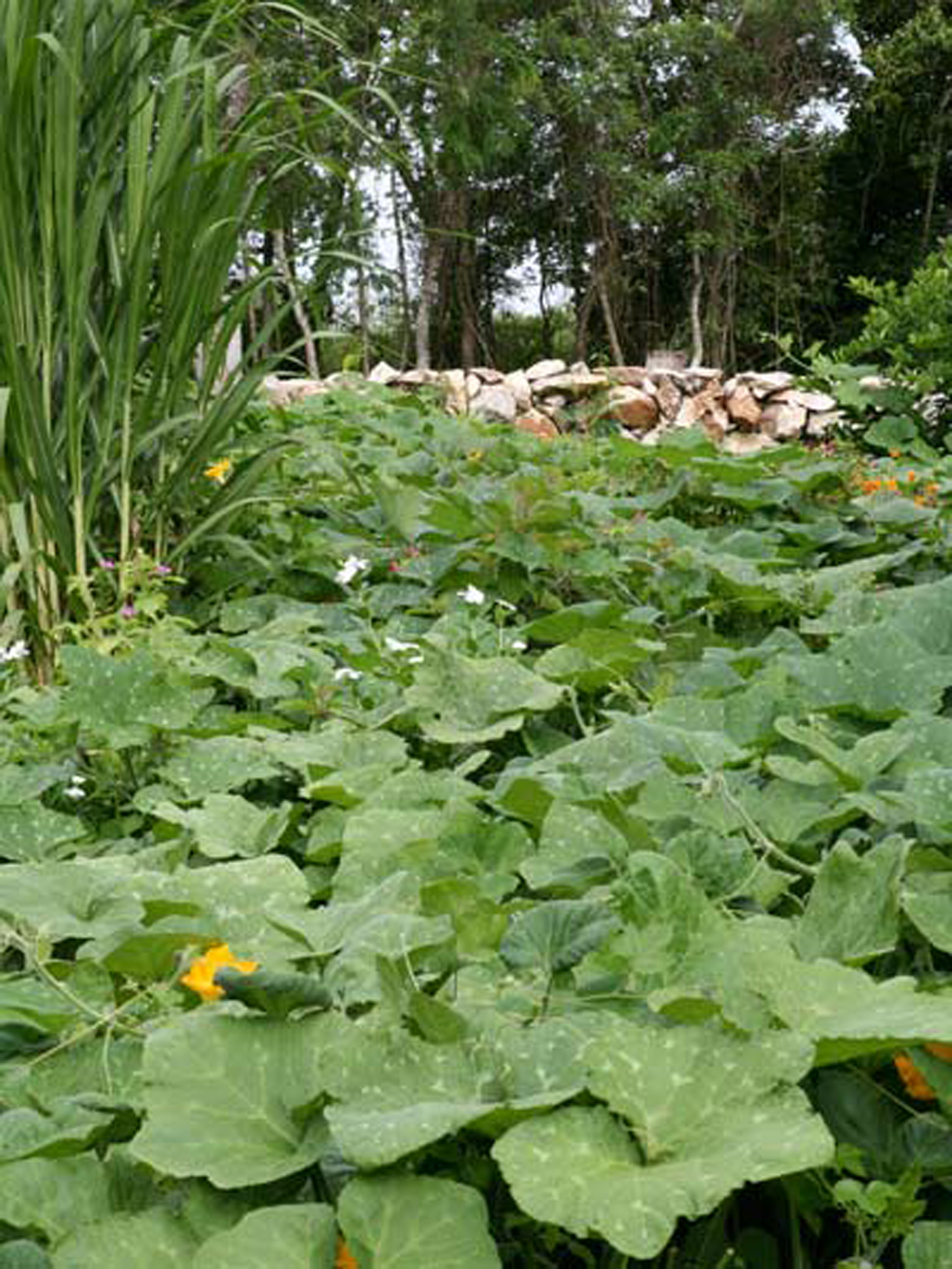
To return to the discussion of a legacy of stigmatization, we incorporate data from a solar survey conducted in the modern village of Yaxunah in 2015. Solares, or house gardens, are plots of land, generally contained by stone walls, on which a family builds their home, grows vegetables, raises small animals, and conducts other daily activities (Figure 2). Solares are personal and reflect processes of social memory and identity among the household unit (Fisher Reference Fisher2014; Hernández Álvarez Reference Hernández Álvarez2014a, Reference Hernández Álvarez2014b; Rico-Gray et al. Reference Rico-Gray, Garcia-Franco, Chemas, Puch and Sima1990). In Yaxunah at the time of Hernández Álvarez's (Reference Hernández Álvarez2014b:163, 244) 2006–2008 ethnoarchaeological study, the average number of people per solar was 3.9, as calculated from a total of 30 house groups. The average size of the solar was 1493 sm2, with the smallest being 263.82 m2 and the largest 5829.43 m2 (Hernández Álvarez Reference Hernández Álvarez2014b:308). The in-depth analysis of 30 solares demonstrates how varied and individualized these spaces can be (Hernández Álvarez Reference Hernández Álvarez2014b). As discussed in more depth later, around the world house gardens are one of the most powerful food-related cultural resilience strategies (Hashini Galhena et al. Reference Hashini Galhena, Freed and Maredia2013), as they allow owners to maintain a certain amount of household-level food sovereignty. Hernández and colleagues (Reference Hernández, Macario and López-Martínez2017:134–135) recognize the important contribution of house gardens to food sovereignty but emphasize that the milpa is more significant due to the amount of highly-consumed foods grown there. We see such an interpretation as an example of the fact that food sovereignty strategies can be under-appreciated (Kumar and Nair Reference Kumar and Nair2004)—it is not necessarily the sheer quantity (as long as needs are met), but the control, that matters here. Furthermore, biodiversity is an important factor in combatting detrimental events such as drought (Sheets et al. Reference Sheets, Dixon, Guerra and Blanford2011:5). Data from the literature search, rejollada survey, and solar survey are integrated in Table 4. Based on this table and focusing on the Yaxunah house garden data, it is evident that Cnidoscolus aconitifolius/C. chayamansa (chaya) and Hylocereus undatus (pitaya) have the most overlap with the literature search and the rejollada survey. Most evidence points to chaya, however, as the more likely candidate for a “famine food.” As demonstrated in Table 5, 2/3 of the plants oft-encountered in Yaxunah are grown for consumption.
Squash growing in a house garden in Yaxunah. Photograph by Traci Ardren.
House garden survey from Yaxuna.

Archaeological data on house gardens and subsistence is available. For example, at Joya de Ceren, El Salvador, paleoethnobotanical investigations are intriguing—the volcanic eruption that devastated the town also left some of the most well-preserved plant remains in the Maya area. As Lentz and Ramírez-Sosa (Reference Lentz, Ramírez-Sosa and Sheets2002) note, data from Ceren can help us understand subsistence activities at sites with a lower percentage of preservation. For example, ridged gardens with zones for different species are a method of intensive agriculture that would have been practiced without resting the land (Sheets and Woodward Reference Sheets, Woodward and Sheets2002). A high level of biodiversity is emphasized in the literature (Lentz et al. Reference Lentz, Beaudry-Corbett, de Aguilar and Kaplan1996; Sheets and Woodward Reference Sheets, Woodward and Sheets2002), with squash, beans, nance, fig, guava, avocado, pepper, cacao, agave, palm, maize, and cotton seeds among the food-related plant remains encountered (Lentz and Ramírez-Sosa Reference Lentz, Ramírez-Sosa and Sheets2002). For the purposes of this paper, particularly notable is the cultivation of Xanthosoma sp. (malanga), manioc, and the potential cultivation of Acrocomia aculeate (or coyol, which is the same thing as Acrocomia mexicana; Lentz et al. Reference Lentz, Beaudry-Corbett, de Aguilar and Kaplan1996:257; Sheets and Woodward Reference Sheets, Woodward and Sheets2002). Sheets and colleagues (Reference Sheets, Dixon, Guerra and Blanford2011) believe that manioc was an important resource at Ceren, though perhaps cultivated as a large-scale fallback food—a “reliable staple” (Sheets et al. Reference Sheets, Dixon, Guerra and Blanford2011:8). Agave was cultivated for its fiber (Beaudry-Corbett and McCafferty Reference Beaudry-Corbett, McCafferty and Ardren2002), but also could have been a food source (Lentz et al. Reference Lentz, Beaudry-Corbett, de Aguilar and Kaplan1996:256). The squash seeds listed in the Yaxunah survey (Table 5) were also a part of the diet at Ceren, as indicated by their presence in the kitchen of Household 1 (Beaudry-Corbett et al. Reference Beaudry-Corbett, Simmons, Tucker and Sheets2002). Brosimum alicastrum, or ramón, was not among the plant remains recovered at the site (Lentz and Ramírez-Sosa Reference Lentz, Ramírez-Sosa and Sheets2002).
All of these archaeological data provide insight into what a house garden and kitchen may have looked like in the past. As demonstrated by our incorporation of the modern house garden data from Yaxunah, also useful is examining house gardens in the present. Doing so provides more support for the notion of house gardens as a food sovereignty strategy (Hernández et al. Reference Hernández, Macario and López-Martínez2017). In a survey of solares at X-uilub, Herrera Castro (Reference Herrera Castro1994:103) encountered 387 species, demonstrating the biodiversity these areas contain. Included under edible species are Piper auritum (hoja santa), Cnidoscolus chayamansa (chaya), Capsicum frutescens (habanero), Bixa orellana (achiote), Musa paradisiaca (banana), Teloxys ambrosioides (epazote), Cucurbita moschata (squash), and Lycopersicum esculentum (tomato) (Herrera Castro Reference Herrera Castro1994:90, Table 11), all of which are also eaten in Yaxunah, though tomatoes and achiote are often bought (see Table 5). Medicine was the category of plant usage represented by the highest number of species grown in house gardens at X-uilub (Herrera Castro Reference Herrera Castro1994:106, Table 15). In their study in the northeast of the Yucatán Peninsula, however, García-Frapolli et al. (Reference García-Frapolli, Toledo and Martínez-Alier2008) found that the usage to which the largest percentage of species in home gardens were dedicated was food.
MODERN ATTITUDES, LOCAL EFFORTS TO INTEGRATE NEW FOODS, AND DIET CHANGE
Changes in staple foods indicate intense changes in everyday life and in the social meaning of the foods themselves (Moore Reference Moore and Albala2013:78; Morell-Hart Reference Morell-Hart2012). The Yucatec Mayan-speaking people of the Yucatán Peninsula today exploit a wide variety of resources, some of which are consistent with traditional methods, and some of which are the result of growing integration into the global market. For the last 3,000 years, people in the Yucatán have used not only swidden agriculture, but “mixed cropping, terracing, drained and raised fields, orchards, forest gardens” (Barrera-Bassols and Toledo Reference Barrera-Bassols and Toledo2005:10), wetland agriculture (Beach et al. Reference Beach, Luzzadder-Beach, Guderjan and Krause2015b), and ditched fields (Guderjan and Krause Reference Guderjan, Krause, Morris, Badillo, Awe and Thompson2011). Complex combinations of agricultural practices have had large-scale effects on and within the environment (Beach et al. Reference Beach, Luzzadder-Beach, Cook, Dunning, Kennett, Krause, Terry, Trein and Valdez2015a). However, “the human use of landscapes is not a mere materialist, techno-productive phenomenon, but a complex process always mediated by intellectual functions… and organized by social institutions” (Barrerra-Bassols and Toledo Reference Barrera-Bassols and Toledo2005:10–11). Today, the subsistence complex revolves around milpa agriculture, beekeeping, and house gardens, with various levels of reliance on animals and wood collection (García-Frapolli et al. Reference García-Frapolli, Toledo and Martínez-Alier2008). The continuing importance of the milpa is not a product of resistance to change, but rather “modern traditionalism” (Jiménez-Osornio et al. Reference Jiménez Osornio, Caballero, Quezada, Bello Baltasar, Colunga-García Marín and Larque Saavedra2003:190; translation by the authors; see also García-Frapolli et al. Reference García-Frapolli, Toledo and Martínez-Alier2008:39,) reflective of resilience coming from “space-time heterogeneity” in management (Toledo et al. Reference Toledo, Barrera-Bassols, García-Frapolli and Alarcón-Chaires2008:351, translation by the authors; see also Barrera-Bassols and Toledo Reference Barrera-Bassols and Toledo2005:10).
Innovations have been a necessary response to globalization and the market economy; however, activities involving these aspects of the economy draw people away from self-sufficiency and have the potential to “upset the dynamic equilibrium” of long-term sustainable practices (García-Frapolli et al. Reference García-Frapolli, Toledo and Martínez-Alier2008:40, our translation). Furthermore, people in Yaxunah often must find alternative sources of money to buy food to supplement the milpa agriculture, which more recently has not been producing enough corn to feed families for a whole year (Bascopé Reference Bascopé2005:117, 147). More people are beginning to devote their time to wage labor in the major cities of the peninsula and the ever-growing tourism industry (Re Cruz Reference Re Cruz1996:26–27). Others have turned to street vending, however, as a way to benefit from the existence of Cancun without abandoning ties to and time at home (Gaskins Reference Gaskins2003:261). Gaskins (Reference Gaskins2003:271) also notes that “the changes that accompan[y] the transition from corn to cash d[o] not represent a fundamental change in cultural values but rather an effective response to concurrent local economic hardship and new outside opportunities to earn cash.” In other words, there is evidence of the resilience of cultural values in the face of changing subsistence strategies and connections to the market economy.
One of the largest changes in the ongoing shift from subsistence to market economy is increased government involvement in access to food resources. Such involvement is reminiscent of the political control discussed previously, albeit in a less explicit manner. Regulations often take on the appearance of universal benefit but result in exploitation and, especially surrounding tourist attractions whose neocolonial processes idealize capitalist representations of an indigenous lifestyle but ignore the reality of the Yucatec Mayan-speaking peoples (Ardren Reference Ardren, Rowan and Baram2004), the “transforming [of] the Maya into a peripheral element in their own homeland” (Leatherman and Goodman Reference Leatherman and Goodman2005:844). This, too, is structural violence—“violence exerted systematically” partially through a disconnect between the past and present and exacerbated by neoliberalism (Farmer Reference Farmer2004:307, 308, 313). Harvests of marine resources have been restricted, and state-controlled ejido lands meant to encourage autonomous agriculture have had damaging effects in Quintana Roo (Juárez Reference Juárez2002:116,115). The spaces and rental prices of local markets in Oxkutxcab and Ticul are organized by the government, which in turn dictates the availability of certain resources to the community (Smith and Cameron Reference Smith and Cameron1977:93). In the places named above and more widely, government involvement in land usage, food collection, and market practices have profoundly influenced and perpetuated the level of diet inequality that exists today. Topics of speech often revolve around the availability of food one cannot access (Juárez Reference Juárez2002:118). Credit program conditions, new cattle laws, and land intensification have led to the near elimination of the use of t'olche’ living fences in Pixoy, Yucatán (Remmers and De Koeijer Reference Remmers and De Koeijer1992:168). Even the autonomy gained through keeping a house garden can be undermined by lack of water security, a structural violence that incites social pressure for water conservation (Bascopé Reference Bascopé2005:179). Laws and regulations that disturb traditional agricultural practices have the potential to damage efforts toward both environmental sustainability and food sovereignty. Finally, the intersection of Yucatec Maya diet change with the commoditization of food systems has resulted in increasingly Western symbols of prestige and a greater reliance on commercial foods found in government-subsidized stores (see Santos-Fita et al. Reference Santos-Fita, Naranjo and Rangel-Salazar2012:12 for changing hunting practices), a process that Leatherman and Goodman (Reference Leatherman and Goodman2005) call “coca-colonization.”
Nevertheless, even in the face of these changes and exploitations, cultural resilience is largely evident, along with innovations that allow people to make the most of what they have. In the locality of Tixpeual, proximity to Mérida was reflected in increased use of the home garden to grow fruits and ornamentals, a response to fruit demands in the city (Rico-Gray et al. Reference Rico-Gray, Garcia-Franco, Chemas, Puch and Sima1990). In Yaxunah, a woman's cooking cooperative has had success offering “traditional” Maya meals in private homes to day tourists (Ardren Reference Ardren2018). These innovations could be etically thought of as a loss, but this type of plasticity is what has allowed continuity in traditional practices in Yucatán. In fact, just as accessible rejolladas appear to have been in the past, the home garden can be thought of as one of the most powerful food-related resilience strategies, as it is a way to maintain autonomy and food sovereignty, as well as to ensure the presence of foods not necessarily considered to be staples. This is not necessarily to say that house gardens would not be affected by events such as droughts, but to emphasize that they allow for maintenance, at the household level, of control over what is grown. In the town of Yaxcaba, neighboring Yaxunah, locals emphasize the economic importance and freedom of being able to grow fruits and vegetables rather than having to buy them (Cuanalo de la Cerda and Guerra Mukul Reference Cuanalo de la Cerda and Mukul2008:426). People have also expanded production to simultaneously allow for the sale of some resources in the market for profit (Toledo et al. Reference Toledo, Barrera-Bassols, García-Frapolli and Alarcón-Chaires2008:346). Furthermore, in Yaxunah, solares regularly contain the non-native species of bitter orange (Citrus aurantium), which has been largely incorporated into local diet and is used medicinally by locals.
Returning to the discussion of the relevance of archaeological studies on differential access and dietary inequality, we have shown how such research reveals continuities in violences (see Galtung Reference Galtung1969), as well as the strategies of resilience people developed in order to operate with autonomy despite those violences (see also Morell-Hart Reference Morell-Hart2012). As Wilk (Reference Wilk1985) emphasizes, acknowledging the influence of the present on the interpretation of the past is an important part of accepting the inability to be truly objective. It is also, however, a key factor in the value of archaeology, “an essentially ‘reflexive’ science, one which reflects back on the present as much light as it sheds on the past” (Wilk Reference Wilk1985:308). Archaeological studies on diet and agriculture specifically can help turn attention back to sustainable practices and lead to discussions about inequality, stigma, and resilience that are inseparable from timeless themes like health, nutrition, and violence.
CONCLUSION
In this preliminary exploration of “famine foods” and how they have evolved in the Maya area, we have asked many questions that require further investigation but certain patterns have already begun to appear. The variation of characteristics identified in the archaeological literature for species known to have been grown in ancient Maya times and that might have been considered a famine food for one reason or another is a demonstration of the ingenuity and cultural plasticity of Maya culinary culture. Perhaps periodic and predictable times of hardship led to the detailed knowledge of reserve or substitute foods, or perhaps factors such as the density of interconnected populations that exchanged information and goods over long periods of time assisted in the widespread distribution of resources that provided a level of food security, despite systemic efforts to manipulate access to resources. A related theme of the long-term and evolving role of political manipulation of access to food obviously contributes to the complexity of understanding Maya famine foods—the emergence of inequality was linked closely to access to prestige foods, a practice that only grew in importance over the course of the Classic period as elites performed their privileged access to a suite of exotic resources. Perhaps unequal access to specific provisions resulted in a stigmatization of less-tightly controlled resources. In a culture for which agricultural productivity was an essential precept of the state and the life cycle of human-dependent corn was a metaphor for fundamental ethical values, wild or non-agricultural plants that reproduced without human intervention in areas outside cultivation may also have been stigmatized. Political control of food continued in the Colonial and historic periods as hegemonic Spanish-influenced society discriminated against certain indigenous food traditions and maligned the nutritional or culinary value of Maya foods, even as it coopted them in hybridized recipes. In recent times government subsidies of basic foodstuffs as well as an expanding globalized market of cost-prohibitive fare reinforces the principle of unequal access to nutrition and the existence of both prestige, and lower-status, foods. Thus, the practical, cultural and historic reasons for food avoidance in the northern Maya lowlands are complex, but the theme of resilience, whether in the form of “modern traditionalism” or ancient dietary (and cultural) plasticity, remains.
RESUMEN
La desigualdad y las reacciones cambiantes a la escasez de recursos alimentarios pueden crear un compuesto de estigmatización sobre ciertas comidas. Resumamos información sobre evidencia arqueológica para la manipulación del acceso a los recursos alimentarios en la sociedad maya antigua y las posibles indicaciones arqueológicas de la hambruna o el estrés dietético. Empezando con una definición para “comidas de hambruna” que incorpora el proceso de cultivación/crecer, valor nutricional y factores culturales, hacemos una búsqueda para desarrollar una lista de posibles “comidas de hambruna” en la región maya, enfocando en características específicas como durabilidad, productividad, nutrición y preparación. Una discusión de las características nutricionales produce el entendimiento que estas comidas son miembros de una colección de recursos vegetales específica en tiempo y lugar. Comparamos los resultados de la búsqueda con datos botánicos de investigaciones sobre rejolladas alrededor del sitio Xuenkal y huertos domésticos en Yaxunah, encontrando que hay mucha evidencia sobre Cnidoscolus aconitifolius (chaya) y Brosimum alicastrum (ramón), pero enfatizando que estas plantas son miembros de una colección de recursos que refleja el conocimiento botánico y ambiental. Consideramos el concepto contemporáneo de la soberanía alimentaria y cómo se relaciona con las rejolladas, solares, y comidas de hambruna. Examinar los datos a través de un lente de la manipulación del acceso a la comida, las relaciones cambiantes de poder, y las reacciones actuales a la inseguridad alimentaria, ilumina la plasticidad cultural tanto como la resiliencia en la dieta y estrategias agrícolas en las tierras bajas de Yucatan. Discutimos las actitudes modernas, esfuerzos locales para integrar comida nueva y cambios en la dieta, y conceptualizamos huertos domésticos y rejolladas como estrategias alimentarias de resiliencia.
ACKNOWLEDGMENTS
We are grateful to the many members of the archaeological projects centered at the sites of Yaxunah and Xuenkal, especially Kirsten Tripplett and Celso Gutierrez Baez for the rejollada survey, Jessica Figueroa for the solar survey, and to Chelsea Fisher and Ryan Collins for organizing the session “Integrating and Disintegrating in Central Yucatán: Archaeological Approaches to Social Change at Multiple Scales” at the 82nd Society for American Archaeology Annual Meeting in 2017, at which this research was first presented. Celso Gutierrez Baez of the Universidad Autónoma de Campeche performed the rejollada botanical identifications.



