





Scholars have extensively explored the dynamics of legal diffusion in the United States, demonstrating its role in shaping the relationship between law and society (Barnes and Burke Reference Barnes and Burke2006; Engel and Weinshall Reference Engel and Weinshall2022; Sutton Reference Sutton1985). Research has examined the diffusion of laws, the factors influencing their spread, and their real-world impacts across various legal domains such as employment law (Edelman et al. Reference Edelman, Abraham and Erlanger1992), criminal law (Karch and Cravens Reference Karch and Cravens2014; Rubin Reference Rubin2015, Reference Rubin2019; Zimring et al. Reference Zimring, Hawkins and Kamin2001), and more (Graham et al. Reference Graham, Shipan and Volden2013; Karch Reference Karch2007; Mooney Reference Mooney2020; Suchman and Edelman Reference Suchman and Edelman1996).
Over time, scholarly research has adopted increasingly sophisticated frameworks treating diffusion as a complex, multistage process that occurs across diverse institutional contexts. First, scholarship has evolved beyond defining diffusion as a binary yes-or-no choice at the moment of policy adoption to conceptualizing it as a dynamic process unfolding across multiple stages of policymaking, including policy modification, legitimation, and implementation (Grattet and Jenness Reference Grattet and Jenness2005; Karch and Cravens Reference Karch and Cravens2014; Rubin Reference Rubin2015). Further, while most diffusion research analyzes legislatures, some scholarship illustrates how diffusion occurs through various institutional channels. A smaller but significant portion of diffusion literature examines how courts facilitate diffusion (Benner et al. Reference Benner, Bird and Smythe2012; Bird and Smythe Reference Bird and Smythe2008, Reference Bird and Smythe2012; Caldeira Reference Caldeira1985; Canon and Baum Reference Canon and Baum1981; Kritzer and Beckstrom Reference Kritzer and Beckstrom2007). Additionally, law and society scholars have applied neo-institutional theory to explain diffusion. In organizational sociology, neo-institutional theory contends that organizations within a shared field often align their practices with prevailing norms to maintain legitimacy. Applied to legal diffusion, this framework suggests that jurisdictions adopt diffusing policies to conform to perceived norms and standards of legitimacy (Edelman Reference Edelman1992; Rubin Reference Rubin2015; Rubin et al. Reference Rubin, Vaughn and Rhodes2024; Suchman and Edelman Reference Suchman and Edelman1996; Talesh Reference Talesh2015; Ulmer Reference Ulmer2019; Ulmer and Johnson Reference Ulmer and Johnson2017). Collectively, these strands of research reveal that diffusion is not a singular event but a complex, iterative process occurring over time and across multiple institutional contexts.
Building on this scholarship, this article adopts a novel framework for studying judicial diffusion through state courts. As courts of last resort within their jurisdictions, state supreme courts have no binding authority across state lines. Yet, prior studies have identified conditions under which state supreme court rulings are likely to be cited by other states’ courts (Caldeira Reference Caldeira1983, Reference Caldeira1985; Denniston Reference Denniston2014; Gleason and Howard Reference Gleason and Howard2014; Hinkle and Nelson Reference Hinkle and Nelson2016). This literature largely studies the diffusion of common law doctrines and legal procedures (Benner et al. Reference Benner, Bird and Smythe2012; Bird and Smythe Reference Bird and Smythe2008; Canon and Baum Reference Canon and Baum1981; Friedman et al. Reference Friedman, Kagan, Cartwright and Wheeler1980; Gleason and Howard Reference Gleason and Howard2014; Graham Reference Graham2015; Hinkle and Nelson Reference Hinkle and Nelson2016; Hume Reference Hume2009; Landes et al. Reference Landes, Lessig and Solimine1998; Solimine Reference Solimine2005). However, a question that remains underexamined and undertheorized is whether, and to what degree, state supreme courts can influence the diffusion of statutory designs, interpretations, and meanings.
Examining this question requires a clear understanding of the distinction between common law and statutory designs. Common law doctrines are legal principles developed and refined by judges through court decisions over time, whereas statutory designs are formal legal rules generated via legislative enactment. Often, statutory innovations can operate independently of doctrinal reasoning if their meaning remains legally uncontested. However, a critical function of courts is the process of statutory interpretation through which courts assess a statute’s text and motivating intent to determine its meaning and application in the face of ambiguity or contestation. Judicial diffusion scholarship largely examines common law decision-making, whereas studies of statutory diffusion naturally focus on the spread of statutes across legislatures. Consequently, the question of whether and how judicial interpretations of state statutes can influence how similar statutes are applied and interpreted elsewhere remains underexamined. This article seeks to determine the extent to which state courts can use statutory interpretation to borrow precedents in ways that create pathways for importing out-of-state statutory meanings and frameworks into new states.
To address this topic, this article examines the diffusion of state-level jurisprudence regarding an understudied aspect of American penal history: habitual offender laws. Three-strikes laws have been extensively analyzed as a case of diffusion (Jones and Newburn Reference Jones and Newburn2006; Karch and Cravens Reference Karch and Cravens2014; Zimring et al. Reference Zimring, Hawkins and Kamin2001). However, these laws evolved from statutory precursors called habitual offender laws that institutionalized the principle of escalating punishments for felons with criminal records and spread to nearly every state in the twentieth-century (Austin et al. Reference Austin, Clark and Henry1997; Katkin Reference Katkin1971; Kramer Reference Kramer1982; Stevens Reference Stevens2019). Whereas existing research on habitual offender laws’ diffusion only considers their legislative enactment, this study shifts attention to the role of state courts in shaping their diffusion post-enactment. This approach contributes to judicial diffusion scholarship, which has largely ignored criminal law, while underscoring the overlooked importance of state courts in shaping the foundations of America’s carceral state.
In conducting this study, this article uses neo-institutional theoretical frameworks to conceptualize state supreme courts as operating within a common organizational field where shared norms, expectations, and cultural-cognitive frameworks generate pressures to conform to prevailing norms and standards of legitimacy. This analysis presents a new interpretation of out-of-state judicial citations. Existing scholarship explains judicial decision-making as shaped by a range of factors, including commitments to precedent, political ideology, strategic considerations, public opinion, pressures from political and elite interests, and more (Casillas et al. Reference Casillas, Enns and Wohlfarth2011; Devins and Baum Reference Devins and Baum2019; Devins and Mansker Reference Devins and Mansker2010; Epstein and Knight Reference Epstein and Knight1997; Segal and Spaeth Reference Segal and Spaeth1996, Reference Segal and Spaeth2002). However, the lens of neo-institutional theory recasts out-of-state judicial citations as products of broader dynamics in judicial culture that valorize imitation, borrowing, and alignment with prevailing consensus as means of securing legitimacy. In combination with existing accounts, this unique lens helps to depict a more complete picture of the complex dynamics that drive judicial decision-making.
This analysis indicates that state courts can actively shape the diffusion of statutory meaning across jurisdictions. A systematic analysis of interstate citations to state precedents regarding habitual offender statutes reveals that courts in diverse states meaningfully endorsed and substantively engaged with precedent from New York courts when reviewing their own states’ habitual offender laws. This interstate borrowing of precedent functioned to facilitate diffusion, as state courts often invoked New York precedent to enhance the perceived legitimacy of their own interpretations of their states’ laws, reshaping the interpretation or meaning of their own states’ laws in the process. This phenomenon unfolded in fragmented ways, lacking the geographic clustering or temporal regularity typically associated with policy diffusion, and was driven by an impulse among state courts to maintain institutional legitimacy by aligning with a judicial consensus coherently articulated by a reputable state supreme court in New York.
Consequently, this article contributes to neo-institutional accounts of diffusion by illustrating how judicial diffusion departs from conventional models of organizational isomorphism or diffusion. Courts did not cite New York precedent to emulate best practices or to reduce uncertainty. Rather, these citations functioned to signal a court’s alignment with prevailing judicial consensus to maintain institutional legitimacy. Reframing citation practices in this way offers a fresh account of how courts pursue legitimacy through selective imitation and interpretive borrowing of out-of-state precedent, revealing how judicial diffusion is fueled by different dynamics to those that drive diffusion among legislative or administrative institutions.
Diffusion and neo-institutional theory
Three interconnected strands of scholarship lay the groundwork for this study’s theoretical contribution: the diffusion of criminal law, judicial diffusion, and neo-institutional theory. This section illuminates what existing literatures already do and do not tell us about diffusion while highlighting the theoretical holes this study seeks to fill.
First, scholarship on criminal law diffusion, both in and outside of neo-institutional theory, has studied the adoption of new policies, variables predicting their spread, and effects of their diffusion. Scholars have examined the diffusion of a wide range of criminal justice policies, including hate crime legislation, policing strategies, prison designs, and three-strikes laws, among others (Karch and Cravens Reference Karch and Cravens2014; Rubin Reference Rubin2015; Grattet et al. Reference Grattet, Jenness and Curry1998; Willis et al. Reference Willis, Mastrofski and Weisburd2007). However, while some scholars note that diffusion is a dynamic process requiring attention to how policies are modified, interpreted, and legitimated after their adoption (Grattet and Jenness Reference Grattet and Jenness2005; Karch and Cravens Reference Karch and Cravens2014; Rubin Reference Rubin2015), much diffusion scholarship on criminal law neglects judicial decision-making, opting to focus on legislatures or administrative bodies like police departments and prisons.
Second, scholarship on judicial diffusion – meaning the spread of ideas, doctrines, and interpretations of law through judicial decisions – identifies interstate citations as the primary mechanism of diffusion through state courts. Judges may cite precedent due to a genuine belief in a decision’s value, but also for various reasons unrelated to a precedent’s persuasiveness, including strategic efforts to obscure an opinion’s ideological basis, pressures from elite influences, and myriad others (Brace et al. Reference Brace, Langer and Hall2000; Denniston Reference Denniston2014; Epstein and Knight Reference Epstein and Knight1997; Ginsburg and Garoupa Reference Ginsburg and Garoupa2011; Kozel Reference Kozel2014: 203–4; Landes et al. Reference Landes, Lessig and Solimine1998; Segal and Spaeth Reference Segal and Spaeth1996; Walsh Reference Walsh1997). When looking across states, studies have identified various determinants explaining cross-state citations. State-specific factors, like states’ proximity or their economic and cultural similarities, affect how and when courts cite each other, as do institutional variables like a court system’s perceived reputation, policy specializations, ideological orientation, and institutional structure (Bird and Smythe Reference Bird and Smythe2008, Reference Bird and Smythe2012; Caldeira Reference Caldeira1983; Reference Caldeira1985; Canon and Baum Reference Canon and Baum1981; Choi and Gulati Reference Choi and Gulati2008; Devins and Mansker Reference Devins and Mansker2010; Gleason and Howard Reference Gleason and Howard2014: 1493–95; Hinkle and Nelson Reference Hinkle and Nelson2016; Howard et al. Reference Howard, Roch and Schorpp2017; Hume Reference Hume2009; Klein Reference Klein2002; Kritzer and Beckstrom Reference Kritzer and Beckstrom2007; Landes et al. Reference Landes, Lessig and Solimine1998; Moyer and Tankersley Reference Moyer and Tankersley2012). However, regardless of a judge’s motivation, the act of citing precedent can significantly shape an opinion’s content, thereby creating pathways for the diffusion of legal ideas. But this literature typically examines the transmission of common law doctrines and judicial rules or procedures (Barnes Reference Barnes2008a, Reference Barnes2008b; Benner et al. Reference Benner, Bird and Smythe2012; Bird and Smythe Reference Bird and Smythe2008, Reference Bird and Smythe2012; Canon and Baum Reference Canon and Baum1981; Kritzer and Beckstrom Reference Kritzer and Beckstrom2007). Whether courts transmit statutory designs, interpretations, and legislative intentions across states is relatively undertheorized. Relatedly, whether interstate citations can facilitate diffusion via statutory interpretation – the process via which courts study the text, meaning, and intent of a law to determine its application – is underexplored. This omission restricts our understanding of diffusion by only studying the diffusion of legislative ideas via legislative enactment. Last, there is an absence of cross-pollination between scholarship on judicial diffusion and penal policy diffusion, limiting our understanding of how state courts can shape the diffusion of criminal law.
These shortcomings create space for introducing a third strand of scholarship into this analysis – neo-institutional theory, in which diffusion is both a core analytic focus and framework for understanding the organizational dynamics that structure legal change. In organizational sociology, neo-institutional theory posits that organizational behavior is shaped by shared cultural-cognitive frameworks, norms, and expectations within an organizational field, with organizations adopting practices aligning with the field’s prevailing norms to maintain legitimacy. Law and society scholars deploy neo-institutional theory to explain diffusion by arguing that lawmakers enact other jurisdictions’ laws, regardless of their efficacy, to conform to standards perceived as necessary for legitimacy (DiMaggio and Powell Reference DiMaggio and Powell1983; Edelman et al. Reference Edelman, Uggen and Erlanger1999; Meyer and Rowan Reference Meyer and Rowan1977; Rubin Reference Rubin2015; Scott Reference Scott1995; Suchman and Edelman Reference Suchman and Edelman1996; Tolbert and Zucker Reference Tolbert and Zucker1983).
While interstate judicial diffusion seems explainable via the traditional host of variables that facilitate stare decisis, these explanations fail to fully capture the dynamics among state courts, a gap that neo-institutional theory can help to fill. Stare decisis compels courts to abide by their past decisions and those of higher courts. While state supreme courts are ultimate legal authorities within their state, they lack precedential power beyond their borders. Thus, while state courts may cite decisions from other jurisdictions, out-of-state decisions do not hold precedential value in other jurisdictions. Common explanations for such citations – such as the perceived reputation of other states’ supreme courts, the inclination of judges to borrow out-of-state solutions deemed effective, and the judicial impulse to signal alignment with consensus among similar institutions – position neo-institutional theory as a valuable framework for explaining this phenomenon as in part driven by judicial organizational norms and cultural ideologies.
Diffusion across state courts can be conceptualized through “institutional isomorphism,” a concept for analyzing the conditions under which an innovation in one organization may prompt others to follow suit to maintain conformity. In their seminal work, DiMaggio and Powell (Reference DiMaggio and Powell1983) detail the dynamics that generate isomorphism within an organizational field, which can be understood as an interconnected community of organizations or groups sharing common interests, purposes, and normative and cultural-cognitive frameworks defining the boundaries of legitimate action. They identify three such dynamics: coercive pressures, which compel compliance with superior authorities; mimetic pressures, which lead organizations facing uncertainty to mimic reputable peers; and normative pressures, which encourage alignment with professionally endorsed standards. Neo-institutional scholars often examine courts as part of an organizational field, but typically portray them as regulators or sources of institutional pressure that encourage conformity among other organizations (Edelman et al. Reference Edelman, Krieger, Eliason, Albiston and Mellema2011; Talesh Reference Talesh2009). Fewer studies look at courts as the focal organizations through which conformity is spread and institutionalized.Footnote 1
This article uses neo-institutional theory to conceptualize state courts as occupants of an organizational field governed by shared norms, professional standards, and cultural-cognitive frameworks. Strang and Meyer (Reference Strang and Meyer1993: 490) emphasize that diffusion is most likely to occur among organizations that perceive themselves as “fundamentally similar” and “belong[ing] to a common category”. State supreme courts operate within similar legal landscapes, perform comparable functions, serve as courts of last resort within their jurisdictions, and respect norms of precedent. Research indicates that state courts adopt practices, procedures, and opinion writing styles to mimic supreme courts with prestigious reputations – which scholarship typically identifies as New York, California, and Massachusetts – and that the most prestigious courts routinely receive the most out-of-state citations (Caldeira Reference Caldeira1983, Reference Caldeira1985; Friedman et al. Reference Friedman, Kagan, Cartwright and Wheeler1980; Hinkle and Nelson Reference Hinkle and Nelson2016; Landes et al. Reference Landes, Lessig and Solimine1998; Solimine Reference Solimine2005). These trends suggest that interstate citations reflect an understanding that state courts operate within an organizational field in which imitation and borrowing, especially from reputable peers, are anchoring ideologies, indicating how the framework of neo-institutional theory can offer insights into this pattern that other frameworks cannot.
There are several ways in which the lens of neo-institutional theory may help explain interstate judicial citations. First, mimetic and normative pressures might influence interstate judicial citations. A fundamental goal of statutory interpretation is to resolve legal uncertainty and fill gaps in ambiguously written statutes (Eskridge Reference Eskridge1986; Estabrook Reference Estabrook1994; Farnsworth et al. Reference Farnsworth, Guzior and Malani2010; Tobia et al. Reference Tobia, Nourse and Slocum2022). It thus follows that state supreme courts may borrow precedents widely deemed authoritative or issued by well-reputed state courts to clarify statutory vagueness. This pattern would be consistent with neo-institutional theory’s emphasis on how legal ambiguity often prompts mimicry within organizational fields (Albiston Reference Albiston2007; DiMaggio and Powell Reference DiMaggio and Powell1983; Edelman Reference Edelman1992; Edelman et al. Reference Edelman, Uggen and Erlanger1999; Grattet and Jenness Reference Grattet and Jenness2005; Rubin et al. Reference Rubin, Vaughn and Rhodes2024; Ulmer and Johnson 2017). Second, scholars of neo-institutional theory explain diffusion through “rational myths,” narratives asserting a policy’s practical utility despite scant evidence of its efficacy, thus prompting its spread (Dobbin Reference Dobbin2009; Edelman et al. Reference Edelman, Uggen and Erlanger1999; Rubin Reference Rubin2019; Suchman and Edelman Reference Suchman and Edelman1996). This dynamic is especially pertinent in criminal justice, as harsh laws are frequently enacted to signal compliance with narratives that severe penalties reduce crime although evidence of such effects is scarce (Bun et al. Reference Bun, Kelaher, Sarafidis and Weatherburn2020; Gottschalk Reference Gottschalk2015; Tonry Reference Tonry2008). Third, the role of legitimacy is central to neo-institutional theory. Neo-institutional scholars emphasize how legitimacy-seeking incentives drive diffusion and mimicry within an organizational field (Edelman Reference Edelman1990, Reference Edelman1992; Talesh Reference Talesh2015). Legitimacy concerns are especially salient for courts, which lack enforcement mechanisms and consequently rely on maintaining public perceptions of legitimacy to secure compliance with their rulings (Bartels and Johnson Reference Bartels and Johnson2013; Caldeira and Gibson Reference Caldeira and Gibson1992; Casillas et al. Reference Casillas, Enns and Wohlfarth2011; Gibson Reference Gibson2007; Gibson et al. Reference Gibson, Caldeira and Baird1998). Courts may, in this view, borrow out-of-state citations primarily to bolster their rulings’ perceived legitimacy by aligning with widely respected decisions from reputable courts, thereby sidestepping the more risk-prone task of conducting original analysis.
Three qualifications are in order. First, institutional isomorphism cannot fully explain judicial behavior across state courts. Organizational fields are rarely fully isomorphic, and the degree of conformity consequently varies across domains and over time. Courts often diverge in how they interpret statutes or apply precedent, generating variation that enables strategic activity like jurisdictional forum shopping. And while courts may mimic rulings from their peers to enhance legitimacy or signal adherence to field-wide norms, state statutory law is marked by considerable variation that may sometimes make such mimicry unfeasible. In this context, state courts represent a compelling case where both pressures toward isomorphism and forces of differentiation coexist. This study offers a distinctive contribution by highlighting a relatively understudied form of cross-state influence – judicial statutory interpretation – as one mechanism through which conformity-inducing pressures and dynamics operate within an otherwise variegated legal field.
Second, a strength of neo-institutional theory is its capacity to differentiate among the mechanisms that drive diffusion. Diffusion is not a process that unfolds uniformly across all contexts, and neo-institutional frameworks allow scholars to identify whether a given pattern of diffusion reflects efforts to enhance legitimacy, emulate authoritative actors, reduce uncertainty, or adopt policies rationalized as effective (DiMaggio and Powell Reference DiMaggio and Powell1983; Edelman et al. Reference Edelman, Uggen and Erlanger1999, Reference Edelman, Krieger, Eliason, Albiston and Mellema2011; Rubin et al. Reference Rubin, Vaughn and Rhodes2024; Grattet et al. Reference Grattet, Jenness and Curry1998; Suchman and Edelman Reference Suchman and Edelman1996). As such, neo-institutional theory may illuminate how courts facilitate diffusion differently from other institutions by distinguishing the mechanisms and incentives driving change. This analytic clarity is valuable in legal contexts where diffusion often unfolds through diverse and overlapping pathways.
Third, neo-institutional theory’s emphasis on “law-on-the-books” underscores the importance of formal legal rules’ symbolic value irrespective of their implementation (Rubin Reference Rubin2019). It is unclear whether habitual offender laws were enforced with any regularity – indeed, the historical record suggests they were not, given that America’s prison boom occurred decades after their diffusion (Gottschalk Reference Gottschalk2006; Simon Reference Simon2007) – but their symbolic significance should not be overlooked. Neo-institutional theory illuminates how written laws, even when infrequently enforced, can still exert ideological effects by articulating and institutionalizing emergent norms through the law’s perceived objectivity (Suchman and Edelman Reference Suchman and Edelman1996: 936–37). Irregularly applied criminal laws can nonetheless legitimize new categories of offenders, reshape cognitive-cultural understandings of punishment, and lay groundwork influencing the long-term development of the legal system (Kramer Reference Kramer1982; Rubin Reference Rubin2015). Similarly, while judicial precedents spread via diffusion may or may not be vigorously enforced, court decisions with minimal measurable impacts can still carry profound cultural and ideological meaning (Edelman Reference Edelman1992; Friedman Reference Friedman2016; Rosenberg Reference Rosenberg2008). Thus, neo-institutional theory’s emphasis on the symbolic force of formal legal rules, regardless of enforcement, provides a valuable perspective given this article’s emphasis on judicial decision-making and criminal law.
Taken together, these literatures underscore the need for an integrated analytic framework. By combining insights from judicial diffusion research with the framework of neo-institutional theory, this article addresses scholarly gaps through a unique account of how legal ideas circulate through state courts. This framework is particularly well-suited to studying the historical diffusion of habitual offender laws, a policy area in which courts played an active role not only in applying the law, but in shaping its meaning and legitimacy across state lines.
Case study: habitual offender laws
Given the scarce connections between research on judicial diffusion and criminal justice, I sought a case study to bridge these literatures. While I initially considered three-strikes laws, habitual offender statutes emerged as a better fit. The three-strikes movement began in the 1990s, when statutes in Washington and California inspired twenty-four states and the federal government to follow suit (Jones and Newburn Reference Jones and Newburn2006: 784; Karch and Cravens Reference Karch and Cravens2014: 467). Their enforcement varied and many viewed these laws as largely symbolic (Austin et al. Reference Austin, Clark and Henry1997: 1–3; Reference Austin, Clark, Hardyman and Henry1999: 4–9, 15–17; Jones and Newburn Reference Jones and Newburn2006: 791; King and Mauer Reference King and Mauer2001; Kramer Reference Kramer1982; Turner et al. Reference Turner, Sundt, Applegate and Cullen1995: 16–35), but judicial decisions on them often referenced their precursors, habitual offender laws. Not only was the diffusion of habitual offender laws more widespread than that of three-strikes laws, but their history offers a longer arc for examining how state courts have shaped diffusion while shedding light on a lesser known feature of American carceral development.
American habitual offender statutes can be traced to the colonial era when such laws typically focused on punishing offenders who repeatedly committed (or “specialized” in) the same crime (McDonald et al. Reference McDonald, Athens and Minton1986; Turner et al. Reference Turner, Sundt, Applegate and Cullen1995: 17). The first state to enhance sentences for repeat offenders regardless of offense specialization was New York in 1797, though few states adopted similar “general recidivist” laws over the next century (Brown Reference Brown1945; Kramer Reference Kramer1982; McDonald et al. Reference McDonald, Athens and Minton1986; Radzinowicz and Hood Reference Radzinowicz and Hood1980; Turner et al. Reference Turner, Sundt, Applegate and Cullen1995: 16–35). Then in 1926, New York passed the Baumes Laws, marking a turning point.
Prompted by concerns about Prohibition-related crime, state lawmakers created the New York Crime Commission to address the crime problem. Headed by State Senator Caleb Baumes, the commission championed novel statutes sharply limiting early release and significantly enhancing penalties for general recidivists deemed irredeemable threats to public safety (Baumes Reference Baumes1927; Grasso Reference Grasso2024: 124–32; Johnsen Reference Johnsen1929; Kramer Reference Kramer1982; Morris Reference Morris1951; New York Times 1928). For second- and third-time felons, the statutory maximum for a crime became the minimum they could receive, while their maximum sentence was double the statutory maximum. Fourth-time offenders faced mandatory life sentences (New York State Crime Commission 1927).
The history of habitual offender statutes indicates that they are well-suited for analysis in this study for several reasons. First, the Baumes Laws were widely perceived as successful and sparked the diffusion of “general” recidivist statutes (Adler Reference Adler2015: 41; Brown Reference Brown1945; Morris Reference Morris1951; Katkin Reference Katkin1971; McDonald et al. Reference McDonald, Athens and Minton1986: 3; Tappan Reference Tappan1949; Turner et al. Reference Turner, Sundt, Applegate and Cullen1995: 16–35). Many states adopted similar statutes within a few years, and over forty had habitual offender laws by 1950, a number which rose to forty-seven by 1981 (Blumstein et al. Reference Blumstein, Cohen, Roth and Visher1986: 128; Cooper et al. Reference Cooper, Kelley and Larson1982;). The diffusion of habitual offender laws thus sharply contrasted with the slower and limited spread of general recidivist statutes in the nineteenth century (Brown Reference Brown1945; Court Treatment of General Recidivist Statutes 1948; Kramer Reference Kramer1982: 278; Nourse Reference Nourse2003: 930–31; Tappan Reference Tappan1949) and spread to more states than did the three-strikes laws of the 1990s, even if their diffusion unfolded more gradually. Their extensive spread among state criminal codes renders them an ideal case study for studying whether and how state supreme courts may influence diffusion through statutory interpretation.
Second, while the U.S. Supreme Court weighed in on habitual offender laws, the issue remained ripe for state-level judicial intervention. In 1912, the U.S. Supreme Court ruled in Graham v. West Virginia, 224 U.S. 616 that sentencing recidivists to longer sentences did not raise equal protection, due process, or double jeopardy concerns under the fifth and fourteenth amendments. It later upheld habitual offender laws against ex post facto challenges in Lindsey v. Washington, 301 U.S. 397 (1937) and Gryger v. Burke, 334 U.S. 728 (1948). In Rummell v. Estelle, 445 U.S. 263 (1980), the Court rejected arguments that habitual offender sentencing, including for nonviolent crimes, constituted cruel and unusual punishment. By settling these disputes, the Supreme Court established the legitimacy of such practices under the federal constitution. However, by the time three-strikes laws spread, state courts were still responsible for resolving myriad practical concerns involving repeat-offender laws, including charging protocols, conviction record filings, plea negotiations, and various aspects of statutory enforcement (Zimring et al. Reference Zimring, Hawkins and Kamin2001: 128–29). It thus stands to reason that state courts would have been obliged to resolve similar ambiguities in the implementation of preceding habitual offender statutes.
Several mechanisms from neo-institutional theory could explain cross-state judicial diffusion involving habitual offender laws. First, the ambiguity and uncertainty inherent in questions of statutory interpretation might create mimetic pressures (Rubin Reference Rubin2015; Sutton Reference Sutton1996). Such ambiguity in interpreting habitual offender statutes could prompt courts to borrow from peer jurisdictions when confronted with complications in the interpretation and application of their own states’ laws. Second, normative pressures may play a role. This could be in the form of professional bodies identifying specific jurisprudence as the ideal standard for resolving habitual offender law questions. Third, while not explicitly stated, historical evidence in existing literature hints that rational myths may have facilitated the laws’ spread. After their passage, Baumes was hailed as a national leader in criminal justice, with media outlets calling him “the most notable criminal lawmaker of our time,” and his laws earned the endorsement of Supreme Court Chief Justice and former President William Howard Taft (Poore Reference Poore1927; Stevens Reference Stevens2019: 443, 445). The Chicago Daily Tribune said the Baumes Laws’ gave “better satisfaction than any preceding statute” (Chicago Daily Tribune 1927), and one observer supported their “widespread adoption” given their “undoubted effectiveness as a deterrent force” (Elson Reference Elson1928: 428). Some critics, however, dismissed this praise as premature (Levy Reference Levy1929; Stevens Reference Stevens2019). Even the New York Crime Commission acknowledged that the “period in which these laws have been in operation is much too short to give any conclusive evidence of their value” before citing the “frantic” rush among defendants to plead guilty before the laws took effect as evidence of their efficacy (New York Crime Commission’s Report 1927: 337). Fourth, legitimacy-seeking behavior may have driven cross-state judicial diffusion. Courts may have followed the lead of New York’s well-regarded judiciary, where the Baumes Laws originated, to bolster and maintain their own legitimacy while avoiding the risks of undertaking an original analysis of their own states’ laws.
Notably, the Baumes Laws faced significant implementation challenges. Strong resistance emerged from judges, lawyers, and juries who sought to undermine them through nullification and other tactics out of concern that the laws excessively eroded judicial discretion and disproportionately harmed lower-class white men. Given the backlash, Governor Franklin Roosevelt signed reforms in 1932 replacing mandatory life sentences for fourth-time offenders with a fifteen-year mandatory minimum (Brown Reference Brown1945: 661; Gibson Reference Gibson2018; Kramer Reference Kramer1982: 282; McLennan Reference McLennan2008: 448–58; Muhammad Reference Muhammad2011; Nourse Reference Nourse2003: 931; Stevens Reference Stevens2019: 452–59; Tappan Reference Tappan1949). This history illustrates the political and mythic appeal of the Baumes Laws: they offered lawmakers rhetorical triumphs as crime-reduction strategies, even if their real effects were limited. Courts, too, may have amplified the laws’ value and legitimacy despite their implementation challenges.
These factors combine to highlight the suitability of habitual offender laws as a case study, which offers robust opportunities to study state-level judicial diffusion while connecting judicial diffusion research to criminal justice policy development.
Methods
This article seeks to determine the degree to which state supreme courts can promote the cross-state diffusion of legislative ideas and frameworks. Adopting the lens of neo-institutional theory, it aims to determine whether judicial diffusion related to habitual offender laws can be explained via (1) mimetic pressures, (2) normative pressures, (3) rational myths, or (4) legitimacy maintenance. To address these questions, I identified state supreme court cases about habitual offender statutes that may have promoted diffusion through a multistep methodological approach. First, I compiled a large selection of state supreme court cases likely to promote diffusion regarding habitual offender statutes. Second, I systematically filtered this list to isolate cases that most directly involved habitual offender laws and exerted the most appeal across state lines. Third, I identified which case or cases were worthy of focused analysis by examining the depth, frequency, and spread of their out-of-state citations. This section outlines these steps, and the case or cases selected are subjected to further scrutiny in the subsequent analysis section, which examines their substantive content and out-of-state citations.
Step 1: case compilation
First, I built a dataset of influential state supreme court cases on habitual offender statutes by using the Westlaw database. To identify cases of interest, I searched the supreme courts of all fifty states and the District of Columbia for cases including the terms “habitual offender” or “habitual criminal.” For each jurisdiction, the results were sorted by “most relevant” and again by “most cited.” The top ten cases in each category were recorded. Sorting by relevance ensured the inclusion of cases most directly engaging with habitual offender laws, regardless of citation frequency; sorting by citation frequency identified high-citation cases with any connection to habitual offender laws.
This approach typically yielded twenty cases per state, although some had fewer due to sparse relevant jurisprudence or overlap in the “most cited” and “most relevant” results. Except for California, all states were searched without time constraints. California required a tailored approach due to its court system’s significant role in interpreting the state’s three-strikes law of 1993 (Zimring et al. Reference Zimring, Hawkins and Kamin2001). Because California courts often acknowledged the state’s prior habitual offender statutes while reviewing the three-strikes law, the unconstrained searches mostly returned cases about the three-strikes law. Thus, searches were conducted for California without time constraints and then again limited to pre-1993, ensuring that three-strikes jurisprudence did not overshadow older decisions about habitual offender statutes. The final dataset included 1,011 cases spanning 1843 to 2022.
To record influence, I tabulated each case’s number of total citations, out-of-state citations, and other states citing it. While total citations per case ranged from 0 to 8,370, this metric was not indicative of cross-state influence; many highly cited cases were referenced almost exclusively within their home states. For instance, among the thirty-three cases with over 1,000 total citations, the median number of out-of-state citations was only four. Among the 1,011 cases, all measures indicated that interstate influence was uncommon. Interstate citations ranged from 0 to 278, but had a mean of 4.4, median of 1, and mode of 0. Similarly, while the number of other states citing each case ranged from 0 to 48, the mean was 2.9, median 1, and mode 0.
Step 2: refining for influence and relevance
Next, the dataset was refined to isolate cases that meaningfully reviewed habitual offender legislation and were likely to have interstate influence. To identify cases with the most interstate influence, I filtered out cases with fewer than ten interstate citations, leaving 110 cases with ten or more. I then determined which of these cases meaningfully examined habitual offender laws. It was quickly discernible that many were irrelevant. Numerous opinions referenced a defendant’s habitual offender designation in passing while ruling about unrelated matters. In other cases, references to habitual offender rulings were brief and incidental citations embedded within decisions focused on entirely different statutes or doctrines.
This elimination process showed most cases to be irrelevant, including among the most highly cited cases. For instance, across all 1,011 cases, the dataset produced the same top five cases (Table 1) when sorted by either the number of interstate citations or number of states citing the decision. But of these cases, only one – New York’s People v. Gowasky, 244 N.Y. 451 (1927) – examined a habitual offender statute. People v. Molineux, 168 N.Y. 264 (1901) was a murder case about evidence admissibility, Doe v. Poritz, 662 A.2d 367 (1995) and State v. Ward, 123 Wash.2d 488 (1994) were about sex offender registration, and People v. Curtis, 681 P.2d 504 (1984) centered on the right to testify. Once such irrelevant cases were eliminated from the 110 with more than ten out-of-state citations, 35 remained.
Top five cases with most interstate citations

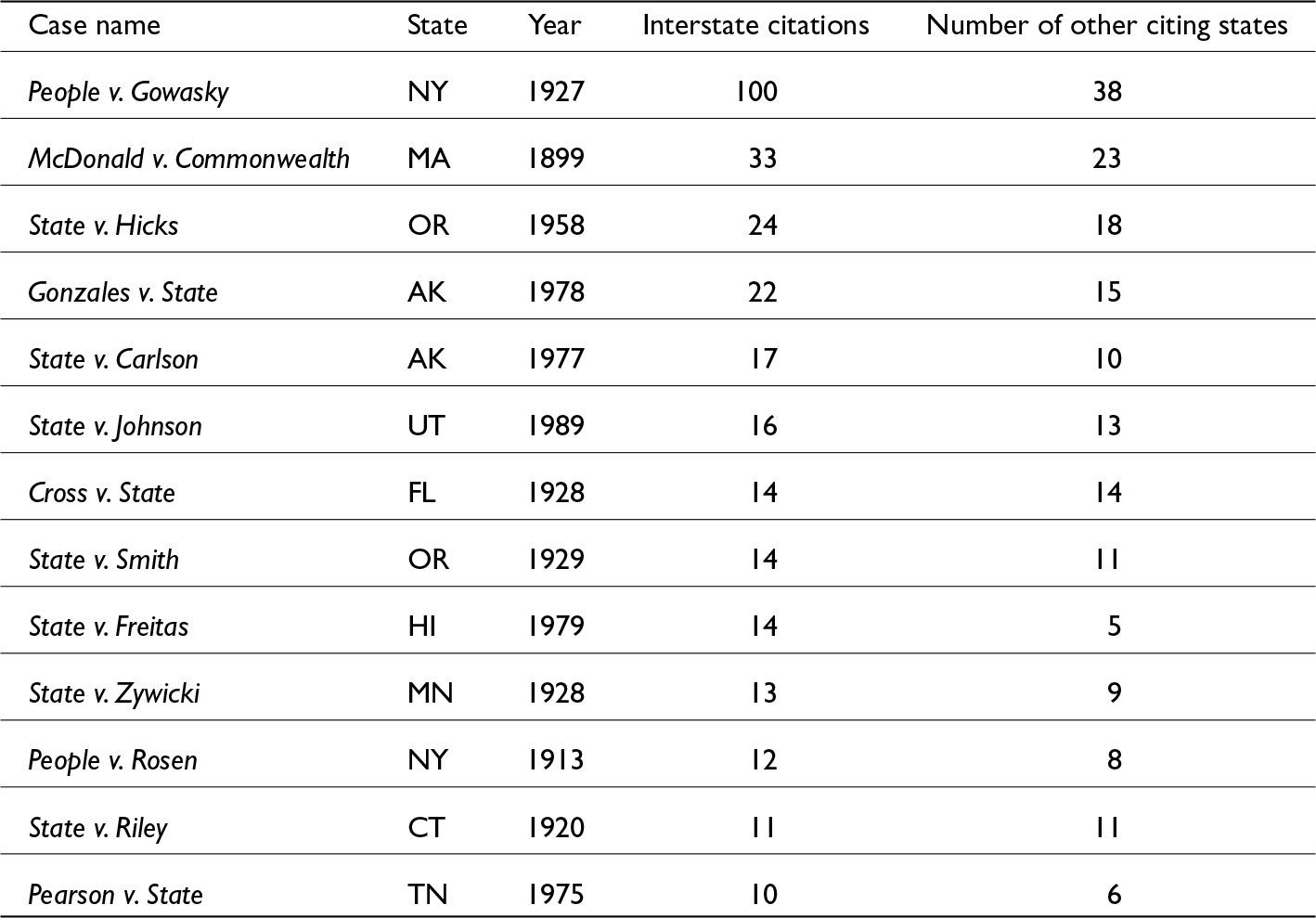
While the remaining thirty-five involved habitual offender laws, some cases still proved unsuitable for analysis. Many appeals involved the trial-level merits of a conviction rather than the broader meanings and principles of habitual offender statutes or dealt with narrow technical issues, like whether idiosyncratic clerical errors on indictment paperwork impacted a sentence. While these cases earned interstate citations, their implications for diffusion involved courtroom procedures and trial-related questions rather than the substance of habitual offender laws, warranting their exclusion. This process left thirteen high-influence cases with potentially significant implications for the diffusion of habitual offender laws (Table 2).
High-influence cases
Step 3: case selection
People v. Gowasky, 244 N.Y. 451 (1927) emerged as most influential by all metrics and wide margins. As a New York decision shortly following the Baumes Laws’ passage, Gowasky’s influence aligns with historical scholarship and the New York judiciary’s reputation as a prestigious source of precedent. However, further scrutiny was necessary to confirm its suitability for focused analysis.
I examined the depth of the out-of-state citations to these rulings to determine their significance. Notably, citation volume does not necessarily reflect influence, as many case citations lack meaningful engagement. I thus studied Westlaw’s depth-of-treatment tool, which rates a case’s citations from 1 to 4 bars. One-bar citations are brief references, whereas ratings from 2 through 4 signify increasingly substantive analysis. While one-bar ratings reliably captured cursory mentions – such as inclusion of the case in string citations or passing citations to details of it provided in the American Law Reports (ALR) – higher ratings required nuanced consideration to assess influence. For instance, a rating of 2 bars could have different meanings in different cases. Some two-bar citations to Gowasky cited it as a precedent to follow, but other two-bar citations referenced Gowasky to meaningfully acknowledge it before diverging from it. The ratings also did not indicate whether citations focused on constitutional, statutory, procedural, or other aspects of a precedent. The tool thus proved effective for highlighting brief citations (one-bar) and flagging those with potentially meaningful influence (2 or higher). Among the 13 high-influence cases, only four had more than ten interstate citations rated 2 or higher (Table 3). Their comparison reaffirmed Gowasky’s prominence: it received almost four times as many 2–4 bar out-of-state citations in more than twice as many states as the next case, State v. Hicks, 213 Or. 619 (1958). The other cases not only received fewer citations, but many proved to be poor selections for other reasons – McDonald v. Commonwealth, 173 Mass. 322 (1899) was soon resolved by the U.S. Supreme Court in 1901 (180 U.S. 311), and State v. Carlson, 560 P.2d 26 (1977) was superseded by Alaska state law within ten years. People v. Gowasky thus clearly emerged as the most appropriate case for concentrated analysis.
Cases with significant out-of-state engagement

Analysis
This section first analyzes Gowasky’s substantive content and contextualizes its influence relative to other case law. It then analyzes the 100 out-of-state citations Gowasky received, categorizing them into a typology of citation types while providing discussions of representative cases in each typology. It concludes by summarizing some general findings that relate the study’s findings to broader scholarship on judicial diffusion and neo-institutional theory.
Contextualizing Gowasky’s influence
Gowasky’s prominence likely stemmed from many sources. Its interpretation of the legislative intent behind the initial habitual offender law that sparked their twentieth-century diffusion along with the esteemed reputation of New York’s judiciary likely rendered the case an appealing template for other courts. But to fully grasp Gowasky’s influence, I compared its substantive merits with the other three high-influence cases to determine whether its framework garnered greater traction due to its distinctiveness or whether its influence arose from other factors.
As the first major challenge to the Baumes Laws, Gowasky determined whether prosecutors and judges could bypass the laws’ mandatory sentencing provisions. The defendant admitted to prior felonies during sentencing, leading the trial court to void a plea agreement for a lesser sentence and impose the Baumes Laws’ mandatory life sentence. The New York Court of Appeals (the state’s supreme court) upheld the life sentence, construing the laws as eliminating prosecutorial and judicial discretion. It ruled that prosecutors were required to file prior conviction records and could not use plea deals to avoid mandatory sentencing. Judges, likewise, could not accept such agreements. The court justified its interpretation as necessary to “accomplish the end which the Legislature had in view” (244 N.Y. 451, 465). The court also upheld the laws’ constitutionality, deferring concerns about sentencing fairness to the legislature and executive.
The other high-influence cases focused on different questions. McDonald v. Commonwealth, 173 Mass. 322 (1899) in Massachusetts dealt primarily with Eighth and Fourteenth Amendment questions, offering limited statutory analysis and instead raising issues that compelled the U.S. Supreme Court’s intervention. In Alaska, State v. Carlson, 560 P.2d 26 (1977) rejected the application of habitual offender sentencing to simultaneous offenses committed during one incident. State v. Hicks, 213 Or. 619 (1958) upheld Oregon’s discretionary habitual offender law under the state constitution. Notably, while Hicks could have been a model for states with discretionary versions of habitual offender laws, it failed to approach Gowasky’s level of influence.
Consequently, Gowasky’s distinctiveness may account for its influence. To investigate this possibility, since my original methodological approach may have excluded cases like Gowasky lacking high citation counts, I returned to the original search results for additional comparators. I analyzed the thirteen high-influence rulings along with fifteen less-cited cases randomly selected from the 1,011 for comparison (random selections were excluded if irrelevant to habitual offender statutes until I reached fifteen cases; see Table 4).
Habitual offender cases, high-influence, and random selections
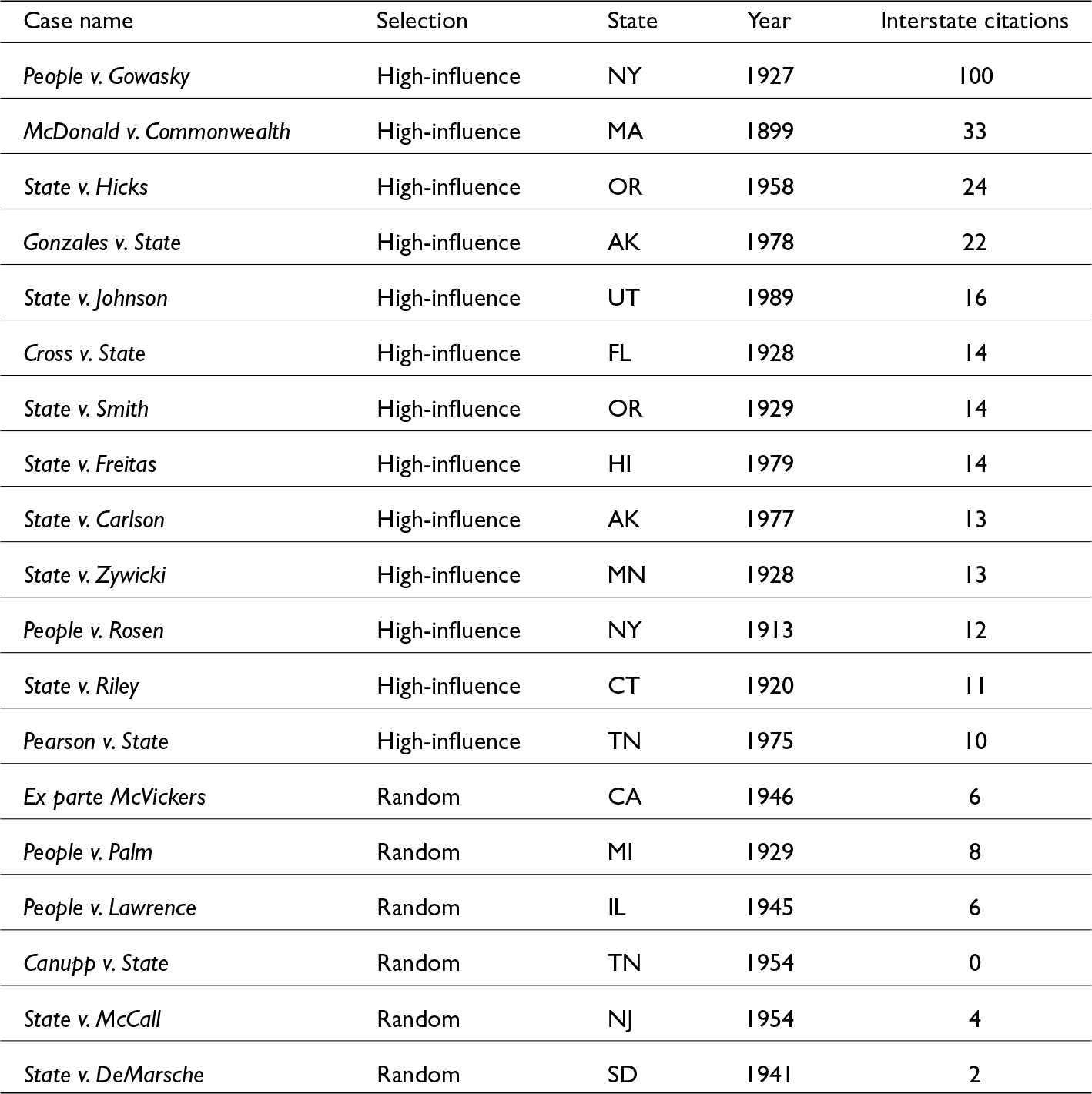
Analysis revealed that Gowasky was not wholly unique. For instance, People v. Palm, 245 Mich. 396 (1929) in Michigan and In re McVickers, 29 Cal. 2d 264 (1946) in California tackled related (though not the exact same) questions as Gowasky, but attracted little interstate attention. Oregon’s Macomber v. State, 180 P.2d 793 (1947) answered the same question as Gowasky in the same way, citing Gowasky in the process, but earned only six out-of-state citations. Thus, the reason for Gowasky’s influence was not because it was wholly unique in articulating the framework it did.
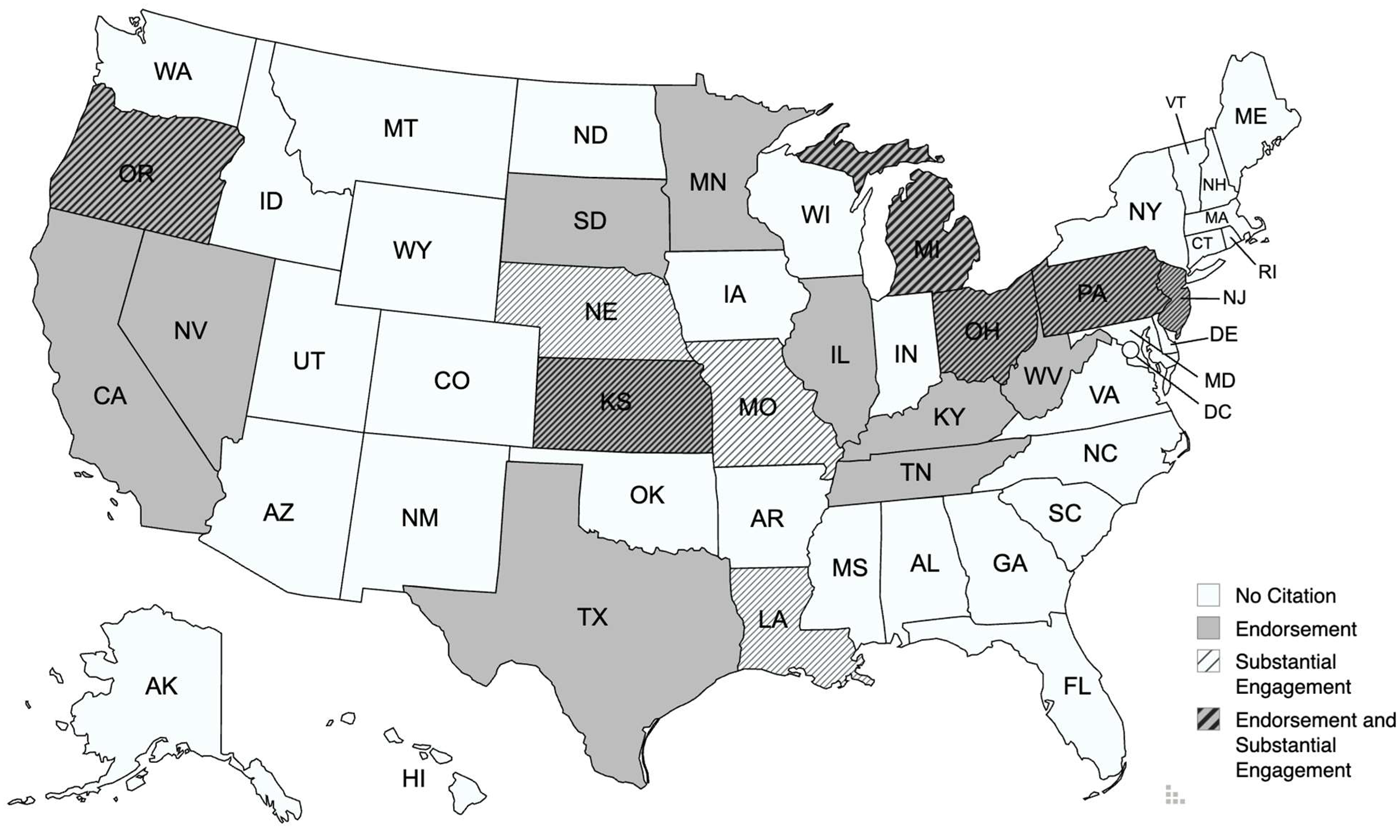
Additionally, Figure 1 shows that Gowasky’s influence was unrelated to geography, a common explanation for interstate citations. Gowasky’s wide geographic appeal was immediate, as its spread did not begin near New York and radiate outward. The first states to cite Gowasky, in order, were Minnesota, Michigan, Oregon, Idaho, Tennessee, Nevada, West Virginia, and Kansas. It was only after these states that a neighbor of New York (New Jersey) cited the decision, doing so eight years after it was decided. Gowasky’s broad impact aligns with existing literature’s emphasis on the Baumes Laws’ prominence as a national template (Adler Reference Adler2015: 41; Brown Reference Brown1945; Katkin Reference Katkin1971; McDonald et al. Reference McDonald, Athens and Minton1986: 3; Morris Reference Morris1951; Tappan Reference Tappan1949; Turner et al. Reference Turner, Sundt, Applegate and Cullen1995: 16–35) while offering opportunities to study how state courts across the nation drew on its reasoning. Gowasky’s widespread national appeal and sustained popularity over comparable alternatives invites consideration of other factors – namely, mimetic pressures, normative pressures, rational myths, and legitimacy maintenance concerns – as potential explanations for its influence.
Gowasky’s geographical influence.

Typology of interstate citations
I then conducted an analysis of the 100 out-of-state citations to Gowasky, during which I constructed a typology to categorize them. The typology helps to understand the diffusion of legal reasoning by classifying the different ways courts referenced and used Gowasky. This section cannot discuss all 100 citations but rather discusses representative selections of each citation type to illustrate their meaning and how they reflect differing levels of engagement and borrowing.
Ritual invocations
Westlaw’s depth-of-treatment tool reliably captured brief citations through one-bar ratings – typically references in string citations or references to details of Gowasky included in the ALR. Additionally, some two-bar citations were also in string citations or passing references to the ALR. These brief citations without discussion lacked significant influence on decisions but are labeled “ritual invocations.”Footnote 2 Despite their limited legal impact, they highlight how state courts operate as part of an organizational field characterized by certain dynamics. For instance, in People v. Palm (1929), the Michigan Supreme Court included Gowasky in a string citation of seven cases following the statement, “The rule thus stated is in harmony with the decisions of this and other courts” (245 Mich. 396 1929, 403). As the state’s court of last resort, a citation displaying the ruling’s conformity with out-of-state precedents was unnecessary to justify the decision, but it signaled the court’s alignment with an external judicial consensus on a common question.
The court in Palm may have decided as it did for many reasons – the judges may have cited Gowasky because they genuinely believed it was good precedent, or perhaps they simply saw Gowasky as an easy tool for resolving the case quickly or chose to strategically borrow from a well-reputed or ideologically like-minded court. But in any case, the court framed its decision as prudent by claiming alignment with established norms among similar institutions, which is revealing of the dynamics that color state court judicial decision-making. Ritual invocations reflect a broader judicial impulse to situate decisions within the external consensus of related institutions. Although such citations did not contribute to diffusion in any substantial sense, they underscore the significance state courts place on maintaining institutional conformity. By invoking precedent from other jurisdictions even when not legally necessary, a state court can bolster its ruling’s legitimacy by signaling adherence to established norms adopted by related institutions.
Diverging
Some citations briefly acknowledged Gowasky before justifying a different legal approach or concluding that it did not apply to the case at hand.Footnote 3 In State v. DeMarsche, 68 S.D. 250 (1941), for example, the South Dakota Supreme Court noted that the state’s habitual offender law “found its inspiration in the so-called ‘Baumes Act’ of New York” and cited Gowasky (68 S.D. 250, 1941, 253–54). However, it then noted that South Dakota’s law was discretionary rather than mandatory, as was the law at issue in Gowasky, and moved in a different direction. These “diverging citations” were neither critical nor negative; they simply acknowledged Gowasky’s significance before charting a different course.
Like ritual invocations, diverging citations did not facilitate diffusion but reflect aspects of judicial culture. Despite Gowasky’s lack of authority or relevance in DeMarsche, the court’s citation to Gowasky reflected an implicit assumption that it was notable enough that it warranted an acknowledgement and explanation for departing from it. By citing and differentiating from Gowasky, the court defended its non-conformity with a common standard. While diverging from Gowasky clearly could not promote diffusion – and reaffirms that judicial organizational culture is one in which pressures to conform coexist with room for divergence – such a reference underscores how state courts often viewed Gowasky as important enough that departing from it required a citation and clarification.
Endorsements
Some citations functioned as “endorsements,” in which courts invoked Gowasky to straightforwardly endorse its reasoning. In Ex parte Caruso, 131 NJL 505 (1944), for example, the New Jersey Supreme Court upheld the state’s habitual offender law by citing Gowasky as a “leading case” validating a similar statute in New York. The court wrote: “[W]e think that decision [Gowasky] is in point, and for the reasons and citations therein contained we conclude that the statute under review is valid and the imprisonment of petitioner lawful” (131 N.J.L. 505, 508). The opinion endorsed Gowasky in full and without qualification, not to mention without any deep analysis of Gowasky’s text, to resolve the questions at hand without considering the New Jersey law’s legislative history or thoroughly scrutinizing its validity under the state constitution.
In such cases, judges imported Gowasky’s constitutional reasoning and/or interpretations of statutory meaning to guide their rulings, often through quick and uncritical discussions of the case.Footnote 4 Whether judges like those in Caruso genuinely found Gowasky persuasive or just strategically useful, invoking it allowed them to bypass an independent review of state legislative records by borrowing from and aligning with a well-established external precedent. The justices explicitly defined Gowasky as “leading” and “in point” in the analysis, establishing its legitimacy as a template for interpreting their own state law’s constitutionality. Diffusing Gowasky’s reasoning enabled courts to conveniently resolve legal challenges before them, evading the risks of undertaking an original analysis of state legislative history and text by borrowing from a “leading” out-of-state precedent.
Substantial engagements
Courts in several states heavily relied on Gowasky to interpret their habitual offender statutes, engaging in far more comprehensive analysis than the “endorsements” discussed above. These citations often involved detailed scrutiny of specific passages from Gowasky or used the case as a gateway to conduct more extensive examinations of the legislative history of the Baumes Laws, Baumes’s writings, and a wider range of New York case law. This approach enabled courts to prioritize New York’s statutes and precedents over statutory history and case law within their own states, creating the clearest and most robust pathways for diffusion. The diverse nature of these citations defies more specific categorization, so they are grouped within the broader category of “substantial engagements.” This diversity is illustrated through analyses of cases from Michigan, Ohio, Oregon, and Kansas.
Michigan
The Michigan Supreme Court extensively borrowed from New York, beginning with People v. Stoudemire, 429 Mich. 262 (1987), where it upheld the constitutionality of Michigan’s habitual offender statute by citing Gowasky. The court acknowledged that the Michigan law was enacted in 1927, when the state legislature “adopted in toto the language of New York’s habitual offender statute.” The majority concluded that the “New York courts have construed the Baumes Act in accordance with Senator Baumes’ intent,” and that given the similarities between the states’ statutes, New York’s judicial interpretations could be assumed to reflect Michigan’s legislative intent (429 Mich. 262, 267). The majority cited lengthy quotes from Baumes’ personal statements detailing the legislation’s underlying philosophy (Baumes Reference Baumes1927; 429 Mich. 262, 267–70). Stoudemire also looked to a wide range of New York jurisprudence, including People v. Spellman, 136 N.Y.S. 25 (1930), a lower-court New York case holding that habitual offender sentences could only be triggered by prior convictions stemming from separate incidents, not offenses committed simultaneously in one criminal incident. The opinion quoted Spellman repeatedly, explaining that “by borrowing New York’s statute in its entirety, the [Michigan] legislature indicated that it was motivated by the same purpose that underlay the New York statute” (429 Mich. 262, 271).
Stoudemire became a cornerstone precedent in Michigan. Later cases like People v. Preuss, 438 Mich. 714 (1990) refined Stoudemire’s reasoning, departing from New York precedent on some issues while continuing to treat it as authoritative. In People v. Gardner, 482 Mich. 41 (2008), the Michigan Court abandoned the separate-incidents standard of Stoudemire by deeming it inconsistent with Caleb Baumes’s original intent. Interestingly, while Stoudemire briefly cited People v. Carlson – a well-cited Alaska case clarifying the applicability of the state habitual offender statute to simultaneous felonies committed in one incident – the Michigan Court primarily used New York jurisprudence and Caleb Baumes’s words to guide these rulings, cementing the New York judiciary’s legislative interpretations within Michigan’s legal system.
Ohio
In State v. Mahoney, 59 Ohio App. 58 (1936), the Ohio Supreme Court engaged with Gowasky while addressing a double jeopardy challenge to the state habitual offender law. Interestingly, Gowasky addressed procedures relevant to double jeopardy, like sentencing with prior convictions, but did not directly address double jeopardy. Nonetheless, the Mahoney Court rejected the double jeopardy challenge by citing Gowasky. The justices described Gowasky as a decision from a “strong court” and as embodying the “trend of authority” (59 Ohio App. 58, 62). The majority stated, “the opinion in the Gowasky case is well considered and we are satisfied states the law controlling our question” (59 Ohio App. 58, 63). The ruling concluded with, “Upon the authority of the Gowasky Case, supra, and cases cited in the note thereto, we are satisfied that the judgment of conviction of the defendant should be affirmed” (59 Ohio App. 58, 63).
By describing Gowasky as coming from a “strong” judiciary, as exemplifying “the trend of authority,” and as “controlling,” the Ohio Court identified it as a legitimate and authoritative precedent even though it came from an out-of-state judiciary and only obliquely related to the double jeopardy question in Mahoney. Notably, the Ohio Court elevated Gowasky as authoritative on the issue without even acknowledging the U.S. Supreme Court case Graham v. West Virginia, 224 U.S. 616 (1912), which more directly addressed questions of habitual offender sentencing and double jeopardy. This move highlights how a court’s citation to Gowasky could legitimate a ruling, even when it was of tangential relevance.
Oregon
In State v. Smith, 128 Or. 515 (1929), the Oregon Supreme Court upheld the state’s habitual offender statute. The Court noted that the law was modeled after New York’s Baumes Laws, which were “applied and construed by the Supreme Court of that state in People v. Gowasky” (128 Or. 515, 520). The court relied on Gowasky as it interpreted and applied various procedural features of the law, aligning Oregon’s statute with New York’s practices.
Two decades later in Macomber v. State, 180 P.2d 793 (1947), the court engaged more substantively with Gowasky. Faced with a similar case to Gowasky in which a defendant’s plea was vacated and sentence enhanced after the discovery of prior convictions, the court cited Gowasky to similarly conclude that Oregon’s law aimed to restrict prosecutorial discretion. The court noted that it was borrowing New York case law that sought to “proceed in harmony with the Baumes Laws” (181 Or. 208, 218), even though the Baumes Laws had been significantly amended by the time Macomber was ruled. The Macomber majority also drew on the New York precedent People v. Daiboch, 265 N.Y. 125 (1934), a case in which the New York high court allowed a lower court to enhance the punishment for a defendant whose priors were discovered while serving his sentence. By drawing on Gowasky and Daiboch, Oregon courts reinforced the incorporation of New York’s statutory interpretations and judicial reasoning into the state’s legal framework.
Kansas
Kansas, like many states, enacted statutes influenced by the Baumes Laws but with certain design differences. Kansas’s statutes were adopted shortly after the Baumes Laws but included different language governing sentencing calculations and mandated life sentences for third- rather than fourth-time offenders. Nonetheless, the Kansas Supreme Court saw enough similarities in the underlying principles of the statutes to borrow from Gowasky to uphold the law’s constitutionality in State v. Woodman, 127 Kan. 166 (1928).
After establishing New York as a model to follow in Woodman, the court looked beyond Gowasky in subsequent cases by referencing the Baumes Laws’ text and the perceived intentions of New York lawmakers to resolve complications arising from the law’s design. In State v. Close, 130 Kan. 497 (1930), the court encountered a defendant convicted of grand larceny, which carried a sentence of five to fifteen years as a first offense. But the defendant had a prior felony conviction for theft of a cow, which carried a sentence of one to seven years. Under the Baumes Laws, his second offense would have resulted in a sentence of ten to thirty years – doubling the minimum and maximum of the new charge he faced. But the defendant cited text in the Kansas statute that he argued calculated his habitual offender sentence by doubling the sentencing range of his first offense, generating a two-to-fourteen-year range for the defendant’s grand larceny charge. This produced a maximum that was, illogically, one year lower than the maximum a grand larceny offender could receive as a first-time offender.
Given this outcome, the sentencing judge adopted the calculation methods of the Baumes Laws to reach a range of ten to thirty years. The state supreme court sustained that decision, rejecting the defendant’s reading of the statute as inconsistent with the legislature’s intent. In a concurrence, Justice Jochems cited at length from the Baumes Laws, stating:
Our Legislature evidently had the above act [the Baumes Laws] before it. While it saw fit to change the language … it had in mind the same purpose and object as the New York Legislature, namely to provide additional penalties for the commission of felonies subsequent to the first one.…Taking the foregoing into consideration, as well as the reasons set forth in the majority opinion, I am impelled to the conviction that the Legislature intended to provide an additional punishment for the commission of a second felony. (130 Kan. 497, 503)
The court concluded that the defendant’s interpretation of the text “would frequently lead to absurd conclusions” that could undercut the law’s legitimacy (130 Kan. 497, 500). Thus, the state court looked to New York, not the deliberations of Kansas’s legislators, to resolve issues in the law’s enforcement. This illustrates how courts could turn to broader samples of New York’s legislative and jurisprudential history after citing Gowasky to import statutory designs that essentially modified a state’s laws as they navigated ambiguities and complications in legal implementation.
Summary findings
All 100 interstate citations to Gowasky were tabulated into the typology, and the total number of states engaging in each citation type was recorded (Table 5). Notably, five citations came in dissents. While they gave Gowasky varying degrees of attention, citations in a dissent cannot facilitate diffusion, warranting their exclusion from the analysis. Additionally, there were no negative treatments. As an out-of-state precedent, state courts inclined to disagree with Gowasky could simply ignore it. Further, I only considered decisions emanating from state supreme courts in the initial dataset as potentially facilitating diffusion, but the citing courts included state courts at all levels (federal courts were omitted). This was done to isolate and capture Gowasky’s full reach across state judicial systems.
Citation typologyFootnote 5

Several general findings are worth noting. First, the two most significant paths of diffusion were endorsements and substantial engagements, which earned twenty-eight citations together. Of the thirteen states with endorsements and nine with substantial engagements, some appeared in both categories, bringing the total number of states with citations in these two categories to eighteen. Again, these citations were unrelated to geography, as shown in Figure 2, and first appeared in the states of Minnesota, Oregon, Tennessee, Nevada, and Kansas.
Second, judicial diffusion in the case of habitual offender laws was significant but less pervasive than legislative diffusion and did not follow a clear temporal or geographic pattern. Whereas forty-seven states adopted habitual offender statutes by 1981, only eighteen states meaningfully cited Gowasky via endorsements or substantial engagements between 1928 and 2013. This difference makes sense; whereas legislatures can adopt laws on their own initiative, courts are passive institutions requiring legal parties to bring them cases. They can only facilitate diffusion if presented with cases that have the specific circumstances necessary to make a particular out-of-state precedent relevant. Consequently, the opportunity to borrow when engaging in constitutional analysis and statutory interpretation will not arise uniformly across states. This institutional dynamic explains the lower degree of diffusion in courts compared to legislatures, the absence of a discernible geographic pattern in citation distribution, and the fact that some states did not engage with New York’s jurisprudence until many decades after the laws’ passage. Nonetheless, twenty-eight meaningful citations across eighteen states constitute significant evidence of diffusion.
States citing Gowasky via endorsements and substantial engagement.
Third, a neo-institutional lens recasts interstate judicial citations as phenomena driven by adherence to shared institutional norms, cultural ideologies, and legitimacy concerns. The citations to Gowasky reveal no evidence that rational myths – standardized and taken-for-granted models of “best practices” without clear evidence – drove judicial adoption of Gowasky. Additionally, mimetic and normative pressures did not appear as central drivers of diffusion, as it was not clear that courts emulated peer institutions out of uncertainty or conformed to prevailing norms dictated by authoritative bodies. The absence of such dynamics is revealing; while such variables may guide legislative or administrative behavior in adoption-based diffusion, they appeared less salient in the judicial context. But although courts did not cite Gowasky to follow authoritative professional norms, reduce ambiguity, or institutionalize policies deemed effective, what emerged is a pattern of legitimacy-seeking behavior in which judges drew selectively on the case to bolster the perceived legitimacy of their rulings by signaling alignment with a broader legal consensus. When state courts of last resort described another state’s precedents as “leading” or “controlling,” they were not citing binding precedent, but presenting Gowasky as the established solution to a common set of problems and challenges before state courts. This reflected an institutional culture in which New York’s decisions were understood to be means of imbuing an interpretation of a state habitual offender law with legitimacy. By describing the Gowasky court as a “strong court” or citing the case to maintain conformity “with the trend of authority,” such citations can be understood as forms of institutional borrowing to maintain a sense of legitimacy when confronting difficulties in determining a statute’s meaning and application. In this sense, judicial diffusion appeared less structured by the diffusion of rationalized policy models or dominant myths of reform that are often seen fueling legislative diffusion, but rather by dynamics rooted in the need to affirm a judiciary’s standing within a fragmented but symbolically unified and cohesive legal field governed by shared norms of institutional legitimacy.
Fourth, ritual invocations and diverging citations did not constitute paths of diffusion. They did, however, signal how state courts situate themselves within a broader organizational field in which conformity is valued. A brief acknowledgment to non-binding out-of-state case law is not a legal necessity, but a strategy for state courts to strengthen the credibility of their decisions by signaling conformity to an external consensus among similar institutions. Moreover, citing Gowasky only to diverge from it shows how state courts may acknowledge the authority of external rulings by feeling compelled to justify departures from it. This all serves as evidence that state courts operate within an organizational field within which cultural ideologies valuing legitimacy and conformity, especially with institutions deemed authoritative and prestigious, govern behavior.
Discussion
Using judicial review of the Baumes laws and an analysis of People v. Gowasky, this article advances scholarship on legal and judicial diffusion, neo-institutional theory, and criminal justice in multiple ways. First, it identifies state courts as a critical yet overlooked locus of statutory diffusion. Existing research emphasizes state courts’ role in transmitting common law doctrines or judicial rules and procedures across state lines (Benner et al. Reference Benner, Bird and Smythe2012; Bird and Smythe Reference Bird and Smythe2008; Canon and Baum Reference Canon and Baum1981; Friedman et al. Reference Friedman, Kagan, Cartwright and Wheeler1980; Gleason and Howard Reference Gleason and Howard2014; Graham Reference Graham2015; Hinkle and Nelson Reference Hinkle and Nelson2016; Hume Reference Hume2009; Landes et al. Reference Landes, Lessig and Solimine1998; Solimine Reference Solimine2005). This article demonstrates that state courts can also diffuse legislative designs and interpretations. Through judicial review and statutory interpretation, courts can facilitate the spread of legislative ideas outside of the legislature itself.
Second, the article highlights statutory interpretation as an underappreciated mechanism of legal diffusion. When state courts engage in statutory interpretation to resolve complications in a law’s application, their interpretations can influence courts in other states. By structuring their reasoning within parameters established by a different state’s legislators and jurists, courts in states like Michigan, Oregon, Ohio, and Kansas disregarded local legislative history and politics when discerning the meaning and resolving the ambiguities of their own state’s laws. This reliance on New York jurisprudence illustrates how the diffusion of statutory interpretations delivered by an authoritative state supreme court can facilitate the standardization of statutory meanings across state lines.
Third, judicial decision-making can extend the window of statutory diffusion. Because judicial reasoning is grounded in precedent, it is inherently more backward-looking than legislating, which allows courts to sustain and adapt legislative ideas long after their formal adoption. Citations to precedent, even those made for strategic or ideological reasons, shape opinions and lend them legitimacy (Brace et al. Reference Brace, Langer and Hall2000; Denniston Reference Denniston2014; Epstein and Knight Reference Epstein and Knight1997; Ginsburg and Garoupa Reference Ginsburg and Garoupa2011; Kozel Reference Kozel2014: 203–4; Landes et al. Reference Landes, Lessig and Solimine1998; Segal and Spaeth Reference Segal and Spaeth1996; Walsh Reference Walsh1997). Studies of judicial diffusion thus complement recent calls urging diffusion studies to scrutinize the policymaking process beyond the moment of policy adoption (Grattet and Jenness Reference Grattet and Jenness2005; Karch and Cravens Reference Karch and Cravens2014; Rubin Reference Rubin2015). This article highlights how courts can contribute to the latter stages of diffusion and statutory development by legitimizing and refining statutes through case-by-case interpretation. Neo-institutional theory, with its emphasis on conformity to legitimate standards, is especially relevant to judicial behavior, given courts’ dependence on public and institutional perceptions of legitimacy to secure compliance (Bartels and Johnson Reference Bartels and Johnson2013; Caldeira and Gibson Reference Caldeira and Gibson1992; Casillas et al. Reference Casillas, Enns and Wohlfarth2011; Gibson Reference Gibson2007; Gibson et al. Reference Gibson, Caldeira and Baird1998). When courts claim alignment with influential precedents like Gowasky – even when unnecessary or only tangentially related to the case at hand – they engage in legitimacy-cultivating behavior that perpetuates particular legislative meanings. This tactic can prolong the diffusion process well after a law’s initial adoption, sustaining and reshaping the diffusion of legislative ideas over long stretches of time. For instance, Michigan courts began heavily relying on Gowasky, New York case law, and the statements of Caleb Baumes roughly sixty years after both states enacted their habitual offender laws – not to mention more than fifty years after the Baumes Laws’ key provisions were amended.
Fourth, this article uses neo-institutional theory to conceptualize state courts as the focal points of an organizational field characterized by shared norms, cultural ideologies, and decision-making frameworks (Albiston Reference Albiston2007; DiMaggio and Powell Reference DiMaggio and Powell1983; Edelman Reference Edelman1992; Edelman et al. Reference Edelman, Uggen and Erlanger1999; Grattet and Jenness Reference Grattet and Jenness2005; Rubin et al. Reference Rubin, Vaughn and Rhodes2024; Ulmer and Johnson 2017). State supreme courts serve common roles, operate within comparable contexts, and adhere to shared norms of precedent. They are fundamentally similar and exist within a common organizational category, although they are not bound to follow one another. Many of the typical variables linked to judicial decision-making thus cannot fully account for discretionary citations across state lines, but neo-institutional theory argues that similar organizations are likely to replicate the behavior of reputable peers to maintain their legitimacy, and judicial diffusion scholarship already shows that the most prestigious state supreme courts routinely earn the most out-of-state citations (Caldeira Reference Caldeira1983, Reference Caldeira1985; Friedman et al. Reference Friedman, Kagan, Cartwright and Wheeler1980; Hinkle and Nelson Reference Hinkle and Nelson2016; Landes et al. Reference Landes, Lessig and Solimine1998; Solimine Reference Solimine2005). This article builds on these insights, showing that interstate citations are often driven by legitimacy-maintenance goals. Additionally, while rational myths and coercive and mimetic pressures were not found to be factors, it is feasible that they could drive judicial diffusion in other contexts, perhaps via citations to out-of-state cases backed by empirical assertions of a precedent’s efficacy or explicit statements that out-of-state precedents resolved ambiguities in statutory design. Nonetheless, by conceptualizing state supreme courts as situated within an organizational field that valorizes imitation and consensus, neo-institutional theory provides distinctive insights into interstate judicial citations that the traditional tools of judicial scholarship cannot.
Fifth, the article provides novel clarity and nuance to studying judicial diffusion by developing a typology of out-of-state citations that differentiates among their varied meanings, uses, and purposes. This offers a more granular understanding of judicial diffusion and provides a more detailed perspective on the intricate and varied pathways through which legal innovations spread. While citation-counting can roughly gauge a case’s influence, scrutiny reveals a textured picture in which citations have myriad forms and functions. Ritual invocations, endorsements, substantial engagements, and diverging citations each serve different purposes and carry different implications for diffusion and judicial decision-making. Certain citation types, like endorsements and substantial engagements, can be effective pathways of diffusion. Others, like ritual invocations, are not pathways of diffusion, but reflect broader dynamics of judicial culture – namely, how legitimacy and conformity considerations drive courts to signal alignment with prevailing standards even in the absence of direct obligations to do so. This citation typology enriches existing scholarship on diffusion and neo-institutional theory by accounting for qualitative variation in citation usage and diffusion routes between courts, offering a novel perspective on underappreciated variations in how legal innovations diffuse across states.
Last, using habitual offender statutes as a case study bridges gaps in existing literatures. Research on judicial diffusion largely ignores criminal law, while studies of criminal justice policy diffusion typically examine legislative or administrative institutions (Karch and Cravens Reference Karch and Cravens2014; Rubin Reference Rubin2015; Grattet et al. Reference Grattet, Jenness and Curry1998; Willis et al. Reference Willis, Mastrofski and Weisburd2007). However, courts play a critical role in legitimizing criminal statutes during judicial review by affirming a law’s legitimacy and deeming it as consistent with constitutional principles, thus validating new protocols, punishments, and categories of criminality. Moreover, when courts engage in statutory interpretation, their decisions have clear implications for policy implementation by resolving gaps and oversights in statutory designs. Since constitutional review and statutory interpretation are paths for the diffusion of legislative ideas, fully understanding the diffusion of criminal justice policy requires attention to the role of courts following a policy’s enactment.
Conclusion
This article has underscored the significance of state courts as active participants in the diffusion of legislative ideas, offering a critical but often overlooked perspective on legal diffusion. It has illuminated how state courts operate within a common organizational field in which shared norms, cultural frameworks, and conformity- and legitimacy-considerations govern how they render decisions about the laws they interpret and enforce.
The typology of judicial citations developed in this analysis reveals a textured complexity to interstate judicial borrowing, distinguishing between effective pathways of diffusion and ritualistic practices that signal symbolic conformity with prevailing institutional norms. This analysis illustrates how courts can legitimize statutes and resolve interpretive complications through interstate borrowing and how symbolic citations reflect the institutional culture that governs court operations. Courts can sustain the impact of statutory ideas and intentions well beyond the actual life of legislation through this process, perpetuating the influence of past legislative designs while adapting them to evolving legal contexts.
This study highlights the need for future research to further explore the role of state courts in the diffusion of criminal justice policies. By examining how courts navigate the tensions between institutional autonomy and organizational-cultural ideologies valuing conformity, scholars can deepen our understanding of how laws evolve, diffuse, and attain legitimacy over time. This intervention broadens the scope of diffusion studies by conceptualizing state judiciaries as pivotal sites where legislative ideas are interpreted, legitimated, and potentially transmitted across jurisdictions. Through this lens, courts emerge as influential agents in the policymaking process capable of shaping the trajectory of legislative diffusion in enduring and profound ways.
Acknowledgements
The author would like to thank the editors of the Law and Society Review, particularly Ashley Rubin, for their encouragement and input on this paper, as well as the manuscript’s blind reviewers and those who provided feedback at the 2023 Annual Meeting of the American Society of Criminology.
Conflict of interest
The author declares no potential conflicts of interest with respect to the research, authorship, and/or publication of this article.
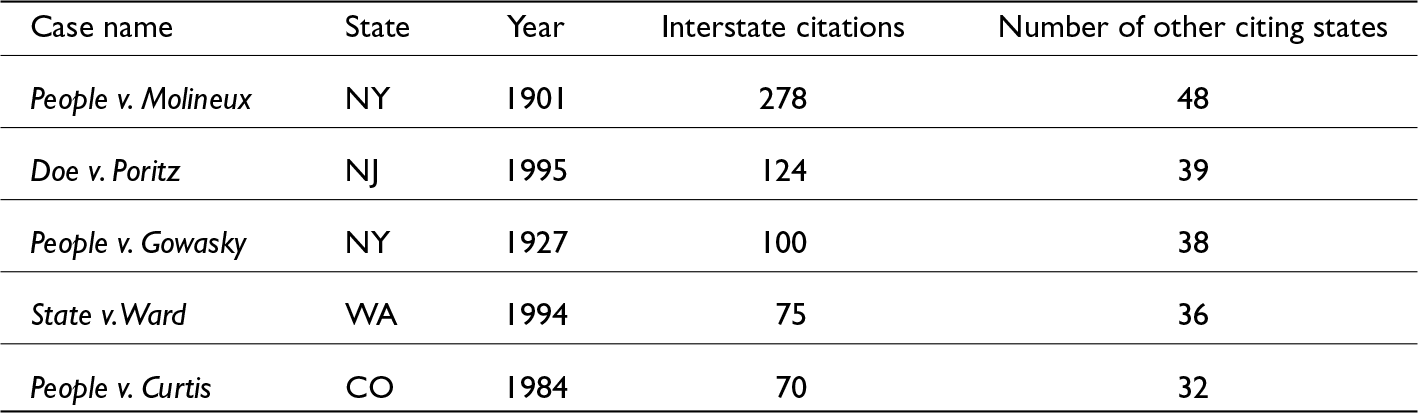
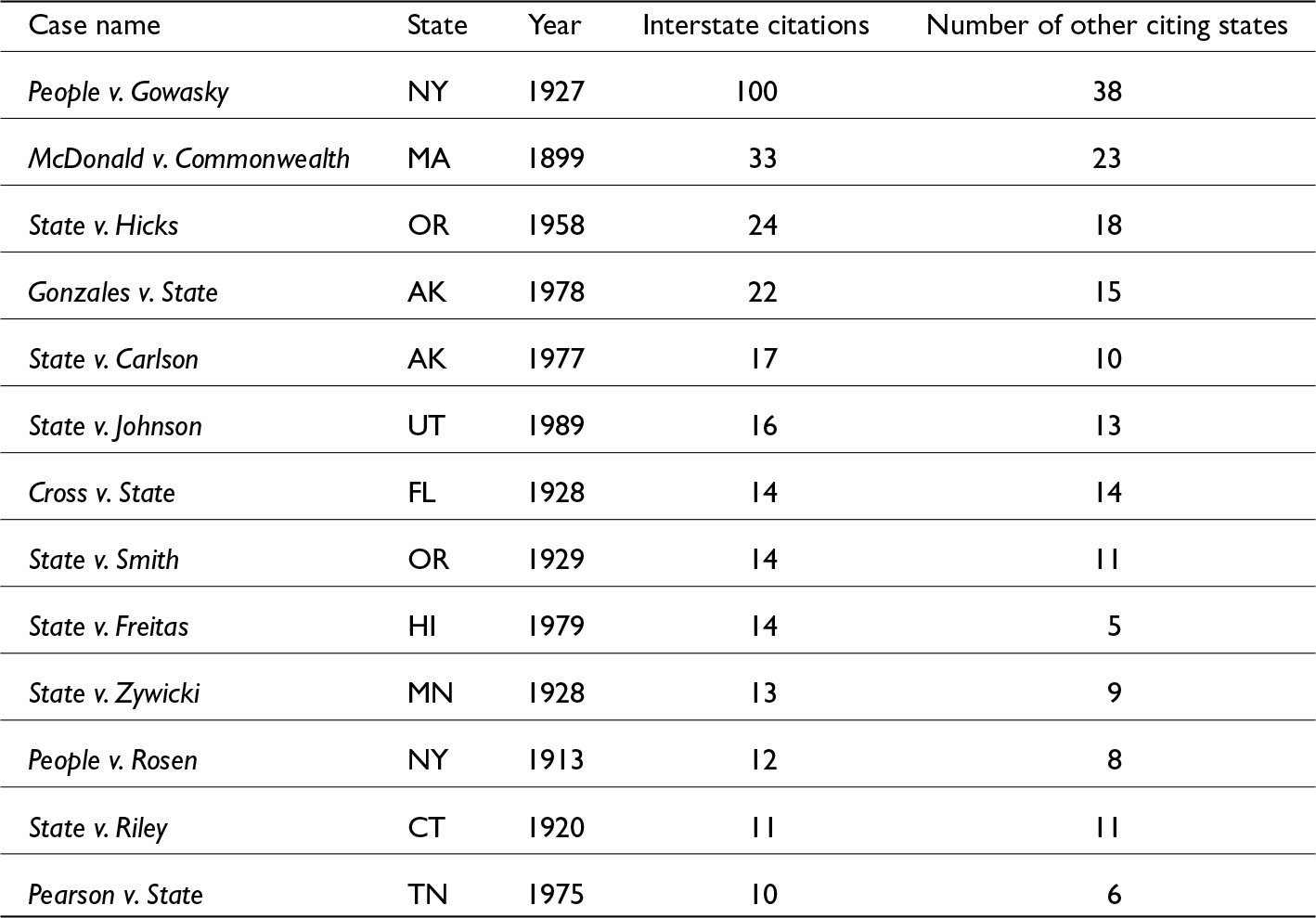
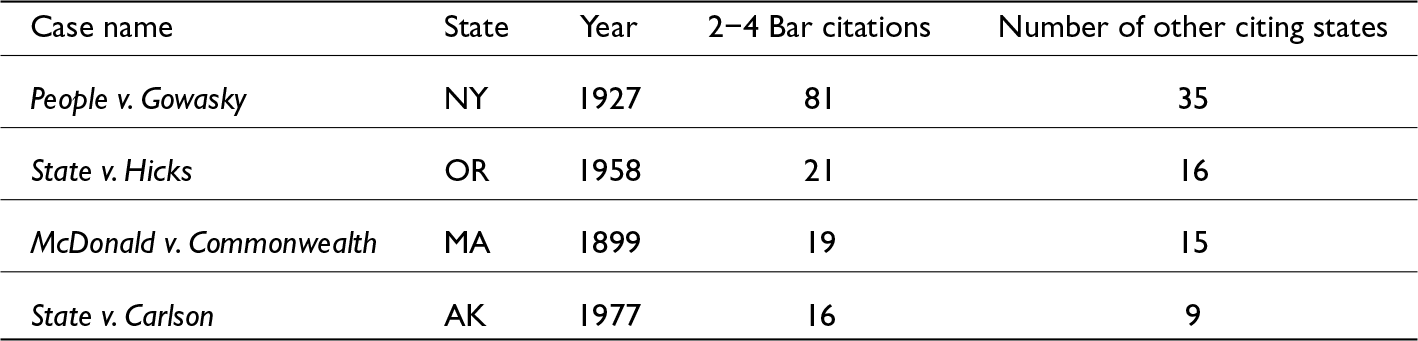
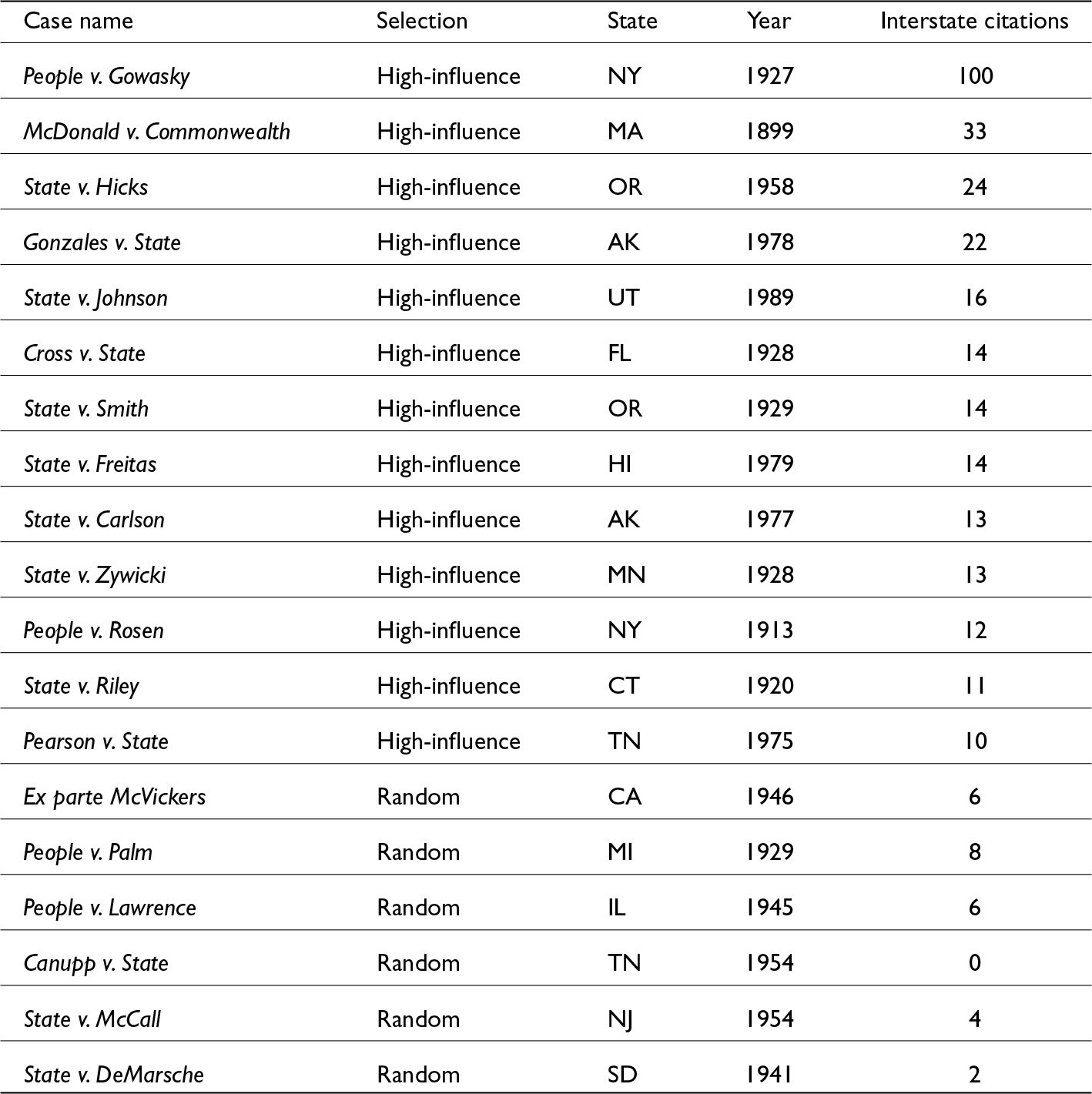
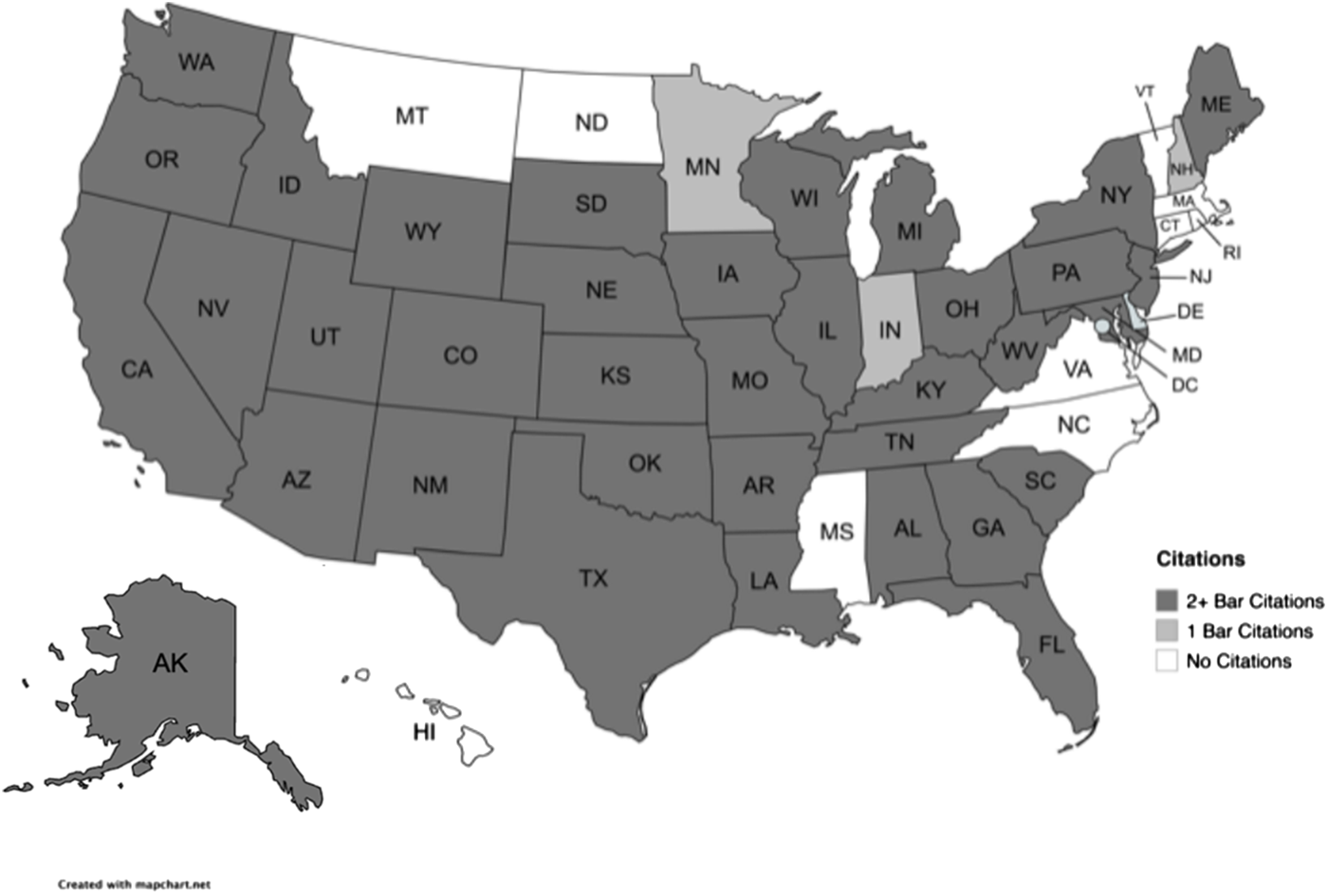
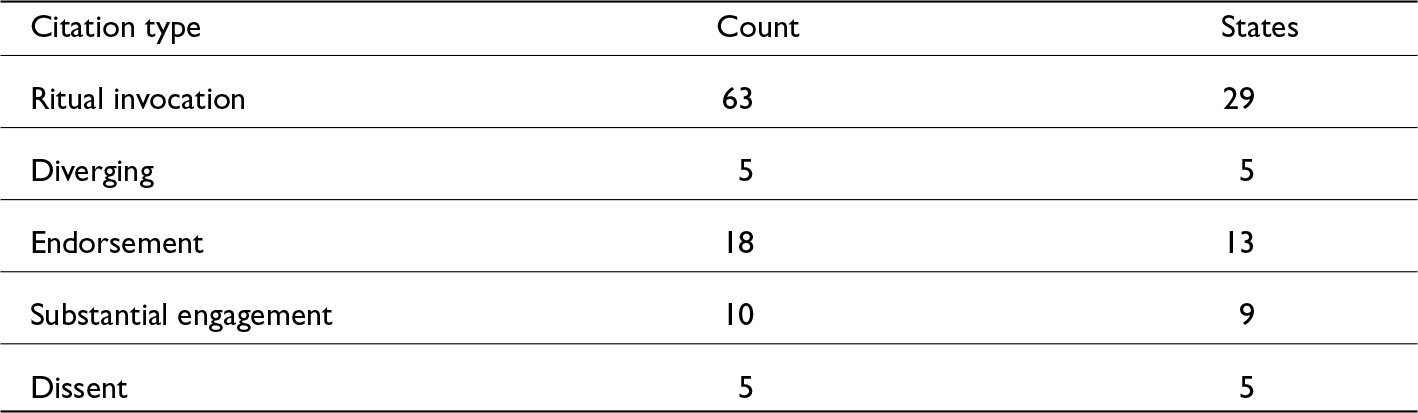
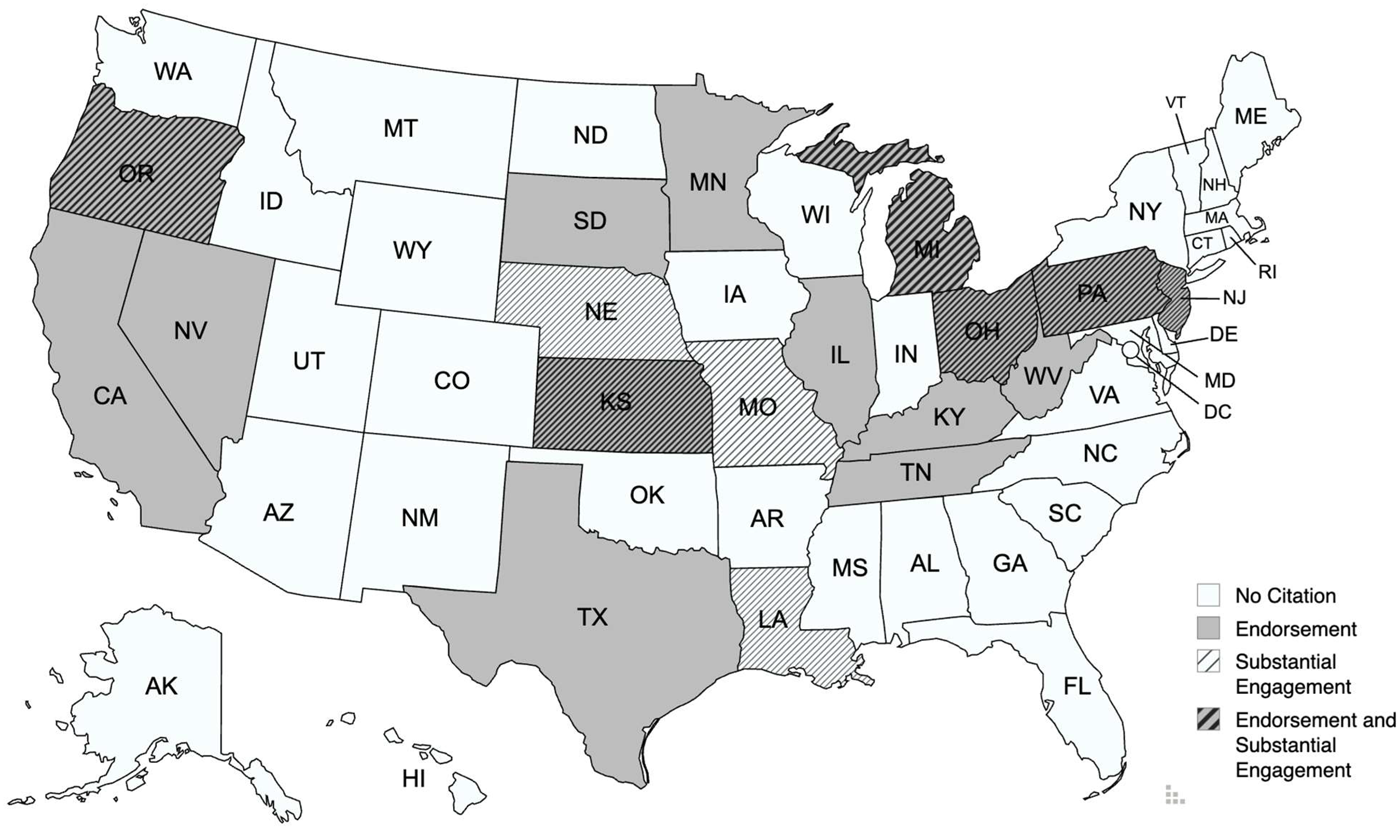

 Open access

