





Introduction
Congenital heart disease (CHD) is the most common type of birth defect in newborns. Critical CHDs encompass around one-quarter of these defects and are associated with significant morbidity and mortality. Reference Oster, Lee, Honein, Riehle-Colarusso, Shin and Correa1 Generally, these cardiac lesions will require surgery or other palliative procedures within the first year of life. Infants born with ductal-dependent CHD rely on a patent ductus arteriosus to sustain life prior to surgical correction. The patent ductus arteriosus will facilitate shunting of blood flow to maintain either systemic or pulmonary circulation. To maintain this patency, patients will receive a continuous infusion of a prostaglandin E1 analogue such as alprostadil. Reference Puri, Allen and Qureshi2–Reference Gordon, Tan and Carr5
Alprostadil acts directly on the EP2 and EP4 prostaglandin E1 receptors of the ductus arteriosus to induce cyclic adenosine monophosphate-mediated smooth muscle relaxation and subsequent vasodilation. Reference Cucerea, Simon, Moldovan, Ungureanu, Marian and Suciu6–7 However, the use of alprostadil carries the risk of clinically significant adverse effects, including flushing, bradycardia, hypotension, seizures, pyrexia, and apnoea. Reference Gordon, Tan and Carr5,7 The incidence of apnoea associated with alprostadil infusions has been well documented and is reported to occur in approximately 10–12% of patients. 7 Apnoea is more common at higher doses (above 0.05 mcg/kg/min), during the first hour of the infusion, and in neonates weighing less than 2 kg at birth. Reference Gordon, Tan and Carr5–Reference Higgins and Buck10 Repeated apnoeic events could necessitate dose reductions to the lowest effective dose or initiation of advanced respiratory support. Reference Higgins and Buck10
Methylxanthines are the mainstay of pharmacologic treatment for apnoea of prematurity. Reference Eichenwald, Watterberg and Aucott11 Mechanistically, these drugs exert their effect via adenosine inhibition with subsequent excitation of respiratory neural output and phosphodiesterase inhibition leading to pulmonary smooth muscle relaxation. Overall, methylxanthines work as central nervous system stimulants to increase medullary respiratory centre sensitivity to carbon dioxide, stimulate respiratory drive, and improve the force of diaphragmatic contraction. Reference Eichenwald, Watterberg and Aucott11,12 Caffeine citrate is the preferred methylxanthine in this setting due to its longer half-life, higher therapeutic index, and better adverse effect profile. Reference Eichenwald, Watterberg and Aucott11
The use of methylxanthines for prevention and treatment of apnoea secondary to prostaglandin E1 therapy has been minimally reported. A prospective, double-blind, placebo-controlled study investigated the use of aminophylline therapy during the initiation and maintenance of prostaglandin E1 infusion in patients with ductal-dependent CHD. The authors concluded that those treated with aminophylline were less likely to experience apnoeic events or require intubation. Reference Lim, Kulik, Kim, Charpie, Crowley and Maher13 Additionally, a single-centre, retrospective study evaluated the prevention of apnoea with caffeine citrate in congenital heart patients who received alprostadil infusions. In their small sample of 64 patients, they did not find a difference in the incidence of apnoea between those on low-dose alprostadil who received caffeine versus those who did not. Reference Higgins and Buck10
Caffeine citrate has been utilised as the standard of care at the University of Florida to decrease the incidence of apnoea in patients with ductal-dependent CHD receiving continuous infusion of alprostadil. At the University of Florida, in neonates with ductal-dependent CHD that received continuous infusion of alprostadil, caffeine is started if concern exists about the possibility of developing apnoea secondary to the respiratory pattern of the neonate. Though this approach is a common practice, the safety of caffeine citrate in this context has not been previously described. Adverse effects of caffeine citrate include tachycardia, arrhythmias, irritability, tachypnoea, jitteriness, seizures, mild diuresis, and feeding intolerance. Reference Eichenwald, Watterberg and Aucott11–12,Reference Schmidt, Roberts and Davis14 Patients with CHD are at significantly higher risk of arrhythmia, and arrhythmias in this patient population are associated with an increased risk of death. Reference Havers-Borgersen, Jøns and Butt15 Given these facts, the potential to cause tachyarrhythmias could be detrimental to this population. The purpose of this study was to determine if the current practice of utilising caffeine citrate in neonates with ductal-dependent CHD receiving continuous alprostadil infusions is safe.
Materials and methods
This institutional board review-approved, single-centre, retrospective cohort study involved a retrospective chart review of neonates admitted to the congenital heart service at the University of Florida Health Shands Children’s Hospital from November 2017 to September 2024. Patients were included if they had a diagnosis of ductal-dependent CHD and a gestational age ≥35 weeks. The gestational age cut-off of ≥35 weeks was chosen to help rule out patients who would likely receive caffeine citrate for apnoea of prematurity regardless of alprostadil infusion. In neonates with ductal-dependent CHD that received continuous infusion of alprostadil, caffeine was started if concern existed about the possibility of developing apnoea secondary to the respiratory pattern of the neonate. The cohorts included neonates with ductal-dependent CHD that received continuous infusion of alprostadil alone compared to those who received continuous infusion of alprostadil plus caffeine citrate. Patients were excluded from the caffeine cohort if they received fewer than three doses of caffeine citrate, as they likely would not have reached steady-state conditions.
The primary outcome was the frequency of sustained tachycardia, which was defined by at least three consecutive readings within three hours of a heart rate >160 beats per minute without fever (temperature ≥38°C). Each instance of three consecutive readings was counted as one incidence of sustained tachycardia per patient. If the patient’s baseline heart rate was ≥160 beats per minute, sustained tachycardia was defined as at least three consecutive readings within three hours of a heart rate greater than 20% above their baseline heart rate without fever. Baseline heart rate was determined by calculating the average heart rate from the first 24 hours of documented heart rates available in the electronic medical record for each patient. Patient characteristics collected included gestational age, age at initiation of caffeine therapy, weight, sex, baseline heart rate, and type of congenital heart lesion. Other data assessed included dosing, titration, and duration of the alprostadil infusion, as well as dosing, route, and duration of caffeine citrate therapy. Additionally, concomitant infusions and vitals at the time of each sustained tachycardic event, documentation of apnoea within nursing notes in the electronic medical record, and other arrhythmias experienced during the treatment course were also recorded.
Renal, liver, and neurologic injury were assessed for each patient as part of the data collection. Acute kidney injury was defined by the neonatal Kidney Disease Improving Global Outcomes criteria, documentation of acute kidney injury within the chart, or initiation of any form of renal replacement therapy during treatment. Reference Coleman, Tambay Perez, Selewski and Steflik16 Liver injury was defined as an increase in aspartate transaminase or alanine transaminase of three times the baseline level during the duration of therapy. Neurologic injuries recorded included stroke and electroencephalographically confirmed seizure during the hospital encounter. Strokes were determined to be ischaemic, haemorrhagic, or birth-related injuries. Birth-related injury was defined as small dural haemorrhages, small germinal matrix haemorrhages (up to grade 1), or subgaleal haematomas. JMP Pro® 18.0.2 (JMP Statistical Discovery, LLC) software was used to evaluate the data. Continuous data were compared utilising either the student t-test or Wilcoxon rank-sum test, and categorical variables were compared using the chi-squared or Fisher’s exact test as appropriate. A two-sided p-value of <0.05 was considered statistically significant.
Results
During the study period, 330 patients were screened for inclusion. Of these, 225 patients received alprostadil alone, and 105 patients received alprostadil along with caffeine citrate. In the caffeine citrate cohort, 30 patients were excluded from the study. Twenty patients were excluded for a gestational age less than 35 weeks, six patients were excluded for receiving < three doses of caffeine citrate, and four patients were excluded for not receiving caffeine citrate and alprostadil concomitantly. Ultimately, 75 patients were included for review in the alprostadil plus caffeine citrate group. Another 75 patients were chosen from the patients who received alprostadil alone to serve as the control cohort. (Patients in the alprostadil group were included in our current study in reverse chronological order until a quantity to match the alprostadil plus caffeine citrate group was reached).
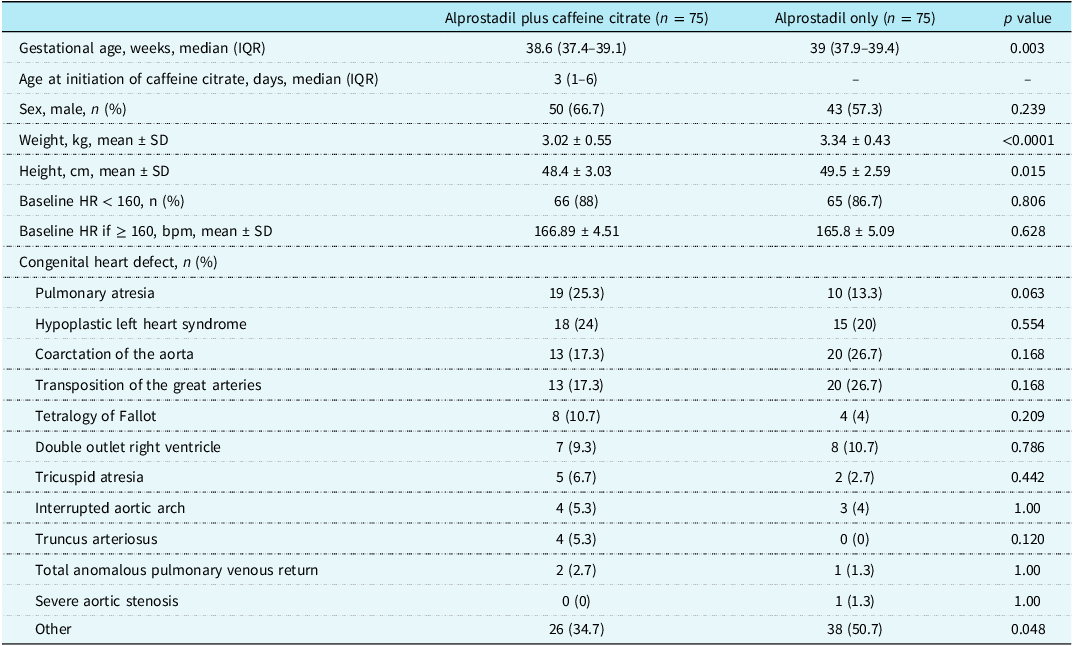
Baseline demographics were similar between both groups (Table 1). Gestational age, weight, and height were the only statistically significant differences; however, these statistically significant differences in gestational age, weight, and height were small and not clinically significant (i.e., 0.4 weeks, 320 grams, and 11 millimetres). The specific CHDs were similar between the groups. The most common defects noted in the alprostadil plus caffeine citrate group were hypoplastic left heart and pulmonary atresia, while the most common defects noted in the alprostadil alone group were coarctation of the aorta and transposition of the great arteries. Many patients had combinations of several defects or defects that were included in the “other” category in addition to their primary defect.
Baseline demographics

Table 1 Long description
The table compares baseline demographics between two groups of patients treated with alprostadil plus caffeine citrate and alprostadil only. It has 18 rows and 5 columns. The columns are labeled Alprostadil plus caffeine citrate (n = 75), Alprostadil only (n = 75), and p value. The rows include various demographic and health metrics. Row 1: Gestational age, weeks, median (IQR), 38.6 (37.4–39.1), 39 (37.9–39.4), 0.003. Row 2: Age at initiation of caffeine citrate, days, median (IQR), 3 (1–6), –, –. Row 3: Sex, male, n (%), 50 (66.7), 43 (57.3), 0.239. Row 4: Weight, kg, mean ± SD, 3.02 ± 0.55, 3.34 ± 0.43, <0.0001. Row 5: Height, cm, mean ± SD, 48.4 ± 3.03, 49.5 ± 2.59, 0.015. Row 6: Baseline HR < 160, n (%), 66 (88), 65 (86.7), 0.806. Row 7: Baseline HR if ≥ 160, bpm, mean ± SD, 166.89 ± 4.51, 165.8 ± 5.09, 0.628. Row 8: Congenital heart defect, n (%), –, –, –. Row 9: Pulmonary atresia, 19 (25.3), 10 (13.3), 0.063. Row 10: Hypoplastic left heart syndrome, 18 (24), 15 (20), 0.554. Row 11: Coarctation of the aorta, 13 (17.3), 20 (26.7), 0.168. Row 12: Transposition of the great arteries, 13 (17.3), 20 (26.7), 0.168. Row 13: Tetralogy of Fallot, 8 (10.7), 4 (4), 0.209. Row 14: Double outlet right ventricle, 7 (9.3), 8 (10.7), 0.786. Row 15: Tricuspid atresia, 5 (6.7), 2 (2.7), 0.442. Row 16: Interrupted aortic arch, 4 (5.3), 3 (4), 1.00. Row 17: Truncus arteriosus, 4 (5.3), 0 (0), 0.120. Row 18: Total anomalous pulmonary venous return, 2 (2.7), 1 (1.3), 1.00. Row 19: Severe aortic stenosis, 0 (0), 1 (1.3), 1.00. Row 20: Other, 26 (34.7), 38 (50.7), 0.048.
IQR = interquartile range, n = number, kg = kilogram, SD = standard deviation, cm = centimetre, HR = heart rate, bpm = beats per minute.
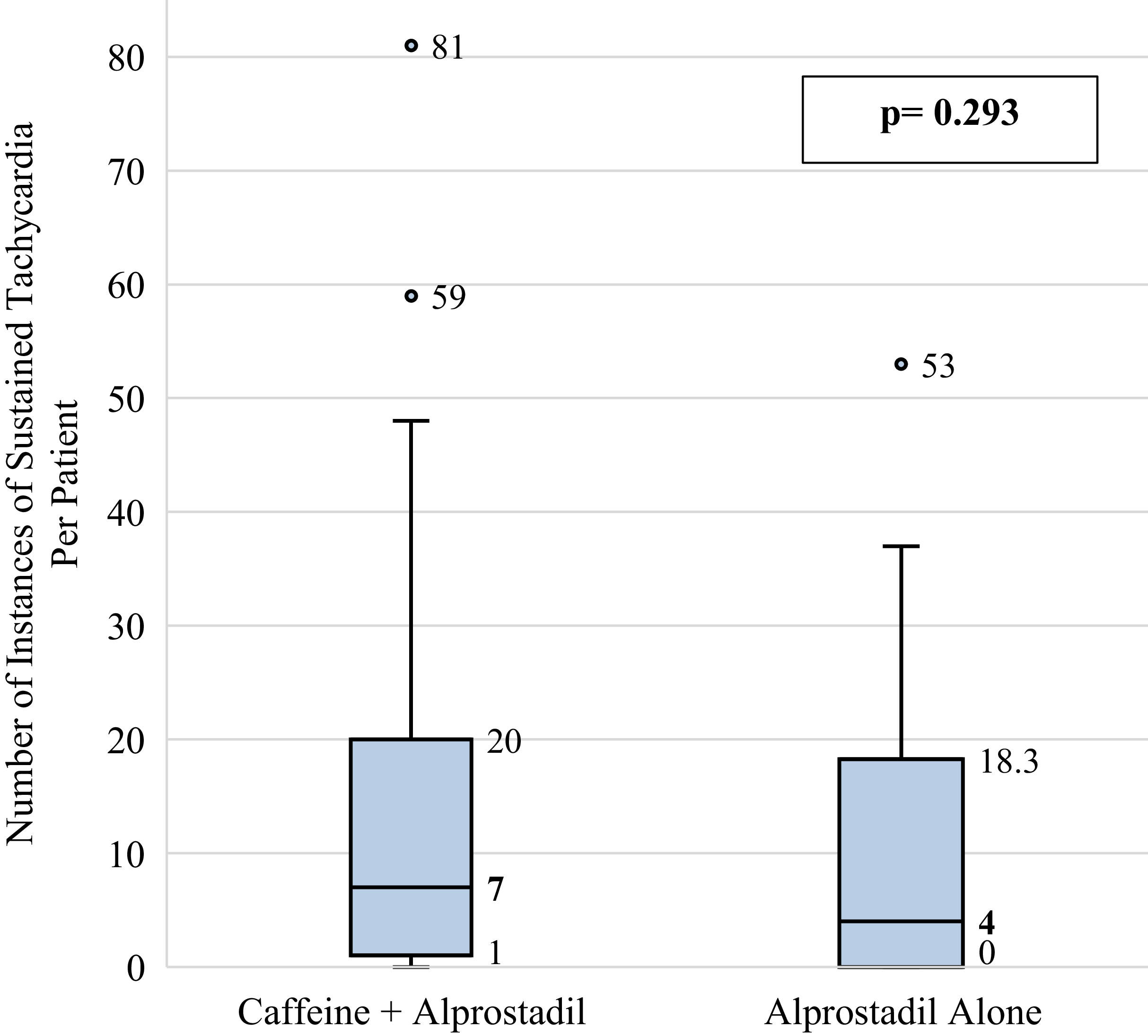
For the primary outcome, the median number of incidences of sustained tachycardia per patient was 7 (interquartile range 1–20) in the alprostadil plus caffeine citrate group and 4 (interquartile range 0–18) in the alprostadil alone group (Figure 1, p = 0.293). These instances of sustained tachycardia primarily occurred in those who received therapy for >7 days.
Primary outcome: incidence of sustained tachycardia.

Dosing for alprostadil was nearly identical between both groups. The median initial, final, minimum, and maximum doses reflected low-dose alprostadil therapy (≤0.05 mcg/kg/min). The median number of dose titrations was higher in the alprostadil plus caffeine citrate group (2 (interquartile range 1–5) vs 1 (interquartile range 0–3), p = 0.016). The duration of alprostadil therapy was significantly longer in the alprostadil plus caffeine citrate group (14 days (interquartile range 11–22) vs 8 days (interquartile range 6–15), p < 0.0001). However, when looking at caffeine citrate therapy, the durations were similar between the groups (9 days of therapy (interquartile range 6–13) in the alprostadil plus caffeine citrate group vs 8 days of therapy (interquartile range 6–15) in the alprostadil alone group, p = 0.529). This finding is important because the instances of sustained tachycardia were only counted while the patients received alprostadil and caffeine concomitantly. Therefore, the timeframes where tachycardia was counted were similar between the two groups.
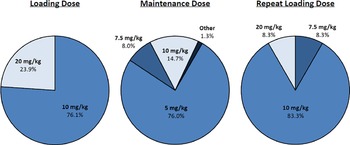
In the alprostadil plus caffeine citrate cohort, 46 (61.3%) patients received a loading dose of caffeine citrate. This dose was either 10 mg/kg or 20 mg/kg, as displayed in Figure 2. All patients were continued on a maintenance dose of caffeine which ranged from 5 to 10 mg/kg daily. Repeat loading doses were given to 12 (16%) patients in this group. Most of the group received exclusively intravenous caffeine citrate, with only eight patients (10.7%) that were either changed to or received the oral formulation.
Caffeine citrate dosing.

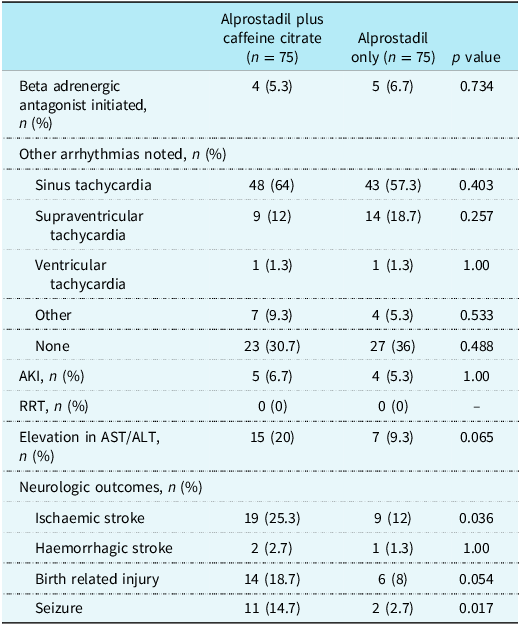
Concomitant continuous intravenous medications that could impact heart rate that were running at the time of each tachycardic event (epinephrine, calcium, dopamine, dexmedetomidine) were similar between both groups. Other arrhythmias experienced during the treatment course were common, with most patients experiencing sinus tachycardia at some point (Table 2). The second most common arrhythmia was supraventricular tachycardia, and a few patients experienced other arrhythmias such as ventricular tachycardia, atrial flutter or fibrillation, or junctional ectopic tachycardia. Beta-adrenergic antagonists were initiated in a small number of patients (9 patients total) and similarly between each cohort. Looking at other safety outcomes, the rates of acute kidney injury and elevation in aspartate transaminase or alanine transaminase were minimal and similar between both groups (Table 2). No patients in this study were started on renal replacement therapy during the time they received alprostadil or alprostadil with caffeine citrate. As for neurologic outcomes, more patients in the caffeine citrate group experienced stroke events (ischaemic, haemorrhagic, and birth-related injury), and there were a higher number of patients with documented seizure activity on electroencephalogram in this group (11 patients (14.7%) vs 2 patients (2.7%), p = 0.017). There were 19 patients within the caffeine citrate cohort who experienced an ischaemic stroke compared to 9 patients in the alprostadil alone group (p = 0.036). The incidence of stroke was recorded during the entire admission for each patient, but when looking at strokes in the preoperative timeframe, the incidence was similar (8 patients in the caffeine citrate group vs 9 patients in the alprostadil alone group, p = 0.797).
Secondary outcomes

Table 2 Long description
A table comparing the effects of alprostadil plus caffeine citrate and alprostadil only on various health outcomes. The table has 13 rows and 4 columns. The columns are labeled as Alprostadil plus caffeine citrate (n = 75), Alprostadil only (n = 75), and p value. The rows are labeled with different health outcomes and their respective values. Row 1: Beta adrenergic antagonist initiated, n (percent): 4 (5.3), 5 (6.7), 0.734. Row 2: Sinus tachycardia, n (percent): 48 (64), 43 (57.3), 0.403. Row 3: Supraventricular tachycardia, n (percent): 9 (12), 14 (18.7), 0.257. Row 4: Ventricular tachycardia, n (percent): 1 (1.3), 1 (1.3), 1.00. Row 5: Other, n (percent): 7 (9.3), 4 (5.3), 0.533. Row 6: None, n (percent): 23 (30.7), 27 (36), 0.488. Row 7: AKI, n (percent): 5 (6.7), 4 (5.3), 1.00. Row 8: RRT, n (percent): 0 (0), 0 (0), -. Row 9: Elevation in AST/ALT, n (percent): 15 (20), 7 (9.3), 0.065. Row 10: Ischaemic stroke, n (percent): 19 (25.3), 9 (12), 0.036. Row 11: Haemorrhagic stroke, n (percent): 2 (2.7), 1 (1.3), 1.00. Row 12: Birth related injury, n (percent): 14 (18.7), 6 (8), 0.054. Row 13: Seizure, n (percent): 11 (14.7), 2 (2.7), 0.017.
N = number, AKI = acute kidney injury, RRT = renal replacement therapy, AST = aspartate transaminase, ALT = alanine transaminase.
Discussion
Alprostadil is essential to survival in the ductal-dependent CHD patient population prior to surgical correction. Reference Gordon, Tan and Carr5 It is necessary to maintain patency of the ductus arteriosus; however, it also has the potential to cause adverse effects such as apnoea. Reference Gordon, Tan and Carr5,7 In practice, caffeine citrate, the agent of choice for apnoea of prematurity, has been utilised to mitigate this adverse effect. Caffeine citrate is not a benign agent and has the potential to cause adverse effects such as tachycardia or tachyarrhythmias, which can be detrimental to the patients with CHD. This study aimed to assess the safety of this practice by determining the incidence of sustained tachycardia in patients with ductal-dependent CHD treated with alprostadil and caffeine citrate versus those treated with alprostadil alone.
The groups in this study were well balanced, with the only statistically significant differences in baseline characteristics being gestational age, weight, and height. However, the numerical differences of these characteristics between the groups are not clinically significant. The severity of CHD was also similar between groups, with many patients having complex CHD or combinations of multiple defects. Duration of treatment was also similar between the groups when looking at the time when the alprostadil-alone group received alprostadil compared to the time the alprostadil-plus-caffeine-citrate group received both medications concomitantly. This study did not show a statistically significant difference in the frequency of sustained tachycardia between the cohorts. This study, therefore, refuted the initial hypothesis that the patients who received caffeine citrate would experience more instances of sustained tachycardia. While the incidence of sustained tachycardia was higher in those who received therapy for >7 days, there was no difference between groups. Significant outliers were present in each group, with one patient in the alprostadil plus caffeine citrate group experiencing 81 instances of sustained tachycardia and one patient in the alprostadil alone group experiencing 53 instances. However, the measures of central tendency were similar between the groups. Furthermore, no difference was observed between the groups for other tachyarrhythmias.
When looking at the alprostadil dosing titrations, the alprostadil plus caffeine citrate group had a higher median number of dose changes. This observation could be because these patients may have experienced apnoea from the infusion, and the dose would be titrated down to try to alleviate this apnoea before adding on an additional agent to prevent apnoea, such as caffeine citrate. Overall, the dosing of alprostadil did reflect low-dose alprostadil therapy (≤0.05 mcg/kg/min), which aligns with current dosing recommendations to limit adverse effects such as apnoea. Reference Gordon, Tan and Carr5–Reference Higgins and Buck10 . Interestingly, several patients in the caffeine citrate group were reloaded at some point during therapy, and 25 patients (33.3%) in that cohort were noted to have at least one apnoeic episode documented somewhere in the electronic medical record after caffeine citrate therapy was initiated. While this observation was not the primary focus of this safety study, it is still an important finding that may require further investigation into the efficacy of caffeine citrate for this indication.
The development of kidney or liver dysfunction was similar between the groups, which was not surprising, as caffeine citrate is not known to cause such end-organ damage. A numerically higher number of patients in the alprostadil plus caffeine citrate group had an elevation in aspartate transaminase or alanine transaminase, but this observation was also hard to differentiate from liver damage due to their underlying disease state. From a neurologic standpoint, the incidence of electroencephalographically confirmed seizure was significantly higher in the group who received caffeine citrate (11 patients vs 2 patients in the alprostadil alone group, p = 0.017). When looking at the patients who experienced seizure activity in more detail, the average maintenance dose of caffeine citrate was 5 mg/kg, and seven patients received a loading dose of 10 mg/kg. One patient received a loading dose of 20 mg/kg, and the rest were not loaded. Only one of these patients received a repeat loading dose. Seizures are a potential side effect of caffeine citrate, but they are usually associated with higher doses and extremely preterm neonates. Reference Vesoulis, McPherson, Neil, Mathur and Inder17 It appears that most patients who experienced seizures in this cohort were on relatively lower doses of caffeine citrate. Additionally, only one patient of the 11 that experienced seizures in the caffeine citrate group did so during caffeine therapy. The other 10 patients had seizures a week or more after caffeine citrate discontinuation. This finding requires further investigation in future studies. There was also a larger group of patients within the caffeine citrate cohort who experienced an ischaemic stroke (19 vs 9 patients, p = 0.036). The incidence of stroke was recorded during the entire admission for each patient, so it is hard to determine whether this was directly related to the difference in caffeine citrate use versus other aspects of their clinical courses. Upon further evaluation, only 9 patients in the caffeine citrate group had ischaemic strokes during caffeine citrate therapy, with 8 of these 9 patients experiencing ischaemic strokes preoperatively. The other 10 patients in the caffeine citrate group developed ischaemic strokes a week or more after discontinuation of caffeine citrate and postoperatively. In the alprostadil-alone group, all 9 patients who had ischaemic strokes experienced their stroke preoperatively. The preoperative timeframe is of the most importance, as this timeframe is when the patients were receiving the medications of interest. The incidence of ischaemic stroke in this timeframe is nearly identical (8 patients in the caffeine citrate group vs 9 patients in the alprostadil alone group, p = 0.797).
Limitations
This study has several limitations, and many confounding variables should be considered. First, no formal matching of the groups was utilised. Because patients in the alprostadil-alone group were included in our current study in reverse chronological order until a quantity to match the alprostadil-plus-caffeine-citrate group was reached, the alprostadil-alone cohort only included patients from more recent years in practice compared to the caffeine-citrate group, as many more patients that received alprostadil alone were available to choose from. This convenience sampling could have created some selection bias. Furthermore, countless other factors could potentially impact heart rate in this patient population, including pain, fever, infection, medications, fluid status, and baseline arrhythmia. The definition of tachycardia used in this study tried to limit counting tachycardia associated with fever or infection by only including heart rates that were elevated during times when the temperature was <38°C. Information regarding specific medications was recorded for each patient at the time of each tachycardic event, including epinephrine, calcium, dopamine, and dexmedetomidine, as these medications can impact heart rate and are very commonly used medications in this population of patients. Many patients were on these concomitant medications; however, their use was very similar across both groups. Other medications such as diuretics, antiarrhythmics, and sedatives could also impact the heart rate but were not analysed. Information regarding fluid status was also not collected; therefore, it is unknown if heart rate was impacted by fluid overload or over diuresis. It is also important to note that patients with CHD have a baseline risk of arrhythmia, and they may be more likely to experience tachyarrhythmias regardless of any of these other factors. Reference Havers-Borgersen, Jøns and Butt15 Finally, this was a single centre, retrospective chart review which relied heavily on the accuracy of charted information in the electronic medical record and has limitations for generalisability. However, this study did have a large sample size and addressed a clinically significant gap in the literature for the neonates with ductal-dependent CHD.
Conclusions
This safety analysis did not show a difference in the frequency of sustained tachycardia in neonates with CHD on continuous infusions of alprostadil who received caffeine citrate compared to those who did not. The study also did not reveal any difference in other tachyarrhythmias between the groups, but it did show an increased incidence of seizure for those patients who received caffeine citrate. Many confounding variables could have impacted these results; however, this information fills an important gap in literature and can help to assure providers that the current practice of utilising caffeine citrate in neonates with ductal-dependent CHD is not associated with a statistically significant increased frequency of sustained tachycardia at the University of Florida.
Acknowledgements
None.
Financial Support
This research received no specific grant from any funding agency in the public, commercial, or not-for-profit sectors.
Competing Interests
Author 7 (Jeffrey P Jacobs, MD, FACS, FACC, FCCP) is the Editor-in-Chief of Cardiology in the Young. All other authors stated that there are no conflicts of interest regarding the publication of this article.
Ethical standard
The authors assert that all procedures contributing to this work comply with the ethical standards of the relevant national guidelines on human experimentation and with the Helsinki Declaration of 1975, as revised in 2008. All procedures contributing to this work have been approved by the appropriate committees at our institution.

 Open access

