


Introduction: The Promise of Digital Semantics
The text-as-data revolution has led to eye-opening analyses of staggering amounts of text of all kinds – from print news to historical documents to social media posts.Footnote 1 The range of new technologies has given new life to English and history departments in the cloak of “digital humanities.” In the social sciences, text-as-data tools now account for a large and growing share of what was already a sizeable set of research methods. One might expect that this technology would yield dividends for methods of concept formation and analysis – the highly conscious approach to the vocabulary that structures and represents scientific ideas. Presumably, the standard practices of that approach – analyses of concept meaning, dimensionality, properties, related concepts, and the cases categorized by concepts – could be performed on a larger scale, more systematically, and more precisely if machine-processed.
We will call this shift to a more computerized analysis of concepts digital semantics. Though promising, the path forward for digital semantics is not obvious, or at least not well mapped. As such, what exactly would such concept-analytic technology look like, and what is the analyst’s role in it? And what can be accomplished once we have such technology in place? I outline answers to these questions in the context of comparative law, which has undergone extensive experimentation with such methods. In particular, I evaluate a ten-year effort to systematize concepts about constitutional ideas using some methods proposed for organizing information in online environments.
Basic Inputs in Digital Semantics
The building blocks of digital semantics involve, principally, the formalization or “data setting” of concepts. The particular formalization that I have in mind goes under the names controlled vocabulary, concept map, schema, ontology, and taxonomy.Footnote 2
These terms may have slightly different connotations across researchers and fields, but the differences are small, or at least not relevant here. In this chapter, I will mostly use controlled vocabulary (or just vocabulary), a neutral term that is less alien to most of us. Regardless of the term, the core idea is (1) to be explicit about terms that represent a domain of knowledge and (2) to record information about these terms; but also to record the information in a way that other researchers (and machines) can analyze and expand the set of terms. What kind of information to record? Traditional concept analysis suggests at least four elements with which to start:
(1) Related concepts. What historical and contemporary terms are related to the concept, either as synonyms, antonyms, subtypes, supertypes, or other relationships (e.g., diminished subtypes)? Think of this as mapping the “semantic field,” following Giovanni Sartori’s (Reference Sartori1984) advice.
(2) Properties. What are the concept’s characteristics, whether they are defining or associated properties?
(3) Dimensionality and classes. What, if any, are the subcomponents of the concept? What is the relationship between the concept and its components (e.g., hierarchical or not)? Note that this exercise is highly related to (1).
(4) Cases. What cases or instances serve as prototypical examples of the concept? These might operate as ostensive definitions, as in “look at that, that’s what I mean.”
How exactly are researchers to record such information in a way that will map onto insights from other researchers? And, more to the point, why would they do so? A preliminary approach is to formalize one’s conceptual data tabularly, as one would a standard data set. Imagine rows of concepts tabulated against columns of information about the four areas just identified. In the research on constitutions that I describe later, we distill the ideas enshrined in 840 historical national constitutions to roughly 330 concepts (topics).
This is obviously an extremely large N. Importantly, the concepts (ideas/topics) and their attributes (definition, related terms, example text, etc.), are published in a standalone data set alongside the core data set – the yearly characteristics of each constitutional system. Relatedly, another example of a large-N approach to concepts is Diana Kapiszewski et al.’s (Reference Kapiszewski, Groen and Newman2024) study of 1,621 instances of “constitutions with adjectives,” a data set the authors analyze in order to understand the aspects of the constitutional order represented by the adjectives. One can also base the analysis on other information about concepts, such as their degree of contestedness, an approach adopted by Gerring and Cojocaru (Reference Gerring and Cojocaru2025) in their study of 383 concepts.Footnote 3 This approach of analyzing a large N substantially extends the horizon of what may in fact be “qualitative” research on concepts.
In these three examples, the research product is a data file of information about concepts that any data scientist could analyze with their preferred data analytic software. If such files take on a somewhat standard form and are deposited in a data archive, one can begin to integrate ideas.Footnote 4 Analytic and visualization software can illuminate such information to encourage further conceptual refinement and translation. For example, concept diagrams play a central role in David Collier’s extensive work on concept analysis. Indeed, the many ways that creative users and their applications will employ concept data are – as with data of any kind – limitless and ever evolving.
But what other dividends result from organizing concepts in this way? Recall the constitutions example, which runs through this chapter. In 2005, Tom Ginsburg and I conceived the Comparative Constitutions Project (CCP), our ongoing effort to collect and analyze historical constitutions from around the world. Without a standard vocabulary to consult (no constitutional Linnaeus had yet appeared), we devised a set of some 650 attributes, drawn from our reading of a sample of texts from the genre, which we used to code (interpret) constitutional texts. In 2013, our team partnered with Google Ideas (now Jigsaw) to leverage these data in building a public repository of constitutional texts, which we called Constitute.Footnote 5 Importantly, we indexed the texts with some 330 constitutional topics, drawn from the 650 attributes included in our data. The repository’s goal is to allow/encourage constitutional drafters to call up a set of representative excerpts on any provision (topic) of interest. The thought is that drafters would now understand their options.
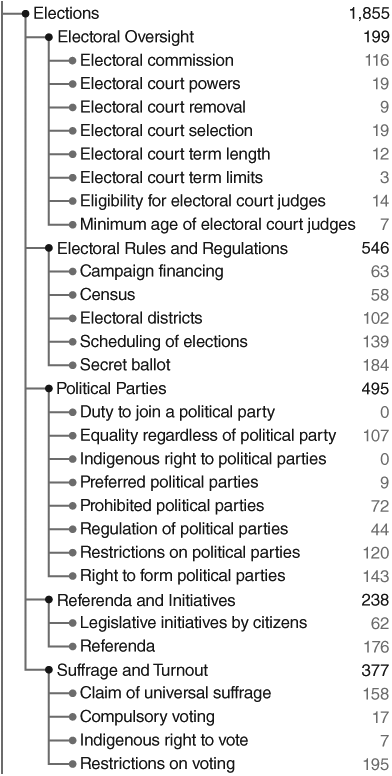
Since 2013, the site has grown steadily; as of June 2025, it hosts 7,000 visitors a day and serves constitutional drafting teams worldwide. That the site has become a research tool for drafters of the texts themselves imposes an additional set of responsibilities on the data set. If drafters use the site’s topics to identify the ideas that should be included in their text, then it is imperative that the topics represent the latest in constitutional ideas. Indeed, some of the ideas in modern constitutional drafts, such as those from Chile’s recent efforts, are not as well indexed by the Constitute vocabulary as one would like; vocabulary needs to keep up with innovations in ideas. For example, Figure 20.1a and 20.1b depict some of the topics in the initial set (v.1.0) of topics indexed on Constitute. Figure 20.1a includes topics related to amendment and culture/identity and Figure 20.1b includes those related to elections, a fraction of the 330 topics included in v.1.0 of the vocabulary. Small updates to this overall set, sourced from constitutional reform and academic projects, are released periodically. One analog to this updating process is the regular “editioning” of the Diagnostic and Statistical Manual of Psychiatric Disorders (DSM), which attempts to standardize ideas in the mental health field. The controversial DSM operates in a particularly delicate area of research. It may be imperfectly representative of the field’s ideas, which are evolving and sometimes highly contested, but the manual is still an invaluable benchmark for coordinating research and treatment.
Select topics from Constitute: amendment and culture/identity.
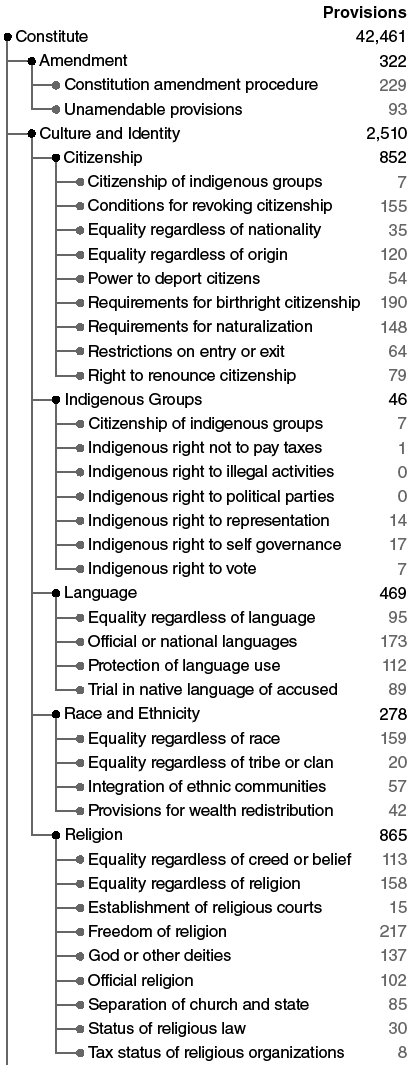
Figure 20.1a Long description
The lines start from the main node “Constitute” and split into two main branches: “Amendment” and “Culture and Identity.” “Amendment” has two direct subcategories: “Constitution amendment procedure” and “Unamendable provisions.” “Culture and Identity” branches further into five subcategories: “Citizenship,” “Indigenous Groups,” “Language,” “Race and Ethnicity,” and “Religion.” Each of these subcategories has additional subdivisions representing specific provisions.
Select topics from Constitute: elections.
The set of topics on Constitute is a controlled vocabulary – a data set of concept labels, definitions, related terms, and examples – that users can download from the website and from various data repositories (e.g., the Qualitative Data Repository at Syracuse University). The idea, at the outset, was to facilitate the use of the data by machines, as well as to coordinate the use of terms among researchers in constitutional law. In most research domains, an initial data set forms the core vocabulary, and is expanded and enriched when merged with other vocabularies. We decidedly do not presume ours to be the central node in the network, nor ourselves as the second coming of Linnaeus. Indeed, an important part of the collection and publication of relevant terms and data sets is to expand the vocabulary beyond Constitute itself.
Conceptual Alignment, Discovery, and Enrichment
One of the challenges of scholarly collaboration is aligning two competing, or even complementary, vocabularies. Imagine if Linnaeus were to compare (and integrate) his biological vocabulary with that of his competitors. Comparing multiple vocabularies can result in knowledge transfer, accumulation, and translation. However, only once vocabulary is formalized can one begin to integrate them meaningfully.
For example, consider the vocabulary used to categorize articles, books, and data sets. The major cataloguers of these three sets of works (JSTOR for articles, the Library of Congress for books, and ICPSR for data sets) use different vocabularies to classify the works, seemingly without any connections among them. Certainly, the origins and purposes of the schemes are different. For example, the Library of Congress’ categorization scheme grew from Thomas Jefferson’s initial set of categories (Jefferson’s donation of his library would become the Library of Congress) and pretends to represent every domain of knowledge and to catalog every published book.
One could manually build a crosswalk file that integrates these three (and other) vocabularies. However, text-as-data methods offer tractable ways to integrate large vocabularies, albeit with human oversight. In other work, my collaborators and I use some promising natural-language-processing methods of semantic similarity (vector semantic models, specifically) to align (initially) these three vocabularies, followed by further stitching by hand (Elkins, Gardner, and Moran Reference Elkins, Gardner and Moran2022). The result of these aligned vocabularies is that one can understand which topics and categories exist in one collection or another. For example, the Library of Congress “K Class” (Law) is deep and extensive mostly because the one and only K-class librarian worked for over four decades to develop and populate a nuanced set of categories.Footnote 6 Not only can one evaluate the reach (conceptual “extension”) of the vocabularies themselves, but also, since these categories are tied to actual objects (books, articles, and data sets), one can calculate which topics are most populous in those collections.Footnote 7 I am not sure that we scholars have a clear understanding of the relative population of books and articles across topics. Is there more work on, say, “populism” than on “clientelism”? As it happens, the answer is yes, especially these days, with five times as many books and articles tagged as “populism.” I have come to call such analyses conceptual ecology, by which I mean the assessment of the prevalence of a particular idea in a given population (era, region, discipline, etc.). One might also think of it as Zeitgeist studies.
In the analysis of constitutions, this sort of alignment of concepts across scholars is invaluable. Scholars of constitutional law have produced multiple data sets on various aspects of constitutions, including data on the constitutional text itself (Elkins and Ginsburg Reference Elkins and Ginsburg2005/Reference Elkins, Gardner and Moran2022); data on particular topics of the text (e.g., Lambert and Scribner Reference Lambert and Scribner2009 on gender; Koenig, Tsutsui, and Crabtree Reference Koenig, Tsutsui and Crabtree2023 on minority incorporation); and data on judicial decisions (e.g., Gabel et al. Reference Gabel, Carrubba, Helmke, Martin, Staton, Ward and Ziegler2024). Each data set has its own conceptual vocabulary, some more formal than others. And for some of these projects, the vocabulary from the CCP has functioned as something of a baseline vocabulary from which the others build their concepts.
An example of this kind of alignment (and enrichment) of constitutional topics is a project by Jill Lepore (Reference Lepore2023), who has collected the text of the almost 14,000 proposed amendments to the US Constitution since 1789. Lepore used the topics in Constitute to categorize the various proposals. Not surprisingly, the topics in the Constitute vocabulary did not always fit each of the US proposals. Sometimes, the US corpus introduced an idea that was not in the Constitute vocabulary (e.g., the right to water, the rights and duties of parents, and honorary titles for retired office holders) or that was more nuanced (e.g., a special district for the national capital). And, of course, there are many more topics in the Constitute vocabulary that do not appear in the US proposal set. Lepore and the CCP team worked together to enrich the vocabulary. As a result, twenty-nine topics were added to the Constitute vocabulary, which enriched both projects. Note that in this case the classification of the amendment proposals was performed by humans, not machines; the “digital” component here is the sharing of a digital collection of concepts. The advantages of a mutually tagged data set are significant. One basic analysis facilitated by the data would be one of conceptual ecology (Elkins and Lepore, Reference Elkins and Leporeforthcoming). That is, which topics populate one set but not the other, and to what degree? But one could imagine many other studies. This scholarly collaboration, in this case between historians and political scientists, points to the value of a unified vocabulary.
Sometimes, one has data (text or otherwise) but no vocabulary with which to classify the data. Consider, for example, the mountain of comments often collected in public consultations held in advance of constitutional assemblies. In the preparation of the Chilean constitutional draft of 2022, the government collected some 250,000 comments in a series of town hall meetings, as well as in open public comment periods. These comments represent something of a citizens’ wish list for the new constitution (which failed in a referendum in September 2022). But wishes for what, exactly? Without a working vocabulary, one cannot categorize citizen remarks by topic. And even with a vocabulary, one would not likely have the bandwidth to categorize the comments by hand. These challenges of vocabulary and labor explain, in part, why public consultation records go largely unanalyzed. However, a centralized vocabulary and machine-mediated methods render the task more tractable. For example, in an analysis using vector semantics, we matched most of the 250,000 comments to a topic in the CCP vocabulary (Cruz et al. Reference Cruz, Elkins, Gardner, Martin and Moran2023). We then compared the prevalence of these ideas against their prevalence in national constitutions. Perhaps not surprisingly, we find that most of the Chileans’ comments had something to do with rights, a result consistent with the attention to rights over institutional structure in modern constitutional design (Gargarella Reference Gargarella2013). But then, this kind of conceptual ecology was possible only with a representative set of topics and ideas.
Automated Integration: The Case of Linked Open Data
In the examples given, the format of the vocabulary files is straightforward, sometimes involving simple text files, which scholars can read and analyze with their software of choice. Some file formats, however, provide opportunities for machines to assess and match concepts more easily, and then connect these concepts to data on concrete instances of the concept. One such solution is Linked Open Data, sometimes called the Semantic Web, and more aspirationally Web 3.0. It is a data structure that is increasingly common on the web and that supplies the information panels and carousels that search engines now regularly present alongside internet search results. Social science data is only sporadically available in this format. As it happens, the CCP was one of the first data projects in the social sciences to employ this structure, which makes for a helpful case study. The project’s use of Linked Open Data has yielded some modest but potentially significant benefits.
The data for Constitute, both concepts and text, take a very different form, one built for the online environment and one that both human beings and machines can easily access. Consider some early dividends of this data strategy, since sometimes it can be helpful to see the research target. In 2015, we made our data available on a SPARQL endpoint (a data hub that machines can consume). Shortly thereafter, Google’s search engine began to ingest this structured data and surface it in different ways in search results. For example, a Google search on “constitution” returned the 4,500-word US Constitution on a “card” (a “one-box,” in Google-speak) at the top of the search results (Figure 20.2). A drop-down menu on the card allowed the reader to navigate sections. The text and data on these cards came directly from our online Constitute data. A number of other constitutions would show up too. A Google search on the “Bhutan Constitution” allowed readers to read the country’s commitment to Gross National Happiness in Article 9(2). All of these cards pulled directly from the Constitute repository and updated as Constitute updated. The US Constitution on an index card is, quite literally, a small thing, but something that represents a huge advance for information science, and for the social scientists who depend on it.
Results from a Google search on “US Constitution.”

Where do these infographics come from? The data are stored in Google’s Knowledge Graph, a curated set of highly connected and machine-readable data (also known as linked data). Google began delivering results from the Knowledge Graph in 2012, but the concept of linked data had been simmering for some time. Tim Berners-Lee, known to many as the inventor of the World Wide Web and to many of his followers as simply “TimBL,” had begun championing the concept as early as 2009 as the heart of his Web 3.0. Berners-Lee runs an organization devoted to building and standardizing the relevant technology. Linked data is also sometimes identified as “graph data” (highlighting its interconnectedness) and is a core part of what technologists describe as the Semantic Web.
Linked data are simple to understand, and their utility is immediately obvious. One key feature is that each data element, whether a concept (right to privacy) or a concrete “thing” (e.g., the US Constitution), has its own unique location on the web. These locations (Uniform Resource Identifiers) can be web addresses (URLs) that human beings read, but more often they are places where data resides for machines. Each of these entities is linked to other entities through some relationship, which itself is labeled with a unique URI.
So, a typical linked data file comprises seemingly endless lines of subject–predicate–object “triples,” each of whose elements is a distinct URI. For example,
<http://constitute/constitution/sudan2005/article2>
is one of many triples in the Constitute data set. Linked data files have the suffix .nt (as in, N triples).Footnote 8 This particular triple tells us that Article 2 of the Sudanese Constitution deals with the topic of torture. It should be clear that the Constitute data set alone would have other links to each of these entities (i.e., other links to “Article 2,” “Sudanese Constitution,” and “torture”). And other data sets would have things to say about these entities as well. As you can imagine, data files with endless triples marked up in this way are utterly forbidding to browse directly. Editing and visualization tools allow analysts to work with and understand various relationships in these files. However, the lengthy lines of code are instantly intelligible to machines. The beauty of linked data is that these “entities” (concepts, properties, data elements, etc.) can be linked to an infinite number of other things and concepts (hence the graph analogy, which refers to a network graph). And every entity lives at a unique address on the World Wide Web. The consequence is that machines and their human analysts can draw connections easily and exponentially as network ties grow. There are real challenges in relating such data to those of others, which is why many semantic data sets (such as Google’s Knowledge Graph) exist in a semi-open state – consuming public data but storing and managing it more privately.
One virtue of data in this form is that human beings and machines can consume each other’s data more easily. Just as Google can put up Constitute’s texts, structured as their designers see fit, so too can we import dynamic and fascinating data that appears and updates by the minute. One source is DBPedia, a collection of the structured part (the information boxes) of Wikipedia. All of the data included in info-boxes in Wikipedia articles are included in DBpedia. Another source is the New York Times, which has made available its data, in linked-data format, for machines and humans to extract. In the same way that constitutions on Constitute are tagged with topic tags, so are New York Times articles. Data sets in this format are multiplying and evolving, growth that renders each such data set that much more valuable. This result follows from the basic law of network externalities.
Apart from data integration, perhaps one of the most interesting aspects of the Semantic Web is its utility for concept formation and enrichment. In particular, Semantic Web methods have the distinct advantage of being able to share, and collaborate on, vocabularies. With tools developed for the Semantic Web, one can edit a data set’s vocabulary to update or expand any part of this conceptual structure. My sense is that Linnaeus and colleagues and competitors would ideally have developed their rival classification systems using Semantic Web technology.
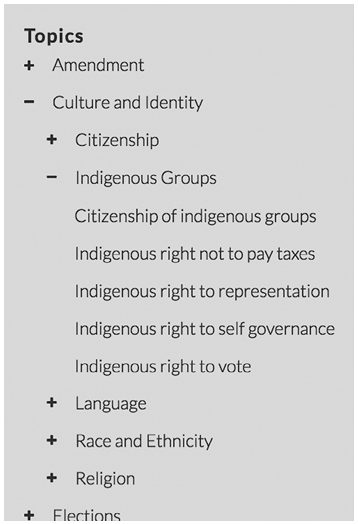
So, for example, consider the 300 or so topics in the Constitute vocabulary (Figure 20.1). One can browse these topics on the Constitute website and return a complete set of excerpts related to each topic. See Figure 20.3, a snapshot that shows the arrangement of just a few of these concepts on Constitute. In this example, the first-level topic (“Culture and identity”) is expanded to depict several subtopics under which “Indigenous Groups” is expanded to see a set of constitutional provisions, including “Indigenous right not to pay taxes.”
A snapshot of Constitute’s topic tree.
As we have emphasized, any given categorization is only one view of constitutional ideas and is not suitable or useful for all users. For example, none of the topics has “women” in its label. There are certainly topics that are related to women in our vocabulary, such as inheritance laws and marriage equality. These are important concepts closely related to the status of women. Another researcher might have included them under the category “women” or “gender.” So how would one integrate this new category?
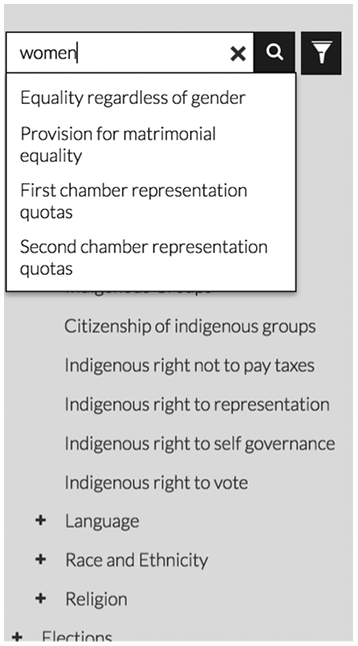
In the case of Constitute, we introduced the keyword “women” and linked relevant topics to that concept. So now if one types “women” in the search bar, Constitute auto-suggests each of the topics related to that concept (see Figure 20.4). Adding keywords essentially allows Constitute to integrate different conceptualizations and, as such, enrich the underlying vocabulary. What this means practically is that one can access constitutional texts and data associated with concepts other than those stipulated by the CCP.
Entering “women” in Constitute’s search box triggers topics related to gender.
Conclusion: A Path Forward
This chapter takes on a perennial question for social scientists: How do we formalize our conceptual map of the world, and then how do we compare our map with that of others?
Scholars in earlier eras had much greater challenges in coordinating than we do today. The tools of concept analysis are ideally suited to recent advances in text-as-data methods and to web-based data structures. The domain of constitutional law is just one of many domains suited to this kind of methodological intervention. The case I describe in this chapter – that of the concepts developed to represent constitutional ideas – suggests that a little bit of formalization goes a long way. Cataloging concepts in simple, standardized data files allows researchers to align concepts and thus to translate ideas from one data project to another. Researchers can use such a standardized set of concepts to index their own data objects and even expand the vocabulary, thereby enriching the original set of concepts. These simple concept sets are easily transformed into machine-readable data files that allow for more seamless connections on the web. Importantly, the creation, organization, and enrichment of such files still require significant concept curation. This exercise preserves and incentivizes the kind of conceptual work that many scholars find intellectually satisfying and that originally motivates their engagement in concept analysis.
Glossary
- Comparative Constitutions Project (CCP)
A data project founded by Zachary Elkins and Tom Ginsburg in which the authors have identified each formal change to each of the world’s constitutions since 1789 and recorded a large number of attributes of these constitutions in order to test hypotheses regarding the origins and effects of constitutional ideas. The project also hosts a repository (Constitute) that includes a sample of these constitutions indexed with some 330 topics. Related: Constitute.
- Concept integration
Combining two vocabulary sets from the same or related domain. Related: concept merging; concept translation.
- Conceptual ecology
A study of the prevalence of certain ideas in a certain population (time, space, or literature, for example).
- Conceptual extension
The degree to which a particular controlled vocabulary indexes the full set of ideas in a domain.
- Concept mapping
Specifying and organizing the concepts in a domain of knowledge. See knowledge representation.
- Concept translation
Matching a term from one researcher to those of others. Related: concept integration; concept merging.
- Constitute
An online indexed repository of the world’s constitutions, indexed with topics derived from data from the CCP. Online at constituteproject.org. Related: Comparative Constitutions Project.
- Data setting (of concepts)
The idea of treating concepts as units of analysis, by organizing information about concepts systematically.
- Digital semantics
The use of computerized methods to organize and analyze ideas (concepts) and their meanings.
- Embeddings
Representations of words or phrases as vectors of numbers. Related: vector semantics.
- Graph database
A data structure in which attributes of entities are stored as nodes and edges in the style of network (or graph) data, such that the edges represent relationships between the nodes. The data format is intended to facilitate semantic queries. One example is Google’s Knowledge Graph, which contains the information used to present the info-boxes that appear alongside web search results.
- Knowledge representation
In general, the process of organizing and representing information in a particular domain of knowledge, often so that computerized methods (e.g., artificial intelligence) can perform some sort of task but also so that nonexperts can understand the ideas in a field. Related: concept mapping.
- Natural language processing
Machine-learning technology in which computers interpret human language.
- N-triples
A data format understood by machines in which concepts and entities are encoded as URLs and organized as triples of subject–predicate–object form.
- Ontology
The terms and categories, and their properties, that are used widely in a particular domain of knowledge. Facilitates classification and knowledge representation. Related: taxonomy; schema; controlled vocabulary.
- Ostensive definition
The expression of meaning by illustration or example; that is, by pointing (from the Latin ostens, stretched out to view).
- Schema
A set of standardized vocabulary, often used to mark up web pages for machines to analyze. Closely related to the project schema.org. Related: ontology; taxonomy; controlled vocabulary.
- Semantic Web
An extension of the World Wide Web, in which concepts and entities on web pages are marked up with standardized format to allow machines to process and interpret. Related: Web 3.0; Linked Open Data.
- SPARQL (endpoint)
Computer language used to query data marked up in a standardized form, usually as Linked Open Data, and deposited on the web (endpoint). Related: Semantic Web; Web 3.0.
- Taxonomy
A system of classification for a particular domain of knowledge, especially one that is hierarchical. Related: ontology; controlled vocabulary; schema.
- Text-as-data methods
A general term for the various techniques and methods of analyzing digital text, often at a large scale. Related: natural language processing.
- Uniform reference identifier (URI)
A unique sequence of characters that identifies entities (such as a book, a person, or a concept) for referencing on the web. URLs, which identify a location on the web, are a kind of URI.
- Vector semantics
The method of representing words or phrases with a vector of numbers, often in order to assess their proximity in meaning. These representations are often called “embeddings.”
- Vocabulary enrichment
Adding or refining terms and meanings to a set of concepts, often from a comparison of other vocabularies or corpora.
Introduction
The study of political methodology places substantial emphasis on causal inference. This seems appropriate. After all, many or most social science theories focus on relations of cause and effect. The problem of drawing valid inferences about causal relations from empirical research is thus central to social science.
Unfortunately, however, the study of conceptualization and measurement appears to play a more minimal role in contemporary methodological research; especially, it occupies a relatively minor place in many graduate methods programs.Footnote 1 This is unfortunate for two reasons. First, strong concepts and measures are the foundation of many forms of empirical research not necessarily linked to causal inference – including centrally description. Although inferring causation requires description, what is sometimes called “descriptive inference” plays an important role beyond causal inference. Second – and most relevant to this chapter – successful concept formation is itself a sine qua non of the successful study of causation. The neglect of concept formation in graduate curricula can thus undermine the effort to improve the quality, validity, and meaningfulness of causal inference.
Consider experiments, a key tool for causal inference. The design of an experiment immediately raises important conceptual questions. What is the “treatment” a case of – that is, what concept does it instantiate? To what class of similar treatments is it comparable? In what other empirical settings might we expect its effects to be found? As I argue in this chapter, these questions of both internal and external validity are matters not only of theory and empirics but very centrally of concepts.
The tools of concept formation are therefore essential. In this chapter, I discuss how to apply Giovanni Sartori’s ladder of abstraction to problems of causal inference, with particular emphasis on experimental design. As I suggest, Sartori’s ideas and related innovations in other foundational work on concepts, especially Collier and Levitsky (Reference Collier and Levitsky1997),Footnote 2 are highly relevant for cutting-edge problems of causal inference.
Sartori’s Ladder of Abstraction
Giovanni Sartori’s (Reference Sartori1970) path-breaking article “Concept Misformation in Comparative Politics” made two crucial contributions.
First, it underscored the critical role of conceptual classification. Sartori wrote in a context in which some researchers discredited taxonomies – in particular, dichotomies – as primitive and pre-quantitative. Measurement, for those researchers, began with graded or especially interval-level scales.Footnote 3 But Sartori rightly emphasized instead the key role of classification: Before deciding “how much” of a thing there is, scholars must assess whether the thing is an instantiation of a particular concept or not – that is, in what conceptual container it belongs. This cannot be done without the work of elaborating the properties of the concept. As Sartori (Reference Sartori1970: 1038) put it, “concept formation stands prior to quantification.”
Second, Sartori ingeniously showed how the “traveling problem” that bedevils much empirical social science, and that is perhaps most accentuated in comparative politics, is fundamentally a conceptual challenge. He proposed his famous ladder of abstractionFootnote 4 as a way to address it (see Figure 1 in Collier and Levitsky Reference Collier and Levitsky1997). The relationship between the extension (or denotation) of a concept and its intension (or connotation) is key. Extension refers to the specific units to which a concept applies: These particular countries are democracies; those individuals are bureaucrats. Intension instead specifies the properties necessary for membership in a conceptual category: for instance, democracies have (1) free and fair elections, (2) a certain level of popular participation, and (3) liberal protections for minority rights.
Climbing the ladder of abstraction involves sacrificing intension for greater extension – for instance, by replacing “democracy” with “regime,” which applies to a greater range of countries. It thus achieves greater generality, without losing precision: at a higher level of abstraction, it is still conceptually clear which instantiations should count as members of a class and which should not. Scaling the ladder of abstraction is thus a way of achieving greater generality while avoiding conceptual stretching, though it can come at the cost of losing conceptual differentiation (Collier and Levitsky Reference Collier and Levitsky1997). Thus, for many purposes, regime is simply too general a term. Conversely, broadening extension without reducing intension can produce conceptual stretching. For example, it may involve labeling countries as democracies, even though their attributes do not make them members of the class.
To be sure, as Collier and Mahon (Reference Collier and Mahon1993) emphasized,Footnote 5 Sartori’s idea of conceptual stretching is anchored in “classical” categories with clear boundaries. The ideas of family resemblances and “radial” conceptual structures can relax this constraint. Specifically, one way to increase conceptual differentiation without stretching is thus with diminished subtypes, for example, “democracy with adjectives” (Collier and Levitsky Reference Collier and Levitsky1997). An illustration would be “illiberal democracies,” which lack protection for minorities and thus are not full instantiations of the root concept of “democracy.” Crucially, Sartori’s approach and the use of diminished subtypes may be viewed as complementary procedures; in other words, they can be used together.
The ladder of abstraction provides guidance for the formulation of concepts that travel. Consider “staff,” “administration,” and “civil service” as alternative labels for the set of agents who implement the directives of governments or rulers. Sartori (1967: 1042) quotes Smelser (Reference Smelser1967: 103), who argues that “staff is more satisfactory than administration … and administration is more satisfactory than civil service … the concept of civil service is literally useless in connection with societies without a formal state or governmental apparatus … the concept of administration is somewhat superior … but even this term is quite culture-bound.” Consequently, Sartori suggests that – again quoting Smelser – the more useful, broader term is “Weber’s concept of staff … since it can encompass without embarrassment various political arrangements.”
Thus, a key component of generalization involves the choice of the level of abstraction at which units are comparable in this sense – that is, at which the root concept is sufficiently high on the ladder of abstraction to generate conceptual homogeneity while still maintaining differentiation.
Two Conceptual Challenges for Experimental Research
I now turn to the relevance of Sartori’s contributions for experimental research. I focus on their usefulness in addressing just two of many important challenges.
Challenge 1: What Is the Treatment?
One core challenge in experimental research is defining the conceptual “container” into which a treatment should be placed – that is, the concept of which it is an instance. With experiments, the question “What is the treatment a case of?” may thus often be asked.Footnote 6 This challenge clearly pertains to observational studies as well. Yet it may be particularly noticeable to experimental researchers (and their audience), given their greater control over the design of an intervention.
When experiments seem unsatisfying or uninformative, I believe, it is often because the proper placement of the experimental treatment on a relevant ladder of abstraction does not match the level of generality of a core concept in the theory. This could happen for at least three reasons. First, the experimental treatment is lower on a ladder of abstraction than the root theoretical concept. Second, it may also contain only some of the attributes that give the root concept in a theory its connotation, and the missing attributes appear theoretically important. In this case, one might think of a treatment as if it were a diminished subtype – lacking some properties of a middle- or higher-level concept. Finally, a concept is applied improperly to a given experimental treatment in a manner akin to conceptual stretching.
The extent to which this problem arises varies across experiments. As one example, in the outstanding study of Hainmueller et al. (Reference Hainmueller, Lawrence, Gest and Laitin2018), researchers designed two randomized experiments to encourage eligible immigrants in New York to attain US citizenship. In one experiment, certain low-income, lawful permanent residents registered for a public/private naturalization program. Yet they were ineligible for a federal program waiving the $680 application fee.Footnote 7 Some of these applicants were offered – at random – remission of the fee. The study found that the subsidies to eliminate financial costs raised the naturalization application rate by 42 percent.
By contrast, in a second experiment, even lower-income applicants, who were already eligible for the federal fee remission, received behavioral nudges designed to help them overcome nonfinancial hurdles in the naturalization process.Footnote 8 Nudges are an important topic in the literature, and they have received substantial attention from behavioral economists. These randomly assigned nudges – which comprised reminders, assistance, and encouragement – were similar to those used by service providers working with immigrant populations. As it turned out, nudges had no discernible effect on naturalization.
Especially from a policy perspective, the interventions in these two experiments correspond nicely to concrete instantiations of concepts such as “cost” for individual applicants. The nudges may also correspond to improvements in (perhaps a somewhat narrow conception of) legal receptiveness on the part of a host population.
At the same time, targeted reminders and encouragement may not correspond to a broader “context of reception” that, according to other scholars of immigration, may more deeply shape the attractiveness of citizenship to legal migrants (Portes and Rumbaut Reference Portes and Rumbaut2001; Fox and Bloemraad Reference Fox and Bloemraad2015).Footnote 9 Indeed, this broader context of reception may be invariant to whether or not respondents receive nudges from service providers – which could help to account for the null effects of nudges. This observation in no way gainsays the value of testing the impact of nudges per se. However, it does raise the question of the experiment’s connection to core theoretical concepts in the study of barriers to immigrant naturalization. The point is especially relevant if such a broader background concept is indeed the theoretical quantity of greatest interest.
In this and many other studies, it is therefore useful to connect the intervention to a systematized, root, or background concept. To interpret an experiment’s results, a core task is one of classification – is this treatment an instance of the concept? This conceptual task can also be viewed from the prism of internal validity – of whether “experimental treatments [did in fact] make a difference in this specific experimental instance” (Campbell and Stanley Reference Campbell and Stanley1963: 5). To interpret any difference, one must conceptualize the “difference maker” or causal agent at work.
The tools of concept formation are helpful for this critical task. The ladder of abstraction is conceptually clarifying and connects the empirics to relevant theory. For example, one could reformulate a root concept to cast it at a lower level of abstraction more appropriate to an experiment. Relatedly, scholars may define a new version of a systematized concept – a “specific formulation of a concept adopted by a particular researcher” (Adcock and Collier Reference Adcock and Collier2001: 530),Footnote 10 thereby ignoring some attributes associated with a broader background concept. Better conceptualization can produce a more satisfying connection between theory and empirics. Of course, it can also render interpretation more circumspect, by potentially laying bare the limited theoretical meaningfulness of a given experiment.
Careful conceptualization of the treatment is thus a critical aspect of experiments and of observational research oriented toward causal inference.
Challenge 2: Cumulative Learning
Experiments are often prized for the purchase they provide for causal attribution in a single study – their internal validity.
Recently, however, experimental researchers have begun to address more centrally and systematically the challenge of cumulation of knowledge. Results from different experiments may fail to aggregate into a meaningful set of cumulative findings for many reasons. First, there are few studies on a particular topic. Once the “flag” has been planted by a set of researchers, incentives for replication are weak. Second, studies differ substantially in their designs, complicating the pooling or comparison of results. Finally, many studies in which null effects are found are not reported, making the conclusions drawn from a set of published studies potentially problematic. Generalizability (or Campbell’s “external validity”) is one core aspect of this problem, but the challenge for the cumulation of knowledge is broader.
The Metaketa Initiative spearheaded by the Evidence in Governance and Politics group (Dunning et al. Reference Dunning, Guy Grossman, Hyde, McIntosh and Nellis2019) is one recent effort that seeks to address this challenge of cumulative learning. To address problems of study scarcity, study heterogeneity, and selective reporting, researchers have collaborated on the design of studies across divergent contexts, preregistering a meta-analysis of results before the studies are conducted. In our inaugural collaborative project, my coauthors and I sought to assess the impact of providing voters with positive or negative information about incumbents’ political performance (Dunning et al. Reference Dunning, Guy Grossman, Hyde, McIntosh and Nellis2019). Each of the studies included in the preplanned meta-analysis were randomized controlled experiments, with informational interventions randomized across respondents in each case.
Yet the pooled analysis of an intervention “common” to each study raises again the critical question noted earlier of study heterogeneity. How can heterogeneity conceivably be reduced across a set of contexts as disparate as Benin, Brazil, Burkina Faso, India, Mexico, and Uganda? How, in particular, can one homogenize the “main” treatment arm in the set of studies in which the details of incumbency and the positive and negative information differed nontrivially across these contexts? This is an important challenge for all meta-analysis.
Sartori’s conceptual tools provide an immediately helpful resource for addressing such questions. Indeed, Sartori focused himself on the challenge of cumulation.Footnote 11 The challenge of comparability suggests Sartori’s “traveling problem” and thus brings into focus the relevance of the ladder of abstraction. The question of the differences of the treatments across the diverse study sites can therefore be productively recast as a question of abstraction – that is, the level on Sartori’s ladder at which the treatments can be productively “homogenized” as a conceptual matter and thus their effects can be meaningfully compared or integrated.
In our case, at the lowest levels of abstraction, it was clear that any two interventions using different kinds of information and taking place in contexts as distinct as six different countries in Latin America, Africa, and South Asia must differ on a very large number of dimensions (Dunning et al. Reference Dunning, Guy Grossman, Hyde, McIntosh and Nellis2019). As the attributes needed to define a “common” intervention multiply, the number of treatments to which a concept can apply diminishes – illustrating Sartori’s trade-off between intension and extension. Yet by focusing on just a few core attributes of commonality and thereby climbing the ladder of abstraction, the generality and extension of the concept may increase. A central focus in our common study of informational interventions was the distinction between “good” and “bad” news about political candidates.Footnote 12 This concept is at a middle level of abstraction and can be meaningfully defined across disparate contexts, even if the particularities of the interventions differ substantially. If theoretical expectations are defined at this level of abstraction, then empirical aggregation of results can also be feasible and meaningful.
Whether this effort was successful in this specific instance is for others to judge. The key point here is that the conceptual considerations suggested by Sartori’s ladder of abstraction proved essential.
Conclusion
Concept formation is critical for successful causal inference, as it is for other social-scientific goals. I have focused here on experiments, but the observations can readily be extended to cognate designs, such as natural experiments, or to mainstream observational studies (Brady and Collier Reference Brady and Collier2010).
We would therefore do well to heed Sartori’s admonition that concept formation stands prior to quantification – but we can also replace “quantification” with “experimentation,” or indeed more broadly with “causal inference.”
Introduction
Formal modeling is generally understood as a tool for developing and clarifying causal mechanisms (Fiorina Reference Fiorina1975), “tightening the connections between assumptions and conclusions” (Powell Reference Powell1999), and making empirical predictions. Although mathematical by definition – and hence using a language more often associated with quantitative analyses – recent work emphasizes the natural affinities between formal modeling and qualitative research, owing to the shared focus on causal pathways (Lorentzen, Fravel, and Paine Reference Lorentzen, Fravel and Paine2016).
In addition, I argue here, the tools of formal theory are useful in all types of conceptual work, in ways equally relevant to quantitative and qualitative researchers. These uses include: providing precise and parsimonious definitions of concepts and their ranges of variation; clarifying their relationships to other concepts (e.g., hierarchical, family resemblance, diminished subtype); and making well-founded aggregating and disaggregating (“lumping” and “splitting”) arguments. It is noteworthy that formal conceptualization is so common in economics, and even among formal modelers in political science, that it goes largely unnoticed. Nonetheless, it has helped define and characterize a host of important and enduring concepts. This chapter draws attention to the practice and illustrates its commonalities with natural-language concept formation, by examining four prominent examples (Table 22.1).
Conceptualizing violent and nonviolent corruption.
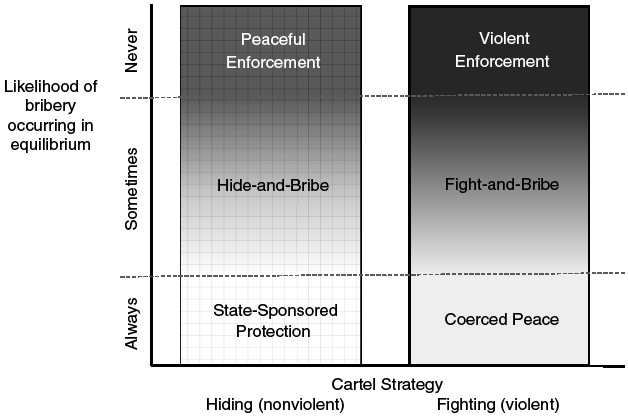
Figure 22.1 Long description
The bar graph x-axis identifies cartel strategy, ranging from hiding (non-violent) on the left to fighting (violent) on the right. The y-axis indicates the likelihood of bribery occurring in equilibrium, with aways at the bottom, sometimes in the center, and never at the top. The left bar from top to bottom is as follows: peaceful enforcement, hide-and-bribe, and state-sponsored protection, depicted in a gradient from light to dark gray. The right bar from top to bottom is as follows: violent enforcement,fight-and-bribe, and coerced Peace, depicted in a gradient from light to dark gray.
| Section | Concept | What it Exemplifies | Sources |
|---|---|---|---|
| 2.1 | Elasticity | Formal Conceptualization of Primitives | Samuelson and Nordhaus (Reference Samuelson and Nordhaus2010) |
| 2.2 | Audience Costs | Formal Conceptualization of Primitives | Fearon (Reference Fearon1994) |
| 3.1 | State-Sponsored Protection | Formal Typology of Equilibrium Outcomes and Disaggregating a Preexisting Concept | Lessing (Reference Lessing2018) |
| 3.2 | Commitment Problems | Clarifying Defining Characteristics and Aggregating Seemingly Distinct Mechanisms | Powell (Reference Powell2006) |
Perhaps the clearest and most important commonality has to do with aggregation, disaggregation, and conceptual “stretching” (Sartori Reference Sartori1970). Just as scholars working in natural language pay careful attention to the extension and intension of concepts (Collier and Mahon Reference Collier and Mahon1993),Footnote 1 the mathematical language of formal theory is centrally concerned with sets, classes, and the criteria that define membership in them. Many formal results consist in proving that seemingly distinct classes share common (mathematical) characteristics, or that seemingly similar classes differ in key ways. Another important commonality is the role of ideal types: illustrative characterizations of logical extremes that real-world cases may resemble, combine, or approximate. In formal conceptualization, ideal types often take the form of limit cases, or corner solutions, where some key value or ratio goes to zero, one, or infinity. Real-world cases may approximate these limit cases asymptotically (approaching but never reaching). Alternatively, they may usefully be characterized as a probabilistic mix of them.
The glaring dissimilarity between formal and informal conceptualization is the role played by math. While scholars of all stripes may sometimes use mathematical objects to characterize their concepts (e.g., dichotomous versus continuous scales; ratios with nominators and denominators), these are often invoked as metaphors or operationalizations of underlying concepts whose true definition in natural language has come first. In formal theory, the priority is reversed: The mathematical object is the concept. If such objects appear crude, they also have precise properties that can be deduced and manipulated through mathematical analysis. Thus the formal theorist hopes to gain purchase on the real-world phenomenon onto which their concept has been mapped using natural language. For better or for worse, “one can tolerate more conceptual ambiguity in an informal argument than in a formal one” (Fiorina Reference Fiorina1975: 137).
Nevertheless, Sartori’s (Reference Sartori1970) dictum “concept formation stands prior to quantification” still applies, if in modified form. Formal concept formation, though mathematical, remains distinct from and epistemologically prior to the analysis of models. It occurs, as I see it, at two distinct moments in the modeling process, each prior to an important analytic step. The first is during the setup of formal models, and concerns their primitives or theoretical building blocks, including choice variables, parameters, and payoffs (outcomes).Footnote 2 Whereas nonformal scholarship can express such building blocks mathematically, formal scholars must do so. Transforming the ideas to be studied into mathematical objects such as ratios, variables, or probability distributions – all with transparent ranges of variation – is precisely what it means to specify a model or, for that matter, to model something in the first place. And precisely because these specifications ultimately determine the output of the model, the formation of building-block concepts must be well founded prior to and independently of the mathematical analysis to come.
With formal building-block concepts in hand, modelers typically write down a game – a sequence of moves by different players with a set of possible actions at each step, leading to different outcomes over which players have preferences – and then go about solving it. This generally involves identifying one or more equilibria – that is, combinations of player strategies in which each is a “best response” to the others.Footnote 3 Finally, modelers generally conduct comparative statics analysis, exploring how changes in parameter values affect outcomes of interest within an equilibrium, or provoke shifts from one equilibrium to another.
Just before, though – and easy to miss – comes a second concept-formation step: characterizing (and naming!) a model’s equilibria and mapping them to recognizable real-world outcomes and/or extant concepts from the literature. Here, the order is in a sense reversed. The analysis of the model produces, mechanically, mathematical objects (usually equilibria),Footnote 4 which must then be carefully defined in terms of the ideas we are studying. Doing so gives meaning to subsequent comparative-statics analysis and the empirical predictions it generates, and it allows for meaningful aggregation and disaggregation at the higher level of model outcomes. Each conceptualization phase thus precedes and fundamentally shapes subsequent analytic steps.
Overall, what value does formal concept formation have for nonformal scholarship? As David Collier and James Mahon (Reference Collier and Mahon1993: 853) point out:Footnote 5
When scholars create a technical language, they may well succeed in achieving greater clarity and consistency or in highlighting what they view as important aspects of the phenomena they study. On the other hand, it is possible that this new language will not be anchored in the familiar linguistic prototypes that play such an important role in making categories interesting and vivid.
Formal conceptualization may seem like an extreme example of this trade-off: It offers the exceptional clarity and consistency of mathematical language at the potential price of alienating scholars without the extensive training and mathematical fluency required to fully understand, much less produce, formal models. The good news is that, in general, the conceptual aspects of formal work are largely distinct from and more transparent than the equilibrium and comparative-statics analysis that – I will argue here – they undergird. As I hope the examples developed later demonstrate, a passing familiarity with algebra is usually sufficient to see how formal conceptualization works, and even to incorporate aspects of it in one’s own work.
Formalization of Conceptual Building Blocks in Economics and Political Science
Elasticity: Formal Primitives in Economics
In modern economics, virtually all theory is formal, captured in mathematical models of the phenomenon or setting under study. This requires that all the working parts of a theory – its primitives – be defined mathematically. A fine example comes in part 1 (“Basic Concepts”) of Paul Samuelson and William Nordhaus’ (Reference Samuelson and Nordhaus2010: 65) canonical textbook:
The quantitative relationship between price and quantity purchased is analyzed using the crucial concept of elasticity. We begin with a careful definition of this term and then use this new concept to analyze the microeconomic impacts of taxes and other types of government intervention.
The authors are speaking of price elasticity of demand, which they first describe in words as “the response of consumer demand to price changes,” then define more parsimoniously and precisely using mathematical symbols:

This notation makes several characteristics immediately clear. First,  is a “classical subtype” of the broader category of elasticities, defined as any ratio of changes in quantities. Other subtypes can be defined by swapping in the relevant quantities:


Second, elasticities are unitless – because both the denominator and numerator are expressed as percent changes – and continuous variables, able to take on any numerical value. Yet key values such as 0 and 1 suggest intuitive, categorical distinctions: If  , then changes in price produce proportionally smaller changes in quantity demanded; we call such cases “inelastic” and those with
  “elastic.” The theoretical range of variation also follows transparently from the formal definition: at
  , demand is “perfectly inelastic,” remaining constant for any change in price. At
  , even a tiny increase in price eliminates demand altogether. These extremes can be seen as ideal types: We may never observe perfectly elastic or inelastic demand in the real world, but as conceptual bookends they are useful, including for theory building. For example, in competitive markets with homogeneous products and many firms, individual suppliers face elastic demand, since consumers can always buy from someone else. As these individual demand curves approach perfect elasticity, suppliers become pure “price takers” – able to sell as much as they want at the market price but not a whit for a penny more – and competition becomes “perfect.” The ideal type of perfect elasticity is thus crucial to the larger theory of perfect competition in markets.
With this formal definition of elasticity, economists create a precise but flexible building block for theory building and testing. Elasticities can be transparently included as parameters in models, allowing scholars to analyze how changes in their value affect players’ payoffs and resulting optimal strategies. Often a critical value for ε can be identified, on either side of which the dynamics of the model switch or flip. For example, when demand for a good is price-inelastic – as with addictive substances – negative supply shocks actually increase sellers’ revenues. This is one reason why illicit-drug repression has not eradicated drug trafficking (Becker, Murphy, and Grossman Reference Becker, Murphy and Grossman2006).
Audience Costs: Formal Conceptualization of Primitives in Political Science
If “economics has gained the title ‘queen of the social sciences’ by choosing solved political problems [i.e., economic transactions] as its domain” (Lerner Reference Lerner1972: 259), formal theory in political science often focuses on the very opposite domain: war. Indeed, the following examples all flow from James Fearon’s (Reference Fearon1995) foundational reorientation of the study of conflict as a puzzling failure to find mutually beneficial bargained solutions. One version of this puzzle arises in international crises, in which countries issue escalating threats to one another, and sometimes end up fighting. Each participant in such a war of nerves presumably learns something about the other’s resolve, strength, or goals in the process. But if so, why do they end up fighting?
To answer this question, Fearon (Reference Fearon1994) produces a sophisticated formal model of crisis bargaining, yielding novel and provocative theories of why they occur and why democracies may be better able to cooperate under the security dilemma than autocracies. Underlying and analytically prior to these is a major conceptual contribution, highlighted in the second sentence of the abstract: the concept of audience costs. Three decades and 3,500 citations later, this contribution endures, even as empirical evidence for audience costs remains scant (Schultz Reference Schultz2012).
Fearon introduces the concept informally, using natural language: “If a state backs down [during a crisis], its leaders suffer audience costs that increase as the crisis escalates” (Reference Fearon1994: 577). As with elasticity, this mirrors a more precise, formal definition of the concept; in this case, the formal definition is inseparable from the structure of the model, in which two states take turns choosing among three actions: attack, back down, or escalate a crisis.
If state i quits the crisis before the other has quit or attacked, then its opponent j receives the prize [v] while i suffers audience costs equal to ai(t), a continuous and strictly increasing function of the amount of escalation [measured by the variable t for “time”] with ai(0) = 0.
The definition specifies two important dimensions of variation. First, for each player, audience costs start at zero (since there is not yet a crisis from which to back down), rise over time, and are only paid by the player that backs down (if either does). This time variation makes players’ choices to enter and prolong crises an effective costly signal of their military strength.Footnote 6
Perhaps more importantly, audience costs vary across players. The subscript i is critical: It allows Fearon to specify individual audience-cost functions, so that once a crisis begins, one player’s cost of conceding can be consistently higher than the other’s. This lays the foundation for Fearon’s conjecture about the democratic peace. This flows in part from the comparative-statics analysis of the model, “a striking feature” of which is that “the state less able to generate audience costs (lower ai) is always more likely to back down in disputes that become public contests” (Reference Fearon1994: 585). Yet equally important is Fearon’s intuition that democracies – with their elections and free press – generate greater audience costs than autocracies; this can be expressed formally – 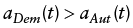 for all t – as an operationalization of how different regime types score on his core concept.
In defining audience costs in terms of a game-theoretic model, Fearon takes advantage of one of formal theory’s great strengths: its clear specification of all possible outcomes, including those that may not occur in equilibrium. These “off the equilibrium path” outcomes nonetheless influence what does occur: If we all stop at red lights, it is because of the bad outcomes that would occur if we did not. This quality contributes to the enduring value of the conceptual innovation. When critics argued, for example, that empirically audience costs seem rare and small, and hence theoretically unimportant, defenders countered, “If we can observe only the domestic costs that leaders choose to pay, then we will generally miss the cases in which these costs are large” (Schultz Reference Schultz2001: 33). The concept as defined also proved capable of traveling: While Fearon saw audience costs as domestic (and hence likely to be greater in democracies), nothing in his formal definition required this. States may care more about their reputation among other states for following through on threats and promises (e.g., A. Sartori Reference Sartori2002), but these can be seen as an international form of audience costs (Schultz Reference Schultz2012: 371), since they create the same disincentive to back down.
They thus invite further, often novel theorization and (sometimes) modeling of these underlying mechanisms or microfoundations. For example, economists theorizing the possibility of negative elasticity ( , such that demand increases in response to price increases) have proposed two diametrically opposed mechanisms. Higher prices for so-called Veblen goods – status symbols such as Gucci handbags or fancy restaurants – might make them more attractive. Conversely, price increases for Giffen goods – generally food staples (such as rice) that dominate low-income household budgets – may force consumers to cut back on relatively expensive items (such as steak) and consume more of the staple. Similarly, Fearon’s specification of ai assumes the existence of an actual audience – presumably, the voting public in democracies and the selectorate in autocracies – that reliably punishes leaders for backing down in international crises. Subsequently, a rich body of scholarship has sought to explicitly theorize and test possible mechanisms by which this might occur.
Formal Aggregation and Disaggregation of Concepts
It may seem trivial that conceptualization of a model’s primitives stands prior to solving it. But formal concept formation also occurs at a higher level, with respect to the equilibria that models produce. Here, conceptualization comes after solving the model yet prior to comparative-statics and parameter-space analyses that, among other things, generate meaningful empirical predictions. Because they capture equilibria, these higher-level concepts cannot always be defined as concisely as primitives. Nonetheless, they have precise mathematical definitions and characteristics that can be usefully invoked when doing formal conceptual work. Such work involves familiar strategies: creating a typology of outcomes; refining a preexisting concept by disaggregating (or splitting) it from similar concepts; and aggregating (or lumping) seemingly distinct phenomena within a single conceptual category. In each of these, familiar concerns arise, to which formal theory can sometimes provide powerful and elegant solutions.
Typologies often consist of ideal types, which raise questions of how to score intermediate or mixed cases (Collier, LaPorte, and Seawright Reference Collier, LaPorte and Seawright2012);Footnote 7 formal typologies can characterize such cases in terms of a probability distribution over ideal-type outcomes. Comparative-statics analysis then demonstrates how changes in key variables affect the relative probability of each. Disaggregation adds inclusion criteria that place limits on how far a concept can travel; this can leave excluded cases unexplained and reduce a concept’s overall relevance. Formal theory can employ off-the-equilibrium-path outcomes as differentiating criteria, creating two similar but critically distinct concepts and a better fit with empirical outcomes that might otherwise be largely observationally equivalent. Finally, aggregation enlarges the set of cases to which a concept applies or travels but risks stretching – ignoring or relaxing the criteria that make the concept theoretically useful in the first place. Formal analysis can help avoid conceptual stretching by precisely identifying disparate cases’ common defining features. I explore these strategies through two examples: my model of violent corruption in drug wars, and Robert Powell’s (Reference Powell2006) work on commitment problems.
Bribery and Violence in Drug Wars: Formal Typologies and Disaggregating a Preexisting Concept
Drug wars in Latin America are often characterized by both rampant police corruption and intense cartel–state conflict. This is puzzling since the point of bribery is, supposedly, to avoid confrontation. To gain purchase, Benjamin Lessing (Reference Lessing2018) develops a model of bribery and law enforcement. The game is simple: Police demand a bribe from a drug cartel in exchange for nonenforcement of the law. The cartel either pays or rejects the bribe demand; if the latter, the police enforce the law, imposing losses on the cartel, and the cartel responds with either nonviolent hiding or violent fighting.
As in most models, variables and parameters constitute primitives that receive formal definitions. One is uncertainty: If police knew the cartel’s profits, they would demand bribes just large enough that the cartel would always pay, and we would never observe drug busts and cartels’ hiding or fighting responses. Because of uncertainty – formalized as a probability distribution over a range of possible profit amounts – police generally demand bribes that the cartel will reject with positive probability.
Another building-block concept is conditionality of repression: how much additional punishment the police impose if the cartel responds violently. This may occur if, for example, police are authorized to use lethal force only after being fired upon. Conditionality is also defined formally, as the ratio (from 0 to 1) of repressive force in response to nonviolent versus violent cartel behavior. As with elasticity, zero indicates perfect conditionality, corresponding in this case to decriminalization of nonviolent drug trafficking, such that traffickers only face police repression if they are violent.
Higher-level formal conceptualization occurs after solving the model but prior to comparative-statics analysis. Arraying the possible equilibria in a modified 2 x 2 table yields a formal typology of potential outcome scenarios (Figure 22.1). The vertical dimension shows the ex-ante probability (in equilibrium) that the cartel pays the bribe – or, conversely, the probability it does not and enforcement occurs. The horizontal axis captures the cartel’s dichotomous choice of what it will do if it does not pay the bribe: either hiding or fighting. On its own, this typology is simply a collection of mathematical objects: equilibrium outcomes of a formal model. These must be mapped to real-world dynamics and/or other extant concepts and theories. Then, and only then, can comparative-statics analysis make meaningful predictions about how changes in independent variables might shift outcomes from one equilibrium to another.
In the corners of Figure 22.1, the model produces four ideal-type equilibria, in which bribes are either always or never paid, and correspondingly the law either never or always enforced. Under peaceful enforcement, bribe agreements are never reached, enforcement is sure to occur, and cartels respond with nonviolent, evasive tactics. This is how policing is supposed to work, and often does in other contexts. For example, there is usually no real chance of bribing state troopers when they pull us over for speeding, and though we might evade or minimize fines by using a radar detector or appealing to officers’ mercy, we are unlikely to respond violently if they fine us. Violent enforcement is equally noncorrupt, but cartels now respond to enforcement by fighting back as a purely defensive tactic. Under state-sponsored protection and coerced peace, enforcement never occurs because bribe agreements are always reached.
Between these ideal types lie more realistic hide-and-bribe and fight-and-bribe equilibria. In these, both bribery and enforcement occur with some probability. These middle scenarios are the most interesting for comparative-statics analysis, because changes in parameter values affect the relative likelihood of bribery and enforcement – that is, in Figure 22.1, movement along the vertical axis. In particular, increases in state repression can push cartels to fight more frequently, a key finding flowing from the model and central to the larger argument (Lessing Reference Lessing2018). Conversely, in ideal-type scenarios, marginal changes in parameter values may not affect outcome variables, and formal modelers may discount these as inelegant corner solutions.Footnote 8 Yet from a conceptual perspective, formal characterization of ideal types can make critical contributions.
In this case, it provides a hopefully useful refinement of state-sponsored protection rackets, an influential concept first introduced by Richard Snyder and Angelica Durán-Martínez (Reference Snyder and Durán-Martínez2009: 254): “State-sponsored protection rackets are informal institutions through which public officials refrain from enforcing the law or, alternatively, enforce it selectively against the rivals of a criminal organization, in exchange for a share of the profits generated by the organization.”
Building on this conceptual innovation, the authors make the important claim that state-sponsored protection rackets can pacify illicit markets, while their breakdown can lead to violence. This raises the question of why or when, once bribery breaks down and police enforce the law, criminal groups would find high-profile violence more appealing than evasion. Comparative-statics analysis of the model offers some purchase, and formal conceptualization precedes and undergirds that analysis by disaggregating state-sponsored protection (SSP) from coerced peace.Footnote 9 Both are classes of equilibria in which bribe negotiations never fail, and so are (roughly) observationally equivalent: All we see is nonenforcement and, if we are lucky, regular bribe payments. Yet these scenarios differ in what cartels would do if no bribe agreement were reached: hiding and fighting, respectively.
Such off-the-equilibrium-path distinctions are of enormous substantive importance. To police demanding a bribe, for example, it matters whether a trafficker would respond to a bust by shooting or simply running off. Clarifying such distinctions is one of formal theory’s strengths. Here, the distinction sustains a key finding: SSP requires low police uncertainty over drug profits, and coerced peace can occur with high uncertainty, because cartel threats of violence can cow police into making low-ball bribe demands that are always accepted. Moreover, small disturbances that undermine otherwise well-established bribery relations lead to different outcomes. Under SSP, it leads to enforcement without violent cartel response, as happened in Mexico under the PRI’s long-standing SSP when then top capo Felix Gallardo was peacefully arrested. Under coerced peace, it leads to enforcement followed by violence, as with Pablo Escobar’s arrest by an unusually incorruptible police commander, who was subsequently murdered.
In sum, the different equilibria of a formal model can serve as the basis for formal typologies, producing ideal types whose defining characteristics are expressed in terms of the outcomes of the model. Because these criteria are mathematical, they must be carefully mapped onto substantive cases and preexisting concepts. Once this is done, comparative statics analysis of the model can point to potential causal factors producing different ideal-type outcomes and mixed cases. In addition, formal typologies can illuminate off-the-equilibrium-path distinctions between empirically similar outcomes, and hence useful and disciplined criteria for disaggregating existing concepts.
Commitment Problems: Formal Aggregation
War is a costly means of settling disputes, destroying part of what was fought over, so why don’t potential belligerents find peaceful divisions of spoils that would leave both better off? Fearon (Reference Fearon1995), unsatisfied with extant theories that invoked “anarchy” without saying how it actually leads to inefficient bargaining failure, proposes a sweeping conceptual partition of all possible rationalist explanations for war into just three categories.Footnote 10 One, information asymmetries, we have already seen at work in uncertainty over opponents’ military capacity in the audience-costs model and cartel drug profits in the bribery model. Commitment problems, in contrast, do not involve uncertainty. Rather, commitment problems undermine agreements that both sides find preferable to fighting because they cannot commit to honoring them in the future. Finally, issue indivisibilities might undermine bargaining over things that cannot be easily or meaningfully divided, such as holy sites. If any agreement must assign the entire prize to one or another player, then one side may always prefer war, even if it is a costly way to decide the matter.
In a series of articles, Robert Powell (Reference Powell2004, Reference Powell2006) clarifies the concept of commitment problems and, through conceptual aggregation, greatly expands its extension, that is, the set of cases that belong to it. Most vividly, he demonstrates that issue indivisibilities are, in effect, a subtype of commitment problem. The two sides in a dispute over an indivisible prize, Powell (Reference Powell2006) argues, could always design a costless lottery that mirrors each side’s chance of prevailing in a destructive fight. Since this would avoid the costs of war, it should be ex ante preferable to both. The problem is thus not that the prize is indivisible but that neither side can commit to honoring such a lottery, since the loser would be better off fighting. Thus, for Powell, “one should not think of bargaining indivisibilities as … conceptually distinct … [T]here are two, not three rationalist approaches to the inefficiency puzzle of war” (Reference Powell2006: 179–80).
Powell goes on to aggregate several additional phenomena under the heading of commitment problems, in a way that is remarkably attuned to the risks of climbing too high on Giovanni Sartori’s (Reference Sartori1970) ladder of abstraction, such that the concept loses analytic value: “If the only thing different cases have in common is that the states are in an anarchic realm, that is, the states are unable to commit themselves, then the concept of a commitment problem is really not doing any theoretical work and is largely serving as a catch-all label” (Powell Reference Powell2006: 171).
Instead, Powell seeks to “establish that a handful of … mechanisms illuminate a significant number of empirical cases” (171). His formal analyses allow him to do just this, identifying the intension of “commitment problem” in terms of four key attributes that more clearly “define the category and determine membership” (Collier and Mahon Reference Collier and Mahon1993, 846):
The bargainers are … trying to divide a flow of benefits or “pies” in a setting in which (1) the bargainers cannot commit to future divisions of the benefits … (2) each actor has the option of using some form of power … to lock in an expected share of the flow; (3) the use of power is inefficient in that it destroys some of the flow; and (4) the distribution of power, that is, the amounts the actors can lock in, shifts over time.
Equilibrium analysis (Powell Reference Powell2004) further clarifies criterion 4 – as a per-period shift of power larger than the min-max continuation payoff – and shows how prominent explanations of many seemingly distinct phenomena all share these core attributes. The concept of commitment problems, in other words, travels to democratic transitions (Acemoglu and Robinson Reference Acemoglu and Robinson2001), congressional policy insulation (De Figueiredo Reference Figueiredo and Rui2002), and prolonged civil war (Fearon Reference Fearon2004), among other contexts.
Conclusion: Conceptual Accounting
Concepts are just as important in formal modeling as in other styles of research. Formal conceptualization of theoretical building blocks occurs as part of model specification, sometimes unconsciously, and so it is worth dwelling on its similarities to concept formation outside the domain of formal theory. At a higher level, concepts categorize equilibria outcomes and enrich subsequent comparative-statics analysis. Good conceptualization at this stage helps models speak to real-world cases and interact fruitfully with preexisting concepts, both formal and nonformal, in the literature.
Formal modeling requires fully mathematizing one’s concepts. This makes their analysis precise and pristine – admitting definitive proofs and derivations – while placing enormous pressure on their “fit” with the real-world phenomena to be studied. Scholars making fine-grained, causal-process arguments may find such precision constraining and retain natural-language definitions of their concepts. Even then, scholars may find the basic tools of formal modeling – and, indeed, algebra – useful, because they discipline our thinking about how concepts are defined and relate to one another. Simply trying to write down an actor’s utility function, with letters as placeholders for the things the actor cares about, forces us to group those things into categories and think about whether they should be added together, multiplied, or even divided by one another. Sketching out the sequence of decisions that might make up a game tree, or what happens at the end of each branch, can help us think more clearly about what lies off the equilibrium path and how it affects the outcomes we do see. One may not need to specify and solve, or even know how to specify and solve, a complex model. Even with a few basic tools, scholars can gain analytic traction through some simple, back-of-the-envelope conceptual accounting.
Surely many important concepts cannot be fruitfully formalized, just as many questions in political science cannot fruitfully be studied with game theory. Yet most of the qualities we look for in informal conceptualization are natural features of mathematical language: precision, parsimony, and consistency. Equations may seem a blunt tool for capturing nuanced political realities, but their bluntness is also a form of frankness or transparency. Even where we cannot formalize our concepts, it may be worth trying and learning why not.
Glossary
- Audience costs
In Fearon’s (Reference Fearon1994) original article of international crisis bargaining, a cost paid by a politician or leader who escalates a crisis and later backs down, imposed by a domestic audience observing the escalatory act. The concept has been expanded to include other audiences and other settings in which actors might face costs imposed by observing parties for backing down or out.
- Choice variable
A value that is chosen or set by a player as an action within a game; for example, an offer or side payment, or a dichotomous acceptance/rejection of an offer. Generally contrasted with parameters, which characterize general conditions that do not change during an iteration of a game.
- Comparative statics
A method of analysis in formal theory and economics, in which scholars explore how changes in one or some parameter values, while holding everything else constant, affect outcomes of interest within an equilibrium or provoke shifts from one equilibrium to another. A classic example, attributed to Hume, is the prediction that an increase in the supply of gold would lead to an increase in general price levels.
- Corner solution
A situation in which the optimal or preferred outcomes of a model occur at the boundary of a set of possible options or choices, where one or more variables or constraints reach an upper or lower limit. This often prevents a complete optimization of all factors involved and implies that marginal changes in parameter values may produce no changes in outcomes of interest. Because this can result in outcomes that are not fully efficient, satisfying, or interesting from a theoretical perspective, corner solutions are sometimes dismissed as inelegant or uninformative; however, they often correspond to analytically useful “ideal types” or conceptual bookends.
- Costly signal
Signaling occurs in games of incomplete information, where one or more players’ type (or characteristics) are not known to other players. Costly signals are actions in a game that all types of players could take but whose costliness to different types varies, such that only some types may be willing to take them. An effective costly signal is one that, in equilibrium, only some types will send, such that when other players observe it they learn something about the sender’s type.
- Elasticity
A ratio between changes in two different quantities, where “the X elasticity of Y” refers to
 . A typical example is “Price elasticity of demand,” which means .
- Equilibrium
A set of strategies that meets a specific set of criteria, known as a “solution concept.” Nash Equilibrium is one example of a solution concept. In general, equilibria are sets of strategies in which each player’s action is a “best response” to all other players’ actions, such that no player would wish to change their action in light of other players’.
- Parameter
In formal modeling, a quantity whose specified value captures fixed or slow-moving characteristics of a situation for a given iteration of a game, such as players’ discount rates or the degree of their uncertainty. Often distinguished from choice variables, or just “variables,” which players within the game choose as part of their actions within a game.
- Payoffs
In formal models, payoffs represent the value that each player experiences for each possible outcome or branch of a game tree. These are often expressed in terms of cardinal utility.
- Primitives
The basic building blocks of a formal model, including players, timing and sequence of play, information structure, parameters, variables, and payoffs. Distinguished from a model’s solutions, and secondary or refining assumptions made to focus attention on subsets of solutions.
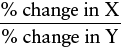
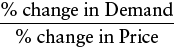
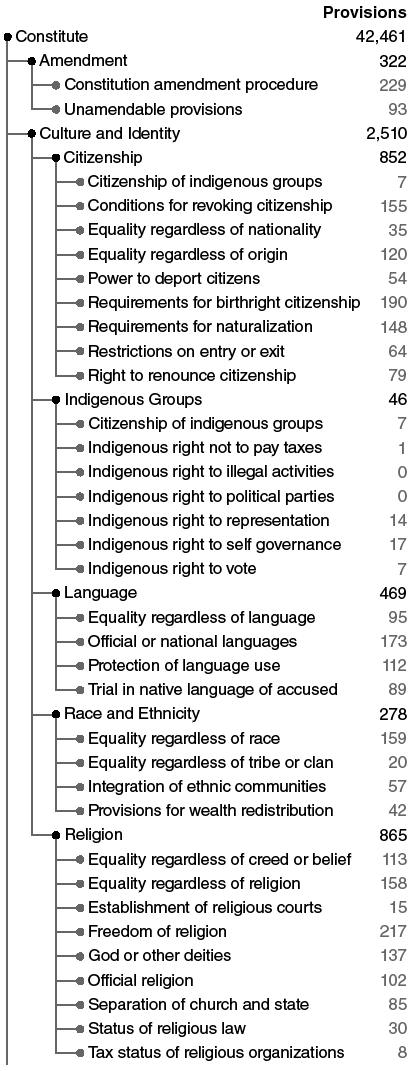
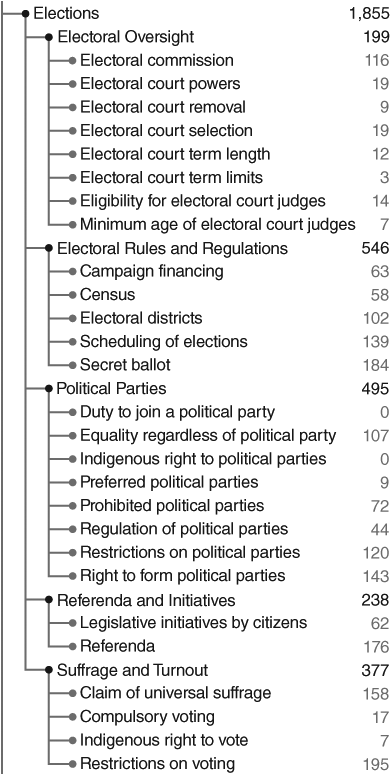

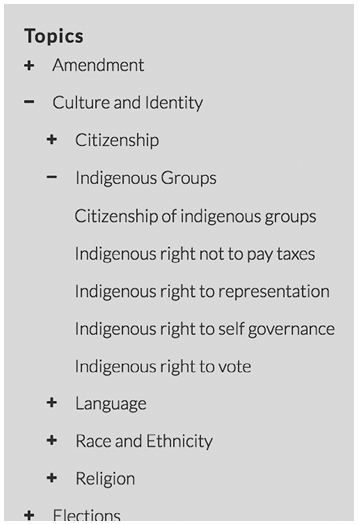
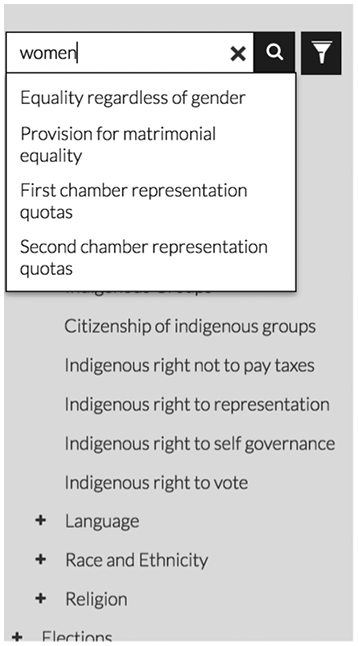
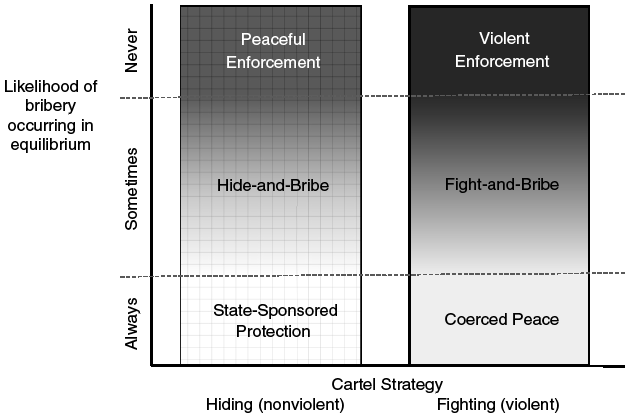

 Open access