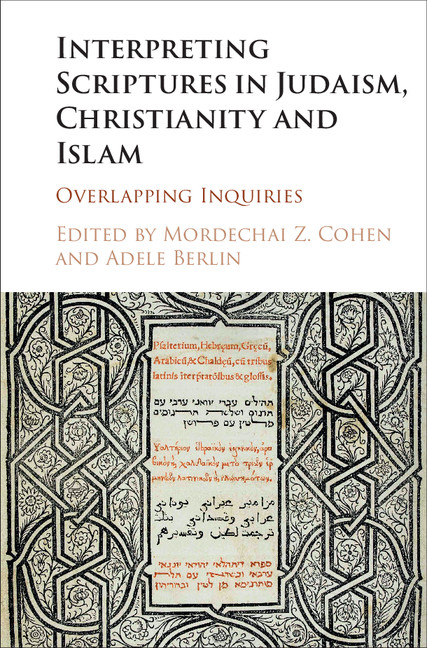

This comparative study traces Jewish, Christian, and Muslim scriptural interpretation from antiquity to modernity, with special emphasis on the pivotal medieval period. It focuses on three areas: responses in the different faith traditions to tensions created by the need to transplant scriptures into new cultural and linguistic contexts; changing conceptions of the literal sense and its importance vis-à-vis non-literal senses, such as the figurative, spiritual, and midrashic; and ways in which classical rhetoric and poetics informed - or were resisted in - interpretation. Concentrating on points of intersection, the authors bring to light previously hidden aspects of methods and approaches in Judaism, Christianity, and Islam. This volume opens new avenues for interdisciplinary analysis and will benefit scholars and students of biblical studies, religious studies, medieval studies, Islamic studies, Jewish studies, comparative religions, and theory of interpretation.
'This volume brings together an excellent collection of essays that will prove useful for scholars in many fields including hermeneutics, medieval religious thought, the history of biblical interpretation, and the history of the three Abrahamic religions. The two outstanding qualities of the volume are the various chapters on Islamic interpretive tradition and the four chapters comprising part 2s on the sensus literalis. In the case of this first strength, the chapters dealing with issues within the Islamic interpretive tradition go a long way in both introducing this important vein of scriptural interpretation to the interested reader and showing in a compelling manner the various points of contact between Islamic interpreters and those from Judaism and Christianity. In the second instance, part 2 of this volume represents one of the best treatments of the sensus literalis available to an academic readership. For these reasons, this volume deserves much attention.'
Stephen D. Campbell Source: Journal of Hebrew Scriptures
Loading metrics...
* Views captured on Cambridge Core between #date#. This data will be updated every 24 hours.
Usage data cannot currently be displayed.
This section outlines the accessibility features of this content - including support for screen readers, full keyboard navigation and high-contrast display options. This may not be relevant for you.
Accessibility compliance for the PDF of this book is currently unknown and may be updated in the future.
