


1. Introduction
Breathing is a fundamental process that sustains life, regulating the flow of oxygen into the body. Proper lung function is critical not only for general well-being but also for maintaining our daily activities such as sleeping and exercising. Facing some problems regarding breathing deteriorates the quality of human life. For instance, breathing may stop and restart again during sleep time, a condition known as sleep apnea, which is defined as a disorder that can prevent getting enough oxygen (NIH, 2022) and is one of the sleep disorders affecting breathing. Moreover, problems that adversely impact breathing and respiration can lead to serious diseases, such as chronic respiratory diseases (CRD), which affect the airways and lungs. While these conditions are often considered incurable, their symptoms can be managed with various treatments to improve the daily lives of people with CRD (WHO, 2024). Managing diseases like chronic obstructive pulmonary disease (COPD), asthma, and occupational lung diseases requires respiratory tracking and monitoring, which are challenging due to the need for continuous, real-time data to understand the complexity of respiratory patterns. Respiratory rate can offer insights into an individual’s respiratory health and overall well-being, influencing factors such as sleep quality (Reference Sun, Qiu, Wu, Tang and CaoSun et al., 2017), activity performance, the presence of respiratory chronic diseases or allergies, and disease prevention.
Addressing different motivations to track respiratory values, wearable devices are gaining prominence due to their ubiquity and ability to provide real-time data. As Wu and Luo noted (2019), continuous monitoring of human activities, behaviours, and physiological and biochemical parameters during daily life can be achieved through wearable devices, which can drive innovative solutions in healthcare. Healthcare product design requires a blend of technical expertise, medical knowledge, and an understanding of human needs, highlighting the importance of collaboration across various professions. Since healthcare challenges span multiple disciplines, a multidisciplinary approach and teamwork offer significant potential for advancing healthcare solutions. Multidisciplinary teamwork involves individuals with diverse expertise collaborating to achieve shared goals. In healthcare, it is essential for addressing the complex, social nature of health, which involves stakeholders like patients, governments, and insurers with varying expectations (Reference Doulougeri and MontgomeryDoulougeri & Montgomery, 2019; Reference Bitter, van Veen‐Berkx, Gooszen and van AmelsvoortBitter et al., 2013). This paper introduces the WeBreath project, a healthcare solution developed through an R&D initiative with a commercialization goal. Designed as a product-service system, WeBreath system integrates technological solutions with empathic design to meet the needs of individuals with chronic respiratory diseases (CRD), sleep disorders, and those actively monitoring their respiratory health. Beyond presenting a case study, this paper provides insights into structured multidisciplinary collaboration, offering a replicable framework for coordinating design, engineering, and medical expertise in complex healthcare product development. Led by Biyomod, the team bridged communication gaps and combined expertise to develop an innovative and adaptable solution. This paper highlights the collaborative efforts and multidisciplinary framework that shaped the WeBreath concept while providing insights to guide future research and the design of healthcare products.
2. The WeBreath project: purpose and functionality
The WeBreath system aims to improve the quality of life for individuals with respiratory diseases or those seeking to monitor their respiratory health. Additionally, it supports healthcare professionals by facilitating patient data tracking and potentially reducing their workload. To contextualize WeBreath’s innovation, it is helpful to first consider traditional methods of sleep and respiratory monitoring. A sleep study, or polysomnogram, is commonly used to diagnose conditions such as sleep apnea and other sleep disorders. These studies typically require patients to spend the night in a hospital sleep laboratory or an outpatient clinic, with electrodes attached to their body to monitor brain waves, breathing patterns, and physical movements during sleep.
In contrast, WeBreath’s wearable design reimagines this process, offering a portable and user-friendly solution that provides similar monitoring capabilities in the comfort of a user’s daily environment, eliminating the need for a clinical setting. Using advanced sensors such as acoustic and bioimpedance modules, WeBreath collects continuous and precise measurements. These data inform features designed to alert users to potential health risks and integrate with smart home systems to optimize environmental conditions, such as adjusting humidity and CO2 levels, to support respiratory health and sleep quality. The development of WeBreath emphasizes user-centred design, considering aspects like comfort, ease of wear, and the ability to discreetly incorporate the device into daily life. This approach to respiratory and sleep health management was shaped through a multidisciplinary collaboration, bringing together medical experts, engineers, designers, and corporate stakeholders to contribute their expertise at different stages of the product’s development.
(left) A typical sleep study setup (Reference RobertsRoberts, 2023); (right) WeBreath’s core technology, and user-friendly and cable-free design vision

Figure 1 illustrates a graphical representation of a typical sleep study setup (polysomnogram) involving multiple cables for monitoring (Reference RobertsRoberts, 2023) alongside WeBreath’s core technology and user-friendly design, which offers a portable solution by eliminating extensive cabling and enabling tracking in diverse settings. The core technology, developed early in the project and patented for its innovative approach to accurately detecting respiratory readings, formed the foundation of the system. However, the subsequent phases of the project focused on transforming the core technology into a fully functional wearable product. Collaboration between design researchers and engineers played a critical role in developing an ergonomic wearable design that ensured both comfort and practicality. This design not only facilitated the proper placement of sensors on the body but also securely housed and channelled the connected wires that detect signals from the body, which are essential for the product’s functionality.
This paper presents the WeBreath project as an example of how collaborative efforts across diverse fields can address complex healthcare challenges and contribute to the development of innovative, patient-centred solutions. In this scope, the project team outlined the following core functions.
-
Continuous respiratory monitoring . WeBreath system offers continuous respiratory monitoring to support treatment, diagnosis, and disease management, as well as improve health and sleep quality. With breathing occurring throughout the day, WeBreath leverages wearable technologies for real-time monitoring of respiratory activities. Reference Moon and LeeMoon and Lee (2023) noted the effectiveness of wearable devices in tracking pulmonary responses. Integrated bioimpedance and acoustic sensors in WeBreath accurately detect respiratory and sleep patterns. Bioimpedance sensors are used in diagnostics like pneumography and pulmonary function monitoring (Reference Naranjo-Hernández, Reina-Tosina, Buendía and MinNaranjo-Hernández et al., 2019), while acoustic sensors monitor respiratory sounds, detect symptoms such as crackles and wheezes, and assess sleep quality through snoring analysis (Reference Kong, Zou, Li and DengKong et al., 2024).
-
Smart home environment integration . WeBreath integrates with HomeWhiz, a smart home platform developed by a Turkey-based home appliances and technology company, to enable interaction between smart devices, household appliances and home users. This integration aims to create a responsive home environment that adapts to users’ health metrics, optimizing factors like temperature, illumination, and air quality to support respiratory function and sleep quality. For example, the system can adjust air conditioning modes or control temperature settings. Furthermore, embedding specific sensors into the smart home ecosystem can enhance respiratory monitoring.
-
Autonomous health data recording . The rise of electronic health records (EHRs) has increased the availability of health data and its potential for quality measurement (Reference Ebbers, Takes, Honings, Smeele, Kool and van den BroekEbbers et al., 2023). Autonomous data recording allows individuals to track their health over time, creating a record that can be used to assess medical conditions and compare current health status with past data. In the context of WeBreath, this functionality supports disease prevention, management, and diagnosis by reducing the risk of missing critical health symptoms and providing a reliable dataset for long-term monitoring.
2.1. The development process and multidisciplinary collaboration
The WeBreath project brought together a diverse group of stakeholders, including Biyomod, Arçelik, Karel, Middle East Technical University (METU), and Koç University each contributing expertise at different stages. This paper follows a holistic, multidisciplinary approach, integrating principles from industrial design, user experience, engineering, and healthcare. The project draws on human-centred design principles to make sure user needs and technical feasibility are aligned. The iterative design process, involving stakeholders from diverse fields, serves as a model for future medtech product design, demonstrating how cross-disciplinary teamwork and user feedback can drive the design of healthcare innovations.
The consortium included four enterprise companies, three SMEs, two startups, three universities, and one research centre. Biyomod, the project coordinator, oversaw the integration of expertise from diverse stakeholders. Biyomod, an R&D established in 2012, specializes in integrated hardware and web platform solutions for various medical applications, such as remote patient monitoring, mobile healthcare systems, and cloud-based teleradiology platforms. As the project initiator, Biyomod, played a central role in coordinating the stakeholders and overseeing project management. Arçelik and Karel, both prominent local companies with extensive experience in product and service development, contributed to the initiative. Academic researchers from METU’s Industrial Design; Electrical and Electronics Engineering; and Computer Engineering Departments, and design consultancy from METU Technopolis provided interdisciplinary knowledge, enriching the project’s approach. Koç University Hospital contributed to the medical evaluation process by providing access to its Sleep Laboratory polysomnography infrastructure and clinical expertise, assisting with technical feasibility and clinical usability analysis studies.
To enable effective cross-disciplinary collaboration, the project adopted a Scrum management approach, with 12 sub-projects. Each sub-project was led by a stakeholder responsible for product components, contributing to the platform’s integration. The collaboration was structured around a shared backlog, created based on initial product features and user scenarios, which was iterated through regular workshops involving experts from academia, industry, and startups. To support this structure, the sub-projects focused on advancing product outputs from TRL5/6 (Technology Readiness Level 5/6: validated technical functionalities at prototype levels) to TRL8 (Technology Readiness Level 8: system completion and readiness for market introduction), preparing them for market readiness with the support of corporate members experienced in commercialisation.
The backlog was evaluated and refined through meetings with experts in clinical research, industrial design, engineering, business development, and regulatory compliance. These meetings assessed:
-
Market and commercial potential, refining user scenarios to align with real-world demand and positioning the product for competitive entry.
-
Technical feasibility and regulatory constraints, making certain that usability and functionality aligned with both medical and industry standards, particularly for accreditation and compliance.
-
Design and engineering requirements, balancing usability, manufacturability, and system integration to support seamless production and deployment.
This structured process helped multidisciplinary teams align priorities early on, adapting development strategies based on technical constraints and market expectations. As outputs stabilised, the validation process was carried out through pilot studies, surveys, and user feedback sessions, helping refine the product-market fit.
Medical experts offered clinical insights and requirements, advising on sensor placements and data interpretation to ensure both medical standards were met, and accurate data could be collected and tracked effectively. Unusually for this team, design researchers and industrial designers worked in distinct roles but closely collaborated to develop the product. Academia-based design researchers focused on studying user needs and behaviours, generating insights to guide the design process. They identified the most suitable placement options for the device on the upper body to avoid restricting movement or causing discomfort, and their findings also informed sensor placement for optimal functionality.
Commercial priorities, such as time-to-market and product competitiveness, shaped the development process. These goals ensured that technical features were developed with market readiness in mind, prioritizing functionalities that aligned with business strategies, such as user adoption, usability, and scalability for future integration. Regulatory requirements, such as CE certification for medical devices, significantly influenced the product’s design and testing phases. These regulations impacted the choice of materials, sensor placement, and data security measures to ensure compliance with medical standards. Furthermore, the project’s regulatory needs guided the development process, particularly for health-related components and interoperability with other medical systems.
Industrial designers integrated these insights into practical solutions, collaborating with METU Technopolis to refine the design for manufacturability. Their efforts emphasized usability, aesthetics, and uninterrupted sensor integration, making sure the device fit naturally into daily routines. Electrical and electronics engineers tackled technical challenges such as sensor integration, data recording, and developing autonomous health-tracking features. Ongoing collaboration between the design team and engineers aims to further refine the product, balancing functionality with design considerations. Additionally, corporate partners played a key role in securing project financing, coordinating commercialization strategies, and outlining potential pathways for market introduction.
As the product has not been finalized, further user testing sessions are necessary to refine the design and functionality. Stakeholders collaborated within structured work packages, with each area of expertise contributing to the project’s success. Contributions were aligned with specific work packages, and the key tasks included: a) project management and technical coordination; b) design requirements analysis; c) multidisciplinary idea generation for product form development; d) hardware and software development; e) product prototyping and functional testing; f) clinical and user experience evaluation preparation; and, g) user experience testing and design adjustments.
-
a) Project management and technical coordination . Project management tools, such as Microsoft Azure DevOps, SharePoint, and Miro Board, were used to support communication, task allocation, and progress tracking across team This approach ensured effective task allocation, facilitated timely completion of technical and design objectives, and allowed teams to address challenges as they arose. The platform also served as a record-keeping tool, supporting transparency and accountability by documenting decisions and adjustments. This structured organization was crucial for managing the multi-stakeholder project and fostering ongoing cross-functional communication.
-
b) Design requirements analysis . The design research team conducted a market study to align WeBreath’s product characteristics with commercialization goals. The research reviewed wearable health devices and fitness bands, identifying key components, such as sensors for pulse and respiration rate, to enhance functionality. A significant gap was identified in integrating a microphone into wearable devices for improved respiratory monitoring. The team worked with a university-based design consultancy and consulted a pulmonologist to ensure clinical applicability. This process led to defining target users, product attributes, and usage scenarios. The study concluded with decisions on the product form (a vest-like wearable), sensor types, and the strategic placement of components to improve data accuracy and user satisfaction.
-
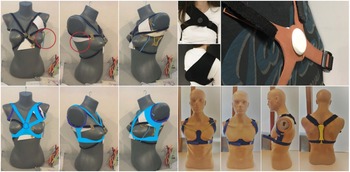
c) Multidisciplinary idea generation for product form development . Several collaborative sessions were held with design researchers, engineers, and a pulmonologist to discuss and identify the optimal sensor placement on a torso model (Figure 2). The discussion focused on determining the best routes for electrical transmitters and the optimal positioning of sensors and microphones in relation to key areas like the heart and lungs, alongside ergonomic considerations. Low-fidelity prototypes were created to test the device’s comfort in various contexts, such as daily use, physical activity, sleep, and overall appearance, making sure both functionality and user-centred design were effectively addressed.
-
d) Hardware and software development . During this phase, the project team, including software developers and engineers, focused on creating solutions that met WeBreath’s technological needs. They integrated data from multiple sensors with a responsive user interface. Advanced development techniques were applied to optimize data processing, supporting real-time analysis and reliable connectivity.
-
e) Product prototyping and functional testing . Functional testing through prototypes enabled the product met performance standards, with user feedback driving adjustments to improve both usability and technical integration. Collaboration with the design consultancy helped align the product’s capabilities with user needs, ensuring comfort and satisfaction.
-
f) Clinical and user experience evaluation preparation . The project is being conducted with a university sleep laboratory and pulmonologists to evaluate the product’s medical effectiveness and user experience The sleep laboratory provides an ideal environment for testing WeBreath’s ability to monitor respiratory and sleep-related variables in a controlled setting. A pulmonologist is contributing insights throughout the hardware development process, focusing on wearability across different body types and real-world user scenarios. These insights are crucial for aligning the product with the medical needs of potential users and ensuring comfort and functionality.
-
g) User experience testing and design adjustments . As the clinical evaluation phase is still in preparation, a thorough user experience testing process is planned. This will involve gathering feedback from both patients and medical professionals to refine the product before its final design and market launch. Design and technical adjustments may be necessary based on this testing to enhance the product’s usability and performance. Additionally, design researchers will conduct expert evaluations prior to clinical testing to identify and address any obvious issues, ensuring that the product meets both medical and user-centred design standards.
Various prototypes exploring core WeBreath technology and optimal sensor placement, with design supporting functionality and user experience

2.2. Stakeholder collaboration and management
The development of WeBreath relied on effective coordination and communication among stakeholders, with the project entrepreneur Biyomod, serving as a central mediator. This multidisciplinary collaboration brought together expertise from various fields, each contributing to the success of this healthcare project.
-
Expert consultations . Regular reviews with medical professionals, engineers, and design researchers refined technical specifications and design approaches. For example, input on sensor placement contributed to achieving both accuracy and user comfort.
-
Visualization and prototyping . Designers and engineers collaborated to visualise multiple design alternatives, creating physical prototypes that were accessible to all stakeholders. This approach facilitated well-informed decision-making by providing a tangible understanding of design options.
-
Usability testing and market readiness. Academic partners conducted user experience evaluations to assess various aspects of the product’s design, interaction, and functionality, while corporate stakeholders analysed its market readiness. These efforts contributed to making WeBreath both user-centred and aligned with commercialization goals.
2.3. Market readiness and commercialization process
The WeBreath project has followed a structured approach to develop the product from concept to market-ready product, involving prototyping, usability evaluation, clinical testing, and commercialization planning:
-
Advanced prototyping and testing. Through partnerships with METU Technopolis companies, advanced prototypes were tested for functionality, usability, design, interaction, and overall user experience. Design researchers collected user feedback, enabling iterative improvements to the product based on this data.
-
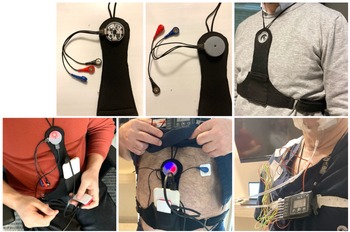
Real-world validation . Ongoing clinical tests at a partner university hospital, including studies conducted in the hospital’s specialized sleep lab, are providing real-world data on WeBreath’s performance. This stage will validate the product’s accuracy and reliability in measuring respiratory functions in medically controlled environments, confirming its potential utility for individuals with respiratory or sleep-related conditions. Additionally, feedback on the design from healthcare professionals and patients will inform further refinements. This step is critical in demonstrating the device’s efficacy and user-centred design for potential users. Given the project’s product-service system approach, commercial and regulatory factors significantly shaped the development process. Priorities such as product competitiveness, pricing, and go-to-market strategy influenced key design decisions, alongside usability, user adoption, and sustainability considerations. Health-related components had to meet CE certification standards, which guided choices in materials, sensor placement, and data security protocols (Figure 3). These regulatory requirements also affected testing procedures, aligning development milestones with medical accreditation frameworks and interoperability standards for healthcare systems.
-
Business partnerships for go-to-market. Corporate partners assisted in developing channels of sales and developing strategic commercial connections in advance of a successful market entrance. These relationships were critical in creating distribution networks and increasing product publicity positioning.
Performance tests and refinements, followed by controlled lab evaluations assessing respiratory and sleep-related variables

3. Results and discussion
Healthcare is a complex field that requires engineering solutions to address technical challenges, integrate medical expertise, and deeply understand people’s needs. The WeBreath project exemplifies how multidisciplinary collaboration involving medical professionals, engineers, and designers can lead to innovative healthcare solutions with real-world applications. In particular, the project demonstrates how design, as a critical component, has been integrated with technical and medical expertise to enhance respiratory health monitoring, especially for sleep-apnea and other respiratory disorders. The collaboration between design researchers, engineers, and medical experts has been essential in developing a user-centred product that is both functional and comfortable. Below, the roles of each stakeholder are described, highlighting their contributions to the product’s successful development path.
-
Multidisciplinary collaboration. The WeBreath project highlighted the value of a multidisciplinary approach to healthcare product design. Collaboration across medical, engineering, industrial design, and business disciplines provided critical insights that shaped both technical and user-centred solutions. Pulmonologists played a vital role in identifying the core respiratory issues and determining the best methods for accurate measurement, while industrial designers ensured that these insights were translated into user-friendly, functional product features. This collaborative knowledge exchange was essential in making informed decisions, enabling the design team to integrate the latest medical and technical advancements. Partnerships with engineers further refined the product, particularly in selecting components, optimizing sensor technology, and configuring the electrical system. This collective expertise allowed the design team to develop a product that is both technically robust and commercially viable, bridging the gap between conceptual ideas and real-world solutions. The process also demonstrated the advantages of simultaneous and stage-wise collaboration, allowing each discipline’s expertise was fully leveraged throughout the development.
-
Prototyping and user-centred design. The design researchers and designers played a key role in translating conceptual ideas into tangible, testable prototypes, using low-fidelity models to bridge complex technological concepts for all stakeholders, including medical and engineering experts. These prototypes were particularly useful in refining the product’s size, dimensions, and proportions, and in highlighting critical aspects that required attention. Through collaborative brainstorming sessions, they refined the placement of components, such as sensors and electronics, on the body to enhance data accuracy, usability, and overall user experience. This iterative process also led to alternative component placements, optimizing WeBreath’s integration with the human body, improving ergonomics, and ensuring wearability. At the same time, the development followed human-centred design principles, with a strong focus on user needs. Potential user scenarios, such as everyday wear, sleep, and device cleaning, were carefully considered to ensure the product addressed both the emotional and practical needs of users. The empathetic approach taken by the design researchers led to a product that not only met functional requirements but also fostered user satisfaction, encouraging continuous use. Insights into user demands across different contexts positioned WeBreath as a practical and user-friendly tool for respiratory health monitoring.
-
Product development and market positioning. Market research revealed a growing demand for wearable devices that monitor respiratory health outside of clinical settings, especially for conditions like sleep-apnea. Traditional methods rely on hospital equipment, but WeBreath adapts these capabilities into a portable, user-friendly device for everyday and night-time use. The research also helped shape the design direction, guiding the team to position WeBreath as a solution that combines mobility with precise monitoring, catering to both patients and wellness-focused users. Alongside the technical development, the project focused on ensuring market readiness. The business strategy centred on creating a product-service system, where the wearable device is complemented by continuous data tracking and user feedback, offering long-term value to users. The product was positioned to meet both medical and consumer needs, supported by collaborations that helped provide infrastructure for commercialization. User trials and technical tests were crucial in refining the product, making sure it met user needs and technical standards, and positioning it for a successful market launch.
-
Challenges in multipartner collaboration. The project faced several challenges during development. Managing differing priorities, coordinating activities across multiple teams, and aligning diverse approaches to the work were ongoing issues. Regular online and in-person meetings were necessary for requirement analysis, coordination planning, and decision-making. Despite a shared timeline, the different teams encountered pressures such as varying workloads and financial constraints, which led to synchronization difficulties. Dependencies between work packages involving multiple partners also created delays and necessitated adjustments to timelines or scope. Effective communication between engineering, healthcare, and design teams was key to overcoming these challenges, helping to align priorities and maintain momentum. Specific challenges during development included the integration of sensor technology in the wearable product, which required multiple iterations. Balancing technical requirements with user-centred design proved difficult, particularly when deciding which features to prioritise. Discussions between engineering, healthcare, and design teams were critical in resolving these issues and ensuring the product’s development continued smoothly.
4. Conclusions
The WeBreath project exemplifies the importance of multidisciplinary collaboration in addressing the complex demands of healthcare product design. By integrating expertise from medical, industrial design, and technical fields, the team developed a solution that balances clinical requirements with user-centred considerations. Challenges such as aligning differing priorities and overcoming technical constraints offered valuable insights into the complexities of multi-partner collaboration. The project demonstrated the importance of continuous communication, iterative user feedback, and a flexible design process that adapts to technological advancements and real-world constraints.
Traditional sleep studies often require patients to sleep in unfamiliar environments while connected to multiple cables, which can be highly uncomfortable. This R&D project gave patients an opportunity to voice these concerns, helping healthcare staff recognize the limitations of current methods. Working with engineers and designers, they sought to address these issues, aiming for a more practical and user-friendly system. This process emphasized collaboration and user focus, resulting in a design that better supports patients’ needs. As the product moves toward market introduction, the experiences and challenges encountered throughout the development process will guide future projects, emphasizing the importance of interdisciplinary teamwork, user-focused design, and adaptability in the rapidly evolving healthcare innovation.
Acknowledgments
The research was conducted through the “Smart Home Platform” project, grant funded by TÜBİTAK-SAYEM (No. 3219501), under the “Senior Tracking Systems with IoT” sub-project administered by Biyomod in partnership with METU and in collaboration with METU TTO.


 Open access

