

Introduction
The third millennium is marked by various wars, social and economic issues, and widespread instability across nearly all aspects of life and governmental organization. The majority of nations are diligently seeking answers to these issues to mitigate consequences and reduce future threats. The 2030 Agenda for Sustainable Development was ratified in 2015 with the support of the United Nations Development Group (UNDG), establishing a cohesive strategy to tackle the issue through the three dimensions of sustainable development: economic, social, and environmental (Lewis et al. Reference Lewis, Yang, Moise and Roddy2021). This agenda is associated with the Sustainable Development Goals (SDGs). The Belt and Road Initiative (BRI), established by China in 2013, includes a strategy for sustainable development both regionally and globally (Wang Reference Wang2021). Considering Beijing’s increasing influence on the global stage and its prominence among neighbouring nations, the state’s support in executing the principles and standards of the Agenda will yield substantial outcomes.
Considering the escalating variety of climatic, ecological, environmental, and biodiversity challenges, along with the impracticality of addressing them uniformly, a sustainable development model, supported by consistent financial resources and regulatory frameworks, can facilitate enduring prosperity and advancement for the majority of nations worldwide. The UN SDGs were established to direct globalization towards green transition and sustainable development (Gavkalova et al. Reference Gavkalova, Martin, Shumska and Babenko2024; Krasivskyy Reference Krasivskyy2024). The BRI seeks to promote equitable economic development across all nations. These projects exhibit distinctions and divergences; nonetheless, they are concurrently founded on analogous principles – establishing a sustainable model for a future civilization predicated on economical, safe, and environmentally friendly technologies. Consequently, it is essential to meticulously examine the nuances and particulars of the two agendas to create the most lucid understanding of their opportunities, prospects, strengths, and weaknesses in the context of establishing mutually advantageous and amicable interstate relations at the international level.
The global initiatives of the twenty-first century – BRI and the UN SDGs – are, as per Li et al. (Reference Li, Van Assche, Fu, Li and Qian2022), fundamental instruments for establishing new foreign policy relationships and enhancing existing cooperation through the execution of collaborative international projects. The primary objective of the SDGs, as articulated by Arora and Mishra (Reference Arora and Mishra2022), is the equitable and harmonious advancement of all nations globally, within the framework of a stable and sustainable transformation process facilitated by international collaboration. Xu et al. (Reference Xu, Dai, Muhammad and Zhang2023) posited that the primary objective of the collaborative efforts among the Chinese initiative countries is to optimize the use of clean energy; thus, adherence to the SDGs will be significantly more effective as they also advocate for a green transition and enhanced energy efficiency. Radovanović et al. (Reference Radovanović, Filipović and Panić2021) assert that the realization of a sustainable energy transition in Central Asia (CA) can be enhanced if multinational initiatives under the BRI maintain low carbon usage and monitor environmental conditions. The elements and standards of SDG 7 – pertaining to affordable and clean energy for all – are embedded in the official documents and regulations of the Republic of Kazakhstan. According to Alpeissova et al. (Reference Sh, Zh and Kizimbayeva2022), this alignment considerably facilitates the nation’s foreign policy dialogue on the international stage, as the principles of the Goal are adhered to by the majority of countries.
Kazakhstan must utilize all mechanisms and tools associated with the BRI and SDGs, as the Republic has emerged as a focal point of foreign policy interests for numerous global powers in the early third millennium, necessitating prudent exploitation of this advantage. Kukeyeva et al. (Reference Kukeyeva, Hor and Zhekenov2020) assert that ‘green’ diplomacy will facilitate the development of strong political and economic relations between Astana and the EU member states. To align Kazakhstan’s initiatives in BRI with SDG 7, Shakeyev et al. (Reference Shakeyev, Baineyeva, Kosherbayeva, Yessenova and Zhanseitov2023) assert that the nation’s leadership must synchronize national legislation with international best practices. Kazakhstan’s involvement in global decarbonization efforts until 2060 and the enhancement of transport and logistics links throughout the continent will contribute to establishing a robust and dependable image of Astana on the international stage (Raihan and Tuspekova Reference Raihan and Tuspekova2022; Rakhmetulina and Karipova 2019).
The interplay between international projects such as the BRI and the SDGs exemplifies a sophisticated, multidimensional governance structure that surpasses conventional diplomatic frameworks. This interconnectivity necessitates a sophisticated theoretical framework that amalgamates institutional theory, network governance perspectives, and critical policy analysis. By analysing the structural linkages between China’s strategic economic expansion and Kazakhstan’s sustainable development goals, one can reveal the complex power dynamics and institutional adaptations that arise from these transnational cooperation processes.
The examined sources do not fully address Astana’s importance and pivotal role in executing Chinese projects under the BRI or the Republic’s efforts to adhere to the principles of Goal 7 through its involvement in these projects. This article aims to analyse the specifics of the Republic of Kazakhstan’s international activities by examining the country’s pursuit of consensus between cooperation under BRI and the execution of UN SDG 7.
Materials and Methods
The development of a comprehensive and rational perspective on the impact of the BRI and SDGs on enhancing international cooperation, particularly within the context of Kazakh foreign policy relations, through the application of diverse qualitative and quantitative metrics, has established a robust foundation for further exploration of the subject. The analysis of the unique characteristics in the construction and gradual evolution of the form and semantic content of bilateral and multilateral cooperation among countries under the Chinese initiative ‘Belt and Road’, categorized by time periods, highlighted specific factors pertinent to particular areas of cooperation, such as logistics, transport, and air communication.
This study emphasized the comparison of numerous unique and distinctive elements that influenced the development of the Republic of Kazakhstan’s international relations with other states. The fundamental principles of the Republic’s international engagement since its independence have been established with their assistance. This work dissects and summarizes the object, functionality, and characteristics of international cooperation under the Chinese initiative and UN Goals, focusing on achieving a balance in clean and affordable energy sources in Kazakhstan. The modelling of the overall landscape of bilateral and multilateral state cooperation in the international arena, by examining the SDGs in relation to their significance in the execution of specific projects under the BRI, proved to be effective.
To conduct a comprehensive analysis of the subject matter, specifically the influence of the constituent elements and the particulars of the execution of the established objectives in accordance with China’s BRI and the UN SDGs, the following materials were gathered, examined, and analysed: Decree of the President of the Republic of Kazakhstan No. 577 ‘On the Concept for the Transition of the Republic of Kazakhstan to a “Green Economy”’ (2013), Decree of the President of the Republic of Kazakhstan No. 121 ‘On Approval of the Strategy for Achieving Carbon Neutrality of the Republic of Kazakhstan until 2060’ (2023), China’s Route to Carbon Neutrality: Perspectives and the Role of Renewables (2022), Sustainable Development Report 2024 (United Nations 2024); Bureau of National Statistics of the Agency for Strategic Planning and Reforms of the Republic of Kazakhstan (2020); SDG 7 and the 2030 Agenda: An EU-Funded Regional SDG Platform for Central Asia Launched (2024). These contributions offered substantial assistance for the research conducted and for the extensive and pertinent findings and conclusions.
Results
The Belt and Road and the SDGs as Global International Programmes
In the third millennium, international interactions are founded on the ideals of equality, transparency, mutual benefit, and trust. UN members, including 193 nations, engage according to international law, founded on the principles and standards delineated in fundamental normative instruments (Guiry Reference Guiry2024). Interstate cooperation is defined by the collaboration of nations within the context of humanitarian, economic, or political projects, which are conceived and promoted by individual states – for instance, the execution of collaborative international projects across several global regions under China’s BRI (Table 1).
UN Member States participating in international projects under the BRI at the beginning of 2024.

Source: compiled by the authors based on Li (Reference Li, Van Assche, Fu, Li and Qian2022), Liu et al. (Reference Liu, Ning, Du, Chen, Shan, Yang, Ji and Wang2023), Yin (Reference Yin2019), Ibrahim et al. (Reference Ibrahim, Agbor and Arabaci2021), Zhang et al. (Reference Zhang, Butt, Iqatish and Zulfiqar2023).
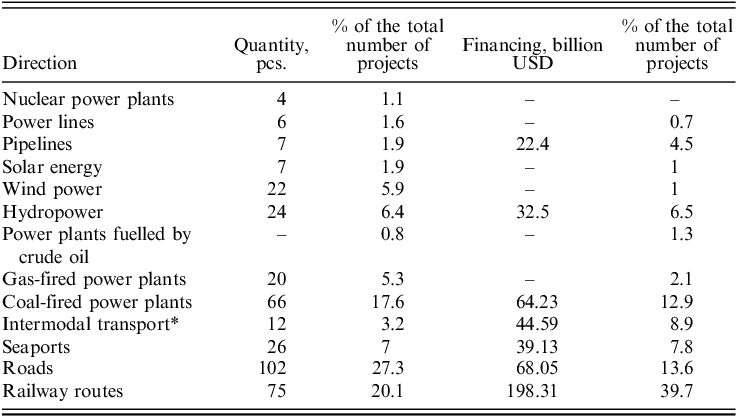
In Autumn 2013, during a diplomatic tour of Central and Southeast Asia, Chinese President Xi introduced the BRI. President Xi introduced the BRI, which he defined as aimed at establishing conditions for comprehensive and uniform economic growth across all nations, grounded in the concept of the New Silk Road or Eurasian Land Bridge – a transport and logistics framework for the terrestrial transfer of goods and commodities from China to Europe through Asian countries (D’Alessio Reference D’Alessio2021). The effort seeks to sustainably link various geographical regions by establishing new infrastructure, including railways, hydroelectric power plants, and payment systems, through international treaties, memoranda, roadmaps, strategies, and plans. By the early 1920s, the Chinese initiative is the most extensive, encompassing over 4.5 billion individuals, generating more than US$25 trillion in revenue across almost 80 nations, and involving over 200 active international enterprises and programmes (Table 2).
Structure of the Belt and Road Initiative in the context of the direction of international projects under implementation and funding in 2023.

Note: * Transporting cargo using multiple modes of transport.
Source: Compiled by the authors based on Wang (Reference Wang2021), Cao et al. (Reference Cao, Zhao, Wang, Deng, Zhang and Huang2023), Coenen et al. (Reference Coenen, Bager, Meyfroidt, Newig and Challies2021), Solodovnik and Gavrylychenko (Reference Solodovnik and Gavrylychenko2021).
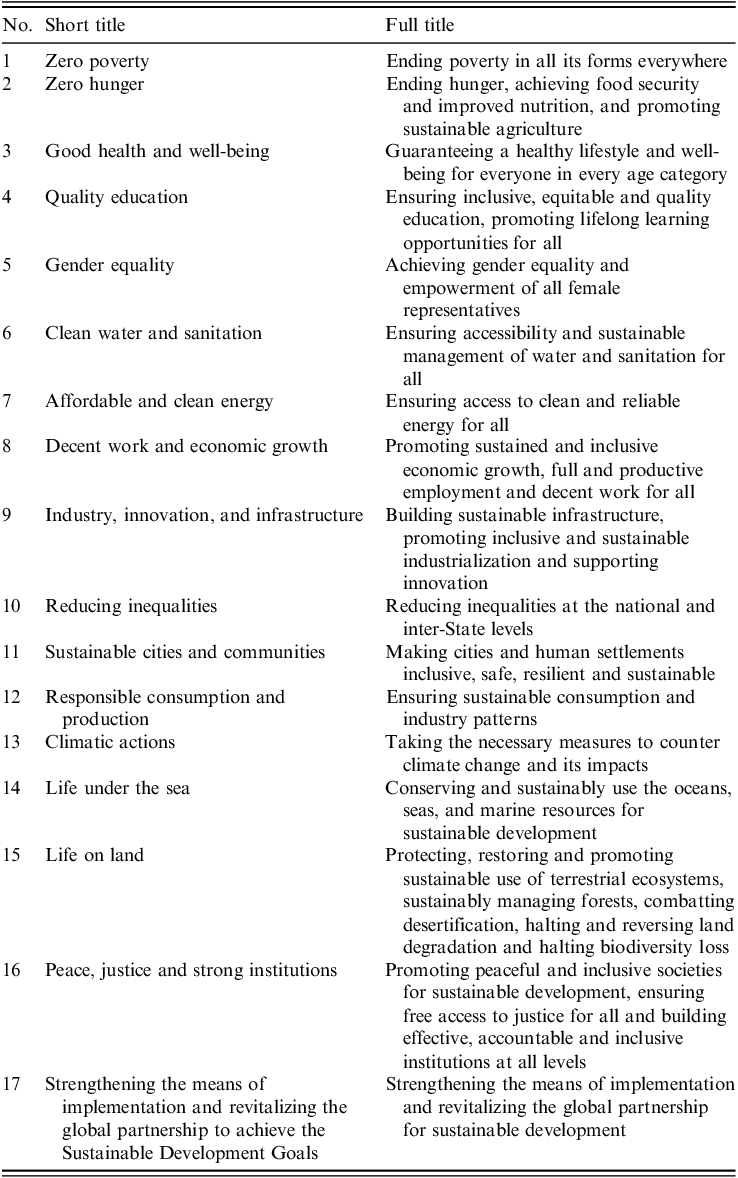
A primary objective in executing the Belt and Road Initiative is to align its standards and principles with the fundamental tenets of the UN’s Sustainable Development Goals (Domingo-Posada Reference Domingo-Posada, González-Torre and Vidal-Suárez2024). A total of 17 goals exists, each addressing a certain domain of social, economic, or political growth. SDG 7, which focuses on affordable, safe, and clean energy for all, is among the most promising in terms of successful synergy and implementation within the context of the Belt and Road Initiative (Table 3).
Seventeen Sustainable Development Goals adopted by the United Nations in 2015.

Source: Compiled by the authors on the basis of Arora and Mishra (Reference Arora and Mishra2022), Selmier (Reference Selmier2022), Chien et al. (Reference Chien, Hsu, Zhang, Tran and Li2022).
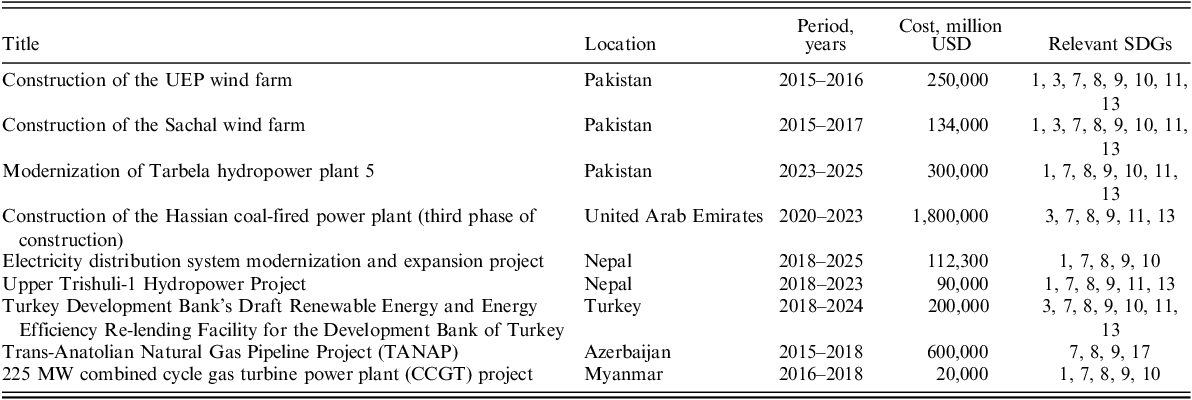
In late 2020, China’s leadership declared its goal to reduce carbon emissions by 2030 and achieve complete carbon neutrality by 2060, aligning with the New Development Vision, which aims to establish a green production system, enhance energy efficiency, augment the utilization of renewable energy sources, diminish harmful petrol emissions, and create mechanisms for automatic carbon sequestration in the natural environment (China’s Route to Carbon… 2022; Kufeoglu Reference Kufeoglu2022; Rygh et al. Reference Rygh, Chiarapini and Segovia2022). Discussions have commenced regarding Beijing’s potential to augment investment and amplify its endeavours to attain SDG 7, which closely aligns with the objectives delineated in China’s New Development Concept. In recent years, China’s direct involvement or partial endorsement of international projects towards SDG 7 under the BRI has been notably substantial. The quantity of such activities is perpetually expanding, and the magnitude of investments in them is concurrently rising (Table 4).
Some international projects under the Belt and Road Initiative in line with SDG 7 for the period 2015–2023.

Source: Compiled by the authors based on Lewis et al. (Reference Lewis, Yang, Moise and Roddy2021), Ibrahim et al. (Reference Ibrahim, Agbor and Arabaci2021), He et al. (Reference He, Yang, Liao, Xu and Fang2022), Turcsany and Kachlikova (Reference Turcsanyi and Kachlikova2020), Hafez et al. (Reference Hafez, Umar, Taufiq Yap and Mekhilef2021).
One of the key tasks in the sphere of implementation of the Belt and Road Initiative’s points for successful achievement of Beijing’s goals is the conformity and harmonization of the norms and principles outlined therein with the key theses of the SDGs formed by the UN. There are 17 goals in total, and each of them covers a certain sphere of social, economic, or political development. One of the most promising in terms of successful synergy and implementation in the context of the Belt and Road Initiative is SDG 7 on affordable, safe, and clean energy for all. In late 2020, China’s leadership announced its intention to minimize its carbon emissions by 2030 and become a fully carbon-neutral state by 2060, in line with the objectives of the New Development Vision, which seeks to create a green production system, improve energy efficiency, increase the use of renewable energy sources, minimize harmful gas emissions, and develop systems to automatically sequester carbon in the natural environment (Shakeyev et al. Reference Shakeyev, Baineyeva, Kosherbayeva, Yessenova and Zhanseitov2023).
Role and Place of the Republic of Kazakhstan in International Programmes
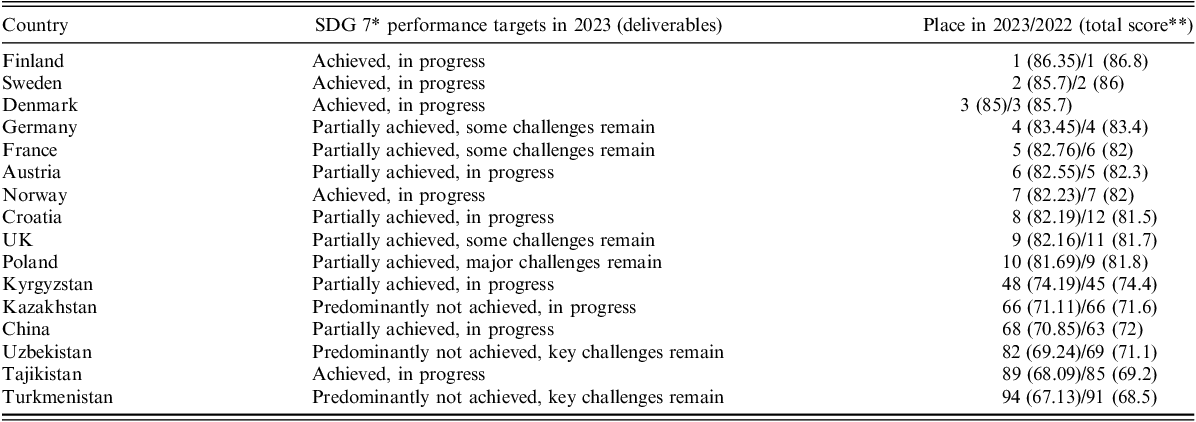
Kazakhstan is a pivotal nation that supports several transports, logistics, economic, and other connections between China and Europe via the BRI (Raihan and Tuspekova Reference Raihan and Tuspekova2022). Kazakhstan’s abundant natural resources and many renewable energy options have made it an appealing and advantageous partner for numerous prominent European entities, as well as those from Asia and the Americas. Nevertheless, various environmental challenges concerning natural resources, especially water resources (e.g., river source shoaling, increasing desertification), hinder the Republic’s attainment of SDGs and promote the advancement of international cooperation in this area. In accordance with SDG 7 – guaranteeing universal access to sustainable, safe, and dependable energy – Astana is restructuring pertinent economic sectors by investing in green initiatives inside firms and implementing energy efficiency programmes for the populace (Ibrahim Reference Ibrahim2023). Kazakhstan, alongside China, has expressed its aim to achieve carbon neutrality by 2060, aligning with the tenets of SDG 7. According to the Sustainable Development Index for 2023, the Republic is ranked 66th out of 166 in terms of the success and efficiency of reforms and transformations in the energy and allied sectors (United Nations 2024) (Table 5). Experts evaluate the country’s accomplishment as mediocre, indicating that numerous declared objectives remain unfulfilled. Simultaneously, it is reported that there are initiatives designed to tackle the issues of SDG 7 (Radovanović et al. Reference Radovanović, Filipović and Panić2021; Shakeyev et al. Reference Shakeyev, Baineyeva, Kosherbayeva, Yessenova and Zhanseitov2023).
Ranking of countries according to the Sustainable Development Index for the period 2022–2023.

Note: *Goal 7 – Affordable and Clean Energy: Ensure access to safe, reliable, and sustainable energy; **Is shaped by factors such as the level and quality of reforms undertaken, the transformation of existing infrastructure, and the overall state of the political and economic system.
Source: Compiled by the authors based on United Nations (2024), Hernandez et al. (Reference Hernandez, Lopez and Pacheco2022).
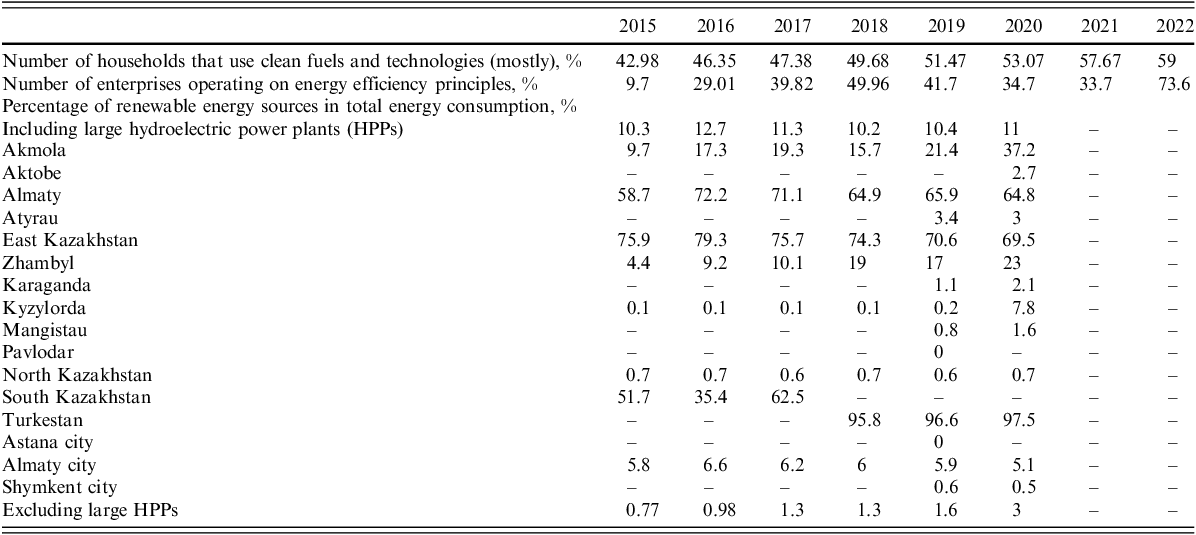
The reform of Kazakhstan’s production, economic, and social sectors for energy efficiency and green development commenced in the early 2000s with the enactment of the Environmental Code (2007), the Law on Renewable Energy Sources (2009), and the adoption of the Kazakhstan-2050 Strategy (2012) (Alpeissova et al. Reference Sh, Zh and Kizimbayeva2022). The 2013 Concept for Transition to a Green Economy delineated a strategy to incrementally augment the proportion of renewable energy sources in production and residential sectors by up to 50% by 2050 (Decree of the President… 2013). Since 2015, the state has achieved significant progress in this regard (Table 6).
Overall situation in strategic planning and reforms in the Republic of Kazakhstan according to SDG 7 for the period 2015–2022.

Source: Compiled by the authors based on Bureau of National Statistics Agencies for Strategic Planning and Reforms of the Republic of Kazakhstan (2020).
Following Kazakhstan’s endorsement of the SDGs in 2015 and the Paris Agreement in 2016, the Astana International Financial Centre was established. This institution is dedicated to fostering and facilitating the advancement of green innovations and safe technologies, while also overseeing the energy sector in alignment with the principles of the SDGs, particularly SDG 7 (Kukeyeva et al. Reference Kukeyeva, Hor and Zhekenov2020; Sheraz et al. Reference Sheraz, Deyi, Mumtaz and Ullah2021). In 2021, the Environmental Code was amended, stipulating that, in accordance with the guidelines of the Organisation for Economic Co-operation and Development and the EU, enterprises utilizing non-renewable energy sources must transition to green technologies by 2025. The identical objective was articulated in the National Development Plan through 2025 (SDG 7 and the 2030… 2024), and the Strategy for Attaining Carbon Neutrality by 2060 emphasized that substantial investment is crucial for enhancing green consumption in enterprises, necessitating influxes from both domestic and international markets (Decree of the President… 2023). Under the auspices of the BRI, Sino-Kazakh collaboration represents one of the most intimate and efficacious partnerships. Since the initiative’s inception in 2015, 55 projects exhibiting diverse degrees of conformity with SDG 7 have been executed between the two nations. Nineteen projects exhibit a high degree of compliance, 12 demonstrate a medium level of compliance, and 24 show low adherence to environmental requirements. A crucial element influencing collaboration between China and Kazakhstan is the alignment of analogous strategic initiatives regarding their objectives and execution pathways – China’s BRI and the Bright Path, an economic policy introduced by former Kazakh President N. Nazarbayev in 2014 (Alpeissova et al. Reference Sh, Zh and Kizimbayeva2022). Its core objective was to guarantee sustainable development, sustained economic growth, and the establishment of contemporary energy infrastructure.
Numerous meetings were conducted between the Chinese and Kazakh parties to deliberate on the execution of collaborative significant projects and programmes, as per the two initiatives. The primary focus of these initiatives includes the construction and enhancement of energy-efficient infrastructure, the implementation of green technology, decarbonization, and the advancement of renewable energy sources. All are associated with the strategic sectors of SDG 7 and strive to mitigate the adverse effects of unregulated fossil fuel consumption and environmental damage. A primary focus of the BRI has been the enhancement of transport and logistics. Post-independence, this industry in Kazakhstan was significantly undeveloped, thus Chinese investments provided crucial support for its advancement and prioritized this form of collaboration. A significant phase of collaboration was the construction of the 8500-kilometre Bilateral Western Highway, initiated in 2008, with the Chinese segment completed in 2017 and the Kazakh segment finalized in 2023 (Shakeyev et al. Reference Shakeyev, Baineyeva, Kosherbayeva, Yessenova and Zhanseitov2023). Air transport represents a significant avenue for bilateral cooperation among nations. In 2013, the Lianyungang City Council in Jiangsu Province and the Kazakhstan State Railway Company Limited entered into an agreement to create a cooperative logistics facility for cargo transportation (Rakhmetulina and Karipova 2019). Construction commenced promptly and, by the conclusion of 2023, the centre emerged as a pivotal hub for the transportation and transshipment of commodities from China via Kazakhstan to Europe and the Americas, and vice versa. The building of a dry port in the Special Economic Zone ‘Khorgos – Eastern Gate’ was finalized in 2014, with infrastructure modernization occurring in 2019, alongside the completion of the Special Economic Zones of the Atyrau and Taraz State Petrochemical Industrial Parks. An exemplary project in railway transport cooperation is the development of the Karamay-Bakhto-Ayaguz railway, featuring a pivotal railway hub in the Kazakh city of Ayaguz. The project received approval in July 2022, and construction preparations are currently in progress (Shakeyev et al. Reference Shakeyev, Baineyeva, Kosherbayeva, Yessenova and Zhanseitov2023).
Trade and finance are exhibiting favourable trends. Since 2014, Beijing and Astana have executed around 100 varied agreements and accords to facilitate continuous trade between Europe and Asia (Kukeyeva et al. Reference Kukeyeva, Hor and Zhekenov2020). Recent agreements in e-commerce and information technology, established in the 2020s, have significantly revitalized collaboration under the BRI. Energy collaboration among the nations is also accelerating. Multiple projects for multi-billion-dollar contracts in energy efficiency and clean energy sources exhibit stability and effective execution. In early 2020, at the outset of the COVID-19 pandemic, and in the subsequent years, the degree of energy cooperation remained rather stable, with China’s imports from Kazakhstan even experiencing an increase (Xu et al. Reference Xu, Dai, Muhammad and Zhang2023). Nonetheless, despite the advantageous elements of SDG 7 norms and standards, a scenario exists where substantial Chinese investments are directed towards collaborative projects with Kazakhstan that exhibit minimal adherence to SDG 7 (for instance, the extensive construction of a hydropower plant network in China’s border regions jeopardizes the survival of numerous fish and mammal species inhabiting those areas), consequently contributing to Astana’s overall low SDG compliance rate. This elucidates the Republic’s aspiration for enhanced collaboration with European nations, given their significantly superior adherence to SDG 7, which Kazakhstan similarly seeks to achieve. Upon examining certain characteristics and analysing specific aspects of Kazakhstan’s collaboration with nations involved in the BRI, particularly regarding their efforts to fulfil the criteria and standards of SDG 7 concerning affordable and clean energy, the following strengths of this cooperation in the realm of international relations can be emphasized. Initially, the Chinese initiative transcends a mere green energy development project; it constitutes a comprehensive programme aimed at enhancing and advancing environmental infrastructure grounded in global energy efficiency principles. This feature enables Astana to cultivate and enhance international contacts with partners in nearly all sectors of economic and industrial development. Kazakhstan’s involvement in the initiative, especially following enhanced interactions with EU participants, facilitated the swift transition of industrial entities, production facilities, and individual households to sustainable and accessible energy sources, thereby progressively meeting the criteria of SDG 7.
The primary disadvantages and shortcomings of international collaboration under the BRI regarding adherence to SDG 7 are that China, as the principal proponent of the initiative, tends to invest in extensive industrial projects that significantly impact the environment, thereby inadequately fulfilling the criteria of SDG 7. Consequently, there are instances where the fundamental ideas of the initiative collide with the foundational tenets and practices of the SDGs. In Kazakhstan, there has been a recent decline in the intensity of Sustainable Development Goal (SDG) implementation, primarily owing to increased involvement in large-scale Chinese projects that adversely affect the environment, such as Astana’s participation in the construction of power plants in Pakistan utilizing outdated and inefficient coal production technologies. Moreover, the efficacy of international collaboration in executing joint projects under the initiative is broadening the geographical scope of participants and altering the orientation of their primary foreign policy affiliations. Consequently, there exists a scenario that reflects Beijing’s ambitions to enhance its strategic supremacy in many regions, which subsequently escalates conflict and tension in volatile areas. Astana has long since shifted its primary international focus towards China, which serves as Kazakhstan’s principal strategic partner and security guarantee. The intensity and frequency of Kazakhstan’s international cooperation with EU countries is rapidly escalating. In discussing the trends and variables that will influence the international landscape in the forthcoming years, several aspects might be emphasized. Kazakhstan evaluates potential risks associated with its active participation in large-scale Chinese projects concerning the principles of Sustainable Development Goal 7. Consequently, the nation is proactively enhancing bilateral and multilateral cooperation with various countries, primarily from Europe, as well as with the USA and India (Silagadze et al. Reference Silagadze, Mekvabishvili, Gaganidze, Atanelishvili and Chikviladze2024).
The Republic’s efforts to formulate innovative methods and concepts for advancing green energy and establishing energy efficiency principles by integrating multiple Sustainable Development Goals are very promising – for example, SDG 6 (Clean Water and Sanitation), SDG 9 (Industry, Innovation, and Infrastructure), SDG 12 (Responsible Consumption and Production), and SDG 13 (Climate Action). Upon analysing the quality and form of bilateral cooperation between Beijing and Astana, it can be concluded that both nations have, to varying degrees, adopted the concepts of the SDGs as a foundation for executing collaborative projects under the BRI. Initiatives pertaining to green transition, energy efficiency, and independence are vital, as the majority of projects concentrate on this area. The varying levels of technological advancement and innovation in Kazakhstan and China establish conditions that may lead to a deviation from the prioritization of their strategic cooperation. The EU is currently the major trading partner and investor in Astana, partly due to the adoption of European concepts and rules in the industrial process.
The implementation of SDG 7 within the BRI context reveals significant challenges in regulatory harmonization and institutional flexibility. Kazakhstan’s experience demonstrates that achieving sustainable energy goals requires more than financial investment – it necessitates comprehensive institutional recalibration. The regulatory environment must evolve to create adaptive mechanisms that can simultaneously attract foreign investment, maintain national economic interests, and ensure environmental sustainability. This involves developing sophisticated legal frameworks that can negotiate the complex terrain between international economic initiatives and domestic sustainable development priorities. Beyond economic considerations, the Kazakhstan–China energy collaboration embodies a broader geopolitical reconfiguration of regional power dynamics. The BRI serves not merely as an economic project but as a strategic instrument for reshaping interstate relationships, with energy cooperation functioning as a critical leverage point. Kazakhstan’s strategic positioning allows it to navigate these complex geopolitical currents by maintaining a multi-vector foreign policy approach that balances economic opportunities with environmental commitments and national sovereignty considerations.
Discussion
Examining the facets of external collaboration via the execution of joint initiatives in transportation, logistics, economics, finance, and information technology is a highly relevant and extensively debated topic in the twenty-first century, as sustainable development and advancement in numerous areas can often be attained solely through cooperation with other nations. Researchers from countries including China, Italy, and the Czech Republic (Wang Reference Wang2021; D’Alessio Reference D’Alessio2021; Turcsanyi and Kachlikova Reference Turcsanyi and Kachlikova2020) have primarily concentrated their investigations on the determinants of how global initiatives and projects, such as the SDGs, facilitate the swift transition to more sustainable production methods worldwide. Rakhmetulina and Karipova (2019) have predominantly examined how the Republic navigates the international arena by executing collaborative projects under the BRI while adhering to the principles and norms of the Sustainable Development Goals, specifically Goal 7. According to the experts’ findings, the China Initiative and the UN programme remain the primary forums for international collaboration and foreign policy discourse over the future global development.
This study pointed out that the largest amount of Chinese investment under the Belt and Road Initiative is in large industrial projects, which may deviate from both uneven local management, insufficient bureaucratization of the state apparatus, and SDG principles in terms of the development of environmental legislation and environmental protection. Sheraz et al. (Reference Sheraz, Deyi, Mumtaz and Ullah2021) assert that the political leadership of China and other nations must reform the financial system, energy consumption practices, and the utilization of non-renewable resources to restore equilibrium in funding large-scale, potentially environmentally detrimental initiatives. Nevertheless, the authors contend that this should be executed without international consultation to mitigate any detriment to national interests. Adherence to the rules and standards of the United Nations SDGs, particularly Goal 7 concerning affordable and safe energy for all, will facilitate a meaningful ‘clean transition’ and the establishment of a ‘green’ financial and economic system.
Bilateral investment treaties (BITs) often include provisions that can significantly impact a host country’s regulatory sovereignty (Shahini and Shahini Reference Shahini and Er2024; Lemishko and Blyzniuk Reference Lemishko and Blyzniuk2024). For instance, BITs may contain clauses that protect investors from changes in regulatory environments, which could limit Kazakhstan’s ability to implement the stringent environmental regulations necessary for achieving SDG 7. Public–private partnerships (PPPs) are another critical aspect, as they often involve long-term contracts that can lock countries into specific development paths, potentially prioritizing economic gains over environmental sustainability. Additionally, dispute resolution mechanisms, such as investor-state dispute settlement (ISDS) clauses, can expose countries to legal challenges if they enact policies that are perceived to harm investor interests, even if those policies are aimed at environmental protection (Chaisse and Kirkwood Reference Chaisse and Kirkwood2020).
These legal elements bear directly on Kazakhstan’s capacity to maintain regulatory autonomy and achieve sustainability goals. A review of Kazakhstan’s legal strategies for addressing these issues, including dispute resolution mechanisms over resource impacts and local community concerns, would add critical depth to the paper. Chaisse and Matsushita (Reference Chaisse and Matsushita2018) highlight how BRI projects often come with complex legal frameworks that can limit a host country’s ability to enforce environmental regulations and address community grievances. For instance, bilateral investment treaties (BITs) and public–private partnerships (PPPs) may include clauses that prioritize investor interests over local environmental and social concerns. These agreements can also introduce dispute resolution mechanisms, such as investor–state dispute settlement (ISDS) clauses, which can expose Kazakhstan to legal challenges if it implements policies that are perceived to harm investor interests, even if those policies are aimed at environmental protection and community welfare. By incorporating these insights, the analysis would be strengthened, offering a clearer picture of how Kazakhstan can navigate the complexities of BRI investments while safeguarding its regulatory autonomy and ensuring that environmental and social responsibilities are not overshadowed.
Selmier (Reference Selmier2022) discussed the equitable allocation of budgetary resources for energy and industrial infrastructure as a prerequisite for the effective decarbonization of nations worldwide. Simultaneously, expenditures in other areas of lesser significance to the energy sector may be curtailed temporarily to attain swift outcomes. The article articulated that China’s BRI holds global significance for numerous countries, particularly in the context of examining future possibilities and patterns of transformational processes on the Asian continent. Analysing China’s regulatory landscape reveals a significant focus on infrastructure and industrial projects within the Belt and Road Initiative (BRI), particularly in energy and logistics sectors. These projects, while economically beneficial, often prioritize rapid development over environmental sustainability, creating a misalignment with SDG 7’s goals of affordable and clean energy. This regulatory emphasis poses challenges for Kazakhstan, which must balance the economic advantages of BRI investments with its commitment to sustainable energy practices. The tension arises from the need to reconcile large-scale, high-impact projects with the environmental standards necessary for achieving carbon neutrality and long-term ecological stability.
D’Alessio (Reference D’Alessio2021) articulated comparable notions, asserting that, owing to extensive projects and ambitious programmes under the initiative, the Central Asian nations, particularly the Republic of Kazakhstan, managed to emerge from the overshadowing influence of their larger neighbouring countries and establish a robust and favourable image in the perception of international partners. The expert underscored that, without Beijing’s support, Astana would struggle to independently establish its existing foreign policy and commercial framework.
The ecological issues, biodiversity conservation, and environmental protection identified in this article as primary challenges at the onset of the third millennium are likely to be addressed solely through the collective efforts of all nations via international platforms and initiatives, such as the UN SDGs. Yin (Reference Yin2019) articulated comparable notions and underscored that, in light of the challenges posed by climate change and associated environmental pressures, a sustainable development model predicated on investment and programmatic solutions derived from the consensus of all international stakeholders is essential for ensuring long-term prosperity and sustainable growth. To attain consistent advancement and incremental growth of low-carbon sectors, as well as to transition industries towards more environmentally neutral practices, it is essential to leverage the collective efforts of all energy stakeholders within the state (Nunes and Sytnychenko Reference Nunes and Sytnychenko2024; Khalegi et al. Reference Khalegi, Kadyraliev, Tursunalieva, Orozbekov and Bigali2024). Rygh et al. (Reference Rygh, Chiarapini and Segovia2022) assert that decisive acts in certain countries and regions, notably CA, have facilitated effective development, laying the groundwork for the change of various life domains, particularly the social sector. However, owing to the overwhelming predominance of financial considerations in nearly all international initiatives, including those specifically associated with SDG 7 on clean and affordable energy, there is little discourse for substantial reform in the CA region. Energy is the focal point for all industrial, economic, social, and other processes across all nations, as highlighted in the article as a defining aspect of the twenty-first-century model.
Kufeoglu (Reference Kufeoglu2022) articulated comparable arguments, asserting that while the innovation process is currently robust, entirely new tools, systems, and mechanisms are being developed to ensure energy efficiency and ‘reasonable’ consumption. Nevertheless, approximately 30% of the population lacks access to energy, resulting in disparities within the sector, complicating matters, and prompting debates regarding whether affordable energy should be accessible to all global inhabitants or merely a select few. The author contends that, in the absence of carbon neutrality criteria, energy can be detrimental even when utilized by a restricted number of customers. Energy use, even when limited to a small number of consumers, can still be harmful if it does not adhere to the principles of carbon neutrality (Ivanchenkov et al. Reference Ivanchenkov, Vovk, Yermolenko, Prusova and Revenko2024; Rysin and Sukh Reference Rysin and Ya2024). Carbon neutrality aims to achieve a balance between the carbon emitted and the carbon removed from the atmosphere. If energy production and consumption do not align with these principles, they contribute to greenhouse gas emissions, which exacerbate climate change and environmental degradation. Therefore, adhering to carbon neutrality principles is crucial to mitigate the harmful effects of energy use, regardless of the scale of consumption.
Marcoux and Sylvestre-Fleury’s (Reference Marcoux and Sylvestre-Fleury2022) study of the government procurement and State-Owned Enterprise (SOE) regulations within the BRI provides a valuable analytical framework to evaluate the efficiency and environmental implications of these procurement practices. Their research highlights that while BRI projects often prioritize economic growth and infrastructure development, the procurement processes and SOE regulations can significantly impact the environmental sustainability of these initiatives. For Kazakhstan, this means that its position within global value chains is heavily influenced by foreign investment, particularly from China. The reliance on these investments to advance green energy initiatives underscores the need for Kazakhstan to navigate the complexities of BRI procurement practices, ensuring that they align with the country’s sustainability goals and comply with SDG 7. This analysis reveals that Kazakhstan must not only attract investment but also ensure that the regulatory frameworks governing these investments promote environmental responsibility and long-term ecological benefits.
Yu’s (Reference Yu2019) analysis of Eurasian energy cooperation sheds light on the critical role of energy governance within the BRI, particularly how China’s growing influence in the energy sector impacts Kazakhstan’s position as an energy supplier. China’s strategic investments in energy infrastructure across Eurasia have reshaped regional dynamics, often prioritizing economic and geopolitical interests over environmental sustainability. For Kazakhstan, this means navigating a complex landscape where the benefits of increased energy exports and infrastructure development must be balanced against the environmental and regulatory challenges posed by China’s dominant role. This analysis underscores the need for Kazakhstan to develop robust energy governance frameworks that ensure compliance with SDG 7, promoting affordable and clean energy while mitigating the environmental impacts of BRI projects.
Examining energy governance structures within the BRI reveals a nuanced discussion of Kazakhstan’s potential to meet SDG 7 within the context of its energy commitments under the BRI. The BRI’s energy governance frameworks often prioritize rapid infrastructure development and economic growth, which can sometimes overshadow environmental considerations. For Kazakhstan, this means balancing the benefits of BRI investments in energy infrastructure with the need to adhere to sustainable energy practices. Comparative regulatory research, such as Chaisse’s (Reference Chaisse2023) analysis of US development finance responses to the BRI, provides useful parallels. Chaisse’s work highlights how different regulatory approaches can influence the environmental and economic outcomes of large-scale infrastructure projects. This broader international context situates Kazakhstan’s regulatory experiences, showing that while foreign investment is crucial for advancing green energy initiatives, it is equally important to integrate stringent environmental regulations to ensure long-term sustainability and compliance with SDG 7.
Xu (Reference Xu2022) offers a critical analysis of sustainable development in the context of investment treaties, particularly focusing on the environmental and economic implications of large-scale international projects. The study highlights the importance of integrating sustainability principles into investment agreements to ensure that economic growth does not come at the expense of environmental degradation. Xu argues that while investment treaties often prioritize economic benefits, they must also include robust environmental safeguards to align with global sustainability goals, such as the UN SDGs. The research underscores the need for a balanced approach that considers both short-term economic gains and long-term environmental sustainability, providing valuable insights into how international agreements can be structured to support holistic development. This perspective is particularly relevant for countries such as Kazakhstan, which are navigating the complexities of participating in initiatives such as BRI while striving to meet their commitments to SDG 7 on affordable and clean energy.
Liu’s (Reference Liu2018) examination of environmental governance across Asia, published in the Asia Pacific Law Review, provides a relevant framework for assessing Kazakhstan’s ecological challenges within a broader regional context. The study highlights the diverse environmental governance strategies employed by various Asian countries, emphasizing the importance of balancing economic growth with environmental sustainability. Liu argues that effective environmental governance requires not only robust regulatory frameworks but also the integration of sustainability principles into economic policies and investment projects. This perspective is particularly pertinent for Kazakhstan, as it navigates the complexities of participating in BRI while striving to meet its commitments to SDG 7 on affordable and clean energy. By addressing this dimension, this article can offer a more nuanced analysis of Kazakhstan’s pursuit of SDG 7, ensuring that economic growth is achieved without compromising environmental integrity.
Shan and Wang’s (Reference Shan and Wang2019) work on energy governance under the BRI could elucidate Kazakhstan’s regulatory challenges in aligning BRI energy projects with environmental and energy efficiency standards. Their analysis provides a more thorough critique of whether BRI investment structures assist or hinder Kazakhstan’s ability to meet international sustainability objectives. Shan and Wang argue that while the BRI aims to enhance regional connectivity and economic growth, the investment structures often prioritize rapid infrastructure development over environmental sustainability. This can create significant regulatory challenges for Kazakhstan, as it seeks to balance the economic benefits of BRI projects with its commitments to environmental protection and energy efficiency. For instance, BRI energy projects may involve large-scale infrastructure developments that have substantial environmental impacts, such as increased carbon emissions and resource depletion. Kazakhstan’s regulatory framework must therefore be robust enough to ensure that these projects adhere to international sustainability standards, such as those outlined in the United Nations Sustainable Development Goals (SDGs), particularly SDG 7 on affordable and clean energy. By integrating authors’ insights, the analysis would be enriched, offering a more nuanced understanding of the regulatory and environmental challenges Kazakhstan faces in aligning BRI energy projects with its sustainability goals.
The research on the influence of global programmes and initiatives, like the Belt and Road and the SDGs, on the development of contemporary international relations in the third millennium has underscored several elements. This topic has been identified as having heightened demand among authority representatives across all levels of governance, including national, regional, and global contexts. Consequently, the need for research on this topic is exceedingly great, and the quantity of such studies will continue to rise, with the quality of these works’ contingent upon the overall circumstances in the field. The heightened interest in this issue may stem from the fact that, as of the end of 2023, the circumstances surrounding ecology, climate protection, energy efficiency, and biodiversity conservation remain critically strained, with an escalating number of threats and diminishing prospects for resolving these problems and restoring normalcy. Consequently, states must collaborate utilizing all available tools and platforms. Kazakhstan, a pivotal participant in China’s BRI, should employ all accessible resources in the international sphere to cultivate a favourable image through proactive engagement in foreign policy and economic endeavours, while adhering to the principles and standards of carbon neutrality and a green economy within the context of SDG 7.
Conclusions
The structure of international relations in the twenty-first century is developing in such a way that only joint efforts of states, common activities in various spheres and directions are necessary to eliminate the existing threats and challenges of the third millennium, which have become a real problem for national security, as well as for social development and state-political transformation. Global instruments that significantly affect the lives of the vast majority of the world’s people include China’s Belt and Road Initiative and the Sustainable Development Goals established by the United Nations. The Republic of Kazakhstan, a participant in the Belt and Road Initiative, is actively engaged in various transport, financial, construction, and other projects associated with the initiative, having long prioritized this form of international cooperation. The Republic of Kazakhstan, as a United Nations member state, unequivocally endorses the initiatives of the United Nations, particularly the Sustainable Development Goals, specifically Goal 7 concerning clean and affordable energy. Given Kazakhstan’s abundance of water, geothermal, and wind energy resources, adherence to the concepts of Goal 7 is feasible for Astana.
At the onset of the twenty-first century, Kazakhstan initiated reforms for the ‘green’ transition and a gradual departure from non-renewable energy sources, deliberately commencing transformative processes to achieve this objective. The physical proximity of China was a further factor that rendered involvement in Beijing’s ‘Belt and Road’ plan unavoidable for the Republic. A comprehensive network of railway and air hubs was established in Kazakhstan as a result of transport and logistics initiatives, thereby enhancing foreign policy relations with the European Union and the United States. Nonetheless, a significant predominance of Chinese investments in large-scale, carbon-intensive projects compelled Astana to re-evaluate its partnership geography and make minor adjustments to its foreign policy cooperation vectors. Consequently, reducing the country’s participation in high-risk pollution programmes and favouring safer initiatives has markedly expedited its advancement towards carbon neutrality and the fulfilment of all principles of SDG 7, thereby enhancing Kazakhstan’s international reputation. Nevertheless, Astana requires significant reforms to achieve this objective.
This study’s limitations included insufficient information on UN-led international humanitarian projects in remote regions and countries, as well as confusion arising from the overlap of functions and activities associated with the Belt and Road Initiative and the Sustainable Development Goals. To acquire further insights into the nuances and specifics of inter-state collaboration under the Belt and Road Initiative, it is prudent to examine the practices and outcomes of joint international projects within the context of cooperation among Central Asian nations. The Republic of Kazakhstan must persist in cultivating a multi-vector foreign policy, emphasizing engagement with EU nations, the USA, India, and Japan. Ongoing communication and the exchange of experiences and talents will facilitate the realization of large-scale international initiatives, enhancing compliance with SDG 7 through various procedures and instruments of energy regulation.
Author Contributions
FKyd.: conceptualization, project administration, writing the original draft; KWChH: data curation, methodological guidance; GB and FKuk.: visualization, writing the original draft – review, and editing; MA: supervision, writing the original draft. All authors have contributed to the concept of the study, revised the manuscript, and read and approved the final version of the manuscript.
Funding
This research is funded by the Science Committee of the Ministry of Science and Higher Education of the Republic of Kazakhstan (Grant No. AP19679313).
Conflicts of Interest
The authors declare no conflict of interest.
About the Authors
Farangis Kydyrbek is a doctoral student at the Department of International Relations and World Economy, Al-Farabi Kazakh National University. Research interests: global economic trends, international political dynamics, and their implications for diplomacy.
Ka Wai Christopher Hor is a doctoral student at the Department of International Relations and World Economy, Al-Farabi Kazakh National University. His main focus is on cross-border cooperation, with a particular interest in sustainable development and global governance.
Gulnara Baikushikova is a lecturer at the Department of International Relations and World Economy, Al-Farabi Kazakh National University. She specializes in global economic policies and international political relations.
Fatima Kukeyeva is a professor at the Department of International Relations and World Economy, Al-Farabi Kazakh National University. Her main focus is on the impact of global economic policies on regional development and cross-border collaboration.
Malik Augan is a professor at the Department of International Relations and World Economy, Al-Farabi Kazakh National University. His main focus is on fostering sustainable and inclusive global governance.


 Open access

