


This article is a revised and updated edition of a previous description of the Quebec Newborn Twin Study (QNTS; Boivin, Brendgen, Dionne et al., Reference Boivin, Brendgen, Dionne, Dubois, Pérusse, Robaey and Vitaro2013). As the name entails, the QNTS is an ongoing prospective longitudinal follow-up of a birth cohort of twins born between 1995 and 1998 in the greater Montreal area. The goal of QNTS is to document individual differences in the cognitive, behavioral, social-emotional aspects of developmental health across childhood, their early genetic and environmental determinants, as well as their putative role in later social-emotional adjustment, school and health outcomes. A population-based sample of >660 families of twins were initially enrolled in QNTS, and then assessed longitudinally at regular intervals. The QNTS is part of a larger research initiative that also involves the Québec Longitudinal Study of Child Development (QLSCD), an ongoing longitudinal follow-up of a representative sample of >2000 children born as singletons in 1998 in the province of Québec, Canada. The QNTS and the QLSCD are companion studies sharing many features (measures and time of assessments), including an extensive and detailed set of evaluations in the early years, thus providing together a unique window into the role of early childhood in development.
Recruitment and Initial Assessment
The recruitment phase of the QNTS was initiated in 1995 with the Québec Newborn Twin Registry, which identified all twin births occurring in the province of Québec between April 1995 and December 1998. Names, addresses, and phone numbers of all the mothers of newborn twins were collected from the computerized birth records of the Québec Bureau of Statistics. Recruitment and maintenance of families in the Registry was achieved through a series of periodic mail and telephone contacts, newsletters, and follow-ups. Starting June 1, 1996, all parents in the Registry who lived in seven administrative social health districts comprising and surrounding the Greater Montreal Area were asked to enroll with their twins in the QNTS. Parents were contacted by letter and by phone, and laboratory appointments were scheduled for when the twins were aged between 59 and 61 weeks from conception, or 5 months corrected for gestational age. A total of 989 families were contacted, of which 662 participated in the first wave (i.e., at age 6.3 months on average, SD = .73) between June 1996 and November 1998. A subgroup of these families of twins (with their mother) was seen in the lab (322 families) where extensive psychophysiological, hormonal, and observational-behavioral measures were collected. These laboratory assessments were followed within 2 weeks by a home visit to obtain exhaustive social, demographic, health, and further behavioral data on the twins and their families, mainly through interview of both parents, self-reported questionnaires filled out by both parents, and direct observation of the infant, home, and neighborhood by the interviewer. Interviews were done in French or English, depending on the language of the respondents.
Longitudinal Follow-Up
As shown in Table 1, these twin children and their parents were then followed up longitudinally and assessed at 20 months (families seen in the lab at 5 months were again seen in the lab and at home; families seen only at home at 5 months were seen only at home), 32 months (home interview and questionnaires to parents only), 50 months (home interview and questionnaires to parents only), and then again the summer before school entry at 63 months (lab visit in the summer for a battery of cognitive measures), in kindergarten (average age 72 months: school-based assessments: experimental playgroup behavioral observations, cognitive assessments, peer and teacher assessments), grade 1 (age 85 months: similar to kindergarten), grade 3 (age 9.1 years: only teacher ratings), grade 4 (age 10 years: self-, peer/sociometric, and teacher assessments), and grade 6 (age 12 years: self- and teacher assessments, and questionnaires to parents). The twins and their families were then assessed on four occasions in secondary school, that is, in secondary 1 (age 13 years: self-assessments and questionnaires to parents), secondary 2 (age 14.1 years: self-assessments, extensive bio-sampling for cortisol, and questionnaires to parents), secondary 3 (age 15.1 years: home visit with direct assessment of twin and parent IQ, child reading and writing, mother language, web-based test battery of numeracy, self-assessments, and Person Most Knowledgeable [PMK] ratings of the twins), secondary 5 (age 17.1 years: self-assessments and questionnaires to parents, behavioral observation of impulsivity/executive control in lab settings, extensive self- and parent report of domain-specific school achievement, expectations regarding schooling).
Participating twins in the longitudinal follow-up of the QNTS
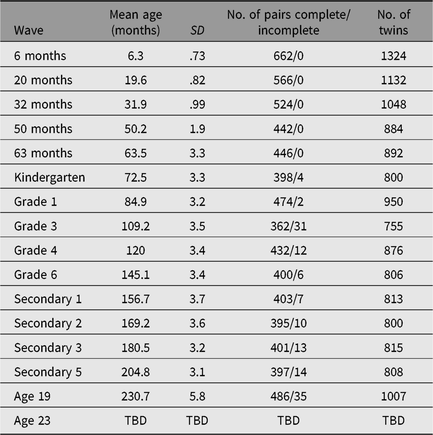
Note: TBD, to be determined.
Quite unique to QNTS are the longitudinal assessments of peer relations through sociometric interviews and peer ratings (i.e., classmates) in kindergarten, grades 1 and 4, as well as through self-reports from the twins’ friends in secondary 1, 3, and 5. Two other well-documented aspects of QNTS are the extended and thorough longitudinal assessments from preschool to early adulthood, of school readiness and achievement, as well as of social behaviors and mental health symptoms. QNTS is now well into the postsecondary (i.e., post high school) period, and the twins have already been surveyed once, around the age of 19 years (ages between 18 and 22 years: through web-based assessments and bio-sampling). A new data collection, planned around the age of 23, will be aligned with the web-based assessments at age 19.
Participation
From the original 1324 participating twins, the number of participants fell to 1132 and 1048 twins in next two waves (20 and 32 months, respectively), and to 884 and 892 twins at the end of preschool (50 and 63 months, respectively). Then, from kindergarten to the end of grade school, the number of participating twins stabilized (see Table 1). At age 19, many twins lost in the follow-up were contacted again through a comprehensive search-and-contact initiative, with the result of a substantial raise in the number of participants (1007 twins from 521 families).
Longitudinal Measures of Child Phenotypes
Over these years, participants were assessed longitudinally on a broad range of characteristics through multi-informant (mothers, fathers, caregivers, teachers, age-peers, raters) and multimethod measurements (behavior ratings, semi-structured interviews, interactive interviews, peer assessments, direct observation). Whenever possible, a ‘blind’ procedure was used through which assessments were administered and rated by research personnel who were not exposed to both members of a twin pair, reducing potential biases related to the perceived zygosity of subjects. At each assessment time, computerized face-to-face interviews of the PMK about the child (usually the mother in the early years) were conducted.
Regular assessments also included questionnaires completed by the mother, the father, and the interviewer, and longitudinal direct and multifaceted assessments of cognitive development, with a strong emphasis on school readiness at 63 months and in kindergarten (e.g., literacy, vocabulary, numeracy, general IQ). School achievement, especially regarding the ‘3 Rs’ (reading, writing, and arithmetic), was assessed at each time point of grade school, and was supplemented in grade 2 (age 100 months; see below) by direct measures of reading and its determinants, and then in secondary 3 (age 15.1 years) by direct assessments of IQ, vocabulary, reading, and writing, as well as of numeracy.
Social behaviors and mental health symptoms were assessed yearly from 20 months on, through PMK, spouse and interviewer ratings, teacher ratings (in primary school), and self-ratings (starting at the end of primary school, and then in secondary school). We used a variant of the Child Social Behavior Questionnaire, which centers on externalizing behaviors such as hyperactivity, impulsivity, inattention, aggression, as well as on internalizing behaviors, such as shyness, social withdrawal, anxiety, and depression symptoms. In secondary school, the self-ratings also covered substance use, delinquency, and gambling (longitudinally from secondary 1 to 5), sexual behaviors, in addition to psychological adjustment. Behavior observations were conducted in a controlled setting when the twins were aged 6 and 20 months, in kindergarten, and then later in secondary 5 (age 17) for impulsivity and executive control.
Glucocorticoid stress hormone cortisol samples were collected at 6, 20, 63 months, kindergarten, 100 months (age 8.2), age 14 (secondary 2), as well as at age 19, typically using salivary samples under basal, daily or reactive conditions, with the exception of age 19 wave, where hair samples were collected. At age 19, self-efficacy measures pertaining to a variety of domains (behavioral, social, academic, work-related) were also included.
Longitudinal Measures of the Child’s Environment
The QNTS also entails extended and detailed multilevel assessments of proximal (e.g., parenting behaviors, peer relations, and friends’ characteristics) and distal (e.g., family income) features of the child’s environment across development. Parenting behaviors were assessed yearly in preschool, starting at 5 months, through mother and father self-reports of parental warmth, self-efficacy and perceived impact, overprotection, and hostile-reactive behavior, as well as later in adolescence (ages 15 and 17). Also starting at 5 months were early family (i.e., parents’) literacy practices.
Peer relationships and experiences (e.g., peer rejection and victimization) were assessed in kindergarten, in grade 1, and in grade 4 through peer assessments and classroom sociometric interviews, a unique feature for a population-based study of this scale (see below for details). The quality of friendships, and the characteristics of friends, were also assessed longitudinally in kindergarten, and grades 1 and 4 of elementary school, as well as in secondary 1, 3, and 5 (i.e., once identified, the friends filled out questionnaires about themselves and their relationship with the target twin; see below). In addition, the twins’ perceived quality of the relationship with each parent and between the two twins was assessed at each wave, starting in grade 4. Starting in secondary 1, measures pertaining to romantic relationships were added. Other putative measures of the child environment collected regularly are about nutrition (see below), mental health status of parents, marital satisfaction and status, as well as a variety of socioeconomic and demographic characteristics (e.g., family income and parents’ education).
Additional Data Collection
In addition to the 16 regular data collections, the QNTS was supplemented with unique ad hoc data collections aimed at:
(1) Prenatal and perinatal health. Medical records are available for 613 families of twins, and were supplemented with mother report when the twins were 6 months old, allowing for the assessment of specific prenatal and perinatal risk factors, including maternal smoking (about 26 % of the mothers smoked during pregnancy), drinking or substance abuse during pregnancy (32 % had alcohol at least once, 9 % more than once, 3 % more than once per week), newborn’s birth weight (47 % of the twins were born low birth weight, i.e., <2.5 kg; 5 % as very low birth weight, i.e., <1.5 kg), APGAR score (i.e., an indication of child health at birth, muscle tone, reflex, breathing) at 1 and 5 min, hospital length of stay, type of birth (C-section), gestational diabetes, preeclampsia and hypertension during pregnancy, gestational age at delivery, and hypoxia.
(2) Genotyping. For the purpose of genotyping, blood and saliva samples were initially collected from the twins and their parents for a subsample of QNTS families when the twins were approximately 100 months of age, and then again (only saliva this time) when the twins were aged 19. Genotyping was successfully obtained for 407 parents and 581 twins (including 136 MZ twins) in the first wave (at 100 months of age), and for an additional 328 twins (including 38 MZ twins) in the second wave (at age 19) for a total of 909 twins. Genotyping was performed using Illumina’s Psycharray Beadchip, which, after appropriate quality control and imputation procedures, will enable the calculation of a variety of polygenic scores pertaining to the study’s objectives (e.g., EduYears-3), and the testing of specific gene–environment interplay.
(3) Epigenotyping. At age 19 years, saliva samples were collected from 877 twins using the PurirtanTM Foam Tipped Swabs (Fisher-Scientific). These samples are currently being processed for DNA extraction, quality control, and DNA methylation profiling with the HumanMethylationEPIC DNA analyses BeadChip Kit (Illumina, San Diego, California). This profiling allows for the measurement of approximately 860,000 CpGs, with the goal of identifying associations of differentially methylated loci in participants with (1) their past exposition to specific environments, as well as with (2) health problems in adulthood. This dual characterization through both GWAS and EWAS is a first step toward an integrated multi-omic approach to the etiology of developmental health. Accordingly, dried blood spots were also collected at 19 years of age, with the goal of documenting a series of pro- and anti-inflammatory cytokine (e.g., interleukin-6 and tumor necrosis factor-α), immune (e.g., C-reactive protein and fibrinogen), and metabolic biomarkers (e.g., high-density lipoprotein cholesterol, triglycerides, total cholesterol). All of this will allow for a more thorough investigation into the possible physiological ‘wear and tear’ mechanisms (e.g., the allostatic load) linking early adversity and future health.
(4) Peer assessment and sociometric. In kindergarten, and then in grades 1 and 4, the participating twins’ schools and classrooms were identified. With the authorized consents of the school boards, school directors, teachers, and parents, the classmates of each twin were asked to participate in a peer nomination task, as well as to fill out a short questionnaire about their behavior. Using booklets of photographs, the participating children were asked to nominate three classmates for each of a series of behavioral and social descriptors. This information could then be used to assess: (1) the degree to which the twins were liked/disliked by their peers and (2) were victimized by their peers, (3) the twin’s behavior (e.g., aggressive, hyperactive, inattentive, impulsive, withdrawn, shy, or leadership) as perceived by their peers, as well as identify the classmates who were their friends. In kindergarten, there were 569 participating classrooms in 325 schools, with an average of 14 ‘nominating’ children per class (30 % of the twins were in the same class). In grade 1, the numbers were 636 classrooms in 362 schools, with an average of 14 ‘nominating’ children per class (23 % of the twins were in the same class). Finally, in grade 4, peer assessments were done in 581 classrooms in 348 schools, with an average of 19 ‘nominating’ children per class (28 % of the twins were in the same class). This rich information is a unique feature of QNTS and provides a unique window into the quality of the twins’ peer experiences, as well as of their social behavior as perceived by their classmates.
(5) Friendships. The quality of friendships and the characteristics of friends were also assessed longitudinally from kindergarten to grade 4; twins were asked to nominate up to three friends in their classroom, and these friends’ behavior and social status were rated by their classmates and teacher. Both friends and twins reported on the quality of their relationship. When the twins were aged 13, 15, and 17, they also nominated up to six friends (on average, twins nominated on average between 1.5 age-13 and 2.5 age-17 friends); these friends were then invited to fill out the same questionnaires as the twins.
(6) Nutrition. In addition to nutrition and body weight data regularly collected over the years (e.g., breastfeeding, eating behaviors), a detailed nutrition survey was done with the twins when they were approximately 9 years of age. Nutrition data were collected with a 24-h recall, repeated two times on separate days (including one weekend day) by trained nutritionists using wooden volume models to estimate portion size (Hill & Davies, Reference Hill and Davies2001). From this database, energy, carbohydrates, fat, protein, vitamins and minerals, and food group consumption was estimated.
(7) Neuropsychological assessments. As part of a project aimed at documenting the neuropsychological underpinnings of early inattention, impulsiveness, and restlessness, a subsample of 150 pairs of QNTS were seen in the lab when they were aged about 100 months between April 2004 and April 2006. These QNTS twins were probed for the presence of symptoms of inattention, impulsiveness, and hyperactivity, and assessed through a battery of different neuropsychological tests, including a mixed go/no-go and stop task (measuring both restrain and cancellation in a single paradigm), continuous performance task (oddball), and a visuospatial working memory task. Their brain electrical activity was also recorded using a large array of electrodes (EEG/ERP) during these tests, and brain anatomical magnetic resonance imaging data was collected. Then, when the twins were aged about 17 (secondary 5), all participating twins were assessed again for impulsivity/executive control through various task-behavioral observations in lab settings, including the go/no-go, card playing task, Tower of London task, and delay of discounting tasks.
(8) Mathematical abilities and number sense. In addition to measures of early numeracy (number knowledge), and mathematical achievement and motivation, regularly collected in QNTS, a web-based test battery developed as part of the Twins Early Development Study (Robert Plomin, director), adapted and validated for international administration by the International Laboratory for Interdisciplinary Investigations into Individual Differences in Learning (in-Lab, Goldsmith College, University of London; Dr Yulia Kovas, director), was administered to the QNTS twins at the end of secondary 3, when the twins were aged 15. This battery of seven tasks covered a wide range of abilities that underlie number sense and mathematical skills, including tests of mathematical achievement (math test) and fluency (problem verification task), speed of processing (reaction time to numerical stimuli), visuospatial working memory (Corsi tapping block), and number sense (number line; dot task measuring numerosity; dot matching measuring visual matching). This battery is now being used in different cohorts internationally, including in Russia, the United Kingdom (London), the United States (Ohio), and Kyrgyzia. A total of 694 twins (330 complete pairs and 34 singletons) of QNTS completed at least part of the battery.
(9) Gambling and substance use in adolescence. The frequency of substance use (alcohol, marijuana, other drugs) was assessed at ages 13, 14, 15, 17, and 19 through the use of the Personal Experience Screening Questionnaire (Henly & Winters, Reference Henly and Winters1989). Participation in gambling activities was assessed during the same times with the South Oaks Gambling Screen for adolescents (SOGS-RA; Winters et al., Reference Winters, Stinchfield and Fulkerson1993).
(10) Academic aspirations, higher education, and occupational experiences. Starting in secondary 5, twins and their parents were asked about the twins’ academic aspirations and achievement, as well as their perceived satisfaction regarding support from parents and teachers in grade school, college, and university. Twins reported on their career aspirations, their occupational status (i.e., actual job if any), as well as on the quality of their relationships with their work companions. Also collected at age 19 were measures of perceived victimization within the workplace and educational settings (e.g., college).
Zygosity Assessment
Zygosity was ascertained through the analysis of genetic markers for same-sex twin pairs, supplemented by diagnoses based on physical similarity when genetic diagnoses were inconclusive or could not be obtained. Eight or nine highly polymorphic genetic markers were used for genotyping. Any difference between the twins of a pair resulted in a DZ diagnosis. The twins were diagnosed MZ when concordant for every genetic marker. The diagnosis of zygosity based on genetic marker analysis can be considered certain. The genetic marker analysis could not be made for twins who drop out of the study early and for twins for whom parents refused consent. In some cases, the genetic material was insufficient for genotyping. In these cases, the pairs were diagnosed mainly on the basis of a shortened version of Goldsmith’s Zygosity Questionnaire for Young Twins (Goldsmith, Reference Goldsmith1991) at 5 and 18 months. When compared with the diagnoses obtained by genetic marker analysis in a subsample of 237 same-sex pairs, the diagnoses based on physical similarity were accurate in 92 % of the cases at 5 months and in 94 % of cases at 19 months. Supplemented with chorionicity data, the accuracy rate climbed to 96 % (Forget-Dubois et al., Reference Forget-Dubois, Pérusse, Turecki, Girard, Billette, Rouleau and Tremblay2003). The final zygosity diagnosis for all same-sex pairs was constructed this way: (1) If a diagnosis by genetic marker analysis was available, it is considered the final diagnosis. (2) In the absence of a diagnosis based on genetic marker analysis, the final zygosity diagnosis is based on physical similarity at 5 and 18 months supplemented whenever possible by data on blood group and chorionicity. The diagnoses based only on physical similarity were re-evaluated in April 2007 with physical similarity questionnaires (adapted from Spitz et al., Reference Spitz, Moutier, Reed, Busnel, Marchaland, Robertoux and Carlier1996) answered by the parents during a brief telephonic interview. A final diagnosis indicated that QNTS consisted of 254 pairs of MZ twins (125 boy pairs and 129 girl pairs), 210 pairs of same-sex DZ twins (105 boy pairs and 105 girl pairs), and 203 pairs of opposite-sex DZ twins.
Scientific Contributions
The QNTS is uniquely suited to document the genetic and environmental etiology of a variety of phenotypes early in development as well as longitudinally. Here are a few examples of QNTS-based contributions.
We have documented the genetic and environmental contributions to a variety of behavioral, educational, and health outcomes, as well as their associations, including different forms and functions of aggressive behaviors, such as reactive versus proactive versus social aggression (Brendgen et al., Reference Brendgen, Dionne, Girard, Boivin, Vitaro and Pérusse2005, Reference Brendgen, Vitaro, Boivin, Dionne and Pérusse2006; Paquin et al., Reference Paquin, Lacourse, Brendgen, Vitaro, Dionne, Tremblay and Boivin2017), early physical aggression and language (Dionne et al., Reference Dionne, Boivin, Tremblay, Laplante and Pérusse2003), early numeracy and later achievement in mathematics (Garon-Carrier et al., Reference Garon-Carrier, Boivin, Kovas, Feng, Brendgen, Vitaro and Dionne2017), early sleep patterns and language development (Dionne et al., Reference Dionne, Touchette, Forget-Dubois, Petit, Tremblay, Montplaisir and Boivin2011; Touchette et al., Reference Touchette, Dionne, Forget-Dubois, Petit, Pérusse, Falissard and Montplaisir2013), attention-deficit/hyperactivity and reading (Plourde et al., Reference Plourde, Boivin, Forget-Dubois, Brendgen, Vitaro, Marino and Dionne2015, Reference Plourde, Boivin, Brendgen, Vitaro and Dionne2017), gambling and substance use (Vitaro et al., Reference Vitaro, Hartl, Brendgen, Laursen, Dionne and Boivin2014, Reference Vitaro, Dickson, Brendgen, Laursen, Dionne and Boivin2018), callous-unemotional traits and fear recognition (Petitclerc et al., Reference Petitclerc, Henry, Feng, Poliakova, Brendgen, Dionne and Boivin2019), as well as more basic endophenotypes such as cortisol (Ouellet-Morin et al., Reference Ouellet-Morin, Brendgen, Girard, Lupien, Dionne, Vitaro and Boivin2016) and response inhibition (Schachar et al., Reference Schachar, Forget-Dubois, Dionne, Boivin and Robaey2011). We also showed that the stability of various social behaviors, such as disregard for rules (a central component of early opposition), physical aggression, callous-unemotional traits, and shyness, was more highly, and often quite substantially associated with genetic factors than their episodic manifestations (Henry, Dionne, Viding, Petitclerc et al., Reference Henry, Dionne, Viding, Petitclerc, Feng, Vitaro and Boivin2018; Lacourse et al., Reference Lacourse, Boivin, Brendgen, Petitclerc, Girard, Vitaro and Tremblay2014; Morneau-Vaillancourt et al., Reference Morneau-Vaillancourt, Dionne, Brendgen, Vitaro, Feng, Henry and Boivin2019; Petitclerc et al., Reference Petitclerc, Boivin, Dionne, Pérusse and Tremblay2011).
In contrast, cognitive school readiness before school entry was more strongly accounted for by environmental factors shared and uniquely experienced by children of the same family. Cognitive school readiness was highly predictive of school achievement in the early grades of primary school, and this predictive association was also substantially accounted for by shared and unique environmental factors (Lemelin et al., Reference Lemelin, Boivin, Forget-Dubois, Dionne, Séguin, Brendgen and Pérusse2007; see also Vitaro et al., Reference Vitaro, Boivin, Brendgen, Girard and Dionne2012). We have provided evidence for the central role of early literacy training (i.e., parent reading to the child) in accounting for the link between socioeconomic status and school readiness (Forget-Dubois et al., Reference Forget-Dubois, Dionne, Lemelin, Pérusse, Tremblay and Boivin2009), as well as shown how gestational diabetes may specifically hinder early language development (Dionne et al., Reference Dionne, Boivin, Séguin, Pérusse and Tremblay2008). This ongoing line of research clearly indicates that school readiness and achievement are to a significant extent environmentally mediated and have their roots in early development (see also Garon-Carrier et al., Reference Garon-Carrier, Boivin, Kovas, Feng, Brendgen, Vitaro and Dionne2017).
Thanks to the detailed longitudinal information about the twins’ development and their (measured) environment, the QNTS is uniquely suited for the investigation of gene–environment transactions in development, such as gene–environment correlations and gene × environment interaction processes. Many scientific contributions of QNTS are along those lines. For example, a series of studies on the genetic and environmental determinants of early (i.e., 5 and 18 months) vulnerability to stress regulation has provided evidence for a complex pattern of time-dependent gene-by-environment interaction in the cortisol response (Ouellet-Morin et al., Reference Ouellet-Morin, Boivin, Dionne, Lupien, Arsenault, Barr and Tremblay2008, Reference Ouellet-Morin, Dionne, Pérusse, Lupien, Arseneault, Barr and Boivin2009). These patterns indicate that the role of genes in the stress response varies as a function of family adversity, but in an developmentally coherent way over time; significant heritability was found only in the presence of family adversity at 6 months, but a reverse pattern was revealed at 18 months (i.e., heritability in the absence of adversity, and no heritability in the presence of adversity). This pattern suggests an evolving process of gene × environment interaction in the stress response, and is quite consistent with a programming effect of the environment (possibly through parenting) superseding genetic influence at 18 months. This exciting new line of research is ongoing, and we are currently examining cortisol samples collected later in QNTS to see whether this pattern is maintained, to document the possible early family mediators of these patterns (i.e., parenting), and to examine the nature of the association between peer difficulties, stress response, and psychological adjustment (Brendgen et al., Reference Brendgen, Ouellet-Morin, Lupien, Vitaro, Dionne and Boivin2017).
Parenting and peer relationships are indeed well documented in QNTS. With respect to parenting, we have documented the presence of a gene–environment correlation linking child’s difficult temperament and harsh-reactive parenting behaviors at 6 months of age (Boivin et al., Reference Boivin, Pérusse, Dionne, Saysset, Zoccolillo, Tarabulsy and Tremblay2005), but not later, over the 6–32-month period (Forget-Dubois et al., Reference Forget-Dubois, Boivin, Dionne, Pierce, Tremblay and Pérusse2007). Positive parenting was also found to moderate genetic contribution to callous-unemotional traits in childhood (Henry, Dionne, Viding, Vitaro et al., Reference Henry, Dionne, Viding, Vitaro, Brendgen, Tremblay and Boivin2018).
As indicated earlier, peer relationships are perhaps the best documented features of the twins’ environment in QNTS. Taking advantage of this longitudinal information, we found that peer relationship difficulties, while substantially associated with genetic vulnerabilities through evocative gene × environment correlations (Boivin, Brendgen, Vitaro, Dionne et al., Reference Boivin, Brendgen, Vitaro, Dionne, Girard, Pérusse and Tremblay2013; Boivin, Brendgen, Vitaro, Forget-Dubois et al., Reference Boivin, Brendgen, Vitaro, Forget-Dubois, Feng, Tremblay and Dionne2013), also interact in complex ways with aggressive behaviors, psychological adjustment, and context across development (Brendgen et al., Reference Brendgen, Vitaro, Boivin, Girard, Bukowski, Dionne and Pérusse2009, Reference Brendgen, Boivin, Dionne, Barker, Vitaro, Girard and Pérusse2011, Reference Brendgen, Girard, Vitaro, Dionne and Boivin2015; Brendgen, Boivin, Vitaro, Girard et al., Reference Brendgen, Boivin, Vitaro, Girard, Dionne and Pérusse2008). Gene × environment interaction processes were also revealed for the moderating role of friendship in behavior problems, peer relation difficulties, and personal adjustment in the early years of school (Brendgen, Boivin, Vitaro, Bukowski et al., Reference Brendgen, Boivin, Vitaro, Bukowski, Dionne, Tremblay and Pérusse2008; Brendgen et al., Reference Brendgen, Vitaro, Bukowski, Dionne, Tremblay and Boivin2013; van Lier et al., Reference van Lier, Boivin, Dionne, Vitaro, Brendgen, Koot and Pérusse2007). For example, we found that genetic vulnerabilities and befriending other aggressive children were independently associated with aggressive behaviors in kindergarten, but also that having an aggressive friend contributed more to aggression in children who are genetically at risk of aggression than for children who were not, thus suggesting a gene × environment interaction (van Lier et al., Reference van Lier, Boivin, Dionne, Vitaro, Brendgen, Koot and Pérusse2007). This pattern was also confirmed among first-graders (Brendgen, Boivin, Vitaro, Bukowski et al., Reference Brendgen, Boivin, Vitaro, Bukowski, Dionne, Tremblay and Pérusse2008).
This non-exhaustive review of some of the most important scientific contributions of QNTS illustrates the potential of this database to elucidate the gene–environment processes underlying the early biosocial determinants of various cognitive, behavioral, and social-emotional components of developmental health across childhood, as well as their role in later social-emotional adjustment, school, and health outcomes. This work is laying the foundation for further interdisciplinary and international collaborations around QNTS on these issues (e.g., Kovas et al., Reference Kovas, Garon-Carrier, Boivin, Petrill, Plomin, Malykh and Vitaro2015; Silventoinen et al., Reference Silventoinen, Jelenkovic, Sund, Honda, Aaltonen, Yokoyama and Kaprio2015, Reference Silventoinen, Jelenkovic, Sund, Hur, Yokoyama, Honda and Kaprio2016).
Future Directions
Subsequent to our last report (Boivin, Brendgen, Dionne et al., Reference Boivin, Brendgen, Dionne, Dubois, Pérusse, Robaey and Vitaro2013), QNTS has recently added new data collections. As indicated previously, we are now planning a next data collection when the twins will be about 23 years old, that is, well into their young adult life. After the regular school-based waves, the follow-ups (i.e., involving a personal contact with the twins) will be more spaced and rely more on a web-based approach, with sporadic lab assessments. In addition, there will be a strong emphasis on collecting information through administrative records (e.g., education, health, social welfare, and criminal records) to further document the role of childhood factors in developmental health and human capital. As the participating twins will establish families and start having children, we aim to document their parenting, their family relations, as well as their children’s development to understand intergenerational transmission processes. So far, QNTS has produced >95 papers in leading international scientific journals. This production is now expanding as the study reaches its maturity. The challenge in the coming years will be to take full advantage of the wealth of QNTS data, including various new polygenic scores, to significantly advance our understanding of gene–environment interplay in developmental health.
Acknowledgments
We are grateful to the children and parents of the QNTS, and the participating teachers and schools. We thank Jocelyn Malo and Marie-Élyse Bertrand for coordinating the data collection, as well as Hélène Paradis and Nadine Forget-Dubois for managing the databank of QNTS. We also thank Guy Rouleau and Cathy Barr for the genotyping of the twins, and Yulia Kovas and Robert Plomin for allowing us the use their web-based numeracy battery. This research was supported by many grants received over the years by the authors of this paper. These grants were from the Fonds Québécois de la Recherche sur la Société et la Culture (FQRSC), the Fonds de la Recherche en Santé du Québec (FRSQ), the Social Science and Humanities Research Council of Canada, the National Health Research Development Program, the Canadian Institutes for Health Research, Ste. Justine Hospital’s Research Center, Université Laval, and Université de Montréal. Michel Boivin and Isabelle Ouellet-Morin are supported by the Canada Research Chair Program.



