


INTRODUCTION
Since 1995, studies on syndromic surveillance have been conducted, mainly in the USA, with the goal of recognizing outbreaks of infectious symptoms at earlier points in time. Unlike conventional surveillance systems, which are based on definite diagnoses, this surveillance comprises the quick reporting of symptoms, such as ‘fever’, ‘coughing’, ‘diarrhoea’, ‘vomiting’, ‘rash,’ and ‘convulsion’. Syndromic surveillance systems include systems that report abnormal symptoms at the time of outpatient visits [Reference Ohkusa1], telephone consultations [Reference Doroshenko2], emergency-room consultations [Reference Lazarus3, Reference Wu4], ambulance transports [Reference Greenko5], hospital admittance [Reference Dembek6], and hospital discharge based on diagnoses [Reference Lober7]. The implementation of such syndromic surveillance systems has made data on a country's infectious disease status easily obtainable. In the past, such data had to be entered and compiled into computerized databanks manually [Reference Osaka, Takahashi and Ohyama8]; however, improvements have now enabled the automatic collection and compilation of such information from medical institutions [Reference Ohkusa1]. In addition, networking has unified data from multiple medical institutions, enabling the implementation of regional surveillance systems [Reference Wu4]. Other methods of monitoring changes in the infectious disease status of a region are also in use, such as systems that monitor the sale of over-the-counter (OTC) drugs [Reference Ohkusa9] and the number of absentees from school [Reference Besculides10]. These methods are recognized as means of broad syndromic surveillance [Reference Henning11] and are often combined with methods for indirectly determining the number of patients, such as prescription surveillance [Reference Sugawara12]. The practical application of these surveillance systems has been undertaken in various regions of the USA since 2001, when a bioterrorist attack occurred [13, Reference Heffernan14]. In Japan, a syndromic surveillance system was operated for a short period in a limited geographical area during the 2002 FIFA World Cup, which was held in Japan and Korea [Reference Suzuki15].
In 2004, the Centers for Disease Control and Prevention (CDC) in the USA listed the types of syndromic surveillance together with the types of conventional infection surveillance and produced a detailed protocol for conducting such surveillances [Reference Buehler16, Reference Lombardo, Burkom and Pavlin17]. At the G8 Summit meeting in Scotland in 2005 [Reference Meyer18], multiple syndromic surveillance systems were operated simultaneously as counter-measures against possible public health concerns. Other types of surveillance include sentinel surveillance, which was conducted in various countries prior to the development of syndromic surveillance and requires a definite diagnosis, and pathogenesis surveillance, which provides extremely useful and basic information regarding seasonal changes in epidemic status.
However, the surveillance systems used in Japan require at least 1 week for definite diagnoses to be made at medical institutions and for the results to be summarized and published by the local administration. The risk of infection requiring early intervention has recently increased. These risks include 2009 influenza A (H1N1), severe acute respiratory syndrome (SARS), and bioterrorism, such as the anthrax case in 2001 [Reference Heffernan14]. When such events occur, the existing sentinel surveillance systems are too slow to detect abnormalities during the pre-pandemic stage. Conventional syndromic surveillances typically have a time lag between the onset of symptoms and the issue of institutional reports. Furthermore, data cannot be collected if infected individuals do not seek treatment at a medical institution. To overcome these disadvantages, we hypothesized that information on symptoms could be collected at an earlier point in time if local residents were to provide daily health observations via information technology (IT). A previous report on an epidemiological surveillance system that utilized IT to detect infectious symptoms has been made; in this system, health surveillance was conducted using an email addressed to individuals who had been exposed to an infectious agent [Reference de Jong and Ancker19]. However, the syndromic surveillance of local residents including healthy individuals has not been previously reported.
In the current study, we first conducted an internet-based daily health surveillance of local residents via either personal computer or cellular telephone. We constructed a syndromic surveillance system [web-based daily questionnaire for health surveillance system (WDQH SS)] for collecting and analysing the number of people with certain symptoms. To evaluate the effectiveness of this system, we performed a trial operation of the system and conducted an analysis of the collected data at the conclusion of the trial period. Second, we improved the functions of the WDQH SS and automated the analysis and daily information sharing capabilities. We then utilized the improved system as one of the syndromic surveillance systems that were operated during the G8 Hokkaido Toyako Summit meeting in 2008.
METHODS
Construction of the WDQH SS
We constructed a WDQH SS for monitoring the infection status of local residents registered with an internet research company. Residents were sent a daily email to remind them of the surveillance system. The residents were asked to access the WDQH website and to report on the health conditions of their household members by answering the following four questions:
(Q1) Ill or not.
(Q2) Sex and age group (every 5 years) of each person with symptoms.
(Q3) Symptoms [fever, coughing, diarrhoea, vomiting, rash, and convulsions (check all that apply)].
(Q4) Time since onset (<1 h, 1–3 h, >3–6 h, >6–24 h, >24–48 h, and >48 h).
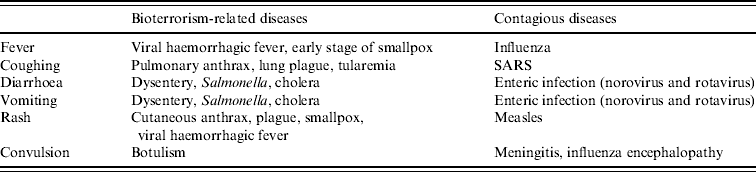
Six symptoms examined in this study, which are associated with bioterrorism-related diseases and contagious diseases, are shown in Table 1. The number of persons with symptoms was counted. The data was grouped according to symptom and classified according to the period of onset relative to the survey submission, i.e. the same day, the previous day, or 2 days before submission. Reports of symptom onset more than 48 h before submission or of an unknown onset date were excluded because such reports were not suitable for the surveillance of acute diseases. The Early Aberration Reporting System (EARS) recommended by CDC was used to alert system operators to the detection of a rapid increase in the number of people with symptoms [Reference Hutwagner, Seeman and Treadwell20]. Personal information was not included in this study.
Six symptoms examined in this study, associated with bioterrorism-related diseases and contagious diseases
Verification of the WDQH SS
The WDQH SS was verified in the city of Izumo, a city located 1000 km west of Tokyo with a population of 150 000. In this city, syndromic surveillance systems for outpatients in medical institutions, absentees from school, and ambulance-transported patients were already in operation. Therefore, the results obtained from the WDQH SS could be compared with those of the other ongoing surveillance systems.
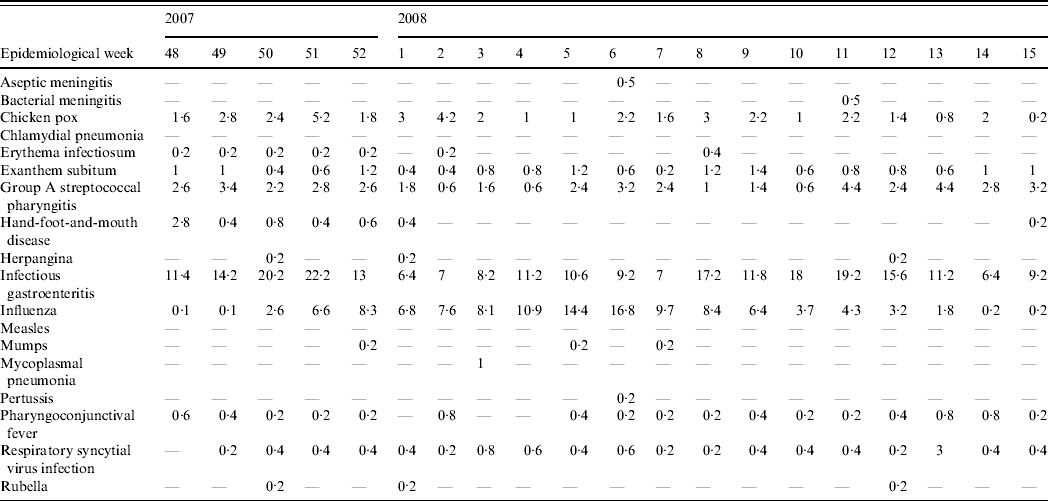
The verification experiment was conducted for 111 days from 1 December 2007, to 28 March 2008, except for eight consecutive days when the system was down for system maintenance. The subjects comprised 245 of the 379 residents of Izumo who were registered with an internet research company. Of these residents, 109 (44·5%) were male, and 138 (55·5%) were female. The age distribution was as follows: 25–29 years (18%), 30–34 years (20%), 35–39 years (22·9%), 40–44 years (13·1%). Population distributions by age in the WDQH SS and Izumo are shown in Figure 1. The residents were asked to complete a daily survey by accessing the WDQH website. The subjects received a payment for each of their answers. The collected data were later compared with the infection status, as determined using the existing Sentinel Reporting Diseases at the Izumo area, to evaluate the accuracy of the WDQH SS (Table 2). The data was subsequently compared with the degree of coincidence of detected abnormality in the area from the outpatient syndromic surveillance conducted at one central hospital and five clinics in the same area [Reference Ohkusa1]. The numbers of patients were grouped according to symptoms: fever, respiratory symptoms, diarrhoea, vomiting, rash, and convulsion. In the outpatient syndromic surveillance, alerts were defined as follows: when the actual measurement in each medical institution is +2 s.d., compared to the predicted values based on the previous multivariate analysis, the alert is defined as being a mild alert, +3 s.d. as a moderate alert, and +4 s.d. as a severe alert. Daily alerts are scored as one point for a severe alert, two-thirds of a point for a moderate alert, and one-third of a point for a mild alert. Because an epidemic varies over time, an alert, unseen on the day but seen on the previous day, is given half the points of the previous day. Similarly, an alert, unseen on the day but seen 2 days ago, is given a quarter of the points of 2 days ago. The degree of coincidence of alerts in areas is expressed as the mean point (%) of medical institutions. For example, it is 100% when a severe alert is noted in all medical institutions on the same day. An abnormality noted in multiple medical institutions is reported as a coincident alert in the area. Because six medical institutions participated in this study, a score higher than one-sixth of a point is reported as a coincident alert for the area [Reference Sugawara21]. This outpatient syndromic surveillance system delivers a sensitive alert because the data is provided by doctors and the baseline is determined using a multivariate analysis of multi-year data [Reference Ohkusa22]. For this reason, the outpatient syndromic surveillance data was used as a control in the present study to evaluate the accuracy of the WDQH SS. To determine the presence of an EARS alert on the day, sensitivity and specificity were calculated for the presence or absence of an alert on the day as the gold standard, and 1 day before and after, including time range of infection.
Comparison of population distributions by age between the web-based daily questionnaire for health (WDQH) surveillance system and Izumo.
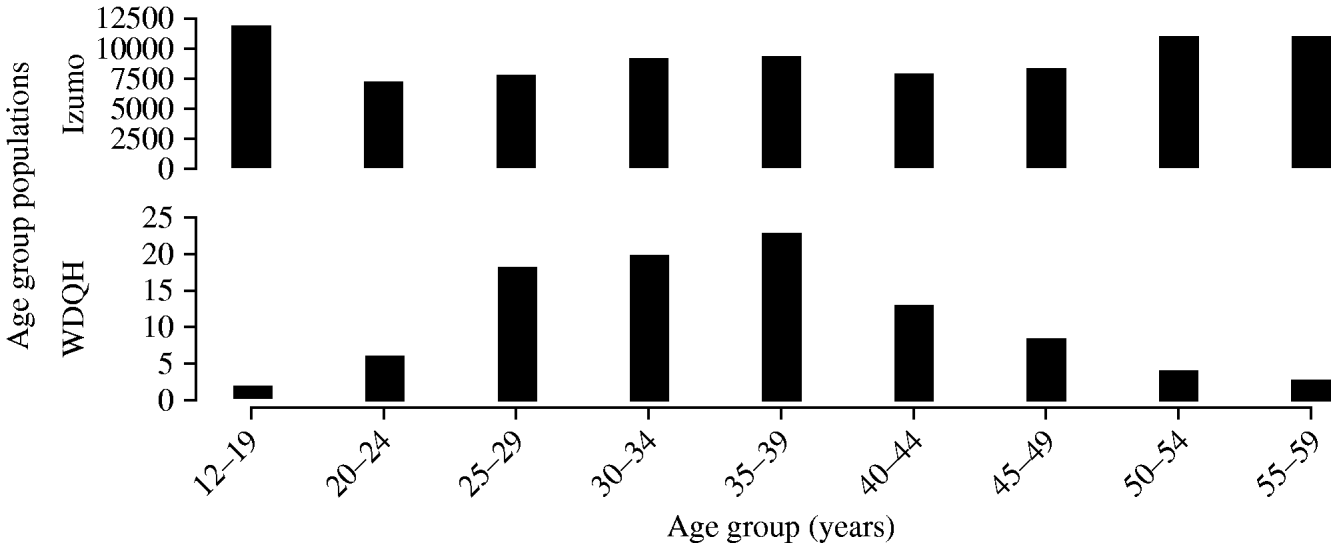
Sentinel-Reporting Diseases at the Izumo area (weekly results for number of patients/institution)
Symptoms of fever in ‘areas where influenza quickly became epidemic’ were examined in greater detail as part of a community study of the WDQH SS.
Application of the WDQH SS at the G8 Hokkaido Toyako Summit meeting
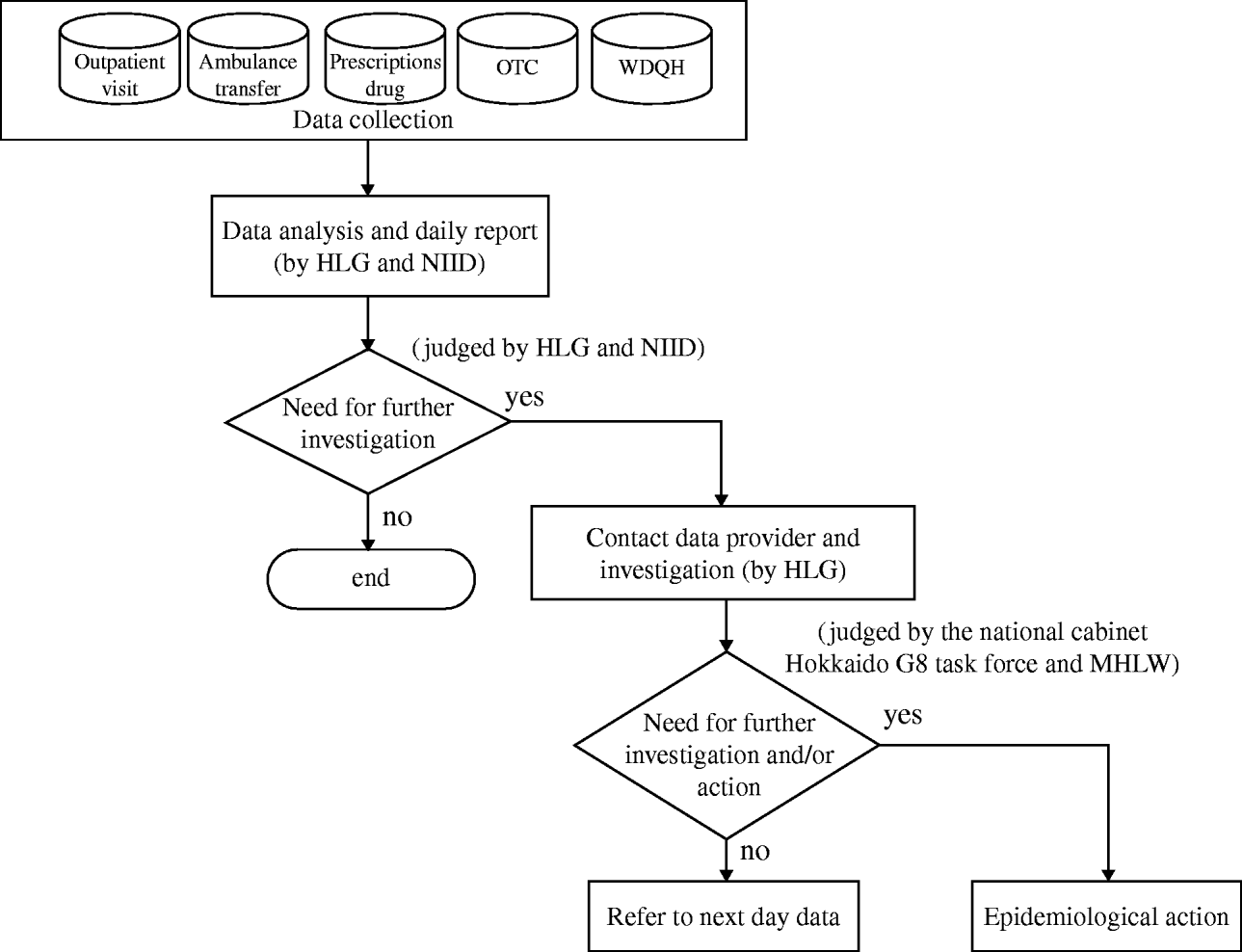
The G8 Summit meeting was held at Toyako in Hokkaido for 3 days beginning on 7 July 2008. The WDQH SS was operated as one of the counter-measures against public health concerns for people living in geographical proximity to the G8 Hokkaido Toyako Summit meeting. As well as the WDQH SS, outpatient syndromic surveillance, ambulance transfer surveillance, prescription surveillance, and OTC sales data surveillance were performed. WDQH surveillance was performed from 23 June 2008 (2 weeks before the Summit meeting was held) to 23 July (2 weeks after the Summit meeting ended); 472 residents participated in the surveillance by accessing the WDQH website via a personal computer or by responding via a cellular telephone. These residents consisted of 126 residents from the Nishiiburi area (the site of the Summit meeting), 131 residents from the Youteisan area (the press centre of the Summit meeting), and 161 residents of Muroran city and 54 residents of Noboribetsu city (neighbouring cities of the Summit meeting site). Both the Nishiiburi and Youteisan areas have small populations, whereas the populations of Muroran and Noboribetsu are 100 000 and 50 000, respectively. The daily health conditions of all household members, including the subjects of the surveillance, were reported through the WDQH website. Subjects who responded via cellular telephone only provided information on themselves. The data for the previous day was automatically counted and analysed during the morning of each day and was shared with Hokkaido local government, the Ministry of Health, Labour and Welfare, the National Institute of Infectious Diseases, and other concerned organizations or institutions. The surveillances and flowchart at the time of alert in the syndromic surveillance in the Hokkaido Toyako Summit meeting are shown in Figure 2. In the WDQH SS, the occurrence of a C3 alert triggered a hearing investigation in medical institutions by the Hokkaido local government. The central government was then supposed to take measures for further investigation or judgement, as needed.
Flowchart of public-health intervention when an alert is reported in the syndromic surveillance system during the Hokkaido Toyako Summit meeting. OTC, Over the counter; WDQH, web-based daily questionnaire for health; HLG, Hokkaido local government; NIID, National Institute of Infectious Diseases; MHLW, Ministry of Health, Labour and Welfare.
RESULTS
Verification experiment in Izumo
Monitored subjects and their families accounted for 0·7% of the whole population. The average rate of reporting by the registrants during the WDQH surveillance period was 47% on weekdays and 44% on Saturdays, Sundays and holidays. The onset of symptoms was reported after >48 h in 59% of the cases, between 24 and 48 h in 12%, between 6 and 24 h in 13%, between 3 and 6 h in 3%, between 1 and 3 h in 1%, and <1 h in 1%. Coughing symptoms persisted for lengthy periods of time, and 33% of the participants reported that they had suffered from coughing for >48 h prior to reporting their symptoms.
The average rates of reported symptoms were as follows: coughing, 8%; fever, 3%; diarrohea, 2%; vomiting, 1%; and rash or convulsions, 0%.
For fever symptoms, eight abnormal alerts were reported by the outpatient syndromic surveillance system, whereas 16 fever alerts were reported by the WDQH SS. The WDQH SS failed to report an alert corresponding to the alert reported by the outpatient syndromic surveillance system on 3 March. However, the other seven alerts reported by the outpatient syndromic surveillance system were reported by the WDQH SS within a few days. The sensitivity and specificity of the WDQH SS for fever to the coincident alert in the outpatient syndromic surveillance system were 0·43 and 0·88, respectively. In particular, the EARS alert reported by the WDQH SS in early December corresponded to an early influenza epidemic in the Izumo area that was subsequently reported by the sentinel surveillance system (Fig. 3 a).
Web-based daily questionnaire for health (WDQH) surveillance in Izumo. The symptom counts are shown by a continuous line (——). Circles (•) indicate an abnormal increase in either C1, C2, or C3 of the Early Aberration Reporting System, while diamonds (◆) indicate the date of an alert that coincided with an alert reported by the outpatient syndromic surveillance system. (a) Epicurve for fever. (b) Epicurve for fever in ‘A area’, where an influenza outbreak first occurred in Izumo. (c) Epicurve for coughing. (d) Epicurve for diarrhoea. (e) Epicurve for vomiting.
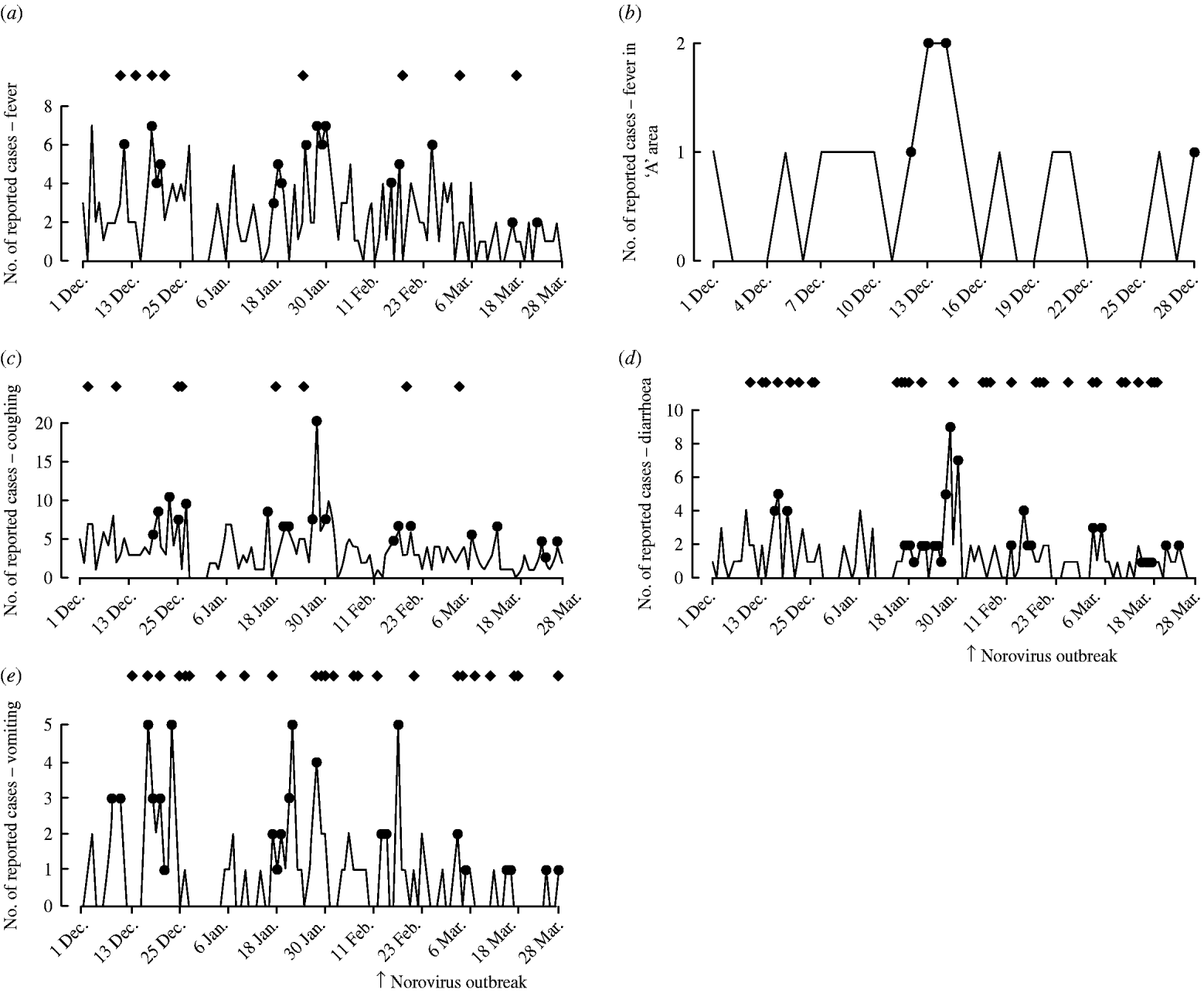
The WDQH SS reported fever alerts on 12–14 December 2007, corresponding to an influenza epidemic in ‘A area’. The epidemic in this area was confirmed by the temporary closure of public elementary school classes (on 12–14 December 2007) because of an influenza outbreak (Fig. 3 b).
Regarding coughing symptoms, eight abnormal alerts were noted by the outpatient syndromic surveillance, while 19 abnormal alerts were reported by the WDQH SS during the same period (Fig. 3 c). The sensitivity and specificity of the WDQH SS were 0·16 and 0·80, respectively.
For diarrhoea symptoms, 30 abnormal alerts were noted by the outpatient syndromic surveillance, while 25 abnormal alerts were reported by the WDQH SS during the same period. The sensitivity and specificity of the WDQH SS for diarrhoea were 0·68 and 0·77, respectively.
With regard to vomiting symptoms, 24 abnormal alerts were noted by the outpatient syndromic surveillance, while 22 abnormal alerts were reported by the WDQH SS during the same period. The sensitivity and specificity for vomiting were 0·55 and 0·80, respectively. No correlations between the timings of the alerts for diarrhoea or vomiting were seen between the outpatient syndromic surveillance data and the WDQH surveillance data. In Izumo, about 80 persons suffered from a norovirus outbreak on 14 February 2008; the WDQH SS reported alerts for diarrhoea on 15, 16, and 17 February and for vomiting on 14 and 17 February (Fig. 3 d, e).
For symptoms of rashes, one abnormal alert was noted by the outpatient syndromic surveillance, while 10 abnormal alerts were reported by the WDQH SS during the same period. The sensitivity and specificity were 0 and 0·89, respectively.
As for the symptoms of convulsions, one abnormal alert was noted by the outpatient syndromic surveillance, while seven abnormal alerts were reported by the WDQH SS during the same period. The sensitivity and specificity of the WDQH SS were 0 and 0·92, respectively. The data for rashes and convulsions was insufficient for analysis.
Application at the G8 Summit meeting
The rate of reporting during the WDQH surveillance period was ∼50% on both weekdays and weekends. The reporting rate was relatively low on the first day of the surveillance, on 1 July, and during the last week of the surveillance period after the G8 Summit meeting had ended.
As for all symptoms, 13 alerts were reported by the WDQH SS. A comparison with the results of the sentinel surveillance system revealed that most of the alerts were false positives; however, one fever alert for the Muroran area in early July corresponded to a herpangina epidemic caused by the EV71 virus. Neither bioterrorism incidents nor new infectious diseases of concern were detected during the Summit meeting. A temporary system failure occurred during the surveillance period, as this was the first attempt to automate the system.
DISCUSSION
The reporting rate in this study was ∼50%. However, the number of aggregate items reported during the surveillance periods of both the validation and application studies enabled the reporting of alerts for symptoms associated with infections. Thus, the number of responses received was considered sufficient to conduct the surveillance. We compared the results from the WDQH SS with those obtained from the outpatient syndromic surveillance system. Data could not be obtained from the outpatient syndromic surveillance system on Saturdays, Sundays, or holidays, when most clinics are closed; however, data could be collected by the WDQH SS, and alerts were reported on these days. The results of the WDQH SS show that most reports of coughing were made more than 48 h after onset. To obtain data on early infectious symptoms, the WDQH SS should be further improved in order that reports of coughing can be made within 24 h. Additionally, the questionnaire entries should be limited to those that are directly related to acute symptoms.
A retrospective comparison of the aggregate results for fever with the results of the sentinel surveillance system in Izumo demonstrated that a fever alert reported by the WDQH SS corresponded to the early stage of a type A influenza epidemic. According to the Sentinel Reporting Diseases, no other contagious diseases became epidemic except for influenza and gastroenteritis. No infection was overlooked by the WDQH SS. The baseline data was obtained using a multivariate analysis of multi-year data collected by an outpatient syndromic surveillance system, which was used as the control in this comparison. The alerts of outpatient syndromic surveillance were highly sensitive, and the false-positive rate was relatively low [Reference Ohkusa22]. On the other hand, the baseline for the EARS used by the WDQH SS was obtained using data collected during the previous week; thus, the specificity of the WDQH SS was relatively high [Reference Hutwagner23]. In the outpatient syndromic surveillance system, eight fever alerts were reported, seven of which were also reported by the WDQH SS. Thus, we considered that the fever alert information obtained using the WDQH SS was comparable to that obtained using the outpatient syndromic surveillance system. The detailed community survey data for fever shown in Figure 3 b indicates that the WDQH SS was also capable of identifying a regional influenza epidemic that occurred in an elementary school area.
The WDQH SS was also utilized in an area in the vicinity of the G8 Summit meeting site. The system used in this application was an improved version that automatically collected, analysed, and reported the information. With these improvements, the WDQH SS can now be set up within 3 days anywhere in Japan, as needed. Therefore, we believe that the WDQH SS will be a useful surveillance system in emergency situations.
The features of the WDQH surveillance were compared with those of various syndromic surveillance systems currently being used in Japan to clarify the characteristics of the WDQH SS for practical use. The Japanese medical system allows easy access to doctors without the need for an appointment on the day when the symptoms occur. Therefore, the outpatient syndromic surveillance data, which is provided by doctors, is particularly reliable among the various syndromic surveillance systems. Moreover, this data can be easily acquired from electronic medical records. Therefore, we used the data from the outpatient syndromic surveillance system in Izumo as a control in the curent study [Reference Ohkusa1]. However, the adoption of electronic medical records remains quite low in clinics in Japan, and the outpatient syndromic surveillance system requires further study. On the other hand, the rate of computerized pharmacies is quite high. Syndromic surveillance systems based on prescriptions [Reference Sugawara12] can be used to monitor increases in the amount of prescribed formulations (e.g. antiviral drugs or antibiotics). This system has a high practical utility, since data can be extracted from the insurance claim system by the application service provider, which accounts for a large share of the domestic market for pharmaceuticals. A syndromic surveillance system based on the sale of OTC drugs [Reference Ohkusa9] reportedly enabled the identification of epidemics several days before the data collected from outpatient visits was capable of identifying aberrations. The syndromic surveillance of ambulance-transported patients is important for monitoring serious illnesses, but this system has only recently been introduced and is presently being operated in a local area after the completion of a fundamental study. The surveillance of absentees from public schools over a very wide area can also be used to monitor the epidemic status [Reference Besculides10]. However, no data can be obtained when students are not in class, such as on weekends and holidays. In contrast to these surveillance systems, the WDQH SS can be used to monitor symptoms every day, including weekends and holidays, within a certain area, even during the early stages of an epidemic. Moreover, the WDQH SS can be set up within 3 days, and alert information can be sent within 7 days after the initiation of surveillance using the EARS protocol. Therefore, we think that the WDQH SS is suitable for short-term implementation in emergency situations or during important events, such as the G8 Summit meeting. The percentage of persons with symptoms in the area can be estimated because the sample population is representative of the general population. This allows the number of persons with the onset of certain symptoms to be estimated, which is considered to be a useful indicator for public health.
In the WDQH SS, the population distribution of the respondents peaks at 35–40 years old, while that in Izumo peaks at 55 years old. Monitored subjects and their families account for 0·7% of the whole population, so they are fairly representative of the whole population. The bias in age distribution towards young people in the WDQH SS is a limitation caused by the internet survey. However, this survey is useful because no other syndromic surveillance is available to monitor early development of symptoms. In the future, we should examine data-collection methods for areas where the elderly live in one-person households without access to the internet.
One drawback of the WDQH SS is its operational cost. In the present study, respondents were paid for each question that they answered. Therefore, the present WDQH SS is only applicable for high profile events with sufficient budgets and concentrated human resources and cannot be applied to long-term or routine operations.
Regarding this point, further improvement is necessary to enable routine monitoring as a counter-measure against events of concern to public health, such as the emergence of new infectious diseases or bioterrorism attacks, that could occur at any time or in any place. A long-term WDQH SS will provide data for several years, which can be used for multivariate analysis to increase accuracy. Furthermore, it is very useful in predicting alerts through synthesis of data from the outpatient syndromic surveillance [Reference Najmi and Magruder24].
Cooperating with a sector of the general population with a strong concern for health issues or allowing similar systems to be implemented as part of corporate customer research efforts could help to reduce costs.
CONCLUSIONS
We constructed a syndromic surveillance system, the WDQH SS, to obtain information on health conditions directly from local residents via the internet. The usefulness of this syndromic surveillance system was demonstrated, with results that were comparable to those obtained using existing outpatient syndromic surveillance systems utilized by medical institutions. Our system can be used to detect outbreaks at an early stage in specific areas, although its operational cost is relatively high.
ACKNOWLEDGEMENTS
This study was supported in part by a research grant from the Ministry of Health, Labour, and Welfare of Japan.
DECLARATION OF INTEREST
None.



