


Introduction
The postpartum phase is a high-risk period for women’s mental health, as they experience social, psychological and hormonal changes. One of the most common complications of these changes is the onset of postpartum depression (PPD), which may occur up to 1 year after delivery (Bennett et al., Reference Bennett, Einarson, Taddio, Koren and Einarson2004).
The global prevalence of women with clinically significant symptoms of PPD has been estimated at 17.4% (95% confidence interval [CI] 16.7–18.2), with large variations across countries and settings (Flynn et al., Reference Flynn, Davis, Marcus, Cunningham and Blow2004; O’Hara and McCabe, Reference O’Hara and McCabe2013; Wang et al., Reference Wang, Liu, Shuai, Cai, Fu, Liu, Xiao, Zhang, Krabbendam, Liu, Liu, Li and Yang2021). Women in low- and middle-income countries (LMICs) exhibit higher rates of clinically significant PPD symptoms, estimated at 19.0% (15.5–23.0) through validated screening tools (Gelaye et al., Reference Gelaye, Rondon, Araya and Williams2016; Roddy Mitchell et al., Reference Roddy Mitchell, Gordon, Lindquist, Walker, Homer, Middleton, Cluver, Tong and Hastie2023). Recent systematic reviews and meta-analyses pooled rates of 16.8%–24.3% in sub-Saharan Africa (Nweke et al., Reference Nweke, Ukwuoma, Adiuku-Brown, Ugwu and Nseka2022; Roddy Mitchell et al., Reference Roddy Mitchell, Gordon, Lindquist, Walker, Homer, Middleton, Cluver, Tong and Hastie2023)and 31.0%–38.8% in South Africa (SA; Gelaye et al., Reference Gelaye, Rondon, Araya and Williams2016; Wang et al., Reference Wang, Liu, Shuai, Cai, Fu, Liu, Xiao, Zhang, Krabbendam, Liu, Liu, Li and Yang2021). To date, individual studies conducted in SA had small sample sizes (between 67 and 1035 women) and mainly screened women with validated tools for clinically significant PPD symptoms, showing large variability of estimates, ranging from 8.8% to 53.0% (Duma and Madiba, Reference Duma and Madiba2020; Govender et al., Reference Govender, Naidoo and Taylor2020; Hung et al., Reference Hung, Tomlinson, le Roux, Dewing, Chopra and Tsai2014; Mokwena and Masike, Reference Mokwena and Masike2020; Peltzer et al., Reference Peltzer, Rodriguez, Lee and Jones2018; Pingo et al., Reference Pingo, van den Heuvel, Vythylingum and Seedat2017; Ramchandani et al., Reference Ramchandani, Richter, Stein and Norris2009). Such variability may be due to heterogeneity in settings and characteristics of included women, which could limit the comparability of different studies.
PPD may have implications for maternal and offspring well-being and health (Netsi et al., Reference Netsi, Pearson, Murray, Cooper, Craske and Stein2018; Roddy Mitchell et al., Reference Roddy Mitchell, Gordon, Lindquist, Walker, Homer, Middleton, Cluver, Tong and Hastie2023; Srinivasan et al., Reference Srinivasan, Pearson, Johnson, Lewis and Lewis2020; Wisner et al., Reference Wisner, Sit, McShea, Rizzo, Zoretich, Hughes, Eng, Luther, Wisniewski, Costantino, Confer, Moses-Kolko, Famy and Hanusa2013), including alterations of maternal physical and psychological health, as well as infant physical health, and motor, cognitive, emotional and behavioural development (Slomian et al., Reference Slomian, Honvo, Emonts, Reginster and Bruyère2019). Timely detection and management of PPD could improve depressive symptoms and their consequences (Dennis and Dowswell, Reference Dennis and Dowswell2013), yet both need improvement in many LMICs (Fonseca et al., Reference Fonseca, Ganho-Ávila, Lambregtse-van den Berg, Lupatelli, Rodriguez-Muñoz M de la, Ferreira, Radoš and Bina2020). In recent years, there has been an increasing interest in risk factors for PPD, which could aid in identifying at-risk women who should be the target of screening programmes (Dennis and Dowswell, Reference Dennis and Dowswell2013). Predictors of PPD identified in both LMICs and high-income countries (HICs) include maternal age, lower education, unwanted pregnancy, intimate partner violence or other forms of violence, poor family or partner support, low income, unemployment, exposure to war or disasters, HIV and a history of depression (Gastaldon et al., Reference Gastaldon, Solmi, Correll, Barbui and Schoretsanitis2022; Hutchens and Kearney, Reference Hutchens and Kearney2020; Roddy Mitchell et al., Reference Roddy Mitchell, Gordon, Lindquist, Walker, Homer, Middleton, Cluver, Tong and Hastie2023; Zhang et al., Reference Zhang, Wang, Yang, Chen, Qiu, Wang, Chen, Zhao, Ye, Zheng and Qin2019). In contrast, obstetric and medical predictors of PPD have been mainly studied in HICs (Hutchens and Kearney, Reference Hutchens and Kearney2020), with evidence linking PPD with gynaecological conditions predating the pregnancy, such as premenstrual syndrome (Cao et al., Reference Cao, Jones, Tooth and Mishra2020) or polycystic ovary syndrome (Schoretsanitis et al., Reference Schoretsanitis, Gastaldon, Kalaitzopoulos, Ochsenbein-Koelble, Barbui and Seifritz2022), pregnancy complications and obstetric complications such as gestational diabetes (Arafa et al., Reference Arafa and Dong2019), preeclampsia (Caropreso et al., Reference Caropreso, de Azevedo Cardoso, Eltayebani and Frey2020). Caesarean section (C-section) (Xu et al., Reference Xu, Ding, Ma, Xin and Zhang2017), preterm delivery (de Paula Eduardo et al., Reference de Paula Eduardo, de Rezende, Menezes and Del-Ben2019) and postpartum haemorrhage (Schoretsanitis et al., Reference Schoretsanitis, Gastaldon, Ochsenbein‐Koelble, Olbrich, Barbui and Seifritz2024). However, these predictors have barely been investigated in cohorts from LMICs (Gastaldon et al., Reference Gastaldon, Solmi, Correll, Barbui and Schoretsanitis2022; Roddy Mitchell et al., Reference Roddy Mitchell, Gordon, Lindquist, Walker, Homer, Middleton, Cluver, Tong and Hastie2023; Schoretsanitis et al., Reference Schoretsanitis, Gastaldon, Kalaitzopoulos, Ochsenbein-Koelble, Barbui and Seifritz2022, Reference Schoretsanitis, Gastaldon, Ochsenbein‐Koelble, Olbrich, Barbui and Seifritz2024).
Given the high PPD prevalence in SA estimated in previous studies through ad hoc research screenings, it is essential to estimate the proportion of women who are diagnosed with PPD under routine clinical practice circumstances, as PPD might be unrecognized and untreated in everyday clinical practice. Additionally, research on PPD risk factors is needed to develop effective targeted screening and treatment strategies (Fonseca et al., Reference Fonseca, Ganho-Ávila, Lambregtse-van den Berg, Lupatelli, Rodriguez-Muñoz M de la, Ferreira, Radoš and Bina2020; Gelaye et al., Reference Gelaye, Rondon, Araya and Williams2016; Wang et al., Reference Wang, Liu, Shuai, Cai, Fu, Liu, Xiao, Zhang, Krabbendam, Liu, Liu, Li and Yang2021). We aimed to estimate the proportion of women diagnosed with PPD with routinely collected insurance clinical data and investigate socio-demographic, medical and obstetric risk factors of PPD among female beneficiaries of a large South African medical insurance scheme.
Methods
We conducted a cohort study analysing longitudinal reimbursement claims of beneficiaries of a large South African medical insurance scheme. The study included beneficiaries aged between 10 and 55 years, who were enrolled in the medical insurance scheme between 1 January 2011 and 15 March 2020 (i.e. start of COVID-19 measures in SA), delivered a new-born in that period and had health insurance coverage at least from the beginning of the pregnancy (37 weeks before delivery) and at least 6 weeks after delivery. We excluded beneficiaries with unknown sex, age or delivery date. Additionally, those who submitted a claim with depression diagnoses during pregnancy were excluded, as we focused on new episodes of depression with postpartum onset and these participants were not considered at risk for the onset of a new PPD episode in the postpartum period, considering that they were already depressed during pregnancy. We excluded these women to avoid misclassifying ongoing or chronic depression as PPD, thereby ensuring a more accurate assessment of new-onset PPD. Including women with depression during pregnancy could result in an overestimation of PPD prevalence, as it might capture women already in depressive episodes before childbirth, as reimbursement claims do not provide information about timing of remission. We included only the first delivery for beneficiaries with more than one delivery recorded in the selected timeframe (Supplementary eFigure 1).
We defined the study measures based on the International Classification of Diseases, 10th Revision (ICD-10) diagnoses from outpatient and hospital claims with hospital procedure codes (Current Procedural Terminology [CPT]) and medication claims (Anatomical Therapeutic Chemical [ATC] classification system). We defined baseline as the participants’ delivery date. Deliveries were identified based on ICD-10 codes for delivery (O80–O84), complications of labour and delivery (O60–O75) and CPT codes for other medical or surgical procedures related to delivery (Supplementary eTable 1).
We defined an episode of PPD as a new ICD-10 diagnosis of a depressive episode (F32), recurrent depressive episode (F33) or postpartum/postnatal depression (F53.0) within 365 days after delivery. We used a time window of 365 days to account for potential delays in the detection of PPD (Roddy Mitchell et al., Reference Roddy Mitchell, Gordon, Lindquist, Walker, Homer, Middleton, Cluver, Tong and Hastie2023).
We examined several risk factors for PPD, including conditions pre-existing the pregnancy, i.e. polycystic ovary syndrome, endometriosis and HIV (Supplementary eTable 2), conditions diagnosed during pregnancy, i.e. gestational diabetes, gestational hypertension, vitamin D deficiency and hyperemesis gravidarum, and perinatal or obstetric complications such as foetal stress or complications during labour and delivery, preterm delivery, perineal laceration, elective or emergency C-section, preeclampsia and postpartum haemorrhage. Additional risk factors considered were age at delivery (<18, 18–24, 25–29, 30–34, 35–40, ≥41 years) and a history of depression before pregnancy, defined as having at least one depression diagnosis in the 3 years before pregnancy (ICD-10 codes for risk factors are reported in Supplementary eTable 3).
Among participants diagnosed with gestational diabetes, hypertension and HIV, we distinguished between participants with ‘treated’ and ‘untreated’ conditions. Participants who received the respective treatment, i.e. antidiabetic medications, antihypertensive medications or antiretroviral medication for HIV treatment during pregnancy, were classified as ‘treated’, while those who did not receive any such medication were classified as ‘untreated’ (ATC codes are reported in Supplementary eTable 4).
We summarized the characteristics of study participants using descriptive statistics stratified by PPD status. We used the Kaplan–Meier method to estimate the cumulative incidence of PPD. Participants were followed from their delivery date to the earliest of: diagnosis of PPD, end of their insurance coverage or 15 March 2020. We used multivariable modified Poisson regression models with robust standard errors to estimate adjusted risk ratios (aRRs) and 95% CIs for risk factors of PPD (Zou, Reference Zou2004). Poisson regression models allow accounting for differential follow-up time (e.g. drop-out from the insurance scheme) and interpreting estimated coefficients directly as risk ratios (RRs) rather than odds ratios (ORs), which are commonly provided based on logistic regression. Time under follow-up after delivery, truncated to 365 days, was used as exposure time. Poisson regression models included PPD risk factors, self-identified population group (Black, Mixed Ancestry, White, Indian/Asian and unknown) and calendar year.
To confirm the robustness of the main analysis, we also performed a multivariate Cox proportional hazards model, estimating adjusted hazard ratios (aHRs) and 95% CIs for factors associated with PPD, adjusted for the same factors. Furthermore, we performed Poisson regression models using a subset of participants with a minimum of 3 years of insurance coverage before pregnancy. By focusing on this subsample, we aimed to increase the likelihood of identifying any underlying history of depression.
In a secondary analysis, we examined the risk of PPD in beneficiaries with treated versus untreated PPD risk factors to explore the role of treatment in the association.
We performed statistical analyses in Stata (Version 16. College Station, TX: StataCorp).
Results
Among people enrolled in the medical insurance scheme between 1 January 2011 and 15 March 2020, 49,983 delivered a live-born child and had insurance coverage from the start of the pregnancy until at least 6 weeks postpartum. After excluding 1,570 (3.1%) people who received a depression diagnosis during pregnancy and 446 (0.8%) with unknown age, we included 47,967 participants in our analysis. The mean age at delivery was 30.3 years (standard deviation [SD] 6.1). The medical histories indicated that 6,925 (14.4%) had received an HIV diagnosis, 2,485 (5.2%) had endometriosis, 922 (1.9%) had polycystic ovary syndrome and 2,969 (6.2%) had been diagnosed with depression before the onset of pregnancy. Documented pregnancy complications included 1,976 participants (4.1%) with a diagnosis of hyperemesis gravidarum, 1,022 (2.1%) with gestational hypertension, 1,112 (2.3%) with gestational diabetes and 14 (<0.1%) with vitamin D deficiency. Regarding complications during labour or postpartum, 20,274 participants (42.3%) had an elective C-section, while 10,100 (21.1%) required an emergency C-section. There were 4,257 preterm deliveries (8.9%) and 3,829 cases (8.1%) of foetal distress or complicated labour. Additionally, 2,863 participants (6.1%) were diagnosed with preeclampsia, 1,466 (3.1%) experienced perineal laceration, 432 (0.9%) suffered postpartum haemorrhage and 247 (0.5%) developed eclampsia (Table 1).
Characteristics of women with and without postpartum depression (PPD)
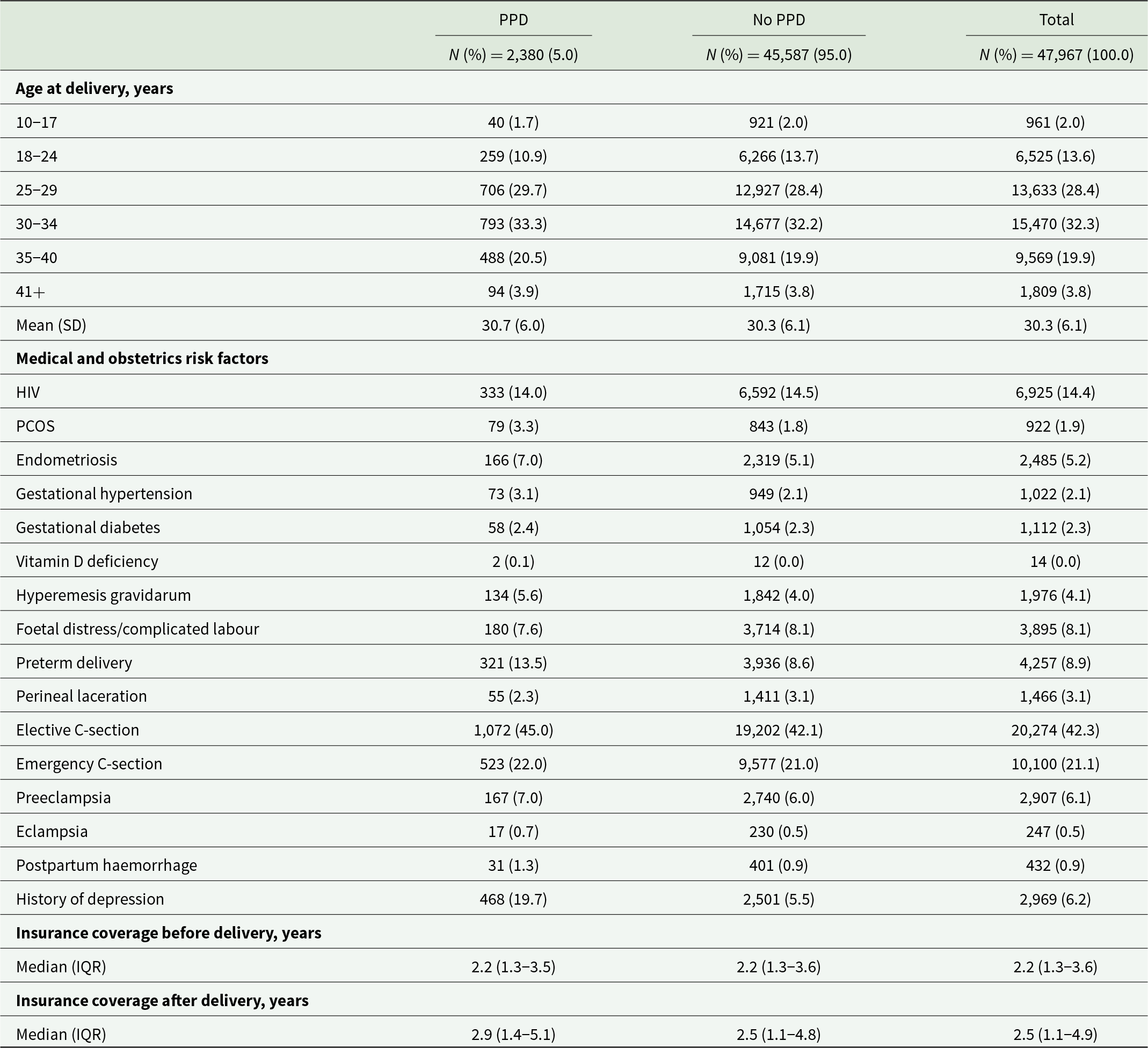
IQR = interquartile range, PCOS = polycystic ovary syndrome, PPD = postpartum depression, SD = standard deviation.
A total of 2,380 participants (5.0%) fulfilled PPD criteria. Among them, 2,331 (97.9%) were diagnosed with a depressive episode or disorder (F32–F33) according to ICD-10 criteria, and 81 (3.4%) were diagnosed specifically with PPD (F53). The cumulative incidence of PPD diagnoses showed a gradual increase, from 0.8% (95% CI 0.7%–0.9%) at 6 weeks postpartum, to 2.8% (95% CI 2.7%–3%) at 6 months and reaching 5.5% (95% CI 5.3%–5.7%) at 12 months postpartum (Fig. 1). The incidence of PPD diagnoses remained constant throughout the study duration. The calendar year of delivery was not associated with PPD incidence in the unadjusted (RR 1.01, 95% CI 0.99–1.03) analysis or in the analysis adjusted for age and population group (aRR 0.99, 95% CI 0.98–1.01).
Cumulative incidence of postpartum depression diagnosis.

We presented the results (aRRs and corresponding 95% CI) of the main analysis in Fig. 2, all factors for which we explored the association with PPD are reported. Participants aged 25 years or older displayed approximately a 20% higher risk of PPD compared to participants aged 18–24 years, while adolescents aged 10–17 were at similar risk. A depression diagnosis in the 3 years before pregnancy was the strongest risk factor for PPD (aRR 3.47, 95% CI 3.14–3.85), followed by preterm delivery (aRR 1.47, 95% CI 1.30–1.66), PCOS (aRR 1.37, 95% CI 1.09–1.72), hyperemesis gravidarum (aRR 1.32, 95% CI 1.11–1.57), gestational hypertension (aRR 1.30, 95% CI 1.03–1.66) and postpartum haemorrhage (aRR 1.29, 95% CI 0.91–1.85). We found no evidence of association between PPD and the remaining hypothesized risk factors. The association between vitamin D deficiency and PPD could not be evaluated due to the small number of participants diagnosed with vitamin D deficiency in the cohort. In the multivariate Cox proportional hazards model, aHRs were similar to the results of the main analysis, confirming the main results (Supplementary eTable 5).
Adjusted risk ratios (aRRs) and 95% confidence intervals (95% CI) for the association between risk factors and PPD. The Poisson regression model was adjusted for all variables shown in the model, calendar year and self-identified population group. PCOS: polycystic ovary syndrome.
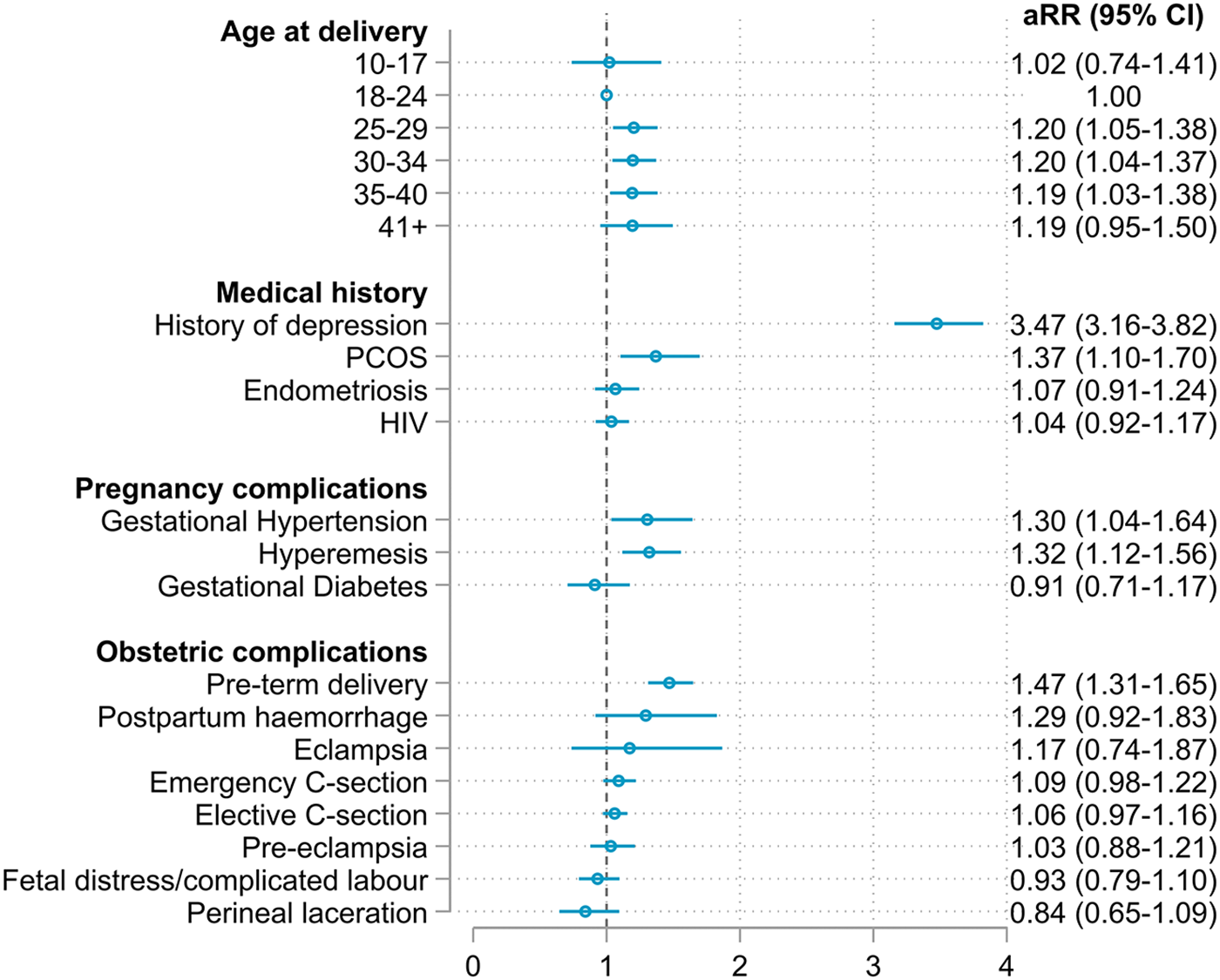
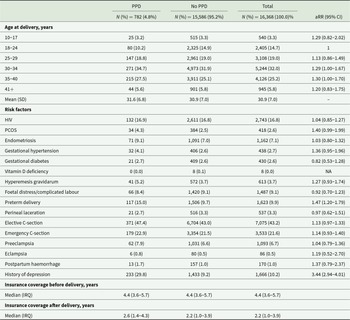
Table 2 shows the characteristics of the subset of 16,368 participants with at least 3 years of insurance coverage before delivery and aRRs for factors associated with PPD in this group. Consistent with the main analysis, a history of depression within the 3 years before pregnancy was strongly associated with PPD, demonstrating nearly four times higher risk in participants with a history of depression. The PPD risk related to the remaining risk factors was consistent with the main analysis. Slightly higher point estimates of aRR with overlapping 95% CI were observed for most risk factors, except for age between 25 and 29 years, endometriosis, gestational diabetes and hyperemesis gravidarum which had lower aRRs compared to the main analysis.
Characteristics of participants with and without depression in the subset with at least 3 years of insurance coverage before delivery

IQR = interquartile range, NA = not available, PCOS = polycystic ovary syndrome, PPD = postpartum depression, SD = standard deviation. All analyses are adjusted for self-identified population group.
All analyses are adjusted for self-identified population group.
Of the medical conditions evaluated – HIV, gestational diabetes and gestational hypertension – only gestational hypertension was associated with PPD. We further investigated this association with a model that separated the gestational hypertension group into treated and untreated. Participants with untreated hypertension exhibited a higher risk of PPD (aRR 1.56, 95% CI 1.18–2.06), while those with treated hypertension (aRR 1.03, 95% CI 0.71–1.49) showed a PPD risk comparable to participants without hypertension.
Discussion
In our cohort study of nearly 50,000 South African insurance beneficiaries who delivered a child between 2011 and 2020, 5.5% were diagnosed with PPD within 12 months after delivery. The most significant risk factor for PPD was a previous diagnosis of depression in the 3 years before pregnancy. Other notable risk factors included preterm delivery, polycystic ovary syndrome, hyperemesis gravidarum, gestational hypertension and postpartum haemorrhage.
The proportion of women diagnosed with PPD in our study (5.5% at 1 year) appears to be lower than any previous estimations in SA, sub-Saharan countries, but also in other LMICs and HICs (Roddy Mitchell et al., Reference Roddy Mitchell, Gordon, Lindquist, Walker, Homer, Middleton, Cluver, Tong and Hastie2023; Wang et al., Reference Wang, Liu, Shuai, Cai, Fu, Liu, Xiao, Zhang, Krabbendam, Liu, Liu, Li and Yang2021). There may be several possible explanations for this discrepancy, namely essential variability and limitations of diagnostic tools for PPD, in timing of the assessment of PPD and in settings or populations included across different studies. First, regarding the variability in diagnostic tools, to our knowledge, this is the first study estimating the proportion of women diagnosed with PPD according to routine clinical diagnostic criteria in SA’s private sector, i.e. ICD-10 codes. Consequently, it was hard to directly compare the proportion of women with PPD in our study with the prevalence of PPD estimated in other studies using different diagnostic instruments. Pooled estimates from a meta-analysis of cross-sectional studies employing the Edinburgh Postnatal Depression Scale (EPDS) for diagnosis report a 23% prevalence for LMICs and 24% for sub-Saharan countries (Roddy Mitchell et al., Reference Roddy Mitchell, Gordon, Lindquist, Walker, Homer, Middleton, Cluver, Tong and Hastie2023). Although the EPDS is a validated tool broadly employed in research, it has only been validated as a screening tool. Its use as a diagnostic tool may lead to overestimations of the prevalence of PPD by including women with mild or sub-clinical symptoms of depression but without a major depressive episode (Tsai et al., Reference Tsai, Scott, Hung, Zhu, Matthews, Psaros and Tomlinson2013). Specifically, for scores ≥12, EPDS has a sensitivity of 74% and a specificity of 89% for PPD diagnosis, with a low positive predictive value and a high risk for false positives (Matthey et al., Reference Matthey and Agostini2017). When accounting for the diagnostic inaccuracies of the EPDS, the true underlying prevalence of PPD has been estimated at 16% (Gonçalves Pacheco et al., Reference Gonçalves Pacheco, Salum and Hoffmann2023). Similarly, estimates from studies conducted in sub-Saharan Africa that employed clinical diagnostic criteria similar to ours, such as the Diagnostic and Statistical Manual of Mental Illnesses (DSM), were also higher than ours. Specifically, prevalence ranged from 11% to 15% in Nigeria (Adewuya et al., Reference Adewuya, Eegunranti and Lawal2005; Uwakwe, Reference Uwakwe2003) and 26% to 33% in Zimbabwe (Chibanda et al., Reference Chibanda, Mangezi, Tshimanga, Woelk, Rusakaniko, Stranix-Chibanda, Midzi, Maldonado and Shetty2010), and reached 25% within socially disadvantaged populations in SA (Lawrie et al., Reference Lawrie, Hofmeyr, de Jager and Berk1998). Reasons for the lower prevalence of PPD observed in our study compared to others may relate to the inherent limitations of the claims data employed. Specifically, a PPD diagnosis in our dataset might only be recorded if treatment is sought and claimed. This could result in underreporting due to various barriers to care, including financial constraints, stigma and competing responsibilities, which might deter women from seeking or claiming treatment.
Another explanation for this discrepancy could be the timing of diagnosis in our study. PPD onset often occurs within the first 6 weeks postpartum (Gonçalves Pacheco et al., Reference Gonçalves Pacheco, Salum and Hoffmann2023; Uwakwe, Reference Uwakwe2003). In our cohort, only about 1% of women were diagnosed during the first 6 weeks, suggesting that many women were diagnosed with a delay or not diagnosed at all. Both explanations – the disparity between the anticipated underlying prevalence and the findings from our study – suggest a potential diagnostic gap in SA’s private sector which should be further investigated and adequately addressed through the early identification of women at risk of PPD and the adaptation of targeted screenings for such women.
An alternative explanation could be that the true prevalence of PPD in our cohort was lower than in other sub-Saharan settings due to socio-economic differences. Our study included women from SA’s private sector, who have a higher socio-economic status compared to other population groups in sub-Saharan Africa. Given that socio-demographic factors significantly influence the development and persistence of PPD, it is possible that the actual prevalence of PPD in our study population was lower than in other sub-Saharan regions characterized by greater socio-economic disadvantages. However, it must be noted that even in HICs, where access to mental healthcare is better, PPD prevalence is higher, with a pooled estimate of 15.54 (4.9–16.2) (Wang et al., Reference Wang, Liu, Shuai, Cai, Fu, Liu, Xiao, Zhang, Krabbendam, Liu, Liu, Li and Yang2021).
The strongest predictor of PPD was a recent history of depression before pregnancy, increasing the risk of PDD almost fourfold compared to no history of recent depression. A history of depression has been consistently identified as one of the main risk factors in previous studies and systematic reviews (Gastaldon et al., Reference Gastaldon, Solmi, Correll, Barbui and Schoretsanitis2022; Hutchens and Kearney, Reference Hutchens and Kearney2020; Nweke et al., Reference Nweke, Ukwuoma, Adiuku-Brown, Ugwu and Nseka2022). The estimated increase in PPD risk of 47% (95% CI 31%–65%) among women with preterm deliveries aligns with the literature. A meta-analysis of 12 studies found an increase in the odds of PPD of 79% associated with preterm birth, with substantial heterogeneity between studies (de Paula Eduardo et al., Reference de Paula Eduardo, de Rezende, Menezes and Del-Ben2019). Similarly, other pregnancy or labour complications such as gestational hypertension (Strapasson et al., Reference Strapasson, Ferreira and Ramos2018), hyperemesis gravidarum (Austin et al., Reference Austin, Wilson and Saha2019), postpartum haemorrhage (Liu et al., Reference Liu, Butwick, Sand, Wikström, Snowden and Stephansson2021), emergency C-section (Xu et al., Reference Xu, Ding, Ma, Xin and Zhang2017) or gestational diabetes (Arafa and Dong, Reference Arafa and Dong2019) have been shown to be associated with PPD (Colditz, Reference Colditz2010; Schoretsanitis and Deligiannidis, Reference Schoretsanitis and Deligiannidis2020; Song and Chung, Reference Song and Chung2010). Polycystic ovary syndrome, a condition usually diagnosed before conception, emerged as one of the strongest risk factors (around 40% higher risk). Of note, polycystic ovary syndrome has been associated with a higher risk of depression at any time in women’s life, including the postpartum period (Pope et al., Reference Pope, Sharma, Sharma and Mazmanian2015; Schoretsanitis et al., Reference Schoretsanitis, Gastaldon, Kalaitzopoulos, Ochsenbein-Koelble, Barbui and Seifritz2022). We did not find HIV to be an important risk factor for PPD, in contrast with a recent meta-analysis showing a 42% (95% CI 12–80) increase in the odds of PPD among women living with HIV compared to those without HIV (Zhu et al., Reference Zhu, Huang, Lv, Guan and Bai2019). The lack of observed associations between HIV and PPD in our study could be due to higher socio-economic status, enhanced access to comprehensive HIV care, including psychosocial support, available to our private sector cohort. This group may be exposed to fewer socio-economic stressors than the majority of individuals living with HIV in sub-Saharan Africa, who are generally less advantaged in terms of resources (Peltzer et al., Reference Peltzer, Rodriguez, Lee and Jones2018).
Another important finding of our study is that many of the identified risk factors for PPD are modifiable. Only women with untreated gestational hypertension showed an increased risk of PPD, whereas those who received treatment for gestational hypertension did not display an increase in risk. Although these findings should be interpreted with caution due to the observational nature of our study, which inherently limits the interpretation of causal relationships, they might suggest that the management of PPD risk factors emerging before or during pregnancy could potentially have a role in reducing the risk of PPD (Wang et al., Reference Wang, Liu, Shuai, Cai, Fu, Liu, Xiao, Zhang, Krabbendam, Liu, Liu, Li and Yang2021)
Screening programmes have shown promise in enhancing early diagnosis, case finding and treatment of PPD (Waqas et al., Reference Waqas, Koukab, Meraj, Dua, Chowdhary, Fatima and Rahman2022). Studies in HICs have shown the feasibility and benefits of PPD screening in outpatient settings (Chaudron et al., Reference Chaudron, Szilagyi, Kitzman, Wadkins and Conwell2004; Morris-Rush et al., Reference Morris-Rush, Freda and Bernstein2003; Waqas et al., Reference Waqas, Koukab, Meraj, Dua, Chowdhary, Fatima and Rahman2022), yet there is no evidence for the effectiveness of these programmes in LMICs, including SA. Despite limited evidence and a lack of specific recommendations for screening in the perinatal period, South African mental health guidelines recommend routine screening for mental illness during pregnancy (Department of Health, 2013). The feasibility of implementing routine screening programmes in resource-limited settings is controversial, as it requires substantial financial and human resources to ensure follow-up and comprehensive management (Kagee et al., Reference Kagee, Tsai, Lund and Tomlinson2013). Positive screening results require further diagnostic assessment, appropriate treatment and support (Kagee et al., Reference Kagee, Tsai, Lund and Tomlinson2013). For these reasons, US and UK guidelines recommend implementing screening programmes only when sufficient resources are available for screening, diagnostic assessment and effective treatment (Waqas et al., Reference Waqas, Koukab, Meraj, Dua, Chowdhary, Fatima and Rahman2022). In SA’s private sector, where sufficient resources may be available, PPD screening might be cost-effective, potentially mitigating negative maternal and infant outcomes (Waqas et al., Reference Waqas, Koukab, Meraj, Dua, Chowdhary, Fatima and Rahman2022; Wilkinson et al., Reference Wilkinson, Anderson and Wheeler2017). Conversely, considering the large PPD burden and the shortage of mental healthcare professionals in SA’s public sector (Ruffieux et al., Reference Ruffieux, Efthimiou, LL, Joska, Cornell, Seedat, Mouton, Prozesky, Lund, Maxwell, Tlali, Orrell, Davies, Maartens and Haas2021), large-scale screening and treatment by mental health professionals may be unrealistic (World Health Organization, 2017). The task-sharing of PPD screening and treatment with lay health workers, an approach often suggested to overcome the shortage of trained healthcare workers (Dennis and Dowswell, Reference Dennis and Dowswell2013), did not prove to be effective in treating depression in a randomized trial conducted in SA (Lund et al., Reference Lund, Schneider, Garman, Davies, Munodawafa, Honikman, Bhana, Bass, Bolton, Dewey, Joska, Kagee, Myer, Petersen, Prince, Stein, Tabana, Thornicroft, Tomlinson, Hanlon, Alem and Susser2020). Considering the constraints of limited resources, targeted screening programmes for women at high PPD risk might be a viable option to allocate resources more effectively.
Our findings must be interpreted in the context of certain limitations. First, we assessed beneficiaries’ health status based on ICD-10 diagnoses derived from reimbursement claims. As a result, we might have missed women with undiagnosed depression or medical and obstetric conditions or who did not submit a claim for reimbursement. Alternative tools, such as the EPDS, are widely used as screening instruments and can be valuable in research or exploratory settings. However, they do not directly correspond to clinical diagnoses in clinical practice. Therefore, although ICD-10 codes were the only available diagnostic criteria for this cohort, it must be noted that they represent one of the most pragmatic criteria to estimate the proportion of women formally diagnosed with PPD in real-world clinical practice in the South African private sector, reflecting the vast majority of diagnoses made by clinicians linked to reimbursement claims.
Second, we could not account for subjective birth experience and psychosocial risk factors of PPD that could confound the relationship between medical and obstetric factors and PPD, such as socio-economic status, family support and level of education. Third, our study only included data from a private-sector medical insurance scheme. Thus, findings do not necessarily apply to women accessing the public healthcare sector. Women using public health services generally have lower socio-economic status and may be at a higher risk of experiencing complications during pregnancy than those who access private services. Despite these limitations, our study is one of the most extensive cohort studies conducted in LMICs investigating PPD and its medical and obstetric risk factors.
Our findings point to a substantial discrepancy between the expected prevalence of PPD and the actual diagnosis rate within SA’s private sector, especially during the early postpartum period. This discrepancy highlights a potential diagnostic gap, with numerous cases of PPD possibly remaining undiagnosed and untreated or diagnosed and treated too late. To bridge this gap, the implementation of PPD screening and streamlined treatment programmes could facilitate early diagnosis, timely intervention and appropriate treatment. Implementing targeted screening, particularly among women with a history of depression or other identified risk factors, could maximize the benefit of available resources and ensure those at the highest risk receive appropriate attention and care.
Future research could focus on the development and piloting of targeted screening and treatment programmes suitable for various settings, evaluating their effectiveness and cost-effectiveness.
Supplementary material
The supplementary material for this article can be found at https://doi.org/10.1017/S2045796025100103.
Availability of data and materials
Data were obtained from the International epidemiology Databases to Evaluate AIDS-Southern Africa (IeDEA-SA). For inquiries about the data, readers can contact them through the online form available at https://www.iedea-sa.org/contact-us/. Further information is available from the corresponding author upon request. The code for the statistical analysis will be made available upon reasonable request.
Financial support
Research reported in this publication was supported by the Swiss National Science Foundation under Award Numbers 193381 (to A.D.H.), 189498 (to M.E.), P500PM_210933 (to K.T.), IZSEZ0_214803 (to C.G.) and the U.S. National Institutes of Health’s National Institute of Allergy and Infectious Diseases, the Eunice Kennedy Shriver National Institute of Child Health and Human Development, Division of Cancer Epidemiology and Genetics, National Cancer Institute, the National Institute of Mental Health, the National Institute on Drug Abuse, the National Heart, Lung, and Blood Institute, the National Institute on Alcohol Abuse and Alcoholism, the National Institute of Diabetes and Digestive and Kidney Diseases and the Fogarty International Center under Award Number U01AI069924 (to M.E. and M.A.D.). The content is solely the responsibility of the authors and does not necessarily represent the official views of the funders. The funders of the study had no role in study design, data collection, data analysis, data interpretation or writing of the manuscript.
Competing interests
Dr Schoretsanitis has served as a consultant from Dexcel Pharma, HLS Therapeutics and Thermo Fisher and has received speaker’s fees from HLS Therapeutics, Lundbeck and Sadalax. These disclosures are not relevant to and do not influence the subject of the current paper. None of the above companies had any role in study design, data collection, data analysis, data interpretation or writing of the manuscript. The remaining authors declare that they have no competing interests.
Ethical standards
We obtained data from the IeDEA-SA collaboration (https://www.iedea-sa.org/). IeDEA-SA collects routine clinical and administrative data for HIV-positive and HIV-negative children and adults in six Southern African countries. All programmes participating in IeDEA have ethics approval to contribute de-identified data to the IeDEA Data Centre. Study participants provided consent for their data to be used in research. The Human Research Ethics Committee of the University of Cape Town, SA (reference number 084/2006), and the Cantonal Ethics Committee of the Canton of Bern, Switzerland (150/14, PB_2016-00273), granted permission to analyse data.
Disclaimer
Where authors are identified as personnel of the International Agency for Research on Cancer/World Health Organization, the authors alone are responsible for the views expressed in this article and they do not necessarily represent the decisions, policy or views of the International Agency for Research on Cancer /World Health Organization.



 Open access

