





Social media has become a defining feature of young people’s culture worldwide, Reference Vogels, Gelles-Watnick and Massarat1 sparking intense discourse about its risks and benefits. The psychological, social and behavioural effects of online platforms such as Instagram, TikTok and YouTube now dominate debates among researchers, policy makers, educators and the wider public. Reference Weir2 Throughout this article, we use the term ‘young people’ as an overarching descriptor for individuals aged under 18 years, and refer to ‘children’ or ‘adolescents’ where this reflects the language used in the original media coverage or specific age ranges.
In March 2025, the streaming service Netflix released Adolescence, a UK drama series that follows a teenage boy who has murdered a girl from his class and examines the fallout of gendered violence across social, familial, educational and digital contexts. Reference James, Demony and Mills3 Although social media and digital platforms feature prominently in the narrative, the series more broadly interrogates toxic masculinity, gendered violence and questions of responsibility for harm involving young people. Reference James, Demony and Mills3 Through its central character, the programme explores how structural, familial, educational and digital influences may intersect in the lead-up to serious offending, inviting viewers to consider how such events become possible and who is accountable. Reference James, Demony and Mills3
Commentary surrounding Adolescence has suggested that the series functions less as a didactic warning about social media harms and more as a rhetorical prompt asking, ‘How did we get here, and who is responsible?’ At the same time, critics noted that some news coverage reduced these broader themes to a narrower narrative about the dangers of social media for young people, often underplaying issues of structural misogyny and shared societal responsibility. This tension between the programme’s more expansive thematic concerns and its representation within news reporting provides an important backdrop for examining how media discourse framed young people’s social media use following the series’ release. It became Netflix’s second-most popular English-language series of all time, with 146.2 million views in its first 91 days of streaming, and received international acclaim and numerous awards. Reference Lammers4 Adolescence has been widely discussed in connection with media and public debate about online safety, safeguarding responsibilities and the broader impact of social media on young people. Its reception illustrates how news reporting can selectively foreground certain themes, simplify complex narratives and, in doing so, may contribute to shaping public discourse.
News media reporting does more than convey information; it contributes to shaping public perceptions and can play a role in social change, sometimes in ways that are both substantial and far-reaching. In some cases, this influence has been constructive. For example, exposure of the Members of Parliament expenses scandal prompted significant reforms in political accountability and new legal frameworks, Reference Vivyan, Wagner and Tarlov5 whereas the Leveson Inquiry into phone-hacking Reference Cohen-Almagor6 and the CervicalCheck controversy in Ireland Reference Cheung and Fitzpatrick7 coincided with systemic changes aimed at strengthening oversight and safeguarding the public. However, news coverage can also have harmful consequences. The widely publicised but unfounded association between the measles, mumps and rubella vaccine and autism contributed to declining vaccination rates, Reference Motta and Stecula8 and alarmist headlines about fuel shortages in the UK was accompanied by panic buying. Reference Coleman, Dhaif and Oyebode9 Ultimately, the effects of media coverage, whether constructive or detrimental, are subject to interpretation. Nevertheless, concentrated attention can contribute to shifts in public opinion, behaviour and policy attention, even when the underlying evidence is uncertain or risks overstated.
Media reporting contributes to shaping public understanding of emerging social issues through framing, by selecting and making salient certain aspects of reality to promote specific problem definitions, causal interpretations, moral evaluations and policy remedies. Reference Entman10 Classic and contemporary work on media-driven moral concern has shown how concentrated attention can construct ‘folk devils’, simplify complex social problems and generate pressure for swift policy responses, even when empirical evidence is mixed or uncertain. Reference Orben11–Reference Goode and Ben-Yehuda14 Coverage of young people’s behaviour and new technologies has frequently been characterised by recurring cycles of moral concern, sometimes described as ‘moral panics’, in which media narratives are associated with heightened perceptions of risk to young people or society. Reference Orben11,Reference Cohen12 Historical analyses show similar patterns across earlier media, from radio and cinema to comic books, television and video games, with each new technology attracting disproportionate concern about its supposedly harmful impact on children and adolescents. Reference Orben11,Reference Ward15,Reference Paterson and Stark16 Similar dynamics have been observed in debates surrounding young people and social media use, where public discourse often swings between narratives of harm, addiction and risk, and those emphasising social connection, creativity and community participation. Reference Davies, Cadwallader, Black, Hickman Dunne and Panayiotou17–Reference Odgers and Jensen19
When media attention intensifies around issues such as young people, social media or online cultures, it can contribute to shaping how these topics are understood within families, schools and by policy makers. High-profile cultural events such as the release of Adolescence can coincide with shifts in narratives and public debate, particularly when complex portrayals are recast through more reductive news frames. The tone of reporting is especially important in that balanced accounts may foster awareness and informed decision-making, whereas alarmist media portrayal may be associated with heightened fear, moral concern and restrictive responses. Against this backdrop, our study examines how UK news media frame adolescents’ social media use and mental health, asking whether contemporary reporting reproduces these familiar cycles of moral panic or instead offers more nuanced, evidence-informed accounts.
This question is particularly salient at present given renewed political and public focus on online safety, high-profile legislative initiatives in the UK and Ireland, and ongoing concern about misogyny and online radicalisation. At the same time, global streaming platforms such as Netflix can rapidly concentrate attention on particular narratives, potentially influencing how existing concerns are framed and prioritised in news coverage. Understanding whether current reporting reiterates established moral-panic patterns or is beginning to adopt more balanced, evidence-attentive framing is therefore important for interpreting how today’s media landscape may shape responses to young people’s social media use. This remains an important area of research at the intersection of media, public opinion and policy, given the potential consequences of news narratives for young people.
Aim
To analyse UK and Irish news media coverage of young people’s social media use before and after the release of the Netflix series Adolescence (13 March 2025), focusing on the tone, framing and associations used in coverage.
Method
Study design
A mixed-methods media content analysis was conducted to examine UK and Irish online news coverage of young people and social media. The study combined quantitative frequency counts (tone, responsibility attribution, age reference and type of response proposed) with qualitative thematic analysis of language, framing and proposed responses. The qualitative component was guided by Braun and Clarke’s method, with themes generated through their six-phase process of thematic analysis. Reference Braun and Clarke20 The study design and reporting followed the Good Reporting of a Mixed Methods Study checklist to ensure transparency and methodological rigour. Reference Ocathain, Murphy and Nicholl21
Data collection
Articles were systematically collected from leading online news outlets, reflecting the role of digital platforms as the principal source of news consumption in both Ireland and the UK. Reference Sillito22,Reference ÓCionnaith23 To ensure a representative and diverse sample of contemporary media discourse, the study purposively selected the five most widely accessed online news brands in each country, based on recent industry analytics and audience reach data. For the UK, these were BBC News, The Guardian, The Independent, Daily Mail and The Sun. 24 In the Republic of Ireland, RTÉ News, Irish Independent, The Journal, BreakingNews.ie, and The Irish Times were included. Reference Murrell, English, Robbins and Wheatley25
This sampling strategy was designed to maximise heterogeneity in journalistic style and audience profile. Established broadsheets such as The Guardian, The Irish Times, BBC News and The Independent are known for in-depth reporting and comprehensive analysis, whereas tabloids like The Sun and Daily Mail typically prioritise brevity, sensationalism and mass appeal. Online-native outlets including BreakingNews.ie and The Journal further contribute a perspective shaped by real-time publication and digital-first engagement strategies.
The search strategy employed a combination of keywords related to social media and young people (e.g. ‘social media’ AND [‘youth’ OR ‘teenagers’ OR ‘children’ OR ‘adolescent’ OR ‘young person’ OR ‘young people’]), utilising site-specific queries to ensure comprehensive coverage of major news outlets. Search terms were initially piloted and subsequently refined to accommodate evolving language and terminological variation relevant to the study context.
Articles were eligible for inclusion if published in English between 12 December 2024 and 11 June 2025, with data collection spanning two discrete timeframes: a 90-day pre-Adolescence airing period (12 December 2024 to 12 March 2025) and a 90-day post-Adolescence airing period (13 March 2025 to 11 June 2025). Inclusion criteria required that articles addressed social media in connection with individuals under 18 years old, either explicitly or implicitly. Exclusion criteria encompassed items originating outside the mass media (such as press releases and academic publications), content focused exclusively on adults, or articles lacking substantive reference to young people or adolescent populations.
Data management
A total of 360 articles met the pre-defined inclusion criteria and were initially imported into Microsoft Excel for Microsoft 365 (Microsoft Corporation, Redmond, WA, USA; https://www.microsoft.com/microsoft-365/excel) for management and screening, followed by statistical analysis using IBM SPSS Statistics for Windows version 29.0 (IBM Corporation, Armonk, NY, USA; https://www.ibm.com/products/spss-statistics). For each article, an extensive set of metadata was systematically recorded, including publication title, author name, inferred author gender and background where available, publication date, source and article type (e.g. news, editorial, opinion, feature). Content variables encompassed the primary focus of the article, tone toward social media, severity framing characterised as alarmist or balanced, and the presence of personal narratives, with additional specification of narrative subjects when applicable. Further coding detailed age-group emphasis, and explicit references to specific/vulnerable cohorts such as those with mental health difficulties, lesbian, gay, bisexual, transgender, queer and other gender or sexual minority (LGBTQ+) young people, young males, young females, etc.
Articles were also appraised for the presence and specificity of recommended actions or interventions. Attribution of responsibility was coded across categories, including government, parents, schools, technology companies and young people themselves. Additional dimensions captured included references to toxic masculinity and/or incel culture, the conflation of phone use with social media effects, and acknowledgment of the positive roles of social media. The data-set was evenly distributed among four independent coders. To ensure coding reliability and consistency, 10% of the sample, stratified by source outlet and temporal period, was double-coded independently by members of the research team. Interrater agreement was subsequently assessed to validate coding fidelity. Any discrepancies were discussed collectively, and coding definitions were refined to ensure consistent application across the full data-set.
Coding framework
A structured coding framework was developed to capture article metadata (e.g. outlet, country, author role), content focus (e.g. primary topic, vulnerable cohorts) and evaluative dimensions (e.g. overall tone, severity of framing, recommendations and attribution of responsibility). Within this framework, particular attention was paid to how severity framing and the use of evidence for recommendations were operationalised, given their central role in the study aims.
Tone was coded as the article’s overall evaluative stance towards young people’s social media use (positive, neutral or negative), based on whether benefits, risks, or a mixture of both predominated in the coverage. Author gender was inferred where possible from publicly available information, including first name, pronouns and biographical details provided by the outlet (e.g. staff pages, profile descriptions), where available. When gender could not be reasonably inferred (e.g. initials only, ambiguous names or absence of biographical information), it was coded as ‘unknown’.
Articles were also coded for the severity of framing, classified as reassuring, balanced or alarmist, based on the dominant interpretive emphasis of the article. Reassuring framing was defined as coverage that emphasised limited or manageable risk, often highlighting existing safeguards or uncertainty about harms. Balanced framing referred to reporting that acknowledged both potential risks and benefits, or that situated harms within a broader evidence base, policy landscape or range of youth experiences. For example, articles that raised concerns about online misogyny or youth mental health but also discussed protective factors, existing regulations and the limits of current evidence were coded as balanced. Alarmist framing was defined as coverage portraying young people’s social media use primarily in terms of imminent, severe or escalating harm, often emphasising risk, crisis or threat through strongly evaluative or emotive language. Typical alarmist articles used absolutist phrases (e.g. ‘smartphones are poison for boys’ minds’, ‘screens are destroying children’s brains’) and called for sweeping bans or curfews without acknowledging uncertainties or potential benefits. Coding decisions were based on the overall framing of the article rather than isolated phrases.
Articles were also coded for whether recommendations were explicitly linked to an identifiable evidence base, defined as reference to named empirical studies, official inquiries, governmental or independent policy reports, large-scale surveys or clearly identified expert consensus documents. The full coding framework, including detailed decision rules, headline examples and additional variables, is provided in Supplementary Appendix 1.
Reliability
Interrater reliability was assessed using Fleiss’ κ on the 10% of articles double-coded by all researchers. Agreement was moderate-to-substantial across key variables, with κ = 0.62 for alarmist versus balanced framing and κ = 0.68 for overall tone. Reference Landis and Koch26 Given the interpretive nature of tone and framing, these values indicate acceptable reliability while acknowledging some residual subjectivity.
Data analysis
Data were analysed using both quantitative and qualitative approaches, as outlined below. Quantitative analysis involved descriptive and inferential statistical techniques, focusing on frequency counts for predefined variables, including article tone, article framing, referenced age groups, type of proposed response, responsibility attribution and conflation of social media with phone use. All quantitative data were processed and analysed using SPSS version 29. To assess temporal associations, χ 2-tests were employed for comparisons between the pre- and post-Netflix periods across all coded variables. Effect sizes (Cramer’s V) were calculated for chi-squared tests to estimate the magnitude of associations.
Qualitative analysis focused on the personal narratives and quoted accounts embedded within news articles, rather than on entire articles. For the purposes of this study, personal narratives were defined as first-person or closely attributed accounts describing experiences, emotions or perspectives related to young people’s social media use, provided by individuals such as young people, parents, teachers, clinicians or policy makers, and reported in quotation marks or as paraphrased speech. Articles containing at least one such narrative were identified through quantitative coding, and relevant excerpts were extracted alongside brief contextual information (e.g. speaker, outlet and article type).
These quoted sources were prioritised because the quantitative analysis indicated that personal narratives became more frequent over time and were associated with alarmist framing and references to vulnerability, suggesting that they function as a key framing device in media coverage. The analysis therefore examined how these narratives were selected and presented within articles to shape interpretations of risk and responsibility, rather than treating them as direct accounts of lived experience.
Qualitative data were analysed using Braun and Clarke’s Reference Braun and Clarke20 reflexive six-phase approach to thematic analysis: familiarisation with the narrative excerpts, generation of initial codes, construction of candidate themes, systematic review and refinement of themes, definition and labelling of final themes, and comprehensive reporting.
Ethical considerations
Formal ethical approval was not required for this study as it analysed only publicly accessible media sources and did not involve human participants or private data.
Results
Media coverage of young people’s social media use
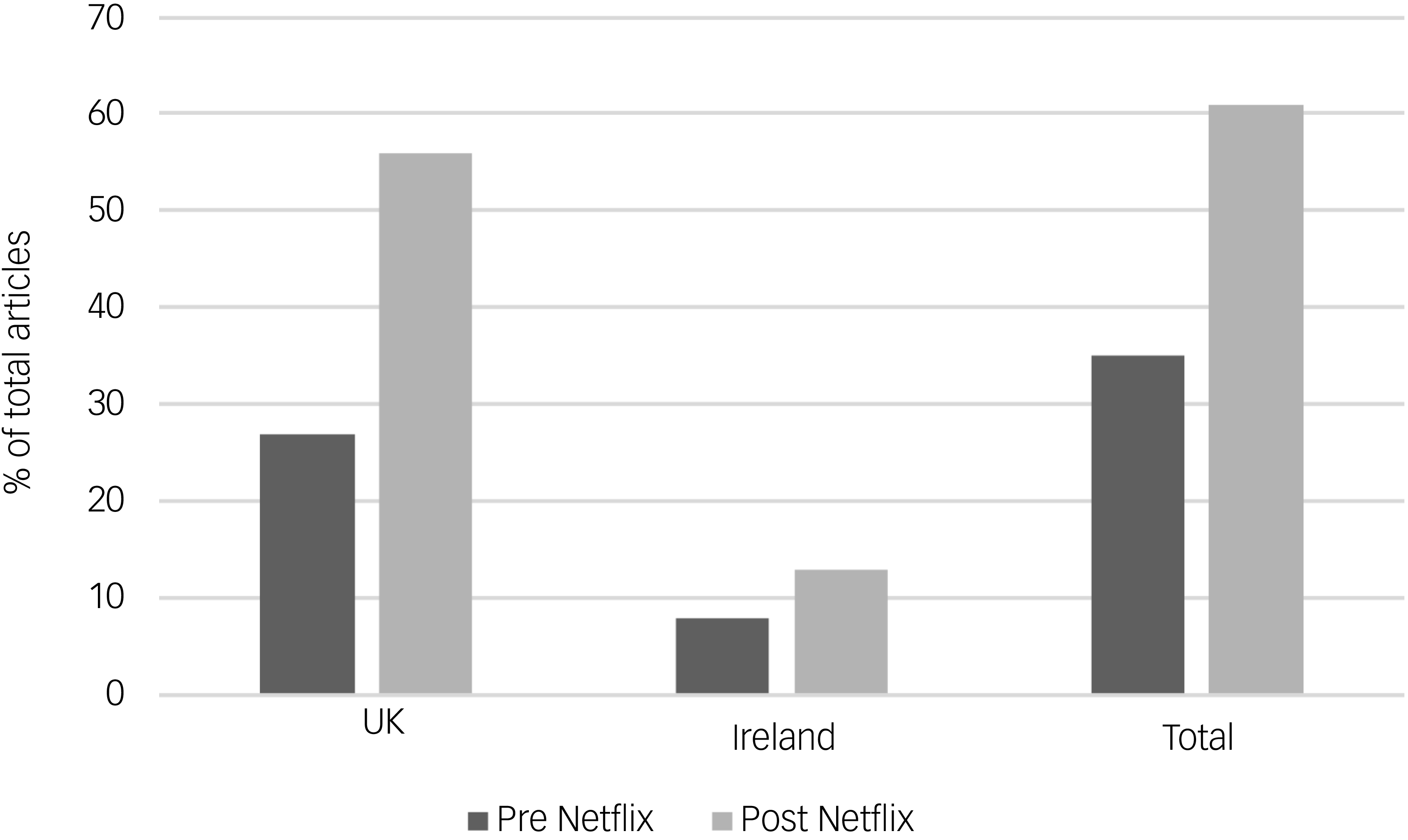
The volume of news coverage concerning young people’s social media use was substantially higher in the 90 days after the Netflix release of Adolescence compared with the 90 days before. In the 3 months leading up to the release, a total of 121 articles were identified, compared with 239 articles in the post-release period. This upward trend was more pronounced in the UK, where coverage increased from 92 articles (25.6% of the total sample) to 193 articles (53.6%). In Ireland, a smaller increase was observed, with 29 articles (8.1%) before and 46 articles (12.8%) after the release (see Fig. 1).
Proportion of news articles on young people’s social media use before and after the Netflix release of Adolescence in the UK and Ireland.
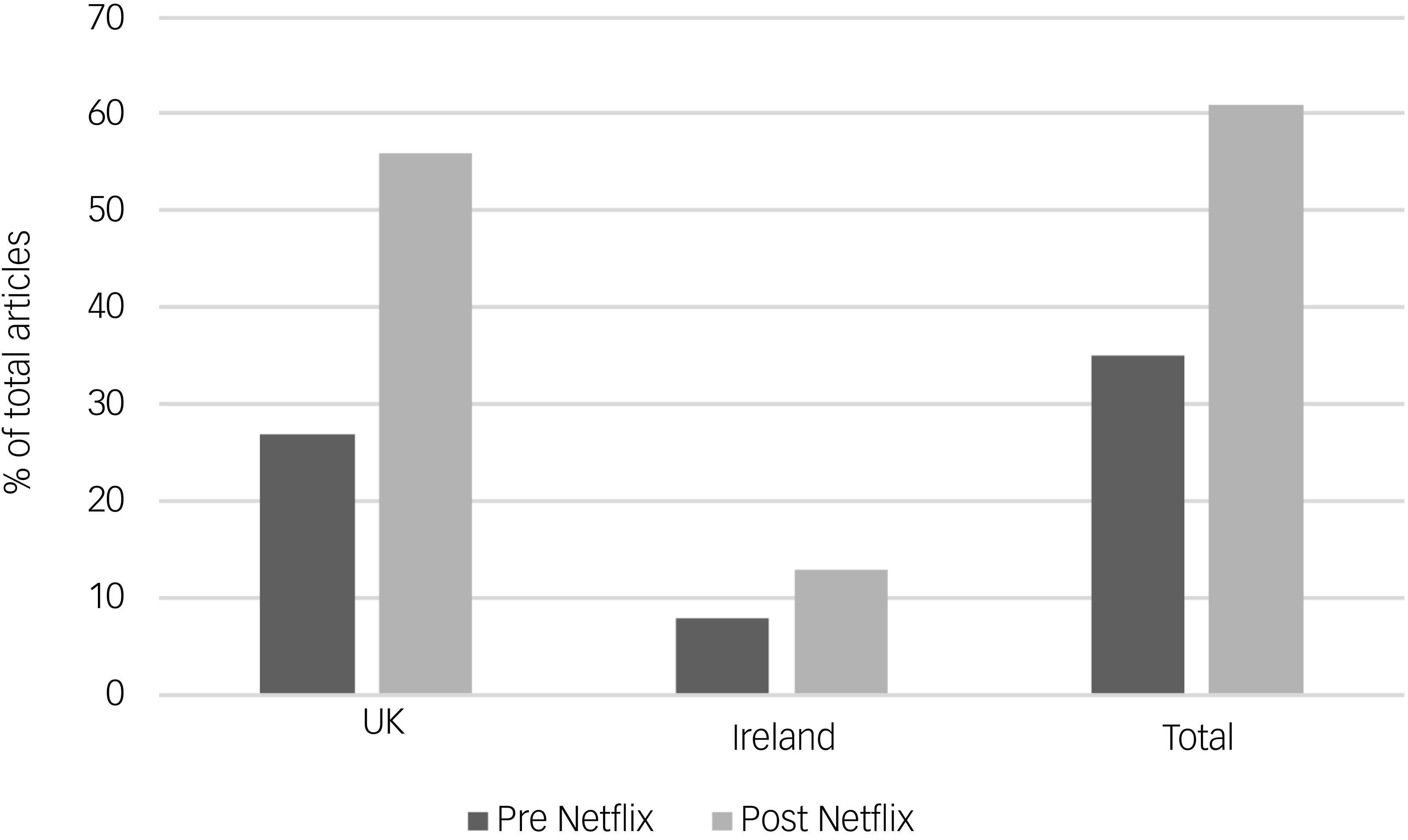
Fig. 1 Long description
The bar graph compares the percentage of news articles on young people’s social media use before and after the Netflix release of Adolescence in the UK and Ireland. The x-axis represents regions, including the UK, Ireland, and Total, while the y-axis represents the percentage of total articles, ranging from 0 to 70 percent. There are two sets of bars for each region: one for Pre Netflix and one for Post Netflix. The Pre Netflix bars are dark gray, and the Post Netflix bars are light gray. In the UK, the Pre Netflix percentage is approximately 25 percent, while the Post Netflix percentage is around 55 percent. In Ireland, the Pre Netflix percentage is about 10 percent, and the Post Netflix percentage is roughly 20 percent. For the Total, the Pre Netflix percentage is around 30 percent, and the Post Netflix percentage is approximately 60 percent. The graph indicates a significant increase in the percentage of news articles on young people’s social media use after the Netflix release of Adolescence in both the UK and Ireland. All values are approximated.
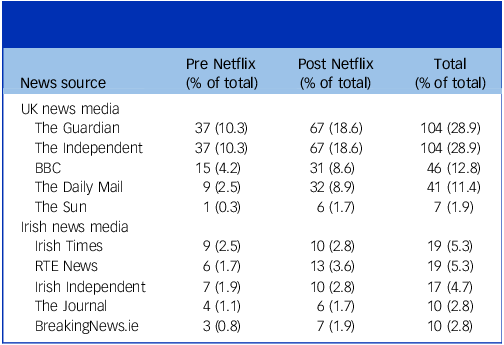
The Guardian and The Independent were the largest contributors, each responsible for 28.9% of all articles analysed. BBC News (12.8%) and the Daily Mail (11.4%) also featured prominently, whereas sources such as BreakingNews.ie, The Journal and The Sun made up a relatively small proportion of the total coverage. It was notable that all outlets increased the number of published articles in the post-Netflix period, reflecting heightened media attention to this topic (see Table 1).
Distribution of news articles by source before and after the Netflix release of Adolescence
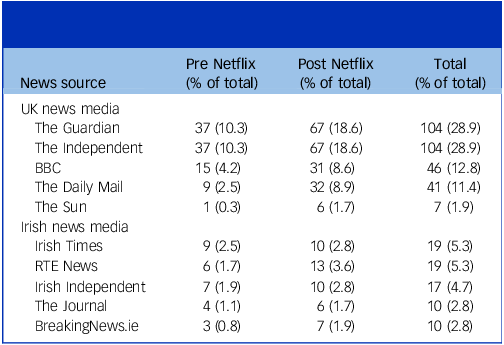
Table 1 Long description
The dot plot compares the distribution of news articles by source before and after the Netflix release of Adolescence. The x-axis represents the news sources, including UK news media such as The Guardian, The Independent, BBC, The Daily Mail, and The Sun, as well as Irish news media like Irish Times, RTE News, Irish Independent, The Journal, and BreakingNews.ie. The y-axis represents the percentage of total articles, with pre-Netflix and post-Netflix periods indicated. Each dot represents the percentage of articles from each source, with multiple dots stacked to show the count. Notable patterns include significant contributions from The Guardian and The Independent, each responsible for 28.9% of all articles. BBC News and the Daily Mail also feature prominently with 12.8% and 11.4% respectively. Sources like BreakingNews.ie, The Journal, and The Sun contribute a smaller proportion. All outlets increased the number of published articles in the post-Netflix period, reflecting heightened media attention. The Guardian and The Independent each increased from 10.3% to 18.6%, BBC from 4.2% to 8.6%, and the Daily Mail from 2.5% to 8.9%. Irish news media contributions range from 0.8 to 5.3%. All values are approximated.
In terms of authorship, over half the articles were written by females (50.6%), and 39.4% were authored by males. The remaining 10% had authors whose gender was unknown or represented a combination. Most items (89.4%) were contributed by journalists; non-journalist authors (10.6%) included academics, clinicians and policy makers.
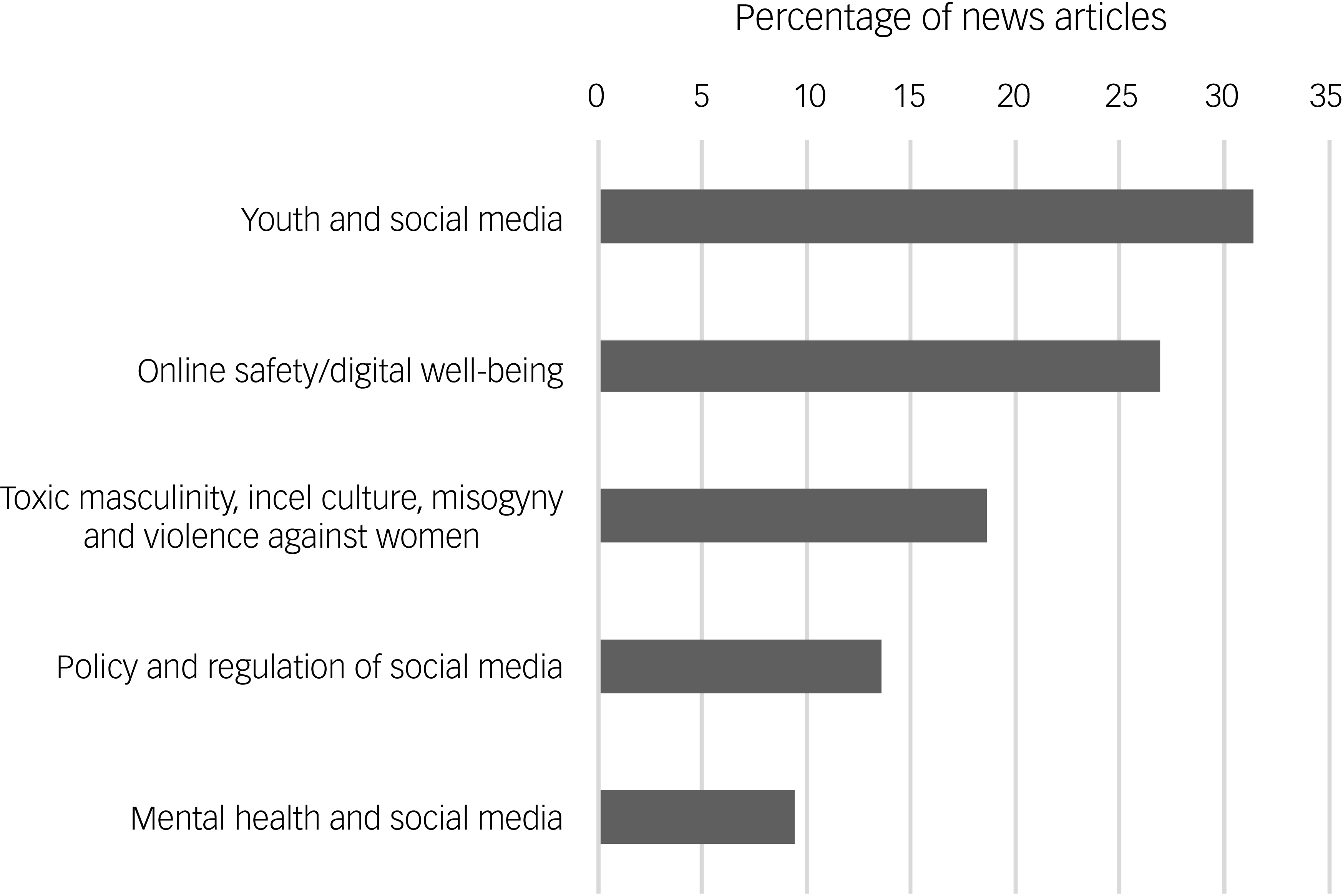
Regarding content focus, the most common topics were young people’s social media use (31.4%), online safety and digital well-being (26.9%) and toxic masculinity or incel culture (18.6%). Policy and regulation of social media and the intersection of mental health with social media were addressed less frequently, making up 13.6 and 9.4% of the coverage, respectively (see Fig. 2).
Primary focus of news articles on social media and related issues.
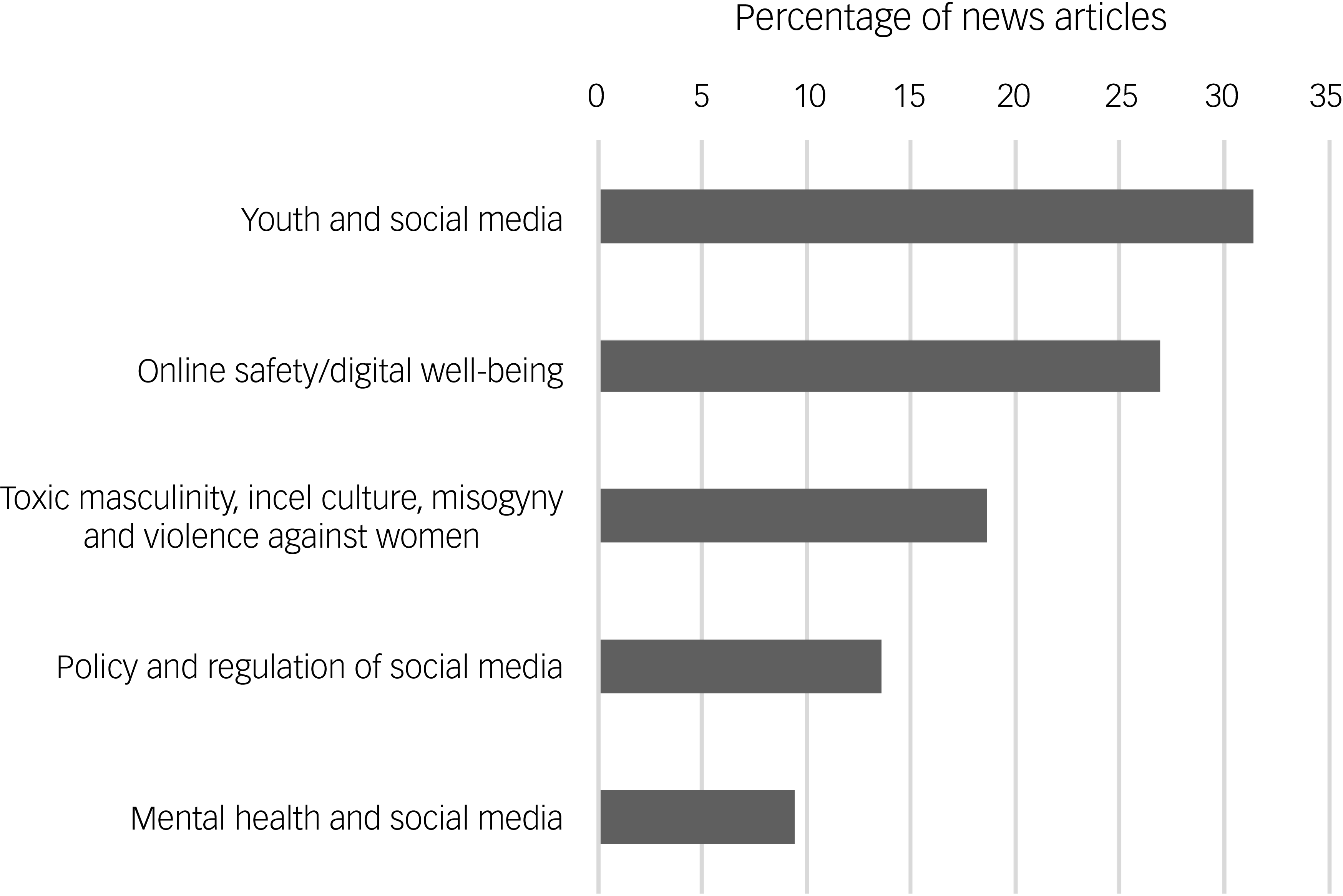
Fig. 2 Long description
The bar graph compares the primary focus of news articles on social media and related issues, with five horizontal bars representing different categories. The x-axis ranges from 0 to 35 percentage, while the y-axis lists five categories: Youth and social media, Online safety/digital well-being, toxic masculinity, incel culture, misogyny and violence against women, Policy and regulation of social media, and Mental health and social media. The bar for Youth and social media extends to approximately 33 percentage, indicating it is the most discussed topic. Online safety/digital well-being follows closely, reaching around 28 percentage. Toxic masculinity, incel culture, misogyny and violence against women is next, with a bar length of about 20 percentage. Policy and regulation of social media and Mental health and social media have shorter bars, approximately 15 percentage and 10 percentage respectively. All values are approximated.
The majority of articles adopted a negative tone toward social media (84.2%), with the remainder classified as neutral or mixed. Similarly, most articles were alarmist in nature (64.7%), whereas just over a third were balanced. For example, some articles were coded as negative in overall tone because they focused primarily on risks, yet were classified as ‘balanced’ in severity framing because they acknowledged uncertainties, cited multiple perspectives and avoided catastrophising language. Coverage usually centred on adolescents (89.8%) and children (77.8%). Furthermore, references to specific or vulnerable cohorts appeared in nearly half of all articles; cohorts most frequently mentioned included young boys (26.7%), young people described as mentally health vulnerable (15.0%) and young girls (14.4%).
Personal narratives including quotes were a feature in 45.6% of articles. Across the full sample, only a small minority of articles included direct quotes from young people, and this did not change significantly after the release of Adolescence (3.3% pre release versus 7.5% post release; χ 2(1, n = 360) = 2.50, p = 0.114). Parent or carer voices appeared more often (15.7% pre release versus 18.0% post release; χ 2(1, n = 360) = 0.30, p = 0.59), indicating that adult stakeholders continued to dominate coverage in both periods. Among the 21 articles that did include at least 1 youth voice, around a third featured only boys, just over a third featured only girls and a third featured both (28.6, 38.1 and 33.3%, respectively), with no significant change in this pattern between the pre- and post-release periods (χ 2(2, n = 21) = 0.31, p = 0.86). Thus, although youth perspectives were underrepresented overall, the gender balance of quoted adolescents did not closely mirror the series’ singular focus on a male protagonist and largely unseen girl victim; when young people were quoted, both boys and girls appeared as narrators of online pressure, harm and everyday digital experience.
Recommendations regarding young people’s social media use appeared in 92.5% of the sample. References to toxic masculinity, incel culture, misogyny or violence against women were present in 38.9% of articles. Social media and mobile phone use were often treated as interchangeable in 43.3% of articles. Notably, positive aspects of social media for young people were infrequently highlighted, appearing in only 22.5% of the articles reviewed.
Evolving media discourses following the Netflix release of Adolescence
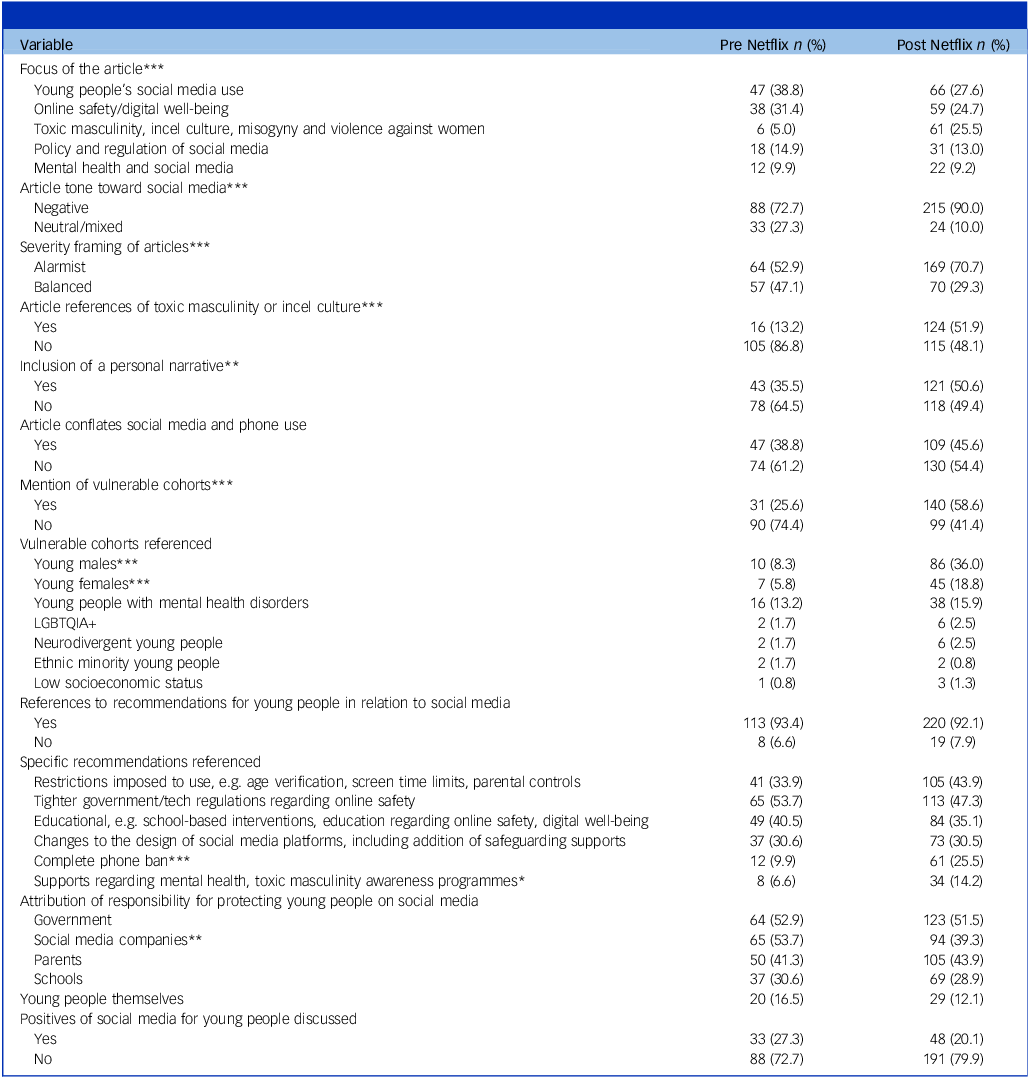
Table 2 summarises evolving media discourse following the release of Adolescence on Netflix. The thematic focus of media coverage shifted between the two periods, with Cramer’s V-values generally in the small-to-medium range, indicating modest to moderate associations rather than very large effects. Pre-release articles more often discussed young people’s social media use and online safety, whereas post-release coverage more frequently centred on toxic masculinity, incel culture, misogyny and violence against women (χ 2(4, n = 360) = 35.46, p < 0.001, Cramer’s V = 0.32).
Comparison of media coverage characteristics before and after the Netflix release of Adolescence
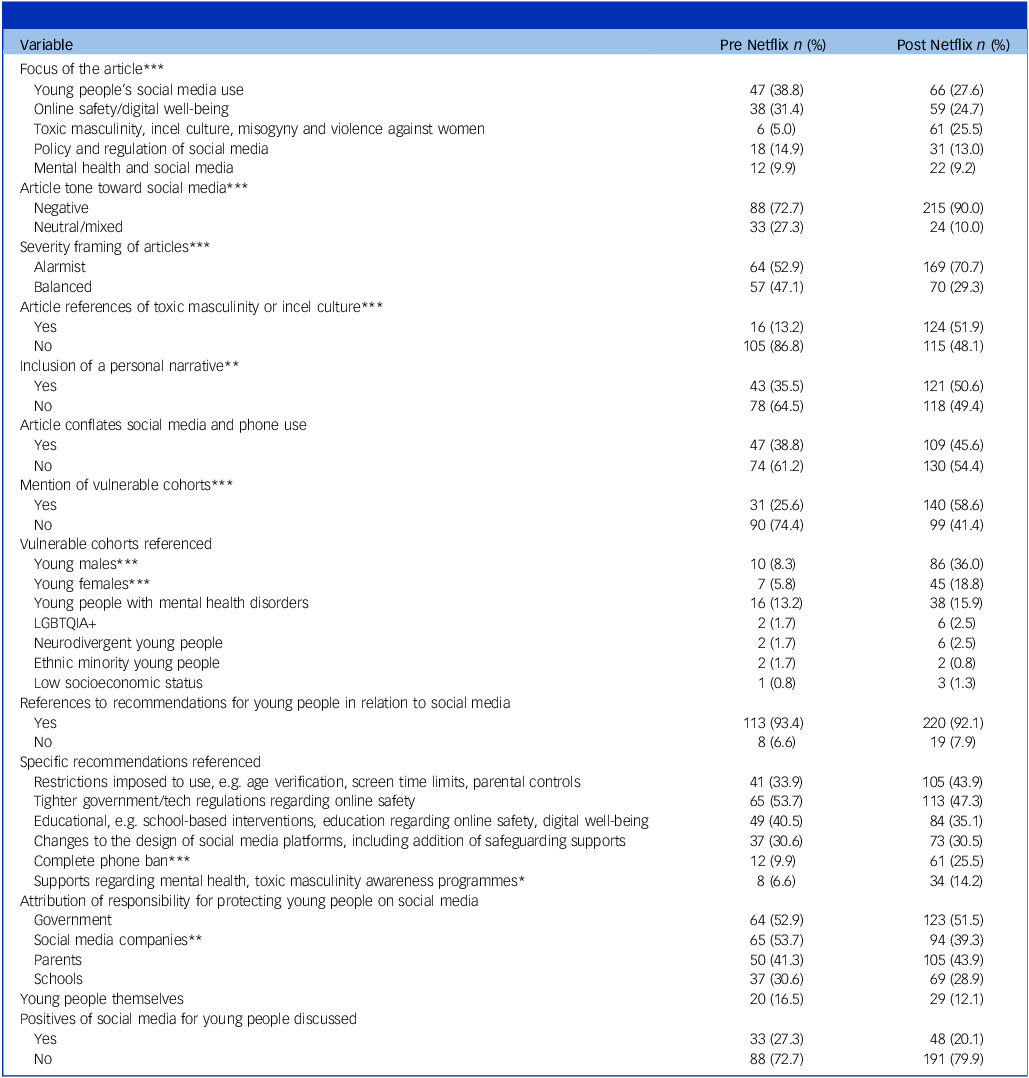
Table 2 Long description
A table with two columns, Pre Netflix and Post Netflix, compares various variables related to media coverage characteristics. The table has 23 rows, each representing a different variable such as focus of the article, article tone toward social media, severity framing of articles, and more. Each cell contains the count and percentage of articles for each variable before and after the Netflix release. Notable trends include a shift in focus from young people’s social media use and online safety pre Netflix to toxic masculinity, incel culture, misogyny, and violence against women post-Netflix. The tone of articles toward social media became more negative post Netflix, and there was an increase in alarmist framing of articles. References to toxic masculinity or incel culture, inclusion of personal narratives, and mention of vulnerable cohorts also increased post Netflix. Specific recommendations for young people in relation to social media and attribution of responsibility for protecting young people on social media are also compared.
*p < 0.05, **p < 0.01, ***p < 0.001.
Shifts in tone and framing were also evident. Negative coverage was significantly more frequent in the post-release period (χ 2(1, n = 360) = 17.90, p < 0.001, Cramer’s V = 0.22). UK articles were more frequently negative than Irish reporting. Severity framing intensified post release, with a higher proportion of alarmist articles and fewer balanced ones (χ 2(1, n = 360) = 13.19, p < 0.001, Cramer’s V = 0.18), a pattern particularly pronounced in UK coverage.
Evolving content and narrative style accompanied these tonal shifts. References to incel or toxic masculinity themes were substantially more frequent in the post-release period (χ 2(1, n = 360) = 50.5, p < 0.001, Cramer’s V = 0.38). References to vulnerable cohorts, including young males, young females and young people with mental health disorders, also increased significantly (χ 2(1, n = 360) = 35.0, p < 0.001, Cramer’s V = 0.31). Articles with a negative tone were more likely to highlight vulnerability (χ 2(1, n = 360) = 6.88, p = 0.009, Cramer’s V = 0.14). Similarly, articles incorporating personal stories were significantly more likely to reference vulnerability (χ 2(1, n = 360) = 10.24, p = 0.001, Cramer’s V = 0.17).
There were notable shifts in personal narratives, recommendations and responsibility attribution. Personal stories were more common in the post-release period (χ 2(1, n = 360) = 7.38, p = 0.007, Cramer’s V = 0.14), and when they did appear, they were significantly more likely to reference incel or toxic masculinity themes (χ 2(1, n = 360) = 15.65, p < 0.001, Cramer’s V = 0.21). The content of recommendations shifted toward more restrictive measures, such as complete phone bans (χ 2(1, n = 360) = 12.10, p < 0.001, Cramer’s V = 0.18), alongside greater attention to support-based interventions, such as community resources and services (χ 2(1, n = 360) = 4.52, p = 0.034, Cramer’s V = 0.11). In this sample, the authors did not identify any articles that explicitly linked their recommendations to identifiable empirical studies, official reports or other clearly specified evidence sources. Compared to UK coverage, Irish articles more often featured educational initiatives (χ 2(1, n = 360) = 7.66, p = 0.006, Cramer’s V = 0.15) and community-based supports (χ 2(1, n = 360) = 4.50, p = 0.034, Cramer’s V = 0.18).
Responsibility for safeguarding young people online also shifted. Across UK and Irish coverage, articles became less likely over time to emphasise the responsibility of social media companies, whose safeguarding role declined significantly post release (χ 2(1, n = 360) = 6.74, p = 0.009, Cramer’s V = 0.14). Compared with UK coverage, responsibility in Irish media was increasingly placed on parents (χ 2(1, n = 360) = 12.91, p < 0.001, Cramer’s V = 0.19) and schools (χ 2(1, n = 360) = 5.08, p = 0.024, Cramer’s V = 0.12). Across both periods, positive portrayals of social media’s impact on young people were rare (27.3% pre Netflix and 20.1% post Netflix) and declined further after the release, reinforcing a predominantly risk-focused narrative.
Personal narratives and thematic insights on young people’s social media use
Building on the quantitative finding that personal narratives became more common in the post-release period and were often linked to depictions of vulnerability, thematic analysis was conducted on narrative excerpts quoted within articles. These excerpts were drawn from sources such as young people, parents, teachers, clinicians and policy makers cited in news coverage. The analysis generated several recurring themes in relation to young people’s social media use: addiction and time drain; exposure to harm and radicalisation; parental dilemmas and regulation; coping and resilience; and the negative impact of social media, including parental bereavement and advocacy for change.
Addiction and time drain
Many personal narratives reflected feelings of compulsive use, with individuals describing how easily time slipped away or how checking their devices had become habitual. As one adolescent noted, ‘It surprises me sometimes how fast [time goes] … two hours would go [by] and I didn’t realise, and it’s kind of shocking’ (Adolescent 1). A teacher echoed this observation: ‘You see everyone picking up their phones every five to ten minutes’ (Teacher 1).
Exposure to harm and radicalisation
A prominent concern was the ease with which young people encountered disturbing, violent or radicalising content soon after joining social media platforms. As one parent explained, ‘Young teenagers are being exposed to content about weapons, bullying, murder and suicide soon after joining social media platforms’ (Parent 1). A teacher described gendered influences, noting, ‘I have had boys refuse to speak to me … because I am a woman and they follow Andrew Tate … These were 10-year-olds’ (Teacher 2). Adolescents themselves acknowledged their susceptibility: ‘When you’re a child, it’s very easy … to get swept along with something. Extremist groups exploited my vulnerability’ (Adolescent 2).
Parental dilemmas, regulation and responsibility
Parents frequently discussed the emotional and social complexity of setting digital boundaries while avoiding social exclusion for their children. One parent reflected, ‘Our very restrictive approach to technology resulted in social exclusion for one of our children’ (Parent 2). Others described feeling caught between conflicting pressures: ‘We’re stuck between a rock and a hard place … If you don’t give your child [a phone], you risk them being the odd one out’ (Parent 3). Another summarised, ‘It’s quite easy to say “just don’t give your child the phone”, but it’s more complicated’ (Parent 4).
Coping and resilience strategies
Despite these challenges, some quoted sources described strategies to manage online exposure and anxiety. One adolescent explained, ‘Permanently deleted TikTok… ‘detox’ from Instagram due to great anxiety’ (Adolescent 3). Others prioritised privacy and offline connection: ‘I’ll turn my comments off so people can’t comment on me’ (Adolescent 4) and phone-free schools ‘force you to hang out and chat’ (Adolescent 5). These accounts reflected emerging efforts to establish healthier digital boundaries.
Negative impact of social media, parental bereavement and calls for change
Following the Netflix release, media narratives increasingly centred on bereaved parents advocating for reform. High-profile cases, including Molly Russell, whose death highlighted attention to self-harm content, Reference Perakslis and Quintana27 and Jools Sweeney, whose case catalysed debate around parental access to social media data, featured prominently. Reference Durrant28 Parents’ pleas for urgent action were encapsulated in statements such as ‘Help us protect our children’ (Parent 5) and ‘Every day the government has delayed… more young lives lost’ (Parent 6). These stories humanised the risks of online harm, kept bereavement at the centre of public discourse, and were associated with stronger calls for policy and regulation.
Discussion
This mixed-methods study offers the first comprehensive examination of how news media coverage of young people’s social media use evolved in the UK and Ireland following the release of the Netflix series Adolescence. Coverage increased substantially in the period following the release of the series, particularly in the UK. This temporal association indicates that the series’ release coincided with a period of heightened regional public and media attention. Quantitative analyses revealed a marked shift toward more negative and alarmist framing, with greater focus on toxic masculinity, incel culture, misogyny and violence against women. References to vulnerable groups, particularly young males, increased significantly, whereas attribution of safeguarding responsibility to social media companies declined.
Quantitative analyses showed that personal narratives appeared more frequently in the post-release period, and qualitative examination of these quoted accounts suggested that they were often used in emotionally charged, advocacy-oriented reporting. Thematic analysis of media-quoted narratives highlighted complex experiences of social media addiction and compulsive use, exposure to harm and radicalisation, and the difficult position of parents who must navigate safety and boundaries while still allowing access to prevent their children feeling excluded from peers. The voices of bereaved parents, particularly those of Molly Russell and Jools Sweeney, brought urgency and emotional weight to the debate and reinforced calls for stronger safeguarding and policy reform.
It is important to note that the narrative material analysed here is doubly mediated: first through the perspectives of the individuals quoted, and second through the editorial decisions of journalists regarding which voices are selected, how they are presented and the prominence they are given within articles (e.g. in headlines or highlighted quotations). As such, these narratives should not be interpreted as direct accounts of lived experience, but rather as representations of how personal stories are used within news coverage. This mediated presentation may itself be important, as editorial choices about which voices are foregrounded and how they are framed can influence the emotional tone and policy direction of reporting.
The response to Adolescence mirrors patterns observed following Netflix’s 13 Reasons Why, another adolescent-focused series that addressed sensitive issues such as suicide, depression, bullying and sexual assault. The latter generated controversy, intense public debate and sustained media attention, Reference Wagmeister29 fuelling widespread moral concern. Reference Rosman30,Reference Majeski31 Media concerns surrounding 13 Reasons Why centred on the glamorised portrayal of suicide, potentially romanticising self-harm among young viewers. Subsequent studies associated its release with several negative outcomes, including significant increases in internet searches for ‘suicide’, Reference Ayers, Althouse, Leas, Dredze and Allem32 adolescent suicide rates Reference Bridge, Greenhouse, Ruch, Stevens, Ackerman and Sheftall33,Reference Niederkrotenthaler, Stack, Till, Sinyor, Pirkis and Garcia34 and adolescent hospital admissions for self-harm. Reference Le, Jawad, Feygin, Lohr, Creel and Jones35 In response, Netflix added strong advisory warnings and later removed a graphic suicide scene. Reference Nicolaou36 Lessons from post-media coverage of 13 Reasons Why highlight the importance of responsible media communication when addressing sensitive youth issues. These lessons are informative in understanding subsequent media reactions to portrayals of youth risk and digital vulnerability. Indeed, 1980s sensational coverage of subway suicides was followed by a sharp rise in incidents. Reference Sonneck, Etzersdorfer and Nagel-Kuess37 After journalist media training and strict reporting guidelines, subway suicides decreased by approximately 80%. Reference Niederkrotenthaler and Sonneck38 Thus, cautious, guideline-based media reporting may reduce imitative (‘Werther’) behaviour. Reference Niederkrotenthaler, Herberth and Sonneck39
The extensive media coverage surrounding both Adolescence and 13 Reasons Why may have the potential to act as a positive force, as reflected in our findings of heightened attention to online safety, toxic masculinity and youth vulnerability, if it prompts open discussion of complex and often hidden issues, including suicide, toxic masculinity, misogyny and online safety. This heightened attention had several potential benefits, particularly in encouraging communication between caregivers and young people about difficult topics, increasing awareness of online well-being and potential risks, and prompting reflection among policy makers and social media companies on whether existing safeguards are adequate. However, as seen previously with 13 Reasons Why, Reference Wang, Yue and Divya40 the media communication and coverage also carry risks. In our sample, much of the coverage of Adolescence adopted an advocacy-driven framing and frequently proposed policy or clinical recommendations without explicit reference to supporting evidence. This is concerning because overly emotive or prescriptive reporting may distort public understanding and contribute to reactive rather than evidence-informed responses to complex mental health and social issues.
Here, nearly half of the total articles conflated general mobile phone use with social media use, treating these distinct behaviours as interchangeable. This conflation is important because owning or using a mobile phone is not equivalent to engaging on social media platforms, which operate through different mechanisms and carry different patterns of use and risk. When media coverage fails to make this distinction, it risks reinforcing the perception that all screen time is inherently harmful and may contribute to heightened moral concern. This pattern aligns with classic descriptions of moral panics, in which complex, heterogeneous behaviours are collapsed into a single, simplified threat category and may support calls for sweeping policy responses. Reference Cohen12–Reference Goode and Ben-Yehuda14 Such framing makes it more difficult for policymakers and clinicians to develop balanced, evidence-informed interventions that target genuine risks while supporting positive digital engagement for young people.
A recent content analysis by Davies et al Reference Davies, Cadwallader, Black, Hickman Dunne and Panayiotou17 took a broader approach, examining adolescent social media use portrayals in 307 UK newspaper and BBC articles over a 10-year period. Consistent with the present study, their findings revealed a strong predominance of risk framing with 98% of articles referencing social media risks, most commonly mental health difficulties, exposure to harmful content, suicide, online conflict and inappropriate adult contact. Just 16% mentioned potential benefits such as social connection or self-expression, and only 3% of headlines were positive compared with 58% negative and 39% neutral. Reference Davies, Cadwallader, Black, Hickman Dunne and Panayiotou17 Indeed, almost one in four articles explicitly linked social media use to suicidality. Reference Davies, Cadwallader, Black, Hickman Dunne and Panayiotou17 Despite the prevalence of alarmist reporting and policy recommendations, fewer than one-third of articles cited supporting evidence, and when evidence was cited, it was usually from grey literature rather than from peer-reviewed studies. Parent, charity and government voices dominated, whereas direct perspectives from young people were rare. These findings closely parallel those of the present study, which similarly identified dominant, alarmist and risk-centred framing of young people’s social media use in both UK and Irish news media.
Both studies noted a consistent under-representation of the positive aspects of social media and a tendency toward emotive, advocacy-driven policy debate. Within the present study, articles rarely explicitly referenced identifiable empirical evidence when advancing recommendations. It should be noted that journalistic reporting does not typically cite peer-reviewed research or guideline documents in the same way as academic publications, and the absence of explicit evidence references may therefore reflect journalistic conventions rather than deficiencies in reporting practice. Nonetheless, when recommendations are not clearly linked to identifiable studies, official inquiries or consensus reports, it becomes difficult for readers to assess how closely they align with existing evidence, which may contribute to reactive rather than proportionate responses to complex issues. This study extended these findings by examining narrative shifts before and after a major media event, drawing on a larger number of articles collected over a comparatively shorter time frame. This revealed an escalation in negative and alarmist reporting with an increased focus on emotive personal narratives, particularly stories of bereaved parents used for policy advocacy. By charting real-time changes, our study illustrates how single cultural moments may coincide with the amplification of existing anxieties and shifts in policy debate beyond background trends, as reflected in the post-release increase in alarmist framing, suggesting that contemporary news coverage can operate as a moral-regulatory force consistent with, but extending, classic moral panic accounts.
Strengths and limitations
Key strengths of this study include its systematic mixed-methods design, comprehensive coding framework and the inclusion of both UK and Irish media sources. This cross-national approach provides valuable comparative insight, as most previous analyses have focused on single-country or USA-based data. Combining quantitative and qualitative analysis allowed for a more nuanced understanding of shifts in tone, focus and framing.
Limitations of this study include potential sampling bias, as the data-set was restricted to major online news outlets, English-language sources and a 6 month period. The 3 month pre-event comparison may not fully capture longer-term reporting trends; therefore, some of the increases observed post-release may reflect an existing upward trajectory rather than being solely associated with the media event itself. The political or ideological orientation of outlets was not systematically coded, and therefore it is not possible to determine whether partisan leanings were associated with variation in tone, framing or responsibility attribution.
The study compared media coverage across two 90-day windows immediately before and after the release of Adolescence. Although this design allows examination of temporal associations, it does not establish a causal influence of the series on news reporting. Media coverage of young people’s social media use is shaped by multiple factors, including policy debates on online safety, high-profile incidents involving young people and broader societal concern regarding digital platforms. During the 6 month sampling period, there were ongoing developments in online safety legislation and several widely reported cases of youth violence and online misogyny, which likely contributed to media coverage and cannot be disentangled from the temporal association observed with Adolescence. Accordingly, findings should be interpreted as reflecting changes in media discourse that coincided with the series’ release within a broader media and policy context, rather than effects attributable to a single event. Future research using longer time series, additional comparison periods, or designs incorporating other media events would be needed to test causal hypotheses. Subjectivity in coding is an inherent challenge in content analysis; however, this was mitigated by the use of a comprehensive coding framework and demonstration of strong interrater reliability.
The focus on traditional news media rather than social media or other digital platforms is both a limitation and a strategic choice: although it narrows the scope, it offers a clear foundation for future research to directly compare narratives and influences across diverse media ecosystems and content types. Additionally, no correction for multiple comparisons was applied. Given the number of statistical tests conducted, this increases the risk of type one error, and some statistically significant findings may therefore reflect chance and should be interpreted with caution. Consequently, future work should address these limitations by using longer study periods and more diverse media sources, enabling a broader and more nuanced understanding of young people’s digital engagement and its portrayal.
Future research
Future research should draw on longer pre- and post-event time frames to determine whether shifts in reporting reflect genuine event-driven change or broader underlying trends. Studies should continue to examine media coverage itself, including its tone, framing, factual accuracy and adherence to evidence-based reporting guidelines, particularly in periods of heightened attention following high-profile media events. Evaluating the impact of journalist training and best-practice media standards will be important for understanding how reporting can minimise harm and avoid overly reactive or sensational narratives.
Supplementary material
The supplementary material is available online at https://doi.org/10.1192/bjp.2026.10697
Data availability
The data that support the findings of this study are available from the corresponding author, L.B., upon reasonable request. The data are not publicly available due to containing information that could compromise the privacy of journalists and other individuals quoted within news articles. The analytic code used in this study (SPSS syntax and coding framework) and materials supporting the findings of this study (coding templates, codebook definitions and extraction forms) are available from the corresponding author, L.B., upon reasonable request.
Acknowledgements
The authors thank colleagues within University College Dublin and Children’s Health Ireland for their advice and support during this project.
Author contributions
L.B. conceived the study, designed the methodology, led data collection, completed the statistical analysis and drafted the manuscript. J.O. and A.N. contributed to article screening, coding and thematic analysis. N.L. contributed to article screening and coding, assisted with the thematic analysis and supported manuscript revisions. F.M. provided senior methodological guidance, oversight of study design and critical revisions of the manuscript. All authors reviewed and approved the final version.
Funding
This research received no specific grant from any funding agency, commercial or not-for-profit sectors.
Declaration of interest
None.


 Open access


eLetters
No eLetters have been published for this article.