


1. Introduction
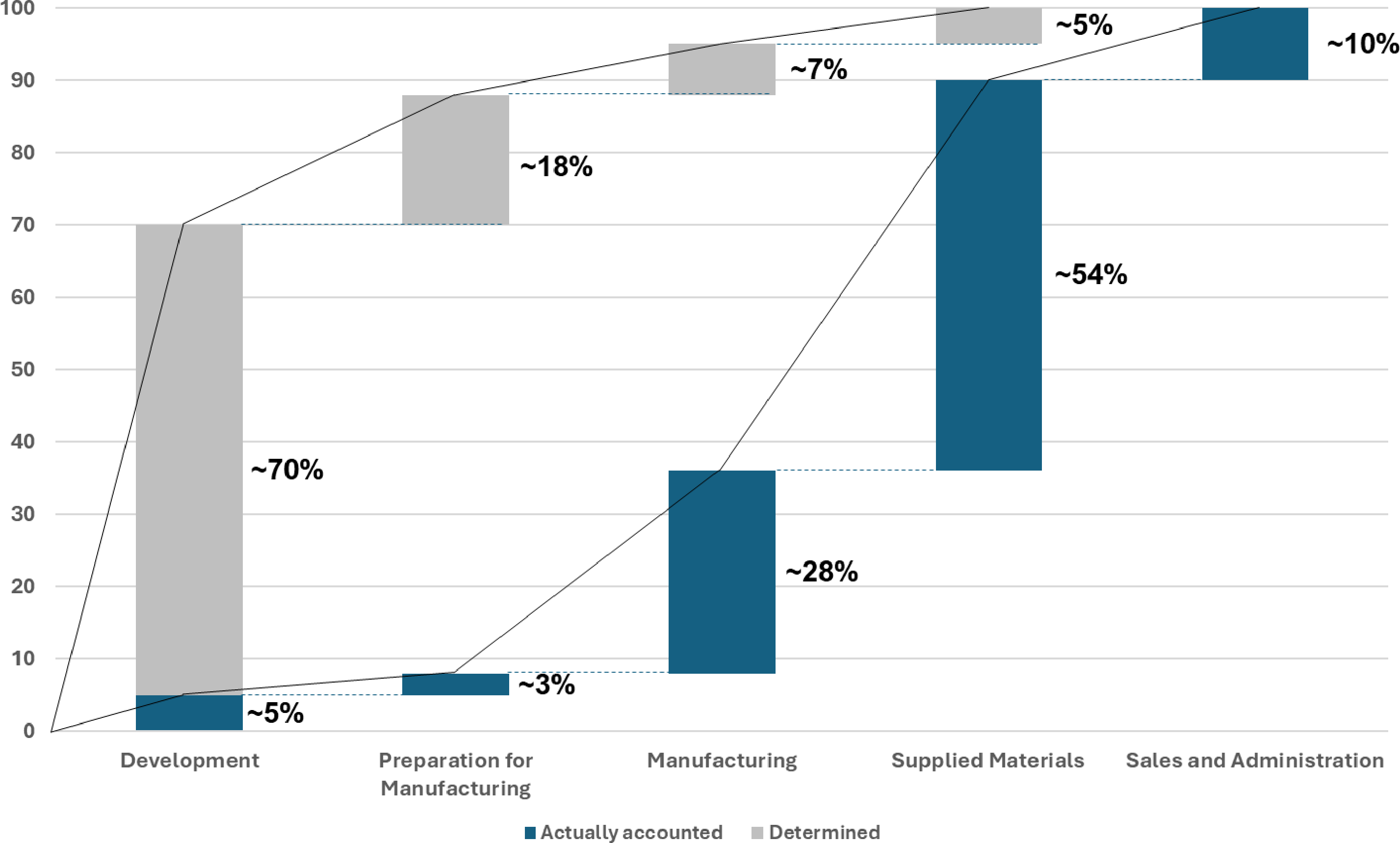
Sustainability has become an essential design dimension alongside cost, functionality, and quality. For systems already in operation, retrofit strategies such as component substitution, control upgrades, or efficiency enhancements can improve environmental performance, but often require great changes in the system architecture and face limitations in technical feasibility, integration effort, and cost-effectiveness. The development process offers great leverage, as key parameters such as system architecture, material selection, process efficiency, and functional requirements are defined here and largely determine costs from cradle-to-gate, as illustrated in Figure 1 (Reference Ehrlenspiel, Kiewert, Lindemann and MörtlEhrlenspiel et al., 2020).
Cost determination and generation in areas of the organisation (Reference Ehrlenspiel, Kiewert, Lindemann and MörtlEhrlenspiel et al., 2020)

EcoDesign expands on this leverage by integrating environmental considerations systematically and early into product development, treating them as core design objectives alongside cost, reliability, and performance and enabling environmentally preferable alternatives to be identified when changes are still comparatively easy and inexpensive to implement. Embedding environmental objectives into early-stage design activities is therefore a key strategy for achieving technically and economically viable sustainability improvements, particularly for complex mechatronic systems such as machine tools. Accordingly, this study examines of design decisions made during product development can influence the environmental sustainability of machine tools from cradle to gate and the use phase.
2. Literature review
2.1. Systems theory in product development
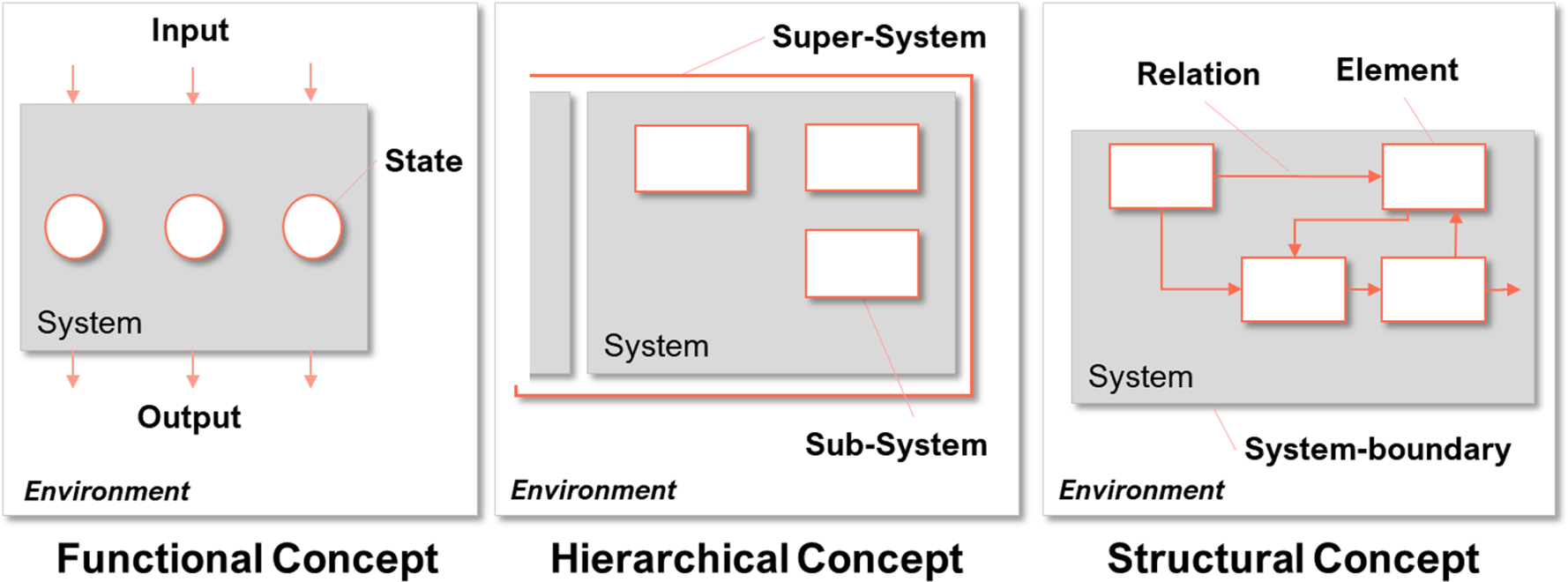
In order to enhance the environmental sustainability of a technical system such as a machine tool, its function, interconnections, and interaction with the environment must be understood. In the mid-20th century, systems theory emerged as a response by von Bertalanffy to reductionist scientific models, where individual components are examined in isolation and thereby disregarding the interdependence and interaction of parts within a system. This holistic view of the general systems theory recognises emergent behaviours and outcomes that evolve from the dynamic relationships between elements, which cannot be predicted by analysing individual components in isolation. Instead, the dynamic interactions between components, and the system’s relationship to its environment, are critical to understanding systemic behaviour (Reference Von Bertalanffy and SutherlandVon Bertalanffy & Sutherland, 1974). Likewise, Norbert Wiener’s development of cybernetics contributed significantly to systems thinking by emphasising feedback, control, and communication mechanisms, further solidifying the systems approach as a tool (Reference WienerWiener, 1948). Together, the general systems theory and cybernetics laid the groundwork for a general scientific methodology (Reference SandbergSandberg, 1984). While these developments provided practical tools for system analysis, the epistemological foundations of modelling and systems representation were significantly advanced through the framework of General Model Theory, as developed by Stachowiak. This theory emphasises that all models, central to systems theory, are simplified, purpose-driven representations of reality. It is based on three key assumptions: that models function as mappings of originals, involve reductions of complexity, and serve as pragmatic constructs tailored to specific users and purposes. This perspective complements systems theory by explaining how abstraction and simplification influence the generation and application of systemic knowledge (Reference StachowiakStachowiak, 1973). In parallel to broader developments in systems theory, Ropohl introduced a significant extension of systems thinking into technology and development by conceptualising technological artefacts not as autonomous instruments, but as integral elements of socio-technical systems. Technological Systems Theory by Ropohl emphasises that technology is inherently embedded within and co-evolves alongside social, institutional, and environmental structures (Reference RopohlRopohl, 2009). In systems theory, the structural, functional, and hierarchical concepts provide essential dimensions for analysing complex systems and are illustrated in Figure 2.
Concepts of the systems theory (Reference StachowiakStachowiak, 1973; Reference RopohlRopohl, 2009)

The functional dimension addresses the roles or operations performed by these components within the system, emphasising that functionality is context-dependent and often shaped by societal needs. The hierarchical concept refers to the layered organisation of systems, wherein subsystems are nested within larger structures, enabling the decomposition and management of complexity. The structural perspective focuses on the composition and interrelations of system components, portraying both physical elements and institutional arrangements. Applying these concepts to cyber-physical Systems such as machine tools and laser machines, technical systems are defined not only by their components, but also by the interactions and interdependencies among them (Reference MonostoriMonostori, 2014; Reference RopohlRopohl, 2009). This holistic perspective supports an understanding of how technical systems function within and are influenced by their environment. To develop technical solutions based on this systems-theory approach, models in product development, such as the model of SGE – System Generation Engineering, provide an essential concept for product development activities.
2.2. SGE – System Generation Engineering and utilisation of machine data
The development of new technical systems is a complex, iterative, and inherently creative process, shaped by a multitude of organisational, technological, and contextual factors. While the specific activities during product development vary considerably across industrial domains, numerous methodological approaches have been proposed to formally represent and manage this process. Among these, the model of SGE – System Generation Engineering offers a distinctive explanatory model by describing the development of new system generations through the systematic observation and abstraction of industrial development practices (Reference Albers and EckertAlbers et al., 2018a). SGE deviates from traditional linear or phase-based development models by postulating that each new system generation is developed based on references gathered in a reference system. This reference system is composed of reference system elements, which include components and subsystems of the immediate predecessor generation but may also include design solutions from previous internal projects, competitor products, or external sources as well as research prototypes and academic studies. The development process of the new system generation is conceptualised as a process of variation applied to the reference system elements. SGE distinguishes between three fundamental types of variation. Carryover Variation, in which elements are carried over with limited to no change from the reference system, Attribute Variation, which entails modifications to existing parameters or properties, as well as Principle Variation, involving the substitution or introduction of new solutions based on alternative technical principles (Reference Albers and RappAlbers et al., 2022). A fundamental part of this model lies in the observation of utilising internal and external reference system elements. By utilising predecessor systems as a foundation for new development activities, organisations can exploit the access to existing design knowledge, operational data, and experimental insights from prior development cycles (Reference AlbersAlbers et al., 2018b). This facilitates informed decision-making and reduces uncertainty throughout the engineering process. Conversely, when reference system elements originate from external sources, such as competitor products or elements from unrelated domains, limited access to detailed contextual information increases the risk of misalignment, integration challenges, and unexpected consequences for Carryover Variation (Reference Albers, Maul, Heismann and BursacAlbers et al., 2018). Throughout the development of a new system generation, numerous design and engineering decisions must be made across multiple abstraction levels. These decisions affect not only the technical implementation but also the functional scope, variant management, and market alignment. Effective decision-making requires a continuous inflow of relevant and context-specific information to ensure that system requirements are met and development goals are achieved. The increasing digitalisation of complex mechatronic systems has introduced new opportunities for integrating empirical data into the development process (Reference Wagenmann and RappWagenmann et al., 2022a). Systems such as laser machines consist of interconnected mechanical, electrical, and software-based subsystems that generate large volumes of operational data during real-world use. This data, generated through sensors, control units, and software logs, is processed and stored within the data infrastructure of the respective organisation, where it can be accessed and analysed by development teams. Recent work by Wagenmann et al. has demonstrated the practical utilisation of this operational data supporting the SGE (Reference Wagenmann and KrauseWagenmann et al., 2022b). Such analyses enable development teams to understand how reference system elements are used by the customer. This data-driven approach enhances customer orientation while simultaneously improving cost efficiency and optimising the allocation of development resources for subsequent system generations (Reference Wagenmann and KrauseWagenmann et al., 2022b). Models such as the VDI 2221 acknowledge the iterative, non-linear nature of product development, aligning with the key principles of SGE (Association of German Engineers (VDI), 2019).
2.3. EcoDesign and sustainable product development
The Model of SGE, in combination with operational machine data, provides a structured basis for characterising and evaluating technical modifications at different system levels and for translating empirically observed usage conditions into actionable development measures. In this way, it supports the systematic integration of EcoDesign principles into product development by linking environmental objectives to design solutions and operational decisions. Product development is influenced by economic constraints, organisational capabilities, and strategic objectives, influencing system requirements and guiding decisions throughout the process. As sustainability gains importance in policy and industrial practice, integrating environmental considerations into these processes introduces additional challenges across functional domains and requires methodological adjustments to ensure that environmental objectives are addressed alongside technical and economic requirements (Merschak & Hehenberger, 2019).
EcoDesign emphasises the systematic integration of environmental considerations into engineering decision-making throughout the product development process. Its primary goal is to minimise negative environmental impacts across the entire product life cycle by addressing factors such as resource consumption, emissions, and waste. By incorporating these aspects from the early stages of development, EcoDesign supports the creation of more sustainable products without compromising technical functionality or economic viability. A fundamental requirement for implementing this approach is the availability of robust, standardised methods for quantifying environmental performance. The most widely adopted approach for such quantification is a Life Cycle Assessment (LCA), standardised under ISO 14040/14044:2009. Life Cycle Assessment (LCA) allows a comprehensive evaluation of environmental impacts across all life cycle stages, from raw material acquisition to end-of-life. Despite its methodological maturity, applying LCA in industrial practice, especially for complex mechatronic systems such as machine tools, remains challenging due to data collection difficulties, high methodological effort, and the expertise required. Studies on systems such as 2D flatbed laser machines show that integrating operational machine data is crucial for accurately assessing environmental impacts in the use phase, which often dominates the overall life cycle (Reference KrauseKrause et al., 2024). Estimation-based approaches are prone to significant deviations, making the use of real-world consumption data essential for accurate assessment and calculation of a Product Carbon Footprint (PCF) to quantify environmental impacts. Modern machine tools, due to their high degree of digitalisation, generate large amounts of operational data through embedded sensors, control systems, and logging mechanisms. When appropriately processed and contextualised, this data provides a valuable basis for conducting data-driven environmental assessments (Reference KrauseKrause et al., 2025). Data from the current system generations can be leveraged to assess the environmental implications of subsequent generations. Enabling this type of integration requires appropriate methods and tools that incorporate sustainability considerations into the product development process without adding unnecessary complexity. In industrial practice, economic constraints are systematically managed throughout product development, with cost estimation, control, and optimisation embedded in organisational workflows. VDI 2235 indicates that up to 70% of a product’s total costs are determined in the early design stages, when key technical and conceptual decisions are made, highlighting how material choices, manufacturing methods, and functional design largely shape the overall financial outcome. These relationships extend the principles of the VDI 2235 by introducing structure cost-management approaches such as target costing and value analysis, which support engineers in aligning technical decisions with economic objectives from the beginning (Reference Ehrlenspiel, Kiewert, Lindemann and MörtlEhrlenspiel et al., 2020). In recent years, similar reasoning has been transferred to the field of sustainability. It is increasingly assumed that a similar portion of a product´s environmental impact, often estimated at around “80%”, is determined during the early phases of development through decisions on materials, manufacturing, supply chains, and usage. Decisions on materials, manufacturing, supply chains and usage scenarios thereby shape long-term environmental performance (Reference Bender, Gericke, Pahl and BeitzBender et al., 2021). However, unlike cost management, the structured quantification and control of environmental effects remain underdeveloped. The assumption of such an influence has not yet been empirically validated, representing an important research gap in sustainable product engineering. Reference Ehrlenspiel, Kiewert, Lindemann and MörtlEhrlenspiel et al. (2020) and the methodological guidelines provided in VDI 2221 analyses the relationship between development activities and product costs. In contrast, sustainability considerations have not yet been addressed with the same methodological depth or integration. Although environmental sustainability is gaining strategic importance, its structured incorporation into development processes remains limited.
3. Methodological approach
While existing literature provides substantial research into the influence of product development activities on economic factors, there remains a lack of equivalent research addressing their impact on environmental sustainability. Consequently, there is a necessity to examine the influence of product development activities on environmental sustainability, especially of complex mechatronic systems during operation. Therefore, this work aims to examine the influence of product development activities and the potential influence on environmental sustainability by design changes on the example of a complex mechatronic system, such as a 2D-flatbed laser cutting system. To operationalise this research objective, the following research questions are formulated:
RQ1: On what levels can the environmental sustainability of a complex mechatronic system during operation be influenced by development activities?
RQ2: What potential do development activities have for reducing CO₂e-emission of the complex mechatronic system on the identified levels?
The study was conducted over a period of three years within a German machine tool manufacturing company and comprised 24 individual studies. A 2D-flatbed laser cutting system was selected as the primary object of analysis, due to its comparatively high availability of operational data among the systems considered. Each of the 24 individual studies focused on different aspects of the 2D-flatbed laser cutting system by analysing respective components and machine functions. During operation, the system generates large amounts of data, including cutting job-specific information, part characteristics and machine parameter settings. Consumption data for electrical energy and cutting gas, such as oxygen and nitrogen, is measured separately by an Emonio P3 device (transmitted using MQTT) and two gas flow-meter respectively. Sensor data transmitted via the OPC UA protocol and consumption data recorded were processed and merged to generate a data set with the total resource consumption per cutting job, machine states and material information. The system boundary is set to examine the 2D-flatbed laser cutting system and connected material handling sub-systems from cradle-to-gate and the operational phase. End-of-life is explicitly excluded from this assessment due to no available data and limited empirical results from existing concepts within the organisation that can be used in a data-driven approach. To answer RQ1, the results of the 24 individual studies are examined. This synthesis is evaluated through the framework of systems theory, supplemented by empirical observations drawn from the individual studies. Each study aimed to derive possible machine design modifications to reduce environmental impact during operation. To answer RQ2, two layers are examined. First, the environmental sustainability of the 2D-flatbed laser cutting system is assessed from cradle-to-gate. Based on these results, a similar approach to Reference Ehrlenspiel, Kiewert, Lindemann and MörtlEhrlenspiel et al. (2020) is conducted, and the actually accounted and determined environmental impact is attributed to the respective life cycle phase from cradle-to-gate. To assess the actual environmental impact during product development, the facility resource consumption of electrical energy, gas for heating, the number of employees and the duration of the development project, including machine prototypes used in testing, are taken into account. For manufacturing, resource consumption as electrical energy, process gas for cutting, welding and bending is considered. Materials utilised within the machine are considered as supplied materials. Here, approx. 80% of a laser machine (primarily the machine frame) is manufactured in-house based on the supplied raw materials. Second, the identified design modifications are evaluated by 21 internal domain experts from mechanical engineering and design, electrical engineering, software development, and testing, as well as experts from adjacent disciplines who are actively involved in the development process. Each design solution is assessed on a Likert-scale from one to five along four dimensions: technical feasibility, practical usefulness, perceived degree of innovation, and potential impact on environmental sustainability. Each solution is rated by up to eight internal domain experts. From the 18 design solutions derived across the 24 individual studies, nine are selected based on the domain expert ratings. The remaining solutions are excluded due to insufficient data for environmental sustainability evaluation, limited feasibility, or low relevance according to the expert assessment. Environmental impacts are quantified using available operational machine data as well as emission factors provided by the German Environment Agency. The impact of each selected design solution is calculated in kg CO₂e-emissions as the main impact category and allocated to the corresponding level of influence identified.
4. Levels to influence the sustainability during machine operation
Based on the systems theory proposed by Reference StachowiakStachowiak (1973) and Reference RopohlRopohl (2009), the analysed machine system can be described using a combination of the structural, hierarchical, and functional concepts. These three concepts provide an enhanced understanding of the system’s composition, internal organisation, and operational behaviour. Figure 3 illustrates the integration of these conceptual perspectives for a generalised 2D flat-bed laser machine.
Structural, functional and hierarchical conceptualisation of a 2D-flatbed laser machine

Figure 3 Long description
A diagram representing the structural, functional, and hierarchical conceptualization of a 2D-flatbed laser machine. The diagram includes various inputs such as electrical energy, sheet-metal, process gas, compressed air, and input signals. These inputs feed into a system that contains components like HMI, control units, laser module, drives, and cooling. The system also includes various components labeled as Component A, Component B, Component C, and others. The outputs from the system include sheet-metal parts, residual sheet-metal, excessive heat, residual process gas, and output signals. The state of the system is indicated with different statuses such as off, on, stand-by, malfunction, and running.
The analysed laser machine with additional process automation components can be conceptualised and understood as a super-system composed of multiple interrelated modules as sub-systems essential for its operation, including the laser unit, control systems, drive mechanisms, and cooling module, among others. Each module comprises various components that interact to fulfil defined functions. These modules are functionally and structurally interconnected as parameters are entered via the human-machine interface (HMI) and transmitted to the control units, which control the laser and drive systems accordingly. Through this interrelation, the machine is enabled to perform its primary operation of cutting sheet metal. From a functional perspective, the machine receives multiple inputs necessary for operation. These include material inputs (e.g., sheet metal), process inputs (e.g., electrical energy and process gases such as nitrogen or oxygen), and informational inputs (e.g., operator-defined parameters and job data from the manufacturing execution system). Depending on the operational context, the system transitions between several states, such as being completely powered down, idle, standby mode, actively executing a cutting task, or in a fault condition with partially increased consumption due to powered sub-systems necessary for operation. During operation, the system generates a range of outputs. These include the finished sheet-metal part, residual sheet material as waste, thermal energy dissipated into the environment, and exhaust process gases released continuously during cutting. In addition, data as signals are generated by sensors throughout machine operation. These signals are utilised by control units to regulate machine operation and are partially transmitted, processed, and stored within the organisation’s data infrastructure for further analysis and potential reuse in development and optimisation processes. Based on the outlined system conceptualisation, three levels can be identified through which an influence on machine operation can occur, and consequently, the environmental sustainability of the system can be influenced. These levels are summarised in Table 1.
Levels of influence to enhance machine environmental sustainability during operation

At the machine level, sustainability can be influenced through hardware and software design changes. Modifications to the laser unit can reduce energy consumption, while improvements to components such as the cooling system or drive units may enhance overall energy efficiency. Likewise, design changes to elements such as the cutting nozzle can optimise gas flow dynamics, potentially reducing process gas consumption. At the operational level, resource consumption, and therefore environmental sustainability, during operation is influenced by operator-defined settings and usage behaviour. Adjustments such as feed rate changes directly affect job duration and thus energy and resource consumption. In addition, scheduling practices, such as consolidating cutting jobs or reducing idle times, can lower energy demand by enabling complete system shutdowns between cutting jobs to exploit strategic machine shutdown times. The implementation of functionalities such as remote control enables the resolution of machine malfunctions, further minimising unnecessary downtime and associated resource consumption. At the part level, specifically through the design of the sheet-metal part, resource efficiency can be influenced and optimised. Here, design modifications in CAD/CAM, such as simplifying geometries, reducing contour complexity, or merging part outlines to reduce the total contour length, can reduce cutting lengths and thereby decrease cutting duration and the consumption of electricity and process gas. Additionally, optimising part geometry to improve raw material utilisation can significantly reduce waste generation. Incorporating design changes at one level has cross-level effects. For instance, hardware or software modifications at the machine level can enable new operational features, such as remote control, that in turn can influence the resource consumption at the operational level by supporting decision-making for manufacturing planning. These interrelations underline the systemic nature of environmental sustainability-related design decisions and the importance of integrated consideration across all three levels.
5. Influence of product development on environmental sustainability
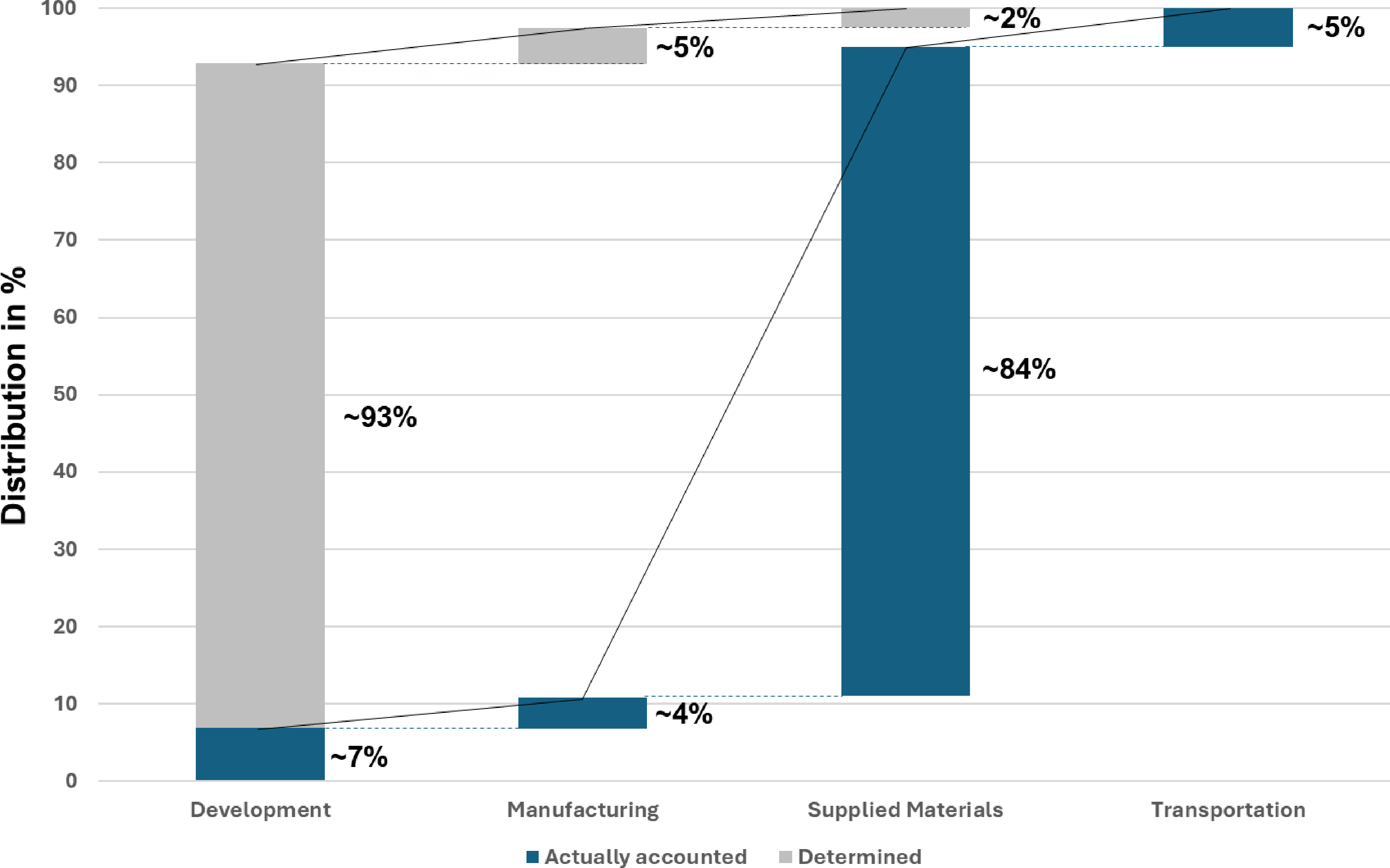
Using the example of a blower unit, Reference Ehrlenspiel, Kiewert, Lindemann and MörtlEhrlenspiel et al. (2020) demonstrated that even minor design variations can lead to significant cost differences in tooling, manufacturing, and serviceability, reflecting the importance of early-phase decision-making in product development. From an environmental sustainability perspective, product development comprises decisions that are linked to CO₂e-emission. A subset of emissions arises directly from development activities, such as prototyping, testing, and the associated facility resource consumption. However, the dominant effect is indirect, due to development decisions defining characteristics of the complex mechatronic system and its life-cycle behaviour, determining future emissions in operation. Emissions are not necessarily generated at the point of decision-making, but are specified and largely committed through design decisions, including system architecture, functionalities and specifications of system components and parts. Based on the conducted analysis, approx. 93% of the environmental impact from cradle to gate is determined during the product development process but accounted for in later phases, as illustrated in Figure 4.
Actually accounted and determined environmental impact of the analysed system

Design decisions made during product development determine the environmental impact of a 2D-flatbet laser cutting system, despite most emissions being accounted for in later life cycle phases, particularly during operation. The product development process defines the system architecture, component design, and control logic, which determine how the cutting process is executed, the amount of electrical energy and process gas required, as well as how the material is utilised. Adjustments to the maximum laser power and to cutting parameters can enable a better nesting of sheet-metal parts and thereby reduce the resulting scrap-material. Modifications to nozzle geometry can reduce the consumption of process gases used for cutting. In addition, subsystems and their control strategies can be designed more efficiently based on identified patterns in machine usage.
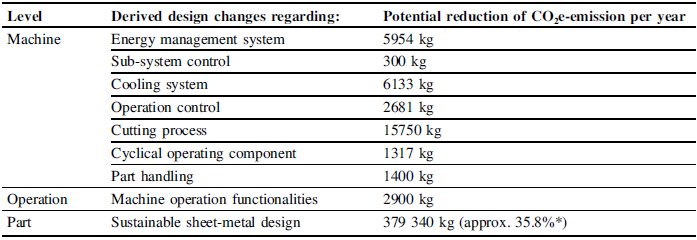
Based on the results of the 24 individual studies conducted, machine components and functionalities are analysed to better understand the relationship between current design configurations and resulting resource consumption during operation. Based on the analytical findings, alternative design solutions are proposed with the objective of improving environmental sustainability by reducing the calculated PCF during operation. Table 2 contains the potential CO₂e-emission reduction by the design solutions, categorised according to the respective identified system levels within the machine architecture.
Potential CO₂e-emission reduction of derived design changes during machine operation

* based on an achieved average reduction of calculated CO₂e-emission by sheet-metal design optimisations
At the machine level, the proposed design optimisations aim at individual components and their associated control systems. Improvements focus on reconfiguring critical parts to operate in a demand-oriented manner, supported by more intelligent control strategies that activate specific functionalities only when required. This enables a reduction in resource consumption and enhances machine operation overall. At the operational level, reductions of resource consumption are achieved primarily by minimising machine downtime and improving overall efficiency during operation. This includes process adjustments and usage strategies that lead to more effective utilisation of the system’s capabilities. At the part level, sustainability improvements are achieved through the optimisation of the sheet-metal part geometry. By modifying inner and outer contours, among others, the PCF of an individual sheet-metal part can be reduced by approx. 35%, where specific sheet-metal design solutions achieved up to 50% PCF reduction, but under limiting functional elements of the sheet-metal part. Here, a PCF reduction and respective environmental improvements should not compromise functional performance, where developed sheet-metal parts and the technical system in general become unsuitable for practical application. In addition, enhanced material utilisation by enabling improved nesting strategies can further decrease the environmental impact by reducing waste material that is accounted proportionately to the sheet-metal parts cut during machine operation. Previous environmental assessment results based on operational machine data indicate that approx. 1,060 tonnes of CO₂e-emission can be attributed to the first year of operation of a similar 2D-flatbed laser cutting system (Reference KrauseKrause et al., 2024). Based on this assessment, the potential for environmental sustainability improvements during operation, and thus the extent to which product development activities can influence environmental sustainability, can be evaluated. Figure 5 illustrates the potential CO₂e-emission reductions achievable through design optimisations derived from individual studies conducted in product development. In total, approx. 35.8% of the environmental impact of the analysed system during machine operation is determined in product development. A major impact is contributed by the utilised material, simultaneously providing great potential for environmental sustainability enhancement and CO₂e-emission reduction.
Potential CO₂e emission reduction by design optimisations during product development

6. Discussion and outlook
Based on 24 case studies, three levels were identified at which development activities can reduce CO₂e-emissions during machine operation. The machine level addresses component design, the operation level addresses usage behaviour and machine settings for operation, and the part level addresses sheet-metal part geometry. The levels are complementary and interdependent, as changes at one level affect other levels through functional and structural dependencies, boundary conditions, and technical limitations for implementing design changes. Operational data combined with consumption measurements were analysed to identify the primary contributors to CO₂e-emissions and to derive technical design solution concepts across all three levels. The operational data additionally enables the specification of system architecture, functional capabilities, and resource consumption during operation. The results indicate that the primary reduction potential is realised at the part level, whereas machine- and operation-level solutions define enabling functions and technical boundary conditions that improve the cutting process and the manufacturability of part-level changes. By analysing operational data, conclusions can be obtained on necessary system design changes to reduce CO₂e-emission and incorporate these changes in the development process of new product generations of complex mechatronic systems. To enhance environmental sustainability, suitable design changes must be derived based on such data analyses and incorporated on all levels. The results indicate that design decisions during the product development process determine approximately 93% of the environmental sustainability of the analysed system from cradle-to-gate. By developing new functionalities and optimising individual components during the product development process, environmental sustainability can be enhanced. The derived design changes on all three levels show a potential reduction of CO₂e-emission by 35.8% for the machine operation phase. Despite the shown results, several limitations must be taken into account. Due to the lack of available data and limited information for robust scenario definition and parameterisation of the end-of-life phase within the organisation, a data-driven approach is not feasible. Therefore, the conducted analysis is limited to the cradle-to-gate and machine usage phase. Within the set scope of this research, the results further indicate that in order to reduce CO₂e-emission as one impact category of complex mechatronic systems, it is crucial to exploit and analyse operational machine data to derive technical design solutions and support EcoDesign principles based on machine usage within real-world conditions. Future work should extend the present data-driven approach by developing robust end-of-life scenarios and parameterisation for complex mechatronic systems and by establishing processes for generating, collecting, and providing the data required to support such modelling.




 Open access

