





Impact statement
This research demonstrates how innovative digital education can accelerate global understanding and implementation of Nature-based Solutions (NbS) for climate resilience. By developing and delivering the RECONECT Massive Open Online Course (MOOC), an international consortium transformed complex scientific knowledge into accessible, practical learning for policymakers, practitioners, researchers and students worldwide. The course empowered participants to apply NbS principles to real-world challenges, promoting sustainable approaches to flood management, biodiversity enhancement and community well-being. Beyond its educational scope, the RECONECT MOOC exemplifies how EU-funded research can be translated into actionable knowledge that supports climate adaptation and risk reduction at local, regional and global scales. The course bridged the gap between academic research and practical application, reaching participants from over 60 countries and equipping them with skills to design, evaluate and implement NbS in their own contexts. Survey results show that 90% of participants gained new knowledge and 62% felt confident applying NbS methodologies, demonstrating tangible capacity-building outcomes. By integrating interactive multimedia tools, case studies and participatory learning strategies, the RECONECT MOOC highlights the potential of MOOCs as effective tools for scientific knowledge dissemination, demonstrating how innovative digital learning strategies can bridge educational gaps.
Introduction
Massive open online courses
One of the main strategies of modern education is the focus on students’ independent activities within a self-learning environment (Yakovleva and Yakovlev, Reference Yakovleva and Yakovlev2014), an example of which is MOOCs.
Over the past decade, MOOCs have been one of the most significant technological developments in higher education, with substantial growth in the number of online courses (Deng et al., Reference Deng, Benckendorff and Gannaway2019; Liyanagunawardena et al., Reference Liyanagunawardena2019) and providing (usually free) open access education to everyone (Otto et al., Reference Otto2019). Though some will charge if the participant wants to receive a recognised certificate of completion or formal credit for the course. MOOCs can be accessed by anyone via the internet, regardless of age, gender, geographic location or educational background (Deng et al., Reference Deng, Benckendorff and Gannaway2019). They can have global reach and unlimited participation (Brahimi and Sarirete, Reference Brahimi and Sarirete2015), giving access to free education in areas where educational resources are restricted or marginalised (Palacios Hidalgo and Huertas Abril, Reference Palacios Hidalgo and Huertas Abril2020). However, the successful completion of a MOOC does not usually lead to formal qualifications (Deng et al., Reference Deng, Benckendorff and Gannaway2019), and some argue that they are not pedagogically innovative (Armellini and Padilla Rodríguez, Reference Armellini and Padilla Rodríguez2016). The courses themselves are usually developed by institutions, organisations and individuals, and can cover a broad range of subjects and levels (Kesim and Altınpulluk, Reference Kesim and Altınpulluk2015; Liyanagunawardena et al., Reference Liyanagunawardena2019).
Deng et al. (Reference Deng, Benckendorff and Gannaway2019) and Maya-Jariego et al. (Reference Maya-Jariego2020) reported that most MOOC participants had higher education (bachelor’s or master’s degree), attracting a majority of participants from Western developed countries, such as the United States, the United Kingdom, France and Australia, and aged below 45 years. However, Deng et al. (Reference Deng, Benckendorff and Gannaway2019) did not explore MOOCs offered by institutions in developing countries, which, arguably, if they had, may have found that more local participants due to the content could be better tailored to the challenges in their society. Moreover, Maya-Jariego et al. (Reference Maya-Jariego2020) surveyed 1768 participants within 6 MOOCs, including (i) a course from an Israeli university, (ii) an EU-funded project, (iii) three from Spanish universities and (iv) a Dutch university. The paper concluded that MOOC students can be classified according to their motivations and intentions prior to the start of the MOOC. Therefore, the evaluation of the initial motivational profile is a useful tool to develop personalised training itineraries.
Otto et al. (Reference Otto2019) argued that climate change can be regarded as one of the key topics of sustainable development, where public awareness and education are crucial, and that MOOCs could engage participants in the climate change debate, contributing positive impacts to climate change and sustainable development literacy. Nevertheless, their findings suggested that the MOOCs did not attract a significant number of participants without an academic degree, and the inclusion of lay people within open education would require increased public awareness. The paper concluded that for climate change education to be successful, a new target group for MOOCs needs to be adopted.
Ferrari et al. (Reference Ferrari2019) argued that for enabling positive impacts on social representation of climate change, the MOOC format must take into account the following:
-
• Global reach: Though educational resources are usually supplied in English, for example, if also provided in Spanish, this would extend the MOOCs’ availability worldwide, as the language is spoken by more than 500 million people.
-
• Updatable information: The material needs to be easily updated to keep up with the pace of scientific consensus and findings. In many instances, the national curriculum lags behind climate change education.
-
• Effective transmission of the message: Using visual imagery to capture participants’ attention and communicate concepts is usually better than long descriptions and text materials. However, these should be available as a resource during and after the course to enhance learning.
Bacelar-Nicolau and Caeiro (Reference Bacelar-Nicolau, Caeiro, Leal Filho, Azul, Brandli, Özuyar and Wall2020) analysed nearly 50 climate change MOOCs released in the last 10 years. Most of these were developed by universities across Europe and the United States, though some were developed by private companies or non-government organisations such as the World Wildlife Fund. With 20% developed by international institutions and agencies, MOOCs demonstrate the worldwide need for courses addressing climate change. MOOCs are the outcome of the needs of current times and appear to be driving educational reform, democratising high-quality education in developing and underdeveloped countries, and playing a critical role in curriculum innovation and R&D (Ferrari et al., Reference Ferrari2019; Li, Reference Li2019).
Cognitive learning types
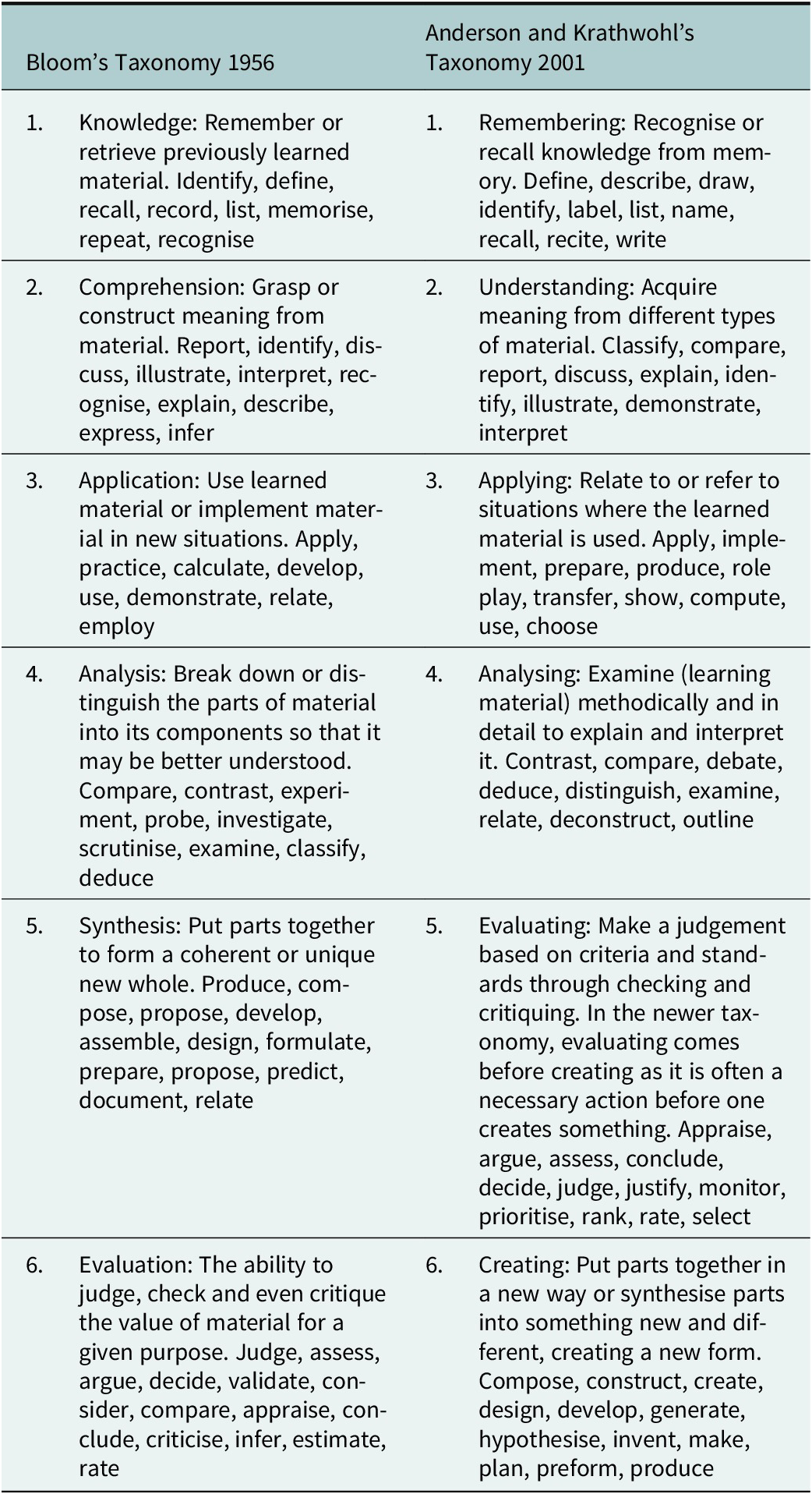
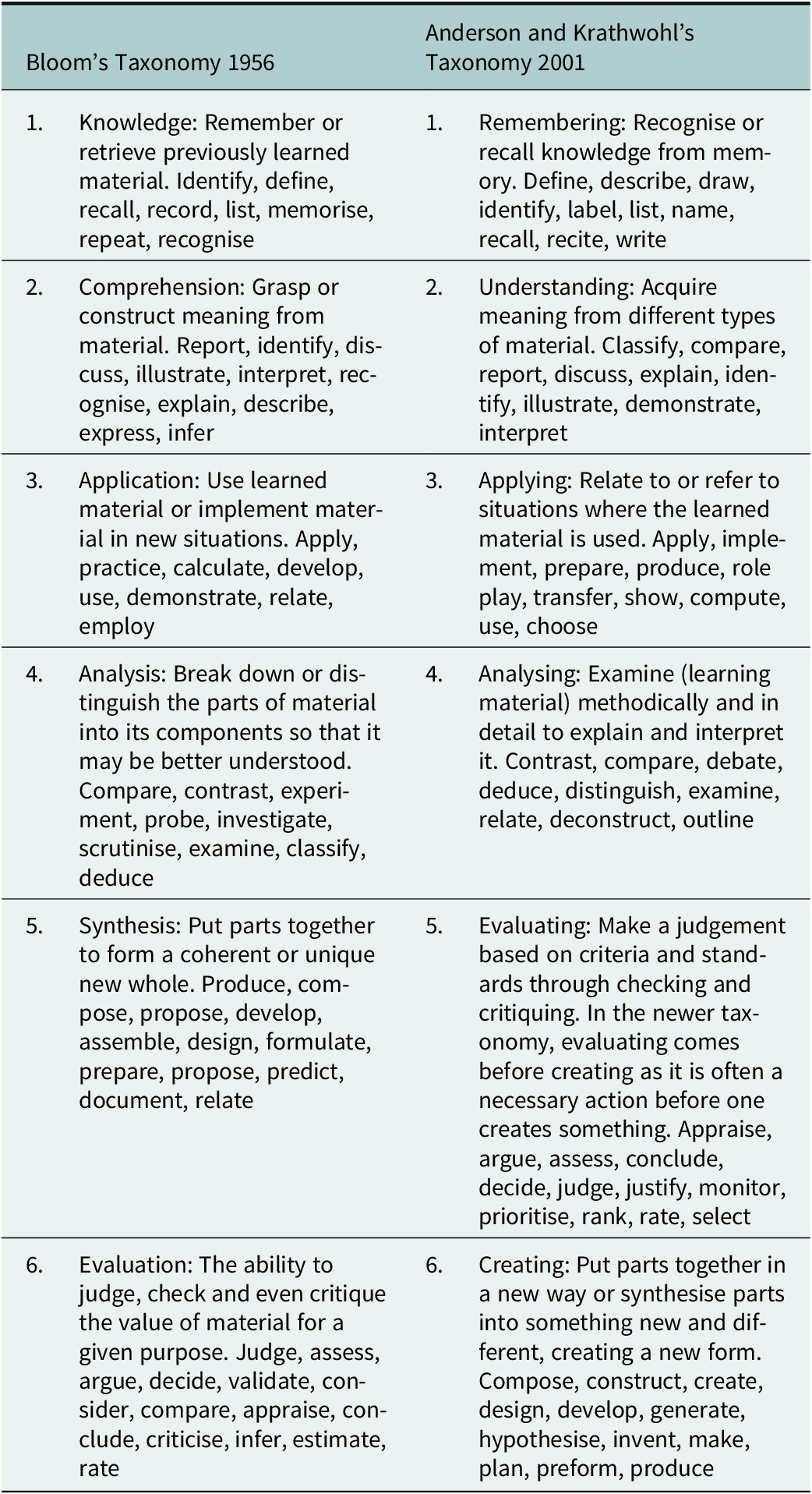
Benjamin Bloom (Reference Bloom1956) developed Bloom’s Taxonomy as a framework to categorise cognitive learning objectives into six levels: knowledge, comprehension, application, analysis, synthesis and evaluation. This taxonomy was later revised by Anderson and Krathwohl (Reference Anderson and Krathwohl2001) to adopt a more dynamic and active approach, reflecting modern educational practices (Table 1). The levels were renamed and reordered as remembering, understanding, applying, analysing, evaluating and creating (Anderson and Krathwohl, Reference Anderson and Krathwohl2001; Biggs and Tang, Reference Biggs and Tang2011). With the primary difference being the rewording from nouns to verbs and the switching of the last two levels.
Taxonomies of the different types of cognitive learning edited from (Anderson and Krathwohl, Reference Anderson and Krathwohl2001; Biggs and Tang, Reference Biggs and Tang2011)
In addition to Bloom’s cognitive learning objectives, it is essential to consider the diversity of learning styles. The four primary learning types – commonly referred to as VARK – include visual, auditory, reading/writing (verbal) and kinaesthetic. More recently, additional learning styles have been added to VARK, including (i) social (learning through interaction); (ii) solitary (self-study and independent learning) and (iii) logical (learning through reasoning and structure) (Othman and Amiruddin, Reference Othman and Amiruddin2010; Shah et al., Reference Shah2013; El-saftawy et al., Reference El-saftawy2024). A combination of VARK learning styles and Bloom’s Taxonomy constitutes blended learning, which integrates multiple methods to enhance educational effectiveness.
Research has shown that employing a variety of learning strategies can significantly improve knowledge retention and engagement. For example, Bylieva et al. (Reference Bylieva, Zamorev, Lobatyuk, Anosova, Bylieva, Nordmann, Shipunova and Volkova2021) found that incorporating videos and discussions into a first-year undergraduate philosophy course not only diversified educational activities but also led to increased academic performance. This aligns with the growing emphasis on multimedia learning, where a mix of visual, auditory and interactive components can cater to different learning preferences and enhance comprehension.
Nature-based solution (NbS) knowledge learnings
NbS, a recently developed concept, is an increasingly popular approach to hydrometeorological risk reduction while providing co-benefits to areas such as biodiversity, water quality and human wellbeing (Le Coent et al., Reference Le Coent2021). Learners such as university students, environmental consultants and landscape and urban planners play an important role in developing and facilitating the uptake of NbS into climate adaptation (Brokking et al., Reference Brokking, Mörtberg and Balfors2021; Govind and Alam, Reference Govind and Alam2023). Though NbS are considered promising innovations for sustainable development, their current uptake/implementation severely lags behind EU ambitions (Dorst et al., Reference Dorst2021). Moreover, how to effectively embody the role of NbS into urban planning and policy remains largely unexplored (Liu et al., Reference Liu2022). This is why MOOCs that surround these topics are so important. This is arguably because:
-
(i) Simply implementing NbS is inherently complex, due to the range of ecosystem services they can provide, their multi-functionality and trade-offs between function and their position across temporal and spatial scales (Bush and Doyon, Reference Bush and Doyon2019),
-
(ii) Knowledge gaps still exist regarding NbS effectiveness, awareness of technical levels and methods of planning and putting them into practice (Frantzeskaki, Reference Frantzeskaki2019; Frantzeskaki et al., Reference Frantzeskaki2019, Reference Frantzeskaki2020; Albert et al., Reference Albert, Brillinger, Guerrero, Gottwald, Henze, Schmidt, Ott and Schröter2021; Mendonça et al., Reference Mendonça2021),
-
(iii) There is a lack of studies that assess specific NbS policy instruments to provide examples of how NbS can be adopted into land use planning – with most studies remaining theoretical at best (Mendonça et al., Reference Mendonça2021),
-
(iv) Urban development systems favour “grey development” and are often hostile to NbS (Dorst et al., Reference Dorst2021; Govind and Alam, Reference Govind and Alam2023) with urban development considered a threat to urban green spaces, as it mainly focuses on residential development, while the planning of green spaces ends up as a subsidiary role (Brokking et al., Reference Brokking, Mörtberg and Balfors2021),
-
(v) There is a gap between the affinity and skillset of urban planners and infrastructure professionals in cities in understanding, designing and adapting NbS to their local conditions (Frantzeskaki et al., Reference Frantzeskaki2020),
-
(vi) There is a governance gap and institutional fragmentation and barriers around collaboration between different urban sectors required for NbS design and implementation (Frantzeskaki et al., Reference Frantzeskaki2020; Mendonça et al., Reference Mendonça2021),
-
(vii) It is unclear what defines NbS as a strategy for sustainability planning. As in how does it differ from similar concepts such as urban greening or sustainable drainage systems (Dorst et al., Reference Dorst2019),
-
(viii) A lack of incentives and legal and financial limitations leading to inadequate development and maintenance of the NbS, that is, financial stress, private vs. public land ownership, bureaucracy and the change in funding priorities within a new political cycle (Dushkova and Haase, Reference Dushkova and Haase2020; Brokking et al., Reference Brokking, Mörtberg and Balfors2021; Mendonça et al., Reference Mendonça2021) and
-
(ix) Finally, Govind and Alam (Reference Govind and Alam2023) argued that the inherent challenge that limits NbS uptake is the difficulty of quantifying the social and ecosystem benefits of NbS in planning law and decision-making, especially where conflict might occur.
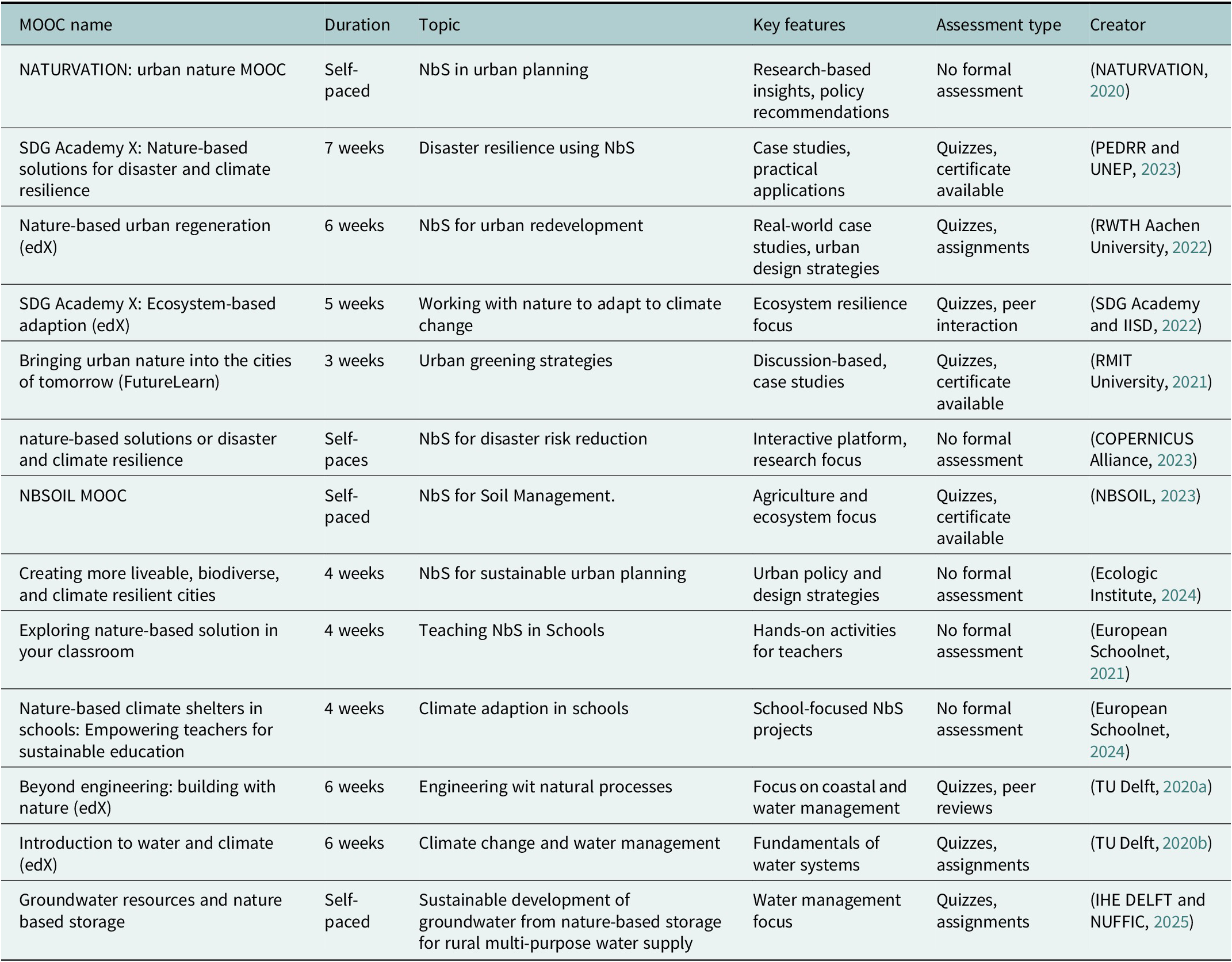
Key themes of NbS MOOCs currently available focus on climate resilience, urban planning and disaster risk reduction; others specialise in water management, groundwater storage, urban sustainability and biodiversity (Table 2). Most take a range from 3 to 6 weeks or are self-paced and include video lectures, case studies and interactive content, and are assessed via quizzes or assignments. The majority of NbS MOOCs have been created by leading institutions like TU Delft (2020a, 2020b) or supported by the SDG Academy (SDG Academy and IISD, 2022; PEDRR and UNEP, 2023) or by EU-funded projects like NATURVATION (2020), COPERNICUS Alliance (2023), NBSOIL (2023), proGIreg (RWTH Aachen University, 2022), INTERLACE (Ecologic Institute, 2024) and COOLSCHOOLS (European Schoolnet, Reference Schoolnet2024). While the below MOOCs (Table 2) discuss theory and case studies, there are some key topics missing.
Outline of other NbS MOOCs currently available
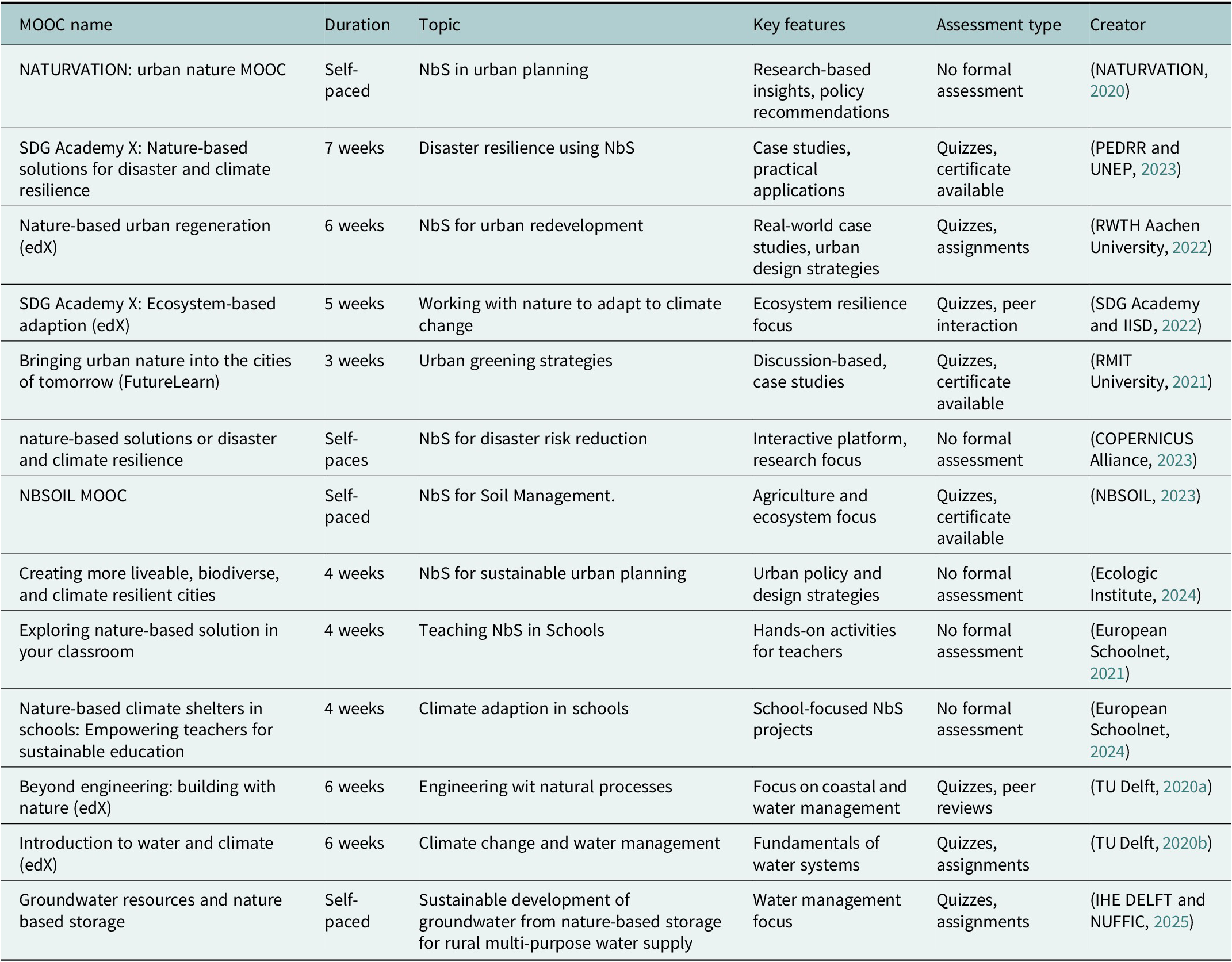
These identified gaps and missing NbS topics were systematically addressed throughout the planning and design of RECONECT MOOC (Table 3). Specifically, the course responds to the following gaps:
-
(i) A step-by-step implementation framework for NbS tailored to planners, policymakers and engineers;
-
(ii) limited coverage of financing mechanisms and economic incentives for NbS, including cost–benefit analysis and valuation approaches;
-
(iii) insufficient focus on the use of GIS, remote sensing and other digital tools for NbS planning, implementation and monitoring;
-
(iv) understanding the importance of community engagement and co-design processes;
-
(v) limited discussion of long-term monitoring, adaptation and maintenance strategies required to ensure NbS sustainability;
-
(vi) challenges related to identifying legal barriers and integrating NbS into policy frameworks at local, national and international levels;
-
(vii) NbS co-benefits, including social, economic and environmental benefits.
RECONECT MOOC modules and their learning objectives
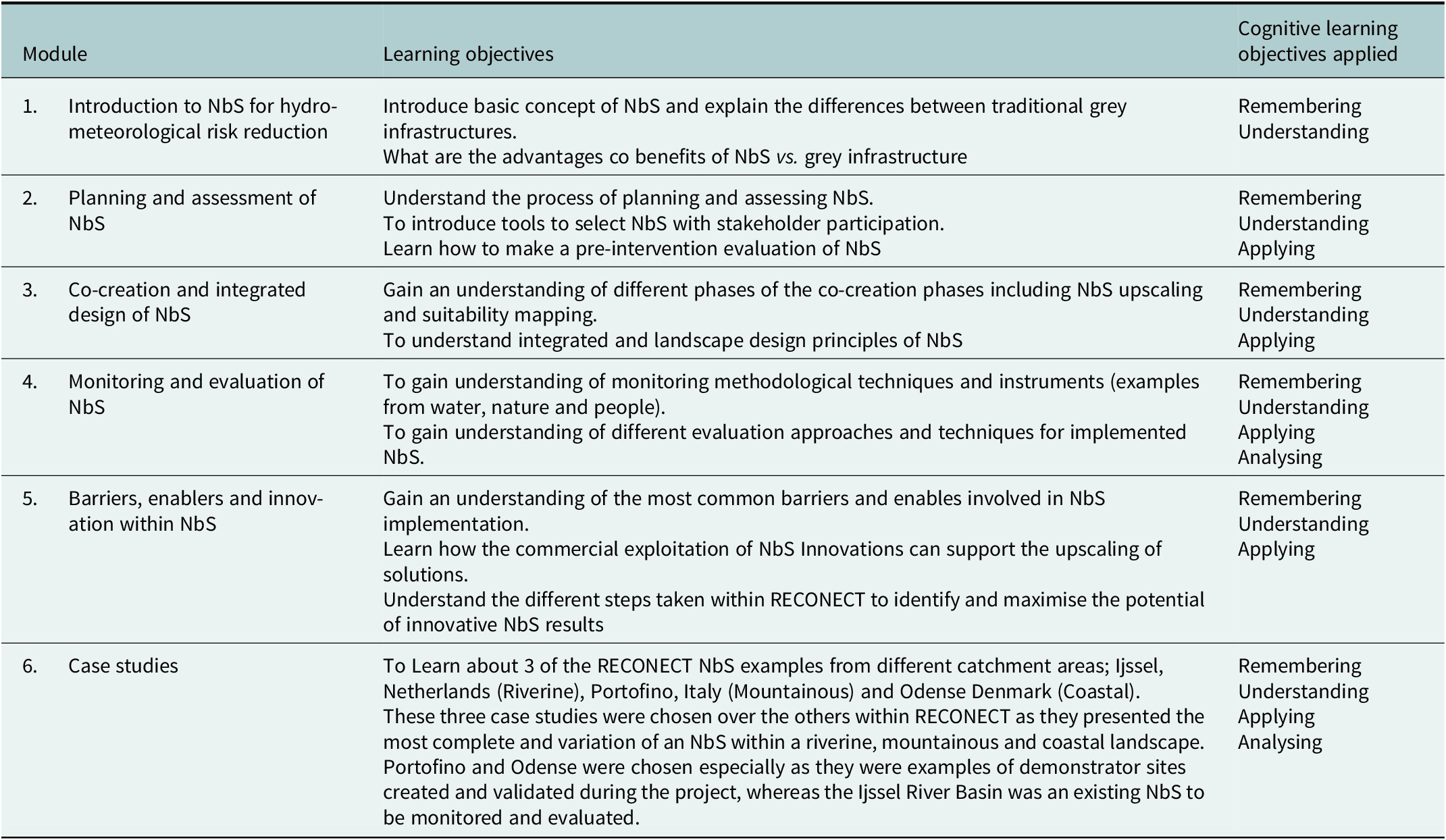
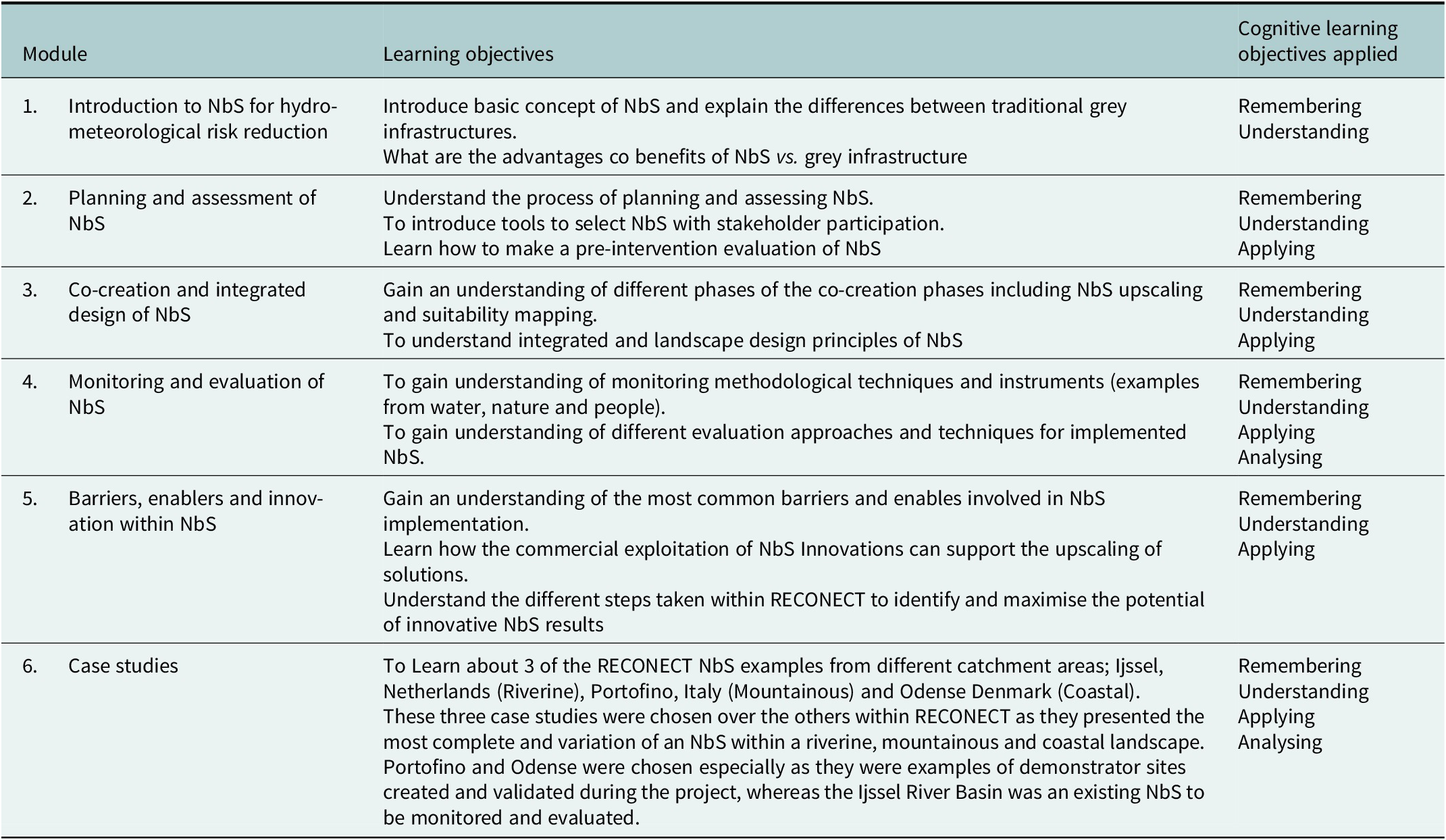
Note: The MOOC was not designed to reach all taxonomy levels. The table below associates the module design with educational objectives.
The RECONECT MOOC
RECONECT, a Horizon 2020 project, aimed to advance the European framework on NbS for hydro-meteorological risk reduction by demonstrating, scaling up and exploiting large-scale applications in rural and natural areas. Addressing growing pressures on Europe’s natural capital, the project fosters a culture of co-creation in land-use planning that integrates risk reduction with sustainable, financially viable regional development. To achieve this, RECONECT engaged a diverse network of demonstrators and collaborators across varied geographic, institutional and cultural contexts. Demonstrator sites include large-scale NbS created and validated during the project (e.g., Elbe Estuary in Germany, Odense in Denmark and Portofino Natural Park in Italy) as well as existing NbS monitored and evaluated (e.g., Ijssel River Basin in the Netherlands, Inn River Basin in Austria, Thur River Basin in Switzerland, Greater Aarhus in Denmark, Var River Basin and Les Boucholeurs in France). In addition, collaborations with six European and 13 international partners support prefeasibility studies and knowledge exchange. Bringing together researchers, SMEs, consultancies and authorities at local and regional levels, RECONECT represented an unprecedented transdisciplinary partnership dedicated to delivering scalable, impactful solutions.
The RECONECT MOOC (https://reconect-mooc.cafloodpro.com) was designed to equip local authorities, planners, students and other stakeholders with essential knowledge on NbS for climate hazard risk reduction. It provides methodologies to design, analyse and evaluate NbS performance, enabling participants to assess feasibility and develop effective NbS measures.
Unlike most existing MOOCs on NbS, which are primarily aimed at undergraduate students, the RECONECT MOOC stands out by targeting a broader audience, including non-academics, researchers, practitioners and policymakers. It is built on a strong collaboration between a transdisciplinary consortium comprising researchers, industry partners (SMEs and large consultancies) and responsible agencies at local, watershed and regional levels.
To achieve its objectives, the MOOC organises, communicates and disseminates key research findings from the RECONECT project through a series of themed learning activities. These resources share state-of-the-art knowledge with a global audience, enhancing the capacities, knowledge and skills needed to scale up NbS, integrate them with traditional grey infrastructure and support evidence-based decision-making.
The main goals are enabling the participants to
-
• understand the capacity of NbS in coping with climate hazard impacts and their co-benefits
-
• know how to plan NbS and estimate their effectiveness
-
• integrate NbS design with landscaping exercise
-
• monitor and evaluate NbS performance
-
• identify the barriers and innovation opportunities for NbS implementations
-
• learn the experiences from actual case studies
Consequently, the aim of the RECONECT MOOC was not only to promote the project research outcome but also to transform them into a high-impact NbS MOOC that tackled the gaps left by previous courses (mentioned above). Developing MOOCs of this kind is critical: they serve as powerful vehicles for spreading knowledge, showcasing the lessons learned from EU projects, like RECONECT, and translating research into real-world action. By doing so, they can accelerate the global uptake of NbS, inspire practitioners and policymakers and ensure that innovative solutions move beyond isolated projects to become mainstream practice.
Methodology
The content and modules
To achieve the goals outlined above, the MOOC was structured into six modules, each with specific learning objectives (Table 3). The MOOC was developed by a multidisciplinary team of international experts whose research was integrated to provide a comprehensive learning experience. Participants benefited from insights across various fields, including academia (environmental and social sciences), industry and engineering. Ultimately, this partnership and the collaboration between different professional associations helped the course access a wider audience. Module 1 provided a general overview of NbS, highlighting their distinctions from conventional engineering solutions and their advantages in climate adaptation. It also introduced the RECONECT project. This foundation seamlessly led into Modules 2–5, which focused on the co-creation of NbS, including planning, design, implementation, monitoring, evaluation and upscaling stages. These modules aimed to help participants understand how NbS can reduce the impacts of natural hazards, enhance environmental quality and biodiversity, promote socioeconomic development and improve equality and wellbeing. Additionally, the modules addressed potential barriers to NbS implementation and provided strategies to overcome them, empowering participants with the knowledge and tools needed to design, evaluate and implement effective NbS in their own contexts. Finally, Module 6 presented in-depth case studies from the RECONECT project, allowing a broad range of research findings to be effectively disseminated. These modules were designed to equip participants with the critical knowledge and skills needed to identify suitable NbS and assess their effectiveness in mitigating hydrometeorological hazards, ultimately fostering climate-resilient communities. In addition, 19 RECONECT members were assigned as teachers to facilitate discussions within the forums at the end of each of their representative module.
Using Blooms Taxonomy, an assortment of differently styled assessments/questions were added to each of the modules, including card sorting, filling in the blank, multiple choice, text matching, open-ended, true or false, ranking and single choice (in the example below, this uses an equation). The most common questions used were multiple choice and true or false options. But a variation was used throughout and within each module. Due to the nature of the RECONECT MOOC and the background of the target audience, most of the questions addressed the first two cognitive learning objectives: remember and understand (Table 3). However, the overall aim of the MOOC is that participants, in their own time, can take what they have learnt to design/develop/implement (create) their own NbS. Thus, being able to recognise the tools and methods needed to then analyse and evaluate how successful their NbS has been in terms of reducing natural hazards and improving environmental quality, biodiversity, wellbeing and socioeconomic development. Limitations about this methodology are discussed later.
To effectively transfer scientific methodologies and findings from RECONECT, the MOOC employed a variety of interactive learning strategies. These strategies not only accommodated different learning preferences but also ensured that complex information was presented in an accessible and engaging manner.
To create a more engaging and interactive experience, each module featured content from different RECONECT team members. Before each section, an introduction to the respective teacher or content provider was included, offering a more classroom-like approach and giving learners the opportunity to connect with the experts behind the screen.
-
1. Learning through acquisition (reading and listening)
The MOOC provides content in multiple formats, including:
-
○ Infographics, videos and interactive activities
-
○ Embedded YouTube clips
-
○ Journal articles, reports and PDFs
-
○ Direct links to external resources such as NbS tools, RECONECT webinars, podcasts and news articles.
By offering a range of learning materials, participants can engage with content at their own pace, selecting supplementary reading or media that align with their interests. Video and audio elements also help further enhance engagement, making the learning more immersive.
-
2. Learning through inquiry (exploration and problem-solving)
Inquiry-based learning encourages participants to actively search for information and apply conceptual processes. One example is the Measure Selector Tool (http://www.reconect.eu/services-platform/measure-selector-tool/), a web-based platform that helps decisionmakers identify suitable NbS based on local conditions. By interacting with this tool, learners can explore hazard-specific NbS and associated planning, implementation and monitoring methodologies. Other tools that were developed within the RECONECT project and highlighted within the MOOC as suggested methodologies that participants could directly access and use for themselves were Argos, eDNA, WaterDetective, QuantiAmenity and TeleControlNet. More details about how these tools were developed and upscaled can be found in Penny et al. (Reference Penny2024).
Another example of inquiry-based learning includes journal-based exercises, where participants were asked to analyse scientific papers and answer questions that assess their understanding of methodologies and results presented. This method fosters critical thinking and reinforces comprehension.
-
3. Learning through discussion (peer interaction and debate)
Each module features a discussion forum, enabling learners to engage with peers and content creators. These forums provide a space for questions, debates and knowledge-sharing, fostering a collaborative learning environment. Discussion-based learning helps deepen understanding through peer-to-peer exchange and reflective dialogue.
-
4. Learning through practice (hands-on application)
Practical, task-based learning was incorporated to reinforce theoretical concepts. Examples include:
-
○ Downloading and analysing 3D Geomorphometric data from the Portofino case study
-
○ Using provided datasets to create a discharge and water level (Q-H) diagram in the Room for the River module
-
○ Calculating Economic Unit Value and Willingness to Pay in Module 4 to assess amenity value.
These exercises encourage learners to apply theoretical knowledge in real-world scenarios, bridging the gap between academic research and practical implementation.
Software used
Most of the original learning material/content was provided to UNEXE in PDF documents or PowerPoint slides that did not allow for interaction with the learners. The contents were transformed into Sharable Content Object Reference Model (SCORM) packages (Siddiqui et al., Reference Siddiqui, Alam, Khan, Gupta, Tiwari, Trivedi, Mishra, Misra and Kumar2019; Alam, Reference Alam, Kumar, Fister, Gupta, Debayle, Zhang and Usman2022), using the Easy Generator software, which was chosen for a number of reasons: (i) does not need any scripting or programming skills; (ii) simple to use and does not require previous expertise or training in education design or production; (iii) the ability to add additional co-authors or reviewers to the course; (iv) provides a Mobile-friendly course output are easy to navigate and use and (v) provides website embedding, SCORM and HTML downloads. By using Easy Generator, the content given to UNEXE by the RECONECT consortium could be enhanced and made into learning content that was more accessible, engaging and interactive.
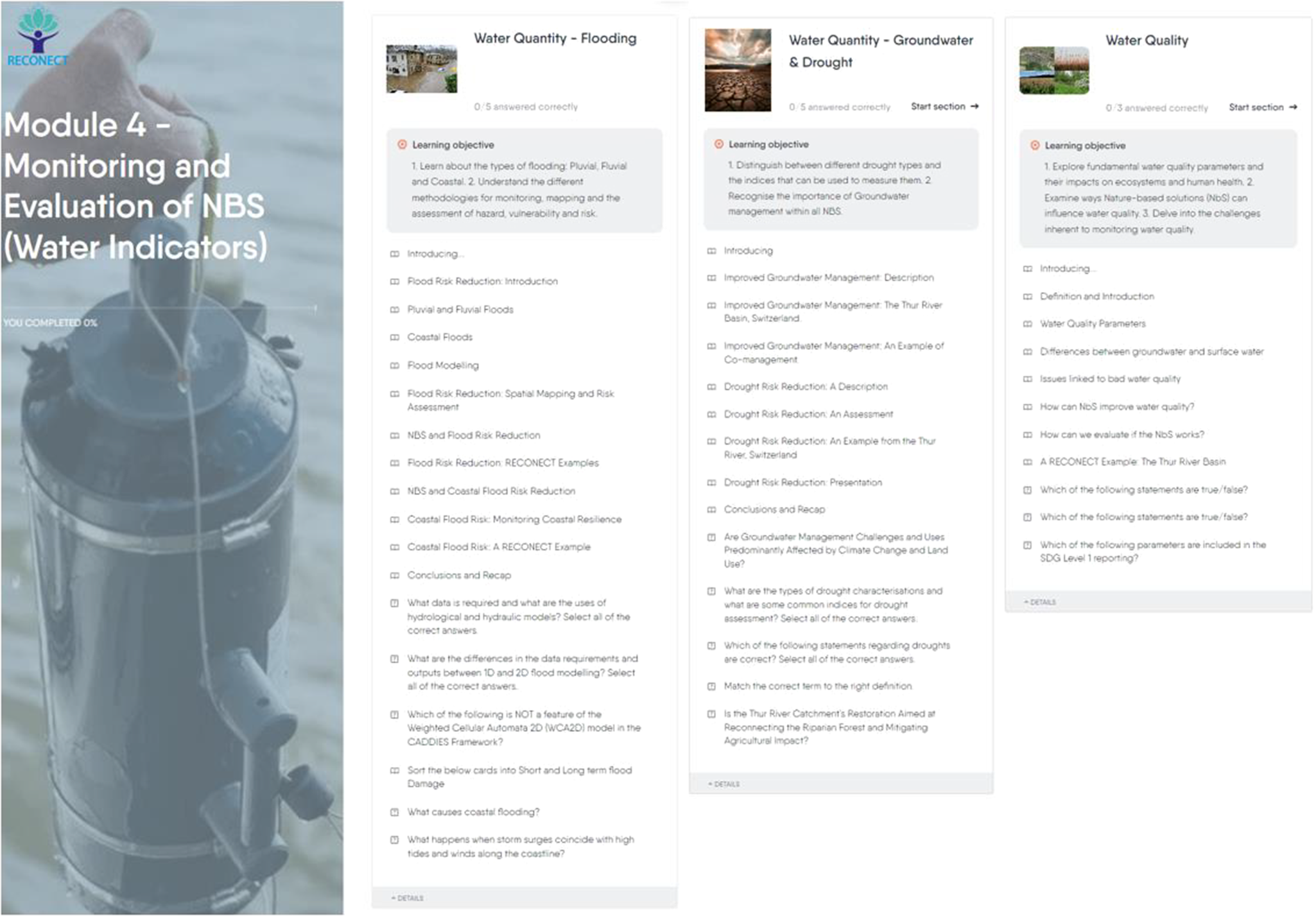
SCORM is a collection of standards for web-based learning content that enables interoperability, accessibility and re-usability. The interactive SCORM approach was chosen as the preferred format over static PowerPoint presentations due to its ability to create dynamic, interactive and engaging learning experiences. Unlike traditional formats, SCORM enables the integration of multimedia elements, adaptive learning paths and interactive activities, making the learning process more immersive. These features are particularly beneficial in catering to diverse learning styles and enhancing knowledge retention. An example of the layout can be seen in Figure 1.
Layout example of content for “water Indicators within module 4.”

Enhancing engagement with SCORM packages
The SCORM packages significantly improve the learning experience by allowing for:
-
• Adaptive learning paths – Content can be tailored to user progress, ensuring a personalised experience.
-
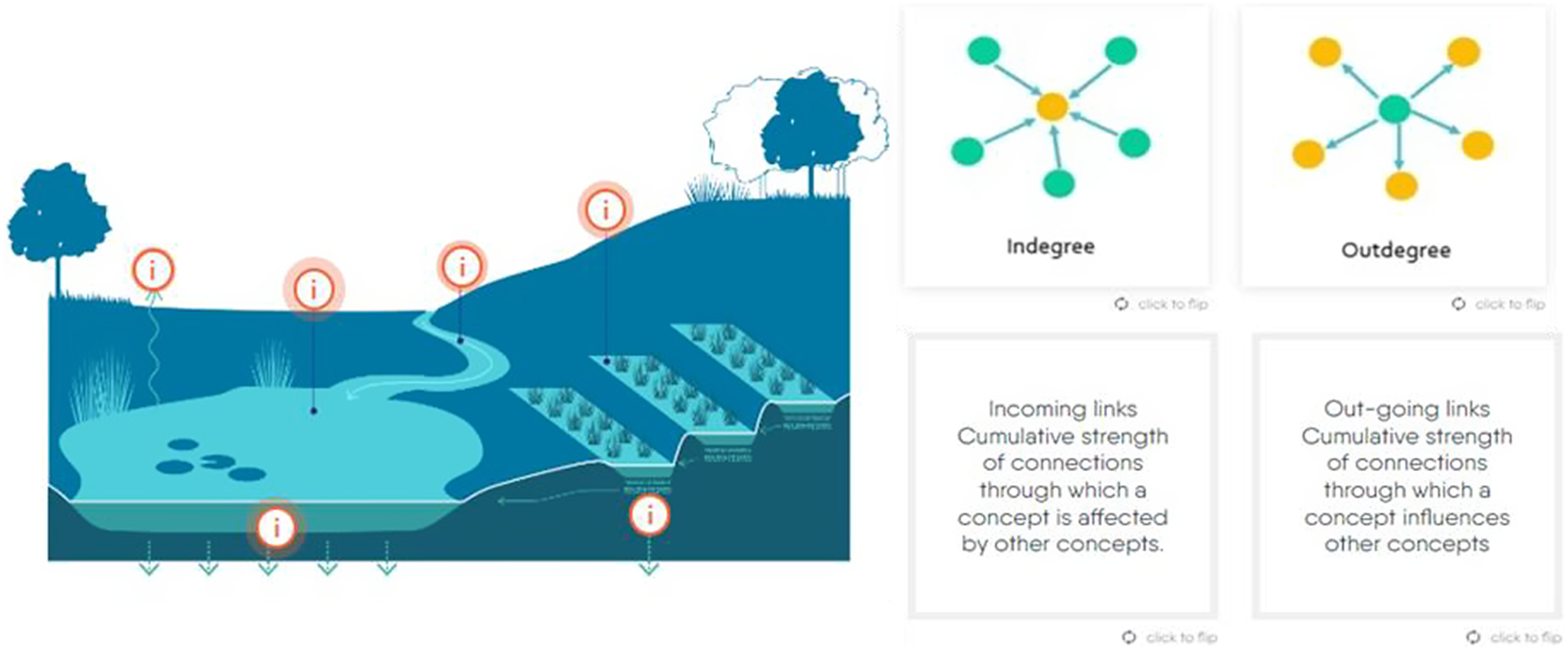
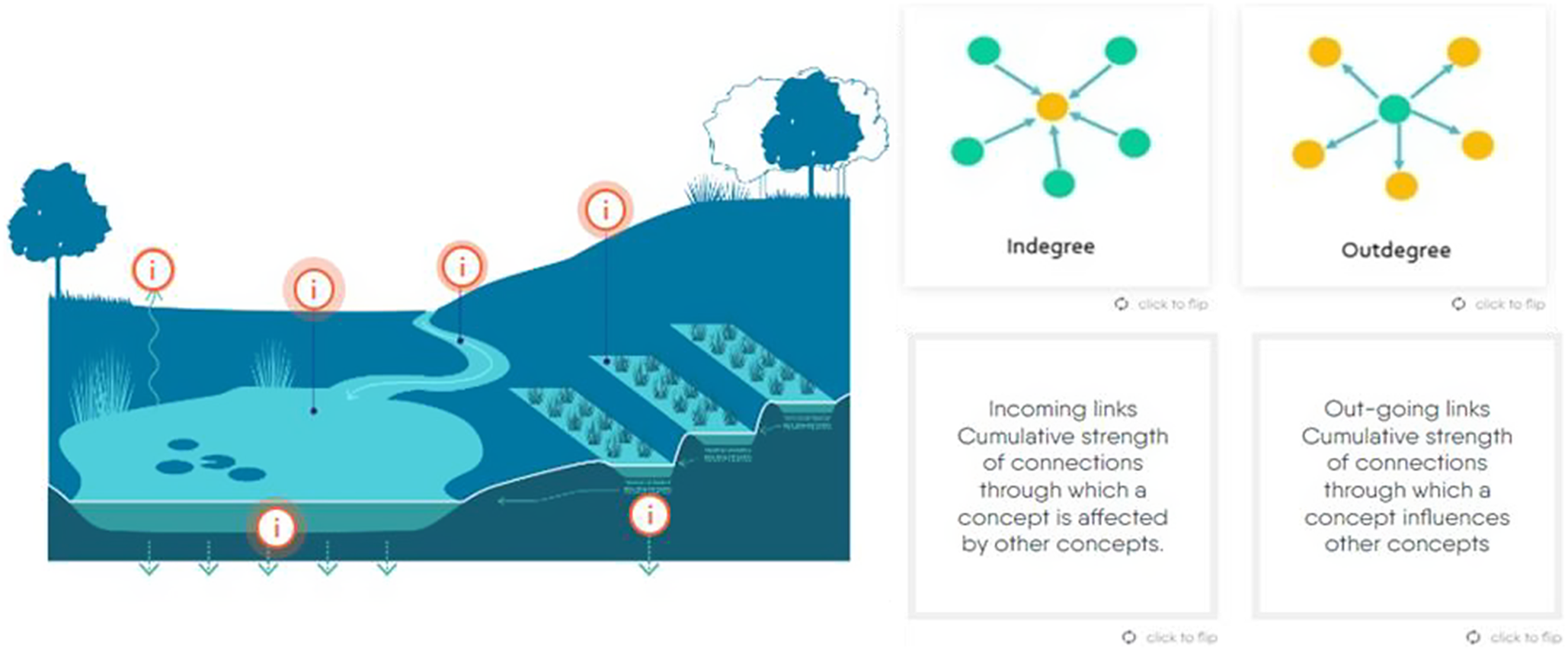
• Multimedia integration – Videos, interactive images (e.g., hot spot images with embedded information) and gamified elements like flip cards (definitions on the back of images) to create a more engaging experience (Figure 2).
-
• Assessment tracking – SCORM enables progress tracking, quizzes and interactive tasks that provide instant feedback, helping learners gauge their understanding.
-
• Cross-platform accessibility – SCORM content can be accessed across various devices, ensuring a flexible learning experience.
By leveraging SCORM, the RECONECT MOOC transforms scientific knowledge into an engaging, user-friendly learning journey. By using a combination of multimedia resources, us (the creator) used interactive exercises and discussion opportunities to try and enhance both learner comprehension and retention, making complex NbS concepts accessible to a diverse audience.
The packages were uploaded to the RECONECT Moodle platform, which allow participants to enrol into the programme. Moodle (Moodle.org, 2024) is an open-source learning management system that provides flexible functionalities, interactive learning activities and personalised learning environments for educators, learners and administrators. Users can access the information or content and use the functionalities that are corresponding to their specific roles. Educators and learners can also interact with each other using various activities such as discussion forum on the platform to support the learning. Moodle was chosen due to its ease of use and accessible. As the creator, it is highly customisable, which means authors are free to create and upload different content and resources of their choosing.
MOOC advertisement
The MOOC was promoted through multiple communication channels, including a dedicated page and announcement on the project website, as well as regular posts on Facebook, LinkedIn and X. To extend visibility, an article was published on the RECONECT Medium blog, and the course was also highlighted in the project’s final newsletter. The newsletter reached 796 subscribers, with 318 opening the message and generating around 50 visits to the MOOC page. These coordinated efforts ensured broad outreach and strong engagement across diverse audiences.
MOOC evaluation
The MOOC launched on 2 August 2024, running initially for 6 weeks and remaining open thereafter for continued learning and feedback collection. Participants who completed all six modules were invited, as part of Moodle, to answer an online questionnaire. Developed by the UNEXE team (see Supplementary Material, Appendix 1), the questionnaire was designed to gather background information and feedback on the course. To evaluate the learning that took place and assess learning outcomes, the questionnaire covered participant profiles, perceptions of the module content, learning outcomes and overall user experience. This assessment was valuable for understanding how and where participants’ perceptions may have changed after completing the MOOC, whether they felt sufficiently knowledgeable and confident to apply what they had learnt in practice, and how they evaluated the quality, difficulty and quantity of the module content.
Data were validated using Ethical and Procedural validation. The questionnaire was reviewed and approved by the Faculty of Environment, Science and Economy Research Ethics Committees within the University of Exeter (https://www.exeter.ac.uk/departments/research/researchethics/researchethics/researchethicscommittees/) to ensure the data collection process and the management of sensitive information follow the guidance and procedure established in the Research Ethics Policy and Framework (https://www.exeter.ac.uk/v8media/universityofexeter/governanceandcompliance/researchethicsandgovernance/Revised_UoE_Research_Ethics_Framework_v1.2_111120221_for_publishing.pdf). This process ensured data integrity and participant trust. In addition, response validation rules were built into the questionnaire. This helped to ensure that responses were complete, logically consistent, within acceptable ranges, and usable for analysis. Their main function is error prevention at the point of data entry, rather than correction after data collection. For example, and referring to Supplementary Material, Appendix 1, (i) single response enforcement was used to prevent multiple answers and to prevent unrealistic or extreme values that may distort analysis. Range checks were also applied. Examples of these sorts of questions include Likert scales (i.e., strongly disagree – strongly agree).
Questionnaire outcomes
Between 14 November 2024 and 14 September 2025, 389 participants had enrolled, alongside 19 RECONECT members assigned as teachers to facilitate discussions within the forums at the end of each of their representative modules. Of these, 232 officially started Module 1. Of this, 157 were still active (in the first 5 months), and 32 completed the entire course, 20 within the first 6 weeks. This finds that 63% of participants were keen to learn/participate within the RECONECT MOOC demonstrating strong participant engagement, especially in the 6 weeks. However, unfortunately as seen with other MOOC, dropout rates were high (Maya-Jariego et al., Reference Maya-Jariego2020), reasons potentially for this are discussed later in the paper within “Addressing Engagement and Completion Challenges.”
Participant background
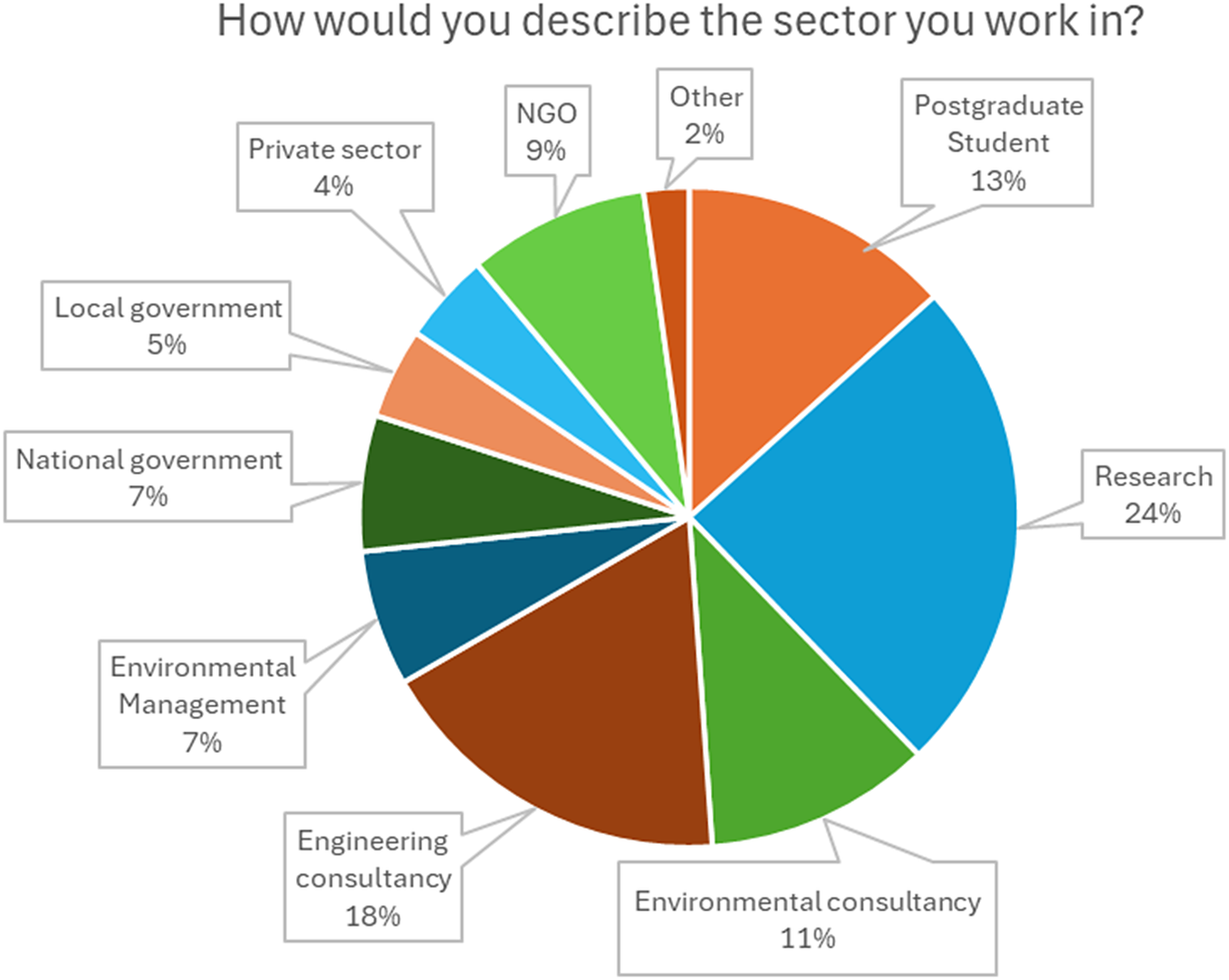
Among the graduates of the MOOC, 29 provided their feedback; participants represented a diverse range of professional backgrounds. More than one answer was available, but the majority identified as researchers (24%), followed by professionals in engineering (18%), in university education (14%), environmental consultants (14%), members of NGOs (8%) and representatives from local (4%) and national governments (6%) (Figure 3). Geographically, the cohort was also diverse, with a total of 68 different countries recorded. From feedback received from completed questionnaires, most participants came from Europe (69%), including the UK (10%), Spain (7%), the Netherlands (7%) and Italy (17%). Additionally, there were also participants from South America (Colombia: 7%, Brazil: 3%), the Middle East (Lebanon: 3%), North America (USA 3% and Mexico 3%) and Asia (Indonesia 3% and India 3%). Overall, these results indicate that the MOOC successfully reached a broad and multidisciplinary audience with strong representation from research, professional practice and higher education, while also engaging participants from a wide geographic spread. However, the predominance of European participants suggests that future iterations of the course could be further strengthened and made more accessible in under-represented regions, if available in other languages. For example, a Spanish version (Ferrari et al., Reference Ferrari2019) would enhance the RECONECT MOOC global relevance and impact, especially in South and Central America.
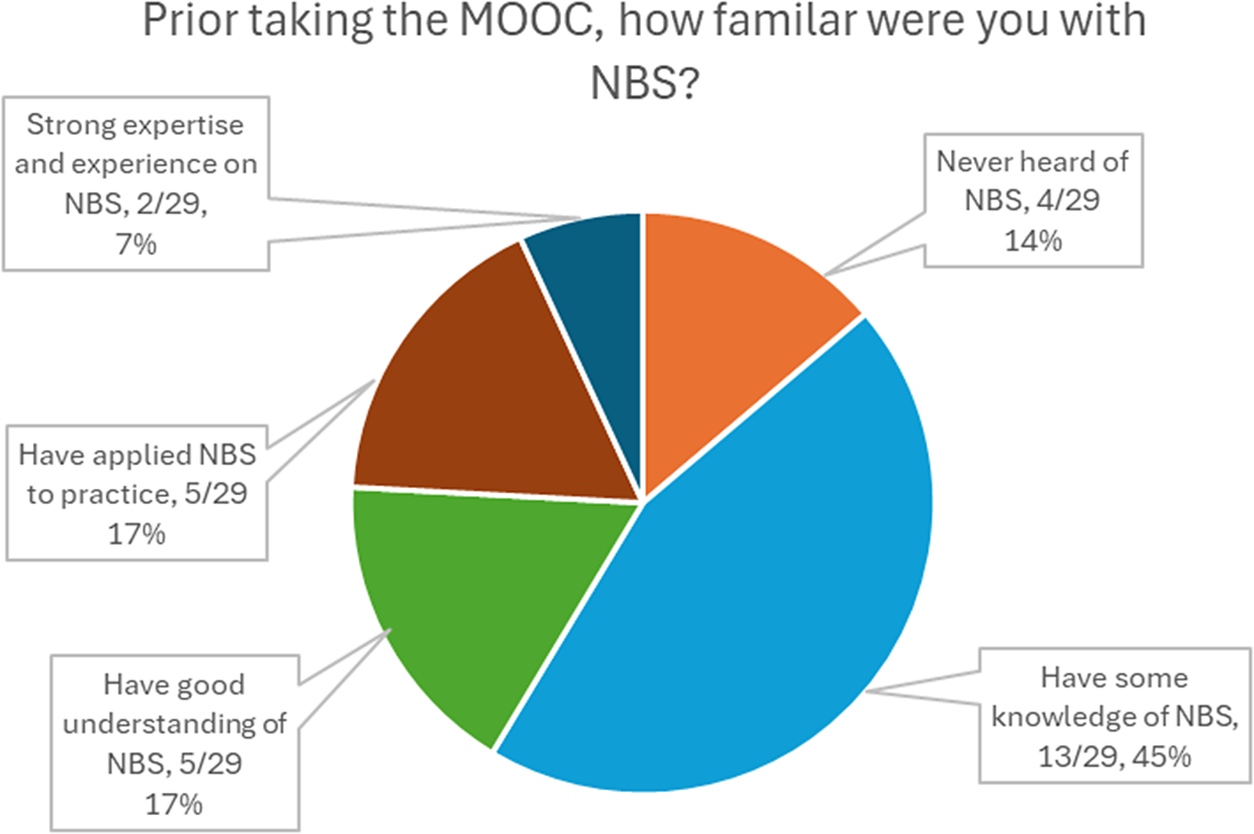
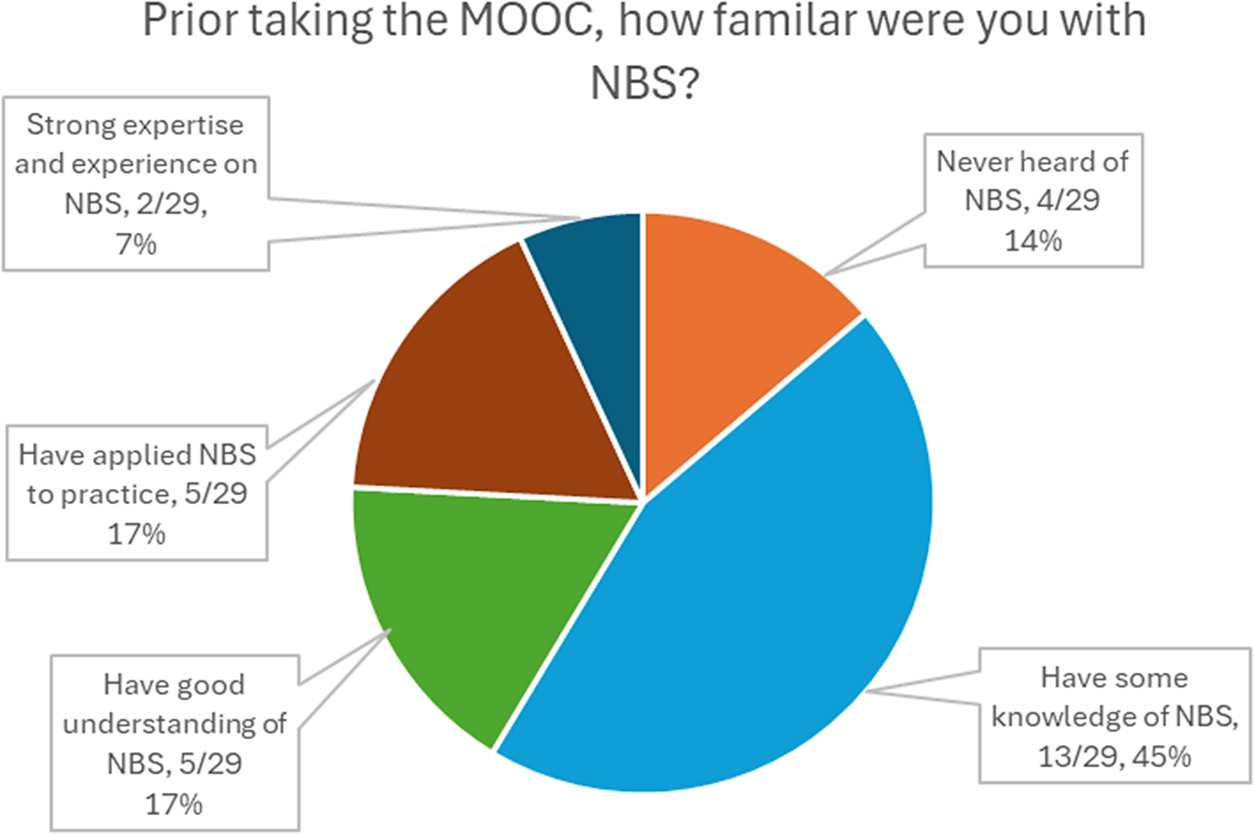
The participants’ prior familiarity with NbS varied significantly. Some had practical experience applying NbS (5%), while others were newly introduced to the concept through the course (4%) (Figure 4). Overall, the wide variation in prior NbS knowledge indicates that the MOOC effectively engaged both novice and experienced participants, demonstrating its flexibility and relevance. The diverse sectoral and geographic representation further highlights the growing global demand for accessible NbS education and the growing interest in sustainable solutions across different sectors and regions.
Module feedback
Participants highly valued the comprehensive content, especially within modules covering co-creation, financial frameworks and case studies. Modules that integrated practical frameworks and real-world examples were frequently mentioned as favourites.
Among these, Modules 2, 3 and 4 stood out as the most engaging:
-
• Module 2: Offered insights into NbS planning phases.
-
• Module 3: Focused on co-creation and stakeholder engagement.
-
• Module 4: Delivered essential technical guidance on monitoring and evaluation.
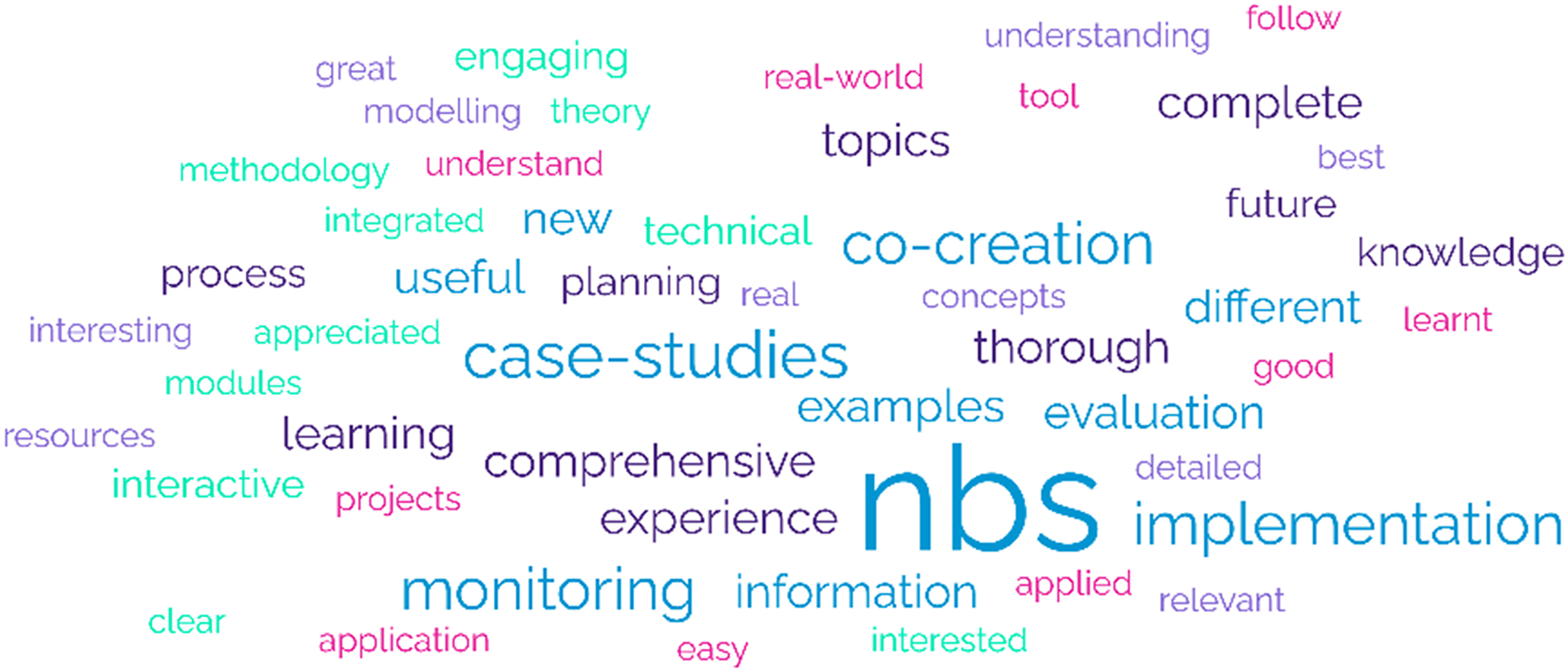
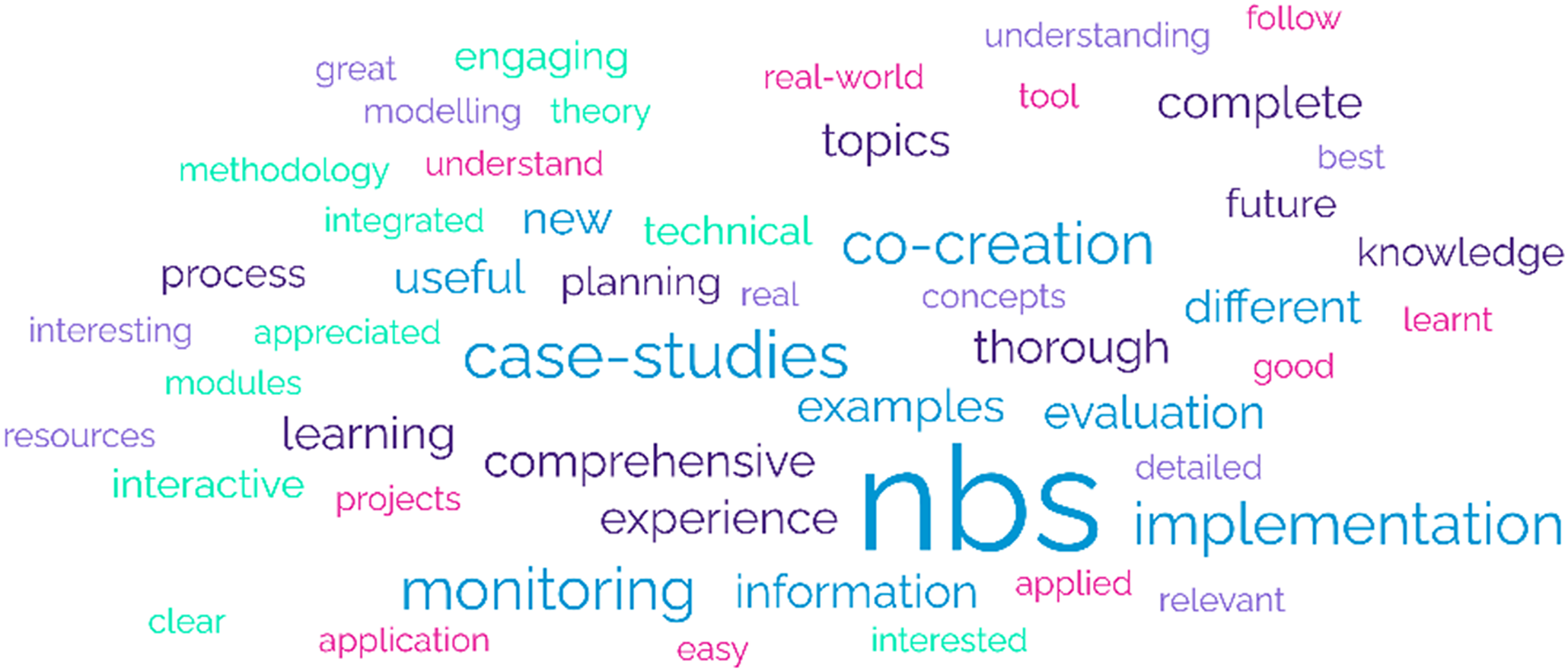
The most popular modules featured interactive and a more varied content format, such as videos, podcasts, webinars and embedded links, this ultimately enhanced the learning experience. These modules were also broken down into three separate shorter and more concise sections, reducing completion time, an important factor as we can assume that many participants completed the MOOC outside of working hours, as the majority were not students (Figure 2). Overall, participant preferences indicate that concise, interactive modules combining practical frameworks with real-world applications were effective for professional learners, underscoring the importance of flexible, practice-oriented course design for maximising engagement and completion in online NbS training. The word cloud shown in Figure 5 visualises the comments from the questionnaire on favoured aspects of the learning experience. The most frequently appearing words relate to hands-on and applied learning, such as case studies, implementation, co-creation and monitoring. This could suggest that the practical activities were particularly well received. Words like tools, examples, evaluation and information suggest that the learning materials helped understanding. Whereas, references to engaging, interesting, useful and comprehensive implies that learners appreciated interactive yet technically detailed learning experience.
Example of interactive elements (left hot spot images and right flip cards).
Range of professional backgrounds of participants, more than one answer was allowed.

Participants’ prior familiarity with NbS.
Word cloud of the positive feedback retried about the MOOC.
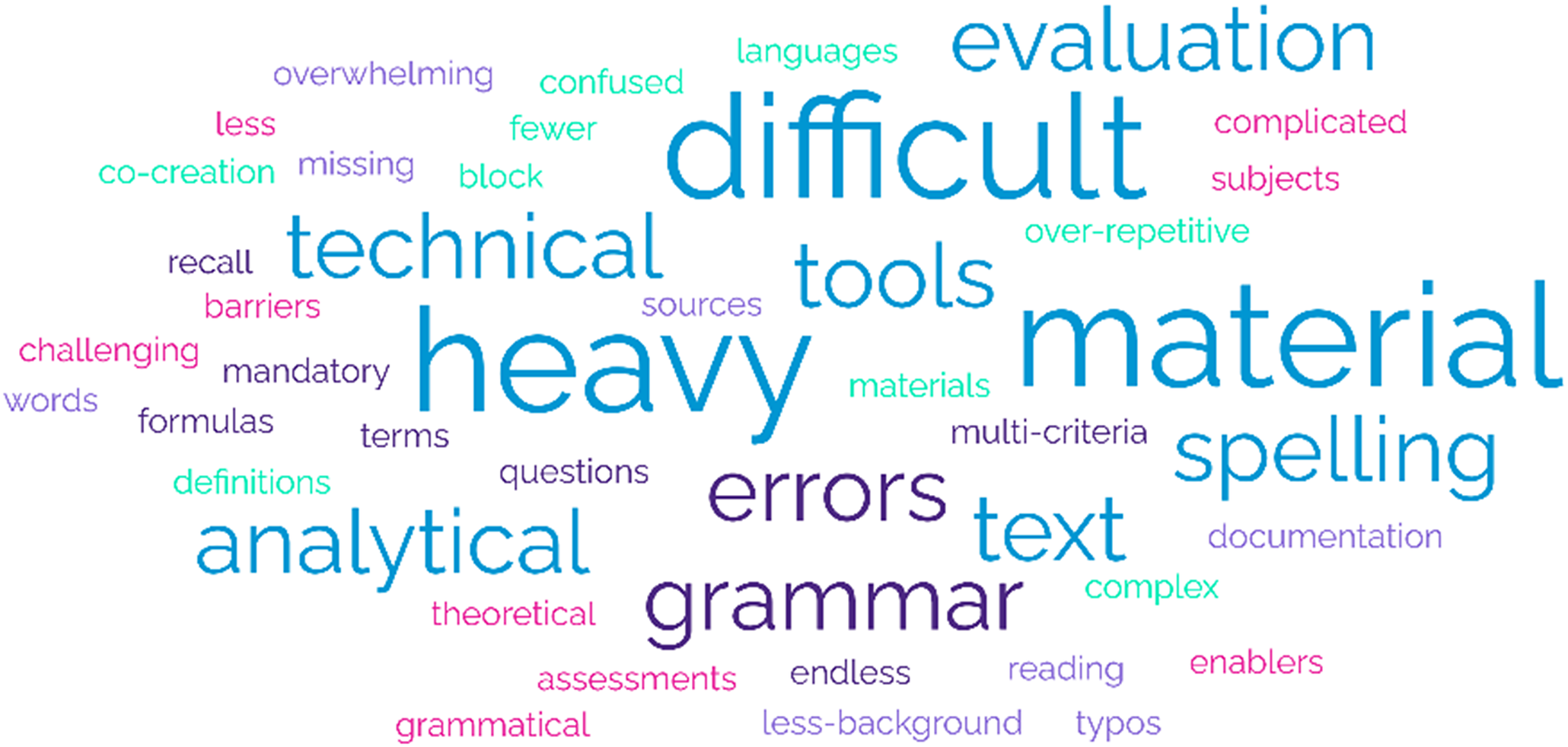
A word cloud providing the common negative feedback from the questionnaire.

While the RECONECT MOOC attempted blended learning (visual, auditory and verbal approaches), some modules leaned heavily on reading and written content, making them more suited to verbal and solitary learning rather than a kinaesthesia, social environment. Future iterations could enhance interactive elements in modules with extensive text-based material to better accommodate diverse learning preferences.
Some found Modules 2, 3 and 5 challenging due to complex content, particularly regarding multi-criteria analysis (Module 2) and policy discussions (Module 5). While 83% agreed the content was well-tailored to the correct audience, 38% found it challenging, and 10% and 14% found it complex and advanced, respectively. Some modules were viewed as overly technical or dense, especially those regarding theoretical models and which included formulas. For instance, Module 2 was too technical for some learners. Participants requested simpler explanations and real-world applications to connect theory with practice. To enhance accessibility, simplified explanations and a Spanish version were recommended (Ferrari et al., Reference Ferrari2019). Participants also suggested that more real-world applications to connect theory with practice would be valuable.
Opinions on extended reading were mixed; some valued the depth, while others found it overwhelming, though most agreed that a summary of key takeaways would be helpful to consolidate the learning experience. Assessment questions were deemed appropriate overall, though certain formats, like open-ended or fill-in-the-blank, were considered difficult. Suggestions included introducing more flexible assessment options, such as optional questions or varying difficulty levels, to accommodate the different diverse learner stages. Overall, these findings suggest that while the RECONECT MOOC effectively targeted its intended audience, further balancing technical depth with accessibility through increased interactivity, clearer practical examples, content summaries and flexible assessments, would enhance inclusivity and learning effectiveness for participants from diverse backgrounds and learning preferences. Figure 6 provides a word cloud visualising the comments from the questionnaire on unpopular aspects of the learning experience. In contrast to Figures 5, 6 is dominated by terms, such as difficult, heavy, technical and analytical suggesting challenges in the complexity of the information/material and workload. Additionally, the presence of grammar, spelling and errors suggest a frustration with written requirements or language (dialect/vernacular) barriers; the course was written in British English.
Learning outcomes
Arguably, the majority of participants experienced a positive outcome from the RECONECT MOOC. Specifically, 90% agreed they had gained additional knowledge on NbS, while 69% reported a changed perception of NbS. Furthermore, 62% and 21% felt they would be confident and very confident, respectively, applying their learning, particularly in areas such as multi-criteria analysis (Module 2), co-creation and stakeholder engagement (Module 3), evaluation methods (Module 4) and RECONECT tools (Module 5). Real-world case studies were praised for effectively bridging theory and practice, although some participants suggested incorporating more examples from developing countries would enrich and diversify the learning experience. Overall, these results indicate that the RECONECT MOOC was largely effective in enhancing participants’ knowledge, confidence and practical skills in NbS, while highlighting opportunities to further diversify case studies to strengthen global applicability and relevance.
User experience
Participants praised the MOOC’s interactive resources (90% agreement) and embedded content (97%), finding the platform easy to use across devices from laptops to mobile devices, thus catering for learners who study on the go. While some faced loading issues, participants appreciated the self-paced learning environment and the ability to pause and resume learning, reducing pressure, thus making the course more accommodating to diverse schedules and working professionals (which the MOOC was ultimately aimed at).
Overall impressions
Feedback was overwhelmingly positive, with participants describing the MOOC as comprehensive, engaging, and valuable for professional growth. A practitioner in local government called it “one of the best courses I have ever completed,” while an environmental consultant in Colombia highlighted its impact on bridging education gaps and promoting sustainable development. Many expressed excitement for a second round and recommended it to colleagues.
The participants’ prior familiarity with NbS varied significantly. Some had practical experience applying NbS, while others were newly introduced to the concept through the course. This diversity in expertise and geography indicates that the MOOC effectively reached its target audience while being able to provide tailored content that accommodated both beginners and advanced learners. The broad representation also underscores the global relevance of NbS and the growing interest in sustainable solutions across different sectors and regions. Overall, the overwhelmingly positive feedback and the diversity of participants’ backgrounds suggest that the MOOC successfully delivered high-quality, globally relevant content that effectively engaged both novice and experienced learners, supporting professional development and fostering broader interest in NbS.
Potential for improvement and recommendations
Addressing engagement and completion challenges
One of the most common limitations of MOOCs is the lack of sustained interaction between teachers and students, leading to higher dropout rates (Palacios Hidalgo and Huertas Abril, Reference Palacios Hidalgo and Huertas Abril2020). This issue was evident in the RECONECT MOOC, which primarily served as a dissemination tool rather than an interactive teaching platform.
Key barriers identified within the RECONECT MOOC included limited engagement with content creators, as module experts had responsibilities beyond the MOOC; the absence of an interactive forum or community space, which contributed to participant isolation and reduced motivation, as also observed by Li (Reference Li2019); rigid module progression that required sequential completion before accessing later content; and an over-reliance on automated multiple-choice assessments, which limited opportunities for deeper learning and critical application, as also seen by Palacios Hidalgo and Huertas Abril (Reference Palacios Hidalgo and Huertas Abril2020). A steady promotional campaign would also be necessary to encourage the participants to complete the full learning and raise interest from new people.
Strategies for improving learning application and social interaction
To enhance the RECONECT MOOC experience, the following pedagogical improvements can be implemented:
-
A. Encouraging deep learning and application
-
Future iterations of the MOOC could be enhanced through a stronger emphasis on higher-order thinking. Rather than relying primarily on multiple-choice questions, assessments could be designed in line with Bloom’s Taxonomy, encouraging learners to apply, analyse, evaluate and create. This shift would deepen engagement and allow participants to demonstrate not only knowledge retention but also critical and practical skills. Furthermore, optional “doing” tasks could be introduced, offering hands-on opportunities for learners to apply course concepts to real-world scenarios, thereby strengthening the bridge between theory and practice.
-
Flexibility in learning pathways would further enrich the participant experience. Removing gated content restrictions would allow learners to progress through modules in any order, accommodating different learning goals, backgrounds and professional needs. Incorporating case-based learning from diverse global contexts could also provide meaningful opportunities to see NbS implementation in practice across different socio-environmental settings.
-
Finally, the use of AI to create personalised learning pathways to help students with additional learning needs (i.e., dyslexia, dyspraxia, ADHD and autism) access the course. An AI data analytics algorithm could be developed to associate learners’ behaviours and performance to then help improve the learning experience by providing different learning material or exercises based on the individuals’ learning style and progress time, that is, additional resources or simpler explanations. An AI chatbot could be created to interact with the participants as a tutor, providing instant feedback to questions.
-
B. Enhancing engagement via discussion and collaboration
-
Integrated discussion forums: Creating structured discussion spaces within the MOOC where participants can engage with content creators and peers. Research indicates that higher interaction levels improve completion rates (Deng et al., Reference Deng, Benckendorff and Gannaway2019). Phan (Reference Phan2018) extended this idea by suggesting the study groups should be based/split on language or geographical background or employ mentors or teaching assistants to help monitor the discussion forums. This idea can be further developed using live Q&A sessions. By scheduling live sessions with tutors, learners can ask questions and discuss course content/concepts with instructors in real time. If redesigned, it would be important for the MOOC participants interacting with content creators to deepen spontaneous knowledge transfer, rather than being bounded by the scripted contents, that enables more effective learning.
Social media integration: Leverage different social media platforms, such as LinkedIn, X, Instagram, Bluesky, Whatsapp and YouTube, to help create engagement outside of the MOOC, share content, course highlights, testimonials and interactive sessions. Investing in social media advertising could help boost enrolment rates and attract a broader range of students. In addition, The RECONECT MOOC allows the participants sharing the completion certificate via LinkedIn, highlighting their achievement in acquiring new knowledge on NbS, as well as promoting RECONECT MOOC to wider audiences.
Gamification and peer learning: Introducing badges, leaderboards and competitions and collaborative projects can enhance motivation (Grünewald et al., Reference Grünewald, Meinel, Totschnig, Willems, Hernandez-Leo, Ley, Klamma and Harrer2013). Serious gaming can allow innovative methodologies to be applied for educational purposes, decision support and public policy making. Many have been successfully within water management and flood and drought prevention (Savic et al., Reference Savic, Morley and Khoury2016; Khoury et al., Reference Khoury2018, Reference Khoury2023). If an NbS related game could be developed to run alongside the course or at the end to consolidate the learning experience, while making it an interactive, engaging and immersive. This would also help learners apply the knowledge they have learnt within the MOOC, develop skills and enhance problem-solving abilities in a controlled, risk-free environment.
Recommendations for widening the implementations and increasing the target audience of NbS MOOCs
Arguably widening the implementations and increasing/reaching a larger target audience requires a multi-faceted approach; however, there will never be a one-size-fits-all approach for MOOCs due to their unconformable body of learners (Phan, Reference Phan2018). Nevertheless, based on participant feedback, the RECONECT MOOC will undergo a second round of edits to enhance its effectiveness, engagement and accessibility. Key areas of improvement include:
-
1. Language accessibility: Offering the MOOC in other languages alongside English could make the knowledge more accessible for non-English speakers, for example, Spanish content could better engage with audiences from Central and South America, the same principle can be said for Mandarin Chinese, one of the most used spoken languages in Asia. A study by Colas et al. (Reference Colas, Sloep and Garreta-Domingo2016) conducted two hypotheses: (i) whether using English only as the language of instruction negatively affects the completion rate and (ii) whether using each participant’s native (or preferred) language for facilitation (both by peers and by a dedicated facilitator) would boost participation. The study found that (i) using English as the language of instruction did not negatively affect completion for an audience and (ii) multilingual facilitation did in some cases double or triple the completion but in other cases more than halved it. Furthermore, the integration with emerging AI translation tools presents a good opportunity for real-time content translation, enabling learners to access materials in their preferred language seamlessly.
-
2. Optimised reading load: Overwhelming reading requirements can deter participation. Streamlining the curriculum by focusing on a few essential papers per module, while offering an optional further reading section, can make learning more digestible and less time-consuming, allowing participants to deepen their understanding at their own pace.
-
3. Text clarity and accessibility: Revising grammar for clearer explanation, simplifying technical jargon for easier understanding and restructuring complex section for streamlined learning will enable the learning for non-specialists or those new to NbS concepts.
-
4. Interactive learning enhancement: Reducing reliance on text-heavy sections by incorporating multimedia elements such as YouTube videos, hotspot images and interactive flip cards can provide dynamic ways to explore topics, catering to diverse learning styles and enhance engagement and learning retention.
-
5. Advanced NbS modelling techniques: Where possible, including examples of detailed modelling techniques for NbS to provide learners with practical insights into NbS applications. Demonstrating related methodologies through case studies or simulations will allow participants to see how theoretical concepts are applied in real-world scenarios.
-
6. Future expansion: Expanding the scope of the course to cover NbS applications beyond water and flooding will provide a more holistic understanding of the field. Integrating the insights from other EU projects can offer fresh perspectives and innovative practices, enriching the learning experience.
-
7. Global case studies: Incorporating examples from outside Europe and within developing countries can demonstrate the diversity of NbS implementations for various environmental challenges, offering valuable insights and a more comprehensive understanding of the universal applicability of NbS strategies.
-
8. Sustained access to MOOC content: To ensure the longevity and continued relevance of the course content, developing an interactive PDF or publication summary of the MOOC could serve as an enduring resource. Such materials would preserve the knowledge imparted by the RECONECT project and facilitate ongoing learning and application beyond the course’s conclusion.
-
9. Potential to split MOOC into five sections: Given its comprehensive nature, the MOOC may benefit from Modules 2–6 being divided into five distinct courses. This segmentation allows for targeted delivery of content to different audiences, enrichment of knowledge on focused subjects. This will also enhance relevance and engagement by addressing specific needs or interests within the broader NbS domain.
Recommendations for possible applications of the study in formulating policy or educational frameworks
Furthermore, if applied strategically, the RECONECT MOOC demonstrates significant potential to support the formulation of policy and educational frameworks. By providing low-cost, scalable capacity-building and training for policymakers and technical consultants in government and regional authorities, the MOOC helps clarify the distinction between NbS and conventional grey infrastructure. While also equipping participants with the skills to operationalise NbS strategies.
Specifically, the modular structure offers targeted learning outcomes: Module 2 introduces the process of planning and assessing NbS, including tools for selecting solutions with stakeholder participation and conducting a pre-intervention evaluation. Module 3 provides a comprehensive understanding of co-creation phases, NbS upscaling, suitability mapping and integrated landscape design principles. Module 4 delivers essential technical guidance on monitoring, evaluation and management of NbS, ensuring their long-term sustainability. Module 5 addresses governance and institutional barriers, explores potential enablers and examines how the commercial exploitation of NbS innovations can support the scaling of solutions. Module 6 uses real-world case studies to bridge science, policy and practice, facilitating the dissemination of findings and highlighting pathways to inform policy decisions. Furthermore, the module structure, coupled with alignment to Bloom’s Taxonomy, also makes the content suitable for adaptation into higher education curricula, though additional material may be required to expand depth and coverage. The tools, models, exercises and case studies can further be integrated into workshops or seminars to provide hands-on, practice-oriented learning.
The MOOC aligns with the EU Green Deal, illustrating how EU-funded research outputs can be translated into policy-relevant knowledge exchange and the tools to do so. Its global accessibility allows knowledge transfer to a wider audience, potentially influencing policy adoption and climate adaptation practices worldwide.
Although the RECONECT MOOC predominantly focuses on flood prevention, its structure provides a transferable framework that could be extended to other climate-related challenges such as heat, drought, biodiversity and public health. Overall, this study demonstrates that MOOCs can function as cross-boundary/interdisciplinary tools, linking research, education, and policy implementation. For policymakers, they offer a practical mechanism to help promote NbS strategies, while for educators, they provide a scalable approach for teaching complex topics in a manner that directly supports real-world decision-making.
Conclusions
The RECONECT MOOC demonstrated a significant success in achieving its primary objectives of equipping stakeholders with essential knowledge about NbS for climate hazard risk reduction. By analysing the participant feedback and course outcomes, we have evaluated the MOOC’s effectiveness across its key goals.
The MOOC showed remarkable achievement in knowledge dissemination, with 90% of participants reporting gains in NbS understanding and 69% experiencing a changed perspective on the subject. It successfully reached a diverse, international audience that extended beyond traditional academic boundaries, attracting researchers, engineers, environmental consultants and government representatives from various regions.
Engagement metrics, in the first 6 weeks, were particularly impressive indicating strong participant motivation and interest. Moreover, 62% of participants felt confident applying their learning, demonstrating the MOOC’s effectiveness in translating theoretical knowledge into practical skills.
The learning objectives were comprehensively addressed throughout the course. Participants gained insights into basic NbS concepts, understood the distinctions between nature-based and traditional grey infrastructure and learned practical tools for NbS planning, assessment, co-creation and evaluation. The MOOC effectively highlighted barriers to NbS implementation and explored innovation opportunities, providing a holistic understanding of the subject.
Despite its success, there are several areas identified that need future improvement. These include reducing text-heavy content, increasing interactive learning elements, offering multilingual support, developing more flexible learning pathways and integrating a broader range of global case studies. By addressing these critical areas, the RECONECT MOOC will evolve into a more effective and engaging learning platform, fostering deeper understanding and sustained participation.
Overall, the RECONECT MOOC emerged as more than just an educational platform – it is an innovative mechanism for disseminating critical research on NbS. Participant feedback was overwhelmingly positive, with many professionals describing it as a comprehensive and valuable tool for professional development. By effectively bridging the gap between academic research and practical implementation, the MOOC has made a significant contribution to advancing understanding and application of NbS for climate adaptation and risk reduction.
Open peer review
To view the open peer review materials for this article, please visit http://doi.org/10.1017/wat.2026.10014.
Supplementary material
The supplementary material for this article can be found at http://doi.org/10.1017/wat.2026.10014.
Acknowledgements
The authors would kindly like to thank the RECONECT project, European Union’s Horizon 2020 research and innovation programme under grant agreement No. 776866.
Author contribution
Jessica Penny: Conceptualisation, formal analysis, methodology, resources, visualisation, writing – original draft and writing – review and editing. Albert S. Chen: Writing – review and editing, supervision, resources and methodology. Gareth Lewis: Writing – review and editing and supervision. Slobodan Djordjevic: Supervision and project administration. Zoran Vojinovic: Project administration and funding acquisition. Natasa Manojlovic, Jasna Plavsic, Laddaporn Ruangpan, Diana Dushkova, Christian Kuhlicke, Adam Mubeen, Neil Mclean Goring, Marie-Sophie Maier, Martina Viti, Roland Löwe, Marzenna Rasmussen, Alvaro Fonseca, Sungju Han, Guido Paliaga, Jasper Wisman, Ingwer de Boer, Lars Kildahl Sønderby and Alessandra Marchese: Resources and methodology.
Funding statement
The authors would like to thank the RECONECT project, European Union’s Horizon 2020 research and innovation programme under grant agreement number 776866.
Competing interests
The authors declare none.


 Open access


Comments
Dear Editor,
I am pleased to submit our manuscript titled “Lessons Learnt in Creating and Operating the RECONECT Nature-Based Solutions Massive Open Online Course (MOOC)” for consideration. This paper presents a critical and practice-driven analysis of an international MOOC focused on Nature-based Solutions (NbS) for hydrometeorological risk reduction, designed under the European Union’s Horizon 2020 RECONECT project.
Our work offers an empirical and pedagogical review of how MOOCs can serve as transformative platforms for scaling environmental and water resilience education globally. We not only evaluate the course’s structure, content, and learning strategies—including multimedia integration, Bloom’s Taxonomy, and SCORM packages—but also report engagement metrics and learner feedback from participants across diverse professional and geographical backgrounds.
We believe this manuscript contributes meaningfully to Cambridge Prisms: Water aim in enhancing the collaboration between academia and industry and tries to provide new insights into closing the science-policy-practice gap through inclusive, digital education design.
Key contributions of the manuscript include:
• Identification of pedagogical and content gaps in existing NbS education platforms.
• Evaluation of how interactive, inquiry-driven digital learning can enhance NbS uptake.
• Recommendations for multilingual access, gamification, and AI-based personalisation to broaden reach and improve equity in water-related education.
We confirm that this manuscript is original, has not been published elsewhere, and is not under consideration by any other journal. Ethical approval was secured through the University of Exeter’s Research Ethics Committee.
Best Wishes,
Dr Jess Penny and Team.