


One basic aspect of bipolar I disorder that deserves more study is the typology of the illness, meaning the type of different mood episodes that occur over time and their relative frequency. This issue is important because it has a direct impact on diagnosis, treatment and prognosis. In addition, studying the phenotypes of bipolar I disorder can only help ongoing efforts to specify its genetic aetiology and pathophysiology. Reference Craddock and Sklar1 The analyses presented below address the typology of bipolar I disorder, using data from the ongoing US National Institute of Mental Health Collaborative Program on the Psychobiology of Depression – Clinical Studies (Collaborative Depression Study), which began collecting prospective follow-up data on people with bipolar I disorder in 1978. Reference Katz, Secunda, Hirschfeld and Koslow2 The Collaborative Depression Study is in a unique position to determine the type and frequency of mood episodes that occur over time, owing to the combination of methodological strengths featured in the study, including direct interviews with participants, standardised diagnostic and follow-up instruments, frequent follow-up assessments, and up to 25 years of prospective follow-up. The importance of the length of follow-up cannot be overstated, as it allowed the investigators to better assess individuals with multiple, long mood episodes and multiple, long intervals of euthymia.
Method
Participants
From 1978 to 1981, the Collaborative Depression Study recruited patients receiving treatment for mood episodes at US academic medical centres in Boston, Chicago, Iowa City, New York, or St Louis. Inclusion criteria included age of at least 17 years, IQ greater than 70, ability to speak English, White ethnicity (genetic hypotheses were tested), knowledge of one's biological parents, and no signs of a mood disorder secondary to a general medical condition. The study was approved by the institutional review board at each study site, and participants provided written informed consent after receiving a complete description of the study.
A total of 955 patients entered the Collaborative Depression Study, all of whom met Research Diagnostic Criteria Reference Spitzer, Endicott and Robins3 for a major mood episode at the time of enrollment. Included were 219 patients who (a) were diagnosed at study intake or during prospective follow-up with either bipolar I disorder or schizoaffective disorder, mainly affective subtype, (b) recovered from the mood episode present at study intake, and (c) eventually experienced at least one recurrent mood episode. These 219 individuals are the focus of the analyses presented below. (Research Diagnostic Criteria for bipolar I disorder are identical to the ICD–10 4 and DSM–IV 5 criteria. Research Diagnostic Criteria Reference Spitzer, Endicott and Robins3 for schizoaffective disorder, mainly affective subtype, are very similar to the ICD–10 4 criteria and DSM–IV 5 criteria for bipolar I disorder. The inclusion of patients with schizoaffective disorder is consistent with the methods of other longitudinal studies of bipolar I disorder. Reference Angst, Gamma, Sellaro, Lavori and Zhang6–Reference Nolen, Luckenbaugh, Altshuler, Suppes, McElroy and Frye8 Throughout the remainder of the paper, except where otherwise noted, the term ‘bipolar I disorder’ refers to individuals diagnosed with either bipolar I disorder or schizoaffective disorder, mainly affective subtype, according to Research Diagnostic Criteria. Reference Spitzer, Endicott and Robins3 )
Initial diagnoses
Of the 219 participants: 156 (71%) were diagnosed at study intake with bipolar I disorder; 25 (11%) were diagnosed at study intake with unipolar major depressive disorder but subsequently experienced at least one episode of mania during prospective follow-up; 14 (6%) were diagnosed at study intake with bipolar II disorder but subsequently experienced at least one episode of mania during prospective follow-up; and 24 (11%) were diagnosed at study intake with schizoaffective disorder, mainly affective subtype. The sample included five (2%) individuals with unipolar mania. Reference Solomon, Leon, Endicott, Coryell, Mueller and Posternak9
Assessment instruments
Raters interviewed participants at study intake about their current and past psychiatric history using the Schedule for Affective Disorders and Schizophrenia, Reference Endicott and Spitzer10 reviewed medical records, and interviewed other informants whenever feasible. Diagnoses were then made according to Research Diagnostic Criteria. Reference Spitzer, Endicott and Robins3
After study intake, raters assessed psychopathology through direct interviews conducted every 6 months for the first 5 years of the study and annually thereafter, using variations of the Longitudinal Interval Follow-up Evaluation. Reference Keller, Lavori, Friedman, Nielsen, Endicott and McDonald-Scott11 This semi-structured instrument measured several variables, including severity of psychopathology. At each assessment, the interviewer rated the level of psychopathology for each week of the study, starting from the time of the last interview. To accomplish this, the rater first identified chronological anchor points such as holidays to assist the participant in remembering those times when significant clinical improvement or deterioration occurred. Whenever possible, corroborative data were obtained from medical records.
Raters received rigorous training before they were certified to conduct interviews. As a result, interrater reliability for the Longitudinal Interval Follow-up Evaluation is excellent, with high intraclass correlation coefficients (ICC) for rating changes in symptoms (ICC = 0.92), recovery from mood episodes (ICC = 0.95), and reappearance of symptoms (ICC = 0.88). Reference Keller, Lavori, Friedman, Nielsen, Endicott and McDonald-Scott11 Additionally, test–retest reliability is very good, with ICCs ranging from 0.85 to 0.93. Reference Warshaw, Keller and Stout12
Procedures
Participants were followed prospectively for up to 25 years. The intake mood episode, described elsewhere, Reference Keller, Lavori, Coryell, Andreasen, Endicott and Clayton13 was not included in the analyses because it was not entirely prospective; individuals were enrolled into the Collaborative Depression Study after onset of the intake mood episode. All mood episodes described below commenced after participants had recovered from the mood episode present at study intake.
Consistent with Research Diagnostic Criteria, Reference Spitzer, Endicott and Robins3 recovery from a mood episode was defined as at least 8 consecutive weeks with either no symptoms of major depression, minor depression, mania and hypomania, or only one or two symptoms of a mild degree; and no impairment of functioning. Recurrence or onset of a new mood episode was defined as the reappearance of major depression at full criteria for at least 2 consecutive weeks, mania at full criteria for at least 1 week, minor depression at the definite level for at least 2 consecutive weeks, or hypomania at the definite level for at least 1 week. Recurrence of a mood episode was considered to have occurred only after the individual had first recovered from the preceding mood episode.
Types of mood episodes
For the purposes of the present study, an empirical typology consisting of eight different categories was used to classify each observed mood episode, beginning with the categories of major depression, minor depression, mania, hypomania, and mixed episode. Minor depression was defined as at least 2 weeks of depressed mood accompanied by two or more other symptoms, without psychosis or the full depressive syndrome that characterises major depression. A mixed episode was defined as major depression or minor depression concurrent with mania or hypomania, throughout the entire episode (from onset of the episode to its end), with at least one major pole (mania or major depression) present at some point during the episode.
In addition, the classification system used in the present study included cycling mood episodes, because of their prevalence in this study, and their prevalence and prognostic significance in previous studies, Reference Keller, Lavori, Coryell, Andreasen, Endicott and Clayton13–Reference Post, Denicoff, Leverich, Altshuler, Frye and Suppes21 including the work of Emile Kraepelin. Reference Kraepelin, Barclay and Robertson22: p.133 We empirically defined three categories of cycling mood episodes. Major cycling was defined as alternating periods of depression (major depression or minor depression) and mood elevation (mania or hypomania), immediately contiguous with each other or separated by fewer than 8 consecutive weeks of euthymia. In addition, at least one major pole (major depression or mania) was present at some point during the episode. Mixed major cycling was an episode of major cycling that at some point also included a mixed state, defined as a period of time with concurrent depression and mood elevation. The mixed state was immediately contiguous with the alternating periods of pure depression and mood elevation, or separated from them by fewer than 8 consecutive weeks of euthymia. (Mixed ‘states’ were distinguished from and not synonymous with the mixed ‘episodes’ defined above. A ‘mixed state’ referred to concurrent depression and mood elevation that occurred only during the course of a mixed major cycling episode. By contrast, a ‘mixed episode’ was a mood episode in which depression and mood elevation were concurrent throughout the entire episode.) Minor cycling was defined as alternating periods of hypomania and minor depression, immediately contiguous with each other or separated by fewer than 8 consecutive weeks of euthymia.
Treatment
The Collaborative Depression Study is an observational study in that treatment is not assigned by design and not controlled by anyone connected with the study. In fact, participants are not required to receive treatment.
In an observational study, the causal relationship between intensity of treatment and level of psychopathology is not known. For example, some participants are asymptomatic because they receive high levels of treatment, whereas others receive high levels of treatment because their symptoms are unremitting.
Over time, the intensity of treatment varied within participants as well as between participants. The type and dose of all prescribed somatic treatment were collected with the Longitudinal Interval Follow-up Evaluation Reference Keller, Lavori, Friedman, Nielsen, Endicott and McDonald-Scott11 and corroborated with available medical records. The results describe the mood stabilisers and antidepressants that participants received during follow-up.
Results
Participants and length of follow-up
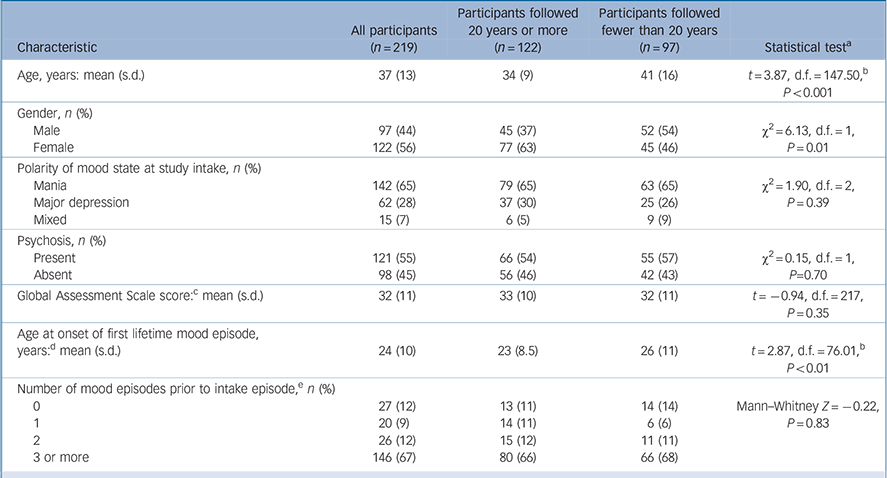
Table 1 displays the sociodemographic and clinical characteristics at study intake (online Table DS1 shows the complete results). The mean (s.d.) length of follow-up was 17.3 (7.9) years and the median was 20 years. Of the 219 participants, 196 (90%) were followed for at least 5 years, 169 (77%) for at least 10 years, 144 (66%) for at least 15 years, and 122 (56%) were followed for at least 20 years. Compared with participants followed for fewer than 20 years, those followed for 20 or more years were significantly younger both at study intake and at onset of bipolar I disorder (as expected); they were also significantly more likely to be female.
Sociodemographic and clinical characteristics at study intake for participants with bipolar I disorder (n = 219)
| Characteristic | All participants (n = 219) | Participants followed 20 years or more (n = 122) | Participants followed fewer than 20 years (n = 97) | Statistical testa |
|---|---|---|---|---|
| Age, years: mean (s.d.) | 37 (13) | 34 (9) | 41 (16) | t = 3.87, d.f. = 147.50,b P < 0.001 |
| Gender, n (%) | ||||
| Male | 97 (44) | 45 (37) | 52 (54) | χ2 = 6.13, d.f. = 1, P = 0.01 |
| Female | 122 (56) | 77 (63) | 45 (46) | |
| Polarity of mood state at study intake, n (%) | ||||
| Mania | 142 (65) | 79 (65) | 63 (65) | χ2 = 1.90, d.f. = 2, P = 0.39 |
| Major depression | 62 (28) | 37 (30) | 25 (26) | |
| Mixed | 15 (7) | 6 (5) | 9 (9) | |
| Psychosis, n (%) | ||||
| Present | 121 (55) | 66 (54) | 55 (57) | χ2 = 0.15, d.f. = 1, P=0.70 |
| Absent | 98 (45) | 56 (46) | 42 (43) | |
| Global Assessment Scale score:c mean (s.d.) | 32 (11) | 33 (10) | 32 (11) | t = -0.94, d.f. = 217, P = 0.35 |
| Age at onset of first lifetime mood episode, years:d mean (s.d.) | 24 (10) | 23 (8.5) | 26 (11) | t = 2.87, d.f. = 76.01,b P < 0.01 |
| Number of mood episodes prior to intake episode,e n (%) | ||||
| 0 | 27 (12) | 13 (11) | 14 (14) | Mann—Whitney Z = -0.22, P = 0.83 |
| 1 | 20 (9) | 14 (11) | 6 (6) | |
| 2 | 26 (12) | 15 (12) | 11 (11) | |
| 3 or more | 146 (67) | 80 (66) | 66 (68) |
Number of mood episodes
A total of 1208 recurrent mood episodes were prospectively observed. The median number of mood episodes observed per participant was 4 (range 1–21). The mean (s.d.) number of episodes per participant was 5.5 (4.6). The mean (s.d.) number of observed episodes per participant per year of follow-up was 0.4 (0.3).
Typology
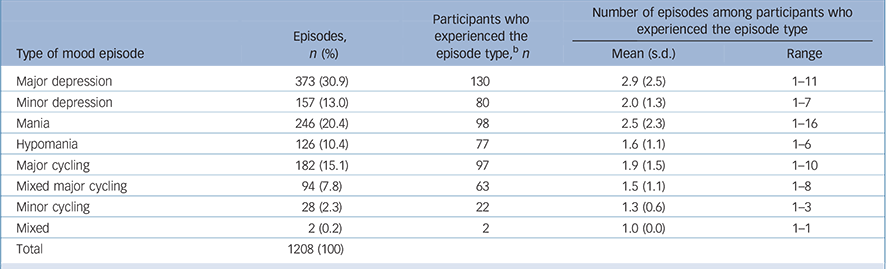
Table 2 shows the frequency of each type of mood episode observed during follow-up. Major depression was most common.
Typology of mood episodes observed in 219 participants with bipolar I disordera
| Number of episodes among participants who experienced the episode type | ||||
|---|---|---|---|---|
| Type of mood episode | Episodes, n (%) | Participants who experienced the episode type,b n | Mean (s.d.) | Range |
| Major depression | 373 (30.9) | 130 | 2.9 (2.5) | 1-11 |
| Minor depression | 157 (13.0) | 80 | 2.0 (1.3) | 1-7 |
| Mania | 246 (20.4) | 98 | 2.5 (2.3) | 1-16 |
| Hypomania | 126 (10.4) | 77 | 1.6 (1.1) | 1-6 |
| Major cycling | 182 (15.1) | 97 | 1.9 (1.5) | 1-10 |
| Mixed major cycling | 94 (7.8) | 63 | 1.5 (1.1) | 1-8 |
| Minor cycling | 28 (2.3) | 22 | 1.3 (0.6) | 1-3 |
| Mixed | 2 (0.2) | 2 | 1.0 (0.0) | 1-1 |
| Total | 1208 (100) | |||
Episodes consisting of a single pole of psychopathology (major depression, minor depression, mania, or hypomania) comprised 902 (75%) of the mood episodes. Of these 902 episodes, 578 occurred in female participants (n = 122), and consisted of 336 (58%) depressive episodes (major or minor depression) and 242 (42%) mood-elevated episodes (mania or hypomania). The 324 remaining episodes that occurred in male participants (n = 97) and consisted of 194 (60%) depressive episodes and 130 (40%) mood-elevated episodes. A mixed-effects logistic regression model (which accounted for the correlation among multiple, within-participant mood episodes) showed that gender was not significantly associated with the polarity of episode (depressive v. mood elevated; odds ratio (OR) = 0.76, 95% CI 0.37–1.58, Z = −0.73, P = 0.46).
Mixed states occurred as part of mixed major cycling episodes, which comprised 8% (n = 94) of the mood episodes. In addition, only two mixed episodes (major depression or minor depression concurrent with mania or hypomania throughout the entire episode, with at least one major pole) were observed.
There were 151 mood episodes prospectively observed in the subgroup with a diagnosis of schizoaffective disorder, mainly affective subtype, and 1057 observed in the subgroup with bipolar I disorder. The typologies of the two subgroups were similar.
Cycling mood episodes
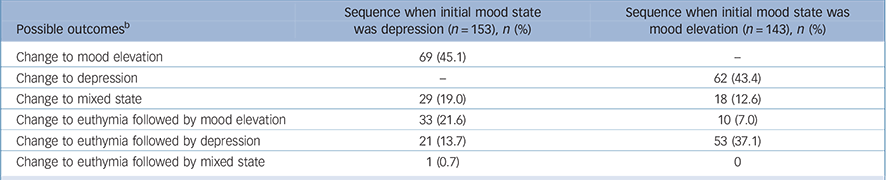
Table 3 shows the sequence of component mood states for 296 cycling episodes (major cycling, mixed major cycling, or minor cycling). In the 153 cycling episodes that began with depression (either major depression or minor depression), the depressive state was followed by an immediate switch to mood elevation or a mixed state in 64% of the episodes. In the 143 cycling episodes that began with mood elevation (either mania or hypomania), the elevated state was followed by an immediate switch to depression or a mixed state in 56% of the episodes.
Sequence of component mood states for 296 cycling episodesa
| Possible outcomesb | Sequence when initial mood state was depression (n = 153), n (%) | Sequence when initial mood state was mood elevation (n = 143), n (%) |
|---|---|---|
| Change to mood elevation | 69 (45.1) | — |
| Change to depression | — | 62 (43.4) |
| Change to mixed state | 29 (19.0) | 18 (12.6) |
| Change to euthymia followed by mood elevation | 33 (21.6) | 10 (7.0) |
| Change to euthymia followed by depression | 21 (13.7) | 53 (37.1) |
| Change to euthymia followed by mixed state | 1 (0.7) | 0 |
Change of mood episodes over time
Online Table DS2 displays the typology of the mood episodes that occurred from 1978 to 1991 and from 1992 to 2006. A mixed-effects logistic regression model showed that mood episodes from 1978 to 1991 were 37% less likely to be an episode of major depression, compared with mood episodes that occurred from 1992 to 2006 (OR = 0.63, 95% CI 0.44–0.90, Z = −2.55, P = 0.01).
Treatment
We examined the somatic therapy received during mood episodes. Of the 1208 mood episodes, 85% (n = 1026) were treated with a mood stabiliser and/or an antidepressant for at least 1 week during prospective follow-up.
Online Table DS3 displays in greater detail the treatment that occurred. Of the 843 mood episodes selected for analysis, many were not treated with a mood stabiliser, including 40% (131/326) of the major depressive episodes, 39% (57/145) of the minor depressive episodes, 12% (30/246) of the manic episodes, and 24% (30/126) of the hypomanic episodes. Of the depressive (major or minor) episodes selected for analysis, 28% (134/471) were treated with an antidepressant in the absence of a mood stabiliser.
Discussion
Number of mood episodes
The number of observed mood episodes (n = 1208) was conditioned by the method of the study, which set a relatively high threshold for recovery from a mood episode. Furthermore, alternating syndromes of depression and mood elevation with no intervening period of recovery were counted as a single cycling episode, rather than as multiple, separate mood episodes. Participants were not recruited from bipolar disorder specialty clinics, which may draw upon patients that are more resistant to maintenance treatment and more vulnerable to recurrences.
Cycling and implications for nosology
The term ‘cycling’ was originally used in the literature to indicate a switch from a mood syndrome of one polarity to a syndrome of the opposite polarity (e.g. major depression to mania), in the absence of an intervening period of recovery. Reference Maj, Pirozzi, Magliano and Bartoli14,Reference Koukopoulos, Sani, Koukopoulos, Albert, Girardi and Tatarelli24 ICD–10 4 makes no reference to this phenomenon and does not use the term cycling. DSM–IV 5 does not recognise this phenomenon either, but it does include the specifier ‘rapid cycling’, which represents something altogether different: rapid cycling is applied when four or more mood episodes occur in a 12-month period.
In the absence of a category for mood episodes that consist of alternating syndromes of depression and mood elevation with no intervening period of recovery, the current convention is that each alternating mood syndrome is simply classified as a separate mood episode. This occurs regardless of how little time, if any, elapses between the end of one syndrome and the onset of the next. A recent review paper, however, takes the position that cycling or switching is an important phenomenon that should be monitored in clinical trials, Reference Martinez-Aran, Vieta, Chengappa, Gershon, Mullen and Paulsson25 and for good reason. Prior research has found that cycling episodes occur frequently, Reference Angst15,Reference Kukopulos, Reginaldi, Laddomada, Floris, Serra and Tondo18,Reference Roy-Byrne, Post, Uhde, Porcu and Davis19,Reference Kraepelin, Barclay and Robertson22: p.133 consistent with the present study, which found that cycling episodes comprised 25% of the observed mood episodes. In addition, cycling episodes are associated with poorer outcomes compared with episodes of pure major depression or pure mania, including significantly more hospital admissions, Reference Maj, Pirozzi, Magliano and Bartoli14 a significantly longer time to recovery from mood episodes, Reference Keller, Lavori, Coryell, Andreasen, Endicott and Clayton13,Reference Maj, Pirozzi, Magliano and Bartoli14,Reference Keller, Lavori, Coryell, Endicott and Mueller16,Reference Solomon, Leon, Coryell, Endicott, Li and Fiedorowicz26 a significantly shorter time to recurrence, Reference Keller, Lavori, Coryell, Endicott and Mueller16 and significantly worse psychosocial functioning. Reference Maj, Pirozzi, Magliano and Bartoli14,Reference Turvey, Coryell, Solomon, Leon, Endicott and Keller17 Work groups revising ICD–10 4 and DSM–IV 5 should formally recognise cycling episodes, which hopefully will lead to further study of the phenomenon, as there may be specific pathophysiological processes that cause a cycling mood episode, Reference Bunney, Goodwin, Murphy, House and Gordon27 cycling may be associated with certain aspects of bipolar I disorder such as suicide, and it may be possible to develop specific treatments for cycling mood episodes.
Minor depression and implications for nosology
Although ICD–10 4 recognises episodes of bipolar I minor depression, DSM–IV 5 does not. Yet we found that minor depression comprised 13% of all observed mood episodes, consistent with other studies that have described bipolar I minor depression. Reference Angst15,Reference Kukopulos, Reginaldi, Laddomada, Floris, Serra and Tondo18,Reference Suppes, Mintz, McElroy, Altshuler, Kupka and Frye28 The lack of recognition of bipolar I minor depression in DSM–IV 5 is an oversight that should be corrected in DSM–V.
Typology and earlier studies
To provide some context for the typology presented above, it is useful to compare the results with previous studies. Kraepelin Reference Kraepelin, Barclay and Robertson22 reported that among a series of 899 cases, ‘48.9% presented states of depression only, 16.6% manic attacks only, and 34.5% a combination of manic and depressive morbid phenomena, sometimes one after the other sometimes alongside each other’ (p. 133). By comparison, the results above (Table 2) were such that of the 1208 mood episodes observed, 43.9% (n = 530) were depressive episodes, 30.8% (n = 372) were mood-elevated episodes, and 25.3% (n = 306) were cycling or mixed episodes. The two sets of results were comparable, particularly with regard to depression, despite a difference of nearly 100 years separating the two studies.
In comparing these percentages, it should be noted that Kraepelin's Reference Kraepelin, Barclay and Robertson22 melancholia gravis and simplex are not entirely synonymous with Research Diagnostic Criteria major and minor depression (pp. 75–85). Melancholia gravis is comparable to major depression with psychotic features, and melancholia simplex overlaps with major depression without psychotic features. However, major depression without psychotic features includes episodes with less severe or intense psychopathology that do not rise to the level of melancholia simplex, and the category of minor depression did not merit attention in Kraepelin's list of depressive states.
More recently, Angst Reference Angst15 observed 1164 mood episodes from 1959 to 1975 in people with bipolar disorder prospectively assessed every 5 years. He categorised mood episodes as major (major depression or mania) if they required hospital admission, and as minor (minor depression or hypomania) if they did not. Major depression constituted 24% of the episodes, minor depression 28%, mania 17%, hypomania 5%, and mixed or cycling episodes 27%. Although these results were in some respects quite similar to those of the present study, the proportion of episodes classified as minor depression was 13% in the present study and 28% in Angst's study. This difference is not surprising, given the different definitions of minor depression that were used in the two studies.
Mood episodes and mood symptoms
The results regarding the typology of mood episodes complement findings from a previous Collaborative Depression Study report Reference Judd, Akiskal, Schettler, Endicott, Maser and Solomon29 that focused on weekly symptoms. In the present study, episodes of depression constituted nearly 44% of the observed episodes and were more frequent than other types of episodes. In the prior study, Reference Judd, Akiskal, Schettler, Endicott, Maser and Solomon29 the most prevalent psychopathology was depression, which accounted for approximately 64% of all weeks that individuals were symptomatic. These different percentages highlight the relationship between episode frequency and length. In addition, it is important to bear in mind that in the prior study, a shift in symptom polarity (from depression to mood elevation or vice versa) occurred a mean (s.d.) of 3.5 (7.4) times per year. Thus, some of the ‘depressed’ weeks observed in the prior study were part of the cycling mood episodes observed in the present study, rather than the major or minor depressive episodes.
Mixed states and episodes
Mixed states of concurrent depression and mood elevation occurred as part of mixed major cycling episodes, which comprised 8% (n = 94) of the mood episodes. In addition, there were only two mixed episodes (depression concurrent with mood elevation throughout the entire episode, from onset of the episode to its end). Relative to some prior studies, mixed states in our study were scarce, and mixed episodes were exceedingly rare. These results are clearly a function of how mixed states and mixed episodes were defined in the present study. A review of 17 previous studies found that among all mood episodes, the prevalence of mixed mania or hypomania ranged from 5 to 70%. Reference McElroy, Keck, Pope, Hudson, Faedda and Swann30 One study found that clinically significant (two or more) depressive symptoms occurred in 94% of patients meeting criteria for mania or hypomania, and clinically significant manic symptoms occurred in 70% of patients meeting criteria for major depression. Reference Bauer, Simon, Ludman and Unützer31
Some previous studies may have used the term ‘mixed’ to refer to the same phenomenon – alternating periods of depression and mood elevation with no intervening period of recovery – which the present study designated as ‘cycling’. We prefer this term because its use is well established and extends as far back as 1845. Reference Maj, Pirozzi, Magliano and Bartoli14,Reference Koukopoulos, Sani, Koukopoulos, Albert, Girardi and Tatarelli24 This issue may contribute to the ongoing controversy concerning the diagnosis of mixed episodes. Reference Ghaemi32
Limitations
One limitation is that the proposed construct of bipolar I cycling episode requires a prospectively designed psychometric evaluation, in which rigorous structured diagnostic interviews are regularly administered, and the interviews provide the information necessary to ascertain whether or not criteria for a wide range of diagnoses are fulfilled. Another limitation is the absence of participants with bipolar II disorder. In addition, participants were recruited at varying points in their course of illness, with some enrolled close to onset of bipolar I disorder, and others further removed from onset. Also, the time that elapsed between assessments (initially 6 months and subsequently 12 months) may have introduced recall bias and limited the accuracy of the results.
The sample was quite ill at study intake, such that 89% of the participants were in-patients of academic medical centres and 55% had psychosis, which may limit the generalisability of the findings. Yet another limitation is that treatment was not controlled and may not have been optimal. The present longitudinal study is also limited by attrition, which could have biased some of the findings.
Finally, additional work is required to examine the course of illness across each of the eight mood episode types. This includes examining length of mood episodes and the rate of recurrence.
Funding
Funding for this study was provided by US National Institute of Mental Health grant MH25478-29.
Acknowledgements
This manuscript has been reviewed by the Publication Committee of the Collaborative Depression Study and has its endorsement. The data for this manuscript came from the National Institute of Mental Health (NIMH) Collaborative Program on the Psychobiology of Depression – Clinical Studies. The Collaborative Program was initiated in 1975 to investigate nosologic, genetic, family, prognostic, and psychosocial issues of mood disorders, and is an ongoing, long-term multidisciplinary investigation of the course of mood and related affective disorders. The original principal and co-principal investigators were from five academic centers and included: Gerald Klerman, MD (deceased; Co-Chairperson); Martin Keller, MD; Robert Shapiro, MD (deceased), Massachusetts General Hospital, Harvard Medical School; Eli Robbins, MD (deceased), Paula Clayton, MD, Theodore Reich, MD (deceased), Amos Wellner, MD (deceased), Washington University Medical School; Jean Endicott, PhD, Robert Spitzer, MD, (Columbia University); Nancy Andreasen, MD, PhD, William Coryell, MD, George Winokur, MD (deceased), University of Iowa; and Jan Fawcett, MD, William Scheftner, MD, Rush-Presbyterian-St. Luke's Medical Center. The NIMH Clinical Research Branch was an active collaborator in the origin and development of the Collaborative Program with Martin M. Katz, Branch Chief as the Co-Chairperson and Robert Hirschfeld as the Program Coordinator. Other past collaborators include J. Croughan, MD, M.T. Shea, PhD, R. Gibbons, PhD, M.A. Young, PhD, and D.C. Clark, PhD.
This study was conducted with the current participation of the following investigators: M.B.K. (Chairperson), W.H.C. (Co-Chairperson), D.A.S., W. Scheftner, MD (Chicago, Illinois), J.E., A.C.L. and J. Loth, MSW (New York), and J. Rice, PhD (St. Louis, Missouri).




eLetters
No eLetters have been published for this article.