


Figure 1.

Figure 2.

Figure 3.

Figure 4.

Figure 5.

Figure 6.

Figure 7.

Figure 8.

Figure 9.

Published online by Cambridge University Press: 08 July 2026
Public humanities often require an expert in one area to learn another field or skill on-the-fly or to collaborate effectively across boundaries of specialization. Fear of the unknown combines with taken-for-granted assumptions about standard forms of humanities work to prevent our pursuit of promising public humanities projects and careers. Even veteran scholars with expertise important to public life shrink when going outside the comfort zone of academia to engage with audiences via new formats and professional pathways. A recognition of this need to upskill has emerged from a recent surge of research on public humanities in practice. This comic introduces The How-To Issue of Public Humanities, which provides instruction manuals for doing public humanities, meeting people where they are via media, formats, and professions that require conceptual understanding of what these new platforms offer and technical training in the nuts-and-bolts of these spaces. The piece identifies four pillars of public humanities (upskilling, teaming, universal design, and authority sharing), maps the phases of a public humanities project (dream, plan, create, improve), provides a toolkit of key concepts and strategies for the field, includes a directory of examples and instruction manuals, and provides guidance for sustainability and evaluation in public humanities.


Figure 1.
Figure 2.
Figure 3.
Figure 4.
Figure 5.
Figure 6.
Figure 7.
Figure 8.
Figure 9.

Figure 1.
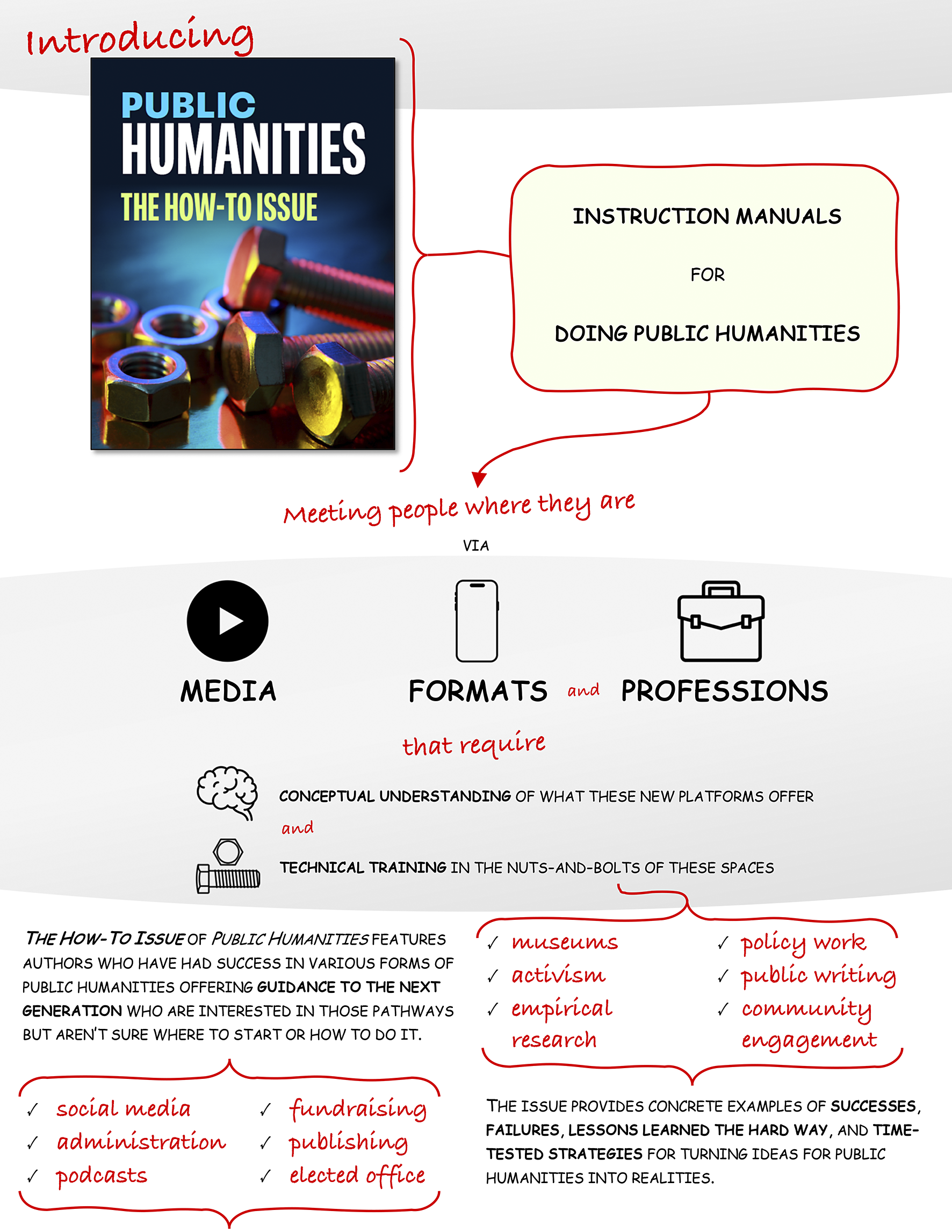
Figure 2.
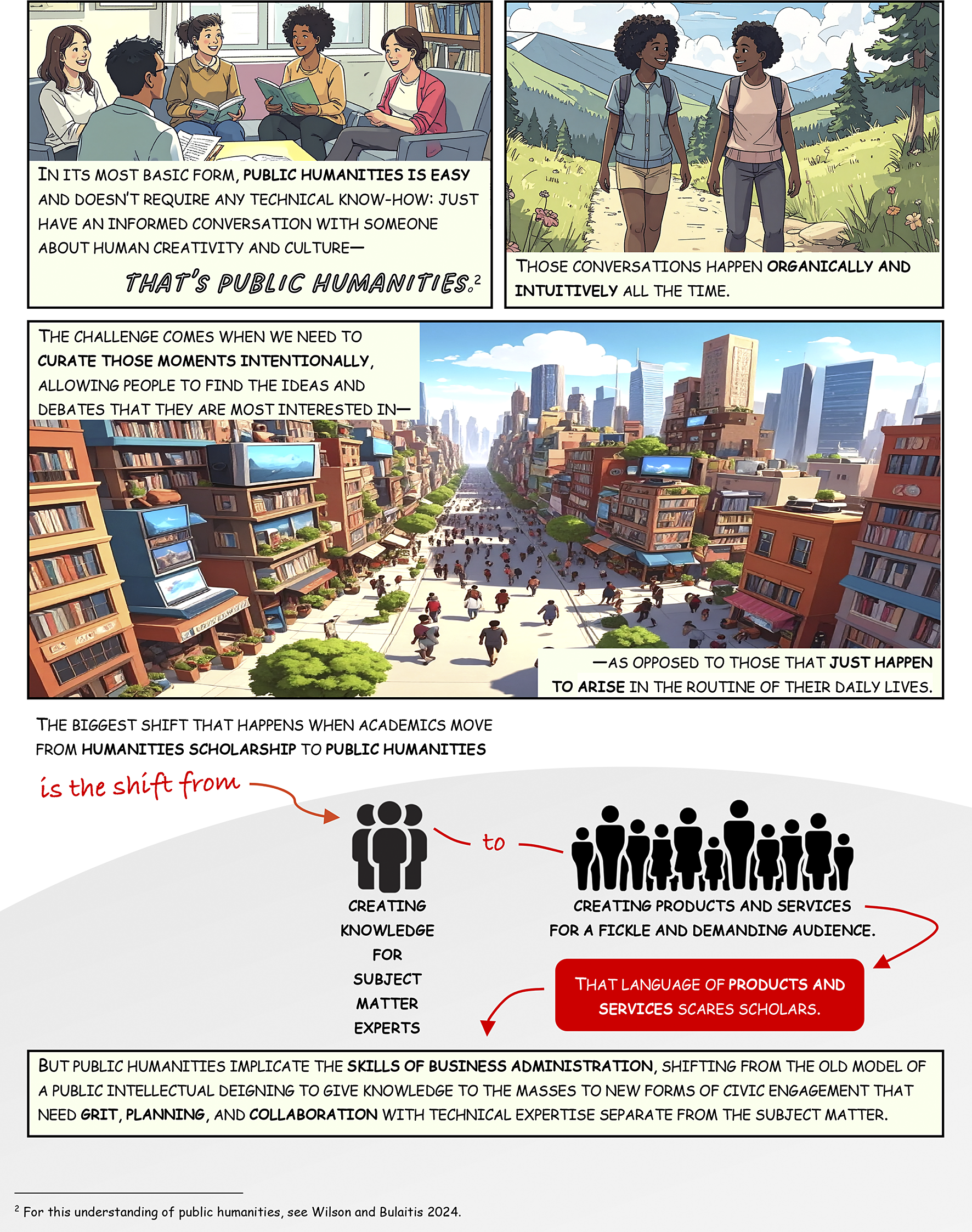
Figure 3.
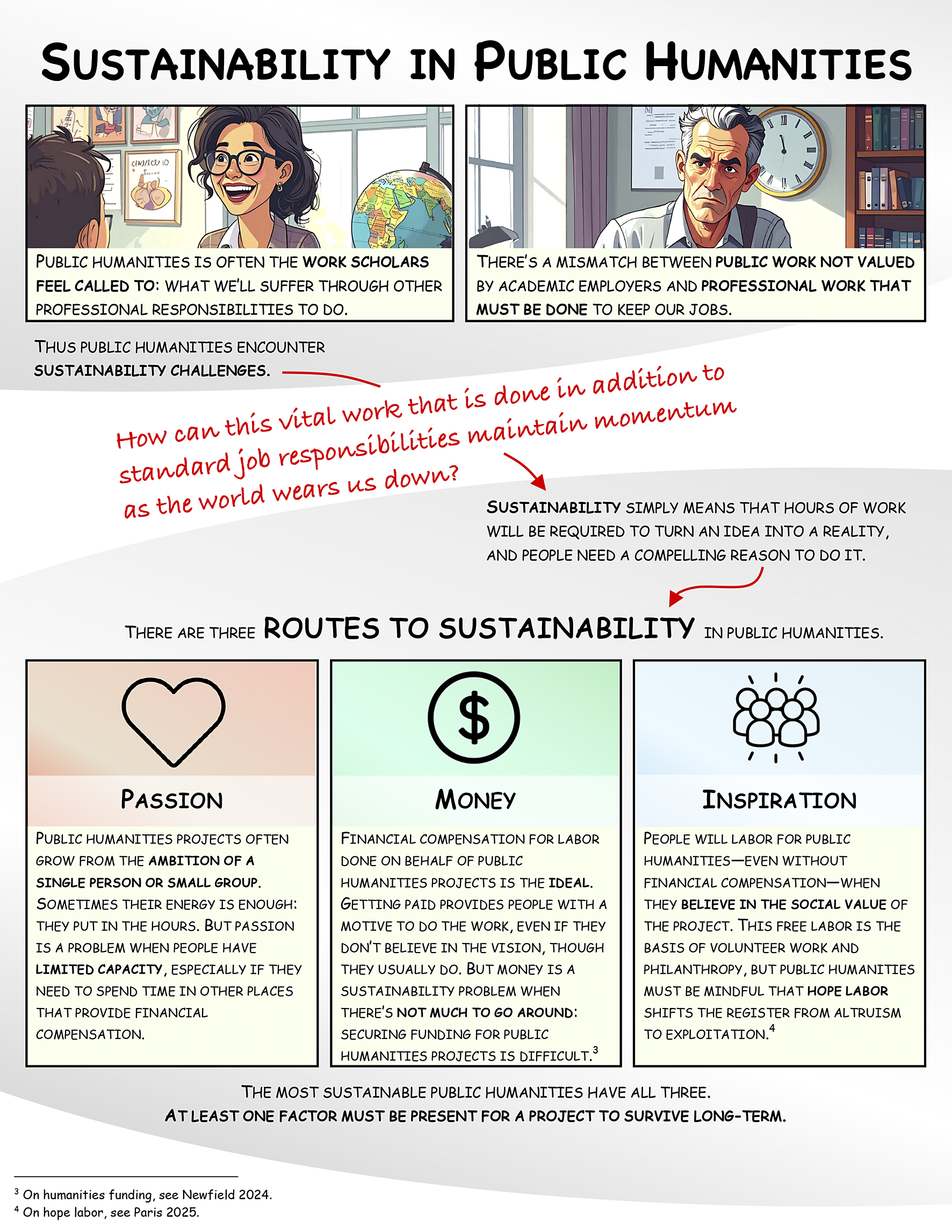
Figure 4.

Figure 5.
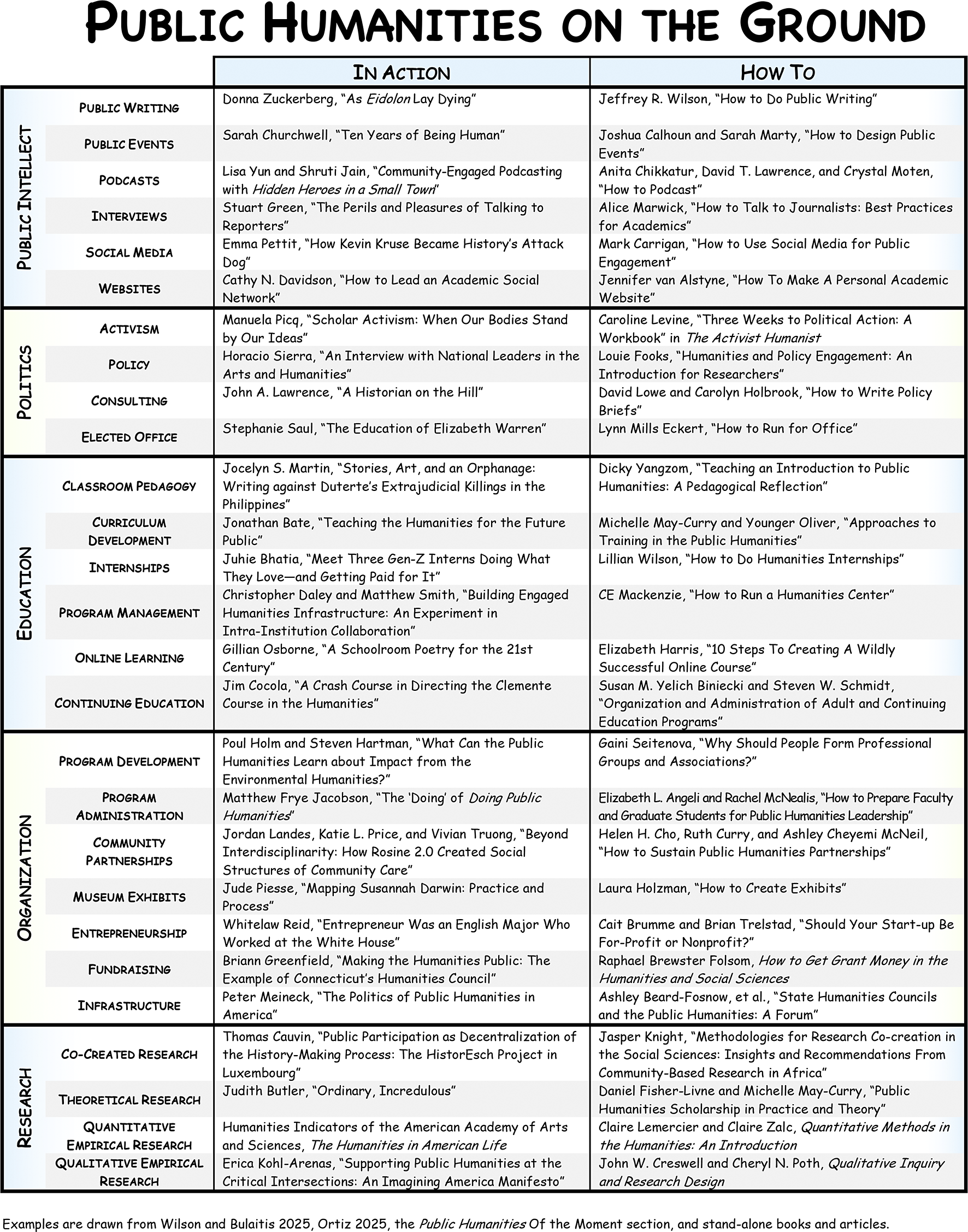
Figure 6.
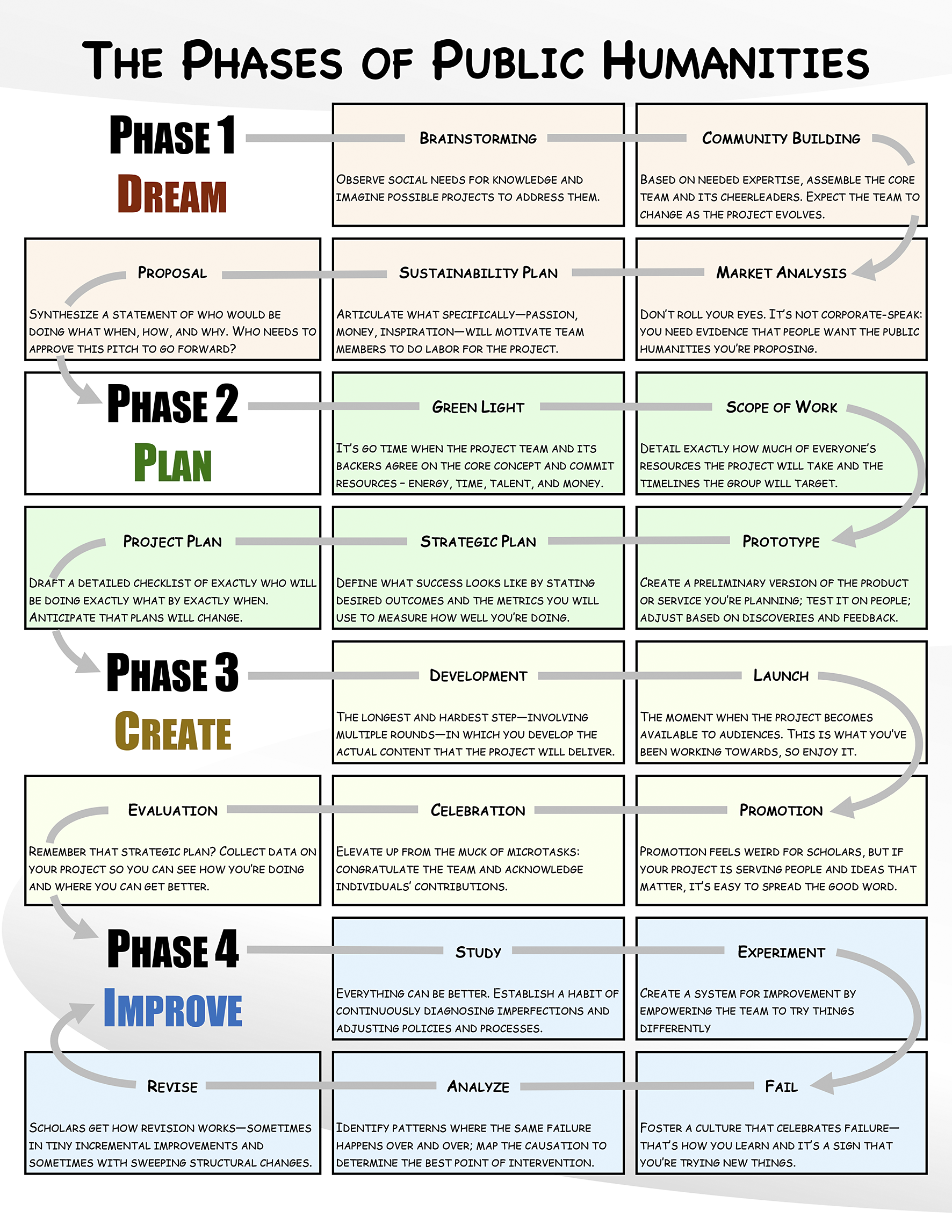
Figure 7.
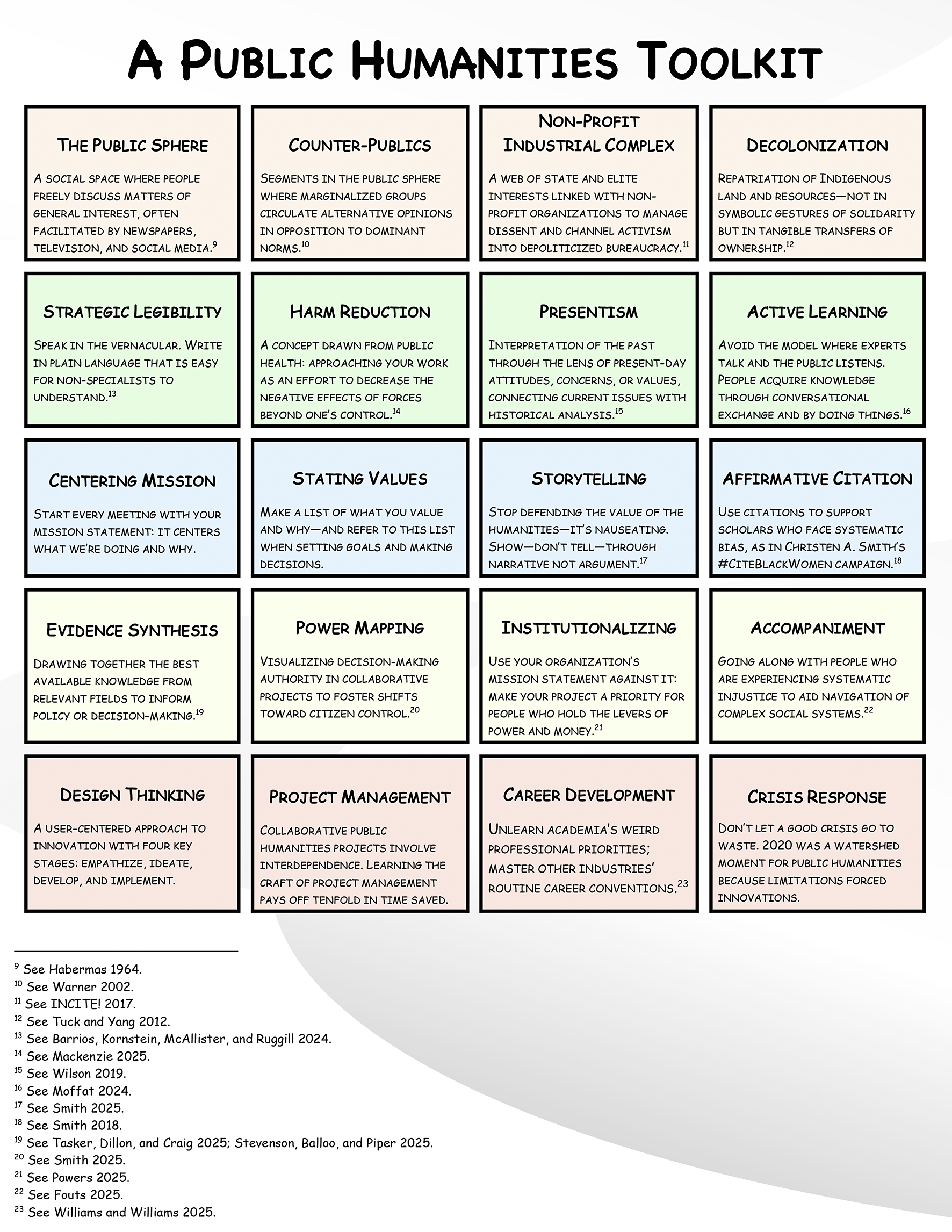
Figure 8.

Figure 9.
 You have
Access
You have
Access
 Open access

