


Depressive disorders are a serious public health concern in the low- and middle-income countries, predicted to become the most common cause of disability by the year 2020 (Reference Murray and LopezMurray & Lopez, 1996). The prevalence of depressive disorders appears to be particularly high in Pakistan, especially among women, where several studies have shown the close association of depression with socio-economic adversity, relationship problems and lack of social support (Reference Mirza and JenkinsMirza & Jenkins, 2004). The studies to date have been limited to a small number of towns and villages mainly in the Punjab. No study appears to have been performed in the federally administered tribal areas bordering the North West Frontier Province (NWFP) of Pakistan, which for 20 years has been host to Afghan refugees. This conflict has adversely affected the local people, who have lacked the economic and political means to provide sufficient healthcare and humanitarian aid.
Our study aimed to establish the prevalence of depression and its associations with socio-economic conditions in a population-based sample in the tribal areas. We also aimed to establish whether depressive symptoms are associated with functional disability in this population. We predicted that the level of depressive symptoms in the tribal areas would be higher than that in other areas of Pakistan, that this high prevalence would be evident in men as well as women, and that people with depression would report more social difficulties, lower levels of social support and higher levels of disability than non-depressed people in the same population. We also tested the hypothesis that numerous social problems and lack of social support score mediate the relationship between demographic variables and SRQ score.
METHOD
Study design and setting
Our study was population-based and used previously validated instruments. We conducted a house-to-house survey of a geographically designated area in the village of Thooth Dhand, in Tehsil Bara, in one of the seven tribal agencies of Pakistan known as the federally administered tribal areas. The village is approximately 25 km from Peshawar. The adult population (age 16 years or more) is about 700, of whom about 680 were in residence at the time of the study in 2003.
The tribal areas have their own laws and do not participate in the national census. The terrain is semi-hilly in character, with the majority of men involved in subsistence farming. The community is predominantly poor, although there are a few small local business ventures and from about 15 households men have gone to the Persian Gulf to work mainly as drivers or labourers. The houses are built of mud bricks. Although electricity reached the village in 1999 few households can afford the electric connection; there is no telephone landline and water is drawn from wells (access to safe drinking water in NWFP rural areas is 5%). There are no proper roads. People use public transport, which is available on a road 3 km from the village. There is no proper market and people go to the main Bara bazaar, 15 km away, to shop. There is no post office or bank and the health facilities consist of a ‘basic health unit’, staffed by a dispenser and a gatekeeper. The dispenser is the main person responsible for immunisation of the pregnant women, newborn and older children. The village has two schools; the literacy rate is low, especially in women.
This is a conservative society, with a ‘joint family’ system. There is a strong purdah tradition, so few women work outside the household and they cannot leave their homes unless accompanied by a husband, father, brother or son. All of these conditions are completely different from those in Punjab, where previous studies have been performed (Mumford et al, Reference Mumford, Saeed and Ahmad1997, Reference Mumford, Minhas and Akhtar2000; Reference Husain, Creed and TomensonHusain et al, 2000).
Community support for the project
We were able to conduct this survey because one of the authors (M.A.) was born and brought up in this village. The research team consisted of three research assistants: one woman (a schoolteacher) and two men (one a lawyer and the other a medical student). In order to gain support for the research and to obtain advice about interviewing local people, the research team met with the community representatives, the head of the local jirgah (community elders) and other notables, the local health worker, faith healers, imams from the mosques and schoolteachers. All supported the project, helped to publicise it and encourage participation.
Data collection
This was a population-based study of all the adults of the village of Thooth Dhand in the year 2003. The research assistants went from house to house, introduced the study, explained its objectives and implications, answered queries and dispelled any apprehensions. After obtaining verbal consent, the research assistants administered the questionnaires to each person aged 16 years and above. Some degree of privacy was attempted while administering the questionnaires, and participants were interviewed by a research assistant of the same gender. The research team visited many houses on more than one occasion (up to six visits) to complete the administration of the questionnaires. Villagers with an acute or chronic psychotic disorder, severe physical illness or showing evidence of cognitive impairment were excluded. An explanation of the project was read to each participant, who then gave verbal consent. Written consent was inappropriate because of the low literacy rate and the local apprehension about signing any papers (Reference Cardozo, Bilukha and CrawfordCardozo et al, 2004; Reference Scholte, Olff and VentevogelScholte et al, 2004). The Self Reporting Reporting Questionnaire is designed to be self-administered, but the research assistants read out the questions to all of the villagers and recorded the replies without giving any explanations. The study received ethical permission from the Institute of Psychiatry, the Rawalpindi Medical College Rawalpindi Ethical Committee and the Pakistan Institute of Learning and Living and also received the approval of the local jirgah.
Socio-demographic data
The variables age, years of education, employment status and family structure were recorded for each participant.
Instruments
All questionnaires used in the study were translated, back-translated and culturally adapted into Pushto, the local language, using a standardised protocol (Reference Rahman, Iqbal and WaheedRahman et al, 2003).
Self Reporting Questionnaire. Psychiatric symptoms were recorded using the World Health Organization's Self Reporting Questionnaire (SRQ–20) (Reference BeusenbergBeusenberg, 1994). This standardised screening instrument measures psychological and somatic symptoms in the past 30 days. It has been validated on a Pakistani population and found to have good psychometric properties (Reference Husain, Creed and TomensonHusain et al, 2000).
Multidimensional Scale of Perceived Social Support. Social support was measured using the Multidimensional Scale of Perceived Social Support (MSPSS; Reference Zimet, Powell and FarleyZimet et al, 1990). This 12-item scale measures the subjective assessment of social support adequacy across three specific sources: family, friends and significant others. Each item was scored on a ‘yes/no’ basis for simplicity.
Life Events Checklist. Social problems were ascertained using a list of 14 questions addressing categories based on those included in the Quebec Health Survey (Paykel et al, Reference Paykel, Prusoff and Uhlenhuth1971, Reference Paykel, Emms and Fletcher1980), identified in studies of illness and depression. A ‘yes/no’ format of response was used; results are displayed for each life event domain separately and a total score is also quoted in the results.
Brief Disability Questionnaire. Disability was assessed using the cross-culturally validated Brief Disability Questionnaire (BDQ; Reference Von Korff, Ustun and OrmelVon Korff et al, 1996), an eight-item questionnaire which includes seven items from the 36-item Short Form Health Survey (SF–36; Reference Ware and SherbourneWare & Sherbourne, 1992), asking respondents whether they had been limited in various everyday activities. The final question concerned the person's ability to do things that the family expected as part of their daily routine. The total score has a range from 0 (no disability) to 16 (high disability). One additional question asked whether the respondent stayed in bed all or most of the time because of illness or injury.
Statistical analysis
The data were analysed using the Statistical Package for the Social Sciences (SPSS) version 11.5 for Windows. Demographic and questionnaire data were compared between genders using the χ2-test, Fisher's exact test or t-tests, as appropriate. Pearson correlation coefficients were calculated between age, number of family members and questionnaire scores for men and women separately. Univariate analyses to determine factors related to total SRQ score were carried out using t-tests for dichotomous variables, analysis of variance for categorical variables with more than two categories, and Pearson correlations for continuous variables. Multiple regression analysis was carried out with total SRQ score as the dependent variable, and age, gender, educational level, unemployment and family history of mental illness as independent variables. Further multiple regression analyses with the additional independent variables ‘social problem’ score and ‘social support’ score were used to test the hypotheses that these factors mediated the relationship between any of the original independent variables and SRQ score.
RESULTS
The response rate was 98% for men and 64% for women; 491 people responded to the survey and the 92 refusals were mostly women whose husbands forbade the interview (Fig. 1). Complete demographic and questionnaire data were available for 471 individuals (313 men and 158 women). Twenty respondents were excluded because of missing data for age (n=2), the SRQ (n=2), social problems (n=11), social support (n=7) and/or the disability scale (n=11). The mean age was 33.6 years (s.d.=9.2) for men and 34.4 (s.d.=11.0) for women. Women were more likely to be illiterate and less likely to have received education beyond 10 years of schooling (Table 1).
Flow chart of recruitment of sample.

Characteristics of the sample

| Men (n=313) n (%) | Women (n=158) n (%) | χ2 | d.f. | P | |
|---|---|---|---|---|---|
| Marital status | |||||
| Single | 39 (12) | 8 (5) | 13.2 | 2 | 0.001 |
| Married | 269 (86) | 140 (89) | |||
| Widowed | 5 (2) | 10 (6) | |||
| Education | |||||
| Illiterate | 66 (21) | 83 (53) | 51.4 | 3 | <0.0005 |
| Primary school | 33 (11) | 7 (4) | |||
| Secondary school | 63 (20) | 28 (18) | |||
| > 10 years schooling | 151 (48) | 40 (25) | |||
| Employment status | |||||
| Employed | 265 (85) | 2 (1) | |||
| Unemployed | 15 (5) | 0 (0) | |||
| Housewife | 0 (0) | 148 (94) | |||
| Other | 33 (10) | 8 (5) | |||
| History of mental health difficulties | 87 (28) | 44 (28) | Fisher's exact test 1.0 | ||
| Family history of mental health difficulties | 110 (35) | 41 (26) | Fisher's exact test 0.047 | ||
| Consulted doctor or hakim in past 6 months | 71 (23) | 46 (29) | Fisher's exact test 0.14 | ||
Comparison of men and women
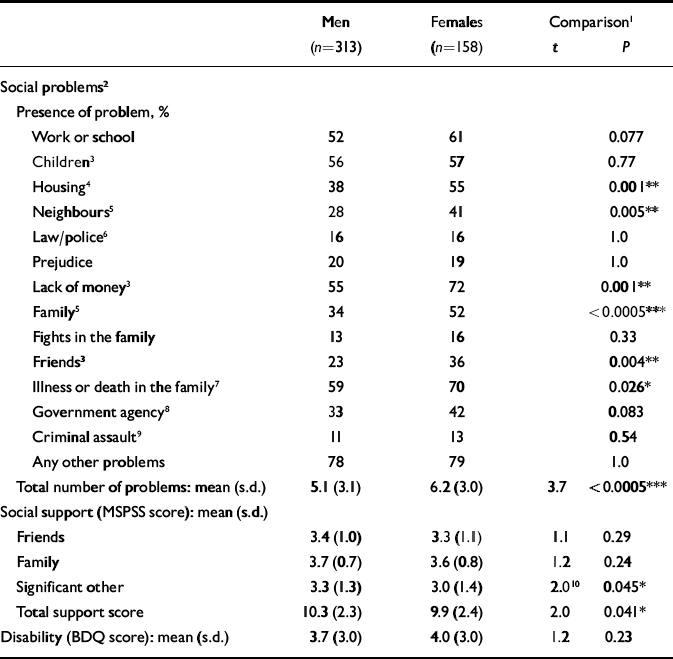
The mean SRQ score for men was 7.7 (s.d.=5.4) and for women it was 9.6 (s.d.=5.5); t=3.6, P<0.0005. Thirty-nine per cent (61/157) of women and 21% (65/309) of men reported suicidal ideas (P<0.001). A greater proportion of women than men reported social problems in six domains (housing, neighbours, lack of money, family, friends, and illness or deaths in the family) and women had a significantly higher mean total social problems score (Table 2). Men had a significantly higher mean total support score than women, explained by the fact that the ‘significant other’ sub-scale showed a significantly higher score for men compared with women. The other two sub-scales, ‘friends’ and ‘family’, did not show any significant difference between the genders (Table 2).
Social problems: gender analysis
| Men (n=313) | Females (n=158) | Comparison1 | ||
|---|---|---|---|---|
| t | P | |||
| Social problems2 | ||||
| Presence of problem, % | ||||
| Work or school | 52 | 61 | 0.077 | |
| Children3 | 56 | 57 | 0.77 | |
| Housing4 | 38 | 55 | 0.001** | |
| Neighbours5 | 28 | 41 | 0.005** | |
| Law/police6 | 16 | 16 | 1.0 | |
| Prejudice | 20 | 19 | 1.0 | |
| Lack of money3 | 55 | 72 | 0.001** | |
| Family5 | 34 | 52 | <0.0005*** | |
| Fights in the family | 13 | 16 | 0.33 | |
| Friends3 | 23 | 36 | 0.004** | |
| Illness or death in the family7 | 59 | 70 | 0.026* | |
| Government agency8 | 33 | 42 | 0.083 | |
| Criminal assault9 | 11 | 13 | 0.54 | |
| Any other problems | 78 | 79 | 1.0 | |
| Total number of problems: mean (s.d.) | 5.1 (3.1) | 6.2 (3.0) | 3.7 | <0.0005*** |
| Social support (MSPSS score): mean (s.d.) | ||||
| Friends | 3.4 (1.0) | 3.3 (1.1) | 1.1 | 0.29 |
| Family | 3.7 (0.7) | 3.6 (0.8) | 1.2 | 0.24 |
| Significant other | 3.3 (1.3) | 3.0 (1.4) | 2.010 | 0.045* |
| Total support score | 10.3 (2.3) | 9.9 (2.4) | 2.0 | 0.041* |
| Disability (BDQ score): mean (s.d.) | 3.7 (3.0) | 4.0 (3.0) | 1.2 | 0.23 |
There was no significant difference between men and women with respect to disability scores, but 45 of 158 women (28%) and 60 of 313 men (19%) had spent one or more days in bed because of illness or injury (P=0.026).
Relationship between total SRQ score and other variables
There was no significant difference in SRQ score according to marital status (P=0.89). There was a significant linear trend in total SRQ scores across the four education subgroups for men, with less well-educated men having higher SRQ scores (P=0.002), but this trend was not significant in women (P=0.89). The 15 unemployed men had a higher mean SRQ score than employed men: 11.9 (s.d.=4.6) v. 7.5 (s.d.=5.4); P=0.002. Those with a family history of mental illness had significantly higher mean SRQ scores than the rest of the sample: 9.5 (s.d.=5.4), n=151, compared with 7.8 (s.d.=5.5), n=320; t=3.1, P=0.002.
The 46 women who had consulted a doctor or faith healer in the past 6 months had a higher mean SRQ score than the remaining 112 women (12.4, s.d.=5.2 v. 8.5, s.d.=5.2; P<0.001), but in men the difference was not significant (8.2, s.d.=6.0, n=71 v. 7.6, s.d.=5.3, n=242; P=0.40).
Total SRQ score, number of social problems, social support and disability
The SRQ total score was significantly associated with total number of social problems (R=0.81, P<0.0005). It was significantly negatively correlated with social support score (i.e. lack of social support associated with higher SRQ score, R=–0.53, P<0.0005), and positively associated with disability score (R=0.60, P<0.0005).
Does the social problem score mediate the gender difference in SRQ score?
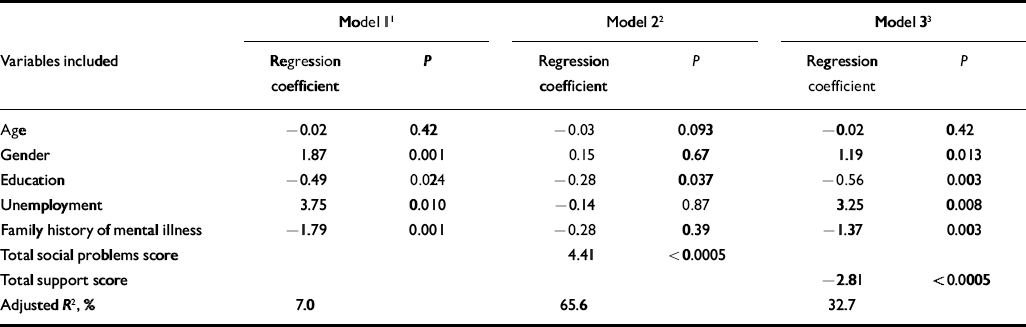
In the first multiple regression analysis (model 1, Table 3), female gender, little education, unemployment and having a family history of mental illness were all significantly associated with a raised SRQ score. The adjusted R 2 for this model was 7.0%. When total problem score was also included as an independent variable (model 2) it had a positive regression coefficient (b=4.41, β=0.80, P<0.0005), indicating that more problems were associated with higher SRQ score, and the adjusted R 2 value increased significantly to 65.6%. In this model, gender, unemployment and family history became non-significant, indicating that social problems mediate the relationship between these variables and SRQ. Number of years of education was still a significant predictor of SRQ, even when the other variables were accounted for.
Linear regression analyses with the Self Rating Questionnaire total score as the dependent variable: standardised regression coefficients and significance are shown for each final model
| Model 11 | Model 22 | Model 33 | ||||
|---|---|---|---|---|---|---|
| Variables included | Regression coefficient | P | Regression coefficient | P | Regression coefficient | P |
| Age | -0.02 | 0.42 | -0.03 | 0.093 | -0.02 | 0.42 |
| Gender | 1.87 | 0.001 | 0.15 | 0.67 | 1.19 | 0.013 |
| Education | -0.49 | 0.024 | -0.28 | 0.037 | -0.56 | 0.003 |
| Unemployment | 3.75 | 0.010 | -0.14 | 0.87 | 3.25 | 0.008 |
| Family history of mental illness | -1.79 | 0.001 | -0.28 | 0.39 | -1.37 | 0.003 |
| Total social problems score | 4.41 | <0.0005 | ||||
| Total support score | -2.81 | <0.0005 | ||||
| Adjusted R 2, % | 7.0 | 65.6 | 32.7 | |||
When support score was included instead of social problems score, this was also highly significant with a negative regression coefficient (b=–2.81, β=–0.51, P<0.001), showing that more support was associated with a lower SRQ score. However, in this analysis, the demographic variables (gender, years of education, unemployment and family history of mental illness) remained significant, indicating that the relationship between the demographic variables and high SRQ was not mediated by lack of support. The adjusted R 2 value was only 32.7%, indicating that the support score was not as good a predictor of SRQ as the problem score.
The results also suggest that a number of social problems mediate the relationship between unemployment in men, and family history of mental illness for both men and women, and SRQ scores. In contrast, social support is not a mediator for the relationship between unemployment or family history of mental health difficulties for either men or women.
DISCUSSION
Prevalence of depression
This is the first population-based study from the tribal areas of Pakistan; previous studies in Pakistan were primarily from Punjab (Mumford et al, Reference Mumford, Saeed and Ahmad1997, Reference Mumford, Minhas and Akhtar2000; Reference Husain, Creed and TomensonHusain et al, 2000), with one from the Hindu Kush (Reference Mumford, Nazir and JilaniMumford et al, 1996). Our first hypothesis was upheld, as we did find that the proportion of people with high levels of depressive symptoms was significantly greater than in the previous studies using the SRQ (Reference Mumford, Nazir and JilaniMumford et al, 1996; Reference Husain, Creed and TomensonHusain et al, 2000).
Although our findings are not directly comparable with studies in Afghanistan, it is of interest that in a neighbouring area of Afghanistan in 2003 high levels of depressive symptoms were reported by 16% of men and 58% of women (Reference Scholte, Olff and VentevogelScholte et al, 2004) whereas in a nationally representative sample of people in Afghanistan the figures were 73% for women and 59% for men, many of whom had experienced severe trauma (Cardozo et al, Reference Cardozo, Bilukha and Crawford2004, Reference Cardozo, Bilukham and Gotway2005). Taken together with the findings of the systematic review of prevalence studies in Pakistan (Reference Mirza and JenkinsMirza & Jenkins, 2004), this suggests that there is a high prevalence of depression in this region.
We compared our findings with those of our previous study in Mandra, a town near Rawalpindi (Reference Husain, Creed and TomensonHusain et al, 2000) and those of Mumford in Sustral, a rural village in Pakistan (Reference Mumford, Saeed and AhmadMumford et al, 1997). In Thooth Dhand 45% of men scored 9 or more on the SRQ, compared with 18% in the Mandra study (Fisher's exact test, P<0.001). Corresponding results for women were 60% in Thooth Dhand and 44% in Mandra (Fisher's exact test, P=0.006). In Thooth Dhand 41% of men and 56% of women scored 10 or more on the SRQ, compared with 12% of men and 45% of women in the Sustral study (Reference Mumford, Saeed and AhmadMumford et al, 1997). In Thooth Dhand 27% of the population reported suicidal thoughts on the SRQ (53% of those who scored 9 or over). In our previous survey in Mandra 5% reported suicidal ideas (12% of those who scored 9 or over).
Our multivariate analyses showed that the number of recent social problems was the strongest correlate of depressive symptoms. This accords with work from Afghanistan in which the number of recent traumatic life events was a close correlate of depressive symptoms. In Afghanistan, however, where exposure to events related to war are common, it was lack of food, water, shelter and basic medical care that were most frequently associated with depression (Reference Scholte, Olff and VentevogelScholte et al, 2004).
The prevalence of depressive symptoms was high in men, leading to a relatively similar prevalence figure for men and women. This was reported in the survey in Afghanistan and probably reflects the high rate of extremely harsh living conditions in these areas, which affects both men and women (Reference Cardozo, Bilukha and CrawfordCardozo et al, 2004). Life is undoubtedly hard in the North West Frontier Province, especially in winter (Reference GrimaGrima, 1992), but in addition for many years the conflicts in neighbouring Afghanistan have affected this region. The rate of depression in women was higher than that in men; this is similar to previous reports in many countries around the world.
We found that the variable fewer years of education was associated with depression even after the social problems score was entered into the regression equation (Table 3, model 2), indicating the importance of this correlate of depression in this population as in others (Mumford et al, Reference Mumford, Nazir and Jilani1996, Reference Mumford, Saeed and Ahmad1997; Reference Ali and AmanullahAli & Amanullah, 1998; Husain et al, Reference Husain, Creed and Tomenson2000, Reference Husain, Gater and Tomenson2004). Life may be particularly stressful for women in Pakistan because of their lack of control over their lives. In this respect our findings are similar to those from neighbouring Afghanistan, where the high rate of depression was attributed to the role of women in that society.
Strengths and weaknesses of the study
The response rate for men in this study was good, reflecting the acceptance of the study by the local population. The lower rate in women was a reflection of their role in this region; it is difficult for women to consent or for husbands to allow their wives to be involved in such a process. We were able to recruit 64% of local women, however, probably because one of the interviewers was a woman teacher from the local village school.
It is a weakness of the current study that we could not validate the SRQ in this population with a research interview, but we have no reason to think that there is likely to be much difference from other areas of Pakistan. Our comparisons with previous studies used the cut-off scores of 9+ and 10+, which are comparable with the cut-off levels used in many other studies using the SRQ (Reference BeusenbergBeusenberg, 1994).
Our measure of disability was subjective, allowing bias by depressed people who might view their impairments more pessimistically, but we did use a recognised measure that shows moderate to strong correlation with psychiatric status even after the effect of physical illness has been accounted for (Reference Ormel, Costa, Silva, Ustun and SartoriusOrmel et al, 1995). We did not have the resources to assess reliably the presence of physical illness in this population, but we excluded people with recognised severe physical illness.
The main problem with our data remains the fact that it is a cross-sectional survey using self-administered questionnaires, and we cannot confirm the anticipated causality of social stress leading to depressive symptoms and subsequent disability. This limitation reflects the extremely difficult circumstances in which these data were collected; a prospective cohort study would be desirable but is currently impossible to achieve. Even at this stage, however, there are two possible implications. First, it is unlikely that treatment for depression alone would be successful in this population unless it was accompanied by social help for the housing problems and poverty. Primary prevention of depression should be attempted. Community development to promote equity, social capital and basic infrastructure might lead to better mental health (Reference Bahar, Henderson and MackinnonBahar et al, 1992), especially if combined with secondary prevention to strengthen the recognition and treatment of depression in primary healthcare (Reference Chisholm, James and SekarChisholm et al, 2000). Primary prevention would also require educational initiatives to improve literacy and other skills, especially in women.
Acknowledgements
We thank the people of Thooth Dhand, the research assistants Ms Yasmin Gul, BEd, Mr Issa Khan Afridi, LLB, LLM, and Mr Haroon Rashid Afridi for data collection. The study was funded with a grant from the Pakistan Institute of Learning and Living.




eLetters
No eLetters have been published for this article.