




Introduction
Current models of interdisciplinary specialist palliative care focuses on supporting patients with advanced cancer who have complex problems in the last weeks of life (Hui and Bruera Reference Hui and Bruera2020). This model has 2 big problems: First, palliative care is delivered very late in the patient’s disease trajectory. Second, as the initiation of palliative care is triggered by uncontrolled symptoms typically in a time of crisis, patients and families are often in distress and end up being passive recipients of services (Block and Billings Reference Block and Billings2014). Models of palliative care ought to move beyond the current reactionary illness–stress paradigm to a proactive health-wellness approach that is integrated early in the patient’s serious illness trajectory (Wagner Reference Wagner1998; Wagner et al. Reference Wagner, Austin and Davis2001).
“Early palliative care” can be broadly defined as dedicated palliative care services that are delivered early in the disease course and concurrent with active treatment (Ferrell et al. Reference Ferrell, Temel and Temin2017). A proactive early palliative care telehealth model, ENABLE (Educate, Nurture, Advise, Before Life Ends), was developed in the U.S. to enhance the coping of patients with advanced cancers and their family caregivers (Bakitas et al. Reference Bakitas, Lyons and Hegel2009a, Reference Bakitas, Stevens and Ahles2004). Structured telephonic, psychoeducational sessions are conducted to separately coach patients and caregivers on how to cope effectively with serious illness via developing self-management skills, including problem-solving, decision-making, advance care planning, symptom management, self-care, communication, and life review (Bakitas et al. Reference Bakitas, Lyons and Hegel2009b, Reference Bakitas, Lyons and Hegel2009a, Reference Bakitas, Stevens and Ahles2004; Maloney et al. Reference Maloney, Lyons and Li2013). In the U.S., a series of randomized controlled trials of ENABLE showed better quality of life and better mood at 3–6 months for patients with advanced cancer and their caregivers, and longer median survival compared to usual care among patients (Bakitas et al. Reference Bakitas, Tosteson and Li2015; Dionne-Odom et al. Reference Dionne-Odom, Azuero and Lyons2015).
Although ENABLE has demonstrated effectiveness in the U.S., we do not know whether or not ENABLE would be effective when implemented in contexts that have different organizational, social, and cultural norms (Skivington et al. Reference Skivington, Matthews and Simpson2021). We culturally adapted ENABLE for the Singapore context through a qualitative formative evaluation (Akyar et al. Reference Akyar, Dionne-Odom and Yang2018; Yang et al. Reference Yang, Dionne-Odom and Foo2021). The aim of this study was to pilot the adapted ENABLE-SG model, conducted in English, in order to evaluate its feasibility and potential effectiveness.
Methods
This was a single-arm pilot trial of ENABLE-SG among patients with advanced solid tumors and caregivers of these patients, reported according to relevant items in the CONSORT 2010 statement: extension to randomized pilot and feasibility trials (Eldridge et al. Reference Eldridge, Chan and Campbell2016). Participants were recruited from the oncology and palliative care outpatient clinics of the National Cancer Centre Singapore (NCCS). NCCS is the largest provider of public cancer care in Singapore, with about 150,000 patient visits per year. Patient eligibility criteria included the following: patients (i) diagnosed with a stage IV solid tumor cancer; (ii) aged 21 years and over; and (iii) able to converse in English. Caregiver eligibility criteria included the following: (i) self-endorsing caring for a family member with stage IV solid tumor cancer; (ii) aged 21 years and over; and (iii) able to converse in English. Patients and family caregivers were not dyads. There was no limitation on the time since diagnosis. This study was approved by the SingHealth Centralised Institutional Review Board (Reference No. 2018/2905)
ENABLE-SG intervention
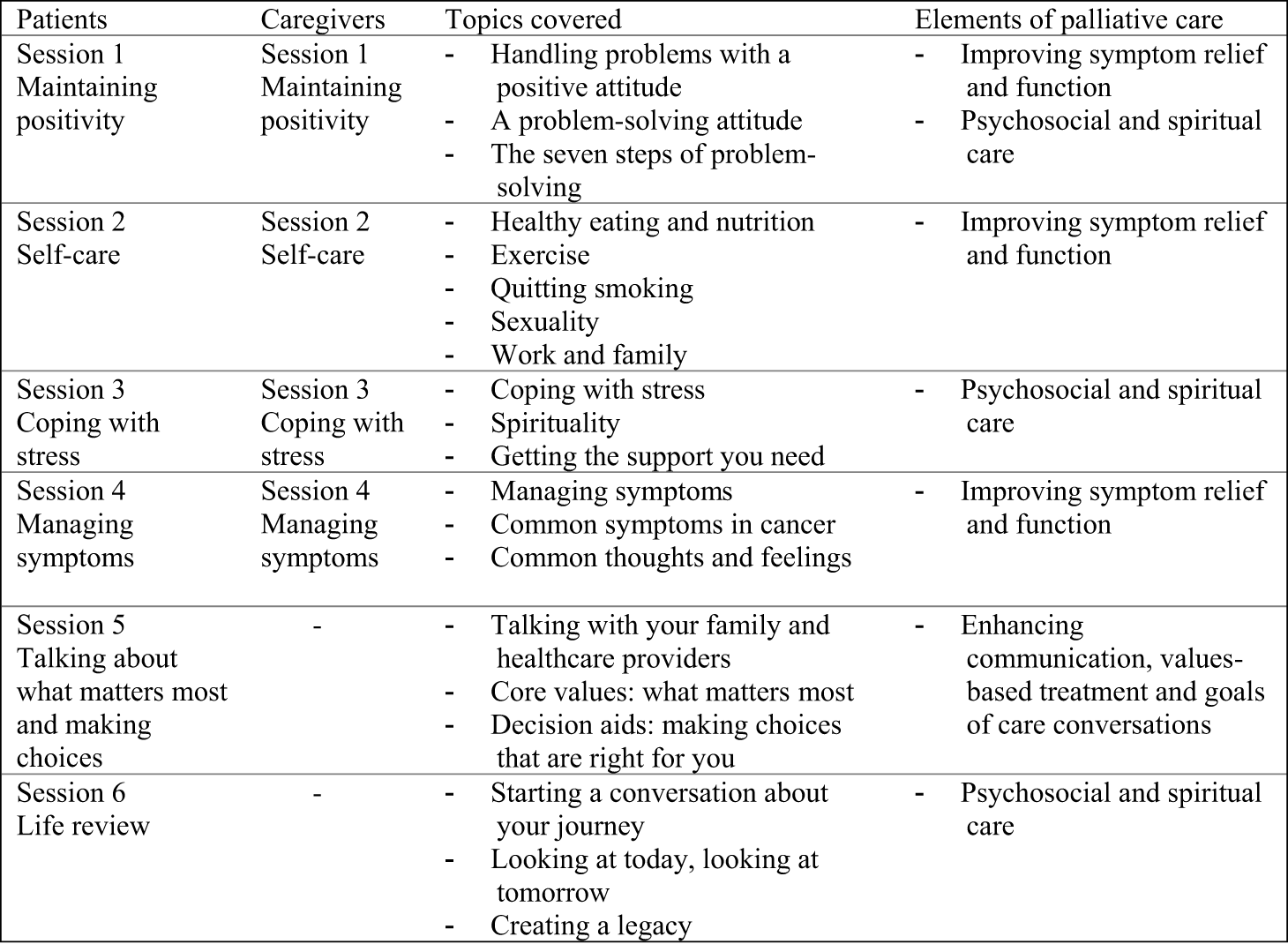
Enrolled participants participated in individual ENABLE-SG psychoeducational sessions conducted by a palliative care nurse in English. Patients had 6 sessions on the topics of maintaining positivity, self-care, coping with stress, managing symptoms, exploring what matters most and life review. Caregivers had 4 sessions on the topics of maintaining positivity, self-care, coping with stress and managing symptoms. The topics covered by the ENABLE-SG sessions are based on essential elements of palliative care (Figure 1). All sessions began with screening for distress using the distress thermometer and problem list. If the participant was distressed by a specific problem, the nurse may change the order of the session topics. The nurse aimed to conduct the sessions weekly; however, this was subject to availability of participants and whether they felt well enough to proceed with the session.
Topics and elements of palliative care covered by ENABLE-SG sessions.

Study procedures
Written informed consent was obtained from all participants. Research coordinators administered patient-reported outcome measures by telephone at baseline, 4, 8, and 12 months. Demographic and clinical data were extracted from the electronic health records.
Study outcomes
For patients, quality of life was measured using the 46-item Functional Assessment of Chronic Illness Therapy – Palliative Care (FACIT-Pal), comprising physical, emotional, social, functional well-being and additional concerns subscales; score range 0–184, where higher scores indicate better quality of life. Mood was assessed by the 20-item Center for Epidemiologic Studies – Depression scale (CES-D); score range 0–60, where higher scores indicate greater depressed mood and a cut-off score of 18–22 could be used to identify patients at risk of being depressed (Dozeman et al. Reference Dozeman, van Schaik and van Marwijk2011; Zhang et al. Reference Zhang, Ting and Lam2015).
For caregivers, quality of life was measured using the locally developed 15-item version of the Singapore Caregiver Quality of Life Scale, comprising physical, mental, experience and meaning, daily life and financial subscales; score range 0–100, where higher scores indicate better quality of life (Cheung et al. Reference Cheung, Neo and Teo2019, Reference Cheung, Neo and Yang2020).
Data analysis
Feasibility of the adapted ENABLE-SG model was measured by the percentage of those eligible who agreed to participate and the percentage of enrolled participants who completed all sessions. A completion rate of 80% and above was considered as evidence for feasibility. Feasibility was considered separately for patients and caregivers. We planned to recruit 30 patients and 30 caregivers for this pilot study. Assuming that the true completion rate was 80%, then a sample size of 30 would give a precision level (width of 95% confidence interval) of about ±15%. Descriptive statistics in the form of frequencies and percentages were computed and tabulated; paired t-test was used to compare outcomes at baseline versus 4, 8, and 12 months after enrolment. All analyses were done using the R statistical package version 4.2.3.
Results
We enrolled 43 patients and 15 caregivers over a 10-month period from August 2021 to June 2022. There were challenges in recruiting caregivers due to COVID-19-related restrictions which meant that many patients attending outpatient clinics were unaccompanied by family caregivers. The available resources were therefore used to recruit more patients.
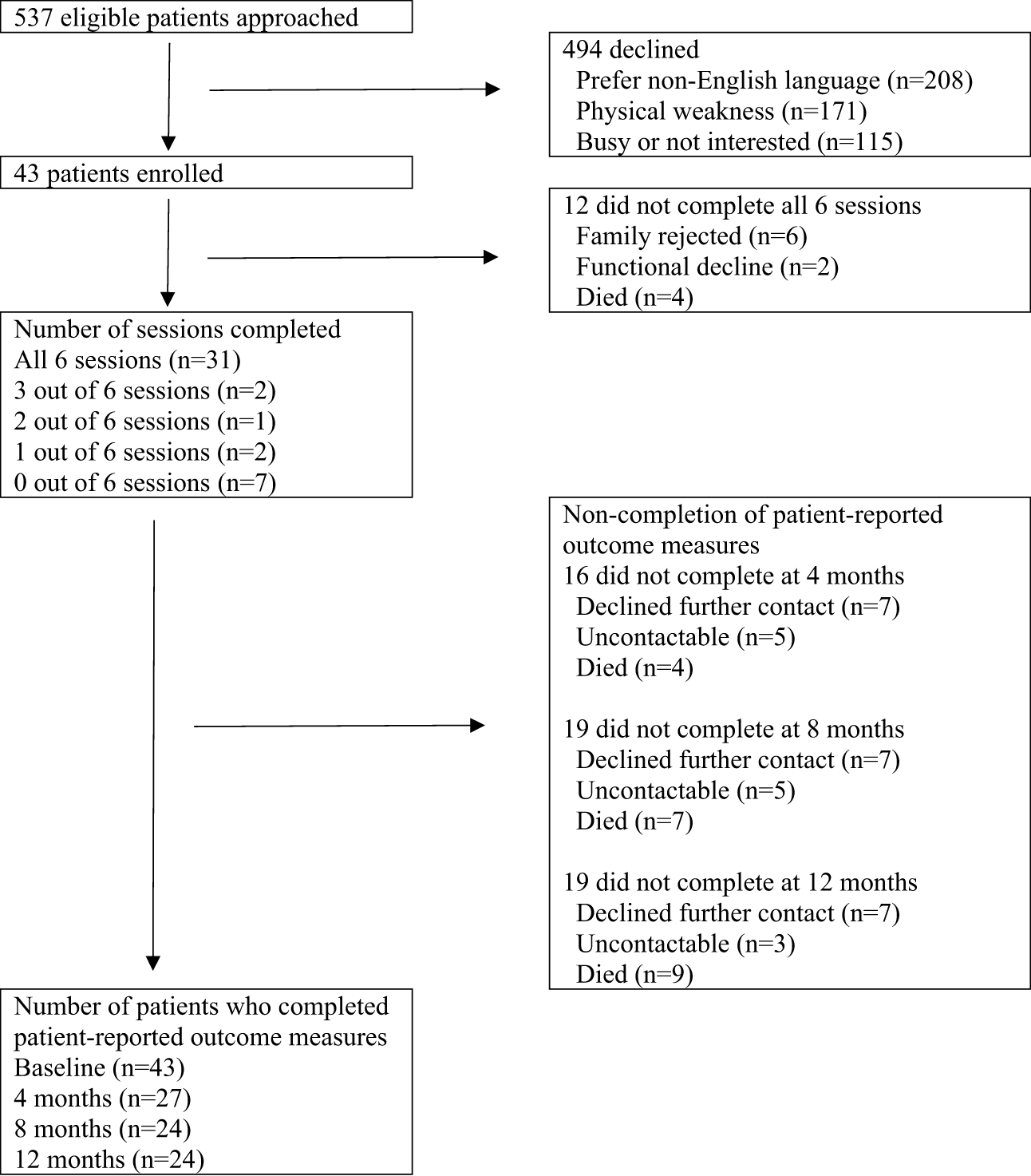
The study flow diagram is shown in Figure 2 for patients. A total of 537 patients were approached, of which 208 (39%) declined as they preferred a non-English language. Of the remaining 329 patients approached, 43 (13%) agreed to participate. Of the 43 patients enrolled, 31 (72%) completed all sessions: reasons for dropping out included rejection by family for patient to participate (n = 6), functional decline (n = 2), and death (n = 4). Patients who completed all 6 sessions did so within a mean of 70.8 days (range 35–152 days), with 84% (26 of 31) patients completing all sessions within 3 months. For patient-reported outcome measures, the completion rate across 4, 8, and 12 months ranged from 56% to 63%. Patient-reported outcome measures at 4, 8, and 12 months were collected via telephone: patients were deemed uncontactable if the phone call was not picked up after at least 3 attempts were made per week for at least 2 weeks.
Study flow diagram for patients.

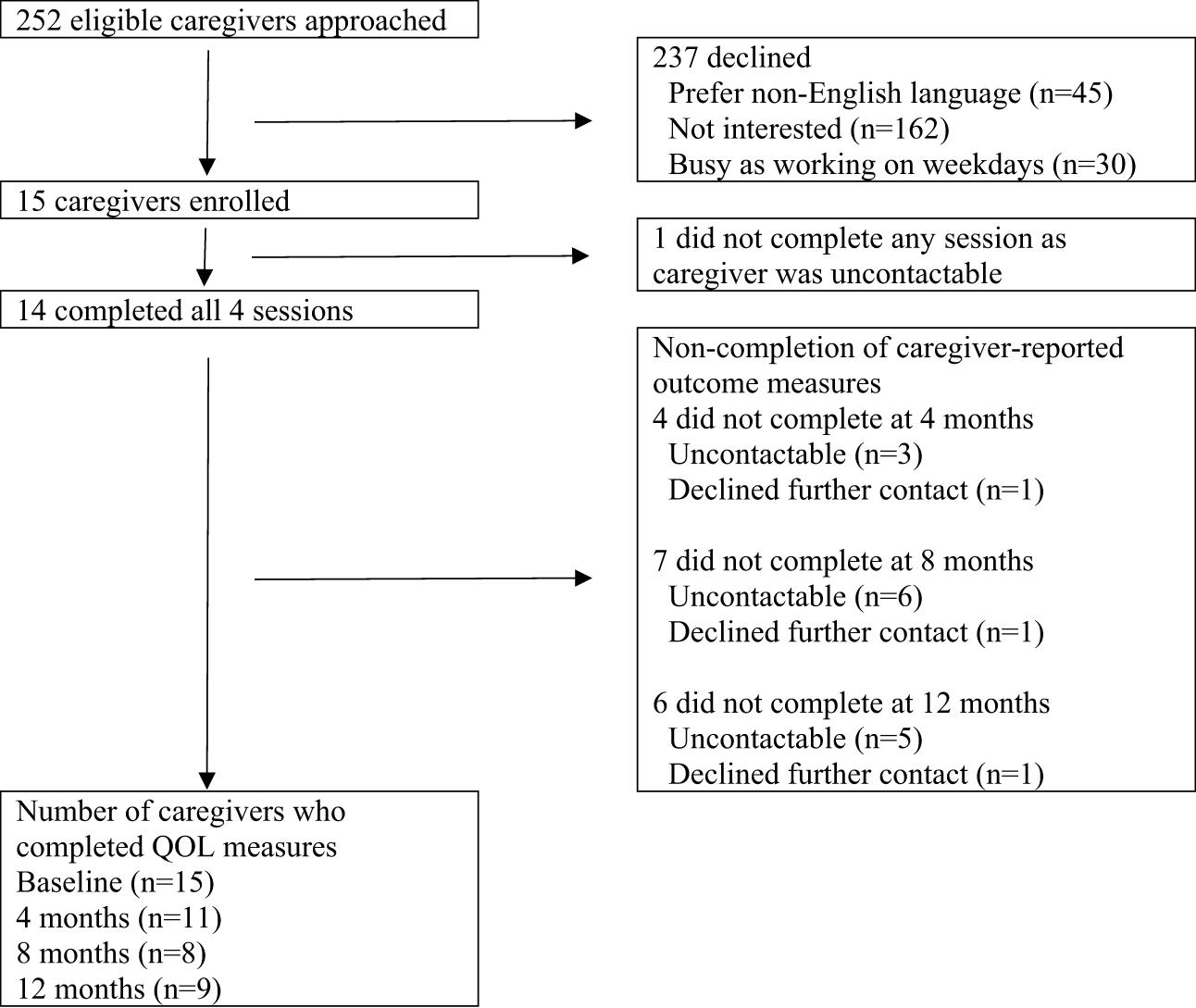
The study flow diagram is shown in Figure 3 for caregivers. A total of 252 caregivers were approached, of which 45 (18%) declined as they preferred a non-English language. Of the remaining 207 caregivers approached, 15 (7%) agreed to participate. Of the 15 caregivers enrolled, 14 (94%) completed all sessions. Caregivers who completed all 4 sessions did so within a mean of 36.5 days (range 17–95 days). For caregiver-reported outcome measures, the completion rate across 4, 8, and 12 months ranged from 53% to 73%. Caregiver-reported outcome measures at 4, 8, and 12 months were collected via telephone: caregivers were deemed uncontactable if the phone call was not picked up after at least 3 attempts were made per week for at least 2 weeks.
Study flow diagram for caregivers.

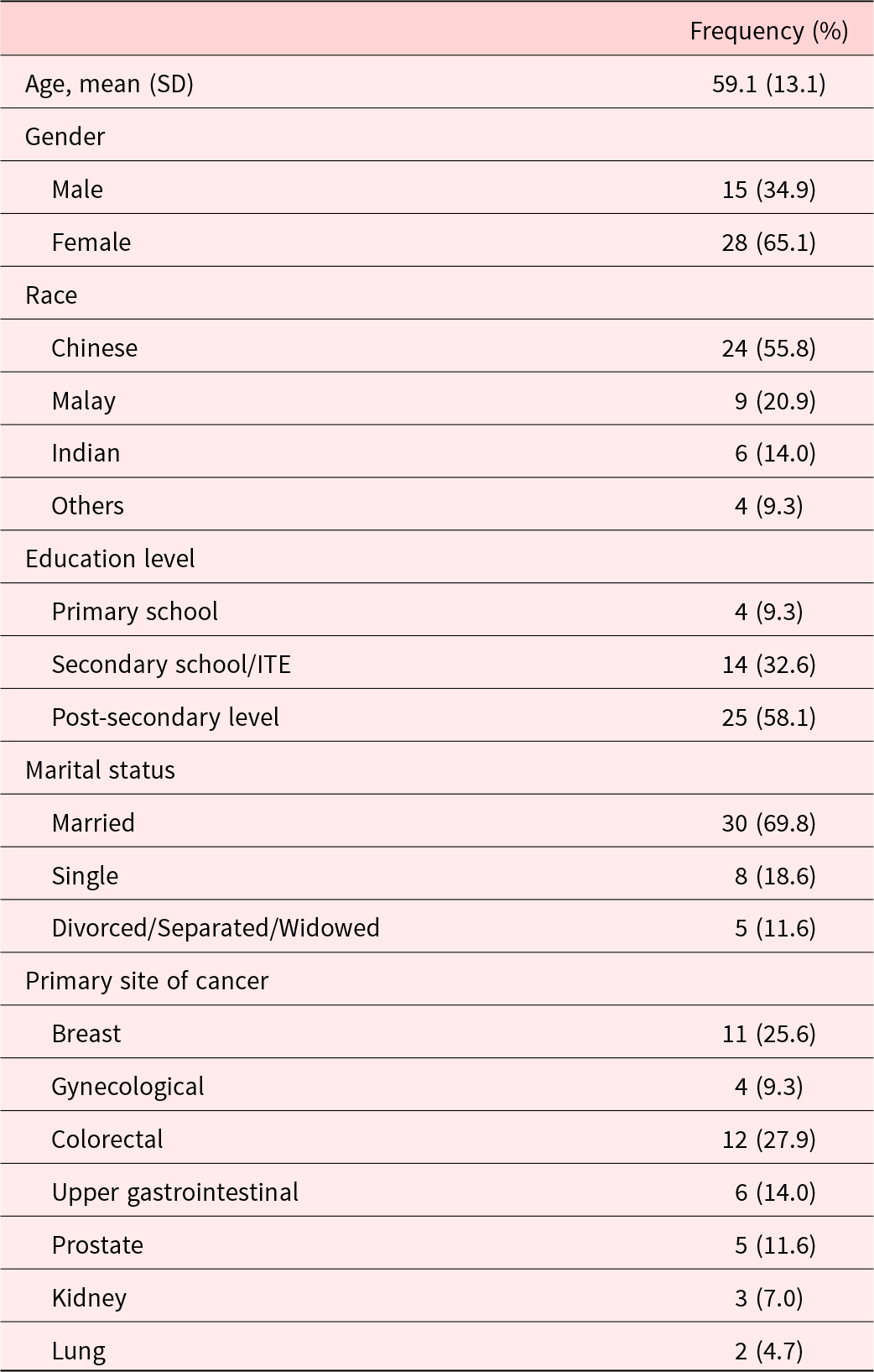
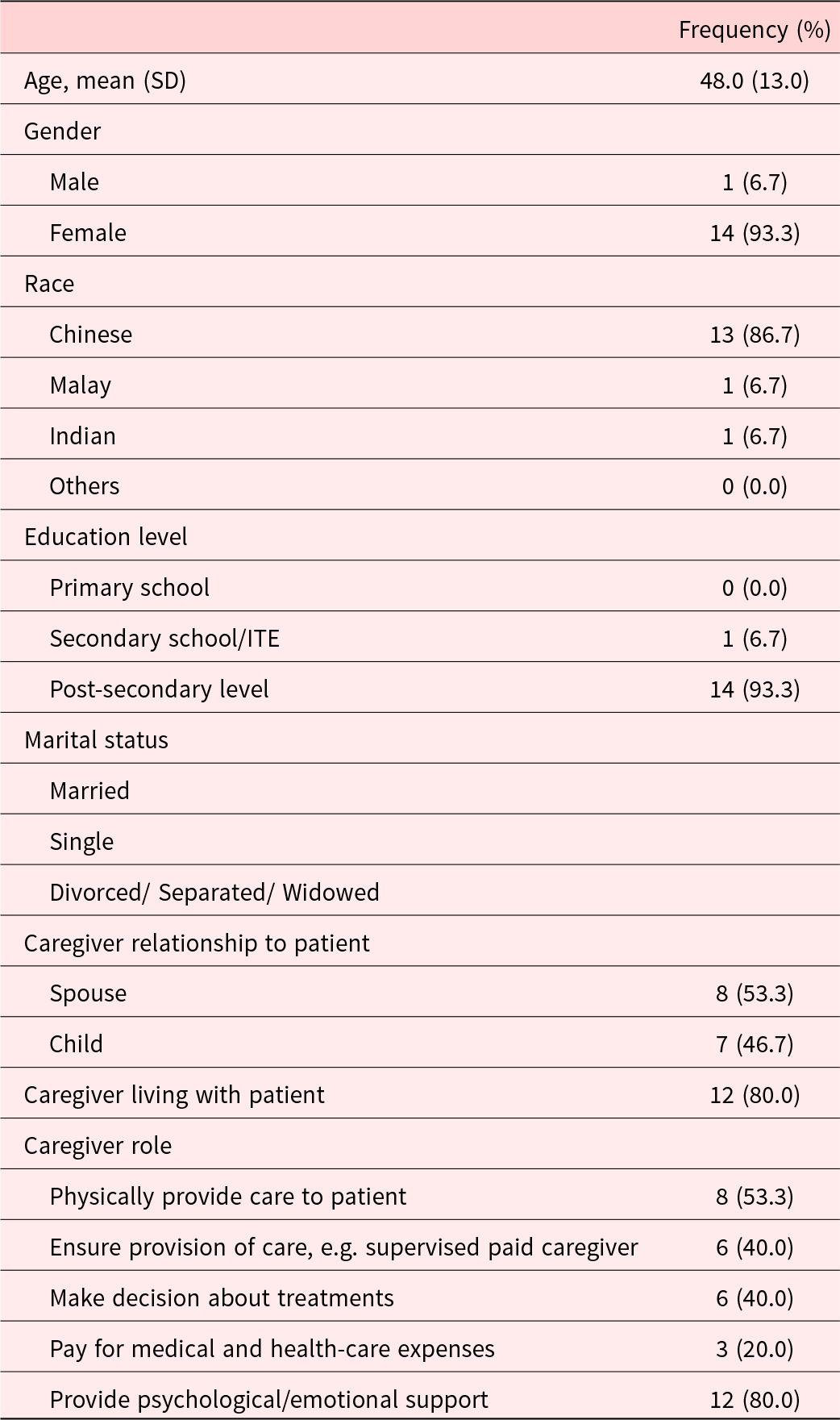
Demographic and clinical characteristics are shown in Tables 1 and 2. Among the 43 patient participants, 65.1% were female and 90.7% had at least secondary school level of education. Among the caregiver participants, 93.3% were female and all had at least secondary school level of education.
Characteristics of patient participants (n = 43)

Characteristics of caregiver participants

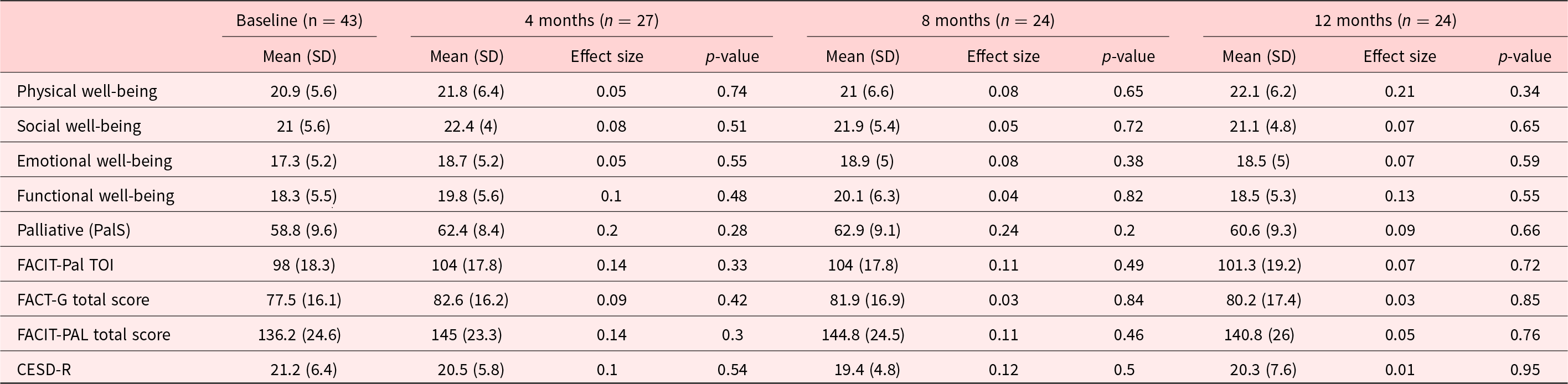
For patient participants, there were no changes in any of the FACIT-Pal subscale or total scores over time (Table 3). Although there were 41 participants who met the CES-D threshold score of 15 or higher which is interpreted as being as risk for depression, there were no changes in the CES-D score over time.
Quality of life and depression of patient participants

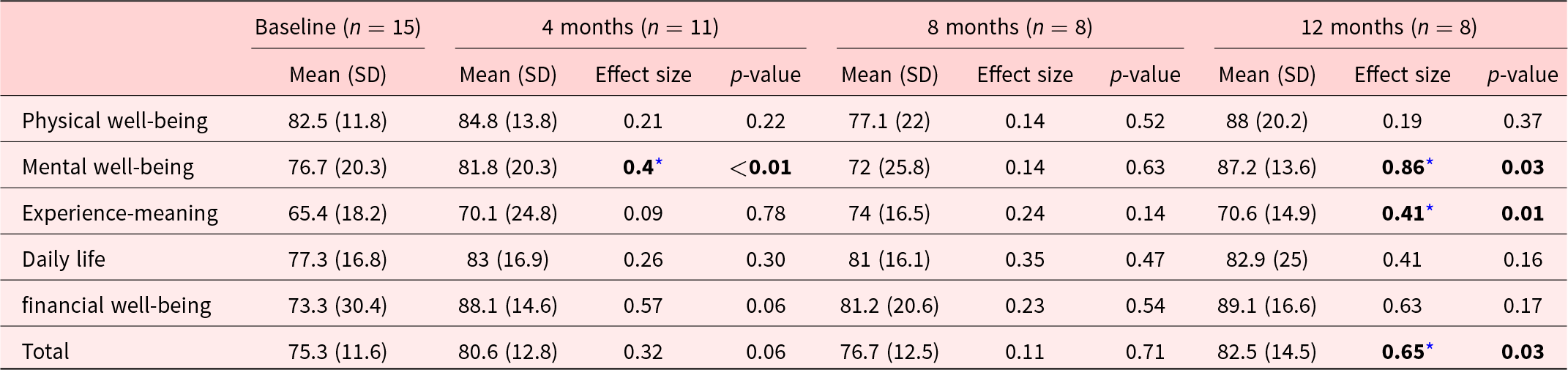
For caregiver participants, better mental well-being scores were observed at 4 and 12 months; better experience-meaning subscale and total score were observed at 12 months (Table 4). There were no significant differences at 8 months and in the other subscale scores at 4 and 12 months.
Quality of life of caregiver participants

* p < 0.05
Discussion
Although there was a low approach-to-participation rate, most of those who enrolled completed all ENABLE-SG sessions – 72% for patients and 94% for caregivers. Our 56–63% completion rate of patient-reported outcome measures was slightly lower than the 60–75% at 4 months but higher than the 30% completion rate at 12 months reported by other clinical trials of early palliative care among patients with advanced cancer (Bakitas et al. Reference Bakitas, Tosteson and Li2015; Temel et al. Reference Temel, Greer and Muzikansky2010; Zimmermann et al. Reference Zimmermann, Swami and Krzyzanowska2014). Even though this pilot study was not powered to detect changes in quality of life, we found that caregivers had better quality of life over time, specifically in the subscales of mental well-being and experience-meaning.
The findings from this pilot trial inform future studies in the following ways: A total of 39% of patients approached declined participation as they preferred a non-English language. Even though majority of the Singapore population is bilingual with over 82% literate in English, English was the language most frequently spoken at home for only 48% of the population (Department of Statistics, Ministry of Trade & Industry, Republic of Singapore 2010). For subsequent evaluation and implementation in routine clinical practice, ENABLE-SG should also be available in Mandarin Chinese – the language most frequently spoken at home for 30% of the population, and Malay – the language most frequently spoken at home for 10% of the population.
Given that 6 of the 43 enrolled patients dropped out due to family rejection, efforts should be made to explain the study intervention to family even if the intervention is directed at the patient. This is not surprising in our local Asian culture where families are often very involved in health-care decision-making (Chong et al. Reference Chong, Quah and Yang2015; Malhotra et al. Reference Malhotra, Kanesvaran and Barr Kumarakulasinghe2020; Yang et al. Reference Yang, Kwee and Krishna2012). Future modification may also include the option of family sitting in for the ENABLE-SG sessions with patients. This may reassure family who wish to protect their loved one from unnecessary exposure to “negative” thoughts; however, the family’s presence may also steer discussions away from prognostic awareness which is believed to worsen patient quality of life and mood (Satija et al. Reference Satija, Bhatnagar and Ozdemir2022; Wynn Mon et al. Reference Wynn Mon, Myint Zu and Myint Maw2021).
With regard to planning a larger scale trial to evaluate the effectiveness of ENABLE-SG on patient outcomes, the sample size should adequately account for the substantial non-completion rate of patient-reported outcome measures at follow-up time points. Some of the missing data for outcome measures were due to patients or caregivers being uncontactable; study-related processes could be examined to increase the completion rate, for example by allowing for alternative means of contacting study participants. At 12 months, 9 of the 43 enrolled patients (21%) had died, consistent with the advanced stage of cancer in the study population. Study procedures should therefore make provisions for functional decline and even death in at least some of the enrolled patients. There could be flexibility in the content and mode of delivery of sessions, depending on the patient’s evolving clinical status; caregiver sessions could include optional bereavement support to be provided if appropriate.
While this pilot study was not designed to assess the effectiveness of ENABLE-SG, it may give a tentative estimate of benefit to inform planning of the subsequent larger scale trial. Compared to baseline, patient quality of life as measured by FACIT-Pal and mood as measured by CES-D did not change significantly at 4, 8, and 12 months. However, there is no comparison group as this single-arm trial did not include a control group who received usual care alone. Other studies have shown that quality of life for patients with advanced cancer usually has a downward trajectory in the last months of life (Kristensen et al. Reference Kristensen, Grønberg and Fløtten2022; Shafiq et al. Reference Shafiq, Malhotra and Teo2022). In light of this, it is possible that the ENABLE-SG intervention could have prevented the otherwise natural decrease in quality of life – this could be explored in future studies.
Caregivers who participated in the ENABLE-SG sessions had better mental well-being at 4 and 12 months, and better experience-meaning at 12 months. This is a promising finding that could be assessed further in a subsequent larger scale trial. Although originally designed as a dyadic intervention, caregivers in this pilot study participated without a dyadic patient. Whether or not there is differential benefit for dyadic versus non-dyadic participation could also be explored further.
Limitations
Our study had limitations. The ENABLE-SG sessions were conducted only in English, leading to a high nonparticipation rate due to preference for non-English language. At this pilot stage, our intention was to establish feasibility in English before translating to Mandarin Chinese and Malay for further evaluation and subsequent implementation. Due to COVID-19-related restrictions, we were not able to recruit the planned number of caregivers; these restrictions have now been lifted and the effectiveness of ENABLE-SG for caregiver outcomes could hopefully be more comprehensively evaluated in a subsequent study. There was a high non-completion rate for patient- and caregiver-reported outcomes; this will be accounted for in the planning of follow-up trials.
Conclusion
Despite the low approach-to-participation rate, 72% of patients and 94% of caregivers completed all ENABLE-SG sessions. Although the 72% completion rate for patients did not reach the 80% completion rate that was set a priori, it is close enough for us to consider the ENABLE-SG intervention feasible. Further modifications will be done to increase the completion rate: for example, eligibility criteria for patients could be modified to exclude patients who are later in the disease course so as to reduce incompletion due to clinical deterioration. There was also some indication of benefit in quality of life for caregivers. Based on findings from this study, we are planning a randomized waitlist-controlled trial of ENABLE-SG for patients with advanced cancer and their caregivers.
Acknowledgments
We would like to thank all the patients and caregivers for participating in this study.
Funding
This study was supported by the Singapore Millennium Foundation Research Grant Programme from Temasek Foundation Innovates, the Singapore Ministry of Health’s (MOH) National Medical Research Council (NMRC) under the National Cancer Centre Singapore (NCCS) Centre Grant (NMRC/CG1/002/2021-NCCS), and NCCS Cancer Fund.
Competing interests
The authors declare none.

 Open access

